

The developmental trajectories of executive function from adolescence to old age.
Open accessThe DOI matches its Crossref record; 116 of the 116 references it cites were found in a registry or an index.
Abstract
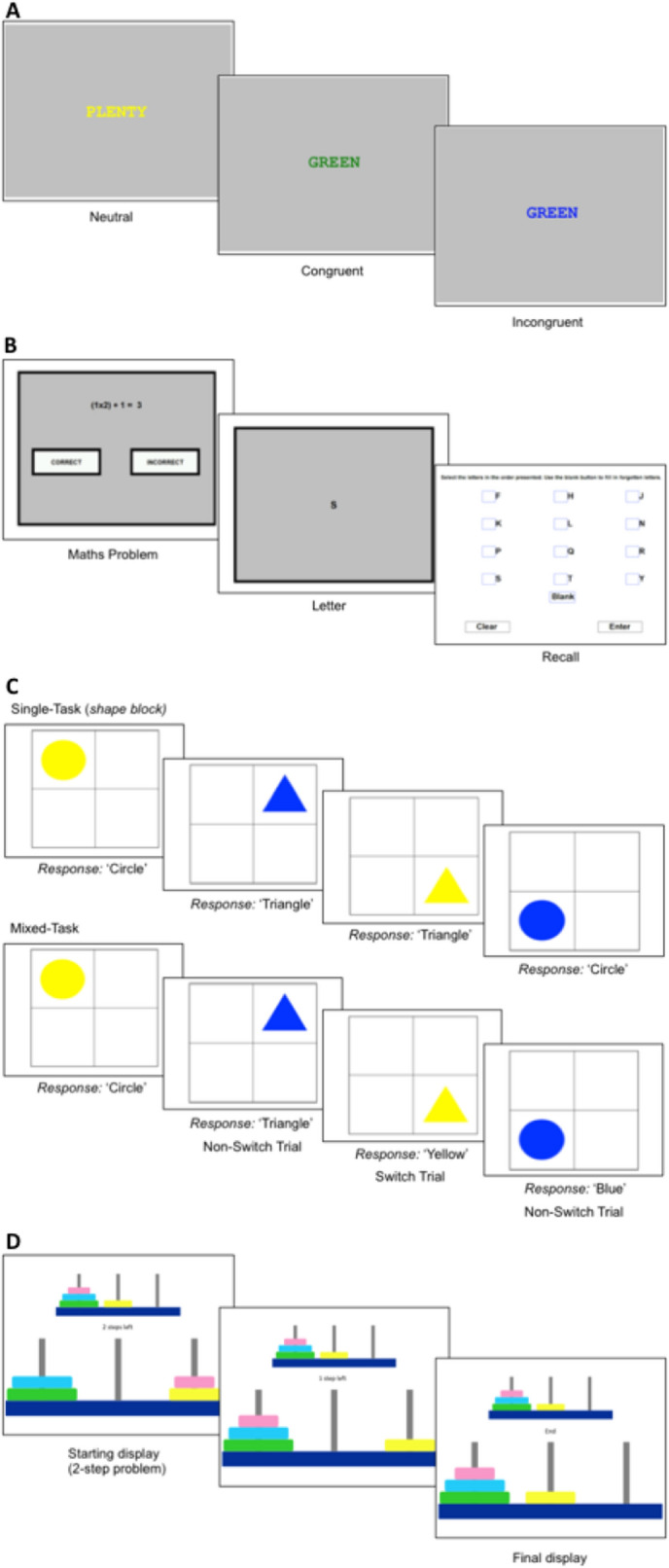
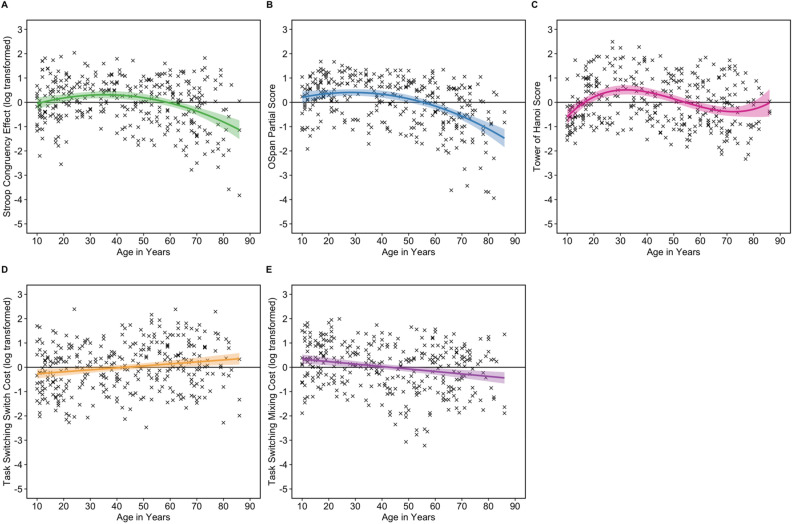
Executive functions demonstrate variable developmental and aging profiles, with protracted development into early adulthood and declines in older age. However, relatively few studies have specifically included middle-aged adults in investigations of age-related differences in executive functions. This study explored the age-related differences in executive function from late childhood through to old age, allowing a more informed understanding of executive functions across the lifespan. Three hundred and fifty participants aged 10 to 86 years-old completed a battery of tasks assessing the specific roles of inhibitory control, working memory, cognitive flexibility, and planning. Results highlighted continued improvement in working memory capacity across adolescence and into young adulthood, followed by declines in both working memory and inhibitory control, beginning from as early as 30–40 years old and continuing into older age. Analyses of planning abilities showed continued improvement across adolescence and into young adulthood, followed by a decline in abilities across adulthood, with a small (positive) change in older age. Interestingly, a dissociation was found for cognitive flexibility; switch costs decreased, yet mixing costs increased across the lifespan. The results provide a description of the developmental differences in inhibitory control, working memory, cognitive flexibility and planning, above any effects of IQ or SES, and highlight the importance of including middle-aged adults in studies seeking to establish a more comprehensive picture of age-related differences in executive function.
Overview
The claims and statistics of this paper haven’t been checked yet.
Free: it reads the open-access text and checks the first 5 claims that cite a source we can check. Create a free account to check every claim.
Integrity signals
Registry
Cites
Statistics
Figures
Verification
Claims the paper makes
The claims and statistics of this paper haven’t been checked yet.
Free: it reads the open-access text and checks the first 5 claims that cite a source we can check. Create a free account to check every claim.
Claims other papers make about this one
Each is checked against this paper’s own text: does it say what the citing paper says it does?
The cited source says what the claim attributes to it.
In the citing paper
“A recent study by (Ferguson et al., 2021) examined EF in a large, community-based sample aged from 10 to 86 years old, demonstrating that planning ability and WM capacity continue to develop throughout adolescence as well as in early adulthood.”
From Assessment of executive functions in school-aged children: A narrative review (2022) · cites this paper as Ferguson et al., 2021
Self-check
Percentages, sums and reported differences re-computed from the paper’s own numbers.
The self-check needs the paper’s full text.
Citations
Cites
Studies of interference in serial verbal reactions
Stroop, J. R. (1935) · Journal of Experimental Psychology · doi:10.1037/h0054651 · Cited by 18,622
Miyake, A., Friedman, N. P., Emerson, M. J., Witzki, A. H., Howerter, A., & Wager, T. D. (2000) · Cognitive Psychology · doi:10.1006/cogp.1999.0734 · Cited by 15,798
Diamond, A. (2013) · Annual Review of Psychology · doi:10.1146/annurev-psych-113011-143750 · Cited by 13,268
Dynamic mapping of human cortical development during childhood through early adulthood
Gogtay, N., Giedd, J. N., Lusk, L., Hayashi, K. M., Greenstein, D., Vaituzis, A. C., Nugent, T. F., Herman, D. H., Clasen, L. S., Toga, A. W., et al. (2004) · Proceedings of the National Academy of Sciences · doi:10.1073/pnas.0402680101 · Cited by 5,604
Wechsler Abbreviated Scale of Intelligence
Dumont, R., Willis, J. O., Veizel, K., & Zibulsky, J. (2014) · Encyclopedia of Special Education · doi:10.1002/9781118660584.ese2519 · Cited by 5,521
Wechsler Abbreviated Scale of Intelligence
Wechsler, D. (2012) · PsycTESTS Dataset · doi:10.1037/t15170-000 · Cited by 4,596
Miyake, A., & Friedman, N. P. (2012) · Current Directions in Psychological Science · doi:10.1177/0963721411429458 · Cited by 3,944
Costs of a predictible switch between simple cognitive tasks.
Rogers, R. D., & Monsell, S. (1995) · Journal of Experimental Psychology: General · doi:10.1037/0096-3445.124.2.207 · Cited by 3,170
Regional Brain Changes in Aging Healthy Adults: General Trends, Individual Differences and Modifiers
Raz, N., Lindenberger, U., Rodrigue, K. M., Kennedy, K. M., Head, D., Williamson, A., Dahle, C., Gerstorf, D., & Acker, J. D. (2005) · Cerebral Cortex · doi:10.1093/cercor/bhi044 · Cited by 2,875
Executive function in preschoolers: A review using an integrative framework.
Garon, N., Bryson, S. E., & Smith, I. M. (2008) · Psychological Bulletin · doi:10.1037/0033-2909.134.1.31 · Cited by 2,695
Research works printed but not linked: 3
- 41. Jacques S Marcovitch S Overton WF Development of executive function across the lifespan Cognition, Biology, and Methods Across the Lifespan. The Handbook of Life-Span Development 2010 Hoboken, NJ Wiley 431 466
- 46. Delis DC Kaplan E Kramer JH Delis–Kaplan Executive Function System (D-KEFS) 2001 San Antonio, TX The Psychological Corporation
- 73. Lawson GM Hook CJ Hackman DA Farah MJ Griffin JA Freund LS McCardle P Socioeconomic status and neurocognitive development: Executive function Executive Function in Preschool Children: Integrating Measurement, Neurodevelopment, and Translational Research 2016 Washington, DC American Psychological Association Press
Cited by
Items 201–300 of 774
Ahmed, S. F., Kelly, D. P., Waters, N. E., & Chaku, N. (2023) · Elsevier eBooks · doi:10.1016/b978-0-323-96023-6.00057-9 · Cited by 7
Gößwein, E., & Liebherr, M. (2024) · Behaviour and Information Technology · doi:10.1080/0144929x.2024.2417381 · Cited by 6
“Furthermore, it plays a key role in the expression of core EFs (Ferguson, Brunsdon, and Bradford 2021; Hamasaki et al. 2018), underscoring its signi fi cance as a considerable covariate.”
Rayport, Y. K., Morales, S., Shuffrey, L. C., Hockett, C. W., Ziegler, K. M., Rao, S. G., Fifer, W. P., Elliott, A., & Sania, A. (2024) · BMC Pediatrics · doi:10.1186/s12887-024-05113-2 · Cited by 6
“EFs emerge soon after birth and as children mature, EF components develop, but at different rates [12].”
BackgroundPsychophysiological indexes in the detection of deception: A systematic review
Convertino, G., Talbot, J., & Mazzoni, G. A. L. (2024) · Acta Psychologica · doi:10.1016/j.actpsy.2024.104618 · Cited by 6
Acute Effects of Aerobic Exercise on Risky Decision Making and Reward Processing in Young Adults
Ludyga, S., Schwarz, A., Leuenberger, R., Colombo, S., Kummer, R., & Gerber, M. (2025) · Psychophysiology · doi:10.1111/psyp.70029 · Cited by 6
“Despite the maturation and long-term stability of executive function in young adults (Ferguson et al. 2021; Friedman et al. 2016), there is a daily within-person variability that can be explained by individual affective and academic experiences (Wang et al. 2021).”
Krendl, A. C. (2025) · Aging Neuropsychology and Cognition · doi:10.1080/13825585.2025.2476586 · Cited by 6
“These performance deficits have generally been attributed to declines in cognitive function (H. J. Ferguson et al., 2021; Salthouse, 2009).”
Frequent Media Use, Media Multitasking, and Perceived Cost of Cognitive Effort
Shin, M., & Murphy, K. A. (2025) · Cyberpsychology Behavior and Social Networking · doi:10.1089/cyber.2024.0492 · Cited by 6
“39 The fi ndings from this study demonstrated that media multitasking but not general media consumption is linked to a greater cost of cognitive effort.”
Impaired neurovascular coupling in metabolic syndrome: an fNIRS study
Gosalia, J., Spicuzza, J. M. D., Bowlus, C. K., Gardner, A. W., Dennis, N. A., Pawelczyk, J. A., & Proctor, D. N. (2025) · Journal of Applied Physiology · doi:10.1152/japplphysiol.00893.2024 · Cited by 6
Freichel, R., Epskamp, S., de Jong, P. J., Cousijn, J., Franken, I. H. A., Salum, G. A., Pan, P. M., Veer, I. M., & Wiers, R. W. H. J. (2025) · Psychological Medicine · doi:10.1017/s0033291725100639 · Cited by 6
“Different developmental profiles with a general improvement of these functions across adolescence and young adulthood have been described (e.g., Ferguson, Brunsdon, & Bradford, 2021).”
Mirmiran, S., & Moussavi, Z. (2025) · Displays · doi:10.1016/j.displa.2025.103182 · Cited by 6
Sinichi, M., Eleftheriou, G., Ngoc, M. A. H., Kohrt, B. A., Luitel, N. P., Singh, R. K., Jacobs, R., Sorsdahl, K. R., García, S., Sanguineti, M. C. D., et al. (2025) · Psychophysiology · doi:10.1111/psyp.70184 · Cited by 6
Perceptual Learning of Dysarthria in Adolescence
Borrie, S. A., Hepworth, T. J., Wynn, C. J., Hustad, K. C., Barrett, T. S., & Lansford, K. L. (2023) · Journal of Speech Language and Hearing Research · doi:10.1044/2023_jslhr-23-00231 · Cited by 6
“Relatedly, the cognitive – linguistic processes that support a flexible speech perception system, including working memory (e.g., Ferguson et al., 2021; Mizuno et al., 2011), vocabulary knowledge (e.g., Duff & Brydon, 2020; Ricketts et al., 2020), and cognitive flexibility (e.g., Luna et al., 2004;…”
Conesa, P. J. (2023) · Revista de Psicología Clínica con Niños y Adolescentes · doi:10.21134/rpcna.2023.10.3.6 · Cited by 6
“The 6 to 12-year-old stage is vital in the development of EF (Davidson et al., 2006; Ferguson et al., 2021), since neuronal plasticity is particularly high and the prefrontal cortex is especially sensitive to environmental influences (Bull et al., 2011).”
BackgroundEkerer, C., İnce, G., & Över, M. F. (2024) · International Journal of Sport and Exercise Psychology · doi:10.1080/1612197x.2024.2357277 · Cited by 6
“Besides that, it has been suggested that executive functions can be promoted regardless of the stage of cognitive development (Ferguson et al., 2021).”
Tayar, V. G., Saad, J., Sheikh, W. G. E., & Roukoz, C. (2024) · Developmental Neuropsychology · doi:10.1080/87565641.2024.2378891 · Cited by 6
“…inhibition development is gradual throughout childhood with a sharp increase in performance in middle childhood (Best et al., 2009; Willoughby et al., 2012) and reaches adulthood level in adolescence around 15 years old (Ferguson et al., 2021; Huizinga et al., 2006; Leon-Carrion et al., 2004).”
Chau, A. K. C., Minihan, S., Okayama, S., & Schweizer, S. (2024) · Comprehensive Psychiatry · doi:10.1016/j.comppsych.2024.152564 · Cited by 6
Liu, K., Li, J., Pengbo, S., & Tao, D. (2024) · Displays · doi:10.1016/j.displa.2024.102947 · Cited by 6
Oppenheimer, A. V., Bellinger, D. C., Coull, B. A., Weisskopf, M. G., & Korrick, S. (2022) · NeuroToxicology · doi:10.1016/j.neuro.2022.08.009 · Cited by 6
Need for cognition predicts the accuracy of affective forecasts
Double, K. S., & Cavanagh, M. J. (2023) · Personality and Individual Differences · doi:10.1016/j.paid.2023.112399 · Cited by 6
Smeets, G., Volkers, K. M., Scherder, E., & Moonen, X. (2023) · Research in Developmental Disabilities · doi:10.1016/j.ridd.2023.104606 · Cited by 7
de Zarate, A. E. R., Powell, D., Kühnhausen, J., Allan, J., Johnstone, A. M., Crabtree, D. R., Buosi, W., Fyfe, C., McMinn, D., McCavour, B., et al. (2023) · International Journal of Clinical and Health Psychology · doi:10.1016/j.ijchp.2023.100425 · Cited by 6
“The age at which EF peaks and begins to decline depends on the specific EF component but all EF components show decreases in function with age, starting in midlife and progressing into older adulthood (Ferguson et al., 2021).”
BackgroundElimelech, O. C., Rosenblum, S., Tsadok-Cohen, M., Meyer, S., Ferrante, S., & Demeter, N. (2024) · JMIR Aging · doi:10.2196/53141 · Cited by 6
“Although possibly the first affected by the cognitive dysfunction associated with aging, executive functions have a remarkable ability to maintain physical and mental health [46,47].”
BackgroundNeural Signature of Rhyming Ability During Story Listening in Preschool-Age Children
Hutton, J., Dudley, J. A., DeWitt, T. G., & Horowitz‐Kraus, T. (2024) · Brain Connectivity · doi:10.1089/brain.2023.0083 · Cited by 6
“Speci fi cally, the FPN supports working memory (Ferguson et al., 2021; Lara and Wallis, 2015), an executive function that is vital for semantic processing, including integration of visual imagery, which involves the DMN (Daselaar et al., 2010; Hutton et al., 2020c; Zvyagintsev et al., 2013).”
Zhang, T., Wei, Y., Tang, X., Cui, H., Xu, L., Hu, Y., Tang, Y., Hu, Q., Liu, H., Wang, Z., et al. (2024) · Child and Adolescent Psychiatry and Mental Health · doi:10.1186/s13034-024-00743-x · Cited by 5
“Repeated-measures analysis of variance shows the difference in change over time between the groups effects between adolescent and adult participants with CHR may be the differences in the trajectory of neuropsychological development [39, 40].”
Lee, A. J., Initiative, A. D. N., Stark, J. H., & Hayes, S. M. (2024) · Journal of Alzheimer s Disease · doi:10.3233/jad-231468 · Cited by 5
García, L. F., Phillips-Silver, J., & Daza, M. T. (2024) · Brain Sciences · doi:10.3390/brainsci14080755 · Cited by 5
“Age-related changes can extend throughout the entire lifespan, as some authors have noted that these cool EF abilities continue to evolve from age 35, observing a decline until the end of adulthood [54].”
BackgroundHamady, H., & Engel‐Yeger, B. (2025) · Journal of Child and Adolescent Mental Health · doi:10.2989/17280583.2024.2438367 · Cited by 5
“Throughout adolescence, EF reach their peak development but remain immature and it is only in late adolescence that each EF becomes specialised into distinct processes (Ferguson et al., 2021).”
Intersubject neural similarity reveals the development trajectory of recognition memory in children
Li, Y., Wang, C., Hu, W., Zhang, Q., Mei, H., Ji, S., Li, D., Wang, Y., Kong, Y., Song, Y., et al. (2025) · Developmental Cognitive Neuroscience · doi:10.1016/j.dcn.2025.101553 · Cited by 5
“We further separately evaluated the goodness of fit of the linear, quadratic, and cubic regression models (Ferguson et al., 2021).”
Cáceres-González, D., Rossignoli-Palomeque, T., & Rodríguez, M. V. (2025) · Behavioral Sciences · doi:10.3390/bs15050633 · Cited by 5
Measuring neurodevelopment of inhibitory control in children using naturalistic virtual reality
Dinu, L. M., Pinti, P., & Smith, T. J. (2025) · Scientific Reports · doi:10.1038/s41598-025-10974-3 · Cited by 5
Aging-related changes in cognitive flexibility: fMRI meta‐analysis
Chuikova, Z. V., Faber, A., Filatov, A. A., Myachykov, A., Юрьевич, Ш. Ю., & Arsalidou, M. (2025) · Behavioral and Brain Functions · doi:10.1186/s12993-025-00301-1 · Cited by 5
“Given behavioral differences in switching ability across young, middle-age, and older adults [19, 38], these areas with similar functions.”
A randomized controlled trial study of a life review art intervention for older adults living alone
Tsai, P., Chou, W.-H., & Liao, S.-Y. (2025) · Frontiers in Psychology · doi:10.3389/fpsyg.2025.1669119 · Cited by 5
“Prior studies have also suggested that life review enhances cognitive function (Ferguson et al., 2021; Lima, 2023).”
Campbell, A. J., Anijärv, T. E., Johansson, M., Pace, T., Lagopoulos, J., Hermens, D. F., Levenstein, J. M., & Andrews, S. C. (2025) · Neurobiology of Aging · doi:10.1016/j.neurobiolaging.2025.12.008 · Cited by 5
Executive functions and psychopathology: A transdiagnostic network analysis
Ganai, U. J., & Bhushan, B. (2025) · PLoS ONE · doi:10.1371/journal.pone.0338435 · Cited by 5
A Meta-Analytical Review of Executive Function Skills in Adults Who Stutter
Ofoe, L. C., Ntourou, K., Clifton, S. C., & Coalson, G. A. (2026) · Journal of Speech Language and Hearing Research · doi:10.1044/2025_jslhr-25-00303 · Cited by 5
Wang, X., Madon, Z., Ghani, M. S. A., & Long, X. (2026) · Frontiers in Psychology · doi:10.3389/fpsyg.2026.1768092 · Cited by 5
“From a lifespan developmental perspective, executive functioning improves with age (Ferguson et al., 2021), enabling individuals to better regulate their negative experiences (Martin and Ochsner, 2016).”
Varghese, R., Fiske, A., & Holmboe, K. (2026) · Frontiers in Developmental Psychology · doi:10.3389/fdpys.2026.1752676 · Cited by 5
Lanou, A. J., Mast, A. C., Hill, B. D., Kim, S., & Hanaway, P. J. (2023) · Journal of Integrative and Complementary Medicine · doi:10.1089/jicm.2022.0543 · Cited by 5
“33,34 Measures of executive function translate to valuable everyday tasks such as managing time effectively, paying attention to and sequencing instructions correctly using short-term memory, switching focus between activities requiring memory, planning and organizing activities, recalling details,…”
BackgroundCognitive reserve counteracts typical neural activity changes related to ageing
Cespón, J., Chupina, I., & Carreiras, M. (2023) · Neuropsychologia · doi:10.1016/j.neuropsychologia.2023.108625 · Cited by 5
Law, E. F., Tham, S. W., Howard, W., Ward, T. M., & Palermo, T. M. (2023) · Journal of Pain · doi:10.1016/j.jpain.2023.08.010 · Cited by 5
Social Competence of Adolescents: The Role of Social Cognition and Behavior Control
Vilenskaya, G. A., Lebedeva, E. I., & Ulanova, A. Y. (2023) · Вестник Российского университета дружбы народов. Серия: Психология и педагогика · doi:10.22363/2313-1683-2023-20-3-588-608 · Cited by 5
The Role of Spoken Language on Performance of Cognitive Tests: the Indonesian Experience
Immanuel, A. S., Pesau, H. G., Wulanyani, N. M. S., Sulastri, A., & van Luijtelaar, G. (2024) · Journal of Cognition and Culture · doi:10.1163/15685373-12340187 · Cited by 5
Role of Education and Physical Activity in Executive Function Performance of Adult Population
Sharma, N., & Shenoy, S. (2023) · Current Aging Science · doi:10.2174/1874609816666230214100557 · Cited by 5
Sharma, N., & Shenoy, S. (2023) · NeuroRegulation · doi:10.15540/nr.10.2.78 · Cited by 5
“However, the middle ages (adults in the age range of 40 to 60 years) is largely an unexplored age group where deterioration in both EF (Ferguson et al., 2021) as well as HRV (Britton, Shipley, et al., 2007) is observed.”
Selective Attention (SA) and Perceptual Inhibition (PI) Throughout the Lifespan
Introzzi, I. M., Ramón, M. F. L., García, M. J., Zamora, E. V., Musso, M., & Richard’s, M. M. (2024) · Journal of Cognition and Development · doi:10.1080/15248372.2024.2325014 · Cited by 5
“For example, Ferguson, Brunsdon, and Bradford (2021) note that the decrease in inhibitory function begins as early as the 30s, while Ferreira et al. (2015) found that it begins in the 50s.”
Hocking, D. R., Byer, E., & Lee, N. (2024) · Scientific Reports · doi:10.1038/s41598-024-80395-1 · Cited by 5
Joseph, J. J., & Waschbusch, D. A. (2025) · Research on Child and Adolescent Psychopathology · doi:10.1007/s10802-024-01283-w · Cited by 5
“…be tempting to examine relationships between these variables at later time points, this would be inappropriate given that executive functioning continues developing until approximately age 30, while psychopathic traits show relative stability for some youth (Frick, 2018; Ferguson et al., 2021).”
Cheng, S., Zhang, X., Liu, S., Zhao, C., & Bi, S. (2025) · Frontiers in Public Health · doi:10.3389/fpubh.2025.1575099 · Cited by 5
Scabies Among Adolescents in Islamic Religious Boarding Schools: A Descriptive Study
Fradianto, I., Rahmawati, N., Nurmainah, N., Mita, M., & Saifudin, I. M. M. Y. (2024) · Indonesian Journal of Global Health Research · doi:10.37287/ijghr.v6i6.3889 · Cited by 5
Massera, A., Bonaiuto, J. J., Gautier-Martins, M., Costa, S. E., Rayson, H., & Ferrari, P. F. (2023) · Proceedings of the Royal Society B Biological Sciences · doi:10.1098/rspb.2022.1993 · Cited by 5
“For example, evidence shows that inhibitory control starts to decline later (around 35 years) than working memory in human adults [4], and in macaques, evidence suggests that working memory is mature even at pre-puberty whereas inhibitory control is not [57].”
BackgroundSánchez-Herrera-Baeza, P., Cano‐de‐la‐Cuerda, R., Serrada-Tejeda, S., Vázquez, D. F., Navarro‐López, V., González-Alted, C., & Miangolarra‐Page, J. C. (2023) · Biomedicines · doi:10.3390/biomedicines11061603 · Cited by 5
“All the activities we perform in our daily life require the use of executive functions (EFs), the mental processes that allow us to focus attention on specific tasks, participate in successful problem solving and plan for the future [10].”
BackgroundGhanamah, R., Eghbaria-Ghanamah, H., Abu-Saleh, N., & Kitany, S. (2023) · Child Indicators Research · doi:10.1007/s12187-023-10057-7 · Cited by 5
“…and play an important role in our daily lives as they allow us to focus our attention on specific tasks, execute plans efficiently, and enable the person to control and regulate their behavior through cognitive processes (Barkley, 2000; Denckla, 2005; Diamond, 2013; Ferguson et al., 2021).”
BackgroundInterspecific differences in developmental mode determine early cognitive abilities in teleost fish
Montalbano, G., Bertolucci, C., Bisazza, A., & Lucon‐Xiccato, T. (2023) · Animal Cognition · doi:10.1007/s10071-023-01828-4 · Cited by 5
“…control emerges toward the end of the first year and undergoes steady development across the toddler stage and preschool years, with incremental improvements that continue throughout childhood, adolescence and early adulthood (Amso and Johnson 2005; Diamond et al. 2007; Ferguson et al. 2021).”
BackgroundBediou, B., & Wac, K. (2022) · Elsevier eBooks · doi:10.1016/b978-0-12-818872-9.00190-4 · Cited by 5
Distinct Cellular Phenotypes of Language and Executive Decline in Amyotrophic Lateral Sclerosis
Petrescu, J., Gouveia Roque, C., Jackson, C. A., Daly, A. C., Butti, Z., Kang, K., Casel, O., Leung, M., Reilly, L., Eschbach, J., et al. (2026) · Cell · doi:10.1016/j.cell.2026.07.008 · Cited by 4
Vergara‐Morales, J., Valle, M. D., & Lepe-Martínez, N. F. (2025) · Journal of Intelligence · doi:10.3390/jintelligence13020020 · Cited by 4
“…judgment implies a process of moral growth that occurs progressively through levels of development, allowing for promoting and strengthening a superior capacity to value what is fair, directly influencing the configuration of ethical behavior (Ferguson et al. 2021; Tervo-Clemmens et al. 2023).”
Peran Pola Asuh Orang Tua Terhadap Fungsi Eksekutif Pada Individu Dewasa Awal
Azima, S. L., Arpandy, G. A., & Fitriah, A. (2025) · Psikodinamika - Jurnal Literasi Psikologi · doi:10.36636/psikodinamika.v5i1.5083 · Cited by 4
The Whole Day Movement Matters to Executive Function Among College Students
Zhang, X., Moss, S., Wu, C., Keller, J., & Gu, X. (2025) · Behavioral Sciences · doi:10.3390/bs15081129 · Cited by 4
“Additionally, inhibition and working memory will decline as an individual ages (as early as 30–40 years old; Ferguson et al., 2021), so future studies may want to consider investigating longitudinal changes from young to middle-adulthood.”
Cai, Y., Holmes, J., & Gathercole, S. E. (2025) · Journal of Attention Disorders · doi:10.1177/10870547251376776 · Cited by 4
“…consequence of the cross-sectional design, the findings do not capture the dynamic shifts in the processes that enable and disrupt formal academic learning and cognitive functioning between school entry and later adolescence (Ferguson et al., 2021; Pingault et al., 2011, 2014; Sayal et al., 2015).”
Li, J., Li, W., Li, X., Zhao, Y., & Yang, C. C. (2025) · Trauma Violence & Abuse · doi:10.1177/15248380251383917 · Cited by 5
Naas, A., Rohrbach, S., Shabestari, P. S., Neff, P. K. A., & Sonderegger, A. (2025) · Frontiers in Human Neuroscience · doi:10.3389/fnhum.2025.1678940 · Cited by 4
“…reported interaction effects only affected participants in their late twenties and early thirties in that way, which might be due to developmental processes of the PFC (Ferguson et al., 2021) influencing tasks requiring self-control (i.e., not stopping the NFB, although it might be hard to continue).”
InfluentialTakio, F., Peura, P., Yada, A., Karonen, A., Juntunen, P., Holmberg, E., Eskola, E., Nordenswan, E., Deater-Deckard, K. D., Eeva-Leena, K., et al. (2026) · Developmental Cognitive Neuroscience · doi:10.1016/j.dcn.2026.101672 · Cited by 4
“EF skills continue to evolve throughout adolescence and beyond (e.g. Ferguson et al., 2021; Takio et al., 2014).”
Leisman, G., Alfasi, R., Meiron, O., & D'Angiulli, A. (2026) · Wiley Interdisciplinary Reviews Cognitive Science · doi:10.1002/wcs.70020 · Cited by 4
“These include genetics (Jayakody et al. 2022; Budamagunta et al. 2023), health status (Basile and Sardella 2021), physical activity (Dominguez et al. 2021; Yamasaki 2023), SES (Chan et al. 2021; Halloway et al. 2024), IQ (Quattropani et al. 2021), and physical fitness (Ferguson et al. 2021).”
InfluentialKatsantonis, I., & Katsantonis, A. (2026) · Journal of Intelligence · doi:10.3390/jintelligence14020020 · Cited by 4
“Another empirical study compared the three core EFs in adolescents (10–17 years old) to that of young adults (ages 18–29 years old) and adults (30–49 years old) (Ferguson et al., 2021).”
Chmiel, J., & Kurpas, D. (2026) · Journal of Clinical Medicine · doi:10.3390/jcm15031306 · Cited by 4
Алексеевич, Г. С., Васильева, С. Н., Simutkin, G. G., & Ivanova, S. А. (2022) · Bulletin of Siberian Medicine · doi:10.20538/1682-0363-2022-3-28-33 · Cited by 4
Nováková, L. M., Georgi, H. S., Vlckova, K. H., Kopeček, M., Babuská, A., & Havlíček, J. (2024) · Physiology & Behavior · doi:10.1016/j.physbeh.2024.114579 · Cited by 4
Temporal Course of Interference Control from Early to Late Young Adulthood: An ERP Study
Knežević, M. (2024) · Brain Sciences · doi:10.3390/brainsci14060536 · Cited by 4
“This set of interconnected cognitive abilities, which are vital for self-monitoring and changing behavior flexibly and in accordance with individual goals and current circumstances, is known under an umbrella term—executive functions [2].”
BackgroundChávez–Hernández, M. E., Torre, L. D. L., Rodríguez–Serrano, L. M., & Sánchez, M. W. (2024) · Biomedicines · doi:10.3390/biomedicines12122724 · Cited by 4
Ferreira, D. A., & Osório, F. D. L. (2025) · Journal of the International Neuropsychological Society · doi:10.1017/s1355617725000190 · Cited by 4
“Additionally, the magnitude of these correlations is expected to vary significantly depending on age group (Ferguson et al., 2021; Meinhardt-Injac et al., 2020), specific EF subdomain (Carlson et al., 2002; Pineda-Alhucema et al., 2018), and clinical condition (Tatar & Cans ı z, 2020).”
Alejo, E. G., Piedrahíta, M. V., & Arias, J. M. C. (2025) · International journal of psychological research · doi:10.21500/20112084.7709 · Cited by 4
“In this context, research on executive functions (EF) has advanced through the use of neuropsychological tests (Demakis, 2004; Ferguson et al., 2021), identifying various types of EF grouped into three main categories: cognitive flexibility or shifting, updating and monitoring of working memory, and…”
Rodríguez‐Nieto, G., Seer, C., Adab, H. Z., Jiménez-Marín, A., Chalavi, S., Rasooli, A., Cortés, J. M., Sunaert, S. G., & Swinnen, S. P. (2025) · Frontiers in Aging Neuroscience · doi:10.3389/fnagi.2025.1593868 · Cited by 4
“Age-related declines in EF (Ferguson et al., 2021; Fisk and Sharp, 2004; Rhodes, 2004) may have adverse consequences for wellbeing and functional independence.”
Ilahi, F., Hoff, E. V., & Daukantaité, D. (2025) · Child Neuropsychology · doi:10.1080/09297049.2025.2579225 · Cited by 4
“EF develops progressively, with significant maturation occurring during early childhood and adolescence and continuing into adulthood (Ferguson et al., 2021; Tervo-CHILD Clemmens et al., 2023).”
Effect of the Education Model by Experience on the executive functions of children and adolescents
Padilla-López, A., Ortíz, A. I. V., & González-Osornio, G. (2022) · Electronic Journal of Research in Educational Psychology · doi:10.25115/ejrep.v20i57.6329 · Cited by 4
Denmat, P. L., Grisetto, F., Delevoye, Y., Vantrepotte, Q., Davin, T., Dinca, A., Ghoulti, I. D.-E., & Roger, C. (2023) · Frontiers in Psychology · doi:10.3389/fpsyg.2023.1252164 · Cited by 4
Evaluación de la Flexibilidad Cognitiva en la vejez: Evidencias de validez del Test CAMBIOS
Krzemien, D., Bario, D. A., Ferreyra, F. A., & Richard’s, M. M. (2023) · Revista Evaluar · doi:10.35670/1667-4545.v23.n3.43890 · Cited by 4
Trail making test – black & white ( TMT B&W): Normative study for the Chilean population
Carvallo, C., & Ramos‐Henderson, M. (2024) · Journal of Neuropsychology · doi:10.1111/jnp.12364 · Cited by 4
Funciones ejecutivas y lenguaje del trastorno específico del aprendizaje: Revisión sistemática
López, C. Q., Vera, V. D. G., Muñoz, N. G., Agudelo, Y. A. G., González, M. F. M., & Ríos, M. J. Á. (2024) · Interdisciplinaria Revista de Psicología y Ciencias Afines · doi:10.16888/interd.2024.41.1.2 · Cited by 4
“…fueron de tipo longitudinal y de carácter comparativo, y analizaron poblaciones de niños; solo una investigación fue desarrollada con una muestra de personas de entre los 4 y 86 años, para establecer perfiles de las EF en diferentes grupos etarios con problemas de aprendizaje (Ferguson et al., 2021”
InfluentialRosenblum, S., Sharfi, K., Elimelech, O. C., Regev, S., & Grinblat, N. (2024) · Disability and Rehabilitation · doi:10.1080/09638288.2024.2385733 · Cited by 4
“…activities [34,35]. these abilities allow people to achieve short-and long-term goals, modify their thinking and actions [36], and engage in successful problem-solving and planning [37]. they comprise two close but separate executive abilities: metacognitive and motivational–emotional [e.g ., 38].”
Frau, L., Jonaitis, E. M., Langhough, R. E., Zuelsdorff, M. L., Okonkwo, O. C., & Bruno, D. (2024) · The Clinical Neuropsychologist · doi:10.1080/13854046.2024.2388904 · Cited by 4
“Executive function (EF) encompasses a set of high-level cognitive processes including working memory, inhibition, switching, and cognitive flexibility that are typically affected by cognitive ageing, even in the absence of diseases-related impairment (Ferguson et al., 2021).”
Psychometric properties of the Five-executive Function Tests in Indonesian samples
Wulanyani, N. M. S., Widhianingtanti, L. T., Immanuel, A. S., Aisyah, A. R. K., Hendriks, M. P. H., Hestyanti, Y. R., Suryani, A. O., & van Luijtelaar, G. (2024) · Psikohumaniora Jurnal Penelitian Psikologi · doi:10.21580/pjpp.v9i1.20957 · Cited by 4
“The test measures the ability to stop or inhibit dominant, automatic or pre-potent responses, including stopping an action or thought, as well as the sensitivity to interference (Ferguson et al., 2021; Kurniawan & Kusrohmaniah, 2018; Panerai et al., 2014; Testa et al., 2012).”
BackgroundPoptsi, E., Μoraitou, D., Tsardoulias, E., Symeonidis, A. L., & Tsolaki, M. (2024) · GeroScience · doi:10.1007/s11357-024-01495-4 · Cited by 4
Beyazıt, U., Karataş, B. K., & Ayhan, A. B. (2025) · Journal of Experimental Child Psychology · doi:10.1016/j.jecp.2024.106192 · Cited by 4
Frogner, E. R., Dahl, A., Kjelkenes, R., Moberget, T., Collins, A. G. E., Westlye, L. T., & Pedersen, M. L. (2025) · Developmental Cognitive Neuroscience · doi:10.1016/j.dcn.2025.101626 · Cited by 4
“Working memory shows non-linear development, with rapid improvement from late childhood to mid-adolescence (10 – 15 years old), before stabilizing to adult levels during late adolescence, around 18 – 20 years old (Ferguson et al., 2021; Tervo-Clemmens et al., 2023).”
Surface-based abnormalities of the executive frontostriatial circuit in pediatric TBI
Greer, K. M., Snyder, A., Junge, C., Reading, M., Jarvis, S. A., Squires, C., Bigler, E. D., Popuri, K., Beg, M. F., Taylor, H. G., et al. (2022) · NeuroImage Clinical · doi:10.1016/j.nicl.2022.103136 · Cited by 4
“Executive functioning, and its components, develop throughout adolescence into young adulthood (Best and Miller, 2010; Ferguson et al., 2021) and the anatomical variability of these functions (Cieslik et al., 2013) may be greater for our participants given they are early in this developmental…”
BackgroundCamodeca, A. (2022) · Current Psychology · doi:10.1007/s12144-022-04097-5 · Cited by 4
“A recent study demonstrated age-related declines in inhibition, flexibility, and planning with age that could explain these results; however, this study was cross-sectional and thus may reflect cohort effects (Ferguson et al., 2021).”
ResultDevelopmental Trends of Executive Function in Chinese Preschool Children
Liu, S., Hassan, N. M., & Luen, L. C. (2023) · International Journal of Academic Research in Progressive Education and Development · doi:10.6007/ijarped/v12-i3/17890 · Cited by 4
“Inhibitory control help to explain individual differences, developmental changes, and a wide range of cognitive abilities (memory, intelligence, attention, and reading comprehension) and performance on a variety of Piaget tasks (Ferguson et al., 2021).”
Do after “not to do”: Deinhibition in cognitive control
Chen, J., Cao, B., & Li, F. (2023) · Memory & Cognition · doi:10.3758/s13421-023-01403-9 · Cited by 4
“, 2000) and help us to focus on and effectively complete the task at hand in a complex environment (Ferguson et al., 2021).”
BackgroundFombouchet, Y. (2022) · theses.fr (ABES) · doi:10.70675/d2a95d53ze728z40cbza605zde9a40929df5 · Cited by 4
An Assessment of the Evolution of Executive Functions
Sayar, F. (2024) · Psikiyatride Guncel Yaklasimlar - Current Approaches in Psychiatry · doi:10.18863/pgy.1350386 · Cited by 3
Souza, J. D. N. (2024) · Revista Internacional de Doctrina y Jurisprudencia · doi:10.25115/ridj.vi32.10266 · Cited by 3
Are core executive functions predictive of decision-making in sport? A scoping review
Seidel-Marzi, O., Amatriain‐Fernández, S., & Cañal‐Bruland, R. (2025) · International Journal of Sport and Exercise Psychology · doi:10.1080/1612197x.2025.2454949 · Cited by 3
“This is important to note, as it is well-known that EFs emerge and develop during childhood and reach maturity at different ages (Diamond, 2013; Ferguson et al., 2021; Furley et al., 2023; Garon et al., 2008).”
Bahri, R., Mirzabeigi, M., & Hadianfard, H. (2025) · Journal of Librarianship and Information Science · doi:10.1177/09610006251332314 · Cited by 3
“They enable individuals to focus on specific tasks, engage in reasoning, solve problems effectively, make judgments, and perform various cognitive tasks (Ferguson et al., 2021; Thompson and Steinbeis, 2020).”
Executive Functions and Emotional Granularity: No Evidence for Positive Associations
Schmitt, M. C., Karbach, J., Könen, T., Basten, U., Glombiewski, J. A., In‐Albon, T., & Lischetzke, T. (2025) · Affective Science · doi:10.1007/s42761-025-00307-y · Cited by 3
“We included a quadratic term for age because age has been shown to exhibit quadratic associations with executive functions (Ferguson et al., 2021) and emotional granularity (Nook et al., 2018).”
Mertens, A. T., Myers, K., Sherman, D., Ladouceur, C. D., & Doucet, G. E. (2025) · Cerebral Cortex · doi:10.1093/cercor/bhaf218 · Cited by 3
“While WM capacity continues to develop into early adulthood, it under goes marked improvement during adolescence (Andre et al. 2015; Ferguson et al. 2021).”
A longitudinal exploration of inhibitory control in children with Developmental Language Disorder
Guirado-Moreno, J. L., Sanchez-Azanza, V. A., Esteller, À., Aguilar-Mediavilla, E. M., & Adrover‐Roig, D. (2025) · Journal of Communication Disorders · doi:10.1016/j.jcomdis.2025.106561 · Cited by 3
Correlation Between Executive Functions, Metacognition, and Emotional Regulation in Typical Adults
Reis, R. M. A., Aragão, E. W., Bessa, J. R., & Abreu, N. (2025) · Trends in Psychology · doi:10.1007/s43076-025-00494-4 · Cited by 3
Executive functions in Thai adolescents: Development of an inventory measure, its factors, and norms
Haenjohn, J., Supwirapakorn, W., Tongkhambanchong, S., Namyen, J., Charoenkittayawut, S., Abbott, D., & Diamond, A. D. (2025) · Journal of the International Neuropsychological Society · doi:10.1017/s1355617725101550 · Cited by 3
“…neuroscience have increasingly focused on assessing EFs in children (Diamond, 2016; Miyake et al., 2000; Zelazo et al., 2016) and adolescence (Blakemore & Mills, 2014; Ferguson et al., 2021) that are the periods of marked development improvement in higher cognitive abilities (Larsen & Luna, 2018).”
Ahles, S., Plat, J., Nijssen, K. M. R., & Joris, P. J. (2025) · Clinical Nutrition · doi:10.1016/j.clnu.2025.106561 · Cited by 3
Kundra, S., Dhiman, S., Jha, N., Ailawadi, B., Arya, P. S., & Shrivastava, A. (2026) · Interactive Learning Environments · doi:10.1080/10494820.2025.2610702 · Cited by 3
“Full maturation of these functions, including decision-making, planning, and regulating emotions, generally occurs around 25 years of age (Ferguson et al., 2021).”
Metadata
- Authors
- Ferguson, H. J., Brunsdon, V. E. A., & Bradford, E. E. F.
- Affiliations
- University of Kent (GB)
- University of Dundee (GB)
- Corresponding author
- Ferguson, Heather J.
- Venue
- Scientific Reports
- Published
- 2021-01-14
- Volume
- 11
- Issue
- 1
- Pages
- 1382-1382
- ISSN
- 2045-2322 (ISSN-L)
- PMC
- PMC7809200
- OpenAlex
- W3116908532
- Cited by
- 583
- References
- 116
- Citations by year
- 2026: 125 · 2025: 137 · 2024: 145 · 2023: 96 · 2022: 66 · 2021: 14
- FWCI
- 42.22
- Type
- journal article
- Language
- en
- Open access
- gold
- doi.org
- Licence
- cc-by
- creativecommons.org/licenses/by/4.0 (tdm)
- creativecommons.org/licenses/by/4.0 (vor)
- Locations
- Scientific Reports (publishedVersion, cc-by)
- PubMed Central (publishedVersion, cc-by)
- PubMed (publishedVersion)
- Kent Academic Repository (University of Kent) (acceptedVersion)
- St Andrews Research Repository (St Andrews Research Repository) (acceptedVersion, cc-by)
- Discovery Research Portal (University of Dundee) (submittedVersion, cc-by)
- DOAJ (DOAJ: Directory of Open Access Journals) (submittedVersion, cc-by-sa)
- OSF Preprints (OSF Preprints) (submittedVersion)
- Funders
- European Research Council (636458)
- Topics
- Life Sciences › Neuroscience › Cognitive Neuroscience › Neural and Behavioral Psychology Studies
- Social Sciences › Psychology › Experimental and Cognitive Psychology › Cognitive Abilities and Testing
- Social Sciences › Psychology › Experimental and Cognitive Psychology › Cognitive Functions and Memory
- Keywords
- executive function, lifespan development, aging, inhibitory control, working memory, cognitive flexibility, planning, switch costs, mixing costs, middle-aged adults, adolescence, cognitive decline
- MeSH terms
- Adolescent, Adult, Aged, Aged, 80 and over, Aging, Child, Female, Humans, Male, Memory, Short-Term, Middle Aged, Executive Function
About these checks
Registry, retraction, Cites and statistics results are computed, not judged, with one exception: a printed reference that no index lists is read once by a model before it counts as a citation error. Claims are extracted by a model and kept only when their quote appears verbatim in the text; each cited source is then checked, with a model’s help, for whether it says what the claim relies on. Those verdicts can be wrong — read the claim’s quote and the cited source before relying on one.
Statistics and arithmetic are recomputed, not judged.
Confidence bands are shown only for fields calibrated on our annotated test set. None is calibrated yet, so no band is shown.
What counts as a claim ›How we measure confidence ›How we check this ›
Are you an author, or do you see a problem with this page? Request a review
Data sources
Bibliographic data: Semantic Scholar, OpenAlex, Crossref.
Contains information from the Semantic Scholar Academic Graph Datasets, made available under the ODC Attribution License (ODC-BY 1.0).
Semantic Scholar’s data is described in: Kinney, R., et al. (2023). The Semantic Scholar Open Data Platform. arXiv:2301.10140.
