

More than 50 long-term effects of COVID-19: a systematic review and meta-analysis
Open accessPublished version of a preprint
The DOI matches its Crossref record; 51 of the 51 references it cites were found in a registry or an index; 5 of the 23 sources its claims cite were checked for support.
Abstract
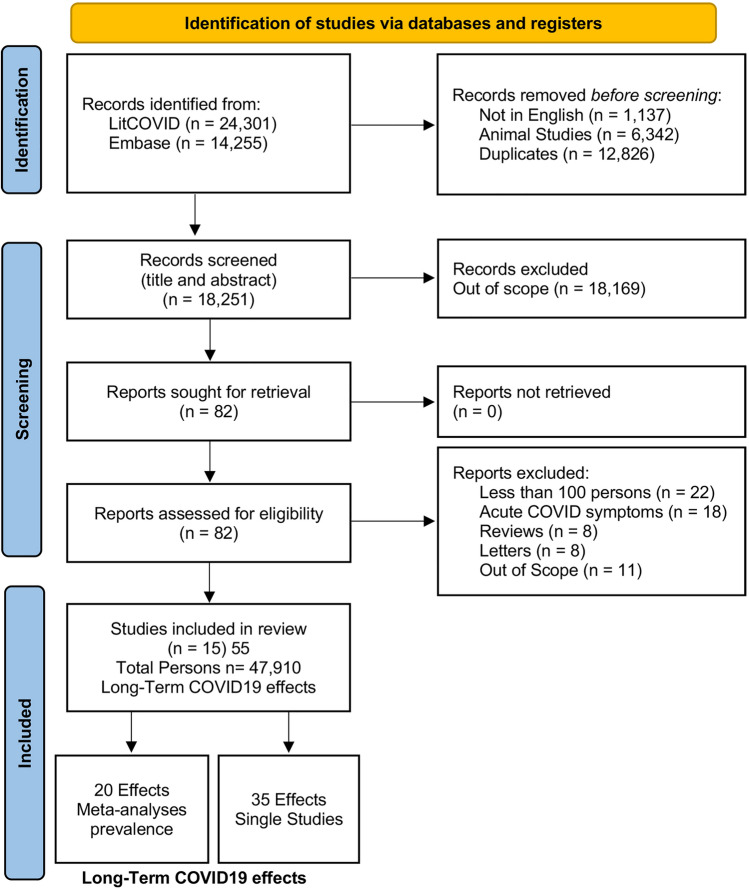
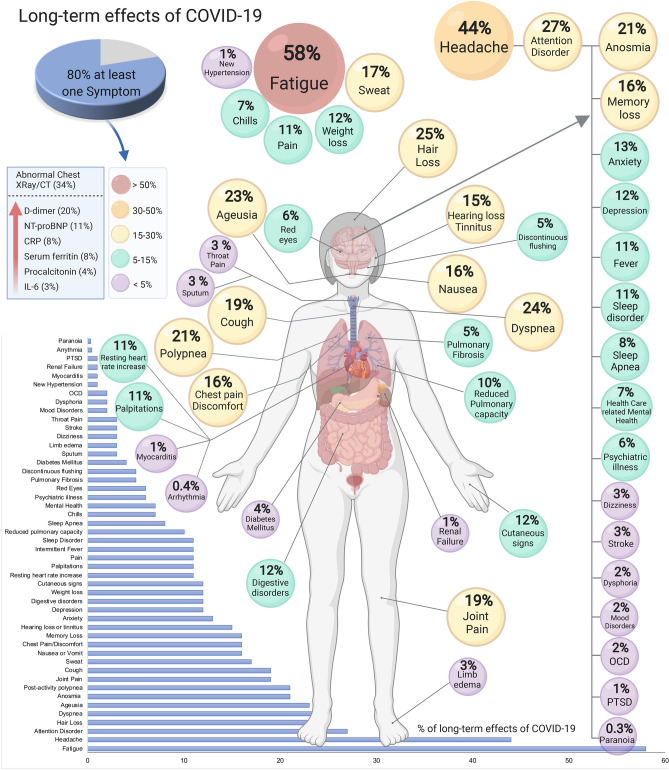
COVID-19 can involve persistence, sequelae, and other medical complications that last weeks to months after initial recovery. This systematic review and meta-analysis aims to identify studies assessing the long-term effects of COVID-19. LitCOVID and Embase were searched to identify articles with original data published before the 1st of January 2021, with a minimum of 100 patients. For effects reported in two or more studies, meta-analyses using a random-effects model were performed using the MetaXL software to estimate the pooled prevalence with 95% CI. PRISMA guidelines were followed. A total of 18,251 publications were identified, of which 15 met the inclusion criteria. The prevalence of 55 long-term effects was estimated, 21 meta-analyses were performed, and 47,910 patients were included (age 17-87 years). The included studies defined long-COVID as ranging from 14 to 110 days post-viral infection. It was estimated that 80% of the infected patients with SARS-CoV-2 developed one or more long-term symptoms. The five most common symptoms were fatigue (58%), headache (44%), attention disorder (27%), hair loss (25%), and dyspnea (24%). Multi-disciplinary teams are crucial to developing preventive measures, rehabilitation techniques, and clinical management strategies with whole-patient perspectives designed to address long COVID-19 care.
Overview
CoChat Summary
## TL;DR
This systematic review and meta-analysis identified 55 long-term effects of COVID-19 across 15 studies including 47,910 patients, estimating that 80% of infected patients developed one or more long-term symptoms. The most common reported effects were fatigue (58%), headache (44%), attention disorder (27%), hair loss (25%), and dyspnea (24%).
## Key findings
- The review screened 18,251 publications and included 15 studies; together they covered 47,910 patients aged 17–87 years.
- The authors identified 55 long-term effects of COVID-19 and performed 21 meta-analyses.
- Overall, an estimated 80% (95% CI 65–92) of COVID-19 patients had at least one long-term symptom.
- The five most common manifestations were fatigue (58%, 95% CI 42–73), headache (44%, 95% CI 13–78), attention disorder (27%, 95% CI 19–36), hair loss (25%, 95% CI 17–34), and dyspnea (24%, 95% CI 14–36).
- Among laboratory/imaging findings, abnormal chest X-ray/CT was observed in 34% (95% CI 27–42), with elevated D-dimer in 20% (95% CI 6–39) and NT-proBNP in 11% (95% CI 6–17).
## Methods
- Systematic review and meta-analysis following PRISMA guidelines; searches were run in LitCOVID and Embase for original studies published before January 1, 2021.
- Inclusion criteria required peer-reviewed English-language human studies with at least 100 patients and post-COVID-19 outcomes assessed 2 weeks or more after initial symptoms.
- Data extraction and study quality assessment were done by multiple reviewers; pooled prevalences were estimated with random-effects meta-analysis in MetaXL for outcomes reported in at least two studies, with heterogeneity assessed using I².
## Limitations
- The paper states that some outcomes had small sample sizes, limiting generalizability to the general population.
- It notes substantial heterogeneity across studies, mainly due to different follow-up times and mixed severity groups; it was also impossible to determine how long each symptom lasted.
- The paper states that many studies used self-reported questionnaires, creating possible reporting bias, and that outcomes may have been missed because studies used internally pre-defined symptom lists.
- Evident from the text: only English-language studies with at least 100 patients were included, so the review may miss smaller or non-English studies.
Model-written summary. Check it against the paper before relying on it.
Integrity signals
Registry
Cites
Statistics
Figures
Verification
Claims the paper makes
5 Valid · 0 Not valid · 8 Not checked · 41 Own results and interpretations
Every source the paper cites for this claim was checked and supports it.
In the paper
“a study reported high levels of depression, anxiety, and post-traumatic stress disorder (PTSD)37 in the long term in patients previously infected with other coronaviruses.”
§ More than 50 long-term effects of COVID-19: a systematic review and meta-analysis > Discussion
What the sources say
- Supportedcites [37] Rogers, J. P. et al. Psychiatric and neuropsychiatric presentations associated with severe coronavirus infections: A systematic review and meta-analysis with comparison to the COVID-19 pandemic. Lancet Psychiatry 7, 611–627. https://doi.org/10.1016/S2215-0366(20)30203-0 (2020). source
The Results report post-illness prevalence of anxiety disorders (14.8%), depression (14.9%), and PTSD (32.2%) among people who recovered from SARS or MERS, with mean follow-up times of 11.6, 22.6, and 33.6 months, respectively. The Discussion describes these prevalences as high, while cautioning that the studies could not clearly separate effects of infection from other factors. Page numbers were not provided in our copy. (LLM, conf=0.93)
plainstates an association- Asserted: passes — The authors put it forward as true.
- Checkable: passes — It can be checked against evidence.
- Load-bearing: unclear — It is unclear whether the paper’s conclusions depend on it.
- Based: passes — The paper gives a reason why it holds.
- Supported
The cited sources support only part of this claim — read each source’s verdict below.
In the paper
“Fatigue (58%) is the most common symptom of long and acute COVID-1923.”
§ More than 50 long-term effects of COVID-19: a systematic review and meta-analysis > Discussion
What the sources say
- Partly supportedcites [23] Townsend, L. et al. Persistent fatigue following SARS-CoV-2 infection is common and independent of severity of initial infection. PLoS One 15, e0240784. https://doi.org/10.1371/journal.pone.0240784 (2020). sourceExperimental — accuracy not yet measured
Townsend et al. (2020) support only that fatigue is common: the Introduction states it is 'recognised as one of the most common presenting complaints' in SARS-CoV-2 infection, with 44–69.6% in early case series and 34–46% in meta-analyses — figures the paper credits to other works it cites, and it never ranks fatigue as THE most common symptom of acute disease. For the convalescent/'long' COVID side, the Results (Prevalence of post-COVID fatigue) report 52.3% (67/128) meeting the CFQ-11 case definition at a median of 10 weeks, and the paper reports no symptom-prevalence comparison, so it does not establish fatigue as the most common long-COVID symptom either. The specific 58% magnitude attributed here matches nothing in our copy (the only nearby percentages are 52.3% fatigued cases and 57% of those offered an appointment who attended), so both the superlative and the number are unsupported. (LLM, conf=0.80)
plain- Asserted: passes — The authors put it forward as true.
- Checkable: passes — It can be checked against evidence.
- Load-bearing: unclear — It is unclear whether the paper’s conclusions depend on it.
- Based: passes — The paper gives a reason why it holds.
- Partly supported
The cited sources support only part of this claim — read each source’s verdict below.
In the paper
“It is present even after 100 days of the first symptom of acute COVID-194,23.”
§ More than 50 long-term effects of COVID-19: a systematic review and meta-analysis > Discussion
What the sources say
- Not checked yetcites [4] Townsend, L. et al. Persistent poor health post-COVID-19 is not associated with respiratory complications or initial disease severity. Ann. Am. Thorac. Soc. https://doi.org/10.1513/AnnalsATS.202009-1175OC (2021). source
- Partly supportedcites [23] Townsend, L. et al. Persistent fatigue following SARS-CoV-2 infection is common and independent of severity of initial infection. PLoS One 15, e0240784. https://doi.org/10.1371/journal.pone.0240784 (2020). sourceExperimental — accuracy not yet measured
Townsend et al. (2020) confirm persistent fatigue after the acute phase of SARS-CoV-2 infection, but at a median of 10 weeks (~70 days) from symptom onset (Abstract; Results, Participant characteristics: median interval 72 days, IQR 62-87; Table 2 'Days since Symptom Onset' medians 71 and 73). The only passage reaching beyond ~84 days is Table 1's follow-up band '>84 days (12 weeks)' (38 participants, 22 fatigued), and the Discussion explicitly frames the report as a 'medium time point' and calls for future longitudinal work 'to describe the persistence of fatigue at six months and beyond'. No passage in our copy states fatigue at or beyond 100 days from first symptom, so that specific qualifier of the citing sentence is not supported by this source. (LLM, conf=0.72)
plain- Asserted: passes — The authors put it forward as true.
- Checkable: passes — It can be checked against evidence.
- Load-bearing: unclear — It is unclear whether the paper’s conclusions depend on it.
- Based: passes — The paper gives a reason why it holds.
A result the paper reports from its own data — it cites no other source for it, so there is none to check. The quote shows it is in the paper.
In the paper
“The prevalence of 55 long-term effects was estimated”
- Also stated in: § Prevalence of long-term effects in COVID-19 patients · plain
“We identified a total of 55 long-term effects associated with COVID-19 in the literature reviewed”
§ More than 50 long-term effects of COVID-19: a systematic review and meta-analysis > Abstract
plainstates an associationn = 47,910- Asserted: passes — The authors put it forward as true.
- Checkable: passes — It can be checked against evidence.
- Load-bearing: passes — The paper’s conclusions depend on it.
- Based: passes — The paper gives a reason why it holds.
- Rests on an assumption not shown here.
- Also stated in: § Prevalence of long-term effects in COVID-19 patients · plain
A result the paper reports from its own data — it cites no other source for it, so there is none to check. The quote shows it is in the paper.
In the paper
“It was estimated that 80% of the infected patients with SARS-CoV-2 developed one or more long-term symptoms.”
- Also stated in: § Prevalence of long-term effects in COVID-19 patients · plain
“The meta-analysis of the studies (n = 7) that included an estimate for one symptom or more reported that 80% (95% CI 65–92) of the patients with COVID-19 have long-term symptoms.”
- Also stated in: § Discussion · boosted
“This systematic review and meta-analysis shows that 80% (95% CI 65–92) of individuals with a confirmed COVID-19 diagnosis continue to have at least one overall effect beyond 2 weeks following acute infection.”
§ More than 50 long-term effects of COVID-19: a systematic review and meta-analysis > Abstract
boostedn = 7- Asserted: passes — The authors put it forward as true.
- Checkable: passes — It can be checked against evidence.
- Load-bearing: passes — The paper’s conclusions depend on it.
- Based: passes — The paper gives a reason why it holds.
- Rests on an assumption not shown here.
- Also stated in: § Prevalence of long-term effects in COVID-19 patients · plain
27 more claims
Create a free account to see all 54 claims and to verify the 18 references still open.
- It may state two separate claims as one. 7
- Probably not a substantial claim. 17
Claims other papers make about this one
Each is checked against this paper’s own text: does it say what the citing paper says it does?
The source backs part of the claim, not all of it — or backs it for a different population, condition or comparison.
In the citing paper
“Mental health symptoms such as depression, anxiety and sleep problems are commonly observed in individuals suffering from acute COVID-19 infection to post-COVID-19 syndrome.”
From Psychological treatments for the mental health symptoms among individuals infected with COVID-19: a scoping review protocol (2023) · cites this paper as [4]
Experimental — accuracy not yet measuredThe cited source says what the claim attributes to it.
In the citing paper
“These mental health symptoms persist even after the acute stage of the disease.”
From Psychological treatments for the mental health symptoms among individuals infected with COVID-19: a scoping review protocol (2023) · cites this paper as [4]
The cited source says what the claim attributes to it.
In the citing paper
“Mental health symptoms are common in reports of a post-covid syndrome (4, 6).”
Citations
Cites
PRISMA-P Group, Moher, D., Shamseer, L., Clarke, M., Ghersi, D., Liberati, A., Petticrew, M., Shekelle, P., & Stewart, L. A. (2015) · Systematic Reviews · doi:10.1186/2046-4053-4-1 · Cited by 26,223
Shamseer, L., Moher, D., Clarke, M., Ghersi, D., Liberati, A., Petticrew, M., Shekelle, P., Stewart, L. A., & the PRISMA-P Group (2015) · BMJ · doi:10.1136/bmj.g7647 · Cited by 13,120
Persistent Symptoms in Patients After Acute COVID-19
Carfì, A., Bernabei, R., Landi, F., & for the Gemelli Against COVID-19 Post-Acute Care Study Group (2020) · JAMA · doi:10.1001/jama.2020.12603 · Cited by 4,561
Rogers, J. P., Chesney, E., Oliver, D., Pollak, T. A., McGuire, P., Fusar-Poli, P., Zandi, M. S., Lewis, G., & David, A. S. (2020) · The Lancet Psychiatry · doi:10.1016/s2215-0366(20)30203-0 · Cited by 2,407
Barendregt, J. J., Doi, S. A., Lee, Y. Y., Norman, R. E., & Vos, T. (2013) · Journal of Epidemiology and Community Health · doi:10.1136/jech-2013-203104 · Cited by 2,169
Cytokine release syndrome in severe COVID-19
Moore, J. B., & June, C. H. (2020) · Science · doi:10.1126/science.abb8925 · Cited by 1,912
Management of post-acute covid-19 in primary care
Greenhalgh, T., Knight, M., A’Court, C., Buxton, M., & Husain, L. (2020) · BMJ · doi:10.1136/bmj.m3026 · Cited by 1,689
Taquet, M., Luciano, S., Geddes, J. R., & Harrison, P. J. (2021) · The Lancet Psychiatry · doi:10.1016/s2215-0366(20)30462-4 · Cited by 1,484
Tenforde, M. W., Kim, S. S., Lindsell, C. J., Billig Rose, E., Shapiro, N. I., Files, D. C., Gibbs, K. W., Erickson, H. L., Steingrub, J. S., Smithline, H. A., et al. (2020) · MMWR. Morbidity and Mortality Weekly Report · doi:10.15585/mmwr.mm6930e1 · Cited by 1,319
Garrigues, E., Janvier, P., Kherabi, Y., Le Bot, A., Hamon, A., Gouze, H., Doucet, L., Berkani, S., Oliosi, E., Mallart, E., et al. (2020) · Journal of Infection · doi:10.1016/j.jinf.2020.08.029 · Cited by 1,157
Cited by
Items 901–1,000 of 1,003
On entering Australia’s third year with COVID‐19
Duckett, S. J., & Sutton, B. A. (2021) · The Medical Journal of Australia · doi:10.5694/mja2.51328 · Cited by 12
Blockade of endothelin receptors mitigates SARS-CoV-2-induced osteoarthritis
Au, M. T., Ni, J., Tang, K., Wang, W., Zhang, L., Wang, H., Zhao, F., Li, Z., Luo, P., Lau, L. C.-M., et al. (2024) · Nature Microbiology · doi:10.1038/s41564-024-01802-x · Cited by 11
Wu, Y., Ma, Y., Cao, J., Xie, R., Chen, F., Hu, W., & Huang, Y. (2023) · Frontiers in Nutrition · doi:10.3389/fnut.2023.1131972 · Cited by 11
“A large study involving more than 40,000 patients confirmed that a majority of cases (> 80%) presented at least one symptom 4 weeks after being diagnosed (8).”
BackgroundTsuchida, T., Ishibashi, Y., Inoue, Y., Ishizuka, K., Katayama, K., Hirose, M., Nakagama, Y., Kido, Y., Akashi, Y. J., Otsubo, T., et al. (2023) · Journal of General and Family Medicine · doi:10.1002/jgf2.670 · Cited by 11
Social Inequalities in Long-Term Health Effects After COVID-19—A Scoping Review
Lammers, N., Beese, F., Hoebel, J., Poethko‐Müller, C., & Wachtler, B. (2024) · International Journal of Public Health · doi:10.3389/ijph.2024.1606739 · Cited by 11
Allwang, C., Frank, T., Bruckmann, P., Dinkel, A., Binneböse, M., Wallis, H., Elgner, M., Giel, K. E., Schurr, M., Gündel, H., et al. (2024) · Frontiers in Psychiatry · doi:10.3389/fpsyt.2024.1305691 · Cited by 11
Singh, S., Kachhawaha, K., & Singh, S. K. (2024) · Biochemical Pharmacology · doi:10.1016/j.bcp.2024.116303 · Cited by 13
Factors associated with phenotypes of dyspnea in post-COVID-19 condition: a cross-sectional study
Smith, M. P., Sharpe, H. M., Damant, R. W., Ferrara, G., Lim, R., Stickland, M. K., & Lam, G. Y. (2024) · Scientific Reports · doi:10.1038/s41598-024-64370-4 · Cited by 12
Llana, T., Garcés-Arilla, S., Juan, M. ‐., Méndez-López, M., & Méndez, M. (2024) · Behavioural Brain Research · doi:10.1016/j.bbr.2024.115127 · Cited by 11
Lam, W. C., Wei, D., Li, H., Yao, L., Zhang, S., Lai, M. H. L., Zheng, Y., Yeung, W., Lau, A. Y. L., Lü, A., et al. (2024) · Frontiers in Neurology · doi:10.3389/fneur.2024.1406475 · Cited by 11
Aldhawyan, A. F., BuSaad, M. A., Alamri, B. A., Alsaihati, M. I., Alanazi, B. S., alanazi, R. A., & Bahamdan, A. S. (2024) · Journal of Primary Care & Community Health · doi:10.1177/21501319241295686 · Cited by 11
“15,69 In the present study, the overall prevalence of fatigue was 24.9% and was described as moderate or severe in 70.4% of patients.”
BackgroundInfluentialZhang, D., Zhang, B., Wu, Q., Zhou, T., Tong, J., Lu, Y., Chen, J., Wang, H., Chisolm, D. J., Jhaveri, R. R., et al. (2025) · Nature Communications · doi:10.1038/s41467-024-55273-z · Cited by 11
Uehara, T., Yotsuyanagi, H., Ohmagari, N., Doi, Y., Yamato, M., Imamura, T., Sakaguchi, H., Fukushi, A., Takeda, Y., Baba, K., et al. (2025) · Antiviral Research · doi:10.1016/j.antiviral.2025.106097 · Cited by 11
Scalzo, P. L., Marshall, A., Soriano, S., Curry, K. D., Dulay, M. F., Hodics, T. M., Quigley, E. M. M., Treangen, T. J., Piskorz, M. M., & Villapol, S. (2025) · Journal of Translational Medicine · doi:10.1186/s12967-025-06348-y · Cited by 12
“Further investigation is essential to determine whether interventions targeting the gut microbiota could mitigate neurological symptoms during the acute COVID-19 and influence the progression or prevention of Long COVID symptoms [102].”
Self-citationMarco, J. J. G., Pasquín, M. J. Á., Martín, S. M., & Miranda, A. P. J. (2022) · FMC - Formación Médica Continuada en Atención Primaria · doi:10.1016/j.fmc.2021.10.001 · Cited by 13
Wearable Sensor for Breath Rate Monitoring
Elgeziry, M., Costa, F., Tognetti, A., & Genovesi, S. (2022) · European Conference on Antennas and Propagation · doi:10.23919/eucap53622.2022.9769206 · Cited by 11
COVID-19 pandemic influence on self-reported health status and well-being in a society
Moniuszko-Malinowska, A. M., Czupryna, P., Dubatówka, M., Łapińska, M., Kazberuk, M., Szum-Jakubowska, A., Sołomacha, S., Sowa, P., Kiszkiel, Ł., Szczerbiński, Ł., et al. (2022) · Scientific Reports · doi:10.1038/s41598-022-12586-7 · Cited by 12
“The willingness of activity at home and mobility was lower in patients over 60 years (OR—0.27 and 0.47 respectively) (Tables 9, 10).”
BackgroundInfluentialRheumatoid arthritis and post-COVID-19 syndrome
Baimukhamedov, C., Botabekova, A., Dossybayeva, G., & Makhmudov, S. (2022) · Rheumatology Science and Practice · doi:10.47360/1995-4484-2022-276-279 · Cited by 14
Medicinal Mushrooms and Their Use to Strengthen Respiratory Health during and Post-COVID-19 Pandemic
Booi, H.-N., Lee, M.-K., Fung, S. Y., Ng, S. T., Tan, C.-S., Lim, K., Roberts, R. E., & Ting, K. (2022) · International journal of medicinal mushrooms · doi:10.1615/intjmedmushrooms.2022045068 · Cited by 12
Alamandine: A promising treatment for fibrosis
Fernandes, R. S., Netto, M. R. T., Carvalho, F. B., & Rigatto, K. (2022) · Peptides · doi:10.1016/j.peptides.2022.170848 · Cited by 12
Long‐COVID in people with intellectual disabilities: A call for research of a neglected area
Rawlings, G. H., & Beail, N. (2022) · British Journal of Learning Disabilities · doi:10.1111/bld.12499 · Cited by 11
Health-Related Quality of Life Among Patients Recovered From COVID-19
Huỳnh, G., Nguyen, B. T., Nguyen, H. T. N., Le, N. T., An, P. L., & Tran, T. D. (2022) · INQUIRY The Journal of Health Care Organization Provision and Financing · doi:10.1177/00469580221143630 · Cited by 14
Barış, S. A., Baydar, O., Çetinkaya, P. D., Fakılı, F., KÖKTÜRK, N., Kul, S., Kayalar, Ö., Tütüncü, Y., Azak, E., Kuluöztürk, M., et al. (2022) · Asian Pacific Journal of Tropical Medicine · doi:10.4103/1995-7645.354422 · Cited by 13
Delevatti, R. S., Danielevicz, A., Sirydakis, M. E. D. M., de Melo, P. U. G., Freitas, C. D. L. R., Rech, C. R., Guglielmo, L. G. A., Speretta, G. F. F., Hansen, F., Fonseca, F. R., et al. (2023) · Trials · doi:10.1186/s13063-022-07055-5 · Cited by 13
“Complications related to post-COVID-19 syndrome vary from organ dysfunctions, such as of the heart, lungs and brain [55], to fatigue, headaches, attention disorder, hair loss and dyspnea, which are five among the 55 manifestations considered most prevalent, according to a recent systematic review with meta-analysis [5…”
BackgroundAbzhandadze, T., Westerlind, E., & Persson, H. (2023) · BMC Public Health · doi:10.1186/s12889-023-15115-x · Cited by 11
Paranhos, A. C. M., Dias, Á. R. N., Bastos, T. D. R., Rodrigues, A. N., Santana, K. H. Y., Dias, L. H. A., dos Santos, L. P. M., Cerasi, A. J., Mendes, M. C. N., Oliveira, C. L. D., et al. (2023) · Frontiers in Neuroscience · doi:10.3389/fnins.2023.1161904 · Cited by 12
Prevalence of persistent symptoms after having COVID-19 in a cohort in Suriname
Krishnadath, I. S. K., Harkisoen, S., Gopie, F. A., van der Hilst, K., Hollum, M., Woittiez, L. R., & Baldew, S.-S. M. (2023) · Revista Panamericana de Salud Pública · doi:10.26633/rpsp.2023.79 · Cited by 11
Vadlamudi, N. K., Basham, C. A., Johnston, J. C., Khan, F. A., Migliori, G. B., Centis, R., D’Ambrosio, L., Jassat, W., Davies, M., Schwartzman, K., et al. (2022) · PLOS Global Public Health · doi:10.1016/j.jval.2023.03.178 · Cited by 11
COVID-19 and Vestibular Symptoms and Assessment: A Review
Aedo, C., Gutiérrez, G., & Aguilar-Vidal, E. (2023) · Audiology and Neurotology · doi:10.1159/000533448 · Cited by 12
“The main symptoms are headache, unexplained muscle or joint pain, and nonspeci fi c sensation of dizziness or unsteadiness [Lopez-Leon et al., 2021; Nalbandian et al., 2021].”
BackgroundReis, N. C. M., Dias, M. J. C., Sousa, L., Canedo, F., Rico, M. T., Henriques, M. A., & Baixinho, C. L. (2023) · Healthcare · doi:10.3390/healthcare11182561 · Cited by 11
Potential long-term neurological and gastrointestinal effects of COVID-19: A review of adult cohorts
Sherif, Z. A., Deverapalli, M., Challa, S. R., Martirosyan, Z., WHITESELL, P. L., Pizuorno, A., Naqvi, Z., Tulloch, I. K., Oskrochi, G., Brim, H., et al. (2023) · World Journal of Methodology · doi:10.5662/wjm.v13.i4.323 · Cited by 12
The Alfred Health post‐COVID ‐19 service, Melbourne, 2020–2022: an observational cohort study
Holland, A. E., Fineberg, D., Marceau, T., Chong, M., Beaman, J. H., Wilson, L., Buchanan, J., Uren, J., Corso, S. D., Lannin, N. A., et al. (2023) · The Medical Journal of Australia · doi:10.5694/mja2.52192 · Cited by 11
Spera, F. R., Mistrulli, R., Salerno, L., Vannini, F., Muthukkattil, M. L., Falcetti, R., Segal, T. Y., Barbato, E., & Buonsenso, D. (2024) · Current Clinical Microbiology Reports · doi:10.1007/s40588-024-00217-w · Cited by 14
“Recent evidence has unveiled a link between COVID-19 and the appearance of dysautonomic conditions, such as POTS and IST, which may be characterizing signs and symptoms of long COVID [25].”
Mattioli, L., Frosini, M., Corazza, I., Fiorino, S., Zippi, M., Micucci, M., & Budriesi, R. (2024) · Phytotherapy Research · doi:10.1002/ptr.8163 · Cited by 13
“…common symptoms of Long COVID-19 (caused directly by the virus or by the trauma of the infection) consist of widespread fatigue, headache, attention disorders, dyspnea, and gastrointestinal (GI) alterations, including dysgeusia (Lopez-Leon et al., 2021; Mandal et al., 2021; Thomas et al., 2022).”
BackgroundFracella, M., Mancino, E., Nenna, R., Virgillito, C., Frasca, F., D’Auria, A., Sorrentino, L., Petrarca, L., Regina, D. P. L., Matera, L., et al. (2024) · European Journal of Immunology · doi:10.1002/eji.202350682 · Cited by 11
Prevalence of long COVID symptoms in Haryana, India: a cross-sectional follow-up study
Chaudhry, D., Khandelwal, S., Bahadur, C., Daniels, B., Bhattacharyya, M., Gangakhedkar, R., Desai, S., Das, J., Gupta, U., Singh, V., et al. (2024) · The Lancet Regional Health - Southeast Asia · doi:10.1016/j.lansea.2024.100395 · Cited by 12
Schmid, S. R., Uecker, C., Fröhlich, A., & Langhorst, J. (2024) · European Archives of Psychiatry and Clinical Neuroscience · doi:10.1007/s00406-024-01792-1 · Cited by 11
“Six months after the acute infection with COVID-19 fatigue/myalgia is reported as the main symptom in about 58% to 65% of patients with CFS [9–11].”
Health problems in elite Para athletes — A prospective cohort study of 53,739 athlete days
Busch, A., Kubosch, E. J., Leonhart, R., Meidl, V., Bretthauer, B., Dallmann, P., Steffen, K., & Hirschmüller, A. (2025) · Journal of science and medicine in sport · doi:10.1016/j.jsams.2025.01.005 · Cited by 12
Más allá de la infección aguda por SARS-CoV-2: un nuevo desafío para la Medicina Interna
Martín-Garrido, I., & Medrano, F. J. (2021) · Revista Clínica Española · doi:10.1016/j.rce.2021.09.005 · Cited by 11
Fisioterapia respiratoria post-COVID-19: algoritmo de decisión terapéutica
Etxarri, A. A., Lista-Paz, A., Alcaraz-Serrano, V., Escudero-Romero, R., Herrero‐Cortina, B., Corberó, A. B., Sebio-Garcia, R., Vilaró, J., & Gimeno‐Santos, E. (2021) · Open Respiratory Archives · doi:10.1016/j.opresp.2021.100139 · Cited by 12
Depressive states in the structure of postcovid syndrome: features and therapy
Петрова, Н. Н., Kudryashov, A. V., Matvievskaya, O. V., Mukhin, A. A., Lavrova, V. A., Chumakov, E. M., Yaltseva, N. V., Kuzmina, S. V., Kostina, N. V., Akimova, E. V., et al. (2022) · V M BEKHTEREV REVIEW OF PSYCHIATRY AND MEDICAL PSYCHOLOGY · doi:10.31363/2313-7053-2022-56-1-16-24 · Cited by 11
Middleton, S., Dimbath, E. D., Pant, A., George, S. M., Maddipati, V., Peach, M. S., Yang, K., Ju, A. W., & Vahdati, A. (2022) · Computers in Biology and Medicine · doi:10.1016/j.compbiomed.2022.105513 · Cited by 11
Chronic lung lesions in COVID-19 survivors: predictive clinical model
de Carvalho, C. R. R., Chate, R. C., Sawamura, M. V. Y., Garcia, M. L., Lamas, C. A., Cárdenas, D. A. C., de Lima, D. M., Scudeller, P. G., Salge, J. M., Nomura, C. H., et al. (2022) · BMJ Open · doi:10.1136/bmjopen-2021-059110 · Cited by 13
Wijesekara, P. A. D. S. N., & Wang, Y. (2022) · COVID · doi:10.3390/covid2060059 · Cited by 20
Muñoz-Jurado, A., Escribano, B. M., Agüera, E., Caballero‐Villarraso, J., Galván, A., & Túnez, I. (2022) · Journal of Neurology · doi:10.1007/s00415-022-11237-1 · Cited by 14
Prevalence of Hair Loss After COVID-19 Infection in Makkah Region, Saudi Arabia
Abdulwahab, R. A., Aldajani, B. M., Natto, N. K., Janabi, A. M., Alhijaili, O. I., Faqih, N. T., & Alharbi, A. H. S. (2022) · Cureus · doi:10.7759/cureus.29285 · Cited by 11
Geng‐Ramos, G., Nelson, J., Lee, A. C., Deutsch, N., Challa, C. K., Pestieau, S. R., Rana, M. S., Hubbard, M., & Cronin, J. A. (2022) · Pediatric Anesthesia · doi:10.1111/pan.14585 · Cited by 11
A Review of Long COVID With a Special Focus on Its Cardiovascular Manifestations
Yousif, E., & Premraj, S. (2022) · Cureus · doi:10.7759/cureus.31933 · Cited by 12
Bulla, R., Rossi, L., Furlanis, G., Agostinis, C., Toffoli, M., Balduit, A., Mangogna, A., Liccari, M., Morosini, G., Kishore, U., et al. (2023) · Frontiers in Immunology · doi:10.3389/fimmu.2023.1191083 · Cited by 12
Smartphone-based evaluation of static balance and mobility in long-lasting COVID-19 patients
Corrêa, B. D. C., Santos, E. G. R., Belgamo, A., Pinto, G. H. L., Xavier, S. S., Silva, C. C., Dias, Á. R. N., Paranhos, A. C. M., Cabral, A. D. S., Callegari, B., et al. (2023) · Frontiers in Neurology · doi:10.3389/fneur.2023.1277408 · Cited by 12
Platz, T., Berghem, S., Berlit, P., Dewey, S., Dohle, C., Fickenscher, H., Grill, E., Guha, M., Köllner, V., Krämer, A., et al. (2022) · Die Rehabilitation · doi:10.1055/a-1844-9984 · Cited by 11
“Die berichteten Fachabteilungen, in denen Long COVID behandelt wird, entspricht der Vielfalt an Symptomen (von pneumologischen, neurologischen, kardiologischen bis zu psychischen Spätfolgen), die epidemiologische Studien für Long-/Post-COVID feststellen [8].”
BackgroundInfluentialMatits, L., Munk, M., Bizjak, D. A., Kolassa, I.-T., Karrasch, S., Vollrath, S., Jerg, A., & Steinacker, J. M. (2023) · Brain, Behavior, & Immunity - Health · doi:10.1016/j.bbih.2023.100614 · Cited by 10
Oxytocin, the panacea for long-COVID? a review
Diep, P.-T., Chaudry, M., Dixon, A., Chaudry, F., & Kasabri, V. N. (2022) · Hormone Molecular Biology and Clinical Investigation · doi:10.1515/hmbci-2021-0034 · Cited by 7
Marcilla-Toribio, I., Moratalla-Cebrian, M. L., Notario‐Pacheco, B., López, M. Á. E., Morales-Cuenca, N., & Martínez-Andrés, M. (2024) · Frontiers in Public Health · doi:10.3389/fpubh.2024.1355973 · Cited by 10
Long-Term Patient Symptoms and Quality of Life in Adults After COVID-19: A Real Life Study
Perez, O., Santibáñez, M., Rasines, L., Castillo, J. M., & Llorente, A. H. A. (2024) · Open Respiratory Archives · doi:10.1016/j.opresp.2024.100336 · Cited by 10
Mo, C. C., Richardson, E., Calabretta, E., Corrado, F., Kocoglu, M. H., Baron, R. M., Connors, J. M., Iacobelli, M., Wei, L. J., Rapoport, A. P., et al. (2024) · Blood Reviews · doi:10.1016/j.blre.2024.101218 · Cited by 10
Medical education during the coronavirus disease 2019 pandemic: an umbrella review
Nejadghaderi, S. A., Khoshgoftar, Z., Fazlollahi, A., & Nasiri, M. J. (2024) · Frontiers in Medicine · doi:10.3389/fmed.2024.1358084 · Cited by 10
“Moreover, fatigue, headache, and attention disorders were three most common long-term adverse events of COVID-19 (3).”
BackgroundFurlanis, G., Stella, A. B., Torresin, G., Michelutti, M., Ajčević, M., & Manganotti, P. (2024) · Clinical Neurology and Neurosurgery · doi:10.1016/j.clineuro.2024.108522 · Cited by 11
Premraj, L., Weaver, N., Ahmad, S. A., White, N. M., Whitman, G. R., Arora, R. C., Battaglini, D., Fanning, J. P., Dalton, H. J., Suen, J. Y., et al. (2024) · Heart & Lung · doi:10.1016/j.hrtlng.2024.09.001 · Cited by 10
Unraveling the SARS-CoV-2 spike protein long-term effect on neuro-PASC
Menezes, F., Palmeira, J. D. F., Oliveira, J. D. S., Argañaraz, G. A., Soares, C. R. J., Nóbrega, O. D. T., Ribeiro, B. M., & Argañaraz, E. R. (2024) · Frontiers in Cellular Neuroscience · doi:10.3389/fncel.2024.1481963 · Cited by 10
Long COVID in pediatric age: an observational, prospective, longitudinal, multicenter study in Italy
Esposito, S., Puntoni, M., Deolmi, M., Ramundo, G., Maglietta, G., Poeta, M., Zampogna, S., Colomba, C., Suppiej, A., Cardinale, F., et al. (2025) · Frontiers in Immunology · doi:10.3389/fimmu.2025.1466201 · Cited by 11
Sasso, E. M., Eaton-Fitch, N., Smith, P. K., Muraki, K., & Marshall‐Gradisnik, S. (2025) · Frontiers in Molecular Biosciences · doi:10.3389/fmolb.2025.1582967 · Cited by 10
“…inflammation,lossofsmellandtaste,andmultiplesystemsymptoms 10.3389/fmolb.2025.1582967 (gastrointestinal, cardiovascular, respiratory, and neurological) (JaffalandAbbas,2021),whicharealsooftenobservedinindividuals with long COVID (Davis et al., 2021; Lopez-Leon et al., 2021; Carfi et al., 2020).”
Influentialdos Santos, C. A. L., Monteiro, A. A. D. A., Costa, A. R., Barros, L. M., Aloufi, A. D., Almutairi, M. M., Hassan, W., Kamdem, J. P., Duarte, A. E., Ali, A., et al. (2025) · Scientific Reports · doi:10.1038/s41598-025-93121-2 · Cited by 10
“The synthetic accessibility of ALA was evaluated at 2.87.”
InfluentialBody Mass Index in Children Before, During, and After the COVID-19 Pandemic
Jensen, F. K., Gribsholt, S. B., Schwartz, S., Andersen, A. L., & Bruun, J. M. (2025) · JAMA Network Open · doi:10.1001/jamanetworkopen.2025.19528 · Cited by 11
Autoimmune mediated hyperkinetic movement disorders in SARS-CoV-2 infection — a systematic review
Hirschfeld, A. S. (2021) · Neurologia i Neurochirurgia Polska · doi:10.5603/pjnns.a2021.0069 · Cited by 11
“Nevertheless, 80% of convalescents suffer from various types of long-term ailments [5], in some cases lasting up to months [6].”
BackgroundVertebral Algic Syndrome Treatment in Long COVID—Cases Reports
Džubera, A., Chochol, J., Illéš, R., Chocholová, A., & Zemková, E. (2021) · International Journal of Environmental Research and Public Health · doi:10.3390/ijerph182111457 · Cited by 10
Modelling the impact of age-stratified public health measures on SARS-CoV-2 transmission in Canada
Gabriele-Rivet, V., Spence, K. L., Ogden, N. H., Fazil, A., Turgeon, P., Otten, A., Waddell, L. A., & Ng, V. (2021) · Royal Society Open Science · doi:10.1098/rsos.210834 · Cited by 11
Long COVID-19 and the Role of the Patient–Clinician Interaction in Symptom Management
Calabrese, L. H., & Colloca, L. (2022) · Journal of Patient Experience · doi:10.1177/23743735221077514 · Cited by 10
Ulrich, A. K., Sundaram, M. E., & Osterholm, M. T. (2022) · JAMA Otolaryngology–Head & Neck Surgery · doi:10.1001/jamaoto.2021.4279 · Cited by 10
Uma revisão integrativa das sequelas da COVID-19
Aguiar, B. F., Lind, J., Netto, H. P., Böger, B., Tiepo, R., Ramos, M. P., & Rocha, J. L. L. (2022) · Revista Brasileira em Promoção da saúde · doi:10.5020/18061230.2022.12606 · Cited by 17
Multiple sclerosis patients’ response to COVID-19 pandemic and vaccination in Egypt
Gad, A. H. E., Ahmed, S. M., Garadah, M. Y. A., & Dahshan, A. (2022) · The Egyptian Journal of Neurology Psychiatry and Neurosurgery · doi:10.1186/s41983-022-00573-8 · Cited by 10
“Long-term manifestations [6] reported by the patients are shown in Table 2.”
BackgroundPost–COVID-19 syndrome/condition or long COVID: Persistent illness after acute SARS CoV-2 infection
Allard, N., Miller, A., Morgan, M. A. J., & Chakraborty, S. P. (2022) · Australian Journal of General Practice · doi:10.31128/ajgp-05-22-6429 · Cited by 10
COVID-19 vaccination does not affect male sexual functions
Mehta, P., Chakraborty, A., Andrabi, S. W., Sharma, B., Kumar, R., Bhaskar, L. V., & Rajender, S. (2023) · Reproductive Biology and Endocrinology · doi:10.1186/s12958-022-01052-8 · Cited by 10
Varona, J. F., Landete, P., Paredes, R., Vates, R., Torralba, M., Guisado‐Vasco, P., Porras, L., Muñóz, P., Gijón, P., Ancochea, J., et al. (2023) · Frontiers in Cellular and Infection Microbiology · doi:10.3389/fcimb.2023.1097809 · Cited by 10
Should We Expect an Increase in the Number of Cancer Cases in People with Long COVID?
Amiama-Roig, A., Pérez‐Martínez, L., Ledo, P. R., Verdugo‐Sivianes, E. M., & Blanco, J. R. (2023) · Microorganisms · doi:10.3390/microorganisms11030713 · Cited by 10
Successful Treatment of Post-COVID-19 ADHD-like Syndrome: A Case Report
Victor, M. M., Haas, L. M., Grevet, E. H., & Rohde, L. A. (2023) · Journal of Attention Disorders · doi:10.1177/10870547231168338 · Cited by 14
“Indeed, Manu (2022) has suggested the potential utility of Methylphenidate in PCS treatment, considering the usefulness of this drug in improving fatigue, attention, concentration, and memory.”
BackgroundCOVID-19 Anti-Vaccine Sentiments in Malaysia: Narratives of Comments from Facebook Post
Wong, L. P., Alias, H., Wong, Y., Hashim, M. M. A. A. M., Lin, Y., & Hu, Z. (2023) · Vaccines · doi:10.3390/vaccines11040834 · Cited by 12
Raunkiær, M., Jørgensen, D. S., Rasmussen, A., Johannesen, G., Thuesen, J., Elnegaard, C. M., & Dupont, S. B. (2023) · Journal of Clinical Nursing · doi:10.1111/jocn.16739 · Cited by 10
Bogale, K. A., Zeru, T., Tarekegn, M., Shiferaw, M. B., Worku, M., Asrat, A., Adamu, A., Mulu, Y., Getachew, A., & Ambaw, F. (2023) · BMC Public Health · doi:10.1186/s12889-023-15889-0 · Cited by 10
Induced Relaxation Enhances the Cardiorespiratory Dynamics in COVID-19 Survivors
Sánchez-Solís, A. M., Peláez-Hernández, V., Santiago-Fuentes, L. M., Rodríguez, G. L. L., Lagos, J. J. R., & Orea‐Tejeda, A. (2023) · Entropy · doi:10.3390/e25060874 · Cited by 11
Post-COVID-19 Syndrome in Neurology Patients: A Single Center Experience
Hegna, E., Rački, V., Hero, M., Papić, E., Rožmarić, G., Radović, K., Komen, V., Bralić, M., Škifić, M. L., Bonifačić, D., et al. (2023) · Pathogens · doi:10.3390/pathogens12060796 · Cited by 11
Infection, Dysbiosis and Inflammation Interplay in the COVID Era in Children
Ailioaie, L. M., Ailioaie, C., & Litscher, G. (2023) · International Journal of Molecular Sciences · doi:10.3390/ijms241310874 · Cited by 11
Jones, C. M., Ferguson, S. G., O'Connor, D. B., & Schüz, B. (2023) · Health Psychology · doi:10.1037/hea0001305 · Cited by 10
Long COVID Symptoms in Non-Hospitalised Patients: A Retrospective Study
Oliveira, A. M., Coelho, C. F., Filipa, L., Pinto, I. C., Atabão, J. B., Cabrita, R., Paraíso, R., Mesquita, E. M., Torrado, D., Marquez, P. O., et al. (2023) · Acta Médica Portuguesa · doi:10.20344/amp.19566 · Cited by 12
Moine, E., Molinier, V., Castanyer, A., Calvat, A., Coste, G., Vernet, A., Faugé, A., Magrina, P., Aliaga-Parera, J. L., Oliver, N., et al. (2024) · International Journal of Environmental Research and Public Health · doi:10.3390/ijerph21020242 · Cited by 10
Current landscape of long COVID clinical trials
Bhattacharya, M., Chatterjee, S., Saxena, S., Nandi, S. S., Lee, S., & Chakraborty, C. (2024) · International Immunopharmacology · doi:10.1016/j.intimp.2024.111930 · Cited by 10
Insights into early recovery from Long COVID—results from the German DigiHero Cohort
Diexer, S., Klee, B., Gottschick, C., Broda, A., Purschke, O., Binder, M., Gekle, M., Girndt, M., Hoell, J. I., Moor, I., et al. (2024) · Scientific Reports · doi:10.1038/s41598-024-59122-3 · Cited by 10
Nikhat, S., & Fazil, M. (2024) · Phytomedicine Plus · doi:10.1016/j.phyplu.2024.100570 · Cited by 10
Jia, S., Yin, Z., Pan, H., Wang, F., Liu, X., Wang, Q., Zhang, L., Tang, J., Yang, H., Du, J., et al. (2024) · Emerging Microbes & Infections · doi:10.1080/22221751.2024.2332660 · Cited by 10
Vazirani, R., Feltes, G. I., Hoyo, R. S.-D., Viana-Llamas, M. C., Raposeiras‐Roubín, S., Romero, R., Alfonso‐Rodríguez, E., Uribarri, A., Santoro, F., Becerra‐Muñoz, V. M., et al. (2024) · Journal of Clinical Medicine · doi:10.3390/jcm13092596 · Cited by 11
Respiratory training effects in Long COVID-19 patients: a systematic review and meta-analysis
Mateo, A. C., Reychler, G., Ciuró, A. H., Núñez, J. M., Ortíz‐Rubio, A., Navas‐Otero, A., & Valenza, M. C. (2024) · Expert Review of Respiratory Medicine · doi:10.1080/17476348.2024.2358933 · Cited by 11
Gutiérrez-Canales, L. G., Muñoz-Corona, C., Barrera-Chávez, I., Viloria-Álvarez, C., Macías, A. E., Martínez-Navarro, L. J., Alvarez, J. A., Scavo-Montes, D. A., & Guaní-Guerra, E. (2024) · Medicina · doi:10.3390/medicina60060944 · Cited by 10
“In addition to more than 770 million cases and 6.9 million deaths [1], COVID-19 has had other important consequences, one of which is the recent concept of “long-COVID” or “post-COVID syndrome”, which some experts describe as the persistence of symptoms after SARS-CoV-2 infection [2].”
BackgroundInfluentialHomma, S. T., Wang, X., Frere, J. J., Gower, A. C., Zhou, J., Lim, J. K., tenOever, B. R., & Zhou, L. (2024) · Biomedicines · doi:10.3390/biomedicines12071443 · Cited by 10
The Silent Syndrome of Long COVID and Gaps in Scientific Knowledge: A Narrative Review
da Silva, R., Vallinoto, A. C. R., & dos Santos, E. J. M. (2024) · Viruses · doi:10.3390/v16081256 · Cited by 12
“The spectrum of symptoms is systemic, and the pathogenesis may be related to the direct action of SARS-CoV-2 or a consequence of the thromboembolic inflammatory response to infection [9].”
BackgroundInfluentialProteomic analysis of post-COVID condition: Insights from plasma and pellet blood fractions
Seco-González, A., Antelo-Riveiro, P., Bravo, S. B., Garrido, P. F., Domínguez-Santalla, M. J., Rodríguez‐Ruiz, E., Piñeiro, Á., & García‐Fandiño, R. (2024) · Journal of Infection and Public Health · doi:10.1016/j.jiph.2024.102571 · Cited by 10
Malioukis, A., Snead, R. S., Marczika, J., & Ambalavanan, R. (2024) · Biomedicines · doi:10.3390/biomedicines12122831 · Cited by 10
A Mixed Methods Study of Functioning and Rehabilitation Needs Following COVID-19
Backmann, T., Maribo, T., Zwisler, A., Davidsen, J. R., & Rottmann, N. (2021) · Frontiers in Rehabilitation Sciences · doi:10.3389/fresc.2021.710410 · Cited by 10
Frutos, M. D. L. P. S., & García-Pérez-de-Sevilla, G. (2022) · Revista da Associação Médica Brasileira · doi:10.1590/1806-9282.20211040 · Cited by 10
“Also, mortality associated with ages between 20 and 49 years is relatively low, which is around 0.0092% 7 .”
BackgroundInfluentialTelematics program of breathing exercises and mindfulness for post-coronavirus disease 2019 patients
Frutos, M. D. L. P. S., Morales, M. B., García-Pérez-de-Sevilla, G., González-de-la-Flor, Á., Morales, C. R., & Alonso, M. R. (2022) · Revista da Associação Médica Brasileira · doi:10.1590/1806-9282.20211336 · Cited by 10
Metadata
- Authors
- Lopez-Leon, S., Wegman-Ostrosky, T., Perelman, C., Sepulveda, R., Rebolledo, P. A., Cuapio, A., & Villapol, S.
- Affiliations
- Universidad Nacional Autónoma de México (MX)
- Emory University (US)
- Houston Methodist (US)
- Corresponding author
- Villapol, Sonia
- ORCID
- Venue
- Scientific Reports
- Published
- 2021-08-09
- Volume
- 11
- Issue
- 1
- Pages
- 16144-16144
- ISSN
- 2045-2322 (ISSN-L)
- PMC
- PMC8352980
- OpenAlex
- W3133517424
- Cited by
- 2,757
- References
- 51
- Citations by year
- 2026: 130 · 2025: 278 · 2024: 510 · 2023: 728 · 2022: 776 · 2021: 331
- FWCI
- 75.19
- Type
- journal article
- Language
- en
- Open access
- gold
- doi.org
- Licence
- cc-by
- creativecommons.org/licenses/by/4.0 (tdm)
- creativecommons.org/licenses/by/4.0 (vor)
- Locations
- Scientific Reports (publishedVersion, cc-by)
- medRxiv (acceptedVersion, cc-by-nc-nd)
- PubMed Central (publishedVersion, cc-by)
- PubMed (publishedVersion)
- Europe PMC (PubMed Central) (submittedVersion, cc-by-nc-nd)
- PubMed Central (submittedVersion, cc-by-nc-nd)
- DOAJ (DOAJ: Directory of Open Access Journals) (submittedVersion, cc-by-sa)
- Funders
- Houston Methodist Research Institute
- Topics
- Health Sciences › Medicine › Clinical Neurology › Long-Term Effects of COVID-19
- Health Sciences › Medicine › Infectious Diseases › COVID-19 Clinical Research Studies
- Social Sciences › Psychology › Clinical Psychology › COVID-19 and Mental Health
- Keywords
- long COVID, long-term effects of COVID-19, SARS-CoV-2, post-acute sequelae, fatigue, headache, attention disorders, hair loss, dyspnea, prevalence, multidisciplinary care, rehabilitation
About these checks
Registry, retraction, Cites and statistics results are computed, not judged, with one exception: a printed reference that no index lists is read once by a model before it counts as a citation error. Claims are extracted by a model and kept only when their quote appears verbatim in the text; each cited source is then checked, with a model’s help, for whether it says what the claim relies on. Those verdicts can be wrong — read the claim’s quote and the cited source before relying on one.
The claim verdicts this report counts are experimental: their accuracy is not yet measured.
A language model drew the claims from the paper on 2026-10-11, under version 3 of the claim definition (model deepseek-v4.1-flash, prompt extract-v3).
A second model labelled each claim on 2026-10-11 (model jev-1.13-20260917, definition revision gold-guideline-v0.2).
Cited sources are checked with a language model’s help (gpt-6-sol and qwen3.8-omni-flash).
Statistics and arithmetic are recomputed, not judged.
Confidence bands are shown only for fields calibrated on our annotated test set. None is calibrated yet, so no band is shown.
What counts as a claim ›How we measure confidence ›How we check this ›
Are you an author, or do you see a problem with this page? Request a review
Data sources
Bibliographic data: Semantic Scholar, OpenAlex, Crossref.
Contains information from the Semantic Scholar Academic Graph Datasets, made available under the ODC Attribution License (ODC-BY 1.0).
Semantic Scholar’s data is described in: Kinney, R., et al. (2023). The Semantic Scholar Open Data Platform. arXiv:2301.10140.
