

More than 50 long-term effects of COVID-19: a systematic review and meta-analysis
Open accessPublished version of a preprint
The DOI matches its Crossref record; 51 of the 51 references it cites were found in a registry or an index; 5 of the 23 sources its claims cite were checked for support.
Abstract
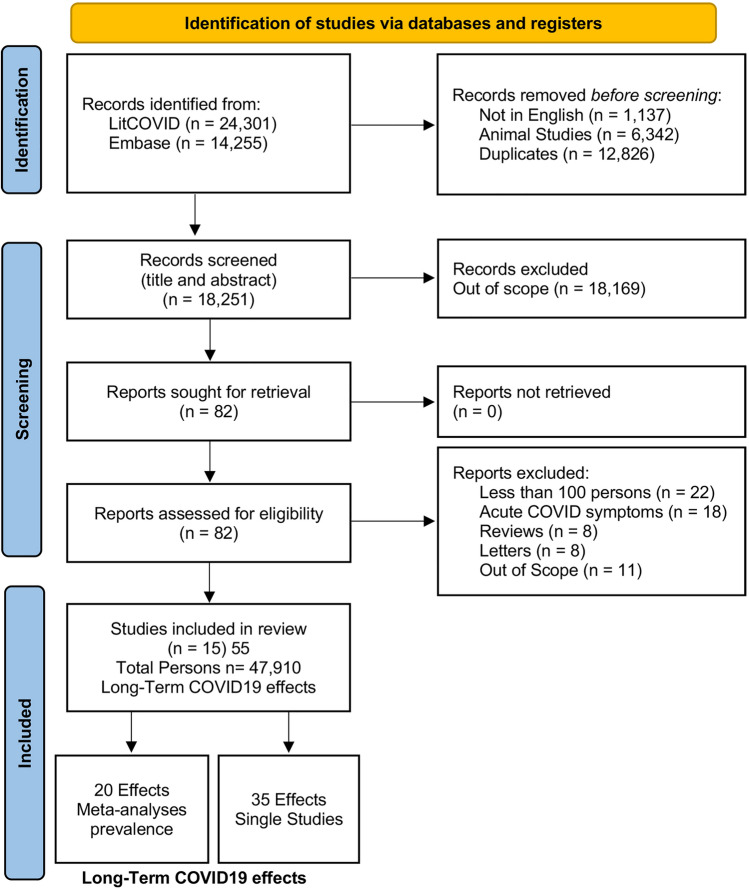
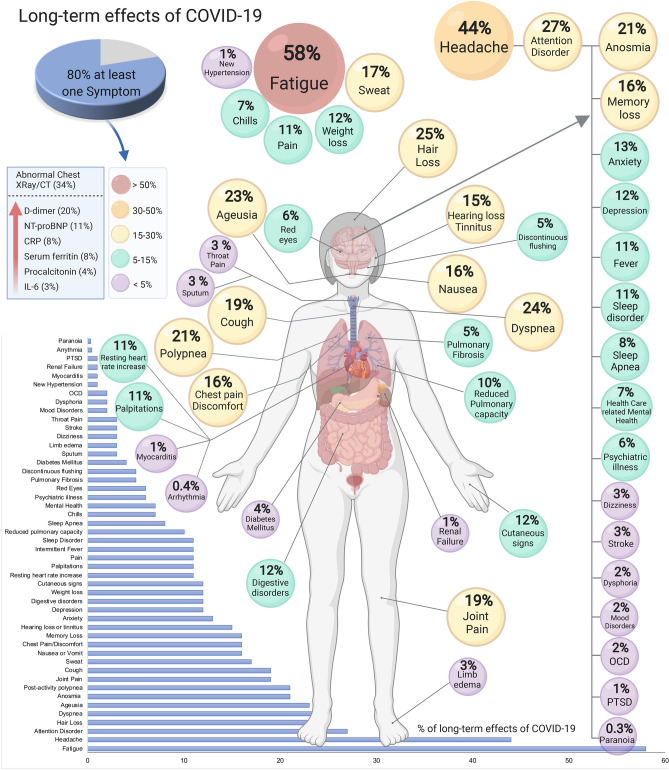
COVID-19 can involve persistence, sequelae, and other medical complications that last weeks to months after initial recovery. This systematic review and meta-analysis aims to identify studies assessing the long-term effects of COVID-19. LitCOVID and Embase were searched to identify articles with original data published before the 1st of January 2021, with a minimum of 100 patients. For effects reported in two or more studies, meta-analyses using a random-effects model were performed using the MetaXL software to estimate the pooled prevalence with 95% CI. PRISMA guidelines were followed. A total of 18,251 publications were identified, of which 15 met the inclusion criteria. The prevalence of 55 long-term effects was estimated, 21 meta-analyses were performed, and 47,910 patients were included (age 17-87 years). The included studies defined long-COVID as ranging from 14 to 110 days post-viral infection. It was estimated that 80% of the infected patients with SARS-CoV-2 developed one or more long-term symptoms. The five most common symptoms were fatigue (58%), headache (44%), attention disorder (27%), hair loss (25%), and dyspnea (24%). Multi-disciplinary teams are crucial to developing preventive measures, rehabilitation techniques, and clinical management strategies with whole-patient perspectives designed to address long COVID-19 care.
Overview
CoChat Summary
## TL;DR
This systematic review and meta-analysis identified 55 long-term effects of COVID-19 across 15 studies including 47,910 patients, estimating that 80% of infected patients developed one or more long-term symptoms. The most common reported effects were fatigue (58%), headache (44%), attention disorder (27%), hair loss (25%), and dyspnea (24%).
## Key findings
- The review screened 18,251 publications and included 15 studies; together they covered 47,910 patients aged 17–87 years.
- The authors identified 55 long-term effects of COVID-19 and performed 21 meta-analyses.
- Overall, an estimated 80% (95% CI 65–92) of COVID-19 patients had at least one long-term symptom.
- The five most common manifestations were fatigue (58%, 95% CI 42–73), headache (44%, 95% CI 13–78), attention disorder (27%, 95% CI 19–36), hair loss (25%, 95% CI 17–34), and dyspnea (24%, 95% CI 14–36).
- Among laboratory/imaging findings, abnormal chest X-ray/CT was observed in 34% (95% CI 27–42), with elevated D-dimer in 20% (95% CI 6–39) and NT-proBNP in 11% (95% CI 6–17).
## Methods
- Systematic review and meta-analysis following PRISMA guidelines; searches were run in LitCOVID and Embase for original studies published before January 1, 2021.
- Inclusion criteria required peer-reviewed English-language human studies with at least 100 patients and post-COVID-19 outcomes assessed 2 weeks or more after initial symptoms.
- Data extraction and study quality assessment were done by multiple reviewers; pooled prevalences were estimated with random-effects meta-analysis in MetaXL for outcomes reported in at least two studies, with heterogeneity assessed using I².
## Limitations
- The paper states that some outcomes had small sample sizes, limiting generalizability to the general population.
- It notes substantial heterogeneity across studies, mainly due to different follow-up times and mixed severity groups; it was also impossible to determine how long each symptom lasted.
- The paper states that many studies used self-reported questionnaires, creating possible reporting bias, and that outcomes may have been missed because studies used internally pre-defined symptom lists.
- Evident from the text: only English-language studies with at least 100 patients were included, so the review may miss smaller or non-English studies.
Model-written summary. Check it against the paper before relying on it.
Integrity signals
Registry
Cites
Statistics
Figures
Verification
Claims the paper makes
5 Valid · 0 Not valid · 8 Not checked · 41 Own results and interpretations
Every source the paper cites for this claim was checked and supports it.
In the paper
“a study reported high levels of depression, anxiety, and post-traumatic stress disorder (PTSD)37 in the long term in patients previously infected with other coronaviruses.”
§ More than 50 long-term effects of COVID-19: a systematic review and meta-analysis > Discussion
What the sources say
- Supportedcites [37] Rogers, J. P. et al. Psychiatric and neuropsychiatric presentations associated with severe coronavirus infections: A systematic review and meta-analysis with comparison to the COVID-19 pandemic. Lancet Psychiatry 7, 611–627. https://doi.org/10.1016/S2215-0366(20)30203-0 (2020). source
The Results report post-illness prevalence of anxiety disorders (14.8%), depression (14.9%), and PTSD (32.2%) among people who recovered from SARS or MERS, with mean follow-up times of 11.6, 22.6, and 33.6 months, respectively. The Discussion describes these prevalences as high, while cautioning that the studies could not clearly separate effects of infection from other factors. Page numbers were not provided in our copy. (LLM, conf=0.93)
plainstates an association- Asserted: passes — The authors put it forward as true.
- Checkable: passes — It can be checked against evidence.
- Load-bearing: unclear — It is unclear whether the paper’s conclusions depend on it.
- Based: passes — The paper gives a reason why it holds.
- Supported
The cited sources support only part of this claim — read each source’s verdict below.
In the paper
“Fatigue (58%) is the most common symptom of long and acute COVID-1923.”
§ More than 50 long-term effects of COVID-19: a systematic review and meta-analysis > Discussion
What the sources say
- Partly supportedcites [23] Townsend, L. et al. Persistent fatigue following SARS-CoV-2 infection is common and independent of severity of initial infection. PLoS One 15, e0240784. https://doi.org/10.1371/journal.pone.0240784 (2020). sourceExperimental — accuracy not yet measured
Townsend et al. (2020) support only that fatigue is common: the Introduction states it is 'recognised as one of the most common presenting complaints' in SARS-CoV-2 infection, with 44–69.6% in early case series and 34–46% in meta-analyses — figures the paper credits to other works it cites, and it never ranks fatigue as THE most common symptom of acute disease. For the convalescent/'long' COVID side, the Results (Prevalence of post-COVID fatigue) report 52.3% (67/128) meeting the CFQ-11 case definition at a median of 10 weeks, and the paper reports no symptom-prevalence comparison, so it does not establish fatigue as the most common long-COVID symptom either. The specific 58% magnitude attributed here matches nothing in our copy (the only nearby percentages are 52.3% fatigued cases and 57% of those offered an appointment who attended), so both the superlative and the number are unsupported. (LLM, conf=0.80)
plain- Asserted: passes — The authors put it forward as true.
- Checkable: passes — It can be checked against evidence.
- Load-bearing: unclear — It is unclear whether the paper’s conclusions depend on it.
- Based: passes — The paper gives a reason why it holds.
- Partly supported
The cited sources support only part of this claim — read each source’s verdict below.
In the paper
“It is present even after 100 days of the first symptom of acute COVID-194,23.”
§ More than 50 long-term effects of COVID-19: a systematic review and meta-analysis > Discussion
What the sources say
- Not checked yetcites [4] Townsend, L. et al. Persistent poor health post-COVID-19 is not associated with respiratory complications or initial disease severity. Ann. Am. Thorac. Soc. https://doi.org/10.1513/AnnalsATS.202009-1175OC (2021). source
- Partly supportedcites [23] Townsend, L. et al. Persistent fatigue following SARS-CoV-2 infection is common and independent of severity of initial infection. PLoS One 15, e0240784. https://doi.org/10.1371/journal.pone.0240784 (2020). sourceExperimental — accuracy not yet measured
Townsend et al. (2020) confirm persistent fatigue after the acute phase of SARS-CoV-2 infection, but at a median of 10 weeks (~70 days) from symptom onset (Abstract; Results, Participant characteristics: median interval 72 days, IQR 62-87; Table 2 'Days since Symptom Onset' medians 71 and 73). The only passage reaching beyond ~84 days is Table 1's follow-up band '>84 days (12 weeks)' (38 participants, 22 fatigued), and the Discussion explicitly frames the report as a 'medium time point' and calls for future longitudinal work 'to describe the persistence of fatigue at six months and beyond'. No passage in our copy states fatigue at or beyond 100 days from first symptom, so that specific qualifier of the citing sentence is not supported by this source. (LLM, conf=0.72)
plain- Asserted: passes — The authors put it forward as true.
- Checkable: passes — It can be checked against evidence.
- Load-bearing: unclear — It is unclear whether the paper’s conclusions depend on it.
- Based: passes — The paper gives a reason why it holds.
A result the paper reports from its own data — it cites no other source for it, so there is none to check. The quote shows it is in the paper.
In the paper
“The prevalence of 55 long-term effects was estimated”
- Also stated in: § Prevalence of long-term effects in COVID-19 patients · plain
“We identified a total of 55 long-term effects associated with COVID-19 in the literature reviewed”
§ More than 50 long-term effects of COVID-19: a systematic review and meta-analysis > Abstract
plainstates an associationn = 47,910- Asserted: passes — The authors put it forward as true.
- Checkable: passes — It can be checked against evidence.
- Load-bearing: passes — The paper’s conclusions depend on it.
- Based: passes — The paper gives a reason why it holds.
- Rests on an assumption not shown here.
- Also stated in: § Prevalence of long-term effects in COVID-19 patients · plain
A result the paper reports from its own data — it cites no other source for it, so there is none to check. The quote shows it is in the paper.
In the paper
“It was estimated that 80% of the infected patients with SARS-CoV-2 developed one or more long-term symptoms.”
- Also stated in: § Prevalence of long-term effects in COVID-19 patients · plain
“The meta-analysis of the studies (n = 7) that included an estimate for one symptom or more reported that 80% (95% CI 65–92) of the patients with COVID-19 have long-term symptoms.”
- Also stated in: § Discussion · boosted
“This systematic review and meta-analysis shows that 80% (95% CI 65–92) of individuals with a confirmed COVID-19 diagnosis continue to have at least one overall effect beyond 2 weeks following acute infection.”
§ More than 50 long-term effects of COVID-19: a systematic review and meta-analysis > Abstract
boostedn = 7- Asserted: passes — The authors put it forward as true.
- Checkable: passes — It can be checked against evidence.
- Load-bearing: passes — The paper’s conclusions depend on it.
- Based: passes — The paper gives a reason why it holds.
- Rests on an assumption not shown here.
- Also stated in: § Prevalence of long-term effects in COVID-19 patients · plain
27 more claims
Create a free account to see all 54 claims and to verify the 18 references still open.
- It may state two separate claims as one. 7
- Probably not a substantial claim. 17
Claims other papers make about this one
Each is checked against this paper’s own text: does it say what the citing paper says it does?
The source backs part of the claim, not all of it — or backs it for a different population, condition or comparison.
In the citing paper
“Mental health symptoms such as depression, anxiety and sleep problems are commonly observed in individuals suffering from acute COVID-19 infection to post-COVID-19 syndrome.”
From Psychological treatments for the mental health symptoms among individuals infected with COVID-19: a scoping review protocol (2023) · cites this paper as [4]
Experimental — accuracy not yet measuredThe cited source says what the claim attributes to it.
In the citing paper
“These mental health symptoms persist even after the acute stage of the disease.”
From Psychological treatments for the mental health symptoms among individuals infected with COVID-19: a scoping review protocol (2023) · cites this paper as [4]
The cited source says what the claim attributes to it.
In the citing paper
“Mental health symptoms are common in reports of a post-covid syndrome (4, 6).”
Citations
Cites
PRISMA-P Group, Moher, D., Shamseer, L., Clarke, M., Ghersi, D., Liberati, A., Petticrew, M., Shekelle, P., & Stewart, L. A. (2015) · Systematic Reviews · doi:10.1186/2046-4053-4-1 · Cited by 26,223
Shamseer, L., Moher, D., Clarke, M., Ghersi, D., Liberati, A., Petticrew, M., Shekelle, P., Stewart, L. A., & the PRISMA-P Group (2015) · BMJ · doi:10.1136/bmj.g7647 · Cited by 13,120
Persistent Symptoms in Patients After Acute COVID-19
Carfì, A., Bernabei, R., Landi, F., & for the Gemelli Against COVID-19 Post-Acute Care Study Group (2020) · JAMA · doi:10.1001/jama.2020.12603 · Cited by 4,561
Rogers, J. P., Chesney, E., Oliver, D., Pollak, T. A., McGuire, P., Fusar-Poli, P., Zandi, M. S., Lewis, G., & David, A. S. (2020) · The Lancet Psychiatry · doi:10.1016/s2215-0366(20)30203-0 · Cited by 2,407
Barendregt, J. J., Doi, S. A., Lee, Y. Y., Norman, R. E., & Vos, T. (2013) · Journal of Epidemiology and Community Health · doi:10.1136/jech-2013-203104 · Cited by 2,169
Cytokine release syndrome in severe COVID-19
Moore, J. B., & June, C. H. (2020) · Science · doi:10.1126/science.abb8925 · Cited by 1,912
Management of post-acute covid-19 in primary care
Greenhalgh, T., Knight, M., A’Court, C., Buxton, M., & Husain, L. (2020) · BMJ · doi:10.1136/bmj.m3026 · Cited by 1,689
Taquet, M., Luciano, S., Geddes, J. R., & Harrison, P. J. (2021) · The Lancet Psychiatry · doi:10.1016/s2215-0366(20)30462-4 · Cited by 1,484
Tenforde, M. W., Kim, S. S., Lindsell, C. J., Billig Rose, E., Shapiro, N. I., Files, D. C., Gibbs, K. W., Erickson, H. L., Steingrub, J. S., Smithline, H. A., et al. (2020) · MMWR. Morbidity and Mortality Weekly Report · doi:10.15585/mmwr.mm6930e1 · Cited by 1,319
Garrigues, E., Janvier, P., Kherabi, Y., Le Bot, A., Hamon, A., Gouze, H., Doucet, L., Berkani, S., Oliosi, E., Mallart, E., et al. (2020) · Journal of Infection · doi:10.1016/j.jinf.2020.08.029 · Cited by 1,157
Cited by
Items 801–900 of 1,003
Insomnia and sleep characteristics in post COVID-19 fatigue: A cross-sectional case-controlled study
Rauwerda, N. L., Kuut, T. A., Braamse, A. M. J., Csorba, I., Nieuwkerk, P. T., van Straten, A., & Knoop, H. (2023) · Journal of Psychosomatic Research · doi:10.1016/j.jpsychores.2023.111522 · Cited by 14
Shang, H., Chang, T., Yang, W., Shi, L., Hu, S., Tian, L., Ren, J., Wang, T., Wang, J., Guo, J., et al. (2024) · BMC Infectious Diseases · doi:10.1186/s12879-023-08947-w · Cited by 13
“In conclusion, COVID-19 patients are at risk of Long COVID after recovery, which is manifested as one or more similar prolonged symptoms and has a serious impact on their daily life [23–25].”
BackgroundFotinos, K., Sansone, A., Greifenberger, A., Katzman, M. A., Jannini, T. B., Reisman, Y., Limoncin, E., & Jannini, E. A. (2024) · International Journal of Impotence Research · doi:10.1038/s41443-023-00812-3 · Cited by 17
“Studies suggest that around 80% of individuals infected with COVID-19 experience long-lasting symptoms known as long-COVID [28].”
Severity of Postcovid Syndrome: A Systematic Review
Karaseva, A. A., Khudiakova, A. D., Garbuzova, E. V., Ragino, Y. I., & Логвиненко, И. И. (2024) · The Russian Archives of Internal Medicine · doi:10.20514/2226-6704-2023-13-6-422-435 · Cited by 13
Conde-Torres, D., Blanco-González, A., Seco-González, A., Suárez-Lestón, F., Cabezón, A., Antelo-Riveiro, P., Piñeiro, Á., & García‐Fandiño, R. (2024) · Frontiers in Immunology · doi:10.3389/fimmu.2024.1320779 · Cited by 13
Nasonov, E. L. (2024) · Rheumatology Science and Practice · doi:10.47360/1995-4484-2024-32-54 · Cited by 14
Sasso, E. M., Muraki, K., Eaton-Fitch, N., Smith, P., Jeremijenko, A. M., Griffin, P., & Marshall‐Gradisnik, S. (2024) · Frontiers in Immunology · doi:10.3389/fimmu.2024.1264702 · Cited by 13
“Patients experiencing post-COVID-19 condition present a range of abnormalities affecting multiple systems including neurocognitive, immunological, gastrointestinal, and cardiovascular manifestations (7, 10, 12 – 14).”
BackgroundLong COVID Is Associated with Decreased Quality of Life and Increased Mental Disability
Kim, J., Duru, E. E., Weir, P., & Lee, S. (2024) · COVID · doi:10.3390/covid4110120 · Cited by 13
Suárez-Moreno, N., Gómez‐Sánchez, L., Navarro-Cáceres, A., Arroyo-Romero, S., Domínguez-Martín, A., Lugones‐Sánchez, C., Tamayo‐Morales, O., González‐Sánchez, S., Castro-Rivero, A. B., Rodríguez‐Sánchez, E., et al. (2025) · Nutrients · doi:10.3390/nu17040656 · Cited by 13
Al‐Oraibi, A., Woolf, K., Naidu, J. S., Nellums, L. B., Pan, D., Sze, S., Tarrant, C., Martin, C., Gogoi, M., Nazareth, J., et al. (2025) · BMJ Public Health · doi:10.1136/bmjph-2023-000269 · Cited by 14
“The high levels of heterogeneity were expected as with similar systematic reviews and meta-analyses 20 22 85 owing to varied sample sizes, settings/contexts, study country and different follow-up periods.”
Alonso, A. C., Silva, P. R. S., Quintana, M. S. L., da Silva, V. C., Brech, G. C., Barbosa, L. G., Pompeu, J. E., Silva, É. C. G. E., da Silva, E. M., de Godoy, C. G., et al. (2021) · Clinics · doi:10.6061/clinics/2021/e3540 · Cited by 13
“Therefore, pulmonary rehabilitation is fully justified to mitigate the long-term consequences on the quality of life and functional performance (33).”
Geerling, E., Pinski, A. N., Stone, E. T., DiPaolo, R. J., Zulu, M. Z., Maroney, K. J., Brien, J. D., Messaoudi, I., & Pinto, A. K. (2021) · iScience · doi:10.1016/j.isci.2021.103553 · Cited by 16
Norris, T., Razieh, C., Yates, T. E., Zaccardi, F., Gillies, C., Chudasama, Y., Rowlands, A. V., Davies, M. J., McCann, G. P., Banerjee, A., et al. (2022) · Diabetes Care · doi:10.2337/dc21-1709 · Cited by 14
The Recovery After COVID-19 in Nursing Home Residents
van der Krogt, I. E. J., Sizoo, E. M., van Loon, A. M., Hendriks, S. A., & Smalbrugge, M. (2022) · Gerontology and Geriatric Medicine · doi:10.1177/23337214221094192 · Cited by 13
Ryan, M. C., Liang, H., Wilson, E. M. P., Levine, A. R., Kottilil, S., Ernst, T., & Chang, L. (2022) · NeuroImmune Pharmacology and Therapeutics · doi:10.1515/nipt-2022-0010 · Cited by 14
“Patients with PASC report neuropsychiatric symptoms such as fatigue, “brain fog”, memory problems, anxiety, and depression [1].”
Afrisham, R., Jadidi, Y., Davoudi, M., Moayedi, K., Karami, S., Sadegh‐Nejadi, S., Ashtary‐Larky, D., Seyyedebrahimi, S., & Alizadeh, S. (2022) · Epidemiology and Infection · doi:10.1017/s0950268822001480 · Cited by 14
“1) [3, 6 – 8].”
Síndrome da COVID longa: uma revisão integrativa
Nunes, M. D. C., Alves, O. N., de Santana, L. C., & Nunes, L. T. D. (2022) · Research Society and Development · doi:10.33448/rsd-v11i13.35990 · Cited by 22
Ghossein‐Doha, C., Wintjens, M. S. J. N., Janssen, E. B. N. J., Klein, D. O., Heemskerk, S. C. M., Asselbergs, F. W., Birnie, E., Bonsel, G. J., van Bussel, B. C. T., Cals, J., et al. (2022) · BMJ Open · doi:10.1136/bmjopen-2022-065142 · Cited by 13
Buonsenso, A., Murri, A., Centorbi, M., Martino, G. D., Calcagno, G., di Cagno, A., Fiorilli, G., & Iuliano, E. (2022) · Journal of Functional Morphology and Kinesiology · doi:10.3390/jfmk8010001 · Cited by 15
“Long term-symptoms related to SARS-CoV-2 infection, a broad range of symptoms that persist beyond the acute phase of COVID-19, were heterogeneous and affected different systems, as current evidence confirms [37].”
Ho, F. F., Xu, S., Kwong, T. M. H., Li, A. S., Ha, E. H., Hua, H.-Y., Liong, C., Leung, K. C., Leung, T. H., Lin, Z., et al. (2023) · International Journal of Environmental Research and Public Health · doi:10.3390/ijerph20031827 · Cited by 14
Stratification of COVID-19 Severity Using SeptiCyte RAPID, a Novel Host Immune Response Test
Gravrand, V., Mellot, F., Ackermann, F., Ballester, M., Zuber, B., Kirk, J. T., Navalkar, K. A., Yager, T. D., Petit, F., Pascreau, T., et al. (2023) · Viruses · doi:10.3390/v15020419 · Cited by 13
Zaccardelli, A., Wallace, Z. S., & Sparks, J. A. (2023) · Current Opinion in Rheumatology · doi:10.1097/bor.0000000000000930 · Cited by 14
Post-COVID Interstitial Lung Disease and Other Lung Sequelae
Barash, M., & Ramalingam, V. S. (2023) · Clinics in Chest Medicine · doi:10.1016/j.ccm.2022.11.019 · Cited by 13
“1).(46) In a large survey, 640 patients recovering from COVID-19 were given the opportunity to write in symptoms they attributed to PASC; over 200 additional symptoms were reported beyond the 62 choices provided by the researchers.”
BackgroundSequelae of long COVID, known and unknown: A review of updated information
Asakawa, T., Cai, Q., Shen, J., Zhang, Y., Li, Y., Chen, P., Luo, W., Zhang, J., Zhou, J., Zeng, H., et al. (2023) · BioScience Trends · doi:10.5582/bst.2023.01039 · Cited by 14
Aktualisierte S1-Leitlinie Long/Post-COVID: Relevante Aspekte für die Schmerzmedizin
Lemhöfer, C., Koczulla, A. R., Meißner, W., & Häuser, W. (2023) · Der Schmerz · doi:10.1007/s00482-023-00704-x · Cited by 13
Decreased Gas6 and sAxl Plasma Levels Are Associated with Hair Loss in COVID-19 Survivors
Apostolo, D., D’Onghia, D., Tonello, S., Minisini, R., Baricich, A., Gramaglia, C. M., Patrucco, F., Zeppegno, P., Acquaviva, A., Balbo, P. E., et al. (2023) · International Journal of Molecular Sciences · doi:10.3390/ijms24076257 · Cited by 13
A Review of Neurological Symptoms in Long COVID and Clinical Management
Navis, A. (2023) · Seminars in Neurology · doi:10.1055/s-0043-1767781 · Cited by 13
Krysa, J. A., Buell, M., Manhas, K. P., Burns, K. K., Santana, M., Horlick, S., Russell, K., Papathanassoglou, E. D. E., & Ho, C. (2023) · Healthcare · doi:10.3390/healthcare11091309 · Cited by 14
Gollop, C., Zingel, R., Jacob, L., Smith, L., Koyanagi, A., & Kostev, K. (2023) · Journal of Alzheimer s Disease · doi:10.3233/jad-221271 · Cited by 13
“A recent meta-analysis and systematic review suggests that 80% of patients will experience one or more specific symptoms after the acute phase of the illness [4].”
Shi, Y., Strobl, R., Apfelbacher, C., Bahmer, T., Geisler, R., Heuschmann, P., Horn, A., Hoven, H., Keil, T., Krawczak, M., et al. (2023) · Infection · doi:10.1007/s15010-023-02043-6 · Cited by 14
Zaira, B., Yulianti, T., & Levita, J. (2023) · Current Issues in Molecular Biology · doi:10.3390/cimb45070361 · Cited by 13
Tracy, M. F., Hagstrom, S., Mathiason, M. A., Wente, S., & Lindquist, R. A. (2023) · Journal of Clinical Nursing · doi:10.1111/jocn.16880 · Cited by 13
“…supported the findings that patients post-COVID can experience long-term respiratory, motor and cognitive impairment as well as post-traumatic stress symptoms and significant fatigue (Bailey et al., 2021; Bellan et al., 2021; Groff et al., 2021; Lopez-Leon et al., 2021; Weerahandi et al., 2021).”
Engelmann, P., Büchel, C., Frommhold, J., Klose, H. F. E., Lohse, A. W., Maehder, K., Nestoriuc, Y., Scherer, M., Suling, A. I., Toussaint, A. C., et al. (2023) · BJPsych Open · doi:10.1192/bjo.2023.591 · Cited by 13
“1,11,18 However, according to current evidence, a substantial number of low-risk patients with COVID-19 report ongoing somatic symptoms months after the infection.”
BackgroundCOVID-19 and Long-COVID Thrombosis: From Clinical and Basic Science to Therapeutics
Violi, F., Harenberg, J., Pignatelli, P., & Cammisotto, V. (2023) · Thrombosis and Haemostasis · doi:10.1055/s-0043-1776713 · Cited by 14
“54,55 Thus, in fl ammation could represent a trigger for activation of the coagulation cascade, eventually leading to thrombin-mediated fi brin generation and obstructive clot formation in the acute phase of COVID-19.”
BackgroundTok, P. S. K., Kang, K. Y., Ng, S. W., Rahman, N. A., Syahmi, M. A., Pathmanathan, M. D., Appannan, M. R., Peariasamy, K. M., & Sivasampu, S. (2024) · PLoS ONE · doi:10.1371/journal.pone.0296488 · Cited by 13
Neutrophil degranulation, endothelial and metabolic dysfunction in unvaccinated long COVID patients
Ciaula, A. D., Liberale, L., Portincasa, P., Khalil, M., Galerati, I., Farella, I., Noto, A., JohnBritto, S., Moriero, M., Michelauz, C., et al. (2024) · European Journal of Clinical Investigation · doi:10.1111/eci.14155 · Cited by 15
“2 A meta-analysis revealed that about 80% of patients who experienced an acute SARS- CoV-2 infection can develop one or more symptoms in the long-term, 3 and up to 14.1% of them are still unable to return to work 2 years following the acute infection.”
BackgroundInfluentialInsight into COVID-19 associated liver injury: Mechanisms, evaluation, and clinical implications
Nasir, N., Khanum, I., Habib, K., Wagley, A., Arshad, A., & Majeed, A. (2024) · Hepatology forum/Hepatology forum (Online) · doi:10.14744/hf.2023.2023.0025 · Cited by 13
“[126] The major symptoms are fatigue, breathlessness, arthralgia, and chest pain; however, there is multi-system involvement, including but not limited to respiratory, cardiovascular, neurologic, renal, mental health, and hepatic.”
BackgroundWarnier-Medina, A., Orellana-Lepe, G., Cortés-Roco, G., Fernández-Ojeda, A., Núñez-Burgos, C., Riveros, J., & Sepulveda, R. A. Y. (2024) · Retos · doi:10.47197/retos.v53.100856 · Cited by 21
Self-citationBabicki, M., Kołat, D., Kałuzińska‐Kołat, Ż., Kapusta, J., Mastalerz–Migas, A., Jankowski, P., & Chudzik, M. (2024) · Pathogens · doi:10.3390/pathogens13030267 · Cited by 13
Angulo-Aguado, M., Carrillo-Martínez, J. C., Contreras-Bravo, N. C., Morel, A., Abaunza, K. P., Usaquén, W., Fonseca, D. J., & Ortega‐Recalde, O. (2024) · Scientific Reports · doi:10.1038/s41598-024-57982-3 · Cited by 17
Cognitive impairment in COVID-19 survivors
Пизова, Н. В., Pizov, N. A., & Pizov, A. V. (2021) · Meditsinskiy sovet = Medical Council · doi:10.21518/2079-701x-2021-4-69-77 · Cited by 34
Depression and anxiety in patients recently recovered from coronavirus disease (COVID‑19)
Dankowski, R., Sacharczuk, W., Duszyńska, D., Mikołajewska, W., Szałek-Goralewska, A., Łojko‐Dankowska, A., Szyszka, A., & Łojko, D. (2021) · Neuropsychiatria i Neuropsychologia · doi:10.5114/nan.2021.108028 · Cited by 13
“STAI 1 (IQR) 38 (13) 35 (14) 40 (13) 0.”
MethodGeneralidades, aspectos clínicos y de prevención sobre COVID-19: México y Latinoamérica
Fernández, J. A. M., & Wong‐Chew, R. M. (2021) · Universitas Médica · doi:10.11144/javeriana.umed62-3.gacp · Cited by 25
Huarcaya-Victoria, J., Alarcon-Ruiz, C. A., Barzola-Farfán, W. A., Cruzalegui‐Bazán, C., Cabrejos-Espinoza, M., Aspilcueta-Montoya, G., Cornero-Quispe, F., Salazar-Bellido, J., & Villarreal, B. (2022) · Quality of Life Research · doi:10.1007/s11136-022-03208-w · Cited by 15
Herrero‐Montes, M., Fernández‐de‐las‐Peñas, C., Pargada, D. J. F., Izquierdo‐Cuervo, S., Abascal-Bolado, B., Valera‐Calero, J. A., & Parás‐Bravo, P. (2023) · Diagnostics · doi:10.3390/diagnostics13050847 · Cited by 13
Silva, É. P., & de Paiva, M. J. M. (2021) · Research Society and Development · doi:10.33448/rsd-v10i16.23246 · Cited by 12
The role transition of radiotherapy for the treatment of liver cancer in the COVID-19 era
Li, Z., Hu, Y., Zeng, M., Hu, Q., Ye, F., Liu, R., Cai, H., Li, Q., & Wang, X. (2022) · Frontiers in Oncology · doi:10.3389/fonc.2022.976143 · Cited by 12
Kaddoussi, R., Rejeb, H., Kalai, A., Zaara, E., Rouetbi, N., Frih, Z. B. S., Żmijewski, P., & Saad, H. B. (2024) · Biology of Sport · doi:10.5114/biolsport.2024.139072 · Cited by 13
The Molecular Basis of Olfactory Dysfunction in COVID-19 and Long COVID
Anastassopoulou, C. G., Davaris, N., Ferous, S., Siafakas, N., Boufidou, F., Anagnostopoulos, K. P., & Tsakris, A. (2024) · Lifestyle Genomics · doi:10.1159/000539292 · Cited by 15
“Persistent anosmia has been reported in approximately 5% of patients with acute COVID-19, while OD is one of the most prevalent post-acute neurologic symptoms of SARS-CoV-2 infection, with the highest prevalence seen among women, adults, and outpatients [31, 33 – 37].”
BackgroundEbbesen, B. D., Giordano, R., Hedegaard, J. N., Valera‐Calero, J. A., Fernández‐de‐las‐Peñas, C., Rasmussen, B. S., Nielsen, H. I., Schiøttz‐Christensen, B., Petersen, P. L., Castaldo, M., et al. (2024) · Journal of Pain · doi:10.1016/j.jpain.2024.104579 · Cited by 12
Neurocognitive and Neuropsychiatric Sequelae in Long COVID-19 Infection
Almería, M., Cejudo, J. C., Deus, J., & Krupiński, J. (2024) · Brain Sciences · doi:10.3390/brainsci14060604 · Cited by 13
Ramkumar, V., Arumugam, B., Gopiraman, M., Santhanaraj, D., Babu, C. M., & Kim, S. (2025) · Chemical Engineering Journal · doi:10.1016/j.cej.2025.160081 · Cited by 12
Socioeconomic disparities in long COVID diagnosis among ethnic minorities in Denmark
Mkoma, G. F., Goldschmidt, M. I., Petersen, J. H., Benfield, T., Cederström, A., Rostila, M., Agyemang, C. O., & Nørredam, M. L. (2025) · Social Science & Medicine · doi:10.1016/j.socscimed.2025.117944 · Cited by 12
de Melo, B. P., da Silva, J. A. M., Rodrigues, M. A., Palmeira, J. D. F., Saldanha‐Araújo, F., Argañaraz, G. A., & Argañaraz, E. R. (2025) · Viruses · doi:10.3390/v17050617 · Cited by 13
The role of complement in long COVID pathogenesis
Bayarri‐Olmos, R., Bain, W., & Iwasaki, A. (2025) · JCI Insight · doi:10.1172/jci.insight.194314 · Cited by 12
Müller, K., Zwingmann, K., Auerswald, T., Berger, I., Thomas, A., Schultz, A.-L., Wilhelm, E., Weber, R.-C., Kolb, F., Wastlhuber, A., et al. (2022) · Frontiers in Rehabilitation Sciences · doi:10.3389/fresc.2021.754468 · Cited by 13
Jemioło, P., Storman, D., & Orzechowski, P. (2022) · Journal of Clinical Medicine · doi:10.3390/jcm11072054 · Cited by 12
“Moreover, in 80% of patients, COVID-19 may leave one or more long-lasting symptoms, with fatigue, headaches, attentional difficulties, anosmia, and memory loss manifesting the most frequently [12].”
BackgroundCuri, A. C. C., Ferreira, A. P. A., Nogueira, L. A. C., Meziat‐Filho, N., & Ferreira, A. D. S. (2022) · International journal of osteopathic medicine · doi:10.1016/j.ijosm.2022.04.004 · Cited by 17
“Fatigue is one of the most common and persistent sequelae in long COVID [6].”
Late-Onset Hypogonadism in a Male Patient with Long COVID Diagnosed by Exclusion of ME/CFS
Soejima, Y., Otsuka, Y., Tokumasu, K., Nakano, Y., Harada, K., Nakamoto, K., Sunada, N., Sakurada, Y., Hasegawa, K., Hagiya, H., et al. (2022) · Medicina · doi:10.3390/medicina58040536 · Cited by 12
Pal, R., Chopra, H., Awasthi, R., Bandhey, H., Nagori, A., Gulati, A., Kumaraguru, P., & Sethi, T. (2022) · Journal of Medical Internet Research · doi:10.2196/34067 · Cited by 13
Hyper-Immune Bovine Milk as an Immunological and Nutritional Supplement for COVID-19
Nili, H., Bouzari, M., Attaran, H., Ghalegolab, N., Rabani, M., & Mahmoudian, A. (2022) · Frontiers in Nutrition · doi:10.3389/fnut.2022.868964 · Cited by 12
Pliszka, A. G. (2022) · American Journal of Psychiatry Residents Journal · doi:10.1176/appi.ajp-rj.2022.170402 · Cited by 12
Calle, D. G., Eirós, R., & Sanchez, P. L. (2022) · Medicina Clínica · doi:10.1016/j.medcli.2022.07.002 · Cited by 21
Post-COVID-19 condition: current evidence and unanswered questions
Erinoso, O. A. (2022) · The Lancet Global Health · doi:10.1016/s2214-109x(22)00323-0 · Cited by 12
Susanto, A. D., Isbaniah, F., Pratomo, I. P., Antariksa, B., Samoedro, E., Taufik, M., Harinda, F., & Nurwidya, F. (2022) · GERMS · doi:10.18683/germs.2022.1319 · Cited by 17
Toulgui, E., Benzarti, W., RAHMANI, C., Aissa, S., Ghannouchi, I., Knaz, A., SAYHI, A., Sellami, S., Mahmoudi, K., Jemni, S., et al. (2022) · Frontiers in Physiology · doi:10.3389/fphys.2022.1029766 · Cited by 14
Long COVID: The latest manifestations, mechanisms, and potential therapeutic interventions
He, S., Wu, K., Cheng, Z., He, M., Hu, R., Fan, N., Shen, L., Li, Q., Fan, H., & Tong, Y. (2022) · MedComm · doi:10.1002/mco2.196 · Cited by 13
Suwanbamrung, C., Pongtalung, P., Trang, L. T. T., Phu, D. H., & Nam, T. T. (2022) · Journal of Public Health and Development · doi:10.55131/jphd/2023/210106 · Cited by 14
Shibasaki, S., & Ueda, M. (2023) · Microorganisms · doi:10.3390/microorganisms11010125 · Cited by 12
“Since the recent COVID-19 pandemic, the majority of human populations have been paying even more attention to and are more conscious of infectious diseases [121].”
BackgroundEnax‐Krumova, E., Forsting, J., Rohm, M., Schwenkreis, P., Tegenthoff, M., Meyer‐Frießem, C. H., & Schlaffke, L. (2023) · European Journal of Neurology · doi:10.1111/ene.15709 · Cited by 16
“It still remains unclear how other factors like sex, gender, age, ethnicity, genetic susceptibility, viral dose, and course of disease influence the evolution of PCC [47].”
BackgroundGökmen, G. Y., Durmaz, D., Demir, C., & Yilmaz, F. N. (2023) · Telemedicine Journal and e-Health · doi:10.1089/tmj.2022.0349 · Cited by 12
“9 According to the results of a systematic review and meta-analysis, 10,25 nonhospitalized patients, particularly 60 and ‡ 90 days after onset/hospitalization.”
COVID-19 vaccination status in Germany: Factors and reasons for not being vaccinated (yet)
Sterl, S., Stelzmann, D., Luettschwager, N., & Gerhold, L. (2023) · Frontiers in Public Health · doi:10.3389/fpubh.2023.1070272 · Cited by 12
Schaefer, L. V., & Bittmann, F. N. (2023) · Diagnostics · doi:10.3390/diagnostics13050882 · Cited by 13
Somatic burden in Russia during the COVID-19 pandemic
Zolotareva, A. A., Khegay, A. S., Voevodina, E., Kritsky, I. S., Ibragimov, R., Аркадьевна, Н. Н., Konstantinov, V. V., Malenova, A. Y., Belasheva, I. V., Khodyreva, N., et al. (2023) · PLoS ONE · doi:10.1371/journal.pone.0282345 · Cited by 16
“Dizziness and chest pain are also considered as long-term effects of SARS-CoV-2 infection [34].”
BackgroundRodríguez, E. M. R., Vélez-Santamaría, R., de Torres, L. Á. P., González-Lama, J., Castro-Jiménez, R. Á., Simón‐Vicente, L., Jiménez-García, C., Gonzalez-Bernal, J. J., Santamaría‐Peláez, M., Fernández-Solana, J., et al. (2023) · Healthcare · doi:10.3390/healthcare11121677 · Cited by 12
Lemhöfer, C., Bahmer, T., Baumbach, P., Besteher, B., Boekel, A., Finke, K., Katzer, K., Lehmann-Pohl, K., Lewejohann, J.-C., Loudovici-Krug, D., et al. (2023) · Journal of Clinical Medicine · doi:10.3390/jcm12124013 · Cited by 12
“Until today, up to 200 different PCS symptoms have been described [6], including respiratory, psychiatric, cognitive, cardiovascular, gastrointestinal and inflammatory symptoms of different intensity, frequency and duration.”
BackgroundRecent Advancements on Long COVID in China: A Narrative Review
Tang, J., Song, T., Kuang, M., Feng, Y., Liu, G., & Liu, H. (2023) · International Journal of General Medicine · doi:10.2147/ijgm.s417692 · Cited by 13
Yang, B. K., Li, Y., Terán, L., Choi, E., & Choi, Y. (2023) · Health Communication · doi:10.1080/10410236.2023.2227431 · Cited by 14
“Despite worrisome information about contraction from the coronavirus (Lopez-Leon et al., 2021), constant threats of new variant strains (World Health Organization, 2023), various vaccine education efforts (e.g., U.S. Department of Health & Human Services We Can Do This campaign) and several…”
BackgroundAkbulut, S., Yağın, F. H., Şahin, T. T., Garzali, I. U., Tunçer, A., Akyuz, M., BAĞCI, N., Barut, B., Ünsal, S., Sarıcı, K. B., et al. (2023) · Journal of Clinical Medicine · doi:10.3390/jcm12134466 · Cited by 12
Schnekenberg, L. G., Sedghi, A., Schoene, D., Pallesen, L., Barlinn, J., Woitek, F. J., Linke, A. H.-P., Puetz, V., Barlinn, K., Mangner, N., et al. (2023) · Journal of Cardiovascular Development and Disease · doi:10.3390/jcdd10070297 · Cited by 12
COVID-19 endemic phase in Finland: An analysis of health policies and vaccination strategy
Tiirinki, H., Sovala, M., Jormanainen, V. J., Goebeler, S., Parhiala, K., Tynkkynen, L., & Keskimäki, I. (2023) · Health Policy and Technology · doi:10.1016/j.hlpt.2023.100800 · Cited by 12
Barker-Davies, R. M., O’Sullivan, O., Holdsworth, D., Ladlow, P., Houston, A. D., Chamley, R. R., Greenhalgh, A., Nicol, E. D., & Bennett, A. N. (2023) · BMJ Military Health · doi:10.1136/military-2023-002500 · Cited by 17
Post-COVID-19 fatigue and health-related quality of life in Saudi Arabia: a population-based study
Aljohani, M., Khalil, R., Al-Mohaimeed, Y. A., Al-Mundarij, O. M., Al-Samani, A. S., Alsaqry, O. S., Al-saawi, A. A., Al-dhali, I. K., & Al-Essa, W. A. (2023) · Frontiers in Public Health · doi:10.3389/fpubh.2023.1254723 · Cited by 12
Relevance of complement immunity with brain fog in patients with long COVID
Hagiya, H., Tokumasu, K., Otsuka, Y., Sunada, N., Nakano, Y., Honda, H., Furukawa, M., & Otsuka, F. (2023) · Journal of Infection and Chemotherapy · doi:10.1016/j.jiac.2023.10.016 · Cited by 13
Ghram, A., Latiri, I., Methnani, J., Souissi, A., Benzarti, W., Toulgui, E., & Saad, H. B. (2023) · Expert Review of Respiratory Medicine · doi:10.1080/17476348.2023.2293226 · Cited by 12
“LC19 exhibits diverse clinical manifestations affecting various systems, notably the respiratory, cardiovascular, neurological, and muscular systems, alongside disruptions in nutritional status and sleep patterns [4].”
BackgroundInfluentialCuschieri, S., & Wilk, P. (2024) · Journal of Diabetes Research · doi:10.1155/2024/7459628 · Cited by 12
Cho, S., Premraj, L., Battaglini, D., Fanning, J. P., Suen, J. Y., Bassi, G. L., Fraser, J. F., Robba, C., Griffee, M., Solomon, T., et al. (2024) · Brain Communications · doi:10.1093/braincomms/fcae036 · Cited by 12
Herck, M. V., Pagen, D. M. E., van Bilsen, C. J. A., Brinkhues, S., Konings, K., den Heijer, C. D. J., Mujakovic, S., ter Waarbeek, H. L. G., Burtin, C., Janssen, D. J. A., et al. (2024) · Thorax · doi:10.1136/thorax-2023-220504 · Cited by 12
Rathod, N., Kumar, S., Chavhan, R., Acharya, S., & Rathod, S. (2024) · Cureus · doi:10.7759/cureus.60176 · Cited by 17
“Long COVID or PASC encompasses persistent symptoms and complications that endure for weeks to months after recovering from the acute phase of COVID-19 [72].”
BackgroundInfluentialShome, D., Kapoor, R., Surana, M., Vadera, S., & Shah, R. J. (2021) · Journal of Cosmetic Dermatology · doi:10.1111/jocd.14626 · Cited by 12
Immunopathological changes, complications, sequelae and immunological memory in COVID-19 patients
Yao, L., Lu, L., & Ma, W. (2022) · Heliyon · doi:10.1016/j.heliyon.2022.e09302 · Cited by 15
“The top five most common symptoms were fatigue (58%), headache (44%), attention disorder (27%), hair loss (25%), and dyspnea (24%) [131].”
An assessment of the vaccination of school-aged children in England against SARS-CoV-2
Keeling, M. J., & Moore, S. (2022) · BMC Medicine · doi:10.1186/s12916-022-02379-0 · Cited by 12
A kinase translocation reporter reveals real-time dynamics of ERK activity in Drosophila
Yuen, A. C., Prasad, A. R., Fernandes, V. M., & Amoyel, M. (2022) · Biology Open · doi:10.1242/bio.059364 · Cited by 13
Short and Long-Term Wellbeing of Children following SARS-CoV-2 Infection: A Systematic Review
Franco, J. V. A., Garegnani, L., Oltra, G. V., Metzendorf, M., Trivisonno, L. F., Sgarbossa, N. J., Ducks, D., Heldt, K., Mumm, R., Barnes, B., et al. (2022) · International Journal of Environmental Research and Public Health · doi:10.3390/ijerph192114392 · Cited by 12
“There is a high variety of duration of symptoms, ranging from 14 days [9] up to more than one year [11,12].”
BackgroundKim, K.-H., & Kim, D. H. (2022) · International Journal of Environmental Research and Public Health · doi:10.3390/ijerph192417044 · Cited by 16
“Labored breathing as a COVID-19 aftereffect was reported at a rate of 24% [25].”
BackgroundWhat has cardiac rehabilitation looked like in the COVID-19 pandemic: Lessons learned for the future
Ozemek, C., Berry, R., Bonikowske, A. R., German, C. A., & Gavic, A. M. (2023) · Progress in Cardiovascular Diseases · doi:10.1016/j.pcad.2023.01.001 · Cited by 12
Araya‐Quintanilla, F., Sepúlveda‐Loyola, W., Cuyúl-Vásquez, I., Álvarez‐Bustos, A., Gutiérrez‐Espinoza, H., Probst, V. S., Camp, P. G., & Rodríguez‐Mañas, L. (2023) · American Journal of Physical Medicine & Rehabilitation · doi:10.1097/phm.0000000000002183 · Cited by 12
Fernández-Ortega, M. Á., Ponce-Rosas, E. R., Muñiz-Salinas, D. A., Rodríguez-Mendoza, O., Nájera-Chávez, P., Sánchez-Pozos, V., Dávila-Mendoza, R., & Barrell, A. E. (2023) · Travel Medicine and Infectious Disease · doi:10.1016/j.tmaid.2023.102553 · Cited by 12
Schellenberg, J., Ahathaller, M., Matits, L., Kirsten, J., Kersten, J., & Steinacker, J. M. (2023) · Journal of Cardiovascular Development and Disease · doi:10.3390/jcdd10050189 · Cited by 12
“Fatigue, neurocognitive 70 impairment, exertional dyspnea (20-30%), exertional and non-exertional chest pain or 71 palpitations (16%) may arise or persist after COVID-19 (13, 17, 20).”
BackgroundPrimary care responses to the COVID-19 pandemic
Zeber, J. E., & Khanna, N. (2021) · Family Practice · doi:10.1093/fampra/cmab087 · Cited by 13
“Acta Med Hist Adriat 2021; 18(2): 355–74.”
Metadata
- Authors
- Lopez-Leon, S., Wegman-Ostrosky, T., Perelman, C., Sepulveda, R., Rebolledo, P. A., Cuapio, A., & Villapol, S.
- Affiliations
- Universidad Nacional Autónoma de México (MX)
- Emory University (US)
- Houston Methodist (US)
- Corresponding author
- Villapol, Sonia
- ORCID
- Venue
- Scientific Reports
- Published
- 2021-08-09
- Volume
- 11
- Issue
- 1
- Pages
- 16144-16144
- ISSN
- 2045-2322 (ISSN-L)
- PMC
- PMC8352980
- OpenAlex
- W3133517424
- Cited by
- 2,757
- References
- 51
- Citations by year
- 2026: 130 · 2025: 278 · 2024: 510 · 2023: 728 · 2022: 776 · 2021: 331
- FWCI
- 75.19
- Type
- journal article
- Language
- en
- Open access
- gold
- doi.org
- Licence
- cc-by
- creativecommons.org/licenses/by/4.0 (tdm)
- creativecommons.org/licenses/by/4.0 (vor)
- Locations
- Scientific Reports (publishedVersion, cc-by)
- medRxiv (acceptedVersion, cc-by-nc-nd)
- PubMed Central (publishedVersion, cc-by)
- PubMed (publishedVersion)
- Europe PMC (PubMed Central) (submittedVersion, cc-by-nc-nd)
- PubMed Central (submittedVersion, cc-by-nc-nd)
- DOAJ (DOAJ: Directory of Open Access Journals) (submittedVersion, cc-by-sa)
- Funders
- Houston Methodist Research Institute
- Topics
- Health Sciences › Medicine › Clinical Neurology › Long-Term Effects of COVID-19
- Health Sciences › Medicine › Infectious Diseases › COVID-19 Clinical Research Studies
- Social Sciences › Psychology › Clinical Psychology › COVID-19 and Mental Health
- Keywords
- long COVID, long-term effects of COVID-19, SARS-CoV-2, post-acute sequelae, fatigue, headache, attention disorders, hair loss, dyspnea, prevalence, multidisciplinary care, rehabilitation
About these checks
Registry, retraction, Cites and statistics results are computed, not judged, with one exception: a printed reference that no index lists is read once by a model before it counts as a citation error. Claims are extracted by a model and kept only when their quote appears verbatim in the text; each cited source is then checked, with a model’s help, for whether it says what the claim relies on. Those verdicts can be wrong — read the claim’s quote and the cited source before relying on one.
The claim verdicts this report counts are experimental: their accuracy is not yet measured.
A language model drew the claims from the paper on 2026-10-11, under version 3 of the claim definition (model deepseek-v4.1-flash, prompt extract-v3).
A second model labelled each claim on 2026-10-11 (model jev-1.13-20260917, definition revision gold-guideline-v0.2).
Cited sources are checked with a language model’s help (gpt-6-sol and qwen3.8-omni-flash).
Statistics and arithmetic are recomputed, not judged.
Confidence bands are shown only for fields calibrated on our annotated test set. None is calibrated yet, so no band is shown.
What counts as a claim ›How we measure confidence ›How we check this ›
Are you an author, or do you see a problem with this page? Request a review
Data sources
Bibliographic data: Semantic Scholar, OpenAlex, Crossref.
Contains information from the Semantic Scholar Academic Graph Datasets, made available under the ODC Attribution License (ODC-BY 1.0).
Semantic Scholar’s data is described in: Kinney, R., et al. (2023). The Semantic Scholar Open Data Platform. arXiv:2301.10140.
