

More than 50 long-term effects of COVID-19: a systematic review and meta-analysis
Open accessPublished version of a preprint
The DOI matches its Crossref record; 51 of the 51 references it cites were found in a registry or an index; 5 of the 23 sources its claims cite were checked for support.
Abstract
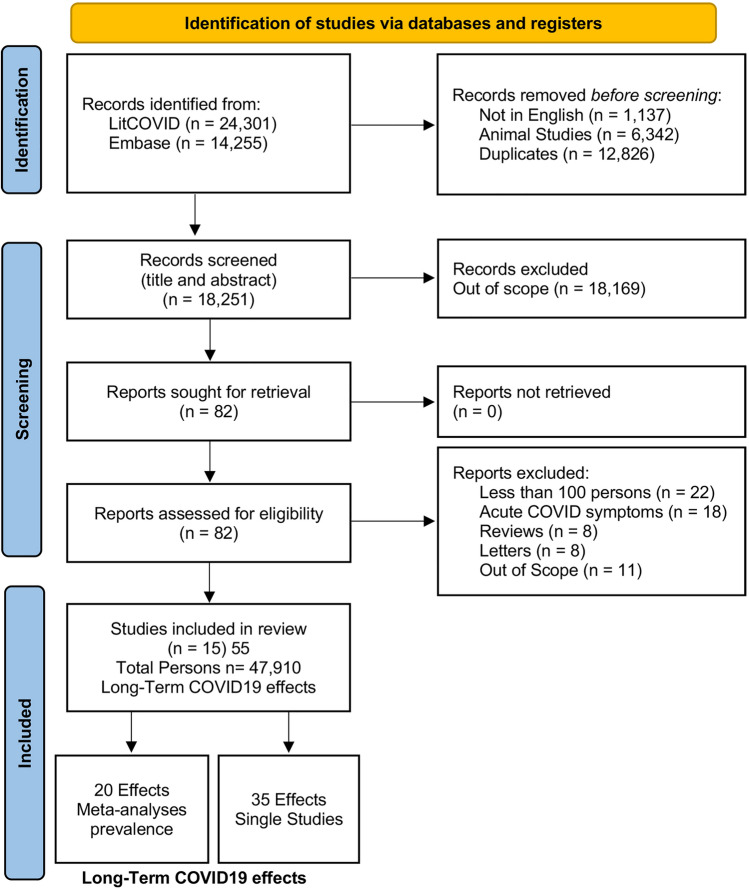
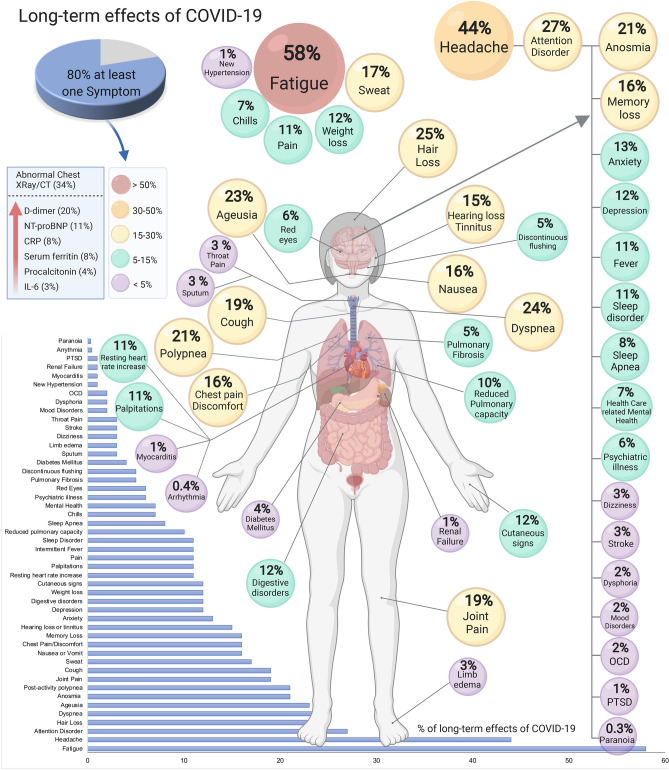
COVID-19 can involve persistence, sequelae, and other medical complications that last weeks to months after initial recovery. This systematic review and meta-analysis aims to identify studies assessing the long-term effects of COVID-19. LitCOVID and Embase were searched to identify articles with original data published before the 1st of January 2021, with a minimum of 100 patients. For effects reported in two or more studies, meta-analyses using a random-effects model were performed using the MetaXL software to estimate the pooled prevalence with 95% CI. PRISMA guidelines were followed. A total of 18,251 publications were identified, of which 15 met the inclusion criteria. The prevalence of 55 long-term effects was estimated, 21 meta-analyses were performed, and 47,910 patients were included (age 17-87 years). The included studies defined long-COVID as ranging from 14 to 110 days post-viral infection. It was estimated that 80% of the infected patients with SARS-CoV-2 developed one or more long-term symptoms. The five most common symptoms were fatigue (58%), headache (44%), attention disorder (27%), hair loss (25%), and dyspnea (24%). Multi-disciplinary teams are crucial to developing preventive measures, rehabilitation techniques, and clinical management strategies with whole-patient perspectives designed to address long COVID-19 care.
Overview
CoChat Summary
## TL;DR
This systematic review and meta-analysis identified 55 long-term effects of COVID-19 across 15 studies including 47,910 patients, estimating that 80% of infected patients developed one or more long-term symptoms. The most common reported effects were fatigue (58%), headache (44%), attention disorder (27%), hair loss (25%), and dyspnea (24%).
## Key findings
- The review screened 18,251 publications and included 15 studies; together they covered 47,910 patients aged 17–87 years.
- The authors identified 55 long-term effects of COVID-19 and performed 21 meta-analyses.
- Overall, an estimated 80% (95% CI 65–92) of COVID-19 patients had at least one long-term symptom.
- The five most common manifestations were fatigue (58%, 95% CI 42–73), headache (44%, 95% CI 13–78), attention disorder (27%, 95% CI 19–36), hair loss (25%, 95% CI 17–34), and dyspnea (24%, 95% CI 14–36).
- Among laboratory/imaging findings, abnormal chest X-ray/CT was observed in 34% (95% CI 27–42), with elevated D-dimer in 20% (95% CI 6–39) and NT-proBNP in 11% (95% CI 6–17).
## Methods
- Systematic review and meta-analysis following PRISMA guidelines; searches were run in LitCOVID and Embase for original studies published before January 1, 2021.
- Inclusion criteria required peer-reviewed English-language human studies with at least 100 patients and post-COVID-19 outcomes assessed 2 weeks or more after initial symptoms.
- Data extraction and study quality assessment were done by multiple reviewers; pooled prevalences were estimated with random-effects meta-analysis in MetaXL for outcomes reported in at least two studies, with heterogeneity assessed using I².
## Limitations
- The paper states that some outcomes had small sample sizes, limiting generalizability to the general population.
- It notes substantial heterogeneity across studies, mainly due to different follow-up times and mixed severity groups; it was also impossible to determine how long each symptom lasted.
- The paper states that many studies used self-reported questionnaires, creating possible reporting bias, and that outcomes may have been missed because studies used internally pre-defined symptom lists.
- Evident from the text: only English-language studies with at least 100 patients were included, so the review may miss smaller or non-English studies.
Model-written summary. Check it against the paper before relying on it.
Integrity signals
Registry
Cites
Statistics
Figures
Verification
Claims the paper makes
5 Valid · 0 Not valid · 8 Not checked · 41 Own results and interpretations
Every source the paper cites for this claim was checked and supports it.
In the paper
“a study reported high levels of depression, anxiety, and post-traumatic stress disorder (PTSD)37 in the long term in patients previously infected with other coronaviruses.”
§ More than 50 long-term effects of COVID-19: a systematic review and meta-analysis > Discussion
What the sources say
- Supportedcites [37] Rogers, J. P. et al. Psychiatric and neuropsychiatric presentations associated with severe coronavirus infections: A systematic review and meta-analysis with comparison to the COVID-19 pandemic. Lancet Psychiatry 7, 611–627. https://doi.org/10.1016/S2215-0366(20)30203-0 (2020). source
The Results report post-illness prevalence of anxiety disorders (14.8%), depression (14.9%), and PTSD (32.2%) among people who recovered from SARS or MERS, with mean follow-up times of 11.6, 22.6, and 33.6 months, respectively. The Discussion describes these prevalences as high, while cautioning that the studies could not clearly separate effects of infection from other factors. Page numbers were not provided in our copy. (LLM, conf=0.93)
plainstates an association- Asserted: passes — The authors put it forward as true.
- Checkable: passes — It can be checked against evidence.
- Load-bearing: unclear — It is unclear whether the paper’s conclusions depend on it.
- Based: passes — The paper gives a reason why it holds.
- Supported
The cited sources support only part of this claim — read each source’s verdict below.
In the paper
“Fatigue (58%) is the most common symptom of long and acute COVID-1923.”
§ More than 50 long-term effects of COVID-19: a systematic review and meta-analysis > Discussion
What the sources say
- Partly supportedcites [23] Townsend, L. et al. Persistent fatigue following SARS-CoV-2 infection is common and independent of severity of initial infection. PLoS One 15, e0240784. https://doi.org/10.1371/journal.pone.0240784 (2020). sourceExperimental — accuracy not yet measured
Townsend et al. (2020) support only that fatigue is common: the Introduction states it is 'recognised as one of the most common presenting complaints' in SARS-CoV-2 infection, with 44–69.6% in early case series and 34–46% in meta-analyses — figures the paper credits to other works it cites, and it never ranks fatigue as THE most common symptom of acute disease. For the convalescent/'long' COVID side, the Results (Prevalence of post-COVID fatigue) report 52.3% (67/128) meeting the CFQ-11 case definition at a median of 10 weeks, and the paper reports no symptom-prevalence comparison, so it does not establish fatigue as the most common long-COVID symptom either. The specific 58% magnitude attributed here matches nothing in our copy (the only nearby percentages are 52.3% fatigued cases and 57% of those offered an appointment who attended), so both the superlative and the number are unsupported. (LLM, conf=0.80)
plain- Asserted: passes — The authors put it forward as true.
- Checkable: passes — It can be checked against evidence.
- Load-bearing: unclear — It is unclear whether the paper’s conclusions depend on it.
- Based: passes — The paper gives a reason why it holds.
- Partly supported
The cited sources support only part of this claim — read each source’s verdict below.
In the paper
“It is present even after 100 days of the first symptom of acute COVID-194,23.”
§ More than 50 long-term effects of COVID-19: a systematic review and meta-analysis > Discussion
What the sources say
- Not checked yetcites [4] Townsend, L. et al. Persistent poor health post-COVID-19 is not associated with respiratory complications or initial disease severity. Ann. Am. Thorac. Soc. https://doi.org/10.1513/AnnalsATS.202009-1175OC (2021). source
- Partly supportedcites [23] Townsend, L. et al. Persistent fatigue following SARS-CoV-2 infection is common and independent of severity of initial infection. PLoS One 15, e0240784. https://doi.org/10.1371/journal.pone.0240784 (2020). sourceExperimental — accuracy not yet measured
Townsend et al. (2020) confirm persistent fatigue after the acute phase of SARS-CoV-2 infection, but at a median of 10 weeks (~70 days) from symptom onset (Abstract; Results, Participant characteristics: median interval 72 days, IQR 62-87; Table 2 'Days since Symptom Onset' medians 71 and 73). The only passage reaching beyond ~84 days is Table 1's follow-up band '>84 days (12 weeks)' (38 participants, 22 fatigued), and the Discussion explicitly frames the report as a 'medium time point' and calls for future longitudinal work 'to describe the persistence of fatigue at six months and beyond'. No passage in our copy states fatigue at or beyond 100 days from first symptom, so that specific qualifier of the citing sentence is not supported by this source. (LLM, conf=0.72)
plain- Asserted: passes — The authors put it forward as true.
- Checkable: passes — It can be checked against evidence.
- Load-bearing: unclear — It is unclear whether the paper’s conclusions depend on it.
- Based: passes — The paper gives a reason why it holds.
A result the paper reports from its own data — it cites no other source for it, so there is none to check. The quote shows it is in the paper.
In the paper
“The prevalence of 55 long-term effects was estimated”
- Also stated in: § Prevalence of long-term effects in COVID-19 patients · plain
“We identified a total of 55 long-term effects associated with COVID-19 in the literature reviewed”
§ More than 50 long-term effects of COVID-19: a systematic review and meta-analysis > Abstract
plainstates an associationn = 47,910- Asserted: passes — The authors put it forward as true.
- Checkable: passes — It can be checked against evidence.
- Load-bearing: passes — The paper’s conclusions depend on it.
- Based: passes — The paper gives a reason why it holds.
- Rests on an assumption not shown here.
- Also stated in: § Prevalence of long-term effects in COVID-19 patients · plain
A result the paper reports from its own data — it cites no other source for it, so there is none to check. The quote shows it is in the paper.
In the paper
“It was estimated that 80% of the infected patients with SARS-CoV-2 developed one or more long-term symptoms.”
- Also stated in: § Prevalence of long-term effects in COVID-19 patients · plain
“The meta-analysis of the studies (n = 7) that included an estimate for one symptom or more reported that 80% (95% CI 65–92) of the patients with COVID-19 have long-term symptoms.”
- Also stated in: § Discussion · boosted
“This systematic review and meta-analysis shows that 80% (95% CI 65–92) of individuals with a confirmed COVID-19 diagnosis continue to have at least one overall effect beyond 2 weeks following acute infection.”
§ More than 50 long-term effects of COVID-19: a systematic review and meta-analysis > Abstract
boostedn = 7- Asserted: passes — The authors put it forward as true.
- Checkable: passes — It can be checked against evidence.
- Load-bearing: passes — The paper’s conclusions depend on it.
- Based: passes — The paper gives a reason why it holds.
- Rests on an assumption not shown here.
- Also stated in: § Prevalence of long-term effects in COVID-19 patients · plain
27 more claims
Create a free account to see all 54 claims and to verify the 18 references still open.
- It may state two separate claims as one. 7
- Probably not a substantial claim. 17
Claims other papers make about this one
Each is checked against this paper’s own text: does it say what the citing paper says it does?
The source backs part of the claim, not all of it — or backs it for a different population, condition or comparison.
In the citing paper
“Mental health symptoms such as depression, anxiety and sleep problems are commonly observed in individuals suffering from acute COVID-19 infection to post-COVID-19 syndrome.”
From Psychological treatments for the mental health symptoms among individuals infected with COVID-19: a scoping review protocol (2023) · cites this paper as [4]
Experimental — accuracy not yet measuredThe cited source says what the claim attributes to it.
In the citing paper
“These mental health symptoms persist even after the acute stage of the disease.”
From Psychological treatments for the mental health symptoms among individuals infected with COVID-19: a scoping review protocol (2023) · cites this paper as [4]
The cited source says what the claim attributes to it.
In the citing paper
“Mental health symptoms are common in reports of a post-covid syndrome (4, 6).”
Citations
Cites
PRISMA-P Group, Moher, D., Shamseer, L., Clarke, M., Ghersi, D., Liberati, A., Petticrew, M., Shekelle, P., & Stewart, L. A. (2015) · Systematic Reviews · doi:10.1186/2046-4053-4-1 · Cited by 26,223
Shamseer, L., Moher, D., Clarke, M., Ghersi, D., Liberati, A., Petticrew, M., Shekelle, P., Stewart, L. A., & the PRISMA-P Group (2015) · BMJ · doi:10.1136/bmj.g7647 · Cited by 13,120
Persistent Symptoms in Patients After Acute COVID-19
Carfì, A., Bernabei, R., Landi, F., & for the Gemelli Against COVID-19 Post-Acute Care Study Group (2020) · JAMA · doi:10.1001/jama.2020.12603 · Cited by 4,561
Rogers, J. P., Chesney, E., Oliver, D., Pollak, T. A., McGuire, P., Fusar-Poli, P., Zandi, M. S., Lewis, G., & David, A. S. (2020) · The Lancet Psychiatry · doi:10.1016/s2215-0366(20)30203-0 · Cited by 2,407
Barendregt, J. J., Doi, S. A., Lee, Y. Y., Norman, R. E., & Vos, T. (2013) · Journal of Epidemiology and Community Health · doi:10.1136/jech-2013-203104 · Cited by 2,169
Cytokine release syndrome in severe COVID-19
Moore, J. B., & June, C. H. (2020) · Science · doi:10.1126/science.abb8925 · Cited by 1,912
Management of post-acute covid-19 in primary care
Greenhalgh, T., Knight, M., A’Court, C., Buxton, M., & Husain, L. (2020) · BMJ · doi:10.1136/bmj.m3026 · Cited by 1,689
Taquet, M., Luciano, S., Geddes, J. R., & Harrison, P. J. (2021) · The Lancet Psychiatry · doi:10.1016/s2215-0366(20)30462-4 · Cited by 1,484
Tenforde, M. W., Kim, S. S., Lindsell, C. J., Billig Rose, E., Shapiro, N. I., Files, D. C., Gibbs, K. W., Erickson, H. L., Steingrub, J. S., Smithline, H. A., et al. (2020) · MMWR. Morbidity and Mortality Weekly Report · doi:10.15585/mmwr.mm6930e1 · Cited by 1,319
Garrigues, E., Janvier, P., Kherabi, Y., Le Bot, A., Hamon, A., Gouze, H., Doucet, L., Berkani, S., Oliosi, E., Mallart, E., et al. (2020) · Journal of Infection · doi:10.1016/j.jinf.2020.08.029 · Cited by 1,157
Cited by
Chen, C., Haupert, S. R., Zimmermann, L., Shi, X., Fritsche, L. G., & Mukherjee, B. (2022) · The Journal of Infectious Diseases · doi:10.1093/infdis/jiac136 · Cited by 1,366
Symptoms and risk factors for long COVID in non-hospitalized adults
Subramanian, A., Nirantharakumar, K., Hughes, S., Myles, P., Williams, T., Gokhale, K. M., Taverner, T., Chandan, J. S., Brown, K., Simms-Williams, N., et al. (2022) · Nature Medicine · doi:10.1038/s41591-022-01909-w · Cited by 1,065
Phetsouphanh, C., Darley, D. R., Wilson, D. B., Howe, A., Munier, C. M. L., Patel, S. K., Juno, J. A., Burrell, L. M., Kent, S. J., Dore, G. J., et al. (2022) · Nature Immunology · doi:10.1038/s41590-021-01113-x · Cited by 1,015
Raveendran, A. V., Jayadevan, R., & Sashidharan, S. (2021) · Diabetes & Metabolic Syndrome: Clinical Research & Reviews · doi:10.1016/j.dsx.2021.04.007 · Cited by 921
O'Mahoney, L. L., Routen, A., Gillies, C., Ekezie, W., Welford, A., Zhang, A., Karamchandani, U., Simms-Williams, N., Cassambai, S., Ardavani, A., et al. (2023) · eClinicalMedicine · doi:10.1016/j.eclinm.2022.101762 · Cited by 791
Fernández-de-las-Peñas, C., Palacios-Ceña, D., Gómez-Mayordomo, V., Florencio, L. L., Cuadrado, M. L., Plaza-Manzano, G., & Navarro-Santana, M. (2021) · European Journal of Internal Medicine · doi:10.1016/j.ejim.2021.06.009 · Cited by 574
“They reported overall prevalence of post-COVID-19 symptoms without distinction between hospitalized/non-hospitalized patients or considering the follow-up period [6]; therefore, the comparison between prevalence rates is not feasible.”
InfluentialHan, Q., Zheng, B., Daines, L., & Sheikh, A. (2022) · Pathogens · doi:10.3390/pathogens11020269 · Cited by 572
Alkodaymi, M. S., Omrani, O. A., Ashraf, N., Shaar, B. A., Almamlouk, R., Riaz, M., Obeidat, M., Obeidat, Y., Gerberi, D., Taha, R. M., et al. (2022) · Clinical Microbiology and Infection · doi:10.1016/j.cmi.2022.01.014 · Cited by 532
Pretorius, E., Vlok, M., Venter, C., Bezuidenhout, J. A., Laubscher, G. J., Steenkamp, J., & Kell, D. B. (2021) · Cardiovascular Diabetology · doi:10.1186/s12933-021-01359-7 · Cited by 518
Persistent COVID-19 symptoms in a community study of 606,434 people in England
Whitaker, M., Elliott, J., Chadeau-Hyam, M., Riley, S., Darzi, A., Cooke, G., Ward, H., & Elliott, P. (2022) · Nature Communications · doi:10.1038/s41467-022-29521-z · Cited by 526
Long-COVID in children and adolescents: a systematic review and meta-analyses
Lopez-Leon, S., Wegman-Ostrosky, T., Ayuzo del Valle, N. C., Perelman, C., Sepulveda, R., Rebolledo, P. A., Cuapio, A., & Villapol, S. (2022) · Scientific Reports · doi:10.1038/s41598-022-13495-5 · Cited by 528
“In addition, compared to controls, the prevalence of cognitive difficulties, headache, loss of smell, sore throat, and sore eyes was statistically higher 9 , however, due to the lack of data, this study could only compute the pooled prevalence for 10 symptoms.”
Self-citationPost-COVID-19 Syndrome and the Potential Benefits of Exercise
Jimeno-Almazán, A., Pallarés, J. G., Buendía-Romero, Á., Martínez-Cava, A., Franco-López, F., Sánchez-Alcaraz Martínez, B. J., Bernal-Morel, E., & Courel-Ibáñez, J. (2021) · International Journal of Environmental Research and Public Health · doi:10.3390/ijerph18105329 · Cited by 349
“• Symptoms are commonly associated: 80% of patients have more than one [32], usually more than two and up to more than 10 [30,31,49,52,57].”
BackgroundLong-term effects of COVID-19 on mental health: a systematic review
Bourmistrova, N. W., Solomon, T., Braude, P., Strawbridge, R., & Carter, B. (2022) · Journal of Affective Disorders · doi:10.1016/j.jad.2021.11.031 · Cited by 369
Effect of covid-19 vaccination on long covid: systematic review
Byambasuren, O., Stehlik, P., Clark, J., Alcorn, K., & Glasziou, P. (2023) · BMJ Medicine · doi:10.1136/bmjmed-2022-000385 · Cited by 338
Zeng, N., Zhao, Y.-M., Yan, W., Li, C., Lu, Q.-D., Liu, L., Ni, S.-Y., Mei, H., Yuan, K., Shi, L., et al. (2023) · Molecular Psychiatry · doi:10.1038/s41380-022-01614-7 · Cited by 330
“Although a recent meta-analysis estimated the prevalence of long-term effects of COVID-19, it included only 15 studies with a follow-up duration less than 4 months from infection and did not identify influential factors correlated with health sequelae [18].”
BackgroundStephenson, T., Pinto Pereira, S. M., Shafran, R., de Stavola, B. L., Rojas, N., McOwat, K., Simmons, R., Zavala, M., O'Mahoney, L., Chalder, T., et al. (2022) · The Lancet Child & Adolescent Health · doi:10.1016/s2352-4642(22)00022-0 · Cited by 257
Fernández-de-las-Peñas, C., Martín-Guerrero, J. D., Pellicer-Valero, Ó. J., Navarro-Pardo, E., Gómez-Mayordomo, V., Cuadrado, M. L., Arias-Navalón, J. A., Cigarán-Méndez, M., Hernández-Barrera, V., & Arendt-Nielsen, L. (2022) · Journal of Clinical Medicine · doi:10.3390/jcm11020413 · Cited by 303
Post-acute sequelae of covid-19 six to 12 months after infection: population based study
Peter, R. S., Nieters, A., Kräusslich, H.-G., Brockmann, S. O., Göpel, S., Kindle, G., Merle, U., Steinacker, J. M., Rothenbacher, D., & Kern, W. V. (2022) · BMJ · doi:10.1136/bmj-2022-071050 · Cited by 295
How Common is Long COVID in Children and Adolescents?
Zimmermann, P., Pittet, L. F., & Curtis, N. (2021) · Pediatric Infectious Disease Journal · doi:10.1097/inf.0000000000003328 · Cited by 293
Persistent neuropsychiatric symptoms after COVID-19: a systematic review and meta-analysis
Badenoch, J. B., Rengasamy, E. R., Watson, C., Jansen, K., Chakraborty, S., Sundaram, R. D., Hafeez, D., Burchill, E., Saini, A., Thomas, L., et al. (2022) · Brain Communications · doi:10.1093/braincomms/fcab297 · Cited by 277
Salamanna, F., Veronesi, F., Martini, L., Landini, M. P., & Fini, M. (2021) · Frontiers in Medicine · doi:10.3389/fmed.2021.653516 · Cited by 265
Behnood, S. A., Shafran, R., Bennett, S. D., Zhang, A. X. D., O'Mahoney, L. L., Stephenson, T. J., Ladhani, S. N., De Stavola, B. L., Viner, R. M., & Swann, O. V. (2022) · Journal of Infection · doi:10.1016/j.jinf.2021.11.011 · Cited by 267
“32 Stephenson et al. reported that for both SARS-CoV-2-positive and SARS-CoV-2-negative CYP, in those assigned to the latent class with “multiple symptoms” at three months, being female, older and having poorer physical and mental health before COVID-19 were important risk factors.”
InfluentialParotto, M., Gyöngyösi, M., Howe, K., Myatra, S. N., Ranzani, O., Shankar-Hari, M., & Herridge, M. S. (2023) · The Lancet Respiratory Medicine · doi:10.1016/s2213-2600(23)00239-4 · Cited by 263
Li, J., Xia, W., Zhan, C., Liu, S., Yin, Z., Wang, J., Chong, Y., Zheng, C., Fang, X., Cheng, W., et al. (2022) · Thorax · doi:10.1136/thoraxjnl-2021-217382 · Cited by 266
Biomarkers in long COVID-19: A systematic review
Lai, Y.-J., Liu, S.-H., Manachevakul, S., Lee, T.-A., Kuo, C.-T., & Bello, D. (2023) · Frontiers in Medicine · doi:10.3389/fmed.2023.1085988 · Cited by 241
Post-COVID syndrome. A case series and comprehensive review
Anaya, J.-M., Rojas, M., Salinas, M. L., Rodríguez, Y., Roa, G., Lozano, M., Rodríguez-Jiménez, M., Montoya, N., Zapata, E., Monsalve, D. M., et al. (2021) · Autoimmunity Reviews · doi:10.1016/j.autrev.2021.102947 · Cited by 252
Neurological manifestations of long-COVID syndrome: a narrative review
Stefanou, M.-I., Palaiodimou, L., Bakola, E., Smyrnis, N., Papadopoulou, M., Paraskevas, G. P., Rizos, E., Boutati, E., Grigoriadis, N., Krogias, C., et al. (2022) · Therapeutic Advances in Chronic Disease · doi:10.1177/20406223221076890 · Cited by 263
Pretorius, E., Venter, C., Laubscher, G. J., Kotze, M. J., Oladejo, S. O., Watson, L. R., Rajaratnam, K., Watson, B. W., & Kell, D. B. (2022) · Cardiovascular Diabetology · doi:10.1186/s12933-022-01579-5 · Cited by 251
“COVID-19 survivors complain of recurring fatigue or muscle weakness, being out of breath, sleep difficulties, and suffer from anxiety or depression [2].”
BackgroundMore Than 100 Persistent Symptoms of SARS-CoV-2 (Long COVID): A Scoping Review
Hayes, L. D., Ingram, J., & Sculthorpe, N. F. (2021) · Frontiers in Medicine · doi:10.3389/fmed.2021.750378 · Cited by 227
Long COVID: pathophysiological factors and abnormalities of coagulation
Turner, S., Khan, M. A., Putrino, D., Woodcock, A., Kell, D. B., & Pretorius, E. (2023) · Trends in Endocrinology & Metabolism · doi:10.1016/j.tem.2023.03.002 · Cited by 241
Rehabilitation Interventions for Post-Acute COVID-19 Syndrome: A Systematic Review
Fugazzaro, S., Contri, A., Esseroukh, O., Kaleci, S., Croci, S., Massari, M., Facciolongo, N. C., Besutti, G., Iori, M., Salvarani, C., et al. (2022) · International Journal of Environmental Research and Public Health · doi:10.3390/ijerph19095185 · Cited by 216
Charfeddine, S., Ibn Hadj Amor, H., Jdidi, J., Torjmen, S., Kraiem, S., Hammami, R., Bahloul, A., Kallel, N., Moussa, N., Touil, I., et al. (2021) · Frontiers in Cardiovascular Medicine · doi:10.3389/fcvm.2021.745758 · Cited by 231
Circulating anti-nuclear autoantibodies in COVID-19 survivors predict long-COVID symptoms
Son, K., Jamil, R., Chowdhury, A., Mukherjee, M., Venegas, C., Miyasaki, K., Zhang, K., Patel, Z., Salter, B., Yuen, A. C. Y., et al. (2022) · European Respiratory Journal · doi:10.1183/13993003.00970-2022 · Cited by 211
A multinational Delphi consensus to end the COVID-19 public health threat
Lazarus, J. V., Romero, D., Kopka, C. J., Karim, S. A., Abu-Raddad, L. J., Almeida, G., Baptista-Leite, R., Barocas, J. A., Barreto, M. L., Bar-Yam, Y., et al. (2022) · Nature · doi:10.1038/s41586-022-05398-2 · Cited by 226
Self-citationKuodi, P., Gorelik, Y., Zayyad, H., Wertheim, O., Wiegler, K. B., Abu Jabal, K., Dror, A. A., Nazzal, S., Glikman, D., & Edelstein, M. (2022) · npj Vaccines · doi:10.1038/s41541-022-00526-5 · Cited by 219
Fernandez-de-las-Peñas, C., Notarte, K. I., Macasaet, R., Velasco, J. V., Catahay, J. A., Ver, A. T., Chung, W., Valera-Calero, J. A., & Navarro-Santana, M. (2024) · Journal of Infection · doi:10.1016/j.jinf.2023.12.004 · Cited by 192
The Conundrum of ‘Long-COVID-19ʹ: A Narrative Review
Garg, M., Maralakunte, M., Garg, S., Dhooria, S., Sehgal, I., Bhalla, A. S., Vijayvergiya, R., Grover, S., Bhatia, V., Jagia, P., et al. (2021) · International Journal of General Medicine · doi:10.2147/ijgm.s316708 · Cited by 204
Long covid and medical gaslighting: Dismissal, delayed diagnosis, and deferred treatment
Au, L., Capotescu, C., Eyal, G., & Finestone, G. (2022) · SSM - Qualitative Research in Health · doi:10.1016/j.ssmqr.2022.100167 · Cited by 191
Ballouz, T., Menges, D., Anagnostopoulos, A., Domenghino, A., Aschmann, H. E., Frei, A., Fehr, J. S., & Puhan, M. A. (2023) · BMJ · doi:10.1136/bmj-2022-074425 · Cited by 194
“51 52 Although we attempted to assess the different symptom patterns over time and observed alternating courses in some individuals, our study was not designed to fully capture the relapsing and remitting nature of symptoms shown by others.”
Escandón, K., Rasmussen, A. L., Bogoch, I. I., Murray, E. J., Escandón, K., Popescu, S. V., & Kindrachuk, J. (2021) · BMC Infectious Diseases · doi:10.1186/s12879-021-06357-4 · Cited by 187
Prognostic Factors for Post-COVID-19 Syndrome: A Systematic Review and Meta-Analysis
Maglietta, G., Diodati, F., Puntoni, M., Lazzarelli, S., Marcomini, B., Patrizi, L., & Caminiti, C. (2022) · Journal of Clinical Medicine · doi:10.3390/jcm11061541 · Cited by 189
ME/CFS and Post-Exertional Malaise among Patients with Long COVID
Jason, L. A., & Dorri, J. A. (2022) · Neurology International · doi:10.3390/neurolint15010001 · Cited by 200
“A meta-analysis consisting of 15 studies with an aggregate sample of 47,910, revealed that 80% of people infected with COVID-19 had one or more persistent symptoms post-infection [4].”
Fatigue and cognitive impairment after COVID-19: A prospective multicentre study
Hartung, T. J., Neumann, C., Bahmer, T., Chaplinskaya-Sobol, I., Endres, M., Geritz, J., Haeusler, K. G., Heuschmann, P. U., Hildesheim, H., Hinz, A., et al. (2022) · eClinicalMedicine · doi:10.1016/j.eclinm.2022.101651 · Cited by 164
Hyperinflammatory Immune Response and COVID-19: A Double Edged Sword
Tan, L. Y., Komarasamy, T. V., & RMT Balasubramaniam, V. (2021) · Frontiers in Immunology · doi:10.3389/fimmu.2021.742941 · Cited by 174
Post-acute sequelae of COVID-19 in a non-hospitalized cohort: Results from the Arizona CoVHORT
Bell, M. L., Catalfamo, C. J., Farland, L. V., Ernst, K. C., Jacobs, E. T., Klimentidis, Y. C., Jehn, M., & Pogreba-Brown, K. (2021) · PLOS ONE · doi:10.1371/journal.pone.0254347 · Cited by 179
“Commonly reported symptoms across multiple studies have been fatigue, headache, attention disorder (presumably similar to our variable, brain fog), hair loss, shortness of breath, sleeping problems, joint pain, dyspnea, chest pain and loss of sense of smell or taste (3-6).”
BackgroundPouliopoulou, D. V., Macdermid, J. C., Saunders, E., Peters, S., Brunton, L., Miller, E., Quinn, K. L., Pereira, T. V., & Bobos, P. (2023) · JAMA Network Open · doi:10.1001/jamanetworkopen.2023.33838 · Cited by 167
Addressing the post-acute sequelae of SARS-CoV-2 infection: a multidisciplinary model of care
Parker, A. M., Brigham, E., Connolly, B., McPeake, J., Agranovich, A. V., Kenes, M. T., Casey, K., Reynolds, C., Schmidt, K. F. R., Kim, S. Y., et al. (2021) · The Lancet Respiratory Medicine · doi:10.1016/s2213-2600(21)00385-4 · Cited by 170
Gyöngyösi, M., Alcaide, P., Asselbergs, F. W., Brundel, B. J. J. M., Camici, G. G., Martins, P. D. C., Ferdinandy, P., Fontana, M., Girao, H., Gnecchi, M., et al. (2023) · Cardiovascular Research · doi:10.1093/cvr/cvac115 · Cited by 164
Post-COVID-19 syndrome, low-grade inflammation and inflammatory markers: a cross-sectional study
Maamar, M., Artime, A., Pariente, E., Fierro, P., Ruiz, Y., Gutiérrez, S., Tobalina, M., Díaz-Salazar, S., Ramos, C., Olmos, J. M., et al. (2022) · Current Medical Research and Opinion · doi:10.1080/03007995.2022.2042991 · Cited by 163
S1-Leitlinie Post-COVID/Long-COVID
Koczulla, A. R., Ankermann, T., Behrends, U., Berlit, P., Böing, S., Brinkmann, F., Franke, C., Glöckl, R., Gogoll, C., Hummel, T., et al. (2021) · Pneumologie · doi:10.1055/a-1551-9734 · Cited by 158
“[64] Lopez-Leon S, Wegman-Ostrosky T, Perelman C et al.”
BackgroundProposed subtypes of post‐COVID‐19 syndrome (or long‐COVID) and their respective potential therapies
Yong, S. J., & Liu, S. (2022) · Reviews in Medical Virology · doi:10.1002/rmv.2315 · Cited by 165
Tana, C., Bentivegna, E., Cho, S., Harriott, A. M., García‐Azorín, D., Labastida‐Ramírez, A., Ornello, R., Raffaelli, B., Rubio‐Beltrán, E., Ruscheweyh, R., et al. (2022) · The Journal of Headache and Pain · doi:10.1186/s10194-022-01450-8 · Cited by 184
Al-Hakeim, H. K., Al-Rubaye, H. T., Al-Hadrawi, D. S., Almulla, A. F., & Maes, M. (2023) · Molecular Psychiatry · doi:10.1038/s41380-022-01836-9 · Cited by 174
“Another meta-analysis found that 80% of patients infected with SARS-CoV-2 had one or more long-term symptoms and that the top most typical symptoms were chronic fatigue (58%), headache (44%), attention problems (27%), hair loss (25%), and dyspnea (24%), although memory loss, anxiety, depression, insomnia, digestive di…”
BackgroundPrevalence and clinical presentation of long COVID in children: a systematic review
Pellegrino, R., Chiappini, E., Licari, A., Galli, L., & Marseglia, G. L. (2022) · European Journal of Pediatrics · doi:10.1007/s00431-022-04600-x · Cited by 184
Zheng, Y., Zeng, N., Yuan, K., Tian, S., Yang, Y.-B., Gao, N., Chen, X., Zhang, A.-Y., Kondratiuk, A. L., Shi, P., et al. (2023) · Journal of Infection and Public Health · doi:10.1016/j.jiph.2023.03.005 · Cited by 177
“Several published epidemiological studies [5, 6] and reviews [7-10] mostly focused on the long COVID or persistent symptoms of COVID-19 infection amongst adults, due to”
Yan, Z., Yang, M., & Lai, C. (2021) · Biomedicines · doi:10.3390/biomedicines9080966 · Cited by 181
Pediatric long-COVID: an overlooked phenomenon?
Brackel, C. L. H., Lap, C. R., Buddingh, E. P., van Houten, M. A., van der Sande, L. J. T. M., Langereis, E. J., Bannier, M. A. G. E., Pijnenburg, M. W. H., Hashimoto, S., & Terheggen‐Lagro, S. W. J. (2021) · Pediatric Pulmonology · doi:10.1002/ppul.25521 · Cited by 163
Long-term cardiac pathology in individuals with mild initial COVID-19 illness
Püntmann, V. O., Martin, S. S., Shchendrygina, A., Hoffmann, J., Ka, M. M., Giokoglu, E., Vanchin, B., Holm, N., Karyou, A., Laux, G. S., et al. (2022) · Nature Medicine · doi:10.1038/s41591-022-02000-0 · Cited by 203
Mansell, V. E., Dykgraaf, S. H., Kidd, M. R., & Goodyear‐Smith, F. (2022) · The Lancet Healthy Longevity · doi:10.1016/s2666-7568(22)00245-8 · Cited by 175
Nehme, M., Braillard, O., Chappuis, F., Courvoisier, D. S., Guessous, I., & CoviCare Study Team (2021) · Annals of Internal Medicine · doi:10.7326/m21-0878 · Cited by 151
“A meta-analysis of 15 studies on postacute sequelae of SARS-CoV-2 showed that an estimated 80% of patients (aged 17 to 87 years) developed 1 or more long-term symptoms, with mostly fatigue, attention disorder, hair loss, and dyspnea being reported (13).”
BackgroundRao, S., Lee, G. M., Razzaghi, H., Lorman, V., Mejías, A., Pajor, N. M., Thacker, D., Webb, R. D., Dickinson, K., Bailey, L. C., et al. (2022) · Archives of Pediatrics and Adolescent Medicine · doi:10.1001/jamapediatrics.2022.2800 · Cited by 163
Post-COVID-19 fatigue: a systematic review
Joli, J., Buck, P., Zipfel, S., & Stengel, A. (2022) · Frontiers in Psychiatry · doi:10.3389/fpsyt.2022.947973 · Cited by 155
Postural orthostatic tachycardia syndrome as a sequela of COVID-19
Ormiston, C. K., Świątkiewicz, I., & Taub, P. R. (2022) · Heart Rhythm · doi:10.1016/j.hrthm.2022.07.014 · Cited by 163
“Although increasing exercise has been suggested in some long COVID treatment guidelines,(70) it should be noted that some patients with post–COVID-19 dysautonomia and POTS have reported post–exertional malaise, exercise intolerance, and chronic fatigue.(7,35) Providers (eg, physicians, physiotherapists, and nurse prac…”
InfluentialMukae, H., Yotsuyanagi, H., Ohmagari, N., Doi, Y., Sakaguchi, H., Sonoyama, T., Ichihashi, G., Sanaki, T., Baba, K., Tsuge, Y., et al. (2022) · Clinical Infectious Diseases · doi:10.1093/cid/ciac933 · Cited by 155
“The efficacy of ensitrelvir in suppressing long-term complications after COVID-19, such as loss of taste and/or smell, fatigue, and headache [30, 31], will be assessed in an optional exploratory period (days 28–337) of the current phase 2/3 study.”
BackgroundPsychiatric and neurological complications of long COVID
Zawilska, J. B., & Kuczyńska, K. (2022) · Journal of Psychiatric Research · doi:10.1016/j.jpsychires.2022.10.045 · Cited by 168
ESCMID rapid guidelines for assessment and management of long COVID
Yelin, D., Moschopoulos, C. D., Margalit, I., Gkrania‐Klotsas, E., Landi, F., Stahl, J. ‐., & Yahav, D. (2022) · Clinical Microbiology and Infection · doi:10.1016/j.cmi.2022.02.018 · Cited by 161
Rahmati, M., Udeh, R., Yon, D. K., Lee, S. W., Dolja‐Gore, X., McEvoy, M., Kenna, T., Jacob, L., Sánchez, G. F. L., Koyanagi, A., et al. (2023) · Journal of Medical Virology · doi:10.1002/jmv.28852 · Cited by 160
Rando, H. M., Bennett, T. D., Byrd, J. B., Bramante, C., Callahan, T. J., Chute, C. G., Davis, H. E., Deer, R., Gagnier, J., Koraishy, F. M., et al. (2021) · medRxiv · doi:10.1101/2021.03.20.21253896 · Cited by 135
Post-COVID syndrome prevalence: a systematic review and meta-analysis
Razak, R. S. A., Ismail, A., Aziz, A. F. A., Suddin, L. S., Azzeri, A. B., & Sha’ari, N. I. (2024) · BMC Public Health · doi:10.1186/s12889-024-19264-5 · Cited by 161
“%) of people diagnosed with COVID-19 developed at least one long-term symptom beyond 2 weeks and up to 110 days following acute COVID-19 infection [91].”
BackgroundFernández‐de‐las‐Peñas, C., Navarro‐Santana, M. J., Gómez‐Mayordomo, V., Cuadrado, M. L., García‐Azorín, D., Arendt‐Nielsen, L., & Plaza‐Manzano, G. (2021) · European Journal of Neurology · doi:10.1111/ene.15040 · Cited by 148
Herpesvirus infections and post-COVID-19 manifestations: a pilot observational study
Зубченко, С., Kril, I., Надіжко, О., Matsyura, O. I., & Chopyak, V. V. (2022) · Rheumatology International · doi:10.1007/s00296-022-05146-9 · Cited by 148
Living with “long COVID”: A systematic review and meta-synthesis of qualitative evidence
Hossain, M. M., Das, J., Rahman, F., Nesa, F., Hossain, P., Islam, A. M. K., Tasnim, S., Faizah, F., Mazumder, H., Purohit, N., et al. (2023) · PLoS ONE · doi:10.1371/journal.pone.0281884 · Cited by 156
“This qualitative evidence is consistent with emerging research on musculoskeletal, neurological, cardiorespiratory, and other systemic disorders among people with long COVID [10,12,13].”
Hughes, S., Haroon, S., Subramanian, A., McMullan, C., Aiyegbusi, O. L., Turner, G. M., Jackson, L., Davies, E. H., Frost, C., McNamara, G., et al. (2022) · BMJ · doi:10.1136/bmj-2022-070230 · Cited by 154
Long COVID risk and pre-COVID vaccination in an EHR-based cohort study from the RECOVER program
Brannock, D., Chew, R., Preiss, A., Hadley, E., Redfield, S., McMurry, J. A., Leese, P., Girvin, A. T., Crosskey, M., Zhou, A., et al. (2023) · Nature Communications · doi:10.1038/s41467-023-38388-7 · Cited by 148
“The full tables of model coef fi cients are provided as Supplementary Tables 3 – 6.”
InfluentialChronic inflammation, neutrophil activity, and autoreactivity splits long COVID
Woodruff, M. C., Bonham, K. S., Anam, F. A., Walker, T. A., Faliti, C. E., Ishii, Y., Kaminski, C. Y., Runnstrom, M. C., Cooper, K. R., Truong, A. D., et al. (2023) · Nature Communications · doi:10.1038/s41467-023-40012-7 · Cited by 144
Fernández‐de‐las‐Peñas, C., Rodríguez‐Jiménez, J., Cancela‐Cilleruelo, I., Peral, Á. L. G., Martín‐Guerrero, J. D., García‐Azorín, D., Cornejo, A., Hernández‐Barrera, V., & Pellicer-Valero, Ó. J. (2022) · JAMA Network Open · doi:10.1001/jamanetworkopen.2022.42106 · Cited by 149
Geng, L. N., Bonilla, H. F., Hedlin, H., Jacobson, K. B., Tian, L., Jagannathan, P., Yang, P. C.-M., Subramanian, A. K., Liang, J. W., Shen, S., et al. (2024) · JAMA Internal Medicine · doi:10.1001/jamainternmed.2024.2007 · Cited by 147
Interleukin-6 as potential mediator of long-term neuropsychiatric symptoms of COVID-19
Kappelmann, N., Dantzer, R., & Khandaker, G. M. (2021) · Psychoneuroendocrinology · doi:10.1016/j.psyneuen.2021.105295 · Cited by 146
The autonomic aspects of the post-COVID19 syndrome
Dotan, A., David, P., Arnheim, D., & Shoenfeld, Y. (2022) · Autoimmunity Reviews · doi:10.1016/j.autrev.2022.103071 · Cited by 147
Post COVID-19 sequelae: A prospective observational study from Northern India
Naik, S. R., Soneja, M., Haldar, S. N., Mundadan, N. G., Garg, P., Mittal, A., Desai, D., Trilangi, P. K., Chakraborty, S., Begam, N. N., et al. (2021) · Drug Discoveries & Therapeutics · doi:10.5582/ddt.2021.01093 · Cited by 136
Characteristics and predictors of Long COVID among diagnosed cases of COVID-19
Arjun, M. C., Singh, A. K., Pal, D., Das, K., Gajjala, A., Venkateshan, M., Mishra, B., Patro, B. K., Mohapatra, P. R., & Subba, S. H. (2022) · PLoS ONE · doi:10.1371/journal.pone.0278825 · Cited by 134
“Studies have shown that Long COVID can affect almost all systems in the body [12].”
BackgroundNeuropsychiatric aspects of long COVID : A comprehensive review
Kubota, T., Kuroda, N., & Sone, D. (2022) · Psychiatry and Clinical Neurosciences · doi:10.1111/pcn.13508 · Cited by 145
“Some studies revealed that vaccination reduced the risk of long COVID.16,136,137 Psychiatry and Clinical Neurosciences 77: 84–93, 2023 89 16,136,137 In particular, compared to one vaccine dose (odds ratio [OR], 0.86; 95% CI, 0.21–3.49, P = 0.83), two vaccine doses (OR, 0.25; 95% CI, 0.07–0.87, P = 0.03), and three vac…”
BackgroundInfluentialLong Covid: where we stand and challenges ahead
Mantovani, A., Morrone, M. C., Patrono, C., Santoro, M., Schiaffino, S., Remuzzi, G., Bussolati, G., On behalf of the Covid-19 Commission of the Accademia Nazionale dei Lincei, Cappuccinelli, P., Fitzgerald, G., et al. (2022) · Cell Death and Differentiation · doi:10.1038/s41418-022-01052-6 · Cited by 141
Fernández-de-las-Peñas, C., Navarro-Santana, M., Plaza-Manzano, G., Palacios-Ceña, D., & Arendt-Nielsen, L. (2022) · Pain · doi:10.1097/j.pain.0000000000002496 · Cited by 118
Gennaro, F. D., Belati, A., Tulone, O., Diella, L., Bavaro, D. F., Bonica, R., Genna, V., Smith, L., Trott, M., Bruyère, O., et al. (2022) · Internal and Emergency Medicine · doi:10.1007/s11739-022-03164-w · Cited by 133
Acceptance of COVID-19 vaccine in Pakistan among health care workers
Malik, A. A., Malik, J., & Ishaq, U. (2021) · PLoS ONE · doi:10.1371/journal.pone.0257237 · Cited by 125
“[22] In contrast to a study of US healthcare workers ([23]), where HCW identifying as female were less likely to accept the COVID-19 vaccine as compared to male HCWs, our study found female HCWs to be more accepting of vaccination.”
ResultLong COVID endotheliopathy: hypothesized mechanisms and potential therapeutic approaches
Ahamed, J., & Laurence, J. C. (2022) · Journal of Clinical Investigation · doi:10.1172/jci161167 · Cited by 132
Mental Health Issues During and After COVID-19 Vaccine Era
Pandey, K., Thurman, M., Johnson, S. D., Acharya, A., Johnston, M., Klug, E., Olwenyi, O. A., Rajaiah, R., & Byrareddy, S. N. (2021) · Brain Research Bulletin · doi:10.1016/j.brainresbull.2021.08.012 · Cited by 132
Long COVID: The Nature of Thrombotic Sequelae Determines the Necessity of Early Anticoagulation
Wang, C., Yu, C., Jing, H., Wu, X., Novakovic, V. A., Xie, R., & Shi, J. (2022) · Frontiers in Cellular and Infection Microbiology · doi:10.3389/fcimb.2022.861703 · Cited by 130
Martins-Ferreira, R., Calafell-Segura, J., Leal, B., Rodríguez-Ubreva, J., Martínez-Saez, E., Mereu, E., Pinho E Costa, P., Laguna, A., & Ballestar, E. (2025) · Nature Communications · doi:10.1038/s41467-025-56124-1 · Cited by 123
“Considering these fi ndings and the high incidence of long-term cerebral symptomatology associated with SARS-COV2 infection 24 – 26 , we deemed it relevant to include snRNA-seq data from severe COVID-19 patients.”
Strain, W. D., Sherwood, O., Banerjee, A., Van der Togt, V., Hishmeh, L., & Rossman, J. (2022) · Vaccines · doi:10.3390/vaccines10050652 · Cited by 122
“Indeed, a recent meta-analysis identified over 50 long-term symptoms [14] affecting up to 80% of people in the post-acute viral phase.”
Long COVID and neuropsychiatric manifestations (Review)
Efstathiou, V., Stefanou, M., Demetriou, M., Siafakas, N., Makris, M. P., Tsivgoulis, G. K., Zoumpourlis, V., Kympouropoulos, S. P., Tsoporis, J. N., Spandidos, D. A., et al. (2022) · Experimental and Therapeutic Medicine · doi:10.3892/etm.2022.11290 · Cited by 128
González-Hermosillo, J. A., Martínez-López, J., Carrillo-Lampón, S. A., Ruiz-Ojeda, D., Herrera-Ramírez, S., Amezcua-Guerra, L. M., & Martínez-Alvarado, M. R. (2021) · Brain Sciences · doi:10.3390/brainsci11060760 · Cited by 124
“It is present even after 6 months of the first symptom of acute COVID-19 with a prevalence of 58–63% [10].”
BackgroundPost–COVID-19 Conditions Among Children 90 Days After SARS-CoV-2 Infection
Funk, A. L., Kuppermann, N., Florin, T. A., Tancredi, D. J., Xie, J., Kim, K., Finkelstein, Y., Neuman, M. I., Salvadori, M. I., Yock‐Corrales, A., et al. (2022) · JAMA Network Open · doi:10.1001/jamanetworkopen.2022.23253 · Cited by 120
Tleyjeh, I. M., Saddik, B. A., AlSwaidan, N., Alanazi, A. S., Ramakrishnan, R. K., Alhazmi, D., Aloufi, A., AlSumait, F., Berbari, E. F., & Halwani, R. (2021) · PLoS ONE · doi:10.1371/journal.pone.0260568 · Cited by 129
“A systematic review and meta-analysis of studies assessing long-term effects of COVID-19 identified fatigue (58%), headache (44%), attention disorder (27%), hair loss (25%), and dyspnea (24%) as the five most common persistent symptoms [19].”
BackgroundNeurological outcomes 1 year after COVID‐19 diagnosis: A prospective longitudinal cohort study
Rass, V., Beer, R., Schiefecker, A. J., Lindner, A., Kofler, M., Ianosi, B., Mahlknecht, P., Heim, B., Peball, M., Carbone, F., et al. (2022) · European Journal of Neurology · doi:10.1111/ene.15307 · Cited by 126
“Besides pulmonary manifestations and other organ dysfunctions, neuropsychiatric symptoms and signs gain attention as longterm effects of COVID19 with fatigue, headache and attention disorders being common representations [7].”
BackgroundResultSARS‐CoV‐2 and Mitochondrial Proteins in Neural‐Derived Exosomes of COVID‐19
Peluso, M. J., Deeks, S. G., Mustapić, M., Kapogiannis, D., Henrich, T. J., Lu, S., Goldberg, S. A., Hoh, R., Chen, J. Y., Martinez, E. O., et al. (2022) · Annals of Neurology · doi:10.1002/ana.26350 · Cited by 119
“Introduction A significant set of individuals infected with the Severe Acute Respiratory Syndrome coronavirus-2 (SARS-CoV-2), who develop Coronavirus Disease-2019 (COVID-19), will experience continuing or new symptoms after a 4-week acute phase and often for many months.(1,2) The most disabling components of post-acut…”
BackgroundCellular and molecular biomarkers of long COVID: a scoping review
Espín, E., Yang, C., Shannon, C. P., Assadian, S., He, D. X., & Tebbutt, S. J. (2023) · EBioMedicine · doi:10.1016/j.ebiom.2023.104552 · Cited by 126
Bitirgen, G., Korkmaz, C., Zamanı, A., Özkağnıcı, A., Zengįn, N., Ponirakis, G., & Malik, R. A. (2021) · British Journal of Ophthalmology · doi:10.1136/bjophthalmol-2021-319450 · Cited by 119
Cognitive impairment in people with previous COVID-19 infection: A scoping review
Bertuccelli, M., Ciringione, L., Rubega, M., Bisiacchi, P. S., Masiero, S., & Felice, A. D. (2022) · Cortex · doi:10.1016/j.cortex.2022.06.002 · Cited by 120
“Long-COVID-19 or post-COVID-19 syndrome has not yet been fully defined: fatigue, headache, dyspnoea, and cognitive deficits are among the symptoms more frequently reported (Cares-Marambio et al., 2021; Lopez-Leon et al., 2021; Shah et al., 2021; Yong, 2021).”
Metadata
- Authors
- Lopez-Leon, S., Wegman-Ostrosky, T., Perelman, C., Sepulveda, R., Rebolledo, P. A., Cuapio, A., & Villapol, S.
- Affiliations
- Universidad Nacional Autónoma de México (MX)
- Emory University (US)
- Houston Methodist (US)
- Corresponding author
- Villapol, Sonia
- ORCID
- Venue
- Scientific Reports
- Published
- 2021-08-09
- Volume
- 11
- Issue
- 1
- Pages
- 16144-16144
- ISSN
- 2045-2322 (ISSN-L)
- PMC
- PMC8352980
- OpenAlex
- W3133517424
- Cited by
- 2,757
- References
- 51
- Citations by year
- 2026: 130 · 2025: 278 · 2024: 510 · 2023: 728 · 2022: 776 · 2021: 331
- FWCI
- 75.19
- Type
- journal article
- Language
- en
- Open access
- gold
- doi.org
- Licence
- cc-by
- creativecommons.org/licenses/by/4.0 (tdm)
- creativecommons.org/licenses/by/4.0 (vor)
- Locations
- Scientific Reports (publishedVersion, cc-by)
- medRxiv (acceptedVersion, cc-by-nc-nd)
- PubMed Central (publishedVersion, cc-by)
- PubMed (publishedVersion)
- Europe PMC (PubMed Central) (submittedVersion, cc-by-nc-nd)
- PubMed Central (submittedVersion, cc-by-nc-nd)
- DOAJ (DOAJ: Directory of Open Access Journals) (submittedVersion, cc-by-sa)
- Funders
- Houston Methodist Research Institute
- Topics
- Health Sciences › Medicine › Clinical Neurology › Long-Term Effects of COVID-19
- Health Sciences › Medicine › Infectious Diseases › COVID-19 Clinical Research Studies
- Social Sciences › Psychology › Clinical Psychology › COVID-19 and Mental Health
- Keywords
- long COVID, long-term effects of COVID-19, SARS-CoV-2, post-acute sequelae, fatigue, headache, attention disorders, hair loss, dyspnea, prevalence, multidisciplinary care, rehabilitation
About these checks
Registry, retraction, Cites and statistics results are computed, not judged, with one exception: a printed reference that no index lists is read once by a model before it counts as a citation error. Claims are extracted by a model and kept only when their quote appears verbatim in the text; each cited source is then checked, with a model’s help, for whether it says what the claim relies on. Those verdicts can be wrong — read the claim’s quote and the cited source before relying on one.
The claim verdicts this report counts are experimental: their accuracy is not yet measured.
A language model drew the claims from the paper on 2026-10-11, under version 3 of the claim definition (model deepseek-v4.1-flash, prompt extract-v3).
A second model labelled each claim on 2026-10-11 (model jev-1.13-20260917, definition revision gold-guideline-v0.2).
Cited sources are checked with a language model’s help (gpt-6-sol and qwen3.8-omni-flash).
Statistics and arithmetic are recomputed, not judged.
Confidence bands are shown only for fields calibrated on our annotated test set. None is calibrated yet, so no band is shown.
What counts as a claim ›How we measure confidence ›How we check this ›
Are you an author, or do you see a problem with this page? Request a review
Data sources
Bibliographic data: Semantic Scholar, OpenAlex, Crossref.
Contains information from the Semantic Scholar Academic Graph Datasets, made available under the ODC Attribution License (ODC-BY 1.0).
Semantic Scholar’s data is described in: Kinney, R., et al. (2023). The Semantic Scholar Open Data Platform. arXiv:2301.10140.
