

More than 50 long-term effects of COVID-19: a systematic review and meta-analysis
Open accessPublished version of a preprint
The DOI matches its Crossref record; 51 of the 51 references it cites were found in a registry or an index; 5 of the 23 sources its claims cite were checked for support.
Abstract
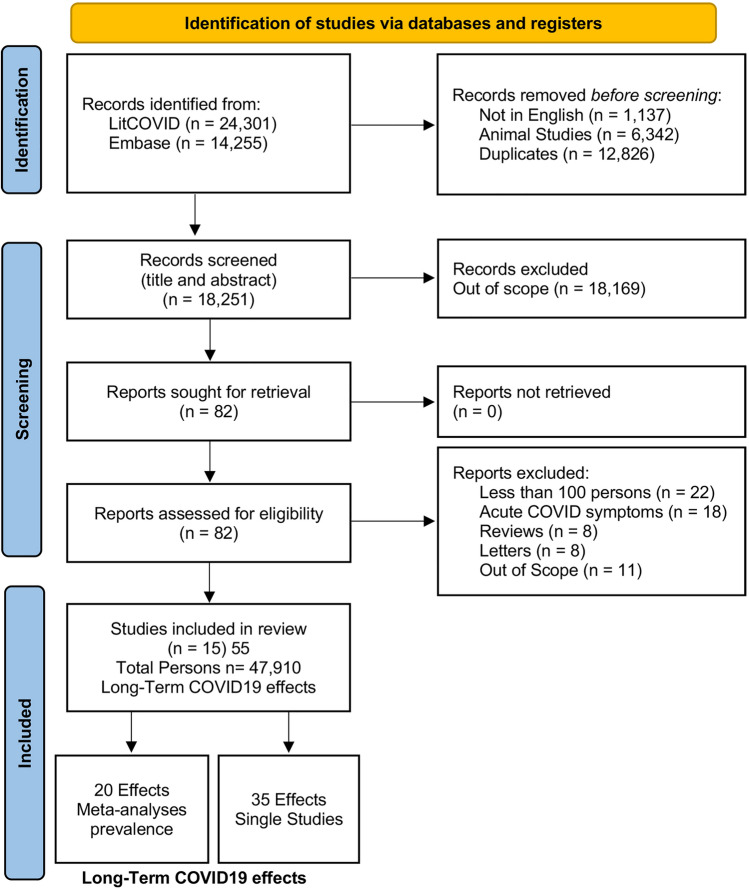
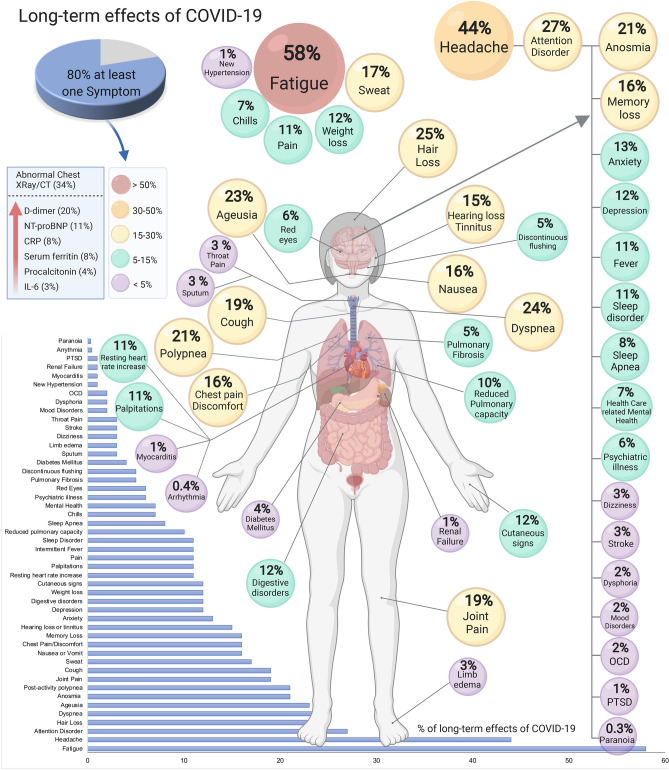
COVID-19 can involve persistence, sequelae, and other medical complications that last weeks to months after initial recovery. This systematic review and meta-analysis aims to identify studies assessing the long-term effects of COVID-19. LitCOVID and Embase were searched to identify articles with original data published before the 1st of January 2021, with a minimum of 100 patients. For effects reported in two or more studies, meta-analyses using a random-effects model were performed using the MetaXL software to estimate the pooled prevalence with 95% CI. PRISMA guidelines were followed. A total of 18,251 publications were identified, of which 15 met the inclusion criteria. The prevalence of 55 long-term effects was estimated, 21 meta-analyses were performed, and 47,910 patients were included (age 17-87 years). The included studies defined long-COVID as ranging from 14 to 110 days post-viral infection. It was estimated that 80% of the infected patients with SARS-CoV-2 developed one or more long-term symptoms. The five most common symptoms were fatigue (58%), headache (44%), attention disorder (27%), hair loss (25%), and dyspnea (24%). Multi-disciplinary teams are crucial to developing preventive measures, rehabilitation techniques, and clinical management strategies with whole-patient perspectives designed to address long COVID-19 care.
Overview
CoChat Summary
## TL;DR
This systematic review and meta-analysis identified 55 long-term effects of COVID-19 across 15 studies including 47,910 patients, estimating that 80% of infected patients developed one or more long-term symptoms. The most common reported effects were fatigue (58%), headache (44%), attention disorder (27%), hair loss (25%), and dyspnea (24%).
## Key findings
- The review screened 18,251 publications and included 15 studies; together they covered 47,910 patients aged 17–87 years.
- The authors identified 55 long-term effects of COVID-19 and performed 21 meta-analyses.
- Overall, an estimated 80% (95% CI 65–92) of COVID-19 patients had at least one long-term symptom.
- The five most common manifestations were fatigue (58%, 95% CI 42–73), headache (44%, 95% CI 13–78), attention disorder (27%, 95% CI 19–36), hair loss (25%, 95% CI 17–34), and dyspnea (24%, 95% CI 14–36).
- Among laboratory/imaging findings, abnormal chest X-ray/CT was observed in 34% (95% CI 27–42), with elevated D-dimer in 20% (95% CI 6–39) and NT-proBNP in 11% (95% CI 6–17).
## Methods
- Systematic review and meta-analysis following PRISMA guidelines; searches were run in LitCOVID and Embase for original studies published before January 1, 2021.
- Inclusion criteria required peer-reviewed English-language human studies with at least 100 patients and post-COVID-19 outcomes assessed 2 weeks or more after initial symptoms.
- Data extraction and study quality assessment were done by multiple reviewers; pooled prevalences were estimated with random-effects meta-analysis in MetaXL for outcomes reported in at least two studies, with heterogeneity assessed using I².
## Limitations
- The paper states that some outcomes had small sample sizes, limiting generalizability to the general population.
- It notes substantial heterogeneity across studies, mainly due to different follow-up times and mixed severity groups; it was also impossible to determine how long each symptom lasted.
- The paper states that many studies used self-reported questionnaires, creating possible reporting bias, and that outcomes may have been missed because studies used internally pre-defined symptom lists.
- Evident from the text: only English-language studies with at least 100 patients were included, so the review may miss smaller or non-English studies.
Model-written summary. Check it against the paper before relying on it.
Integrity signals
Registry
Cites
Statistics
Figures
Verification
Claims the paper makes
5 Valid · 0 Not valid · 8 Not checked · 41 Own results and interpretations
Every source the paper cites for this claim was checked and supports it.
In the paper
“a study reported high levels of depression, anxiety, and post-traumatic stress disorder (PTSD)37 in the long term in patients previously infected with other coronaviruses.”
§ More than 50 long-term effects of COVID-19: a systematic review and meta-analysis > Discussion
What the sources say
- Supportedcites [37] Rogers, J. P. et al. Psychiatric and neuropsychiatric presentations associated with severe coronavirus infections: A systematic review and meta-analysis with comparison to the COVID-19 pandemic. Lancet Psychiatry 7, 611–627. https://doi.org/10.1016/S2215-0366(20)30203-0 (2020). source
The Results report post-illness prevalence of anxiety disorders (14.8%), depression (14.9%), and PTSD (32.2%) among people who recovered from SARS or MERS, with mean follow-up times of 11.6, 22.6, and 33.6 months, respectively. The Discussion describes these prevalences as high, while cautioning that the studies could not clearly separate effects of infection from other factors. Page numbers were not provided in our copy. (LLM, conf=0.93)
plainstates an association- Asserted: passes — The authors put it forward as true.
- Checkable: passes — It can be checked against evidence.
- Load-bearing: unclear — It is unclear whether the paper’s conclusions depend on it.
- Based: passes — The paper gives a reason why it holds.
- Supported
The cited sources support only part of this claim — read each source’s verdict below.
In the paper
“Fatigue (58%) is the most common symptom of long and acute COVID-1923.”
§ More than 50 long-term effects of COVID-19: a systematic review and meta-analysis > Discussion
What the sources say
- Partly supportedcites [23] Townsend, L. et al. Persistent fatigue following SARS-CoV-2 infection is common and independent of severity of initial infection. PLoS One 15, e0240784. https://doi.org/10.1371/journal.pone.0240784 (2020). sourceExperimental — accuracy not yet measured
Townsend et al. (2020) support only that fatigue is common: the Introduction states it is 'recognised as one of the most common presenting complaints' in SARS-CoV-2 infection, with 44–69.6% in early case series and 34–46% in meta-analyses — figures the paper credits to other works it cites, and it never ranks fatigue as THE most common symptom of acute disease. For the convalescent/'long' COVID side, the Results (Prevalence of post-COVID fatigue) report 52.3% (67/128) meeting the CFQ-11 case definition at a median of 10 weeks, and the paper reports no symptom-prevalence comparison, so it does not establish fatigue as the most common long-COVID symptom either. The specific 58% magnitude attributed here matches nothing in our copy (the only nearby percentages are 52.3% fatigued cases and 57% of those offered an appointment who attended), so both the superlative and the number are unsupported. (LLM, conf=0.80)
plain- Asserted: passes — The authors put it forward as true.
- Checkable: passes — It can be checked against evidence.
- Load-bearing: unclear — It is unclear whether the paper’s conclusions depend on it.
- Based: passes — The paper gives a reason why it holds.
- Partly supported
The cited sources support only part of this claim — read each source’s verdict below.
In the paper
“It is present even after 100 days of the first symptom of acute COVID-194,23.”
§ More than 50 long-term effects of COVID-19: a systematic review and meta-analysis > Discussion
What the sources say
- Not checked yetcites [4] Townsend, L. et al. Persistent poor health post-COVID-19 is not associated with respiratory complications or initial disease severity. Ann. Am. Thorac. Soc. https://doi.org/10.1513/AnnalsATS.202009-1175OC (2021). source
- Partly supportedcites [23] Townsend, L. et al. Persistent fatigue following SARS-CoV-2 infection is common and independent of severity of initial infection. PLoS One 15, e0240784. https://doi.org/10.1371/journal.pone.0240784 (2020). sourceExperimental — accuracy not yet measured
Townsend et al. (2020) confirm persistent fatigue after the acute phase of SARS-CoV-2 infection, but at a median of 10 weeks (~70 days) from symptom onset (Abstract; Results, Participant characteristics: median interval 72 days, IQR 62-87; Table 2 'Days since Symptom Onset' medians 71 and 73). The only passage reaching beyond ~84 days is Table 1's follow-up band '>84 days (12 weeks)' (38 participants, 22 fatigued), and the Discussion explicitly frames the report as a 'medium time point' and calls for future longitudinal work 'to describe the persistence of fatigue at six months and beyond'. No passage in our copy states fatigue at or beyond 100 days from first symptom, so that specific qualifier of the citing sentence is not supported by this source. (LLM, conf=0.72)
plain- Asserted: passes — The authors put it forward as true.
- Checkable: passes — It can be checked against evidence.
- Load-bearing: unclear — It is unclear whether the paper’s conclusions depend on it.
- Based: passes — The paper gives a reason why it holds.
A result the paper reports from its own data — it cites no other source for it, so there is none to check. The quote shows it is in the paper.
In the paper
“The prevalence of 55 long-term effects was estimated”
- Also stated in: § Prevalence of long-term effects in COVID-19 patients · plain
“We identified a total of 55 long-term effects associated with COVID-19 in the literature reviewed”
§ More than 50 long-term effects of COVID-19: a systematic review and meta-analysis > Abstract
plainstates an associationn = 47,910- Asserted: passes — The authors put it forward as true.
- Checkable: passes — It can be checked against evidence.
- Load-bearing: passes — The paper’s conclusions depend on it.
- Based: passes — The paper gives a reason why it holds.
- Rests on an assumption not shown here.
- Also stated in: § Prevalence of long-term effects in COVID-19 patients · plain
A result the paper reports from its own data — it cites no other source for it, so there is none to check. The quote shows it is in the paper.
In the paper
“It was estimated that 80% of the infected patients with SARS-CoV-2 developed one or more long-term symptoms.”
- Also stated in: § Prevalence of long-term effects in COVID-19 patients · plain
“The meta-analysis of the studies (n = 7) that included an estimate for one symptom or more reported that 80% (95% CI 65–92) of the patients with COVID-19 have long-term symptoms.”
- Also stated in: § Discussion · boosted
“This systematic review and meta-analysis shows that 80% (95% CI 65–92) of individuals with a confirmed COVID-19 diagnosis continue to have at least one overall effect beyond 2 weeks following acute infection.”
§ More than 50 long-term effects of COVID-19: a systematic review and meta-analysis > Abstract
boostedn = 7- Asserted: passes — The authors put it forward as true.
- Checkable: passes — It can be checked against evidence.
- Load-bearing: passes — The paper’s conclusions depend on it.
- Based: passes — The paper gives a reason why it holds.
- Rests on an assumption not shown here.
- Also stated in: § Prevalence of long-term effects in COVID-19 patients · plain
27 more claims
Create a free account to see all 54 claims and to verify the 18 references still open.
- It may state two separate claims as one. 7
- Probably not a substantial claim. 17
Claims other papers make about this one
Each is checked against this paper’s own text: does it say what the citing paper says it does?
The source backs part of the claim, not all of it — or backs it for a different population, condition or comparison.
In the citing paper
“Mental health symptoms such as depression, anxiety and sleep problems are commonly observed in individuals suffering from acute COVID-19 infection to post-COVID-19 syndrome.”
From Psychological treatments for the mental health symptoms among individuals infected with COVID-19: a scoping review protocol (2023) · cites this paper as [4]
Experimental — accuracy not yet measuredThe cited source says what the claim attributes to it.
In the citing paper
“These mental health symptoms persist even after the acute stage of the disease.”
From Psychological treatments for the mental health symptoms among individuals infected with COVID-19: a scoping review protocol (2023) · cites this paper as [4]
The cited source says what the claim attributes to it.
In the citing paper
“Mental health symptoms are common in reports of a post-covid syndrome (4, 6).”
Citations
Cites
PRISMA-P Group, Moher, D., Shamseer, L., Clarke, M., Ghersi, D., Liberati, A., Petticrew, M., Shekelle, P., & Stewart, L. A. (2015) · Systematic Reviews · doi:10.1186/2046-4053-4-1 · Cited by 26,223
Shamseer, L., Moher, D., Clarke, M., Ghersi, D., Liberati, A., Petticrew, M., Shekelle, P., Stewart, L. A., & the PRISMA-P Group (2015) · BMJ · doi:10.1136/bmj.g7647 · Cited by 13,120
Persistent Symptoms in Patients After Acute COVID-19
Carfì, A., Bernabei, R., Landi, F., & for the Gemelli Against COVID-19 Post-Acute Care Study Group (2020) · JAMA · doi:10.1001/jama.2020.12603 · Cited by 4,561
Rogers, J. P., Chesney, E., Oliver, D., Pollak, T. A., McGuire, P., Fusar-Poli, P., Zandi, M. S., Lewis, G., & David, A. S. (2020) · The Lancet Psychiatry · doi:10.1016/s2215-0366(20)30203-0 · Cited by 2,407
Barendregt, J. J., Doi, S. A., Lee, Y. Y., Norman, R. E., & Vos, T. (2013) · Journal of Epidemiology and Community Health · doi:10.1136/jech-2013-203104 · Cited by 2,169
Cytokine release syndrome in severe COVID-19
Moore, J. B., & June, C. H. (2020) · Science · doi:10.1126/science.abb8925 · Cited by 1,912
Management of post-acute covid-19 in primary care
Greenhalgh, T., Knight, M., A’Court, C., Buxton, M., & Husain, L. (2020) · BMJ · doi:10.1136/bmj.m3026 · Cited by 1,689
Taquet, M., Luciano, S., Geddes, J. R., & Harrison, P. J. (2021) · The Lancet Psychiatry · doi:10.1016/s2215-0366(20)30462-4 · Cited by 1,484
Tenforde, M. W., Kim, S. S., Lindsell, C. J., Billig Rose, E., Shapiro, N. I., Files, D. C., Gibbs, K. W., Erickson, H. L., Steingrub, J. S., Smithline, H. A., et al. (2020) · MMWR. Morbidity and Mortality Weekly Report · doi:10.15585/mmwr.mm6930e1 · Cited by 1,319
Garrigues, E., Janvier, P., Kherabi, Y., Le Bot, A., Hamon, A., Gouze, H., Doucet, L., Berkani, S., Oliosi, E., Mallart, E., et al. (2020) · Journal of Infection · doi:10.1016/j.jinf.2020.08.029 · Cited by 1,157
Cited by
Items 701–800 of 1,003
Physical exercise-related manifestations of long COVID: A systematic review and meta-analysis
Zheng, C., Chen, J., Dai, Z.-H., Wan, K., Sun, F., Huang, J.-H., & Chen, X. (2024) · Journal of Exercise Science & Fitness · doi:10.1016/j.jesf.2024.06.001 · Cited by 18
“2,11,12 However, none of the above studies focused on exercise-related manifestations, especially the manifestations after exercise tests.”
BackgroundPutri, N. D., Laksanawati, I. S., Husada, D., Kaswandani, N., Prayitno, A., Triasih, R., Hidayati, I. S., Setyoningrum, R. A., Nurhariansyah, R., Cathleen, F., et al. (2025) · PLoS ONE · doi:10.1371/journal.pone.0315815 · Cited by 18
“…is concern regarding long-term health consequences following acute COVID-19 infection in children and adolescents based on observational evidence in adults with COVID-19 as well as previous experience of severe acute respiratory syndrome (SARS) and Middle East Respiratory Syndrome (MERS) [6,7].”
InfluentialProblems of early diagnosis of systemic lupus erythematosus during the COVID-19 pandemic
Nasonov, E. L., Попкова, Т. В., & Panafidina, T. A. (2021) · Rheumatology Science and Practice · doi:10.47360/1995-4484-2021-119-128 · Cited by 17
Hromić‐Jahjefendić, A., Barh, D., Pinto, C. H. R., Gomes, L. G. R., Machado, J. L. P., Afolabi, O. O., Tiwari, S., Aljabali, A. A. A., Tambuwala, M. M., Serrano‐Aroca, Á., et al. (2022) · Viruses · doi:10.3390/v14050910 · Cited by 17
Santoyo-Mora, M., Villaseñor‐Mora, C., Cardona-Torres, L. M., Nolasco, J. J. M., Gutiérrez, A. I. B., Padilla-Medina, J. A., & Bravo-Sánchez, M. G. (2022) · Brain Sciences · doi:10.3390/brainsci12091258 · Cited by 19
Schaap, G., Wensink, M., Doggen, C. J. M., van der Palen, J. A. M., Vonkeman, H. E., & Bode, C. (2022) · International Journal of Environmental Research and Public Health · doi:10.3390/ijerph192013003 · Cited by 20
Patients’ Health Experiences of Post COVID-19 Condition—A Qualitative Study
Almgren, J., Löfström, E., Malmborg, J. S., Nygren, J., Undén, J., & Larsson, I. (2022) · International Journal of Environmental Research and Public Health · doi:10.3390/ijerph192113980 · Cited by 17
National long COVID impact and risk factors
Baruch, J., Zahra, C., Cardona, T., & Melillo, T. (2022) · Public Health · doi:10.1016/j.puhe.2022.09.021 · Cited by 17
Goetzl, E. J., Yao, P. J., & Kapogiannis, D. (2023) · The American Journal of Medicine · doi:10.1016/j.amjmed.2023.03.026 · Cited by 17
“Unfortunately, during the same time period, there has been a significant increase in prevalence of post-acute sequelae of COVID-19 (PASC) or long COVID, which results in diverse disabling manifestations in multiple organ systems.(3,4) The incidence of PASC is unrelated to the nature or severity of preceding acute COVI…”
Contreras, A. M., Newman, D. B., Cappelloni, L., Niven, A. S., Mueller, M. R., Ganesh, R., Squires, R. W., Bonikowske, A. R., & Allison, T. G. (2023) · Progress in Cardiovascular Diseases · doi:10.1016/j.pcad.2023.05.005 · Cited by 17
Bergmans, R. S., Clauw, D. J., Flint, C., HARRIS, H. W., Lederman, S. M., & Schrepf, A. (2023) · Pain · doi:10.1097/j.pain.0000000000003110 · Cited by 17
Cognitive sequelae of COVID-19, a post-pandemic threat. Should we be worried about the brain fog?
Brutto, Ó. H. D. (2022) · Arquivos de Neuro-Psiquiatria · doi:10.1590/0004-282x-anp-2022-e003 · Cited by 17
Chaudhary, N. M., Weldon, C. H., Nandakumar, P., Holmes, M. V., & Aslibekyan, S. W. (2024) · medRxiv · doi:10.1101/2024.10.07.24315052 · Cited by 19
Luo, S., Lai, L. Y. H., Zhu, R., Gao, Y., & Zhao, Z. (2025) · Journal of Global Health · doi:10.7189/jogh.15.04282 · Cited by 17
“The reduced diffusing capacity of the lungs is reflected in a reduced diffusing capacity of the lungs for carbon monoxide, leading to hypoxic conditions with compromised oxygen saturation and consequent shortness of breath, cyanosis of the lips, and even panic and chest distress [ 54 , 55 ].”
Williams, A., Branscome, H., Khatkar, P., Mensah, G. A., Sharif, S. A., Pinto, D. O., DeMarino, C., & Kashanchi, F. (2021) · Journal of NeuroVirology · doi:10.1007/s13365-021-00998-6 · Cited by 16
Estudo das sequelas neuroanatômicas associadas à Síndrome Pós-COVID-19
Bragatto, M. G., de Almeida, B. M., de Sousa, G. C., Silva, G. A., Pessoa, L. D. S. G., Silva, L. K., Amorim, L. B., Bar, S. F., & de Sousa, V. T. (2021) · Revista Eletrônica Acervo Saúde · doi:10.25248/reas.e8759b.2021 · Cited by 34
Resilience resources and coping strategies of COVID-19 female long haulers: A qualitative study
Aghaei, A., Aggarwal, A., Zhang, R., Li, X., & Qiao, S. (2022) · Frontiers in Public Health · doi:10.3389/fpubh.2022.970378 · Cited by 16
Agergaard, J., Ullahammer, W. M., Gunst, J. D., Østergaard, L. J., & Schiøttz‐Christensen, B. (2022) · Journal of Clinical Medicine · doi:10.3390/jcm11247338 · Cited by 16
“In systematic reviews and meta-analyses of long COVID, the most prevalent reported symptoms are fatigue and “fatigue or muscle weakness”, concentration difficulties [5,6,40,41], headache, dyspnea [5,40,41], memory problems and insomnia [5].”
BackgroundKusumawardhani, N. Y., Putra, I. C. S., Kamarullah, W., Afrianti, R., Pramudyo, M., Iqbal, M., Prameswari, H. S., Achmad, C., Tiksnadi, B. B., & Akbar, M. R. (2023) · Reviews in Cardiovascular Medicine · doi:10.31083/j.rcm2401028 · Cited by 18
“Furthermore, laboratory data and imaging reveal cardiovascular problems in long COVID patients [4].”
BackgroundMethodInfluentialAbuhammad, S., Alzoubi, K. H., Khabour, O. F., Hamaideh, S. H., & Khassawneh, B. Y. (2023) · Medicine · doi:10.1097/md.0000000000032737 · Cited by 16
Müller, T., Riederer, P. F., & Kuhn, W. (2023) · Expert Review of Clinical Pharmacology · doi:10.1080/17512433.2023.2176301 · Cited by 16
Tsuchiya, H. (2023) · Medical Principles and Practice · doi:10.1159/000531373 · Cited by 16
“…symptomatology in the acute phase of the disease, there is increasing evidence that patients who have recovered from COVID-19 complain of long-term effects of COVID-19 or sequelae such as fatigue, headache, attention disorder, neurocognitive disorder (brain fog), cough, dyspnea, and hair loss [4].”
BackgroundSaigal, A., Niklewicz, C. N., Naidu, S. B., Bintalib, H. M., Shah, A., Seligmann, G., Hunter, A., Wey, E. Q., Abubakar, I., Mahungu, T. W., et al. (2023) · BMJ Open Respiratory Research · doi:10.1136/bmjresp-2023-001667 · Cited by 16
Impact of Long-COVID on Health Care Burden: A Case Control Study
Valdivieso, B., Saurí, I., Philibert, J., Calderón, J. M., Gas, M.-E., Diaz, J., López-Hontangas, J. L., Navarro, D., Forner, M. J., & Redón, J. (2023) · Journal of Clinical Medicine · doi:10.3390/jcm12185768 · Cited by 16
Trabajo, teletrabajo y salud mental en el contexto COVID-19
Gallegos, M., Martino, P., Quiroga, V., Bonantini, C. A., Razumovskiy, A., Gallegos, W. L. A., & Cervigni, M. (2023) · Ciência & Saúde Coletiva · doi:10.1590/1413-812320232810.11752023 · Cited by 16
Kaczmarczyk, K., Matharu, Y., Bobowik, P. Ż., Gajewski, J., Maciejewska, A., & Kulig, K. (2024) · Journal of Clinical Medicine · doi:10.3390/jcm13061712 · Cited by 18
Psychosocial Support in Pulmonary Rehabilitation
Yohannes, A. M. (2024) · Respiratory Care · doi:10.4187/respcare.11850 · Cited by 17
“12 These symptoms are mostly likely amplified in patients with asthma and COPD who have comorbid elevated symptoms of depression, anxiety, posttraumatic stress disease (syndrome), and insomnia.”
The Bidirectional Association Between Metabolic Syndrome and Long-COVID-19
Liu, Y., & Lou, X. (2024) · Diabetes Metabolic Syndrome and Obesity · doi:10.2147/dmso.s484733 · Cited by 19
Morita, S., Tokumasu, K., Otsuka, Y., Honda, H., Nakano, Y., Sunada, N., Sakurada, Y., Matsuda, Y., Soejima, Y., Ueda, K., et al. (2024) · PLoS ONE · doi:10.1371/journal.pone.0315385 · Cited by 17
Huntošová, V., Benziane, A., Zauška, Ľ., Ambro, Ľ., Olejárová, S., Joniová, J., Hlávková, N., Wagnières, G., Zelenková, G., Diko, P., et al. (2025) · Journal of Colloid and Interface Science · doi:10.1016/j.jcis.2025.137454 · Cited by 16
Beyond acute SARS-CoV-2 infection: A new challenge for Internal Medicine
Martín-Garrido, I., & Medrano-Ortega, F. J. (2022) · Revista Clínica Española (English Edition) · doi:10.1016/j.rceng.2021.09.004 · Cited by 16
Richard, S. A., Epsi, N. J., Lindholm, D. A., Malloy, A. M. W., Maves, R. C., Berjohn, C. M., Lalani, T., Smith, A. G., Mody, R. M., Ganesan, A., et al. (2022) · Open Forum Infectious Diseases · doi:10.1093/ofid/ofac275 · Cited by 16
“that 80% of individuals infected with SARS-CoV-2 have symptoms that persist beyond 14 days [18] and participants were asked to fill out 2 weeks of FLU-PRO Plus surveys, we have captured the earliest, highly symptomatic period; however, future COVID-19 studies may benefit from longer-term followup.”
BackgroundNeuroCOVID-19: a critical review
Guedes, B. F. (2022) · Arquivos de Neuro-Psiquiatria · doi:10.1590/0004-282x-anp-2022-s136 · Cited by 16
Koss, J., & Bohnet-Joschko, S. (2022) · JMIR Formative Research · doi:10.2196/39582 · Cited by 17
New Insights into SARS-CoV-2 and Cancer Cross-Talk: Does a Novel Oncogenesis Driver Emerge?
Rapti, V., Τσαγανός, Θ., Vathiotis, I. A., Syrigos, N. K., Li, P., & Poulakou, G. (2022) · Vaccines · doi:10.3390/vaccines10101607 · Cited by 16
“Unlike SARS and Middle East respiratory syndrome (MERS) outbreaks that temporarily caused considerable global health consternation, SARS-CoV-2 continues to pose unprecedented challenges for healthcare systems and socioeconomic structures worldwide, since its precise pathophysiology is still poorly understood [1,2].”
BackgroundPost-COVID: Alles eine Frage der Definition?
Lemhöfer, C., Appel, K. S., Häuser, W., Hettich, N., Kohls, M., & Polidori, M. C. (2022) · DMW - Deutsche Medizinische Wochenschrift · doi:10.1055/a-1940-1222 · Cited by 16
Prospects and possibilities for the treatment of patients with long COVID-19 syndrome
Tanashyan, M. М., Раскуражев, А. А., Игоревна, К. П., Bely, P. A., & Zaslavskaya, K. Y. (2022) · Terapevticheskii arkhiv · doi:10.26442/00403660.2022.11.201981 · Cited by 17
Immunoadsorption to treat patients with severe post‐COVID syndrome
Giszas, B., Reuken, P. A., Katzer, K., Kiehntopf, M., Schmerler, D., Rummler, S., Stallmach, A., & Klink, A. (2023) · Therapeutic Apheresis and Dialysis · doi:10.1111/1744-9987.13974 · Cited by 16
“Patients presenting with this condition may exhibit more than 50 distinct symptoms, including fatigue, shortness of breath, cognitive impairment, and sleep disturbance [2].”
BackgroundCOVID-19 imaging, where do we go from here? Bibliometric analysis of medical imaging in COVID-19
Wen, R., Zhang, M., Xu, R. J., Gao, Y., Liu, L., Chen, H., Wang, X., Zhu, W., Lin, H., Liu, C., et al. (2023) · European Radiology · doi:10.1007/s00330-023-09498-z · Cited by 17
“The consistency and specificity of COVID19 have been comprehensively observed in the lungs, nervous system, digestive system, endocrine system, reproductive system, and other organs [36].”
BackgroundCardiovascular and cerebral vascular health in females with postacute sequelae of COVID-19
Nandadeva, D., Skow, R. J., Stephens, B. Y., Grotle, A., Georgoudiou, S., Barshikar, S., Seo, Y., & Fadel, P. J. (2023) · American Journal of Physiology-Heart and Circulatory Physiology · doi:10.1152/ajpheart.00018.2023 · Cited by 17
Park, J. M., Woo, W., Lee, S. C., Park, S., Yon, D. K., Lee, S. W., Smith, L., Koyanagi, A., Shin, J. I., & Kim, Y. W. (2023) · Neuroepidemiology · doi:10.1159/000530536 · Cited by 16
Covid-19 and excess mortality in medicare beneficiaries
Greenwald, S. D., Chamoun, N. G., Manberg, P. J., Gray, J., Clain, D., Maheshwari, K. K., & Sessler, D. I. (2022) · PLoS ONE · doi:10.1371/journal.pone.0262264 · Cited by 16
“An additional consideration is that prolonged sequela after severe Covid-19 infections (Long Covid syndrome) appear substantial and is an area requiring urgent further study [30].”
BackgroundVaranasi, S., Sathyamoorthy, M., Chamakura, S., & Shah, S. A. (2021) · Cureus · doi:10.7759/cureus.18398 · Cited by 16
MacIntosh, B. J., Ji, X., Chen, J. J., Gilboa, A., Roudaia, E., Sekuler, A. B., Gao, F., Chad, J. A., Jegatheesan, A., Masellis, M., et al. (2021) · CMAJ Open · doi:10.9778/cmajo.20210023 · Cited by 16
Song, W., Zhang, L., Liu, L., Sainlaire, M., Karvar, M., Kang, M., Pullman, A., Lipsitz, S. R., Massaro, A. F., Patil, N., et al. (2022) · Journal of the American Medical Informatics Association · doi:10.1093/jamia/ocac083 · Cited by 16
“23,24 “Hospitalization,” as an objective and comprehensive indication of patient status, could be a very useful phenotype for this kind of study.”
BackgroundLong COVID – respiratory symptoms in non-hospitalised subjects – a cross-sectional study
Olsén, M. F., Lannefors, L., Nygren‐Bonnier, M., & Johansson, E. (2022) · European Journal of Physiotherapy · doi:10.1080/21679169.2022.2101692 · Cited by 15
Silva, G. R. D. C. E., Moura, W. É. A., dos Santos, K. C., Gomes, D. O., Bandeira, G. N., Guimarães, R. A., Rosso, C. F. W., Bazílio, G. S., Leite, V. R. M. C., Caetano, K. A. A., et al. (2023) · International Journal of Environmental Research and Public Health · doi:10.3390/ijerph20021483 · Cited by 15
Griffith, L. E., Beauchamp, M., McMillan, J. M., Borhan, S., Oz, U. E., Wolfson, C. M., Kirkland, S., Basta, N. E., Thompson, M. E., Raina, P. S., et al. (2023) · Communications Medicine · doi:10.1038/s43856-023-00266-0 · Cited by 16
Iqbal, P., Ata, F., Chaudhry, H., Muthanna, B., Younas, H. W., Munamm, S. A. U., Sharma, R. K., Fadah, K., Elazzazy, S., Hamad, A. A., et al. (2023) · Health Science Reports · doi:10.1002/hsr2.1211 · Cited by 15
Moukayed, M. (2023) · Current Nutrition Reports · doi:10.1007/s13668-023-00471-2 · Cited by 16
Clinical and Socio-Demographic Variables Associated With Long COVID-19: A Cross-Sectional Study
Mahmoodi, Z., Bahrami, G., Shahrestanaki, E., Seddighi, H., & Ghavidel, N. (2023) · Clinical Nursing Research · doi:10.1177/10547738231177395 · Cited by 16
“In addition, many studies have reported gender as a risk factor associated with post-COVID complications and greater stress after the disease (Iqbal et al., 2021; Mahmoodi et al., 2021).”
BackgroundAnsone, L., Rovīte, V., Brīvība, M., Jagare, L., Pelcmane, L., Borisova, D., Thews, A., Leiminger, R., & Kloviņš, J. (2024) · International Journal of Molecular Sciences · doi:10.3390/ijms25031523 · Cited by 16
Saes, M. D. O., Rocha, J. Q. S., Rütz, A., da Silva, C. N., Camilo, L. D. S., de Oliveira, B. C., Ritta, M. D. C., Nunes, L. D. S., Gonçalves, C. D. S., Vieira, Y. P., et al. (2024) · Revista Contexto & Saúde · doi:10.21527/2176-7114.2024.48.14140 · Cited by 17
Emerging trends in management of long COVID with a focus on pulmonary rehabilitation: A review
Li, A. Y., Li, W. X., & Li, J. (2024) · The Clinical Respiratory Journal · doi:10.1111/crj.13777 · Cited by 16
Mechanisms of Gut-Related Viral Persistence in Long COVID
McMillan, P., Turner, A. J., & Uhal, B. D. (2024) · Viruses · doi:10.3390/v16081266 · Cited by 17
“The present review includes studies of patients who had relatively mild to moderate COVID-19 and who did not need hospitalization [9].”
BackgroundLong COVID Syndrome: A Narrative Review on Burden of Age and Vaccination
Finamore, P., Arena, E., Lupoi, D. M., Savito, L., Nunzio, F. D., Furbatto, M., Dragonieri, S., Incalzi, R. A., & Scarlata, S. (2024) · Journal of Clinical Medicine · doi:10.3390/jcm13164756 · Cited by 17
“Long COVID unfolds as a complex and multifaceted phenomenon, with an extensive spectrum of over 100 manifestations [7], more commonly fatigue, headache, attention disorders, hair loss, and dyspnea [8], distributed heterogeneously across age groups.”
BackgroundHonchar, O., Ащеулова, Т. В., Chumachenko, T., & Chumachenko, D. (2025) · BMJ Open · doi:10.1136/bmjopen-2024-084311 · Cited by 15
“15 Whereas the current terminological framework only distinguishes cases lasting for more than 4 weeks (‘long COVID’ or PASC, postacute sequelae of COVID-19), 4–12 weeks (‘ongoing symptomatic COVID-19’) and more than 12 weeks (‘post-COVID’), there is a growing body of evidence pointing to the fact…”
Benzarti, W., Toulgui, E., PREFAUT, C. G., Chamari, K., & Saad, H. B. (2021) · Libyan Journal of Medicine · doi:10.1080/19932820.2021.2009101 · Cited by 19
“Some of the symptoms affect the chain implicated during adaptation to exercise, namely the respiratory (eg; dyspnea, cough, post activity polypnea), cardiovascular (eg; chest pain), muscular (eg; myalgia, fatigue), and neurological (eg; headache, dizziness) systems [4].”
BackgroundYang, X., Li, Z., Wang, B., Pan, Y., Jiang, C., Zhang, X., Yang, Y., Zhou, C., Hu, C., Zhang, Z., et al. (2021) · British Journal of Anaesthesia · doi:10.1016/j.bja.2021.11.024 · Cited by 15
García-Grimshaw, M., Sankowski, R., & Valdés‐Ferrer, S. I. (2022) · Current Opinion in Neurology · doi:10.1097/wco.0000000000001046 · Cited by 18
A Survey of Mobile Apps for the Care Management of Patients with Dementia
Kuo, H.-L., Chang, C.-H., & Ma, W. (2022) · Healthcare · doi:10.3390/healthcare10071173 · Cited by 18
Uniyal, N., Sethi, Y., Sharma, P. C., Sayana, A., Jeet, N., Agarwal, A. K., & Rawat, V. (2022) · Cureus · doi:10.7759/cureus.27345 · Cited by 15
Altersberger, M., Goliasch, G., Khafaga, M., Schneider, M., Cho, Y., Winkler, R. E., Funk, G., Binder, T. M., Huber, G., Zwick, R. H., et al. (2022) · Journal of Ultrasound in Medicine · doi:10.1002/jum.16068 · Cited by 15
“Regarding elevated laboratory parameters, NT-pro-BNP was elevated in 11% of diagnosed long COVID patients.(9)”
BackgroundMethodPalmer, K., Nemer, L., Datta, S. S., & Menne, B. (2022) · Frontiers in Public Health · doi:10.3389/fpubh.2022.959227 · Cited by 15
Omicron variants of SARS-CoV-2 and long COVID
Yang, C., Zhao, H., Shannon, C. P., & Tebbutt, S. J. (2022) · Frontiers in Immunology · doi:10.3389/fimmu.2022.1061686 · Cited by 15
Frutos, M. D. L. P. S., Porras, V. A., Morales, M. B., García-Arrabé, M., Estrada-Barranco, C., & Alonso, M. R. (2023) · Therapeutic Advances in Respiratory Disease · doi:10.1177/17534666231167354 · Cited by 17
Gao, Y., Kok, W. L., Sharma, V., Illsley, C. S., Hanks, S., Tredwin, C. J., & Hu, B. (2023) · Cell Death Discovery · doi:10.1038/s41420-023-01474-2 · Cited by 16
“It has been reported that there were ever increasing “long COVID” [2] and repeated infection cases [3], with it has been reported in the UK alone having more than 2 million long COVID cases (https:// www .”
Khan, M. A. S., Miah, M. I., Islam, Z., Afrin, S., Ahmed, F., & Rahman, S. R. (2023) · Informatics in Medicine Unlocked · doi:10.1016/j.imu.2023.101305 · Cited by 15
Clinical standards for diagnosis, treatment and prevention of post-COVID-19 lung disease
Visca, D., Centis, R., Pontali, E., Zampogna, E., Russell, A., Migliori, G. B., Andréjak, C., Aro, M., Bayram, H., Berkani, K., et al. (2023) · The International Journal of Tuberculosis and Lung Disease · doi:10.5588/ijtld.23.0248 · Cited by 17
Patient symptoms and experience following COVID-19: results from a UK wide surveyPreprint
Buttery, S. C., Philip, K. E. J., Williams, P. J., Fallas, A., West, B., Cumella, A., Cheung, C., Walker, S. M., Quint, J. K., Polkey, M. I., et al. (2021) · medRxiv · doi:10.1101/2021.04.15.21255348 · Cited by 15
Kumar, G., Bhalla, A., Mukherjee, A., Turuk, A., Talukdar, A., Mukherjee, S., Bhardwaj, P., Menon, G. R., Sahu, D., Misra, P., et al. (2023) · BMJ Global Health · doi:10.1136/bmjgh-2023-012245 · Cited by 19
Yu, L., & McCracken, L. M. (2023) · British Journal of Clinical Psychology · doi:10.1111/bjc.12446 · Cited by 14
Perez-Favila, A., Veloz, I. G., Hernandez-Marquez, L. S., Gutierrez-Vela, E. F., Flores‐Morales, V., & Martínez‐Fierro, M. L. (2024) · International Journal of Molecular Sciences · doi:10.3390/ijms25031562 · Cited by 15
Decoding Post-Viral Fatigue: The Basal Ganglia’s Complex Role in Long-COVID
Rudroff, T. (2024) · Neurology International · doi:10.3390/neurolint16020028 · Cited by 16
“Specifically, by suppressing microglial activation and attendant release of cytokines, like IL-1 β , TNF-α , and nitric oxide, colchicine may interrupt self-amplifying cycles of immune-mediated dopaminergic injury centered on the basal ganglia [59,60].”
BackgroundRisk and protective factors for the severity of long COVID – A network analytic perspective
Kananian, S., Nemani, A., & Stangier, U. (2024) · Journal of Psychiatric Research · doi:10.1016/j.jpsychires.2024.08.031 · Cited by 14
Exploring the landscape of symptom-specific inflammatory cytokines in post-COVID syndrome patients
Tilikete, C., Zamali, I., Meddeb, Z., Kharroubi, G., Marzouki, S., Dhaouadi, T., Hmid, A. B., Samoud, S., Galaï, Y., Charfeddine, S., et al. (2024) · BMC Infectious Diseases · doi:10.1186/s12879-024-10222-5 · Cited by 15
Lesgards, J., Cerdan, D., & Perronne, C. (2025) · International Journal of Molecular Sciences · doi:10.3390/ijms26167879 · Cited by 15
“%) as the five most commonly reported symptoms associated with long COVID [19].”
InfluentialEgede, L. E., Walker, R. J., Dawson, A. Z., Zosel, A. E., Bhandari, S., Nagavally, S., Martin, I. B. K., & Frank, M. (2022) · Quality of Life Research · doi:10.1007/s11136-022-03081-7 · Cited by 14
Predictors of Submaximal Exercise Test Attainment in Adults Reporting Long COVID Symptoms
Romero‐Ortuño, R., Jennings, G., Feng, X., Duggan, E., Gormley, J., & Monaghan, A. (2022) · Journal of Clinical Medicine · doi:10.3390/jcm11092376 · Cited by 14
Walitt, B. T., & Johnson, T. P. (2022) · Current Opinion in Neurology · doi:10.1097/wco.0000000000001051 · Cited by 14
“These findings have been now replicated in multiple studies within the first month after COVID recovery [8,10,11] and a recent study shows that fatigue and cognitive dysfunction often continue to persist after six months [4].”
ResultStoffels, A. A. F., van Voorthuizen, E. L., van Hees, H. W. H., Peters, J. B., van Helvoort, H. A. C., Voermans, N. C., Doorduin, J., & van den Borst, B. (2022) · Nutrients · doi:10.3390/nu14204319 · Cited by 15
SARS-CoV-2 in brief: from virus to prevention
Karami, H., Karimi, Z., & Karami, N. (2022) · Osong Public Health and Research Perspectives · doi:10.24171/j.phrp.2022.0155 · Cited by 14
Long-term self-reported health and disability after COVID-19 in public employees
Kröönström, L. A., Krause, J., Larsson, S. B., Sigström, R., & Sunnerhagen, K. S. (2022) · BMC Public Health · doi:10.1186/s12889-022-14820-3 · Cited by 14
“Although the symptomatology has been extensively assessed in multiple studies among patients recovering from COVID-19 [3, 4], less is known regarding the aftermath of COVID-19 with respect to long-term health and disability.”
BackgroundFatigue after COVID‐19 in non‐hospitalized patients according to sex
Mazurkiewicz, I., Chatys-Bogacka, Ż., Słowik, J., Klich‐Rączka, A., Fedyk‐Lukasik, M., Słowik, A., Wnuk, M. A., & Drabik, L. (2023) · Brain and Behavior · doi:10.1002/brb3.2849 · Cited by 14
Symptomatic Characteristics of Hypozincemia Detected in Long COVID Patients
Matsuda, Y., Tokumasu, K., Otsuka, Y., Sunada, N., Honda, H., Sakurada, Y., Nakano, Y., Hasegawa, T., Obika, M., Ueda, K., et al. (2023) · Journal of Clinical Medicine · doi:10.3390/jcm12052062 · Cited by 14
Хайбуллина, Д. Х., & Maksimov, Y. N. (2023) · S S Korsakov Journal of Neurology and Psychiatry · doi:10.17116/jnevro202312303161 · Cited by 15
Ferrando, S. J., Lynch, S. T., Ferrando, N., Dornbush, R. L., Shahar, S., & Klepacz, L. (2023) · Frontiers in Psychiatry · doi:10.3389/fpsyt.2023.1160852 · Cited by 20
García‐Dolores, F., Tendilla‐Beltrán, H., Flores, F., Carbajal-Rimoldi, L. A., Mendoza-Morales, R. C., Gómez‐Mendoza, L. E., Vázquez-Hernández, A. J., de la Cruz, F., Mendoza, A. D. G., Nicolini, H., et al. (2023) · Heliyon · doi:10.1016/j.heliyon.2023.e16420 · Cited by 18
“However, as clinical data were collected, it was evident that SARS-CoV-2 has brain tropism because of the high prevalence of psychiatric and neurological symptoms in patients with COVID-19 [3,4].”
Headache in COVID-19 and Long COVID: to Know Facts for Clinical Practice
Gómez‐Dabó, L., Melgarejo, L., Caronna, E., & Pozo‐Rosich, P. (2023) · Current Neurology and Neuroscience Reports · doi:10.1007/s11910-023-01296-w · Cited by 14
“Although it usually coexists with other COVID-19 symptoms, in 25% of patients, it is the presenting sign [1 •• , 13–15].”
BackgroundInfluentialHair disorders associated with post-COVID-19 infection in females: a cross-sectional study
Awad, N. E. H. A., Obaid, Z. M., Zaky, M. S., & Elsaie, M. L. (2023) · Irish Journal of Medical Science (1971 -) · doi:10.1007/s11845-023-03509-0 · Cited by 16
“[9].”
Serum Pentraxin 3 as Promising Biomarker for the Long-Lasting Inflammatory Response of COVID-19
Capra, A. P., Crupi, L., Pantò, G., Repici, A., Calapai, F., Squeri, R., Ardizzone, A., & Esposito, E. (2023) · International Journal of Molecular Sciences · doi:10.3390/ijms241814195 · Cited by 14
Widmann, M., Gaidai, R., Schubert, I., Grummt, M., Bensen, L., Kerling, A., Quermann, A., Zacher, J., Vollrath, S., Bizjak, D. A., et al. (2024) · Sports Medicine · doi:10.1007/s40279-023-01976-0 · Cited by 15
“Exertional dyspnea has been identified as one of the persistent symptoms lasting beyond 2 weeks after COVID-19 diagnosis [8].”
BackgroundHatton, C., Hastings, R. P., Caton, S., Bradshaw, J., Jahoda, A. J., Kelly, R. H., Maguire, R., Oloidi, E., Taggart, L., Todd, S., et al. (2024) · British Journal of Learning Disabilities · doi:10.1111/bld.12578 · Cited by 14
Zuschlag, D., Grandt, D., Custodis, F., Braun, C., & Häuser, W. (2022) · Der Schmerz · doi:10.1007/s00482-022-00626-0 · Cited by 17
Akbari, H., Yoosefi, M., Pourabbas, M., Weiss, K., Knechtle, B., Vancini, R. L., Trakada, G., Saad, H. B., Lavie, C. J., & Ghram, A. (2022) · Journal of Clinical Medicine · doi:10.3390/jcm11092346 · Cited by 17
Long-term effects of COVID-19 in diabetic and non-diabetic patients
Alberca, R. W., Ramos, Y. Á. L., Pereira, N. Z., Beserra, D. R., Branco, A. C. C. C., Orfali, R. L., Aoki, V., Duarte, A. J. D. S., & Sato, M. N. (2022) · Frontiers in Public Health · doi:10.3389/fpubh.2022.963834 · Cited by 14
On the new post COVID-19 condition
Soriano, J. B., & Ancochea, J. (2021) · Archivos de Bronconeumología · doi:10.1016/j.arbr.2021.10.011 · Cited by 14
Impact of SARS-CoV-2 on the nervous system
Czarnowska, A., Zajkowska, J. M., & Kułakowska, A. (2023) · Neurologia i Neurochirurgia Polska · doi:10.5603/pjnns.a2023.0009 · Cited by 13
“[91].”
BackgroundFurtado, P. L. D. A., Brasileiro-Santos, M. D. S., de Mello, B. L. C., Araújo, A. A., da Silva, M. A. S., Suassuna, J. A. S., Brasileiro-Santos, G., Martins, R. D. L., & Santos, A. D. C. (2023) · International Journal of Telerehabilitation · doi:10.5195/ijt.2023.6560 · Cited by 14
“A recent systematic review and meta-analysis found that persistent symptoms such as fatigue and exercise intolerance occur in approximately 80% of adult patients and that these symptoms may continue for up to 6-7 months after initial infection (Lopez-Leon et al., 2021; Wiersinga et al., 2020).”
BackgroundA Cross-Sectional Study of the Physical and Mental Well-Being of Long COVID Patients in Aruba
Duwel, V., de Kort, J. M. L., Becker, C. M., Kock, S., Tromp, G. G., & Busari, J. O. (2023) · Clinical Medicine & Research · doi:10.3121/cmr.2023.1821 · Cited by 15
“This table describes the association between sex (male and female) and age categories (6 x 10 year categories) with the health score (1-100) through ANOVA tests.”
Method
Metadata
- Authors
- Lopez-Leon, S., Wegman-Ostrosky, T., Perelman, C., Sepulveda, R., Rebolledo, P. A., Cuapio, A., & Villapol, S.
- Affiliations
- Universidad Nacional Autónoma de México (MX)
- Emory University (US)
- Houston Methodist (US)
- Corresponding author
- Villapol, Sonia
- ORCID
- Venue
- Scientific Reports
- Published
- 2021-08-09
- Volume
- 11
- Issue
- 1
- Pages
- 16144-16144
- ISSN
- 2045-2322 (ISSN-L)
- PMC
- PMC8352980
- OpenAlex
- W3133517424
- Cited by
- 2,757
- References
- 51
- Citations by year
- 2026: 130 · 2025: 278 · 2024: 510 · 2023: 728 · 2022: 776 · 2021: 331
- FWCI
- 75.19
- Type
- journal article
- Language
- en
- Open access
- gold
- doi.org
- Licence
- cc-by
- creativecommons.org/licenses/by/4.0 (tdm)
- creativecommons.org/licenses/by/4.0 (vor)
- Locations
- Scientific Reports (publishedVersion, cc-by)
- medRxiv (acceptedVersion, cc-by-nc-nd)
- PubMed Central (publishedVersion, cc-by)
- PubMed (publishedVersion)
- Europe PMC (PubMed Central) (submittedVersion, cc-by-nc-nd)
- PubMed Central (submittedVersion, cc-by-nc-nd)
- DOAJ (DOAJ: Directory of Open Access Journals) (submittedVersion, cc-by-sa)
- Funders
- Houston Methodist Research Institute
- Topics
- Health Sciences › Medicine › Clinical Neurology › Long-Term Effects of COVID-19
- Health Sciences › Medicine › Infectious Diseases › COVID-19 Clinical Research Studies
- Social Sciences › Psychology › Clinical Psychology › COVID-19 and Mental Health
- Keywords
- long COVID, long-term effects of COVID-19, SARS-CoV-2, post-acute sequelae, fatigue, headache, attention disorders, hair loss, dyspnea, prevalence, multidisciplinary care, rehabilitation
About these checks
Registry, retraction, Cites and statistics results are computed, not judged, with one exception: a printed reference that no index lists is read once by a model before it counts as a citation error. Claims are extracted by a model and kept only when their quote appears verbatim in the text; each cited source is then checked, with a model’s help, for whether it says what the claim relies on. Those verdicts can be wrong — read the claim’s quote and the cited source before relying on one.
The claim verdicts this report counts are experimental: their accuracy is not yet measured.
A language model drew the claims from the paper on 2026-10-11, under version 3 of the claim definition (model deepseek-v4.1-flash, prompt extract-v3).
A second model labelled each claim on 2026-10-11 (model jev-1.13-20260917, definition revision gold-guideline-v0.2).
Cited sources are checked with a language model’s help (gpt-6-sol and qwen3.8-omni-flash).
Statistics and arithmetic are recomputed, not judged.
Confidence bands are shown only for fields calibrated on our annotated test set. None is calibrated yet, so no band is shown.
What counts as a claim ›How we measure confidence ›How we check this ›
Are you an author, or do you see a problem with this page? Request a review
Data sources
Bibliographic data: Semantic Scholar, OpenAlex, Crossref.
Contains information from the Semantic Scholar Academic Graph Datasets, made available under the ODC Attribution License (ODC-BY 1.0).
Semantic Scholar’s data is described in: Kinney, R., et al. (2023). The Semantic Scholar Open Data Platform. arXiv:2301.10140.
