

More than 50 long-term effects of COVID-19: a systematic review and meta-analysis
Open accessPublished version of a preprint
The DOI matches its Crossref record; 51 of the 51 references it cites were found in a registry or an index; 5 of the 23 sources its claims cite were checked for support.
Abstract
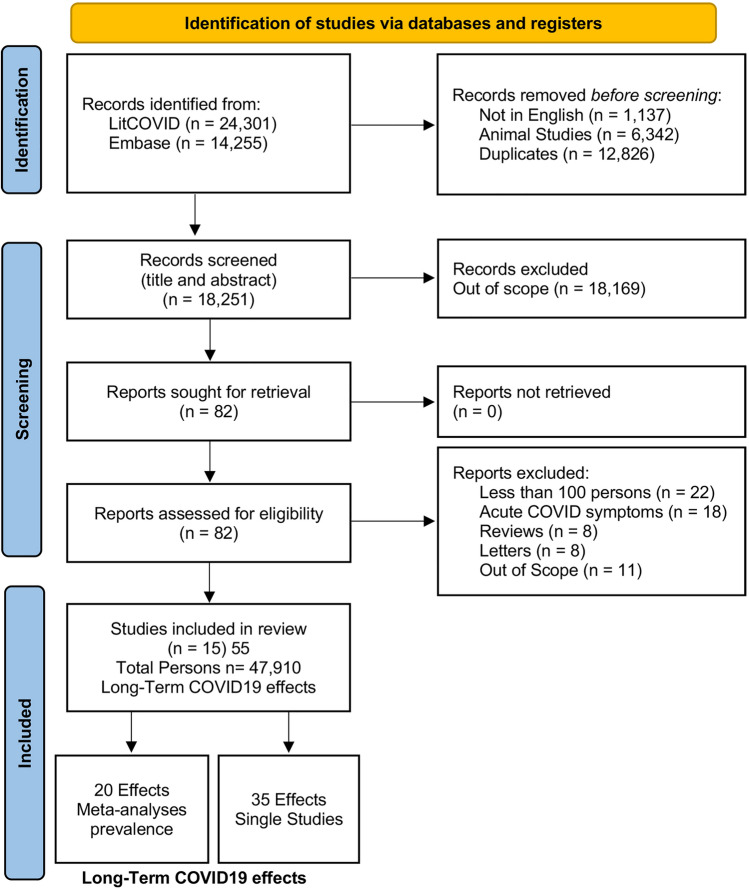
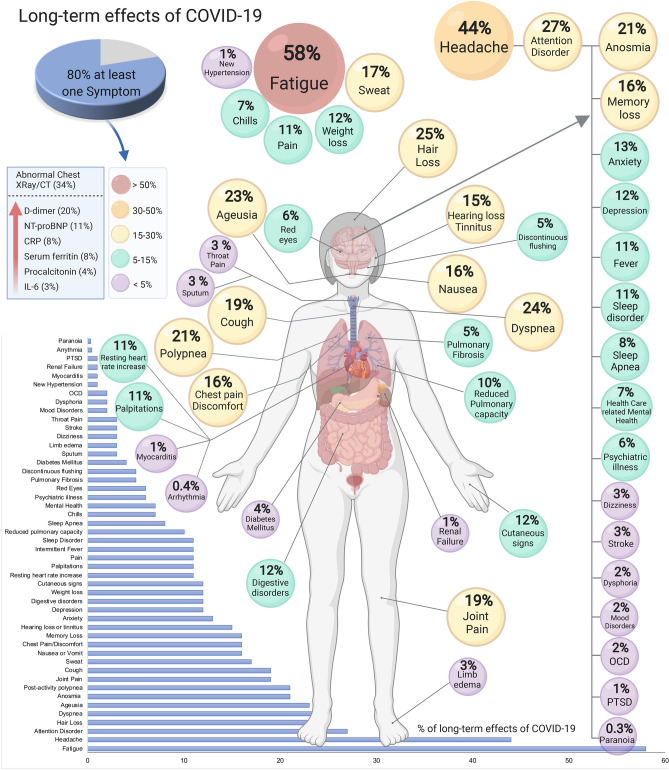
COVID-19 can involve persistence, sequelae, and other medical complications that last weeks to months after initial recovery. This systematic review and meta-analysis aims to identify studies assessing the long-term effects of COVID-19. LitCOVID and Embase were searched to identify articles with original data published before the 1st of January 2021, with a minimum of 100 patients. For effects reported in two or more studies, meta-analyses using a random-effects model were performed using the MetaXL software to estimate the pooled prevalence with 95% CI. PRISMA guidelines were followed. A total of 18,251 publications were identified, of which 15 met the inclusion criteria. The prevalence of 55 long-term effects was estimated, 21 meta-analyses were performed, and 47,910 patients were included (age 17-87 years). The included studies defined long-COVID as ranging from 14 to 110 days post-viral infection. It was estimated that 80% of the infected patients with SARS-CoV-2 developed one or more long-term symptoms. The five most common symptoms were fatigue (58%), headache (44%), attention disorder (27%), hair loss (25%), and dyspnea (24%). Multi-disciplinary teams are crucial to developing preventive measures, rehabilitation techniques, and clinical management strategies with whole-patient perspectives designed to address long COVID-19 care.
Overview
CoChat Summary
## TL;DR
This systematic review and meta-analysis identified 55 long-term effects of COVID-19 across 15 studies including 47,910 patients, estimating that 80% of infected patients developed one or more long-term symptoms. The most common reported effects were fatigue (58%), headache (44%), attention disorder (27%), hair loss (25%), and dyspnea (24%).
## Key findings
- The review screened 18,251 publications and included 15 studies; together they covered 47,910 patients aged 17–87 years.
- The authors identified 55 long-term effects of COVID-19 and performed 21 meta-analyses.
- Overall, an estimated 80% (95% CI 65–92) of COVID-19 patients had at least one long-term symptom.
- The five most common manifestations were fatigue (58%, 95% CI 42–73), headache (44%, 95% CI 13–78), attention disorder (27%, 95% CI 19–36), hair loss (25%, 95% CI 17–34), and dyspnea (24%, 95% CI 14–36).
- Among laboratory/imaging findings, abnormal chest X-ray/CT was observed in 34% (95% CI 27–42), with elevated D-dimer in 20% (95% CI 6–39) and NT-proBNP in 11% (95% CI 6–17).
## Methods
- Systematic review and meta-analysis following PRISMA guidelines; searches were run in LitCOVID and Embase for original studies published before January 1, 2021.
- Inclusion criteria required peer-reviewed English-language human studies with at least 100 patients and post-COVID-19 outcomes assessed 2 weeks or more after initial symptoms.
- Data extraction and study quality assessment were done by multiple reviewers; pooled prevalences were estimated with random-effects meta-analysis in MetaXL for outcomes reported in at least two studies, with heterogeneity assessed using I².
## Limitations
- The paper states that some outcomes had small sample sizes, limiting generalizability to the general population.
- It notes substantial heterogeneity across studies, mainly due to different follow-up times and mixed severity groups; it was also impossible to determine how long each symptom lasted.
- The paper states that many studies used self-reported questionnaires, creating possible reporting bias, and that outcomes may have been missed because studies used internally pre-defined symptom lists.
- Evident from the text: only English-language studies with at least 100 patients were included, so the review may miss smaller or non-English studies.
Model-written summary. Check it against the paper before relying on it.
Integrity signals
Registry
Cites
Statistics
Figures
Verification
Claims the paper makes
5 Valid · 0 Not valid · 8 Not checked · 41 Own results and interpretations
Every source the paper cites for this claim was checked and supports it.
In the paper
“a study reported high levels of depression, anxiety, and post-traumatic stress disorder (PTSD)37 in the long term in patients previously infected with other coronaviruses.”
§ More than 50 long-term effects of COVID-19: a systematic review and meta-analysis > Discussion
What the sources say
- Supportedcites [37] Rogers, J. P. et al. Psychiatric and neuropsychiatric presentations associated with severe coronavirus infections: A systematic review and meta-analysis with comparison to the COVID-19 pandemic. Lancet Psychiatry 7, 611–627. https://doi.org/10.1016/S2215-0366(20)30203-0 (2020). source
The Results report post-illness prevalence of anxiety disorders (14.8%), depression (14.9%), and PTSD (32.2%) among people who recovered from SARS or MERS, with mean follow-up times of 11.6, 22.6, and 33.6 months, respectively. The Discussion describes these prevalences as high, while cautioning that the studies could not clearly separate effects of infection from other factors. Page numbers were not provided in our copy. (LLM, conf=0.93)
plainstates an association- Asserted: passes — The authors put it forward as true.
- Checkable: passes — It can be checked against evidence.
- Load-bearing: unclear — It is unclear whether the paper’s conclusions depend on it.
- Based: passes — The paper gives a reason why it holds.
- Supported
The cited sources support only part of this claim — read each source’s verdict below.
In the paper
“Fatigue (58%) is the most common symptom of long and acute COVID-1923.”
§ More than 50 long-term effects of COVID-19: a systematic review and meta-analysis > Discussion
What the sources say
- Partly supportedcites [23] Townsend, L. et al. Persistent fatigue following SARS-CoV-2 infection is common and independent of severity of initial infection. PLoS One 15, e0240784. https://doi.org/10.1371/journal.pone.0240784 (2020). sourceExperimental — accuracy not yet measured
Townsend et al. (2020) support only that fatigue is common: the Introduction states it is 'recognised as one of the most common presenting complaints' in SARS-CoV-2 infection, with 44–69.6% in early case series and 34–46% in meta-analyses — figures the paper credits to other works it cites, and it never ranks fatigue as THE most common symptom of acute disease. For the convalescent/'long' COVID side, the Results (Prevalence of post-COVID fatigue) report 52.3% (67/128) meeting the CFQ-11 case definition at a median of 10 weeks, and the paper reports no symptom-prevalence comparison, so it does not establish fatigue as the most common long-COVID symptom either. The specific 58% magnitude attributed here matches nothing in our copy (the only nearby percentages are 52.3% fatigued cases and 57% of those offered an appointment who attended), so both the superlative and the number are unsupported. (LLM, conf=0.80)
plain- Asserted: passes — The authors put it forward as true.
- Checkable: passes — It can be checked against evidence.
- Load-bearing: unclear — It is unclear whether the paper’s conclusions depend on it.
- Based: passes — The paper gives a reason why it holds.
- Partly supported
The cited sources support only part of this claim — read each source’s verdict below.
In the paper
“It is present even after 100 days of the first symptom of acute COVID-194,23.”
§ More than 50 long-term effects of COVID-19: a systematic review and meta-analysis > Discussion
What the sources say
- Not checked yetcites [4] Townsend, L. et al. Persistent poor health post-COVID-19 is not associated with respiratory complications or initial disease severity. Ann. Am. Thorac. Soc. https://doi.org/10.1513/AnnalsATS.202009-1175OC (2021). source
- Partly supportedcites [23] Townsend, L. et al. Persistent fatigue following SARS-CoV-2 infection is common and independent of severity of initial infection. PLoS One 15, e0240784. https://doi.org/10.1371/journal.pone.0240784 (2020). sourceExperimental — accuracy not yet measured
Townsend et al. (2020) confirm persistent fatigue after the acute phase of SARS-CoV-2 infection, but at a median of 10 weeks (~70 days) from symptom onset (Abstract; Results, Participant characteristics: median interval 72 days, IQR 62-87; Table 2 'Days since Symptom Onset' medians 71 and 73). The only passage reaching beyond ~84 days is Table 1's follow-up band '>84 days (12 weeks)' (38 participants, 22 fatigued), and the Discussion explicitly frames the report as a 'medium time point' and calls for future longitudinal work 'to describe the persistence of fatigue at six months and beyond'. No passage in our copy states fatigue at or beyond 100 days from first symptom, so that specific qualifier of the citing sentence is not supported by this source. (LLM, conf=0.72)
plain- Asserted: passes — The authors put it forward as true.
- Checkable: passes — It can be checked against evidence.
- Load-bearing: unclear — It is unclear whether the paper’s conclusions depend on it.
- Based: passes — The paper gives a reason why it holds.
A result the paper reports from its own data — it cites no other source for it, so there is none to check. The quote shows it is in the paper.
In the paper
“The prevalence of 55 long-term effects was estimated”
- Also stated in: § Prevalence of long-term effects in COVID-19 patients · plain
“We identified a total of 55 long-term effects associated with COVID-19 in the literature reviewed”
§ More than 50 long-term effects of COVID-19: a systematic review and meta-analysis > Abstract
plainstates an associationn = 47,910- Asserted: passes — The authors put it forward as true.
- Checkable: passes — It can be checked against evidence.
- Load-bearing: passes — The paper’s conclusions depend on it.
- Based: passes — The paper gives a reason why it holds.
- Rests on an assumption not shown here.
- Also stated in: § Prevalence of long-term effects in COVID-19 patients · plain
A result the paper reports from its own data — it cites no other source for it, so there is none to check. The quote shows it is in the paper.
In the paper
“It was estimated that 80% of the infected patients with SARS-CoV-2 developed one or more long-term symptoms.”
- Also stated in: § Prevalence of long-term effects in COVID-19 patients · plain
“The meta-analysis of the studies (n = 7) that included an estimate for one symptom or more reported that 80% (95% CI 65–92) of the patients with COVID-19 have long-term symptoms.”
- Also stated in: § Discussion · boosted
“This systematic review and meta-analysis shows that 80% (95% CI 65–92) of individuals with a confirmed COVID-19 diagnosis continue to have at least one overall effect beyond 2 weeks following acute infection.”
§ More than 50 long-term effects of COVID-19: a systematic review and meta-analysis > Abstract
boostedn = 7- Asserted: passes — The authors put it forward as true.
- Checkable: passes — It can be checked against evidence.
- Load-bearing: passes — The paper’s conclusions depend on it.
- Based: passes — The paper gives a reason why it holds.
- Rests on an assumption not shown here.
- Also stated in: § Prevalence of long-term effects in COVID-19 patients · plain
27 more claims
Create a free account to see all 54 claims and to verify the 18 references still open.
- It may state two separate claims as one. 7
- Probably not a substantial claim. 17
Claims other papers make about this one
Each is checked against this paper’s own text: does it say what the citing paper says it does?
The source backs part of the claim, not all of it — or backs it for a different population, condition or comparison.
In the citing paper
“Mental health symptoms such as depression, anxiety and sleep problems are commonly observed in individuals suffering from acute COVID-19 infection to post-COVID-19 syndrome.”
From Psychological treatments for the mental health symptoms among individuals infected with COVID-19: a scoping review protocol (2023) · cites this paper as [4]
Experimental — accuracy not yet measuredThe cited source says what the claim attributes to it.
In the citing paper
“These mental health symptoms persist even after the acute stage of the disease.”
From Psychological treatments for the mental health symptoms among individuals infected with COVID-19: a scoping review protocol (2023) · cites this paper as [4]
The cited source says what the claim attributes to it.
In the citing paper
“Mental health symptoms are common in reports of a post-covid syndrome (4, 6).”
Citations
Cites
PRISMA-P Group, Moher, D., Shamseer, L., Clarke, M., Ghersi, D., Liberati, A., Petticrew, M., Shekelle, P., & Stewart, L. A. (2015) · Systematic Reviews · doi:10.1186/2046-4053-4-1 · Cited by 26,223
Shamseer, L., Moher, D., Clarke, M., Ghersi, D., Liberati, A., Petticrew, M., Shekelle, P., Stewart, L. A., & the PRISMA-P Group (2015) · BMJ · doi:10.1136/bmj.g7647 · Cited by 13,120
Persistent Symptoms in Patients After Acute COVID-19
Carfì, A., Bernabei, R., Landi, F., & for the Gemelli Against COVID-19 Post-Acute Care Study Group (2020) · JAMA · doi:10.1001/jama.2020.12603 · Cited by 4,561
Rogers, J. P., Chesney, E., Oliver, D., Pollak, T. A., McGuire, P., Fusar-Poli, P., Zandi, M. S., Lewis, G., & David, A. S. (2020) · The Lancet Psychiatry · doi:10.1016/s2215-0366(20)30203-0 · Cited by 2,407
Barendregt, J. J., Doi, S. A., Lee, Y. Y., Norman, R. E., & Vos, T. (2013) · Journal of Epidemiology and Community Health · doi:10.1136/jech-2013-203104 · Cited by 2,169
Cytokine release syndrome in severe COVID-19
Moore, J. B., & June, C. H. (2020) · Science · doi:10.1126/science.abb8925 · Cited by 1,912
Management of post-acute covid-19 in primary care
Greenhalgh, T., Knight, M., A’Court, C., Buxton, M., & Husain, L. (2020) · BMJ · doi:10.1136/bmj.m3026 · Cited by 1,689
Taquet, M., Luciano, S., Geddes, J. R., & Harrison, P. J. (2021) · The Lancet Psychiatry · doi:10.1016/s2215-0366(20)30462-4 · Cited by 1,484
Tenforde, M. W., Kim, S. S., Lindsell, C. J., Billig Rose, E., Shapiro, N. I., Files, D. C., Gibbs, K. W., Erickson, H. L., Steingrub, J. S., Smithline, H. A., et al. (2020) · MMWR. Morbidity and Mortality Weekly Report · doi:10.15585/mmwr.mm6930e1 · Cited by 1,319
Garrigues, E., Janvier, P., Kherabi, Y., Le Bot, A., Hamon, A., Gouze, H., Doucet, L., Berkani, S., Oliosi, E., Mallart, E., et al. (2020) · Journal of Infection · doi:10.1016/j.jinf.2020.08.029 · Cited by 1,157
Cited by
Items 401–500 of 1,003
Căliman-Sturdza, O. A., Gheorghita, R. E., & Lobiuc, A. (2025) · Life · doi:10.3390/life15030439 · Cited by 37
Mining long-COVID symptoms from Reddit: characterizing post-COVID syndrome from patient reports
Sarker, A., & Ge, Y. (2021) · JAMIA Open · doi:10.1093/jamiaopen/ooab075 · Cited by 34
The Impact of the COVID-19 Pandemic on Physical Activity, Function, and Quality of Life
Said, C. M., Batchelor, F., & Duque, G. (2022) · Clinics in Geriatric Medicine · doi:10.1016/j.cger.2022.04.003 · Cited by 38
“It is currently estimated that more than 440 million people globally have been infected with COVID-19.”
InfluentialAcupuncture in Multidisciplinary Treatment for Post-COVID-19 Syndrome
Trager, R. J., Brewka, E. C., Kaiser, C. M., Patterson, A. J., & Dusek, J. A. (2022) · Medical Acupuncture · doi:10.1089/acu.2021.0086 · Cited by 35
An international study of post-COVID sleep health
Alzueta, E., Perrin, P. B., Yüksel, D., Ramos‐Usuga, D., Kiss, O., Iacovides, S., de Zambotti, M., Cortes, M., Olabarrieta‐Landa, L., Arango‐Lasprilla, J. C., et al. (2022) · Sleep Health · doi:10.1016/j.sleh.2022.06.011 · Cited by 36
Role of Demyelination in the Persistence of Neurological and Mental Impairments after COVID-19
Khodanovich, M. Y., Kamaeva, D. A., & Naumova, A. V. (2022) · International Journal of Molecular Sciences · doi:10.3390/ijms231911291 · Cited by 32
“[43] summarized data of 47,910 patients from 81 studies and showed that 80% of long-COVID patients developed one or more prolonged neurological symptoms including fatigue (58%), headache (44%), impaired attention (27%), ageusia (23%), anosmia (21%), memory deficit (16%), hearing loss or tinnitus (15%), chills (7%), di…”
BackgroundVakili, K. G., Fathi, M., Yaghoobpoor, S., Sayehmiri, F., Nazerian, Y., Nazerian, A., Mohamadkhani, A., Khodabakhsh, P., Réus, G. Z., Hajibeygi, R., et al. (2022) · Frontiers in Cellular and Infection Microbiology · doi:10.3389/fcimb.2022.983089 · Cited by 32
Burton, C. D., Dawes, H., Goodwill, S. R., Thelwell, M., & Dalton, C. (2023) · PLoS ONE · doi:10.1371/journal.pone.0280343 · Cited by 35
“Common symptoms of Long Covid include fatigue, cognitive dysfunction, and breathlessness, but a wide range of other symptoms are commonly present and may predominate in some patients [1, 2, 4].”
BackgroundAcute bone loss following SARS‐CoV‐2 infection in mice
Haudenschild, A. K., Christiansen, B., Orr, S. V., Ball, E. E., Weiss, C. M., Liu, H., Fyhrie, D. P., Yik, J. H. N., Coffey, L. L., & Haudenschild, D. R. (2023) · Journal of Orthopaedic Research® · doi:10.1002/jor.25537 · Cited by 33
“Another study of long‐COVID patients (those with symptoms ranging from 14 to 110 days postinfection) reported that approximately 80% of these infected patients developed one or more long‐term symptoms, including fatigue (58%), difficult or labored breathing (24%), and joint pain (19%).(5) Musculoskeletal tissues may a…”
Navigating the Post-COVID-19 Immunological Era: Understanding Long COVID-19 and Immune Response
Mohan, A., Iyer, V. A., Kumar, D., Batra, L., & Dahiya, P. (2023) · Life · doi:10.3390/life13112121 · Cited by 59
Hoshijima, H., Mihara, T., Seki, H., Hyuga, S., Kuratani, N., & Shiga, T. (2023) · PLoS ONE · doi:10.1371/journal.pone.0250909 · Cited by 34
Hejazian, S. S., Sadr, A. V., Shahjouei, S., Vemuri, A. K., Abedi, V., & Zand, R. (2024) · The American Journal of Medicine · doi:10.1016/j.amjmed.2024.02.010 · Cited by 32
Pretorius, E., Venter, C., Laubscher, G. J., Kotze, M. J., Moremi, K. E., Oladejo, S. O., Watson, L. R., Rajaratnam, K., Watson, B. W., & Kell, D. B. (2021) · Research Square · doi:10.21203/rs.3.rs-1205453/v1 · Cited by 32
Pulmonary Sequelae of COVID-19: Focus on Interstitial Lung Disease
Johnston, J., Dorrian, D., Linden, D. A., Stanel, S. C., Rivera‐Ortega, P., & Chaudhuri, N. (2023) · Cells · doi:10.3390/cells12182238 · Cited by 38
“However, post-acute sequelae of COVID-19 (PASC) are frequently reported, and dyspnea consistently ranks highest amongst them [8].”
BackgroundComplex association between post-COVID-19 condition and anxiety and depression symptoms
Tebeka, S., Carcaillon‐Bentata, L., Decio, V., Alleaume, C., Beltzer, N., Gallay, A., Lemogne, C., Pignon, B., Makovski, T. T., & Coste, J. (2023) · European Psychiatry · doi:10.1192/j.eurpsy.2023.2473 · Cited by 32
Pietranis, K. A., Izdebska, W. M., Kuryliszyn-Moskal, A., Dakowicz, A., Ciołkiewicz, M., Kaniewska, K., Dzięcioł-Anikiej, Z., & Wojciuk, M. (2024) · Journal of Clinical Medicine · doi:10.3390/jcm13020425 · Cited by 32
Sian‐Hülsmann, J., & Riederer, P. F. (2024) · Journal of Neural Transmission · doi:10.1007/s00702-023-02723-5 · Cited by 32
Unraveling Links between Chronic Inflammation and Long COVID: Workshop Report
Tandon, P., Abrams, N., Avula, L. R., Carrick, D. M., Chander, P., Divi, R. L., Dwyer, J. T., Gannot, G., Gordiyenko, N. V., Liu, Q., et al. (2024) · The Journal of Immunology · doi:10.4049/jimmunol.2300804 · Cited by 33
Mkoma, G. F., Agyemang, C. O., Benfield, T., Rostila, M., Cederström, A., Petersen, J. H., & Nørredam, M. L. (2024) · PLoS Medicine · doi:10.1371/journal.pmed.1004280 · Cited by 34
SARS-CoV-2 Infection and New-Onset Type 2 Diabetes Among Pediatric Patients, 2020 to 2022
Miller, M. G., Terebuh, P., Kaelber, D. C., Xu, R., & Davis, P. B. (2024) · JAMA Network Open · doi:10.1001/jamanetworkopen.2024.39444 · Cited by 34
Virchow’s Triad and the Role of Thrombosis in COVID-Related Stroke
González-González, F. J., Ziccardi, M. R., & McCauley, M. D. (2021) · Frontiers in Physiology · doi:10.3389/fphys.2021.769254 · Cited by 33
“(Lopez-Leon et al., 2021).”
A research agenda for post-COVID-19 fatigue
Verveen, A., Müller, F., Lloyd, A. R., Moss-Morris, R. E., Omland, T., Penninx, B. W. J. H., Raijmakers, R. P. H., van der Schaaf, M., Sandler, C. X., Stavem, K., et al. (2022) · Journal of Psychosomatic Research · doi:10.1016/j.jpsychores.2022.110726 · Cited by 33
Post-acute COVID-19 condition in Saudi Arabia: A national representative study
Alradini, F. A., Alamri, F. A., Aljahany, M., Almuzaini, Y. S., Alsofayan, Y., Khan, A. A., Albogami, N., Abdulrahim, M., AlMogbel, A., & Alahmari, A. (2022) · Journal of Infection and Public Health · doi:10.1016/j.jiph.2022.03.013 · Cited by 31
Karosanidze, I., Kiladze, U., Kirtadze, N., Giorgadze, M., Amashukeli, N., Parulava, N., Iluridze, N., Kikabidze, N., Gudavadze, N., Gelashvili, L., et al. (2022) · Pharmaceuticals · doi:10.3390/ph15030345 · Cited by 34
Prevalence, characteristics and risk factors in a Moroccan cohort of Long-Covid-19
Otmani, H. E., Salma, N., Berrada, M., Bellakhdar, S., Moutawakil, B. E., & Rafai, M. A. (2022) · Neurological Sciences · doi:10.1007/s10072-022-06138-0 · Cited by 33
Fernández‐de‐las‐Peñas, C., Cancela‐Cilleruelo, I., Moro‐López‐Menchero, P., Rodríguez‐Jiménez, J., Pellicer-Valero, Ó. J., Martín‐Guerrero, J. D., & Arendt‐Nielsen, L. (2022) · Pain · doi:10.1097/j.pain.0000000000002718 · Cited by 36
Zhang, L., Lei, J., Zhang, J., Yin, L., Chen, Y., Xi, Y., & Moreira, P. (2022) · Journal of Epidemiology and Global Health · doi:10.1007/s44197-022-00079-9 · Cited by 32
“Fatigue, headache, joint pain and loss of smell were typical persistent symptoms [18, 19].”
BackgroundZouari, F., Oon, W. Y., Modak, D., Lee, W. H., Kwok, W. C., Cao, P., Lee, W.-N., Tam, T. C. C., Wong, E. C., & Chan, R. W. (2022) · Scientific Reports · doi:10.1038/s41598-022-24330-2 · Cited by 33
Müller, K., Poppele, I., Ottiger, M., Zwingmann, K., Berger, I., Thomas, A., Wastlhuber, A., Ortwein, F., Schultz, A.-L., Weghofer, A., et al. (2023) · International Journal of Environmental Research and Public Health · doi:10.3390/ijerph20021468 · Cited by 32
“About 14 to 150 days after acute infection, the prevalence of fatigue among long-/post-COVID patients is between 33 and 58% [17,18,57,58].”
BackgroundMinotti, C., McKenzie, C., Dewandel, I., Bekker, C., Sturniolo, G., Doni, D., Giaquinto, C., van der Zalm, M. M., & Donà, D. (2024) · EClinicalMedicine · doi:10.1016/j.eclinm.2024.102436 · Cited by 33
“13 The most commonly reported symptoms of Long/post COVID conditions include fatigue, headache, attention disorder, hair loss, cough, chest pain and dyspnea 22 – 24 ; however, with a lower prevalence in children to young adults as compared to adults.”
BackgroundThe Aftermath of COVID-19: Exploring the Long-Term Effects on Organ Systems
Golzardi, M., Hromić‐Jahjefendić, A., Šutković, J., Aydın, O., Ünal‐Aydın, P., Bećirević, T., Redwan, E. M. M. M., Rubio‐Casillas, A., & Uversky, V. N. (2024) · Biomedicines · doi:10.3390/biomedicines12040913 · Cited by 37
Vocal Signs and Symptoms Related to COVID-19 and Risk Factors for their Persistence
Dassiê-Leite, A. P., Prestes, T., Ribeiro, V. V., Pereira, E. C., Martins, P. D. N., & Daniel, C. R. (2021) · Journal of Voice · doi:10.1016/j.jvoice.2021.07.013 · Cited by 30
Cross-Sectional Survey on Long Term Sequelae of Pediatric COVID-19 among Italian Pediatricians
Parisi, G. F., Diaferio, L., Brindisi, G., Indolfi, C., Umano, G. R., Klain, A., Marchese, G., Ghiglioni, D. G., Zicari, A. M., Marseglia, G. L., et al. (2021) · Children · doi:10.3390/children8090769 · Cited by 33
Towards a universal understanding of post COVID-19 condition
Diaz, J., Herridge, M. S., Bertagnolio, S., Davis, H., Dua, T., Kaushic, C., Marshall, J., Pérez, M. D. R., Strub-Wourgaft, N., & Soriano, J. (2021) · Bulletin of the World Health Organization · doi:10.2471/blt.21.286249 · Cited by 31
Ocular and Systemic Complications of COVID-19: Impact on Patients and Healthcare
Leung, E. H., Fan, J., Flynn, H. W., & Albini, T. A. (2022) · Clinical ophthalmology · doi:10.2147/opth.s336963 · Cited by 33
“A meta-analysis found that 39% of recovered patients had altered pulmonary diffusion capacity,(11) and 34% had abnormal chest X-rays or computerized tomography (CT) scans.(31) Those who had severe disease with high inflammatory indicators were more likely to develop pulmonary fibrosis.”
BackgroundThe role of SARS‐CoV‐2 infection and its vaccines in various types of hair loss
Aryanian, Z., Balighi, K., Hatami, P., Afshar, Z. M., & Aghazadeh, N. (2022) · Dermatologic Therapy · doi:10.1111/dth.15433 · Cited by 30
“condition, also known as COVID-19- associated TE (CATE), is estimated to occur in up to 60% of SARS-CoV-2 infected patients.(20) The feverish condition, weight loss, nutritional deficiency, emotional”
BackgroundCOVID-19 Vaccines: Fear of Side Effects among German Health Care Workers
Holzmann‐Littig, C., Frank, T., Schmaderer, C., Braunisch, M. C., Renders, L., Kranke, P., Popp, M., Seeber, C., Fichtner, F., Littig, B., et al. (2022) · Vaccines · doi:10.3390/vaccines10050689 · Cited by 31
Fernández‐de‐las‐Peñas, C., Ortega‐Santiago, R., Fuensalida‐Novo, S., Martín‐Guerrero, J. D., Pellicer-Valero, Ó. J., & Torres‐Macho, J. (2022) · Vaccines · doi:10.3390/vaccines10091481 · Cited by 33
Long COVID and rheumatology: Clinical, diagnostic, and therapeutic implications
Calabrese, C. M., Kirchner, E., & Calabrese, L. H. (2022) · Best Practice & Research Clinical Rheumatology · doi:10.1016/j.berh.2022.101794 · Cited by 33
The multiple roles of nsp6 in the molecular pathogenesis of SARS-CoV-2
Bills, C. J., Xie, X., & Shi, P. (2023) · Antiviral Research · doi:10.1016/j.antiviral.2023.105590 · Cited by 30
Primio, C. D., Quaranta, P., Mignanelli, M., Siano, G., Bimbati, M., Scarlatti, A., Piazza, C. R., Spezia, P. G., Perrera, P., Basolo, F., et al. (2023) · PNAS Nexus · doi:10.1093/pnasnexus/pgad282 · Cited by 30
Ren, J., Zhou, X., Huang, K. Q., Chen, L., Guo, W., Feng, K., Huang, T., & Cai, Y. (2023) · Computers in Biology and Medicine · doi:10.1016/j.compbiomed.2023.107883 · Cited by 31
Mangin, D. A., Premji, K., Bayoumi, I., Ivers, N. M., Eissa, A., Newbery, S., Jaakkimainen, L., Nowak, D. A., Green, M., Beazley, S., et al. (2022) · doi:10.47326/ocsat.2022.03.68.1.0 · Cited by 36
Hua, M. J., Butera, G., Akinyemi, O., & Porterfield, D. S. (2024) · PLoS ONE · doi:10.1371/journal.pone.0302408 · Cited by 30
O’Keefe, J. B., Minton, H. C., Morrow, M., Johnson, C. A., Moore, M. A., O’Keefe, G. A. D., Benameur, K., Higdon, J., & Fairley, J. K. (2021) · Open Forum Infectious Diseases · doi:10.1093/ofid/ofab352 · Cited by 31
“A metaanalysis of 47 910 patients found that the most frequent symptoms include fatigue, headache, attention disorder, hair loss, and dyspnea [22] and noted a high degree of heterogeneity in published studies, with a need for future studies to stratify results by patient baseline characteristics and disease severity.”
BackgroundPrevalence of Post COVID-19 Condition in Primary Care: A Cross Sectional Study
Montenegro, P., Moral, I., Puy, A., Cordero, E., Chantada, N., Cuixart, L., & Brotons, C. (2022) · International Journal of Environmental Research and Public Health · doi:10.3390/ijerph19031836 · Cited by 29
“Our post COVID-19 condition estimate of 14.34% is considerably lower than the 43%, 54% and 80% figures provided by Chen [22], Groff [23] and Lopez-Leon [21], respectively.”
InfluentialEmerging Insights on Caspases in COVID-19 Pathogenesis, Sequelae, and Directed Therapies
Premeaux, T. A., Yeung, S. T., Bukhari, Z., Bowler, S. A., Alpan, O., Gupta, R., & Ndhlovu, L. C. (2022) · Frontiers in Immunology · doi:10.3389/fimmu.2022.842740 · Cited by 31
Persistent COVID-19 symptoms at least one month after diagnosis: A national survey
Tleyjeh, I. M., Kashour, T., Riaz, M. A., Amer, S. A., AlSwaidan, N., Almutairi, L. M., Halwani, R., & Assiri, A. M. (2022) · Journal of Infection and Public Health · doi:10.1016/j.jiph.2022.04.006 · Cited by 32
“These findings were confirmed in a recent meta-analysis of 15 studies with 47,910 patients where 50 long-term effects of COVID-19 disease were documented; the most prevalent of which were fatigue 58%, headache 44%, attention disorder 27%, hair loss 25% and dyspnea 24% [22].”
Smith, P., Proesmans, K., Cauteren, D. V., Demarest, S. S., Drieskens, S., Pauw, R. D., Cornelissen, L., Ridder, K. D., & Charafeddine, R. (2022) · Archives of Public Health · doi:10.1186/s13690-022-00906-2 · Cited by 29
“Third, people suffering from PCC report a plethora of quite heterogeneous symptoms [8, 9].”
BackgroundThe Role of Cellular Immunity in the Protective Efficacy of the SARS-CoV-2 Vaccines
Sun, Z., Wu, T., Xie, H., Li, Y., Zhang, J., Su, X., & Qi, H. (2022) · Vaccines · doi:10.3390/vaccines10071103 · Cited by 31
Atchison, C. J., Whitaker, M. D., Donnelly, C. A., Chadeau‐Hyam, M., Riley, S., Darzi, A. W., Ashby, D., Barclay, W., Cooke, G., Elliott, P., et al. (2023) · Archives of Disease in Childhood · doi:10.1136/archdischild-2022-325152 · Cited by 29
Cognitive impairment in post-acute COVID-19 syndrome: a scoping review
Cipolli, G. C., Alonso, V., Yasuda, C. L., de Assumpção, D., Cachioni, M., de Melo, R. C., Hinsliff‐Smith, K., & Yassuda, M. S. (2023) · Arquivos de Neuro-Psiquiatria · doi:10.1055/s-0043-1777115 · Cited by 33
“33 Latronico et al. 59 reported that during the evaluations (3, 6, and 12 months), the prevalence of cognitive de fi cit in the MoCA exam decreased.”
BackgroundMethodMalinowska, A., Muchlado, M., Ślizień, Z., Biedunkiewicz, B., Heleniak, Z., Dębska-Ślizień, A. M., & Tylicki, L. (2021) · Journal of Clinical Medicine · doi:10.3390/jcm10215205 · Cited by 33
Knoop, V., Mathot, E., Louter, F., Beckwée, D., Mikton, C., Diaz, T., Thiyagarajan, J. A., & Bautmans, I. (2023) · Age and Ageing · doi:10.1093/ageing/afad140 · Cited by 32
van den Houdt, S. C. M., Slurink, I. A. L., & Mertens, G. (2023) · Journal of Infection and Public Health · doi:10.1016/j.jiph.2023.12.019 · Cited by 30
Prevalence of cardiovascular symptoms in post-acute COVID-19 syndrome: a meta-analysis
Huang, L., Li, H., He, B., Wang, X.-B., Zhang, Q., & Wen-xing, P. (2025) · BMC Medicine · doi:10.1186/s12916-025-03908-3 · Cited by 33
“(2) The prevalence of cardiovascular sequelae observed in our study was slightly higher than the 14.8% and 11% reported in previous studies [31, 32].”
InfluentialHilpert, K., & Mikut, R. (2021) · Frontiers in Microbiology · doi:10.3389/fmicb.2021.732838 · Cited by 30
“(Lopez-Leon et al., 2021).”
BackgroundResultInfluentialSíndrome post-COVID. El desafío continúa
Boix, V., & Merino, E. (2021) · Medicina Clínica · doi:10.1016/j.medcli.2021.10.002 · Cited by 34
Novel Small-Molecule Inhibitors of the SARS-CoV-2 Spike Protein Binding to Neuropilin 1
Kolarič, A., Jukič, M., & Bren, U. (2022) · Pharmaceuticals · doi:10.3390/ph15020165 · Cited by 28
“Since it affects haematological, cardiovascular, renal, gastrointestinal, and hepatobiliary, endocrinological, neurological, ophthalmological, and dermatological systems [3], it is considered a multisystem disease for which successful treatments are necessary in the early stages of the infection in order to prevent mo…”
BackgroundCOVID-19 infection causing residual gastrointestinal symptoms – a single UK centre case series
Cooney, J., Appiahene, P., Findlay, R., Al‐Hillawi, L., Rafique, K., Laband, W., Shandro, B., & Poullis, A. P. (2022) · Clinical Medicine · doi:10.7861/clinmed.2021-0522 · Cited by 28
Gruenewaldt, A., Nylander, E., & Hedman, K. (2022) · Physiological Reports · doi:10.14814/phy2.15197 · Cited by 28
Global Trends and Research Hotspots in Long COVID: A Bibliometric Analysis
Jin, H., Lu, L., & Fan, H. (2022) · International Journal of Environmental Research and Public Health · doi:10.3390/ijerph19063742 · Cited by 30
Long COVID-19 in Children: From the Pathogenesis to the Biologically Plausible Roots of the Syndrome
Piazza, M., Cicco, M. D., Pecoraro, L., Ghezzi, M., Peroni, D. G., & Comberiati, P. (2022) · Biomolecules · doi:10.3390/biom12040556 · Cited by 29
Levin, A., Malbeuf, M., Hoens, A. M., Carlsten, C., Ryerson, C. J., Cau, A., Bryan, S., Robinson, J., Tarling, T. E., Shum, J., et al. (2022) · Learning Health Systems · doi:10.1002/lrh2.10316 · Cited by 28
Hussain, N., Samuelsson, C. M., Drummond, A. E., & Persson, C. U. (2022) · Scientific Reports · doi:10.1038/s41598-022-14787-6 · Cited by 29
Effects of Chinese medicine for COVID-19 rehabilitation: a multicenter observational study
Zhong, L. L. D., Wong, Y.-P., Leung, C.-Y., Peng, B., Lin, Z., Taam, V. C.-W. W., Luo, Y., Chen, H., Chao, C.-D., Wong, C.-F., et al. (2022) · Chinese Medicine · doi:10.1186/s13020-022-00654-z · Cited by 28
Predictive model for long COVID in children 3 months after a SARS-CoV-2 PCR test
Nugawela, M. D., Stephenson, T. J., Shafran, R., Stavola, B. L. D., Ladhani, S. N., Simmons, R., McOwat, K., Rojas, N. K., Dalrymple, E., Cheung, E. Y., et al. (2022) · BMC Medicine · doi:10.1186/s12916-022-02664-y · Cited by 30
Guzmán-Esquivel, J., Mendoza-Hernandez, M. A., Guzman-Solorzano, H. P., Sarmiento-Hernandez, K. A., Rodriguez-Sanchez, I. P., Martínez‐Fierro, M. L., Paz-Michel, B. A., Murillo‐Zamora, E., Rojas‐Larios, F., Lugo‐Trampe, Á., et al. (2023) · Healthcare · doi:10.3390/healthcare11020197 · Cited by 31
Long-term respiratory follow-up of ICU hospitalized COVID-19 patients: Prospective cohort study
de Carvalho, C. R. R., Lamas, C. A., Chate, R. C., Salge, J. M., Sawamura, M. V. Y., de Albuquerque, A. L. P., Toufen, C., de Lima, D. M., Garcia, M. L., Scudeller, P. G., et al. (2023) · PLoS ONE · doi:10.1371/journal.pone.0280567 · Cited by 31
Postacute Sequelae of SARS-CoV-2 in University Setting
Landry, M., Bornstein, S., Nagaraj, N. C., Sardon, G. A., Castel, A. D., Vyas, A. N., McDonnell, K. A., Agneshwar, M., Wilkinson, A., & Goldman, L. R. (2023) · Emerging infectious diseases · doi:10.3201/eid2903.221522 · Cited by 30
Potential molecular mechanisms of chronic fatigue in long haul COVID and other viral diseases
Gottschalk, C. G., Peterson, D. L., Armstrong, J., Knox, K. K., & Roy, A. (2023) · Infectious Agents and Cancer · doi:10.1186/s13027-023-00485-z · Cited by 31
de Lima, I. C., de Menezes, D. C., Uesugi, J. H. E., Bichara, C. N. C., Vasconcelos, P. F. D. C., Quaresma, J. A. S., & Falcão, L. F. M. (2023) · International Journal of Environmental Research and Public Health · doi:10.3390/ijerph20075281 · Cited by 31
Otani, K., Fukushima, H., & Matsuishi, K. (2023) · Brain Disorders · doi:10.1016/j.dscb.2023.100074 · Cited by 29
Long-Term effects of COVID-19: a review of current perspectives and mechanistic insights
Lenz, C., Slack, M., Shea, K. M., Reinert, R. R., Taysi, B. N., & Swerdlow, D. L. (2023) · Critical Reviews in Microbiology · doi:10.1080/1040841x.2023.2190405 · Cited by 35
Smith, P., Pauw, R. D., Cauteren, D. V., Demarest, S. S., Drieskens, S., Cornelissen, L., Devleesschauwer, B., Ridder, K. D., & Charafeddine, R. (2023) · BMC Public Health · doi:10.1186/s12889-023-16336-w · Cited by 29
Reuken, P. A., Besteher, B., Finke, K., Fischer, A., Holl, A., Katzer, K., Lehmann-Pohl, K., Lemhöfer, C., Nowka, M., Puta, C., et al. (2023) · European Archives of Psychiatry and Clinical Neuroscience · doi:10.1007/s00406-023-01661-3 · Cited by 30
“Until today, up to 200 different symptoms of different intensity, frequency and duration have been described [7], e. g., respiratory, psychiatric, cognitive, cardiovascular, gastro-intestinal or inflammatory symptoms.”
Elevated Arterial Blood Pressure as a Delayed Complication Following COVID-19—A Narrative Review
Bielecka, E., Sielatycki, P. J., Pietraszko, P., Zapora-Kurel, A., & Zbroch, E. (2024) · International Journal of Molecular Sciences · doi:10.3390/ijms25031837 · Cited by 29
Long COVID Definition, Symptoms, Risk Factors, Epidemiology and Autoimmunity: A Narrative Review
Kozłowski, P., Leszczyńska, A., & Ciepiela, O. (2024) · American Journal of Medicine Open · doi:10.1016/j.ajmo.2024.100068 · Cited by 31
Hand grip strength before and after SARS‐CoV ‐2 infection in community‐dwelling older adults
Brutto, Ó. H. D., Mera, R. M., Perez, P. E., Recalde, B. Y., Costa, A. F., & Sedler, M. J. (2021) · Journal of the American Geriatrics Society · doi:10.1111/jgs.17335 · Cited by 32
Mouse models of COVID-19 recapitulate inflammatory pathways rather than gene expression
Bishop, C., Dumenil, T. D., Rawle, D. J., Le, T. T., Yan, K., Tang, B., Härtel, G., & Suhrbier, A. (2022) · PLoS Pathogens · doi:10.1371/journal.ppat.1010867 · Cited by 32
“An additional human COVID-19 DEG list derived from NanoString analysis (39) was obtained from the Vivli Center for Clinical Research Data (Table 1, Ackermann).”
BackgroundInfluentialSnowden, G. T., Clement, N. D., Zhang, S., Xue, Q., & Simpson, A. H. R. W. (2022) · Bone and Joint Research · doi:10.1302/2046-3758.111.bjr-2021-0505 · Cited by 28
Charoenporn, V., Tungsukruthai, P., Teacharushatakit, P., Hanvivattanakul, S., Sriyakul, K., Sukprasert, S., Kamalashiran, C., Tungsukruthai, S., & Charernboon, T. (2024) · Psychiatry and Clinical Neurosciences · doi:10.1111/pcn.13716 · Cited by 32
Wu, Q., Zhang, B., Tong, J., Bailey, L. C., Bunnell, H. T., Chen, J., Chrischilles, E. A., Christakis, D., Downs, S. M., Hirabayashi, K., et al. (2024) · EClinicalMedicine · doi:10.1016/j.eclinm.2024.102962 · Cited by 28
Zhang, X., Weakley, J. J. S., Li, H., Li, Z., & García‐Ramos, A. (2025) · Sports Medicine · doi:10.1007/s40279-025-02176-8 · Cited by 28
“The I 2 statistic represents the percentage of total variation in estimated effects across studies due to heterogeneity rather than chance, and I 2 ≥ 75% was regarded as high heterogeneity [44, 45].”
Possible Adrenal Involvement in Long COVID Syndrome
Salzano, C., Saracino, G., & Cardillo, G. (2021) · Medicina · doi:10.3390/medicina57101087 · Cited by 27
“Considering the psychosis during dexamethasone administration [4,5,12] and HPA axes’ suppression that can occur even for 3 years after glucocorticoid suspension [13,14], to assess free cortisol, unbound from cortisol binding globulin, we performed an adrenal stress index, measuring salivary cortisol and DHEA-S [15,16].”
BackgroundMethodPost-COVID syndrome: the aftershock of SARS-CoV-2
Dotan, A., & Shoenfeld, Y. (2021) · International Journal of Infectious Diseases · doi:10.1016/j.ijid.2021.11.020 · Cited by 27
Ending the Pandemic: How Behavioural Science Can Help Optimize Global COVID-19 Vaccine Uptake
Vallis, M., Bacon, S., Corace, K., Joyal‐Desmarais, K., Gorin, S. S., Paduano, S., Presseau, J., Rash, J. A., Yohannes, A. M., & Lavoie, K. (2021) · Vaccines · doi:10.3390/vaccines10010007 · Cited by 34
Faustino, B., Vasco, A. B., Delgado, J., Farinha‐Fernandes, A., & Guerreiro, J. C. (2022) · Clinical Psychology & Psychotherapy · doi:10.1002/cpp.2706 · Cited by 29
“Flu-like symptoms, such as fever, shortness of breath, fatigue and cough, were systematically observed by physicians, ranging from moderate to severe (Alimohamadi et al., 2020; Grant et al., 2020; Lopez-Leon et al., 2021).”
BackgroundJames, L. M., & Georgopoulos, A. P. (2022) · Neuroscience Insights · doi:10.1177/26331055221114817 · Cited by 28
Rodríguez-Galán, I., Albaladejo-Blázquez, N., Ruiz‐Robledillo, N., Pascual-Lledó, J. F., Ferrer‐Cascales, R., & Gil-Carbonell, J. (2022) · International Journal of Environmental Research and Public Health · doi:10.3390/ijerph191610421 · Cited by 27
Is SARS-CoV-2 the only cause of long-COVID?
TreviÓ±o, A., de Mendoza, C., Estéllez, F. I., Pintos-Pascual, I., Corpas, M., Corral, O. J., Corrales-Rodriguez, P., Soriano, V., & Moreno‐Torres, V. (2025) · Aids Reviews · doi:10.24875/aidsrev.22000025 · Cited by 28
Recovery of performance and persistent symptoms in athletes after COVID-19
Vollrath, S., Bizjak, D. A., Zorn, J., Matits, L., Jerg, A., Munk, M., Schulz, S. V. W., Kirsten, J., Schellenberg, J., & Steinacker, J. M. (2022) · PLoS ONE · doi:10.1371/journal.pone.0277984 · Cited by 27
Ong, I. Z., Kolson, D. L., & Schindler, M. K. (2023) · Biomedicines · doi:10.3390/biomedicines11020377 · Cited by 32
“The hallmarks of PASC include generalized fatigue (58% of infected patients), exertional malaise, palpitations, and shortness of breath, and the most commonly reported neurological complications of PASC (NC-PASC) include headache (44%) and inattention (27%) [2,10].”
Use of either transcranial or whole‐body photobiomodulation treatments improves COVID ‐19 brain fog
Bowen, R., & Arany, P. R. (2023) · Journal of Biophotonics · doi:10.1002/jbio.202200391 · Cited by 30
Herman, J. D., Atyeo, C. G., Zur, Y., Cook, C., Patel, N. J., Vanni, K. M. M., Kowalski, E., Qian, G., Srivatsan, S., Shadick, N. A., et al. (2023) · Science Translational Medicine · doi:10.1126/scitranslmed.adf6598 · Cited by 30
Feter, N., Caputo, E. L., Leite, J. S., Delpino, F. M., da Silva, L. S., Vieira, Y. P., Paz, I. D. A., Rocha, J. Q. S., da Silva, C. N., Schröeder, N., et al. (2023) · Cadernos de Saúde Pública · doi:10.1590/0102-311xen098023 · Cited by 30
Suppression of miR-155 Attenuates Lung Cytokine Storm Induced by SARS-CoV-2 Infection
Soni, D. K., Cabrera‐Luque, J., Kar, S., Ahmed, A., Sen, C., Devaney, J., & Biswas, R. (2025) · Journal of Interferon & Cytokine Research · doi:10.1089/jir.2024.0253 · Cited by 28
Amin‐Chowdhury, Z., Harris, R., Aiano, F., Zavala, M., Bertran, M., Borrow, R., Linley, E., Ahmad, S. S. Y., Parker, B., Horsley, A. R., et al. (2021) · medRxiv · doi:10.1101/2021.03.18.21253633 · Cited by 33
“While all three clusters identified had a strong association with cases, the sensory cluster had the highest specificity and strength of association, and therefore, most likely to be characteristic of long COVID.”
BackgroundInfluentialRisk, determinants, and persistence of long-COVID in a population-based cohort study in Catalonia
Kogevinas, M., Karachaliou, M., Espinosa, A., Iraola‐Guzmán, S., Castaño‐Vinyals, G., Delgado‐Ortiz, L., Farré, X., Blay, N., Pearce, N. E., de Basea, M. B., et al. (2025) · BMC Medicine · doi:10.1186/s12916-025-03974-7 · Cited by 29
Post-COVID syndrome. The never ending challenge
Boix, V., & Merino, E. (2022) · Medicina Clínica (English Edition) · doi:10.1016/j.medcle.2021.10.005 · Cited by 32
Metadata
- Authors
- Lopez-Leon, S., Wegman-Ostrosky, T., Perelman, C., Sepulveda, R., Rebolledo, P. A., Cuapio, A., & Villapol, S.
- Affiliations
- Universidad Nacional Autónoma de México (MX)
- Emory University (US)
- Houston Methodist (US)
- Corresponding author
- Villapol, Sonia
- ORCID
- Venue
- Scientific Reports
- Published
- 2021-08-09
- Volume
- 11
- Issue
- 1
- Pages
- 16144-16144
- ISSN
- 2045-2322 (ISSN-L)
- PMC
- PMC8352980
- OpenAlex
- W3133517424
- Cited by
- 2,757
- References
- 51
- Citations by year
- 2026: 130 · 2025: 278 · 2024: 510 · 2023: 728 · 2022: 776 · 2021: 331
- FWCI
- 75.19
- Type
- journal article
- Language
- en
- Open access
- gold
- doi.org
- Licence
- cc-by
- creativecommons.org/licenses/by/4.0 (tdm)
- creativecommons.org/licenses/by/4.0 (vor)
- Locations
- Scientific Reports (publishedVersion, cc-by)
- medRxiv (acceptedVersion, cc-by-nc-nd)
- PubMed Central (publishedVersion, cc-by)
- PubMed (publishedVersion)
- Europe PMC (PubMed Central) (submittedVersion, cc-by-nc-nd)
- PubMed Central (submittedVersion, cc-by-nc-nd)
- DOAJ (DOAJ: Directory of Open Access Journals) (submittedVersion, cc-by-sa)
- Funders
- Houston Methodist Research Institute
- Topics
- Health Sciences › Medicine › Clinical Neurology › Long-Term Effects of COVID-19
- Health Sciences › Medicine › Infectious Diseases › COVID-19 Clinical Research Studies
- Social Sciences › Psychology › Clinical Psychology › COVID-19 and Mental Health
- Keywords
- long COVID, long-term effects of COVID-19, SARS-CoV-2, post-acute sequelae, fatigue, headache, attention disorders, hair loss, dyspnea, prevalence, multidisciplinary care, rehabilitation
About these checks
Registry, retraction, Cites and statistics results are computed, not judged, with one exception: a printed reference that no index lists is read once by a model before it counts as a citation error. Claims are extracted by a model and kept only when their quote appears verbatim in the text; each cited source is then checked, with a model’s help, for whether it says what the claim relies on. Those verdicts can be wrong — read the claim’s quote and the cited source before relying on one.
The claim verdicts this report counts are experimental: their accuracy is not yet measured.
A language model drew the claims from the paper on 2026-10-11, under version 3 of the claim definition (model deepseek-v4.1-flash, prompt extract-v3).
A second model labelled each claim on 2026-10-11 (model jev-1.13-20260917, definition revision gold-guideline-v0.2).
Cited sources are checked with a language model’s help (gpt-6-sol and qwen3.8-omni-flash).
Statistics and arithmetic are recomputed, not judged.
Confidence bands are shown only for fields calibrated on our annotated test set. None is calibrated yet, so no band is shown.
What counts as a claim ›How we measure confidence ›How we check this ›
Are you an author, or do you see a problem with this page? Request a review
Data sources
Bibliographic data: Semantic Scholar, OpenAlex, Crossref.
Contains information from the Semantic Scholar Academic Graph Datasets, made available under the ODC Attribution License (ODC-BY 1.0).
Semantic Scholar’s data is described in: Kinney, R., et al. (2023). The Semantic Scholar Open Data Platform. arXiv:2301.10140.
