

More than 50 long-term effects of COVID-19: a systematic review and meta-analysis
Open accessPublished version of a preprint
The DOI matches its Crossref record; 51 of the 51 references it cites were found in a registry or an index; 5 of the 23 sources its claims cite were checked for support.
Abstract
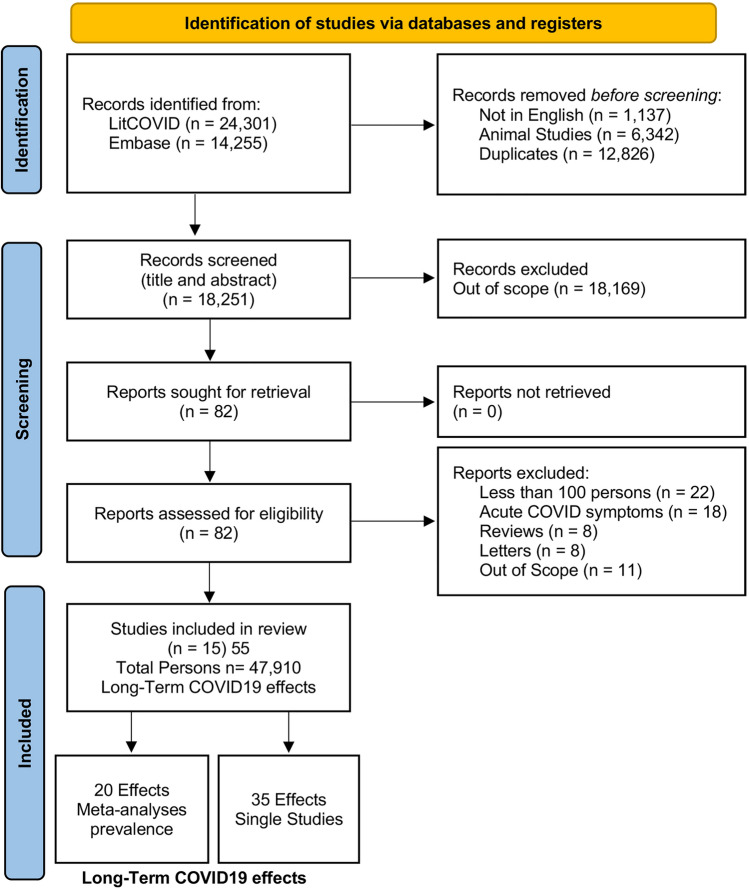
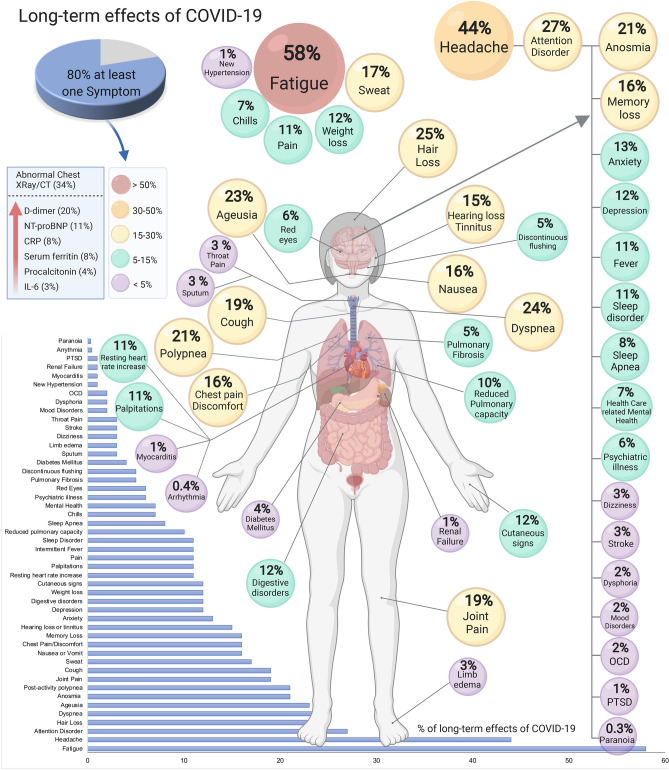
COVID-19 can involve persistence, sequelae, and other medical complications that last weeks to months after initial recovery. This systematic review and meta-analysis aims to identify studies assessing the long-term effects of COVID-19. LitCOVID and Embase were searched to identify articles with original data published before the 1st of January 2021, with a minimum of 100 patients. For effects reported in two or more studies, meta-analyses using a random-effects model were performed using the MetaXL software to estimate the pooled prevalence with 95% CI. PRISMA guidelines were followed. A total of 18,251 publications were identified, of which 15 met the inclusion criteria. The prevalence of 55 long-term effects was estimated, 21 meta-analyses were performed, and 47,910 patients were included (age 17-87 years). The included studies defined long-COVID as ranging from 14 to 110 days post-viral infection. It was estimated that 80% of the infected patients with SARS-CoV-2 developed one or more long-term symptoms. The five most common symptoms were fatigue (58%), headache (44%), attention disorder (27%), hair loss (25%), and dyspnea (24%). Multi-disciplinary teams are crucial to developing preventive measures, rehabilitation techniques, and clinical management strategies with whole-patient perspectives designed to address long COVID-19 care.
Overview
CoChat Summary
## TL;DR
This systematic review and meta-analysis identified 55 long-term effects of COVID-19 across 15 studies including 47,910 patients, estimating that 80% of infected patients developed one or more long-term symptoms. The most common reported effects were fatigue (58%), headache (44%), attention disorder (27%), hair loss (25%), and dyspnea (24%).
## Key findings
- The review screened 18,251 publications and included 15 studies; together they covered 47,910 patients aged 17–87 years.
- The authors identified 55 long-term effects of COVID-19 and performed 21 meta-analyses.
- Overall, an estimated 80% (95% CI 65–92) of COVID-19 patients had at least one long-term symptom.
- The five most common manifestations were fatigue (58%, 95% CI 42–73), headache (44%, 95% CI 13–78), attention disorder (27%, 95% CI 19–36), hair loss (25%, 95% CI 17–34), and dyspnea (24%, 95% CI 14–36).
- Among laboratory/imaging findings, abnormal chest X-ray/CT was observed in 34% (95% CI 27–42), with elevated D-dimer in 20% (95% CI 6–39) and NT-proBNP in 11% (95% CI 6–17).
## Methods
- Systematic review and meta-analysis following PRISMA guidelines; searches were run in LitCOVID and Embase for original studies published before January 1, 2021.
- Inclusion criteria required peer-reviewed English-language human studies with at least 100 patients and post-COVID-19 outcomes assessed 2 weeks or more after initial symptoms.
- Data extraction and study quality assessment were done by multiple reviewers; pooled prevalences were estimated with random-effects meta-analysis in MetaXL for outcomes reported in at least two studies, with heterogeneity assessed using I².
## Limitations
- The paper states that some outcomes had small sample sizes, limiting generalizability to the general population.
- It notes substantial heterogeneity across studies, mainly due to different follow-up times and mixed severity groups; it was also impossible to determine how long each symptom lasted.
- The paper states that many studies used self-reported questionnaires, creating possible reporting bias, and that outcomes may have been missed because studies used internally pre-defined symptom lists.
- Evident from the text: only English-language studies with at least 100 patients were included, so the review may miss smaller or non-English studies.
Model-written summary. Check it against the paper before relying on it.
Integrity signals
Registry
Cites
Statistics
Figures
Verification
Claims the paper makes
5 Valid · 0 Not valid · 8 Not checked · 41 Own results and interpretations
Every source the paper cites for this claim was checked and supports it.
In the paper
“a study reported high levels of depression, anxiety, and post-traumatic stress disorder (PTSD)37 in the long term in patients previously infected with other coronaviruses.”
§ More than 50 long-term effects of COVID-19: a systematic review and meta-analysis > Discussion
What the sources say
- Supportedcites [37] Rogers, J. P. et al. Psychiatric and neuropsychiatric presentations associated with severe coronavirus infections: A systematic review and meta-analysis with comparison to the COVID-19 pandemic. Lancet Psychiatry 7, 611–627. https://doi.org/10.1016/S2215-0366(20)30203-0 (2020). source
The Results report post-illness prevalence of anxiety disorders (14.8%), depression (14.9%), and PTSD (32.2%) among people who recovered from SARS or MERS, with mean follow-up times of 11.6, 22.6, and 33.6 months, respectively. The Discussion describes these prevalences as high, while cautioning that the studies could not clearly separate effects of infection from other factors. Page numbers were not provided in our copy. (LLM, conf=0.93)
plainstates an association- Asserted: passes — The authors put it forward as true.
- Checkable: passes — It can be checked against evidence.
- Load-bearing: unclear — It is unclear whether the paper’s conclusions depend on it.
- Based: passes — The paper gives a reason why it holds.
- Supported
The cited sources support only part of this claim — read each source’s verdict below.
In the paper
“Fatigue (58%) is the most common symptom of long and acute COVID-1923.”
§ More than 50 long-term effects of COVID-19: a systematic review and meta-analysis > Discussion
What the sources say
- Partly supportedcites [23] Townsend, L. et al. Persistent fatigue following SARS-CoV-2 infection is common and independent of severity of initial infection. PLoS One 15, e0240784. https://doi.org/10.1371/journal.pone.0240784 (2020). sourceExperimental — accuracy not yet measured
Townsend et al. (2020) support only that fatigue is common: the Introduction states it is 'recognised as one of the most common presenting complaints' in SARS-CoV-2 infection, with 44–69.6% in early case series and 34–46% in meta-analyses — figures the paper credits to other works it cites, and it never ranks fatigue as THE most common symptom of acute disease. For the convalescent/'long' COVID side, the Results (Prevalence of post-COVID fatigue) report 52.3% (67/128) meeting the CFQ-11 case definition at a median of 10 weeks, and the paper reports no symptom-prevalence comparison, so it does not establish fatigue as the most common long-COVID symptom either. The specific 58% magnitude attributed here matches nothing in our copy (the only nearby percentages are 52.3% fatigued cases and 57% of those offered an appointment who attended), so both the superlative and the number are unsupported. (LLM, conf=0.80)
plain- Asserted: passes — The authors put it forward as true.
- Checkable: passes — It can be checked against evidence.
- Load-bearing: unclear — It is unclear whether the paper’s conclusions depend on it.
- Based: passes — The paper gives a reason why it holds.
- Partly supported
The cited sources support only part of this claim — read each source’s verdict below.
In the paper
“It is present even after 100 days of the first symptom of acute COVID-194,23.”
§ More than 50 long-term effects of COVID-19: a systematic review and meta-analysis > Discussion
What the sources say
- Not checked yetcites [4] Townsend, L. et al. Persistent poor health post-COVID-19 is not associated with respiratory complications or initial disease severity. Ann. Am. Thorac. Soc. https://doi.org/10.1513/AnnalsATS.202009-1175OC (2021). source
- Partly supportedcites [23] Townsend, L. et al. Persistent fatigue following SARS-CoV-2 infection is common and independent of severity of initial infection. PLoS One 15, e0240784. https://doi.org/10.1371/journal.pone.0240784 (2020). sourceExperimental — accuracy not yet measured
Townsend et al. (2020) confirm persistent fatigue after the acute phase of SARS-CoV-2 infection, but at a median of 10 weeks (~70 days) from symptom onset (Abstract; Results, Participant characteristics: median interval 72 days, IQR 62-87; Table 2 'Days since Symptom Onset' medians 71 and 73). The only passage reaching beyond ~84 days is Table 1's follow-up band '>84 days (12 weeks)' (38 participants, 22 fatigued), and the Discussion explicitly frames the report as a 'medium time point' and calls for future longitudinal work 'to describe the persistence of fatigue at six months and beyond'. No passage in our copy states fatigue at or beyond 100 days from first symptom, so that specific qualifier of the citing sentence is not supported by this source. (LLM, conf=0.72)
plain- Asserted: passes — The authors put it forward as true.
- Checkable: passes — It can be checked against evidence.
- Load-bearing: unclear — It is unclear whether the paper’s conclusions depend on it.
- Based: passes — The paper gives a reason why it holds.
A result the paper reports from its own data — it cites no other source for it, so there is none to check. The quote shows it is in the paper.
In the paper
“The prevalence of 55 long-term effects was estimated”
- Also stated in: § Prevalence of long-term effects in COVID-19 patients · plain
“We identified a total of 55 long-term effects associated with COVID-19 in the literature reviewed”
§ More than 50 long-term effects of COVID-19: a systematic review and meta-analysis > Abstract
plainstates an associationn = 47,910- Asserted: passes — The authors put it forward as true.
- Checkable: passes — It can be checked against evidence.
- Load-bearing: passes — The paper’s conclusions depend on it.
- Based: passes — The paper gives a reason why it holds.
- Rests on an assumption not shown here.
- Also stated in: § Prevalence of long-term effects in COVID-19 patients · plain
A result the paper reports from its own data — it cites no other source for it, so there is none to check. The quote shows it is in the paper.
In the paper
“It was estimated that 80% of the infected patients with SARS-CoV-2 developed one or more long-term symptoms.”
- Also stated in: § Prevalence of long-term effects in COVID-19 patients · plain
“The meta-analysis of the studies (n = 7) that included an estimate for one symptom or more reported that 80% (95% CI 65–92) of the patients with COVID-19 have long-term symptoms.”
- Also stated in: § Discussion · boosted
“This systematic review and meta-analysis shows that 80% (95% CI 65–92) of individuals with a confirmed COVID-19 diagnosis continue to have at least one overall effect beyond 2 weeks following acute infection.”
§ More than 50 long-term effects of COVID-19: a systematic review and meta-analysis > Abstract
boostedn = 7- Asserted: passes — The authors put it forward as true.
- Checkable: passes — It can be checked against evidence.
- Load-bearing: passes — The paper’s conclusions depend on it.
- Based: passes — The paper gives a reason why it holds.
- Rests on an assumption not shown here.
- Also stated in: § Prevalence of long-term effects in COVID-19 patients · plain
27 more claims
Create a free account to see all 54 claims and to verify the 18 references still open.
- It may state two separate claims as one. 7
- Probably not a substantial claim. 17
Claims other papers make about this one
Each is checked against this paper’s own text: does it say what the citing paper says it does?
The source backs part of the claim, not all of it — or backs it for a different population, condition or comparison.
In the citing paper
“Mental health symptoms such as depression, anxiety and sleep problems are commonly observed in individuals suffering from acute COVID-19 infection to post-COVID-19 syndrome.”
From Psychological treatments for the mental health symptoms among individuals infected with COVID-19: a scoping review protocol (2023) · cites this paper as [4]
Experimental — accuracy not yet measuredThe cited source says what the claim attributes to it.
In the citing paper
“These mental health symptoms persist even after the acute stage of the disease.”
From Psychological treatments for the mental health symptoms among individuals infected with COVID-19: a scoping review protocol (2023) · cites this paper as [4]
The cited source says what the claim attributes to it.
In the citing paper
“Mental health symptoms are common in reports of a post-covid syndrome (4, 6).”
Citations
Cites
PRISMA-P Group, Moher, D., Shamseer, L., Clarke, M., Ghersi, D., Liberati, A., Petticrew, M., Shekelle, P., & Stewart, L. A. (2015) · Systematic Reviews · doi:10.1186/2046-4053-4-1 · Cited by 26,223
Shamseer, L., Moher, D., Clarke, M., Ghersi, D., Liberati, A., Petticrew, M., Shekelle, P., Stewart, L. A., & the PRISMA-P Group (2015) · BMJ · doi:10.1136/bmj.g7647 · Cited by 13,120
Persistent Symptoms in Patients After Acute COVID-19
Carfì, A., Bernabei, R., Landi, F., & for the Gemelli Against COVID-19 Post-Acute Care Study Group (2020) · JAMA · doi:10.1001/jama.2020.12603 · Cited by 4,561
Rogers, J. P., Chesney, E., Oliver, D., Pollak, T. A., McGuire, P., Fusar-Poli, P., Zandi, M. S., Lewis, G., & David, A. S. (2020) · The Lancet Psychiatry · doi:10.1016/s2215-0366(20)30203-0 · Cited by 2,407
Barendregt, J. J., Doi, S. A., Lee, Y. Y., Norman, R. E., & Vos, T. (2013) · Journal of Epidemiology and Community Health · doi:10.1136/jech-2013-203104 · Cited by 2,169
Cytokine release syndrome in severe COVID-19
Moore, J. B., & June, C. H. (2020) · Science · doi:10.1126/science.abb8925 · Cited by 1,912
Management of post-acute covid-19 in primary care
Greenhalgh, T., Knight, M., A’Court, C., Buxton, M., & Husain, L. (2020) · BMJ · doi:10.1136/bmj.m3026 · Cited by 1,689
Taquet, M., Luciano, S., Geddes, J. R., & Harrison, P. J. (2021) · The Lancet Psychiatry · doi:10.1016/s2215-0366(20)30462-4 · Cited by 1,484
Tenforde, M. W., Kim, S. S., Lindsell, C. J., Billig Rose, E., Shapiro, N. I., Files, D. C., Gibbs, K. W., Erickson, H. L., Steingrub, J. S., Smithline, H. A., et al. (2020) · MMWR. Morbidity and Mortality Weekly Report · doi:10.15585/mmwr.mm6930e1 · Cited by 1,319
Garrigues, E., Janvier, P., Kherabi, Y., Le Bot, A., Hamon, A., Gouze, H., Doucet, L., Berkani, S., Oliosi, E., Mallart, E., et al. (2020) · Journal of Infection · doi:10.1016/j.jinf.2020.08.029 · Cited by 1,157
Cited by
Items 601–700 of 1,003
Krenytska, D., Strubchevska, K., Kozyk, M., Vovk, T. B., Halenova, T., Коt, L., Raksha, N., Savchuk, О., Falalyeyeva, T. M., Tsyryuk, O., et al. (2023) · Frontiers in Medicine · doi:10.3389/fmed.2023.1168487 · Cited by 22
Mclaughlin, M., Cerexhe, L., Macdonald, E., Ingram, J., Sanal‐Hayes, N. E. M., Meach, R., Carless, D., & Sculthorpe, N. F. (2023) · The American Journal of Medicine · doi:10.1016/j.amjmed.2023.07.004 · Cited by 26
The lingering symptoms of post‐ COVID ‐19 condition (long‐ COVID ): a prospective cohort study
Tan, S., Pryor, A. J. G., Melville, G. W., Fischer, O., Hewitt, L., & Davis, K. J. (2023) · Internal Medicine Journal · doi:10.1111/imj.16251 · Cited by 22
“This is consistent with the published literature 19,20 ; for example, one meta-analysis found fatigue to be the most frequently reported symptom (58%).”
ResultGuo, B., Zhao, C., He, M. Z., Senter, C. C., Zhou, Z., Peng, J., Li, S., Fitzpatrick, A. L., Lindström, S., Stebbins, R. C., et al. (2023) · BMC Medicine · doi:10.1186/s12916-023-03162-5 · Cited by 21
“To date, multiple reviews have examined the long-term cardiac complications of COVID-19 (Additional file 1: Table S6) [4, 5, 9–15 , 28– 32 Besides being more updated and comprehensive in terms of article search, our study examined whether there are systematic differences in reported findings by the…”
BackgroundVallespín, G. T., Puente, D., Jacques‐Aviñó, C., Carrasco-Ribelles, L. A., Violán, C., López‐Jiménez, T., García, V. R., Cantón, A. M., Medina‐Perucha, L., Rodríguez‐Giralt, I., et al. (2024) · BMC Infectious Diseases · doi:10.1186/s12879-023-08954-x · Cited by 23
Unveiling the Clinical Spectrum of Post-COVID-19 Conditions: Assessment and Recommended Strategies
Assiri, A. M., Alamaa, T., Elenezi, F., Alsagheir, A. I., Alzubaidi, L. M. Y., TIeyjeh, I., Alhomod, A. S., Gaffas, E. M., & Amer, S. A. (2024) · Cureus · doi:10.7759/cureus.52827 · Cited by 26
Fang, C., Baz, S. A., Sheard, L., & Carpentieri, J. (2024) · BMC Health Services Research · doi:10.1186/s12913-024-10891-7 · Cited by 21
“Commonly reported issues include fatigue, breathlessness, brain fog and pain, while others also encounter hair loss, skin rashes and sensory dysfunction [3].”
BackgroundKirchberger, I., Meisinger, C., Warm, T. D., Hyhlik-Dürr, A., Linseisen, J., & Goßlau, Y. (2024) · Health and Quality of Life Outcomes · doi:10.1186/s12955-024-02245-y · Cited by 21
“Similarly, metaanalyses showed that 1 to 17% of the persons with COVID-19 developed a posttraumatic stress disorder (PTSD) [14, 18], whereas other studies reported prevalences of PTSD around 30% in individuals with PCS [19, 20].”
BackgroundMeta-analysis of Cognitive Function Following Non-severe SARS-CoV-2 Infection
Austin, T. A., Thomas, M. L., Lü, M., Hodges, C. B., Darowski, E. S., Bergmans, R. S., Parr, S., Pickell, D., Catazaro, M., Lantrip, C., et al. (2024) · Neuropsychology Review · doi:10.1007/s11065-024-09642-6 · Cited by 22
“Subjective cognitive symptoms (self-reported problems with cognitive functions), including attention difficulties and “brain fog,” are among the most frequently reported PASC symptoms (Almeria et al., 2020; Crivelli et al., 2021; Lopez-Leon et al., 2021).”
Zhang, Y., Zhao, Y., An, C., Guo, Y., Ma, Y., Shao, F., Zhang, Y., Sun, K., Cheng, F., Ren, C., et al. (2024) · Biomaterials · doi:10.1016/j.biomaterials.2024.122757 · Cited by 22
Delgado‐Alonso, C., Valles‐Salgado, M., Delgado‐Álvarez, A., Gómez‐Ruiz, N., Yus, M., Polidura, C., Pérez‐Izquierdo, C., Marcos, A., Moreno, M., Matías‐Guiu, J., et al. (2022) · Brain Sciences · doi:10.3390/brainsci12020265 · Cited by 22
Mera-Cordero, F., Monné, S. B., Almeda, J., García-Sangenís, A., Cunillera, O., Contreras-Martos, S., Alvarez-Muñoz, G., Monfà, R., Balanzó-Joué, M., Morros, R., et al. (2022) · Trials · doi:10.1186/s13063-021-05951-w · Cited by 21
Ohyama, M., Matsudo, K., & Fujita, T. (2022) · The Journal of Dermatology · doi:10.1111/1346-8138.16475 · Cited by 23
The Role of Acupuncture for Long COVID: Mechanisms and Models
Williams, J. E., & Moramarco, J. (2022) · Medical Acupuncture · doi:10.1089/acu.2021.0090 · Cited by 22
“13 The most common symptom is fatigue.”
Osteosarcopenia and Long-COVID: a dangerous combination
Tarantino, U., Visconti, V. V., Bonanni, R., Gatti, A. V., Marcozzi, M., Calabrò, D., & Cariati, I. (2022) · Therapeutic Advances in Musculoskeletal Disease · doi:10.1177/1759720x221130485 · Cited by 21
COVID-19 Public Opinion: A Twitter Healthcare Data Processing Using Machine Learning Methodologies
Agrawal, S., Jain, S. K., Sharma, S., & Khatri, A. (2022) · International Journal of Environmental Research and Public Health · doi:10.3390/ijerph20010432 · Cited by 21
“Post-COVID-19 Health Factors People who had mild or severe symptoms of COVID-19 recovered quickly and with fewer complications [13], while patients with severe symptoms experienced a hard and long recovery, with most experiencing weakness, psychological and physiological disorders and fatigue [14].”
BackgroundHawke, L. D., Nguyen, A. T. P., Wang, W., Brown, E. E., Xu, D., Deuville, S., Goulding, S., Ski, C. F., Rossell, S. L., Thompson, D. R., et al. (2024) · BMJ Mental Health · doi:10.1136/bmjment-2024-301133 · Cited by 25
18F-FDG-PET/CT in SARS-CoV-2 infection and its sequelae
Alfonso, B. R., Solís, S. R., Silva-Hernández, L., Pascual, I. P., Ibáñez, S. A., & Antón, C. S. (2021) · Revista Española de Medicina Nuclear e Imagen Molecular (English Edition) · doi:10.1016/j.remnie.2021.07.005 · Cited by 21
Katsarou, M., Iasonidou, E., Osarogue, A., Kalafatis, E., GATZONIS, S., Pappa, S., Verentzioti, A., Στεφανάτου, Μ., Gounopoulos, P., Demponeras, C., et al. (2022) · Journal of Personalized Medicine · doi:10.3390/jpm12060987 · Cited by 23
Gallardo, V. J., Shapiro, R. E., Caronna, E., & Pozo‐Rosich, P. (2022) · Headache The Journal of Head and Face Pain · doi:10.1111/head.14376 · Cited by 25
Post-COVID-19 syndrome symptoms after mild and moderate SARS-CoV-2 infection
Al-Husinat, L., Nusir, M., Al-Gharaibeh, H., Alomari, A. A., Smadi, M. M., Battaglini, D., & Pelosi, P. P. (2022) · Frontiers in Medicine · doi:10.3389/fmed.2022.1017257 · Cited by 26
Peter, R. S., Nieters, A., Brockmann, S., Göpel, S., Kindle, G. R., Merle, U., Steinacker, J. M., Kern, W. V., Rothenbacher, D., & for the EPILOC Phase 1 Study Group (2022) · Obesity · doi:10.1002/oby.23611 · Cited by 20
“Post-acute COVID-19 sequelae are manifold [10].”
Long‐Term COVID ‐19 Smell and Taste Disorders Differ Significantly from Other Post‐Infectious Cases
Stankevice, D., Fjældstad, A. W., Agergaard, J., & Ovesen, T. (2022) · The Laryngoscope · doi:10.1002/lary.30453 · Cited by 21
Körper, S., Grüner, B., Zickler, D., Wiesmann, T., Wuchter, P., Blasczyk, R., Zacharowski, K. D., Spieth, P. M., Tonn, T., Rosenberger, P., et al. (2022) · Journal of Clinical Investigation · doi:10.1172/jci163657 · Cited by 21
Almulla, A. F., Al‐Hakeim, H. K., & Maes, M. H. J. (2022) · Psychiatry and Clinical Neurosciences · doi:10.1111/pcn.13514 · Cited by 20
Wu, J., Wang, L., Hua, Y., Li, M., Zhou, L., Bates, D. W., & Yang, J. (2023) · Journal of Medical Internet Research · doi:10.2196/45419 · Cited by 22
“The primary sources included the standard symptom corpus compiled by Wang et al [37] and Goss et al [38] based on EHRs, the COVID-19 symptom corpus compiled by Sarker et al [24], and the COVID-19 symptom keywords used by Lopez-Leon et al [39] and Mao et al [40].”
Management of long-COVID-19 patients with sleep disorders: practical advice to general practitioners
Guezguez, F., Romdhani, M., Boutaleb-Joutei, A., Chamari, K., & Saad, H. B. (2023) · Libyan Journal of Medicine · doi:10.1080/19932820.2023.2182704 · Cited by 20
Autophagy in Inflammatory Response against SARS-CoV-2
Resnik, R., Mingorance, F. L., Rivera, F., Mitchell, F., González, C. D., & Vaccaro, M. I. (2023) · International Journal of Molecular Sciences · doi:10.3390/ijms24054928 · Cited by 22
Effects of COVID-19 Disease on DNA Damage, Oxidative Stress and Immune Responses
Basaran, M. M., Hazar, M., Aydın, M., Uzuğ, G., Özdoğan, İ., Pala, E., DİLSİZ, S. A., & Başaran, N. (2023) · Toxics · doi:10.3390/toxics11040386 · Cited by 22
Post-COVID Patients With New-Onset Chronic Pain 2 Years After Infection: Cross-Sectional Study
Mateo, A. C., Navas‐Otero, A., Ciuró, A. H., Núñez, J. M., Torres‐Sánchez, I., López‐López, L., & Valenza, M. C. (2023) · Pain Management Nursing · doi:10.1016/j.pmn.2023.04.010 · Cited by 22
Haver, A., Krampe, H., Danbolt, L. J., Stålsett, G., & Schnell, T. (2023) · Frontiers in Psychology · doi:10.3389/fpsyg.2023.1121986 · Cited by 21
“Moreover, mental health problems are associated with long COVID, a chronic condition with high incidence rates (Lopez-Leon et al., 2021; Sachs et al., 2022).”
BackgroundPersistent post–COVID ‐19 neuromuscular symptoms
Abrams, R. M. C., Zhou, L., & Shin, S. C. (2023) · Muscle & Nerve · doi:10.1002/mus.27940 · Cited by 24
“9,10 A subset of patients may report what seem to be predominantly neuromuscular and autonomic symptoms such as paresthesias, myalgias, muscle fatigue/weakness, and orthostatic dizziness and intolerance.”
BackgroundWashirasaksiri, C., Sayabovorn, N., Ariyakunaphan, P., Kositamongkol, C., Chaisathaphol, T., Sitasuwan, T., Tinmanee, R., Auesomwang, C., Nimitpunya, P., Woradetsittichai, D., et al. (2023) · Scientific Reports · doi:10.1038/s41598-023-41523-5 · Cited by 21
Garrido, P. F., Castillo-Peinado, L. S., Priego‐Capote, F., Barrio, I., Piñeiro, Á., Domínguez-Santalla, M. J., Rodríguez‐Ruiz, E., & García‐Fandiño, R. (2024) · Journal of Infection and Public Health · doi:10.1016/j.jiph.2024.01.017 · Cited by 20
The Potential Role of Viral Persistence in the Post-Acute Sequelae of SARS-CoV-2 Infection (PASC)
Lupi, L., Vitiello, A., Parolin, C., Calistri, A., & Demo, A. G. (2024) · Pathogens · doi:10.3390/pathogens13050388 · Cited by 22
“This residual References are as follows: day 14 [24], day 70 [25], day 76 [30], day 120 [28], day 210 [28], day 221 [33], day 230 [30], day 280 [31], day 450 [34].”
BackgroundCardiac Manifestations in Patients with COVID-19: A Scoping Review
Peiris, S., Ordúñez, P., DiPette, D. J., Padwal, R. S., Ambrosi, P., Toledo, J., Stanford, V., Lisboa, T. C., Aldighieri, S., & Revéiz, L. (2022) · Global Heart · doi:10.5334/gh.1037 · Cited by 22
Fernández‐de‐las‐Peñas, C., Valera‐Calero, J. A., Herrero‐Montes, M., Loarte, P. D. V., Rodríguez-Rosado, R., Pargada, D. J. F., Arendt‐Nielsen, L., & Parás‐Bravo, P. (2022) · Viruses · doi:10.3390/v14071486 · Cited by 20
Mitra, J., Kodavati, M. M., Provasek, V. E., Rao, K. S. J., MITRA, S. P., Hamilton, D. J., Horner, P. J., Vahidy, F., Britz, G. W., Kent, T. A., et al. (2022) · Ageing Research Reviews · doi:10.1016/j.arr.2022.101687 · Cited by 22
Increased fibrinaloid microclot counts in platelet-poor plasma are associated with Long COVIDPreprint
Dalton, C., Oliveira, M., Stafford, P., Peake, N., Kane, B., Higham, A., Singh, D., Jackson, N. A., Davies, H. E., Price, D. A., et al. (2024) · medRxiv · doi:10.1101/2024.04.04.24305318 · Cited by 22
Carazo, S., Ouakki, M., Nicolakakis, N., Falcone, E. L., SkowronskiFRCPC, D. M., Durand, M., Coutu, M., Décary, S., Dialahy, I. Z., Drescher, O., et al. (2025) · International Journal of Infectious Diseases · doi:10.1016/j.ijid.2025.108012 · Cited by 19
The Impact of COVID-19 on Mortality in Italy: Retrospective Analysis of Epidemiological Trends
Rovetta, A., & Bhagavathula, A. S. (2022) · JMIR Public Health and Surveillance · doi:10.2196/36022 · Cited by 19
“Nevertheless, it would be incorrect to consider only the older population as vulnerable: Phenomena such as long COVID (ie, the onset of medical complications that last weeks to months after initial recovery) are increasing in younger age groups, including children and adolescents [62,63].”
BackgroundFreire, M. P., de Oliveira, M. S., Magri, M. M. C., Tavares, B. D. M., Marinho, I. M., Nastri, A. C. D. S. S., Busatto, G. F., & Levin, A. S. (2022) · Clinics · doi:10.1016/j.clinsp.2022.100061 · Cited by 22
“A recently published systematic review and meta-analysis estimated that 80% of COVID-19 patients developed one or more long-term symptoms, and the five most frequent symptoms were fatigue, headache, attention disorder, hair loss, and dyspnea.(13) The present findings show that in at least one-third of the patients wit…”
BackgroundPacho-Hernández, J. C., Fernández‐de‐las‐Peñas, C., Fuensalida‐Novo, S., Jiménez‐Antona, C., Ortega‐Santiago, R., & Cigarán‐Méndez, M. (2022) · Brain Sciences · doi:10.3390/brainsci12101363 · Cited by 19
“More than 50 post-COVID-19 symptoms have been described, with fatigue, dyspnea, pain, or cognitive problems being the most prevalent [8].”
BackgroundWensink, M., Schaap, G., ten Klooster, P. M., Doggen, C. J. M., van der Palen, J. A. M., Vonkeman, H. E., & Bode, C. (2022) · Journal of Psychosomatic Research · doi:10.1016/j.jpsychores.2022.111084 · Cited by 19
Perceived Consequences of Post-COVID-19 and Factors Associated with Low Life Satisfaction
Ekstrand, E., Brogårdh, C. B., Axén, I., Fänge, A. M., Stigmar, K., & Hansson, E. E. (2022) · International Journal of Environmental Research and Public Health · doi:10.3390/ijerph192215309 · Cited by 19
Rutsch, M., Frommhold, J., Buhr-Schinner, H., Gross, T. J., Schueller, P. O., & Deck, R. (2023) · Die Rehabilitation · doi:10.1055/a-1964-7401 · Cited by 19
Solanum nigrum L. in COVID-19 and post-COVID complications: a propitious candidate
Sharma, D., Joshi, M., Apparsundaram, S., Goyal, R. K., Patel, B. M., & Dhobi, M. (2023) · Molecular and Cellular Biochemistry · doi:10.1007/s11010-022-04654-3 · Cited by 21
“There is no standardized term coined for that but most commonly, these symptoms are referred to as “post-COVID complications” or “long COVID” [6].”
BackgroundTanguay, P., Décary, S., Lemaire‐Paquette, S., Léonard, G., Piché, A., Dubois, M., Kairy, D., Bravo, G., Corriveau, H., Marquis, N., et al. (2023) · Quality of Life Research · doi:10.1007/s11136-023-03406-0 · Cited by 23
Long COVID in people living with HIV
Peluso, M. J., & Antar, A. A. R. (2023) · Current Opinion in HIV and AIDS · doi:10.1097/coh.0000000000000789 · Cited by 20
Karuna, S., Gallardo-Cartagena, J. A., Theodore, D., Hunidzarira, P., Montenegro-Idrogo, J. J., Hu, J., Jones, M., Kim, V., Grecca, R. D. L., Trahey, M., et al. (2023) · Journal of Global Health · doi:10.7189/jogh.13.06020 · Cited by 19
Cheng, A. L., Anderson, J., Didehbani, N., Fine, J. S., Fleming, T. K., Karnik, R., Longo, M. T., Ng, R., Re’em, Y., Sampsel, S., et al. (2023) · PM&R · doi:10.1002/pmrj.13085 · Cited by 23
“42,122,123 In many cases, medication de-prescribing (including dose reduction and/or discontinuation) is a preferred solution.”
BackgroundVaccination, immunity, and the changing impact of COVID-19 on infant health
Torche, F., & Nobles, J. E. (2023) · Proceedings of the National Academy of Sciences · doi:10.1073/pnas.2311573120 · Cited by 20
Bota, A. V., Bratosin, F., Bogdan, I. G., Susa, S. R., Ilie, A. C., Burtic, S.-R., Razvan, D. V., Tudor, R., Indries, M. F., Csep, A. N., et al. (2024) · Diseases · doi:10.3390/diseases12010021 · Cited by 19
Doehner, W., Fischer, A., Alimi, B., Muhar, J., Springer, J., Altmann, C., & Schueller, P. O. (2024) · Journal of Cachexia Sarcopenia and Muscle · doi:10.1002/jcsm.13628 · Cited by 19
Navigating migraine care through the COVID-19 pandemic: an update
Angus‐Leppan, H., Guiloff, A. E., Benson, K., & Guiloff, R. J. (2021) · Journal of Neurology · doi:10.1007/s00415-021-10610-w · Cited by 19
Aldaas, K. M., Challa, P., Weber, D. J., & Fleischman, D. (2021) · Survey of Ophthalmology · doi:10.1016/j.survophthal.2021.08.009 · Cited by 19
Singh, R. B., Halabi, G., Fatima, G., Rai, R. H., Tarnava, A., & LeBaron, T. W. (2021) · Clinical Case Reports · doi:10.1002/ccr3.5039 · Cited by 19
Pulmonale Manifestationen bei Long-COVID
Sommer, N., & Schmeck, B. (2022) · Die Innere Medizin · doi:10.1007/s00108-022-01371-3 · Cited by 19
Long COVID-19 Myocarditis and Various Heart Failure Presentations: A Case Series
Rohun, J., Dorniak, K., Faran, A., Kochańska, A., Zacharek, D., & Daniłowicz‐Szymanowicz, L. (2022) · Journal of Cardiovascular Development and Disease · doi:10.3390/jcdd9120427 · Cited by 21
Kubota, G. T., Soares, F. H. C., da Fonseca, A. S., Rosa, T. D. S., da Silva, V. A., Gouveia, G. R., Faria, V. G., da Cunha, P. H. M., Brunoni, A. R., Teixeira, M. J., et al. (2023) · European Journal of Pain · doi:10.1002/ejp.2094 · Cited by 22
Sobre la nueva condición post COVID-19
Soriano, J. B., & Ancochea, J. (2021) · Archivos de Bronconeumología · doi:10.1016/j.arbres.2021.04.001 · Cited by 19
Rethinking measurement of health outcomes in Long COVID: complexities, challenges and considerations
Bhéreur, A., McDuff, K., Naye, F., Lemay, L., Grenier, A., O’Hara, M. E., Nathanson, J., Lavoie, K., Sasseville, M., Kadakia, Z., et al. (2026) · Health and Quality of Life Outcomes · doi:10.1186/s12955-025-02453-0 · Cited by 18
“PEM/PESE, a frequent condition in Long COVID that may cause severe functional impairment with implications for clinical management [3], is infrequently measured in the literature [32–34].”
Haller, J., Kocalevent, R., Nienhaus, A., Peters, C., Bergelt, C., & Koch, U. (2022) · Bundesgesundheitsblatt - Gesundheitsforschung - Gesundheitsschutz · doi:10.1007/s00103-022-03511-4 · Cited by 23
Severe Fatigue in the First Year Following SARS-CoV-2 Infection: A Prospective Cohort Study.
Verveen, A., Wynberg, E., van Willigen, H. D. G., Boyd, A. C., de Jong, M. D., de Bree, G. J., Davidovich, U., Lok, A., van Charante, E. P. M., Knoop, H., et al. (2022) · PubMed Central · doi:10.1093/ofid/ofac127 · Cited by 26
“Estimates of the prevalence of fatigue following COVID-19 vary widely due to differences in the definition of fatigue, study design, and study population [4, 7, 12, 13].”
BackgroundAngeles, M. R., Dona, S. W. A., Nguyen, D., Le, L. K., & Hensher, M. (2022) · BMC Public Health · doi:10.1186/s12889-022-13169-x · Cited by 18
Long COVID Symptomatology and Associated Factors in Primary Care Patients: The EPICOVID-AP21 Study
Rodríguez, E. M. R., de Torres, L. Á. P., González-Lama, J., Jiménez, R., Jiménez-García, C., Priego-Pérez, C., Vélez-Santamaría, R., Simón‐Vicente, L., González‐Santos, J., & Gonzalez-Bernal, J. J. (2023) · Healthcare · doi:10.3390/healthcare11020218 · Cited by 19
“[27] shows that one of the most common effects of COVID-19 was fatigue, which persisted after acute infection treatment and was present even after 100 days [25,28].”
BackgroundInfluentialGastrointestinal and Hepatobiliary Symptoms and Disorders with Long (Chronic) COVID Infection
Rizvi, A., Ziv, Y., Crawford, J. M., & Trindade, A. J. (2023) · Gastroenterology Clinics of North America · doi:10.1016/j.gtc.2022.09.002 · Cited by 19
Evaluation of long‐COVID symptoms in women infected with SARS‐CoV ‐2 during pregnancy
Kandemir, H., Bülbül, G. A., Kirtiş, E., Güney, S., Sanhal, C. Y., & Mendilcioğlu, İ. (2023) · International Journal of Gynecology & Obstetrics · doi:10.1002/ijgo.14972 · Cited by 19
Sansores, R. H., Ramírez‐Venegas, A., Montiel-López, F., Domínguez-Arellano, S., Alva-López, L. F., Falfán‐Valencia, R., Pérez-Rubio, G., Olaya-Lopez, E. E., Zavaleta-Martínez, E. O., Aguilar-Medina, S., et al. (2023) · Respiratory Medicine · doi:10.1016/j.rmed.2023.107362 · Cited by 20
Campos, M. C., Nery, T., Speck, A. E., Arpini, M., Antunes, M. M., Alves, A. C. D. B., Santos, N. D. S., Matos, M. P. P., Schmidt, N., Bicca, L. R., et al. (2023) · American Journal of Physical Medicine & Rehabilitation · doi:10.1097/phm.0000000000002350 · Cited by 20
Anxiety and depression symptoms among patients with long COVID: a retrospective cohort study
Sauer, M. C., Barlow, P. B., Comellas, A. P., & Garg, A. (2024) · European Archives of Psychiatry and Clinical Neuroscience · doi:10.1007/s00406-023-01740-5 · Cited by 19
Reduced HDL-cholesterol in long COVID-19: A key metabolic risk factor tied to disease severity
Al-Zadjali, J. A. M., Al-Lawati, A., Riyami, N. A., Farsi, K. A., Jarradi, N. A., Boudaka, A., Barhoumi, A. A., Lawati, M. A., Al-Khaifi, A., Musleh, A., et al. (2024) · Clinics · doi:10.1016/j.clinsp.2024.100344 · Cited by 21
“29 The association of ferritin with disease severity was signi fi - cant and demonstrated major dynamic changes compared to transferrin and iron.”
BackgroundEpsi, N. J., Chenoweth, J. G., Blair, P. W., Lindholm, D. A., Ganesan, A., Lalani, T., Smith, A. G., Mody, R. M., Jones, M. U., Colombo, R. E., et al. (2024) · The Journal of Infectious Diseases · doi:10.1093/infdis/jiae318 · Cited by 18
“Early studies noted that 50%–80% of patients had symptoms 3 months after SARS-CoV-2 infection [15–17], whereas Predictors of Long COVID Symptoms • JID 2025:232 (15 July) • 39 The Journal of Infectious Diseases M A J O R A R T I C L E subsequent PCC prevalence estimates range from 18.9% in 2022 to…”
InfluentialMukherjee, S., Singer, T., Venkatesh, A., Choudhury, N. A., Perez-Giraldo, G., Jimenez, M., Miller, J. L., Lopez, M., Hanson, B. A., Bawa, A. P., et al. (2024) · Brain Communications · doi:10.1093/braincomms/fcae448 · Cited by 18
Belcaro, G. V., Cornelli, U., Cesarone, M. R., SCIPIONE, C., SCIPIONE, V., Hu, S., Feragalli, B., Corsi, M., David, C. O. X., Cotellese, R., et al. (2022) · Minerva Medica · doi:10.23736/s0026-4806.21.07650-3 · Cited by 18
Fernández‐de‐las‐Peñas, C., Ryan, P., De-la-Llave-Rincón, A. I., Gómez‐Mayordomo, V., Arendt‐Nielsen, L., & Torres‐Macho, J. (2022) · Pain · doi:10.1097/j.pain.0000000000002608 · Cited by 18
“One relevant post-COVID symptom, which is not specifically reported in previous COVID-19 literature, is chronic pain.(4,15) Just 1 published meta-analysis has focused on post-COVID pain Sponsorships or competing interests that may be relevant to content are disclosed”
BackgroundHentschel, C. B., Abramoff, B. A., Dillingham, T. R., & Pezzin, L. E. (2022) · PM&R · doi:10.1002/pmrj.12869 · Cited by 19
Covid Induced Telogen Effluvium (CITE): An Insight
Inamadar, A. C. (2022) · Indian Dermatology Online Journal · doi:10.4103/idoj.idoj_139_22 · Cited by 18
Afrisham, R., Jadidi, Y., Davoudi, M., Moayedi, K., Soliemanifar, O., Xirouchaki, C. E., Ashtary‐Larky, D., Seyyedebrahimi, S., & Alizadeh, S. (2022) · Mini-Reviews in Medicinal Chemistry · doi:10.2174/1389557523666221116154907 · Cited by 19
Neuroimmunological Effect of Vitamin D on Neuropsychiatric Long COVID Syndrome: A Review
Chen, T., Chang, C., Yang, C., Tsai, I., Wei, C., Yang, H.-W., & Yang, C. (2023) · Nutrients · doi:10.3390/nu15173802 · Cited by 19
Dimitrovska, E., & Dimitrovska, M. (2024) · MEDIS – International Journal of Medical Sciences and Research · doi:10.35120/medisij030237d · Cited by 18
De‐la‐Rosa‐Martinez, D., Delaye-Martínez, M. A., Bello‐Chavolla, O. Y., Sicilia-Andrade, A., Juárez-Cruz, I. D., Fermín‐Martínez, C. A., Márquez‐Salinas, A., Guerra, E. C., Fernández‐Chirino, L., Martínez-Gutiérrez, M. I., et al. (2021) · medRxiv · doi:10.1101/2021.10.17.21265123 · Cited by 18
“reported PACS prevalence as high as 80% [43].”
BackgroundGao, D., Xiang, Q., Lu, G., Tong, J., Jiang, W., Yu, X., Wang, R., Lv, Z., & Li, D. (2022) · BMC Psychology · doi:10.1186/s40359-022-00934-1 · Cited by 17
“COVID-19 poses enormous risks, as it not only aggravates the condition of patients with underlying diseases and accelerates death in the elderly [8–10], but also has many long-term symptoms that cannot be ignored, such as fatigue, muscle, and joint pain, lung abnormalities, abnormal liver, and kidney function, loss of…”
BackgroundSuffering without Remedy: The Medically Unexplained Symptoms of Fibromyalgia Syndrome and Long COVID
Moretti, C., & Barker, K. K. (2024) · Social Sciences · doi:10.3390/socsci13090450 · Cited by 18
Fernández‐de‐las‐Peñas, C., Martín‐Guerrero, J. D., Navarro‐Pardo, E., Torres‐Macho, J., Canto-Diez, M. G., & Pellicer-Valero, Ó. J. (2021) · Internal and Emergency Medicine · doi:10.1007/s11739-021-02850-5 · Cited by 17
Asthenic syndrome in general therapeutic practice
Sokolova, L. P., & Владимировна, С. Е. (2022) · S S Korsakov Journal of Neurology and Psychiatry · doi:10.17116/jnevro202212204144 · Cited by 19
Adepu, N., Kermanshachi, S., & Pamidimukkala, A. (2022) · ASCE International Conference on Transportation and Development (ICTD) · doi:10.1061/9780784484364.015 · Cited by 18
Núñez-Seisdedos, M. N., Valcárcel-Linares, D., Gómez-González, M. T., Lázaro-Navas, I., López-González, L., Pecos‐Martín, D., & Rodríguez‐Costa, I. (2022) · ERJ Open Research · doi:10.1183/23120541.00329-2022 · Cited by 22
Neurological Manifestations of SARS-CoV2 Infection: A Narrative Review
Pavel, B., Moroti, R., Spataru, A., Popescu, M. R., Panaitescu, A. M., & Zăgrean, A. (2022) · Brain Sciences · doi:10.3390/brainsci12111531 · Cited by 18
“In the long term, 11% of patients complained of persistent sleep disturbance after infection with SARS-CoV-2 [5].”
InfluentialSiekacz, K., Kumor‐Kisielewska, A., Miłkowska-Dymanowska, J., Pietrusińska, M., Bartczak, K. T., Majewski, S., Stańczyk, A., Piotrowski, W. J., & Białas, A. J. (2023) · Journal of Clinical Medicine · doi:10.3390/jcm12010342 · Cited by 17
Symptoms and risk factors for long COVID in Tunisian population
Chelly, S., Rouis, S., Ezzi, O., Ammar, A., Fitouri, S., Soua, A., Fathallah, I., Njah, M., & Mahjoub, M. (2023) · BMC Health Services Research · doi:10.1186/s12913-023-09463-y · Cited by 19
Long- COVID and general health status in hospitalized COVID-19 survivors
Mohtasham‐Amiri, Z., Keihanian, F., Rad, E. H., Jafari-Shakib, R., Vahed, L. K., Kouchakinejad–Eramsadati, L., Rezvani, S. M., & Nikkar, R. (2023) · Scientific Reports · doi:10.1038/s41598-023-35413-z · Cited by 18
Improving Neuropsychological Rehabilitation for COVID-19 Patients: Guideline-Based Advances
Widmann, C. N., Kolano, J., & Peper, M. (2023) · Zeitschrift für Neuropsychologie · doi:10.1024/1016-264x/a000373 · Cited by 17
The long-term effects of the Covid-19 infection on cardiac symptoms
Vafa, R. G., Heydarzadeh, R., Rahmani, M., Tavan, A., Mansorkhani, S. K., Zamiri, B., Amiri, F., Azadian, A., Khademolhosseini, A., Montaseri, M., et al. (2023) · BMC Cardiovascular Disorders · doi:10.1186/s12872-023-03322-8 · Cited by 18
Maccarone, M. C., Coraci, D., Regazzo, G., Sarandria, N., Scanu, A., & Masiero, S. (2023) · Joint Bone Spine · doi:10.1016/j.jbspin.2023.105623 · Cited by 18
Frontera, J. A., Guekht, A. B., Allegri, R., Ashraf, M., Baykan, B. B., Crivelli, L., Easton, A., García‐Azorín, D., Helbok, R., Joshi, J., et al. (2023) · Journal of the Neurological Sciences · doi:10.1016/j.jns.2023.120827 · Cited by 17
Kozik, V., Reuken, P. A., Utech, I., Gramlich, J., Stallmach, Z., Demeyere, N., Rakers, F., Schwab, M. G., Stallmach, A., & Finke, K. (2023) · Frontiers in Psychology · doi:10.3389/fpsyg.2023.1233144 · Cited by 18
From Emergence to Endemicity: A Comprehensive Review of COVID-19
Naik, R., Avula, S., Palleti, S. K., Gummadi, J., Ramachandran, R., Chandramohan, D., Dhillon, G. S., Gill, A. S., Paiwal, K., Shaik, B. F., et al. (2023) · Cureus · doi:10.7759/cureus.48046 · Cited by 21
Wolff, D., Drewitz, K. P., Ulrich, A. M., Siegels, D., Deckert, S., Sprenger, A. A., Kuper, P., Schmitt, J. M., Munblit, D., & Apfelbacher, C. (2023) · Clinical & Experimental Allergy · doi:10.1111/cea.14391 · Cited by 18
Kapusta, J., Babicki, M., Pieniawska‐Śmiech, K., Kałuzińska‐Kołat, Ż., Kołat, D., Jankowski, P., Kasprzak, J. D., Wejner‐Mik, P., Bianek‐Bodzak, A., & Chudzik, M. (2023) · Journal of Medical Virology · doi:10.1002/jmv.29331 · Cited by 18
“8,9 The processes underlying the myocardial injury associated with COVID ‐ 19 are scarcely understood.”
Background
Metadata
- Authors
- Lopez-Leon, S., Wegman-Ostrosky, T., Perelman, C., Sepulveda, R., Rebolledo, P. A., Cuapio, A., & Villapol, S.
- Affiliations
- Universidad Nacional Autónoma de México (MX)
- Emory University (US)
- Houston Methodist (US)
- Corresponding author
- Villapol, Sonia
- ORCID
- Venue
- Scientific Reports
- Published
- 2021-08-09
- Volume
- 11
- Issue
- 1
- Pages
- 16144-16144
- ISSN
- 2045-2322 (ISSN-L)
- PMC
- PMC8352980
- OpenAlex
- W3133517424
- Cited by
- 2,757
- References
- 51
- Citations by year
- 2026: 130 · 2025: 278 · 2024: 510 · 2023: 728 · 2022: 776 · 2021: 331
- FWCI
- 75.19
- Type
- journal article
- Language
- en
- Open access
- gold
- doi.org
- Licence
- cc-by
- creativecommons.org/licenses/by/4.0 (tdm)
- creativecommons.org/licenses/by/4.0 (vor)
- Locations
- Scientific Reports (publishedVersion, cc-by)
- medRxiv (acceptedVersion, cc-by-nc-nd)
- PubMed Central (publishedVersion, cc-by)
- PubMed (publishedVersion)
- Europe PMC (PubMed Central) (submittedVersion, cc-by-nc-nd)
- PubMed Central (submittedVersion, cc-by-nc-nd)
- DOAJ (DOAJ: Directory of Open Access Journals) (submittedVersion, cc-by-sa)
- Funders
- Houston Methodist Research Institute
- Topics
- Health Sciences › Medicine › Clinical Neurology › Long-Term Effects of COVID-19
- Health Sciences › Medicine › Infectious Diseases › COVID-19 Clinical Research Studies
- Social Sciences › Psychology › Clinical Psychology › COVID-19 and Mental Health
- Keywords
- long COVID, long-term effects of COVID-19, SARS-CoV-2, post-acute sequelae, fatigue, headache, attention disorders, hair loss, dyspnea, prevalence, multidisciplinary care, rehabilitation
About these checks
Registry, retraction, Cites and statistics results are computed, not judged, with one exception: a printed reference that no index lists is read once by a model before it counts as a citation error. Claims are extracted by a model and kept only when their quote appears verbatim in the text; each cited source is then checked, with a model’s help, for whether it says what the claim relies on. Those verdicts can be wrong — read the claim’s quote and the cited source before relying on one.
The claim verdicts this report counts are experimental: their accuracy is not yet measured.
A language model drew the claims from the paper on 2026-10-11, under version 3 of the claim definition (model deepseek-v4.1-flash, prompt extract-v3).
A second model labelled each claim on 2026-10-11 (model jev-1.13-20260917, definition revision gold-guideline-v0.2).
Cited sources are checked with a language model’s help (gpt-6-sol and qwen3.8-omni-flash).
Statistics and arithmetic are recomputed, not judged.
Confidence bands are shown only for fields calibrated on our annotated test set. None is calibrated yet, so no band is shown.
What counts as a claim ›How we measure confidence ›How we check this ›
Are you an author, or do you see a problem with this page? Request a review
Data sources
Bibliographic data: Semantic Scholar, OpenAlex, Crossref.
Contains information from the Semantic Scholar Academic Graph Datasets, made available under the ODC Attribution License (ODC-BY 1.0).
Semantic Scholar’s data is described in: Kinney, R., et al. (2023). The Semantic Scholar Open Data Platform. arXiv:2301.10140.
