

More than 50 long-term effects of COVID-19: a systematic review and meta-analysis
Open accessPublished version of a preprint
The DOI matches its Crossref record; 51 of the 51 references it cites were found in a registry or an index; 5 of the 23 sources its claims cite were checked for support.
Abstract
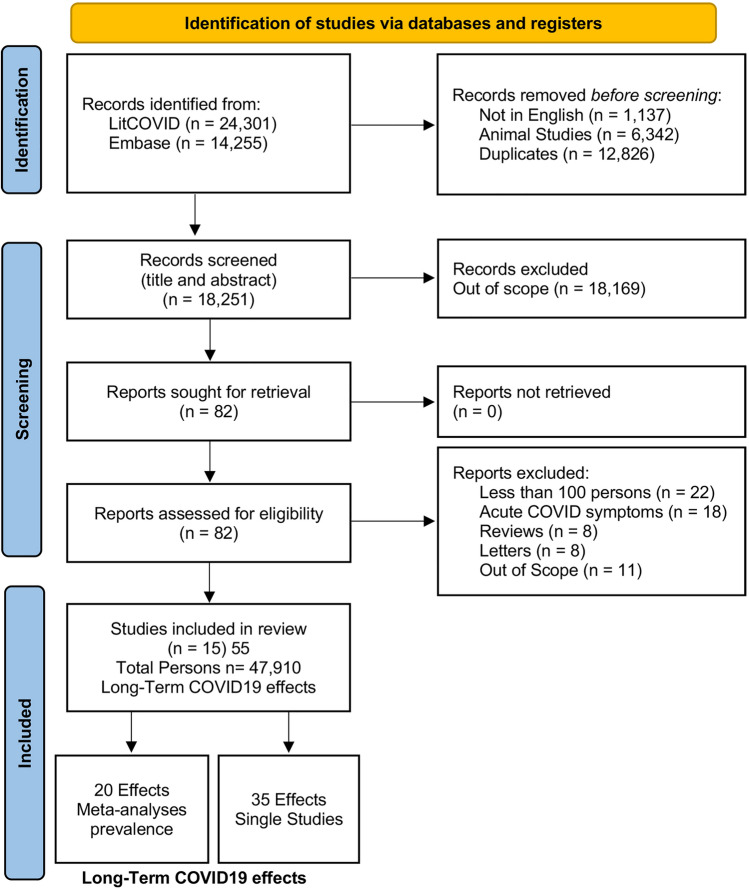
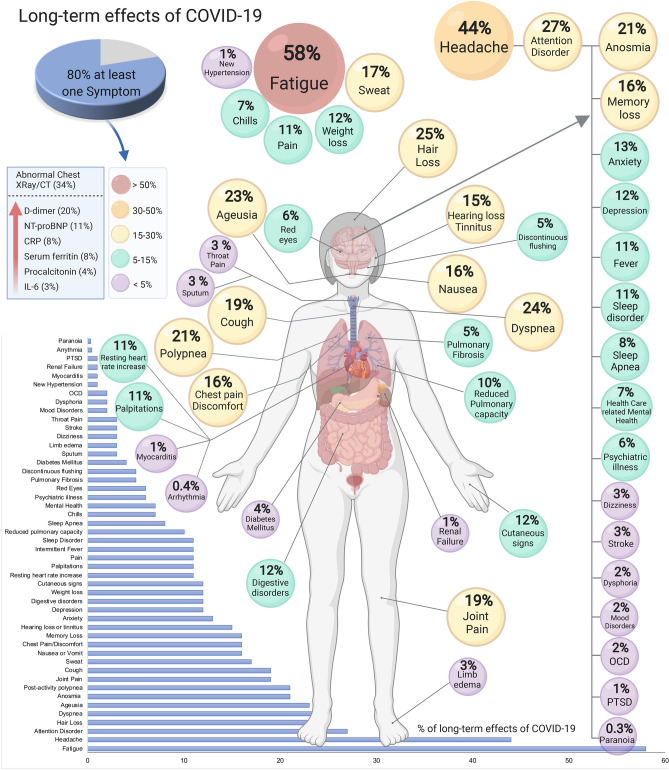
COVID-19 can involve persistence, sequelae, and other medical complications that last weeks to months after initial recovery. This systematic review and meta-analysis aims to identify studies assessing the long-term effects of COVID-19. LitCOVID and Embase were searched to identify articles with original data published before the 1st of January 2021, with a minimum of 100 patients. For effects reported in two or more studies, meta-analyses using a random-effects model were performed using the MetaXL software to estimate the pooled prevalence with 95% CI. PRISMA guidelines were followed. A total of 18,251 publications were identified, of which 15 met the inclusion criteria. The prevalence of 55 long-term effects was estimated, 21 meta-analyses were performed, and 47,910 patients were included (age 17-87 years). The included studies defined long-COVID as ranging from 14 to 110 days post-viral infection. It was estimated that 80% of the infected patients with SARS-CoV-2 developed one or more long-term symptoms. The five most common symptoms were fatigue (58%), headache (44%), attention disorder (27%), hair loss (25%), and dyspnea (24%). Multi-disciplinary teams are crucial to developing preventive measures, rehabilitation techniques, and clinical management strategies with whole-patient perspectives designed to address long COVID-19 care.
Overview
CoChat Summary
## TL;DR
This systematic review and meta-analysis identified 55 long-term effects of COVID-19 across 15 studies including 47,910 patients, estimating that 80% of infected patients developed one or more long-term symptoms. The most common reported effects were fatigue (58%), headache (44%), attention disorder (27%), hair loss (25%), and dyspnea (24%).
## Key findings
- The review screened 18,251 publications and included 15 studies; together they covered 47,910 patients aged 17–87 years.
- The authors identified 55 long-term effects of COVID-19 and performed 21 meta-analyses.
- Overall, an estimated 80% (95% CI 65–92) of COVID-19 patients had at least one long-term symptom.
- The five most common manifestations were fatigue (58%, 95% CI 42–73), headache (44%, 95% CI 13–78), attention disorder (27%, 95% CI 19–36), hair loss (25%, 95% CI 17–34), and dyspnea (24%, 95% CI 14–36).
- Among laboratory/imaging findings, abnormal chest X-ray/CT was observed in 34% (95% CI 27–42), with elevated D-dimer in 20% (95% CI 6–39) and NT-proBNP in 11% (95% CI 6–17).
## Methods
- Systematic review and meta-analysis following PRISMA guidelines; searches were run in LitCOVID and Embase for original studies published before January 1, 2021.
- Inclusion criteria required peer-reviewed English-language human studies with at least 100 patients and post-COVID-19 outcomes assessed 2 weeks or more after initial symptoms.
- Data extraction and study quality assessment were done by multiple reviewers; pooled prevalences were estimated with random-effects meta-analysis in MetaXL for outcomes reported in at least two studies, with heterogeneity assessed using I².
## Limitations
- The paper states that some outcomes had small sample sizes, limiting generalizability to the general population.
- It notes substantial heterogeneity across studies, mainly due to different follow-up times and mixed severity groups; it was also impossible to determine how long each symptom lasted.
- The paper states that many studies used self-reported questionnaires, creating possible reporting bias, and that outcomes may have been missed because studies used internally pre-defined symptom lists.
- Evident from the text: only English-language studies with at least 100 patients were included, so the review may miss smaller or non-English studies.
Model-written summary. Check it against the paper before relying on it.
Integrity signals
Registry
Cites
Statistics
Figures
Verification
Claims the paper makes
5 Valid · 0 Not valid · 8 Not checked · 41 Own results and interpretations
Every source the paper cites for this claim was checked and supports it.
In the paper
“a study reported high levels of depression, anxiety, and post-traumatic stress disorder (PTSD)37 in the long term in patients previously infected with other coronaviruses.”
§ More than 50 long-term effects of COVID-19: a systematic review and meta-analysis > Discussion
What the sources say
- Supportedcites [37] Rogers, J. P. et al. Psychiatric and neuropsychiatric presentations associated with severe coronavirus infections: A systematic review and meta-analysis with comparison to the COVID-19 pandemic. Lancet Psychiatry 7, 611–627. https://doi.org/10.1016/S2215-0366(20)30203-0 (2020). source
The Results report post-illness prevalence of anxiety disorders (14.8%), depression (14.9%), and PTSD (32.2%) among people who recovered from SARS or MERS, with mean follow-up times of 11.6, 22.6, and 33.6 months, respectively. The Discussion describes these prevalences as high, while cautioning that the studies could not clearly separate effects of infection from other factors. Page numbers were not provided in our copy. (LLM, conf=0.93)
plainstates an association- Asserted: passes — The authors put it forward as true.
- Checkable: passes — It can be checked against evidence.
- Load-bearing: unclear — It is unclear whether the paper’s conclusions depend on it.
- Based: passes — The paper gives a reason why it holds.
- Supported
The cited sources support only part of this claim — read each source’s verdict below.
In the paper
“Fatigue (58%) is the most common symptom of long and acute COVID-1923.”
§ More than 50 long-term effects of COVID-19: a systematic review and meta-analysis > Discussion
What the sources say
- Partly supportedcites [23] Townsend, L. et al. Persistent fatigue following SARS-CoV-2 infection is common and independent of severity of initial infection. PLoS One 15, e0240784. https://doi.org/10.1371/journal.pone.0240784 (2020). sourceExperimental — accuracy not yet measured
Townsend et al. (2020) support only that fatigue is common: the Introduction states it is 'recognised as one of the most common presenting complaints' in SARS-CoV-2 infection, with 44–69.6% in early case series and 34–46% in meta-analyses — figures the paper credits to other works it cites, and it never ranks fatigue as THE most common symptom of acute disease. For the convalescent/'long' COVID side, the Results (Prevalence of post-COVID fatigue) report 52.3% (67/128) meeting the CFQ-11 case definition at a median of 10 weeks, and the paper reports no symptom-prevalence comparison, so it does not establish fatigue as the most common long-COVID symptom either. The specific 58% magnitude attributed here matches nothing in our copy (the only nearby percentages are 52.3% fatigued cases and 57% of those offered an appointment who attended), so both the superlative and the number are unsupported. (LLM, conf=0.80)
plain- Asserted: passes — The authors put it forward as true.
- Checkable: passes — It can be checked against evidence.
- Load-bearing: unclear — It is unclear whether the paper’s conclusions depend on it.
- Based: passes — The paper gives a reason why it holds.
- Partly supported
The cited sources support only part of this claim — read each source’s verdict below.
In the paper
“It is present even after 100 days of the first symptom of acute COVID-194,23.”
§ More than 50 long-term effects of COVID-19: a systematic review and meta-analysis > Discussion
What the sources say
- Not checked yetcites [4] Townsend, L. et al. Persistent poor health post-COVID-19 is not associated with respiratory complications or initial disease severity. Ann. Am. Thorac. Soc. https://doi.org/10.1513/AnnalsATS.202009-1175OC (2021). source
- Partly supportedcites [23] Townsend, L. et al. Persistent fatigue following SARS-CoV-2 infection is common and independent of severity of initial infection. PLoS One 15, e0240784. https://doi.org/10.1371/journal.pone.0240784 (2020). sourceExperimental — accuracy not yet measured
Townsend et al. (2020) confirm persistent fatigue after the acute phase of SARS-CoV-2 infection, but at a median of 10 weeks (~70 days) from symptom onset (Abstract; Results, Participant characteristics: median interval 72 days, IQR 62-87; Table 2 'Days since Symptom Onset' medians 71 and 73). The only passage reaching beyond ~84 days is Table 1's follow-up band '>84 days (12 weeks)' (38 participants, 22 fatigued), and the Discussion explicitly frames the report as a 'medium time point' and calls for future longitudinal work 'to describe the persistence of fatigue at six months and beyond'. No passage in our copy states fatigue at or beyond 100 days from first symptom, so that specific qualifier of the citing sentence is not supported by this source. (LLM, conf=0.72)
plain- Asserted: passes — The authors put it forward as true.
- Checkable: passes — It can be checked against evidence.
- Load-bearing: unclear — It is unclear whether the paper’s conclusions depend on it.
- Based: passes — The paper gives a reason why it holds.
A result the paper reports from its own data — it cites no other source for it, so there is none to check. The quote shows it is in the paper.
In the paper
“The prevalence of 55 long-term effects was estimated”
- Also stated in: § Prevalence of long-term effects in COVID-19 patients · plain
“We identified a total of 55 long-term effects associated with COVID-19 in the literature reviewed”
§ More than 50 long-term effects of COVID-19: a systematic review and meta-analysis > Abstract
plainstates an associationn = 47,910- Asserted: passes — The authors put it forward as true.
- Checkable: passes — It can be checked against evidence.
- Load-bearing: passes — The paper’s conclusions depend on it.
- Based: passes — The paper gives a reason why it holds.
- Rests on an assumption not shown here.
- Also stated in: § Prevalence of long-term effects in COVID-19 patients · plain
A result the paper reports from its own data — it cites no other source for it, so there is none to check. The quote shows it is in the paper.
In the paper
“It was estimated that 80% of the infected patients with SARS-CoV-2 developed one or more long-term symptoms.”
- Also stated in: § Prevalence of long-term effects in COVID-19 patients · plain
“The meta-analysis of the studies (n = 7) that included an estimate for one symptom or more reported that 80% (95% CI 65–92) of the patients with COVID-19 have long-term symptoms.”
- Also stated in: § Discussion · boosted
“This systematic review and meta-analysis shows that 80% (95% CI 65–92) of individuals with a confirmed COVID-19 diagnosis continue to have at least one overall effect beyond 2 weeks following acute infection.”
§ More than 50 long-term effects of COVID-19: a systematic review and meta-analysis > Abstract
boostedn = 7- Asserted: passes — The authors put it forward as true.
- Checkable: passes — It can be checked against evidence.
- Load-bearing: passes — The paper’s conclusions depend on it.
- Based: passes — The paper gives a reason why it holds.
- Rests on an assumption not shown here.
- Also stated in: § Prevalence of long-term effects in COVID-19 patients · plain
27 more claims
Create a free account to see all 54 claims and to verify the 18 references still open.
- It may state two separate claims as one. 7
- Probably not a substantial claim. 17
Claims other papers make about this one
Each is checked against this paper’s own text: does it say what the citing paper says it does?
The source backs part of the claim, not all of it — or backs it for a different population, condition or comparison.
In the citing paper
“Mental health symptoms such as depression, anxiety and sleep problems are commonly observed in individuals suffering from acute COVID-19 infection to post-COVID-19 syndrome.”
From Psychological treatments for the mental health symptoms among individuals infected with COVID-19: a scoping review protocol (2023) · cites this paper as [4]
Experimental — accuracy not yet measuredThe cited source says what the claim attributes to it.
In the citing paper
“These mental health symptoms persist even after the acute stage of the disease.”
From Psychological treatments for the mental health symptoms among individuals infected with COVID-19: a scoping review protocol (2023) · cites this paper as [4]
The cited source says what the claim attributes to it.
In the citing paper
“Mental health symptoms are common in reports of a post-covid syndrome (4, 6).”
Citations
Cites
PRISMA-P Group, Moher, D., Shamseer, L., Clarke, M., Ghersi, D., Liberati, A., Petticrew, M., Shekelle, P., & Stewart, L. A. (2015) · Systematic Reviews · doi:10.1186/2046-4053-4-1 · Cited by 26,223
Shamseer, L., Moher, D., Clarke, M., Ghersi, D., Liberati, A., Petticrew, M., Shekelle, P., Stewart, L. A., & the PRISMA-P Group (2015) · BMJ · doi:10.1136/bmj.g7647 · Cited by 13,120
Persistent Symptoms in Patients After Acute COVID-19
Carfì, A., Bernabei, R., Landi, F., & for the Gemelli Against COVID-19 Post-Acute Care Study Group (2020) · JAMA · doi:10.1001/jama.2020.12603 · Cited by 4,561
Rogers, J. P., Chesney, E., Oliver, D., Pollak, T. A., McGuire, P., Fusar-Poli, P., Zandi, M. S., Lewis, G., & David, A. S. (2020) · The Lancet Psychiatry · doi:10.1016/s2215-0366(20)30203-0 · Cited by 2,407
Barendregt, J. J., Doi, S. A., Lee, Y. Y., Norman, R. E., & Vos, T. (2013) · Journal of Epidemiology and Community Health · doi:10.1136/jech-2013-203104 · Cited by 2,169
Cytokine release syndrome in severe COVID-19
Moore, J. B., & June, C. H. (2020) · Science · doi:10.1126/science.abb8925 · Cited by 1,912
Management of post-acute covid-19 in primary care
Greenhalgh, T., Knight, M., A’Court, C., Buxton, M., & Husain, L. (2020) · BMJ · doi:10.1136/bmj.m3026 · Cited by 1,689
Taquet, M., Luciano, S., Geddes, J. R., & Harrison, P. J. (2021) · The Lancet Psychiatry · doi:10.1016/s2215-0366(20)30462-4 · Cited by 1,484
Tenforde, M. W., Kim, S. S., Lindsell, C. J., Billig Rose, E., Shapiro, N. I., Files, D. C., Gibbs, K. W., Erickson, H. L., Steingrub, J. S., Smithline, H. A., et al. (2020) · MMWR. Morbidity and Mortality Weekly Report · doi:10.15585/mmwr.mm6930e1 · Cited by 1,319
Garrigues, E., Janvier, P., Kherabi, Y., Le Bot, A., Hamon, A., Gouze, H., Doucet, L., Berkani, S., Oliosi, E., Mallart, E., et al. (2020) · Journal of Infection · doi:10.1016/j.jinf.2020.08.029 · Cited by 1,157
Cited by
Items 101–200 of 1,003
Cognitive impairment in people with previous COVID-19 infection: A scoping review
Bertuccelli, M., Ciringione, L., Rubega, M., Bisiacchi, P. S., Masiero, S., & Felice, A. D. (2022) · Cortex · doi:10.1016/j.cortex.2022.06.002 · Cited by 120
“Long-COVID-19 or post-COVID-19 syndrome has not yet been fully defined: fatigue, headache, dyspnoea, and cognitive deficits are among the symptoms more frequently reported (Cares-Marambio et al., 2021; Lopez-Leon et al., 2021; Shah et al., 2021; Yong, 2021).”
Neurocognitive Profiles in Patients With Persisting Cognitive Symptoms Associated With COVID-19
Krishnan, K., Miller, A. K., Reiter, K. E., & Bonner‐Jackson, A. (2022) · Archives of Clinical Neuropsychology · doi:10.1093/arclin/acac004 · Cited by 117
“A majority of the patients described here were seen at a specialty neuropsychology clinic designed for individuals with persistent symptoms after COVID-19, referred to as “long COVID” in the literature (Lopez-Leon et al., 2021).”
BackgroundThe plasma metabolome of long COVID patients two years after infection
López‐Hernández, Y., Monárrez‐Espino, J., López, D. A. G., Zheng, J., Borrego-Moreno, J. C., Torres-Calzada, C., Elizalde-Díaz, J. P., Mandal, R., Berjanskii, M. V., Martínez‐Martínez, E., et al. (2023) · Scientific Reports · doi:10.1038/s41598-023-39049-x · Cited by 118
Fernández‐de‐las‐Peñas, C., De-la-Llave-Rincón, A. I., Ortega‐Santiago, R., Ambite‐Quesada, S., Gómez‐Mayordomo, V., Cuadrado, M. L., Navalón, J. A. A., Hernández‐Barrera, V., Martín‐Guerrero, J. D., Pellicer-Valero, Ó. J., et al. (2021) · Pain · doi:10.1097/j.pain.0000000000002564 · Cited by 117
Patient symptoms and experience following COVID-19: results from a UK-wide survey
Buttery, S. C., Philip, K. E. J., Williams, P. J., Fallas, A., West, B., Cumella, A., Cheung, C., Walker, S. M., Quint, J. K., Polkey, M. I., et al. (2021) · BMJ Open Respiratory Research · doi:10.1136/bmjresp-2021-001075 · Cited by 118
COVID-19 and the Vasculature: Current Aspects and Long-Term Consequences
Martínez-Salazar, B., Holwerda, M., Stüdle, C., Piragyte, I., Mercader, N., Engelhardt, B., Rieben, R., & Döring, Y. (2022) · Frontiers in Cell and Developmental Biology · doi:10.3389/fcell.2022.824851 · Cited by 114
Fung, K. W., Baye, F. M., Baik, S. H., Zheng, Z., & McDonald, C. J. (2023) · PLoS Medicine · doi:10.1371/journal.pmed.1004194 · Cited by 110
Lam, I. C. H., Wong, C. K. H., Zhang, R., Chui, C. S. L., Lai, F. T. T., Li, X., Chan, E. W., Luo, H., Zhang, Q., Man, K. K. C., et al. (2023) · EClinicalMedicine · doi:10.1016/j.eclinm.2023.102000 · Cited by 109
Excess risk and clusters of symptoms after COVID-19 in a large Norwegian cohort
Caspersen, I. H., Magnus, P. M., & Trogstad, L. (2022) · European Journal of Epidemiology · doi:10.1007/s10654-022-00847-8 · Cited by 107
Long-term health impacts of COVID-19 among 242,712 adults in England
Atchison, C. J., Davies, B., Cooper, E., Lound, A., Whitaker, M. D., Hampshire, A., Azor, A. M., Donnelly, C. A., Chadeau‐Hyam, M., Cooke, G., et al. (2023) · Nature Communications · doi:10.1038/s41467-023-41879-2 · Cited by 108
Vollbracht, C., & Kraft, K. (2021) · Nutrients · doi:10.3390/nu13041154 · Cited by 117
“Markers reported to be elevated were D-dimer, NTproBNP, C-reactive protein, serum ferritin, procalcitonin, and IL-6 [6], which implies involvement in circulatory disorders, cardiac insufficiency, and inflammatory reactions.”
BackgroundCausation or confounding: why controls are critical for characterizing long COVID
Amin‐Chowdhury, Z., & Ladhani, S. N. (2021) · Nature Medicine · doi:10.1038/s41591-021-01402-w · Cited by 100
Long-Term Consequences of COVID-19 at 6 Months and Above: A Systematic Review and Meta-Analysis
Ma, Y., Deng, J., Liu, Q., Du, M., Liu, M., & Liu, J. (2022) · International Journal of Environmental Research and Public Health · doi:10.3390/ijerph19116865 · Cited by 109
“A meta-analysis of more than 50 long-term effects of COVID-19 showed that 80% of SARS-CoV-2 infected patients developed at least one long-term symptom, but the study defined long COVID-19 as only 14–110 days after infection with the virus, which was a little short and might overestimate the prevalence of longer-term s…”
MethodRisk factors associated with post-acute sequelae of SARS-CoV-2: an N3C and NIH RECOVER study
Hill, E., Mehta, H. B., Sharma, S., Mane, K., Singh, S., Xie, C. Z., Cathey, E., Loomba, J. J., Russell, S., Spratt, H. M., et al. (2023) · BMC Public Health · doi:10.1186/s12889-023-16916-w · Cited by 106
Long, Q., Li, J., Hu, X., Bai, Y., Zheng, Y., & Gao, Z. (2021) · Frontiers in Medicine · doi:10.3389/fmed.2021.702635 · Cited by 106
Preparing for the long-haul: Autonomic complications of COVID-19
Larsen, N. W., Stiles, L. E., & Miglis, M. G. (2021) · Autonomic Neuroscience · doi:10.1016/j.autneu.2021.102841 · Cited by 104
Neurological Sequelae of COVID-19
Ahmad, S. J., Feigen, C. M., Vazquez, J. P., Kobets, A. J., & Altschul, D. (2022) · Journal of Integrative Neuroscience · doi:10.31083/j.jin2103077 · Cited by 102
“Effects on cognition were found to be 31% and 27% for persistent difficulty with concentrating and attention deficits, respectively [76,77].”
BackgroundBuonsenso, D., Piazza, M., Boner, A. L., & Bellanti, J. A. (2022) · Allergy and Asthma Proceedings · doi:10.2500/aap.2022.43.220018 · Cited by 104
Persisting symptoms after COVID-19
Förster, C., Colombo, M. G., Wetzel, A.-J., Martus, P., & Joos, S. (2022) · Deutsches Ärzteblatt international · doi:10.3238/arztebl.m2022.0147 · Cited by 108
Hawkins, J., Hires, C., Keenan, L., & Dunne, E. (2022) · Complementary Therapies in Medicine · doi:10.1016/j.ctim.2022.102823 · Cited by 102
Tene, L., Bergroth, T., Eisenberg, A. L., David, S. S. B., & Chodick, G. (2022) · International Journal of Infectious Diseases · doi:10.1016/j.ijid.2022.12.002 · Cited by 94
Galán, M. Á., Vigón, L., Fuertes, D., Murciano-Antón, M. A., Casado‐Fernández, G., Domínguez-Mateos, S., Mateos, E., Ramos-Martín, F., Planelles, V., Torres, M., et al. (2022) · Frontiers in Immunology · doi:10.3389/fimmu.2022.848886 · Cited by 97
Shabnam, S., Razieh, C., Dambha‐Miller, H., Yates, T. E., Gillies, C., Chudasama, Y., Pareek, M., Banerjee, A., Kawachi, I. I., Lacey, B., et al. (2023) · Journal of the Royal Society of Medicine · doi:10.1177/01410768231168377 · Cited by 96
“We defined the first SARS-CoV-2 infection date (index date) as the earliest of the following: (1) date of first positive CIS PCR swab result; (2) date of first positive CIS blood sample result; (3) date of first positive non-CIS swab; (4) date of first positive non-CIS blood sample result; or (5) earliest date when th…”
Hao, F., Wang, B., Tan, W., Husain, S. F., McIntyre, R. S., Tang, X., Zhang, L., Han, X., Li, J., Chew, N., et al. (2021) · BJPsych Open · doi:10.1192/bjo.2021.979 · Cited by 96
Compagno, S., Palermi, S., Pescatore, V., Brugin, E., Sarto, M., Marin, R., Calzavara, V., Nizzetto, M., Scevola, M., Aloi, A., et al. (2022) · IJC Heart & Vasculature · doi:10.1016/j.ijcha.2022.101080 · Cited by 101
“2 symptoms, such as fatigue, headache, attention disorders, and dyspnea [7,8].”
Prevalence of Post-COVID-19 Cough One Year After SARS-CoV-2 Infection: A Multicenter Study
Fernández‐de‐las‐Peñas, C., Guijarro, C., Canteli, S. P., Hernández‐Barrera, V., & Torres‐Macho, J. (2021) · Lung · doi:10.1007/s00408-021-00450-w · Cited by 90
“Previous meta-analyses reported a pooled prevalence of post-COVID-19 cough ranging from 14 to 18% at follow-ups shorter than 3 months after infection [6, 8, 9].”
BackgroundInfluentialYang, T., Yan, Z., Li, X., & Lau, E. H. Y. (2022) · Infection · doi:10.1007/s15010-022-01862-3 · Cited by 99
The Pathophysiology of Long COVID throughout the Renin-Angiotensin System
Khazaal, S., Harb, J., Rima, M., Annweiler, C., Wu, Y., Cao, Z., Khattar, Z. A., Legros, C., Kovacic, H., Fajloun, Z., et al. (2022) · Molecules · doi:10.3390/molecules27092903 · Cited by 95
“According to a recent meta-analysis, the five most prevalent signs of long COVID were fatigue (58%) headache (44%), attention deficit (27%), hair loss (25%), and dyspnea (24%) [7].”
MethodSymptoms and signs of long COVID: A rapid review and meta-analysis
Healey, Q., Sheikh, A., Daines, L., & Vasileiou, E. (2022) · Journal of Global Health · doi:10.7189/jogh.12.05014 · Cited by 93
“The rationale for this was to focus on the most important symptoms and signs rather than rarely reported, potentially incidental findings highlighted in similar reviews [6-8].”
BackgroundResultInfluentialThromboinflammation in long COVID—the elusive key to postinfection sequelae?
Nicolai, L., Kaiser, R. W. J., & Stark, K. (2023) · Journal of Thrombosis and Haemostasis · doi:10.1016/j.jtha.2023.04.039 · Cited by 95
Peluso, M. J., Sans, H. M., Forman, C. A., Nylander, A. N., Ho, H.-E., Lu, S., Goldberg, S. A., Hoh, R., Tai, V., Munter, S. E., et al. (2022) · Neurology Neuroimmunology & Neuroinflammation · doi:10.1212/nxi.0000000000200003 · Cited by 92
Fernández‐de‐las‐Peñas, C., Palacios‐Ceña, D., Gómez‐Mayordomo, V., Rodríuez-Jiménez, J., Palacios‐Ceña, M., Velasco, M., Guijarro, C., De-la-Llave-Rincón, A. I., Fuensalida‐Novo, S., Elvira-Martínez, C. M., et al. (2021) · Journal of Infection · doi:10.1016/j.jinf.2021.04.036 · Cited by 91
Health Care Utilization in the 6 Months Following SARS-CoV-2 Infection
Tartof, S. Y., Malden, D. E., Liu, I. A., Sy, L. S., Lewin, B. J., Williams, J. T. B., Hambidge, S. J., Alpern, J. D., Daley, M. F., Nelson, J. C., et al. (2022) · JAMA Network Open · doi:10.1001/jamanetworkopen.2022.25657 · Cited by 86
Risk of long COVID main symptoms after SARS-CoV-2 infection: a systematic review and meta-analysis
Marjenberg, Z. R., Leng, S. X., Tascini, C., Garg, M., Misso, K., Guerche‐Séblain, C. E., & Shaikh, N. (2023) · Scientific Reports · doi:10.1038/s41598-023-42321-9 · Cited by 87
Zheng, B., Daines, L., Han, Q., Hurst, J. R., Pfeffer, P., Shankar‐Hari, M., Elneima, O., Walker, S. M., Brown, J., Siddiqui, S., et al. (2022) · European Respiratory Review · doi:10.1183/16000617.0071-2022 · Cited by 89
Long-term clinical and biochemical residue after COVID-19 recovery
Gameil, M. A., Marzouk, R. E., El-Sebaie, A. H., & Rozaik, S. E. (2021) · Egyptian Liver Journal · doi:10.1186/s43066-021-00144-1 · Cited by 90
Chasco, E. E., Dukes, K., Jones, D., Comellas, A. P., Hoffman, R. M., & Garg, A. (2022) · International Journal of Environmental Research and Public Health · doi:10.3390/ijerph192315499 · Cited by 91
Richard, S. A., Pollett, S. D., Fries, A. C., Berjohn, C. M., Maves, R. C., Lalani, T., Smith, A. G., Mody, R. M., Ganesan, A., Colombo, R. E., et al. (2023) · JAMA Network Open · doi:10.1001/jamanetworkopen.2022.51360 · Cited by 90
Eroğlu, İ., Eroğlu, B. Ç., & Guven, G. S. (2021) · Nutrition · doi:10.1016/j.nut.2021.111308 · Cited by 84
“A recent metaanalysis showed that 80% of people who have had COVID-19 developed at least one long-term symptom; the five most common were fatigue, headache, attention disorder, hair loss, and dyspnea [3].”
Long COVID from rheumatology perspective — a narrative review
Sapkota, H. R., & Nune, A. (2021) · Clinical Rheumatology · doi:10.1007/s10067-021-06001-1 · Cited by 87
“A recently published meta-analysis of long COVID corroborated the following as the most prevalent symptoms of long COVID: fatigue (58%), headache (44%), attention disorder (27%), hair loss (25%) and dyspnoea (24%) [16].”
BackgroundResultPathophysiological mechanisms of thrombosis in acute and long COVID-19
Jing, H., Wu, X., Xiang, M., Liu, L., Novakovic, V. A., & Shi, J. (2022) · Frontiers in Immunology · doi:10.3389/fimmu.2022.992384 · Cited by 88
Boesl, F., Audebert, H. J., Endres, M., Prüß, H., & Franke, C. (2021) · Frontiers in Neurology · doi:10.3389/fneur.2021.738405 · Cited by 89
Recent Chronology of COVID-19 Pandemic
Siddiqui, S., Alhamdi, H. W. S., & Alghamdi, H. A. (2022) · Frontiers in Public Health · doi:10.3389/fpubh.2022.778037 · Cited by 101
Tsilingiris, D., Vallianou, N. G., Karampela, Ι., Christodoulatos, G. S., Papavasileiou, G. E., Petropoulou, D., Magkos, F., & Dalamaga, Μ. (2023) · International Journal of Molecular Sciences · doi:10.3390/ijms241310458 · Cited by 89
Johnsen, S., Sattler, S. M., Miskowiak, K. W., Kunalan, K., Victor, A., Pedersen, L., Andreassen, H. F., Jørgensen, B. J., Heebøll, H., Andersen, M. B., et al. (2021) · ERJ Open Research · doi:10.1183/23120541.00205-2021 · Cited by 80
Postacute Sequelae of Severe Acute Respiratory Syndrome Coronavirus 2 Infection
Jiang, D. H., Roy, D. J., Gu, B., Hassett, L. C., & McCoy, R. G. (2021) · JACC Basic to Translational Science · doi:10.1016/j.jacbts.2021.07.002 · Cited by 91
Respiratory rehabilitation for Covid-19 related persistent dyspnoea: A one-year experience
Bouteleux, B., Henrot, P., Ernst, R., Grassion, L., Rahérison, C., Beaufils, F., Zysman, M., & Delorme, M. (2021) · Respiratory Medicine · doi:10.1016/j.rmed.2021.106648 · Cited by 80
“A more complete evaluation might have yielded different results as attention disorders, hair loss, ageusia, anosmia and depression have also been documented as highly prevalent in long Covid [31,32].”
Long COVID in pediatrics—epidemiology, diagnosis, and management
Toepfner, N., Brinkmann, F., Augustin, S., Stojanov, S., & Behrends, U. (2024) · European Journal of Pediatrics · doi:10.1007/s00431-023-05360-y · Cited by 85
“This diagnostic challenge is well known in pediatrics from PAIS after Epstein-Barr virus (EBV)-associated infectious mononucleosis [17, 39, 44].”
BackgroundThe risk of Long Covid symptoms: a systematic review and meta-analysis of controlled studies
O’Mahoney, L. L., Routen, A. C., Gillies, C., Jenkins, S., Almaqhawi, A., Ayoubkhani, D., Banerjee, A., Brightling, C. E., Calvert, M., Cassambai, S., et al. (2025) · Nature Communications · doi:10.1038/s41467-025-59012-w · Cited by 87
Post‑COVID‑19 Syndrome in Outpatients: A Cohort Study
Desgranges, F., Tadini, E., Munting, A., Regina, J., Filippidis, P., Viala, B., Karachalias, E., Suttels, V., Haefliger, D., Kampouri, E., et al. (2021) · Journal of General Internal Medicine · doi:10.1007/s11606-021-07242-1 · Cited by 84
Impact of Long COVID on health and quality of life
O’Mahony, L., Buwalda, T., Blair, M., Forde, B. M., Lunjani, N., Ambikan, A. T., Neogi, U., Barrett, P., Geary, E., O'Connor, N., et al. (2022) · HRB Open Research · doi:10.12688/hrbopenres.13516.1 · Cited by 82
How methodological pitfalls have created widespread misunderstanding about long COVID
Høeg, T. B., Ladhani, S. N., & Prasad, V. K. (2023) · BMJ Evidence-Based Medicine · doi:10.1136/bmjebm-2023-112338 · Cited by 78
Cognitive sequelae of long COVID may not be permanent: A prospective study
Brutto, Ó. H. D., Rumbea, D. A., Recalde, B. Y., & Mera, R. M. (2021) · European Journal of Neurology · doi:10.1111/ene.15215 · Cited by 77
The Impact of Long COVID-19 on Muscle Health
Montes‐Ibarra, M., Oliveira, C. L. P., Orsso, C. E., Landi, F., Marzetti, E., & Prado, C. M. M. (2022) · Clinics in Geriatric Medicine · doi:10.1016/j.cger.2022.03.004 · Cited by 77
“to 80% of people who recovered from a COVID-19 episode experience at least one long-term symptom.(4,5) Long COVID has been shown to negatively impact several organs and body systems, including skeletal muscle.”
BackgroundScoping review of rehabilitation care models for post COVID-19 condition
Décary, S., GROOTE, W. D., Arienti, C., Kiekens, C., Boldrini, P., Lazzarini, S. G., Dugas, M., Stefan, T., Langlois, L., Daigle, F., et al. (2022) · Bulletin of the World Health Organization · doi:10.2471/blt.22.288105 · Cited by 77
DEVRIES, A. R., Shambhu, S., Sloop, S., & Overhage, J. M. (2023) · JAMA Health Forum · doi:10.1001/jamahealthforum.2023.0010 · Cited by 80
Whittaker, H., Gulea, C., Koteci, A., Kallis, C., Morgan, A. D., Iwundu, C., Weeks, M., Gupta, R. S., & Quint, J. K. (2021) · BMJ · doi:10.1136/bmj-2021-065834 · Cited by 84
“9 But about 80% of patients with covid-19 have mild disease, with only 3.5% of patients in England requiring admission to hospital at the start of the first wave, 10 and 6.4% requiring admission to hospital in total since the start of the pandemic.”
InfluentialMerikanto, I., Dauvilliers, Y. A., Chung, F. F., Wing, Y. K., Gennaro, L. D., Holzinger, B., Bjorvatn, B., Morin, C. M., Penzel, T., Benedict, C., et al. (2022) · Journal of Sleep Research · doi:10.1111/jsr.13754 · Cited by 83
“Our findings indicate that fatigue, insomnia symptoms and excessive daytime sleepiness are amongst the most common symptoms of PASC, which have not been considered in the previous criteria of PASC (Lopez-Leon et al., 2021; Soriano et al., 2021).”
BackgroundResultLong-COVID diagnosis: From diagnostic to advanced AI-driven models
Cau, R., Faa, G., Nardi, V., Balestrieri, A., Puig, J., Suri, J. S., Sanfilippo, R., & Saba, L. (2022) · European Journal of Radiology · doi:10.1016/j.ejrad.2022.110164 · Cited by 83
“1) [6].”
Effects of exercise rehabilitation in patients with long coronavirus disease 2019
Bárbara, C., Clavario, P., Marzo, V. D., Lotti, R., Guglielmi, G., Porcile, A., Russo, C., Griffo, R., Mäkikallio, T. H., Hautala, A. J., et al. (2022) · European Journal of Preventive Cardiology · doi:10.1093/eurjpc/zwac019 · Cited by 75
Fleischer, M., Szepanowski, F., Tovar, M., Herchert, K., Dinse, H., Schweda, A., Mausberg, A. K., Holle, D., Köhrmann, M., Stögbauer, J., et al. (2022) · Neurology and Therapy · doi:10.1007/s40120-022-00395-z · Cited by 80
Long COVID following Omicron wave in Eastern India—A retrospective cohort study
Arjun, M. C., Singh, A. K., Roy, P., Ravichandran, M., Mandal, S., Pal, D., Das, K., Gajjala, A., Venkateshan, M., Mishra, B., et al. (2022) · Journal of Medical Virology · doi:10.1002/jmv.28214 · Cited by 77
“Long COVID affects multiple organ systems and presents with a multitude of symptoms.(4) There is no definite treatment protocol for long COVID, and management is tailored to each patient.”
BackgroundKennelly, C., Nguyen, A. T. P., Sheikhan, N. Y., Strudwick, G., Ski, C. F., Thompson, D. R., Bartram, M. H., Soklaridis, S., Rossell, S. L., Castle, D. J., et al. (2023) · PLoS ONE · doi:10.1371/journal.pone.0292630 · Cited by 77
“Over 50 symptoms have been described in association with long COVID, most commonly: fatigue, shortness of breath, cough, chest pain, muscle and joint pain, fever, the loss of the sense of smell and taste, hair loss, and sexual dysfunction [6, 8, 9].”
BackgroundLoosen, S. H., Jensen, B. O., Tanislav, C., Luedde, T., Roderburg, C., & Kostev, K. (2022) · Infection · doi:10.1007/s15010-022-01784-0 · Cited by 83
Rhoades, N. S., Pinski, A. N., Monsibais, A. N., Jankeel, A., Doratt, B. M., Cinco, I. R., Ibraim, I. C., & Messaoudi, I. (2021) · Cell Reports · doi:10.1016/j.celrep.2021.109637 · Cited by 78
Achieving gender justice for global health equity: the Lancet Commission on gender and global health
Hawkes, S., Sy, E. A., Barker, G., Baum, F. E., Buse, K., Chang, A. Y., Cislaghi, B., Clark, J., Connell, R. W., Cornell, M., et al. (2025) · The Lancet · doi:10.1016/s0140-6736(25)00488-x · Cited by 75
Sansone, A., Mollaioli, D., Limoncin, E., Ciocca, G., Bắc, N. H., Thắng, N. C., Hou, G., Yuan, J., Zitzmann, M., Giraldi, A. G. E., et al. (2021) · Sexual Medicine Reviews · doi:10.1016/j.sxmr.2021.11.001 · Cited by 83
“A recent meta-analysis study pooling data from 15 studies, for a total of 47,910 patients included in analysis, reported 80% of patients having at least one among more than 50 long-term complications of COVID-19 at 2 weeks following disease onset.(19) A systematic review on 45 studies published in May 2021 and account…”
Brain fog as a Long-term Sequela of COVID-19
Nouraeinejad, A. (2022) · SN Comprehensive Clinical Medicine · doi:10.1007/s42399-022-01352-5 · Cited by 75
“respiratory syndrome coronavirus 2” (SARS-CoV-2) developed one or more long-term symptoms [14].”
Long COVID, the Brain, Nerves, and Cognitive Function
Reiss, A. B., Greene, C., Dayaramani, C., Rauchman, S. H., Stecker, M. M., Leon, J. D., & Pinkhasov, A. (2023) · Neurology International · doi:10.3390/neurolint15030052 · Cited by 76
de Almeida, V. M., Engel, D. F., Ricci, M. F., Cruz, C. S., Lopes, Í. S., Alves, D. A., Auriol, M. D., Magalhães, J., Machado, E. C., Rocha, V. M., et al. (2023) · Gut Microbes · doi:10.1080/19490976.2023.2249146 · Cited by 76
Ingestion, Immunity, and Infection: Nutrition and Viral Respiratory Tract Infections
Govers, C., Calder, P. C., Savelkoul, H. F. J., Albers, R., & van Neerven, R. J. J. (2022) · Frontiers in Immunology · doi:10.3389/fimmu.2022.841532 · Cited by 80
Ceban, F., Leber, A., Jawad, M. Y., Yu, M., Lui, L. M. W., Subramaniapillai, M., Vincenzo, J. D. D., Gill, H., Rodrigues, N. B., Cao, B., et al. (2022) · Scandinavian Journal of Infectious Diseases · doi:10.1080/23744235.2022.2043560 · Cited by 74
Long-Term Effects of COVID-19 on Workers in Health and Social Services in Germany
Peters, C., Dulon, M., Westermann, C., Kozak, A., & Nienhaus, A. (2022) · International Journal of Environmental Research and Public Health · doi:10.3390/ijerph19126983 · Cited by 79
Campos, M. C., Nery, T., Starke, A. C., Alves, A. C. D. B., Speck, A. E., & Aguiar, A. S. (2022) · Neuroscience & Biobehavioral Reviews · doi:10.1016/j.neubiorev.2022.104902 · Cited by 75
Post-acute COVID-19 syndrome and its prolonged effects: An updated systematic review
Almas, T., Malik, J., Alsubai, A. K., Zaidi, S. M. J., Iqbal, R., Khan, K., Ali, M., Ishaq, U., Alsufyani, M., Hadeed, S., et al. (2022) · Annals of Medicine and Surgery · doi:10.1016/j.amsu.2022.103995 · Cited by 79
Reduced muscle strength in patients with long-COVID-19 syndrome is mediated by limb muscle mass
Ramírez‐Vélez, R., Legarra‐Gorgoñon, G., Oscoz-Ochandorena, S., García‐Alonso, Y., García-Alonso, N., Oteiza, J., Lorea, A. E., Correa‐Rodríguez, M., & Izquierdo, M. (2022) · Journal of Applied Physiology · doi:10.1152/japplphysiol.00599.2022 · Cited by 75
Vascular “Long COVID”: A New Vessel Disease?
Zanini, G., Selleri, V., Roncati, L., Coppi, F., Nasi, M., Farinetti, A., Manenti, A., Pinti, M., & Mattioli, A. V. (2023) · Angiology · doi:10.1177/00033197231153204 · Cited by 76
“COVID-19 syndrome, making symptom classification a challenging task in clinical practice.(8) However, neurological and/or neuropsychological deficits such as memory loss, “brain fog,” fatigue, dizziness, headache, or generalized pain are frequent complaints.”
BackgroundMorrow, A. K., Ng, R., Vargas, G., Jashar, D. T., Henning, E., Stinson, N., & Malone, L. A. (2021) · American Journal of Physical Medicine & Rehabilitation · doi:10.1097/phm.0000000000001896 · Cited by 80
Tleyjeh, I. M., Saddik, B. A., Ramakrishnan, R. K., AlSwaidan, N., Alanazi, A. S., Alhazmi, D., Aloufi, A., AlSumait, F., Berbari, E. F., & Halwani, R. (2021) · Journal of Infection and Public Health · doi:10.1016/j.jiph.2021.11.016 · Cited by 74
Autoimmune Encephalitis After SARS-CoV-2 Infection: Case Frequency, Findings, and Outcomes
Sánchez, C. V., Theel, E. S., Binnicker, M. J., Toledano, M., & McKeon, A. B. (2021) · Neurology · doi:10.1212/wnl.0000000000012931 · Cited by 76
Epidemiology and Clinical Presentation of COVID-19 in Older Adults
Abul, Y., Leeder, C., & Gravenstein, S. (2022) · Clinics in Geriatric Medicine · doi:10.1016/j.cger.2025.09.007 · Cited by 72
“cough, anxiety, depression, posttraumatic stress disorder (PTSD), poor memory, sleep disturbances, and concentration deficiency [127, 128].”
Shimizu, R., Sonoyama, T., Fukuhara, T., Kuwata, A., Matsuo, Y., & Kubota, R. (2022) · Antimicrobial Agents and Chemotherapy · doi:10.1128/aac.00632-22 · Cited by 68
Comorbidities of COVID-19 Patients
Silaghi-Dumitrescu, R. L., Patrascu, I., Lehene, M., & Bercea, I. (2023) · Medicina · doi:10.3390/medicina59081393 · Cited by 69
Stallmach, A., Kesselmeier, M., Bauer, M. W., Gramlich, J., Finke, K., Fischer, A., Fleischmann-Struzek, C., Heutelbeck, A. R. R., Katzer, K., Mutschke, S., et al. (2022) · Infection · doi:10.1007/s15010-021-01733-3 · Cited by 71
“Overall, more than 50 symptoms have been described, most frequently including chronic fatigue, headache, cognitive dysfunction and dyspnea [6].”
BackgroundAssociation between virus variants, vaccination, previous infections, and post-COVID-19 risk
Diexer, S., Klee, B., Gottschick, C., Xu, C., Broda, A., Purschke, O., Binder, M., Frese, T., Girndt, M., Hoell, J. I., et al. (2023) · International Journal of Infectious Diseases · doi:10.1016/j.ijid.2023.08.019 · Cited by 71
Eosinophils as potential biomarkers in respiratory viral infections
Macchia, I., Sorsa, V. L., Urbani, F., Moretti, S., Antonucci, C., Afferni, C., & Schiavoni, G. (2023) · Frontiers in Immunology · doi:10.3389/fimmu.2023.1170035 · Cited by 72
Fernández‐de‐las‐Peñas, C., Torres‐Macho, J., Elvira-Martínez, C. M., Molina‐Trigueros, L. J., Viana, T. S., & Hernández‐Barrera, V. (2021) · International Journal of Clinical Practice · doi:10.1111/ijcp.14917 · Cited by 67
Han, J. H., Womack, K. N., Tenforde, M. W., Files, D. C., Gibbs, K. W., Shapiro, N. I., Prekker, M. E., Erickson, H. L., Steingrub, J. S., Qadir, N., et al. (2022) · Influenza and Other Respiratory Viruses · doi:10.1111/irv.12980 · Cited by 70
“A recent meta-analysis of 15 studies, focused mostly on patients who were hospitalized for acute COVID-19, reported that 80% of patients had one or more long-term symptoms, including 58% with fatigue, 27% with attention/concentration difficulties, 25% with hair loss, and 24% with shortness of breath at up to 110 days…”
BackgroundResearch priorities for Long Covid: refined through an international multi-stakeholder forum
Long Covid Forum Group, & Carson, G. (2021) · BMC Medicine · doi:10.1186/s12916-021-01947-0 · Cited by 62
Cascella, M., Gaudio, A. D., Vittori, A., Bimonte, S., Prete, P. D., Forte, C. A., Cuomo, A., & Blasio, E. D. (2021) · Journal of Pain Research · doi:10.2147/jpr.s313978 · Cited by 69
Menstrual changes following COVID-19 infection: A cross-sectional study from Jordan and Iraq
Al‐Najjar, M. A. A., Al-Alwany, R. R., Al‐Rshoud, F., Abu-Farha, R. K., & Zawiah, M. (2022) · PLoS ONE · doi:10.1371/journal.pone.0270537 · Cited by 64
Diabetes and the Risk of Long-term Post-COVID Symptoms
Fernández‐de‐las‐Peñas, C., Guijarro, C., Torres‐Macho, J., Velasco-Arribas, M., Canteli, S. P., Hernández‐Barrera, V., & Navalón, J. A. A. (2021) · Diabetes · doi:10.2337/db21-0329 · Cited by 73
Schild, A., Goereci, Y., Scharfenberg, D., Klein, K., Lülling, J., Meiberth, D. U., Schweitzer, F., Stürmer, S., Zeyen, P., Şahin, D., et al. (2022) · Journal of Neurology · doi:10.1007/s00415-022-11444-w · Cited by 66
Persistent symptoms among post‐COVID ‐19 survivors: A systematic review and meta‐analysis
Rochmawati, E., Iskandar, A. C., & Kamilah, F. (2022) · Journal of Clinical Nursing · doi:10.1111/jocn.16471 · Cited by 73
Long covid in children and adolescents
Zimmermann, P., Pittet, L. F., & Curtis, N. C. (2022) · BMJ · doi:10.1136/bmj.o143 · Cited by 69
Immune determinants of chronic sequelae after respiratory viral infection
Narasimhan, H., Wu, Y., Goplen, N. P., & Sun, J. (2022) · Science Immunology · doi:10.1126/sciimmunol.abm7996 · Cited by 68
Social Stigma, Mental Health, Stress, and Health-Related Quality of Life in People with Long COVID
Scholz, U., Bierbauer, W., & Lüscher, J. (2023) · International Journal of Environmental Research and Public Health · doi:10.3390/ijerph20053927 · Cited by 65
“seem to be related to long COVID, with the most frequent being fatigue, headache, attention disorder, hair loss, and dyspnoea [4].”
BackgroundUnderstanding long COVID: nosology, social attitudes and stigma
Byrne, E. A. (2022) · Brain, Behavior, and Immunity · doi:10.1016/j.bbi.2021.09.012 · Cited by 61
Wang, L., Foer, D., MacPhaul, E., Lo, Y.-C., Bates, D. W., & Zhou, L. (2021) · Journal of Biomedical Informatics · doi:10.1016/j.jbi.2021.103951 · Cited by 63
Abel, K. M., Carr, M., Ashcroft, D. M., Chalder, T., Chew-Graham, C. A., Hope, H. F., Kapur, N., McManus, S., Steeg, S., Webb, R. T., et al. (2021) · JAMA Network Open · doi:10.1001/jamanetworkopen.2021.34803 · Cited by 63
Metadata
- Authors
- Lopez-Leon, S., Wegman-Ostrosky, T., Perelman, C., Sepulveda, R., Rebolledo, P. A., Cuapio, A., & Villapol, S.
- Affiliations
- Universidad Nacional Autónoma de México (MX)
- Emory University (US)
- Houston Methodist (US)
- Corresponding author
- Villapol, Sonia
- ORCID
- Venue
- Scientific Reports
- Published
- 2021-08-09
- Volume
- 11
- Issue
- 1
- Pages
- 16144-16144
- ISSN
- 2045-2322 (ISSN-L)
- PMC
- PMC8352980
- OpenAlex
- W3133517424
- Cited by
- 2,757
- References
- 51
- Citations by year
- 2026: 130 · 2025: 278 · 2024: 510 · 2023: 728 · 2022: 776 · 2021: 331
- FWCI
- 75.19
- Type
- journal article
- Language
- en
- Open access
- gold
- doi.org
- Licence
- cc-by
- creativecommons.org/licenses/by/4.0 (tdm)
- creativecommons.org/licenses/by/4.0 (vor)
- Locations
- Scientific Reports (publishedVersion, cc-by)
- medRxiv (acceptedVersion, cc-by-nc-nd)
- PubMed Central (publishedVersion, cc-by)
- PubMed (publishedVersion)
- Europe PMC (PubMed Central) (submittedVersion, cc-by-nc-nd)
- PubMed Central (submittedVersion, cc-by-nc-nd)
- DOAJ (DOAJ: Directory of Open Access Journals) (submittedVersion, cc-by-sa)
- Funders
- Houston Methodist Research Institute
- Topics
- Health Sciences › Medicine › Clinical Neurology › Long-Term Effects of COVID-19
- Health Sciences › Medicine › Infectious Diseases › COVID-19 Clinical Research Studies
- Social Sciences › Psychology › Clinical Psychology › COVID-19 and Mental Health
- Keywords
- long COVID, long-term effects of COVID-19, SARS-CoV-2, post-acute sequelae, fatigue, headache, attention disorders, hair loss, dyspnea, prevalence, multidisciplinary care, rehabilitation
About these checks
Registry, retraction, Cites and statistics results are computed, not judged, with one exception: a printed reference that no index lists is read once by a model before it counts as a citation error. Claims are extracted by a model and kept only when their quote appears verbatim in the text; each cited source is then checked, with a model’s help, for whether it says what the claim relies on. Those verdicts can be wrong — read the claim’s quote and the cited source before relying on one.
The claim verdicts this report counts are experimental: their accuracy is not yet measured.
A language model drew the claims from the paper on 2026-10-11, under version 3 of the claim definition (model deepseek-v4.1-flash, prompt extract-v3).
A second model labelled each claim on 2026-10-11 (model jev-1.13-20260917, definition revision gold-guideline-v0.2).
Cited sources are checked with a language model’s help (gpt-6-sol and qwen3.8-omni-flash).
Statistics and arithmetic are recomputed, not judged.
Confidence bands are shown only for fields calibrated on our annotated test set. None is calibrated yet, so no band is shown.
What counts as a claim ›How we measure confidence ›How we check this ›
Are you an author, or do you see a problem with this page? Request a review
Data sources
Bibliographic data: Semantic Scholar, OpenAlex, Crossref.
Contains information from the Semantic Scholar Academic Graph Datasets, made available under the ODC Attribution License (ODC-BY 1.0).
Semantic Scholar’s data is described in: Kinney, R., et al. (2023). The Semantic Scholar Open Data Platform. arXiv:2301.10140.
