

More than 50 long-term effects of COVID-19: a systematic review and meta-analysis
Open accessPublished version of a preprint
The DOI matches its Crossref record; 51 of the 51 references it cites were found in a registry or an index; 5 of the 23 sources its claims cite were checked for support.
Abstract
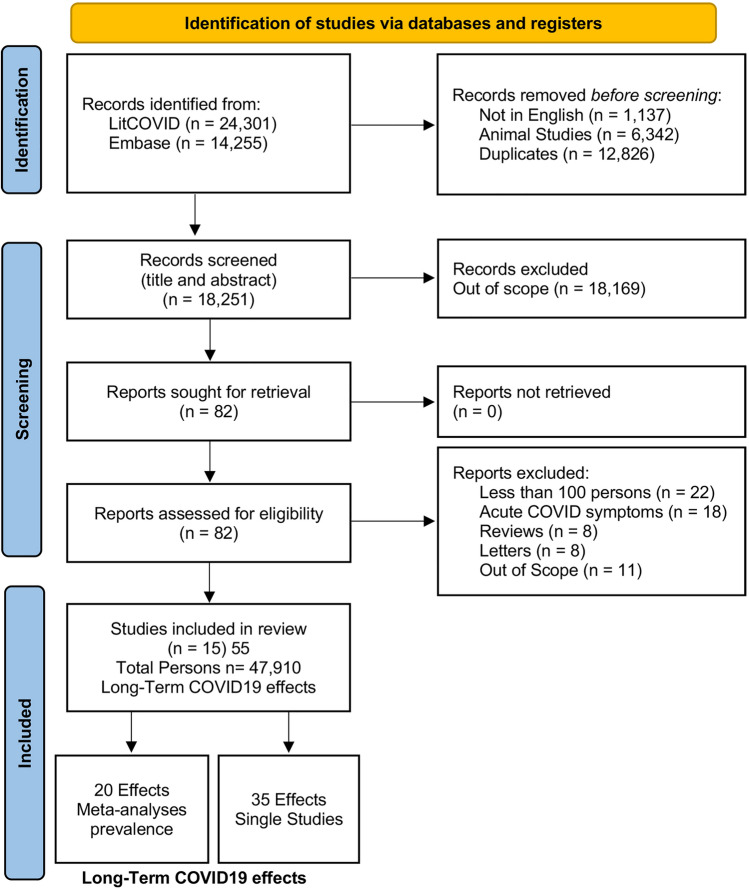
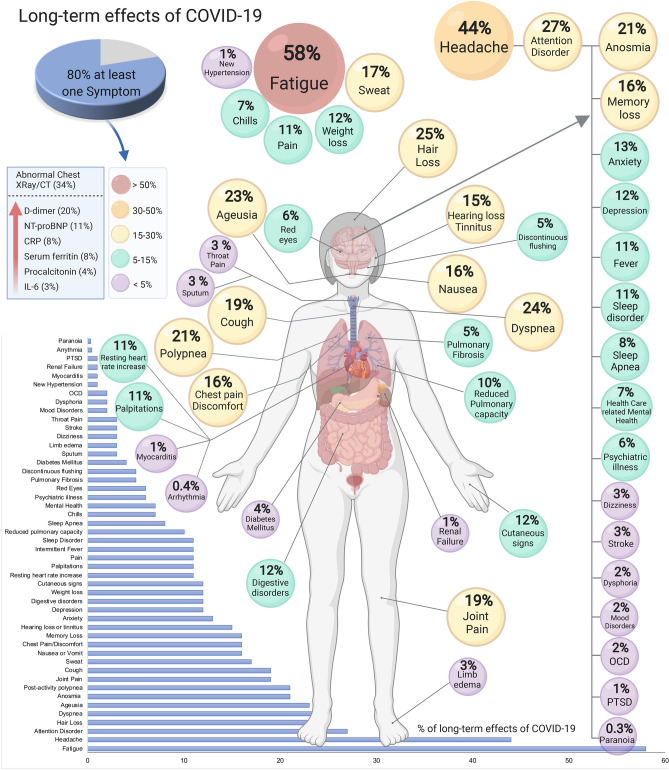
COVID-19 can involve persistence, sequelae, and other medical complications that last weeks to months after initial recovery. This systematic review and meta-analysis aims to identify studies assessing the long-term effects of COVID-19. LitCOVID and Embase were searched to identify articles with original data published before the 1st of January 2021, with a minimum of 100 patients. For effects reported in two or more studies, meta-analyses using a random-effects model were performed using the MetaXL software to estimate the pooled prevalence with 95% CI. PRISMA guidelines were followed. A total of 18,251 publications were identified, of which 15 met the inclusion criteria. The prevalence of 55 long-term effects was estimated, 21 meta-analyses were performed, and 47,910 patients were included (age 17-87 years). The included studies defined long-COVID as ranging from 14 to 110 days post-viral infection. It was estimated that 80% of the infected patients with SARS-CoV-2 developed one or more long-term symptoms. The five most common symptoms were fatigue (58%), headache (44%), attention disorder (27%), hair loss (25%), and dyspnea (24%). Multi-disciplinary teams are crucial to developing preventive measures, rehabilitation techniques, and clinical management strategies with whole-patient perspectives designed to address long COVID-19 care.
Overview
CoChat Summary
## TL;DR
This systematic review and meta-analysis identified 55 long-term effects of COVID-19 across 15 studies including 47,910 patients, estimating that 80% of infected patients developed one or more long-term symptoms. The most common reported effects were fatigue (58%), headache (44%), attention disorder (27%), hair loss (25%), and dyspnea (24%).
## Key findings
- The review screened 18,251 publications and included 15 studies; together they covered 47,910 patients aged 17–87 years.
- The authors identified 55 long-term effects of COVID-19 and performed 21 meta-analyses.
- Overall, an estimated 80% (95% CI 65–92) of COVID-19 patients had at least one long-term symptom.
- The five most common manifestations were fatigue (58%, 95% CI 42–73), headache (44%, 95% CI 13–78), attention disorder (27%, 95% CI 19–36), hair loss (25%, 95% CI 17–34), and dyspnea (24%, 95% CI 14–36).
- Among laboratory/imaging findings, abnormal chest X-ray/CT was observed in 34% (95% CI 27–42), with elevated D-dimer in 20% (95% CI 6–39) and NT-proBNP in 11% (95% CI 6–17).
## Methods
- Systematic review and meta-analysis following PRISMA guidelines; searches were run in LitCOVID and Embase for original studies published before January 1, 2021.
- Inclusion criteria required peer-reviewed English-language human studies with at least 100 patients and post-COVID-19 outcomes assessed 2 weeks or more after initial symptoms.
- Data extraction and study quality assessment were done by multiple reviewers; pooled prevalences were estimated with random-effects meta-analysis in MetaXL for outcomes reported in at least two studies, with heterogeneity assessed using I².
## Limitations
- The paper states that some outcomes had small sample sizes, limiting generalizability to the general population.
- It notes substantial heterogeneity across studies, mainly due to different follow-up times and mixed severity groups; it was also impossible to determine how long each symptom lasted.
- The paper states that many studies used self-reported questionnaires, creating possible reporting bias, and that outcomes may have been missed because studies used internally pre-defined symptom lists.
- Evident from the text: only English-language studies with at least 100 patients were included, so the review may miss smaller or non-English studies.
Model-written summary. Check it against the paper before relying on it.
Integrity signals
Registry
Cites
Statistics
Figures
Verification
Claims the paper makes
5 Valid · 0 Not valid · 8 Not checked · 41 Own results and interpretations
Every source the paper cites for this claim was checked and supports it.
In the paper
“a study reported high levels of depression, anxiety, and post-traumatic stress disorder (PTSD)37 in the long term in patients previously infected with other coronaviruses.”
§ More than 50 long-term effects of COVID-19: a systematic review and meta-analysis > Discussion
What the sources say
- Supportedcites [37] Rogers, J. P. et al. Psychiatric and neuropsychiatric presentations associated with severe coronavirus infections: A systematic review and meta-analysis with comparison to the COVID-19 pandemic. Lancet Psychiatry 7, 611–627. https://doi.org/10.1016/S2215-0366(20)30203-0 (2020). source
The Results report post-illness prevalence of anxiety disorders (14.8%), depression (14.9%), and PTSD (32.2%) among people who recovered from SARS or MERS, with mean follow-up times of 11.6, 22.6, and 33.6 months, respectively. The Discussion describes these prevalences as high, while cautioning that the studies could not clearly separate effects of infection from other factors. Page numbers were not provided in our copy. (LLM, conf=0.93)
plainstates an association- Asserted: passes — The authors put it forward as true.
- Checkable: passes — It can be checked against evidence.
- Load-bearing: unclear — It is unclear whether the paper’s conclusions depend on it.
- Based: passes — The paper gives a reason why it holds.
- Supported
The cited sources support only part of this claim — read each source’s verdict below.
In the paper
“Fatigue (58%) is the most common symptom of long and acute COVID-1923.”
§ More than 50 long-term effects of COVID-19: a systematic review and meta-analysis > Discussion
What the sources say
- Partly supportedcites [23] Townsend, L. et al. Persistent fatigue following SARS-CoV-2 infection is common and independent of severity of initial infection. PLoS One 15, e0240784. https://doi.org/10.1371/journal.pone.0240784 (2020). sourceExperimental — accuracy not yet measured
Townsend et al. (2020) support only that fatigue is common: the Introduction states it is 'recognised as one of the most common presenting complaints' in SARS-CoV-2 infection, with 44–69.6% in early case series and 34–46% in meta-analyses — figures the paper credits to other works it cites, and it never ranks fatigue as THE most common symptom of acute disease. For the convalescent/'long' COVID side, the Results (Prevalence of post-COVID fatigue) report 52.3% (67/128) meeting the CFQ-11 case definition at a median of 10 weeks, and the paper reports no symptom-prevalence comparison, so it does not establish fatigue as the most common long-COVID symptom either. The specific 58% magnitude attributed here matches nothing in our copy (the only nearby percentages are 52.3% fatigued cases and 57% of those offered an appointment who attended), so both the superlative and the number are unsupported. (LLM, conf=0.80)
plain- Asserted: passes — The authors put it forward as true.
- Checkable: passes — It can be checked against evidence.
- Load-bearing: unclear — It is unclear whether the paper’s conclusions depend on it.
- Based: passes — The paper gives a reason why it holds.
- Partly supported
The cited sources support only part of this claim — read each source’s verdict below.
In the paper
“It is present even after 100 days of the first symptom of acute COVID-194,23.”
§ More than 50 long-term effects of COVID-19: a systematic review and meta-analysis > Discussion
What the sources say
- Not checked yetcites [4] Townsend, L. et al. Persistent poor health post-COVID-19 is not associated with respiratory complications or initial disease severity. Ann. Am. Thorac. Soc. https://doi.org/10.1513/AnnalsATS.202009-1175OC (2021). source
- Partly supportedcites [23] Townsend, L. et al. Persistent fatigue following SARS-CoV-2 infection is common and independent of severity of initial infection. PLoS One 15, e0240784. https://doi.org/10.1371/journal.pone.0240784 (2020). sourceExperimental — accuracy not yet measured
Townsend et al. (2020) confirm persistent fatigue after the acute phase of SARS-CoV-2 infection, but at a median of 10 weeks (~70 days) from symptom onset (Abstract; Results, Participant characteristics: median interval 72 days, IQR 62-87; Table 2 'Days since Symptom Onset' medians 71 and 73). The only passage reaching beyond ~84 days is Table 1's follow-up band '>84 days (12 weeks)' (38 participants, 22 fatigued), and the Discussion explicitly frames the report as a 'medium time point' and calls for future longitudinal work 'to describe the persistence of fatigue at six months and beyond'. No passage in our copy states fatigue at or beyond 100 days from first symptom, so that specific qualifier of the citing sentence is not supported by this source. (LLM, conf=0.72)
plain- Asserted: passes — The authors put it forward as true.
- Checkable: passes — It can be checked against evidence.
- Load-bearing: unclear — It is unclear whether the paper’s conclusions depend on it.
- Based: passes — The paper gives a reason why it holds.
A result the paper reports from its own data — it cites no other source for it, so there is none to check. The quote shows it is in the paper.
In the paper
“The prevalence of 55 long-term effects was estimated”
- Also stated in: § Prevalence of long-term effects in COVID-19 patients · plain
“We identified a total of 55 long-term effects associated with COVID-19 in the literature reviewed”
§ More than 50 long-term effects of COVID-19: a systematic review and meta-analysis > Abstract
plainstates an associationn = 47,910- Asserted: passes — The authors put it forward as true.
- Checkable: passes — It can be checked against evidence.
- Load-bearing: passes — The paper’s conclusions depend on it.
- Based: passes — The paper gives a reason why it holds.
- Rests on an assumption not shown here.
- Also stated in: § Prevalence of long-term effects in COVID-19 patients · plain
A result the paper reports from its own data — it cites no other source for it, so there is none to check. The quote shows it is in the paper.
In the paper
“It was estimated that 80% of the infected patients with SARS-CoV-2 developed one or more long-term symptoms.”
- Also stated in: § Prevalence of long-term effects in COVID-19 patients · plain
“The meta-analysis of the studies (n = 7) that included an estimate for one symptom or more reported that 80% (95% CI 65–92) of the patients with COVID-19 have long-term symptoms.”
- Also stated in: § Discussion · boosted
“This systematic review and meta-analysis shows that 80% (95% CI 65–92) of individuals with a confirmed COVID-19 diagnosis continue to have at least one overall effect beyond 2 weeks following acute infection.”
§ More than 50 long-term effects of COVID-19: a systematic review and meta-analysis > Abstract
boostedn = 7- Asserted: passes — The authors put it forward as true.
- Checkable: passes — It can be checked against evidence.
- Load-bearing: passes — The paper’s conclusions depend on it.
- Based: passes — The paper gives a reason why it holds.
- Rests on an assumption not shown here.
- Also stated in: § Prevalence of long-term effects in COVID-19 patients · plain
27 more claims
Create a free account to see all 54 claims and to verify the 18 references still open.
- It may state two separate claims as one. 7
- Probably not a substantial claim. 17
Claims other papers make about this one
Each is checked against this paper’s own text: does it say what the citing paper says it does?
The source backs part of the claim, not all of it — or backs it for a different population, condition or comparison.
In the citing paper
“Mental health symptoms such as depression, anxiety and sleep problems are commonly observed in individuals suffering from acute COVID-19 infection to post-COVID-19 syndrome.”
From Psychological treatments for the mental health symptoms among individuals infected with COVID-19: a scoping review protocol (2023) · cites this paper as [4]
Experimental — accuracy not yet measuredThe cited source says what the claim attributes to it.
In the citing paper
“These mental health symptoms persist even after the acute stage of the disease.”
From Psychological treatments for the mental health symptoms among individuals infected with COVID-19: a scoping review protocol (2023) · cites this paper as [4]
The cited source says what the claim attributes to it.
In the citing paper
“Mental health symptoms are common in reports of a post-covid syndrome (4, 6).”
Citations
Cites
PRISMA-P Group, Moher, D., Shamseer, L., Clarke, M., Ghersi, D., Liberati, A., Petticrew, M., Shekelle, P., & Stewart, L. A. (2015) · Systematic Reviews · doi:10.1186/2046-4053-4-1 · Cited by 26,223
Shamseer, L., Moher, D., Clarke, M., Ghersi, D., Liberati, A., Petticrew, M., Shekelle, P., Stewart, L. A., & the PRISMA-P Group (2015) · BMJ · doi:10.1136/bmj.g7647 · Cited by 13,120
Persistent Symptoms in Patients After Acute COVID-19
Carfì, A., Bernabei, R., Landi, F., & for the Gemelli Against COVID-19 Post-Acute Care Study Group (2020) · JAMA · doi:10.1001/jama.2020.12603 · Cited by 4,561
Rogers, J. P., Chesney, E., Oliver, D., Pollak, T. A., McGuire, P., Fusar-Poli, P., Zandi, M. S., Lewis, G., & David, A. S. (2020) · The Lancet Psychiatry · doi:10.1016/s2215-0366(20)30203-0 · Cited by 2,407
Barendregt, J. J., Doi, S. A., Lee, Y. Y., Norman, R. E., & Vos, T. (2013) · Journal of Epidemiology and Community Health · doi:10.1136/jech-2013-203104 · Cited by 2,169
Cytokine release syndrome in severe COVID-19
Moore, J. B., & June, C. H. (2020) · Science · doi:10.1126/science.abb8925 · Cited by 1,912
Management of post-acute covid-19 in primary care
Greenhalgh, T., Knight, M., A’Court, C., Buxton, M., & Husain, L. (2020) · BMJ · doi:10.1136/bmj.m3026 · Cited by 1,689
Taquet, M., Luciano, S., Geddes, J. R., & Harrison, P. J. (2021) · The Lancet Psychiatry · doi:10.1016/s2215-0366(20)30462-4 · Cited by 1,484
Tenforde, M. W., Kim, S. S., Lindsell, C. J., Billig Rose, E., Shapiro, N. I., Files, D. C., Gibbs, K. W., Erickson, H. L., Steingrub, J. S., Smithline, H. A., et al. (2020) · MMWR. Morbidity and Mortality Weekly Report · doi:10.15585/mmwr.mm6930e1 · Cited by 1,319
Garrigues, E., Janvier, P., Kherabi, Y., Le Bot, A., Hamon, A., Gouze, H., Doucet, L., Berkani, S., Oliosi, E., Mallart, E., et al. (2020) · Journal of Infection · doi:10.1016/j.jinf.2020.08.029 · Cited by 1,157
Cited by
Items 201–300 of 1,003
Impact of long-COVID on health-related quality of life in Japanese COVID-19 patients
Tsuzuki, S., Miyazato, Y., Terada, M., Morioka, S., Ohmagari, N., & Beutels, P. (2022) · Health and Quality of Life Outcomes · doi:10.1186/s12955-022-02033-6 · Cited by 69
Return-to-Work Following Occupational Rehabilitation for Long COVID: Descriptive Cohort Study
Brehon, K., Niemeläinen, R., Hall, M., Bostick, G. P., Brown, C. A., Wieler, M., & Gross, D. P. (2022) · JMIR Rehabilitation and Assistive Technologies · doi:10.2196/39883 · Cited by 60
Al‐Hakeim, H. K., Al-Rubaye, H. T., Almulla, A. F., Al-Hadrawi, D. S., & Maes, M. H. J. (2023) · Journal of Clinical Medicine · doi:10.3390/jcm12020511 · Cited by 63
Chiricosta, L., Gugliandolo, A., & Mazzon, E. (2021) · International Journal of Molecular Sciences · doi:10.3390/ijms222413603 · Cited by 64
Botek, M., Krejčí, J., Valenta, M., McKune, A. J., Sládečková, B., Konečný, P., Klimešová, I., & Pastucha, D. (2022) · International Journal of Environmental Research and Public Health · doi:10.3390/ijerph19041992 · Cited by 67
“Post-acute COVID-19 syndrome commonly manifests as a variety of persistent symptoms, such as severe fatigue, shortness of breath [3], headache, and attention disorder [4], that occur beyond 4 weeks from the onset of COVID-19 symptoms [5].”
BackgroundErlandson, K. M., Geng, L. N., Selvaggi, C. A., Thaweethai, T., Chen, P., Erdmann, N. B., Goldman, J. D., Henrich, T. J., Hornig, M., Karlson, E. W., et al. (2024) · Annals of Internal Medicine · doi:10.7326/m24-0737 · Cited by 61
Muscle dysfunction in the long coronavirus disease 2019 syndrome: Pathogenesis and clinical approach
Silva, C. C., Bichara, C. N. C., Carneiro, F. R. O., Palácios, V. R. D. C. M., van den Berg, A. V. S., Quaresma, J. A. S., & Falcão, L. F. M. (2022) · Reviews in Medical Virology · doi:10.1002/rmv.2355 · Cited by 66
Fischer, A., Zhang, L., Elbéji, A., Wilmes, P., Oustric, P., Staub, T., Nazarov, P. V., Ollert, M. W., & Fagherazzi, G. (2022) · Open Forum Infectious Diseases · doi:10.1093/ofid/ofac397 · Cited by 61
COVID‐19 immunopathology: From acute diseases to chronic sequelae
Arish, M., Qian, W. G., Narasimhan, H., & Sun, J. (2022) · Journal of Medical Virology · doi:10.1002/jmv.28122 · Cited by 60
“Specifically, PASC is defined by the persistence of disease greater than 28 days following onset of symptoms, a phenomenon observed in 27–80% of convalescent individuals 288 .”
Gastrointestinal symptoms in COVID-19: the long and the short of it
Freedberg, D. E., & Chang, L. (2022) · Current Opinion in Gastroenterology · doi:10.1097/mog.0000000000000876 · Cited by 59
COVID-19 and mental health disorders in children and adolescents (Review)
Bai, M., Miao, C., Zhang, Y., Xue, Y., Jia, F., & Du, L. (2022) · Psychiatry Research · doi:10.1016/j.psychres.2022.114881 · Cited by 65
Pihlaja, R., Kauhanen, L.-L., Ollila, H., Tuulio‐Henriksson, A., Koskinen, S. K., Tiainen, M., Salmela, V. R., Hästbacka, J., & Hokkanen, L. (2023) · Brain Behavior & Immunity - Health · doi:10.1016/j.bbih.2023.100587 · Cited by 64
Nasonov, E. L., Lila, A. M., Vi, M., Belov, B. S., Karateev, A. E., Дубинина, Т. В., Nikitinskaya, O. A., Baranov, A. A., Abdulganieva, D. I., Moiseev, S. V., et al. (2021) · Rheumatology Science and Practice · doi:10.47360/1995-4484-2021-239-254 · Cited by 63
Long-Term Complications of COVID-19 Infection in Adolescents and Children
Thallapureddy, K., Thallapureddy, K., Zerda, E., Suresh, N. V., Kamat, D., Rajasekaran, K., & Moreira, A. G. (2022) · Current Pediatrics Reports · doi:10.1007/s40124-021-00260-x · Cited by 56
Immunologic phenotype of patients with long-COVID syndrome of 1-year duration
García‐Abellán, J., Fernández‐González, M., Padilla, S., García, J. A., Agulló, V., Lozano, V., Ena, N., García-Sánchez, L., Gutiérrez, F., & Masiá, M. (2022) · Frontiers in Immunology · doi:10.3389/fimmu.2022.920627 · Cited by 56
Coenzyme Q10 as Treatment of Post COVID-19 Condition
Hansen, K. S., Mogensen, T. H., Agergaard, J., Schiøttz‐Christensen, B., Østergaard, L. J., Vibholm, L. K., & Leth, S. (2022) · The Lancet Regional Health - Europe · doi:10.1016/j.lanepe.2022.100539 · Cited by 60
Síndrome de COVID-19 persistente. Una revisión narrativa
Sampalo, A. L., Bernal-López, M. R., & Gómez‐Huelgas, R. (2021) · Revista Clínica Española · doi:10.1016/j.rce.2021.10.003 · Cited by 82
Implications of testicular ACE2 and the renin–angiotensin system for SARS-CoV-2 on testis function
Edenfield, R. C., & Easley, C. A. (2021) · Nature Reviews Urology · doi:10.1038/s41585-021-00542-5 · Cited by 57
A systematic review of acute telogen effluvium, a harrowing post‐COVID‐19 manifestation
Hussain, N., Agarwala, P., Iqbal, K., Omar, H. M. S., Jangid, G., Patel, V., Rathore, S. S., Kumari, C., Botero, F. V., López, G. A. B., et al. (2021) · Journal of Medical Virology · doi:10.1002/jmv.27534 · Cited by 55
“Post‐COVID‐19 manifestations have been described in the literature; a recent meta‐analysis reported the five most common post‐recovery symptoms, including fatigue (58%), headache (44%), attention disorder (27%), hair loss (25%), and dyspnea (24%).(31) Hair loss after recovery from COVID‐19 is a harrowing manifestation.”
BackgroundWong‐Chew, R. M., Cabrera, E. X. R., Valdez, C. A. R., Lomelín‐Gascón, J., Morales‐Juárez, L., de la Cerda, M. L. R., Villa-Romero, A. R., Fernández, S. A., Fernandez, M., Bello, H. H., et al. (2022) · Therapeutic Advances in Infectious Disease · doi:10.1177/20499361211069264 · Cited by 63
Yang, C., Chang, C., Yang, C., Pariante, C. M., & Su, K. (2022) · Brain Behavior and Immunity · doi:10.1016/j.bbi.2022.04.001 · Cited by 62
“In a cohort study of 402 adults surviving COVID-19 (265 male, mean age 58) in Italy, after 1 month of hospital treatment, approximately 56% screened positive in at least one of the domains evaluated for psychiatric sequelae (depression, anxiety, insomnia, PTSD and obsessive–compulsive symptoms) (Mazza et al., 2020).”
InfluentialCalvo-Paniagua, J., Díaz‐Arribas, M. J., Valera‐Calero, J. A., Gallardo-Vidal, M. I., Fernández‐de‐las‐Peñas, C., López‐de‐Uralde‐Villanueva, I., del Corral, T., & Plaza‐Manzano, G. (2022) · PLoS ONE · doi:10.1371/journal.pone.0271802 · Cited by 62
Dissecting the role of the human microbiome in COVID-19 via metagenome-assembled genomes
Ke, S., Weiss, S. T., & Liu, Y. (2022) · Nature Communications · doi:10.1038/s41467-022-32991-w · Cited by 55
Gil, S. D. S., Júnior, G. N. D. O., Sarti, F. M., Filho, W. J., Longobardi, I., Turri, J. A. O., Shinjo, S. K., Ferriolli, E., Avelino‐Silva, T. J., Busse, A. L., et al. (2022) · Journal of the American Medical Directors Association · doi:10.1016/j.jamda.2022.11.013 · Cited by 93
Tan, P.-H., Ji, J., Hsing, C., Tan, R., & Ji, R. (2022) · International Journal of Molecular Sciences · doi:10.3390/ijms232214394 · Cited by 60
Samper-Pardo, M., León-Herrera, S., Oliván‐Blázquez, B., Méndez-López, F., García, M. D., & Sánchez‐Recio, R. (2023) · Scientific Reports · doi:10.1038/s41598-023-35058-y · Cited by 58
Predictors of the post-COVID condition following mild SARS-CoV-2 infection
Reme, B.-A., Gjesvik, J., & Magnusson, K. (2023) · Nature Communications · doi:10.1038/s41467-023-41541-x · Cited by 60
Biswas, T., & Pal, S. C. (2023) · Journal of Cleaner Production · doi:10.1016/j.jclepro.2023.139941 · Cited by 56
Charvet, B., Brunel, J., Pierquin, J., Iampietro, M., Décimo, D., Queruel, N., Lucas, A., Encabo-Berzosa, M. D. M., Arenaz, I., Pérez-Marmolejo, T., et al. (2023) · iScience · doi:10.1016/j.isci.2023.106604 · Cited by 58
“Numerous long-lasting, post-infectious symptoms or syndromes are commonly observed among patients who had COVID-19, from benign to severe forms.(2) Moreover, beyond a dominant respiratory tract tropism, extra-pulmonary COVID-19 forms are more frequent and diverse than initially expected.”
COVID-19 and neurologic manifestations: a synthesis from the child neurologist’s corner
Valderas, C., Méndez, G., Echeverría, A. C., Suarez, N. M., Julio, K., & Sandoval, F. (2022) · World Journal of Pediatrics · doi:10.1007/s12519-022-00550-4 · Cited by 59
Systemic lupus erythematosus: history and modernity
Nasonov, E. L., Soloviev, S. K., & Аршинов, А. В. (2022) · Rheumatology Science and Practice · doi:10.47360/1995-4484-2022-397-412 · Cited by 57
Cruz, A. S., Mendes‐Frias, A., Azarias-da-Silva, M., André, S., Oliveira, A. I., Pires, O., Mendes, M., Oliveira, B., Braga, M., Lopes, J. R., et al. (2023) · Nature Communications · doi:10.1038/s41467-023-37368-1 · Cited by 60
Oxidative Damage and Post-COVID Syndrome: A Cross-Sectional Study in a Cohort of Italian Workers
Stufano, A., Isgrò, C., Palese, L. L., Caretta, P., Maria, L. D., Lovreglio, P., & Sardanelli, A. M. (2023) · International Journal of Molecular Sciences · doi:10.3390/ijms24087445 · Cited by 54
SARS-CoV-2 and the nervous system: current perspectives
Pattanaik, A., Sushma Bhandarkar, B., Lodha, L., & Marate, S. (2023) · Archives of Virology · doi:10.1007/s00705-023-05801-x · Cited by 59
Enhancing Agriculture Through AI Vision and Machine Learning: The Evolution of Smart Farming
Padhiary, M., & Kumar, R. (2024) · Advances in computational intelligence and robotics book series · doi:10.4018/979-8-3693-5380-6.ch012 · Cited by 66
Zavala, M., Ireland, G., Amin‐Chowdhury, Z., Ramsay, M. E., & Ladhani, S. N. (2021) · Clinical Infectious Diseases · doi:10.1093/cid/ciab991 · Cited by 54
“Ac ce pte d M an us cri pt COVID prevalence of 80% (95% CI, 65-92) from 14 to 110 days post-infection another review of childhood long-COVID estimated a prevalence of 4-66% [17, 25].”
BackgroundKulaga, S. S., & Miller, C. W. T. (2021) · Neuroscience & Biobehavioral Reviews · doi:10.1016/j.neubiorev.2021.05.008 · Cited by 57
“These include fatigue, “brain fog,” anxiety, depression, and psychosis (Graham et al., 2021; Huang et al., 2021a; Lopez-Leon et al., 2021).”
Rank, A., Tzortzini, A., Kling, E., Schmid, C., Claus, R., Loell, E., Burger, R., Römmele, C., Dhillon, C., Müller, K., et al. (2021) · Journal of Clinical Medicine · doi:10.3390/jcm10153305 · Cited by 56
“This finding is consistent with published data that also show that neurologic symptoms most often persist [15].”
ResultSleep Dysfunction in COVID-19 Patients: Prevalence, Risk Factors, Mechanisms, and Management
Pataka, A., Kotoulas, S., Sakka, E., Katsaounou, P. A., & Pappa, S. (2021) · Journal of Personalized Medicine · doi:10.3390/jpm11111203 · Cited by 59
“Symptoms and clinical findings as fatigue, difficulty in concentration, persistent respiratory symptoms, loss of smell or taste, post-exertional malaise, depression, anxiety, and sleep disorders are commonly reported in the ‘post-COVID syndrome’ [10,11].”
BackgroundUse of N-Acetylcysteine at high doses as an oral treatment for patients hospitalized with COVID-19
Izquierdo-Alonso, J. L., Soriano, J. B., González, Y., Lumbreras, S., Ancochea, J., Echeverry, C., & González-Moro, J. M. R. (2022) · Science Progress · doi:10.1177/00368504221074574 · Cited by 54
Nielsen, T. B., Leth, S., Pedersen, M., Harbo, H. D., Nielsen, C. V., Laursen, C. H., Schiøttz‐Christensen, B., & Oestergaard, L. G. (2022) · International Journal of Environmental Research and Public Health · doi:10.3390/ijerph192214739 · Cited by 56
Badinlou, F., Lundgren, T., & Jansson‐Fröjmark, M. (2022) · BMC Psychiatry · doi:10.1186/s12888-022-04405-0 · Cited by 59
Szabó, S., Zayachkivska, О., Hussain, A., & Müller, V. (2023) · Inflammopharmacology · doi:10.1007/s10787-023-01194-0 · Cited by 53
Strahm, C., Seneghini, M., Güsewell, S., Egger, T., Leal-Neto, O. B., Brucher, A., Lemmenmeier, E., Kleeb, D. M., Möller, J. C., Rieder, P., et al. (2022) · Clinical Infectious Diseases · doi:10.1093/cid/ciac054 · Cited by 56
SARS-CoV-2 Uses Nonstructural Protein 16 To Evade Restriction by IFIT1 and IFIT3
Schindewolf, C., Lokugamage, K. G., Vu, M. N., Johnson, B. A., Scharton, D., Plante, J. A., Kalveram, B., Crocquet-Valdes, P. A., Sotcheff, S. L., Jaworski, E. A., et al. (2023) · Journal of Virology · doi:10.1128/jvi.01532-22 · Cited by 55
“Since its emergence late in 2019, severe acute respiratory syndrome coronavirus 2 (SARS-CoV-2) has caused major damage to the global populace through mortality (1), morbidity (2), and social and economic disruption (3).”
Tran, T. A., Trang, L. T. T., An, T. D., Nghĩa, N. H., & Loan, D. T. T. (2024) · Journal of Human Earth and Future · doi:10.28991/hef-2024-05-01-01 · Cited by 52
“In recent times, there has been a growing body of research focusing on the long-term implications of COVID-19 recovery on mental and physical health, which has gained increasing significance, primarily due to the effects of COVID-19 on recovered patients [1-3].”
BackgroundPostacute Sequelae of Severe Acute Respiratory Syndrome Coronavirus 2 Infection
Hope, A. A., & Evering, T. H. (2022) · Infectious Disease Clinics of North America · doi:10.1016/j.idc.2022.02.004 · Cited by 57
“Incidence of gastrointestinal symptoms (eg, diarrhea, nausea, pain) ranged from 3% to 79%.(33) Another recent systematic review and meta-analysis comprising 81 studies of individuals reporting fatigue and cognitive impairment 12 or more weeks after COVID-19 infection revealed the proportion of affected individuals to…”
El‐Dokla, A., Mohamed‐Hussein, A. A., Fouad, A., Abdelnasser, M. G., Ali, S. T., Makhlouf, N. A., Sayed, I. G., Makhlouf, H. A., Shah, J., & Aiash, H. (2022) · Annals of Clinical and Translational Neurology · doi:10.1002/acn3.51557 · Cited by 57
Charfeddine, S., Amor, H. I. H., Jdidi, J., Torjmen, S., Kraiem, S., Bahloul, A., Makni, A., Kallel, N., Moussa, N., Boudaya, M., et al. (2022) · Frontiers in Cardiovascular Medicine · doi:10.3389/fcvm.2022.866113 · Cited by 56
The presence of symptoms within 6 months after COVID-19: a single-center longitudinal study
Emecen, A. N., Keskin, S., Turunc, O., Süner, A. F., Şiyve, N., ŞENSOY, E. B., Dinc, F., Kılınç, O., Avkan-Oğuz, V., Bayrak, S., et al. (2022) · Irish Journal of Medical Science (1971 -) · doi:10.1007/s11845-022-03072-0 · Cited by 56
Role of Wearable Sensing Technology to Manage Long COVID
Khondakar, K. R., & Kaushik, A. K. (2022) · Biosensors · doi:10.3390/bios13010062 · Cited by 58
A Systematic Review of Persistent Clinical Features After SARS-CoV-2 in the Pediatric Population
Jiang, L., Li, X., Nie, J., Tang, K., & Bhutta, Z. A. (2023) · PEDIATRICS · doi:10.1542/peds.2022-060351 · Cited by 55
Brehon, K., Miciak, M., Hung, P., Chen, S., Perreault, K., Hudon, A., Wieler, M., Hunter, S., Hoddinott, L., Hall, M., et al. (2023) · BMC Health Services Research · doi:10.1186/s12913-023-10288-y · Cited by 53
Exertional intolerance and dyspnea with preserved lung function: an emerging long COVID phenotype?
Lam, G. Y., Befus, A. D., Damant, R. W., Ferrara, G., Fuhr, D. P., Stickland, M. K., Varughese, R. A., Wong, E. Y. L., & Smith, M. P. (2021) · Respiratory Research · doi:10.1186/s12931-021-01814-9 · Cited by 50
“Current literature suggests that patients with long COVID experience significant multi-system symptoms [4, 5].”
BackgroundCuschieri, S., Calleja, N., Devleesschauwer, B., & Wyper, G. M. A. (2021) · BMC Public Health · doi:10.1186/s12889-021-11893-4 · Cited by 50
Evidence mapping and review of long-COVID and its underlying pathophysiological mechanism
Umesh, A., Pranay, K., Pandey, R. C., & Gupta, M. K. (2022) · Infection · doi:10.1007/s15010-022-01835-6 · Cited by 52
“The definitions of the persistent post-COVID syndrome, chronic COVID syndrome, or post-acute COVID-19 syndrome overlap but are not consistent across studies (Table 1) [2, 3].”
BackgroundMental health symptoms one year after acute COVID-19 infection: Prevalence and risk factors
Colizzi, M., Peghin, M., Martino, M. D., Bontempo, G., Gerussi, V., Palese, A., Isola, M., Tascini, C., & Balestrieri, M. (2022) · Revista de Psiquiatría y Salud Mental · doi:10.1016/j.rpsm.2022.05.008 · Cited by 56
Tokumasu, K., Honda, H., Sunada, N., Sakurada, Y., Matsuda, Y., Yamamoto, K., Nakano, Y., Hasegawa, T., Yamamoto, Y., Otsuka, Y., et al. (2022) · Medicina · doi:10.3390/medicina58070850 · Cited by 61
“A meta-analysis of studies on long COVID including one symptom or more showed that 80% of the patients with COVID-19 have long-lasting symptoms, and long COVID is therefore an important clinical problem [4].”
BackgroundMethodCazé, A. B., Silva, T. C., Bomfim, A. P., de Souza, G. L., Azevedo, A. C. A. C., Brasil, M. Q., Santos, N. R., Khouri, R., Dan, J. M., Bandeira, A. C., et al. (2023) · Journal of Global Health · doi:10.7189/jogh.13.06015 · Cited by 57
“The list of evaluated residual symptoms (Questionnaire 3) was based on previous studies [16,17].”
MethodPost-COVID-19 syndrome and quality of life impairment in severe COVID-19 Mexican patients
Román-Montes, C. M., Flores-Soto, Y. C., Guaracha-Basáñez, G. A., Tamez-Torres, K. M., Sifuentes‐Osornio, J., González-Lara, M. F., & Ponce‐de‐León, A. (2023) · Frontiers in Public Health · doi:10.3389/fpubh.2023.1155951 · Cited by 53
Definitions and symptoms of the post-COVID syndrome: an updated systematic umbrella review
Gutzeit, J., Weiß, M., Nürnberger, C., Lemhöfer, C., Appel, K. S., Pracht, E., Reese, J., Lehmann, C., Polidori, M. C., Hein, G., et al. (2024) · European Archives of Psychiatry and Clinical Neuroscience · doi:10.1007/s00406-024-01868-y · Cited by 50
“…dermatological ailments, infection signs, sleep disturbance [following 13], psychiatric symptoms (such as anxiety, depressive mood, etc.), renal symptoms (relating to the filtration and production of urine, involving the kidneys), and urinary symptoms (involving the bladder and urethra) [20].”
Proposed integrative model for post-COVID symptoms
Fernández‐de‐las‐Peñas, C., Florêncio, L. L., Gómez‐Mayordomo, V., Cuadrado, M. L., Palacios‐Ceña, D., & Raveendran, A. V. (2021) · Diabetes & Metabolic Syndrome Clinical Research & Reviews · doi:10.1016/j.dsx.2021.05.032 · Cited by 51
“A recent meta-analysis, published as a preprint, has reported that fatigue, headache, and attention disorders are the top three post-COVID symptoms [11].”
Maes, M. H. J., Al-Rubaye, H. T., Almulla, A. F., Al-Hadrawi, D. S., Stoyanova, K., Kubera, M., & Al‐Hakeim, H. K. (2022) · International Journal of Environmental Research and Public Health · doi:10.3390/ijerph191610362 · Cited by 50
Ballout, R. A., Kong, H., Sampson, M. L., Otvos, J. D., Cox, A. L., Agbor-Enoh, S. T., & Remaley, A. T. (2021) · Biomedicines · doi:10.3390/biomedicines9091090 · Cited by 50
“Despite the rapid development of several efficacious vaccines against Severe Acute Respiratory Syndrome Coronavirus-2 (SARS-CoV-2) [1], the viral cause of the ongoing Coronavirus Disease 2019 (COVID-19) pandemic, our understanding of the potential long-term metabolic sequalae of COVID-19 remains limited [2-4].”
BackgroundSurma, S., Banach, M., & Lewek, J. (2021) · Lipids in Health and Disease · doi:10.1186/s12944-021-01563-0 · Cited by 53
“assessed the incidence of long-term effects of COVID-19, wchich included: fatigue (58%), headache (44%), attention disorders (27%), hair loss (25%) and dyspnea (24%) [3].”
BackgroundEl impacto de la pandemia de COVID-19 sobre la salud. Informe SESPAS 2022
Torres-Cantero, A. M., León, E. E. Á., Morán‐Sánchez, I., Campillo, I. S. L., Bernal, E., Pereña, M. H., & Martínez-Morata, I. (2022) · Gaceta Sanitaria · doi:10.1016/j.gaceta.2022.02.008 · Cited by 57
Coenzyme Q10 + alpha lipoic acid for chronic COVID syndrome
Barletta, M. A., Marino, G., Spagnolo, B., Bianchi, F. P., Falappone, P. C. F., Spagnolo, L., & Gatti, P. (2022) · Clinical and Experimental Medicine · doi:10.1007/s10238-022-00871-8 · Cited by 51
“SARS-CoV-2 enters cells via the angiotensin-converting enzyme 2 (ACE2) receptor [14].”
BackgroundBryant, J. M., Boncyk, C. S., Rengel, K. F., Doan, V., Snarskis, C., McEvoy, M. D., McCarthy, K. Y., Li, G., Sandberg, W. S., & Freundlich, R. E. (2022) · JAMA Network Open · doi:10.1001/jamanetworkopen.2022.46922 · Cited by 48
Omidvari, N., Jones, T., Price, P., Ferre, A. L., Lu, J. W. T., Abdelhafez, Y. G., Sen, F., Cohen, S. H., Schmiedehausen, K., Badawi, R. D., et al. (2023) · Science Advances · doi:10.1126/sciadv.adh7968 · Cited by 51
“Being able to noninvasively study T cell involvement in peripheral effects ( 22 ), long COVID ( 23 ), vaccine efficacy ( 24 ), and therapeutic interventions (25 ) would also suggest potentially fruitful areas for whole-body COVID-19 research.”
Defining brain fog across medical conditions
Denno, P., Zhao, S., Husain, M., & Hampshire, A. (2025) · Trends in Neurosciences · doi:10.1016/j.tins.2025.01.003 · Cited by 50
The prevalence of sensory changes in post-COVID syndrome: A systematic review and meta-analysis
Trott, M., Driscoll, R., & Pardhan, S. (2022) · Frontiers in Medicine · doi:10.3389/fmed.2022.980253 · Cited by 48
Tuvali, O., Tshori, S., Derazne, E., Hannuna, R. R., Afek, A. B., Haberman, D., Sella, G., & George, J. (2022) · Journal of Clinical Medicine · doi:10.3390/jcm11082219 · Cited by 47
Malone, L. A., Morrow, A. K., Chen, Y., Curtis, D. J., de Ferranti, S. D., Desai, M., Fleming, T. K., Giglia, T. M., Hall, T. A., Henning, E., et al. (2022) · PM&R · doi:10.1002/pmrj.12890 · Cited by 53
Manganotti, P., Michelutti, M., Furlanis, G., Deodato, M., & Stella, A. B. (2023) · Clinical Neurophysiology · doi:10.1016/j.clinph.2023.04.010 · Cited by 49
“Shortness of breath, fatigue, hair loss, autonomic dysfunction, neuromuscular disorders, headache, and attention deficits have been frequently described (Manganotti et al., 2021, Buoite Stella et al., 2022; Cares-Marambio et al., 2021; Lopez-Leon et al., 2021; Michelutti et al., 2022).”
BackgroundKisiel, M. A., Lee, S.-S., Malmquist, S., Rykatkin, O., Holgert, S., Janols, H., Janson, C., & Zhou, X. (2023) · Journal of Clinical Medicine · doi:10.3390/jcm12113617 · Cited by 50
Arostegui, D., Castro, K., Schwarz, S. M., Vaidy, K., Rabinowitz, S. S., & Wallach, T. E. (2021) · JPGN Reports · doi:10.1097/pg9.0000000000000152 · Cited by 47
“Variations of LC may impact over 80% of patients (5).”
Long COVID a New Derivative in the Chaos of SARS-CoV-2 Infection: The Emergent Pandemic?
Fernández‐Lázaro, D., Sánchez-Serrano, N., Mielgo‐Ayuso, J., García, J. L., Gonzalez-Bernal, J. J., & Seco‐Calvo, J. (2021) · Journal of Clinical Medicine · doi:10.3390/jcm10245799 · Cited by 50
González-Aumatell, A., Bovo, M. V., Carreras‐Abad, C., Cuso-Perez, S., Marsal, È. D., Coll-Fernández, R., Goicoechea-Calvo, A., Giralt‐López, M., Cantallops, A. E., Morón‐López, S., et al. (2022) · Children · doi:10.3390/children9111677 · Cited by 52
Infectious diseases and cognition: do we have to worry?
Hernández‐Ruiz, V., Letenneur, L., Fülöp, T., Helmer, C., Baudron, C. R., Ávila‐Funes, J. A., & Amieva, H. (2022) · Neurological Sciences · doi:10.1007/s10072-022-06280-9 · Cited by 49
Huth, D., Bräscher, A., Tholl, S., Fiess, J., Birke, G., Herrmann, C., Jöbges, M., Mier, D. U., & Witthöft, M. (2023) · Psychological Medicine · doi:10.1017/s0033291723002921 · Cited by 55
“Common symptoms include fatigue, headache, cognitive impairments, or dyspnea, but overall, PCC can affect multiple organ systems resulting in a variety of associated symptoms and different phenotypes (Groff et al., 2021; Lopez-Leon et al., 2021; Reese et al., 2023).”
Prampart, S., Gentil, S. L., Bureau, M. L., Macchi, C., Leroux, C., Chapelet, G., de Decker, L., Rouaud, A., & Boureau, A. (2022) · BMC Geriatrics · doi:10.1186/s12877-022-03197-y · Cited by 53
Haunhorst, S., Bloch, W., Wagner, H., Ellert, C., Krüger, K., Vilser, D., Finke, K., Reuken, P. A., Pletz, M. W., Stallmach, A., et al. (2022) · Oxford Open Immunology · doi:10.1093/oxfimm/iqac006 · Cited by 52
“Headache (44%, 95% CI: 13–78), attention disorder (27%, 95% CI: 19–36), hair loss (25%, 95% CI: 17– 34) and dyspnoea (24%, 95% CI: 14–36) followed in the list of the five most prevalent symptoms [45].”
BackgroundLong COVID: Clinical Framing, Biomarkers, and Therapeutic Approaches
Conti, V., Corbi, G., Sabbatino, F., Pascale, D. D., Sellitto, C., Stefanelli, B., Bertini, N., Simone, M. D., Liguori, L., Paola, I. D., et al. (2023) · Journal of Personalized Medicine · doi:10.3390/jpm13020334 · Cited by 47
Plasma cytokine levels reveal deficiencies in IL-8 and gamma interferon in Long-COVIDPreprint
Williams, E. S. C. P., Martins, T. B., Hill, H. R., Coiras, M., Shah, K., Planelles, V., & Spivak, A. M. (2022) · medRxiv · doi:10.1101/2022.10.03.22280661 · Cited by 46
Hawke, L. D., Nguyen, A. T. P., Sheikhan, N. Y., Strudwick, G., Rossell, S. L., Soklaridis, S., Kloiber, S. M., Shields, R., Ski, C. F., Thompson, D. R., et al. (2023) · BMC Health Services Research · doi:10.1186/s12913-023-10091-9 · Cited by 48
“Meta-analytic data show that the most common symptoms of Long COVID are extreme fatigue (58%), headache (44%), attentional problems (27%), hair loss (25%), and dyspnea (24%) [7]; ‘brain fog’ and neurological impacts are also common [8].”
Lifestyle Adjustments in Long-COVID Management: Potential Benefits of Plant-Based Diets
Storz, M. A. (2021) · Current Nutrition Reports · doi:10.1007/s13668-021-00369-x · Cited by 55
Investigation of pituitary functions after acute coronavirus disease 2019
Urhan, E., Karaca, Z., Ünüvar, G. K., Gündoğan, K., & Ünlühızarcı, K. (2022) · Endocrine Journal · doi:10.1507/endocrj.ej21-0531 · Cited by 49
“Apart from acute infection, in the post-COVID period, there may be persistent symp‐ toms such as fatigue, myalgia, mood disturbances, ano‐ rexia, and vomiting [17-19].”
BackgroundEffects of SARS-CoV-2 Inflammation on Selected Organ Systems of the Human Body
Kopańska, M., Barnaś, E., Błajda, J., Kuduk, B., Łagowska, A., & Banaś-Ząbczyk, A. (2022) · International Journal of Molecular Sciences · doi:10.3390/ijms23084178 · Cited by 48
DiIorio, M. A., Kennedy, K., Liew, J. W., Putman, M., Sirotich, E., Sattui, S. E., Foster, G., Harrison, C., LARCHÉ, M. J., Levine, M., et al. (2022) · RMD Open · doi:10.1136/rmdopen-2022-002587 · Cited by 45
The Coronavirus pandemic – 2022: Viruses, variants & vaccines
Alexandridi, M., Mazej, J., Palermo, E., & Hiscott, J. B. (2022) · Cytokine & Growth Factor Reviews · doi:10.1016/j.cytogfr.2022.02.002 · Cited by 51
“Nearly every organ system can be affected by Long Covid - most common effects are observed in the respiratory, nervous and cardiovascular systems [42].”
Huntley, C., Patel, K. K., Bushra, S.-E.-S., Mobeen, F., Armitage, M. N., Pye, A., Knight, C. B., Mostafa, A., Kershaw, M., Mughal, A. Z., et al. (2022) · ERJ Open Research · doi:10.1183/23120541.00056-2022 · Cited by 51
Direct health care costs associated with COVID-19 in the United States
DeMartino, J. K., Swallow, E., Goldschmidt, D., Yang, K., Viola, M., Radtke, T., & Kirson, N. Y. (2022) · Journal of Managed Care & Specialty Pharmacy · doi:10.18553/jmcp.2022.22050 · Cited by 47
Goldhaber, N. H., Kohn, J. N., Ogan, W. S., Sitapati, A. M., Longhurst, C., Wang, A. Y., Lee, S., Hong, S., & Horton, L. E. (2022) · International Journal of Environmental Research and Public Health · doi:10.3390/ijerph192416841 · Cited by 44
THOMPSON, J. S., Thornton, A., Ainger, T. J., & Garvy, B. A. (2023) · Frontiers in Immunology · doi:10.3389/fimmu.2022.1033651 · Cited by 44
Niu, Y., Lv, Z.-H., Sun, C., Wen, Y.-Y., Tao, T.-Y., Qian, D., Tao, F.-P., & Yu, J.-H. (2023) · Frontiers in Public Health · doi:10.3389/fpubh.2023.1112383 · Cited by 46
Fiala, K. J., Martens, J. M., & Abd-Elsayed, A. A. (2022) · Current Pain and Headache Reports · doi:10.1007/s11916-022-01038-6 · Cited by 52
“While the most common reported post-COVID manifestations are fatigue, headache, attention disorder, hair loss, and dyspnea, the CDC reports a long list of potential post-COVID symptoms including loss of smell or taste, dizziness, heart palpitations, chest pain, myalgias, depression, anxiety, and fever [3, 4].”
BackgroundNeurological and psychological effects of long COVID in a young population: A cross-sectional study
Guido, C. A., Lucidi, F., Midulla, F., Zicari, A. M., Bove, E., Avenoso, F., Amedeo, I., Mancino, E., Nenna, R., Castro, G. D., et al. (2022) · Frontiers in Neurology · doi:10.3389/fneur.2022.925144 · Cited by 45
Neurological complications caused by SARS-CoV-2
Pang, Z., Tang, A., He, Y., Fan, J., Yang, Q., Tong, Y., & Fan, H. (2024) · Clinical Microbiology Reviews · doi:10.1128/cmr.00131-24 · Cited by 48
“SARS-CoV-2 has been implicated in the development of various encephalopathy, including acute cerebrovascular disease (23, 24), meningitis, encephalitis (25), acute necrotizing encephalopathy (26), headache (27, 28), and dizziness (29, 30), which can be detected through brain imaging tests.”
Long Covid-19 syndrome as a fourth phase of Sars-CoV2 infection
Staffolani, S., Iencinella, V., Cimatti, M., & Tavio, M. (2022) · Infezioni in Medicina · doi:10.53854/liim-3001-3 · Cited by 48
“Some mechanisms have been proposed: 1) Sequelae of organ damage, extent of injury and time to recovery of each organ system [13].”
BackgroundCahalan, R., Meade, C., & Mockler, S. (2022) · Canadian Journal of Respiratory Therapy · doi:10.29390/cjrt-2021-074 · Cited by 44
“The spectrum of LC presentations is also bewildering with over 50 symptoms identified in a large systematic review on the subject [7].”
Background
Metadata
- Authors
- Lopez-Leon, S., Wegman-Ostrosky, T., Perelman, C., Sepulveda, R., Rebolledo, P. A., Cuapio, A., & Villapol, S.
- Affiliations
- Universidad Nacional Autónoma de México (MX)
- Emory University (US)
- Houston Methodist (US)
- Corresponding author
- Villapol, Sonia
- ORCID
- Venue
- Scientific Reports
- Published
- 2021-08-09
- Volume
- 11
- Issue
- 1
- Pages
- 16144-16144
- ISSN
- 2045-2322 (ISSN-L)
- PMC
- PMC8352980
- OpenAlex
- W3133517424
- Cited by
- 2,757
- References
- 51
- Citations by year
- 2026: 130 · 2025: 278 · 2024: 510 · 2023: 728 · 2022: 776 · 2021: 331
- FWCI
- 75.19
- Type
- journal article
- Language
- en
- Open access
- gold
- doi.org
- Licence
- cc-by
- creativecommons.org/licenses/by/4.0 (tdm)
- creativecommons.org/licenses/by/4.0 (vor)
- Locations
- Scientific Reports (publishedVersion, cc-by)
- medRxiv (acceptedVersion, cc-by-nc-nd)
- PubMed Central (publishedVersion, cc-by)
- PubMed (publishedVersion)
- Europe PMC (PubMed Central) (submittedVersion, cc-by-nc-nd)
- PubMed Central (submittedVersion, cc-by-nc-nd)
- DOAJ (DOAJ: Directory of Open Access Journals) (submittedVersion, cc-by-sa)
- Funders
- Houston Methodist Research Institute
- Topics
- Health Sciences › Medicine › Clinical Neurology › Long-Term Effects of COVID-19
- Health Sciences › Medicine › Infectious Diseases › COVID-19 Clinical Research Studies
- Social Sciences › Psychology › Clinical Psychology › COVID-19 and Mental Health
- Keywords
- long COVID, long-term effects of COVID-19, SARS-CoV-2, post-acute sequelae, fatigue, headache, attention disorders, hair loss, dyspnea, prevalence, multidisciplinary care, rehabilitation
About these checks
Registry, retraction, Cites and statistics results are computed, not judged, with one exception: a printed reference that no index lists is read once by a model before it counts as a citation error. Claims are extracted by a model and kept only when their quote appears verbatim in the text; each cited source is then checked, with a model’s help, for whether it says what the claim relies on. Those verdicts can be wrong — read the claim’s quote and the cited source before relying on one.
The claim verdicts this report counts are experimental: their accuracy is not yet measured.
A language model drew the claims from the paper on 2026-10-11, under version 3 of the claim definition (model deepseek-v4.1-flash, prompt extract-v3).
A second model labelled each claim on 2026-10-11 (model jev-1.13-20260917, definition revision gold-guideline-v0.2).
Cited sources are checked with a language model’s help (gpt-6-sol and qwen3.8-omni-flash).
Statistics and arithmetic are recomputed, not judged.
Confidence bands are shown only for fields calibrated on our annotated test set. None is calibrated yet, so no band is shown.
What counts as a claim ›How we measure confidence ›How we check this ›
Are you an author, or do you see a problem with this page? Request a review
Data sources
Bibliographic data: Semantic Scholar, OpenAlex, Crossref.
Contains information from the Semantic Scholar Academic Graph Datasets, made available under the ODC Attribution License (ODC-BY 1.0).
Semantic Scholar’s data is described in: Kinney, R., et al. (2023). The Semantic Scholar Open Data Platform. arXiv:2301.10140.
