

Digital biomarkers for Alzheimer’s disease: the mobile/wearable devices opportunity
Open accessThe DOI matches its Crossref record; 101 of the 101 references it cites were found in a registry or an index.
Abstract
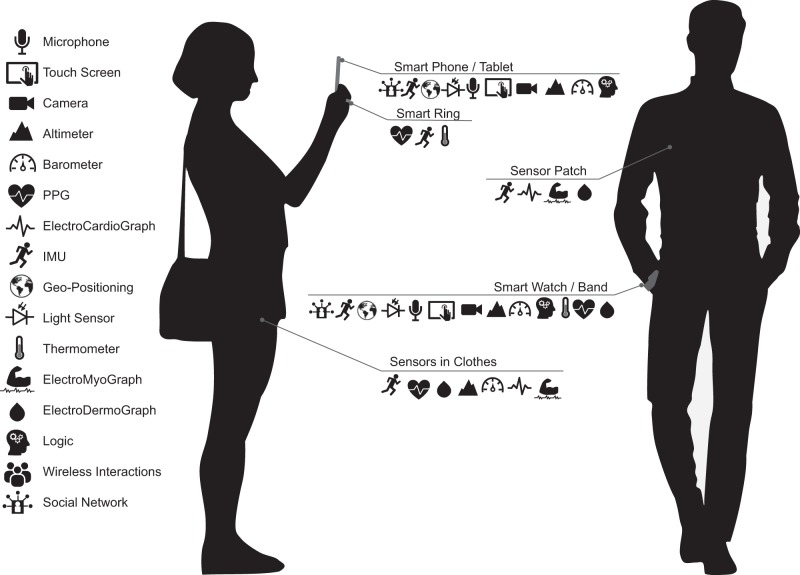
Alzheimer’s Disease (AD) represents a major and rapidly growing burden to the healthcare ecosystem. A growing body of evidence indicates that cognitive, behavioral, sensory, and motor changes may precede clinical manifestations of AD by several years. Existing tests designed to diagnose neurodegenerative diseases, while well-validated, are often less effective in detecting deviations from normal cognitive decline trajectory in the earliest stages of the disease. In the quest for gold standards for AD assessment, there is a growing interest in the identification of readily accessible digital biomarkers, which harness advances in consumer grade mobile and wearable technologies. Topics examined include a review of existing early clinical manifestations of AD and a path to the respective sensor and mobile/wearable device usage to acquire domain-centric data towards objective, high frequency and passive digital phenotyping.
Overview
The claims and statistics of this paper haven’t been checked yet.
Free: it reads the open-access text and checks the first 5 claims that cite a source we can check. Create a free account to check every claim.
Integrity signals
Registry
Cites
Statistics
Figures
Verification
Claims the paper makes
The claims and statistics of this paper haven’t been checked yet.
Free: it reads the open-access text and checks the first 5 claims that cite a source we can check. Create a free account to check every claim.
Claims other papers make about this one
Each is checked against this paper’s own text: does it say what the citing paper says it does?
The source backs part of the claim, not all of it — or backs it for a different population, condition or comparison.
In the citing paper
“Complementary digital biomarkers derived from handwriting, speech, and environmental sensors further enable longitudinal tracking of cognitive decline (Kourtis et al., 2019).”
From Multimodal neuroimaging and AI integration in cognitive disorders: advances, challenges, and future directions for precision medicine (2026) · cites this paper as Kourtis et al., 2019
Experimental — accuracy not yet measuredThe source backs part of the claim, not all of it — or backs it for a different population, condition or comparison.
In the citing paper
“early detection of neurodegenerative disorders such as Alzheimer’s disease (AD), in which key indices of preclinical stages are cognitive, motor and sensory changes that occur 10 or 15 years prior to its effective diagnosis43,44.”
From Sex and gender differences and biases in artificial intelligence for biomedicine and healthcare (2020) · cites this paper as [44]
Experimental — accuracy not yet measuredThe source backs part of the claim, not all of it — or backs it for a different population, condition or comparison.
In the citing paper
“Monitoring these biomarkers’ fluctuations is essential in the early detection and treatment of mental health disorders [3,32].”
From Predicting Depression From Smartphone Behavioral Markers Using Machine Learning Methods, Hyperparameter Optimization, and Feature Importance Analysis: Exploratory Study (2021) · cites this paper as [32]
Experimental — accuracy not yet measuredThe check wasn’t confident either way, so it gives no verdict — never disputed.
In the citing paper
“While classification tasks are common in automated speech analysis in neurodegenerative research, several studies have employed regression models to predict continuous cognitive outcomes (e.g., MMSE)97,98 or to explore relationships with imaging and biomarker measures.99–101”
From Review of Artificial Intelligence for Clinical Use in Alzheimer's Disease and Related Dementias (2026) · cites this paper as [98]
Experimental — accuracy not yet measured
Self-check
Percentages, sums and reported differences re-computed from the paper’s own numbers.
The self-check needs the paper’s full text.
Citations
Cites
A compendium of neuropsychological tests: administration, norms, and commentary
(1991) · Choice Reviews Online · doi:10.5860/choice.29-2400 · Cited by 6,120
Thayer, J. F., Åhs, F., Fredrikson, M., Sollers, J. J., & Wager, T. D. (2012) · Neuroscience & Biobehavioral Reviews · doi:10.1016/j.neubiorev.2011.11.009 · Cited by 3,224
Executive functions and self-regulation
Hofmann, W., Schmeichel, B. J., & Baddeley, A. D. (2012) · Trends in Cognitive Sciences · doi:10.1016/j.tics.2012.01.006 · Cited by 1,965
Thayer, J. F., Hansen, A. L., Saus-Rose, E., & Johnsen, B. H. (2009) · Annals of Behavioral Medicine · doi:10.1007/s12160-009-9101-z · Cited by 1,872
Inferring friendship network structure by using mobile phone data
Eagle, N., Pentland, A. (., & Lazer, D. (2009) · Proceedings of the National Academy of Sciences · doi:10.1073/pnas.0900282106 · Cited by 1,856
Elhai, J. D., Dvorak, R. D., Levine, J. C., & Hall, B. J. (2017) · Journal of Affective Disorders · doi:10.1016/j.jad.2016.08.030 · Cited by 1,689
The Rise of Consumer Health Wearables: Promises and Barriers
Piwek, L., Ellis, D. A., Andrews, S., & Joinson, A. (2016) · PLOS Medicine · doi:10.1371/journal.pmed.1001953 · Cited by 1,235
Attention and executive deficits in Alzheimer's disease: A critical review
Perry, R. J. (1999) · Brain · doi:10.1093/brain/122.3.383 · Cited by 1,180
Muro-de-la-Herran, A., Garcia-Zapirain, B., & Mendez-Zorrilla, A. (2014) · Sensors · doi:10.3390/s140203362 · Cited by 1,172
The spectrum of behavioral changes in Alzheimer's disease
Mega, M. S., Cummings, J. L., Fiorello, T., & Gornbein, J. (1996) · Neurology · doi:10.1212/wnl.46.1.130 · Cited by 1,115
Vigilance, alertness, or sustained attention: physiological basis and measurement
Oken, B. S., Salinsky, M. C., & Elsas, S. M. (2006) · Clinical Neurophysiology · doi:10.1016/j.clinph.2006.01.017 · Cited by 887
Digital Phenotyping: Technology for a New Science of Behavior
Insel, T. R. (2017) · JAMA · doi:10.1001/jama.2017.11295 · Cited by 833
Linguistic Features Identify Alzheimer’s Disease in Narrative Speech
Fraser, K. C., Meltzer, J. A., & Rudzicz, F. (2015) · Journal of Alzheimer's Disease · doi:10.3233/jad-150520 · Cited by 797
Lim, A. S. P., Kowgier, M., Yu, L., Buchman, A. S., & Bennett, D. A. (2013) · Sleep · doi:10.5665/sleep.2802 · Cited by 793
The effect of mental stress on heart rate variability and blood pressure during computer work
Hjortskov, N., Riss�n, D., Blangsted, A. K., Fallentin, N., Lundberg, U., & S�gaard, K. (2004) · European Journal of Applied Physiology · doi:10.1007/s00421-004-1055-z · Cited by 766
Novel Speech Signal Processing Algorithms for High-Accuracy Classification of Parkinson’s Disease
Tsanas, A., Little, M. A., McSharry, P. E., Spielman, J., & Ramig, L. O. (2012) · IEEE Transactions on Biomedical Engineering · doi:10.1109/tbme.2012.2183367 · Cited by 732
The Evolution of Preclinical Alzheimer’s Disease: Implications for Prevention Trials
Sperling, R., Mormino, E., & Johnson, K. (2014) · Neuron · doi:10.1016/j.neuron.2014.10.038 · Cited by 725
Bennett, D. A., Schneider, J. A., Tang, Y., Arnold, S. E., & Wilson, R. S. (2006) · The Lancet Neurology · doi:10.1016/s1474-4422(06)70417-3 · Cited by 718
Accuracy of Smartphone Applications and Wearable Devices for Tracking Physical Activity Data
Case, M. A., Burwick, H. A., Volpp, K. G., & Patel, M. S. (2015) · JAMA · doi:10.1001/jama.2014.17841 · Cited by 694
Overview of depression and psychosis in Alzheimer's disease
(1989) · American Journal of Psychiatry · doi:10.1176/ajp.146.5.577 · Cited by 682
How accurate is pulse rate variability as an estimate of heart rate variability?
Schäfer, A., & Vagedes, J. (2013) · International Journal of Cardiology · doi:10.1016/j.ijcard.2012.03.119 · Cited by 661
At the interface of sensory and motor dysfunctions and Alzheimer’s disease.
Albers, M. W., Gilmore, G. C., Kaye, J., Murphy, C., Wingfield, A., Bennett, D. A., Boxer, A. L., Buchman, A. S., Cruickshanks, K. J., Devanand, D. P., et al. (2015) · Alzheimer's & Dementia · doi:10.1016/j.jalz.2014.04.514 · Cited by 589
Bierer, L. M., Haroutunian, V., Gabriel, S., Knott, P. J., Carlin, L. S., Purohit, D. P., Perl, D. P., Schmeidler, J., Kanof, P., & Davis, K. L. (1995) · Journal of Neurochemistry · doi:10.1046/j.1471-4159.1995.64020749.x · Cited by 580
Passive Detection of Atrial Fibrillation Using a Commercially Available Smartwatch
Tison, G. H., Sanchez, J. M., Ballinger, B., Singh, A., Olgin, J. E., Pletcher, M. J., Vittinghoff, E., Lee, E. S., Fan, S. M., Gladstone, R. A., et al. (2018) · JAMA Cardiology · doi:10.1001/jamacardio.2018.0136 · Cited by 566 · cited 1×
“, Mountain View, CA) to detect conditions passively such as atrial fibrillation with moderate amounts of accuracy.(44,45) Smart rings equipped with PPG, such as the Oura ring (Oura Health Ltd, Oulu, Finland), have shown high reliability in measuring HR and HRV when compared to Electrocardiography (ECG).”
The Trajectory of Gait Speed Preceding Mild Cognitive Impairment
Buracchio, T., Dodge, H. H., Howieson, D., Wasserman, D., & Kaye, J. (2010) · Archives of Neurology · doi:10.1001/archneurol.2010.159 · Cited by 563
Gait Dysfunction in Mild Cognitive Impairment Syndromes
Verghese, J., Robbins, M., Holtzer, R., Zimmerman, M., Wang, C., Xue, X., & Lipton, R. B. (2008) · Journal of the American Geriatrics Society · doi:10.1111/j.1532-5415.2008.01758.x · Cited by 433
Social Engagement and Cognitive Function in Old Age
Krueger, K. R., Wilson, R. S., Kamenetsky, J. M., Barnes, L. L., Bienias, J. L., & Bennett, D. A. (2009) · Experimental Aging Research · doi:10.1080/03610730802545028 · Cited by 419
Zhan, A., Mohan, S., Tarolli, C., Schneider, R. B., Adams, J. L., Sharma, S., Elson, M. J., Spear, K. L., Glidden, A. M., Little, M. A., et al. (2018) · JAMA Neurology · doi:10.1001/jamaneurol.2018.0809 · Cited by 381
Automatic speech analysis for the assessment of patients with predementia and Alzheimer's disease
König, A., Satt, A., Sorin, A., Hoory, R., Toledo‐Ronen, O., Derreumaux, A., Manera, V., Verhey, F., Aalten, P., Robert, P. H., et al. (2015) · Alzheimer's & Dementia: Diagnosis, Assessment & Disease Monitoring · doi:10.1016/j.dadm.2014.11.012 · Cited by 380
Landes, A. M., Sperry, S. D., Strauss, M. E., & Geldmacher, D. S. (2001) · Journal of the American Geriatrics Society · doi:10.1046/j.1532-5415.2001.49282.x · Cited by 379
Swainson, R., Hodges, J. R., Galton, C. J., Semple, J., Michael, A., Dunn, B. D., Iddon, J. L., Robbins, T. W., & Sahakian, B. J. (2001) · Dementia and Geriatric Cognitive Disorders · doi:10.1159/000051269 · Cited by 375
Quintana, D. S., Guastella, A. J., Outhred, T., Hickie, I. B., & Kemp, A. H. (2012) · International Journal of Psychophysiology · doi:10.1016/j.ijpsycho.2012.08.012 · Cited by 367
Management of behavioral problems in Alzheimer's disease
Gauthier, S., Cummings, J., Ballard, C., Brodaty, H., Grossberg, G., Robert, P., & Lyketsos, C. (2010) · International Psychogeriatrics · doi:10.1017/s1041610209991505 · Cited by 361
The Evolution of Psychiatric Symptoms in Alzheimer's Disease: A Natural History Study
Jost, B. C., & Grossberg, G. T. (1996) · Journal of the American Geriatrics Society · doi:10.1111/j.1532-5415.1996.tb02942.x · Cited by 343
Goldberg, T. E., Harvey, P. D., Wesnes, K. A., Snyder, P. J., & Schneider, L. S. (2015) · Alzheimer's & Dementia: Diagnosis, Assessment & Disease Monitoring · doi:10.1016/j.dadm.2014.11.003 · Cited by 343
Major and minor depression in Alzheimer's disease: prevalence and impact
(1997) · The Journal of Neuropsychiatry and Clinical Neurosciences · doi:10.1176/jnp.9.4.556 · Cited by 320
Social Network Characteristics and Cognition in Middle-Aged and Older Adults
Holtzman, R. E., Rebok, G. W., Saczynski, J. S., Kouzis, A. C., Wilcox Doyle, K., & Eaton, W. W. (2004) · The Journals of Gerontology: Series B · doi:10.1093/geronb/59.6.p278 · Cited by 320
The relationship between mobile phone location sensor data and depressive symptom severity
Saeb, S., Lattie, E. G., Schueller, S. M., Kording, K. P., & Mohr, D. C. (2016) · PeerJ · doi:10.7717/peerj.2537 · Cited by 313
Multiple Arousal Theory and Daily-Life Electrodermal Activity Asymmetry
Picard, R. W., Fedor, S., & Ayzenberg, Y. (2016) · Emotion Review · doi:10.1177/1754073914565517 · Cited by 287
The Sleep of the Ring: Comparison of the ŌURA Sleep Tracker Against Polysomnography
de Zambotti, M., Rosas, L., Colrain, I. M., & Baker, F. C. (2019) · Behavioral Sleep Medicine · doi:10.1080/15402002.2017.1300587 · Cited by 287
Vitiello, M. V., & Borson, S. (2001) · CNS Drugs · doi:10.2165/00023210-200115100-00004 · Cited by 275
Sleep disorders in Alzheimer's disease and other dementias
Bliwise, D. L. (2004) · Clinical Cornerstone · doi:10.1016/s1098-3597(04)90014-2 · Cited by 272
Sleep Disturbances in Patients With Mild-Stage Alzheimer's Disease
Vitiello, M. V., Prinz, P. N., Williams, D. E., Frommlet, M. S., & Ries, R. K. (1990) · Journal of Gerontology · doi:10.1093/geronj/45.4.m131 · Cited by 223
Eye Movements in Alzheimer's Disease
Molitor, R. J., Ko, P. C., & Ally, B. A. (2015) · Journal of Alzheimer's Disease · doi:10.3233/jad-141173 · Cited by 216
Stance time and step width variability have unique contributing impairments in older persons
Brach, J. S., Studenski, S., Perera, S., VanSwearingen, J. M., & Newman, A. B. (2008) · Gait & Posture · doi:10.1016/j.gaitpost.2007.05.016 · Cited by 210
Does Alzheimer's disease begin in the brainstem?
Simic, G., Stanic, G., Mladinov, M., Jovanov‐Milosevic, N., Kostovic, I., & Hof, P. R. (2009) · Neuropathology and Applied Neurobiology · doi:10.1111/j.1365-2990.2009.01038.x · Cited by 204
Sleep Staging Based on Signals Acquired Through Bed Sensor
Kortelainen, J. M., Mendez, M. O., Bianchi, A. M., Matteucci, M., & Cerutti, S. (2010) · IEEE Transactions on Information Technology in Biomedicine · doi:10.1109/titb.2010.2044797 · Cited by 201
The selective vulnerability of brainstem nuclei to Alzheimer's disease
Parvizi, J., Van Hoesen, G. W., & Damasio, A. (2001) · Annals of Neurology · doi:10.1002/1531-8249(200101)49:1<53::aid-ana30>3.0.co;2-q · Cited by 193
Detecting cognitive changes in preclinical Alzheimer's disease: A review of its feasibility
Mortamais, M., Ash, J. A., Harrison, J., Kaye, J., Kramer, J., Randolph, C., Pose, C., Albala, B., Ropacki, M., Ritchie, C. W., et al. (2017) · Alzheimer's & Dementia · doi:10.1016/j.jalz.2016.06.2365 · Cited by 190
Digital biomarkers of cognitive function
Dagum, P. (2018) · npj Digital Medicine · doi:10.1038/s41746-018-0018-4 · Cited by 187 · cited 1×
“Research at digital health company Mindstrong (Palo Alto, CA) has shown that continuous data from seven days of passive smartphone interactions can predict performance on traditional assessments of memory, language, dexterity and executive function.(92) However, digital phenotyping in neurodegenerative conditions is s…”
BackgroundSleep/wake patterns In Alzheimer's disease: relationships with cognition and function
MOE, K. E., VITIELLO, M. V., LARSEN, L. H., & PRINZ, P. N. (1995) · Journal of Sleep Research · doi:10.1111/j.1365-2869.1995.tb00145.x · Cited by 174
Eye Tracking During a Visual Paired Comparison Task as a Predictor of Early Dementia
Crutcher, M. D., Calhoun-Haney, R., Manzanares, C. M., Lah, J. J., Levey, A. I., & Zola, S. M. (2009) · American Journal of Alzheimer's Disease & Other Dementias® · doi:10.1177/1533317509332093 · Cited by 165
The first frontier: digital biomarkers for neurodegenerative disorders
Dorsey, E. R., Papapetropoulos, S., Xiong, M., & Kieburtz, K. (2017) · Digital Biomarkers · doi:10.1159/000477383 · Cited by 162 · cited 1×
“Furthermore, cognitive tests can suffer from intrinsic cultural bias, take a relatively long time to administer, provide only episodic information, show “practice effect” or “ceiling effect,” and are rater dependent.(2) Explorations into the inclusion of genetic testing, structural MRI imaging and PET molecular imagin…”
BackgroundCholinergic deficiency in Alzheimer's and Parkinson's disease: Evaluation with pupillometry
Fotiou, D. F., Stergiou, V., Tsiptsios, D., Lithari, C. D., Νάκου, Μ., & Karlovasitou, A. (2009) · International Journal of Psychophysiology · doi:10.1016/j.ijpsycho.2009.01.011 · Cited by 161
DeepHeart: Semi-Supervised Sequence Learning for Cardiovascular Risk Prediction
Ballinger, B., Hsieh, J., Singh, A., Sohoni, N., Wang, J., Tison, G., Marcus, G., Sanchez, J., Maguire, C., Olgin, J., et al. (2018) · Proceedings of the AAAI Conference on Artificial Intelligence · doi:10.1609/aaai.v32i1.11891 · Cited by 156
A Validated Smartphone-Based Assessment of Gait and Gait Variability in Parkinson’s Disease
Ellis, R. J., Ng, Y. S., Zhu, S., Tan, D. M., Anderson, B., Schlaug, G., & Wang, Y. (2015) · PLOS ONE · doi:10.1371/journal.pone.0141694 · Cited by 152
Validation of Biofeedback Wearables for Photoplethysmographic Heart Rate Tracking.
(2016) · PubMed Central · Cited by 150
Montplaisir, J., Petit, D., Lorrain, D., Gauthier, S., & Nielsen, T. (1995) · Sleep · doi:10.1093/sleep/18.3.145 · Cited by 149
Glenn, T., & Monteith, S. (2014) · Current Psychiatry Reports · doi:10.1007/s11920-014-0523-3 · Cited by 129 · cited 1×
“In response to these shortcomings, there has been recent interest in the concept of digital phenotyping and its applications to mental health and psychiatry.(90) The application of digital phenotyping to neurodegenerative conditions has already shown promising results.”
BackgroundCurrent research and trends in the use of smartphone applications for mood disorders
Torous, J., & Powell, A. C. (2015) · Internet Interventions · doi:10.1016/j.invent.2015.03.002 · Cited by 121
Frewen, J., Finucane, C., Savva, G. M., Boyle, G., Coen, R. F., & Kenny, R. A. (2013) · Clinical Autonomic Research · doi:10.1007/s10286-013-0214-x · Cited by 119
Debellemaniere, E., Chambon, S., Pinaud, C., Thorey, V., Dehaene, D., Léger, D., Chennaoui, M., Arnal, P. J., & Galtier, M. N. (2018) · Frontiers in Human Neuroscience · doi:10.3389/fnhum.2018.00088 · Cited by 118
Back to the app: the costs of mobile application interruptions
Leiva, L., Böhmer, M., Gehring, S., & Krüger, A. (2012) · Proceedings of the 14th international conference on Human-computer interaction with mobile devices and services · doi:10.1145/2371574.2371617 · Cited by 115
Variable phenotype of Alzheimer's disease with spastic paraparesis
Smith, M. J., Kwok, J. B. J., McLean, C. A., Kril, J. J., Broe, G. A., Nicholson, G. A., Cappai, R., Hallupp, M., Cotton, R. G. H., Masters, C. L., et al. (2001) · Annals of Neurology · doi:10.1002/1531-8249(200101)49:1<125::aid-ana21>3.0.co;2-1 · Cited by 108
Altered pupillary size and darkness and light reflexes in Alzheimer's disease.
Prettyman, R., Bitsios, P., & Szabadi, E. (1997) · Journal of Neurology, Neurosurgery & Psychiatry · doi:10.1136/jnnp.62.6.665 · Cited by 105
Driving behaviors in early stage dementia: A study using in-vehicle technology
Eby, D. W., Silverstein, N. M., Molnar, L. J., LeBlanc, D. J., & Adler, G. (2011) · Accident Analysis & Prevention · doi:10.1016/j.aap.2011.11.021 · Cited by 103
Lyons, B. E., Austin, D., Seelye, A., Petersen, J., Yeargers, J., Riley, T., Sharma, N., Mattek, N., Wild, K., Dodge, H., et al. (2015) · Frontiers in Aging Neuroscience · doi:10.3389/fnagi.2015.00102 · Cited by 102
Cognitive rhythms: unobtrusive and continuous sensing of alertness using a mobile phone
Abdullah, S., Murnane, E. L., Matthews, M. L., Kay, M., Kientz, J. A., Gay, G. K., & Choudhury, T. (2016) · ACM International Joint Conference on Pervasive and Ubiquitous Computing (UbiComp) · doi:10.1145/2971648.2971712 · Cited by 98
Mobile and pervasive computing technologies and the future of Alzheimer’s clinical trials
Doraiswamy, P. M., Narayan, V. A., & Manji, H. K. (2018) · npj Digital Medicine · doi:10.1038/s41746-017-0008-y · Cited by 97
Rüb, U., Tredici, K. D., Schultz, C., Thal, D. R., Braak, E., & Braak, H. (2001) · Acta Neuropathologica · doi:10.1007/s004010000320 · Cited by 96
A Behavioral Task Predicts Conversion to Mild Cognitive Impairment and Alzheimer’s Disease
Zola, S. M., Manzanares, C. M., Clopton, P., Lah, J. J., & Levey, A. I. (2013) · American Journal of Alzheimer's Disease & Other Dementias® · doi:10.1177/1533317512470484 · Cited by 96
Pistono, A., Jucla, M., Barbeau, E. J., Saint-Aubert, L., Lemesle, B., Calvet, B., Köpke, B., Puel, M., & Pariente, J. (2016) · Journal of Alzheimer's Disease · doi:10.3233/jad-150408 · Cited by 96
Evaluation of the beat-to-beat detection accuracy of PulseOn wearable optical heart rate monitor
Parak, J., Tarniceriu, A., Renevey, P., Bertschi, M., Delgado-Gonzalo, R., & Korhonen, I. (2015) · 2015 37th Annual International Conference of the IEEE Engineering in Medicine and Biology Society (EMBC) · doi:10.1109/embc.2015.7320273 · Cited by 96 · cited 2×
“with early AD exhibited reduced number of words per fixation, an increase in the total number and duration of fixations and and increase in the number of words skipped.(30,42) Given that reading is one of the basic functions performed on tablets, an on board high frequency eye movement data collection system while tex…”
BackgroundMethodEyetracking Metrics in Young Onset Alzheimer’s Disease: A Window into Cognitive Visual Functions
Pavisic, I. M., Firth, N. C., Parsons, S., Rego, D. M., Shakespeare, T. J., Yong, K. X. X., Slattery, C. F., Paterson, R. W., Foulkes, A. J. M., Macpherson, K., et al. (2017) · Frontiers in Neurology · doi:10.3389/fneur.2017.00377 · Cited by 96
Revisitation analysis of smartphone app use
Jones, S. L., Ferreira, D., Hosio, S., Goncalves, J., & Kostakos, V. (2015) · Proceedings of the 2015 ACM International Joint Conference on Pervasive and Ubiquitous Computing · doi:10.1145/2750858.2807542 · Cited by 93
Kluge, A., Kirschner, M., Hager, O. M., Bischof, M., Habermeyer, B., Seifritz, E., Walther, S., & Kaiser, S. (2017) · Schizophrenia Research · doi:10.1016/j.schres.2017.09.034 · Cited by 93
Eye Movement Alterations During Reading in Patients With Early Alzheimer Disease
Fernández, G., Mandolesi, P. S., Rotstein, N. P., Colombo, O., Agamennoni, O. E., & Politi, L. E. (2013) · Investigative Ophthalmology & Visual Science · doi:10.1167/iovs.13-12877 · Cited by 89
Payne, J. L., Lyketsos, C. G., Steele, C., Baker, L., Galik, E., Kopunek, S., Steinberg, M., & Warren, A. (1998) · The Journal of Neuropsychiatry and Clinical Neurosciences · doi:10.1176/jnp.10.4.440 · Cited by 83
Murnane, E. L., Abdullah, S., Matthews, M., Kay, M., Kientz, J. A., Choudhury, T., Gay, G., & Cosley, D. (2016) · Proceedings of the 18th International Conference on Human-Computer Interaction with Mobile Devices and Services · doi:10.1145/2935334.2935383 · Cited by 68
Cardiac autonomic modulation and cognitive status in Alzheimer’s disease
Toledo, M. A. D. V., & Junqueira, L. F. (2009) · Clinical Autonomic Research · doi:10.1007/s10286-009-0035-0 · Cited by 66
Consumer Sleep Tracking Devices: A Critical Review
Jeon, L., & Joseph, F. (2015) · Studies in Health Technology and Informatics · doi:10.3233/978-1-61499-512-8-458 · Cited by 66 · cited 1×
“App based and most wrist worn sleep monitors with a few exceptions, were shown to offer limited reliability at determining sleep stages when compared to Polysomnography (PSG).(59) At the forefront, the Pulse-On (PulseOn Oy, Espoo, Finland) wearable device and the Oura Ring, have shown high levels of sleep staging accu…”
MethodAssociation between Finger Tapping, Attention, Memory, and Cognitive Diagnosis in Elderly Patients
Rabinowitz, I., & Lavner, Y. (2014) · Perceptual and Motor Skills · doi:10.2466/10.22.pms.119c12z3 · Cited by 63
Eye Blink Rate as a biological marker of Mild Cognitive Impairment
Ladas, A. I., Frantzidιs, C. A., Bamidis, P. D., & Vivas, A. B. (2013) · International Journal of Psychophysiology · doi:10.1016/j.ijpsycho.2013.07.010 · Cited by 54
Creating a driving profile for older adults using GPS devices and naturalistic driving methodology
Babulal, G. M., Traub, C. M., Webb, M. M., Stout, S. H., Addison, A., Carr, D. B., Ott, B. R., Morris, J. C., & Roe, C. M. (2016) · F1000Research · doi:10.12688/f1000research.9608.2 · Cited by 54 · cited 1×
“For example, driving pattern features such as reduced speed (at least 10mph slower) compared to the rest of the traffic, reduced—less than half— mileage overall and a relative increase in the proportion of mileage driven close to home was shown in subjects with early stage dementia.(82,83) Other metrics include the re…”
BackgroundDetecting neurodegenerative disorders from web search signals
White, R. W., Doraiswamy, P. M., & Horvitz, E. (2018) · npj Digital Medicine · doi:10.1038/s41746-018-0016-6 · Cited by 54
Evolutional Aspects of Alzheimer's Disease Pathogenesis
Braak, H., & Del Tredici, K. (2012) · Journal of Alzheimer's Disease · doi:10.3233/jad-2012-129029 · Cited by 50
Yang, Q., Wang, T., Su, N., Liu, Y., Xiao, S., & Kapoula, Z. (2011) · Dementia and Geriatric Cognitive Disorders Extra · doi:10.1159/000333080 · Cited by 49
Measuring motor speed through typing: a surrogate for the finger tapping test
Austin, D., Jimison, H. B., Hayes, T. L., Mattek, N., Kaye, J. A., & Misha Pavel, C. (2011) · Behavior Research Methods · doi:10.3758/s13428-011-0100-1 · Cited by 46
Heart rate estimation on a beat-to-beat basis via ballistocardiography - a hybrid approach
Friedrich, D., Aubert, X. L., Führ, H., & Brauers, A. (2010) · Annual International Conference of the IEEE Engineering in Medicine and Biology Society (EMBC) · doi:10.1109/iembs.2010.5627626 · Cited by 46
The Atrial Fibrillation Health Literacy Information Technology System: Pilot Assessment
Magnani, J. W., Schlusser, C. L., Kimani, E., Rollman, B. L., Paasche-Orlow, M. K., & Bickmore, T. W. (2017) · JMIR Cardio · doi:10.2196/cardio.8543 · Cited by 46
Fernández, G., Manes, F. F., Politi, L. E., Orozco, D., Schumacher, M., Castro, L., Agamennoni, O. E., & Rotstein, N. P. (2016) · Journal of Alzheimer s Disease · doi:10.3233/jad-150265 · Cited by 40
Stringer, G., Couth, S., Brown, L. J. E., Montaldi, D., Gledson, A., Mellor, J., Sutcliffe, A., Sawyer, P., Keane, J., Bull, C., et al. (2018) · International Journal of Geriatric Psychiatry · doi:10.1002/gps.4863 · Cited by 37
Use of a Tracing Task to Assess Visuomotor Performance: Effects of Age, Sex, and Handedness
Stirling, L., Lipsitz, L. A., Qureshi, M., Kelty‐Stephen, D. G., Goldberger, A. L., & Costa, M. D. (2013) · The Journals of Gerontology Series A · doi:10.1093/gerona/glt003 · Cited by 33
CHAIBUB NETO, E., BOT, B. M., PERUMAL, T., OMBERG, L., GUINNEY, J., KELLEN, M., KLEIN, A., FRIEND, S. H., & TRISTER, A. D. (2016) · Biocomputing 2016 · doi:10.1142/9789814749411_0026 · Cited by 33
Phasic visual alertness in Alzheimerʼs disease and ageing
Tales, A., Muir, J. L., Bayer, A. J., Jones, R. W., & Snowden, R. J. (2002) · Neuroreport · doi:10.1097/00001756-200212200-00035 · Cited by 31
DeepHeart: Semi-Supervised Sequence Learning for Cardiovascular Risk PredictionPreprint
Ballinger, B. M., Hsieh, J. T., Singh, A. K., et al. (2018) · arXiv (Cornell University) · doi:10.48550/arxiv.1802.02511 · Cited by 29 · cited 1×
“, Mountain View, CA) to detect conditions passively such as atrial fibrillation with moderate amounts of accuracy.(44,45) Smart rings equipped with PPG, such as the Oura ring (Oura Health Ltd, Oulu, Finland), have shown high reliability in measuring HR and HRV when compared to Electrocardiography (ECG).”
Optical wrist-worn device for sleep monitoring
Renevey, P., Delgado-Gonzalo, R., Lemkaddem, A., Proença, M., Lemay, M., Solà, J., Tarniceriu, A., & Bertschi, M. (2017) · World Congress on Medical Physics and Biomedical Engineering, September 7 - 12, 2009, Munich, Germany · doi:10.1007/978-981-10-5122-7_154 · Cited by 28 · cited 1×
“At the forefront, the Pulse-On (PulseOn Oy, Espoo, Finland) wearable device and the Oura Ring, have shown high levels of sleep staging accuracy,(60) and correlation to PSG evaluations.(61) Ballistocardiography-based sensing pads can automatically stage sleep comparatively to PSG or ECG.”
MethodNewham, W. G., & Tayebjee, M. H. (2017) · Journal of Atrial Fibrillation · doi:10.4022/jafib.1514 · Cited by 13
P3‐089: Community life withdrawal with MCI progression
Kaye, J. A., Mattek, N., Hayes, T. L., Austin, D., & Dodge, H. H. (2012) · Alzheimer s & Dementia · doi:10.1016/j.jalz.2012.05.1308 · Cited by 9
Ju, H. M., Lee, S. H., Kong, T. H., Kwon, S., Choi, J. S., & Seo, Y. J. (2017) · Frontiers in Neurology · doi:10.3389/fneur.2017.00332 · Cited by 7
Migliorini, M., Cabiddu, R., Cerutti, S., Mainardi, L. T., Kortelainen, J., & Bianchi, A. M. (2011) · Cited by 5
Research works printed but not linked: 1
- Vitiello, M. V. & Borson, S. Sleep disturbances in patients with Alzheimer’s disease. Mol. Diag Ther. 15, 777–796 (2001).
Cited by
Dementia prevention, intervention, and care: 2024 report of the Lancet standing Commission
Livingston, G., Huntley, J., Liu, K. Y., Costafreda, S. G., Selbæk, G., Alladi, S., Ames, D., Banerjee, S., Burns, A., Brayne, C., et al. (2024) · The Lancet · doi:10.1016/s0140-6736(24)01296-0 · Cited by 3,860
Goldsack, J. C., Coravos, A., Bakker, J. P., Bent, B., Dowling, A. V., Fitzer-Attas, C., Godfrey, A., Godino, J. G., Gujar, N., Izmailova, E., et al. (2020) · npj Digital Medicine · doi:10.1038/s41746-020-0260-4 · Cited by 557
Sex and gender differences and biases in artificial intelligence for biomedicine and healthcare
Cirillo, D., Catuara-Solarz, S., Morey, C., Guney, E., Subirats, L., Mellino, S., Gigante, A., Valencia, A., Rementeria, M. J., Chadha, A. S., et al. (2020) · npj Digital Medicine · doi:10.1038/s41746-020-0288-5 · Cited by 553
A Survey on Wearable Technology: History, State-of-the-Art and Current Challenges
Ometov, A., Shubina, V., Klus, L., Skibińska, J., Saafi, S., Pascacio, P., Flueratoru, L., Gaibor, D. Q., Chukhno, N., Chukhno, O., et al. (2021) · Computer Networks · doi:10.1016/j.comnet.2021.108074 · Cited by 506
Brown, E. E., Kumar, S., Rajji, T. K., Pollock, B. G., & Mulsant, B. H. (2020) · The American Journal of Geriatric Psychiatry · doi:10.1016/j.jagp.2020.04.010 · Cited by 483
“[38] [39] [40] In the field of ADRD research, we believe it will impact most the traditional neuropsychological and functional assessments on which most primary outcomes for ADRD interventions trials are based.”
Background
Metadata
- Authors
- Kourtis, L. C., Regele, O. B., Wright, J. M., & Jones, G. B.
- Affiliations
- Tufts University (US)
- Eli Lilly (United States) (US)
- Corresponding author
- Kourtis, Lampros C.
- Jones, Graham B.
- Venue
- npj Digital Medicine
- Published
- 2019-02-21
- Volume
- 2
- Issue
- 1
- ISSN
- 2398-6352 (ISSN-L)
- PMC
- PMC6526279
- OpenAlex
- W2917347002
- Cited by
- 476
- References
- 99
- Citations by year
- 2026: 75 · 2025: 105 · 2024: 71 · 2023: 60 · 2022: 60 · 2021: 57 · 2020: 35 · 2019: 12
- FWCI
- 32.59
- Type
- journal article
- Language
- en
- Open access
- gold
- doi.org
- Licence
- cc-by
- creativecommons.org/licenses/by/4.0 (tdm)
- creativecommons.org/licenses/by/4.0 (vor)
- Locations
- npj Digital Medicine (publishedVersion, cc-by)
- PubMed Central (publishedVersion, cc-by)
- PubMed (publishedVersion)
- DOAJ (DOAJ: Directory of Open Access Journals) (submittedVersion)
- Funders
- National Institutes of Health (UL1TR002544)
- National Center for Advancing Translational Sciences (NIH UL1)
- Topics
- Health Sciences › Medicine › Psychiatry and Mental health › Dementia and Cognitive Impairment Research
- Physical Sciences › Computer Science › Computer Vision and Pattern Recognition › Context-Aware Activity Recognition Systems
- Health Sciences › Health Professions › General Health Professions › Mobile Health and mHealth Applications
- Keywords
- Alzheimer's disease, digital biomarkers, mobile devices, wearable sensors, digital phenotyping, early detection, cognitive decline, neurodegenerative diseases, passive sensing
About these checks
Registry, retraction, Cites and statistics results are computed, not judged, with one exception: a printed reference that no index lists is read once by a model before it counts as a citation error. Claims are extracted by a model and kept only when their quote appears verbatim in the text; each cited source is then checked, with a model’s help, for whether it says what the claim relies on. Those verdicts can be wrong — read the claim’s quote and the cited source before relying on one.
Statistics and arithmetic are recomputed, not judged.
Confidence bands are shown only for fields calibrated on our annotated test set. None is calibrated yet, so no band is shown.
What counts as a claim ›How we measure confidence ›How we check this ›
Are you an author, or do you see a problem with this page? Request a review
Data sources
Bibliographic data: Semantic Scholar, OpenAlex, Crossref.
Contains information from the Semantic Scholar Academic Graph Datasets, made available under the ODC Attribution License (ODC-BY 1.0).
Semantic Scholar’s data is described in: Kinney, R., et al. (2023). The Semantic Scholar Open Data Platform. arXiv:2301.10140.
