

A large language model for electronic health records
Open accessThe DOI matches its Crossref record; 77 of the 78 references it cites were found in a registry or an index.
Abstract
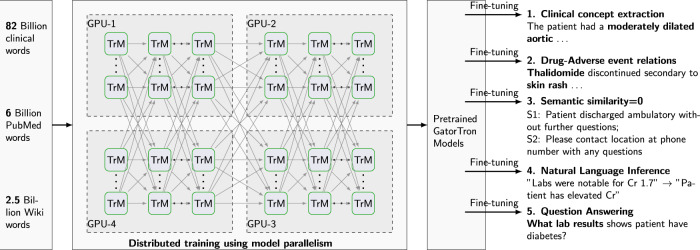
There is an increasing interest in developing artificial intelligence (AI) systems to process and interpret electronic health records (EHRs). Natural language processing (NLP) powered by pretrained language models is the key technology for medical AI systems utilizing clinical narratives. However, there are few clinical language models, the largest of which trained in the clinical domain is comparatively small at 110 million parameters (compared with billions of parameters in the general domain). It is not clear how large clinical language models with billions of parameters can help medical AI systems utilize unstructured EHRs. In this study, we develop from scratch a large clinical language model—GatorTron—using >90 billion words of text (including >82 billion words of de-identified clinical text) and systematically evaluate it on five clinical NLP tasks including clinical concept extraction, medical relation extraction, semantic textual similarity, natural language inference (NLI), and medical question answering (MQA). We examine how (1) scaling up the number of parameters and (2) scaling up the size of the training data could benefit these NLP tasks. GatorTron models scale up the clinical language model from 110 million to 8.9 billion parameters and improve five clinical NLP tasks (e.g., 9.6% and 9.5% improvement in accuracy for NLI and MQA), which can be applied to medical AI systems to improve healthcare delivery. The GatorTron models are publicly available at: https://catalog.ngc.nvidia.com/orgs/nvidia/teams/clara/models/gatortron_og .
Overview
The claims and statistics of this paper haven’t been checked yet.
Free: it reads the open-access text and checks the first 5 claims that cite a source we can check. Create a free account to check every claim.
Integrity signals
Registry
Cites
Statistics
Figures
Verification
Claims the paper makes
The claims and statistics of this paper haven’t been checked yet.
Free: it reads the open-access text and checks the first 5 claims that cite a source we can check. Create a free account to check every claim.
Claims other papers make about this one
Each is checked against this paper’s own text: does it say what the citing paper says it does?
The source backs part of the claim, not all of it — or backs it for a different population, condition or comparison.
In the citing paper
“As 1 example, Wu et al.25 developed and disseminated clinical LLMs such as GatorTron27 and GatorTronGPT28 to address limitations of traditional rule-based machine learning methods, which often lack scalability and transportability across data networks.”
From Advancing methodological development of artificial intelligence in patient-centered comparative clinical effectiveness research: Patient-Centered Outcomes Research Institute’s unique contribution to research done differently (2025) · cites this paper as [27]
Experimental — accuracy not yet measuredThe source backs part of the claim, not all of it — or backs it for a different population, condition or comparison.
In the citing paper
“Recent studies have demonstrated that large transformer models, such as ChatGPT, trained using massive text data, exhibit significant improvements over previous NLP models in terms of emergence and homogenization, which could contribute to enhancing critical thinking skills in students (Yang et al., 2022).”
From Investigating the Use of chatGPT as a Tool for Enhancing Critical Thinking and Argumentation Skills in International Relations Debates among Undergraduate Students (2024) · cites this paper as Yang et al., 2022
Experimental — accuracy not yet measuredThe cited source says what the claim attributes to it.
In the citing paper
“LLMs can be used for EHR analysis and as a clinical decision support tool [40].”
From Generative AI in healthcare: an implementation science informed translational path on application, integration and governance (2024) · cites this paper as [40]
The cited source says what the claim attributes to it.
In the citing paper
“The success of LLMs in the field of neural language processing, as well as their remarkable ability to solve complex tasks, has inspired researchers’ enthusiasm for adapting these models in the biomedical field [185].”
From Challenges in AI-driven Biomedical Multimodal Data Fusion and Analysis (2025) · cites this paper as [185]
The cited source says what the claim attributes to it.
In the citing paper
“AI using EHR data has become much more general and accurate in the last few years,35,36 allowing prediction of perioperative events37–41 and learning effective treatment strategies.42”
From Potential uses of AI for perioperative nursing handoffs: a qualitative study (2023) · cites this paper as [35]
3 more claims about this paper
Create a free account to see every claim other papers make about this one.
Self-check
Percentages, sums and reported differences re-computed from the paper’s own numbers.
The self-check needs the paper’s full text.
Citations
Cites
Vaswani, A., Shazeer, N., Parmar, N., Uszkoreit, J., Jones, L., Gomez, A. N., Kaiser, L., & Polosukhin, I. (2017) · arXiv · doi:10.48550/arxiv.1706.03762 · Cited by 120,404
LeCun, Y., Bengio, Y., & Hinton, G. (2015) · Nature · doi:10.1038/nature14539 · Cited by 84,126
Exploring the Limits of Transfer Learning with a Unified Text-to-Text Transformer
Raffel, C., Shazeer, N., Roberts, A., Lee, K., Narang, S., Matena, M., Zhou, Y., Li, W., & Liu, P. J. (2019) · arXiv · doi:10.48550/arxiv.1910.10683 · Cited by 31,859 · cited 3×
“On both datasets, pretrained transformer models achieved state-of-the-art performances 27,29 .”
BackgroundAdvances in neural information processing systems 7
Cios, K., & Shields, M. (1997) · Neurocomputing · doi:10.1016/s0925-2312(97)90018-7 · Cited by 22,059
Advances in neural information processing systems 7
(1996) · Computers & Mathematics with Applications · doi:10.1016/s0898-1221(96)90463-0 · Cited by 14,281
MIMIC-III, a freely accessible critical care database
Johnson, A. E. W., Pollard, T. J., Shen, L., Lehman, L.-W. H., Feng, M., Ghassemi, M., Moody, B., Szolovits, P., Anthony Celi, L., & Mark, R. G. (2016) · Scientific Data · doi:10.1038/sdata.2016.35 · Cited by 8,141 · cited 3×
“37 The ClinicalBERT model was developed by further training the BioBERT (base version; 110 million parameters with 12 layers, 768 hidden units, and 12 attention heads) using clinical text from the MIMIC-III 38 corpus.”
MethodInfluentialBioBERT: a pre-trained biomedical language representation model for biomedical text mining
Lee, J., Yoon, W., Kim, S., Kim, D., Kim, S., So, C. H., & Kang, J. (2020) · Bioinformatics · doi:10.1093/bioinformatics/btz682 · Cited by 7,218
XLNet: Generalized Autoregressive Pretraining for Language Understanding
Yang, Z., Dai, Z., Yang, Y., Carbonell, J., Salakhutdinov, R., & Le, Q. V. (2019) · arXiv · doi:10.48550/arxiv.1906.08237 · Cited by 6,687
SQuAD: 100,000+ Questions for Machine Comprehension of Text
Rajpurkar, P., Zhang, J., Lopyrev, K., & Liang, P. (2016) · Proceedings of the 2016 Conference on Empirical Methods in Natural Language Processing · doi:10.18653/v1/d16-1264 · Cited by 6,208
Natural Language Processing (almost) from Scratch
Collobert, R., Weston, J., Bottou, L., Karlen, M., Kavukcuoglu, K., & Kuksa, P. P. (2011) · arXiv (Cornell University) · doi:10.48550/arxiv.1103.0398 · Cited by 4,962 · cited 3×
“…concept extract are often rule-based, yet, most recent systems are based on machine learning models such as conditional random fields (CRFs) 50,51 , convolutional neural networks (CNN) 9,52 , and recurrent neural networks (RNN) implemented with long short-term memory strategy (LSTM) 10,53 .”
BackgroundMethod
Research works printed but not linked: 3
- Adoption of Electronic Health Record Systems among U.S. Non-Federal Acute Care Hospitals: 2008–2015. ONC Data Brief. https://www.healthit.gov/sites/default/files/briefs/2015_hospital_adoption_db_v17.pdf (2016). 40127322
- Yang X Identifying relations of medications with adverse drug events using recurrent convolutional neural networks and gradient boosting J. Am. Med. Inform. Assoc. 2020 27 65 72 10.1093/jamia/ocz144 31504605 PMC7489076 · DOI · Paper page
- Lv X Guan Y Yang J Wu J Clinical relation extraction with deep learning Int. J. Hybrid. Inf. Technol. 2016 9 237 248
Cited by
Items 101–200 of 1,005
Medical Ethics of Large Language Models in Medicine
Ong, J. C. L., Chang, S. Y.-H., William, W., Butte, A. J., Shah, N. H., Chew, L. S. T., Liu, N., Doshi-Velez, F., Lu, W., Savulescu, J., et al. (2024) · NEJM AI · doi:10.1056/aira2400038 · Cited by 58
Weaver: Foundation Models for Creative WritingPreprint
Wang, T., Chen, J., Jia, Q., Wang, S., Fang, R., Wang, H., Gao, Z., Xie, C., Xu, C., Dai, J., et al. (2024) · arXiv (Cornell University) · doi:10.48550/arxiv.2401.17268 · Cited by 83
“In general, LLMs specialize according to the targeted domains (e.g., finance (Wu et al., 2023), healthcare (Yang et al., 2022b), legal (Cui et al., 2023), etc.) and tasks (e.g., role-playing (Wang et al., 2023d), coding (Rozière et al., 2023), etc.).”
BackgroundWhen Geoscience Meets Foundation Models: Toward a general geoscience artificial intelligence system
Zhang, H., Xu, J., Cui, H., Li, L., Yang, Y., Tang, C., & Boers, N. (2024) · IEEE Geoscience and Remote Sensing Magazine · doi:10.1109/mgrs.2024.3496478 · Cited by 84
“Moreover, many contemporary FMs are capable of processing both images and text, finding applications in diverse fields, such as medicine, transportation, RS, and urban planning [41], [42], [43], [44], [45], [46].”
Transparency of medical artificial intelligence systems
Kim, C., Gadgil, S. U., & Lee, S. (2025) · Nature Reviews Bioengineering · doi:10.1038/s44222-025-00363-w · Cited by 83
“LLMs can also be fine-tuned on medical data, such as clinical notes 171 , articles indexed in PubMed 172 and question–answer pairs from professional medical licensing exams 173,174 .”
Artificial intelligence in liver cancer — new tools for research and patient management
Caldéraro, J., Žigutytė, L., Truhn, D., Jaffe, A., & Kather, J. N. (2024) · Nature Reviews Gastroenterology & Hepatology · doi:10.1038/s41575-024-00919-y · Cited by 80
“In clinical routine, LLMs could unlock the vast amount of unstructured information and therefore make it accessible for further analysis 68,72 .”
Peng, L., Luo, G., Zhou, S., Chen, J., Xu, Z., Sun, J., & Zhang, R. (2024) · npj Digital Medicine · doi:10.1038/s41746-024-01126-4 · Cited by 80
“To close the gap, specialized LLMs pre-trained on medicaltextdata 33 ormodel fi ne-tuning 34 canbeusedtofurtherimprovethe LLMs ’ performance.”
Benefits and Harms of Large Language Models in Digital Mental Health
De Choudhury, M., Pendse, S. R., & Kumar, N. (2023) · doi:10.31234/osf.io/y8ax9 · Cited by 78
Benefits and Harms of Large Language Models in Digital Mental Health
De Choudhury, M., Pendse, S. R., & Kumar, N. (2023) · arXiv · doi:10.48550/arxiv.2311.14693 · Cited by 78
RT: a Retrieving and Chain-of-Thought framework for few-shot medical named entity recognition
Li, M., Zhou, H., Yang, H., & Zhang, R. (2024) · Journal of the American Medical Informatics Association · doi:10.1093/jamia/ocae095 · Cited by 55
“When designing models based on SLMs, most previous work in the medical domain prefers to directly use biomedical PLMs, such as ClinicalBERT, 9 BioBERT, 10 and GatorTron-base, 11 which have been fine-tuned on the biomedical and/or clinical corpora.”
MethodInfluentialIncreasing acceptance of AI ‐generated digital twins through clinical trial applications
Vidovszky, A. A., Fisher, C. K., Loukianov, A. D., Smith, A. M., Tramel, E. W., Walsh, J. R., & Ross, J. L. (2024) · Clinical and Translational Science · doi:10.1111/cts.13897 · Cited by 77
“24 Similarly, features learned from general image datasets can be transferred to medical imaging tasks through image recognition to improve the accuracy and efficiency of data processing.”
BackgroundDatta, S., Lee, K., Paek, H., Manion, F. J., Ofoegbu, N., Du, J., Li, Y., Huang, L., Wang, J., Lin, B., et al. (2023) · Journal of the American Medical Informatics Association · doi:10.1093/jamia/ocad218 · Cited by 78
A survey for large language models in biomedicine
Wang, C., Li, M., He, J., Wang, Z., Darzidehkalani, E., Chen, Z., Ye, J., Li, T., Su, Y., Ke, J., et al. (2025) · Artificial Intelligence in Medicine · doi:10.1016/j.artmed.2025.103268 · Cited by 77
ChatGPT in ophthalmology: the dawn of a new era?
Ting, D. S. J., Tan, T. F., & Ting, D. S. W. (2023) · Eye · doi:10.1038/s41433-023-02619-4 · Cited by 76
“It is capable of processing vast structured and unstructured clinical information stored within the electronic health records (EHR), which are increasingly adopted in ophthalmology [19, 20], (https:// www.nodaudit.org.uk/) and generate concise summaries of patient record [21].”
Challenges in AI-driven Biomedical Multimodal Data Fusion and Analysis
Liu, J., Cen, X., Yi, C., Wang, F.-A., Ding, J., Cheng, J., Wu, Q., Gai, B., Zhou, Y., He, R., et al. (2025) · Genomics, Proteomics & Bioinformatics · doi:10.1093/gpbjnl/qzaf011 · Cited by 75
“The success of LLMs in the field of neural language processing, as well as their remarkable ability to solve complex tasks, has inspired researchers’ enthusiasm for adapting these models in the biomedical field [185].”
DrBERT: A Robust Pre-trained Model in French for Biomedical and Clinical domains
Labrak, Y., Bazoge, A., Dufour, R., Rouvier, M., Morin, E., Daille, B., & Gourraud, P. (2023) · Proceedings of the conference - Association for Computational Linguistics. Meeting · doi:10.18653/v1/2023.acl-long.896 · Cited by 74
Choudhury, A., Elkefi, S., & Tounsi, A. (2024) · PLoS ONE · doi:10.1371/journal.pone.0296151 · Cited by 73
“This perception can also empower patients, encouraging them to take an active role in their healthcare management [25].”
BackgroundTransforming clinical trials: the emerging roles of large language models
Ghim, J.-L., & Ahn, S. (2023) · Translational and Clinical Pharmacology · doi:10.12793/tcp.2023.31.e16 · Cited by 60
“Such a system can also be equipped with LLMs, which may facilitate this intricate process without requiring structured data [11].”
Large language models for science and medicine
Telenti, A., Auli, M., Hie, B. L., Maher, C., Saria, S., & Ioannidis, J. P. A. (2024) · European Journal of Clinical Investigation · doi:10.1111/eci.14183 · Cited by 54
“With a technology that precedes LLMs, Yang et al. 42 created a language model for electronic health records—GatorTron—using > 90 billion words of text.”
MethodUtility of artificial intelligence‐based large language models in ophthalmic care
Biswas, S., Davies, L. N., Sheppard, A. L., Logan, N. S., & Wolffsohn, J. S. (2024) · Ophthalmic and Physiological Optics · doi:10.1111/opo.13284 · Cited by 73
“• M i s t a k e s c a n b e p r e v e n t e d i n s u b s e q u e n t i n s t a n c e s w i t h s i m i l a r p r o m p t s .”
HealthQ: Unveiling questioning capabilities of LLM chains in healthcare conversations
Wang, Z., Li, H., Huang, D., Kim, H., Shin, C.-W., & Rahmani, A. M. (2025) · Smart Health · doi:10.1016/j.smhl.2025.100570 · Cited by 72
Large Language Models for Health Care Text Classification: Systematic Review
Sakai, H., & Lam, S. S. (2026) · JMIR AI · doi:10.2196/79202 · Cited by 74
“Further comprehensive studies include those by Yang et al [64], McMaster et al [65], and Li et al [66], who utilized various MIMIC-III note types for model development and validation.”
InfluentialDu, X., Zhou, Z., Wang, Y., Chuang, Y.-W., Li, Y., Yang, R. C., Zhang, W., Wang, X., Chen, X., Guan, H., et al. (2026) · Journal of the American Medical Informatics Association · doi:10.1093/jamia/ocaf233 · Cited by 73
A strategy for cost-effective large language model use at health system-scale
Klang, E., Apakama, D., Abbott, E. E., Vaid, A., Lampert, J., Sakhuja, A., Freeman, R., Charney, A. W., Reich, D., Kraft, M., et al. (2024) · npj Digital Medicine · doi:10.1038/s41746-024-01315-1 · Cited by 43
“Researchers have also shown that LLMs are able to encodemedicalknowledgeassessedthroughmedicalquestionanswering 3,10 .”
Brohi, S., Mastoi, Q.-U.-A., Jhanjhi, N. Z., & Pillai, T. R. (2025) · Algorithms · doi:10.3390/a18080499 · Cited by 69
“The growing volume of imaging data and the complexity of EHRs can overwhelm clinicians, but LLMs help alleviate this burden, reducing cognitive load and enhancing patient safety efficiently [28,29].”
He, K., Mao, R., Lin, Q., Ruan, Y., Lan, X., Feng, M., & Cambria, E. (2024) · doi:10.2139/ssrn.4809363 · Cited by 69
Large Language Model Performance and Clinical Reasoning Tasks
Rao, A. S., Esmail, K. P., Lee, R. S., Jiang, S., Arraiza Carlo, B., Gill, J., Khanna, P., Kalmowitz, E., Montagnese, B., Heydari, K., et al. (2026) · JAMA Network Open · doi:10.1001/jamanetworkopen.2026.4003 · Cited by 69
Improving accuracy of GPT-3/4 results on biomedical data using a retrieval-augmented language model
Soong, D., Sridhar, S., Si, H., Wagner, J.-S., Sá, A. C. C., Yu, C. Y., Karagoz, K., Guan, M., Kumar, S., Hamadeh, H., et al. (2024) · PLOS Digital Health · doi:10.1371/journal.pdig.0000568 · Cited by 49
Kraišniković, C., Harb, R., Plass, M., Zoughbi, W. A., Holzinger, A., & Müller, H. (2024) · Engineering Applications of Artificial Intelligence · doi:10.1016/j.engappai.2024.109561 · Cited by 69
Li, H., Fu, J., & Python, A. (2025) · Journal of Medical Internet Research · doi:10.2196/71916 · Cited by 69
Publicly Shareable Clinical Large Language Model Built on Synthetic Clinical NotesPreprint
Kweon, S., Kim, J., Kim, J., Im, S., Cho, E., Bae, S., Oh, J., Lee, G., Moon, J. H., You, S. C., et al. (2023) · arXiv (Cornell University) · doi:10.48550/arxiv.2309.00237 · Cited by 69
“Notable examples of such models include ClinicalBERT (Alsentzer et al., 2019), Clinical-Longformer (Li et al., 2023), Gatortron (Yang et al., 2022) which based on transformer encoder structure, and Clinical-T5 (Lehman et al., 2023) which is based on transformer encoderdecoder structure.”
BackgroundLarge language models and generative AI in telehealth: a responsible use lens
Pool, J., Indulska, M., & Sadiq, S. W. (2024) · Journal of the American Medical Informatics Association · doi:10.1093/jamia/ocae035 · Cited by 70
An Interdisciplinary Outlook on Large Language Models for Scientific ResearchPreprint
Boyko, J., Cohen, J., Fox, N. A., Veiga, M. H., Li, J. I.-H., Liu, J., Modenesi, B., Rauch, A. H., Reid, K. N., Tribedi, S., et al. (2023) · arXiv (Cornell University) · doi:10.48550/arxiv.2311.04929 · Cited by 68
“Another LLM specifically developed for health research is the GatorTron model [85], which was designed to improve clinical NLP tasks.”
GPT-4 can pass the Korean National Licensing Examination for Korean Medicine Doctors
Jang, D., Yun, T.-R., Lee, C.-Y., Kwon, Y.-K., & Kim, C.-E. (2023) · PLOS Digital Health · doi:10.1371/journal.pdig.0000416 · Cited by 59
Publicly Shareable Clinical Large Language Model Built on Synthetic Clinical Notes
Kweon, S., Kim, J., Kim, J., Im, S., Cho, E., Bae, S., Oh, J., Lee, G., Moon, J. H., You, S. C., et al. (2024) · Findings of the Association for Computational Linguistics: ACL (Findings of ACL) · doi:10.18653/v1/2024.findings-acl.305 · Cited by 67
The Future of Artificial Intelligence in Mental Health Nursing Practice: An Integrative Review
Milasan, L. H., & Scott, D. (2025) · International Journal of Mental Health Nursing · doi:10.1111/inm.70003 · Cited by 68
Opportunities of applying Large Language Models in building energy sector
Zhang, L., & Chen, Z. (2025) · Renewable and Sustainable Energy Reviews · doi:10.1016/j.rser.2025.115558 · Cited by 62
Empowering personalized pharmacogenomics with generative AI solutions
(2024) · doi:10.1093/jamia/ocae039 · Cited by 65
Chain-of-Scrutiny: Detecting Backdoor Attacks for Large Language Models
Li, X., Mao, R., Zhang, Y., Lou, R., Wu, C., & Wang, J. (2025) · Findings of the Association for Computational Linguistics: ACL (Findings of ACL) · doi:10.18653/v1/2025.findings-acl.401 · Cited by 65
Self-citationRemy, F., Demuynck, K., & Demeester, T. (2024) · Journal of the American Medical Informatics Association · doi:10.1093/jamia/ocae029 · Cited by 64
“Results for additional baseline models 23,60 are reported in Appendix SD.”
Large language models for oncological applications
Sorin, V., Barash, Y., Konen, E., & Klang, E. (2023) · Journal of Cancer Research and Clinical Oncology · doi:10.1007/s00432-023-04824-w · Cited by 64
“In oncology, there are several potential uses for LLMs (Singhal, et al. 2022; Yang, et al. 2022; Kather 2023).”
BackgroundHarnessing generative artificial intelligence to support nature‐based solutions
Richards, D. R., Worden, D., Song, X. P., & Lavorel, S. (2024) · People and Nature · doi:10.1002/pan3.10622 · Cited by 64
Do We Still Need Clinical Language Models?
Lehman, E., Hernandez, E., Mahajan, D., Wulff, J., Smith, M. J., Ziegler, Z., Nadler, D., Szolovits, P., Johnson, A., & Alsentzer, E. (2023) · arXiv · doi:10.48550/arxiv.2302.08091 · Cited by 62
“Another hypothesis is that the total number of FLOPs drives performance; notably, both BioClinRoBERTa and GatorTron were trained for significantly more FLOPs than T5-XL.”
BackgroundMethodInfluentialHan, C., Kim, D. W., Kim, S., You, S. C., Park, J. Y., Bae, S., & Yoon, D. (2024) · iScience · doi:10.1016/j.isci.2024.109022 · Cited by 63
Overview of the First Shared Task on Clinical Text Generation: RRG24 and “Discharge Me!”
Xu, J., Chen, Z., Johnston, A., Blankemeier, L., Varma, M., Hom, J., Collins, W. J., Modi, A., Lloyd, R., Hopkins, B., et al. (2024) · Workshop on Biomedical Language Processing (BioNLP) · doi:10.18653/v1/2024.bionlp-1.7 · Cited by 62
Large models in medical imaging: Advances and prospects
Fang, M., Wang, Z., Pan, S., Feng, X., Zhao, Y., Hou, D., Wu, L., Xie, X., Zhang, X.-Y., Tian, J., et al. (2025) · Chinese Medical Journal · doi:10.1097/cm9.0000000000003699 · Cited by 59
“Similarly, GatorTron [49] was pre-trained on over 90 billion words of medical text, including more than 82 billion words from de-identified electronic health records (EHRs) and other biomedical literature, making it highly adaptable to EHR analysis tasks.”
Tracing the Influence of Large Language Models across the Most Impactful Scientific Works
Petroșanu, D.-M., Pîrjan, A., & Tăbușcă, A. (2023) · Electronics · doi:10.3390/electronics12244957 · Cited by 60
AI: Bridging Ancient Wisdom and Modern Innovation in Traditional Chinese Medicine
Lu, L., Lu, T., Tian, C., & Zhang, X. (2024) · JMIR Medical Informatics · doi:10.2196/58491 · Cited by 58
“The GatorTron system, which was developed by Yang et al [16], enhances the use of clinical narratives in the creation of various medical AI systems, thus ultimately leading to better health care delivery and health outcomes.”
Zada, T., Tam, N., Barnard, F., Sittert, M. V., Bhat, V., & Rambhatla, S. (2025) · JMIR Formative Research · doi:10.2196/66207 · Cited by 60
“Other areas of study have focused on identifying inefficiencies and inaccuracies within clinical workflows, medical research, and diagnoses, with the objective of integrating LLMs to optimize documentation, triage, and clinical data management procedures [33,37-44].”
Several Categories of Large Language Models (LLMs): A Short Survey
Pahune, S. A., & Chandrasekharan, M. (2023) · International Journal for Research in Applied Science and Engineering Technology · doi:10.22214/ijraset.2023.54677 · Cited by 58
An Opinion on ChatGPT in Health Care—Written by Humans Only
Kleesiek, J., Wu, Y., Stiglic, G., Egger, J., & Bian, J. (2023) · Journal of Nuclear Medicine · doi:10.2967/jnumed.123.265687 · Cited by 52
“We recently developed the fi rst (to our knowledge) clinical LLM, GatorTron (8.9 billion parameters) using over 90 billion words of text (including 82 billion words of clinical text) and demonstrated its power in clinical natural language processing ( 15 ).”
MethodInfluentialSelf-citationReasoning-Enhanced Healthcare Predictions with Knowledge Graph Community Retrieval
Jiang, P., Xiao, C., Jiang, M., Bhatia, P., Kass‐Hout, T., Sun, J., & Han, J. (2025) · International Conference on Learning Representations · doi:10.48550/arxiv.2410.04585 · Cited by 58
“In the healthcare domain, LLMs hold the potential to transform clinical decision-making by providing insights derived from vast amounts of medical data (Wornow et al., 2023; Yang et al., 2022).”
The Application of Radiomics and AI to Molecular Imaging for Prostate Cancer
Tapper, W., Carneiro, G., Mikropoulos, C., Thomas, S. A., Evans, P., & Boussios, S. (2024) · Journal of Personalized Medicine · doi:10.3390/jpm14030287 · Cited by 58
“These can help generalize models and reduce the need to have large amounts of labeled data in a specific domain [72,73], and these have been used for analysis of patient records [74,75] and classification of pathologies [76], with potential for patient support systems [77,78].”
BackgroundYang, X., Xiao, Y., Liu, D., Zhang, Y., Deng, H., Huang, J. J., Shi, H., Liu, D., Liang, M., Jin, X., et al. (2025) · BMC Medical Informatics and Decision Making · doi:10.1186/s12911-024-02838-z · Cited by 55
Self-citationLee, D. T., Vaid, A., Menon, K. M., Freeman, R., Matteson, D. S., Marin, M. L., & Nadkarni, G. N. (2025) · JMIR Formative Research · doi:10.2196/64544 · Cited by 55
“LLMs may also enhance the ability to rapidly and accurately extract key information from surgical pathology reports [10].”
Unraveling Spatio-Temporal Foundation Models via the Pipeline Lens: A Comprehensive Review
Fang, Y., Miao, H., Liang, Y., Deng, L., Cui, Y., Zeng, X., Xia, Y., Zhao, Y. L., Pedersen, T. B., Jensen, C. N., et al. (2026) · IEEE Transactions on Knowledge and Data Engineering · doi:10.1109/tkde.2026.3651536 · Cited by 58
“Similarly, GPT, QWEN, and Mixtral [184] are used for spatio-temporal event understanding [31], [185], where LLM reasoning helps uncover causal relations and improves the quality of event forecasting.”
Fleurence, R. L., Bian, J., Wang, X., Xu, H., Dawoud, D., Higashi, M., & Chhatwal, J. (2025) · Value in Health · doi:10.1016/j.jval.2024.10.3846 · Cited by 54
Self-citationShi, W., Xu, R., Zhuang, Y., Yu, Y., Zhang, J., Wu, H., Zhu, Y., Ho, J. C., Yang, C., & Wang, M. D. (2024) · Proceedings of the 2024 Conference on Empirical Methods in Natural Language Processing · doi:10.18653/v1/2024.emnlp-main.1245 · Cited by 54
“Large language models (LLMs) (OpenAI, 2023; Anil et al., 2023) bring us one step closer to autonomous agents with extensive knowledge and substantial instruction-following abilities from di-a et al., 2017) and SPIDER (Yu et al., 2018), multi-tabular reasoning tasks within EHRs (orange) typically…”
BackgroundRetrieving Evidence from EHRs with LLMs: Possibilities and Challenges
Ahsan, H., McInerney, D. J., Kim, J., Potter, C., Young, G. S., Amir, S., & Wallace, B. (2023) · PubMed · doi:10.48550/arxiv.2309.04550 · Cited by 54
Hein, D., Christie, A. L., Holcomb, M. J., Xie, B., Jain, A., Vento, J. A., Rakheja, N., Shakur, A. H., Christley, S., Cowell, L. G., et al. (2025) · npj Digital Medicine · doi:10.1038/s41746-025-01686-z · Cited by 56
“Additional instructions were needed to handle nested labels, i.e., one label is more precisely correct than another, and the preferred level of granularity for capturing anatomical sites; Supplementary Tables 3, 4.”
InfluentialFu, G., Zhao, Q., Li, J., Luo, D., Song, C., Zhai, W., Liu, S., Fan, W., Wang, Y., Cheng, L., et al. (2023) · arXiv (Cornell University) · doi:10.48550/arxiv.2308.15192 · Cited by 54
“Yang et al.(32) conceived a comprehensive clinical language model, GatorTron, incorporating over 90 billion words of text.”
BackgroundArtificial intelligence in practice: Opportunities, challenges, and ethical considerations.
Farmer, R. L., Lockwood, A. B., Goforth, A. N., & Thomas, C. (2025) · Professional Psychology Research and Practice · doi:10.1037/pro0000595 · Cited by 53
HONeYBEE: enabling scalable multimodal AI in oncology through foundation model-driven embeddings
Tripathi, A. G., Waqas, A., Schabath, M. B., Yılmaz, Y., & Rasool, G. (2025) · npj Digital Medicine · doi:10.1038/s41746-025-02003-4 · Cited by 56
“In our comparative evaluation of four language models (GatorTron, Qwen3, Med-Gemma, and LLaMA-3.”
InfluentialLessons from the Use of Natural Language Inference (NLI) in Requirements Engineering Tasks
Fazelnia, M., Koscinski, V., Herzog, S., & Mirakhorli, M. T. (2024) · IEEE International Requirements Engineering Conference (RE) · doi:10.1109/re59067.2024.00020 · Cited by 53
“Similarly, NLI has been applied to the field of misinformation detection [63], [64], clinical domain [65], [66], text summarization and question answering [12], [67].”
MethodGray, M., Baird, A., Sawyer, T., James, J., DeBroux, T., Bartlett, M., Krick, J., & Umoren, R. (2024) · JMIR Medical Education · doi:10.2196/50705 · Cited by 36
GPT-4 in a Cancer Center — Institute-Wide Deployment Challenges and Lessons Learned
Umeton, R., Kwok, A., Maurya, R., Leco, D., Lenane, N., Willcox, J., Abel, G. A., Tolikas, M., & Johnson, J. M. (2024) · NEJM AI · doi:10.1056/aics2300191 · Cited by 36
Reinforcement Learning for Optimized Information Retrieval in LLaMAPreprint
Tu, C.-H., Hsu, H.-J., & Chen, S.-W. (2024) · Research Square · doi:10.21203/rs.3.rs-3847100/v1 · Cited by 62
GPT-Neo with LoRA for Better Medical Knowledge Performance on MultiMedQA DatasetPreprint
Blanco, J., Lambert, C., & Thompson, O. (2024) · OSF Preprints (OSF Preprints) · doi:10.31219/osf.io/njupy · Cited by 60
Riedel, M., Kaefinger, K., Stuehrenberg, A., Ritter, V., Amann, N., Graf, A., Recker, F., Klein, E., Kiechle, M., Riedel, F., et al. (2023) · Frontiers in Medicine · doi:10.3389/fmed.2023.1296615 · Cited by 49
“Furthermore, ChatGPT could be integrated into electronic health records (EHRs) systems, assisting with documentation tasks, reducing administrative burdens, and allowing clinicians more time for patient care (47).”
BackgroundEffectiveness of Generative Artificial Intelligence for Scientific Content Analysis
Platt, M., & Platt, D. (2023) · IEEE International Conference on Application of Information and Communication Technologies (AICT) · doi:10.1109/aict59525.2023.10313167 · Cited by 49
“Further customizations, such as domain-specific LLMs, trained on domain data and configured for domain-specific tasks, outperform other artificial intelligence (AI) techniques even more clearly [11], [12].”
BackgroundKedia, N., Sanjeev, S., Ong, J., & Chhablani, J. K. (2024) · Eye · doi:10.1038/s41433-023-02915-z · Cited by 50
“Similarly, the University of Florida designed their own LLM, GatorTron, that was developed from scratch using >90 billion words of text from de-identified clinical notes, PubMed articles, and Wikipedia [53].”
InfluentialHeilmeyer, F., Böhringer, D., Reinhard, T., Arens, S., Lyssenko, L., & Haverkamp, C. (2024) · JMIR Medical Informatics · doi:10.2196/59617 · Cited by 49
Artificial intelligence for medicine 2025: Navigating the endless frontier
Dai, J., Xu, H., Chen, T., Huang, T., Liang, W., Zhang, R., Xu, G.-X., Zhang, Z., Xue, L., Gao, Y. Q., et al. (2025) · The Innovation Medicine · doi:10.59717/j.xinn-med.2025.100120 · Cited by 64
Transformers in health: a systematic review on architectures for longitudinal data analysis
Siebra, C., Kurpicz-Briki, M., & Wac, K. (2024) · Artificial Intelligence Review · doi:10.1007/s10462-023-10677-z · Cited by 52
“The aim is to fit a model to a corpus, which normally is domain specific (Yang et al. 2022).”
Large language models: a primer and gastroenterology applications
Shahab, O., Kurdi, B. E., Shaukat, A., Nadkarni, G. N., & Soroush, A. (2024) · Therapeutic Advances in Gastroenterology · doi:10.1177/17562848241227031 · Cited by 48
ClinicalMamba: A Generative Clinical Language Model on Longitudinal Clinical Notes
Yang, Z., Mitra, A., Kwon, S., & Yu, H. Q. (2024) · Clinical Natural Language Processing Workshop (ClinicalNLP) · doi:10.18653/v1/2024.clinicalnlp-1.5 · Cited by 48
BRIDGE: benchmarking large language models for understanding real-world clinical practice texts
Wu, J., Gu, B., Zhou, R., Xie, K., Snyder, D., Jiang, Y., Carducci, V., Wyss, R., Desai, R. J., Alsentzer, E., et al. (2026) · Nature Biomedical Engineering · doi:10.1038/s41551-026-01719-2 · Cited by 51
LLMs4All: A Review of Large Language Models Across Academic DisciplinesPreprint
Ye, Y., Zhang, Z., Ma, T., Wang, Z., Li, Y., Hou, S., Sun, W., Shi, K., Ma, Y., Song, W., et al. (2025) · Preprints.org · doi:10.20944/preprints202510.1383.v1 · Cited by 51
Huynh, L. M., Bonebrake, B. T., Schultis, K., Quach, A., & Deibert, C. M. (2023) · Urology Practice · doi:10.1097/upj.0000000000000406 · Cited by 46
RetractedEnhancing Postmarketing Surveillance of Medical Products With Large Language Models
Matheny, M. E., Yang, J., Smith, J. C., Walsh, C. G., Al-Garadi, M. A., Davis, S. E., Marsolo, K. A., Fabbri, D., Reeves, R. R., Johnson, K. B., et al. (2024) · JAMA Network Open · doi:10.1001/jamanetworkopen.2024.28276 · Cited by 38
de la Puente, M., Torres, J., Troncoso, A. L. B., Meza, Y. Y. H., & Carrascal, J. X. M. (2024) · Smart Learning Environments · doi:10.1186/s40561-024-00347-0 · Cited by 46
“…support the notion that LLMs, such as ChatGPT, have the potential to enhance students’ critical thinking skills, including their understanding of complex concepts, engagement in critical thinking, and construction of well-reasoned arguments (Guo, 2023; Kasneci et al., 2023; Yang et al., 2022).”
Artificial intelligence: Augmenting telehealth with large language models
Snoswell, C. L., Snoswell, A. J., Kelly, J. T., Caffery, L. J., & Smith, A. C. (2025) · Journal of Telemedicine and Telecare · doi:10.1177/1357633x231169055 · Cited by 37
Zambrano Chaves, J. M., Huang, S.-C., Xu, Y., Xu, H., Usuyama, N., Zhang, S., Wang, F., Xie, Y., Khademi, M., Yang, Z., et al. (2025) · Nature Communications · doi:10.1038/s41467-025-58344-x · Cited by 45
Real-Time Multimodal Cognitive Assistant for Emergency Medical Services
Weerasinghe, K., Janapati, S., Ge, X., Kim, S., Iyer, S., Stankovic, J. A., & Alemzadeh, H. (2024) · IEEE/ACM International Conference on Internet-of-Things Design and Implementation (IoTDI) · doi:10.1109/iotdi61053.2024.00012 · Cited by 45
A Deep Dive into Single-Cell RNA Sequencing Foundation Models
Boiarsky, R., Singh, N., Buendia, A., Getz, G., & Sontag, D. (2023) · bioRxiv (Cold Spring Harbor Laboratory) · doi:10.1101/2023.10.19.563100 · Cited by 43
“Large-scale foundation models, which are pre-trained on massive, unlabeled datasets and subsequently fine-tuned on specific tasks, have recently achieved unparalleled success on a wide array of applications, including in healthcare and biology [1, 2, 3, 4, 5, 6].”
BackgroundClinical concept and relation extraction using prompt-based machine reading comprehension
Cheng, P., Yang, X., Yu, Z., Bian, J., Hogan, W. R., & Wu, Y. (2023) · Journal of the American Medical Informatics Association · doi:10.1093/jamia/ocad107 · Cited by 43
Self-citationCui, H., Shen, Z., Zhang, J., Shao, H., Qin, L., Ho, J. C., & Yang, C. (2024) · PubMed Central · doi:10.48550/arxiv.2403.15464 · Cited by 43
“29 For example, Yang et al. 30”
Economics and Equity of Large Language Models: Health Care Perspective
Nagarajan, R., Kondo, M., Salas, F., Sezgın, E., Yao, Y., Klotzman, V., Godambe, S. A., Khan, N., Limon, A., Stephenson, G. S., et al. (2024) · Journal of Medical Internet Research · doi:10.2196/64226 · Cited by 43
“As noted earlier, it is not uncommon for the organizational data to be supplemented by high-quality external data during training [41] .”
Self-citationGenerative AI Models in Time-Varying Biomedical Data: Scoping Review
He, R., Sarwal, V., Qiu, X., Zhuang, Y., Zhang, L., Liu, Y., & Chiang, J. N. (2025) · Journal of Medical Internet Research · doi:10.2196/59792 · Cited by 43
“Although most of the CLaMs are freely accessible on the web, the best-performing models are trained on private datasets—EHR-BERT [34]; University of California, San Francisco–BERT [35]; and GatorTron [36].”
How far is Language Model from 100% Few-shot Named Entity Recognition in Medical DomainPreprint
Li, M., & Zhang, R. (2023) · arXiv (Cornell University) · doi:10.48550/arxiv.2307.00186 · Cited by 43
ChatGPT in Medical Education: Bibliometric and Visual Analysis
Zhang, Y., Xie, X., & Xu, Q. (2025) · JMIR Medical Education · doi:10.2196/72356 · Cited by 43
Self-citationPakhrin, S. C., Pokharel, S., Aoki-Kinoshita, K. F., Beck, M. R., Dam, T. K., Caragea, D., & KC, D. B. (2023) · Glycobiology · doi:10.1093/glycob/cwad033 · Cited by 42
RareBench: Can LLMs Serve as Rare Diseases Specialists?
Chen, X., Mao, X., Guo, Q., Wang, L., Zhang, S., & Chen, T. (2024) · Proceedings of the 30th ACM SIGKDD Conference on Knowledge Discovery and Data Mining · doi:10.1145/3637528.3671576 · Cited by 41
Wu, J., Liu, X., Li, M., Li, W., Su, Z., Lin, S., Garay, L., Zhang, Z., Zhang, Y., Zeng, Q., et al. (2024) · NEJM AI · doi:10.1056/aira2400012 · Cited by 41
Self-citationTan, R. S. Y. C., Lin, Q., Low, G. H., Lin, R., Goh, T. C., Chang, C. C. E., Lee, F. F., Chan, W. Y., Tan, W. C., Tey, H. J., et al. (2023) · Journal of the American Medical Informatics Association · doi:10.1093/jamia/ocad133 · Cited by 41
“25 Applying them to this task of inferring cancer disease response can be helpful to researchers in the analysis of large cancer data-sets.”
BackgroundInfluentialLeveraging large language models for word sense disambiguation
Yae, J. H., Skelly, N. C., Ranly, N. C., & LaCasse, P. M. (2024) · Neural Computing and Applications · doi:10.1007/s00521-024-10747-5 · Cited by 42
Vision-language model for report generation and outcome prediction in CT pulmonary angiogram
Zhong, Z., Wang, Y., Wu, J., Hsu, W.-C., Somasundaram, V., Bi, L., Kulkarni, S., Ma, Z., Collins, S., Baird, G. L., et al. (2025) · npj Digital Medicine · doi:10.1038/s41746-025-01807-8 · Cited by 42
Howard, A., Reza, N., Green, P. L., Mo, Y., Duffy, E. M., Mwandumba, H. C., Gerada, A., & Hope, W. W. (2025) · The Lancet Infectious Diseases · doi:10.1016/s1473-3099(25)00313-5 · Cited by 41
Lee, S., Lee, J., Park, J., Park, J., Kim, D., Lee, J., & Oh, J. (2023) · The American Journal of Emergency Medicine · doi:10.1016/j.ajem.2023.11.063 · Cited by 41
Certified Robustness for Large Language Models with Self-DenoisingPreprint
Zhang, Z., Zhang, G., Hou, B., Fan, W., Li, Q., Liu, S., Zhang, Y., & Chang, S. (2023) · arXiv (Cornell University) · doi:10.48550/arxiv.2307.07171 · Cited by 41
Self-citationContextualized medication information extraction using Transformer-based deep learning architectures
Chen, A., Yu, Z., Yang, X., Guo, Y., Bian, J., & Wu, Y. (2023) · Journal of Biomedical Informatics · doi:10.1016/j.jbi.2023.104370 · Cited by 40
Self-citation
Metadata
- Authors
- Yang, X., Chen, A., PourNejatian, N., Shin, H. C., Smith, K. E., Parisien, C., Compas, C., Martin, C., Costa, A. B., Flores, M. G., Zhang, Y., Magoc, T., Harle, C. A., Lipori, G., Mitchell, D. A., Hogan, W. R., Shenkman, E. A., Bian, J., & Wu, Y.
- Affiliations
- University of Florida (US)
- Nvidia (United States) (US)
- University of Florida Health (US)
- Corresponding author
- Wu, Yonghui
- ORCID
- Venue
- npj Digital Medicine
- Published
- 2022-12-26
- Volume
- 5
- Issue
- 1
- Pages
- 194-194
- ISSN
- 2398-6352 (ISSN-L)
- PMC
- PMC9792464
- OpenAlex
- W4312220150
- Semantic Scholar
- 332dc8b2ca9d49fad607c7282f3360bb2a9aacf3
- Cited by
- 847
- References
- 73
- Citations by year
- 2026: 171 · 2025: 304 · 2024: 268 · 2023: 101 · 2022: 1
- FWCI
- 55.47
- Type
- journal article
- Language
- en
- Open access
- gold
- doi.org
- Licence
- cc-by
- creativecommons.org/licenses/by/4.0 (tdm)
- creativecommons.org/licenses/by/4.0 (vor)
- Locations
- npj Digital Medicine (publishedVersion, cc-by)
- PubMed Central (publishedVersion, cc-by)
- PubMed (publishedVersion)
- DOAJ (DOAJ: Directory of Open Access Journals) (submittedVersion)
- IUScholarWorks (Indiana University) (submittedVersion, cc-by)
- Funders
- Patient-Centered Outcomes Research Institute (ME-2018C3-14754)
- U.S. Department of Health & Human Services | NIH | National Cancer Institute (1R01CA246418)
- U.S. Department of Health & Human Services | NIH | National Institute on Aging (R56AG069880, R21AG062884)
- Topics
- Physical Sciences › Computer Science › Artificial Intelligence › Machine Learning in Healthcare
- Physical Sciences › Computer Science › Artificial Intelligence › Topic Modeling
- Health Sciences › Medicine › Health Informatics › Artificial Intelligence in Healthcare and Education
- Keywords
- electronic health records, clinical natural language processing, clinical concept extraction, semantic textual similarity, natural language inference, medical question answering, model scaling, training data size, clinical text
About these checks
Registry, retraction, Cites and statistics results are computed, not judged, with one exception: a printed reference that no index lists is read once by a model before it counts as a citation error. Claims are extracted by a model and kept only when their quote appears verbatim in the text; each cited source is then checked, with a model’s help, for whether it says what the claim relies on. Those verdicts can be wrong — read the claim’s quote and the cited source before relying on one.
Statistics and arithmetic are recomputed, not judged.
Confidence bands are shown only for fields calibrated on our annotated test set. None is calibrated yet, so no band is shown.
What counts as a claim ›How we measure confidence ›How we check this ›
Are you an author, or do you see a problem with this page? Request a review
Data sources
Bibliographic data: Semantic Scholar, OpenAlex, Crossref.
Contains information from the Semantic Scholar Academic Graph Datasets, made available under the ODC Attribution License (ODC-BY 1.0).
Semantic Scholar’s data is described in: Kinney, R., et al. (2023). The Semantic Scholar Open Data Platform. arXiv:2301.10140.
