

A large language model for electronic health records
Open accessThe DOI matches its Crossref record; 77 of the 78 references it cites were found in a registry or an index.
Abstract
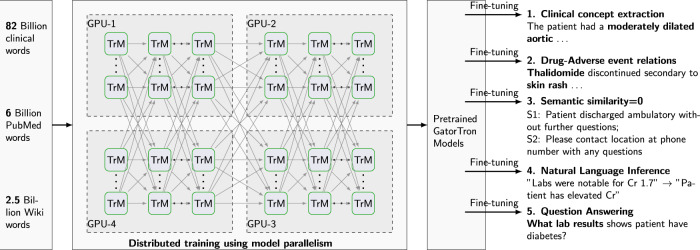
There is an increasing interest in developing artificial intelligence (AI) systems to process and interpret electronic health records (EHRs). Natural language processing (NLP) powered by pretrained language models is the key technology for medical AI systems utilizing clinical narratives. However, there are few clinical language models, the largest of which trained in the clinical domain is comparatively small at 110 million parameters (compared with billions of parameters in the general domain). It is not clear how large clinical language models with billions of parameters can help medical AI systems utilize unstructured EHRs. In this study, we develop from scratch a large clinical language model—GatorTron—using >90 billion words of text (including >82 billion words of de-identified clinical text) and systematically evaluate it on five clinical NLP tasks including clinical concept extraction, medical relation extraction, semantic textual similarity, natural language inference (NLI), and medical question answering (MQA). We examine how (1) scaling up the number of parameters and (2) scaling up the size of the training data could benefit these NLP tasks. GatorTron models scale up the clinical language model from 110 million to 8.9 billion parameters and improve five clinical NLP tasks (e.g., 9.6% and 9.5% improvement in accuracy for NLI and MQA), which can be applied to medical AI systems to improve healthcare delivery. The GatorTron models are publicly available at: https://catalog.ngc.nvidia.com/orgs/nvidia/teams/clara/models/gatortron_og .
Overview
The claims and statistics of this paper haven’t been checked yet.
Free: it reads the open-access text and checks the first 5 claims that cite a source we can check. Create a free account to check every claim.
Integrity signals
Registry
Cites
Statistics
Figures
Verification
Claims the paper makes
The claims and statistics of this paper haven’t been checked yet.
Free: it reads the open-access text and checks the first 5 claims that cite a source we can check. Create a free account to check every claim.
Claims other papers make about this one
Each is checked against this paper’s own text: does it say what the citing paper says it does?
The source backs part of the claim, not all of it — or backs it for a different population, condition or comparison.
In the citing paper
“As 1 example, Wu et al.25 developed and disseminated clinical LLMs such as GatorTron27 and GatorTronGPT28 to address limitations of traditional rule-based machine learning methods, which often lack scalability and transportability across data networks.”
From Advancing methodological development of artificial intelligence in patient-centered comparative clinical effectiveness research: Patient-Centered Outcomes Research Institute’s unique contribution to research done differently (2025) · cites this paper as [27]
Experimental — accuracy not yet measuredThe source backs part of the claim, not all of it — or backs it for a different population, condition or comparison.
In the citing paper
“Recent studies have demonstrated that large transformer models, such as ChatGPT, trained using massive text data, exhibit significant improvements over previous NLP models in terms of emergence and homogenization, which could contribute to enhancing critical thinking skills in students (Yang et al., 2022).”
From Investigating the Use of chatGPT as a Tool for Enhancing Critical Thinking and Argumentation Skills in International Relations Debates among Undergraduate Students (2024) · cites this paper as Yang et al., 2022
Experimental — accuracy not yet measuredThe cited source says what the claim attributes to it.
In the citing paper
“LLMs can be used for EHR analysis and as a clinical decision support tool [40].”
From Generative AI in healthcare: an implementation science informed translational path on application, integration and governance (2024) · cites this paper as [40]
The cited source says what the claim attributes to it.
In the citing paper
“The success of LLMs in the field of neural language processing, as well as their remarkable ability to solve complex tasks, has inspired researchers’ enthusiasm for adapting these models in the biomedical field [185].”
From Challenges in AI-driven Biomedical Multimodal Data Fusion and Analysis (2025) · cites this paper as [185]
The cited source says what the claim attributes to it.
In the citing paper
“AI using EHR data has become much more general and accurate in the last few years,35,36 allowing prediction of perioperative events37–41 and learning effective treatment strategies.42”
From Potential uses of AI for perioperative nursing handoffs: a qualitative study (2023) · cites this paper as [35]
3 more claims about this paper
Create a free account to see every claim other papers make about this one.
Self-check
Percentages, sums and reported differences re-computed from the paper’s own numbers.
The self-check needs the paper’s full text.
Citations
Cites
Vaswani, A., Shazeer, N., Parmar, N., Uszkoreit, J., Jones, L., Gomez, A. N., Kaiser, L., & Polosukhin, I. (2017) · arXiv · doi:10.48550/arxiv.1706.03762 · Cited by 120,404
LeCun, Y., Bengio, Y., & Hinton, G. (2015) · Nature · doi:10.1038/nature14539 · Cited by 84,126
Exploring the Limits of Transfer Learning with a Unified Text-to-Text Transformer
Raffel, C., Shazeer, N., Roberts, A., Lee, K., Narang, S., Matena, M., Zhou, Y., Li, W., & Liu, P. J. (2019) · arXiv · doi:10.48550/arxiv.1910.10683 · Cited by 31,859 · cited 3×
“On both datasets, pretrained transformer models achieved state-of-the-art performances 27,29 .”
BackgroundAdvances in neural information processing systems 7
Cios, K., & Shields, M. (1997) · Neurocomputing · doi:10.1016/s0925-2312(97)90018-7 · Cited by 22,059
Advances in neural information processing systems 7
(1996) · Computers & Mathematics with Applications · doi:10.1016/s0898-1221(96)90463-0 · Cited by 14,281
MIMIC-III, a freely accessible critical care database
Johnson, A. E. W., Pollard, T. J., Shen, L., Lehman, L.-W. H., Feng, M., Ghassemi, M., Moody, B., Szolovits, P., Anthony Celi, L., & Mark, R. G. (2016) · Scientific Data · doi:10.1038/sdata.2016.35 · Cited by 8,141 · cited 3×
“37 The ClinicalBERT model was developed by further training the BioBERT (base version; 110 million parameters with 12 layers, 768 hidden units, and 12 attention heads) using clinical text from the MIMIC-III 38 corpus.”
MethodInfluentialBioBERT: a pre-trained biomedical language representation model for biomedical text mining
Lee, J., Yoon, W., Kim, S., Kim, D., Kim, S., So, C. H., & Kang, J. (2020) · Bioinformatics · doi:10.1093/bioinformatics/btz682 · Cited by 7,218
XLNet: Generalized Autoregressive Pretraining for Language Understanding
Yang, Z., Dai, Z., Yang, Y., Carbonell, J., Salakhutdinov, R., & Le, Q. V. (2019) · arXiv · doi:10.48550/arxiv.1906.08237 · Cited by 6,687
SQuAD: 100,000+ Questions for Machine Comprehension of Text
Rajpurkar, P., Zhang, J., Lopyrev, K., & Liang, P. (2016) · Proceedings of the 2016 Conference on Empirical Methods in Natural Language Processing · doi:10.18653/v1/d16-1264 · Cited by 6,208
Natural Language Processing (almost) from Scratch
Collobert, R., Weston, J., Bottou, L., Karlen, M., Kavukcuoglu, K., & Kuksa, P. P. (2011) · arXiv (Cornell University) · doi:10.48550/arxiv.1103.0398 · Cited by 4,962 · cited 3×
“…concept extract are often rule-based, yet, most recent systems are based on machine learning models such as conditional random fields (CRFs) 50,51 , convolutional neural networks (CNN) 9,52 , and recurrent neural networks (RNN) implemented with long short-term memory strategy (LSTM) 10,53 .”
BackgroundMethod
Research works printed but not linked: 3
- Adoption of Electronic Health Record Systems among U.S. Non-Federal Acute Care Hospitals: 2008–2015. ONC Data Brief. https://www.healthit.gov/sites/default/files/briefs/2015_hospital_adoption_db_v17.pdf (2016). 40127322
- Yang X Identifying relations of medications with adverse drug events using recurrent convolutional neural networks and gradient boosting J. Am. Med. Inform. Assoc. 2020 27 65 72 10.1093/jamia/ocz144 31504605 PMC7489076 · DOI · Paper page
- Lv X Guan Y Yang J Wu J Clinical relation extraction with deep learning Int. J. Hybrid. Inf. Technol. 2016 9 237 248
Cited by
Items 501–600 of 1,005
Brohet, R. M., de Boer, E. C. S., Mossink, J. M., van der Eerden, J. J. N., Oostmeyer, A., Idzerda, L. H. W., Maring, J. G., Paardekooper, G., Beld, M., Lijffijt, F., et al. (2025) · JCO Clinical Cancer Informatics · doi:10.1200/cci-24-00181 · Cited by 9
“43,44 Furthermore, the development of prognostic algorithms, such as ours, may be prone to indication bias.”
Patient Health Record Smart Network Challenges and Trends for a Smarter World
Vicoveanu, D. I., Gherman, O., Șoldănescu, I., & Lavric, A. (2025) · Sensors · doi:10.3390/s25123710 · Cited by 9
A scalable framework for benchmark embedding models in semantic health-care tasks
Soffer, S., Omar, M., Gendler, M., Glicksberg, B. S., Kovatch, P., Efros, O., Freeman, R., Charney, A. W., Nadkarni, G. N., & Klang, E. (2025) · Journal of the American Medical Informatics Association · doi:10.1093/jamia/ocaf149 · Cited by 9
Khanmohammadi, R., Ghassemi, M. M., Verdecchia, K., Ghanem, A. I., Luo, B., Chetty, I. J., Bagher‐Ebadian, H., Siddiqui, F., Elshaikh, M. A., Movsas, B., et al. (2025) · BJR|Artificial Intelligence · doi:10.1093/bjrai/ubaf010 · Cited by 9
Generating Medical Instructions with Conditional Transformer
Belkadi, S., Micheletti, N., Han, L., Del-Pinto, W., & Nenadić, G. (2023) · Research Explorer (The University of Manchester) · Cited by 9
Global Contrastive Training for Multimodal Electronic Health Records with Language SupervisionPreprint
Ma, Y., Kolla, S., Hu, Z., Kaliraman, D., Nolan, V., Guan, Z., Ren, Y., Armfield, B. A., Ozrazgat‐Baslanti, T., Balch, J. A., et al. (2024) · arXiv (Cornell University) · doi:10.48550/arxiv.2404.06723 · Cited by 9
“In this work, we experimented with popular clinical large language models including BioBERT [46], Clinical BERT [47], Clinical Longformer [48], and GatorTron [49], and selected the one which yielded the best performance.”
MethodZamora‐Resendiz, R., Khurram, I., & Crivelli, S. N. (2024) · medRxiv · doi:10.1101/2024.06.16.24308979 · Cited by 9
“As the field continues to move towards even larger LLMs 10 and infusion with other socio-economic and biomedical modalities including census tract-level data 11 , medical imaging 12 and genetics 13 , there remain open questions about the representative capabilities of LLMs in capturing the unique…”
BackgroundMethodKhatim, N. A., Irfan, A. A., & Arief, M. (2024) · arXiv (Cornell University) · doi:10.48550/arxiv.2409.17054 · Cited by 9
“Research indicates that manual EHR data entry contributes significantly to physician burnout globally [6], with studies showing that clinicians spend 1.67 times the consul-tation duration on documentation tasks [7].”
InfluentialMedLA: A Logic-Driven Multi-Agent Framework for Complex Medical Reasoning with Large Language ModelsPreprint
Ma, S., Huang, J., Zhang, F., Shen, Y., Wu, J., Fan, G., Zhang, Z., & Zang, Z. (2025) · AAAI Publications (The Association for the Advancement of Artificial Intelligence (AAAI)) · doi:10.48550/arxiv.2509.23725 · Cited by 9
ECG-Expert-QA: A Benchmark for Evaluating Medical Large Language Models in Heart Disease DiagnosisPreprint
Wang, X., Kang, J., Han, P., Zhao, Y., Liu, Q., He, L., Zhang, L., Dai, L.-Y., Wang, Y., & Tao, J. (2025) · arXiv (Cornell University) · doi:10.48550/arxiv.2502.17475 · Cited by 9
Eltaybani, S. (2023) · Nursing in Critical Care · doi:10.1111/nicc.12974 · Cited by 8
Hamamoto, R., Koyama, T., Takahashi, S., Yasuda, T., Kobayashi, K., Akagi, Y., Kouno, N., Sudo, K., Hirata, M., Sunami, K., et al. (2026) · Journal of Hematology & Oncology · doi:10.1186/s13045-026-01781-y · Cited by 8
“Concomitantly, large clinical-language models trained on de-identified EHR narratives (e.g., GatorTron [70]) and biomedical generative models trained on literature (e.g., BioGPT [71]) illustrate a complementary direction: building domain-anchored foundation models that support medical Q&A as well…”
Ong, J. H. W., Tung, J. Y. M., Sng, G. G. R., Lim, D. Y. Z., Yang, X., Rafi, I. B. M., Loke, M. Z. Y., Kumar, A., Tan, J. M., Lew, E., et al. (2025) · British Journal of Urology · doi:10.1111/bju.16784 · Cited by 8
“By automating documentation, ambient AI scribes may help restore focus to patient care, reduce physician fatigue, and potentially improve clinic throughput [5].”
Self-citationEHMQA-GPT: A Knowledge Augmented Large Language Model for Personalized Elderly Health Management
Lin, S., Duan, Y., Zhou, T., Liu, X., & Wang, J. (2025) · Information · doi:10.3390/info16060467 · Cited by 8
“Additionally, GatorTron, trained on over 90 billion words of de‑identified clinical notes, demonstrates how scaling up model size significantly im‑ proves performance on core clinical NLP tasks such as NLI and medical QA [46].”
Yu, Z., Fang, L., Ding, Y., Yan, S., Xu, L., Cai, Y., & Liu, X. (2025) · Journal of Biomedical Informatics · doi:10.1016/j.jbi.2025.104844 · Cited by 8
Selective Privacy-Preserving Federated Learning for Large Language Model Fine-Tuning
Pan, Q., & Wu, J. (2025) · International Wireless Communications and Mobile Computing Conference (IWCMC) · doi:10.1109/iwcmc65282.2025.11059634 · Cited by 8
Analyzing Generative AI and Machine Learning in Auto-Assessing Schizophrenia’s Negative Symptoms
Liu, C., Chan, Y.-H., Ho, M.-Y., Liu, C., Lu, M., Liao, Y.-A., Hsieh, M. H., & Tseng, Y. J. (2025) · Schizophrenia Bulletin · doi:10.1093/schbul/sbaf102 · Cited by 8
Explainable Surgical Procedures Recommender System Leveraging Large Language Models
Solomon, A., Glebov, M., & Lazebnik, T. (2026) · ACM Transactions on Recommender Systems · doi:10.1145/3767326 · Cited by 8
Park, J., Lee, J. H., Yoon, M. A., Kim, D. H., Jung, J., & Lee, Y. H. (2025) · Journal of the Korean Society of Radiology · doi:10.3348/jksr.2025.0018 · Cited by 8
Auger, S. D., & Scott, G. (2025) · PLoS ONE · doi:10.1371/journal.pone.0334858 · Cited by 8
Liu, T., Lü, L., Wang, Y., Krentz, A. J., & Ćurčin, V. (2025) · JMIR Medical Informatics · doi:10.2196/76659 · Cited by 8
Artificial Intelligence and Machine Learning in Improving Diagnostic Accuracy
Neriyanuri, S., Palepu, S., Vats, P., Baweja, B., Nema, R., Banerjee, M., & Kushwah, A. S. (2025) · Springer eBooks · doi:10.1007/978-981-96-9346-7_4 · Cited by 8
Dullabh, P., Zott, C., Gauthreaux, N. A., Peterson, C., Aronoff, A., Monkhouse, K., & Sittig, D. F. (2026) · Journal of Medical Internet Research · doi:10.2196/81628 · Cited by 9
“GenAI can also enhance diagnostic accuracy and risk prediction based on patient health histories [38], unstructured clinical notes [39, 40], PGHD [41], or medical imaging analysis [42].”
Huang, T.-Y., Chong, C., Lin, H.-Y., Chen, T.-Y., Chang, Y.-C., & Lin, M. (2024) · International Journal of Medical Informatics · doi:10.1016/j.ijmedinf.2024.105564 · Cited by 8
Implications of gene × environment interactions in post-traumatic stress disorder risk and treatment
Seah, C., Sidamon‐Eristoff, A. E., Huckins, L. M., & Brennand, K. (2025) · Journal of Clinical Investigation · doi:10.1172/jci185102 · Cited by 7
“Advances in natural language processing allow for parsing of clinical notes to generate robust clinical informatics (78).”
Ma, Z., Bi, L., Collins, P., Leary, O. P., Imami, M. R., Zhong, Z., Lu, S., Baird, G. L., Tapinos, N., Çetintemel, U., et al. (2025) · Meta-Radiology · doi:10.1016/j.metrad.2025.100150 · Cited by 8
Use of ChatGPT in HIV Infection Counselling and Literacy
Ganicho, J., Carlos, M., Cristóvão, G., Cruz, C., Leal, M., Garrote, A. R., Bento, D., Seixas, D., Manata, M. J., & Maltêz, F. (2025) · Acta Médica Portuguesa · doi:10.20344/amp.22805 · Cited by 8
Xu, Q., Wu, T., Wang, Y., Li, X., Yu, H., Cen, S., & Li, Z. (2025) · Journal of Pharmaceutical Analysis · doi:10.1016/j.jpha.2025.101406 · Cited by 8
“This helps construct a more comprehensive and accurate medical knowledge graph and enables researchers to quickly sift out useful information from a large amount of complex data [134].”
MedPlan: A Two-Stage RAG-Based System for Personalized Medical Plan Generation
Hsu, H.-L., Dao, C.-T., Wang, L., Shuai, Z., Phan, T. N. M., Ding, J.-E., Liao, C.-C., Hu, P., Han, X., Hsu, C.-H., et al. (2025) · Proceedings of the conference - Association for Computational Linguistics. Meeting · doi:10.18653/v1/2025.acl-industry.76 · Cited by 9
Talati, I. A., Chaves, J. M. Z., Das, A., Banerjee, I., & Rubin, D. L. (2025) · American Journal of Roentgenology · doi:10.2214/ajr.25.33469 · Cited by 8
Enabling the Informed Patient Paradigm with Secure and Personalized Medical Question Answering
Oduro-Afriyie, J., & Jamil, H. M. (2023) · ACM International Conference on Bioinformatics, Computational Biology, and Health Informatics (ACM-BCB) · doi:10.1145/3584371.3613016 · Cited by 8
Real-life studies and registries of severe asthma: The advent of digital technology
Urdova, V., Rogers, L., Jeseňák, M., & Seys, S. (2023) · Respiratory Medicine · doi:10.1016/j.rmed.2023.107429 · Cited by 8
Large language models as a rapid and objective tool for pathology report data extraction
Bolat, B., Eren, Ö. C., Karasayar, A. H. D., Mericoz, C. A., Gündüz-Demir, Ç., & Kulaç, İ. (2024) · Turkish Journal of Pathology · doi:10.5146/tjpath.2024.13256 · Cited by 8
“Medical researchers worked on the implementation of different transformer architectures (BioBERT, BioMegatron, etc.) for complex tasks such as natural language inference, medical question answering or clinical concept extraction and had promising results (4).”
BackgroundAlSaad, R., Malluhi, Q. M., Abd-Alrazaq, A. A., & Boughorbel, S. (2024) · Artificial Intelligence in Medicine · doi:10.1016/j.artmed.2024.102802 · Cited by 9
W-procer: Weighted Prototypical Contrastive Learning for Medical Few-Shot Named Entity RecognitionPreprint
Li, M., Ye, Y., Yeung, J., Zhou, H., Chu, H., & Zhang, R. (2023) · arXiv (Cornell University) · doi:10.48550/arxiv.2305.18624 · Cited by 8
Assessing the research landscape and clinical utility of large language models: A scoping reviewPreprint
Park, Y., Pillai, A., Deng, J., Guo, E., Gupta, M., Paget, M., & Naugler, C. T. (2023) · Research Square · doi:10.21203/rs.3.rs-3472000/v1 · Cited by 8
Generating Medical Prescriptions with Conditional TransformerPreprint
Belkadi, S., Micheletti, N., Han, L., Del-Pinto, W., & Nenadić, G. (2023) · arXiv (Cornell University) · doi:10.48550/arxiv.2310.19727 · Cited by 8
Xu, T., Hu, Z., Chen, L., & Li, B. (2024) · arXiv (Cornell University) · doi:10.48550/arxiv.2402.00474 · Cited by 8
Advancing Real-time Pandemic Forecasting Using Large Language Models: A COVID-19 Case StudyPreprint
Yang, H. F., Du, H., Zhao, J., Zhao, Y., Xu, S., Lin, X., Chen, Y., & Gardner, L. (2024) · Research Square · doi:10.21203/rs.3.rs-4244182/v1 · Cited by 8
Chen, Y., Chen, D., Song, S., Niu, S., Wang, H., Tang, Z., Xiong, F., & Li, Z. (2024) · arXiv (Cornell University) · doi:10.48550/arxiv.2407.00668 · Cited by 8
Serialized EHR make for good text representationsPreprint
Chou, Z., Qin, Q., & Shi, L. (2025) · arXiv (Cornell University) · doi:10.48550/arxiv.2510.13843 · Cited by 8
“Additionally, models like TransformEHR [Yang et al., 2023b], Gatortron [Yang et al., 2022], and CLMBR [Wornow et al., 2023] propose that using transformer decoders (with forward-directional attention) can enhance predictive accuracy in forecasting medical outcomes.”
Mannhardt, N. (2023) · DSpace@MIT (Massachusetts Institute of Technology) · Cited by 8
AI-generated data contamination erodes pathological variability and diagnostic reliabilityPreprint
He, H., Xiang, S., Zhang, Y., Zhu, Y., Zhang, J., Lu, Y., Deng, H., Alsentzer, E., Liu, Y., Chen, Q., et al. (2026) · medRxiv · doi:10.64898/2026.01.19.26344383 · Cited by 9
Self-citationWang, Q., Erqsous, M., Khatiwada, P., Karwankar, A., Alhassan, F. M., Chandrasekaran, A., Abraham, B., Lovell, F., Ngo, A. A., & Mauriello, M. L. (2025) · Proceedings of the International AAAI Conference on Web and Social Media · doi:10.1609/icwsm.v19i1.35916 · Cited by 7
Moheb, M. N. E., Putman, K., Sears, O., Kibbe, M. R., Kent, K. C., Brenin, D. R., & Tsung, A. (2025) · Annals of Surgery · doi:10.1097/sla.0000000000006793 · Cited by 7
Steinhauser, S., & Welsch, S. (2025) · Health Policy · doi:10.1016/j.healthpol.2025.105444 · Cited by 8
Danish, A. A. K., & Chatterjee, S. (2025) · Expert Systems with Applications · doi:10.1016/j.eswa.2025.130068 · Cited by 8
Tu, X., Shi, C. X., Qian, P., & Wang, L. (2026) · JMIR Medical Informatics · doi:10.2196/79922 · Cited by 7
“However, their integration into clinical workflows faces significant challenges [4], partly because LLMs do not operate like traditional rule-based programs.”
InfluentialArtificial intelligence in medicine: How it works, how it fails
Rejeleene, R., & Mehta, N. (2026) · Cleveland Clinic Journal of Medicine · doi:10.3949/ccjm.93a.25089 · Cited by 7
“…pneumonia example, a deep learning system could analyze entire patient fi les, including the actual chest radiography images, 6 the free-text notes written by doctors and nurses, 7 and all the laboratory numbers and then fi gure out on its own which parts of this information are most important.”
On the Impact of Cross-Domain Data on German Language Models
Dada, A., Chen, A., Cheng, P., Smith, K. E., Idrissi-Yaghir, A., Seibold, C., Li, J., Heiliger, L., Friedrich, C. M., Truhn, D., et al. (2023) · Findings of the Association for Computational Linguistics: EMNLP (Findings of EMNLP) · doi:10.18653/v1/2023.findings-emnlp.922 · Cited by 7
Self-citationThe Limits of Calibration and the Possibility of Roles for Trustworthy AI
Franke, U. (2024) · Philosophy & Technology · doi:10.1007/s13347-024-00771-7 · Cited by 7
“Employing an LLM for medical diagnosis, we can measure scores such as F 1 for particular diagnostic tasks (Yang et al., 2022), rather than relying on general scores.”
Zhou, X., Zeng, T., Zhang, Y., Liao, Y., Smith, J., Zhang, L., Wang, C., Li, Q., Wu, D., Chong, Y., et al. (2024) · New Microbes and New Infections · doi:10.1016/j.nmni.2024.101469 · Cited by 7
“Currently, the application of large language models in medicine is still being explored and does not yet support specific fields, such as the application of data collection and standardization for chronic hepatitis B [21].”
BackgroundSelf-citationAI-Driven Healthcare Delivery in Pakistan: A Framework for Systemic Improvement
Zahoor, I., Ihtsham, S., Ramzan, M. U., Raza, A. A., & Ali, B. (2024) · ACM SIGCAS/SIGCHI Conference on Computing and Sustainable Societies (COMPASS) · doi:10.1145/3674829.3675058 · Cited by 7
Justice, A. C., McMahon, B. H., Madduri, R., Crivelli, S. N., Damrauer, S. M., Cho, K., Ramoni, R. B., & Muralidhar, S. (2024) · JAMIA Open · doi:10.1093/jamiaopen/ooae126 · Cited by 7
Li, D., Wu, L., Lin, Y.-C., Huang, H., Cotton, E., Liu, Q., Chen, R., Huang, R., Zhang, Y., & Xu, J. (2024) · Experimental Biology and Medicine · doi:10.3389/ebm.2024.10393 · Cited by 7
Self-citationLarge Language Models Driven Health Text Information Analysis in Consumer Electronics
Wang, C., Pan, D., Kumari, S., Wu, M., & Jiang, H. (2024) · IEEE Transactions on Consumer Electronics · doi:10.1109/tce.2024.3516006 · Cited by 7
The Role of Deep Learning in Healthcare: A Short Review
Nazar, N. (2025) · Doupe Journal of Top Trending Technologies · doi:10.71063/djttt.2025.1105 · Cited by 7
Patient-based real-time quality control integrating neural networks and joint probability analysis
Xia, Y., Zheng, W., Xue, H., Feng, M., Zhang, Q., Li, B., Li, X., Li, X., Liu, Y., Badrick, T. C., et al. (2024) · Clinica Chimica Acta · doi:10.1016/j.cca.2024.120112 · Cited by 7
Scoping review of knowledge graph applications in biomedical and healthcare sciences
Budhdeo, S., Zhang, J., Abdulle, Y., Agapow, P., McKechnie, D. G., Archer, M., Shah, V., Forte, E., Noori, A., Žitnik, M., et al. (2025) · Wellcome Open Research · doi:10.12688/wellcomeopenres.23599.1 · Cited by 7
Abulibdeh, R., Tu, K., & Sejdić, E. (2025) · Expert Systems with Applications · doi:10.1016/j.eswa.2025.127928 · Cited by 7
Verkijk, S., & Vossen, P. T. J. M. (2025) · Artificial Intelligence in Medicine · doi:10.1016/j.artmed.2025.103148 · Cited by 7
Sadeghi, A., Hajati, F., Argha, A., Lovell, N. H., Yang, M., & Alinejad‐Rokny, H. (2026) · Nature Communications · doi:10.1038/s41467-026-74126-5 · Cited by 8
“LLMs excel at extracting structured knowledge from unstructured text, such as clinical notes 88 , scienti fi c literature 89 ,andpatientrecords 90 ,andcanenhancegraphconstruction by identifying relevant entities and relationships for node and edge de fi nition 91 .”
Triantafyllidis, A. K., Segkouli, S., Kokkas, S., Alexiadis, A., Lithoxoidou, E. E., Manias, G., Antoniades, A., Votis, K., & Tzovaras, D. (2025) · Healthcare · doi:10.3390/healthcare14010045 · Cited by 8
“…drafting clinical summaries [8,9], and BERT (Bidirectional Encoder Representations from Transformers) models [10], which specialize in understanding and classifying existing text for applications like detecting depression from social media posts or identifying suicide risk in clinical notes [11].”
Cheng, P., Dong, X., Lyu, M., Paredes, D., Zhang, Y., & Wu, Y. (2026) · Journal of Biomedical Informatics · doi:10.1016/j.jbi.2026.105034 · Cited by 8
Self-citationClinical Text Classification in Healthcare: Leveraging BERT for NLP
Rai, A. K., Aswal, U. S., Muthuvel, S. K., Sankhyan, A., Chari, S. L., & Rao, A. K. (2023) · International Conference on Artificial Intelligence for Innovations in Healthcare Industries (ICAIIHI) · doi:10.1109/icaiihi57871.2023.10489434 · Cited by 7
“The technical details describe the procedures that involve data preprocessing, features engineering, modeling, and ethical considerations, while the use of additional information gathered from various healthcare sources guarantees a strong and representative analysis [29].”
BackgroundIdentifying Symptoms of Delirium from Clinical Narratives Using Natural Language Processing
Chen, A., Paredes, D., Yu, Z., Lou, X., Brunson, R., Thomas, J. N., Martinez, K. A., Lucero, R. J., Magoč, T., Solberg, L. M., et al. (2024) · IEEE International Conference on Healthcare Informatics (ICHI) · doi:10.1109/ichi61247.2024.00046 · Cited by 7
Self-citationBeyond Fine-tuning: Unleashing the Potential of Continuous Pretraining for Clinical LLMs.
Christophe, C., Raha, T., Maslenkova, S., Salman, M., Kanithi, P., Pimentel, M. A., & Khan, S. (2024) · Findings of the Association for Computational Linguistics: EMNLP (Findings of EMNLP) · doi:10.18653/v1/2024.findings-emnlp.618 · Cited by 7
Laaber, C., Yue, T., Ali, S., Schwitalla, T., & Nygård, J. F. (2023) · ACM Joint European Software Engineering Conference and Symposium on the Foundations of Software Engineering (ESEC/FSE) · doi:10.1145/3611643.3613882 · Cited by 7
Large language models for biomolecular analysis: From methods to applications
Feng, R., Zhang, C., & Zhang, Y. (2024) · TrAC Trends in Analytical Chemistry · doi:10.1016/j.trac.2024.117540 · Cited by 7
Self-citationAlam, M. M., & Alam, M. S. (2022) · American Journal of Interdisciplinary Studies · doi:10.63125/9t5ar104 · Cited by 7
Immune Digital Twin Blueprint: A Comprehensive Mechanistic Model of the Human Immune SystemPreprint
Amin, R., Aghamiri, S. S., Puniya, B. L., Mayo, L., Startsev, D., Poore, K., Helikar, R., & Helikar, T. (2020) · bioRxiv (Cold Spring Harbor Laboratory) · doi:10.1101/2020.03.11.988238 · Cited by 7
Moore, C. M., Murphy, A. J., & Bell, D. A. (2019) · Radiopaedia.org · doi:10.53347/rid-66498 · Cited by 7
Clinical Text Deduplication Practices for Efficient Pretraining and Improved Clinical TasksPreprint
Landi, I., Alleva, E., Valentine, A. A., Lepow, L., & Charney, A. W. (2023) · arXiv (Cornell University) · doi:10.48550/arxiv.2312.09469 · Cited by 7
Real-World Performance of Large Language Models in Emergency Department Chest Pain TriagePreprint
Meng, X., Ji, J., Yan, X., Xu, H., Gao, J., Wang, J., Wang, J., Wang, X., Wang, Y.-G.-S., Wang, W., et al. (2024) · medRxiv · doi:10.1101/2024.04.24.24306264 · Cited by 7
Hasheminasab, S. A., Jamil, F., Afzal, M. U., Khan, A. H., Ilyas, S., Noor, A., Abbas, S. M., Cheema, H. N., Shabbir, M. U., Hameed, I., et al. (2024) · medRxiv · doi:10.1101/2024.06.05.24308365 · Cited by 7
“[19-22] These open-source models are available pre-trained on extensive medical datasets, allowing them to acquire a nuanced understanding of both medical terminology and English text structures.”
BackgroundEmbedding-based Multimodal Learning on Pan-Squamous Cell Carcinomas for Improved Survival OutcomesPreprint
Waqas, A., Tripathi, A. G., Stewart, P. A., Naeini, M., Schabath, M. B., & Rasool, G. (2024) · arXiv (Cornell University) · doi:10.48550/arxiv.2406.08521 · Cited by 7
Prompting Large Language Models for Clinical Temporal Relation ExtractionPreprint
He, J., Rasmy, L., Li, H., Li, J., Sun, Z., Yu, E., Zhi, D., & Tao, C. (2024) · arXiv (Cornell University) · doi:10.48550/arxiv.2412.04512 · Cited by 7
Yang, S., Jing, M., Wang, S., Kou, J., Shi, M., Xing, W., Yan, H., & Zhu, Z. (2025) · arXiv (Cornell University) · doi:10.48550/arxiv.2502.11861 · Cited by 7
Cheng, P., Yu, Z., Smith, K. E., Lo‐Ciganic, W., Bian, J., & Wu, Y. (2024) · Europe PMC (PubMed Central) · doi:10.48550/arxiv.2403.12374 · Cited by 7
Self-citationChatGPT in pharmacy practice: disruptive or destructive innovation? A scoping review
Lima, T. D. M., Bonafé, M., Baby, A. R., & Visacri, M. B. (2024) · Scientia Pharmaceutica · doi:10.3390/scipharm92040058 · Cited by 6
“…Pre-trained Transformer (GPT) or Bidirectional Encoder Repre-sentations from Transformers (BERT), have reached state-of-the-art performance over most computerized language processing tasks such as web search, automatic translation, automatic content generation, and question-answering [4].”
Natural Language Processing in Electronic Health Record Mining for Clinical Decision Support
Sreenivasgoud, P., Sharma, M. K., Kumar, B. S., Nijhawan, G., Al‐Jawahry, H. M., & Udhayakumar, R. (2023) · International Conference on Artificial Intelligence for Innovations in Healthcare Industries (ICAIIHI) · doi:10.1109/icaiihi57871.2023.10489801 · Cited by 6
Getting to Know Named Entity Recognition: Better Information Retrieval
Zhang, B. (2024) · Medical Reference Services Quarterly · doi:10.1080/02763869.2024.2335139 · Cited by 6
The incremental design of a machine learning framework for medical records processing
Streiffer, C., Saini, D., Whitehead, G., Daniel, J. M., Mrad, C. G., Kavanaugh, L., & Anyanwu, E. C. (2024) · Journal of the American Medical Informatics Association · doi:10.1093/jamia/ocae194 · Cited by 6
Research and progress on the mechanism of lower urinary tract neuromodulation: a literature review
Pang, S., & Yan, J. (2024) · PeerJ · doi:10.7717/peerj.17870 · Cited by 6
SeerahGPT: Retrieval Augmented Generation based Large Language Model
Obaid, S., & Bawany, N. Z. (2024) · International Conference on Open Source Systems and Technologies (ICOSST) · doi:10.1109/icosst64562.2024.10871159 · Cited by 6
“Similar approach is implemented for other domains such as law [12] [13], medicine [14], education [15], etc.”
Digital health technologies in swallowing care from screening to rehabilitation: A narrative review
Alter, I. L., Dias, C. G., Briano, J. A., & Rameau, A. (2025) · Auris Nasus Larynx · doi:10.1016/j.anl.2025.05.002 · Cited by 6
Toğan, V., Mostofi, F., Tokdemir, O. B., & Kadıoğlu, F. (2025) · IEEE Access · doi:10.1109/access.2025.3576442 · Cited by 6
Kim, H. B., Tan, H. Q., Nei, W. L., Tan, Y., Cai, Y., & Wang, F. (2025) · BMC Medical Imaging · doi:10.1186/s12880-025-01844-5 · Cited by 6
Yoadsanit, S., Lekuthai, N., Sermsrisuwan, W., & Achakulvisut, T. (2025) · Workshop on Biomedical Language Processing (BioNLP) · doi:10.18653/v1/2025.bionlp-share.12 · Cited by 6
Tan, X., Li, B., Xu, W., Qu, C., Chu, W., Xu, Y., Qi, Y., & Qiu, X. (2025) · Lecture notes in computer science · doi:10.1007/978-3-032-05127-1_40 · Cited by 6
Shen, Z., Tian, Y., Li, Q., Li, D., Zhao, Y., Zhou, T., Zhang, M., & Li, J. (2025) · Intelligent Medicine · doi:10.1016/j.imed.2025.04.004 · Cited by 6
Merchant, S. A., Merchant, N., Varghese, S. L., & Shaikh, M. J. S. (2025) · World Journal of Radiology · doi:10.4329/wjr.v17.i11.114754 · Cited by 6
Los, A. P. M., Bartusik‐Aebisher, D., Mytych, W., & Aebisher, D. (2026) · Algorithms · doi:10.3390/a19010054 · Cited by 6
Raghupathi, W., & Raghupathi, V. (2026) · Health Information Science and Systems · doi:10.1007/s13755-026-00433-2 · Cited by 6
Mustafa, M., Shahnawaz, A., Ammara, U., Abrar, M., Ahtisham, B., Qureshi, F. U., Shahin, M. A., & Ahmed, B. (2026) · Proceedings of the ACM on Interactive Mobile Wearable and Ubiquitous Technologies · doi:10.1145/3790115 · Cited by 6
When machines explain medicine: Nursing ethics and clinical communication
Yang, X., Liang, Y., Liu, Y., Liu, D., Yang, L., Zhang, B., Xu, C., Wu, Y., & He, J. (2026) · Nursing Ethics · doi:10.1177/09697330261449460 · Cited by 6
Self-citationKim, J.-H. (2024) · Journal of Musculoskeletal Science and Technology · doi:10.29273/jmst.2024.8.2.65 · Cited by 6
Foundation Models for Translational Cancer Biology
Tsang, K. K., Kivelson, S., Cortina, J. M. A., Kuchi, A., Berkowitz, J. S., Liu, H., Srinivasan, A., Friedrich, N. A., Fatapour, Y., & Tatonetti, N. P. (2025) · Annual Review of Biomedical Data Science · doi:10.1146/annurev-biodatasci-103123-095633 · Cited by 6
Lessons learned from establishing a transitional pain service in the USA
Harrison, T. K., Mariano, E. R., Clark, J. D., Mudumbai, S. C., & Hunter, O. O. (2025) · Regional Anesthesia & Pain Medicine · doi:10.1136/rapm-2024-105610 · Cited by 6
Wan, N. C., Grabowska, M. E., Kerchberger, V. E., & Wei, W. (2024) · JAMIA Open · doi:10.1093/jamiaopen/ooaf006 · Cited by 6
Metadata
- Authors
- Yang, X., Chen, A., PourNejatian, N., Shin, H. C., Smith, K. E., Parisien, C., Compas, C., Martin, C., Costa, A. B., Flores, M. G., Zhang, Y., Magoc, T., Harle, C. A., Lipori, G., Mitchell, D. A., Hogan, W. R., Shenkman, E. A., Bian, J., & Wu, Y.
- Affiliations
- University of Florida (US)
- Nvidia (United States) (US)
- University of Florida Health (US)
- Corresponding author
- Wu, Yonghui
- ORCID
- Venue
- npj Digital Medicine
- Published
- 2022-12-26
- Volume
- 5
- Issue
- 1
- Pages
- 194-194
- ISSN
- 2398-6352 (ISSN-L)
- PMC
- PMC9792464
- OpenAlex
- W4312220150
- Semantic Scholar
- 332dc8b2ca9d49fad607c7282f3360bb2a9aacf3
- Cited by
- 847
- References
- 73
- Citations by year
- 2026: 171 · 2025: 304 · 2024: 268 · 2023: 101 · 2022: 1
- FWCI
- 55.47
- Type
- journal article
- Language
- en
- Open access
- gold
- doi.org
- Licence
- cc-by
- creativecommons.org/licenses/by/4.0 (tdm)
- creativecommons.org/licenses/by/4.0 (vor)
- Locations
- npj Digital Medicine (publishedVersion, cc-by)
- PubMed Central (publishedVersion, cc-by)
- PubMed (publishedVersion)
- DOAJ (DOAJ: Directory of Open Access Journals) (submittedVersion)
- IUScholarWorks (Indiana University) (submittedVersion, cc-by)
- Funders
- Patient-Centered Outcomes Research Institute (ME-2018C3-14754)
- U.S. Department of Health & Human Services | NIH | National Cancer Institute (1R01CA246418)
- U.S. Department of Health & Human Services | NIH | National Institute on Aging (R56AG069880, R21AG062884)
- Topics
- Physical Sciences › Computer Science › Artificial Intelligence › Machine Learning in Healthcare
- Physical Sciences › Computer Science › Artificial Intelligence › Topic Modeling
- Health Sciences › Medicine › Health Informatics › Artificial Intelligence in Healthcare and Education
- Keywords
- electronic health records, clinical natural language processing, clinical concept extraction, semantic textual similarity, natural language inference, medical question answering, model scaling, training data size, clinical text
About these checks
Registry, retraction, Cites and statistics results are computed, not judged, with one exception: a printed reference that no index lists is read once by a model before it counts as a citation error. Claims are extracted by a model and kept only when their quote appears verbatim in the text; each cited source is then checked, with a model’s help, for whether it says what the claim relies on. Those verdicts can be wrong — read the claim’s quote and the cited source before relying on one.
Statistics and arithmetic are recomputed, not judged.
Confidence bands are shown only for fields calibrated on our annotated test set. None is calibrated yet, so no band is shown.
What counts as a claim ›How we measure confidence ›How we check this ›
Are you an author, or do you see a problem with this page? Request a review
Data sources
Bibliographic data: Semantic Scholar, OpenAlex, Crossref.
Contains information from the Semantic Scholar Academic Graph Datasets, made available under the ODC Attribution License (ODC-BY 1.0).
Semantic Scholar’s data is described in: Kinney, R., et al. (2023). The Semantic Scholar Open Data Platform. arXiv:2301.10140.
