

A large language model for electronic health records
Open accessThe DOI matches its Crossref record; 77 of the 78 references it cites were found in a registry or an index.
Abstract
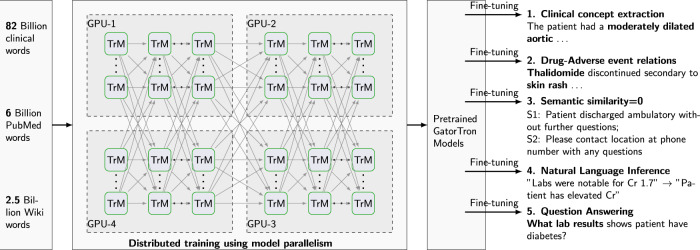
There is an increasing interest in developing artificial intelligence (AI) systems to process and interpret electronic health records (EHRs). Natural language processing (NLP) powered by pretrained language models is the key technology for medical AI systems utilizing clinical narratives. However, there are few clinical language models, the largest of which trained in the clinical domain is comparatively small at 110 million parameters (compared with billions of parameters in the general domain). It is not clear how large clinical language models with billions of parameters can help medical AI systems utilize unstructured EHRs. In this study, we develop from scratch a large clinical language model—GatorTron—using >90 billion words of text (including >82 billion words of de-identified clinical text) and systematically evaluate it on five clinical NLP tasks including clinical concept extraction, medical relation extraction, semantic textual similarity, natural language inference (NLI), and medical question answering (MQA). We examine how (1) scaling up the number of parameters and (2) scaling up the size of the training data could benefit these NLP tasks. GatorTron models scale up the clinical language model from 110 million to 8.9 billion parameters and improve five clinical NLP tasks (e.g., 9.6% and 9.5% improvement in accuracy for NLI and MQA), which can be applied to medical AI systems to improve healthcare delivery. The GatorTron models are publicly available at: https://catalog.ngc.nvidia.com/orgs/nvidia/teams/clara/models/gatortron_og .
Overview
The claims and statistics of this paper haven’t been checked yet.
Free: it reads the open-access text and checks the first 5 claims that cite a source we can check. Create a free account to check every claim.
Integrity signals
Registry
Cites
Statistics
Figures
Verification
Claims the paper makes
The claims and statistics of this paper haven’t been checked yet.
Free: it reads the open-access text and checks the first 5 claims that cite a source we can check. Create a free account to check every claim.
Claims other papers make about this one
Each is checked against this paper’s own text: does it say what the citing paper says it does?
The source backs part of the claim, not all of it — or backs it for a different population, condition or comparison.
In the citing paper
“As 1 example, Wu et al.25 developed and disseminated clinical LLMs such as GatorTron27 and GatorTronGPT28 to address limitations of traditional rule-based machine learning methods, which often lack scalability and transportability across data networks.”
From Advancing methodological development of artificial intelligence in patient-centered comparative clinical effectiveness research: Patient-Centered Outcomes Research Institute’s unique contribution to research done differently (2025) · cites this paper as [27]
Experimental — accuracy not yet measuredThe source backs part of the claim, not all of it — or backs it for a different population, condition or comparison.
In the citing paper
“Recent studies have demonstrated that large transformer models, such as ChatGPT, trained using massive text data, exhibit significant improvements over previous NLP models in terms of emergence and homogenization, which could contribute to enhancing critical thinking skills in students (Yang et al., 2022).”
From Investigating the Use of chatGPT as a Tool for Enhancing Critical Thinking and Argumentation Skills in International Relations Debates among Undergraduate Students (2024) · cites this paper as Yang et al., 2022
Experimental — accuracy not yet measuredThe cited source says what the claim attributes to it.
In the citing paper
“LLMs can be used for EHR analysis and as a clinical decision support tool [40].”
From Generative AI in healthcare: an implementation science informed translational path on application, integration and governance (2024) · cites this paper as [40]
The cited source says what the claim attributes to it.
In the citing paper
“The success of LLMs in the field of neural language processing, as well as their remarkable ability to solve complex tasks, has inspired researchers’ enthusiasm for adapting these models in the biomedical field [185].”
From Challenges in AI-driven Biomedical Multimodal Data Fusion and Analysis (2025) · cites this paper as [185]
The cited source says what the claim attributes to it.
In the citing paper
“AI using EHR data has become much more general and accurate in the last few years,35,36 allowing prediction of perioperative events37–41 and learning effective treatment strategies.42”
From Potential uses of AI for perioperative nursing handoffs: a qualitative study (2023) · cites this paper as [35]
3 more claims about this paper
Create a free account to see every claim other papers make about this one.
Self-check
Percentages, sums and reported differences re-computed from the paper’s own numbers.
The self-check needs the paper’s full text.
Citations
Cites
Vaswani, A., Shazeer, N., Parmar, N., Uszkoreit, J., Jones, L., Gomez, A. N., Kaiser, L., & Polosukhin, I. (2017) · arXiv · doi:10.48550/arxiv.1706.03762 · Cited by 120,404
LeCun, Y., Bengio, Y., & Hinton, G. (2015) · Nature · doi:10.1038/nature14539 · Cited by 84,126
Exploring the Limits of Transfer Learning with a Unified Text-to-Text Transformer
Raffel, C., Shazeer, N., Roberts, A., Lee, K., Narang, S., Matena, M., Zhou, Y., Li, W., & Liu, P. J. (2019) · arXiv · doi:10.48550/arxiv.1910.10683 · Cited by 31,859 · cited 3×
“On both datasets, pretrained transformer models achieved state-of-the-art performances 27,29 .”
BackgroundAdvances in neural information processing systems 7
Cios, K., & Shields, M. (1997) · Neurocomputing · doi:10.1016/s0925-2312(97)90018-7 · Cited by 22,059
Advances in neural information processing systems 7
(1996) · Computers & Mathematics with Applications · doi:10.1016/s0898-1221(96)90463-0 · Cited by 14,281
MIMIC-III, a freely accessible critical care database
Johnson, A. E. W., Pollard, T. J., Shen, L., Lehman, L.-W. H., Feng, M., Ghassemi, M., Moody, B., Szolovits, P., Anthony Celi, L., & Mark, R. G. (2016) · Scientific Data · doi:10.1038/sdata.2016.35 · Cited by 8,141 · cited 3×
“37 The ClinicalBERT model was developed by further training the BioBERT (base version; 110 million parameters with 12 layers, 768 hidden units, and 12 attention heads) using clinical text from the MIMIC-III 38 corpus.”
MethodInfluentialBioBERT: a pre-trained biomedical language representation model for biomedical text mining
Lee, J., Yoon, W., Kim, S., Kim, D., Kim, S., So, C. H., & Kang, J. (2020) · Bioinformatics · doi:10.1093/bioinformatics/btz682 · Cited by 7,218
XLNet: Generalized Autoregressive Pretraining for Language Understanding
Yang, Z., Dai, Z., Yang, Y., Carbonell, J., Salakhutdinov, R., & Le, Q. V. (2019) · arXiv · doi:10.48550/arxiv.1906.08237 · Cited by 6,687
SQuAD: 100,000+ Questions for Machine Comprehension of Text
Rajpurkar, P., Zhang, J., Lopyrev, K., & Liang, P. (2016) · Proceedings of the 2016 Conference on Empirical Methods in Natural Language Processing · doi:10.18653/v1/d16-1264 · Cited by 6,208
Natural Language Processing (almost) from Scratch
Collobert, R., Weston, J., Bottou, L., Karlen, M., Kavukcuoglu, K., & Kuksa, P. P. (2011) · arXiv (Cornell University) · doi:10.48550/arxiv.1103.0398 · Cited by 4,962 · cited 3×
“…concept extract are often rule-based, yet, most recent systems are based on machine learning models such as conditional random fields (CRFs) 50,51 , convolutional neural networks (CNN) 9,52 , and recurrent neural networks (RNN) implemented with long short-term memory strategy (LSTM) 10,53 .”
BackgroundMethod
Research works printed but not linked: 3
- Adoption of Electronic Health Record Systems among U.S. Non-Federal Acute Care Hospitals: 2008–2015. ONC Data Brief. https://www.healthit.gov/sites/default/files/briefs/2015_hospital_adoption_db_v17.pdf (2016). 40127322
- Yang X Identifying relations of medications with adverse drug events using recurrent convolutional neural networks and gradient boosting J. Am. Med. Inform. Assoc. 2020 27 65 72 10.1093/jamia/ocz144 31504605 PMC7489076 · DOI · Paper page
- Lv X Guan Y Yang J Wu J Clinical relation extraction with deep learning Int. J. Hybrid. Inf. Technol. 2016 9 237 248
Cited by
Items 301–400 of 1,005
Embodiment Matters in Knowledge Building
Blackie, M., & Luckett, K. (2024) · Science & Education · doi:10.1007/s11191-024-00506-2 · Cited by 23
“The role of a primary health care provider or general practitioner could largely be taken over by a fine-tuned language model (Yang et al., 2022).”
Utilizing ChatGPT to Enhance Clinical Trial EnrollmentPreprint
Peikos, G., Symeonidis, S., Kasela, P., & Pasi, G. (2023) · SSRN Electronic Journal · doi:10.2139/ssrn.4492872 · Cited by 24
Advancing Real-time Pandemic Forecasting Using Large Language Models: A COVID-19 Case StudyPreprint
Du, H., Zhao, J., Zhao, Y., Xu, S., Lin, X., Chen, Y., Gardner, L., & Yang, H. (2024) · arXiv · doi:10.48550/arxiv.2404.06962 · Cited by 24
GAMedX: Generative AI-based Medical Entity Data Extractor Using Large Language ModelsPreprint
Ghali, M.-K., Farrag, A., Sakai, H., baz, H. E., Jin, Y., & Lam, S. (2024) · arXiv (Cornell University) · doi:10.48550/arxiv.2405.20585 · Cited by 24
“Yet, recent advancements have led to the emergence of GatorTron [39], which represents a significant evolution in clinical language models.”
BackgroundGuthrie, E., Levy, D., & del Carmen, G. (2024) · The American Journal of Surgery · doi:10.1016/j.amjsurg.2024.02.016 · Cited by 22
Alamoodi, A. H., Zughoul, O., David, D., Garfan, S., Pamucar, D., Albahri, O. S., Albahri, A. S., Yussof, S., & Sharaf, I. M. (2024) · Journal of Medical Systems · doi:10.1007/s10916-024-02090-y · Cited by 22
“With the advancement of LLMs, complex challenges across various domains have been addressed [10–13].”
Photoreceptor metabolic window unveils eye–body interactions
Yang, S., Xin, Z., Cheng, W., Zhong, P., Liu, R., Zhu, Z., Zhu, L. Z., Shang, X., Chen, S., Huang, W., et al. (2025) · Nature Communications · doi:10.1038/s41467-024-55035-x · Cited by 22
Artificial intelligence in healthcare and medicine technology development review
Chung, D. (2025) · Engineering Applications of Artificial Intelligence · doi:10.1016/j.engappai.2024.109801 · Cited by 22
From Transformers to ChatGPT: An Analysis of Large Language Models Research
Cotfas, L., Sandu, A., Delcea, C., Diaconu, P., Frăsineanu, C., & Stănescu, A. (2025) · IEEE Access · doi:10.1109/access.2025.3600739 · Cited by 23
“…extracting the social determinants of health when considering the availability of the unstructured electronic health records through the use of LLMs [110], extraction of medication data from clinical narratives [111], and proposing a LLM for reasoning tasks in the case of healthcare data [112].”
Pathak, A., Yu, Z., Paredes, D., Monsour, E. P., Rocha, A. O., Brito, J. P., Ospina, N. S., & Wu, Y. (2023) · PubMed Central · doi:10.48550/arxiv.2304.00115 · Cited by 22
Self-citationAn Analysis on Large Language Models in Healthcare: A Case Study of BioBERTPreprint
Sharaf, S., & Anoop, V. S. (2023) · arXiv (Cornell University) · doi:10.48550/arxiv.2310.07282 · Cited by 22
“This dataset should include electronic health records (EHRs) Yang et al. [2022a] • Pre-processing : Prepare the data by cleaning and formatting it for training.”
MethodTCMD: A Traditional Chinese Medicine QA Dataset for Evaluating Large Language ModelsPreprint
Yü, P., Song, K., He, F., Chen, M., & Lu, J. (2024) · arXiv (Cornell University) · doi:10.48550/arxiv.2406.04941 · Cited by 22
“Researchers have explored various approaches to leverage LLMs for medical tasks such as biomedical information extraction [13,25,32], clinical text analysis [32,6], medical queries [33,10], and so on.”
BackgroundGabriel, R. A., Litake, O., Simpson, S., Burton, B. N., Waterman, R. S., & Macias, A. A. (2024) · Proceedings of the National Academy of Sciences · doi:10.1073/pnas.2320716121 · Cited by 21
Current Technological Advances in Dysphagia Screening: Systematic Scoping Review
Wong, D. W., Wang, J., Cheung, S. M.-Y., Lai, D. K.-H., Chiu, A. T. S., Pu, D., Cheung, J. C., & Kwok, T. C. Y. (2025) · Journal of Medical Internet Research · doi:10.2196/65551 · Cited by 22
The Development Landscape of Large Language Models for Biomedical Applications
Cao, Z., Keloth, V. K., Xie, Q., Qian, L., Liu, Y., Wang, Y., Shi, R., Zhou, W., Yang, G. F., Zhang, J., et al. (2025) · Annual Review of Biomedical Data Science · doi:10.1146/annurev-biodatasci-102224-074736 · Cited by 21
Fleurence, R., Wang, X., Bian, J., Higashi, M. K., Ayer, T., Xu, H., Dawoud, D., & Chhatwal, J. (2025) · Value in Health · doi:10.1016/j.jval.2025.04.2167 · Cited by 22
Self-citationDevelopment and evaluation of a lightweight large language model chatbot for medication enquiry
Elangovan, K., Ong, J. C. L., Jin, L., Seng, J. J. B., Kwan, Y. H., Ng, L. S., Zhong, R. J., Li, J., Ke, Y. H., Liu, N., et al. (2025) · PLOS Digital Health · doi:10.1371/journal.pdig.0000961 · Cited by 23
“Majority of studies performed focus on examining the performance of large parameter models including OpenAI’s ChatGPT and Meta AI’s Llama or pre-trained biomedical models such as Gatortron [24].”
Large language models and the emergence phenomena
Sorin, V., & Klang, E. (2023) · European Journal of Radiology Open · doi:10.1016/j.ejro.2023.100494 · Cited by 21
Ge, J., Fontil, V., Ackerman, S., Pletcher, M. J., & Lai, J. C. (2023) · Hepatology · doi:10.1097/hep.0000000000000583 · Cited by 21
Karusala, N., Yan, S. D., Rajkumar, N., Victoria, G., & Anderson, R. (2023) · Proceedings of the ACM on Human-Computer Interaction · doi:10.1145/3610210 · Cited by 21
“In terms of feasibility, iterations of large language models, particularly those aligned with the medical domain [57, 58, 74] or drawing on multiple languages [54], have prompted much speculation as to whether chatbots based on these technologies can support a more flexible range of interactions in medical question an…”
BackgroundTaking Off with AI: Lessons from Aviation for Healthcare
Bondi, E., Hartvigsen, T., Sanneman, L., Sankaranarayanan, S., Harned, Z., Wickerson, G., Gichoya, J. W., Oakden‐Rayner, L., Celi, L. A., Lungren, M. P., et al. (2023) · ACM Conference on Equity and Access in Algorithms, Mechanisms, and Optimization (EAAMO) · doi:10.1145/3617694.3623224 · Cited by 22
Stroganov, O. V., Schedlbauer, A. M., Lorenzen, E., Kadhim, A., Lobanova, A., Lewis, D. A., & Glausier, J. R. (2024) · Biology Methods and Protocols · doi:10.1093/biomethods/bpae072 · Cited by 21
“With the advent of high-performance computing and artificial intelligence (AI), technologies such as natural language processing (NLP) and large language models (LLMs) can be used to facilitate data FAIRification of unstructured data [3,4].”
MethodHarnessing AI in Laser Aesthetic Treatments: Revolutionizing Precision, Safety, and Personalization
Haykal, D. (2024) · Journal of Cosmetic Dermatology · doi:10.1111/jocd.16704 · Cited by 21
“The data collected through these algorithms provides practitioners with a more objective, comprehensive understanding of a patient's skin before proceeding with laser treatments [7].”
Nitayavardhana, P., Liu, K., Fukaguchi, K., Fujisawa, M., Koike, I., Tominaga, A., Iwamoto, Y., Goto, T., Suen, J. Y., Fraser, J. F., et al. (2025) · Critical Care · doi:10.1186/s13054-025-05347-1 · Cited by 21
“In addition, it is possible that the incorporation of natural language processing capabilities would augment data capture from unstructured clinical notes [17].”
Explainable differential diagnosis with dual-inference large language models
Zhou, S., Lin, M., Ding, S., Wang, J., Chen, C., Melton, G. B., Zou, J., & Zhang, R. (2025) · npj Health Systems · doi:10.1038/s44401-025-00015-6 · Cited by 20
Artificial Intelligence and Its Role in Predicting Periprosthetic Joint Infections
Vulpe, D. E., Anghel, C., Scheau, C., Dragosloveanu, Ş., & Săndulescu, O. (2025) · Biomedicines · doi:10.3390/biomedicines13081855 · Cited by 21
“The natural language processing (NLP) based on DL models can be trained on these massive datasets, and can identify patterns that predict the risk of PJIs, helping clinicians gain insights into potential infectious risk assessment based on EHRs [56].”
Schonfeld, E., Pant, A., Shah, A., Sadeghzadeh, S., Pangal, D. J., Rodrigues, A. J., Yoo, K., Marianayagam, N. J., Haider, G., & Veeravagu, A. (2024) · Journal of Clinical Medicine · doi:10.3390/jcm13030656 · Cited by 20
“We employed a large language model (LLM) (Gatortron) that has been extensively pre-trained on clinical notes by the University of Florida covering more than two million patients [11].”
BackgroundMethodA robust classification approach to enhance clinic identification from Arabic health text
Al-Fuqaha’a, S., Al–Madi, N., & HAMMO, B. H. (2024) · Neural Computing and Applications · doi:10.1007/s00521-024-09453-z · Cited by 20
Patients’ selection and trial matching in early-phase oncology clinical trials
Corbaux, P., Bayle, A., Besle, S., Vinceneux, A., Vanacker, H., Ouali, K., Hanvic, B., Baldini, C., Cassier, P. A., Terret, C., et al. (2024) · Critical Reviews in Oncology/Hematology · doi:10.1016/j.critrevonc.2024.104307 · Cited by 20
Tay, S. B., Low, G. H., Wong, G. J. E., Tey, H. J., Leong, F. L., Li, C. H., Chua, M. L. K., Tan, D. S. W., Thng, C. H., Tan, I. B. H., et al. (2024) · JCO Clinical Cancer Informatics · doi:10.1200/cci.23.00122 · Cited by 20
An assessment of large language models for OpenMP-based code parallelization: a user perspective
Mišić, M. J., & Dodović, M. (2024) · Journal Of Big Data · doi:10.1186/s40537-024-01019-z · Cited by 21
“They have been used for chatbots and other autonomous agents in customer support and marketing [3], finance [4], social and natural sciences [5], biomedicine, genomics and healthcare [6, 7], translation and localization [8], content generation, education [9].”
Empowering Language Models Through Advanced Prompt Engineering: A Comprehensive Bibliometric Review
Fatawi, I., Asy’ari, M., Hunaepi, H., Samsuri, T., & Bilad, M. R. (2024) · Indonesian Journal of Science and Technology · doi:10.17509/ijost.v9i2.71481 · Cited by 20
Biomedical text normalization through generative modeling
Berkowitz, J. S., Srinivasan, A., Cortina, J. M. A., Fatapour, Y., & Tatonetti, N. P. (2025) · Journal of Biomedical Informatics · doi:10.1016/j.jbi.2025.104850 · Cited by 19
Harnessing Large Language Models for Clinical Information Extraction: A Systematic Literature Review
Rodrigues, T. N. S. S., & Lopes, C. T. (2025) · ACM Transactions on Computing for Healthcare · doi:10.1145/3744660 · Cited by 19
Artificial Intelligence in migrant health: a critical perspective on opportunities and risks
Matlin, S. A., Claron, I. M. M., Merone, J., Netto, G., Takian, A., Zaman, M. H., & Saso, L. (2025) · The Lancet Regional Health - Europe · doi:10.1016/j.lanepe.2025.101421 · Cited by 21
“Examples include: 42,43 • Health policy-making”
Cheng, P., Zhang, K., Lyu, M., Liu, H., Sun, L., & Wu, Y. (2025) · Journal of Biomedical Informatics · doi:10.1016/j.jbi.2025.104946 · Cited by 20
Self-citationYan, D., Zheng, Q., Chang, K., Hua, R., Liu, Y., Xue, J., Shu, Z., Hu, Y., Yang, P., Wei, Y., et al. (2025) · Chinese Journal of Natural Medicines · doi:10.1016/s1875-5364(25)60983-6 · Cited by 20
Sorbello, A. F., Haque, S. A., Hasan, R., Jermyn, R. T., Hussein, A. I., Vega, A., Zembrzuski, K., Ripple, A., & Ahadpour, M. (2023) · JMIR AI · doi:10.2196/45000 · Cited by 19
“…FDA-approved drug product labels to filter out false positive ORADEs due to drug-indication pairs and (2) using large language models (LLMs) such as GPT-4 [33], BioGPT [34], or GatorTron [35] to improve capture of mentions of opioid drugs and ADE terms that may be separated by multiple paragraphs.”
MethodLuo, M., Trivedi, S., Kurian, A. W., Ward, K. C., Keegan, T. H. M., Rubin, D. L., & Banerjee, I. (2024) · JCO Clinical Cancer Informatics · doi:10.1200/cci.23.00258 · Cited by 19
“13,14 The trajectory of clinical information extraction is aligned with the evolution of language models (LMs) from fi ne-tuning approaches with LMs 15,16 to zero-shot 17,18 and few-shot 19 approaches without any downstream task training.”
Lyu, M., Peng, C., Paredes, D., Chen, Z., Chen, A. T. L., Bian, J., & Wu, Y. (2024) · Workshop on Biomedical Language Processing (BioNLP) · doi:10.18653/v1/2024.bionlp-1.60 · Cited by 19
Self-citationCai, N., Verhulst, B., Andreassen, O. A., Buitelaar, J. K., Edenberg, H. J., Hettema, J. M., Gandal, M. J., Grotzinger, A. D., Jonas, K. G., Lee, P., et al. (2024) · Molecular Psychiatry · doi:10.1038/s41380-024-02878-x · Cited by 19
“Some EHRs have comprehensive doctors ’ notes from individual interviews, which – if carefully coded – can augment case-control outcomes for genetic analyses [32, 89, 90].”
Homburg, M., Meijer, E., Berends, M., Kupers, T., Olde Hartman, T., Muris, J., de Schepper, E., Velek, P., Kuiper, J., Berger, M., et al. (2023) · Journal of Medical Internet Research · doi:10.2196/49944 · Cited by 18
“Recent literature shows an increased use and interest in NLP for the analysis of EHRs [16].”
Grounding large language models in clinical diagnostics
Chen, X., Zhou, H., Yi, H., You, M., Liu, W., Li, W., Qin, Z., Li, H., Zhang, X., Guo, Y., et al. (2026) · Nature Communications · doi:10.1038/s41467-026-70274-w · Cited by 21
Surgicberta: a pre-trained language model for procedural surgical language
Bombieri, M., Rospocher, M., Ponzetto, S. P., & Fiorini, P. (2023) · International Journal of Data Science and Analytics · doi:10.1007/s41060-023-00433-5 · Cited by 18
Bandwidth Characterization of DeepSpeed on Distributed Large Language Model Training
Hanindhito, B., Patel, B., & John, L. K. (2024) · IEEE International Symposium on Performance Analysis of Systems and Software (ISPASS) · doi:10.1109/ispass61541.2024.00031 · Cited by 18
Artificial Intelligence in Medical Affairs: A New Paradigm with Novel Opportunities
Fröling, E., Rajaeean, N., Hinrichsmeyer, K. S., Domrös-Zoungrana, D., Urban, J. N., & Lenz, C. (2024) · Pharmaceutical Medicine · doi:10.1007/s40290-024-00536-9 · Cited by 18
“Vital information on patient characteristics, disease progression, and outcomes is embedded in clinical notes within electronic health records [45].”
BackgroundAdvances of artificial intelligence in predicting frailty using real-world data: A scoping review
Bai, C., & Mardini, M. (2024) · Ageing Research Reviews · doi:10.1016/j.arr.2024.102529 · Cited by 18
The Transformative Potential of AI in Ultrasound for Facial Aesthetics
Haykal, D., Cartier, H., Yi, K., & Wortsman, X. (2024) · Journal of Cosmetic Dermatology · doi:10.1111/jocd.16691 · Cited by 18
Bürgisser, N., Chalot, E., Mehouachi, S., Buclin, C. P., Lauper, K., Courvoisier, D. S., & Mongin, D. (2024) · RMD Open · doi:10.1136/rmdopen-2024-005003 · Cited by 19
Medical Implications of LLM Based Clinical Decision Support Systems in Healthcare
Ogdu, C. U., Gürbüz, S., Karaköse, M., & Hanoğlu, E. (2025) · doi:10.1109/it64745.2025.10930252 · Cited by 18
Reviewing clinical knowledge in medical large language models: Training and beyond
Li, Q. Y., Liu, H., Guo, C., Gao, C., Chen, D., Wang, M., Gao, F., van Harmelen, F., & Gu, J. (2025) · Knowledge-Based Systems · doi:10.1016/j.knosys.2025.114215 · Cited by 20
Bao, Z., Liu, Q., Guo, Y., Ye, Z., Shen, J., Xie, S., Peng, J., Huang, X., & Wei, Z. (2024) · arXiv (Cornell University) · doi:10.48550/arxiv.2411.13902 · Cited by 19
Self-Adaptive Cognitive Debiasing for Large Language Models in Decision-MakingPreprint
Lyu, Y., ren, S. D., Feng, Y., Wang, Z., Chen, Z., Ren, Z., & de Rijke, M. (2025) · arXiv (Cornell University) · doi:10.48550/arxiv.2504.04141 · Cited by 18
FoMoH: A clinically meaningful foundation model evaluation for structured electronic health recordsPreprint
Jeanselme, V., Jing, Z., Kashyap, A., Pang, C., Pollet, F., Choi, Y. S., Jiang, X., Kobayashi, Y., Li, Y., Matijevic, S., et al. (2025) · arXiv (Cornell University) · doi:10.48550/arxiv.2505.16941 · Cited by 18
FedFSA: Hybrid and federated framework for functional status ascertainment across institutions
Fu, S., Jia, H., Vassilaki, M., Keloth, V. K., Dang, Y., Zhou, Y., Garg, M., Petersen, R. C., St Sauver, J., Moon, S., et al. (2024) · Journal of Biomedical Informatics · doi:10.1016/j.jbi.2024.104623 · Cited by 17
RED: Unleashing Token-Level Rewards from Holistic Feedback via Reward Redistribution
Li, J., Li, L., Chang, T.-W., Kuang, K., Chen, L., Zhou, J., & Yang, C. (2025) · Conference on Empirical Methods in Natural Language Processing (EMNLP) · doi:10.18653/v1/2025.emnlp-main.252 · Cited by 17
A Representation Fusion Framework for Decoupling Diagnostic Information in Multimodal Learning
Tonekaboni, S., Friedman, S. F., Zhang, X., Maddah, M., & Uhler, C. (2025) · npj Digital Medicine · doi:10.1038/s41746-025-02144-6 · Cited by 17
Gao, Y., Baptista‐Hon, D. T., & Zhang, K. (2023) · MedComm – Future Medicine · doi:10.1002/mef2.49 · Cited by 17
Guérin, J., Nahid, A., Tassy, L., Deloger, M., Bocquet, F., Thézenas, S., Désandes, E., Deley, M. L., Durando, X., Jaffré, A., et al. (2024) · International Journal of Environmental Research and Public Health · doi:10.3390/ijerph21020189 · Cited by 17
“The development of large language models like GatorTron demonstrates the potential of NLP to improve clinical tasks and data analysis significantly, as evidenced by improvements in various NLP tasks [26].”
MethodEthical issues in implementing artificial intelligence in healthcare
Koshechkin, K. A., & Khokholov, A. (2024) · Медицинская этика · doi:10.24075/medet.2024.006 · Cited by 17
Chaudhry, Z. S., & Choudhury, A. (2024) · Journal of Occupational and Environmental Medicine · doi:10.1097/jom.0000000000003212 · Cited by 17
Gramkow, M. H., Waldemar, G., & Frederiksen, K. S. (2024) · Nature Reviews Neurology · doi:10.1038/s41582-024-01033-y · Cited by 17
“With the application of large language models in electronic health record data 52 to ‘translate’ and parse clinical jargon, individuals and their caregivers can play an active part in evaluating data and provide and obtain insights during the disease course.”
Unlocking the Potentials of Large Language Models in Orthodontics: A Scoping Review
Zheng, J., Ding, X., Pu, J. J., Chung, S. M., Ai, Q. Y. H., Hung, K. F., & Shan, Z. (2024) · Bioengineering · doi:10.3390/bioengineering11111145 · Cited by 18
“Additionally, LLMs play an important role in the education of medical students by enhancing learning efficiency through personalized and interactive educational tools [34–36].”
Chatzopoulos, G. S., Koidou, V. P., Tsalikis, L., & Kaklamanos, E. G. (2025) · Dentistry Journal · doi:10.3390/dj13060271 · Cited by 17
“Furthermore, LLMs can contribute to advancements in medical research, quality assurance, and educational initiatives [2–4].”
The AI revolution: how multimodal intelligence will reshape the oncology ecosystem
Dellamonica, D., Ruau, D., Griffiths, B., Rossi, G., Li, B. T., Razavi, P., Maio, T. D., Gonzalez, T., Remorino, A., Reis-Filho, J. S., et al. (2025) · npj Artificial Intelligence · doi:10.1038/s44387-025-00044-4 · Cited by 17
“GatorTron, a large language model for electronic health records (EHRs), achieved state-of-the-art performance in early identi fi cation of patients with a potential diabetes diagnosis by extracting phenotypes for trial across 290 million clinical notes 45 .”
Embeddings of clinical codes enable knowledge-grounded AI in medicine
Johnson, R., Gottlieb, U., Shaham, G., Eisen, L., Waxman, J. G., Devons-Sberro, S., Ginder, C. R., Hong, P. J., Sayeed, R., Su, X., et al. (2026) · npj Digital Medicine · doi:10.1038/s41746-026-02664-9 · Cited by 17
Zhou, W., Yetişgen, M., Afshar, M., Gao, Y., Savova, G., & Miller, T. A. (2023) · Journal of the American Medical Informatics Association · doi:10.1093/jamia/ocad190 · Cited by 17
Exploring the Comprehension of ChatGPT in Traditional Chinese Medicine KnowledgePreprint
Yizhen, L., Shaohan, H., Qi, J., Lei, Q., Dongran, H., & Luan, Z. (2024) · arXiv (Cornell University) · doi:10.48550/arxiv.2403.09164 · Cited by 17
“Model training in the biomedical domain has been historically hampered by the challenges of acquiring specialized medical data, resulting in high costs and inefficiencies [28]– [30].”
BackgroundLeveraging Large Language Model as Simulated Patients for Clinical Education
Li, Y., Zeng, C., Zhong, J., Zhang, R., Zhang, M., & Zou, L. (2024) · arXiv · doi:10.48550/arxiv.2404.13066 · Cited by 16
“LLMs, such as GPT [18], Llama [19], PaLM [20], have demonstrated remarkable capabilities in natural language understanding and generation, leading to their application in various domains, including digital medicine applications [21, 22, 23, 24, 25].”
BackgroundEmbedding Methods for Electronic Health Record Research
Kauffman, J., Miotto, R., Klang, E., Costa, A. B., Norgeot, B., Žitnik, M., Shameer, K., Fei, W., Nadkarni, G. N., & Glicksberg, B. S. (2025) · Annual Review of Biomedical Data Science · doi:10.1146/annurev-biodatasci-103123-094729 · Cited by 16
Self-citationApplying Artificial Intelligence and machine learning in precision nutrition
Massara, P., Kirkland, J., Pagani, I., Huey, S. L., Hirsh, H., McDonald, D. T., Patel, L., Finkelstein, J. L., Gantz, M. G., Wang, F., et al. (2026) · Nature Communications · doi:10.1038/s41467-026-75004-w · Cited by 16
How large language models can augment perioperative medicine: a daring discourse
Gabriel, R. A., Mariano, E. R., McAuley, J., & Wu, C. L. (2023) · Regional Anesthesia & Pain Medicine · doi:10.1136/rapm-2023-104637 · Cited by 16
Unlocking the Black Box? A Comprehensive Exploration of Large Language Models in Rehabilitation
Bonnechère, B. (2024) · American Journal of Physical Medicine & Rehabilitation · doi:10.1097/phm.0000000000002440 · Cited by 16
Kwan, H. Y. (2024) · International Conference on Computer Communication and Artificial Intelligence (CCAI) · doi:10.1109/ccai61966.2024.10603150 · Cited by 16
“Within the context of the rapid advancement of digital technology, with particular emphasis on AI, the integration of LLMs technology into telemedicine presents a multitude of significant challenges and opportunities [5,6,7].”
BackgroundTen challenges and opportunities in computational immuno-oncology
Bao, R., Hutson, A. D., Madabhushi, A., Jönsson, V. D., Rosario, S. R., Barnholtz‐Sloan, J. S., Fertig, E. J., Marathe, H. G., Harris, L. N., Altreuter, J., et al. (2024) · Journal for ImmunoTherapy of Cancer · doi:10.1136/jitc-2024-009721 · Cited by 17
“71 Natural language processing and deep-learning techniques 72 such as large language models 73 74 can be leveraged to reduce such heterogeneity and enhance information extraction and standardization.”
Park, H., Huh, J.-Y., Chae, G., & Choi, M. G. (2024) · PLoS ONE · doi:10.1371/journal.pone.0314136 · Cited by 17
Hasan, M. J., Rahman, F., & Mohammed, N. (2024) · International Journal of Medical Informatics · doi:10.1016/j.ijmedinf.2024.105764 · Cited by 16
Chien, C.-H., & Trappey, A. J. C. (2025) · Advanced Engineering Informatics · doi:10.1016/j.aei.2025.103327 · Cited by 16
BioMamba: Domain-Adaptive Biomedical Language Models
Yue, L., Zhu, M., Xing, S., Cao, Y., Wang, Y., Chenthamarakshan, V., Pan, S., Das, P., & Fu, T. (2026) · Health Data Science · doi:10.34133/hds.0454 · Cited by 16
Zhang, L., & Chen, Z. (2023) · arXiv (Cornell University) · doi:10.48550/arxiv.2312.11701 · Cited by 16
ED-Copilot: Reduce Emergency Department Wait Time with Language Model Diagnostic AssistancePreprint
Sun, L., Agarwal, A., Kornblith, A. E., Yu, B., & Xiong, C. (2024) · arXiv (Cornell University) · doi:10.48550/arxiv.2402.13448 · Cited by 16
“LLMs have been used to extract clinical concepts (Luo et al., 2022; Yang et al., 2022; 2021), and facilitate medical question answering (Yagnik et al., 2024; Singhal et al., 2023).”
MethodLessons learned from RadiologyNET foundation models for transfer learning in medical radiology
Napravnik, M., Hržić, F., Urschler, M., Miletić, D., & Štajduhar, I. (2025) · Scientific Reports · doi:10.1038/s41598-025-05009-w · Cited by 15
Campanella, G., Kwan, R., Fluder, E., Zeng, J., Stock, A., Veremis, B., Polydorides, A. D., Hedvat, C., Schoenfeld, A., Vanderbilt, C., et al. (2023) · arXiv · doi:10.48550/arxiv.2310.07033 · Cited by 15
Stanton, N., Aziz, A., Jakhra, S., Wong, S., Morganstein, L., Bassett, P., Brewerton, M., Golchinheydari, S., Brogan, D., & Pushparajah, D. (2025) · BJPsych Bulletin · doi:10.1192/bjb.2025.10186 · Cited by 15
Large Language Models in Healthcare: A Review
Zou, S., & He, J. (2023) · International Symposium on Computer Science and Intelligent Control (ISCSIC) · doi:10.1109/iscsic60498.2023.00038 · Cited by 15
“Large language models can process this data, extract relevant information, and present it in a structured format that is easy to understand and analyze [10] [11] [12] [13] [14] .”
BackgroundBeyond Binary Classification: A Fine-Grained Safety Dataset for Large Language Models
Yu, J., Li, L., & Lan, Z. (2024) · IEEE Access · doi:10.1109/access.2024.3393245 · Cited by 15
Enhancing Clinical Accuracy of Medical Chatbots With Large Language Models
Liu, Z., Quan, Y., Lyu, X., & Alenazi, M. J. F. (2024) · IEEE Journal of Biomedical and Health Informatics · doi:10.1109/jbhi.2024.3470323 · Cited by 15
“However, to realize the full potential of LLMs in healthcare, it is imperative to prioritize clinical accuracy and ensure that these AI-driven systems possess a deep understanding of the medical context [7].”
Scherbakov, D., Heider, P. M., Wehbe, R. M., Alekseyenko, A. V., Lenert, L. A., & Obeid, J. S. (2025) · BMC Public Health · doi:10.1186/s12889-024-21123-2 · Cited by 15
Multitasking vision language models for vehicle plate recognition with VehiclePaliGemma
AlDahoul, N., Tan, M. J. T., Tera, R. R., Karim, H. B. A., Lim, C. H., Mishra, M. K., & Zaki, Y. (2025) · Scientific Reports · doi:10.1038/s41598-025-10774-9 · Cited by 15
MedLA: A Logic-Driven Multi-Agent Framework for Complex Medical Reasoning with Large Language Models
Ma, S., Huang, J., Zhang, F., Wu, J., Shen, Y., Fan, G., Zhang, Z., & Zang, Z. (2026) · Proceedings of the AAAI Conference on Artificial Intelligence · doi:10.1609/aaai.v40i2.37052 · Cited by 15
ICD2Vec: Mathematical representation of diseases
Lee, Y. C., Jung, S., Kumar, A., Shim, I., Song, M., Kim, M. S., Kim, K., Myung, W., Park, W., & Won, H. (2023) · Journal of Biomedical Informatics · doi:10.1016/j.jbi.2023.104361 · Cited by 15
ChatGPT is a game changer: detection and eradication is not the way forward
Blackie, M. (2024) · Teaching in Higher Education · doi:10.1080/13562517.2023.2300951 · Cited by 15
“…then that LLMs and their more focused cousins, the FLMs, will be used in a plethora of applications in working life from computer programming (MacNeil et al. 2022), to designing a synthetic route for drugs (Xu 2022), to fi nancial models (Deng et al. 2023), to diagnostic medicine (Yang et al. 2022).”
BackgroundMethodUnveiling the risks of ChatGPT in diagnostic surgical pathology
Guastafierro, V., Corbitt, D. N., Bressan, A., Fernandes, B., Mintemur, Ö., Magnoli, F., Ronchi, S., La Rosa, S., Uccella, S., & Renne, S. L. (2025) · Virchows Archiv · doi:10.1007/s00428-024-03918-1 · Cited by 14
Large language models and artificial intelligence chatbots in vascular surgery
Lareyre, F., Nasr, B., Poggi, E., Lorenzo, G. D., Ballaith, A., Sliti, I., Chaudhuri, A., & Raffort, J. (2024) · Seminars in Vascular Surgery · doi:10.1053/j.semvascsurg.2024.06.001 · Cited by 14
Yang, L., Pang, J., Zuo, S., Xu, J., Jin, W., Zuo, F., Xue, K., Xiao, Z., Peng, X., Xu, J., et al. (2024) · Journal of Medical Internet Research · doi:10.2196/51711 · Cited by 14
“Second, our triage system is based on the BERT model, which is extensively used for text classification, relation extraction, and entity recognition [26,35,36].”
Transforming Alzheimer’s Digital Caregiving through Large Language Models
Kim, S., Han, D. Y., & Bae, J. (2024) · Current Alzheimer Research · doi:10.2174/0115672050301740241118044604 · Cited by 14
Huang, R., Wu, H., Yuan, Y., Xu, Y., Qian, H., Zhang, C., Wei, X., Lu, S., Zhang, X., Kan, J., et al. (2025) · Journal of Medical Internet Research · doi:10.2196/65317 · Cited by 14
Guan, H., Novoa-Laurentiev, J., & Zhou, L. (2024) · Journal of Biomedical Informatics · doi:10.1016/j.jbi.2025.104830 · Cited by 14
Wang, B., Liu, Y., Tian, H., Hua, R., Chang, K., Xia, J., Dai, X., Gao, Z., Liu, S., Wang, R., et al. (2025) · Tsinghua Science & Technology · doi:10.26599/tst.2024.9010125 · Cited by 14
Cancer type, stage and prognosis assessment from pathology reports using LLMs
Saluja, R., Rosenthal, J., Windon, A. L., Artzi, Y., Pisapia, D. J., Liechty, B., & Sabuncu, M. R. (2025) · Scientific Reports · doi:10.1038/s41598-025-10709-4 · Cited by 14
“Instead, researchers can focus on curating high-quality question-and-answer pairs, significantly lowering the barrier to entry and reducing the complexity associated with model design and component-level optimization, which can otherwise have a substantial impact on performance.”
Metadata
- Authors
- Yang, X., Chen, A., PourNejatian, N., Shin, H. C., Smith, K. E., Parisien, C., Compas, C., Martin, C., Costa, A. B., Flores, M. G., Zhang, Y., Magoc, T., Harle, C. A., Lipori, G., Mitchell, D. A., Hogan, W. R., Shenkman, E. A., Bian, J., & Wu, Y.
- Affiliations
- University of Florida (US)
- Nvidia (United States) (US)
- University of Florida Health (US)
- Corresponding author
- Wu, Yonghui
- ORCID
- Venue
- npj Digital Medicine
- Published
- 2022-12-26
- Volume
- 5
- Issue
- 1
- Pages
- 194-194
- ISSN
- 2398-6352 (ISSN-L)
- PMC
- PMC9792464
- OpenAlex
- W4312220150
- Semantic Scholar
- 332dc8b2ca9d49fad607c7282f3360bb2a9aacf3
- Cited by
- 847
- References
- 73
- Citations by year
- 2026: 171 · 2025: 304 · 2024: 268 · 2023: 101 · 2022: 1
- FWCI
- 55.47
- Type
- journal article
- Language
- en
- Open access
- gold
- doi.org
- Licence
- cc-by
- creativecommons.org/licenses/by/4.0 (tdm)
- creativecommons.org/licenses/by/4.0 (vor)
- Locations
- npj Digital Medicine (publishedVersion, cc-by)
- PubMed Central (publishedVersion, cc-by)
- PubMed (publishedVersion)
- DOAJ (DOAJ: Directory of Open Access Journals) (submittedVersion)
- IUScholarWorks (Indiana University) (submittedVersion, cc-by)
- Funders
- Patient-Centered Outcomes Research Institute (ME-2018C3-14754)
- U.S. Department of Health & Human Services | NIH | National Cancer Institute (1R01CA246418)
- U.S. Department of Health & Human Services | NIH | National Institute on Aging (R56AG069880, R21AG062884)
- Topics
- Physical Sciences › Computer Science › Artificial Intelligence › Machine Learning in Healthcare
- Physical Sciences › Computer Science › Artificial Intelligence › Topic Modeling
- Health Sciences › Medicine › Health Informatics › Artificial Intelligence in Healthcare and Education
- Keywords
- electronic health records, clinical natural language processing, clinical concept extraction, semantic textual similarity, natural language inference, medical question answering, model scaling, training data size, clinical text
About these checks
Registry, retraction, Cites and statistics results are computed, not judged, with one exception: a printed reference that no index lists is read once by a model before it counts as a citation error. Claims are extracted by a model and kept only when their quote appears verbatim in the text; each cited source is then checked, with a model’s help, for whether it says what the claim relies on. Those verdicts can be wrong — read the claim’s quote and the cited source before relying on one.
Statistics and arithmetic are recomputed, not judged.
Confidence bands are shown only for fields calibrated on our annotated test set. None is calibrated yet, so no band is shown.
What counts as a claim ›How we measure confidence ›How we check this ›
Are you an author, or do you see a problem with this page? Request a review
Data sources
Bibliographic data: Semantic Scholar, OpenAlex, Crossref.
Contains information from the Semantic Scholar Academic Graph Datasets, made available under the ODC Attribution License (ODC-BY 1.0).
Semantic Scholar’s data is described in: Kinney, R., et al. (2023). The Semantic Scholar Open Data Platform. arXiv:2301.10140.
