

A large language model for electronic health records
Open accessThe DOI matches its Crossref record; 77 of the 78 references it cites were found in a registry or an index.
Abstract
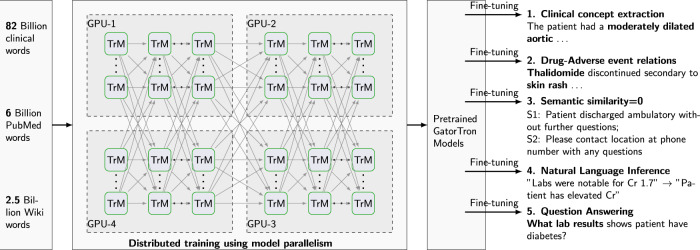
There is an increasing interest in developing artificial intelligence (AI) systems to process and interpret electronic health records (EHRs). Natural language processing (NLP) powered by pretrained language models is the key technology for medical AI systems utilizing clinical narratives. However, there are few clinical language models, the largest of which trained in the clinical domain is comparatively small at 110 million parameters (compared with billions of parameters in the general domain). It is not clear how large clinical language models with billions of parameters can help medical AI systems utilize unstructured EHRs. In this study, we develop from scratch a large clinical language model—GatorTron—using >90 billion words of text (including >82 billion words of de-identified clinical text) and systematically evaluate it on five clinical NLP tasks including clinical concept extraction, medical relation extraction, semantic textual similarity, natural language inference (NLI), and medical question answering (MQA). We examine how (1) scaling up the number of parameters and (2) scaling up the size of the training data could benefit these NLP tasks. GatorTron models scale up the clinical language model from 110 million to 8.9 billion parameters and improve five clinical NLP tasks (e.g., 9.6% and 9.5% improvement in accuracy for NLI and MQA), which can be applied to medical AI systems to improve healthcare delivery. The GatorTron models are publicly available at: https://catalog.ngc.nvidia.com/orgs/nvidia/teams/clara/models/gatortron_og .
Overview
The claims and statistics of this paper haven’t been checked yet.
Free: it reads the open-access text and checks the first 5 claims that cite a source we can check. Create a free account to check every claim.
Integrity signals
Registry
Cites
Statistics
Figures
Verification
Claims the paper makes
The claims and statistics of this paper haven’t been checked yet.
Free: it reads the open-access text and checks the first 5 claims that cite a source we can check. Create a free account to check every claim.
Claims other papers make about this one
Each is checked against this paper’s own text: does it say what the citing paper says it does?
The source backs part of the claim, not all of it — or backs it for a different population, condition or comparison.
In the citing paper
“As 1 example, Wu et al.25 developed and disseminated clinical LLMs such as GatorTron27 and GatorTronGPT28 to address limitations of traditional rule-based machine learning methods, which often lack scalability and transportability across data networks.”
From Advancing methodological development of artificial intelligence in patient-centered comparative clinical effectiveness research: Patient-Centered Outcomes Research Institute’s unique contribution to research done differently (2025) · cites this paper as [27]
Experimental — accuracy not yet measuredThe source backs part of the claim, not all of it — or backs it for a different population, condition or comparison.
In the citing paper
“Recent studies have demonstrated that large transformer models, such as ChatGPT, trained using massive text data, exhibit significant improvements over previous NLP models in terms of emergence and homogenization, which could contribute to enhancing critical thinking skills in students (Yang et al., 2022).”
From Investigating the Use of chatGPT as a Tool for Enhancing Critical Thinking and Argumentation Skills in International Relations Debates among Undergraduate Students (2024) · cites this paper as Yang et al., 2022
Experimental — accuracy not yet measuredThe cited source says what the claim attributes to it.
In the citing paper
“LLMs can be used for EHR analysis and as a clinical decision support tool [40].”
From Generative AI in healthcare: an implementation science informed translational path on application, integration and governance (2024) · cites this paper as [40]
The cited source says what the claim attributes to it.
In the citing paper
“The success of LLMs in the field of neural language processing, as well as their remarkable ability to solve complex tasks, has inspired researchers’ enthusiasm for adapting these models in the biomedical field [185].”
From Challenges in AI-driven Biomedical Multimodal Data Fusion and Analysis (2025) · cites this paper as [185]
The cited source says what the claim attributes to it.
In the citing paper
“AI using EHR data has become much more general and accurate in the last few years,35,36 allowing prediction of perioperative events37–41 and learning effective treatment strategies.42”
From Potential uses of AI for perioperative nursing handoffs: a qualitative study (2023) · cites this paper as [35]
3 more claims about this paper
Create a free account to see every claim other papers make about this one.
Self-check
Percentages, sums and reported differences re-computed from the paper’s own numbers.
The self-check needs the paper’s full text.
Citations
Cites
Vaswani, A., Shazeer, N., Parmar, N., Uszkoreit, J., Jones, L., Gomez, A. N., Kaiser, L., & Polosukhin, I. (2017) · arXiv · doi:10.48550/arxiv.1706.03762 · Cited by 120,404
LeCun, Y., Bengio, Y., & Hinton, G. (2015) · Nature · doi:10.1038/nature14539 · Cited by 84,126
Exploring the Limits of Transfer Learning with a Unified Text-to-Text Transformer
Raffel, C., Shazeer, N., Roberts, A., Lee, K., Narang, S., Matena, M., Zhou, Y., Li, W., & Liu, P. J. (2019) · arXiv · doi:10.48550/arxiv.1910.10683 · Cited by 31,859 · cited 3×
“On both datasets, pretrained transformer models achieved state-of-the-art performances 27,29 .”
BackgroundAdvances in neural information processing systems 7
Cios, K., & Shields, M. (1997) · Neurocomputing · doi:10.1016/s0925-2312(97)90018-7 · Cited by 22,059
Advances in neural information processing systems 7
(1996) · Computers & Mathematics with Applications · doi:10.1016/s0898-1221(96)90463-0 · Cited by 14,281
MIMIC-III, a freely accessible critical care database
Johnson, A. E. W., Pollard, T. J., Shen, L., Lehman, L.-W. H., Feng, M., Ghassemi, M., Moody, B., Szolovits, P., Anthony Celi, L., & Mark, R. G. (2016) · Scientific Data · doi:10.1038/sdata.2016.35 · Cited by 8,141 · cited 3×
“37 The ClinicalBERT model was developed by further training the BioBERT (base version; 110 million parameters with 12 layers, 768 hidden units, and 12 attention heads) using clinical text from the MIMIC-III 38 corpus.”
MethodInfluentialBioBERT: a pre-trained biomedical language representation model for biomedical text mining
Lee, J., Yoon, W., Kim, S., Kim, D., Kim, S., So, C. H., & Kang, J. (2020) · Bioinformatics · doi:10.1093/bioinformatics/btz682 · Cited by 7,218
XLNet: Generalized Autoregressive Pretraining for Language Understanding
Yang, Z., Dai, Z., Yang, Y., Carbonell, J., Salakhutdinov, R., & Le, Q. V. (2019) · arXiv · doi:10.48550/arxiv.1906.08237 · Cited by 6,687
SQuAD: 100,000+ Questions for Machine Comprehension of Text
Rajpurkar, P., Zhang, J., Lopyrev, K., & Liang, P. (2016) · Proceedings of the 2016 Conference on Empirical Methods in Natural Language Processing · doi:10.18653/v1/d16-1264 · Cited by 6,208
Natural Language Processing (almost) from Scratch
Collobert, R., Weston, J., Bottou, L., Karlen, M., Kavukcuoglu, K., & Kuksa, P. P. (2011) · arXiv (Cornell University) · doi:10.48550/arxiv.1103.0398 · Cited by 4,962 · cited 3×
“…concept extract are often rule-based, yet, most recent systems are based on machine learning models such as conditional random fields (CRFs) 50,51 , convolutional neural networks (CNN) 9,52 , and recurrent neural networks (RNN) implemented with long short-term memory strategy (LSTM) 10,53 .”
BackgroundMethod
Research works printed but not linked: 3
- Adoption of Electronic Health Record Systems among U.S. Non-Federal Acute Care Hospitals: 2008–2015. ONC Data Brief. https://www.healthit.gov/sites/default/files/briefs/2015_hospital_adoption_db_v17.pdf (2016). 40127322
- Yang X Identifying relations of medications with adverse drug events using recurrent convolutional neural networks and gradient boosting J. Am. Med. Inform. Assoc. 2020 27 65 72 10.1093/jamia/ocz144 31504605 PMC7489076 · DOI · Paper page
- Lv X Guan Y Yang J Wu J Clinical relation extraction with deep learning Int. J. Hybrid. Inf. Technol. 2016 9 237 248
Cited by
Items 701–800 of 1,005
Large Language Models for Granularized Barrett's Esophagus Diagnosis ClassificationPreprint
Kefeli, J., Soroush, A., Diamond, C., Zylberberg, H. M., May, B. L., Abrams, J. A., Weng, C., & Tatonetti, N. P. (2023) · arXiv (Cornell University) · doi:10.48550/arxiv.2308.08660 · Cited by 4
“The advent of large language models (LLMs) has led to significant advances in natural language processing (NLP), enabling automated methods with reliable performance and broad extensibility [4-6].”
BackgroundEnhancing Medication Recommendation with LLM Text RepresentationPreprint
Lee, Y.-T. (2024) · arXiv · doi:10.48550/arxiv.2407.10453 · Cited by 4
Sasse, K., Vadlakonda, S., Kennedy, R., & Osborne, J. D. (2024) · arXiv (Cornell University) · doi:10.48550/arxiv.2410.07951 · Cited by 4
“Synthetic data has been explored for a variety of biomedical tasks including Alzheimer’s detection [12], creating open source clinical Large Language Models (LLMs) [13, 14], medical dialogue summarization [15] and medical question answering [16].”
BackgroundUsing Large Language Models to Generate Clinical Trial Tables and FiguresPreprint
Yang, Y., Krusche, P., Pantoja, K., Cheng, S., Ludmir, E. B., Roberts, K. E., & Zhu, G. (2024) · arXiv (Cornell University) · doi:10.48550/arxiv.2409.12046 · Cited by 4
“Recent advances in large language models (LLMs) have demonstrated substantial potential to accelerate applications that involve text generation, classification, and natural language understanding 2,3,4 .”
BackgroundRephrasing Electronic Health Records for Pretraining Clinical Language ModelsPreprint
Liu, J., & Nguyen, A. (2024) · arXiv · doi:10.48550/arxiv.2411.18940 · Cited by 4
Practical Design and Benchmarking of Generative AI Applications for Surgical Billing and CodingPreprint
Rollman, J. C., Rogers, B., Zaribafzadeh, H., Buckland, D. M., Rogers, U. A., Gagnon, J., Meireles, O. R., Jennings, L., Bennett, J., Nicholson, J., et al. (2025) · arXiv (Cornell University) · doi:10.48550/arxiv.2501.05479 · Cited by 4
Wang, P., Liu, Y., Lu, Y., Hong, J., & Wu, Y. (2025) · arXiv (Cornell University) · doi:10.48550/arxiv.2502.13490 · Cited by 4
“Large language models (LLM) have been widely adopted across various fields, ranging from natural language processing and generation tasks to specialized applications in health-care [41,49,55], finance [54], and legal services [9,14].”
Self-citationImmuneFM: Pre-training Foundation Model from Cytometry Data for Immunology ResearchPreprint
Ding, S., Bhattacharya, S., & Butte, A. J. (2025) · bioRxiv (Cold Spring Harbor Laboratory) · doi:10.1101/2025.07.09.664020 · Cited by 4
“For example, Steinberg et al. designed MOTOR, a foundation model pre-trained on structured EHR data 19 , Wang et al. pre-trained a pathology foundation model which can be applied for cancer studies 20 , Yang et al. pre-trained GatorTron, a large language model on clinical text 21 .”
Aligning Large Language Models with Healthcare Stakeholders: A Pathway to Trustworthy AI IntegrationPreprint
Ding, K., Zhou, M., Chaudhari, A. S., Zhang, S., & Metaxas, D. (2025) · arXiv (Cornell University) · doi:10.48550/arxiv.2505.02848 · Cited by 4
“In the intermediate-training stage, instruction learning strategies are instrumental to allow LLMs to integrate up-to-date, domain-specific knowledge, such as patient record understanding Yang et al. [2022] and status forecast Huang et al. [2019].”
NeuronGen: Neural Network Parameter Generation via Large Language ModelsPreprint
Wang, J., Zhang, Y., & Li, X. (2025) · arXiv (Cornell University) · doi:10.48550/arxiv.2505.12470 · Cited by 5
“Large language models (LLMs) have demonstrated remarkable capabilities across a wide range of domains, including natural language processing [19], computer vision [20], bioinformatics [21], and robotics [22].”
Self-citationEfficient Inference under Label Shift in Unsupervised Domain AdaptationPreprint
Lee, S.-H., Ma, Y., & Zhao, J. (2025) · arXiv (Cornell University) · doi:10.48550/arxiv.2508.17780 · Cited by 4
Federated Large Language Models in Healthcare: A Systematic Review, Opportunities and ChallengesPreprint
Nascimento, L. D. F., Awaysheh, F. M., Alawadi, S., Zomaya, A. Y., & Guizani, M. (2025) · Research Square · doi:10.21203/rs.3.rs-7841356/v1 · Cited by 4
AI-generated data contamination erodes pathological variability and diagnostic reliabilityPreprint
He, H., Xiang, S., Zhang, Y., Zhu, Y., Zhang, J., Deng, H., Alsentzer, E., Liu, Y., Chen, Q., Yu, K., et al. (2026) · arXiv (Cornell University) · doi:10.48550/arxiv.2601.12946 · Cited by 4
Self-citationSimulating clinical interventions with a generative multimodal model of human physiologyPreprint
Lutsker, G., Sapir, G., Merino, J., Shilo, S., Godneva, A., Meirom, E. A., Mannor, S., Rossman, H., Chechik, G., & Segal, E. (2026) · arXiv (Cornell University) · doi:10.48550/arxiv.2604.27899 · Cited by 4
Dementia risk prediction using decision-focused content selection from medical notes
Li, S., Dexter, P. R., Miled, Z. B., & Boustani, M. A. (2024) · Computers in Biology and Medicine · doi:10.1016/j.compbiomed.2024.109144 · Cited by 3
Large language models aided patient progression documentation according to the ICD standard
Lebeña, N., Casillas, A., & Pérez, A. (2025) · Informatics in Medicine Unlocked · doi:10.1016/j.imu.2025.101637 · Cited by 3
Paredes, D., Talankar, S., Cheng, P., Balian, P., Lewis, M., Yan, S., Tsai, W.-B., Chang, C., Wilson, D. L., Lo-Ciganic, W.-H., et al. (2025) · Europe PMC (PubMed Central) · Cited by 3
Self-citationHauspurg, A. K., Barry, V. G., Hernandez, N., Clapp, M. A., Wong, M. S., & Lewkowitz, A. K. (2025) · Pregnancy · doi:10.1002/pmf2.70070 · Cited by 3
“Furthermore, as the technology is rapidly advancing, text analysis via large language models (LLM) presents both promise and challenges (i.e., hallucinations, inaccuracies) for use in clinical medicine [51–53].”
Erez, E., Dankwa, S., Tuttle, M. R., Nasir, A., Vallabhajosyula, P., Schneider, E. B., Assi, R., & Ong, C. S. (2025) · Journal of Healthcare Informatics Research · doi:10.1007/s41666-025-00210-y · Cited by 3
Wang, Y., & Magrabi, F. (2025) · BMJ Health & Care Informatics · doi:10.1136/bmjhci-2024-101146 · Cited by 4
Investigating LLM Capabilities on Long Context Comprehension for Clinical Question Answering
AlMannaa, F., Tseriotou, T., Chim, J., & Liakata, M. (2026) · International Joint Conference on Natural Language Processing and Conference of the Asia-Pacific Chapter of the Association for Computational Linguistics (IJCNLP-AACL) · doi:10.48550/arxiv.2510.18691 · Cited by 3
Hu, Q., Zhang, X., Kim, J., Bourgeois, F. T., & Dunn, A. G. (2026) · Journal of Biomedical Informatics · doi:10.1016/j.jbi.2026.105088 · Cited by 3
Barlow, S. H., Chicklore, S., He, Y., Ourselin, S., Wagner, T., Barnes, A., & Cook, G. (2025) · Frontiers in Digital Health · doi:10.3389/fdgth.2025.1702082 · Cited by 3
Park, J., Pang, C., Lee, T. Y., Yang, J. Y., Berkowitz, J. S., Wei, A. Z., & Tatonetti, N. P. (2026) · npj Precision Oncology · doi:10.1038/s41698-026-01483-1 · Cited by 3
Spiero, I., Rijk, M. H., Scheeres, M. A., Rutten, F. H., Geersing, G., Platteel, T. N., Moons, K. G. M., Hooft, L., Damen, J. A., Venekamp, R. P., et al. (2026) · PLoS ONE · doi:10.1371/journal.pone.0350625 · Cited by 3
“Also, larger models, which could not be run in our environment, hold promise to significantly improve performance [29,30].”
Tu, K.-C., Kuo, Y.-D., Nyam, T.-T. E., Ma, Y., Sung, M., Liu, C., & Kuo, C.-L. (2026) · International Journal of Medical Informatics · doi:10.1016/j.ijmedinf.2026.106268 · Cited by 3
AI assistance in tumor multidisciplinary teams
Foppen, R. J. G., Morkūnas, M., Traverso, A., & Dienstmann, R. (2026) · ESMO Real World Data and Digital Oncology · doi:10.1016/j.esmorw.2026.100684 · Cited by 3
“30,43,44”
Płaza, M., Płaza, M., Lucińska, M., Młodawski, M., Kęczkowska, J., Deniziak, S. R., Murawska, T., Murawski, K., Wykrota, K., Jaszczyk, D., et al. (2026) · Scientific Reports · doi:10.1038/s41598-026-45879-2 · Cited by 3
Mahbub, M., Dams, G. M., Arnold, J., Rizy, C., Srinivasan, S., Fielstein, E. M., Aghevli, M., Craig, K., Oliva, E. M., Erdos, J., et al. (2026) · npj Digital Medicine · doi:10.1038/s41746-026-03341-7 · Cited by 3
Boubaker, O. (2026) · Elsevier eBooks · doi:10.1016/b978-0-443-27638-5.00009-2 · Cited by 3
Natural Language Processing in Healthcare: From Unstructured Data to Clinical Intelligence
Kumar, D., Choudhary, N., Gupta, V., Tanwar, R., Bahmani, K., Antal, S., Jarora, S., Gupta, S., Shaikh, M. S., Webster, T. J., et al. (2026) · Intelligent Systems with Applications · doi:10.1016/j.iswa.2026.200698 · Cited by 3
Shakeri, E., & Far, B. H. (2026) · Intelligence-Based Medicine · doi:10.1016/j.ibmed.2026.100442 · Cited by 3
Islam, S., Alfred, M. C., Wilson, D. A., & Cohen, E. (2024) · Proceedings of the Human Factors and Ergonomics Society Annual Meeting · doi:10.1177/10711813241260676 · Cited by 3
“The representation achieving highest accuracy at 20th iteration is highlighted in yellow. the performance of contextual DeBERTa and GatorTron embeddings.”
InfluentialAmbrogio, S., Verdon, I., Laureano, B., Ramnarine, K. V., Fedele, F., Vilić, D., Honey, I. D., Barton, E., Gonçalves, C. P. Q., Mak, S. M., et al. (2025) · Radiology Research and Practice · doi:10.1155/rrp/9091895 · Cited by 3
“…(NLP) and large language models (LLMs) are increasingly used to extract clinical insights from electronic healthcare records; however, validation of such tools is needed as the large presence of free text and unstructured data is still hindering the full utilization of such techniques [24, 43, 44].”
Fraser, S. D., Holland, E., Laidlaw, L., Francis, N. A., Macdonald, S., Mair, F. S., Alwan, N. A., Boniface, M., Hoyle, R. B., Fair, N., et al. (2025) · Journal of Multimorbidity and Comorbidity · doi:10.1177/26335565251329869 · Cited by 3
SynDRep: a synergistic partner prediction tool based on knowledge graph for drug repurposing
Shalaby, K. S., Rao, S. G., Schultz, B. T., Hofmann‐Apitius, M., Kodamullil, A. T., & Bharadhwaj, V. S. (2024) · Bioinformatics Advances · doi:10.1093/bioadv/vbaf092 · Cited by 3
Leveraging Large Language Models for Departmental Classification of Medical Records
Ihnaini, B., Zeng, X., Yan, H., Fang, F., & Sangi, A. R. (2025) · Applied Sciences · doi:10.3390/app15126525 · Cited by 3
Bihri, H., Azzouzi, S., & Charaf, M. E. H. (2025) · Lecture notes in networks and systems · doi:10.1007/978-3-031-99997-0_36 · Cited by 3
Introduction to Artificial Intelligence for the Wound, Ostomy, and Continence Nurse
Morriss, J. M., Cox, J., Capasso, V. A., & Edsberg, L. E. (2025) · Journal of Wound Ostomy and Continence Nursing · doi:10.1097/won.0000000000001208 · Cited by 3
Data-efficient biomedical in-context learning: a diversity-enhanced submodular perspective
Wang, J., Zhan, Z., Zhang, Q., Lin, M., Song, M., & Zhang, R. (2026) · npj Artificial Intelligence · doi:10.1038/s44387-026-00123-0 · Cited by 3
“Foreachtask,weselectonetypicaldataset – ChemProtfor NER, DDI for RE, and HealthAdvice for TC. (cid:129) ChemProt 11 This dataset consists of 1,820 PubMed abstracts with chemical-proteininteractionsannotatedbydomainexperts.”
InfluentialXu, X., Xue, Z., Zhang, C., Medri, J., Xiong, J., Zhou, J., Jin, J., Zhang, Y., Ma, S., & Li, L. (2026) · IEEE Journal of Biomedical and Health Informatics · doi:10.1109/jbhi.2026.3683684 · Cited by 3
Self-citationCohen, A. M., Kaner, J., Miller, R., Kopesky, J. W., & Hersh, W. (2023) · Journal of the American Medical Informatics Association · doi:10.1093/jamia/ocad244 · Cited by 3
“52–54 Because local LLMs with good performance in clinical medicine have only recently become generally available (eg, GatorTron 55 ) we haven’t applied these models yet in our AADCd research, but plan to in the future.”
MethodComputational Approaches for Connecting Maternal Stress to Preterm Birth
Mirzaei, A., Hiller, B. C., Stelzer, I. A., Thiele, K., Tan, Y., & Becker, M. (2024) · Clinics in Perinatology · doi:10.1016/j.clp.2024.02.003 · Cited by 3
Automatic pterygopalatine fossa segmentation and localisation based on DenseASPP
Wang, B., & Shi, W. (2024) · International Journal of Medical Robotics and Computer Assisted Surgery · doi:10.1002/rcs.2633 · Cited by 3
Future of Team-based Basic and Translational Science in Radiation Oncology
Coppes, R. P., & van Dijk, L. V. (2024) · Seminars in Radiation Oncology · doi:10.1016/j.semradonc.2024.07.007 · Cited by 3
Reproduction of Original Glioblastoma and Brain Metastasis Research Findings Using Synthetic Data
Davalan, W., Khalaf, R., & Diaz, R. J. (2025) · World Neurosurgery · doi:10.1016/j.wneu.2025.123808 · Cited by 3
Ferguson, E. L., Mehta, S., Miramontes, S., Choi, M., Kim, Y. J., Hill‐Jarrett, T. G., Cevallos, N., Yang, Y., Zimmerman, S. C., Chen, R., et al. (2025) · The Gerontologist · doi:10.1093/geront/gnaf027 · Cited by 3
Review: A Roadmap to Use Nonstructured Data to Discover Multitarget Cancer Therapies
Scoarta, S., Küçükosmanoğlu, A., Bindt, F., Pouwer, M. G., & Westerman, B. A. (2023) · JCO Clinical Cancer Informatics · doi:10.1200/cci.22.00096 · Cited by 3
Semi-Automated Mapping of German Study Data Concepts to an English Common Data Model
Chechulina, A., Carus, J., Breitfeld, P., Gundler, C., Hees, H., Twerenbold, R., Blankenberg, S., Ückert, F., & Nürnberg, S. (2023) · Applied Sciences · doi:10.3390/app13148159 · Cited by 3
“Therefore, current efforts of the community aim to establish a text corpus and model specifically for medical text [25–29].”
BackgroundClark, G. T., Monreal, A. V., Veas, N., & Loeb, G. E. (2023) · IntechOpen eBooks · doi:10.5772/intechopen.1003849 · Cited by 3
Zhou, W., Bitterman, D. S., Afshar, M., & Miller, T. A. (2023) · arXiv (Cornell University) · doi:10.48550/arxiv.2309.12339 · Cited by 3
Le, T.-D., Thieu, T., Alvarado, S., Smith, B. C., Miao, Z., & Paiva, W. (2024) · SSRN Electronic Journal · doi:10.2139/ssrn.4781665 · Cited by 3
Alleva, E., Khalil, S., Glazer, K. B., Stone, J. L., Viganò, P., Somigliana, E., Konigorski, S., Landi, I., Shengja, C., Verma, R., et al. (2024) · medRxiv · doi:10.1101/2024.10.04.24314831 · Cited by 3
L3Ms -- Lagrange Large Language Models
Dhillon, G. S., Shi, X., Teh, Y. W., & Smola, A. (2025) · International Conference on Learning Representations · doi:10.48550/arxiv.2410.21533 · Cited by 3
“Large language models (LLMs) are used for a wide range of tasks: as chatbots (Brown et al., 2020; OpenAI, 2024), for code generation (Ahmad et al., 2021; Wang et al., 2021; Rozi ` ere et al., 2024), for medical assistance (Yang et al., 2022; Moor et al., 2023), and so on.”
LAST SToP For Modeling Asynchronous Time SeriesPreprint
Gupta, S., Durand, T., Taylor, G., & Bialokozowicz, L. W. (2025) · arXiv (Cornell University) · doi:10.48550/arxiv.2502.01922 · Cited by 3
Jakobsen, T. S. T., Cristòbal-Cóppulo, E., Rasmussen, S., & Benros, M. E. (2025) · medRxiv · doi:10.1101/2025.03.07.25323558 · Cited by 3
From Fuzzy Speech to Medical Insight: Benchmarking LLMs on Noisy Patient NarrativesPreprint
Mama, E., Sheri, L., Aperstein, Y., & Apartsin, A. (2025) · arXiv (Cornell University) · doi:10.48550/arxiv.2509.11803 · Cited by 3
DICE: A Framework for Dimensional and Contextual Evaluation of Language ModelsPreprint
Shrivastava, A., & Aoyagui, P. A. (2025) · arXiv (Cornell University) · doi:10.48550/arxiv.2504.10359 · Cited by 3
Wang, Z., Daniel, K. E., Barnes, L. E., & Chow, P. I. (2025) · arXiv (Cornell University) · doi:10.48550/arxiv.2503.10707 · Cited by 3
Advances in Large Language Models for MedicinePreprint
Kan, Z., Gan, W., Qi, Z., & Yu, P. S. (2025) · arXiv (Cornell University) · doi:10.48550/arxiv.2509.18690 · Cited by 3
“By integrating and analyzing clinical diagnostic data [139] and medical imaging data, this technology can effectively assess patients’ risk probabilities for cardiovascular diseases or diabetic complications.”
Beaney, T. E., Dregan, A., Glickman, M., Mountain, P., Khunti, K., & Dambha‐Miller, H. (2025) · Journal of the Royal Society of Medicine · doi:10.1177/01410768251395387 · Cited by 3
“20,21 However, several challenges are associated with AI.”
Can we generate portable representations for clinical time series data using LLMs?
Ji, Z., Sun, Y., Amaral, A. C. K.-B., Goldenberg, A., & Krishnan, R. G. (2026) · International Conference on Learning Representations · doi:10.48550/arxiv.2603.23987 · Cited by 3
Yang, Y., Arora, M., Zhang, R., Abed, B., Kim, J., Choudhary, T., Hassanuzzaman, M., Zhu, K., Ali, A., Yang, C., et al. (2026) · PubMed Central · doi:10.48550/arxiv.2605.10840 · Cited by 4
“Pretrained models for EHR span early encoder-only architectures such as Med-BERT [11] (structured ICD code sequences) and GatorTron [12] (clinical-text encoder), generative or autoregressive trajectory models [1, 2, 13, 14], and reasoning-enhanced or instruction-tuned LLMs for EHR analysis [3, 4,…”
Reliable Extraction of Clinical Follow-Up Instructions: A Hybrid Neural-Symbolic PipelinePreprint
Laufer‐Perl, M., Aperstein, Y., & Apartsin, A. (2026) · arXiv · doi:10.48550/arxiv.2605.26560 · Cited by 3
Adaptive Multilevel Twisted Sequential Monte Carlo for Rare Events Estimation in Language ModelsPreprint
Liu, Z., Wu, F., Summa, B., & Zheng, Z. (2026) · arXiv (Cornell University) · doi:10.48550/arxiv.2608.21736 · Cited by 3
Artificial intelligence language models for medical text analysis: A systematic review
Sorayaie Azar, A., Bagherzadeh Mohasefi, J., Wiil, U. K., Naemi, A., & Ebrahimi, A. (2026) · Artificial Intelligence in Medicine · doi:10.1016/j.artmed.2026.103441 · Cited by 2
Yan, Y., Chen, Q., Nasir, R., Griffin, P. M., Bone, C., & Tuan, W. (2025) · Computers in Biology and Medicine · doi:10.1016/j.compbiomed.2025.109870 · Cited by 2
Miladi, F., Psyché, V., Diattara, A., Mawas, N. E., & Lemire, D. (2025) · Revue internationale des technologies en pédagogie universitaire · doi:10.18162/ritpu-2025-v22n1-08 · Cited by 2
de Jesus, B. G. A. S., de Figueiredo, T. C., Pereira, C., dos Anjos, B. L., Boa‐Sorte, N., Durães, A. R., Brites, C. R., Netto, E. M., Almeida, L. M., Zanchettin, C., et al. (2026) · Cadernos de Saúde Pública · doi:10.1590/0102-311xen145025 · Cited by 2
Large-scale deep learning for metastasis detection in pathology reports
Krawczuk, P., Fox, Z., Petkov, V. I., Negoita, S., Doherty, J. A., Stroup, A. M., Schwartz, S., Penberthy, L. T., Hsu, E. R., Gounley, J. P., et al. (2025) · JAMIA Open · doi:10.1093/jamiaopen/ooaf070 · Cited by 3
Holley, D., Daly, B. P., Beverly, B., Wamsley, B., Brooks, A., & Zaubler, T. (2025) · BMC Psychiatry · doi:10.1186/s12888-025-07088-5 · Cited by 2
“LLMs are already transforming text-centric healthcare workflows, demonstrating cursory capability to derive patient characteristics from electronic health records [59], draft clinical letters [3], and generate patient-friendly discharge summaries [60].”
al Nahian, M. S., & Kavuluru, R. (2025) · BioNLP@ACL · doi:10.18653/v1/2025.bionlp-1.10 · Cited by 2
Kott, D., Kiehl, A., Price, C., Webb, T. L., Saklou, N., Strecker, G. J., & Kirby, M. J. L. (2025) · IEEE Swiss Conference on Data Science (SDS) · doi:10.1109/sds66131.2025.00014 · Cited by 2
“The current state-of-the-art tool for veterinary diagnosis coding (F1 of 74.9) [1] was pre-trained on a corpus of over 90B words [25].”
InfluentialLarge language models and their current use in perioperative medicine: a scoping review protocol
Hondjeu, A. R. M., Zhao, Z. Y., Newton, L., Ajenkar, A., Termos, B., Shorr, R., Ladha, K. S., Wijeysundera, D. N., & McIsaac, D. I. (2025) · JBI Evidence Synthesis · doi:10.11124/jbies-25-00003 · Cited by 2
Park, J., Sim, W., Yu, J. Y., Park, Y. R., & Lee, Y. H. (2025) · Journal of Imaging Informatics in Medicine · doi:10.1007/s10278-025-01685-2 · Cited by 2
“These findings reinforce the broader understanding that prompt engineering is not only computationally efficient [32, 33] but also a practical strategy for enhancing LLM utility in small-to medium-scale medical applications without the need for resource-intensive fine-tuning.”
Generating Robotic Control Strategies With LLMs : Via Human–Robot Voice Interaction
Wang, X., Zhou, G., Hua, H., Tang, Z., & Cao, Y. (2025) · Concurrency and Computation Practice and Experience · doi:10.1002/cpe.70372 · Cited by 2
Chang, E., Xie, K., & Ellis, C. A. (2025) · Seminars in Neurology · doi:10.1055/a-2742-2430 · Cited by 2
Ophtimus-V2-Tx: a compact domain-specific LLM for ophthalmic diagnosis and treatment planning
Kwon, M., Jang, K. J., Baek, S. J., Han, Y. S., Choi, H., Lee, I., & Kim, J. H. (2025) · Scientific Reports · doi:10.1038/s41598-025-27410-1 · Cited by 2
AI-Driven Advances in Personalized Therapeutic Strategies for Precision Medicine
Simone, L., Chen, Y. F. F., Lussier, Y. A., Elkin, P., & Zhu, X. (2026) · Springer eBooks · doi:10.1007/978-3-031-98022-0_26 · Cited by 2
Xu, Y., Fan, S., & Jiang, H. (2026) · Decision Support Systems · doi:10.1016/j.dss.2025.114592 · Cited by 2
Lin, T., Wan, H., Liang, Y., Ming, J., Lu, J., & Guo, Z. (2026) · Frontiers in Immunology · doi:10.3389/fimmu.2025.1679496 · Cited by 2
Using artificial intelligence to advance pediatric infection prevention and control
Murray, T. S., Quan, M., Aniskiewicz, M. J., & Pak, T. R. (2026) · Current Opinion in Pediatrics · doi:10.1097/mop.0000000000001540 · Cited by 2
The role of artificial intelligence in advancing population-based cancer registration
Ding, S., Liu, M., Wang, H., Song, C., Zhao, L., Yang, Z., Wang, Y., Wang, Y., Cui, H., Liu, Z., et al. (2026) · Science Bulletin · doi:10.1016/j.scib.2026.02.012 · Cited by 2
A survey of LLMs in drug discovery and precision medicine
Hays, H., & Richardson, W. J. (2026) · Frontiers in Drug Discovery · doi:10.3389/fddsv.2026.1854899 · Cited by 2
Cheema, M. N., Nazir, A., Harmanci, A. O., Harmancı, A. S., Cheema, Y., Masood, S., & Khokhar, F. A. (2026) · The Visual Computer · doi:10.1007/s00371-026-04385-2 · Cited by 2
“Medical Foundation Models (MFMs) [19] aim to enable the adaptive integration of multimodal data types, for instance, medical images, electronic health records (EHRs) [32], genomics data, and laboratory results, to foster an all-around approach to patient care.”
Haroon, M., Wojcieszak, M., & Chhabra, A. (2025) · International Joint Conference on Natural Language Processing and Conference of the Asia-Pacific Chapter of the Association for Computational Linguistics (IJCNLP-AACL) · doi:10.18653/v1/2025.findings-ijcnlp.13 · Cited by 2
Privacy and Security Throughout the Health Data Life Cycle: From Primary Care to Research Networks
Malin, B., Yan, C., & Bonomi, L. (2026) · Annual Review of Biomedical Data Science · doi:10.1146/annurev-biodatasci-092724-031932 · Cited by 2
Weikang, K., 温川飙, & Yue, L. (2026) · Digital Chinese Medicine · doi:10.1016/j.dcmed.2026.02.005 · Cited by 2
Towards a clinical large language model: an ethico-legal case study analysis
Bernasconi, L., Stamm-Pfister, C., Großmann, R., & Rätsch, G. (2026) · AI and Ethics · doi:10.1007/s43681-026-01099-y · Cited by 2
Unlocking the power of quantum computing in biomedical NLP for lung cancer diagnosis
Kesiku, C. Y., García-Zapirain, B., & Elmaghraby, A. S. (2026) · Quantum Machine Intelligence · doi:10.1007/s42484-026-00392-7 · Cited by 2
A foundation model for capturing complexity of menstrual health data
Linzmayer, R., Pang, C., Urteaga, I., Gürsoy, G., Shea, A. A., Vitzthum, V. J., & Elhadad, N. (2026) · npj Women s Health · doi:10.1038/s44294-026-00142-x · Cited by 2
Large Language Models for Clinical Narrative Processing: Methods, Applications, and Challenges
Livieratos, A., Lin, J., Chasani, P., Gaga, M., Fousekis, F. S., Gogos, C. A., Akinosoglou, K., Katsanos, K. H., & Gamalo, M. (2026) · Methods and Protocols · doi:10.3390/mps9030069 · Cited by 2
“Electronic health records (EHRs) are now common in modern healthcare, containing vast amounts of patient data in both structured and unstructured formats [1–4].”
Karacan, B., Eugenio, B. D., & Thornton, P. (2026) · Language Resources and Evaluation Conference (LREC) · doi:10.63317/4ktoypuohtci · Cited by 2
Query-Conditioned Graph Retrieval for Contextualized LLM Reasoning in Personalized Wearable Data
Lu, Z., Abbasian, M., & Rahmani, A. M. (2026) · International Joint Conference on Natural Language Processing and Conference of the Asia-Pacific Chapter of the Association for Computational Linguistics (IJCNLP-AACL) · doi:10.18653/2026.aacl-long.238 · Cited by 2
Zouaghi, M., Kacem, F., & Fathallah, H. (2026) · IEEE Middle East and North Africa Communications Conference (MENACOMM) · doi:10.1109/menacomm69507.2026.11532824 · Cited by 2
“Pretraining from scratch discards general-purpose initialisation entirely and trains both a domain-specific vocabulary and model weights on biomedical text, as in PubMedBERT [7] and GatorTron [20].”
InfluentialAutomated RECIST tumor response classification through prompt-guided large language models
Mergen, M., Busch, F., Sauter, A. P., Pfeiffer, D., Makowski, M. R., Spitzl, D., & Gassert, F. T. (2026) · Scientific Reports · doi:10.1038/s41598-026-54979-y · Cited by 2
Reasoning or reciting? A temporal contamination audit of large language models in clinical medicine
Sheppert, A. P., Adams, B., Sheppert, A. D., & Riley, S. (2026) · Journal of the American Medical Informatics Association · doi:10.1093/jamia/ocag069 · Cited by 2
Shah-Mohammadi, F., Millar, A., Facelli, J. C., & Gouripeddi, R. (2026) · JAMIA Open · doi:10.1093/jamiaopen/ooag108 · Cited by 3
AI in variant analysis: fast track to genetic diagnoses
Wilk, E. J., Taluri, S., Howton, T. C., Crumley, A. B., Mrug, M. M., & Lasseigne, B. N. (2026) · Human Genetics · doi:10.1007/s00439-026-02847-0 · Cited by 2
“For instance, AI inte - grations in electronic health records (EHRs) could detect potential patients, even those with subtle clinical presenta - tions (Ye et al. 2024 ; Yang et al. 2022 ).”
Language-Guided Segmentation of Medical Images: A Review of Foundation Models
Qamar, S. (2026) · Bioengineering · doi:10.3390/bioengineering13070803 · Cited by 3
“Domain-specific text encoders such as Bio_ClinicalBERT, BioBERT, and PubMedBERT represent medical text far better than generic CLIP encoders [14,51,52], and GatorTron specializes LLMs for electronic health records [70].”
Metadata
- Authors
- Yang, X., Chen, A., PourNejatian, N., Shin, H. C., Smith, K. E., Parisien, C., Compas, C., Martin, C., Costa, A. B., Flores, M. G., Zhang, Y., Magoc, T., Harle, C. A., Lipori, G., Mitchell, D. A., Hogan, W. R., Shenkman, E. A., Bian, J., & Wu, Y.
- Affiliations
- University of Florida (US)
- Nvidia (United States) (US)
- University of Florida Health (US)
- Corresponding author
- Wu, Yonghui
- ORCID
- Venue
- npj Digital Medicine
- Published
- 2022-12-26
- Volume
- 5
- Issue
- 1
- Pages
- 194-194
- ISSN
- 2398-6352 (ISSN-L)
- PMC
- PMC9792464
- OpenAlex
- W4312220150
- Semantic Scholar
- 332dc8b2ca9d49fad607c7282f3360bb2a9aacf3
- Cited by
- 847
- References
- 73
- Citations by year
- 2026: 171 · 2025: 304 · 2024: 268 · 2023: 101 · 2022: 1
- FWCI
- 55.47
- Type
- journal article
- Language
- en
- Open access
- gold
- doi.org
- Licence
- cc-by
- creativecommons.org/licenses/by/4.0 (tdm)
- creativecommons.org/licenses/by/4.0 (vor)
- Locations
- npj Digital Medicine (publishedVersion, cc-by)
- PubMed Central (publishedVersion, cc-by)
- PubMed (publishedVersion)
- DOAJ (DOAJ: Directory of Open Access Journals) (submittedVersion)
- IUScholarWorks (Indiana University) (submittedVersion, cc-by)
- Funders
- Patient-Centered Outcomes Research Institute (ME-2018C3-14754)
- U.S. Department of Health & Human Services | NIH | National Cancer Institute (1R01CA246418)
- U.S. Department of Health & Human Services | NIH | National Institute on Aging (R56AG069880, R21AG062884)
- Topics
- Physical Sciences › Computer Science › Artificial Intelligence › Machine Learning in Healthcare
- Physical Sciences › Computer Science › Artificial Intelligence › Topic Modeling
- Health Sciences › Medicine › Health Informatics › Artificial Intelligence in Healthcare and Education
- Keywords
- electronic health records, clinical natural language processing, clinical concept extraction, semantic textual similarity, natural language inference, medical question answering, model scaling, training data size, clinical text
About these checks
Registry, retraction, Cites and statistics results are computed, not judged, with one exception: a printed reference that no index lists is read once by a model before it counts as a citation error. Claims are extracted by a model and kept only when their quote appears verbatim in the text; each cited source is then checked, with a model’s help, for whether it says what the claim relies on. Those verdicts can be wrong — read the claim’s quote and the cited source before relying on one.
Statistics and arithmetic are recomputed, not judged.
Confidence bands are shown only for fields calibrated on our annotated test set. None is calibrated yet, so no band is shown.
What counts as a claim ›How we measure confidence ›How we check this ›
Are you an author, or do you see a problem with this page? Request a review
Data sources
Bibliographic data: Semantic Scholar, OpenAlex, Crossref.
Contains information from the Semantic Scholar Academic Graph Datasets, made available under the ODC Attribution License (ODC-BY 1.0).
Semantic Scholar’s data is described in: Kinney, R., et al. (2023). The Semantic Scholar Open Data Platform. arXiv:2301.10140.
