

Co-targeting SOS1 enhances the antitumor effects of KRASG12C inhibitors by addressing intrinsic and acquired resistance
Open accessPublished version of a preprint
The DOI matches its Crossref record; 87 of the 93 references it cites were found in a registry or an index, and 1 are not checked yet; 36 of the 83 sources its claims cite were checked for support.
Abstract
Combination approaches are needed to strengthen and extend the clinical response to KRAS G12C inhibitors (KRAS G12C i). Here, we assessed the antitumor responses of KRAS G12C mutant lung and colorectal cancer models to combination treatment with a SOS1 inhibitor (SOS1i), BI-3406, plus the KRAS G12C inhibitor, adagrasib. We found that responses to BI-3406 plus adagrasib were stronger than to adagrasib alone, comparable to adagrasib with SHP2 (SHP2i) or EGFR inhibitors and correlated with stronger suppression of RAS-MAPK signaling. BI-3406 plus adagrasib treatment also delayed the emergence of acquired resistance and elicited antitumor responses from adagrasib-resistant models. Resistance to KRAS G12C i seemed to be driven by upregulation of MRAS activity, which both SOS1i and SHP2i were found to potently inhibit. Knockdown of SHOC2 , a MRAS complex partner, partially restored response to KRAS G12C i treatment. These results suggest KRAS G12C plus SOS1i to be a promising strategy for treating both KRAS G12C i naive and relapsed KRAS G12C -mutant tumors.
Verified 2026-10-06 · 1 reference not checked yet
Overview
CoChat Summary
TL;DR
Co-targeting SOS1 with BI-3406 plus adagrasib enhanced antitumor responses versus adagrasib alone in KRASG12C-mutant NSCLC and CRC models, comparable to SHP2 or EGFR inhibition, and delayed or overcame acquired resistance. Acquired resistance in these models was associated with MRAS/RasGRP1 upregulation and SHOC2-dependent signaling, which SOS1i and SHP2i potently inhibited.
Key findings
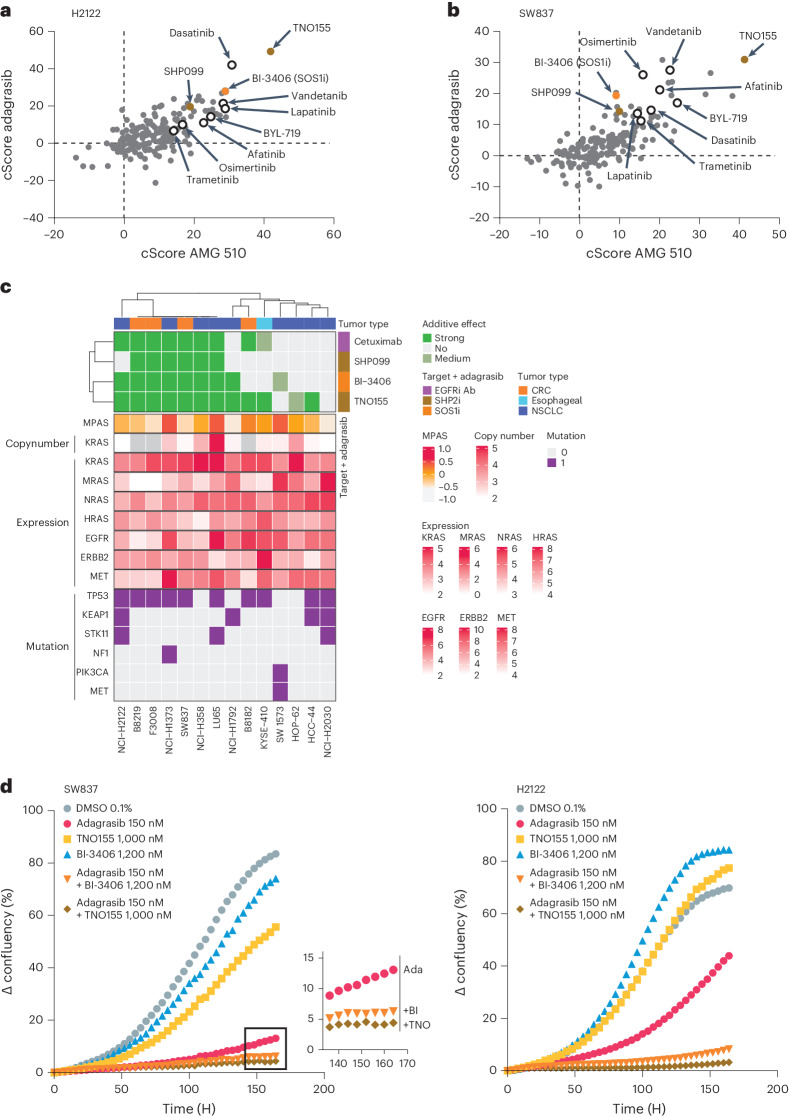
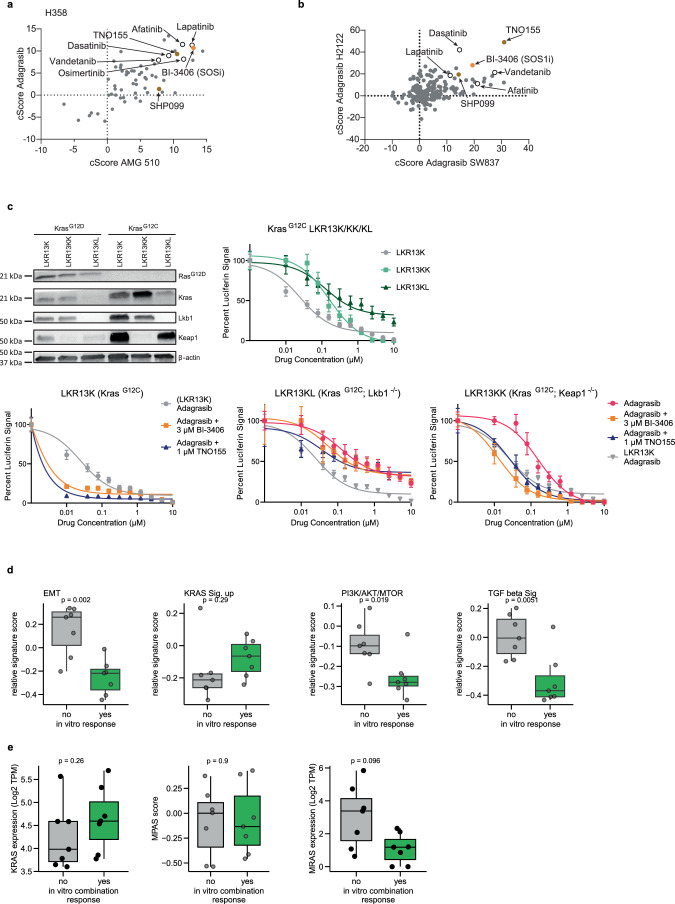
- In a 179-compound screen and a 14-cell-line panel, adagrasib plus BI-3406, TNO155, cetuximab, or SHP099 produced strong additive antiproliferative effects in largely overlapping KRASG12C models: BI-3406 8/14, TNO155 11/14, cetuximab 8/14, SHP099 6/14; 3–6 of 14 lines showed moderate or no response.
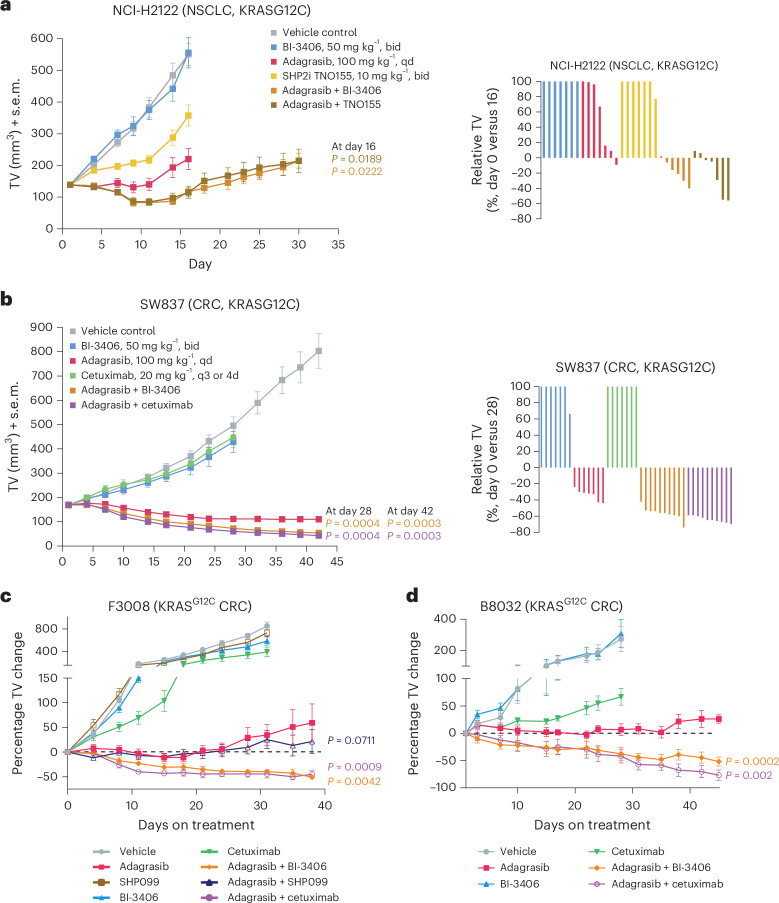
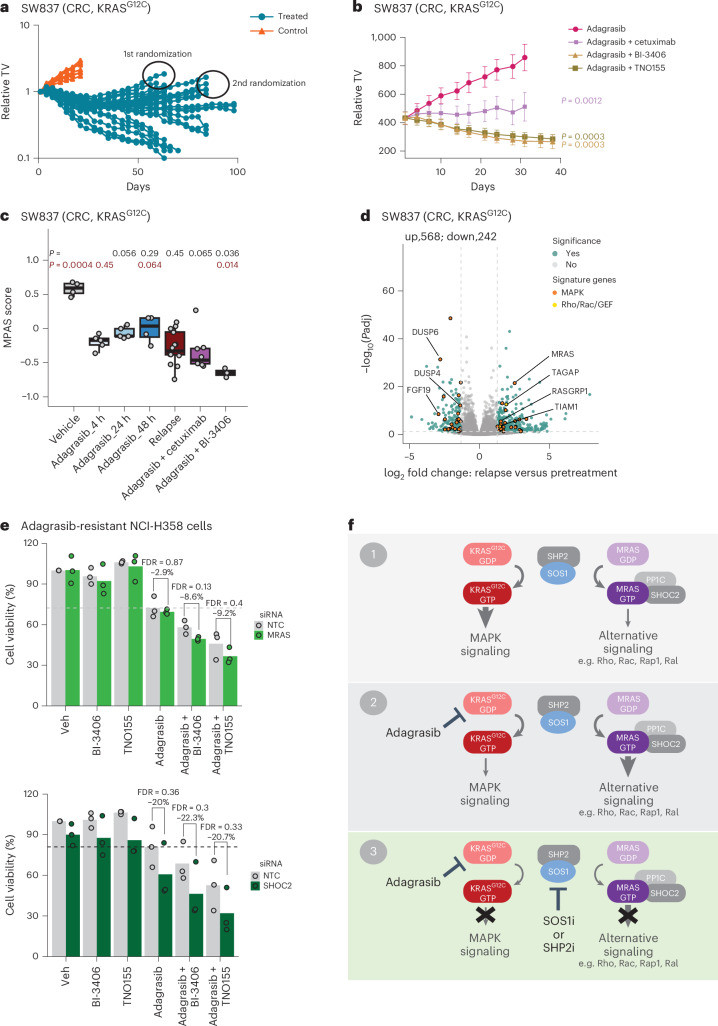
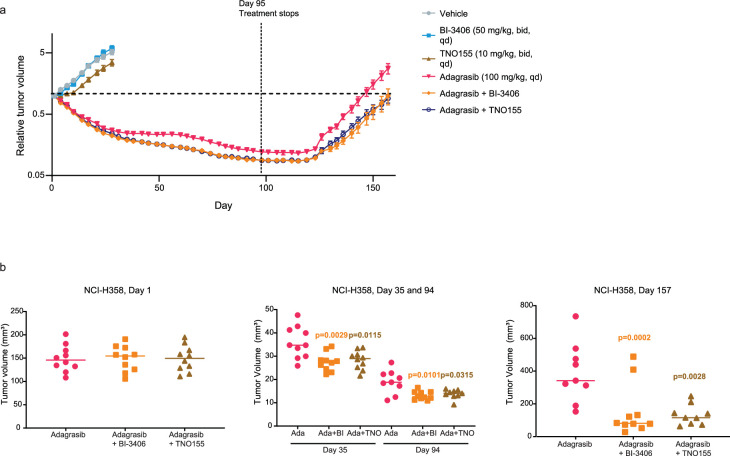
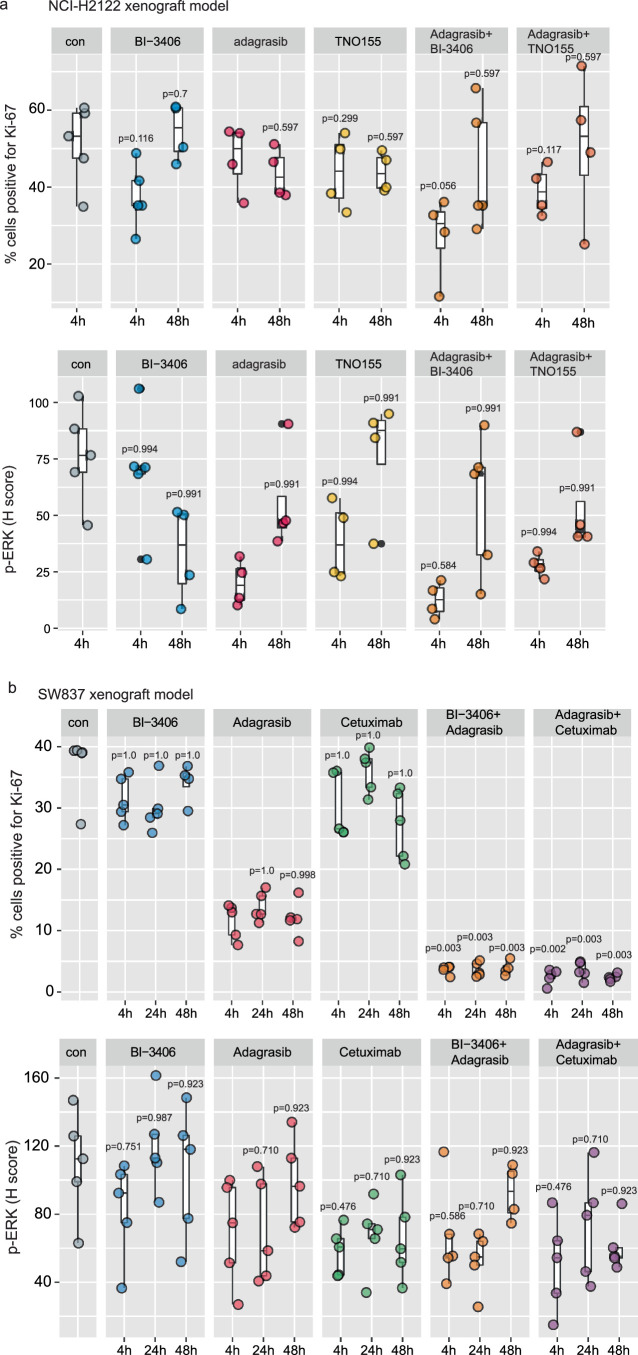
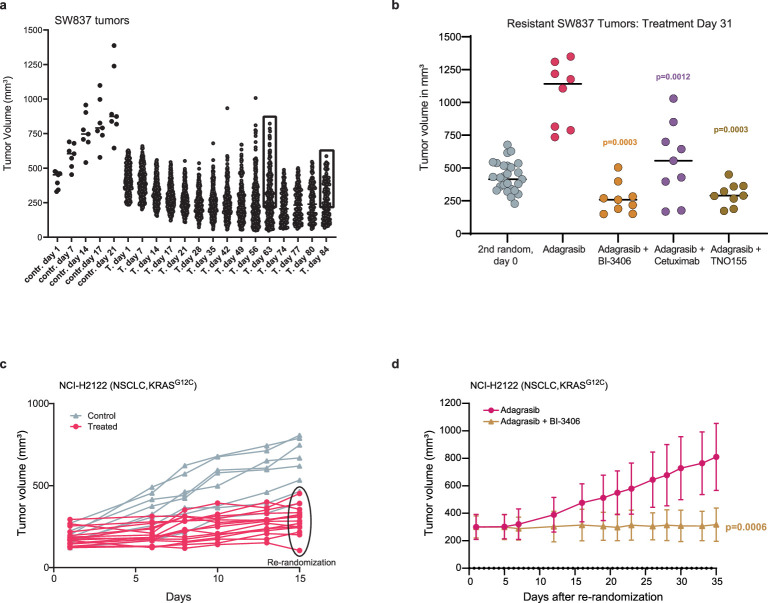
- In NCI-H2122 xenografts, adagrasib monotherapy gave 83% TGI on day 16, whereas adagrasib plus BI-3406 gave 106% TGI (average ΔTV −18%) and plus TNO155 gave 104% TGI (average ΔTV −13%) (P = 0.0222 and P = 0.0189, respectively). In SW837 xenografts, adagrasib plus BI-3406 gave 119% TGI (average ΔTV −67.8%) and plus cetuximab 121% TGI (average ΔTV −74.4%) versus adagrasib alone 108% TGI (average ΔTV −35%) on day 42.
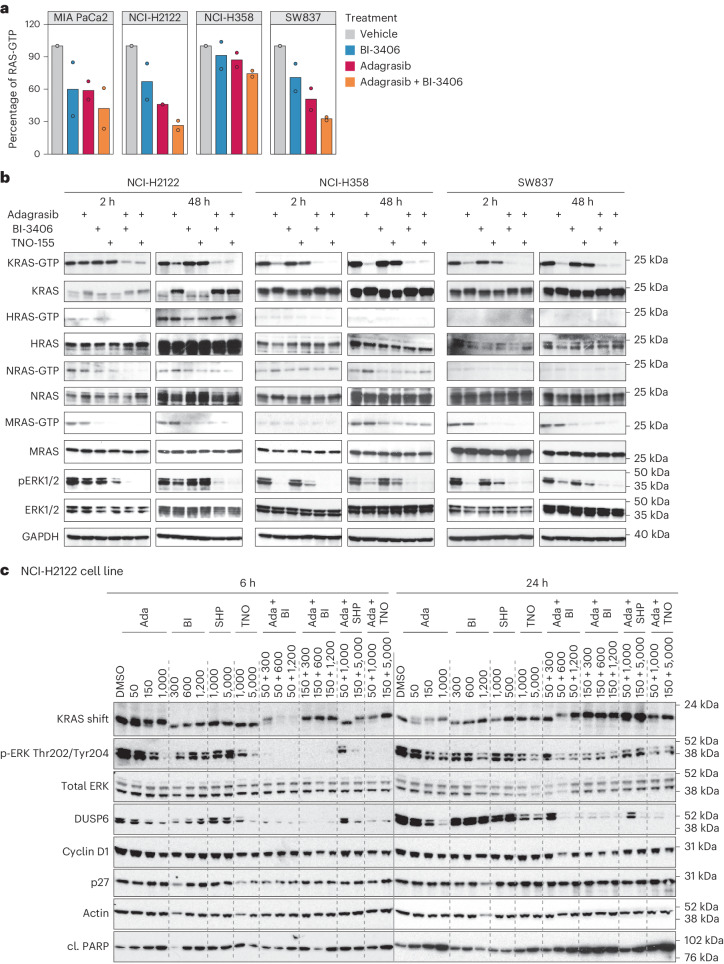
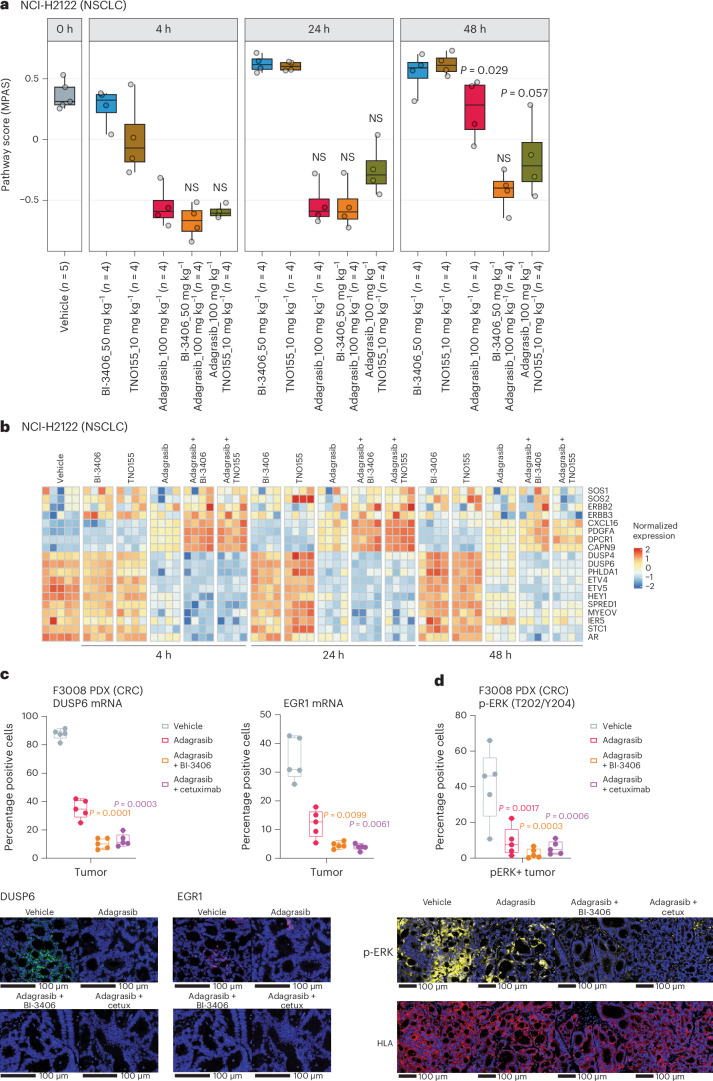
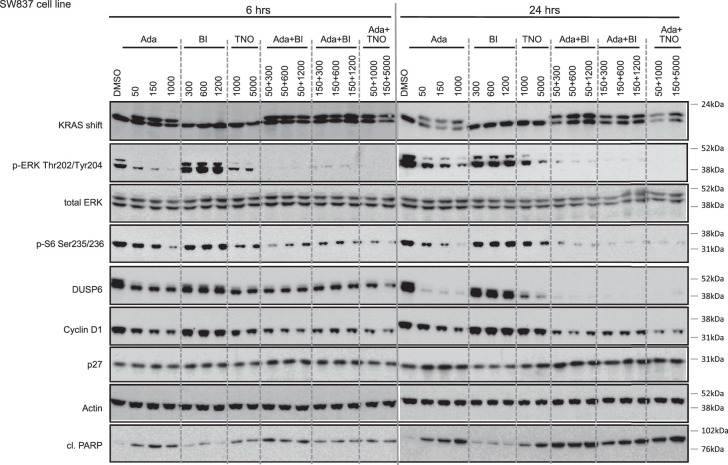
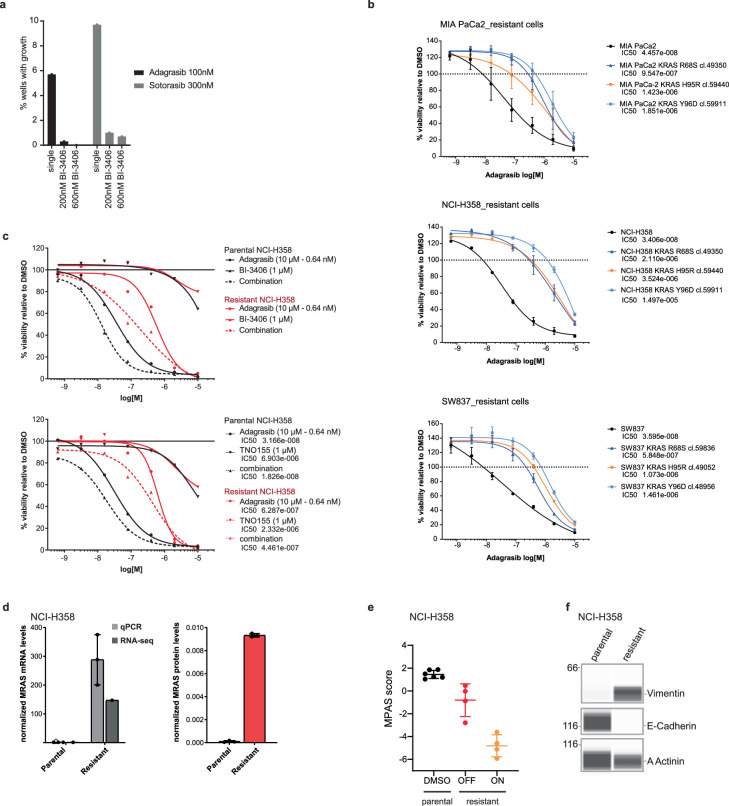
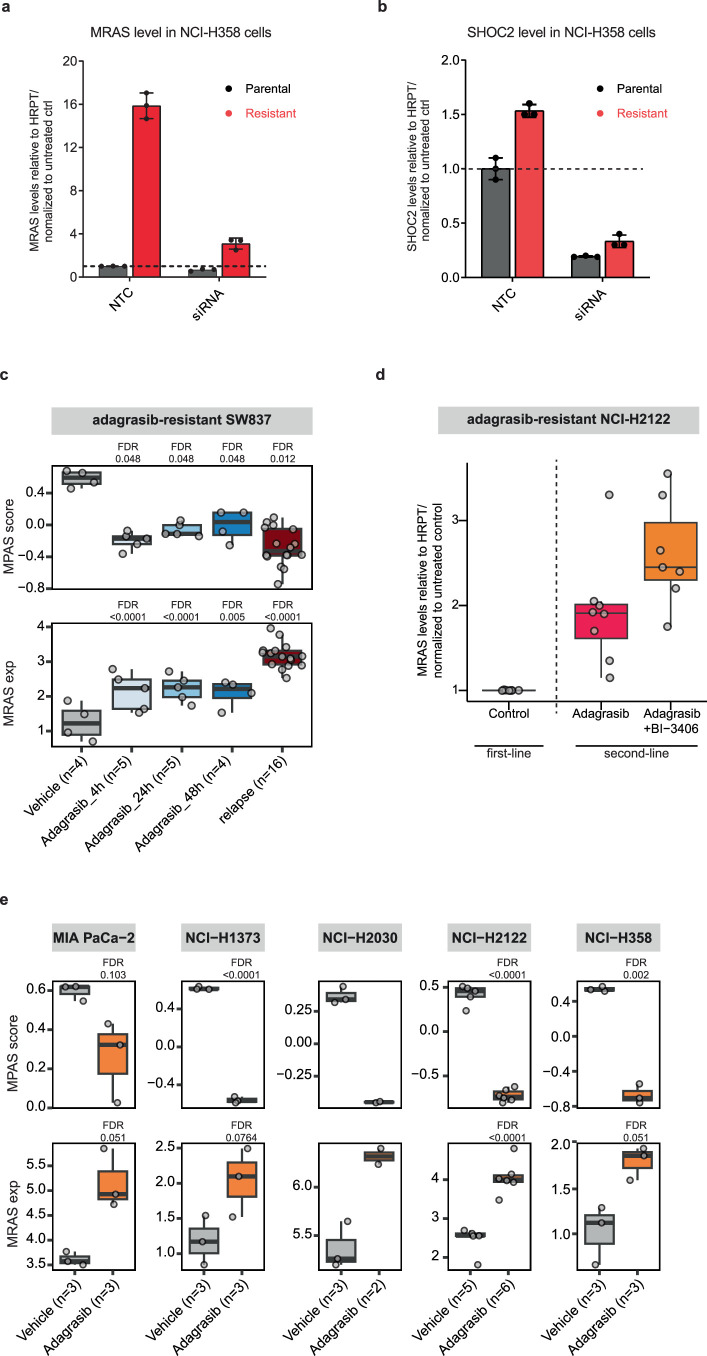
- Combination treatment deepened and prolonged suppression of RAS-GTP and RAS-MAPK signaling, counteracted WT RAS isoform activity, and delayed MAPK rebound; adagrasib-resistant NCI-H358 cells showed increased MRAS (16-fold) and SHOC2 (2.5-fold) expression, and SHOC2 knockdown partially re-sensitized resistant cells to adagrasib and more so to adagrasib plus SOS1i or SHP2i.
- Adagrasib plus BI-3406 or TNO155 re-established tumor regression in relapsed adagrasib-resistant SW837 xenografts, whereas adagrasib alone did not; established on-target KRAS secondary mutations (R68S, H95Y, Y96D) were not effectively addressed by BI-3406 or TNO155.
Methods
- Preclinical study using KRASG12C-mutant NSCLC and CRC cell lines, including a high-throughput combination screen of 179 small-molecule inhibitors, a 14-cell-line validation panel, engineered KRASG12C Ba/F3 variant libraries, and adagrasib-resistant cell models.
- In vivo efficacy and pharmacodynamic studies used cell line-derived xenografts (NCI-H2122, NCI-H358, SW837) and patient-derived xenografts (F3008, B8032), with tumor volume, body weight, pharmacokinetics, and biomarker analyses.
- Molecular analyses included RAS-GTP G-LISA, active RAS pulldown with immunoblotting for K/N/H/MRAS, western blot, RNA-seq with differential expression/GSEA/MPAS, whole-genome sequencing, RNAscope, multiplex immunofluorescence, siRNA knockdown, and standard statistical testing with multiple-comparison adjustment.
Limitations
- Stated: additional functional studies are needed to clarify the role of elevated MRAS and RasGRP1 in mediating KRASG12Ci resistance; the exact molecular mechanism linking MRAS modulation to oxidative phosphorylation, ROS, and MYC target genes remains to be elucidated; separate studies are needed to confirm whether SOS1i delays resistance with KRASG12C(ON) inhibitors.
- Stated: the mechanisms of differential resistance of Lkb1 versus Keap1 loss to combination therapy are under investigation, and further investigation is required to determine whether EMT, PI3K/AKT/mTOR, and TGFβ signatures could serve as clinical biomarkers of response.
- Evident: findings are preclinical only, with no clinical efficacy or safety outcomes reported; some in vitro experiments used n = 1 independent culture or limited replicates, and the resistance mechanism was not universal, as F3008 and B8032 outgrowth may have been driven by other genetic mechanisms.
Model-written summary. Check it against the paper before relying on it.
Integrity signals
Registry
Cites
Statistics
Figures
Verification
Claims the paper makes
13 Valid · 0 Not valid · 24 Not checked · 135 Own results and interpretations
The cited sources support only part of this claim — read each source’s verdict below.
In the paper
“Preclinical and clinical studies, however, have demonstrated that cancers lose sensitivity to KRASG12Ci and re-establish RAS-MAPK signaling through multiple mechanisms, including increased activation of mutant or wild-type (WT) RAS and/or gain of upstream/downstream bypass events1,7,9,10,13,14.”
§ Co-targeting SOS1 enhances the antitumor effects of KRASG12C inhibitors by addressing intrinsic and acquired resistance > Main
What the sources say
- Supportedcites [1] Hofmann, M. H., Gerlach, D., Misale, S., Petronczki, M. & Kraut, N. Expanding the reach of precision oncology by drugging all KRAS mutants. Cancer Discov. 12, 924–937 (2022). 35046095 PMC9394389 source
The acquired-resistance section reports clinical progression on KRASG12C inhibitors and reactivation of RAS/MAPK signaling. It lists acquired KRAS alterations and bypass events involving upstream receptors and downstream kinases; the Introduction also describes preclinical EGFR-driven adaptive resistance. The section discusses wild-type KRAS as a potential mediator of upstream bypass resistance. (LLM, conf=0.91)
- Partly supportedcites [7] Skoulidis, F. et al. Sotorasib for lung cancers with KRAS p.G12C mutation. N. Engl. J. Med. 384, 2371–2381 (2021). 34096690 PMC9116274 sourceExperimental — accuracy not yet measured
The Discussion says KRAS-mutated tumors may adapt to KRASG12C inhibition and that alternative pathways may drive growth. It presents these as possibilities requiring further investigation, not as demonstrated loss of sensitivity through reactivated RAS–MAPK signaling, mutant or wild-type RAS activation, or specific bypass events. Page numbers are unavailable in our copy. (LLM, conf=0.85)
- Partly supportedcites [9] Awad, M. M. et al. Acquired resistance to KRAS(G12C) inhibition in cancer. N. Engl. J. Med. 384, 2382–2393 (2021). 34161704 PMC8864540 sourceExperimental — accuracy not yet measured
The Results (page unavailable) identify acquired KRAS and NRAS mutations and upstream and downstream RTK–RAS–MAPK alterations in patients resistant to adagrasib. The Results also show sustained RAS–MAPK signaling in resistant cells. Our copy does not establish increased activation of wild-type RAS as a resistance mechanism. (LLM, conf=0.82)
- Partly supportedcites [10] Koga, T. et al. KRAS secondary mutations that confer acquired resistance to KRAS G12C inhibitors, sotorasib and adagrasib, and overcoming strategies: insights from in vitro experiments. J. Thorac. Oncol. 16, 1321–1332 (2021). 33971321 sourceExperimental — accuracy not yet measured
The Introduction (p. 2) describes bypass-pathway activation as a resistance mechanism, and the Discussion (p. 9) reports secondary KRAS mutations and clinical findings involving other MAP-kinase-pathway genes. The validation results (p. 6) show that ERK phosphorylation persisted under treatment in cells carrying certain secondary KRAS mutations. Our copy does not establish increased activation of wild-type RAS or demonstrate the full range of upstream and downstream bypass events stated in the claim. (LLM, conf=0.84)
- Partly supportedcites [13] Liu, C. et al. Combinations with allosteric SHP2 inhibitor TNO155 to block receptor tyrosine kinase signaling. Clin. Cancer Res. 27, 342–354 (2021). 33046519 sourceExperimental — accuracy not yet measured
In the section on TNO155 and KRAS G12C inhibitors (page not specified), the paper reports that MAPK signaling rebounded after inhibitor treatment in cancer cell lines and links feedback activation to wild-type RAS proteins. It does not establish the claimed range of mutant-RAS activation and upstream/downstream bypass events as mechanisms of lost sensitivity in cancers, particularly in clinical studies. (LLM, conf=0.88)
- Not checked yetcites [14] Adachi, Y. et al. Scribble mis-localization induces adaptive resistance to KRAS G12C inhibitors through feedback activation of MAPK signaling mediated by YAP-induced MRAS. Nat. Cancer 4, 829–843 (2023). 37277529 source
boostedstates a cause- Asserted: passes — The authors put it forward as true.
- Checkable: passes — It can be checked against evidence.
- Load-bearing: passes — The paper’s conclusions depend on it.
- Based: passes — The paper gives a reason why it holds.
- Supported
Every source the paper cites for this claim was checked and supports it.
In the paper
“Combination approaches that co-target regulators upstream of KRAS, including receptor tyrosine kinases (RTKs) and SHP2, improve KRASG12Ci response in preclinical models13,15–17.”
§ Co-targeting SOS1 enhances the antitumor effects of KRASG12C inhibitors by addressing intrinsic and acquired resistance > Main
What the sources say
- Supportedcites [13] Liu, C. et al. Combinations with allosteric SHP2 inhibitor TNO155 to block receptor tyrosine kinase signaling. Clin. Cancer Res. 27, 342–354 (2021). 33046519 source
The section on TNO155 and KRAS G12C inhibitors reports that combining the SHP2 inhibitor TNO155 with a KRAS G12C inhibitor enhanced inhibition of cell proliferation in preclinical cancer cell lines. The Discussion also reports synergy for that combination. This paper supports the SHP2 part of the multi-citation claim; it discusses RTK inhibition as an alternative but does not test an RTK-inhibitor combination with a KRAS G12C inhibitor. (LLM, conf=0.92)
- Supportedcites [15] Ryan, M. B. et al. KRAS(G12C)-independent feedback activation of wild-type RAS constrains KRAS(G12C) inhibitor efficacy. Cell Rep. 39, 110993 (2022). 35732135 PMC9809542 source
The Results section reports that combining KRASG12C inhibition with the EGFR inhibitor panitumumab or the SHP2 inhibitor RMC-4550 improved suppression of signaling in preclinical CRC models. The Discussion reports more consistent suppression and more durable responses with KRASG12C/SHP2 co-targeting, while noting that benefit from EGFR co-inhibition varied across models. (LLM, conf=0.90)
- Supportedcites [16] Ryan, M. B. et al. Vertical pathway inhibition overcomes adaptive feedback resistance to KRAS(G12C) inhibition. Clin. Cancer Res. 26, 1633–1643 (2020). 31776128 PMC7124991 source
The Results section reports that combining a KRASG12C inhibitor with selected RTK inhibitors reduced cell viability more than the KRASG12C inhibitor alone, although the effective RTK varied by model. It also reports improved efficacy with combined KRASG12C and SHP2 inhibition in cell-line and xenograft models. (LLM, conf=0.93)
- Supportedcites [17] Amodio, V. et al. EGFR blockade reverts resistance to KRAS(G12C) inhibition in colorectal cancer. Cancer Discov. 10, 1129–1139 (2020). 32430388 PMC7416460 source
The Abstract (p. 2) reports that combining EGFR blockade with KRAS G12C inhibition is highly effective in colorectal cancer cells, organoids, and xenografts. The Discussion (p. 9) also reports preclinical growth suppression with combined SHP2 and KRAS G12C inhibitors, while noting that this did not produce complete tumor regression. (LLM, conf=0.88)
plainstates a cause- Asserted: passes — The authors put it forward as true.
- Checkable: passes — It can be checked against evidence.
- Load-bearing: passes — The paper’s conclusions depend on it.
- Based: passes — The paper gives a reason why it holds.
- Supported
The cited sources support only part of this claim — read each source’s verdict below.
In the paper
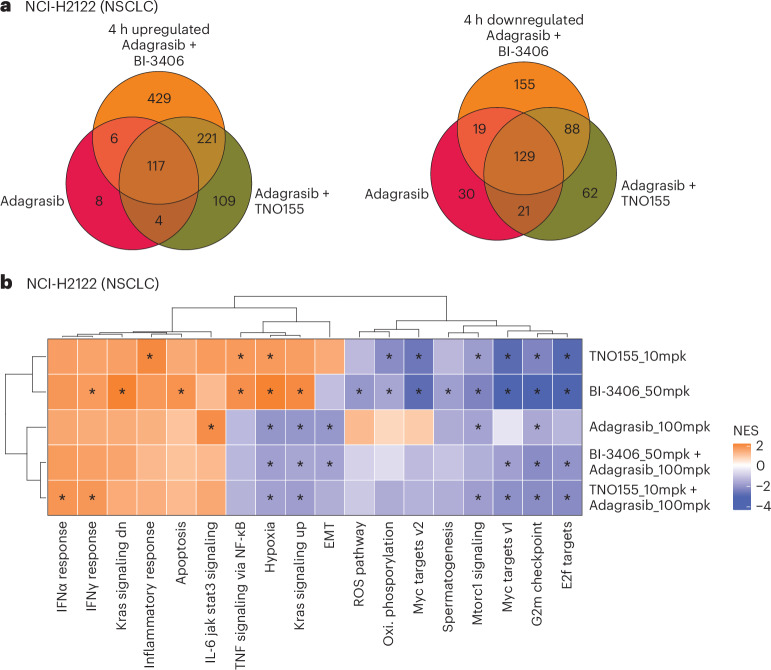
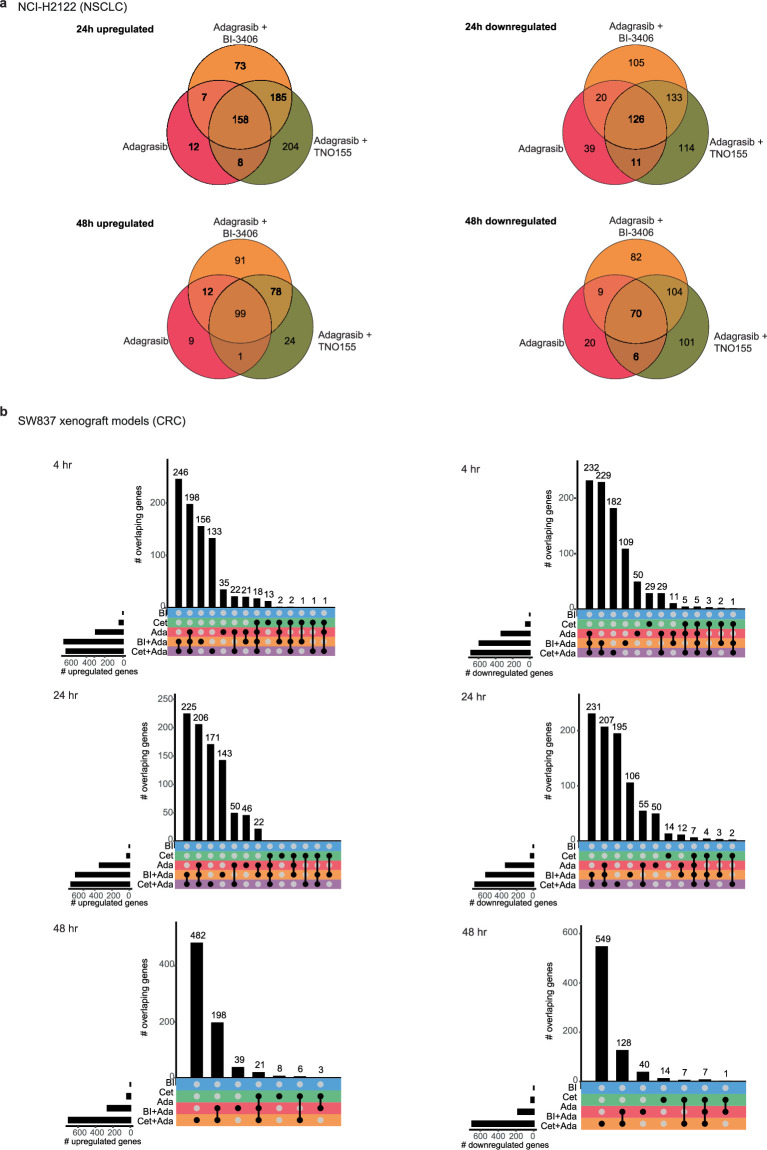
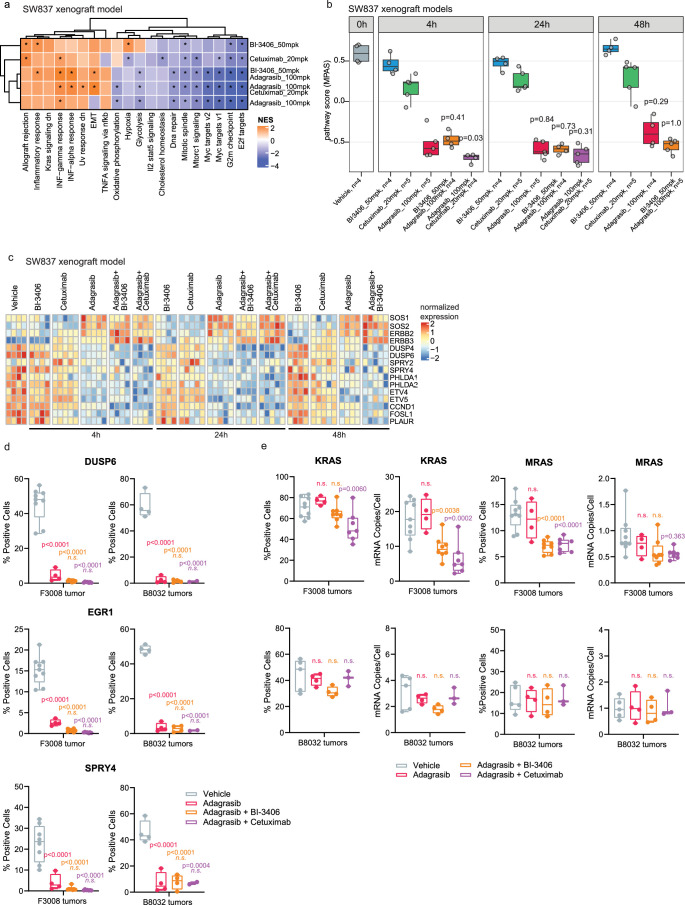
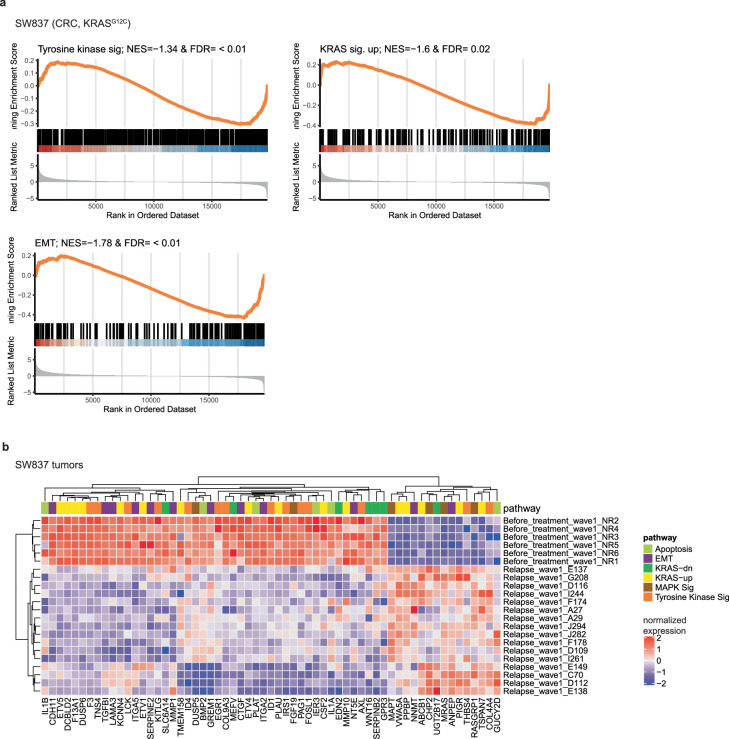
“On the molecular level, upregulation of SOS1, SOS2 and RTKs (for example ERBB2 and ERBB3), as well as CXCL16 and PDGFA, both associated with activation of the MAPK and/or PI3K signaling32,33, was observed as early as 4 h post-last dose of combination treatment (Fig. 5b).”
§ Co-targeting SOS1 enhances the antitumor effects of KRASG12C inhibitors by addressing intrinsic and acquired resistance > Results > KRASG12Ci combination therapy inhibits RAS-MAPK signaling
What the sources say
- Supportedcites [32] Korbecki, J. et al. The role of CXCL16 in the pathogenesis of cancer and other diseases. Int. J. Mol. Sci. 10.3390/ijms22073490 (2021). PMC8036711 33800554 source
The citation is attached to the signaling association, not to the citing authors’ observation of upregulation 4 hours after treatment. In sections 2 and 3, the source describes CXCL16/CXCR6 signaling through PI3K–Akt and ERK MAPK, supporting the CXCL16 association attributed to it. (LLM, conf=0.91)
- Partly supportedcites [33] Wu, E. et al. Comprehensive dissection of PDGF–PDGFR signaling pathways in PDGFR genetically defined cells. PLoS ONE 3, e3794 (2008). 19030102 PMC2582946 sourceExperimental — accuracy not yet measured
The Introduction identifies PDGF-A as part of the PDGF ligand family, and the Results (Characterization of PDGFR knockout cell lines; page unavailable) state that PDGF–PDGFR signaling triggers MAPK and PI3K–AKT pathways. This supports the cited pathway association for PDGF signaling, but the paper does not establish that SOS1, SOS2, ERBB2, ERBB3, or CXCL16 are associated with activation of those pathways. The four-hour observation is presented as the citing paper’s own result (Fig. 5b), not as a finding attributed to this source. (LLM, conf=0.83)
plainstates a cause- Asserted: passes — The authors put it forward as true.
- Checkable: passes — It can be checked against evidence.
- Load-bearing: passes — The paper’s conclusions depend on it.
- Based: passes — The paper gives a reason why it holds.
- Supported
The cited sources support only part of this claim — read each source’s verdict below.
In the paper
“Moreover, co-targeting SOS1 or SHP2 may block proposed adaptive escape mechanisms, such as upregulation or activation of WT RAS isoforms14,15, which remain reliant on GEFs for activation.”
§ Co-targeting SOS1 enhances the antitumor effects of KRASG12C inhibitors by addressing intrinsic and acquired resistance > Discussion
What the sources say
- Not checked yetcites [14] Adachi, Y. et al. Scribble mis-localization induces adaptive resistance to KRAS G12C inhibitors through feedback activation of MAPK signaling mediated by YAP-induced MRAS. Nat. Cancer 4, 829–843 (2023). 37277529 source
- Partly supportedcites [15] Ryan, M. B. et al. KRAS(G12C)-independent feedback activation of wild-type RAS constrains KRAS(G12C) inhibitor efficacy. Cell Rep. 39, 110993 (2022). 35732135 PMC9809542 sourceExperimental — accuracy not yet measured
Our copy supports the core of the attribution: the Discussion states that 'targeting convergent nodes modulating upstream feedback (such as with SHP2, SOS1, or pan-RAS inhibitors) represent a promising strategy to enhance efficacy,' and the Results section 'Upstream or downstream vertical inhibition strategies...' shows the SHP2 inhibitor RMC-4550 blocking the KRASG12C-inhibitor-induced rise in NRAS-GTP and HRAS-GTP and the P-ERK rebound, i.e. activation of WT RAS as the adaptive escape route. However, the 'upregulation' half of the claim is not what this paper found — in 'Activation of wild-type RAS can sustain MAPK signaling...' it explicitly reports 'We did not observe consistent changes in total HRAS and NRAS protein levels, despite observing a consistent increase in NRAS-GTP and HRAS-GTP levels.' SOS1 is also only named speculatively in the Discussion, with no SOS1-inhibitor experiments in our copy (only SHP2, EGFR, MEK, FGFR and NRAS/HRAS knockdown), and the GEF-dependence of WT RAS activation is not stated as such. (LLM, conf=0.72)
hedgedstates a possible cause- Asserted: passes — The authors put it forward as true.
- Checkable: passes — It can be checked against evidence.
- Load-bearing: passes — The paper’s conclusions depend on it.
- Based: passes — The paper gives a reason why it holds.
A result the paper reports from its own data — it cites no other source for it, so there is none to check. The quote shows it is in the paper.
In the paper
“and correlated with stronger suppression of RAS-MAPK signaling.”
§ Co-targeting SOS1 enhances the antitumor effects of KRASG12C inhibitors by addressing intrinsic and acquired resistance > Abstract
plainstates an association- Asserted: passes — The authors put it forward as true.
- Checkable: passes — It can be checked against evidence.
- Load-bearing: passes — The paper’s conclusions depend on it.
- Based: passes — The paper gives a reason why it holds.
93 more claims
Create a free account to see all 172 claims and to verify the 47 references still open.
- It may state two separate claims as one. 56
- Probably not a substantial claim. 24
Claims other papers make about this one
Each is checked against this paper’s own text: does it say what the citing paper says it does?
The cited source says what the claim attributes to it.
In the citing paper
“SOS1 inhibitors, such as BI3406, have been shown to overcome resistance of KRAS inhibitors in KRAS G12C NSCLC and CRC preclinical models [91].”
From Differential Response and Resistance to KRAS-Targeted Therapy (2025) · cites this paper as [91]
Self-check
Percentages, sums and reported differences re-computed from the paper’s own numbers.
Each contradiction between two passages listed here was confirmed by an independent check.
Rated major: it would touch a result — a value a result rests on, reported and recomputed p-values on opposite sides of the significance level, two passages that conflict with no sign which is right, or a cited work retracted before this paper was published.
In the paper
§ Co-targeting SOS1 enhances the antitumor effects of KRASG12C inhibitors by addressing intrinsic and acquired resistance > Results > Combination therapy enhances antiproliferative responses
“d, Change in TV in NSG mice implanted with KRASG12C B8032 CRC PDX fragments and treated with vehicle, adagrasib (100 mg kg−1, daily), BI-3406 (50 mg kg−1, twice daily), cetuximab (20 mg kg−1, twice weekly)”
§ Co-targeting SOS1 enhances the antitumor effects of KRASG12C inhibitors by addressing intrinsic and acquired resistance > Methods > PDX studies
“For each model, tumor fragments (4 × 4 × 4 mm3) were implanted on the right hind flanks of the mouse host and allowed to grow to an average volume of 100–250 mm3 as monitored by caliper measurements. All orally administered compounds were dosed on a schedule of 5 days on and 2 days off. At enrollment, animals were randomized and treated with vehicle (0.5% Natrosol) orally twice a day (6 h apart), BI-3406 at 50 mg kg−1 orally twice a day (6 h apart), cetuximab at 15 mg kg−1 i.p. twice a week”
Rated major: it would touch a result — a value a result rests on, reported and recomputed p-values on opposite sides of the significance level, two passages that conflict with no sign which is right, or a cited work retracted before this paper was published.
In the paper
§ Co-targeting SOS1 enhances the antitumor effects of KRASG12C inhibitors by addressing intrinsic and acquired resistance > Methods > Pharmacodynamic biomarker analysis
“For pharmacodynamic biomarker studies using NCI-H2122 and SW837 models, animals were first randomized and treated for 5 days with the dosing schedules described above.”
§ Co-targeting SOS1 enhances the antitumor effects of KRASG12C inhibitors by addressing intrinsic and acquired resistance > Results > KRASG12Ci combination therapy inhibits RAS-MAPK signaling
“Tumor-bearing mice were treated with either single-agent or combination treatments for 7 (24 h time point) to 8 (4 and 48 h time points) consecutive days, with samples collected at 4, 24 and 48 h after the last dose.”
Rated major: it would touch a result — a value a result rests on, reported and recomputed p-values on opposite sides of the significance level, two passages that conflict with no sign which is right, or a cited work retracted before this paper was published.
In the paper
§ Co-targeting SOS1 enhances the antitumor effects of KRASG12C inhibitors by addressing intrinsic and acquired resistance > Results > Combination therapy enhances antiproliferative responses
“d, Change in TV in NSG mice implanted with KRASG12C B8032 CRC PDX fragments”
§ Co-targeting SOS1 enhances the antitumor effects of KRASG12C inhibitors by addressing intrinsic and acquired resistance > Methods > PDX studies
“the B8032 PDX study was performed in female athymic nude (NU(NCr)-Foxn1nu; strain 490) mice”
Rated minor: it would not touch a result — a value no result rests on, a p-value that stays on the same side of the significance level, or a conflict that is clerical, resolved elsewhere in the paper, or outside its own findings.
In the paper
§ Co-targeting SOS1 enhances the antitumor effects of KRASG12C inhibitors by addressing intrinsic and acquired resistance > Results > KRASG12Ci combination therapy inhibits RAS-MAPK signaling
“All treatments were administered for 7 consecutive days, and samples were collected after the last dose.”
§ Co-targeting SOS1 enhances the antitumor effects of KRASG12C inhibitors by addressing intrinsic and acquired resistance > Results > KRASG12Ci combination therapy inhibits RAS-MAPK signaling
“Tumor-bearing mice were treated with either single-agent or combination treatments for 7 (24 h time point) to 8 (4 and 48 h time points) consecutive days, with samples collected at 4, 24 and 48 h after the last dose.”
Rated minor: it would not touch a result — a value no result rests on, a p-value that stays on the same side of the significance level, or a conflict that is clerical, resolved elsewhere in the paper, or outside its own findings.
In the paper
§ Co-targeting SOS1 enhances the antitumor effects of KRASG12C inhibitors by addressing intrinsic and acquired resistance > Results > Co-targeting SOS1 addresses resistance to KRASG12Ci
“with regrowth of more than 100 mm³ representing acquired resistance”
§ Co-targeting SOS1 enhances the antitumor effects of KRASG12C inhibitors by addressing intrinsic and acquired resistance > Results > Co-targeting SOS1 addresses resistance to KRASG12Ci
“Outgrowing adagrasib-resistant tumors from a that had increased in size to ≤100 mm³ were treated with adagrasib”
2 more findings
Create a free account to see every finding of this check.
Citations
Cites
Moderated estimation of fold change and dispersion for RNA-seq data with DESeq2
Love, M. I., Huber, W., & Anders, S. (2014) · Genome Biology · doi:10.1186/s13059-014-0550-8 · Cited by 95,106
Subramanian, A., Tamayo, P., Mootha, V. K., Mukherjee, S., Ebert, B. L., Gillette, M. A., Paulovich, A., Pomeroy, S. L., Golub, T. R., Lander, E. S., et al. (2005) · Proceedings of the National Academy of Sciences · doi:10.1073/pnas.0506580102 · Cited by 53,625
STAR: ultrafast universal RNA-seq aligner
Dobin, A., Davis, C. A., Schlesinger, F., Drenkow, J., Zaleski, C., Jha, S., Batut, P., Chaisson, M., & Gingeras, T. R. (2013) · Bioinformatics · doi:10.1093/bioinformatics/bts635 · Cited by 51,709 · cited 1×
“…of the ENCODE ‘Long RNA-seq’ pipeline; filtered reads were mapped against the Homo sapiens (human) genome hg38/GRCh38 (primary assembly, excluding alternate contigs) or the Mus musculus (mouse) genome mm10/GRCm38 using the STAR (v.2.5.2b) 65 aligner allowing for soft clipping of adaptor sequences.”
InfluentialfeatureCounts: an efficient general purpose program for assigning sequence reads to genomic features
Liao, Y., Smyth, G. K., & Shi, W. (2014) · Bioinformatics · doi:10.1093/bioinformatics/btt656 · Cited by 27,219
Cerami, E., Gao, J., Dogrusoz, U., Gross, B. E., Sumer, S. O., Aksoy, B. A., Jacobsen, A., Byrne, C. J., Heuer, M. L., Larsson, E., et al. (2012) · Cancer Discovery · doi:10.1158/2159-8290.cd-12-0095 · Cited by 17,455
GSVA: gene set variation analysis for microarray and RNA-Seq data
Hänzelmann, S., Castelo, R., & Guinney, J. (2013) · BMC Bioinformatics · doi:10.1186/1471-2105-14-7 · Cited by 15,440
The Molecular Signatures Database Hallmark Gene Set Collection
Liberzon, A., Birger, C., Thorvaldsdóttir, H., Ghandi, M., Mesirov, J. P., & Tamayo, P. (2015) · Cell Systems · doi:10.1016/j.cels.2015.12.004 · Cited by 13,807
Complex heatmaps reveal patterns and correlations in multidimensional genomic data
Gu, Z., Eils, R., & Schlesner, M. (2016) · Bioinformatics · doi:10.1093/bioinformatics/btw313 · Cited by 10,034
UpSetR: an R package for the visualization of intersecting sets and their properties
Conway, J. R., Lex, A., & Gehlenborg, N. (2017) · Bioinformatics · doi:10.1093/bioinformatics/btx364 · Cited by 3,586
Fast gene set enrichment analysis
Korotkevich, G., Sukhov, V., Budin, N., Shpak, B., Artyomov, M. N., & Sergushichev, A. (2016) · bioRxiv (Cold Spring Harbor Laboratory) · doi:10.1101/060012 · Cited by 3,454
THE TOXICITY OF POISONS APPLIED JOINTLY1
BLISS, C. I. (1939) · Annals of Applied Biology · doi:10.1111/j.1744-7348.1939.tb06990.x · Cited by 2,419 · cited 1×
“For this, the measured cell viability is subtracted from the expected cell viability using the Bliss Independence Model 61 , creating a ‘gap’ matrix with the two monotherapy concentrations on the x and y axis, respectively and the unit (%PoC).”
AACR Project GENIE: Powering Precision Medicine through an International Consortium
The AACR Project GENIE Consortium, The AACR Project GENIE Consortium, André, F., Arnedos, M., Baras, A. S., Baselga, J., Bedard, P. L., Berger, M. F., Bierkens, M., Calvo, F., et al. (2017) · Cancer Discovery · doi:10.1158/2159-8290.cd-17-0151 · Cited by 1,964
RAS Proteins and Their Regulators in Human Disease
Simanshu, D. K., Nissley, D. V., & McCormick, F. (2017) · Cell · doi:10.1016/j.cell.2017.06.009 · Cited by 1,943
Sotorasib for Lung Cancers with KRAS p.G12C Mutation
Skoulidis, F., Li, B. T., Dy, G. K., Price, T. J., Falchook, G. S., Wolf, J., Italiano, A., Schuler, M., Borghaei, H., Barlesi, F., et al. (2021) · New England Journal of Medicine · doi:10.1056/nejmoa2103695 · Cited by 1,849 · cited 4×
“Preclinical and clinical studies, however, have demonstrated that cancers lose sensitivity to KRAS G12C i and re-establish RAS-MAPK signaling through multiple mechanisms, including increased activation of mutant or wild-type (WT) RAS and/or gain of upstream/ downstream bypass events 1,7,9,10,13,14 .”
InfluentialKRAS G12C Inhibition with Sotorasib in Advanced Solid Tumors
Hong, D. S., Fakih, M. G., Strickler, J. H., Desai, J., Durm, G. A., Shapiro, G. I., Falchook, G. S., Price, T. J., Sacher, A., Denlinger, C. S., et al. (2020) · New England Journal of Medicine · doi:10.1056/nejmoa1917239 · Cited by 1,733
Hallin, J., Engstrom, L. D., Hargis, L., Calinisan, A., Aranda, R., Briere, D. M., Sudhakar, N., Bowcut, V., Baer, B. R., Ballard, J. A., et al. (2020) · Cancer Discovery · doi:10.1158/2159-8290.cd-19-1167 · Cited by 1,304
Acquired Resistance to KRAS G12C Inhibition in Cancer
Awad, M. M., Liu, S., Rybkin, I. I., Arbour, K. C., Dilly, J., Zhu, V. W., Johnson, M. L., Heist, R. S., Patil, T., Riely, G. J., et al. (2021) · New England Journal of Medicine · doi:10.1056/nejmoa2105281 · Cited by 1,247
Somatic activation of the K-ras oncogene causes early onset lung cancer in mice
Johnson, L., Mercer, K., Greenbaum, D., Bronson, R. T., Crowley, D., Tuveson, D. A., & Jacks, T. (2001) · Nature · doi:10.1038/35074129 · Cited by 1,179
Targeting KRAS mutant cancers with a covalent G12C-specific inhibitor
Janes, M. R., Zhang, J., Li, L.-S., Hansen, R., Peters, U., Guo, X., Chen, Y., Babbar, A., Firdaus, S. J., Darjania, L., et al. (2018) · Cell · doi:10.1016/j.cell.2018.01.006 · Cited by 1,172
The Frequency of Ras Mutations in Cancer
Prior, I. A., Hood, F. E., & Hartley, J. L. (2020) · Cancer Research · doi:10.1158/0008-5472.can-19-3682 · Cited by 1,130
RAS-targeted therapies: is the undruggable drugged?
Moore, A. R., Rosenberg, S. C., McCormick, F., & Malek, S. (2020) · Nature Reviews Drug Discovery · doi:10.1038/s41573-020-0068-6 · Cited by 1,103
Biochemical and Structural Analysis of Common Cancer-Associated KRAS Mutations
Hunter, J. C., Manandhar, A., Carrasco, M. A., Gurbani, D., Gondi, S., & Westover, K. D. (2015) · Molecular Cancer Research · doi:10.1158/1541-7786.mcr-15-0203 · Cited by 786
Selective inhibition of oncogenic KRAS output with small molecules targeting the inactive state
Patricelli, M. P., Janes, M. R., Li, L.-S., Hansen, R., Peters, U., Kessler, L. V., Chen, Y., Kucharski, J. M., Feng, J., Ely, T., et al. (2016) · Cancer Discovery · doi:10.1158/2159-8290.cd-15-1105 · Cited by 759 · cited 1×
“Efforts to target mutant KRAS signaling in cancer have advanced tremen-dously, with multiple KRAS G12C -specific inhibitors in clinical or preclinical development 1,4,7,41–43 , but the rapid development of resistance limits progression-free survival 4,7 .”
Allele-specific inhibitors inactivate mutant KRAS G12C by a trapping mechanism
Lito, P., Solomon, M., Li, L.-S., Hansen, R., & Rosen, N. (2016) · Science · doi:10.1126/science.aad6204 · Cited by 691
ggplot2: Elegant Graphics for Data Analysis by WICKHAM, H.
Wilkinson, L. (2011) · Biometrics · doi:10.1111/j.1541-0420.2011.01616.x · Cited by 620
de Langen, A. J., Johnson, M. L., Mazieres, J., Dingemans, A.-M. C., Mountzios, G., Pless, M., Wolf, J., Schuler, M., Lena, H., Skoulidis, F., et al. (2023) · The Lancet · doi:10.1016/s0140-6736(23)00221-0 · Cited by 619
The current state of the art and future trends in RAS-targeted cancer therapies
Punekar, S. R., Velcheti, V., Neel, B. G., & Wong, K.-K. (2022) · Nature Reviews Clinical Oncology · doi:10.1038/s41571-022-00671-9 · Cited by 549
Pan-KRAS Inhibitor Disables Oncogenic Signalling and Tumour Growth
Kim, D., Herdeis, L., Rudolph, D., Zhao, Y., Böttcher, J., Vides, A., Ayala-Santos, C. I., Pourfarjam, Y., Cuevas-Navarro, A., Xue, J. Y., et al. (2023) · Nature · doi:10.1038/s41586-023-06123-3 · Cited by 534 · cited 1×
“Co-administration of SOS1i or SHP2i both lead to the pharmacological blockade of nucleotide exchange 44 and increased inactive RAS levels, thus potentiating the effect of KRAS G12C i.”
Self-citationAdagrasib with or without Cetuximab in Colorectal Cancer with Mutated KRAS G12C
Yaeger, R., Weiss, J., Pelster, M. S., Spira, A. I., Barve, M., Ou, S.-H. I., Leal, T. A., Bekaii-Saab, T. S., Paweletz, C. P., Heavey, G. A., et al. (2023) · New England Journal of Medicine · doi:10.1056/nejmoa2212419 · Cited by 527 · cited 1×
“16,20,21).”
Tanaka, N., Lin, J. J., Li, C., Ryan, M. B., Zhang, J., Kiedrowski, L. A., Michel, A. G., Syed, M. U., Fella, K. A., Sakhi, M., et al. (2021) · Cancer Discovery · doi:10.1158/2159-8290.cd-21-0365 · Cited by 527 · cited 2×
“…pathways including PI3K, mTOR, YAP/TAZ 4,7 , acquisition of secondary KRAS mutations that preclude compound binding (for example R68S, Y96C/D and H95D/ Q/R) 3,9,11 , conversion of cysteine to another amino acid in position 12, and additional activating KRAS mutations (G13D and Q61H) 11,34 .”
EGFR Blockade Reverts Resistance to KRASG12C Inhibition in Colorectal Cancer.
Amodio, V., Yaeger, R., Arcella, P., Cancelliere, C., Lamba, S., Lorenzato, A., Arena, S., Montone, M., Mussolin, B., Bian, Y., et al. (2020) · Cancer Discovery · doi:10.1158/2159-8290.cd-20-0187 · Cited by 504 · cited 3×
“In the remaining patients, no genomic mechanisms of resistance could be identified 13,16,17,47 , suggesting that non-genetic alterations could be involved.”
Vertical Pathway Inhibition Overcomes Adaptive Feedback Resistance to KRASG12C Inhibition
Ryan, M. B., Fece de la Cruz, F., Phat, S., Myers, D. T., Wong, E., Shahzade, H. A., Hong, C. B., & Corcoran, R. B. (2020) · Clinical Cancer Research · doi:10.1158/1078-0432.ccr-19-3523 · Cited by 496 · cited 9×
“Given the similar mode of action of SOS1i and SHP2i, we hypothesize that combination with a SOS1i may delay development of acquired resistance by deepening the inhibition of the KRAS pathway 13,16,17,47 ; however, separate studies are needed to confirm this.”
InfluentialDiverse alterations associated with resistance to KRAS(G12C) inhibition
Zhao, Y., Murciano-Goroff, Y. R., Xue, J. Y., Ang, A., Lucas, J., Mai, T. T., Da Cruz Paula, A. F., Saiki, A. Y., Mohn, D., Achanta, P., et al. (2021) · Nature · doi:10.1038/s41586-021-04065-2 · Cited by 479 · cited 5×
“…pathways including PI3K, mTOR, YAP/TAZ 4,7 , acquisition of secondary KRAS mutations that preclude compound binding (for example R68S, Y96C/D and H95D/ Q/R) 3,9,11 , conversion of cysteine to another amino acid in position 12, and additional activating KRAS mutations (G13D and Q61H) 11,34 .”
InfluentialHofmann, M. H., Gmachl, M., Ramharter, J., Savarese, F., Gerlach, D., Marszalek, J. R., Sanderson, M. P., Kessler, D., Trapani, F., Arnhof, H., et al. (2021) · Cancer Discovery · doi:10.1158/2159-8290.cd-20-0142 · Cited by 444
Self-citationRicciuti, B., Arbour, K. C., Lin, J. J., Vajdi, A., Vokes, N., Hong, L., Zhang, J., Tolstorukov, M. Y., Li, Y. Y., Spurr, L. F., et al. (2022) · Journal of Thoracic Oncology · doi:10.1016/j.jtho.2021.10.013 · Cited by 394 · cited 1×
“58) or KRAS G12C i (ref.”
Hillig, R. C., Sautier, B., Schroeder, J., Moosmayer, D., Hilpmann, A., Stegmann, C. M., Werbeck, N. D., Briem, H., Boemer, U., Weiske, J., et al. (2019) · Proceedings of the National Academy of Sciences · doi:10.1073/pnas.1812963116 · Cited by 388 · cited 5×
“SOS1 catalyzes RAS-GTP-loading as a GEF 24,25 and serves as a key node of feedback regulation 23,24 .”
InfluentialExpanding the Reach of Precision Oncology by Drugging All KRAS Mutants
Hofmann, M. H., Gerlach, D., Misale, S., Petronczki, M., & Kraut, N. (2022) · Cancer Discovery · doi:10.1158/2159-8290.cd-21-1331 · Cited by 336
Self-citationSingle-Agent Divarasib (GDC-6036) in Solid Tumors with a KRAS G12C Mutation
Sacher, A., LoRusso, P., Patel, M. R., Miller, W. H., Garralda, E., Forster, M. D., Santoro, A., Falcon, A., Kim, T. W., Paz-Ares, L., et al. (2023) · New England Journal of Medicine · doi:10.1056/nejmoa2303810 · Cited by 328 · cited 2×
“1,7,10,13–15,45), such as RTK activation 16 , KRAS G12C amplification 46 , activation of alternative signaling pathways including PI3K, mTOR, YAP/TAZ 4,7 , acquisition of secondary KRAS mutations that preclude compound binding (for example R68S, Y96C/D and H95D/ Q/R) 3,9,11 , conversion of cysteine to another amino ac…”
Rodriguez-Viciana, P., Sabatier, C., & McCormick, F. (2004) · Molecular and Cellular Biology · doi:10.1128/mcb.24.11.4943-4954.2004 · Cited by 327 · cited 1×
“While MRAS shares approximately 50% sequence identity with other RAS isoforms and can interact with some of the common RAS effectors and regulators, such as RAF, PI3K, RalGDS and SOS 38,50,51 , it also uniquely associates with SHOC2 and PPI1C 40 as well as certain RapGEFs 52,53 .”
Koga, T., Suda, K., Fujino, T., Ohara, S., Hamada, A., Nishino, M., Chiba, M., Shimoji, M., Takemoto, T., Arita, T., et al. (2021) · Journal of Thoracic Oncology · doi:10.1016/j.jtho.2021.04.015 · Cited by 265 · cited 3×
“Preclinical and clinical studies, however, have demonstrated that cancers lose sensitivity to KRAS G12C i and re-establish RAS-MAPK signaling through multiple mechanisms, including increased activation of mutant or wild-type (WT) RAS and/or gain of upstream/ downstream bypass events 1,7,9,10,13,14 .”
Self-citationSHP2 inhibition diminishes KRASG12C cycling and promotes tumor microenvironment remodeling
Fedele, C., Li, S., Teng, K. W., Foster, C. J. R., Peng, D., Ran, H., Mita, P., Geer, M. J., Hattori, T., Koide, A., et al. (2021) · Journal of Experimental Medicine · doi:10.1084/jem.20201414 · Cited by 265
Self-citationKRAS G12C NSCLC Models Are Sensitive to Direct Targeting of KRAS in Combination with PI3K Inhibition
Misale, S., Fatherree, J. P., Cortez, E., Li, C., Bilton, S., Timonina, D., Myers, D. T., Lee, D., Gomez-Caraballo, M., Greenberg, M., et al. (2019) · Clinical Cancer Research · doi:10.1158/1078-0432.ccr-18-0368 · Cited by 259 · cited 2×
“In the remaining patients, no genomic mechanisms of resistance could be identified 13,16,17,47 , suggesting that non-genetic alterations could be involved.”
Adachi, Y., Ito, K., Hayashi, Y., Kimura, R., Tan, T. Z., Yamaguchi, R., & Ebi, H. (2020) · Clinical Cancer Research · doi:10.1158/1078-0432.ccr-20-2077 · Cited by 249 · cited 1×
“7f), NCI-H358R cells were observed to undergo EMT, a mechanism associated with resistance to MAPK-targeted therapy 35 .”
Targeting KRAS(G12C): From Inhibitory Mechanism to Modulation of Antitumor Effects in Patients
Kim, D., Xue, J. Y., & Lito, P. (2020) · Cell · doi:10.1016/j.cell.2020.09.044 · Cited by 239
Marte, B. M., Rodriguez-Viciana, P., Wennström, S., Warne, P. H., & Downward, J. (1997) · Current Biology · doi:10.1016/s0960-9822(06)00028-5 · Cited by 223 · cited 1×
“This is consistent with previous findings that MRAS, alone, is a poor activator of MAPK signaling 38,48,49 .”
The KRAS-G12C inhibitor: activity and resistance
Liu, J., Kang, R., & Tang, D. (2022) · Cancer Gene Therapy · doi:10.1038/s41417-021-00383-9 · Cited by 219
Rodriguez-Viciana, P., Oses-Prieto, J., Burlingame, A., Fried, M., & McCormick, F. (2006) · Molecular Cell · doi:10.1016/j.molcel.2006.03.027 · Cited by 215 · cited 2×
“While MRAS shares approximately 50% sequence identity with other RAS isoforms and can interact with some of the common RAS effectors and regulators, such as RAF, PI3K, RalGDS and SOS 38,50,51 , it also uniquely associates with SHOC2 and PPI1C 40 as well as certain RapGEFs 52,53 .”
Comutations and KRASG12C Inhibitor Efficacy in Advanced NSCLC
Negrao, M. V., Araujo, H. A., Lamberti, G., Cooper, A. J., Akhave, N. S., Zhou, T., Delasos, L., Hicks, J. K., Aldea, M., Minuti, G., et al. (2023) · Cancer Discovery · doi:10.1158/2159-8290.cd-22-1420 · Cited by 203
dupRadar: a Bioconductor package for the assessment of PCR artifacts in RNA-Seq data
Sayols, S., Scherzinger, D., & Klein, H. (2016) · BMC Bioinformatics · doi:10.1186/s12859-016-1276-2 · Cited by 197
Wagle, M.-C., Kirouac, D., Klijn, C., Liu, B., Mahajan, S., Junttila, M., Moffat, J., Merchant, M., Huw, L., Wongchenko, M., et al. (2018) · npj Precision Oncology · doi:10.1038/s41698-018-0051-4 · Cited by 193
Multifarious functions of PDGFs and PDGFRs in tumor growth and metastasis
Cao, Y. (2013) · Trends in Molecular Medicine · doi:10.1016/j.molmed.2013.05.002 · Cited by 190
KRASG12C-independent feedback activation of wild-type RAS constrains KRASG12C inhibitor efficacy
Ryan, M. B., Coker, O., Sorokin, A., Fella, K., Barnes, H., Wong, E., Kanikarla, P., Gao, F., Zhang, Y., Zhou, L., et al. (2022) · Cell Reports · doi:10.1016/j.celrep.2022.110993 · Cited by 177
Self-citationBriere, D. M., Li, S., Calinisan, A., Sudhakar, N., Aranda, R., Hargis, L., Peng, D. H., Deng, J., Engstrom, L. D., Hallin, J., et al. (2021) · Molecular Cancer Therapeutics · doi:10.1158/1535-7163.mct-20-0462 · Cited by 168
Self-citationCombinations with Allosteric SHP2 Inhibitor TNO155 to Block Receptor Tyrosine Kinase Signaling
Liu, C., Lu, H., Wang, H., Loo, A., Zhang, X., Yang, G., Kowal, C., Delach, S., Wang, Y., Goldoni, S., et al. (2021) · Clinical Cancer Research · doi:10.1158/1078-0432.ccr-20-2718 · Cited by 167 · cited 9×
“Preclinical and clinical studies, however, have demonstrated that cancers lose sensitivity to KRAS G12C i and re-establish RAS-MAPK signaling through multiple mechanisms, including increased activation of mutant or wild-type (WT) RAS and/or gain of upstream/ downstream bypass events 1,7,9,10,13,14 .”
InfluentialIdentification of Guanine Nucleotide Exchange Factors (GEFs) for the Rap1 GTPase
Rebhun, J. F., Castro, A. F., & Quilliam, L. A. (2000) · Journal of Biological Chemistry · doi:10.1074/jbc.m005327200 · Cited by 164 · cited 1×
“While MRAS shares approximately 50% sequence identity with other RAS isoforms and can interact with some of the common RAS effectors and regulators, such as RAF, PI3K, RalGDS and SOS 38,50,51 , it also uniquely associates with SHOC2 and PPI1C 40 as well as certain RapGEFs 52,53 .”
The Role of CXCL16 in the Pathogenesis of Cancer and Other Diseases
Korbecki, J., Bajdak-Rusinek, K., Kupnicka, P., Kapczuk, P., Simińska, D., Chlubek, D., & Baranowska-Bosiacka, I. (2021) · International Journal of Molecular Sciences · doi:10.3390/ijms22073490 · Cited by 161 · cited 1×
“On the molecular level, upregulation of SOS1 , SOS2 and RTKs (for example ERBB2 and ERBB3 ), as well as CXCL16 and PDGFA , both associated with activation of the MAPK and/or PI3K signaling 32,33 , was observed as early as 4 h post-last dose of combination treatment (Fig.”
Darash-Yahana, M., Gillespie, J. W., Hewitt, S. M., Chen, Y.-Y. K., Maeda, S., Stein, I., Singh, S. P., Bedolla, R. B., Peled, A., Troyer, D. A., et al. (2009) · PLoS ONE · doi:10.1371/journal.pone.0006695 · Cited by 143 · cited 1×
“…in both models, the largest overlap of deregulated genes, which included genes associated with the MAPK family, tumor growth and cancer progression 28–30 , was identified between adagrasib plus BI-3406 and adagrasib plus TNO155 combination treatments, suggesting similarly induced transcriptomic…”
Yaeger, R., Uboha, N. V., Pelster, M. S., Bekaii-Saab, T. S., Barve, M., Saltzman, J., Sabari, J. K., Peguero, J. A., Paulson, A. S., Jänne, P. A., et al. (2024) · Cancer Discovery · doi:10.1158/2159-8290.cd-24-0217 · Cited by 139
Self-citationQuilliam, L. A., Castro, A. F., Rogers-Graham, K. S., Martin, C. B., Der, C. J., & Bi, C. (1999) · Journal of Biological Chemistry · doi:10.1074/jbc.274.34.23850 · Cited by 119 · cited 5×
“Notably, upregulated genes in relapsed SW837 xenograft tumor included MRAS , a homologue of the RAS family of GTPases 37 , and Ras-GRP1 , a Ras GEF 38,39 , but not NRAS or HRAS (Fig.”
InfluentialComprehensive Dissection of PDGF-PDGFR Signaling Pathways in PDGFR Genetically Defined Cells
Wu, E., Palmer, N., Tian, Z., Moseman, A. P., Galdzicki, M., Wang, X., Berger, B., Zhang, H., & Kohane, I. S. (2008) · PLoS ONE · doi:10.1371/journal.pone.0003794 · Cited by 118 · cited 1×
“On the molecular level, upregulation of SOS1 , SOS2 and RTKs (for example ERBB2 and ERBB3 ), as well as CXCL16 and PDGFA , both associated with activation of the MAPK and/or PI3K signaling 32,33 , was observed as early as 4 h post-last dose of combination treatment (Fig.”
Gao, X., Satoh, T., Liao, Y., Song, C., Hu, C.-D., Kariya, K.-I., & Kataoka, T. (2001) · Journal of Biological Chemistry · doi:10.1074/jbc.m105760200 · Cited by 106 · cited 2×
“While MRAS shares approximately 50% sequence identity with other RAS isoforms and can interact with some of the common RAS effectors and regulators, such as RAF, PI3K, RalGDS and SOS 38,50,51 , it also uniquely associates with SHOC2 and PPI1C 40 as well as certain RapGEFs 52,53 .”
Cell Type–Specific Adaptive Signaling Responses to KRASG12C Inhibition
Solanki, H. S., Welsh, E. A., Fang, B., Izumi, V., Darville, L., Stone, B., Franzese, R., Chavan, S., Kinose, F., Imbody, D., et al. (2021) · Clinical Cancer Research · doi:10.1158/1078-0432.ccr-20-3872 · Cited by 106
Combined Inhibition of SHP2 and CXCR1/2 Promotes Antitumor T-cell Response in NSCLC
Tang, K. H., Li, S., Khodadadi-Jamayran, A., Jen, J., Han, H., Guidry, K., Chen, T., Hao, Y., Fedele, C., Zebala, J. A., et al. (2022) · Cancer Discovery · doi:10.1158/2159-8290.cd-21-0369 · Cited by 105
Young, L. C., Hartig, N., Boned del Río, I., Sari, S., Ringham-Terry, B., Wainwright, J. R., Jones, G. G., McCormick, F., & Rodriguez-Viciana, P. (2018) · Proceedings of the National Academy of Sciences · doi:10.1073/pnas.1720352115 · Cited by 98
Waizenegger, I. C., Baum, A., Steurer, S., Stadtmüller, H., Bader, G., Schaaf, O., Garin-Chesa, P., Schlattl, A., Schweifer, N., Haslinger, C., et al. (2016) · Molecular Cancer Therapeutics · doi:10.1158/1535-7163.mct-15-0617 · Cited by 97
Self-citationAdachi, Y., Kimura, R., Hirade, K., Yanase, S., Nishioka, Y., Kasuga, N., Yamaguchi, R., & Ebi, H. (2023) · Nature Cancer · doi:10.1038/s43018-023-00575-2 · Cited by 93 · cited 5×
“Preclinical and clinical studies, however, have demonstrated that cancers lose sensitivity to KRAS G12C i and re-establish RAS-MAPK signaling through multiple mechanisms, including increased activation of mutant or wild-type (WT) RAS and/or gain of upstream/ downstream bypass events 1,7,9,10,13,14 .”
InfluentialAhdesmäki, M. J., Gray, S. R., Johnson, J. H., & Lai, Z. (2016) · F1000Research · doi:10.12688/f1000research.10082.1 · Cited by 86
RasGRP1 opposes proliferative EGFR–SOS1–Ras signals and restricts intestinal epithelial cell growth
Depeille, P., Henricks, L. M., van de Ven, R. A. H., Lemmens, E., Wang, C.-Y., Matli, M., Werb, Z., Haigis, K. M., Donner, D., Warren, R., et al. (2015) · Nature Cell Biology · doi:10.1038/ncb3175 · Cited by 80 · cited 1×
“Notably, upregulated genes in relapsed SW837 xenograft tumor included MRAS , a homologue of the RAS family of GTPases 37 , and Ras-GRP1 , a Ras GEF 38,39 , but not NRAS or HRAS (Fig.”
Riely, G. J., Ou, S.-H. I., Rybkin, I., Spira, A., Papadopoulos, K., Sabari, J. K., Johnson, M., Heist, R. S., Bazhenova, L., Barve, M., et al. (2021) · Journal of Thoracic Oncology · doi:10.1016/s1556-0864(21)01941-9 · Cited by 77
Johnson, M. L., Ou, S. H. I., Barve, M., Rybkin, I. I., Papadopoulos, K. P., Leal, T. A., Velastegui, K., Christensen, J. G., Kheoh, T., Chao, R. C., et al. (2020) · European Journal of Cancer · doi:10.1016/s0959-8049(20)31077-7 · Cited by 77
Weiss, J., Yaeger, R. D., Johnson, M. L., Spira, A., Klempner, S. J., Barve, M. A., Christensen, J. G., Chi, A., Der-Torossian, H., Velastegui, K., et al. (2021) · Annals of Oncology · doi:10.1016/j.annonc.2021.08.2093 · Cited by 73
Hu, W., Liu, Y., Zhou, W., Si, L., & Ren, L. (2014) · PLoS ONE · doi:10.1371/journal.pone.0099056 · Cited by 65
Stopping the beating heart of cancer: KRAS reviewed
Herdeis, L., Gerlach, D., McConnell, D. B., & Kessler, D. (2021) · Current Opinion in Structural Biology · doi:10.1016/j.sbi.2021.06.013 · Cited by 62
Self-citationEhrhardt, G. R. A., Leslie, K. B., Lee, F., Wieler, J. S., & Schrader, J. W. (1999) · Blood · doi:10.1182/blood.v94.7.2433.419k31_2433_2444 · Cited by 54
MRAS: A Close but Understudied Member of the RAS Family
Young, L. C., & Rodriguez-Viciana, P. (2018) · Cold Spring Harbor Perspectives in Medicine · doi:10.1101/cshperspect.a033621 · Cited by 53 · cited 3×
“Notably, upregulated genes in relapsed SW837 xenograft tumor included MRAS , a homologue of the RAS family of GTPases 37 , and Ras-GRP1 , a Ras GEF 38,39 , but not NRAS or HRAS (Fig.”
R-Ras3, a brain-specific Ras-related protein, activates Akt and promotes cell survival in PC12 cells
Kimmelman, A. C., Osada, M., & Chan, A. M.-L. (2000) · Oncogene · doi:10.1038/sj.onc.1203530 · Cited by 50 · cited 1×
“This is consistent with previous findings that MRAS, alone, is a poor activator of MAPK signaling 38,48,49 .”
Chen, W. S., Liang, Y., Zong, M., Liu, J. J., Kaneko, K., Hanley, K. L., Zhang, K., & Feng, G.-S. (2021) · Cell Reports · doi:10.1016/j.celrep.2021.109974 · Cited by 50 · cited 2×
“Of note, while our findings suggest that SHP2i and SOS1i may induce the same efficacy, inhibiting SOS1 avoids some of the pleiotropic effects of SHP2 inhibitors 56,57 , potentially resulting in better clinical tolerability.”
Sabari, J. K., Park, H., Tolcher, A. W., Ou, S.-H. I., Garon, E. B., George, B., Janne, P. A., Moody, S. E., Tan, E. Y., Sen, S. K., et al. (2021) · Journal of Clinical Oncology · doi:10.1200/jco.2021.39.3_suppl.tps146 · Cited by 50
On target: Rational approaches to KRAS inhibition for treatment of non-small cell lung carcinoma
Lindsay, C. R., Garassino, M. C., Nadal, E., Öhrling, K., Scheffler, M., & Mazières, J. (2021) · Lung Cancer · doi:10.1016/j.lungcan.2021.07.005 · Cited by 44
Wong, C., Dash, A., Fredrickson, J. O., Lewin‐Koh, N., Chen, S., Yoshida, K. J., Liu, Y., Gutierrez, J., & Kunder, R. S. (2022) · Hepatology · doi:10.1002/hep.32742 · Cited by 38
Quantum spin nematic phase in a square-lattice iridate
Kim, H., Kim, J.-K., Kwon, J., Kim, J., Kim, H.-W. J., Ha, S., Kim, K., Lee, W., Kim, J., Cho, G. Y., et al. (2023) · Nature · doi:10.1038/s41586-023-06829-4 · Cited by 38
Sanderson, M. P., Hofmann, M. H., Garin‐Chesa, P., Schweifer, N., Wernitznig, A., Fischer, S., Jeschko, A., Meyer, R., Moll, J., Pecina, T., et al. (2017) · Molecular Cancer Therapeutics · doi:10.1158/1535-7163.mct-17-0336 · Cited by 33
Self-citationMok, T. S. K., Lawler, W. E., Shum, M. K., Dakhil, S. R., Spira, A. I., Barlési, F., Reck, M., Garassino, M. C., Spigel, D. R., Alvarez, D., et al. (2021) · Journal of Clinical Oncology · doi:10.1200/jco.2021.39.15_suppl.tps9129 · Cited by 30
Tabernero, J., Bendell, J., Corcoran, R., Kopetz, S., Lee, J., Davis, M., Christensen, J., Chi, A., Kheoh, T., & Yaeger, R. (2021) · Annals of Oncology · doi:10.1016/j.annonc.2021.05.126 · Cited by 28
Self-citationRasGRP1 is a potential biomarker for stratifying anti-EGFR therapy response in colorectal cancer
Gbenedio, O. M., Bonnans, C., Grün, D., Wang, C., Hatch, A. J., Mahoney, M. R., Barras, D., Matli, M. R., Miao, Y., García, K. C., et al. (2019) · JCI Insight · doi:10.1172/jci.insight.127552 · Cited by 27
Fakih, M., Falchook, G. S., Hong, D. S., Yaeger, R. D., Chan, E., Mather, O., Cardona, P., Dai, T., & Strickler, J. (2021) · Annals of Oncology · doi:10.1016/j.annonc.2021.08.955 · Cited by 25
Castro, A. F., Campos, T., Babcock, J. T., Armijo, M. E., Martínez‐Conde, A., Pincheira, R., & Quilliam, L. A. (2012) · Journal of Cellular Biochemistry · doi:10.1002/jcb.23458 · Cited by 22 · cited 1×
“This suggests that MRAS may regulate other signaling pathways involving Rho, Ral or Rap GTPases 38,53,54 , contributing to tumor cell migration adhesion, endocytosis or invasion.”
Hofmann, M. H., Lu, H., Duenzinger, U., Gerlach, D., Trapani, F., Machado, A. A., Daniele, J. R., Waizenegger, I., Gmachl, M., Rudolph, D., et al. (2021) · Cancer Research · doi:10.1158/1538-7445.am2021-ct210 · Cited by 20
Self-citationLiu, J. J., Xin, B., Du, L., Chen, L., Long, Y., & Feng, G. (2023) · Hepatology · doi:10.1002/hep.32555 · Cited by 11 · cited 2×
“Of note, while our findings suggest that SHP2i and SOS1i may induce the same efficacy, inhibiting SOS1 avoids some of the pleiotropic effects of SHP2 inhibitors 56,57 , potentially resulting in better clinical tolerability.”
Anastasiou, P., Mugarza, E., Boumelha, J., Rana, S., Moore, C., Molina-Arcas, M., & Downward, J. (2022) · Cancer Research · doi:10.1158/1538-7445.am2022-4029 · Cited by 3
Misale, S., Yaeger, R. D., Mezzadra, R., Sinopoli, J. C., Bian, Y., Marasco, M., Kaplun, E., Gao, Y., Zhao, H., Paula, A. D. C., et al. (2022) · Research Square · doi:10.21203/rs.3.rs-1236956/v1 · Cited by 1
Cited by
KRAS inhibitors: resistance drivers and combinatorial strategies
Isermann, T., Sers, C., Der, C. J., & Papke, B. (2025) · Trends in Cancer · doi:10.1016/j.trecan.2024.11.009 · Cited by 196
Modulation of the proteostasis network promotes tumor resistance to oncogenic KRAS inhibitors
Lv, X., Lu, X., Cao, J., Luo, Q., Ding, Y., Peng, F., Pataer, A., Lu, D., Han, D., Malmberg, E., et al. (2023) · Science · doi:10.1126/science.abn4180 · Cited by 123
RAS signaling in carcinogenesis, cancer therapy and resistance mechanisms
Yang, X., & Wu, H. K. (2024) · Journal of Hematology & Oncology · doi:10.1186/s13045-024-01631-9 · Cited by 146
Drug resistance in cancer: molecular mechanisms and emerging treatment strategies
Li, J., Hu, J., Yang, Y., Zhang, H., Liu, Y., Fang, Y., Qu, L., Lin, A., Luo, P., Jiang, A., et al. (2025) · Molecular Biomedicine · doi:10.1186/s43556-025-00352-w · Cited by 147
Response and Resistance to RAS Inhibition in Cancer
Ebright, R. Y., Dilly, J., Shaw, A. T., & Aguirre, A. J. (2025) · Cancer Discovery · doi:10.1158/2159-8290.cd-25-0349 · Cited by 83
Metadata
- Authors
- Thatikonda, V., Lyu, H., Jurado, S., Kostyrko, K., Bristow, C. A., Albrecht, C., Alpar, D., Arnhof, H., Bergner, O., Bosch, K., Feng, N., Gao, S., Gerlach, D., Gmachl, M., Hinkel, M., Lieb, S., Jeschko, A., Machado, A. A., Madensky, T., Marszalek, E. D., Mahendra, M., Melo-Zainzinger, G., Molkentine, J. M., Jaeger, P. A., Peng, D. H., Schenk, R. L., Sorokin, A., Strauss, S., Trapani, F., Kopetz, S., Vellano, C. P., Petronczki, M., Kraut, N., Heffernan, T. P., Marszalek, J. R., Pearson, M., Waizenegger, I. C., & Hofmann, M. H.
- Affiliations
- Boehringer Ingelheim (Austria) (AT)
- The University of Texas MD Anderson Cancer Center (US)
- Corresponding author
- Thatikonda, Venu
- Hofmann, Marco H.
- ORCID
- Thatikonda, Venu
- Lyu, Hengyu
- Kostyrko, Kaja
- Bristow, Christopher A.
- Alpar, Donat
- Feng, Ningping
- Gao, Sisi
- Gerlach, Daniel
- Gmachl, Michael
- Hinkel, Melanie
- Machado, Annette A.
- Mahendra, Mikhila
- Molkentine, Jessica M.
- Jaeger, Philipp A.
- Peng, David H.
- Schenk, Robyn L.
- Sorokin, Alexey
- Trapani, Francesca
- Kopetz, Scott
- Vellano, Christopher P.
- Petronczki, Mark
- Kraut, Norbert
- Heffernan, Timothy P.
- Marszalek, Joseph R.
- Pearson, Mark
- Waizenegger, Irene C.
- Hofmann, Marco H.
- Venue
- Nature Cancer
- Published
- 2024-08-05
- Volume
- 5
- Issue
- 9
- Pages
- 1352-1370
- ISSN
- 2662-1347 (ISSN-L)
- PMC
- PMC11424490
- OpenAlex
- W4401340251
- Semantic Scholar
- c02badab8f49882c3c2ce915be2ae9ec0ac345f8
- Cited by
- 76
- References
- 93
- Citations by year
- 2026: 27 · 2025: 27 · 2024: 13
- FWCI
- 9.09
- Type
- journal article
- Language
- en
- Open access
- hybrid
- doi.org
- Licence
- cc-by
- creativecommons.org/licenses/by/4.0 (tdm)
- creativecommons.org/licenses/by/4.0 (vor)
- Locations
- Nature Cancer (publishedVersion, cc-by)
- bioRxiv (Cold Spring Harbor Laboratory) (acceptedVersion, cc-by-nc-nd)
- PubMed Central (publishedVersion, cc-by)
- PubMed (publishedVersion)
- PubMed Central (submittedVersion, cc-by-nc-nd)
- Digital Commons-TMC (Texas Medical Center) (submittedVersion)
- Funders
- Amgen
- Bristol-Myers Squibb
- Eli Lilly and Company
- Pfizer
- AstraZeneca
- GlaxoSmithKline
- Sanofi
- Cancer Prevention and Research Institute of Texas (RP170002)
- Gilead Sciences
- Array BioPharma
- Genomic Health
- Taiho Pharmaceutical
- Jazz Pharmaceuticals
- Mirati Therapeutics
- Österreichische Forschungsförderungsgesellschaft (861507, 892584, 874517, 854341, 883626, 867897)
- Servier
- Ono Pharmaceutical
- Ipsen
- Genentech
- EMD Serono
- University of Texas MD Anderson Cancer Center (#CA16672, RP170002)
- Foundation Medicine
- National Cancer Institute (CA-16672, P50CA221707, R01CA262805, P30CA016672)
- Daiichi Sankyo Europe
- Topics
- Life Sciences › Biochemistry, Genetics and Molecular Biology › Molecular Biology › Protein Kinase Regulation and GTPase Signaling
- Life Sciences › Biochemistry, Genetics and Molecular Biology › Molecular Biology › Melanoma and MAPK Pathways
- Life Sciences › Biochemistry, Genetics and Molecular Biology › Molecular Biology › Protein Tyrosine Phosphatases
- Keywords
- KRAS G12C inhibitors, SOS1 inhibitor, adagrasib, combination therapy, acquired drug resistance, intrinsic resistance, mineralocorticoid receptor antagonists, SHOC2, SHP2 inhibitors, RAS/MAPK pathway, lung cancer, colorectal cancer, KRAS-mutant tumors
About these checks
Registry, retraction, Cites and statistics results are computed, not judged, with one exception: a printed reference that no index lists is read once by a model before it counts as a citation error. Claims are extracted by a model and kept only when their quote appears verbatim in the text; each cited source is then checked, with a model’s help, for whether it says what the claim relies on. Those verdicts can be wrong — read the claim’s quote and the cited source before relying on one.
The claim verdicts this report counts are experimental: their accuracy is not yet measured.
A language model drew the claims from the paper on 2026-10-06, under version 3 of the claim definition (model deepseek-v4.1-flash, prompt extract-v3).
A second model labelled each claim on 2026-10-06 (model jev-1.13-20260917, definition revision gold-guideline-v0.2).
Cited sources are checked with a language model’s help (gpt-6-sol and qwen3.8-omni-flash).
Statistics and arithmetic are recomputed, not judged.
Confidence bands are shown only for fields calibrated on our annotated test set. None is calibrated yet, so no band is shown.
What counts as a claim ›How we measure confidence ›How we check this ›
Are you an author, or do you see a problem with this page? Request a review
Data sources
Bibliographic data: Semantic Scholar, OpenAlex, Crossref.
Contains information from the Semantic Scholar Academic Graph Datasets, made available under the ODC Attribution License (ODC-BY 1.0).
Semantic Scholar’s data is described in: Kinney, R., et al. (2023). The Semantic Scholar Open Data Platform. arXiv:2301.10140.
