

The DOI matches its Crossref record; 106 of the 110 references it cites were found in a registry or an index.
Aging clocks based on accumulating stochastic variation
Open accessPublished version of a preprint
Abstract
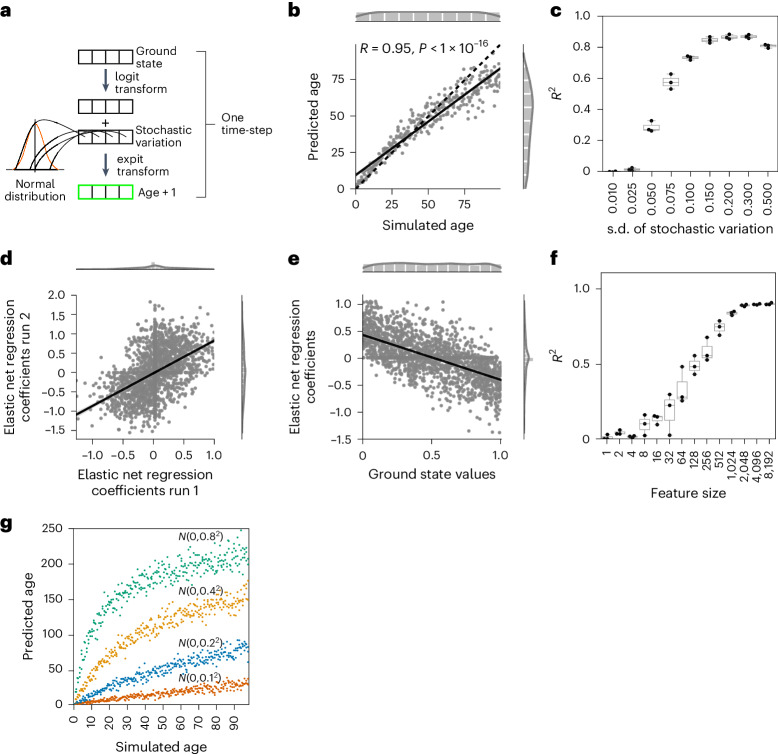
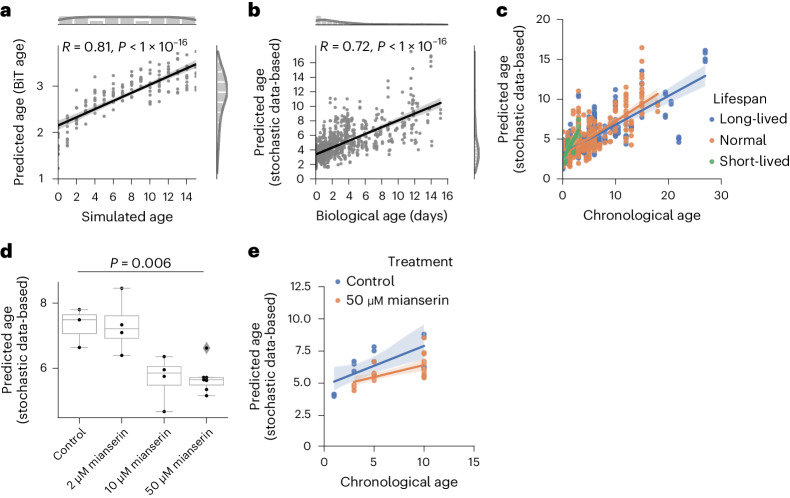
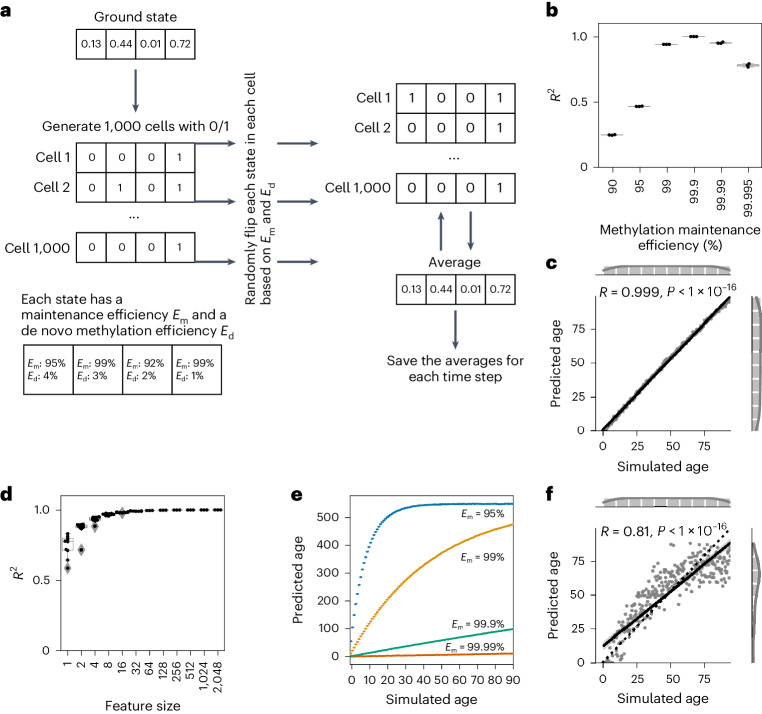
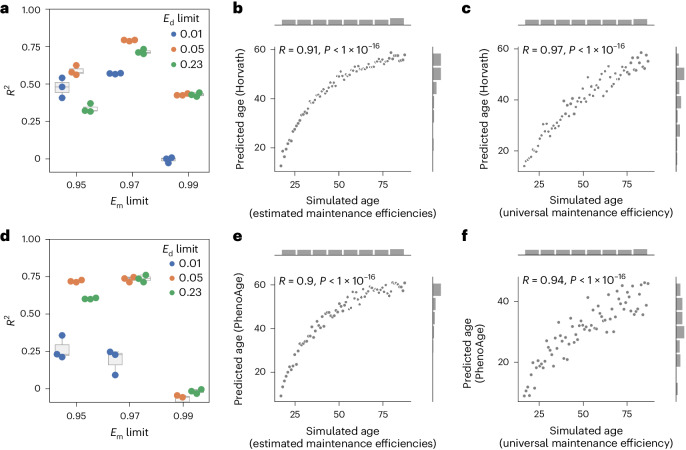
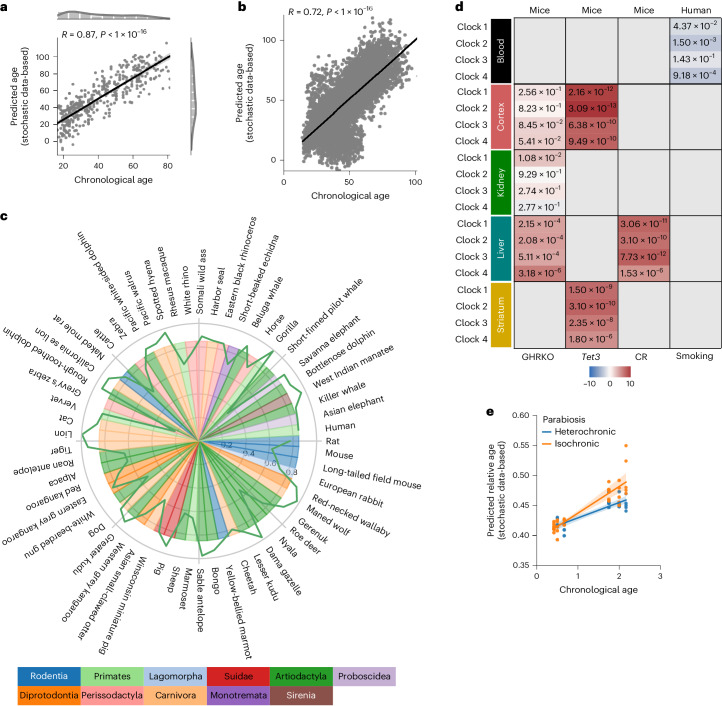
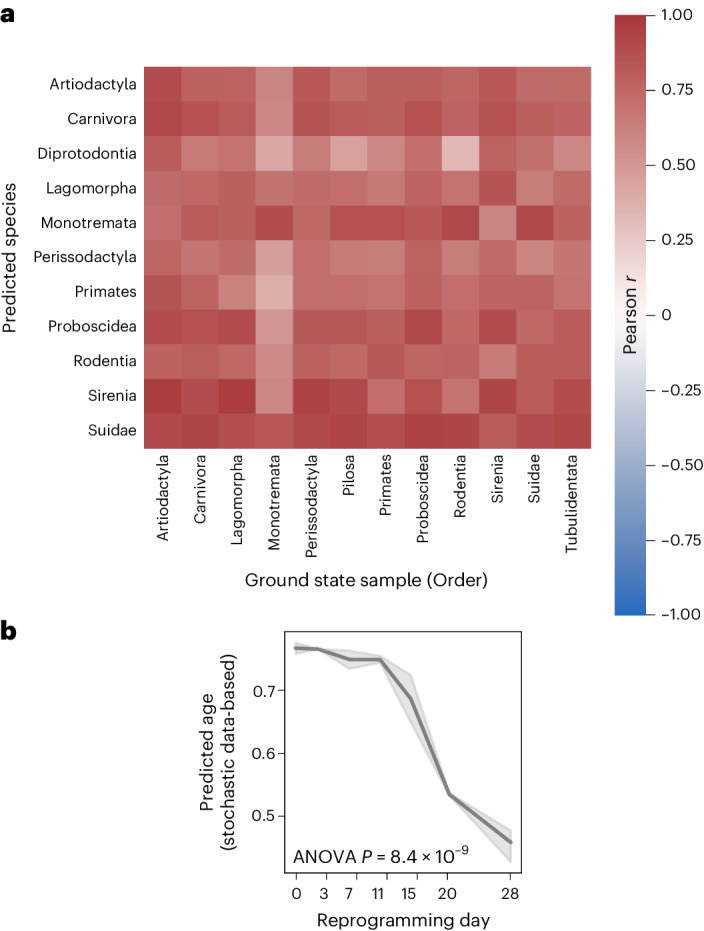
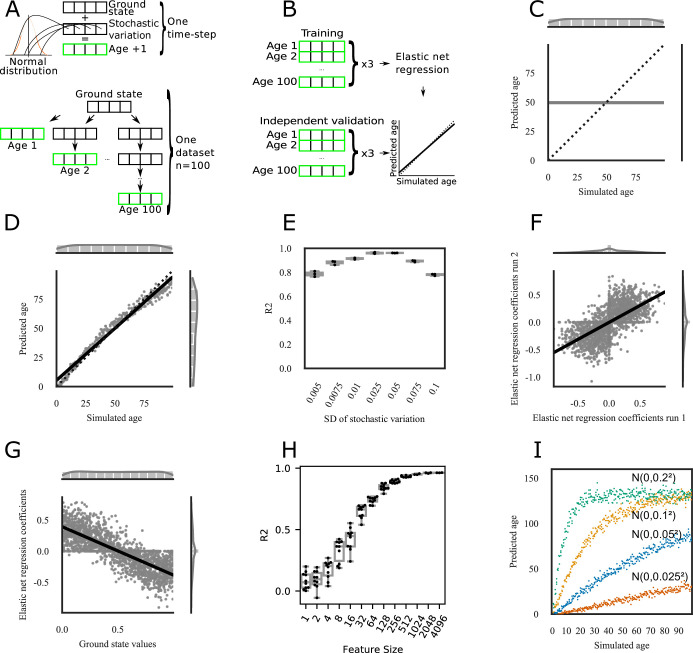
Aging clocks have provided one of the most important recent breakthroughs in the biology of aging, and may provide indicators for the effectiveness of interventions in the aging process and preventive treatments for age-related diseases. The reproducibility of accurate aging clocks has reinvigorated the debate on whether a programmed process underlies aging. Here we show that accumulating stochastic variation in purely simulated data is sufficient to build aging clocks, and that first-generation and second-generation aging clocks are compatible with the accumulation of stochastic variation in DNA methylation or transcriptomic data. We find that accumulating stochastic variation is sufficient to predict chronological and biological age, indicated by significant prediction differences in smoking, calorie restriction, heterochronic parabiosis and partial reprogramming. Although our simulations may not explicitly rule out a programmed aging process, our results suggest that stochastically accumulating changes in any set of data that have a ground state at age zero are sufficient for generating aging clocks.
Overview
The claims and statistics of this paper haven’t been checked yet.
Run the check — free, no account needed. It reads the open-access text and checks the sources it cites.
Integrity signals
Registry
Cites
Statistics
Figures
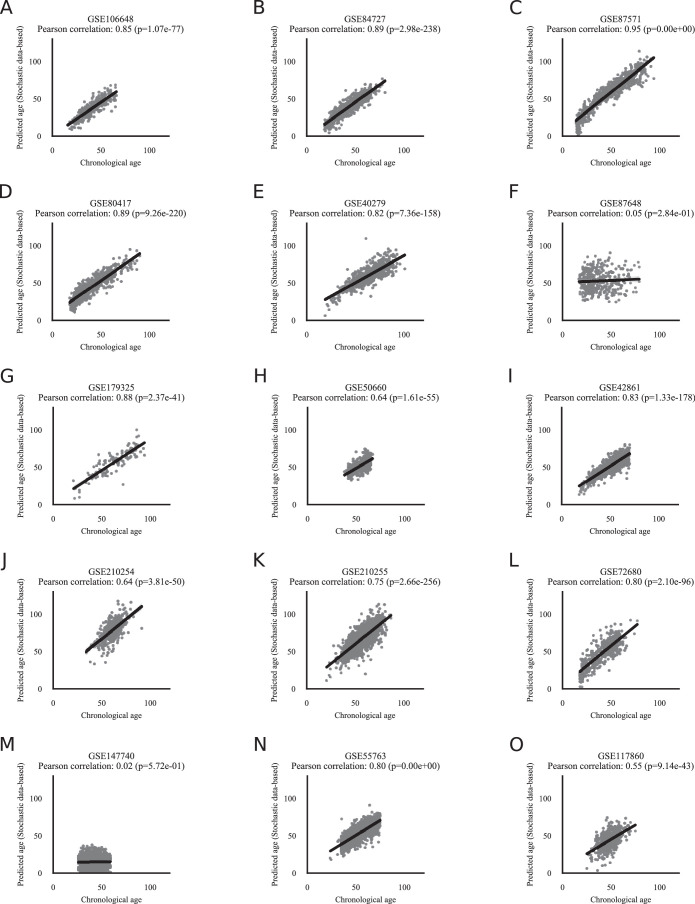
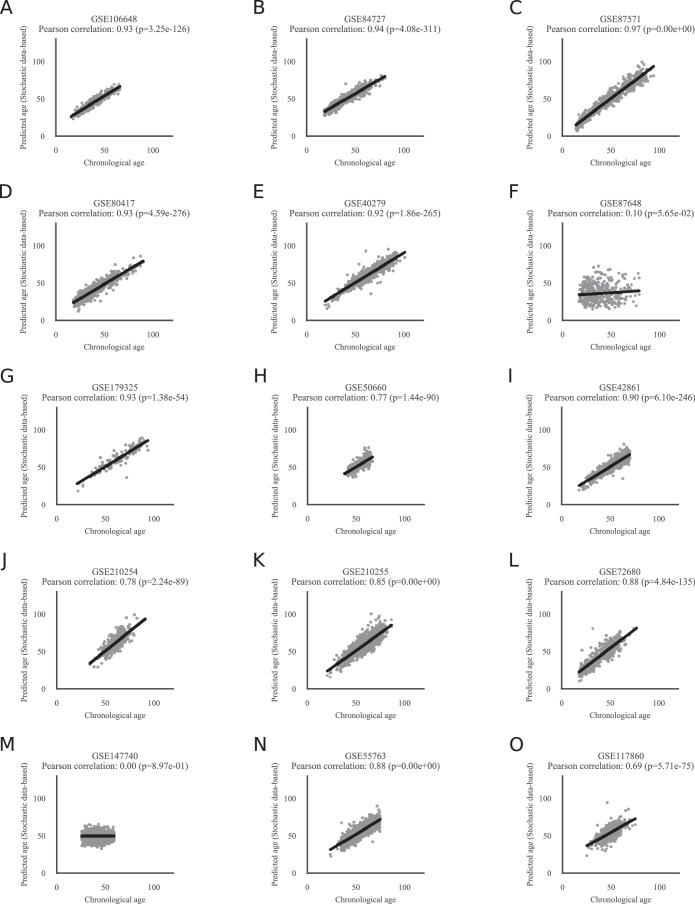
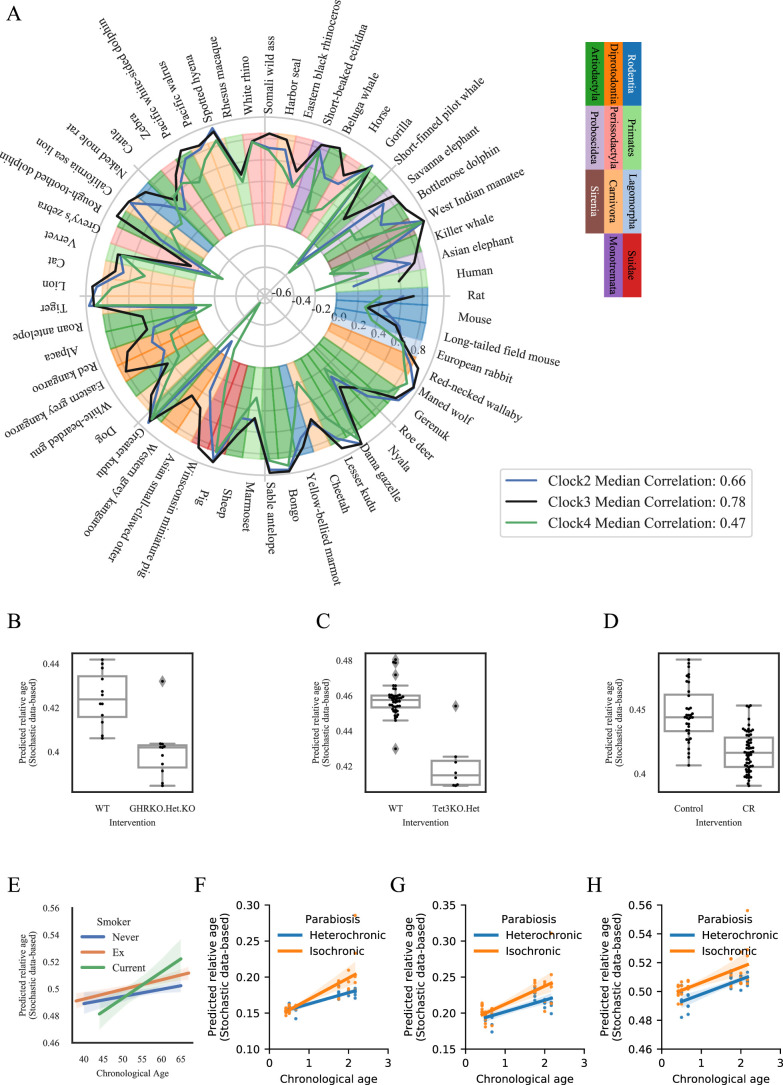
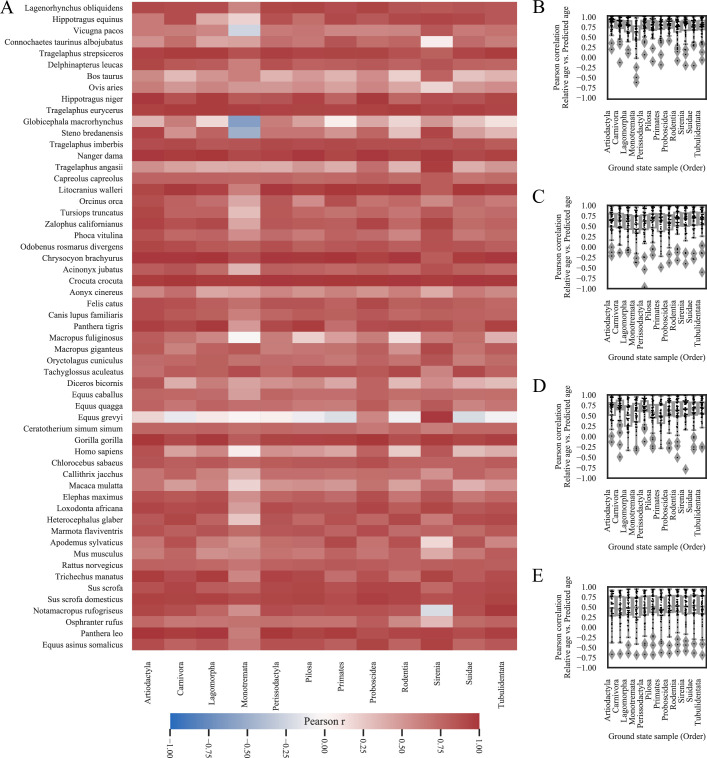
Verification
Claims the paper makes
The claims and statistics of this paper haven’t been checked yet.
Run the check — free, no account needed. It reads the open-access text and checks the sources it cites.
Self-check
Percentages, sums and reported differences re-computed from the paper’s own numbers.
The self-check needs the paper’s full text.
Citations
Cites
Scikit-learn: Machine Learning in Python
Pedregosa, F., Varoquaux, G., Gramfort, A., Michel, V., Thirion, B., Grisel, O., Blondel, M., Müller, A., Nothman, J., Louppe, G., et al. (2012) · arXiv · doi:10.48550/arxiv.1201.0490 · Cited by 71,016
Matplotlib: a 2D graphics environment
Hunter, J. D. (2007) · Computing in Science & Engineering · doi:10.1109/mcse.2007.55 · Cited by 39,249
SciPy 1.0: fundamental algorithms for scientific computing in Python
Virtanen, P., Gommers, R., Oliphant, T. E., Haberland, M., Reddy, T., Cournapeau, D., Burovski, E., Peterson, P., Weckesser, W., Bright, J., et al. (2020) · Nature Methods · doi:10.1038/s41592-019-0686-2 · Cited by 38,430
fastp: an ultra-fast all-in-one FASTQ preprocessor
Chen, S., Zhou, Y., Chen, Y., & Gu, J. (2018) · Bioinformatics · doi:10.1093/bioinformatics/bty560 · Cited by 29,721
Harris, C. R., Millman, K. J., van der Walt, S. J., Gommers, R., Virtanen, P., Cournapeau, D., Wieser, E., Taylor, J., Berg, S., Smith, N. J., et al. (2020) · Nature · doi:10.1038/s41586-020-2649-2 · Cited by 23,826
Harris, C., Millman, K., van der Walt, S., Gommers, R., Virtanen, P., Cournapeau, D., Wieser, E., Taylor, J., Berg, S., Smith, N., et al. (2020) · RePEc: Research Papers in Economics · Cited by 17,844
Salmon provides fast and bias-aware quantification of transcript expression
Patro, R., Duggal, G., Love, M. I., Irizarry, R. A., & Kingsford, C. (2017) · Nature Methods · doi:10.1038/nmeth.4197 · Cited by 12,700
SciPy 1.0: fundamental algorithms for scientific computing in Python
Virtanen, P., Gommers, R., Oliphant, T. E., Haberland, M., Reddy, T., Cournapeau, D., Burovski, E., Peterson, P., Weckesser, W., Bright, J., et al. (2019) · Apollo - University of Cambridge Repository · doi:10.17863/cam.64134 · Cited by 10,460
Exact stochastic simulation of coupled chemical reactions
Gillespie, D. T. (1977) · The Journal of Physical Chemistry · doi:10.1021/j100540a008 · Cited by 10,172
seaborn: statistical data visualization
Waskom, M. (2021) · Journal of Open Source Software · doi:10.21105/joss.03021 · Cited by 7,310
DNA methylation age of human tissues and cell types
Horvath, S. (2013) · Genome Biology · doi:10.1186/gb-2013-14-10-r115 · Cited by 7,075
Stochastic Gene Expression in a Single Cell
Elowitz, M. B., Levine, A. J., Siggia, E. D., & Swain, P. S. (2002) · Science · doi:10.1126/science.1070919 · Cited by 5,441
Genome-wide methylation profiles reveal quantitative views of human aging rates
Hannum, G., Guinney, J., Zhao, L., Zhang, L., Hughes, G., Sadda, S., Klotzle, B., Bibikova, M., Fan, J.-B., Gao, Y., et al. (2013) · Molecular Cell · doi:10.1016/j.molcel.2012.10.016 · Cited by 4,270
Differential analyses for RNA-seq: transcript-level estimates improve gene-level inferences
Soneson, C., Love, M. I., & Robinson, M. D. (2015) · F1000Research · doi:10.12688/f1000research.7563.1 · Cited by 3,929
An epigenetic biomarker of aging for lifespan and healthspan
Levine, M. E., Lu, A. T., Quach, A., Chen, B. H., Assimes, T. L., Bandinelli, S., Hou, L., Baccarelli, A. A., Stewart, J. D., Li, Y., et al. (2018) · Aging · doi:10.18632/aging.101414 · Cited by 3,675
Epigenetic differences arise during the lifetime of monozygotic twins
Fraga, M. F., Ballestar, E., Paz, M. F., Ropero, S., Setien, F., Ballestar, M. L., Heine-Suñer, D., Cigudosa, J. C., Urioste, M., Benitez, J., et al. (2005) · Proceedings of the National Academy of Sciences · doi:10.1073/pnas.0500398102 · Cited by 3,602
DNA methylation arrays as surrogate measures of cell mixture distribution
Houseman, E. A., Accomando, W. P., Koestler, D. C., Christensen, B. C., Marsit, C. J., Nelson, H. H., Wiencke, J. K., & Kelsey, K. T. (2012) · BMC Bioinformatics · doi:10.1186/1471-2105-13-86 · Cited by 3,175
DNA methylation-based biomarkers and the epigenetic clock theory of ageing
Horvath, S., & Raj, K. (2018) · Nature Reviews Genetics · doi:10.1038/s41576-018-0004-3 · Cited by 3,095
DNA methylation GrimAge strongly predicts lifespan and healthspan
Lu, A. T., Quach, A., Wilson, J. G., Reiner, A. P., Aviv, A., Raj, K., Hou, L., Baccarelli, A. A., Li, Y., Stewart, J. D., et al. (2019) · Aging · doi:10.18632/aging.101684 · Cited by 2,540
Pleiotropy, natural selection, and the evolution of senescence
Williams, G. C. (1957) · Evolution · doi:10.2307/2406060 · Cited by 1,912
Pingouin: statistics in Python
Vallat, R. (2018) · Journal of Open Source Software · doi:10.21105/joss.01026 · Cited by 1,780
Functional roles for noise in genetic circuits
Eldar, A., & Elowitz, M. B. (2010) · Nature · doi:10.1038/nature09326 · Cited by 1,482
The central role of DNA damage in the ageing process
Schumacher, B., Pothof, J., Vijg, J., & Hoeijmakers, J. H. J. (2021) · Nature · doi:10.1038/s41586-021-03307-7 · Cited by 907
Self-citationAging of blood can be tracked by DNA methylation changes at just three CpG sites
Weidner, C. I., Lin, Q., Koch, C. M., Eisele, L., Beier, F., Ziegler, P., Bauerschlag, D. O., Jöckel, K.-H., Erbel, R., Mühleisen, T. W., et al. (2014) · Genome Biology · doi:10.1186/gb-2014-15-2-r24 · Cited by 837
Varoquaux, G. P., Buitinck, L., Louppe, G., Grisel, O., Pedregosa, F., & Mueller, A. (2015) · GetMobile Mobile Computing and Communications · doi:10.1145/2786984.2786995 · Cited by 663
Aging effects on DNA methylation modules in human brain and blood tissue
Horvath, S., Zhang, Y., Langfelder, P., Kahn, R. S., Boks, M. P., van Eijk, K. R., van den Berg, L. H., & Ophoff, R. A. (2012) · Genome biology · doi:10.1186/gb-2012-13-10-r97 · Cited by 652
Increased cell-to-cell variation in gene expression in ageing mouse heart
Bahar, R., Hartmann, C. H., Rodriguez, K. A., Denny, A. D., Busuttil, R. A., Dollé, M. E. T., Calder, R. B., Chisholm, G. B., Pollock, B. H., Klein, C. A., et al. (2006) · Nature · doi:10.1038/nature04844 · Cited by 603
Teschendorff, A. E., Breeze, C. E., Zheng, S., & Beck, S. (2017) · BMC Bioinformatics · doi:10.1186/s12859-017-1511-5 · Cited by 555
Universal DNA methylation age across mammalian tissues
Lu, A. T.-H., Fei, Z., Haghani, A., Robeck, T. R., Zoller, J. A., Li, C. Z., Lowe, R., Yan, Q. J., Zhang, J., Vu, H., et al. (2023) · Nature Aging · doi:10.1038/s43587-023-00462-6 · Cited by 510
Zhang, Q., Vallerga, C. L., Walker, R. M., Lin, T., Henders, A. K., Montgomery, G. W., He, J., Fan, D., Fowdar, J., Kennedy, M., et al. (2019) · Genome Medicine · doi:10.1186/s13073-019-0667-1 · Cited by 487
Padovan-Merhar, O. M., Nair, G. P., Biaesch, A. G., Mayer, A., Scarfone, S., Foley, S. W., Wu, A. R., Churchman, L. S., Singh, A., & Raj, A. (2015) · Molecular Cell · doi:10.1016/j.molcel.2015.03.005 · Cited by 435
Aging and epigenetic drift: a vicious cycle
Issa, J.-P. (2014) · Journal of Clinical Investigation · doi:10.1172/jci69735 · Cited by 419
Identification of genetic elements that autonomously determine DNA methylation states
Lienert, F., Wirbelauer, C., Som, I., Dean, A., Mohn, F., & Schübeler, D. (2011) · Nature Genetics · doi:10.1038/ng.946 · Cited by 409
Using DNA methylation profiling to evaluate biological age and longevity interventions
Petkovich, D. A., Podolskiy, D. I., Lobanov, A. V., Lee, S.-G., Miller, R. A., & Gladyshev, V. N. (2017) · Cell Metabolism · doi:10.1016/j.cmet.2017.03.016 · Cited by 398
Lee, R. D. (2003) · Proceedings of the National Academy of Sciences · doi:10.1073/pnas.1530303100 · Cited by 397
Recruitment of DNA methyltransferase I to DNA repair sites
Mortusewicz, O., Schermelleh, L., Walter, J., Cardoso, M. C., & Leonhardt, H. (2005) · Proceedings of the National Academy of Sciences · doi:10.1073/pnas.0501034102 · Cited by 380
Correlation of an epigenetic mitotic clock with cancer risk
Yang, Z., Wong, A., Kuh, D., Paul, D. S., Rakyan, V. K., Leslie, R. D., Zheng, S. C., Widschwendter, M., Beck, S., & Teschendorff, A. E. (2016) · Genome Biology · doi:10.1186/s13059-016-1064-3 · Cited by 325
Repression of the Heat Shock Response Is a Programmed Event at the Onset of Reproduction
Labbadia, J. P., & Morimoto, R. I. (2015) · Molecular Cell · doi:10.1016/j.molcel.2015.06.027 · Cited by 322
Tsaprouni, L. G., Yang, T.-P., Bell, J., Dick, K. J., Kanoni, S., Nisbet, J., Viñuela, A., Grundberg, E., Nelson, C. P., Meduri, E., et al. (2014) · Epigenetics · doi:10.4161/15592294.2014.969637 · Cited by 319
Replication timing-related and gene body-specific methylation of active human genes
Aran, D., Toperoff, G., Rosenberg, M., & Hellman, A. (2011) · Human Molecular Genetics · doi:10.1093/hmg/ddq513 · Cited by 304
Making sense of the ageing methylome
Seale, K., Horvath, S., Teschendorff, A., Eynon, N., & Voisin, S. (2022) · Nature Reviews Genetics · doi:10.1038/s41576-022-00477-6 · Cited by 274
Caloric restriction delays age-related methylation drift
Maegawa, S., Lu, Y., Tahara, T., Lee, J. T., Madzo, J., Liang, S., Jelinek, J., Colman, R. J., & Issa, J.-P. J. (2017) · Nature Communications · doi:10.1038/s41467-017-00607-3 · Cited by 270
Ohnuki, M., Tanabe, K., Sutou, K., Teramoto, I., Sawamura, Y., Narita, M., Nakamura, M., Tokunaga, Y., Nakamura, M., Watanabe, A., et al. (2014) · Proceedings of the National Academy of Sciences · doi:10.1073/pnas.1413299111 · Cited by 265
WormBase in 2022—data, processes, and tools for analyzing Caenorhabditis elegans
Davis, P., Zarowiecki, M., Arnaboldi, V., Becerra, A., Cain, S., Chan, J., Chen, W. J., Cho, J., Beltrame, E. D. V., Diamantakis, S., et al. (2022) · Genetics · doi:10.1093/genetics/iyac003 · Cited by 261
Nuclear Retention of mRNA in Mammalian Tissues
Bahar Halpern, K., Caspi, I., Lemze, D., Levy, M., Landen, S., Elinav, E., Ulitsky, I., & Itzkovitz, S. (2015) · Cell Reports · doi:10.1016/j.celrep.2015.11.036 · Cited by 258
Pfeifer, G. P., Steigerwald, S. D., Hansen, R. S., Gartler, S. M., & Riggs, A. D. (1990) · Proceedings of the National Academy of Sciences · doi:10.1073/pnas.87.21.8252 · Cited by 250
DNA methylation levels at individual age-associated CpG sites can be indicative for life expectancy
Lin, Q., Weidner, C. I., Costa, I. G., Marioni, R. E., Ferreira, M. R. P., Deary, I. J., & Wagner, W. (2016) · Aging · doi:10.18632/aging.100908 · Cited by 247
Biological age is increased by stress and restored upon recovery
Poganik, J. R., Zhang, B., Baht, G. S., Tyshkovskiy, A., Deik, A., Kerepesi, C., Yim, S. H., Lu, A. T., Haghani, A., Gong, T., et al. (2023) · Cell Metabolism · doi:10.1016/j.cmet.2023.03.015 · Cited by 246
Hernando-Herraez, I., Evano, B., Stubbs, T., Commere, P.-H., Jan Bonder, M., Clark, S., Andrews, S., Tajbakhsh, S., & Reik, W. (2019) · Nature Communications · doi:10.1038/s41467-019-12293-4 · Cited by 236
Cytogerontology since 1881: A reappraisal of August Weismann and a review of modern progress
Kirkwood, T. B. L., & Cremer, T. J. (1982) · Human Genetics · doi:10.1007/bf00569695 · Cited by 236
A mammalian methylation array for profiling methylation levels at conserved sequences
Arneson, A., Haghani, A., Thompson, M. J., Pellegrini, M. A., Kwon, S. B., Vu, H., Maciejewski, E., Yao, M., Li, C. Z., Lu, A. T.-H., et al. (2022) · Nature Communications · doi:10.1038/s41467-022-28355-z · Cited by 224
Erratum to: DNA methylation age of human tissues and cell types
Horvath, S. (2015) · Genome biology · doi:10.1186/s13059-015-0649-6 · Cited by 216
Laird, C. D., Pleasant, N. D., Clark, A. D., Sneeden, J. L., Hassan, K. M. A., Manley, N. C., Vary, J. C., Morgan, T. M., Hansen, R. S., & Stöger, R. J. (2003) · Proceedings of the National Academy of Sciences · doi:10.1073/pnas.2536758100 · Cited by 212
Senchuk, M. M., Dues, D. J., Schaar, C. E., Johnson, B. K., Madaj, Z., Bowman, M. J., Winn, M. E., & Raamsdonk, J. M. V. (2018) · PLoS Genetics · doi:10.1371/journal.pgen.1007268 · Cited by 184
Age-related accrual of methylomic variability is linked to fundamental ageing mechanisms
Slieker, R. C., van Iterson, M., Luijk, R., Beekman, M., Zhernakova, D. V., Moed, M. H., Mei, H., van Galen, M., Deelen, P., Bonder, M. J., et al. (2016) · Genome biology · doi:10.1186/s13059-016-1053-6 · Cited by 171
BiT age: A transcriptome‐based aging clock near the theoretical limit of accuracy
Meyer, D. H., & Schumacher, B. (2021) · Aging Cell · doi:10.1111/acel.13320 · Cited by 165
Self-citationDynamic and static maintenance of epigenetic memory in pluripotent and somatic cells
Shipony, Z., Mukamel, Z., Cohen, N. M., Landan, G., Chomsky, E., Zeliger, S. R., Fried, Y. C., Ainbinder, E., Friedman, N., & Tanay, A. (2014) · Nature · doi:10.1038/nature13458 · Cited by 159
Genomes Optimize Reproduction: Aging as a Consequence of the Developmental Program
de Magalhães, J. P., & Church, G. M. (2005) · Physiology · doi:10.1152/physiol.00010.2005 · Cited by 158
Can aging be programmed? A critical literature review
Kowald, A., & Kirkwood, T. B. L. (2016) · Aging Cell · doi:10.1111/acel.12510 · Cited by 154
Potential energy landscapes identify the information-theoretic nature of the epigenome
Jenkinson, G., Pujadas, E., Goutsias, J. I., & Feinberg, A. P. (2017) · Nature Genetics · doi:10.1038/ng.3811 · Cited by 154
Programmatic features of aging originating in development: aging mechanisms beyond molecular damage?
de Magalhães, J. P. (2012) · The FASEB Journal · doi:10.1096/fj.12-210872 · Cited by 150
Genome-wide RNA polymerase stalling shapes the transcriptome during aging
Gyenis, Á., Chang, J., Demmers, J. J. P. G., Bruens, S. T., Barnhoorn, S., Brandt, R. M. C., Baar, M. P., Rašeta, M., Derks, K., Hoeijmakers, J. H. J., et al. (2023) · Nature Genetics · doi:10.1038/s41588-022-01279-6 · Cited by 144
Juvenile hormone regulation of longevity in the migratory monarch butterfly
Herman, W. S., & Tatar, M. (2001) · Proceedings of the Royal Society B Biological Sciences · doi:10.1098/rspb.2001.1765 · Cited by 141
Universal DNA methylation age across mammalian tissuesPreprint
Lu, A. T., Fei, Z., Haghani, A., Robeck, T. R., Zoller, J. A., Li, C., Lowe, R., Yan, Q. J., Zhang, J., Vu, H., et al. (2021) · bioRxiv (Cold Spring Harbor Laboratory) · doi:10.1101/2021.01.18.426733 · Cited by 139
The hyperfunction theory: An emerging paradigm for the biology of aging
Gems, D. (2022) · Ageing Research Reviews · doi:10.1016/j.arr.2021.101557 · Cited by 138
Simplified Assay for Epigenetic Age Estimation in Whole Blood of Adults
Vidal-Bralo, L., Lopez-Golan, Y., & Gonzalez, A. (2016) · Frontiers in Genetics · doi:10.3389/fgene.2016.00126 · Cited by 137
Systematic underestimation of the epigenetic clock and age acceleration in older subjects
Khoury, L. Y. E., Gorrie-Stone, T. J., Smart, M., Hughes, A., Bao, Y., Andrayas, A., Burrage, J., Hannon, E. J., Meena Kumari, B., Mill, J. S., et al. (2019) · Genome biology · doi:10.1186/s13059-019-1810-4 · Cited by 135
Connecting Variability in Global Transcription Rate to Mitochondrial Variability
das Neves, R. P., Jones, N. S., Andreu, L. F., Gupta, R., Enver, T., & Iborra, F. J. (2010) · PLoS Biology · doi:10.1371/journal.pbio.1000560 · Cited by 133
Epigenetic clocks reveal a rejuvenation event during embryogenesis followed by aging
Kerepesi, C., Zhang, B., Lee, S.-G., Trapp, A., & Gladyshev, V. N. (2021) · Science Advances · doi:10.1126/sciadv.abg6082 · Cited by 130
Aging is associated with a systemic length-associated transcriptome imbalance
Stoeger, T., Grant, R. A., McQuattie‐Pimentel, A. C., Anekalla, K. R., Liu, S. S., Navarro, H. T., Singer, B. D., Abdala‐Valencia, H., Schwake, M., Tétreault, M., et al. (2022) · Nature Aging · doi:10.1038/s43587-022-00317-6 · Cited by 129
DNA methylation networks underlying mammalian traits
Haghani, A., Li, C. Z., Robeck, T. R., Zhang, J., Lu, A. T., Ablaeva, J., Acosta-Rodríguez, V. A., Adams, D. M., Alagaili, A. N., Almunia, J., et al. (2023) · Science · doi:10.1126/science.abq5693 · Cited by 128
Staying true to yourself: mechanisms of DNA methylation maintenance in mammals
Petryk, N., Bultmann, S., Bartke, T., & Defossez, P. (2020) · Nucleic Acids Research · doi:10.1093/nar/gkaa1154 · Cited by 128
Cellular reprogramming and epigenetic rejuvenation
Simpson, D. J., Olova, N. N., & Chandra, T. (2021) · Clinical Epigenetics · doi:10.1186/s13148-021-01158-7 · Cited by 127
Single-cell genomics meets human genetics
Cuomo, A. S. E., Nathan, A., Raychaudhuri, S., MacArthur, D. G., & Powell, J. E. (2023) · Nature Reviews Genetics · doi:10.1038/s41576-023-00599-5 · Cited by 124
Methylation and epigenetic fidelity
Riggs, A. D., & Xiong, Z. (2003) · Proceedings of the National Academy of Sciences · doi:10.1073/pnas.0307781100 · Cited by 122
Rangaraju, S., Solis, G. M., Thompson, R. C., Gomez-Amaro, R. L., Kurian, L., Encalada, S. E., Niculescu, A. B., Salomon, D. R., & Petrascheck, M. (2015) · eLife · doi:10.7554/elife.08833 · Cited by 109
Age-related diseases as vicious cycles
Belikov, A. V. (2018) · Ageing Research Reviews · doi:10.1016/j.arr.2018.11.002 · Cited by 95
Nature of epigenetic aging from a single-cell perspective
Tarkhov, A. E., Lindstrom-Vautrin, T., Zhang, S., Ying, K., Moqri, M., Zhang, B., Tyshkovskiy, A., Levy, O., & Gladyshev, V. N. (2024) · Nature Aging · doi:10.1038/s43587-024-00616-0 · Cited by 86
The DREAM complex functions as conserved master regulator of somatic DNA-repair capacities
Bujarrabal-Dueso, A., Sendtner, G., Meyer, D. H., Chatzinikolaou, G., Stratigi, K., Garinis, G. A., & Schumacher, B. (2023) · Nature Structural & Molecular Biology · doi:10.1038/s41594-023-00942-8 · Cited by 79
Self-citationThe Ground Zero of Organismal Life and Aging
Gladyshev, V. N. (2020) · Trends in Molecular Medicine · doi:10.1016/j.molmed.2020.08.012 · Cited by 77
The Link Between Epigenetic Clocks for Aging and Senescence
Wagner, W. (2019) · Frontiers in Genetics · doi:10.3389/fgene.2019.00303 · Cited by 71
Ageing as a software design flaw
de Magalhães, J. P. (2023) · Genome biology · doi:10.1186/s13059-023-02888-y · Cited by 71
Adjusting for Cell Type Composition in DNA Methylation Data Using a Regression-Based Approach
Jones, M. J., Islam, S. A., Edgar, R. D., & Kobor, M. S. (2015) · Methods in molecular biology · doi:10.1007/7651_2015_262 · Cited by 64
Porter, H. L., Brown, C. A., Roopnarinesingh, X., Giles, C. B., Georgescu, C., Freeman, W. M., & Wren, J. D. (2021) · Aging Cell · doi:10.1111/acel.13492 · Cited by 63
Global absolute quantification reveals tight regulation of protein expression in single Xenopus eggs
Smits, A. H., Lindeboom, R. G. H., Perino, M., van Heeringen, S. J., Veenstra, G. J. C., & Vermeulen, M. (2014) · Nucleic Acids Research · doi:10.1093/nar/gku661 · Cited by 63
Clock Work: Deconstructing the Epigenetic Clock Signals in Aging, Disease, and ReprogrammingPreprint
Levine, M. E., Higgins‐Chen, A., Thrush, K., Minteer, C. J., & Niimi, P. (2022) · bioRxiv (Cold Spring Harbor Laboratory) · doi:10.1101/2022.02.13.480245 · Cited by 60
Genetic loci and metabolic states associated with murine epigenetic aging
Mozhui, K., Lu, A. T., Li, C. Z., Haghani, A., Sandoval-Sierra, J. V., Wu, Y., Williams, R. W., & Horvath, S. (2022) · eLife · doi:10.7554/elife.75244 · Cited by 58
Ueber die Dauer des Lebens; ein Vortrag
Weismann, A. (1882) · G. Fischer eBooks · doi:10.5962/bhl.title.21312 · Cited by 58
Grandi, F. C., Rosser, J. M., Newkirk, S. J., Yin, J., Jiang, X., Xing, Z., Whitmore, L. S., Bashir, S., Ivics, Z., Izsvák, Z., et al. (2015) · Genome Research · doi:10.1101/gr.185132.114 · Cited by 53
Epigenetic clocks and programmatic aging
Gems, D., Virk, R. S., & de Magalhães, J. P. (2024) · Ageing Research Reviews · doi:10.1016/j.arr.2024.102546 · Cited by 50
Disentangling age-dependent DNA methylation: deterministic, stochastic, and nonlinear
Vershinina, O., Bacalini, M. G., Zaikin, A. A., Franceschi, C., & Ivanchenko, M. (2021) · Scientific Reports · doi:10.1038/s41598-021-88504-0 · Cited by 49
Lack of evidence for increased transcriptional noise in aged tissues
Ibáñez-Solé, O., Ascensión, A. M., Araúzo-Bravo, M. J., & Izeta, A. (2022) · eLife · doi:10.7554/elife.80380 · Cited by 38
An epigenetic clock controls aging
Mitteldorf, J. (2015) · Biogerontology · doi:10.1007/s10522-015-9617-5 · Cited by 37
Probabilistic inference of epigenetic age acceleration from cellular dynamics
Dabrowski, J., Yang, E. J., Crofts, S., Hillary, R. F., Simpson, D. J., McCartney, D. L., Marioni, R. E., Kirschner, K., Crespo, E. L., & Chandra, T. (2024) · Nature Aging · doi:10.1038/s43587-024-00700-5 · Cited by 35
Vijg, J., & Kennedy, B. K. (2016) · Gerontology · doi:10.1159/000439348 · Cited by 33
Dynamic Crowding Regulates Transcription
Shim, A. R., Nap, R. J., Huang, K., Almassalha, L. M., Matusda, H., Backman, V., & Szleifer, I. G. (2019) · Biophysical Journal · doi:10.1016/j.bpj.2019.11.007 · Cited by 31
Ibáñez-Solé, O., Barrio, I., & Izeta, A. (2023) · iScience · doi:10.1016/j.isci.2023.106368 · Cited by 31
Demethylation and derepression of genomic retroelements in the skeletal muscles of aged mice
Min, B., Jeon, K., Park, J. S., & Kang, Y. (2019) · Aging Cell · doi:10.1111/acel.13042 · Cited by 29
DNA Methylation Networks Underlying Mammalian TraitsPreprint
Haghani, A., Lu, A. T., Li, C., Robeck, T. R., Belov, K., Breeze, C. E., Brooke, R. T., Clarke, S., Faulkes, C. G., Fei, Z., et al. (2021) · bioRxiv (Cold Spring Harbor Laboratory) · doi:10.1101/2021.03.16.435708 · Cited by 26
Does Modulation of an Epigenetic Clock Define a Geroprotector?
Schork, N. J., Beaulieu‐Jones, B. K., Liang, W. S., Smalley, S. L., & Goetz, L. H. (2022) · Advances in Geriatric Medicine and Research · doi:10.20900/agmr20220002 · Cited by 24
Bertucci, E. M., Shealy, E. P., & Parrott, B. B. (2024) · Aging · doi:10.18632/aging.205503 · Cited by 22
Aging clocks, entropy, and the limits of age-reversalPreprint
Tarkhov, A. E., Denisov, K. A., & Fedichev, P. O. (2022) · bioRxiv (Cold Spring Harbor Laboratory) · doi:10.1101/2022.02.06.479300 · Cited by 19
Could aging evolve as a pathogen control strategy?
Lidsky, P. V., & Andino, R. (2022) · Trends in Ecology & Evolution · doi:10.1016/j.tree.2022.08.003 · Cited by 16
Development of a novel epigenetic clock resistant to changes in immune cell compositionPreprint
Tomusiak, A., Floro, A., Tiwari, R., Riley, R. R., Matsui, H., Andrews, N., Kasler, H. G., & Verdin, E. M. (2023) · bioRxiv (Cold Spring Harbor Laboratory) · doi:10.1101/2023.03.01.530561 · Cited by 15
Is Aging an Inevitable Characteristic of Organic Life or an Evolutionary Adaptation?
Lidsky, P. V., Yuan, J., Rulison, J. M., & Andino, R. (2022) · Biochemistry (Moscow) · doi:10.1134/s0006297922120021 · Cited by 13
Epigenetic fidelity in complex biological systems and implications for ageingPreprint
Duffield, T., Csuka, L., Akalan, A., Magdaleno, G. D. V., Senez, L., Palmer, D. H., & de Magalhães, J. P. (2023) · bioRxiv (Cold Spring Harbor Laboratory) · doi:10.1101/2023.04.29.538716 · Cited by 11
Cited by
Sorted by citations
Epigenetic ageing clocks: statistical methods and emerging computational challenges
Teschendorff, A. E., & Horvath, S. (2025) · Nature Reviews Genetics · doi:10.1038/s41576-024-00807-w · Cited by 226
Quantifying the stochastic component of epigenetic aging
Tong, H., Dwaraka, V. B., Chen, Q., Luo, Q., Lasky-Su, J. A., Smith, R., & Teschendorff, A. E. (2024) · Nature Aging · doi:10.1038/s43587-024-00600-8 · Cited by 83
Development of an epigenetic clock resistant to changes in immune cell composition
Tomusiak, A., Floro, A., Tiwari, R., Riley, R. R., Matsui, H., Andrews, N., Kasler, H. G., & Verdin, E. M. (2024) · Communications Biology · doi:10.1038/s42003-024-06609-4 · Cited by 73
Biomarkers of aging: from molecules and surrogates to physiology and function
Furrer, R., & Handschin, C. (2025) · Physiological Reviews · doi:10.1152/physrev.00045.2024 · Cited by 68
Lyu, Y.-X., Fu, Q., Wilczok, D., Ying, K., King, A., Antebi, A., Vojta, A., Stolzing, A., Moskalev, A., Georgievskaya, A., et al. (2024) · Aging · doi:10.18632/aging.206135 · Cited by 48
Self-citation
Metadata
- Authors
- Meyer, D. H., & Schumacher, B.
- Affiliations
- University of Cologne (DE)
- Corresponding author
- Meyer, David H.
- Schumacher, Björn
- Venue
- Nature Aging
- Published
- 2024-05-09
- Volume
- 4
- Issue
- 6
- Pages
- 871-885
- ISSN
- 2662-8465 (ISSN-L)
- PMC
- PMC11186771
- OpenAlex
- W4396761662
- Cited by
- 128
- References
- 110
- Citations by year
- 2026: 43 · 2025: 60 · 2024: 21
- FWCI
- 14.96
- Type
- journal article
- Language
- en
- Open access
- hybrid
- doi.org
- Locations
- Nature Aging (publishedVersion, cc-by)
- Research Square (acceptedVersion, cc-by)
- PubMed Central (publishedVersion, cc-by)
- PubMed (publishedVersion)
- Funders
- EC | Horizon 2020 Framework Programme (H2020-MSCA-ITN-2018 (Healthage and ADDRESS ITNs))
- John Templeton Foundation (61734)
- Topics
- Life Sciences › Biochemistry, Genetics and Molecular Biology › Aging › Genetics, Aging, and Longevity in Model Organisms
- Life Sciences › Biochemistry, Genetics and Molecular Biology › Molecular Biology › Epigenetics and DNA Methylation
- Life Sciences › Biochemistry, Genetics and Molecular Biology › Cell Biology › Telomeres, Telomerase, and Senescence
- Keywords
- aging clocks, stochastic variability, biological age, chronological age, DNA methylation, transcriptomics, programmed aging, heterochronic parabiosis, caloric restriction, partial reprogramming, smoking, age-related diseases
- MeSH terms
- Aging, Animals, Biological Clocks, Computer Simulation, Humans, Male, Models, Biological, Parabiosis, Smoking, Stochastic Processes, DNA Methylation, Caloric Restriction, Transcriptome
About these checks
Registry, retraction, Cites and statistics results are computed, not judged, with one exception: a printed reference that no index lists is read once by a model before it counts as a citation error. Claims are extracted by a model and kept only when their quote appears verbatim in the text; each cited source is then checked, with a model’s help, for whether it says what the claim relies on. Those verdicts can be wrong — read the claim’s quote and the cited source before relying on one.
Statistics and arithmetic are recomputed, not judged.
Confidence bands are shown only for fields calibrated on our annotated test set. None is calibrated yet, so no band is shown.
What counts as a claim ›How we measure confidence ›How we check this ›
Are you an author, or do you see a problem with this page? Request a review
