

Examining the linguistic and behavioural patterns of gender identity in women with dissociative identity disorder
Open accessThe DOI matches its Crossref record; 39 of the 43 references it cites were found in a registry or an index; 10 of the 76 sources its claims cite were checked for support.
Abstract
Despite extensive psycholinguistic research on gendered language, investigations of how psychological gender identity shapes linguistic behavior in clinical populations remain scarce. Drawing on Lakoff’s deficit model, which links hedges, tag questions and intensifiers to low authority and self-confidence, we explore gender‐linked speech variation in dissociative identity disorder (DID). Publicly available interview transcripts from six women diagnosed with DID were examined, and the speech of their male‐identity versus female‐identity alters was compared. Qualitative thematic analysis showed that male identity alters predominantly employed hedges—markers of uncertainty—whereas female identity alters favored intensifiers and expressions of powerlessness. To quantify these differences, we ran regression analyses on feature frequencies; baseline rates of hedges ( B = 1.54, SE = 0.46) and intensifiers ( B = 1.92, SE = 0.65) were both reliably above zero, yet neither hedges nor intensifiers varied significantly by gender identity. These results highlight the influence of psychological gender on language use in DID and point to the need for further research into the cognitive drivers of these patterns.
Overview
CoChat Summary
## TL;DR
This study analyzes six publicly available interview/documentary transcripts of women with dissociative identity disorder (DID) to compare speech from male-identity versus female-identity alters. It finds qualitative differences in hedge and intensifier use, but the regression models do not show statistically significant effects of gender identity on those feature counts.
## Key findings
- The sample comprised 6 women with DID and 23 distinct alters: 13 female-identifying and 10 male-identifying.
- Raw counts suggested different usage patterns: male-identity alters used 45 hedges vs. 33 for female-identity alters, while female-identity alters used 35 intensifiers vs. 22 for male-identity alters.
- In linear regression, gender identity did not significantly predict hedge counts (B = -0.77, SE = 0.65, p = 0.247) or intensifier counts (B = -0.15, SE = 0.92, p = 0.869).
- The paper reports significant baseline intercepts for both features: hedges (B = 1.54, p = 0.003) and intensifiers (B = 1.92, p = 0.007).
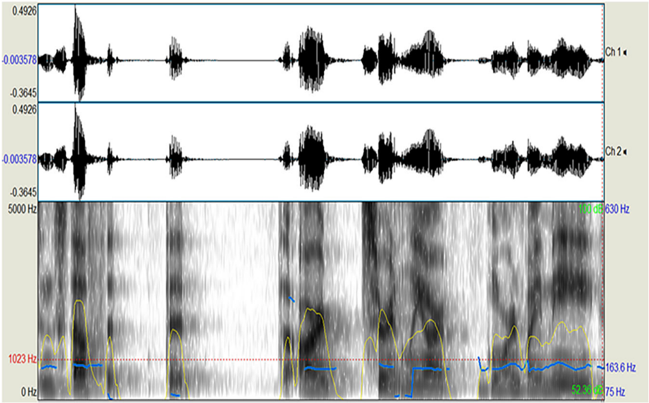
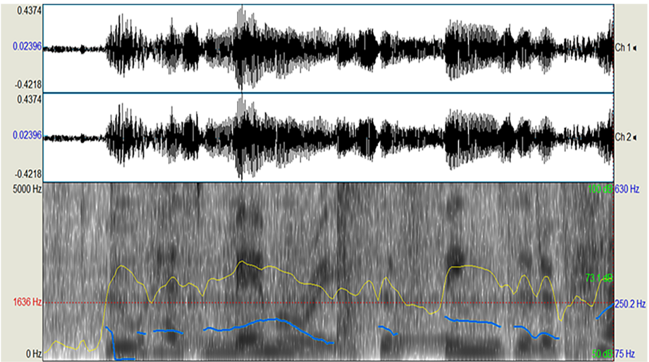
- Acoustic analysis found female-identity alters had higher mean F0 (~250.2 Hz) than male-identity alters (~164.6 Hz), while male-identity alters showed a broader pitch range.
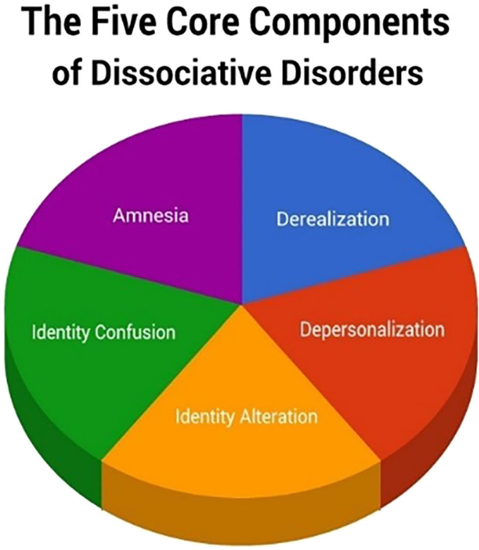
- Thematic analysis linked male-identity alters mainly with uncertainty, low self-image, identity confusion, derealization, and delusional beliefs, and female-identity alters with identity alteration, strengthening of feelings, traumatic experience, and mistrust.
## Methods
- Design: Within-subject study of DID, comparing male-identity vs. female-identity alters within the same individuals; the paper frames this as a “natural experiment.”
- Data/sample: Six publicly available English-language documentary/interview sources from YouTube, about 3 hours total, with 23 alters across the six women; one originally screened subject was excluded for lacking clear gender-based alter switching.
- Analysis: The authors counted and normalized hedges and intensifiers, ran linear regressions and Pearson correlations in SPSS, conducted deductive thematic analysis in NVivo, and extracted acoustic measures in Praat (including mean F0, pitch range, intensity, speech rate, jitter, and shimmer).
## Limitations
- The authors state that the interviews may have been pre-planned or shaped for public presentation, creating possible performance bias; they also note that some claims may therefore have limited reliability.
- They explicitly note the small sample size: 6 participants and 23 alters, all biologically women, limiting generalizability.
- They state that the reliance on online media sources may introduce sampling bias and affect linguistic authenticity.
- Evident from the text: the study’s key inferential results are underpowered and often non-significant, so the qualitative/raw-count patterns cannot be treated as strong statistical evidence.
Model-written summary. Check it against the paper before relying on it.
Integrity signals
Registry
Cites
Statistics
Figures
Verification
Claims the paper makes
8 Valid · 7 Not valid · 45 Not checked · 61 Own results and interpretations
A result the paper reports from its own data — it cites no other source for it, so there is none to check. The quote shows it is in the paper.
In the paper
“Qualitative thematic analysis showed that male identity alters predominantly employed hedges -markers of uncertainty -whereas female identity alters favored intensifiers and expressions of powerlessness.”
plainstates a causen = 6- Asserted: passes — The authors put it forward as true.
- Checkable: passes — It can be checked against evidence.
- Load-bearing: passes — The paper’s conclusions depend on it.
- Based: passes — The paper gives a reason why it holds.
- Rests on 3 assumptions not shown here.
A result the paper reports from its own data — it cites no other source for it, so there is none to check. The quote shows it is in the paper.
In the paper
“yet neither hedges nor intensifiers varied significantly by gender identity.”
- Also stated in: § Results · plain
“gender identity did not signi fi cantly predict feature counts (hedges: B = -0.77, p = 0.247; intensi fi ers: B = -0.15, p = 0.869).”
plainn = 6- Asserted: passes — The authors put it forward as true.
- Checkable: passes — It can be checked against evidence.
- Load-bearing: passes — The paper’s conclusions depend on it.
- Based: passes — The paper gives a reason why it holds.
- Rests on 2 assumptions not shown here.
- Also stated in: § Results · plain
A result the paper reports from its own data — it cites no other source for it, so there is none to check. The quote shows it is in the paper.
In the paper
“Qualitative thematic analysis showed that male identity alters predominantly employed hedges -markers of uncertainty -whereas female identity alters favored intensifiers and expressions of powerlessness.”
plainstates a causen = 6- Asserted: passes — The authors put it forward as true.
- Checkable: passes — It can be checked against evidence.
- Load-bearing: passes — The paper’s conclusions depend on it.
- Based: passes — The paper gives a reason why it holds.
- Rests on 3 assumptions not shown here.
A result the paper reports from its own data — it cites no other source for it, so there is none to check. The quote shows it is in the paper.
In the paper
“baseline rates of hedges ( B = 1.54, SE = 0.46) and intensifiers ( B = 1.92, SE = 0.65) were both reliably above zero”
- Also stated in: § Results · plain
“Although baseline rates for hedges ( B = 1.54, p = 0.003) and intensi fi ers ( B = 1.92, p = 0.007) were signi fi cantly above zero”
plainn = 6- Asserted: passes — The authors put it forward as true.
- Checkable: passes — It can be checked against evidence.
- Load-bearing: unclear — It is unclear whether the paper’s conclusions depend on it.
- Based: passes — The paper gives a reason why it holds.
- Rests on 2 assumptions not shown here.
- Also stated in: § Results · plain
A result the paper reports from its own data — it cites no other source for it, so there is none to check. The quote shows it is in the paper.
In the paper
“yet neither hedges nor intensifiers varied significantly by gender identity.”
- Also stated in: § Results · plain
“gender identity did not signi fi cantly predict feature counts (hedges: B = -0.77, p = 0.247; intensi fi ers: B = -0.15, p = 0.869).”
plainn = 6- Asserted: passes — The authors put it forward as true.
- Checkable: passes — It can be checked against evidence.
- Load-bearing: passes — The paper’s conclusions depend on it.
- Based: passes — The paper gives a reason why it holds.
- Rests on 2 assumptions not shown here.
- Also stated in: § Results · plain
35 more claims
Create a free account to see all 121 claims and to verify the 1 reference still open.
- Probably not a substantial claim. 58
- It may state two separate claims as one. 40
Citations
Cites
S., N. L. (2017) · doi:10.1177/1609406917733847 · Cited by 14,051 · cited 1×
“To contextualize these quantitative fi ndings, we applied a structured thematic analysis framework (Nowell et al. 2017).”
Lakoff, R. (1973) · Language in Society · doi:10.1017/s0047404500000051 · Cited by 3,138 · cited 4×
“Lakoff argued that women ’ s language is marked by features such as hesitations, hedges, tag questions, and intensi fi ers that index uncertainty or reduced social authority (Lakoff, 1973, 1975).”
InfluentialHolmes, J. (2013) · doi:10.4324/9781315845722 · Cited by 720 · cited 1×
“Holmes (2013) expands this by positioning hedges and intensi fi ers along a politeness – power continuum, interpreting them as interpersonal strategies rather than inherently gendered markers.”
A Perceptual Study of Intonation: An Experimental-Phonetic Approach to Speech Melody
Hart, J. T., Collier, R., & Cohen, A. (1990) · doi:10.1017/cbo9780511627743 · Cited by 558
Language, Gender, and Sexuality: Current Issues and New Directions
Cameron, D. (2005) · Applied Linguistics · doi:10.1093/applin/ami027 · Cited by 430 · cited 1×
“Cameron (2005) critiques binary framing, which emphasizes that gendered language should be understood within broader social and sexual identities, shaped by intersecting power structures.”
Gendered Talk at Work: Constructing Social Identity Through Workplace Interaction
Holmes, J. (2006) · doi:10.1002/9780470754863 · Cited by 330
The reality and evolutionary significance of human psychological sex differences
Archer, J. (2019) · Biological Reviews · doi:10.1111/brv.12507 · Cited by 291 · cited 1×
“Early corpus ‐ based and interactional studies documented broad tendencies; men often favor object ‐ focused discourse, while women more frequently deploy relational and interactive strategies (Cameron, 1997; Holmes, 2008; Archer, 2019).”
Compliments in Cross-Cultural Perspective
Wolfson, N. (1981) · TESOL Quarterly · doi:10.2307/3586403 · Cited by 282 · cited 1×
“These totals suggest a formulaic pattern in the deployment of mitigation versus emphasis devices — mirroring prior fi ndings that, across contexts, speakers tend to rely on a relatively small set of pragmatic markers (Wolfson, 1981).”
Sociocultural Aspects of Pitch Differences between Japanese and Dutch Women
van Bezooijen, R. (1995) · Language and Speech · doi:10.1177/002383099503800303 · Cited by 269 · cited 3×
“Cross-cultural studies, for example, reveal that Japanese women speak with signi fi cantly higher pitch than their Dutch counterparts, a phenomenon attributed to differing gender norms and expectations surrounding femininity and deference (Van Bezooijen, 1995).”
The Distance Between Mars and Venus: Measuring Global Sex Differences in Personality
Del Giudice, M., Booth, T., & Irwing, P. (2012) · PLoS ONE · doi:10.1371/journal.pone.0029265 · Cited by 256 · cited 1×
“Yet the generalizability of these sex ‐ linked distinctions has been questioned (Del Giudice et al. 2012; Plug et al. 2021; Dewi et al. 2024), and few studies have addressed how an individual ’ s internalized, psychological gender identity might shape moment ‐ to ‐ moment language use.”
Dissociation as a Mediator of Psychopathology Among Sexually Abused Children and Adolescents
Kisiel, C. L., & Lyons, J. S. (2001) · American Journal of Psychiatry · doi:10.1176/appi.ajp.158.7.1034 · Cited by 247 · cited 1×
“…Simeon and colleagues found that 95% of children who later developed multiple identity states had experienced sexual trauma, a replication evident across diverse cultural contexts (Xiao et al. 2006) and reinforced by links between abuse and dissociative symptoms (Kisiel and Lyons, 2001).”
Multiple Personality as a Post-Traumatic Stress Disorder
Spiegel, D. (1984) · Psychiatric Clinics of North America · doi:10.1016/s0193-953x(18)30783-4 · Cited by 208 · cited 1×
“On this basis, many clinicians regard DID as a complex manifestation of post ‐ traumatic stress disorder (Spiegel, 1984).”
The Biological Contributions to Gender Identity and Gender Diversity: Bringing Data to the Table
Polderman, T. J. C., Kreukels, B. P. C., Irwig, M. S., Beach, L. B., Chan, Y.-M., Derks, E. M., Esteva, I., Ehrenfeld, J. M., den Heijer, M., Posthuma, D., et al. (2018) · Behavior Genetics · doi:10.1007/s10519-018-9889-z · Cited by 204 · cited 1×
“Yet the speci fi c role of an individual ’ s internalized psychological gender identity, which is one ’ s deeply held sense of being male, female, neither, or another gender, which may diverge from sex assigned at birth (Polderman et al. 2018; Singh and Zucker, 2021), remains unexplored.”
Lewis, D. O., Yeager, C. A., Swica, Y., Pincus, J. H., & Lewis, M. (1997) · American Journal of Psychiatry · doi:10.1176/ajp.154.12.1703 · Cited by 179 · cited 3×
“Cognitively, DID is associated with atypical information processing and altered reality perception, though much evidence relies on self ‐ report, raising validity concerns given trauma survivors ’ tendencies toward mistrust and low self ‐ con fi dence (Dorahy et al. 2016; Lewis et al. 1997).”
A Follow-Up Study of Boys With Gender Identity Disorder
Singh, D., Bradley, S. J., & Zucker, K. J. (2021) · Frontiers in Psychiatry · doi:10.3389/fpsyt.2021.632784 · Cited by 142 · cited 1×
“Yet the speci fi c role of an individual ’ s internalized psychological gender identity, which is one ’ s deeply held sense of being male, female, neither, or another gender, which may diverge from sex assigned at birth (Polderman et al. 2018; Singh and Zucker, 2021), remains unexplored.”
Coons, P. M., & Milstein, V. (1985) · PsycEXTRA Dataset · doi:10.1037/e609912012-020 · Cited by 131
Piper, A., & Merskey, H. (2004) · The Canadian Journal of Psychiatry · doi:10.1177/070674370404900904 · Cited by 109 · cited 2×
“This pattern aligns with trauma-narrative structures in DID (Piper and Merskey, 2004).”
The Classification of Hysteria and Related Disorders: Historical and Phenomenological Considerations
North, C. (2015) · Behavioral Sciences · doi:10.3390/bs5040496 · Cited by 104 · cited 1×
“Dissociative identity disorder (DID) is conceptualized as a severe, trauma ‐ based disruption in the integrative functions of identity, memory, cognition, affect, and self ‐ perception (North, 2015; Rutkofsky et al. 2017).”
Trauma and Dissociation in China
Xiao, Z., Yan, H., Wang, Z., Zou, Z., Xu, M. D., Chen, M. D., Zhang, M. D., Ross, C. A., & Keyes, B. B. (2006) · American Journal of Psychiatry · doi:10.1176/ajp.2006.163.8.1388 · Cited by 82 · cited 1×
“…Simeon and colleagues found that 95% of children who later developed multiple identity states had experienced sexual trauma, a replication evident across diverse cultural contexts (Xiao et al. 2006) and reinforced by links between abuse and dissociative symptoms (Kisiel and Lyons, 2001).”
Style and Content in E-Mails and Letters to Male and Female Friends
Colley, A. M., Todd, Z., Bland, M., Holmes, M. E., Khanom, N., & Pike, H. (2004) · Journal of Language and Social Psychology · doi:10.1177/0261927x04266812 · Cited by 77
Do (women’s) words matter? The influence of gendered language in entrepreneurial pitching
Balachandra, L., Fischer, K., & Brush, C. (2021) · Journal of Business Venturing Insights · doi:10.1016/j.jbvi.2021.e00224 · Cited by 61 · cited 1×
“More recent studies have shown that although women do tend to use a higher pitch on average than men (Krahé and Papakonstantinou, 2020; Balachandra, 2021), this difference stems not only from anatomical variation, such as vocal tract length and vocal fold mass (Hart et al. 1990), but also from…”
Personality Factors Associated With Dissociation: Temperament, Defenses, and Cognitive Schemata
Simeon, D., Guralnik, O., Knutelska, M., & Schmeidler, J. (2002) · American Journal of Psychiatry · doi:10.1176/appi.ajp.159.3.489 · Cited by 54 · cited 1×
“Etiological research, grounded in DSM ‐ IV criteria, consistently implicates chronic childhood trauma, particularly extreme bullying or sexual abuse, as the primary causal factor (Simeon et al. 2002).”
Identifying dissociative identity disorder: A self-report and projective study.
Scroppo, J. C., Drob, S. L., Weinberger, J. L., & Eagle, P. (1998) · Journal of Abnormal Psychology · doi:10.1037/0021-843x.107.2.272 · Cited by 53
Ladegaard, H. J. (2012) · Journal of Pragmatics · doi:10.1016/j.pragma.2012.07.003 · Cited by 52 · cited 1×
“Ladegaard (2012) demonstrated that in male-dominated professional settings, women often adopt stronger, more assertive linguistic styles in order to align with workplace norms.”
Dorahy, M. J., Middleton, W., Seager, L., Williams, M., & Chambers, R. (2016) · Journal of Trauma & Dissociation · doi:10.1080/15299732.2015.1077916 · Cited by 50 · cited 4×
“Cognitively, DID is associated with atypical information processing and altered reality perception, though much evidence relies on self ‐ report, raising validity concerns given trauma survivors ’ tendencies toward mistrust and low self ‐ con fi dence (Dorahy et al. 2016; Lewis et al. 1997).”
InfluentialSpeaking like a Man: Women’s Pitch as a Cue for Gender Stereotyping
Krahé, B., & Papakonstantinou, L. (2019) · Sex Roles · doi:10.1007/s11199-019-01041-z · Cited by 37
Do women and men use language differently in spoken face-to-face interaction?: A scoping review
Ilona Plug, I. P., Wyke Stommel, W. S., Peter Lucassen, P. L., Tim Olde Hartman, T. O. H., Sandra Van Dulmen, S. V. D., & Enny Das, E. D. (2020) · Review of Communication Research · doi:10.12840/issn.2255-4165.026 · Cited by 37 · cited 1×
“Yet the generalizability of these sex ‐ linked distinctions has been questioned (Del Giudice et al. 2012; Plug et al. 2021; Dewi et al. 2024), and few studies have addressed how an individual ’ s internalized, psychological gender identity might shape moment ‐ to ‐ moment language use.”
Kellermann, K., & Palomares, N. A. (2004) · Journal of Language and Social Psychology · doi:10.1177/0261927x04266811 · Cited by 28
Trauma and Dissociation in China
Xiao, Z. (2006) · American Journal of Psychiatry · doi:10.1176/appi.ajp.163.8.1388 · Cited by 23
Martínez, A. P., Dorahy, M. J., Nesbit, A., Palmer, R., & Middleton, W. (2020) · Journal of Psychiatric Research · doi:10.1016/j.jpsychires.2020.09.015 · Cited by 19
Updating Diagnostic Criteria for Dissociative Disorders: Learning from Scientific Advances
Steinberg, M. (2001) · Journal of Trauma & Dissociation · doi:10.1300/j229v02n01_07 · Cited by 15 · cited 4×
“These themes mirror DSM-5 dissociative symptoms (Steinberg, 2001) and Lakoff ’ s De fi cit Model (1975) tie between hedges and uncertainty.”
InfluentialMazzetto, S. (2024) · Heritage · doi:10.3390/heritage8010004 · Cited by 13 · cited 1×
“V ariation in speech patterns and linguistic features across social categories such as sex, class, race, and region has been well documented (Du, 2021; Aini et al. 2023), and scholars have shown how speakers deploy language to enact particular identities or personas (Mazzetto, 2024).”
Utterance Final Position and Projection of Femininity in Japanese
Hiramoto, M. (2010) · Gender and Language · doi:10.1558/genl.v4i1.99 · Cited by 12
Kishi, T., Matsuda, Y., Sakuma, K., Okuya, M., & Iwata, N. (2020) · Journal of Psychiatric Research · doi:10.1016/j.jpsychires.2020.08.003 · Cited by 8
Preserving Face and the Use of Hedges in Masculine World of Men
Mohajer, L., & Jan, J. M. (2015) · Procedia - Social and Behavioral Sciences · doi:10.1016/j.sbspro.2015.11.176 · Cited by 7 · cited 1×
“Other studies, such as Mohajer and Jan (2015), argued that men may avoid hedging due to a desire to project decisiveness and authority, suggesting that the use of hedges may be in fl uenced by gendered expectations around con fi dence rather than frequency alone.”
Jordanian Women Are “Sort of Like” Less Assertive Than Jordanian Men, Aren’t They?
Al Omari, M., Zuraiq, W., Mashaqba, B., Alahboul, S. S. Y., & Huneety, A. I. A. (2022) · The International Journal of Communication and Linguistic Studies · doi:10.18848/2327-7882/cgp/v20i01/83-105 · Cited by 6
Orlof, W., B. Rozenek, E., Waszkiewicz, N., & Szewczak, B. (2021) · Postępy Psychiatrii i Neurologii · doi:10.5114/ppn.2021.110804 · Cited by 6 · cited 2×
“Focusing exclusively on women aligns with Lakoff ’ s de fi cit model and re fl ects the pre-ponderance of female cases in public-domain DID research (Rosik, 2012; Orlof et al. 2021).”
Hedging with modal auxiliary verbs in scientific discourse and women’s language
Schmauss, L. S., & Kilian, K. (2023) · Open Linguistics · doi:10.1515/opli-2022-0229 · Cited by 5 · cited 1×
“Corpus-based studies, such as Schmauss and Kilian (2023), found minimal overall differences in hedge usage between men and women, though some variation emerged in the speci fi c types of hedges employed.”
Rutkofsky, I. H., Khan, A. S., Sahito, S., Aqeel, N., & Tohid, H. (2017) · Journal of Cell Science & Therapy · doi:10.4172/2157-7013.1000267 · Cited by 4 · cited 1×
“Dissociative identity disorder (DID) is conceptualized as a severe, trauma ‐ based disruption in the integrative functions of identity, memory, cognition, affect, and self ‐ perception (North, 2015; Rutkofsky et al. 2017).”
Adult Psychopathology and Diagnosis, Eighth Edition
(2018) · Wiley eBooks · doi:10.1002/9781394258970 · Cited by 4
Gender-Based Linguistic Patterns in Quora Apps: A Comparative Study
Candra Dewi, T., Widyawati, W., Rochmahwati, P., & Khasanah, N. (2024) · SALEE: Study of Applied Linguistics and English Education · doi:10.35961/salee.v5i1.1085 · Cited by 2 · cited 1×
“Yet the generalizability of these sex ‐ linked distinctions has been questioned (Del Giudice et al. 2012; Plug et al. 2021; Dewi et al. 2024), and few studies have addressed how an individual ’ s internalized, psychological gender identity might shape moment ‐ to ‐ moment language use.”
Personality factors associated with dissociation: Temperament, defenses and schemas: (609242012-062)
Simeon, D., Guralnick, O., Knutelska, M., et al. (2001) · doi:10.1037/e609242012-062 · Cited by 1
Treating multiple personality as a post-traumatic stress disorder
Spiegel, D. (1985) · PsycEXTRA Dataset · doi:10.1037/e609912012-003
Research works printed but not linked: 9
- Aini N, Djatmika D, Sumarlam S, Kristina D (2023) Hedge markers: a study of politeness and gender in media interaction. Int J Soc Cult Lang 11(3):226–241
- Alzamil WA, Ibrahem UM, Alabdulkareem R, Almusfir MF, ALqasem MA, Ahmed EM, Alkasabi MT (2023) Factorialvalidity of the self-compassion scale among female University students: A comparative study between Saudi and Egyptian cultures. African J Reproductive Health 27:88–100
- Bowman ES, Spiegel D, Jack L, Willson S (2005) Recovered memories, hypnosis, and dissociation. Curr Psychiatry 4(3):2 -3 Cameron D (1997) Performing gender identity: Young men ' s talk and the construction of heterosexual masculinity. In S. Johnson & U. H. Meinhof (Eds.), Language and masculinity (pp. 47 -64). Blackwell Publisher Cameron D (2005) Language, gender, and sexuality: current issues and new directions. Appl Linguist 26(4):482 -502
- Cameron D (1997) Performing gender identity: Young men’s talk and the construction of heterosexual masculinity. In S. Johnson & U. H. Meinhof (Eds.), Language and masculinity (pp. 47–64). Blackwell Publisher
- Coons PM (1988) Psychophysiological aspects of multiple personality disorder: a review. Dissociation: Prog Dissociative Disord 1(1):47–53
- Du R (2021) A corpus-based gender study of hedges in spoken British English. K. Hu, J.-B. Kim, C. Zong, & E. Chersoni (Eds.), Proceedings of the 35th Pacific Asia conference on language, information and computation. pp 562–571. Association for Computational Linguistics
- Hanafiyeh M, Afghari A (2014) Gender differences in the use of hedges, tag questions, intensifiers, empty adjectives, and adverbs: a comparative study in the speech of men and women. Indian J Fundam Appl Life Sci 4(2):1168–1177
- Rosik CH (2012) Opposite-gender identity states in dissociative identity disorder: psychodynamic insights into a subset of same-sex behavior and attractions. J Psychol Christ 31(3):278–285
- Watkins JG, Watkins HH (1998) The management of malevolent ego states in multiple personality disorder. Dissociation 1(1):67 -72
Cited by
From spotlight to limelight? Questioning discursive authority in The Zoya Factor
Sri, R. K. N., & Vidya, V. (2026) · Social Sciences & Humanities Open · doi:10.1016/j.ssaho.2026.103642
Metadata
- Authors
- Alotaibi, T., Almusharraf, N., & Imran, M.
- Affiliations
- Prince Sultan University (SA)
- Khazar University (AZ)
- Corresponding author
- Alotaibi, Turkiah
- Venue
- Humanities and Social Sciences Communications
- Published
- 2025-08-12
- Volume
- 12
- Issue
- 1
- ISSN
- 2055-1045 (ISSN-L)
- 2662-9992
- OpenAlex
- W4413203715
- Semantic Scholar
- e1ff9c7cd89ac1c34575eb47603f5d18f6bf07ec
- Cited by
- 1
- References
- 32
- Citations by year
- 2026: 1
- FWCI
- 1.80
- Type
- journal article
- Language
- en
- Open access
- gold
- doi.org
- Licence
- cc-by-nc-nd
- creativecommons.org/licenses/by-nc-nd/4.0 (tdm)
- creativecommons.org/licenses/by-nc-nd/4.0 (vor)
- Locations
- Humanities and Social Sciences Communications (publishedVersion, cc-by-nc-nd)
- DOAJ (DOAJ: Directory of Open Access Journals) (submittedVersion, cc-by-sa)
- Khazar University Institutional Repository (Khazar University) (submittedVersion)
- Funders
- Prince Sultan University
- Topics
- Social Sciences › Gender Studies › Gender Studies in Language
- Social Sciences › Linguistics and Language › Linguistic Variation and Morphology
- Social Sciences › Arts and Humanities › Language and Linguistics › Language, Discourse, Communication Strategies
- Keywords
- dissociative identity disorder, gender identity, gendered language, hedges, intensifiers, tag questions, deficit model, speech variation, self-confidence, powerlessness
About these checks
Registry, retraction, Cites and statistics results are computed, not judged, with one exception: a printed reference that no index lists is read once by a model before it counts as a citation error. Claims are extracted by a model and kept only when their quote appears verbatim in the text; each cited source is then checked, with a model’s help, for whether it says what the claim relies on. Those verdicts can be wrong — read the claim’s quote and the cited source before relying on one.
The claim verdicts this report counts are experimental: their accuracy is not yet measured.
A language model drew the claims from the paper on 2026-10-11, under version 3 of the claim definition (model deepseek-v4.1-flash, prompt extract-v3).
A second model labelled each claim on 2026-10-11 (model jev-1.13-20260917, definition revision gold-guideline-v0.2).
Statistics and arithmetic are recomputed, not judged.
Confidence bands are shown only for fields calibrated on our annotated test set. None is calibrated yet, so no band is shown.
What counts as a claim ›How we measure confidence ›How we check this ›
Are you an author, or do you see a problem with this page? Request a review
Data sources
Bibliographic data: Semantic Scholar, OpenAlex, Crossref.
Contains information from the Semantic Scholar Academic Graph Datasets, made available under the ODC Attribution License (ODC-BY 1.0).
Semantic Scholar’s data is described in: Kinney, R., et al. (2023). The Semantic Scholar Open Data Platform. arXiv:2301.10140.
