

Anthropogenic drivers of 2013–2017 trends in summer surface ozone in China
Open accessThe DOI matches its Crossref record; 45 of the 45 references it cites were found in a registry or an index.
Abstract
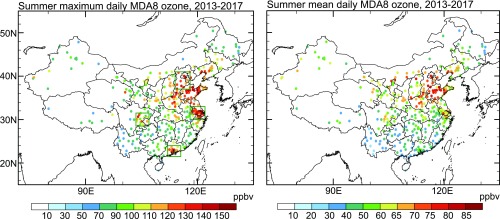
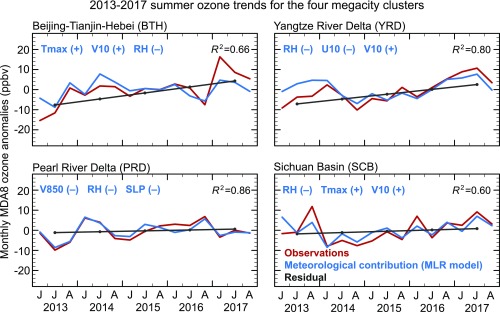
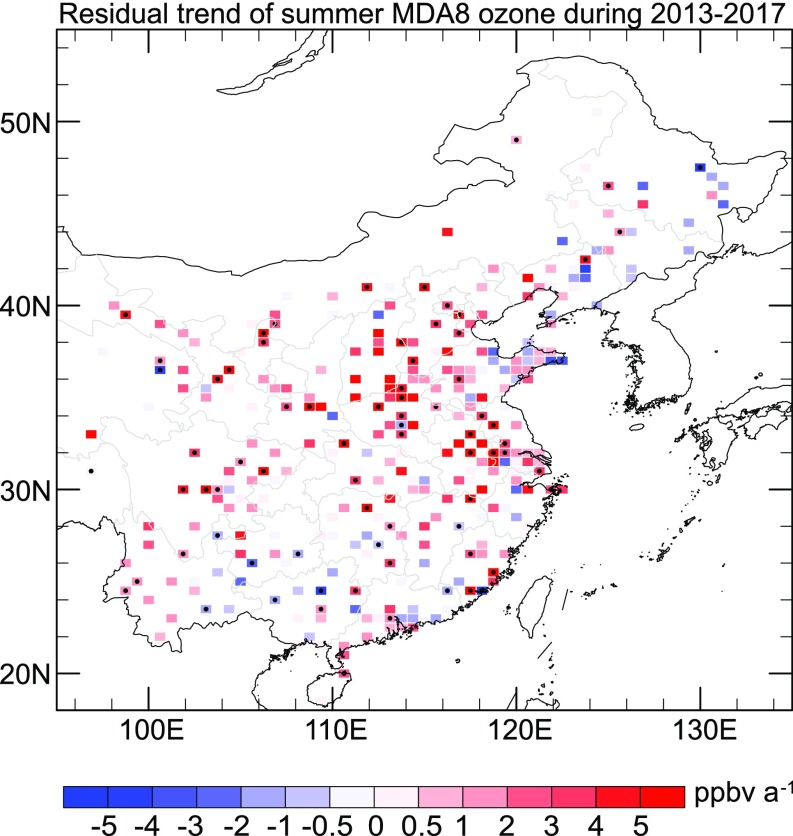
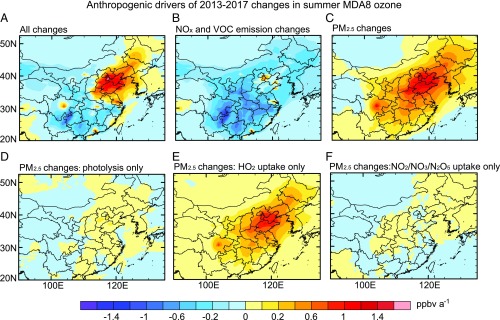
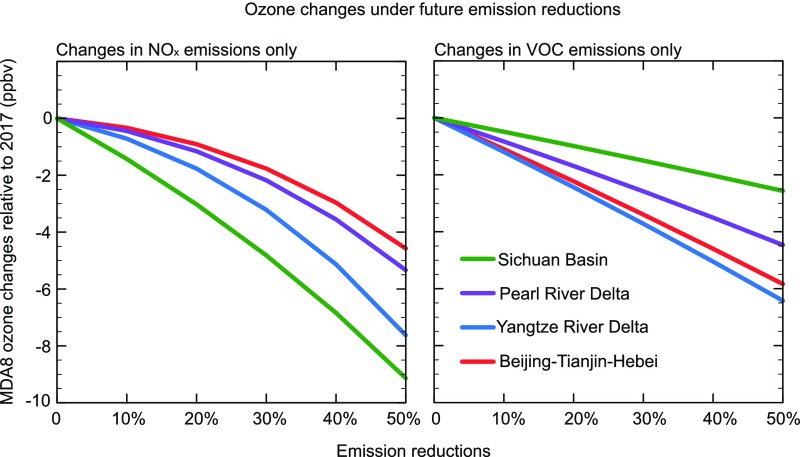
Significance: Drastic air pollution control in China since 2013 has achieved sharp decreases in fine particulate matter (PM 2.5 ), but ozone pollution has not improved. After removing the effect of meteorological variability, we find that surface ozone has increased in megacity clusters of China, notably Beijing and Shanghai. The increasing trend cannot be simply explained by changes in anthropogenic precursor [NO x and volatile organic compound (VOC)] emissions, particularly in North China Plain (NCP). The most important cause of the increasing ozone in NCP appears to be the decrease in PM 2.5 , slowing down the sink of hydroperoxy radicals and thus speeding up ozone production. Decreasing ozone in the future will require a combination of NO x and VOC emission controls to overcome the effect of decreasing PM 2.5 .
Overview
The claims and statistics of this paper haven’t been checked yet.
Free: it reads the open-access text and checks the first 5 claims that cite a source we can check. Create a free account to check every claim.
Integrity signals
Registry
Cites
Statistics
Figures
Verification
Claims the paper makes
The claims and statistics of this paper haven’t been checked yet.
Free: it reads the open-access text and checks the first 5 claims that cite a source we can check. Create a free account to check every claim.
Claims other papers make about this one
Each is checked against this paper’s own text: does it say what the citing paper says it does?
The cited source doesn’t support the claim as written.
In the citing paper
“a recent analysis of ground-level ozone concentrations measured at nearly 1,000 sites across China also found an increasing trend of summertime ozone in northeastern China from 2013 to 2017 (6).”
From Ozone pollution: A Major health hazard worldwide (2019) · cites this paper as [6]
Checked by a reasoning model — may be wrong.
Experimental — accuracy not yet measuredThe source backs part of the claim, not all of it — or backs it for a different population, condition or comparison.
In the citing paper
“Simulations with numerical models show several possible reasons including increases in UV radiation [31, 33–39], shifts in the VOC/NOx chemical regime resulting in increased production of O3 efficiency [35, 40], higher emissions of biogenic VOC due to rising temperatures [30], and decreased competition for gas-phase radicals by aerosol surfaces [34, 40], with reality likely being a combination of”
From Changes in tropospheric air quality related to the protection of stratospheric ozone in a changing climate (2023) · cites this paper as [34]
Experimental — accuracy not yet measuredThe source backs part of the claim, not all of it — or backs it for a different population, condition or comparison.
In the citing paper
“This increase was attributed to changes in anthropogenic emissions of ozone precursors as well as reductions in PM2.5 concentrations as described earlier.”
From Ozone pollution: A Major health hazard worldwide (2019) · cites this paper as [6]
Experimental — accuracy not yet measuredThe source backs part of the claim, not all of it — or backs it for a different population, condition or comparison.
In the citing paper
“anthropogenic emissions of NOx have decreased substantially in most urban areas of China (a 21% nationwide reduction) from 2013 to 2017 (6).”
From Ozone pollution: A Major health hazard worldwide (2019) · cites this paper as [6]
Experimental — accuracy not yet measuredThe cited source says what the claim attributes to it.
In the citing paper
“A recent study showed that a 40% reduction in PM2.5 from 2013 to 2017 in the North China Plain was partly responsible for an increasing ozone trend (at 1–3 ppb per year) during the period of 2013–2017 observed in megacity clusters of eastern China (6).”
From Ozone pollution: A Major health hazard worldwide (2019) · cites this paper as [6]
2 more claims about this paper
Create a free account to see every claim other papers make about this one.
Self-check
Percentages, sums and reported differences re-computed from the paper’s own numbers.
The self-check needs the paper’s full text.
Citations
Cites
Modern Applied Statistics with S
Venables, W. N., & Ripley, B. D. (2002) · Statistics and Computing · doi:10.1007/978-0-387-21706-2 · Cited by 24,305
The Modern-Era Retrospective Analysis for Research and Applications, Version 2 (MERRA-2)
Gelaro, R., McCarty, W., Suárez, M. J., Todling, R., Molod, A., Takacs, L., Randles, C. A., Darmenov, A., Bosilovich, M. G., Reichle, R., et al. (2017) · Journal of Climate · doi:10.1175/jcli-d-16-0758.1 · Cited by 9,010 · cited 2×
“Meteorological data from the NASA MERRA-2 reanalysis (23) with 0.”
MethodTrends in China's anthropogenic emissions since 2010 as the consequence of clean air actions
Zheng, B., Tong, D., Li, M., Liu, F., Hong, C., Geng, G., Li, H., Li, X., Peng, L., Qi, J., et al. (2018) · Atmospheric Chemistry and Physics · doi:10.5194/acp-18-14095-2018 · Cited by 2,916 · cited 9×
“The MEIC emission inventory is developed and managed by researchers at Tsinghua University.”
BackgroundMethodInfluentialSelf-citationModern Applied Statistics with S,
Kemp, F. (2003) · Journal of the Royal Statistical Society: Series D (The Statistician) · doi:10.1046/j.1467-9884.2003.t01-19-00383_22.x · Cited by 2,320
Effect of climate change on air quality
Jacob, D. J., & Winner, D. A. (2009) · Atmospheric Environment · doi:10.1016/j.atmosenv.2008.09.051 · Cited by 1,979 · cited 1×
“These variables are frequently observed to be correlated with ozone air quality (24) and can be viewed as general indicators of stagnation.”
BackgroundSelf-citationWang, T., Xue, L., Brimblecombe, P., Lam, Y. F., Li, L., & Zhang, L. (2017) · Science of The Total Environment · doi:10.1016/j.scitotenv.2016.10.081 · Cited by 1,876 · cited 5×
“A number of previous studies have examined meteorological influences on ozone variability in China (4, 9, 39, 40), On the basis of these studies we considered the correlation of MDA8 ozone across China with a large number of candidate meteorological variables from the MERRA-2 archive (SI Appendix, Table S3 and Fig.”
BackgroundInfluentialLi, M., Zhang, Q., Kurokawa, J.-I., Woo, J.-H., He, K., Lu, Z., Ohara, T., Song, Y., Streets, D. G., Carmichael, G. R., et al. (2017) · Atmospheric Chemistry and Physics · doi:10.5194/acp-17-935-2017 · Cited by 1,616
Self-citationHeterogeneous chemistry and tropospheric ozone
Jacob, D. (2000) · Atmospheric Environment · doi:10.1016/s1352-2310(99)00462-8 · Cited by 1,289 · cited 3×
“The relevant aerosol chemistry involves reactive uptake of the gaseous precursors to ozone formation, as described in GEOS-Chem by firstorder reactive uptake coefficients γ (32).”
BackgroundMethodInfluentialSelf-citationTai, A. P. K., Mickley, L. J., & Jacob, D. J. (2010) · Atmospheric Environment · doi:10.1016/j.atmosenv.2010.06.060 · Cited by 1,048
Self-citationSevere Surface Ozone Pollution in China: A Global Perspective
Lu, X., Hong, J., Zhang, L., Cooper, O. R., Schultz, M. G., Xu, X., Wang, T., Gao, M., Zhao, Y., & Zhang, Y. (2018) · Environmental Science & Technology Letters · doi:10.1021/acs.estlett.8b00366 · Cited by 1,040 · cited 1×
“5) concentration has decreased significantly since then, but ozone pollution has not decreased and is seemingly getting worse (8, 16).”
Background
Cited by
Items 901–1,000 of 1,003
Environmental catalytic city: New engine for air pollution control
Ma, J., Chu, B., Li, X., Wang, H. H., Ma, Q., He, G., Liu, Q. S., Wang, S., He, K., Zhao, J., et al. (2025) · Journal of Environmental Sciences · doi:10.1016/j.jes.2025.02.019 · Cited by 11
Zhang, Y., Zhang, F., Wan, M., Yu, B., He, K., & Liu, R. (2025) · Atmospheric Environment · doi:10.1016/j.atmosenv.2025.121339 · Cited by 10
Song, Y., Wang, P., Yang, Y., Tang, J., & Liao, H. (2025) · Atmospheric Research · doi:10.1016/j.atmosres.2025.108580 · Cited by 12
Self-citationOzone Tolerance Found in Aegilops tauschii and Primary Synthetic Hexaploid Wheat
Brewster, C., Hayes, F., & Fenner, N. (2019) · Plants · doi:10.3390/plants8070195 · Cited by 10
“Although peak ozone episodes above 100 ppb are now less frequent in Europe and North America, they are still a common occurrence in East Asia [11,12].”
BackgroundLyu, X., Guo, H., Zhang, W., Cheng, H., Yao, D., Lu, H., Zhang, L., Zeren, Y., Liu, X., Qian, Z., et al. (2021) · Atmospheric Environment · doi:10.1016/j.atmosenv.2021.118540 · Cited by 10
Xie, Y., Zhao, Y., & Xiao, H. (2022) · Atmospheric Pollution Research · doi:10.1016/j.apr.2022.101412 · Cited by 10
Uttamang, P., Choomanee, P., Phupijit, J., Bualert, S., & Thongyen, T. (2023) · Atmosphere · doi:10.3390/atmos14060994 · Cited by 12
“In addition, the reactive uptake of hydroperoxy radicals (HO2) and nitrogen oxides (NO2, NO3, and N2O5) can inhibit the reaction between HO2 and NO, thus reducing O3 formation [24].”
BackgroundWang, Z., Zhao, H. Q., Han, X., Li, J., Ma, T., Zhang, L., Feng, Y., & Shi, G. (2023) · The Science of The Total Environment · doi:10.1016/j.scitotenv.2023.165679 · Cited by 10
Kang, M., Zhang, H., & Ying, Q. (2023) · Atmospheric Environment · doi:10.1016/j.atmosenv.2023.120116 · Cited by 10
A two-way coupled regional urban–street network air quality model system for Beijing, China
Wang, T., Liu, H., Li, J., Wang, S., Kim, Y., Sun, Y., Yang, W., Du, H., Wang, Z., & Wang, Z. (2023) · Geoscientific model development · doi:10.5194/gmd-16-5585-2023 · Cited by 10
Cui, B., Xian, C., Han, B., Shu, C., Qian, Y., Ouyang, Z., & Wang, X. (2023) · Journal of Environmental Management · doi:10.1016/j.jenvman.2023.119754 · Cited by 10
Impact of Marine Shipping Emissions on Ozone Pollution During the Warm Seasons in China
Zheng, Y., Jiang, F., Feng, S., Liu, H., Wang, X., Tian, X., Ying, C., Jia, M., Shen, Y., Lyu, X., et al. (2024) · Journal of Geophysical Research Atmospheres · doi:10.1029/2024jd040864 · Cited by 14
Xu, F., Hu, K., Lü, S., Guo, S., Wu, Y., Xie, Y., Zhang, H., & Hu, M. (2025) · Environmental Science & Technology · doi:10.1021/acs.est.4c12655 · Cited by 12
Velasco, E., Retama, A., Zavala, M., Guevara, M., Rappenglück, B., & Molina, L. T. (2020) · Atmospheric Environment · doi:10.1016/j.atmosenv.2020.118094 · Cited by 11
He, K., Shen, Z., Sun, J., Lei, Y., Zhang, Y., & Wang, X. (2020) · Atmosphere · doi:10.3390/atmos11121365 · Cited by 10
“The VOCs levels have increased in numerous cities in China because of the rapid development of urbanization [14,15].”
BackgroundAslam, B., Alrowaili, Z. A., Khaliq, B., Manzoor, J., Raqeeb, S. A., & Ahmad, F. B. (2021) · Computers, materials & continua/Computers, materials & continua (Print) · doi:10.32604/cmc.2021.015922 · Cited by 10
“During that particular period, it caused to slow down the level of hydroperoxide (HO2) proportionately [33].”
BackgroundChen, X., Li, X., Li, X., Liang, J., Li, J., Chen, G., Pei, Z., Wei, X., & Zeng, G. (2021) · Atmospheric Environment · doi:10.1016/j.atmosenv.2021.118864 · Cited by 11
Wang, L., Liu, D., Yan, W., Kang, Z., Liu, R., Zhang, J., & Li, Z. (2022) · Atmospheric Pollution Research · doi:10.1016/j.apr.2022.101616 · Cited by 10
Statistical significance of PM2.5 and O3 trends in China under long-term memory effects
Yu, P., Zhang, Y., Meng, J., & Liu, W. (2023) · The Science of The Total Environment · doi:10.1016/j.scitotenv.2023.164598 · Cited by 11
A step forward to mitigate ozone
Gaudel, A. (2022) · Nature Geoscience · doi:10.1038/s41561-022-00975-6 · Cited by 10
Wu, B., Wu, C., Ye, Y., Pei, C., Deng, T., Li, Y., Lu, X., Wang, L., Hu, B., Li, M., et al. (2024) · Atmospheric Environment · doi:10.1016/j.atmosenv.2024.120347 · Cited by 14
Enhanced Late Spring Ozone in Southern China by Early Onset of the South China Sea Summer Monsoon
Zhang, X., Lu, X. H., Wang, F., Zhou, W., Wang, P., & Gao, M. C. (2024) · Journal of Geophysical Research Atmospheres · doi:10.1029/2023jd039029 · Cited by 9
Zhan, Y., Xie, M., Zhuang, B., Gao, D., Zhu, K., Lu, H. C., Wang, T., Li, S., Li, M., Luo, Y., et al. (2024) · The Science of The Total Environment · doi:10.1016/j.scitotenv.2024.174365 · Cited by 9
Nizamani, M. M., Zhang, H.-L., Bolan, N. S., Zhang, Q., Guo, L., Lou, Y., Zhang, H., Wang, Y., & Wang, H. (2024) · Environmental Pollution · doi:10.1016/j.envpol.2024.124783 · Cited by 10
Self-citationYang, J., Wang, C., Zhang, Y., Zhang, S., Peng, X., Qin, X., Bai, J. M., Xue, L., Wang, G., Cui, S., et al. (2025) · Atmospheric Pollution Research · doi:10.1016/j.apr.2025.102461 · Cited by 11
Bai, J. M., Wu, Z., Yang, C., & Guenther, A. (2025) · Atmospheric Environment · doi:10.1016/j.atmosenv.2025.121182 · Cited by 10
Tropospheric ozone as an atmospheric pollutant and short-lived climate forcer in the Third Pole
Sharma, B. R., Kuttippurath, J., & Gopikrishnan, G. P. (2025) · Chemosphere · doi:10.1016/j.chemosphere.2025.144474 · Cited by 9
Xi, M., Luo, Y., Li, Y., Ma, D., Feng, L., Zhang, S., Chen, S., & Xie, M. (2025) · Atmospheric Environment · doi:10.1016/j.atmosenv.2025.121498 · Cited by 10
Xu, C., Lin, J., Kong, H., Jin, J., Chen, L., & Xu, X. (2025) · Atmospheric chemistry and physics · doi:10.5194/acp-25-9545-2025 · Cited by 9
Summer Ozone Pollution Episodes in South China and Transport Impacts from Southeast Asia
Zhou, B., Zeren, Y., Guo, H., & Lyu, X. (2025) · Environmental Science & Technology · doi:10.1021/acs.est.5c10258 · Cited by 12
Yang, Y., Zhao, Y., Zhu, Z., Li, C., Lü, Q., & Zhou, T. (2026) · Journal of Hazardous Materials · doi:10.1016/j.jhazmat.2026.141065 · Cited by 11
Sensitivity of photochemical surface ozone formation regimes to emissions and meteorology in India
Gopikrishnan, G. P., Westervelt, D. M., & Kuttippurath, J. (2026) · Atmospheric chemistry and physics · doi:10.5194/acp-26-1907-2026 · Cited by 10
“…gases, substantially impacts surface ozone concentrations (Jacob, 2000). areas with elevated aerosol concentrations, aerosols possessing a high uptake coefficient can more efficiently eliminate ozone pre-cursors, including HO 2 and other reactive radicals, from the atmosphere (Li et al., 2018).”
Wang, Q., Li, Q., Wang, Z., Chen, H., Ma, P., Ping, F., & Liu, C. (2021) · Atmospheric Pollution Research · doi:10.1016/j.apr.2021.02.008 · Cited by 9
Chen, C., Wang, L., Qin, Y., Zhang, Y., Zheng, S., Yang, Y., Jin, S., & Yang, X. (2021) · Atmosphere · doi:10.3390/atmos12070928 · Cited by 9
Surface Ozone Pollution: Trends, Meteorological Influences, and Chemical Precursors in Portugal
Silva, R. C. V., & Pires, J. C. M. (2022) · Sustainability · doi:10.3390/su14042383 · Cited by 9
Zhang, X., Stocker, J. R., Johnson, K., Fung, Y. H., Yao, T., Hood, C., Carruthers, D. J., & Fung, J. C. H. (2022) · GeoHealth · doi:10.1029/2021gh000506 · Cited by 9
Wang, R., Yang, Y., Xing, X., Wang, L., Chen, J., Tang, X., Cao, J., Morawska, L., Balkanski, Y. J., Hauglustaine, D. A., et al. (2022) · Environmental Science & Technology · doi:10.1021/acs.est.1c08403 · Cited by 9
Discrepancies in ozone levels and temporal variations between urban and rural North China Plain
Zhang, X., Xu, W., Zhang, G., Lin, W., Zhao, H., Ren, S., Zhou, G., Chen, J., & Xu, X. (2022) · Elementa Science of the Anthropocene · doi:10.1525/elementa.2022.00019 · Cited by 9
Composite Effects of ENSO and EASM on Summer Ozone Pollution in Two Regions of China
Lu, S., Gong, S., Chen, J., He, J., Lin, Y., Li, X., Zhang, L., Mo, J., Zhao, S., You, Y., et al. (2022) · Journal of Geophysical Research Atmospheres · doi:10.1029/2022jd036938 · Cited by 9
“In the past, observational data indicated that summer O3 concentration in China had increased from 2013 to 2017, especially in eastern China where O3 was usually higher than that in other regions (Li et al., 2019).”
BackgroundLi, Q., Jiang, S., Li, Y., Su, J., Shangguan, J., Zhan, M., Wang, Y., Su, X., Li, J., & Zhang, G. (2022) · Environmental Pollution · doi:10.1016/j.envpol.2022.120564 · Cited by 9
Yang, L., Hong, S., Mu, H., Zhou, J., He, C., Wu, Q., & Gong, X. (2023) · Environmental Science and Pollution Research · doi:10.1007/s11356-022-24809-5 · Cited by 9
“According to previous studies, the most severely polluted areas of O3 in China were economically developed and densely populated urban regions (Li et al. 2019; Lu et al. 2019).”
BackgroundAssessment of photosynthesis and yield loss of winter wheat under ground-level ozone exposure
Xu, J., Zhao, H., Wang, S., Zheng, Y., Boru, M., & Zhang, X. (2023) · Environmental Technology & Innovation · doi:10.1016/j.eti.2023.103013 · Cited by 9
Meteorological impacts on interannual anomalies of O3 import over Twain-Hu Basin
Shen, L., Zhao, T., Liu, J. J., Wang, H., & Bai, Y. (2023) · The Science of The Total Environment · doi:10.1016/j.scitotenv.2023.164065 · Cited by 9
Self-citationQian, Z., Meng, Q., Chen, K., Zhang, Z., Liang, H., Yang, H., Huang, X., Zhong, W., Zhang, Y., Wei, Z., et al. (2023) · Toxics · doi:10.3390/toxics11060481 · Cited by 9
“This is overall consistent with some previous observation and modeling studies [28,46,47].”
BackgroundResultDriving Forces of Meteorology and Emission Changes on Surface Ozone in the Huaihe River Basin, China
Liu, X., Gao, H., Zhang, X., Zhang, Y., Yan, J., Niu, J., & Chen, F. (2023) · Water Air & Soil Pollution · doi:10.1007/s11270-023-06345-1 · Cited by 9
Wang, J., Zhang, Y. L., Zhao, W., Wu, Z., Luo, S., Zhang, H., Zhou, H., Song, W., Zhang, W., & Wang, X. (2023) · Journal of Geophysical Research Atmospheres · doi:10.1029/2022jd038279 · Cited by 12
Wang, Q., Sheng, D., Wu, C., Ou, X., Yao, S., Zhao, J., Li, F., Li, W., & Chen, J. (2023) · Journal of Environmental Sciences · doi:10.1016/j.jes.2023.09.001 · Cited by 9
Zeng, P., Huang, X., Yan, M., Zheng, Z., Qiu, Z., Yun, L., Lin, C., & Zhang, L. (2023) · Atmosphere · doi:10.3390/atmos14121806 · Cited by 10
“Ambient PM 2.5 has been shown to affect O 3 production by attenuating solar radiation and HO X radical uptake [20,21].”
BackgroundInfluentialZhang, X., Zhugu, R., Jian, X., Liu, X., Chen, K., Tao, S., Liu, J., Gao, H. J., Huang, T., & Ma, J. (2023) · Atmospheric chemistry and physics · doi:10.5194/acp-23-15629-2023 · Cited by 9
Regional source contributions to summertime ozone in the Yangtze River Delta
Wang, M., Ma, J., Tao, C., Gao, Y., Zhang, R., Wang, P., & Zhang, H. (2024) · Atmospheric Environment · doi:10.1016/j.atmosenv.2024.120822 · Cited by 9
Evolution of ozone formation regimes during different periods in representative regions of China
Zhang, J., Shen, A., Jin, Y., Cui, Y., Xu, Y., Lu, X. H., Liu, Y., & Fan, Q. (2024) · Atmospheric Environment · doi:10.1016/j.atmosenv.2024.120830 · Cited by 9
Li, L., Li, J., Qin, M., Xie, X., Hu, J., & Zhang, Y. (2024) · Frontiers of Environmental Science & Engineering · doi:10.1007/s11783-024-1897-z · Cited by 9
“Li et al. (2019) proposed that the PM 2.5 decline in the North China Plain weakened the uptake process of hydroperoxyl (HO 2 ) radicals on the aerosol surface, thus enhancing O 3 generation.”
InfluentialKinetic and mechanism studies of the ozonolysis of three unsaturated ketones
Li, W., Chen, M., Chen, Y., Tong, S., Ge, M., Guo, Y., & Zhang, Y. (2020) · Journal of Environmental Sciences · doi:10.1016/j.jes.2020.03.031 · Cited by 9
Bu, Q., Hong, Y., Haobo, T., Liu, L., Wang, C., Zhu, J., Chan, P. W., & Chen, C. (2020) · Aerosol and Air Quality Research · doi:10.4209/aaqr.2020.03.0084 · Cited by 9
“, 2019) but an increase in ozone concentration (Li et al., 2019).”
BackgroundEffects of air pollutants and their interactive environmental factors on winter wheat yield
Zhang, T., Song, H., Zhou, B., Wang, L., Yang, A., Wang, T., Kong, H., Chen, Y., Zhou, S., & Fu, S. (2021) · Journal of Cleaner Production · doi:10.1016/j.jclepro.2021.127230 · Cited by 9
Liang, L., & Wang, Z. (2021) · International Journal of Environmental Research and Public Health · doi:10.3390/ijerph18116177 · Cited by 10
“Under strong sunlight, nitrogen oxides and volatile organic compounds (VOCs) can produce O3 by photochemical reaction [41].”
BackgroundXue, Y., Wang, L., Liu, S., Huang, Y. H., Chen, L., Cui, L., Cheng, Y., & Cao, J. (2021) · Chinese Chemical Letters · doi:10.1016/j.cclet.2021.11.013 · Cited by 9
Chen, C., Wang, L., Zhang, Y., Zheng, S., & Tang, L. (2021) · Atmosphere · doi:10.3390/atmos12121598 · Cited by 9
Chen, B., Song, Q., & Pan, Q. (2022) · Atmosphere · doi:10.3390/atmos13071139 · Cited by 9
Hong, J., Wang, W., Bai, Z., Bian, J., Tao, M., Konopka, P., Ploeger, F., Muller, R. H., Wang, H., Zhang, J., et al. (2022) · Remote Sensing · doi:10.3390/rs14225726 · Cited by 10
Zhang, Y., Liu, X., Shi, X., Xue, W., Liu, Z., Wang, Y., & Yan, G. (2023) · The Science of The Total Environment · doi:10.1016/j.scitotenv.2023.163436 · Cited by 9
Quantifying source contributions of volatile organic compounds under hydraulic fracking moratorium
Li, Z., Reeder, M. D., & Pekney, N. J. (2020) · The Science of The Total Environment · doi:10.1016/j.scitotenv.2020.139322 · Cited by 9
An Optimization Approach for Hourly Ozone Simulation: A Case Study in Chongqing, China
Zhu, S., Zeng, Q., Zhu, H., Xu, J., Gu, J., Wang, Y., & Chen, L. (2020) · IEEE Geoscience and Remote Sensing Letters · doi:10.1109/lgrs.2020.3010416 · Cited by 9
“China has undergone rapid urbanization, hence its ozone pollution has become a region problem [1], [2].”
BackgroundZhang, H., Tang, K., Feng, W., Yan, X., Liao, H., & Li, N. (2021) · Frontiers in Environmental Science · doi:10.3389/fenvs.2021.693513 · Cited by 10
Self-citationYulei, 迟. C., & Zhao, C. (2023) · Acta Optica Sinica · doi:10.3788/aos230583 · Cited by 8
Machine-learning-based corrections of CMIP6 historical surface ozone in China during 1950–2014
Tong, Y., Yan, Y., Lin, J., Kong, S., Tong, Z., Zhu, Y., Yan, Y., & Sun, Z. (2024) · Environmental Pollution · doi:10.1016/j.envpol.2024.124397 · Cited by 9
Fang, C., Li, X., Li, J., Tian, J., & Wang, J. (2025) · Scientific Reports · doi:10.1038/s41598-025-85940-0 · Cited by 8
Causes of growing middle-to-upper tropospheric ozone over the northwest Pacific region
Ma, X., Huang, J., Hegglin, M. I., Jöckel, P., & Zhao, T. (2025) · Atmospheric chemistry and physics · doi:10.5194/acp-25-943-2025 · Cited by 10
Probing the mechanism of prolonged ozone pollution in arid and semi-arid urban areas
Song, X. S., Tian, P., Yu, Z., Liu, X., Wang, T., Zhang, M., Li, J., Cao, X., Liang, J., Ren, Y. Q., et al. (2025) · Urban Climate · doi:10.1016/j.uclim.2025.102399 · Cited by 8
Zhang, X., Miao, N., Chu, W., Dong, Y., Shi, X., Chen, T., Ma, Q., Wang, L., Wu, Y., Zheng, W., et al. (2025) · Journal of Hazardous Materials · doi:10.1016/j.jhazmat.2025.138127 · Cited by 8
Li, Y., Wang, L., Chen, D., Zhang, L., & Zhao, Y. (2025) · Atmospheric Environment · doi:10.1016/j.atmosenv.2025.121401 · Cited by 10
Zhang, R., Zhang, S., Tang, H., Zeng, K., Wang, Y., Zhang, J., Ci, M., Jin, Z., & Liu, M. (2025) · Urban Climate · doi:10.1016/j.uclim.2025.102636 · Cited by 9
Cloud–radiation interactions amplify ozone pollution in a warming climate
Zhao, S., Feng, T., Tie, X., Tian, B., Hu, X., Hu, B., Yang, D. F., Gu, S., & Ding, M. (2025) · Atmospheric chemistry and physics · doi:10.5194/acp-25-12483-2025 · Cited by 8
“Low clouds with small and compact liquid droplets can significantly reflect the solar radiation by their considerable optical thickness (Kang et al., 2020), thereby diminishing photolysis rate and the loadings of tropospheric oxidants (Tie et al., 2003, 2019).”
Hui, L., Chen, Y., Feng, X., Sun, H., Guo, J., Xu, Y., Chen, Y., Zheng, P., Gu, D., & Wang, Z. (2025) · Atmospheric chemistry and physics · doi:10.5194/acp-25-18355-2025 · Cited by 8
“Elevated O 3 levels remain a persistent environmental challenge in many urban regions worldwide, especially a notable upward trend in East Asia (Li et al., 2019b; Li et al., 2020).”
Feng, R., Zhou, R., Shi, W., Shi, N., & Fang, X. (2021) · Scientific Reports · doi:10.1038/s41598-021-88596-8 · Cited by 8
Wang, M., Li, G., Feng, Z., Liu, Y., Xu, Y., & Uscola, M. (2021) · Journal of Experimental Botany · doi:10.1093/jxb/erab317 · Cited by 8
Response of Ginkgo biloba growth and physiological traits to ozone stress
Chen, B., Xu, J., Liu, D., & Yang, X. (2022) · Global Ecology and Conservation · doi:10.1016/j.gecco.2022.e02020 · Cited by 8
Sun, Y., & Wang, X. (2022) · Frontiers in Environmental Science · doi:10.3389/fenvs.2022.1015723 · Cited by 11
“Frontiers in Environmental Science frontiersin.org02 and thus stimulating ozone production at 0.6–1 ppbv a−1 in Beijing–Tianjin–Hebei (Li et al., 2019).”
InfluentialLiu, L., Gong, H., Wang, L., Chen, W., Wu, R., Tao, W., Dong, Z., & Liu, B. (2023) · Atmospheric Research · doi:10.1016/j.atmosres.2023.106852 · Cited by 9
Wang, H., Ruan, Y., Ma, S., Wang, Y., Wan, X., He, Y., Li, J., & Zou, Z. (2023) · World Journal of Pediatrics · doi:10.1007/s12519-023-00755-1 · Cited by 9
“The troposphere ozone (O 3 ) concentration in China has shown an increasing trend in recent years, becoming a pressing public health concern [8].”
Liu, L., Zhao, Y., Zhao, H., Wang, Y., & Nielsen, C. (2023) · Environmental Science & Technology · doi:10.1021/acs.est.3c04041 · Cited by 8
Zhu, C., Zhu, C., Qiu, M., Gai, Y., Li, R., Li, L., Wang, C., Yang, N., Wang, B., Sun, L., et al. (2023) · Atmosphere · doi:10.3390/atmos14111672 · Cited by 8
“This correlation is mainly because of the depression of the heterogeneous absorption of HO 2 by aerosol with the decline in PM 2.5 concentrations [7,47].”
InfluentialMeng, J., Wang, Y., Li, Y., Huang, T., Wang, Z., Wang, Y., Chen, M., Hou, Z., Zhou, H., Lu, K., et al. (2023) · Atmospheric chemistry and physics · doi:10.5194/acp-23-14481-2023 · Cited by 8
Qi, H., Duan, W., Cheng, S., Huang, Z., & Hou, X. (2024) · The Science of The Total Environment · doi:10.1016/j.scitotenv.2024.170486 · Cited by 8
Yang, Q., Zhao, T., Bai, Y., Wei, J., Sun, X., Tian, Z., Hu, J. Y., Ma, X., Luo, Y., Fu, W., et al. (2024) · The Science of The Total Environment · doi:10.1016/j.scitotenv.2024.171527 · Cited by 8
Fang, J., Chen, S., Leng, Y., Shi, W., Zhang, G., Lin, Y., & Li, F. (2024) · Journal of Molecular Liquids · doi:10.1016/j.molliq.2024.124465 · Cited by 8
Liang, W., Yu, H., Han, X., Wang, Z., Li, T., Feng, Y., Russell, A. G., & Shi, G. (2024) · Journal of Geophysical Research Atmospheres · doi:10.1029/2023jd040124 · Cited by 11
“Studies have found that the primary RO 2 sources mainly include the photolysis of oxygenated volatile organic compounds (OVOCs) as well as the NO 3 − initiated degradation of VOCs and reactions of O 3 with VOCs (L. Xue et al., 2016; Z. Li et al., 2018).”
BackgroundZhu, F., Luo, J., Wang, Z., Jin, H. Y., Zhao, Q., Wang, Z., Luo, F., & Gu, M. (2024) · Journal of Applied Meteorology and Climatology · doi:10.1175/jamc-d-24-0027.1 · Cited by 8
Evidence for global increases in urban ammonia pollution and their drivers
Liu, S., Xu, H., Wang, J., Ding, J., Liu, P., Yang, Y., & Liu, L. (2024) · The Science of The Total Environment · doi:10.1016/j.scitotenv.2024.176846 · Cited by 8
Yang, Z., Ren, Y., Shen, L., Liao, X., & Kwan, M. (2025) · Environmental Research · doi:10.1016/j.envres.2025.121748 · Cited by 9
Self-citationGu, Y., Yan, F., Xu, J., Qu, Y., Gao, W., Fangfang, H., & Liao, H. (2020) · Atmospheric chemistry and physics · doi:10.5194/acp-20-14361-2020 · Cited by 8
Self-citationRadiative Effects of Particular Matters on Ozone Pollution in Six North China Cities
Li, S., Liu, R., Wang, S., & Chen, S. X. (2021) · Journal of Geophysical Research Atmospheres · doi:10.1029/2021jd035963 · Cited by 11
Li, S., Feng, Z., Yuan, X., Wang, M., & Agathokleous, E. (2022) · Journal of Experimental Botany · doi:10.1093/jxb/erac288 · Cited by 8
Influence of circulation types on temporal and spatial variations of ozone in Beijing
Zhu, X., Wu, J., Tang, G., Qiao, L., Han, T., Yin, X., Liu, X., Li, Z., Xiong, Y., He, D., et al. (2022) · Journal of Environmental Sciences · doi:10.1016/j.jes.2022.06.033 · Cited by 9
Choi, Y., Kanaya, Y., Takashima, H., Park, K., Lee, H., Chong, J., Kim, J.-H., & Park, J. (2023) · Aerosol and Air Quality Research · doi:10.4209/aaqr.220145 · Cited by 9
“…the decrease in human activity, such as activity in the transportation and industry sectors; however, the COVID-19-driven decline must be separated from these pre-existing trends, and meteorologically driven variability must be considered (Li et al. , 2019; Vu et al. , 2019; Kroll et al. , 2020).”
Hu, Y., Shi, B., Yuan, X., Zheng, C., Sha, Q., Yu, Y., Huang, Z., & Zheng, J. (2022) · Journal of Environmental Sciences · doi:10.1016/j.jes.2022.09.004 · Cited by 8
Wang, M., Li, G., Feng, Z., Liu, Y., Yuan, X., & Uscola, M. (2023) · Annals of Botany · doi:10.1093/aob/mcad019 · Cited by 9
Chen, B., Zheng, Q., Sun, W., Yang, G., Feng, T., & Wang, Y. (2024) · IEEE Transactions on Geoscience and Remote Sensing · doi:10.1109/tgrs.2024.3358397 · Cited by 7
“Representative traditional statistical models include multiple linear regression (MLR) [19], generalize additive model (GAM) [20], geographically weighted 1558-0644 © 2024 IEEE.”
MethodWu, Y., Jun, G., Shi, X., Shen, W., Zhang, H., & Zhang, X. (2024) · Atmosphere · doi:10.3390/atmos15030382 · Cited by 7
Elevated Ozone Reduces the Quality of Tea Leaves but May Improve the Resistance of Tea Plants
Wang, N., Wang, Y., Zhang, X., Wu, Y., Zhang, L., Liu, G. H., Fu, J., Li, X., Mu, D., & Li, Z. (2024) · Plants · doi:10.3390/plants13081108 · Cited by 7
“Due to increasing emissions of O 3 precursors in industrialization, China has become a hotspot of O 3 pollution, with an increasing rate of 1–3 ppb year − 1 [3–5].”
Background
Metadata
- Authors
- Li, K., Jacob, D. J., Liao, H., Shen, L., Zhang, Q., & Bates, K. H.
- Affiliations
- Harvard University (US)
- Nanjing University of Information Science and Technology (CN)
- Tsinghua University (CN)
- Corresponding author
- Jacob, Daniel J.
- Liao, Hong
- Venue
- Proceedings of the National Academy of Sciences
- Publisher
- National Academy of Sciences
- Published
- 2018-12-31
- Volume
- 116
- Issue
- 2
- Pages
- 422-427
- ISSN
- 0027-8424 (ISSN-L)
- 1091-6490
- PMC
- PMC6329973
- OpenAlex
- W2908510209
- Cited by
- 1,804
- References
- 45
- Citations by year
- 2026: 164 · 2025: 191 · 2024: 203 · 2023: 263 · 2022: 348 · 2021: 326 · 2020: 224 · 2019: 80 · 2018: 1
- FWCI
- 76.82
- Type
- journal article
- Language
- en
- Open access
- hybrid
- doi.org
- Licence
- Locations
- Proceedings of the National Academy of Sciences (publishedVersion, cc-by-nc-nd)
- Europe PMC (PubMed Central) (publishedVersion, cc-by-nc-nd)
- PubMed Central (publishedVersion, cc-by-nc-nd)
- PubMed (publishedVersion)
- Funders
- National Natural Science Foundation of China (91744311)
- Topics
- Physical Sciences › Earth and Planetary Sciences › Atmospheric Science › Atmospheric chemistry and aerosols
- Physical Sciences › Earth and Planetary Sciences › Atmospheric Science › Atmospheric Ozone and Climate
- Physical Sciences › Environmental Science › Global and Planetary Change › COVID-19 impact on air quality
- Keywords
- surface ozone trends, anthropogenic factors, PM2.5 reduction, NOx emissions, volatile organic compounds, hydroperoxyl radical, ozone sink, ozone formation, North China Plain, air pollution control, weather variability, Beijing, Shanghai
- MeSH terms
- Air, Air Pollutants, Air Pollution, China, Humans, Ozone, Urban Renewal, Volatile Organic Compounds
About these checks
Registry, retraction, Cites and statistics results are computed, not judged, with one exception: a printed reference that no index lists is read once by a model before it counts as a citation error. Claims are extracted by a model and kept only when their quote appears verbatim in the text; each cited source is then checked, with a model’s help, for whether it says what the claim relies on. Those verdicts can be wrong — read the claim’s quote and the cited source before relying on one.
Statistics and arithmetic are recomputed, not judged.
Confidence bands are shown only for fields calibrated on our annotated test set. None is calibrated yet, so no band is shown.
What counts as a claim ›How we measure confidence ›How we check this ›
Are you an author, or do you see a problem with this page? Request a review
Data sources
Bibliographic data: Semantic Scholar, OpenAlex, Crossref.
Contains information from the Semantic Scholar Academic Graph Datasets, made available under the ODC Attribution License (ODC-BY 1.0).
Semantic Scholar’s data is described in: Kinney, R., et al. (2023). The Semantic Scholar Open Data Platform. arXiv:2301.10140.
