

Anthropogenic drivers of 2013–2017 trends in summer surface ozone in China
Open accessThe DOI matches its Crossref record; 45 of the 45 references it cites were found in a registry or an index.
Abstract
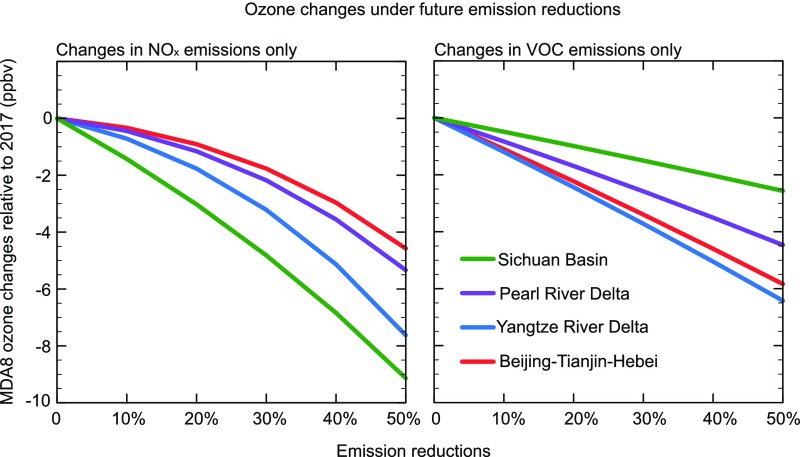
Significance: Drastic air pollution control in China since 2013 has achieved sharp decreases in fine particulate matter (PM 2.5 ), but ozone pollution has not improved. After removing the effect of meteorological variability, we find that surface ozone has increased in megacity clusters of China, notably Beijing and Shanghai. The increasing trend cannot be simply explained by changes in anthropogenic precursor [NO x and volatile organic compound (VOC)] emissions, particularly in North China Plain (NCP). The most important cause of the increasing ozone in NCP appears to be the decrease in PM 2.5 , slowing down the sink of hydroperoxy radicals and thus speeding up ozone production. Decreasing ozone in the future will require a combination of NO x and VOC emission controls to overcome the effect of decreasing PM 2.5 .
Overview
The claims and statistics of this paper haven’t been checked yet.
Free: it reads the open-access text and checks the first 5 claims that cite a source we can check. Create a free account to check every claim.
Integrity signals
Registry
Cites
Statistics
Figures
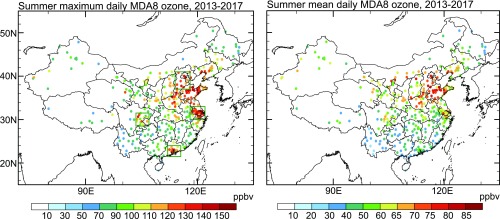
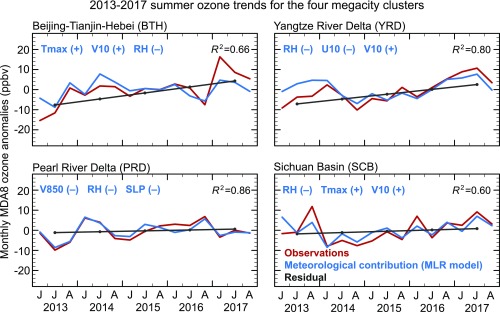
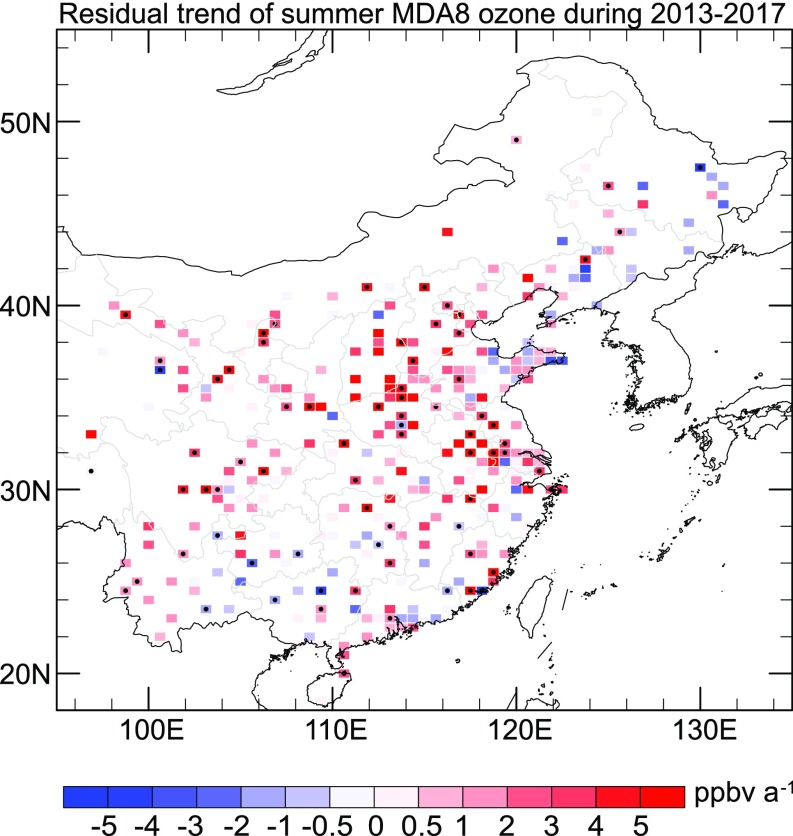
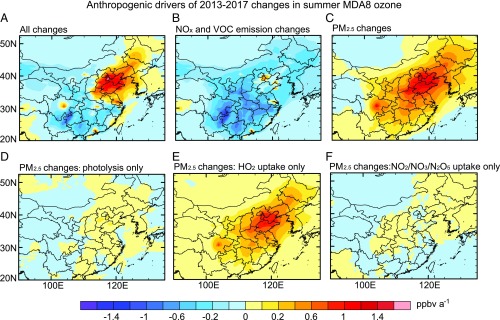
Verification
Claims the paper makes
The claims and statistics of this paper haven’t been checked yet.
Free: it reads the open-access text and checks the first 5 claims that cite a source we can check. Create a free account to check every claim.
Claims other papers make about this one
Each is checked against this paper’s own text: does it say what the citing paper says it does?
The cited source doesn’t support the claim as written.
In the citing paper
“a recent analysis of ground-level ozone concentrations measured at nearly 1,000 sites across China also found an increasing trend of summertime ozone in northeastern China from 2013 to 2017 (6).”
From Ozone pollution: A Major health hazard worldwide (2019) · cites this paper as [6]
Checked by a reasoning model — may be wrong.
Experimental — accuracy not yet measuredThe source backs part of the claim, not all of it — or backs it for a different population, condition or comparison.
In the citing paper
“Simulations with numerical models show several possible reasons including increases in UV radiation [31, 33–39], shifts in the VOC/NOx chemical regime resulting in increased production of O3 efficiency [35, 40], higher emissions of biogenic VOC due to rising temperatures [30], and decreased competition for gas-phase radicals by aerosol surfaces [34, 40], with reality likely being a combination of”
From Changes in tropospheric air quality related to the protection of stratospheric ozone in a changing climate (2023) · cites this paper as [34]
Experimental — accuracy not yet measuredThe source backs part of the claim, not all of it — or backs it for a different population, condition or comparison.
In the citing paper
“This increase was attributed to changes in anthropogenic emissions of ozone precursors as well as reductions in PM2.5 concentrations as described earlier.”
From Ozone pollution: A Major health hazard worldwide (2019) · cites this paper as [6]
Experimental — accuracy not yet measuredThe source backs part of the claim, not all of it — or backs it for a different population, condition or comparison.
In the citing paper
“anthropogenic emissions of NOx have decreased substantially in most urban areas of China (a 21% nationwide reduction) from 2013 to 2017 (6).”
From Ozone pollution: A Major health hazard worldwide (2019) · cites this paper as [6]
Experimental — accuracy not yet measuredThe cited source says what the claim attributes to it.
In the citing paper
“A recent study showed that a 40% reduction in PM2.5 from 2013 to 2017 in the North China Plain was partly responsible for an increasing ozone trend (at 1–3 ppb per year) during the period of 2013–2017 observed in megacity clusters of eastern China (6).”
From Ozone pollution: A Major health hazard worldwide (2019) · cites this paper as [6]
2 more claims about this paper
Create a free account to see every claim other papers make about this one.
Self-check
Percentages, sums and reported differences re-computed from the paper’s own numbers.
The self-check needs the paper’s full text.
Citations
Cites
Modern Applied Statistics with S
Venables, W. N., & Ripley, B. D. (2002) · Statistics and Computing · doi:10.1007/978-0-387-21706-2 · Cited by 24,305
The Modern-Era Retrospective Analysis for Research and Applications, Version 2 (MERRA-2)
Gelaro, R., McCarty, W., Suárez, M. J., Todling, R., Molod, A., Takacs, L., Randles, C. A., Darmenov, A., Bosilovich, M. G., Reichle, R., et al. (2017) · Journal of Climate · doi:10.1175/jcli-d-16-0758.1 · Cited by 9,010 · cited 2×
“Meteorological data from the NASA MERRA-2 reanalysis (23) with 0.”
MethodTrends in China's anthropogenic emissions since 2010 as the consequence of clean air actions
Zheng, B., Tong, D., Li, M., Liu, F., Hong, C., Geng, G., Li, H., Li, X., Peng, L., Qi, J., et al. (2018) · Atmospheric Chemistry and Physics · doi:10.5194/acp-18-14095-2018 · Cited by 2,916 · cited 9×
“The MEIC emission inventory is developed and managed by researchers at Tsinghua University.”
BackgroundMethodInfluentialSelf-citationModern Applied Statistics with S,
Kemp, F. (2003) · Journal of the Royal Statistical Society: Series D (The Statistician) · doi:10.1046/j.1467-9884.2003.t01-19-00383_22.x · Cited by 2,320
Effect of climate change on air quality
Jacob, D. J., & Winner, D. A. (2009) · Atmospheric Environment · doi:10.1016/j.atmosenv.2008.09.051 · Cited by 1,979 · cited 1×
“These variables are frequently observed to be correlated with ozone air quality (24) and can be viewed as general indicators of stagnation.”
BackgroundSelf-citationWang, T., Xue, L., Brimblecombe, P., Lam, Y. F., Li, L., & Zhang, L. (2017) · Science of The Total Environment · doi:10.1016/j.scitotenv.2016.10.081 · Cited by 1,876 · cited 5×
“A number of previous studies have examined meteorological influences on ozone variability in China (4, 9, 39, 40), On the basis of these studies we considered the correlation of MDA8 ozone across China with a large number of candidate meteorological variables from the MERRA-2 archive (SI Appendix, Table S3 and Fig.”
BackgroundInfluentialLi, M., Zhang, Q., Kurokawa, J.-I., Woo, J.-H., He, K., Lu, Z., Ohara, T., Song, Y., Streets, D. G., Carmichael, G. R., et al. (2017) · Atmospheric Chemistry and Physics · doi:10.5194/acp-17-935-2017 · Cited by 1,616
Self-citationHeterogeneous chemistry and tropospheric ozone
Jacob, D. (2000) · Atmospheric Environment · doi:10.1016/s1352-2310(99)00462-8 · Cited by 1,289 · cited 3×
“The relevant aerosol chemistry involves reactive uptake of the gaseous precursors to ozone formation, as described in GEOS-Chem by firstorder reactive uptake coefficients γ (32).”
BackgroundMethodInfluentialSelf-citationTai, A. P. K., Mickley, L. J., & Jacob, D. J. (2010) · Atmospheric Environment · doi:10.1016/j.atmosenv.2010.06.060 · Cited by 1,048
Self-citationSevere Surface Ozone Pollution in China: A Global Perspective
Lu, X., Hong, J., Zhang, L., Cooper, O. R., Schultz, M. G., Xu, X., Wang, T., Gao, M., Zhao, Y., & Zhang, Y. (2018) · Environmental Science & Technology Letters · doi:10.1021/acs.estlett.8b00366 · Cited by 1,040 · cited 1×
“5) concentration has decreased significantly since then, but ozone pollution has not decreased and is seemingly getting worse (8, 16).”
Background
Cited by
Items 701–800 of 1,003
Hong, Y., Zhang, K., Liao, D., Chen, G., Zhao, M., Lin, Y., Ji, X., Xu, K., Wu, Y., Yu, R., et al. (2023) · Atmospheric chemistry and physics · doi:10.5194/acp-23-10795-2023 · Cited by 20
Liu, J., Niu, X., Zhang, L., Yang, X., Zhao, P., & He, C. (2024) · Atmospheric Environment X · doi:10.1016/j.aeaoa.2024.100240 · Cited by 27
Li, Y., Wang, T., Wang, Q., Li, M., Qu, Y., Wu, H., & Xie, M. (2024) · Atmospheric Research · doi:10.1016/j.atmosres.2024.107294 · Cited by 23
Ding, S., Wei, Z., Liu, S., & Zhao, R. J. (2024) · Atmospheric Research · doi:10.1016/j.atmosres.2024.107472 · Cited by 23
Liu, H., Liu, J., Liu, Y., Ouyang, B., Xiang, S., Yi, K., & Tao, S. (2020) · Environmental Pollution · doi:10.1016/j.envpol.2020.114191 · Cited by 20
Huang, W., Zhao, Q., Liu, Q., Chen, F., He, Z., Guo, H., & Ling, Z. (2020) · Atmospheric Research · doi:10.1016/j.atmosres.2020.105088 · Cited by 20
Chen, K., Metcalfe, S. E., Yu, H., Xu, J., Xu, H., Ji, D., Wang, C., Xiao, H., & He, J. Y. (2021) · Journal of Environmental Sciences · doi:10.1016/j.jes.2021.01.010 · Cited by 20
Empirical ozone isopleths at urban and suburban sites through evolutionary procedure-based models
Santos, F. M., Gómez-Losada, Á., & Pires, J. C. M. (2021) · Journal of Hazardous Materials · doi:10.1016/j.jhazmat.2021.126386 · Cited by 20
Ambient Ozone, PM1 and Female Lung Cancer Incidence in 436 Chinese Counties
Guo, H., Liu, J., & Wei, J. (2021) · International Journal of Environmental Research and Public Health · doi:10.3390/ijerph181910386 · Cited by 22
Zhang, C., Song, Y., Wang, H., Zeng, L., Hu, M., Lu, K., Xie, S., & Carter, W. (2021) · Environmental Science & Technology Letters · doi:10.1021/acs.estlett.1c00835 · Cited by 20
Surface ozone trends over a 21-year period at El Arenosillo observatory (Southwestern Europe)
Adame, J. A., Gutiérrez-Álvarez, I., Cristofanelli, P., Notario, A., Bogeat, J. A., López, A., Gómez, A., Bolívar, J. P., & Yela, M. (2022) · Atmospheric Research · doi:10.1016/j.atmosres.2022.106048 · Cited by 21
Zhang, N., Guan, Y., Jiang, Y., Zhang, X., Ding, D., & Wang, S. (2022) · The Science of The Total Environment · doi:10.1016/j.scitotenv.2022.155975 · Cited by 22
Ultraviolet Radiation Environment of a Tropical Megacity in Transition: Mexico City 2000–2019
Ipiña, A., López-Padilla, G., Retama, A., Piacentini, R. D., & Madronich, S. (2021) · Environmental Science & Technology · doi:10.1021/acs.est.0c08515 · Cited by 19
Li, K., Ye, H., Dong, Z., Amujilite, Zhao, M., Xu, Q., & Xu, J. (2024) · Environmental Research · doi:10.1016/j.envres.2024.119506 · Cited by 20
Self-citationQi, L., Zheng, H., Ding, D., & Wang, S. (2024) · Atmospheric Environment · doi:10.1016/j.atmosenv.2024.120854 · Cited by 19
Liu, J., Chen, M., Chu, B., Chen, T., Ma, Q., Wang, Y., Zhang, P., Li, H., Zhao, B., Xie, R., et al. (2025) · ACS ES&T Air · doi:10.1021/acsestair.4c00297 · Cited by 20
Uncovering key sources of regional ozone simulation biases using machine learning and SHAP analysis
Yuan, X., Hong, X., Huang, Z., Li, S., Zhang, J., Chen, D., Zhong, Z., Wang, B., & Zheng, J. (2025) · Environmental Pollution · doi:10.1016/j.envpol.2025.126012 · Cited by 19
Sensitivity of Nitrate Aerosol Production to Vehicular Emissions in an Urban Street
Kim, M. J. (2019) · Atmosphere · doi:10.3390/atmos10040212 · Cited by 24
“Considering that megacities are generally under a VOC-limited regime [58,59], VOC emission control can improve both O3 control and PM2.”
BackgroundImpacts of chlorine emissions on secondary pollutants in China
Zhang, Y., Liu, J., Tao, W., Xiang, S., Liu, H., Yi, K., Yang, H., Xu, J., Wang, Y., Ma, J., et al. (2020) · Atmospheric Environment · doi:10.1016/j.atmosenv.2020.118177 · Cited by 21
Li, Y., Li, J., Yang, Z., Chen, T., Wang, J., Ma, J., Gao, H. J., & Huang, T. (2022) · Atmospheric Research · doi:10.1016/j.atmosres.2022.106035 · Cited by 19
Individual and Interactive Effects of Elevated Ozone and Temperature on Plant Responses
Lee, J. K., Kwak, M. J., Jeong, S. G., & Woo, S. Y. (2022) · Horticulturae · doi:10.3390/horticulturae8030211 · Cited by 22
Biotechnological production of specialty aromatic and aromatic-derivative compounds
Braga, A., & Faria, N. (2022) · World Journal of Microbiology and Biotechnology · doi:10.1007/s11274-022-03263-y · Cited by 23
Liu, J., Chu, B., Jia, Y., Cao, Q., Zhang, H., Chen, T., Ma, Q., Ma, J., Wang, Y., Zhang, P., et al. (2022) · The Science of The Total Environment · doi:10.1016/j.scitotenv.2022.155045 · Cited by 19
Hong, X., Liu, C., Zhang, C., Tian, Y., Wu, H., Yin, H., Zhu, Y., & Cheng, Y. (2023) · The Science of The Total Environment · doi:10.1016/j.scitotenv.2023.161387 · Cited by 21
Shi, Y., Ren, J., Xi, Z., Simayi, M., & Xie, S. (2022) · Atmospheric Environment · doi:10.1016/j.atmosenv.2023.119623 · Cited by 20
Wang, J., Zhang, Y. L., Xiao, S., Wu, Z., & Wang, X. (2023) · Atmosphere · doi:10.3390/atmos14040609 · Cited by 24
Large Modeling Uncertainty in Projecting Decadal Surface Ozone Changes Over City Clusters of China
Weng, X., Li, J., Forster, G. L., & Nowack, P. J. (2023) · Geophysical Research Letters · doi:10.1029/2023gl103241 · Cited by 23
“In contrast, in regions within the three city clusters where ozone sensitivity has been classified to be mostly in the NOx-saturated regime (Li et al., 2019; Y. Liu & Wang, 2020b; Ren et al., 2022), even whether ozone may increase or decrease is disagreed by the two mechanisms.”
BackgroundYang, H., Chen, L., Liao, H., Zhu, J., Wang, W., & Li, X. (2024) · Atmospheric chemistry and physics · doi:10.5194/acp-24-4001-2024 · Cited by 22
“…interaction (API) and aerosol–radiation feedback (ARF) (Liao et al., 1999; Wang et al., 2016; Zhu et al., 2021; Yang et al., 2022) as well as heterogeneous chemistry on the aerosol surface (Lou et al., 2014; Li et al., 2019; Liu and Wang, 2020b Many studies have found that decreased PM 2 .”
Self-citationLi, L., He, M., Liang, X., Deng, H., & Yang, R. (2024) · Atmospheric Pollution Research · doi:10.1016/j.apr.2024.102148 · Cited by 20
An emission inventory for Cl2 and HOCl in Shanghai, 2017
Li, L., Yin, S., Huang, L., Yi, X., Wang, Y., Zhang, K., Ooi, C. G., & Allen, D. T. (2019) · Atmospheric Environment · doi:10.1016/j.atmosenv.2019.117220 · Cited by 19
Wang, H., Yang, T., & Wang, Z. (2020) · The Science of The Total Environment · doi:10.1016/j.scitotenv.2020.138844 · Cited by 17
Seasonal prediction of surface O3-related meteorological conditions in summer in North China
Yin, Z., Li, Y., & Cao, B. (2020) · Atmospheric Research · doi:10.1016/j.atmosres.2020.105110 · Cited by 19
Wang, W., Zhang, Y., Cao, G., Song, Y., Zhang, J., Li, R., Zhao, L., Dong, C., & Cai, Z. (2021) · Environmental Research · doi:10.1016/j.envres.2021.112597 · Cited by 20
Upward trend and formation of surface ozone in the Guanzhong Basin, Northwest China
Xue, Y., Wang, L., Liu, S., Huang, Y. H., Chen, L., Cui, L., & Cao, J. (2021) · Journal of Hazardous Materials · doi:10.1016/j.jhazmat.2021.128175 · Cited by 20
Exploring the causes for co-pollution of O3 and PM2.5 in summer over North China
Ou, S., Wei, W., Cai, B., Yao, S., Wang, K., & Cheng, S. (2022) · Environmental Monitoring and Assessment · doi:10.1007/s10661-022-09951-4 · Cited by 19
“5 can weaken the photolysis processes through absorbing or scattering solar radiation and reduce the precursors through being consumed by aerosol chemistry, which would be adverse to photochemical O3 production (Liu & Wang, 2020a, b; Li et al., 2019).”
BackgroundCasallas, A., Castillo-Camacho, M. P., Sánchez, E. R., González, Y., Celis, N., Méndez-Espinosa, J. F., Belalcázar, L. C., & Ferro, C. (2023) · Air Quality Atmosphere & Health · doi:10.1007/s11869-023-01303-6 · Cited by 21
“We also include the T2, the RH, wind speed, and wind components (u and v) to account for the wind direction, following Li et al. (2019) and considering our regional results (see section “Ozone—regional analysis”).”
MethodLiu, H., Liu, J., Liu, Y., Yi, K., Yang, H., Xiang, S., Ma, J., & Tao, S. (2021) · Atmospheric Environment · doi:10.1016/j.atmosenv.2021.118686 · Cited by 21
Wang, Q., Wang, X., Huang, R., Wu, J., Yu, X. X., Hu, M., Fu, Q., Duan, Y., & Chen, J. (2022) · Journal of Geophysical Research Atmospheres · doi:10.1029/2021jd034807 · Cited by 23
Interannual variations, sources, and health impacts of the springtime ozone in Shanghai
Li, X., & Fan, G. (2022) · Environmental Pollution · doi:10.1016/j.envpol.2022.119458 · Cited by 18
Damiani, A., Irie, H., Belikov, D., Kaizuka, S., Hoque, H. M. S., & Cordero, R. R. (2022) · Atmospheric chemistry and physics · doi:10.5194/acp-22-12705-2022 · Cited by 20
New Particle Formation Occurrence in the Urban Atmosphere of Beijing During 2013–2020
Shang, D., Hu, M., Tang, L., Fang, X., Chen, S., Zeng, L., Guo, S., Zhang, Y., & Wu, Z. (2023) · Journal of Geophysical Research Atmospheres · doi:10.1029/2022jd038334 · Cited by 21
Tang, Z., Jiang, Z., Chen, J., Yang, P., & Shen, Y. (2023) · Geoscientific model development · doi:10.5194/gmd-16-6377-2023 · Cited by 17
“The Goddard Earth Observing System with Chemistry (GEOS-Chem) model is a global 3D chemical transport model (CTM) and has been widely used to analyze the sources and variabilities of atmospheric compositions (Wha-ley et al., 2015; Li et al., 2019; Hammer et al., 2020; Jiang et al., 2022).”
MethodJing, D., Yang, K., Shi, Z., Cai, X., Li, S., Li, W., & Wang, Q. (2024) · Heliyon · doi:10.1016/j.heliyon.2024.e29077 · Cited by 23
“The chemical industry is a significant contributor to anthropogenic VOC emissions in China [2 – 6].”
BackgroundQi, C., Wang, P., Yang, Y., Li, H., Zhang, H., Ren, L., Jin, X., Zhan, C., Tang, J., & Liao, H. (2024) · Atmospheric chemistry and physics · doi:10.5194/acp-24-11775-2024 · Cited by 23
“…decreased by 13.41 µgm 3 from 2014 to 2020 However, it is worth noting that most cities in China still frequently experienced severe ozone episodes (Li et al., 2019) It is demonstrated that surface ozone concentrations in most regions of China have increased by approximately 20 % during the period…”
InfluentialSelf-citationA comprehensive spatial and temporal vehicular emissions for northeast China
Ibarra-Espinosa, S. A., Zhang, X., Xiu, A., Gao, C., Wang, S., Ba, Q., Gao, C., & Chen, W. (2020) · Atmospheric Environment · doi:10.1016/j.atmosenv.2020.117952 · Cited by 18
Li, J., Yang, H., Zha, S., Yu, N., Liu, X., & Sun, R. (2020) · Aerosol and Air Quality Research · doi:10.4209/aaqr.2020.07.0416 · Cited by 18
Impacts of strong El Niño on summertime near-surface ozone over China
Li, M., Yang, Y., Wang, P., Ji, D., & Liao, H. (2022) · Atmospheric and Oceanic Science Letters · doi:10.1016/j.aosl.2022.100193 · Cited by 18
Self-citationYe, F., Rupakheti, D., Huang, L., Nishanth, T., Kumar, M. K. S., Li, L., Kt, V., & Hu, J. (2022) · Environmental Pollution · doi:10.1016/j.envpol.2022.119468 · Cited by 18
Li, T., Lu, Y., Deng, X., & Zhan, Y. (2023) · Atmospheric Pollution Research · doi:10.1016/j.apr.2023.101720 · Cited by 22
Li, K., Tan, R., Qiao, W., Lee, T., Wang, Y., Zhang, D., Tang, M., Zhao, W., Gu, Y., Fan, S., et al. (2025) · Atmospheric chemistry and physics · doi:10.5194/acp-25-11575-2025 · Cited by 22
Self-citationWu, J., Zhang, Y., Wang, T., & Qian, Y. (2019) · Atmospheric Pollution Research · doi:10.1016/j.apr.2019.12.020 · Cited by 19
Satellite-based separation of climatic and surface influences on global aerosol change
Feng, H., & Zou, B. (2020) · International Journal of Remote Sensing · doi:10.1080/01431161.2020.1731934 · Cited by 18
“Furthermore, recovery of ‘stilling’ wind speed is observed in this study, which is consistent with some of the previous studies (Kim and Paik 2015; Li et al. 2018).”
BackgroundResultLong-term measurements of ground-level ozone in Windsor, Canada and surrounding areas
Zhang, T., Xu, X., & Su, Y. (2022) · Chemosphere · doi:10.1016/j.chemosphere.2022.133636 · Cited by 18
Hu, C., Wei, Z., Zhan, H., Gu, W., Liu, H., Chen, A., Jiang, B., Yue, F., Zhang, R., Fan, S., et al. (2022) · The Science of The Total Environment · doi:10.1016/j.scitotenv.2022.158645 · Cited by 17
Chang, F., Li, J., Li, N., & Liao, H. (2023) · Frontiers in Environmental Science · doi:10.3389/fenvs.2022.1115746 · Cited by 17
“5 as a major pollutant that deteriorates urban air quality (Li et al., 2019a; Li et al., 2019b; Zhai et al., 2019; Li et al., 2020).”
BackgroundSelf-citationHan, T., Hu, X., Zhang, J., Xue, W., Che, Y., Deng, X., & Zhou, L. (2023) · Environmental Pollution · doi:10.1016/j.envpol.2023.122334 · Cited by 19
Wang, L., Qin, K., & Zhao, B. (2024) · Atmospheric Environment · doi:10.1016/j.atmosenv.2024.120534 · Cited by 18
Yin, Z., Yuan, D., Zhang, X., Yang, Q., & Xia, S. (2019) · International Journal of Climatology · doi:10.1002/joc.6228 · Cited by 17
“In summer, two Rossby wave trains, that is, the TPEU and TPWP, are closely linked to precipitation and drought in North China (Wang and He, 2015; Li et al., 2018).”
BackgroundZhong, B., Wang, X., Ye, L., Ma, M., Jia, S., Chen, W., Yan, F., Wen, Z. Y., & Krishnan, P. (2020) · Environmental Pollution · doi:10.1016/j.envpol.2020.115076 · Cited by 18
The objects, agents, and tools of Chinese co-governance on air pollution: a review
Li, Z., Yuan, X., Xi, J., & Yang, L. (2021) · Environmental Science and Pollution Research · doi:10.1007/s11356-021-13642-x · Cited by 17
Zhang, Y., Bo, H., Jiang, Z., Wang, Y., Fu, Y., Cao, B., Wang, X., Chen, J., & Li, R. S. (2021) · National Science Review · doi:10.1093/nsr/nwab061 · Cited by 18
“The model has been used to investigate O3 changes in China in recent literature [40,41].”
Liu, C., Mu, Y., Zhang, C., Liu, J., Liu, P., He, X., & Li, X. (2021) · The Science of The Total Environment · doi:10.1016/j.scitotenv.2021.146867 · Cited by 17
Modeling of the health impacts of ambient ozone pollution in China and India
Liu, L., Hu, L., Liu, Y., & Wang, H. (2021) · Atmospheric Environment · doi:10.1016/j.atmosenv.2021.118753 · Cited by 17
Khaled, A., Zhang, M., & Ervens, B. (2022) · Atmospheric chemistry and physics · doi:10.5194/acp-22-1989-2022 · Cited by 19
Zhou, Z., Lü, C., Tan, Q., Shang, Y., Deng, Y., Liu, H., Song, D., Zhou, X., Zhang, X., & Jiang, X. (2022) · Atmospheric Pollution Research · doi:10.1016/j.apr.2022.101378 · Cited by 17
Yang, X., Wang, Q., Ma, N., Hu, W., Gao, Y., Huang, Z., Zheng, J., Yuan, B., Yang, N., Tao, J., et al. (2022) · Atmospheric chemistry and physics · doi:10.5194/acp-22-3743-2022 · Cited by 17
Modification of manganese oxides for enhancing ozone catalytic decomposition under moist conditions
Wei, Y. Z., Min, X., Li, Y., Wang, H., Qi, F., Liang, P., Li, H., Hu, J., & Sun, T. (2022) · Applied Catalysis A General · doi:10.1016/j.apcata.2022.118659 · Cited by 17
Shi, J., Chen, Y., Xu, L., Hong, Y., Li, M., Fan, X., Yin, L., Chen, Y., Yang, C., Chen, G., et al. (2022) · Atmospheric chemistry and physics · doi:10.5194/acp-22-11187-2022 · Cited by 18
“In previous studies using GAMs to quantify impact factors on air pollutants, the R2 was generally between 0.35 and 0.86 (Gong et al., 2018; Li et al., 2019; Wu et al., 2020, 2021; Zhang et al., 2021).”
MethodInfluentialYao, Y., Ma, K., He, C., Zhang, Y., Lin, Y., Fang, F., Li, S., & He, H. (2023) · International Journal of Environmental Research and Public Health · doi:10.3390/ijerph20053810 · Cited by 17
Mechanisms of O3 and PM2.5 evolution along the cold wave passage in Eastern China
Shao, M., Xu, C., Lv, S., Jin, X., Mu, Q., & Zhu, J. (2025) · npj Climate and Atmospheric Science · doi:10.1038/s41612-025-01088-8 · Cited by 16
“WhileChina ’ s stringent emission reduction policies have led to signi fi cant decline in near-surface PM 2.5 24,25 , O 3 levels in major urban agglomerations have been rising during the past decade 26 – 28 , with a noticeable shift toward late-winter occurrences rather than being con fi ned to…”
InfluentialHenao, J. J., Rendón, Á. M., Hernández, K. S., Ramírez, P. A., Robledo, V., Posada-Marín, J. A., Bernal, N., Salazar, J. F., & Mejía, J. F. (2021) · Atmosphere · doi:10.3390/atmos12091137 · Cited by 17
“, [49]), or even due to higher emissions of VOCs from increases in the use of household cleaning products [14].”
BackgroundYan, L., Zheng, B., Geng, G., Hong, C., Tong, D., & Zhang, Q. (2021) · Environmental Research Letters · doi:10.1088/1748-9326/ac3872 · Cited by 16
“Besides, chemically resolved emissions of NMVOC species, as well as ozone formation potential (OFP), are also urgently needed for tailored air pollution control measures in China (Li et al 2019a).”
Self-citationLi, J., Kohno, N., Sakamoto, Y., Pham, H. G., Murano, K., Sato, K., Nakayama, T., & Kajii, Y. (2022) · Environmental Science & Technology · doi:10.1021/acs.est.2c03628 · Cited by 18
Evolution of summer surface ozone pollution patterns in China during 2015–2020
Zhang, Y., Wang, H., Lu, X. H., Li, L., He, Y., Wang, H., He, G., He, C., Wang, J., & Fan, S. (2023) · Atmospheric Research · doi:10.1016/j.atmosres.2023.106836 · Cited by 16
Han, W., He, T., Jiang, Z., Zhu, R., Jones, D. B. A., Miyazaki, K., & Shen, Y. (2023) · Geophysical Research Letters · doi:10.1029/2023gl104928 · Cited by 16
“…will be compared with baseline simulations conducted using the GEOS-Chem (GC) model (0.5° × 0.625° horizontal resolution, see details in the SI), which has been widely used to investigate tropospheric O 3 variabilities (Ivatt et al., 2022; Jiang et al., 2016; Li et al., 2019; Lu et al., 2021).”
MethodInfluentialDou, X., Yu, S., Li, J., Sun, Y., Song, Z., Yao, N., & Li, P. (2024) · Atmosphere · doi:10.3390/atmos15020198 · Cited by 19
Lyu, Y., Gao, Y., Pang, X., Sun, S., Luo, P., Cai, D., Qin, K., Wu, Z., & Wang, B. (2024) · Environmental Pollution · doi:10.1016/j.envpol.2024.123532 · Cited by 17
Fang, H., Wang, W., Wang, R., Xu, H., Zhang, Y., Wu, T. H., Zhou, R., Zhang, J., Ruan, Z., Li, F., et al. (2024) · Environmental Pollution · doi:10.1016/j.envpol.2024.123769 · Cited by 16
Li, Y., Wang, T., Wang, Q., Li, M., Qu, Y., Wu, H., & Xie, M. (2024) · Journal of Environmental Sciences · doi:10.1016/j.jes.2024.04.010 · Cited by 17
Li, M., Kong, X., Jian, X., Bo, Y., Miao, X., Chen, H., Shang, P., Zhou, X., Wang, L., Zhang, Q., et al. (2024) · The Science of The Total Environment · doi:10.1016/j.scitotenv.2024.173222 · Cited by 18
Self-citationZhao, H., Chen, Z., & Li, C. (2024) · Scientific Reports · doi:10.1038/s41598-024-62019-w · Cited by 23
“To date, no comprehensive studies have been conducted to assess their impact on human health 19 .”
BackgroundResultInfluentialZhang, H., Ren, C., Zhou, X., Tang, K., Liu, Y., Liu, T., Wang, J., Chi, X., Li, M., Li, N., et al. (2024) · Journal of Geophysical Research Atmospheres · doi:10.1029/2024jd041052 · Cited by 15
“According to the O 3 photochemical regime, HO 2 can replace O 3 to react with NO (Li et al., 2019; Wang et al., 2017).”
Lin, J., Kong, W., Qiu, C., Zhong, X., Li, Y., Fu, M., & Li, Z. (2024) · Journal of environmental chemical engineering · doi:10.1016/j.jece.2024.114046 · Cited by 16
A Study on the Seasonal Correlation between O3 and PM2.5 in Seoul in 2017
Lee, H. K., Choi, E., Lee, H. J., Lee, S. Y., & Lee, J. Y. (2020) · Journal of Korean Society for Atmospheric Environment · doi:10.5572/kosae.2020.36.4.533 · Cited by 16
Effect of restricted emissions during Covid-19 lockdown on air quality in Rabat - Morocco
(2020) · Global NEST Journal · doi:10.30955/gnj.003431 · Cited by 17
Conibear, L., Reddington, C. L. S., Silver, B. J., Knote, C., Arnold, S. R., & Spracklen, D. V. (2021) · GeoHealth · doi:10.1029/2020gh000341 · Cited by 16
An, J., Lv, H., Xue, M., Zhang, Z., Hu, B., Wang, J., & Zhu, B. (2021) · Advances in Atmospheric Sciences · doi:10.1007/s00376-021-0367-9 · Cited by 16
Yao, S., Wei, W., Cheng, S., Niu, Y., & Guan, P. (2021) · Atmosphere · doi:10.3390/atmos12050619 · Cited by 16
“According to the China Environmental Status Bulletin, the 90th percentile daily maximum 8 h average ozone concentration increased from 139 μg·m−3 in 2013 to 151 μg·m−3 in 2018, and approximately 1000 stations in China experienced serious O3 pollution in the summer of 2013–2017 [5].”
BackgroundJaved, Z., Bilal, M., Qiu, Z., Li, G., Sandhu, O., Mehmood, K., Wang, Y., Ali, M. A., Liu, C., Wang, Y., et al. (2022) · Environmental Sciences Europe · doi:10.1186/s12302-022-00668-2 · Cited by 16
“There has been an unprecedented reduction in average O3 concentrations during 2020 over all the cities of YRD, while the previously reported studies depicted a continuous increase of approximately 5% in annual mean concentration from 2013 to 2019 over different parts of China [22, 43].”
BackgroundQu, L., Chai, F., Liu, S., Duan, J., Meng, F., & Cheng, M. (2022) · Journal of Environmental Sciences · doi:10.1016/j.jes.2022.10.003 · Cited by 16
Agathokleous, E., Kitao, M., Komatsu, M., Tamai, Y., Saito, H., Harayama, H., Uemura, A., Tobita, H., & Koike, T. (2019) · Journal of Forestry Research · doi:10.1007/s11676-019-01056-y · Cited by 16
Shi, G.-Y., Du, H., Du, L., Ni, X., Hu, Y., Pang, D., & Yao, L. (2025) · Environmental Pollution · doi:10.1016/j.envpol.2025.126159 · Cited by 15
Mechanisms of high-temperature ozone suppression in Eastern China: a meteorological perspective
Li, N., Liang, J., Liu, W., Gu, C., Li, J., Xu, Y., Tang, K., Liao, H., & Hu, J. (2025) · Environmental Research Letters · doi:10.1088/1748-9326/adf1ba · Cited by 17
“Notably, megacities such as Beijing, Shanghai, Nanjing, and Guangzhou have witnessed rapid increases in O 3 concentrations, leading to severe photochemical pollution (Li et al 2019, Liu et al 2020, Mousavinezhad et al 2021, Xu et al 2021).”
Self-citationXu, J., Zhao, Z., Wu, Y., Zhang, Y., Wang, Y., Su, B., Liang, Y., Hu, T., & Liu, R. (2023) · Earth and Space Science · doi:10.1029/2022ea002742 · Cited by 16
The spatiotemporal pattern of surface ozone and its impact on agricultural productivity in China
Chen, X., Gao, J., Chen, L., Khanna, M., Gong, B., & Auffhammer, M. (2023) · PNAS Nexus · doi:10.1093/pnasnexus/pgad435 · Cited by 16
“Severe O 3 pollution has also been observed in other seasons and regions (26, 27).”
BackgroundInfluentialHuang, L., Zhao, X., Chen, C., Tan, J., Li, Y., Chen, H., Wang, Y., Li, L., Guenther, A., & Huang, H. (2024) · Atmospheric Environment · doi:10.1016/j.atmosenv.2024.120765 · Cited by 15
Ren, J., Hao, Y., Zheng, X., Li, X., & Xie, S. (2024) · The Science of The Total Environment · doi:10.1016/j.scitotenv.2024.176037 · Cited by 15
Warming Mitigates Ozone Damage to Wheat Photosynthesis in a FACE Experiment
Xu, Y., Feng, Z., Bao, M., Li, Y., Xia, J., Xu, S., Agathokleous, E., Kobayashi, K., Shang, B., & Liu, B. (2024) · Plant Cell & Environment · doi:10.1111/pce.15304 · Cited by 15
Health burdens related to emission sources and cross-provincial air pollution in China
Hu, W., Zheng, B., Henze, D. K., Lu, N., Wang, X., Zhang, L., Fu, T., & Zhao, Y. Q. (2024) · npj Climate and Atmospheric Science · doi:10.1038/s41612-024-00869-x · Cited by 17
Liu, X., Zhai, S., Li, K., Zhu, L., Liu, S., Shah, V. P., Tai, A. P. K., Geng, G., Hou, X., Mamtimin, A., et al. (2025) · Atmospheric Environment · doi:10.1016/j.atmosenv.2025.121150 · Cited by 15
Self-citation
Metadata
- Authors
- Li, K., Jacob, D. J., Liao, H., Shen, L., Zhang, Q., & Bates, K. H.
- Affiliations
- Harvard University (US)
- Nanjing University of Information Science and Technology (CN)
- Tsinghua University (CN)
- Corresponding author
- Jacob, Daniel J.
- Liao, Hong
- Venue
- Proceedings of the National Academy of Sciences
- Publisher
- National Academy of Sciences
- Published
- 2018-12-31
- Volume
- 116
- Issue
- 2
- Pages
- 422-427
- ISSN
- 0027-8424 (ISSN-L)
- 1091-6490
- PMC
- PMC6329973
- OpenAlex
- W2908510209
- Cited by
- 1,804
- References
- 45
- Citations by year
- 2026: 164 · 2025: 191 · 2024: 203 · 2023: 263 · 2022: 348 · 2021: 326 · 2020: 224 · 2019: 80 · 2018: 1
- FWCI
- 76.82
- Type
- journal article
- Language
- en
- Open access
- hybrid
- doi.org
- Licence
- Locations
- Proceedings of the National Academy of Sciences (publishedVersion, cc-by-nc-nd)
- Europe PMC (PubMed Central) (publishedVersion, cc-by-nc-nd)
- PubMed Central (publishedVersion, cc-by-nc-nd)
- PubMed (publishedVersion)
- Funders
- National Natural Science Foundation of China (91744311)
- Topics
- Physical Sciences › Earth and Planetary Sciences › Atmospheric Science › Atmospheric chemistry and aerosols
- Physical Sciences › Earth and Planetary Sciences › Atmospheric Science › Atmospheric Ozone and Climate
- Physical Sciences › Environmental Science › Global and Planetary Change › COVID-19 impact on air quality
- Keywords
- surface ozone trends, anthropogenic factors, PM2.5 reduction, NOx emissions, volatile organic compounds, hydroperoxyl radical, ozone sink, ozone formation, North China Plain, air pollution control, weather variability, Beijing, Shanghai
- MeSH terms
- Air, Air Pollutants, Air Pollution, China, Humans, Ozone, Urban Renewal, Volatile Organic Compounds
About these checks
Registry, retraction, Cites and statistics results are computed, not judged, with one exception: a printed reference that no index lists is read once by a model before it counts as a citation error. Claims are extracted by a model and kept only when their quote appears verbatim in the text; each cited source is then checked, with a model’s help, for whether it says what the claim relies on. Those verdicts can be wrong — read the claim’s quote and the cited source before relying on one.
Statistics and arithmetic are recomputed, not judged.
Confidence bands are shown only for fields calibrated on our annotated test set. None is calibrated yet, so no band is shown.
What counts as a claim ›How we measure confidence ›How we check this ›
Are you an author, or do you see a problem with this page? Request a review
Data sources
Bibliographic data: Semantic Scholar, OpenAlex, Crossref.
Contains information from the Semantic Scholar Academic Graph Datasets, made available under the ODC Attribution License (ODC-BY 1.0).
Semantic Scholar’s data is described in: Kinney, R., et al. (2023). The Semantic Scholar Open Data Platform. arXiv:2301.10140.
