

Anthropogenic drivers of 2013–2017 trends in summer surface ozone in China
Open accessThe DOI matches its Crossref record; 45 of the 45 references it cites were found in a registry or an index.
Abstract
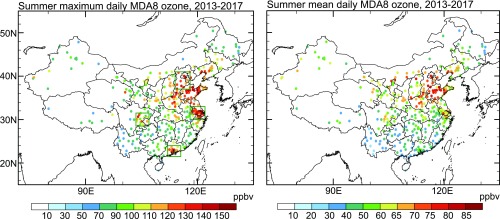
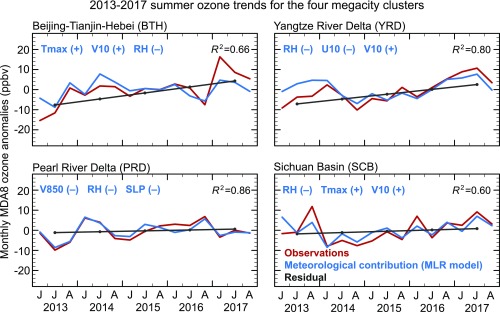
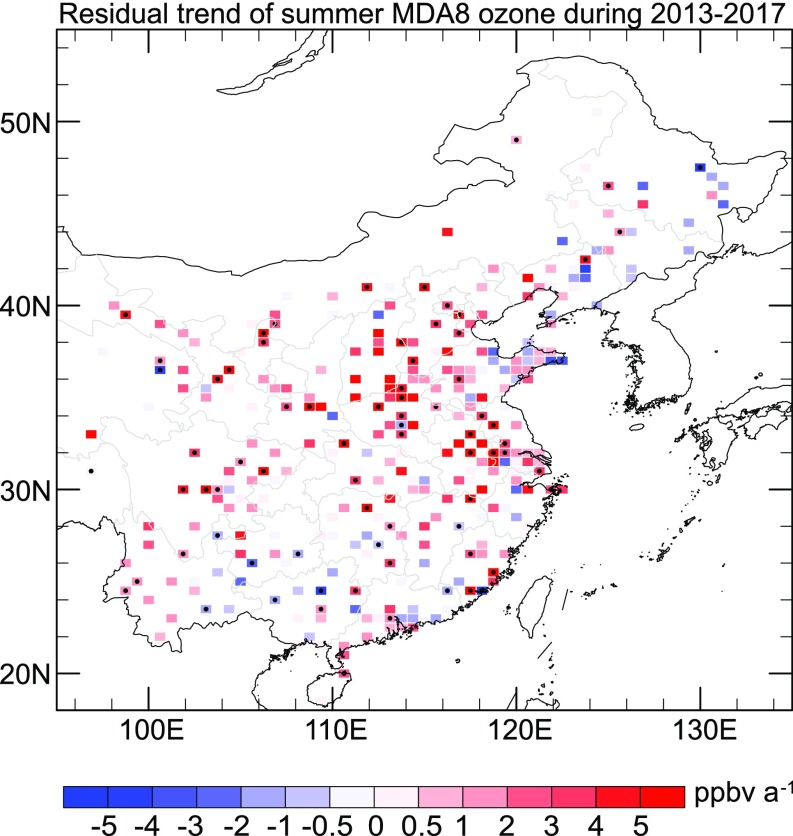
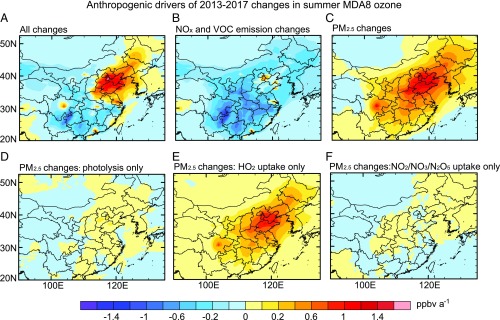
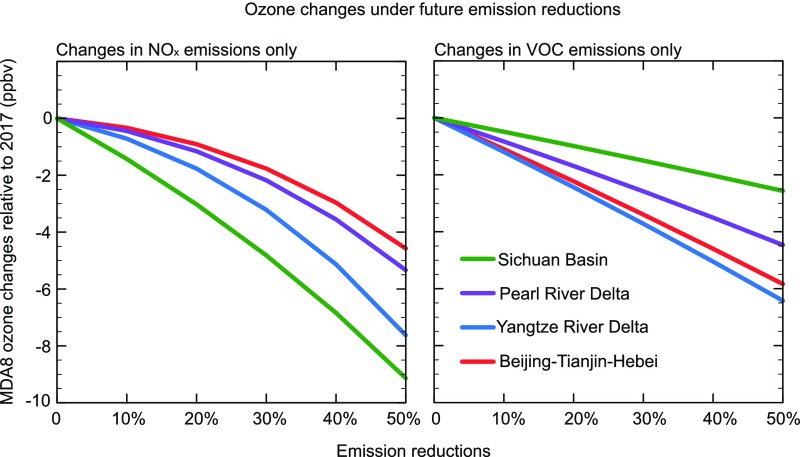
Significance: Drastic air pollution control in China since 2013 has achieved sharp decreases in fine particulate matter (PM 2.5 ), but ozone pollution has not improved. After removing the effect of meteorological variability, we find that surface ozone has increased in megacity clusters of China, notably Beijing and Shanghai. The increasing trend cannot be simply explained by changes in anthropogenic precursor [NO x and volatile organic compound (VOC)] emissions, particularly in North China Plain (NCP). The most important cause of the increasing ozone in NCP appears to be the decrease in PM 2.5 , slowing down the sink of hydroperoxy radicals and thus speeding up ozone production. Decreasing ozone in the future will require a combination of NO x and VOC emission controls to overcome the effect of decreasing PM 2.5 .
Overview
The claims and statistics of this paper haven’t been checked yet.
Free: it reads the open-access text and checks the first 5 claims that cite a source we can check. Create a free account to check every claim.
Integrity signals
Registry
Cites
Statistics
Figures
Verification
Claims the paper makes
The claims and statistics of this paper haven’t been checked yet.
Free: it reads the open-access text and checks the first 5 claims that cite a source we can check. Create a free account to check every claim.
Claims other papers make about this one
Each is checked against this paper’s own text: does it say what the citing paper says it does?
The cited source doesn’t support the claim as written.
In the citing paper
“a recent analysis of ground-level ozone concentrations measured at nearly 1,000 sites across China also found an increasing trend of summertime ozone in northeastern China from 2013 to 2017 (6).”
From Ozone pollution: A Major health hazard worldwide (2019) · cites this paper as [6]
Checked by a reasoning model — may be wrong.
Experimental — accuracy not yet measuredThe source backs part of the claim, not all of it — or backs it for a different population, condition or comparison.
In the citing paper
“Simulations with numerical models show several possible reasons including increases in UV radiation [31, 33–39], shifts in the VOC/NOx chemical regime resulting in increased production of O3 efficiency [35, 40], higher emissions of biogenic VOC due to rising temperatures [30], and decreased competition for gas-phase radicals by aerosol surfaces [34, 40], with reality likely being a combination of”
From Changes in tropospheric air quality related to the protection of stratospheric ozone in a changing climate (2023) · cites this paper as [34]
Experimental — accuracy not yet measuredThe source backs part of the claim, not all of it — or backs it for a different population, condition or comparison.
In the citing paper
“This increase was attributed to changes in anthropogenic emissions of ozone precursors as well as reductions in PM2.5 concentrations as described earlier.”
From Ozone pollution: A Major health hazard worldwide (2019) · cites this paper as [6]
Experimental — accuracy not yet measuredThe source backs part of the claim, not all of it — or backs it for a different population, condition or comparison.
In the citing paper
“anthropogenic emissions of NOx have decreased substantially in most urban areas of China (a 21% nationwide reduction) from 2013 to 2017 (6).”
From Ozone pollution: A Major health hazard worldwide (2019) · cites this paper as [6]
Experimental — accuracy not yet measuredThe cited source says what the claim attributes to it.
In the citing paper
“A recent study showed that a 40% reduction in PM2.5 from 2013 to 2017 in the North China Plain was partly responsible for an increasing ozone trend (at 1–3 ppb per year) during the period of 2013–2017 observed in megacity clusters of eastern China (6).”
From Ozone pollution: A Major health hazard worldwide (2019) · cites this paper as [6]
2 more claims about this paper
Create a free account to see every claim other papers make about this one.
Self-check
Percentages, sums and reported differences re-computed from the paper’s own numbers.
The self-check needs the paper’s full text.
Citations
Cites
Modern Applied Statistics with S
Venables, W. N., & Ripley, B. D. (2002) · Statistics and Computing · doi:10.1007/978-0-387-21706-2 · Cited by 24,305
The Modern-Era Retrospective Analysis for Research and Applications, Version 2 (MERRA-2)
Gelaro, R., McCarty, W., Suárez, M. J., Todling, R., Molod, A., Takacs, L., Randles, C. A., Darmenov, A., Bosilovich, M. G., Reichle, R., et al. (2017) · Journal of Climate · doi:10.1175/jcli-d-16-0758.1 · Cited by 9,010 · cited 2×
“Meteorological data from the NASA MERRA-2 reanalysis (23) with 0.”
MethodTrends in China's anthropogenic emissions since 2010 as the consequence of clean air actions
Zheng, B., Tong, D., Li, M., Liu, F., Hong, C., Geng, G., Li, H., Li, X., Peng, L., Qi, J., et al. (2018) · Atmospheric Chemistry and Physics · doi:10.5194/acp-18-14095-2018 · Cited by 2,916 · cited 9×
“The MEIC emission inventory is developed and managed by researchers at Tsinghua University.”
BackgroundMethodInfluentialSelf-citationModern Applied Statistics with S,
Kemp, F. (2003) · Journal of the Royal Statistical Society: Series D (The Statistician) · doi:10.1046/j.1467-9884.2003.t01-19-00383_22.x · Cited by 2,320
Effect of climate change on air quality
Jacob, D. J., & Winner, D. A. (2009) · Atmospheric Environment · doi:10.1016/j.atmosenv.2008.09.051 · Cited by 1,979 · cited 1×
“These variables are frequently observed to be correlated with ozone air quality (24) and can be viewed as general indicators of stagnation.”
BackgroundSelf-citationWang, T., Xue, L., Brimblecombe, P., Lam, Y. F., Li, L., & Zhang, L. (2017) · Science of The Total Environment · doi:10.1016/j.scitotenv.2016.10.081 · Cited by 1,876 · cited 5×
“A number of previous studies have examined meteorological influences on ozone variability in China (4, 9, 39, 40), On the basis of these studies we considered the correlation of MDA8 ozone across China with a large number of candidate meteorological variables from the MERRA-2 archive (SI Appendix, Table S3 and Fig.”
BackgroundInfluentialLi, M., Zhang, Q., Kurokawa, J.-I., Woo, J.-H., He, K., Lu, Z., Ohara, T., Song, Y., Streets, D. G., Carmichael, G. R., et al. (2017) · Atmospheric Chemistry and Physics · doi:10.5194/acp-17-935-2017 · Cited by 1,616
Self-citationHeterogeneous chemistry and tropospheric ozone
Jacob, D. (2000) · Atmospheric Environment · doi:10.1016/s1352-2310(99)00462-8 · Cited by 1,289 · cited 3×
“The relevant aerosol chemistry involves reactive uptake of the gaseous precursors to ozone formation, as described in GEOS-Chem by firstorder reactive uptake coefficients γ (32).”
BackgroundMethodInfluentialSelf-citationTai, A. P. K., Mickley, L. J., & Jacob, D. J. (2010) · Atmospheric Environment · doi:10.1016/j.atmosenv.2010.06.060 · Cited by 1,048
Self-citationSevere Surface Ozone Pollution in China: A Global Perspective
Lu, X., Hong, J., Zhang, L., Cooper, O. R., Schultz, M. G., Xu, X., Wang, T., Gao, M., Zhao, Y., & Zhang, Y. (2018) · Environmental Science & Technology Letters · doi:10.1021/acs.estlett.8b00366 · Cited by 1,040 · cited 1×
“5) concentration has decreased significantly since then, but ozone pollution has not decreased and is seemingly getting worse (8, 16).”
Background
Cited by
Items 201–300 of 1,003
Liu, X., Lyu, X., Wang, Y., Jiang, F., & Guo, H. (2019) · Atmospheric chemistry and physics · doi:10.5194/acp-19-5127-2019 · Cited by 90
Sahu, S. K., Liu, S., Liu, S., Ding, D., & Xing, J. (2020) · The Science of The Total Environment · doi:10.1016/j.scitotenv.2020.144131 · Cited by 81
Li, M., Wang, T., Shu, L., Qu, Y., Xie, M., Liu, J. J., Wu, H., & Kalsoom, U. (2020) · Atmospheric Environment · doi:10.1016/j.atmosenv.2020.118130 · Cited by 84
Hong, Q., Zhu, L., Xing, C., Hu, Q., Lin, H. L., Zhang, C., Zhao, C., Liu, T., Su, W., & Liu, C. (2022) · The Science of The Total Environment · doi:10.1016/j.scitotenv.2022.154045 · Cited by 81
Li, C., Zhu, Q., Jin, X., & Cohen, R. C. (2022) · Environmental Science & Technology · doi:10.1021/acs.est.2c03315 · Cited by 88
Feng, T., Zhao, S., Bei, N., Wu, J., Liu, S., Li, X., Liu, L., Yang, Q., Yang, Q., Wang, Y., et al. (2019) · Atmospheric chemistry and physics · doi:10.5194/acp-19-7429-2019 · Cited by 84
“Li et al. (2018) proposed that the O3 increase in China since 2013 is associated with the decreased removal efficiency of HOx (OH+ peroxy) on the aerosol surfaces caused by the reduced aerosol concentrations since the implementation of APPCAP.”
BackgroundShen, H., Sun, Z., Chen, Y., Russell, A. G., Hu, Y., Odman, M. T., Qian, Y., Archibald, A. T., & Tao, S. (2021) · Environmental Science & Technology · doi:10.1021/acs.est.1c01567 · Cited by 83
Heterogeneous Nitrate Production Mechanisms in Intense Haze Events in the North China Plain
Chan, Y., Evans, M. J., He, P., Holmes, C. D., Jaeglé, L., Kasibhatla, P. S., Liu, X., Sherwen, T., Thornton, J. A., Wang, X., et al. (2021) · Journal of Geophysical Research Atmospheres · doi:10.1029/2021jd034688 · Cited by 83
OH and HO 2 radical chemistry at a suburban site during the EXPLORE-YRD campaign in 2018
Ma, X., Tan, Z., Lu, K., Yang, X., Chen, X., Wang, H., Chen, S., Fang, X., Li, X., Li, X., et al. (2022) · Atmospheric chemistry and physics · doi:10.5194/acp-22-7005-2022 · Cited by 85
Souri, A. H., Nowlan, C. R., Abad, G. G., Zhu, L., Blake, D. R., Fried, A., Weinheimer, A. J., Wisthaler, A., Woo, J., Zhang, Q., et al. (2020) · Atmospheric chemistry and physics · doi:10.5194/acp-20-9837-2020 · Cited by 88
“It is because of the chemical feedback that recent studies have attempted to enhance the capability of inverse modeling by iteratively adjusting relevant emissions (e.g., Cooper et al., 2017; C. Li et al., 2019).”
BackgroundResultSelf-citationTan, Y., & Mao, X. (2020) · Journal of Cleaner Production · doi:10.1016/j.jclepro.2020.125100 · Cited by 84
Liao, Z., Ling, Z., Gao, M. C., Sun, J., Zhao, W., Ma, P., Quan, J., & Fan, S. (2020) · Journal of Geophysical Research Atmospheres · doi:10.1029/2020jd033054 · Cited by 79
“…Research: Atmospheres the primary pollutant degrading ambient air quality in some cities in recent years (Cheng et al., 2019; Gao et al., 2017; Gaudel et al., 2018; Li et al., 2019; Lu et al., 2018; Ma et al., 2016; Sun et al., 2016; Wang et al., 2009, 2019b; Xu et al., 2008, 2019a).”
Xu, T., Zhang, C., Liu, C., & Hu, Q. (2022) · Journal of Environmental Sciences · doi:10.1016/j.jes.2021.10.014 · Cited by 80
“In addition, the reduction of PM 2.5 causes the aerosol deposition rate of HO 2 radicals to slow down, which may also be beneficial to the formation of O 3 ( Li et al., 2019a ).”
BackgroundInfluentialSurface ozone impacts on major crop production in China from 2010 to 2017
Li, D., Shindell, D. T., Ding, D., Lu, X. H., Zhang, L., & Zhang, Y. (2022) · Atmospheric chemistry and physics · doi:10.5194/acp-22-2625-2022 · Cited by 83
Temporal and Spatial Features of the Correlation between PM2.5 and O3 Concentrations in China
Chen, J., Shen, H., Li, T., Peng, X., Cheng, H., & Ma, C. (2019) · International Journal of Environmental Research and Public Health · doi:10.3390/ijerph16234824 · Cited by 79
“[31] indicated that a more important factor for ozone trends in the North China Plain is the ∼40% decrease of PM2.”
BackgroundOak, Y. J., Park, R. J., Schroeder, J. R., Crawford, J. H., Blake, D. R., Weinheimer, A. J., Woo, J., Kim, S., Yeo, H., Fried, A., et al. (2019) · Elementa Science of the Anthropocene · doi:10.1525/elementa.394 · Cited by 77
“Although stringent air pollution controls have been executed in countries including Japan, Korea, and recently China, surface ozone (O3), which is a key secondary air pollutant that affects human health and the ecosystem, has shown an increasing trend over the past two decades (2000–2017) (Chang et al., 2017; Li et al…”
BackgroundXu, W. H., Liu, X., Liu, L., Dore, A. J., Tang, A., Li, L., Wu, Q., Zhang, Y., Hao, T., Pan, Y., et al. (2019) · Atmospheric Environment · doi:10.1016/j.atmosenv.2019.04.050 · Cited by 82
Bypassing the NOx titration trap in ozone pollution control in Beijing
Tang, G., Liu, Y., Zhang, J., Liu, B., Li, Q., Sun, J., Wang, Y., Xuan, Y., Li, Y., Pan, J., et al. (2020) · Atmospheric Research · doi:10.1016/j.atmosres.2020.105333 · Cited by 78
Sun, J., Shen, Z., Zhang, Y., Zhang, Z., Zhang, Q., Zhang, T., Niu, X., Huang, Y. H., Cui, L., Xu, H., et al. (2019) · Environmental Science and Pollution Research · doi:10.1007/s11356-019-05950-0 · Cited by 77
Self-citationLong-term trends of surface ozone in Korea
Yeo, M. J., & Kim, Y. P. (2020) · Journal of Cleaner Production · doi:10.1016/j.jclepro.2020.125352 · Cited by 74
Elucidating the quantitative characterization of atmospheric oxidation capacity in Beijing, China
Liu, Z., Wang, Y., Hu, B., Lu, K., Tang, G., Ji, D., Yang, X., Gao, W., Xie, Y., Liu, J., et al. (2021) · The Science of The Total Environment · doi:10.1016/j.scitotenv.2021.145306 · Cited by 75
Brancher, M. (2021) · Environmental Pollution · doi:10.1016/j.envpol.2021.117153 · Cited by 80
Zhu, S., Poetzscher, J., Shen, J., Wang, S., Wang, P., & Zhang, H. (2021) · Geophysical Research Letters · doi:10.1029/2021gl093668 · Cited by 75
A remarkable review of the effect of lockdowns during COVID-19 pandemic on global PM emissions
Le, V. V., Huynh, T. T., Ölçer, A. I., Hoang, A. T., Tuấn, L. A., Nayak, S. K., & Pham, V. V. (2020) · Energy Sources Part A Recovery Utilization and Environmental Effects · doi:10.1080/15567036.2020.1853854 · Cited by 76
“A negative correlation between PM 2.5 and ozone levels is also linked to the radiative effects of aerosols on the photochemical ozone formation (Tie et al. 2017) together with the aerosol sink for ozone precursors (Li et al. 2019b).”
InfluentialQu, K., Wang, X., Yan, Y., Shen, J., Xiao, T., Dong, H., Zeng, L., & Zhang, Y. (2021) · Atmospheric chemistry and physics · doi:10.5194/acp-21-11593-2021 · Cited by 74
Ma, M., Yao, G., Guo, J., & Bai, K. (2021) · Journal of Environmental Management · doi:10.1016/j.jenvman.2021.112368 · Cited by 75
Decade-long trends in chemical component properties of PM2.5 in Beijing, China (2011−2020)
Wang, J., Gao, J. G., Che, F., Wang, Y., Lin, P., & Zhang, Y. (2022) · The Science of The Total Environment · doi:10.1016/j.scitotenv.2022.154664 · Cited by 78
Fan, H. M., Wang, Y., Zhao, C., Yang, Y., Yang, X., Sun, Y., & Jiang, S. (2021) · Geophysical Research Letters · doi:10.1029/2020gl091065 · Cited by 77
ENSO modulation of summertime tropospheric ozone over China
Yang, Y., Li, M., Wang, H., Li, H., Wang, P., Li, K., Gao, M. C., & Liao, H. (2022) · Environmental Research Letters · doi:10.1088/1748-9326/ac54cd · Cited by 80
“GEOS-Chem simulations of surface O3 in China using the same emission configurations have been extensively evaluated in previous studies (e.g. Ni et al 2018, Li et al 2019, Lu et al 2019b) and the model showed good skills in reproducing observed O3 concentrations and spatial distribution in China.”
MethodSelf-citationJing, Q., Liao, H., Yang, Y., Li, K., Chen, L., & Zhu, J. (2022) · The Science of The Total Environment · doi:10.1016/j.scitotenv.2022.155107 · Cited by 73
Self-citationQiao, X., Guo, H., Wang, P., Ya, T., Ying, Q., Zhao, X., Deng, W., & Zhang, H. (2019) · Aerosol and Air Quality Research · doi:10.4209/aaqr.2019.05.0235 · Cited by 79
“…a result of increased emissions of volatile organic compounds (VOCs) in the VOC-limited regions (Shen et al. , 2019b), decreased nitrogen oxides (NO x ) in some VOC-limited regions (Li et al. , 2019), and slowed aerosol sink of hydroperoxy radicals that stimulates O 3 production (Li et al. , 2019).”
InfluentialLi, R., Xu, M., Li, M., Chen, Z., Bingbo, G. A. O., Gao, B., & Yao, Q. (2021) · Atmospheric chemistry and physics · doi:10.5194/acp-21-15631-2021 · Cited by 71
Li, J., Deng, S., Li, G., Lu, Z., Song, H., Gao, J. G., Sun, Z., & Xu, K. (2021) · Environmental Research · doi:10.1016/j.envres.2021.111821 · Cited by 74
Mercury pollution in China: implications on the implementation of the Minamata Convention
Feng, X., Li, P., Fu, X., Wang, X., Zhang, H., & Lin, C. (2022) · Environmental Science Processes & Impacts · doi:10.1039/d2em00039c · Cited by 71
A review of surface ozone source apportionment in China
Liu, H., Zhang, M., & Xiao, H. (2020) · Atmospheric and Oceanic Science Letters · doi:10.1080/16742834.2020.1768025 · Cited by 72
Hughes, D. D., Christiansen, M. B., Milani, A., Vermeuel, M. P., Novak, G. A., Alwe, H. D., Dickens, A. F., Pierce, R. B., Millet, D. B., Bertram, T. H., et al. (2020) · Atmospheric Environment · doi:10.1016/j.atmosenv.2020.117939 · Cited by 76
Has air quality improved in Ecuador during the COVID-19 pandemic? A parametric analysis
Zambrano‐Monserrate, M. A., & Ruano, M. A. (2020) · Air Quality Atmosphere & Health · doi:10.1007/s11869-020-00866-y · Cited by 69
“5) could cause other pollutants (such asO3) to increase their concentrations and, therefore, air pollution (Li et al. 2019).”
BackgroundNitrogen oxides and ozone in urban air: A review of 50 plus years of progress
Erickson, L. E., Newmark, G. L., Higgins, M. J., & Wang, Z. (2020) · Environmental Progress & Sustainable Energy · doi:10.1002/ep.13484 · Cited by 81
“Ozone values are often above the Chinese regulatory value of 80 ppb for MDA8, the maximum 8 hr daily ozone concentration.(20,36,38) There have been recent efforts to reduce air pollution in China, and there has been greater progress in reducing the concentrations of particulates and nitrogen oxides compared with ozone.”
BackgroundLi, L., Zhang, D., Hu, W., Yang, Y., Zhang, S., Yuan, R., Lv, P., Zhang, W., Zhang, Y., & Zhang, Y. (2022) · The Science of The Total Environment · doi:10.1016/j.scitotenv.2022.161235 · Cited by 71
Feng, R., Zheng, H., Zhang, A.-R., Huang, C. X., Gao, H., & Ma, Y. (2019) · Environmental Pollution · doi:10.1016/j.envpol.2019.05.101 · Cited by 73
Yu, Y., Wang, Z., He, T., Meng, X., Xie, S., & Yu, H. (2019) · Atmospheric Pollution Research · doi:10.1016/j.apr.2019.03.010 · Cited by 68
Hu, T., Liu, S., Xu, Y., Feng, Z., & Calatayud, V. (2019) · Environmental Pollution · doi:10.1016/j.envpol.2019.113828 · Cited by 69
Zavala, M., Brune, W. H., Velasco, E., Retama, A., Cruz-Alavez, L. A., & Molina, L. T. (2020) · Atmospheric Environment · doi:10.1016/j.atmosenv.2020.117747 · Cited by 69
Hui, L., Ma, T., Gao, Z., Gao, J. G., Wang, Z., Xue, L., Liu, H., & Liu, J. (2020) · Chemosphere · doi:10.1016/j.chemosphere.2020.129072 · Cited by 71
Wu, C., Liu, B., Wu, D., Yang, H., Mao, X., Tan, J., Liang, Y., Sun, J. Y., Xia, R., Sun, J., et al. (2021) · The Science of The Total Environment · doi:10.1016/j.scitotenv.2021.149689 · Cited by 70
Productivity loss amid invisible pollution
Wang, C., Lin, Q., & Qiu, Y. (2022) · Journal of Environmental Economics and Management · doi:10.1016/j.jeem.2022.102638 · Cited by 76
Role of export industries on ozone pollution and its precursors in China
Ou, J., Huang, Z., Klimont, Z., Jia, G., Zhang, S., Li, C., Meng, J., Mi, Z., Zheng, H., Shan, Y., et al. (2020) · Nature Communications · doi:10.1038/s41467-020-19035-x · Cited by 70
Recent advances in studies of ozone pollution and impacts in China: A short review
Xu, X. (2020) · Current Opinion in Environmental Science & Health · doi:10.1016/j.coesh.2020.100225 · Cited by 68
Ozone Continues to Increase in East Asia Despite Decreasing NO2: Causes and Abatements
Lee, H., Chang, L., Jaffe, D. A., Bak, J., Liu, X., Abad, G. G., Jo, H., Jo, Y., Lee, J.-B., & Kim, C. (2021) · Remote Sensing · doi:10.3390/rs13112177 · Cited by 70
He, Z., Liu, P., Zhao, X., He, X., Liu, J., & Mu, Y. (2021) · The Science of The Total Environment · doi:10.1016/j.scitotenv.2021.150792 · Cited by 73
Spatiotemporal characteristics of PM2.5 and ozone concentrations in Chinese urban clusters
Deng, C., Tian, S., Li, Z., & Li, K. (2022) · Chemosphere · doi:10.1016/j.chemosphere.2022.133813 · Cited by 68
Self-citationZhou, M., Nie, W., Qiao, L., Huang, D. D., Zhu, S., Lou, S., Wang, H., Wang, Q., Tao, S., Sun, P., et al. (2022) · Geophysical Research Letters · doi:10.1029/2021gl097393 · Cited by 70
Zhang, S., Li, D., Ge, S., Liu, S., Wu, C., Wang, Y., Chen, Y., Lv, S., Wang, F., Meng, J., et al. (2021) · The Science of The Total Environment · doi:10.1016/j.scitotenv.2020.144897 · Cited by 71
Gao, D., Xie, M., Liu, J. J., Wang, T., Ma, C., Bai, H., Chen, X., Li, M., Zhuang, B., & Li, S. (2021) · Atmospheric chemistry and physics · doi:10.5194/acp-21-5847-2021 · Cited by 71
“5 (Li et al., 2019).”
BackgroundXue, C., Ye, C., Kleffmann, J., Zhang, W., He, X., Liu, P., Zhang, C., Zhao, X., Liu, C., Ma, Z., et al. (2022) · Atmospheric chemistry and physics · doi:10.5194/acp-22-1035-2022 · Cited by 68
“In addition, it is lower than measurements in cities during polluted periods, such as Jinan in 2016 (Li et al., 2018), Santiago de Chile in 2005 (Elshorbany et al., 2009), Santiago de Chile in 2009 (Villena et al., 2011), and Mexico in 2003 (Volkamer et al., 2010) but higher than recent…”
BackgroundLuo, Y., Zhao, T., Yang, Y., Zong, L., Kumar, K. R., Wang, H., Meng, K., Zhang, L., Lu, S., & Xin, Y. (2022) · The Science of The Total Environment · doi:10.1016/j.scitotenv.2022.156312 · Cited by 68
Qiu, M., Zigler, C. M., & Selin, N. E. (2022) · Atmospheric chemistry and physics · doi:10.5194/acp-22-10551-2022 · Cited by 70
“We evaluate these methods with a commonly used framework (e.g., used in Li et al., 2018, and Zhai et al., 2019) which models the air pollutant concentrations of each individual grid cell using an additive form of a trend component, a meteorology component, and time fixed effects (to capture daily…”
MethodResultInfluentialLeung, D. M., Shi, H., Zhao, B., Wang, J., Ding, E. M., Gu, Y., Zheng, H., Chen, G., Liou, K., Wang, S., et al. (2020) · Geophysical Research Letters · doi:10.1029/2020gl087721 · Cited by 66
“More discussion of the mechanisms for ozone increase is in Text S6 (He et al., 2017; Jin & Holloway, 2015; Li et al., 2018; Lu LEUNG ET AL.”
BackgroundPotential Effect of Halogens on Atmospheric Oxidation and Air Quality in China
Li, Q., Badía, A., Wang, T., Sarwar, G., Fu, X., Zhang, L., Zhang, Q., Fung, J. C. H., Cuevas, C. A., Wang, S., et al. (2020) · Journal of Geophysical Research Atmospheres · doi:10.1029/2019jd032058 · Cited by 67
“One of the implications is the effect of halogens on the O3 response to the changing emissions of VOC and NOx, considering that halogens significantly perturb the level of oxidants, the oxidation of VOC, and the budget of NOx which were reported to change O3 sensitivity (Li et al., 2018).”
BackgroundSelf-citationZheng, Y., Jiang, F., Feng, S., Cai, Z., Shen, Y., Ying, C., Wang, X., & Liu, Q. (2021) · The Science of The Total Environment · doi:10.1016/j.scitotenv.2020.144520 · Cited by 66
Madronich, S., Sulzberger, B., Longstreth, J. D., Schikowski, T., Andersen, M. P. S., Solomon, K. R., & Wilson, S. R. (2023) · Photochemical & Photobiological Sciences · doi:10.1007/s43630-023-00369-6 · Cited by 64
“Simulations with numerical models show several possible reasons including increases in UV radiation [31, 33–39], shifts in the VOC/NOx chemical regime resulting in increased production of O3 efficiency [35, 40], higher emissions of biogenic VOC due to rising temperatures [30], and decreased competition for gas-phase r…”
BackgroundFuture impacts of ozone driven damages on agricultural systems
Sampedro, J., WALDHOFF, S. T., de Ven, D.-J. V., Pardo, G. O., Dingenen, R. V., Arto, I., del Prado, A., & Sanz, M. J. (2020) · Atmospheric Environment · doi:10.1016/j.atmosenv.2020.117538 · Cited by 67
Yu, R., Lin, Y., Zou, J., Dan, Y., & Cheng, C. (2021) · Atmosphere · doi:10.3390/atmos12121675 · Cited by 64
Yao, T., Lu, S., Wang, Y., Li, X., Ye, H., Duan, Y., Fu, Q., & Li, J. (2024) · Journal of Cleaner Production · doi:10.1016/j.jclepro.2024.140938 · Cited by 70
Li, X., Zhao, B., Zhou, W., Shi, H., Yin, R., Cai, R., Yang, D., Daellenbach, K. R., Deng, C., Fu, Y., et al. (2020) · The Science of The Total Environment · doi:10.1016/j.scitotenv.2020.137700 · Cited by 64
Reductions in crop yields across China from elevated ozone
Wang, Y., Wild, O., Ashworth, K., Chen, X., Wu, Q., Qi, Y., & Wang, Z. (2022) · Environmental Pollution · doi:10.1016/j.envpol.2021.118218 · Cited by 63
Synergetic PM2.5 and O3 control strategy for the Yangtze River Delta, China
Dong, Z., Xing, J., Zhang, F., Wang, S., Ding, D., Wang, H., Huang, C. Y., Zheng, H., Jiang, Y., & Hao, J. (2022) · Journal of Environmental Sciences · doi:10.1016/j.jes.2022.04.008 · Cited by 63
Zhang, X., Xiao, X., Wang, F., Brasseur, G. P., Chen, S., Wang, J., & Gao, M. C. (2022) · Environment International · doi:10.1016/j.envint.2022.107428 · Cited by 67
Kong, L., Song, M., Li, X., Liu, Y., Lu, S., Zeng, L., & Zhang, Y. (2023) · Journal of Environmental Sciences · doi:10.1016/j.jes.2023.03.030 · Cited by 67
Nonlinear responses of particulate nitrate to NO x emission controls in the megalopolises of China
Li, M., Zhang, Z., Yao, Q., Wang, T., Xie, M., Li, S., Zhuang, B., & Han, Y. (2021) · Atmospheric chemistry and physics · doi:10.5194/acp-21-15135-2021 · Cited by 67
Man, H., Liu, H., Niu, H., Wang, K., Deng, F., Wang, X., Xiao, Q., & Hao, J. (2020) · Environmental Science and Ecotechnology · doi:10.1016/j.ese.2019.100002 · Cited by 61
Yang, Y., Wang, Y., Zhou, P., Yao, D., Ji, D., Sun, J., Wang, Y., Zhao, S., Huang, W., Yang, S.-H., et al. (2020) · Atmospheric chemistry and physics · doi:10.5194/acp-20-8181-2020 · Cited by 64
Gao, D., Xie, M., Chen, X., Wang, T., Liu, J. J., Xu, Q., Mu, X., Chen, F., Li, S., Zhuang, B., et al. (2020) · Atmospheric Environment · doi:10.1016/j.atmosenv.2020.117760 · Cited by 63
Zhao, M., Zhang, Y., Pei, C., Chen, T., Mu, J., Liu, Y., Wang, Y., Wang, W., & Xue, L. (2022) · Journal of Environmental Management · doi:10.1016/j.jenvman.2022.116327 · Cited by 65
Yang, Y., Wang, Y., Yao, D., Zhao, S., Yang, S.-H., Ji, D., Sun, J., Wang, Y., Liu, Z., Hu, B., et al. (2020) · Environmental Pollution · doi:10.1016/j.envpol.2020.114657 · Cited by 64
Gao, Y., Li, M., Wan, X., Zhao, X., Wu, Y. Q., Liu, X., & Li, X. (2020) · Atmospheric Environment · doi:10.1016/j.atmosenv.2020.117927 · Cited by 62
Jia, C., Tong, S., Zhang, X., Li, F., Zhang, W., Li, W., Wang, Z., Zhang, G., Tang, G., Liu, Z., et al. (2022) · Journal of Environmental Sciences · doi:10.1016/j.jes.2021.11.020 · Cited by 61
Yang, H., Chen, L., Liao, H., Zhu, J., Wang, W., & Li, X. (2022) · Atmospheric chemistry and physics · doi:10.5194/acp-22-4101-2022 · Cited by 62
Self-citationLi, H., Yang, Y., Jin, J., Wang, H., Li, K., Wang, P., & Liao, H. (2023) · Atmospheric chemistry and physics · doi:10.5194/acp-23-1131-2023 · Cited by 70
Self-citationPollution Trends in China from 2000 to 2017: A Multi-Sensor View from Space
Li, J. (2020) · Remote Sensing · doi:10.3390/rs12020208 · Cited by 60
“[69] further attributed this positive trend to the reduction of particular matter.”
BackgroundLi, J., Wang, Z., Chen, L., Lian, L., Li, Y., Zhao, L., Zhou, S., Mao, X., Huang, T., Gao, H. J., et al. (2020) · The Science of The Total Environment · doi:10.1016/j.scitotenv.2020.139835 · Cited by 59
Comparison of Ozone and PM2.5 Concentrations over Urban, Suburban, and Background Sites in China
Gao, L., Yue, X., Meng, X., Du, L., Lei, Y., Tian, C., & Qiu, L. (2020) · Advances in Atmospheric Sciences · doi:10.1007/s00376-020-0054-2 · Cited by 59
Tan, W., Wang, H., Su, J., Sun, R., He, C., Lu, X. H., Lin, J., Xue, C., Wang, H., Liu, Y., et al. (2023) · Environmental Science & Technology · doi:10.1021/acs.est.3c01823 · Cited by 57
Sharma, M., Jain, S., & Lamba, B. Y. (2020) · Air Quality Atmosphere & Health · doi:10.1007/s11869-020-00879-7 · Cited by 60
“The presence of more solar energy enhances the photochemical activities, thereby increases O3 production in the atmosphere (Dang and Liao 2019; Li et al. 2019).”
BackgroundHu, Z., Jin, Q., Ma, Y., Pu, B., Ji, Z., Wang, Y., & Dong, W. (2021) · Remote Sensing of Environment · doi:10.1016/j.rse.2021.112541 · Cited by 60
Yang, X., Lu, K., Ma, X., Gao, Y., Tan, Z., Wang, H., Chen, X., Li, X., Huang, X., He, L., et al. (2022) · Atmospheric chemistry and physics · doi:10.5194/acp-22-12525-2022 · Cited by 58
“The impact of HO2 uptake chemistry on radical concentration is different under different environmental conditions (Whalley et al., 2015; Mao et al., 2010; Li et al., 2019).”
InfluentialWang, L., Zhao, B., Zhang, Y., & Hu, H. (2022) · Atmospheric Environment · doi:10.1016/j.atmosenv.2022.119520 · Cited by 63
Zhu, J., Chen, L., Liao, H., Yang, H., Yang, Y., & Yue, X. (2021) · Geophysical Research Letters · doi:10.1029/2020gl090260 · Cited by 71
Self-citationLi, D., Wang, S., Xue, R., Zhu, J., Zhang, S., Sun, Z., & Zhou, B. (2021) · Atmospheric chemistry and physics · doi:10.5194/acp-21-15447-2021 · Cited by 58
Liu, Y., Qiu, P., Li, C., Li, X., Ma, W., Yin, S., Yu, Q., Li, J., & Liu, X. (2022) · Atmospheric Environment · doi:10.1016/j.atmosenv.2022.118942 · Cited by 58
Akimoto, H., & Tanimoto, H. (2022) · Atmospheric Environment · doi:10.1016/j.atmosenv.2022.119033 · Cited by 67
Impact of Extreme Meteorological Events on Ozone in the Pearl River Delta, China
Lin, X., Yuan, Z., Yang, L., Luo, H., & Li, W. (2019) · Aerosol and Air Quality Research · doi:10.4209/aaqr.2019.01.0027 · Cited by 57
“In response, ambient concentration of PM 2.5 has dropped by over 30% in the recent five years (Fontes et al. , 2017; Zhang et al. , 2018b; Ke et al ., 2019).”
InfluentialAmbient PM 2.5 and Related Health Impacts of Spontaneous Combustion of Coal and Coal Gangue
Guo, W., Chen, B., Li, G., Liu, M., Liu, X., Chen, Q., Zhang, X., Li, S., Chen, S., Feng, W., et al. (2021) · Environmental Science & Technology · doi:10.1021/acs.est.1c00150 · Cited by 57
Fang, T., Zhu, Y., Wang, S., Xing, J., Zhao, B., Fan, S., Li, M., Yang, W., Chen, Y., & Huang, R. (2021) · Environmental Pollution · doi:10.1016/j.envpol.2021.117860 · Cited by 57
Kou, W., Gao, Y., Zhang, S., Cai, W., Geng, G., Davis, S. J., Wang, H., Guo, X., Cheng, W., Zeng, X., et al. (2023) · Science Bulletin · doi:10.1016/j.scib.2023.01.022 · Cited by 62
Double trouble: The interaction of PM2.5 and O3 on respiratory hospital admissions
Li, J., Liang, L., Lyu, B., Cai, Y. S., Zuo, Y., Su, J., & Tong, Z. (2023) · Environmental Pollution · doi:10.1016/j.envpol.2023.122665 · Cited by 63
Hossain, M. S., Frey, H. C., Louie, P. K. K., & Lau, A. K. H. (2020) · Environmental Pollution · doi:10.1016/j.envpol.2020.116280 · Cited by 57
Montes, C. M., Demler, H. J., Li, S., Martin, D. G., & Ainsworth, E. A. (2021) · The Plant Journal · doi:10.1111/tpj.15501 · Cited by 61
Observation and simulation of HOx radicals in an urban area in Shanghai, China
Zhang, G., Hu, R., Xie, P., Lou, S., Wang, F., Wang, Y., Qin, M., Li, X., Liu, X., Wang, Y., et al. (2021) · The Science of The Total Environment · doi:10.1016/j.scitotenv.2021.152275 · Cited by 60
Li, Y., Ma, J., Li, X., Zhang, C., & He, H. (2019) · Industrial & Engineering Chemistry Research · doi:10.1021/acs.iecr.9b05967 · Cited by 57
Metadata
- Authors
- Li, K., Jacob, D. J., Liao, H., Shen, L., Zhang, Q., & Bates, K. H.
- Affiliations
- Harvard University (US)
- Nanjing University of Information Science and Technology (CN)
- Tsinghua University (CN)
- Corresponding author
- Jacob, Daniel J.
- Liao, Hong
- Venue
- Proceedings of the National Academy of Sciences
- Publisher
- National Academy of Sciences
- Published
- 2018-12-31
- Volume
- 116
- Issue
- 2
- Pages
- 422-427
- ISSN
- 0027-8424 (ISSN-L)
- 1091-6490
- PMC
- PMC6329973
- OpenAlex
- W2908510209
- Cited by
- 1,804
- References
- 45
- Citations by year
- 2026: 164 · 2025: 191 · 2024: 203 · 2023: 263 · 2022: 348 · 2021: 326 · 2020: 224 · 2019: 80 · 2018: 1
- FWCI
- 76.82
- Type
- journal article
- Language
- en
- Open access
- hybrid
- doi.org
- Licence
- Locations
- Proceedings of the National Academy of Sciences (publishedVersion, cc-by-nc-nd)
- Europe PMC (PubMed Central) (publishedVersion, cc-by-nc-nd)
- PubMed Central (publishedVersion, cc-by-nc-nd)
- PubMed (publishedVersion)
- Funders
- National Natural Science Foundation of China (91744311)
- Topics
- Physical Sciences › Earth and Planetary Sciences › Atmospheric Science › Atmospheric chemistry and aerosols
- Physical Sciences › Earth and Planetary Sciences › Atmospheric Science › Atmospheric Ozone and Climate
- Physical Sciences › Environmental Science › Global and Planetary Change › COVID-19 impact on air quality
- Keywords
- surface ozone trends, anthropogenic factors, PM2.5 reduction, NOx emissions, volatile organic compounds, hydroperoxyl radical, ozone sink, ozone formation, North China Plain, air pollution control, weather variability, Beijing, Shanghai
- MeSH terms
- Air, Air Pollutants, Air Pollution, China, Humans, Ozone, Urban Renewal, Volatile Organic Compounds
About these checks
Registry, retraction, Cites and statistics results are computed, not judged, with one exception: a printed reference that no index lists is read once by a model before it counts as a citation error. Claims are extracted by a model and kept only when their quote appears verbatim in the text; each cited source is then checked, with a model’s help, for whether it says what the claim relies on. Those verdicts can be wrong — read the claim’s quote and the cited source before relying on one.
Statistics and arithmetic are recomputed, not judged.
Confidence bands are shown only for fields calibrated on our annotated test set. None is calibrated yet, so no band is shown.
What counts as a claim ›How we measure confidence ›How we check this ›
Are you an author, or do you see a problem with this page? Request a review
Data sources
Bibliographic data: Semantic Scholar, OpenAlex, Crossref.
Contains information from the Semantic Scholar Academic Graph Datasets, made available under the ODC Attribution License (ODC-BY 1.0).
Semantic Scholar’s data is described in: Kinney, R., et al. (2023). The Semantic Scholar Open Data Platform. arXiv:2301.10140.
