

Anthropogenic drivers of 2013–2017 trends in summer surface ozone in China
Open accessThe DOI matches its Crossref record; 45 of the 45 references it cites were found in a registry or an index.
Abstract
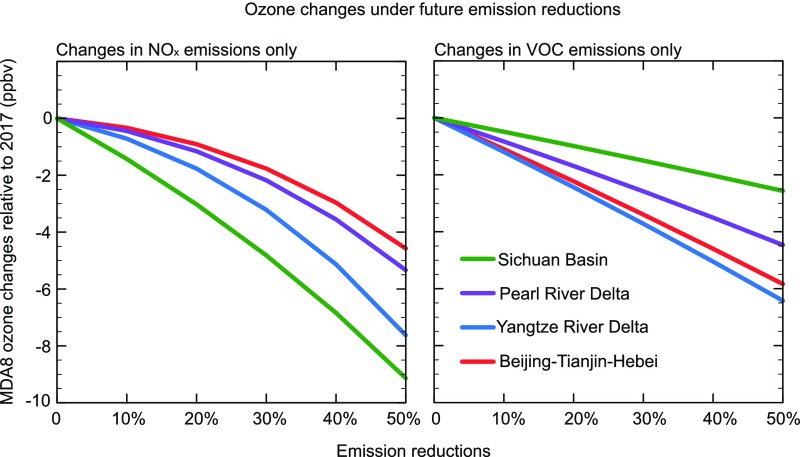
Significance: Drastic air pollution control in China since 2013 has achieved sharp decreases in fine particulate matter (PM 2.5 ), but ozone pollution has not improved. After removing the effect of meteorological variability, we find that surface ozone has increased in megacity clusters of China, notably Beijing and Shanghai. The increasing trend cannot be simply explained by changes in anthropogenic precursor [NO x and volatile organic compound (VOC)] emissions, particularly in North China Plain (NCP). The most important cause of the increasing ozone in NCP appears to be the decrease in PM 2.5 , slowing down the sink of hydroperoxy radicals and thus speeding up ozone production. Decreasing ozone in the future will require a combination of NO x and VOC emission controls to overcome the effect of decreasing PM 2.5 .
Overview
The claims and statistics of this paper haven’t been checked yet.
Free: it reads the open-access text and checks the first 5 claims that cite a source we can check. Create a free account to check every claim.
Integrity signals
Registry
Cites
Statistics
Figures
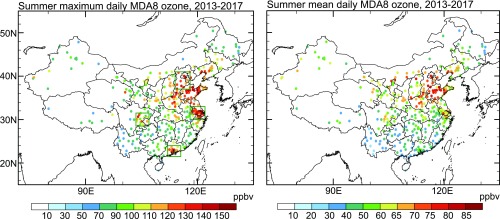
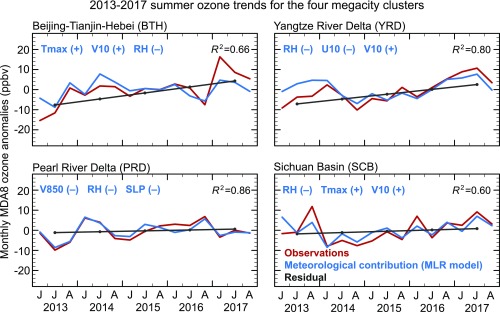
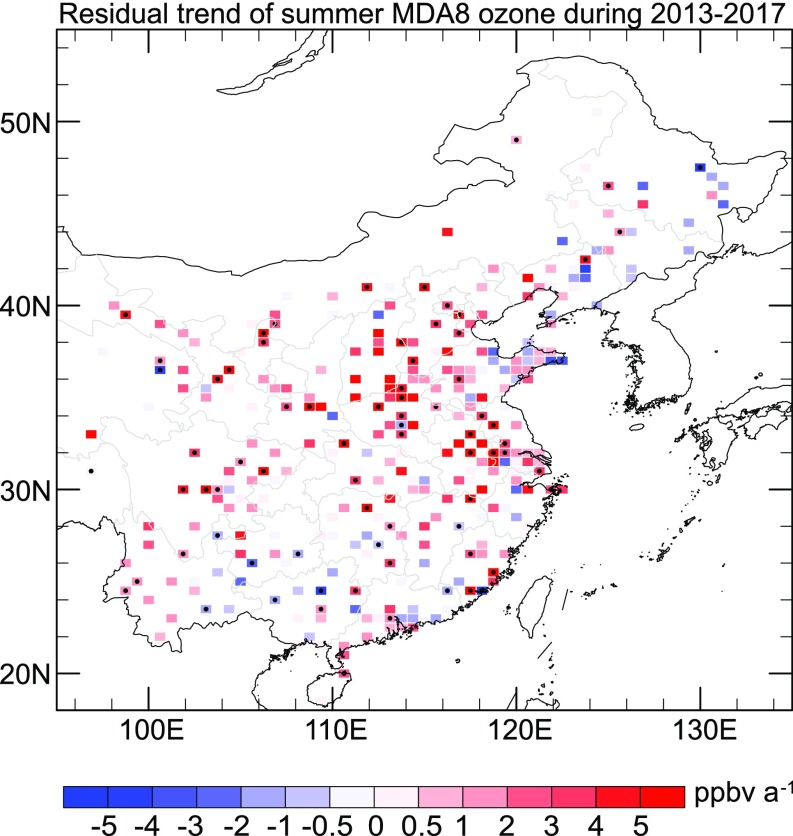
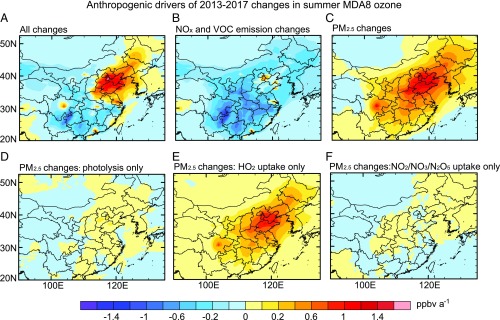
Verification
Claims the paper makes
The claims and statistics of this paper haven’t been checked yet.
Free: it reads the open-access text and checks the first 5 claims that cite a source we can check. Create a free account to check every claim.
Claims other papers make about this one
Each is checked against this paper’s own text: does it say what the citing paper says it does?
The cited source doesn’t support the claim as written.
In the citing paper
“a recent analysis of ground-level ozone concentrations measured at nearly 1,000 sites across China also found an increasing trend of summertime ozone in northeastern China from 2013 to 2017 (6).”
From Ozone pollution: A Major health hazard worldwide (2019) · cites this paper as [6]
Checked by a reasoning model — may be wrong.
Experimental — accuracy not yet measuredThe source backs part of the claim, not all of it — or backs it for a different population, condition or comparison.
In the citing paper
“Simulations with numerical models show several possible reasons including increases in UV radiation [31, 33–39], shifts in the VOC/NOx chemical regime resulting in increased production of O3 efficiency [35, 40], higher emissions of biogenic VOC due to rising temperatures [30], and decreased competition for gas-phase radicals by aerosol surfaces [34, 40], with reality likely being a combination of”
From Changes in tropospheric air quality related to the protection of stratospheric ozone in a changing climate (2023) · cites this paper as [34]
Experimental — accuracy not yet measuredThe source backs part of the claim, not all of it — or backs it for a different population, condition or comparison.
In the citing paper
“This increase was attributed to changes in anthropogenic emissions of ozone precursors as well as reductions in PM2.5 concentrations as described earlier.”
From Ozone pollution: A Major health hazard worldwide (2019) · cites this paper as [6]
Experimental — accuracy not yet measuredThe source backs part of the claim, not all of it — or backs it for a different population, condition or comparison.
In the citing paper
“anthropogenic emissions of NOx have decreased substantially in most urban areas of China (a 21% nationwide reduction) from 2013 to 2017 (6).”
From Ozone pollution: A Major health hazard worldwide (2019) · cites this paper as [6]
Experimental — accuracy not yet measuredThe cited source says what the claim attributes to it.
In the citing paper
“A recent study showed that a 40% reduction in PM2.5 from 2013 to 2017 in the North China Plain was partly responsible for an increasing ozone trend (at 1–3 ppb per year) during the period of 2013–2017 observed in megacity clusters of eastern China (6).”
From Ozone pollution: A Major health hazard worldwide (2019) · cites this paper as [6]
2 more claims about this paper
Create a free account to see every claim other papers make about this one.
Self-check
Percentages, sums and reported differences re-computed from the paper’s own numbers.
The self-check needs the paper’s full text.
Citations
Cites
Modern Applied Statistics with S
Venables, W. N., & Ripley, B. D. (2002) · Statistics and Computing · doi:10.1007/978-0-387-21706-2 · Cited by 24,305
The Modern-Era Retrospective Analysis for Research and Applications, Version 2 (MERRA-2)
Gelaro, R., McCarty, W., Suárez, M. J., Todling, R., Molod, A., Takacs, L., Randles, C. A., Darmenov, A., Bosilovich, M. G., Reichle, R., et al. (2017) · Journal of Climate · doi:10.1175/jcli-d-16-0758.1 · Cited by 9,010 · cited 2×
“Meteorological data from the NASA MERRA-2 reanalysis (23) with 0.”
MethodTrends in China's anthropogenic emissions since 2010 as the consequence of clean air actions
Zheng, B., Tong, D., Li, M., Liu, F., Hong, C., Geng, G., Li, H., Li, X., Peng, L., Qi, J., et al. (2018) · Atmospheric Chemistry and Physics · doi:10.5194/acp-18-14095-2018 · Cited by 2,916 · cited 9×
“The MEIC emission inventory is developed and managed by researchers at Tsinghua University.”
BackgroundMethodInfluentialSelf-citationModern Applied Statistics with S,
Kemp, F. (2003) · Journal of the Royal Statistical Society: Series D (The Statistician) · doi:10.1046/j.1467-9884.2003.t01-19-00383_22.x · Cited by 2,320
Effect of climate change on air quality
Jacob, D. J., & Winner, D. A. (2009) · Atmospheric Environment · doi:10.1016/j.atmosenv.2008.09.051 · Cited by 1,979 · cited 1×
“These variables are frequently observed to be correlated with ozone air quality (24) and can be viewed as general indicators of stagnation.”
BackgroundSelf-citationWang, T., Xue, L., Brimblecombe, P., Lam, Y. F., Li, L., & Zhang, L. (2017) · Science of The Total Environment · doi:10.1016/j.scitotenv.2016.10.081 · Cited by 1,876 · cited 5×
“A number of previous studies have examined meteorological influences on ozone variability in China (4, 9, 39, 40), On the basis of these studies we considered the correlation of MDA8 ozone across China with a large number of candidate meteorological variables from the MERRA-2 archive (SI Appendix, Table S3 and Fig.”
BackgroundInfluentialLi, M., Zhang, Q., Kurokawa, J.-I., Woo, J.-H., He, K., Lu, Z., Ohara, T., Song, Y., Streets, D. G., Carmichael, G. R., et al. (2017) · Atmospheric Chemistry and Physics · doi:10.5194/acp-17-935-2017 · Cited by 1,616
Self-citationHeterogeneous chemistry and tropospheric ozone
Jacob, D. (2000) · Atmospheric Environment · doi:10.1016/s1352-2310(99)00462-8 · Cited by 1,289 · cited 3×
“The relevant aerosol chemistry involves reactive uptake of the gaseous precursors to ozone formation, as described in GEOS-Chem by firstorder reactive uptake coefficients γ (32).”
BackgroundMethodInfluentialSelf-citationTai, A. P. K., Mickley, L. J., & Jacob, D. J. (2010) · Atmospheric Environment · doi:10.1016/j.atmosenv.2010.06.060 · Cited by 1,048
Self-citationSevere Surface Ozone Pollution in China: A Global Perspective
Lu, X., Hong, J., Zhang, L., Cooper, O. R., Schultz, M. G., Xu, X., Wang, T., Gao, M., Zhao, Y., & Zhang, Y. (2018) · Environmental Science & Technology Letters · doi:10.1021/acs.estlett.8b00366 · Cited by 1,040 · cited 1×
“5) concentration has decreased significantly since then, but ozone pollution has not decreased and is seemingly getting worse (8, 16).”
Background
Cited by
Drivers of improved PM 2.5 air quality in China from 2013 to 2017
Zhang, Q., Zheng, Y., Tong, D., Shao, M., Wang, S., Zhang, Y., Xu, X., Wang, J., He, H., Liu, W., et al. (2019) · Proceedings of the National Academy of Sciences · doi:10.1073/pnas.1907956116 · Cited by 2,204
“5 reduction has been proposed as a major mechanism of O3 increase (44).”
BackgroundSelf-citationEffect of restricted emissions during COVID-19 on air quality in India
Sharma, S., Zhang, M., Anshika, Gao, J., Zhang, H., & Kota, S. H. (2020) · Science of The Total Environment · doi:10.1016/j.scitotenv.2020.138878 · Cited by 1,150
Enhanced secondary pollution offset reduction of primary emissions during COVID-19 lockdown in China
Huang, X., Ding, A., Gao, J., Zheng, B., Zhou, D., Qi, X., Tang, R., Wang, J., Ren, C., Nie, W., et al. (2021) · National Science Review · doi:10.1093/nsr/nwaa137 · Cited by 960
“In the BTH region, the enhancement is extremely significant because of the much higher NO x concentrations and weak incident solar radiation in northern China, which makes the NO-titration and O 3 -VOCs-NO x photochemistry more sensitive to the NO x reduction [37].”
BackgroundInfluentialSelf-citationUnexpected air pollution with marked emission reductions during the COVID-19 outbreak in China
Le, T., Wang, Y., Liu, L., Yang, J., Yung, Y. L., Li, G., & Seinfeld, J. H. (2020) · Science · doi:10.1126/science.abb7431 · Cited by 931
A two-pollutant strategy for improving ozone and particulate air quality in China
Li, K., Jacob, D. J., Liao, H., Zhu, J., Shah, V., Shen, L., Bates, K. H., Zhang, Q., & Zhai, S. (2019) · Nature Geoscience · doi:10.1038/s41561-019-0464-x · Cited by 874
Self-citationOzone pollution: A Major health hazard worldwide
Zhang, J. (., Wei, Y., & Fang, Z. (2019) · Frontiers in Immunology · doi:10.3389/fimmu.2019.02518 · Cited by 828
“5 in China, anthropogenic emissions of NOx have decreased substantially in most urban areas of China (a 21% nationwide reduction) from 2013 to 2017 (6).”
BackgroundInfluentialZhai, S., Jacob, D. J., Wang, X., Shen, L., Li, K., Zhang, Y., Gui, K., Zhao, T., & Liao, H. (2019) · Atmospheric Chemistry and Physics · doi:10.5194/acp-19-11031-2019 · Cited by 785
“The same approach was recently applied by Li et al. (2019) to separate anthropogenic and meteorological drivers of ozone trends in China.”
BackgroundSelf-citationLi, K., Jacob, D. J., Shen, L., Lu, X., De Smedt, I., & Liao, H. (2020) · Atmospheric Chemistry and Physics · doi:10.5194/acp-20-11423-2020 · Cited by 745
Self-citation(2023) · Climate Change 2021 – The Physical Science Basis · doi:10.1017/9781009157896.008 · Cited by 637
Wei, J., Li, Z., Li, K., Dickerson, R. R., Pinker, R. T., Wang, J., Liu, X., Sun, L., Xue, W., & Cribb, M. (2022) · Remote Sensing of Environment · doi:10.1016/j.rse.2021.112775 · Cited by 683
Self-citationRapid Increases in Warm-Season Surface Ozone and Resulting Health Impact in China Since 2013
Lu, X., Zhang, L., Wang, X., Gao, M., Li, K., Zhang, Y., Yue, X., & Zhang, Y. (2020) · Environmental Science & Technology Letters · doi:10.1021/acs.estlett.0c00171 · Cited by 602
Self-citationContrasting trends of PM2.5 and surface-ozone concentrations in China from 2013 to 2017
Wang, Y., Gao, W., Wang, S., Song, T., Gong, Z., Ji, D., Wang, L., Liu, Z., Tang, G., Huo, Y., et al. (2020) · National Science Review · doi:10.1093/nsr/nwaa032 · Cited by 545
“A study found that the increment of summertime surface ozone was caused by decreased uptake of HO2 in the aerosol phase using the GEOS-Chem model in China [29].”
MethodShi, X., & Brasseur, G. P. (2020) · Geophysical Research Letters · doi:10.1029/2020gl088070 · Cited by 519
“Li et al. (2019), in their study to explain the ozoneincrease observed in China during the last years, highlight that aerosols scavenge HO2 and NOx radicals that otherwise would produce ozone, particularly during summertime.”
BackgroundLi, M., Zhang, Q., Zheng, B., Tong, D., Lei, Y., Liu, F., Hong, C., Kang, S., Yan, L., Zhang, Y., et al. (2019) · Atmospheric Chemistry and Physics · doi:10.5194/acp-19-8897-2019 · Cited by 502
Self-citationLu, X., Zhang, L., Chen, Y., Zhou, M., Zheng, B., Li, K., Liu, Y., Lin, J., Fu, T.-M., & Zhang, Q. (2019) · Atmospheric Chemistry and Physics · doi:10.5194/acp-19-8339-2019 · Cited by 483
Self-citationTrends in urban air pollution over the last two decades: A global perspective
Sicard, P., Agathokleous, E., Anenberg, S. C., De Marco, A., Paoletti, E., & Calatayud, V. (2023) · Science of The Total Environment · doi:10.1016/j.scitotenv.2022.160064 · Cited by 464
Drivers of PM2.5 air pollution deaths in China 2002–2017
Geng, G., Zheng, Y., Zhang, Q., Xue, T., Zhao, H., Tong, D., Zheng, B., Li, M., Liu, F., Hong, C., et al. (2021) · Nature Geoscience · doi:10.1038/s41561-021-00792-3 · Cited by 477
Self-citationFan, H., Zhao, C., & Yang, Y. (2020) · Atmospheric Environment · doi:10.1016/j.atmosenv.2019.117066 · Cited by 474
Lu, X., Zhang, S., Xing, J., Wang, Y., Chen, W., Ding, D., Wu, Y., Wang, S., Duan, L., & Hao, J. (2020) · Engineering · doi:10.1016/j.eng.2020.03.014 · Cited by 473
“Li et al. [60] found that the suppressed aerosol sink of hydroperoxyl (HO 2 ) radicals, due to the decrease of PM 2.5 over the 2013–2017 period, was an important factor in the increase of O 3 in the North China Plain.”
BackgroundInfluentialAggravating O3 pollution due to NOx emission control in eastern China
Wang, N., Lyu, X., Deng, X., Huang, X., Jiang, F., & Ding, A. (2019) · Science of The Total Environment · doi:10.1016/j.scitotenv.2019.04.388 · Cited by 431
Ozone pollution in the North China Plain spreading into the late-winter haze season
Li, K., Jacob, D. J., Liao, H., Qiu, Y., Shen, L., Zhai, S., Bates, K. H., Sulprizio, M. P., Song, S., Lu, X., et al. (2021) · Proceedings of the National Academy of Sciences · doi:10.1073/pnas.2015797118 · Cited by 416
“GEOS-Chem model description.”
BackgroundMethodInfluentialSelf-citationAbrupt but smaller than expected changes in surface air quality attributable to COVID-19 lockdowns
Shi, Z., Song, C., Liu, B., Lu, G., Xu, J., Van Vu, T., Elliott, R. J. R., Li, W., Bloss, W. J., & Harrison, R. M. (2021) · Science Advances · doi:10.1126/sciadv.abd6696 · Cited by 418
“The different pattern of changes in detrended O3 represents a nonlinear response of O3 formation rates to the (relative) changes in NOx and VOC emissions, depending on the prevailing O3 production regime at each location, but usually with a greater impact downwind of conurbation locations (29, 30).”
BackgroundLiu, Y., & Wang, T. (2020) · Atmospheric Chemistry and Physics · doi:10.5194/acp-20-6305-2020 · Cited by 410
Efficacy of China’s clean air actions to tackle PM2.5 pollution between 2013 and 2020
Geng, G., Liu, Y., Liu, Y., Liu, S., Cheng, J., Yan, L., Wu, N., Hu, H., Tong, D., Zheng, B., et al. (2024) · Nature Geoscience · doi:10.1038/s41561-024-01540-z · Cited by 369
“During 2013–2017, an imbalance in the reduction of different pollutants may have contributed to persistent nitrate pollution 39 and increasing ozone levels 40,41 .”
Self-citationWei, J., Liu, S., Li, Z., Liu, C., Qin, K., Liu, X., Pinker, R. T., Dickerson, R. R., Lin, J., Boersma, K. F., et al. (2022) · Environmental Science & Technology · doi:10.1021/acs.est.2c03834 · Cited by 361
Historical and future changes in air pollutants from CMIP6 models
Turnock, S. T., Allen, R. J., Andrews, M., Bauer, S. E., Deushi, M., Emmons, L., Good, P., Horowitz, L., John, J. G., Michou, M., et al. (2020) · Atmospheric Chemistry and Physics · doi:10.5194/acp-20-14547-2020 · Cited by 320
Fu, X., Wang, T., Gao, J., Wang, P., Liu, Y., Wang, S., Zhao, B., & Xue, L. (2020) · Environmental Science & Technology · doi:10.1021/acs.est.9b07248 · Cited by 360
Tan, Z., Lu, K., Jiang, M., Su, R., Wang, H., Lou, S., Fu, Q., Zhai, C., Tan, Q., Yue, D., et al. (2019) · Atmospheric Chemistry and Physics · doi:10.5194/acp-19-3493-2019 · Cited by 340
“Nationwide measurements showed that ozone is the only substance among six air quality indexes that has increased during the last 5 years (Li et al., 2019; X. Lu et al., 2018).”
BackgroundBais, A. F., Lucas, R. M., Bornman, J. F., Williamson, C. E., Sulzberger, B., Austin, A. T., Wilson, S. R., Andrady, A. L., Bernhard, G., McKenzie, R. L., et al. (2018) · Photochemical & Photobiological Sciences · doi:10.1039/c7pp90043k · Cited by 350
Liu, Y., & Wang, T. (2020) · Atmospheric Chemistry and Physics · doi:10.5194/acp-20-6323-2020 · Cited by 345
Han, H., Liu, J., Shu, L., Wang, T., & Yuan, H. (2020) · Atmospheric Chemistry and Physics · doi:10.5194/acp-20-203-2020 · Cited by 331
“MLR is an effective and widely used way to describe the relationship between meteorology and air quality and thus to help prediction of air quality (Shen et al., 2015; Otero et al., 2016; Li et al., 2019).”
BackgroundMethodOzone pollution threatens the production of major staple crops in East Asia
Feng, Z., Xu, Y., Kobayashi, K., Dai, L., Zhang, T., Agathokleous, E., Calatayud, V., Paoletti, E., Mukherjee, A., Agrawal, M., et al. (2022) · Nature Food · doi:10.1038/s43016-021-00422-6 · Cited by 322
Air quality benefits of achieving carbon neutrality in China
Shi, X., Zheng, Y., Lei, Y., Xue, W., Yan, G., Liu, X., Cai, B., Tong, D., & Wang, J. (2021) · Science of The Total Environment · doi:10.1016/j.scitotenv.2021.148784 · Cited by 332
Liu, Y., Zhou, Y., & Lu, J. (2020) · Scientific Reports · doi:10.1038/s41598-020-71338-7 · Cited by 307
Shah, V., Jacob, D. J., Li, K., Silvern, R. F., Zhai, S., Liu, M., Lin, J., & Zhang, Q. (2020) · Atmospheric Chemistry and Physics · doi:10.5194/acp-20-1483-2020 · Cited by 298
“Such an effect is not apparent in central–eastern China, which is prevailingly in the so-called transition regime between NOx-saturated and NOx-limited conditions (Jin and Holloway, 2015; Li et al., 2019).”
BackgroundSelf-citationAir quality and health benefits from fleet electrification in China
Liang, X., Zhang, S., Wu, Y., Xing, J., He, X., Zhang, K. M., Wang, S., & Hao, J. (2019) · Nature Sustainability · doi:10.1038/s41893-019-0398-8 · Cited by 302
Liu, Y., Song, M., Liu, X., Zhang, Y., Hui, L., Kong, L., Zhang, Y., Zhang, C., Qu, Y., An, J., et al. (2020) · Environmental Pollution · doi:10.1016/j.envpol.2019.113599 · Cited by 289
Lu, X., Ye, X., Zhou, M., Zhao, Y., Weng, H., Kong, H., Li, K., Gao, M., Zheng, B., Lin, J., et al. (2021) · Nature Communications · doi:10.1038/s41467-021-25147-9 · Cited by 275
Self-citationWang, Y., Yuan, Y., Wang, Q., Liu, C., Zhi, Q., & Cao, J. (2020) · Science of The Total Environment · doi:10.1016/j.scitotenv.2020.139133 · Cited by 286
“5 would be a less effective sink for hydroperoxy radicals (HO2), which would increase peroxy radical-mediated O3 production (Li et al., 2019).”
BackgroundInfluentialXue, T., Zheng, Y., Geng, G., Xiao, Q., Meng, X., Wang, M., Li, X., Wu, N., Zhang, Q., & Zhu, T. (2020) · Environmental Science & Technology · doi:10.1021/acs.est.0c03098 · Cited by 285
Self-citationResponses of PM2.5 and O3 concentrations to changes of meteorology and emissions in China
Wang, P., Guo, H., Hu, J., Kota, S. H., Ying, Q., & Zhang, H. (2019) · Science of The Total Environment · doi:10.1016/j.scitotenv.2019.01.227 · Cited by 272
Kong, L., Tang, X., Zhu, J., Wang, Z., Li, J., Wu, H., Wu, Q., Chen, H., Zhu, L., Wang, W., et al. (2021) · Earth System Science Data · doi:10.5194/essd-13-529-2021 · Cited by 261
Fast Photochemistry in Wintertime Haze: Consequences for Pollution Mitigation Strategies
Lu, K., Fuchs, H., Hofzumahaus, A., Tan, Z., Wang, H., Zhang, L., Schmitt, S. H., Rohrer, F., Bohn, B., Broch, S., et al. (2019) · Environmental Science & Technology · doi:10.1021/acs.est.9b02422 · Cited by 260
Wang, T., Xue, L., Feng, Z., Dai, J., Zhang, Y., & Tan, Y. (2022) · Environmental Research Letters · doi:10.1088/1748-9326/ac69fe · Cited by 237
“19 8339–61 [119] Li K, Jacob D J, Liao H, Shen L, Zhang Q and Bates K H 2019 Anthropogenic drivers of 2013-2017 trends in summer surface ozone in China Proc.”
BackgroundMethodLiu, R., Ma, Z., Liu, Y., Shao, Y., Zhao, W., & Bi, J. (2020) · Environment International · doi:10.1016/j.envint.2020.105823 · Cited by 247
Wang, W., Parrish, D. D., Wang, S., Bao, F., Ni, R., Li, X., Yang, S., Wang, H., Cheng, Y., & Su, H. (2022) · Atmospheric Chemistry and Physics · doi:10.5194/acp-22-8935-2022 · Cited by 240
The complex chemical effects of COVID-19 shutdowns on air quality
Kroll, J. H., Heald, C. L., Cappa, C. D., Farmer, D. K., Fry, J. L., Murphy, J. G., & Steiner, A. L. (2020) · Nature Chemistry · doi:10.1038/s41557-020-0535-z · Cited by 245
Zheng, H., Kong, S., Chen, N., Yan, Y., Liu, D., Zhu, B., Xu, K., Cao, W., Ding, Q., Lan, B., et al. (2020) · Science of The Total Environment · doi:10.1016/j.scitotenv.2020.140000 · Cited by 248
Wang, W., van der A, R., Ding, J., van Weele, M., & Cheng, T. (2021) · Atmospheric Chemistry and Physics · doi:10.5194/acp-21-7253-2021 · Cited by 230
Ren, J., Guo, F., & Xie, S. (2022) · Atmospheric Chemistry and Physics · doi:10.5194/acp-22-15035-2022 · Cited by 227
“Our study highlights that the root cause of ozone increase in major regions is the significant reduction of NO x alone without effective control of VOC. and not the concurrent decreases in the PM 2.5 level as suggested in previous studies (Li et al., 2019).”
BackgroundMethodResultInfluentialZhao, Y., Zhang, K., Xu, X., Shen, H., Zhu, X., Zhang, Y., Hu, Y., & Shen, G. (2020) · Environmental Science & Technology Letters · doi:10.1021/acs.estlett.0c00304 · Cited by 239
Dang, R., Liao, H., & Fu, Y. (2021) · Science of The Total Environment · doi:10.1016/j.scitotenv.2020.142394 · Cited by 237
“In conclusion, our results suggest that besides the anthropogenic drivers as revealed by previous studies (K Li et al., 2019, Liu and Wang, 2020b), meteorological conditions also played favourable roles in driving recent summertime O3 increases in NCP and YRD, China, particularly for extremeO3…”
BackgroundResultInfluentialSelf-citationTropospheric Ozone Assessment Report
Archibald, A. T., Neu, J. L., Elshorbany, Y. F., Cooper, O. R., Young, P. J., Akiyoshi, H., Cox, R. A., Coyle, M., Derwent, R. G., Deushi, M., et al. (2020) · Elementa: Science of the Anthropocene · doi:10.1525/elementa.2020.034 · Cited by 239
Zhao, H., Chen, K., Liu, Z., Zhang, Y., Shao, T., & Zhang, H. (2021) · Chemosphere · doi:10.1016/j.chemosphere.2020.129441 · Cited by 236
Atmospheric Volatile Organic Compounds (VOCs) in China: a Review
Mozaffar, A., & Zhang, Y.-L. (2020) · Current Pollution Reports · doi:10.1007/s40726-020-00149-1 · Cited by 236
Neale, R. E., Barnes, P. W., Robson, T. M., Neale, P. J., Williamson, C. E., Zepp, R. G., Wilson, S. R., Madronich, S., Andrady, A. L., Heikkilä, A. M., et al. (2021) · Photochemical & Photobiological Sciences · doi:10.1007/s43630-020-00001-x · Cited by 225
Air Pollutant Correlations in China: Secondary Air Pollutant Responses to NOx and SO2 Control
Chu, B., Ma, Q., Liu, J., Ma, J., Zhang, P., Chen, T., Feng, Q., Wang, C., Yang, N., Ma, H., et al. (2020) · Environmental Science & Technology Letters · doi:10.1021/acs.estlett.0c00403 · Cited by 216
Ma, M., Gao, Y., Wang, Y., Zhang, S., Leung, L. R., Liu, C., Wang, S., Zhao, B., Chang, X., Su, H., et al. (2019) · Atmospheric Chemistry and Physics · doi:10.5194/acp-19-12195-2019 · Cited by 216
“, 2016) and anthropogenic VOCs changed little (Zhao et al., 2018; Zheng et al., 2018; Li et al., 2019).”
InfluentialDrivers of Increasing Ozone during the Two Phases of Clean Air Actions in China 2013–2020
Liu, Y., Geng, G., Cheng, J., Liu, Y., Xiao, Q., Liu, L., Shi, Q., Tong, D., He, K., & Zhang, Q. (2023) · Environmental Science & Technology · doi:10.1021/acs.est.3c00054 · Cited by 195
Self-citationMiyazaki, K., Bowman, K., Sekiya, T., Takigawa, M., Neu, J. L., Sudo, K., Osterman, G., & Eskes, H. (2021) · Science Advances · doi:10.1126/sciadv.abf7460 · Cited by 201
Mousavinezhad, S., Choi, Y., Pouyaei, A., Ghahremanloo, M., & Nelson, D. L. (2021) · Atmospheric Research · doi:10.1016/j.atmosres.2021.105599 · Cited by 206
Sun, Y., Lei, L., Zhou, W., Chen, C., He, Y., Sun, J., Li, Z., Xu, W., Wang, Q., Ji, D., et al. (2020) · Science of The Total Environment · doi:10.1016/j.scitotenv.2020.140739 · Cited by 212
Chen, L., Zhu, J., Liao, H., Yang, Y., & Yue, X. (2020) · Science of The Total Environment · doi:10.1016/j.scitotenv.2020.140837 · Cited by 203
Self-citationWhalley, L. K., Slater, E. J., Woodward-Massey, R., Ye, C., Lee, J. D., Squires, F., Hopkins, J. R., Dunmore, R. E., Shaw, M., Hamilton, J. F., et al. (2021) · Atmospheric Chemistry and Physics · doi:10.5194/acp-21-2125-2021 · Cited by 189
“…of an heterogeneous loss term under the higher NO conditions, efforts to reduce anthropogenic PM when NO is present (which is highly likely to be the case) would not be expected to lead to an increase in HO2 and, in turn, O3, as was suggested from earlier modelling studies (Li et al., 2019).”
BackgroundResultOzone pollution over China and India: seasonality and sources
Gao, M., Gao, J., Zhu, B., Kumar, R., Lu, X., Song, S., Zhang, Y., Jia, B., Wang, P., Beig, G., et al. (2020) · Atmospheric Chemistry and Physics · doi:10.5194/acp-20-4399-2020 · Cited by 192
Significant concurrent decrease in PM2.5 and NO2 concentrations in China during COVID-19 epidemic
Chu, B., Zhang, S., Liu, J., Ma, Q., & He, H. (2021) · Journal of Environmental Sciences · doi:10.1016/j.jes.2020.06.031 · Cited by 197
Overview on the spatial–temporal characteristics of the ozone formation regime in China
Lu, H., Lyu, X., Cheng, H., Ling, Z., & Guo, H. (2019) · Environmental Science: Processes & Impacts · doi:10.1039/c9em00098d · Cited by 195
Kuerban, M., Waili, Y., Fan, F., Liu, Y., Qin, W., Dore, A. J., Peng, J., Xu, W., & Zhang, F. (2020) · Environmental Pollution · doi:10.1016/j.envpol.2019.113659 · Cited by 194
Shen, F., Zhang, L., Jiang, L., Tang, M., Gai, X., Chen, M., & Ge, X. (2020) · Environment International · doi:10.1016/j.envint.2020.105556 · Cited by 188
Elevated levels of OH observed in haze events during wintertime in central Beijing
Slater, E. J., Whalley, L. K., Woodward-Massey, R., Ye, C., Lee, J. D., Squires, F., Hopkins, J. R., Dunmore, R. E., Shaw, M., Hamilton, J. F., et al. (2020) · Atmospheric Chemistry and Physics · doi:10.5194/acp-20-14847-2020 · Cited by 173
Feng, R., Zheng, H.-J., Gao, H., Zhang, A.-R., Huang, C., Zhang, J.-X., Luo, K., & Fan, J.-R. (2019) · Journal of Cleaner Production · doi:10.1016/j.jclepro.2019.05.319 · Cited by 179
Chen, Z., Li, R., Chen, D., Zhuang, Y., Gao, B., Yang, L., & Li, M. (2020) · Journal of Cleaner Production · doi:10.1016/j.jclepro.2019.118498 · Cited by 179
A review on methodology in O3-NOx-VOC sensitivity study
Liu, C., & Shi, K. (2021) · Environmental Pollution · doi:10.1016/j.envpol.2021.118249 · Cited by 170
Buchholz, R. R., Worden, H. M., Park, M., Francis, G., Deeter, M. N., Edwards, D. P., Emmons, L. K., Gaubert, B., Gille, J., Martínez-Alonso, S., et al. (2021) · Remote Sensing of Environment · doi:10.1016/j.rse.2020.112275 · Cited by 169
Wu, D., Xie, Y., & Lyu, S. (2023) · Sustainable Cities and Society · doi:10.1016/j.scs.2022.104266 · Cited by 163
Health impacts of long-term ozone exposure in China over 2013–2017
Wang, Y., Wild, O., Chen, X., Wu, Q., Gao, M., Chen, H., Qi, Y., & Wang, Z. (2020) · Environment International · doi:10.1016/j.envint.2020.106030 · Cited by 166
Sustained emission reductions have restrained the ozone pollution over China
Wang, Y., Zhao, Y., Liu, Y., Jiang, Y., Zheng, B., Xing, J., Liu, Y., Wang, S., & Nielsen, C. P. (2023) · Nature Geoscience · doi:10.1038/s41561-023-01284-2 · Cited by 162
“Enhancement in Chinese ozone concentration over the past decade has been attributed to unfavourable meteorological conditions and/or reduced NO titration and aerosol levels 1,4,11,12,14,15,23,25 .”
BackgroundInfluentialDang, R., & Liao, H. (2019) · Geophysical Research Letters · doi:10.1029/2019gl084605 · Cited by 162
Self-citationAn explicit study of local ozone budget and NOx-VOCs sensitivity in Shenzhen China
Yu, D., Tan, Z., Lu, K., Ma, X., Li, X., Chen, S., Zhu, B., Lin, L., Li, Y., Qiu, P., et al. (2020) · Atmospheric Environment · doi:10.1016/j.atmosenv.2020.117304 · Cited by 165
Cao, J., Situ, S., Hao, Y., Xie, S., & Li, L. (2022) · Atmospheric chemistry and physics · doi:10.5194/acp-22-2351-2022 · Cited by 162
Laughner, J. L., Neu, J. L., SCHIMEL, D. S., Wennberg, P. O., Barsanti, K. C., Bowman, K. W., Chatterjee, A., Croes, B. E., Fitzmaurice, H. L., Henze, D. K., et al. (2021) · Proceedings of the National Academy of Sciences · doi:10.1073/pnas.2109481118 · Cited by 174
A synergistic ozone-climate control to address emerging ozone pollution challenges
Lyu, X., Li, K., Guo, H., Morawska, L., Zhou, B., Zeren, Y., Jiang, F., Chen, C., Goldstein, A. H., Xu, X., et al. (2023) · One Earth · doi:10.1016/j.oneear.2023.07.004 · Cited by 161
Self-citationShu, L., Wang, T., Han, H., Xie, M., Chen, P., Li, M., & Wu, H. (2019) · Environmental Pollution · doi:10.1016/j.envpol.2019.113631 · Cited by 158
Dai, H., Zhu, J., Liao, H., Li, J., Liang, M., Yang, Y., & Yue, X. (2020) · Atmospheric Research · doi:10.1016/j.atmosres.2020.105363 · Cited by 153
Self-citationSimayi, M., Shi, Y., Xi, Z., Ren, J., Hini, G., & Xie, S. (2022) · The Science of The Total Environment · doi:10.1016/j.scitotenv.2022.153994 · Cited by 154
The impact of synoptic patterns on summertime ozone pollution in the North China Plain
Dong, Y., Li, J., Guo, J., Jiang, Z., Chu, Y., Chang, L., Yang, Y., & Liao, H. (2020) · The Science of The Total Environment · doi:10.1016/j.scitotenv.2020.139559 · Cited by 155
Self-citationLong-term characterization of aerosol chemistry in cold season from 2013 to 2020 in Beijing, China
Lei, L., Zhou, W. Q., Chen, C., He, Y., Li, Z., Sun, J., Tang, X., Fu, P., Wang, Z., & Sun, Y. (2020) · Environmental Pollution · doi:10.1016/j.envpol.2020.115952 · Cited by 151
Optimization of a NO x and VOC Cooperative Control Strategy Based on Clean Air Benefits
Ding, D., Xing, J., Wang, S., Dong, Z., Zhang, F., Liu, S., & Hao, J. (2021) · Environmental Science & Technology · doi:10.1021/acs.est.1c04201 · Cited by 149
Meng, X., Wang, W., Shi, S., Zhu, S., Wang, P., Chen, R., Xiao, Q., Xue, T., Geng, G., Zhang, Q., et al. (2022) · Environmental Pollution · doi:10.1016/j.envpol.2022.118865 · Cited by 156
Self-citationMore mileage in reducing urban air pollution from road traffic
Harrison, R. M., Vu, T. V., Jafar, H. A., & Shi, Z. (2021) · Environment International · doi:10.1016/j.envint.2020.106329 · Cited by 152
Mitigation potential of global ammonia emissions and related health impacts in the trade network
Ma, R., Li, K., Guo, Y., Zhang, B., Zhao, X., Linder, S., Guan, C., Chen, G. Q., Gan, Y., & Meng, J. (2021) · Nature Communications · doi:10.1038/s41467-021-25854-3 · Cited by 163
Self-citationChen, S., Wang, H., Lu, K., Zeng, L., Hu, M., & Zhang, Y. (2020) · Atmospheric Environment · doi:10.1016/j.atmosenv.2020.117801 · Cited by 145
Li, B., Ho, S. S. H., Li, X., Guo, L., Chen, A., Hu, L., Yang, Y., Chen, D., Lin, A., & Fang, X. (2021) · Environment International · doi:10.1016/j.envint.2021.106710 · Cited by 156
Wang, P., Yang, Y., Xue, D., Ren, L., Tang, J., Leung, L.-Y. R., & Liao, H. (2023) · Nature Communications · doi:10.1038/s41467-023-42891-2 · Cited by 167
“For example, decreased aerosols in China may increase O 3 by slowing down the sink of hydroperoxy radicals, thus speeding up ozone production 55 .”
BackgroundSelf-citationLv, Z., Wang, X., Deng, F., Ying, Q., Archibald, A. T., Jones, R. L., Ding, Y. F., Cheng, Y., Fu, M., Liu, Y., et al. (2020) · Environmental Science & Technology · doi:10.1021/acs.est.0c04941 · Cited by 141
Development of ozone reactivity scales for volatile organic compounds in a Chinese megacity
Zhang, Y., Xue, L., Carter, W., Pei, C., Chen, T., Mu, J., Wang, Y., Zhang, Q., & Wang, W. (2021) · Atmospheric chemistry and physics · doi:10.5194/acp-21-11053-2021 · Cited by 147
Self-citationOzone pollution mitigation strategy informed by long-term trends of atmospheric oxidation capacity
Wang, W., Li, X., Cheng, Y., Parrish, D. D., Ni, R., Tan, Z., Liu, Y., Lü, S., Wu, Y., Chen, S., et al. (2023) · Nature Geoscience · doi:10.1038/s41561-023-01334-9 · Cited by 151
Self-citationOpportunistic experiments to constrain aerosol effective radiative forcing
Christensen, M. W., Gettelman, A., Cermak, J., Dagan, G., Diamond, M., Douglas, A., Feingold, G., Glassmeier, F., Goren, T., Grosvenor, D. P., et al. (2022) · Atmospheric Chemistry and Physics · doi:10.5194/acp-22-641-2022 · Cited by 138
Correlations between PM2.5 and Ozone over China and Associated Underlying Reasons
Zhu, J., Chen, L., Liao, H., & Dang, R. (2019) · Atmosphere · doi:10.3390/atmos10070352 · Cited by 139
“5 may affect the generation and loss of O3 [12,17], while O3 may influence atmospheric oxidizing capacity, and therefore, affect the formation of secondary PM2.”
BackgroundSelf-citationTan, Z., Hofzumahaus, A., Lu, K., Brown, S. S., Holland, F., Huey, L. G., Kiendler‐Scharr, A., Li, X., Liu, X., Ma, N., et al. (2020) · Environmental Science & Technology · doi:10.1021/acs.est.0c00525 · Cited by 139
Metadata
- Authors
- Li, K., Jacob, D. J., Liao, H., Shen, L., Zhang, Q., & Bates, K. H.
- Affiliations
- Harvard University (US)
- Nanjing University of Information Science and Technology (CN)
- Tsinghua University (CN)
- Corresponding author
- Jacob, Daniel J.
- Liao, Hong
- Venue
- Proceedings of the National Academy of Sciences
- Publisher
- National Academy of Sciences
- Published
- 2018-12-31
- Volume
- 116
- Issue
- 2
- Pages
- 422-427
- ISSN
- 0027-8424 (ISSN-L)
- 1091-6490
- PMC
- PMC6329973
- OpenAlex
- W2908510209
- Cited by
- 1,804
- References
- 45
- Citations by year
- 2026: 164 · 2025: 191 · 2024: 203 · 2023: 263 · 2022: 348 · 2021: 326 · 2020: 224 · 2019: 80 · 2018: 1
- FWCI
- 76.82
- Type
- journal article
- Language
- en
- Open access
- hybrid
- doi.org
- Licence
- Locations
- Proceedings of the National Academy of Sciences (publishedVersion, cc-by-nc-nd)
- Europe PMC (PubMed Central) (publishedVersion, cc-by-nc-nd)
- PubMed Central (publishedVersion, cc-by-nc-nd)
- PubMed (publishedVersion)
- Funders
- National Natural Science Foundation of China (91744311)
- Topics
- Physical Sciences › Earth and Planetary Sciences › Atmospheric Science › Atmospheric chemistry and aerosols
- Physical Sciences › Earth and Planetary Sciences › Atmospheric Science › Atmospheric Ozone and Climate
- Physical Sciences › Environmental Science › Global and Planetary Change › COVID-19 impact on air quality
- Keywords
- surface ozone trends, anthropogenic factors, PM2.5 reduction, NOx emissions, volatile organic compounds, hydroperoxyl radical, ozone sink, ozone formation, North China Plain, air pollution control, weather variability, Beijing, Shanghai
- MeSH terms
- Air, Air Pollutants, Air Pollution, China, Humans, Ozone, Urban Renewal, Volatile Organic Compounds
About these checks
Registry, retraction, Cites and statistics results are computed, not judged, with one exception: a printed reference that no index lists is read once by a model before it counts as a citation error. Claims are extracted by a model and kept only when their quote appears verbatim in the text; each cited source is then checked, with a model’s help, for whether it says what the claim relies on. Those verdicts can be wrong — read the claim’s quote and the cited source before relying on one.
Statistics and arithmetic are recomputed, not judged.
Confidence bands are shown only for fields calibrated on our annotated test set. None is calibrated yet, so no band is shown.
What counts as a claim ›How we measure confidence ›How we check this ›
Are you an author, or do you see a problem with this page? Request a review
Data sources
Bibliographic data: Semantic Scholar, OpenAlex, Crossref.
Contains information from the Semantic Scholar Academic Graph Datasets, made available under the ODC Attribution License (ODC-BY 1.0).
Semantic Scholar’s data is described in: Kinney, R., et al. (2023). The Semantic Scholar Open Data Platform. arXiv:2301.10140.
