

mRNA structure regulates protein expression through changes in functional half-life
Open accessPublished version of a preprint
The DOI matches its Crossref record; 57 of the 57 references it cites were found in a registry or an index.
Abstract
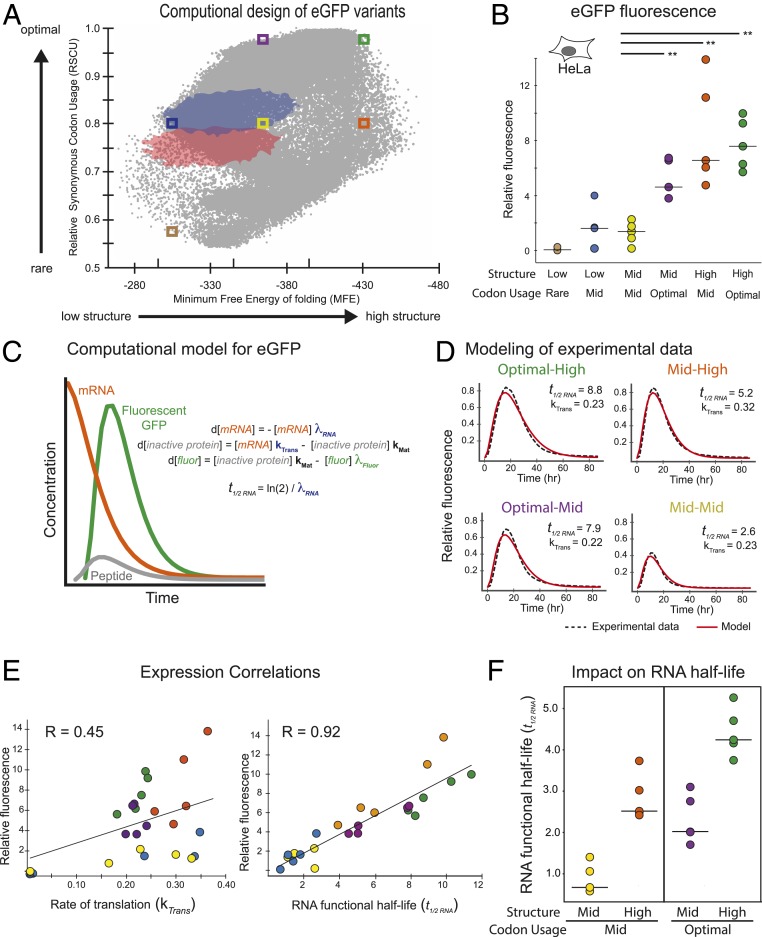
Messenger RNAs (mRNAs) encode information in both their primary sequence and their higher order structure. The independent contributions of factors like codon usage and secondary structure to regulating protein expression are difficult to establish as they are often highly correlated in endogenous sequences. Here, we used 2 approaches, global inclusion of modified nucleotides and rational sequence design of exogenously delivered constructs, to understand the role of mRNA secondary structure independent from codon usage. Unexpectedly, highly expressed mRNAs contained a highly structured coding sequence (CDS). Modified nucleotides that stabilize mRNA secondary structure enabled high expression across a wide variety of primary sequences. Using a set of eGFP mRNAs with independently altered codon usage and CDS structure, we find that the structure of the CDS regulates protein expression through changes in functional mRNA half-life (i.e., mRNA being actively translated). This work highlights an underappreciated role of mRNA secondary structure in the regulation of mRNA stability.
Overview
The claims and statistics of this paper haven’t been checked yet.
Free: it reads the open-access text and checks the first 5 claims that cite a source we can check. Create a free account to check every claim.
Integrity signals
Registry
Cites
Statistics
Figures
Verification
Claims the paper makes
The claims and statistics of this paper haven’t been checked yet.
Free: it reads the open-access text and checks the first 5 claims that cite a source we can check. Create a free account to check every claim.
Claims other papers make about this one
Each is checked against this paper’s own text: does it say what the citing paper says it does?
The source backs part of the claim, not all of it — or backs it for a different population, condition or comparison.
In the citing paper
“Increasing secondary structure lengthens mRNA half-life, which, together with optimal codons, improves protein expression5.”
From Algorithm for optimized mRNA design improves stability and immunogenicity (2023) · cites this paper as [5]
Experimental — accuracy not yet measuredThe source backs part of the claim, not all of it — or backs it for a different population, condition or comparison.
In the citing paper
“Previous work5 established two main objectives for mRNA design, stability and codon optimality, which synergize to increase protein expression.”
From Algorithm for optimized mRNA design improves stability and immunogenicity (2023) · cites this paper as [5]
Experimental — accuracy not yet measuredThe source backs part of the claim, not all of it — or backs it for a different population, condition or comparison.
In the citing paper
“However, mRNA molecules are chemically unstable and prone to degrade, which leads to insufficient protein expression5”
From Algorithm for optimized mRNA design improves stability and immunogenicity (2023) · cites this paper as [5]
Experimental — accuracy not yet measuredThe source backs part of the claim, not all of it — or backs it for a different population, condition or comparison.
In the citing paper
“Increasing secondary structure lengthens mRNA half-life, which, together with optimal codons, improves protein expression5.”
From Algorithm for optimized mRNA design improves stability and immunogenicity (2023) · cites this paper as [5]
Experimental — accuracy not yet measuredThe source backs part of the claim, not all of it — or backs it for a different population, condition or comparison.
In the citing paper
“However, mRNA molecules are chemically unstable and prone to degrade, which leads to insufficient protein expression5”
From Algorithm for optimized mRNA design improves stability and immunogenicity (2023) · cites this paper as [5]
Experimental — accuracy not yet measured
17 more claims about this paper
Create a free account to see every claim other papers make about this one.
Self-check
Percentages, sums and reported differences re-computed from the paper’s own numbers.
The self-check needs the paper’s full text.
Citations
Cites
Karikó, K., Buckstein, M., Ni, H., & Weissman, D. (2005) · Immunity · doi:10.1016/j.immuni.2005.06.008 · Cited by 2,728 · cited 1×
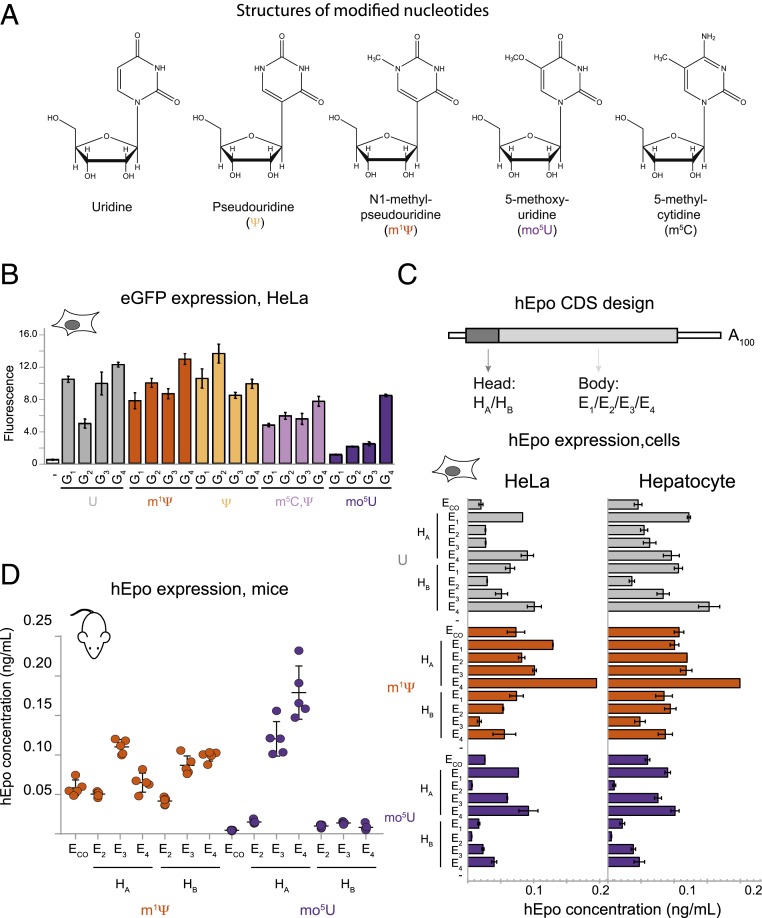
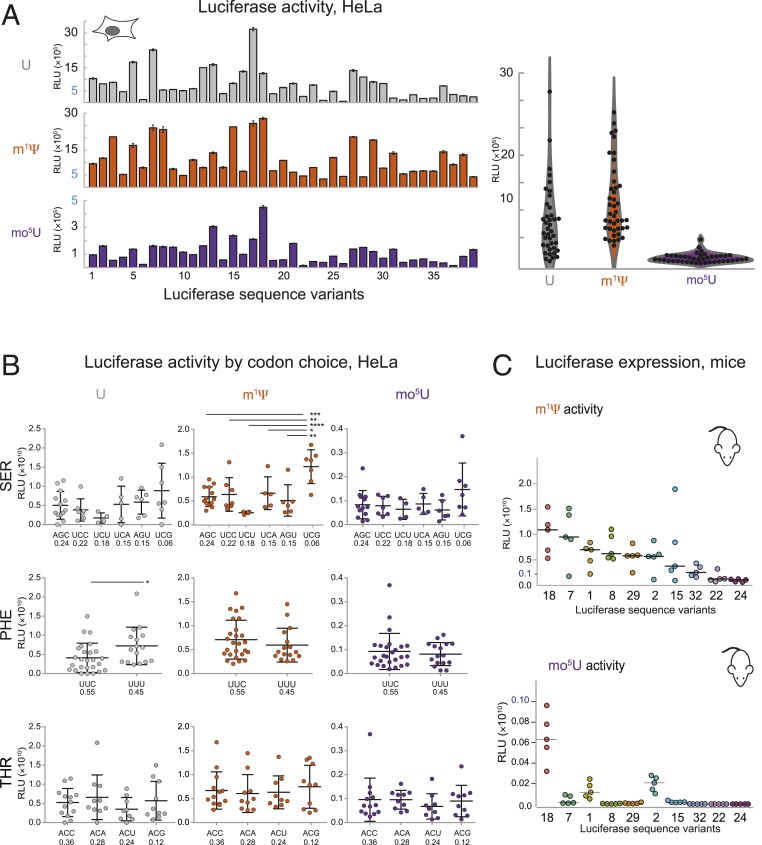
“To assess the degree to which the above conclusions from cell lines translated to animals, we examined protein expression in mice from formulated hEpo and Luc mRNA variants containing two nucleotide modifications shown to have reduced immunogenicity (m(1)Y and mo(5)U) (Kariko et al., 2005).”
A "Silent" Polymorphism in the MDR 1 Gene Changes Substrate Specificity
Kimchi-Sarfaty, C., Oh, J. M., Kim, I.-W., Sauna, Z. E., Calcagno, A. M., Ambudkar, S. V., & Gottesman, M. M. (2007) · Science · doi:10.1126/science.1135308 · Cited by 2,416 · cited 1×
“Another possibility is that structure leads to ribosome pausing at specific locations in the peptide, crucial for proper protein folding, and therefore activity, of certain multidomain proteins (32, 33).”
Karikó, K., Muramatsu, H., Welsh, F. A., Ludwig, J., Kato, H., Akira, S., & Weissman, D. (2008) · Molecular Therapy · doi:10.1038/mt.2008.200 · Cited by 1,930 · cited 2×
“For comparison with a previous study documenting the effects of modified nucleotides on RNA immunogenicity (16), we also made eGFP mRNA wherein both U and C were substituted with Ψ and 5-methyl-cytidine (m(5)C), respectively.”
Synonymous but not the same: the causes and consequences of codon bias
Plotkin, J. B., & Kudla, G. (2011) · Nature Reviews Genetics · doi:10.1038/nrg2899 · Cited by 1,685 · cited 1×
“Highly expressed mRNAs tended to have increased GC content, consistent with previous reports (17), but not all high GC sequences were high expressers (SI Appendix, Figs.”
ResultCodon bias and heterologous protein expression
Gustafsson, C., Govindarajan, S., & Minshull, J. (2004) · Trends in Biotechnology · doi:10.1016/j.tibtech.2004.04.006 · Cited by 1,330 · cited 1×
“Synonymous codon choice directly impacts translation, with highly expressed genes tending to include more "optimal" codons (Gustafsson et al., 2004; Hinnebusch et al., 2016; Horstick et al., 2015; Pop et al., 2014).”
Codon usage tabulated from international DNA sequence databases: status for the year 2000
Nakamura, Y. (2000) · Nucleic Acids Research · doi:10.1093/nar/28.1.292 · Cited by 1,254 · cited 2×
“Using probabilities weighted by frequency in the human transcriptome (Nakamura et al., 2000) generates a similar-shaped distribution, but shifted to both significantly higher RSCU (0.”
MethodInfluentialImproved Green Fluorescent Protein by Molecular Evolution Using DNA Shuffling
Crameri, A., Whitehorn, E. A., Tate, E., & Stemmer, W. P. C. (1996) · Nature Biotechnology · doi:10.1038/nbt0396-315 · Cited by 1,187 · cited 1×
“Realtime, continuous expression data were fit by a model including rate constants for mRNA translation, mRNA functional half-life, maturation of eGFP protein into its fluorescent form (28), and eGFP protein degradation (Fig.”
Xia, T., SantaLucia, J., Burkard, M. E., Kierzek, R., Schroeder, S. J., Jiao, X., Cox, C., & Turner, D. H. (1998) · Biochemistry · doi:10.1021/bi9809425 · Cited by 1,140 · cited 8×
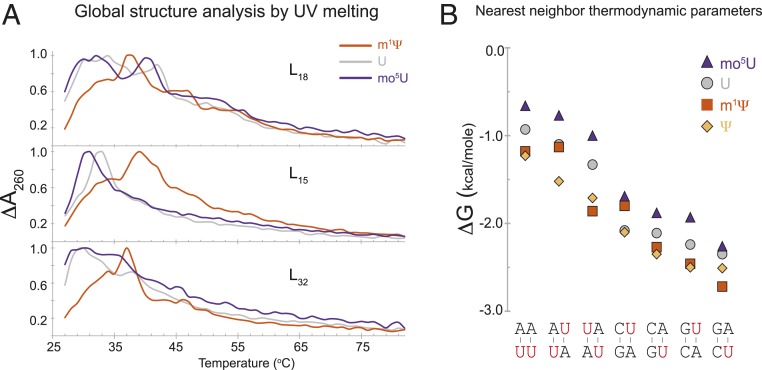
“Nearest-neighbor thermodynamic parameters along with the experimentally determined error for Watson-crick base pairs containing unmodified uridine (values from (Xia et al., 1998)), Y, m(1)Y, or mo(5)U.”
InfluentialTranslational control by 5′-untranslated regions of eukaryotic mRNAs
Hinnebusch, A. G., Ivanov, I. P., & Sonenberg, N. (2016) · Science · doi:10.1126/science.aad9868 · Cited by 1,079 · cited 1×
“Synonymous codon choice directly impacts translation, with highly expressed genes tending to include more "optimal" codons (Gustafsson et al., 2004; Hinnebusch et al., 2016; Horstick et al., 2015; Pop et al., 2014).”
Codon Optimality Is a Major Determinant of mRNA Stability
Presnyak, V., Alhusaini, N., Chen, Y.-H., Martin, S., Morris, N., Kline, N., Olson, S., Weinberg, D., Baker, K. E., Graveley, B. R., et al. (2015) · Cell · doi:10.1016/j.cell.2015.02.029 · Cited by 1,078 · cited 5×
“Regions of increased rare codon frequency have been shown to decrease protein expression and mRNA stability (Presnyak et al., 2015; Weinberg et al., 2016).”
InfluentialSelf-citation
Cited by
Items 201–300 of 571
Tissue-specific temperature dependence of RNA editing levels in zebrafish
Li, W., Bu, M., Hu, R., Jiang, S., Chen, L., & Somero, G. N. (2023) · BMC Biology · doi:10.1186/s12915-023-01738-4 · Cited by 22
“For example, reduced secondary structure in the 5 ′ UTR region enhances initiation, whereas increased secondary structure in the CDS and 3 ′ UTR favors high protein expression [44].”
BackgroundMahony, T. J., Briody, T. E., & Ommeh, S. C. (2024) · Vaccines · doi:10.3390/vaccines12020152 · Cited by 24
“Studies have shown that an optimal secondary structure and codon usage can improve mRNA stability [79,80].”
BackgroundPhysical and chemical advances of synthetic delivery vehicles to enhance mRNA vaccine efficacy
Kim, H. J., Seo, S. K., & Park, H. Y. (2022) · Journal of Controlled Release · doi:10.1016/j.jconrel.2022.03.029 · Cited by 19
Mary, L., Leclerc, D., Gilot, D., Belaud‐Rotureau, M., & Jaillard, S. (2022) · Human Mutation · doi:10.1002/humu.24388 · Cited by 21
Rashad, S., Byrne, S. R., Saigusa, D., Xiang, J., Zhou, Y., Zhang, L., Begley, T. J., Tominaga, T., & Niizuma, K. (2022) · Neuroscience · doi:10.1016/j.neuroscience.2022.08.009 · Cited by 16
Functional Nucleic Acid-Based Immunomodulation for T Cell-Mediated Cancer Therapy
Wu, H., Lin, J., Ling, N., Zhang, Y., He, Y., Qiu, L., & Tan, W. (2023) · ACS Nano · doi:10.1021/acsnano.3c09861 · Cited by 20
Current innovations in mRNA vaccines for targeting multidrug-resistant ESKAPE pathogens
İmani, S., Lv, S., Qian, H., Cui, Y., Li, X., Babaeizad, A., & Wang, Q. (2024) · Biotechnology Advances · doi:10.1016/j.biotechadv.2024.108492 · Cited by 21
Translation-Associated Mutational U-Pressure in the First ORF of SARS-CoV-2 and Other Coronaviruses
Khrustalev, V. V., Giri, R., Khrustaleva, T. A., Kapuganti, S. K., Stojarov, A. N., & Poboinev, V. V. (2020) · Frontiers in Microbiology · doi:10.3389/fmicb.2020.559165 · Cited by 18
Architecture of RNA–RNA interactions
Xue, Y. (2022) · Current Opinion in Genetics & Development · doi:10.1016/j.gde.2021.11.007 · Cited by 18
Haugg, E., Borner, J., Diedrich, V., & Herwig, A. (2021) · FEBS Open Bio · doi:10.1002/2211-5463.13350 · Cited by 17
Rapid folding of nascent RNA regulates eukaryotic RNA biogenesis
Schärfen, L., Vock, I. W., Simon, M. D., & Neugebauer, K. M. (2024) · Molecular Cell · doi:10.1016/j.molcel.2025.02.025 · Cited by 19
mRNABERT: advancing mRNA sequence design with a universal language model and comprehensive dataset
Xiong, Y., Wang, A., Kang, Y., Shen, C., Hsieh, C., & Hou, T. (2025) · Nature Communications · doi:10.1038/s41467-025-65340-8 · Cited by 32
Inhibition of autophagy rescues muscle atrophy in a LGMDD2 Drosophila model
Blázquez‐Bernal, Á., Fernández‐Costa, J. M., Bargiela, A., & Artero, R. D. (2021) · The FASEB Journal · doi:10.1096/fj.202100539rr · Cited by 19
Alameh, M., & Weissman, D. (2022) · Elsevier eBooks · doi:10.1016/b978-0-12-821595-1.00014-2 · Cited by 20
Khare, S., Niharika, N., Singh, A., Hussain, I., Singh, N. B., & Singh, S. C. (2022) · Applied Biochemistry and Biotechnology · doi:10.1007/s12010-022-04181-3 · Cited by 16
“In the production of BNT162b2 and mRNA1273 vaccine, removal of dsRNA fragments was done along with 1mΨ replacement which firmly diminishes cytosolic RNA sensors and TLR signaling by affecting the inborn immunity generated against them [88].”
BackgroundInfluentialAdvances in mRNA nanomedicines for malignant brain tumor therapy
Deng, T., Hasan, I., Roy, S., Liu, Y., Zhang, B., & Guo, B. (2022) · Smart Materials in Medicine · doi:10.1016/j.smaim.2022.11.001 · Cited by 19
Wang, Z., Xia, A., Wang, Q., Cui, Z., Ming, L., Yu-sheng, Y., Wang, Y., & He, Y. (2024) · PLANT PHYSIOLOGY · doi:10.1093/plphys/kiae113 · Cited by 20
“Given that Indel-7080 locates in the 3 ′ UTR of ZMET2 , we hypothesized that it might alter the transcript abundance of ZMET2 and thereby contribute to husk layer variation among diverse inbred lines (Wang et al. 2006; Akdeli et al. 2014; Mauger et al. 2019).”
BackgroundTkaczyk, C., Newton, M. R., Patnaik, M. M., Thom, G., Strain, M., Gamson, A., Daramola, O., Murthy, A., Douthwaite, J. A., Stepanov, O., et al. (2024) · Molecular Therapy · doi:10.1016/j.ymthe.2024.05.036 · Cited by 19
Zhang, J., Xiong, Y.-W., Zhu, H.-L., Tan, L., Zhou, H., Zheng, X., Zhang, Y., Chang, W., Xu, D., Tian, W., et al. (2024) · Journal of Hazardous Materials · doi:10.1016/j.jhazmat.2024.135159 · Cited by 18
de Lajarte, A. A., Taillades, Y. J. M. D., Aruda, J., Bongrand, P., Wightman, F. F., Salazar, D., Allan, M. F., Kalicki, C. H., L’Esperance-Kerckhoff, C., Kashi, A., et al. (2026) · Science Advances · doi:10.1126/sciadv.adz4967 · Cited by 18
“These secondary structures, dictated by Watson-Crick base pairings, are pivotal in RNA's lifecycle, affecting localization, translation, degradation, and more [ 1.”
Therapeutic Potential of Intrabodies for Cancer Immunotherapy: Current Status and Future Directions
Böldicke, T. W. (2022) · Antibodies · doi:10.3390/antib11030049 · Cited by 21
“UTRs [105] and codon optimization [106] can also improve the mRNA translation or half-life.”
BackgroundmRNA therapeutics for disease therapy: principles, delivery, and clinical translation
Zhou, D., Wang, K., Zhang, Y., Ma, K., Yang, X., Li, Z.-Y., Yu, S., Chen, K., & Qiao, S. (2023) · Journal of Materials Chemistry B · doi:10.1039/d2tb02782h · Cited by 19
Elsayed, A., Jaber, N., Al-Remawi, M. M., & Abu–Salah, K. M. (2023) · International Journal of Pharmaceutics · doi:10.1016/j.ijpharm.2023.123360 · Cited by 19
Unveiling RNA structure-mediated regulations of RNA stability in wheat
Wu, H., Yu, H., Zhang, Y., Yang, B., Sun, W., Ren, L., Li, Y., Li, Q., Liu, B., Ding, Y., et al. (2024) · Nature Communications · doi:10.1038/s41467-024-54172-7 · Cited by 22
“RNA structure is another crucial determinant of mRNA stability 21,22 .”
Strayer, E. C., Gopinath, S. K., Lee, H., Vejnar, C. E., Neuenkirchen, N., Gupta, A., Beaudoin, J.-D., & Giráldez, A. J. (2024) · Nature Communications · doi:10.1038/s41467-024-55274-y · Cited by 21
“Previous studies have characterized Kozak strength 27 , uORFs 28 – 30 , IRESs 31,32 , codon optimality 33,34 , RNA structure 35 , microRNA binding sites 36 , cytoplasmic polyadenylation 37 , and the effects of variation in human UTRs 38 – 41 .”
Dutta, N., Deb, I., Sarzyńska, J., & Lahiri, A. (2025) · ChemistrySelect · doi:10.1002/slct.202400006 · Cited by 18
Mountford, J., Gheyas, A., Vervelde, L., & Smith, J. (2022) · Animal Genetics · doi:10.1111/age.13233 · Cited by 18
mRNA Treatment Rescues Niemann–Pick Disease Type C1 in Patient Fibroblasts
Furtado, D. L., Cortez‐Jugo, C., Hung, Y. H., Bush, A. I., & Caruso, F. (2022) · Molecular Pharmaceutics · doi:10.1021/acs.molpharmaceut.2c00463 · Cited by 17
Worpenberg, L., Gobet, C., & Naef, F. (2025) · Genome biology · doi:10.1186/s13059-025-03800-6 · Cited by 19
“Codon usage biases at the 5 ′ CDS region, enriched with rare or “suboptimal” codons, regulate ribosome flow and co-trans-lational folding [82–85].”
RNA pseudouridine modification in plants
Niu, Y., & Liu, L. (2023) · Journal of Experimental Botany · doi:10.1093/jxb/erad323 · Cited by 17
Lee, C.-H., & Grey, F. E. (2020) · Frontiers in Cellular and Infection Microbiology · doi:10.3389/fcimb.2020.00280 · Cited by 18
“Proteomics Studies in HCMV mRNA levels don’t always correspond to protein levels due to various factors, including post-transcriptional modification, mRNA stability, and regulation by miRNAs (Valencia-Sanchez et al., 2006; Nachtergaele and He, 2017; Nouaille et al., 2017; Mauger et al., 2019).”
BackgroundEdwards, D. K., & Carfí, A. (2022) · Current Opinion in Immunology · doi:10.1016/j.coi.2022.102214 · Cited by 20
Innate sensing of mRNA vaccines
Wuebben, C., Bartok, E., & Hartmann, G. (2022) · Current Opinion in Immunology · doi:10.1016/j.coi.2022.102249 · Cited by 17
TREAT: Therapeutic RNAs exploration inspired by artificial intelligence technology
Luo, Y., Liu, L., He, Z., Zhang, S., Huo, P., Wang, Z., Jiaxin, Q., Zhao, L., Wu, Y., Zhang, D., et al. (2022) · Computational and Structural Biotechnology Journal · doi:10.1016/j.csbj.2022.10.011 · Cited by 16
“TREAT collects 11 influential features, such as GC content [42], secondary structure [43], codon usage [44], bicodon usage [45], Codon Adaptation Index (CAI) [46], and degradation score [47] (Fig.”
BackgroundRecent Advances in Messenger Ribonucleic Acid (mRNA) Vaccines and Their Delivery Systems: A Review
Belay, W. Y., Nibret, G., & Aschale, Y. (2023) · Clinical Pharmacology Advances and Applications · doi:10.2147/cpaa.s418314 · Cited by 23
“Unexpectedly, mRNA coding regions capable of generating secondary structures were found to be associated with highly expressed mRNAs.(38) The 5’ UTR is essential for ribosome binding and serves as the location of protein translation preinitiation complex formation.”
BackgroundZhang, M., Singh, N., Ehmann, M. E., Zheng, L., & Zhao, H. (2023) · iScience · doi:10.1016/j.isci.2023.107739 · Cited by 17
“Moreover, studies have revealed that the enhanced translation of c/m1c-modified mRNA was associated with its improved stability and increased secondary structure.(2,10) In fact, compared to base U, c could thermodynamically enhance its hydrogen bonding with A, thanks to its extra hydrogen bond donor (N1 imino proton).”
BackgroundDERNA Enables Pareto Optimal RNA Design
Gu, X., Qi, Y., & El-Kebir, M. (2024) · Journal of Computational Biology · doi:10.1089/cmb.2023.0283 · Cited by 17
“1), and ultimately decreased protein expression (Tuller et al., 2010; Mauger et al., 2019).”
InfluentialUsing the RNAstructure Software Package to Predict Conserved RNA Structures
Mittal, A., Ali, S. E., & Mathews, D. H. (2024) · Current Protocols · doi:10.1002/cpz1.70054 · Cited by 15
“Structure prediction is also the basis of methods that are used to de-sign mRNA open reading frames that contain maximal structure because this makes the mRNA resistant to degradation (Mauger et al., 2019; Zhang et al., 2023).”
Chen, X., Song, W., Zhang, H., Xu, Y., Yi, B., & Zhou, Q. (2025) · Chemical Engineering Journal · doi:10.1016/j.cej.2025.159756 · Cited by 25
Schievelbein, M., Resende, C., Glennon, M. M., Kerosky, M., & Brown, J. A. (2023) · Journal of Biological Chemistry · doi:10.1016/j.jbc.2023.105548 · Cited by 13
“…structural composition (9), displays the greatest expression levels when the coding sequence and 3 0 -untranslated region are highly structured (9), is less susceptible to miRNA silencing (10), and maintains reasonably high translational fi delity to produce the desired protein product (11).”
BackgroundMethodInfluentialParveen, A., & Elkordy, A. (2024) · Pathogens · doi:10.3390/pathogens13060500 · Cited by 15
“To protect mRNA from endoribonuclease degradation, increasing the guanine-cytosine (GC) content instead of replacing rare codons in ORF and enhancing protein expression of mRNA in vivo [20,21] has been used by CureVac for a recent SARS-CoV-2 mRNA vaccine candidate [14].”
Method1mΨ influences the performance of various positive-stranded RNA virus-based replicons
Miyazato, P., Noguchi, T., Ogawa, F., Sugimoto, T., Fauzyah, Y., Sasaki, R., & Ebina, H. (2024) · Scientific Reports · doi:10.1038/s41598-024-68617-y · Cited by 14
“This modified nucleoside has been reported to provide increased stability and/ or rigidity to RNA molecules 29,37 and to affect RNA–protein interactions 28 , which might affect the function of regulatory sequences such as viral UTRs.”
Molecular Dynamics Simulation of Lipid Nanoparticles Encapsulating mRNA
Zhang, Z., Cheng, D., Luo, W., Hu, D., Yang, T., Hu, K., Liang, L., Liu, W., & Hu, J. (2024) · Molecules · doi:10.3390/molecules29184409 · Cited by 15
“Mauger et al. have demonstrated that naturally occurring modified uridines, such as that obtained when substituting uridine with 1-methyl-pseudouridine, induce global changes in mRNA secondary structure, which is associated with higher protein expression levels [21].”
BackgroundPark, S. A., Hwang, D., Kim, J. H., Lee, S.-Y., Lee, J., Kim, H. S., Kim, K., Lim, B., Lee, J., Jeon, Y. H., et al. (2024) · Biomaterials Science · doi:10.1039/d4bm01070a · Cited by 16
Ahsan, A., Wagner, D. N., Varaljay, V. A., Roman, V. A., Kelley‐Loughnane, N., & Reuel, N. F. (2024) · Synthetic Biology · doi:10.1093/synbio/ysae005 · Cited by 14
Palm, S. M., Horton, C. A., Zhang, X., & Collins, K. (2024) · RNA · doi:10.1261/rna.080031.124 · Cited by 14
“U substitution with m1 Ψ is also stabilizing but appears to be more effective in suppressing innate immune responses and confers less mis-pairing than Ψ (Mauger et al. 2019; Morais et al. 2021).”
BackgroundTechnological advancements in deciphering RNA-RNA interactions
Ye, R., Zhao, H., Wang, X., & Xue, Y. (2024) · Molecular Cell · doi:10.1016/j.molcel.2024.06.036 · Cited by 20
Therapeutic applications of cell engineering using mRNA technology
He, Y., Johnston, A. P. R., & Pouton, C. W. (2024) · Trends in biotechnology · doi:10.1016/j.tibtech.2024.07.012 · Cited by 14
Chang, C., Patel, H., Ferrari, A., Scalzo, T., Petkov, D. I., Xu, H. H., Rossignol, E. D., Palladino, G., & Wen, Y. (2025) · Vaccine · doi:10.1016/j.vaccine.2025.126883 · Cited by 16
JAX-RNAfold: scalable differentiable folding
Krueger, R., & Ward, M. (2025) · Bioinformatics · doi:10.1093/bioinformatics/btaf203 · Cited by 17
The RNA structurome in the asexual blood stages of malaria pathogen plasmodium falciparum
Alvarez, D. R., Ospina, A., Barwell, T., Zheng, B., Dey, A., Li, C. V., Basu, S., Shi, X. M., Kadri, S., & Chakrabarti, K. (2021) · RNA Biology · doi:10.1080/15476286.2021.1926747 · Cited by 12
Modified mRNA as a Treatment for Myocardial Infarction
Wang, Y., Wu, M., & Guo, H. (2023) · International Journal of Molecular Sciences · doi:10.3390/ijms24054737 · Cited by 12
“5-fold for m1Ψ modRNA in HeLa cells [33].”
BackgroundVisible Light Activates Coumarin‐Caged mRNA for Cytoplasmic Cap Methylation in Cells
Bollu, A., Schepers, H., Klöcker, N., Erguven, M., Lawrence‐Dörner, A., & Rentmeister, A. (2023) · Chemistry - A European Journal · doi:10.1002/chem.202303174 · Cited by 17
Ting, J., Tamayo-Mendoza, T., Petersen, S. R., Reet, J. V., Ahmed, U. A., Snell, N. J., Fisher, J. D., Stern, M., & Oviedo, F. (2023) · Chemical Communications · doi:10.1039/d3cc04705a · Cited by 14
Iwasaki, M., Kawahara, Y., Okubo, C., Yamakawa, T., Nakamura, M., Tabata, T., Nishi, Y., Narita, M., Ohta, A., Saito, H., et al. (2022) · iScience · doi:10.1016/j.isci.2022.104289 · Cited by 12
3′ Untranslated Regions Are Modular Entities That Determine Polyadenylation Profiles
Lui, K. H., Geisberg, J. V., Moqtaderi, Z., & Struhl, K. (2022) · Molecular and Cellular Biology · doi:10.1128/mcb.00244-22 · Cited by 13
“within coding sequences is positively correlated with enhanced mRNA stability (33, 34).”
BackgroundcircDesign Algorithm for Designing Synthetic Circular RNAPreprint
Xu, C., Pu, C., Chen, R., Wang, W., Jiang, F., Deng, C., Zhai, D., Chen, Y., Hu, W., Zhang, Y., et al. (2023) · bioRxiv (Cold Spring Harbor Laboratory) · doi:10.1101/2023.07.09.548293 · Cited by 18
“As the secondary structure dictates the functionally half-life of mRNA, we then extensively evaluated the in vitro stability of circRNAs in terms of thermodynamic folding, in-solution degradation as well as intracellular decay 25 .”
The mRNA-Based Innovative Strategy: Progress and Challenges
Zhou, H., Wei, D., Chen, Z., Chen, H., Dong, C., Cai, W., Wang, J., Liu, X., Li, Y., Yang, Y., et al. (2026) · Nano-Micro Letters · doi:10.1007/s40820-025-01906-x · Cited by 25
“Highly expressed mRNA exhibits fewer secondary structures throughout the 5’UTR and the first 10 codons of the ORF [81].”
Park, J. K., Lee, E. B., & Winthrop, K. L. (2024) · Annals of the Rheumatic Diseases · doi:10.1136/ard-2024-225492 · Cited by 14
“31 Unlike viral-vector vaccines, LNP carrier do not induce a host immune response against the carrier itself.”
BackgroundEpigenetic modulation of immune cells: Mechanisms and implications
Fiordoro, S., Rosano, C., Pechkova, E., Barocci, S., & Izzotti, A. (2024) · Advances in Biological Regulation · doi:10.1016/j.jbior.2024.101043 · Cited by 12
The dynamics and functional impact of tRNA repertoires during early embryogenesis in zebrafish
Reimão-Pinto, M. M., Behrens, A., Forcelloni, S., Fröhlich, K., Shunji, K. A. Y. A., & Nedialkova, D. D. (2024) · The EMBO Journal · doi:10.1038/s44318-024-00265-4 · Cited by 16
“These data are in agreement with prior fi ndings that GC3 codons and highly structured coding sequences can stabilize reporter mRNAs and boost protein expression in trypanosomatids and mammalian cells (Hia et al, 2019; Jeacock et al, 2018; Mauger et al, 2019).”
Tsukamoto, K., Yamashita, A., Maeki, M., Tokeshi, M., Imai, H., Fukao, A., Fujiwara, T., Okudera, K., Mizuki, N., Okuda, K., et al. (2024) · Vaccines · doi:10.3390/vaccines12111239 · Cited by 15
“Funding: This work was partially supported by a grant-in-aid from the Ministry of Education, Culture, Sports, Science and Technology of Japan (Nos.”
Bak, A., Zhou, L., Rejman, J., Arteta, M. Y., Nilsson, G. Å., & Ashford, M. B. (2025) · Expert Opinion on Drug Delivery · doi:10.1080/17425247.2025.2452295 · Cited by 13
“Many of the lipid compositions used were developed for siRNA, and a larger mRNA cargo, with different folding [72], and nucleotides modifications [73] can impact LNP structure and performance.”
Le, N. T. P., Phan, T. T. P., Phan, H. T. T., Truong, T. T. T., Schumann, W., & Nguyen, H. D. (2022) · Biotechnology Reports · doi:10.1016/j.btre.2022.e00754 · Cited by 11
“The translation process is influenced by the secondary structure of the mRNA [34], and some studies have shown that secondary structure in the 5 untranslated region (5 UTR) generally reduces translation initiation efficiency and overall protein production [35].”
BackgroundBiophysical characterization of the structure of a SARS-CoV-2 self-amplifying RNA (saRNA) vaccine
Myatt, D. P., Wharram, L., Graham, C., Liddell, J., Branton, H., Pizzey, C. L., Cowieson, N. P., Rambo, R. P., & Shattock, R. J. (2023) · Biology Methods and Protocols · doi:10.1093/biomethods/bpad001 · Cited by 13
Li, M., Jiang, Y., You, J., Zhao, P., Liu, W., Zhao, N., Yu, Z., & Ma, J. (2023) · Scientific Reports · doi:10.1038/s41598-023-29936-8 · Cited by 11
Broad anti-pathogen potential of DEAD box RNA helicase eIF4A-targeting rocaglates
Obermann, W., Azri, M. F. D., Konopka, L., Schmidt, N., Magari, F., Sherman, J., Silva, L. M. R., Hermosilla, C. R., Ludewig, A. H., Houhou, H., et al. (2023) · Scientific Reports · doi:10.1038/s41598-023-35765-6 · Cited by 16
Mercier, B. C., Labaronne, E., Cluet, D., Guiguettaz, L., Fontrodona, N., Bicknell, A., Corbin, A., Wencker, M., Aube, F., Modolo, L., et al. (2024) · Genome Research · doi:10.1101/gr.277863.123 · Cited by 3
“This is in agreement with a previous report indicating a role for secondary structure in the coding region in modulating TDD (Mauger et al. 2019).”
ResultSelf-citationTaming Superbugs: Current Progress and Challenges in Combating ESKAPE Pathogens
Hetta, H. F., Khalaf, F. R., Kotb, A. A., Alatawi, M. N., Albalawi, A. S., Alharbi, A. A., Aljohani, M. K., Aljohani, S. S., Alatawi, M. S., Ellah, N. H. A., et al. (2025) · Pathogens · doi:10.3390/pathogens15010028 · Cited by 14
“The core of this technology is the rational design of the mRNA molecule [24], as illustrated in Figure 1, which comprises a 5 ′ cap, untranslated regions (UTRs), a coding sequence (CDS), and a poly(A) tail.”
Śpiewla, T., Czubak, K., Pilch, Z., Baranowski, M. R., Krawczyk, P. S., Affek, K., Antczak, W., Szulc-Gasiorowska, M., Chmielinski, S., Mroczek, S., et al. (2026) · Nucleic Acids Research · doi:10.1093/nar/gkaf1412 · Cited by 14
“The model included parameters for mRNA decay, translation rate, protein maturation, and protein decay, as described in [ 33 ]: where λ RNA is the decay rate of a given mRNA, k trans is the speed of inactive fluorescent peptide production, k mat is the speed of peptide maturation into fluorescently…”
The Bright Future of mRNA as a Therapeutic Molecule
Vélez, D. E., Torres, B. L., & Hernández, G. (2025) · Genes · doi:10.3390/genes16040376 · Cited by 11
“…these structures play crucial roles in mRNA turnover, translation, transport, and storage during the development of therapeutic mRNAs, including mRNA vaccines [18–20]. mRNA turnover, translation, transport, and storage during the development of therapeutic mRNAs, including mRNA vaccines [18–20].”
Shaw, C. A., Stewart-Jones, G. B. E., Jorquera, P. A., Narayanan, E., Elbashir, S. M., Kapłonek, P., Ma, L., Hunter, N., Hanahoe, E., Ketova, T., et al. (2025) · Vaccine · doi:10.1016/j.vaccine.2025.127589 · Cited by 12
“Codon redesign was deployed to further increase protein expression 37 , and deletion or replacement of the viral CT was implemented to alter cellular membrane distribution of the modi�ed F proteins 38 .”
Self-citationChallenges in Measuring In Vitro Activity of LNP-mRNA Therapeutics
Guerrini, G., Scaccabarozzi, D., Méhn, D., Sarracino, A., Gioria, S., & Calzolai, L. (2025) · International Journal of Molecular Sciences · doi:10.3390/ijms26178152 · Cited by 12
“C) content can stabilize mRNA secondary structures, extending the molecule’s functional half-life [19].”
Madera, S., Izzo, F., Chervo, M. F., Dupont, A., Chiauzzi, V. A., Bruni, S., Petrillo, E., Merin, S. S., Martino, M. D., Montero, D., et al. (2022) · Cell Death and Disease · doi:10.1038/s41419-022-04855-0 · Cited by 14
“…differential subcellular retention upon R2 treatment Compelling evidence demonstrated that mRNAs 5 ′ - and 3 ′ - untranslated regions (UTRs), as well as consensus coding sequences (CCDSs), mediate post-transcriptional regulation of gene expression and determine protein levels and fate [35 – 38].”
BackgroundLi, X., Dai, X., Pan, Y., Sun, Y., Yang, B., Chen, K., Wang, Y., Xu, J., Dong, Y., Yang, Y. R., et al. (2022) · Journal of the American Chemical Society · doi:10.1021/jacs.2c08930 · Cited by 9
Waghela, I. N., Mallory, K. L., Taylor, J. A., Schneider, C. G., Savransky, T., Janse, C. J., Lin, P. J. C., Tam, Y. K., Weissman, D., & Angov, E. (2022) · Frontiers in Immunology · doi:10.3389/fimmu.2022.1026052 · Cited by 11
Processing of coding and non-coding RNAs in plant development and environmental responses
Si, F., Cao, X., Song, X., & Deng, X. M. (2020) · Essays in Biochemistry · doi:10.1042/ebc20200029 · Cited by 11
Protein-Based Systems for Translational Regulation of Synthetic mRNAs in Mammalian Cells
Nakanishi, H. (2021) · Life · doi:10.3390/life11111192 · Cited by 13
“We showed that the fusion protein of MS2CP and the feline caliciviral VPg, named caliciviral VPg-based translational activator (CaVT), can activate the translation of A-capped mRNAs containing the MS2CP-target motif in their 5’ UTRs [5,20] (Figure 2, the 3rd row).”
BackgroundInfluentialLenin, K. L. D., Raveendran, A., & Antony, S. P. (2023) · Animal Gene · doi:10.1016/j.angen.2023.200148 · Cited by 10
HydraRNA: a hybrid architecture based full-length RNA language model
Li, G., Jiang, F., Zhu, J., Cui, H., Wang, Z., & Chen, W. (2025) · Genome Biology · doi:10.1186/s13059-025-03853-7 · Cited by 10
“Moreover, coding sequences are well-known to affect the mRNA translation [16, 17].”
HydraRNA: a hybrid architecture based full-length RNA language model
(2025) · doi:10.1101/2025.03.06.641765 · Cited by 10
Tools shaping drug discovery and development
Cheung, E., Xia, Y., Caporini, M. A., & Gilmore, J. L. (2022) · Biophysics Reviews · doi:10.1063/5.0087583 · Cited by 10
From Sequence to System: Enhancing IVT mRNA Vaccine Effectiveness through Cutting-Edge Technologies
Xu, L., Li, C., Liao, R., Xiao, Q., Wang, X., Zhao, Z., Zhang, W., Ding, X., Cao, Y., Cai, L., et al. (2024) · Molecular Pharmaceutics · doi:10.1021/acs.molpharmaceut.4c00863 · Cited by 11
Effective Gene Expression Prediction and Optimization from Protein Sequences
Liu, T., Zhang, Y., Li, Y., Xu, G., Gao, H., Wang, P., Tu, T., Luo, H., Wu, N., Yao, B., et al. (2025) · Advanced Science · doi:10.1002/advs.202407664 · Cited by 16
Interpreting ribosome dynamics during mRNA translation
Uematsu, S., & Qian, S. (2025) · Journal of Biological Chemistry · doi:10.1016/j.jbc.2025.110469 · Cited by 13
“With the improved resolution of mRNA structure measured inside cells, mRNA secondary structures within the ORF have been suggested to influence translation elongation (65).”
IRES-Mediated Translation: Expanding the Toolkits of RNA Therapy
Gao, X., & Wu, Z. (2025) · International Journal of Molecular Sciences · doi:10.3390/ijms262110542 · Cited by 12
Ikrar, T., Muchsin, W., & Sophian, A. (2026) · Journal of Controlled Release · doi:10.1016/j.jconrel.2026.115019 · Cited by 10
Sioud, M., Juzeniene, A., & Sæbøe‐Larssen, S. (2024) · Vaccines · doi:10.3390/vaccines12060624 · Cited by 13
“The data obtained with GFP mRNA are comparable to those reported by Mauger et al. [34].”
ResultInfluentialDeveloping Vaccines in Pancreatic Adenocarcinoma: Trials and Tribulations
Phan, T. X., Fan, D., & Melstrom, L. G. (2024) · Current Oncology · doi:10.3390/curroncol31090361 · Cited by 9
“…neoantigen candidates such as pVACtools, Epidisco, Antigen.garnish, consists of a 5 ′ cap sequence, 5 and 3 untranslated regions (UTRs), an open reading frame (ORF) encoding the coding sequence (CDS) for the TAs, and MuPeXI, TSNAD, Neopepsee, and INTEGRATE-neo [164–170]. a 3 poly(A) tail [179].”
BackgroundPrediction and analysis of functional RNA structures within the integrative genomics viewer
Rouse, W. B., Andrews, R. J., Booher, N. J., Wang, J., Woodman, M. E., Dow, E. R., Jessop, T. C., & Moss, W. N. (2022) · NAR Genomics and Bioinformatics · doi:10.1093/nargab/lqab127 · Cited by 11
“Secondary structures are present in many mRNAs where they have been shown to act as recognition sites for RNA binding proteins (RBPs), allow or prevent access of trans-regulatory elements to single stranded RNA, directly bind microRNAs and RBPs, and act to stabilize the transcript (5,6).”
BackgroundNurturing Deep Tech to Solve Social Problems: Learning from COVID-19 mRNA Vaccine Development
Okuyama, R. (2022) · Pathogens · doi:10.3390/pathogens11121469 · Cited by 13
“Regarding R structure, papers on the optiization of open reading fra e [53] and 5’ TR sequence [54] ere published.”
BackgroundShin, J. H., Bonilla, S. L., Denny, S. K., Greenleaf, W. J., & Herschlag, D. (2023) · Proceedings of the National Academy of Sciences · doi:10.1073/pnas.2220485120 · Cited by 8
LinearDesign: Efficient Algorithms for Optimized mRNA Sequence DesignPreprint
Zhang, H., Zhang, L., Li, Z., Liu, K., Liu, B., Mathews, D. H., & Huang, L. (2020) · arXiv (Cornell University) · Cited by 14
mRNA Vaccination: An Outlook on Innate Sensing and Adaptive Immune Responses
Doost, J. S., Fazel, F., Boodhoo, N., & Sharif, S. (2024) · Viruses · doi:10.3390/v16091404 · Cited by 13
“The ORF represents the encoded genetic information for the target protein, and translation effectiveness by ORF manipulation can be enhanced through codon optimization [15].”
BackgroundZhang, S., Wang, X., Zhao, T., Yang, C., & Huang, L. (2025) · Vaccines · doi:10.3390/vaccines13010068 · Cited by 8
“Various strategies exist to improve protein expression, including codon optimization [26,27], the substitution of rare codons, increasing GC content [28], and optimizing secondary structures [12,13].”
RNA therapeutics in cardiovascular medicine
Damase, T. R., & Cooke, J. P. (2025) · Current Opinion in Cardiology · doi:10.1097/hco.0000000000001210 · Cited by 9
Mass photometry as a fast, facile characterization tool for direct measurement of mRNA length
Schmudlach, A., Spear, S., Hua, Y., Fertier-Prizzon, S., & Kochling, J. D. (2025) · Biology Methods and Protocols · doi:10.1093/biomethods/bpaf021 · Cited by 10
Zhang, Y., Li, J., Wang, Z., Kuang, Y., Li, S., & Wang, X. (2025) · Animal Diseases · doi:10.1186/s44149-025-00186-7 · Cited by 9
“Modern mRNA vaccines thus employ fully substituted modified nucleosides, with pseudouridine (ψ) replacing uridine to increase mRNA stability and safety (Linares-Fernandez et al. 2020; Nance and Meier 2021; Mauger et al. 2019).”
A sensitive and specific non-invasive urine biomarker panel for prostate cancer detection
Yuan, M.-L., Moschovas, M. C., Joshi, K., Sanada, Y., Perera, R., Lee, B., Pokhrel, R., Polívka, J., Miller, A., Amankwah, E. K., et al. (2025) · EBioMedicine · doi:10.1016/j.ebiom.2025.105895 · Cited by 8
“31,32 Thus, we attempted to identify ultra-stable local structural elements in our three biomarkers to investigate the stability of TTC3 , H4C5 , and EPCAM RNAs.”
Liang, L., Li, Y., Wang, L., Wang, W., Zhang, Y., Zhao, H., Wang, Y., Lyu, L., Li, J., Zhou, D., et al. (2025) · EBioMedicine · doi:10.1016/j.ebiom.2025.105923 · Cited by 9
“55,56 Transcriptional initiation is mainly determined by the activation of promoters.”
Metadata
- Authors
- Mauger, D. M., Cabral, B. J., Presnyak, V., Su, S. V., Reid, D. W., Goodman, B., Link, K., Khatwani, N., Reynders, J., Moore, M. J., & McFadyen, I. J.
- Affiliations
- Platform Research, Moderna, Inc., Cambridge, MA 02139
- Corresponding author
- Moore, Melissa J.
- Venue
- Proceedings of the National Academy of Sciences
- Publisher
- National Academy of Sciences
- Published
- 2019-11-11
- Volume
- 116
- Issue
- 48
- Pages
- 24075-24083
- ISSN
- 0027-8424 (ISSN-L)
- 1091-6490
- PMC
- PMC6883848
- OpenAlex
- W2983889514
- Semantic Scholar
- 5893e4255a022371c1bbef16899698c3e704ff58
- Cited by
- 555
- References
- 56
- Citations by year
- 2026: 76 · 2025: 105 · 2024: 104 · 2023: 73 · 2022: 98 · 2021: 71 · 2020: 26 · 2019: 2
- FWCI
- 16.54
- Type
- journal article
- Language
- en
- Open access
- hybrid
- doi.org
- Licence
- Locations
- Proceedings of the National Academy of Sciences (publishedVersion, cc-by)
- bioRxiv (Cold Spring Harbor Laboratory) (acceptedVersion)
- PubMed Central (publishedVersion, cc-by)
- PubMed (publishedVersion)
- Funders
- Moderna
- Topics
- Life Sciences › Biochemistry, Genetics and Molecular Biology › Molecular Biology › RNA and protein synthesis mechanisms
- Life Sciences › Biochemistry, Genetics and Molecular Biology › Molecular Biology › RNA Research and Splicing
- Life Sciences › Biochemistry, Genetics and Molecular Biology › Molecular Biology › RNA Interference and Gene Delivery
- Keywords
- mRNA secondary structure, mRNA stability, mRNA half-life, codon usage, protein expression regulation, modified nucleotides, mRNA translation
- MeSH terms
- Half-Life, HeLa Cells, Humans, Nucleic Acid Conformation, Proteins, RNA, Messenger, Protein Biosynthesis, RNA Stability
About these checks
Registry, retraction, Cites and statistics results are computed, not judged, with one exception: a printed reference that no index lists is read once by a model before it counts as a citation error. Claims are extracted by a model and kept only when their quote appears verbatim in the text; each cited source is then checked, with a model’s help, for whether it says what the claim relies on. Those verdicts can be wrong — read the claim’s quote and the cited source before relying on one.
Statistics and arithmetic are recomputed, not judged.
Confidence bands are shown only for fields calibrated on our annotated test set. None is calibrated yet, so no band is shown.
What counts as a claim ›How we measure confidence ›How we check this ›
Are you an author, or do you see a problem with this page? Request a review
Data sources
Bibliographic data: Semantic Scholar, OpenAlex, Crossref.
Contains information from the Semantic Scholar Academic Graph Datasets, made available under the ODC Attribution License (ODC-BY 1.0).
Semantic Scholar’s data is described in: Kinney, R., et al. (2023). The Semantic Scholar Open Data Platform. arXiv:2301.10140.
