

mRNA structure regulates protein expression through changes in functional half-life
Open accessPublished version of a preprint
The DOI matches its Crossref record; 57 of the 57 references it cites were found in a registry or an index.
Abstract
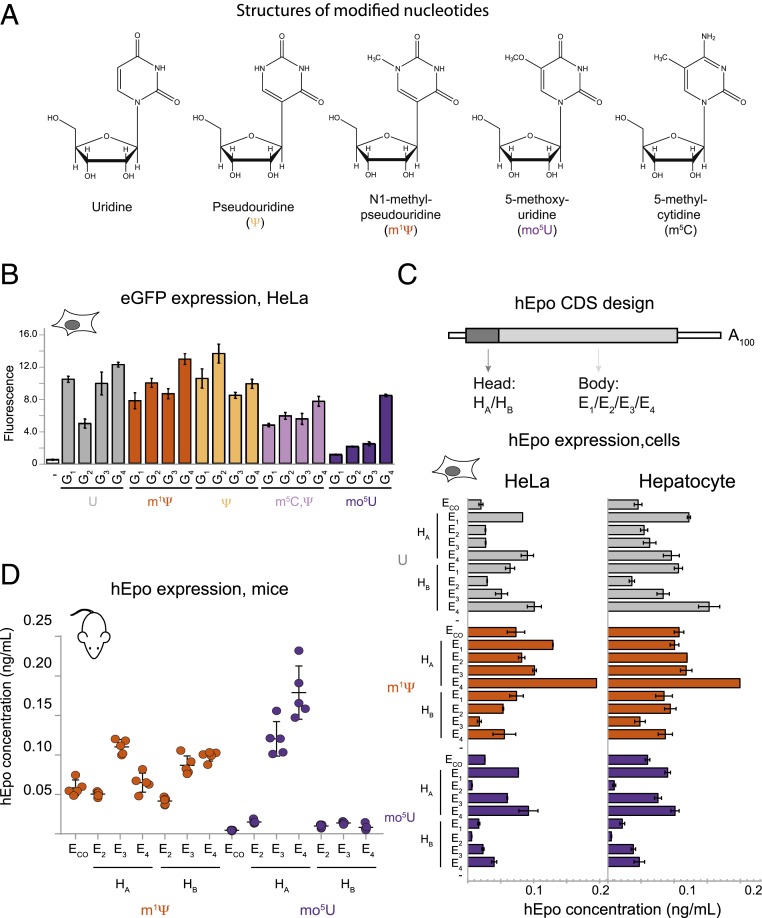
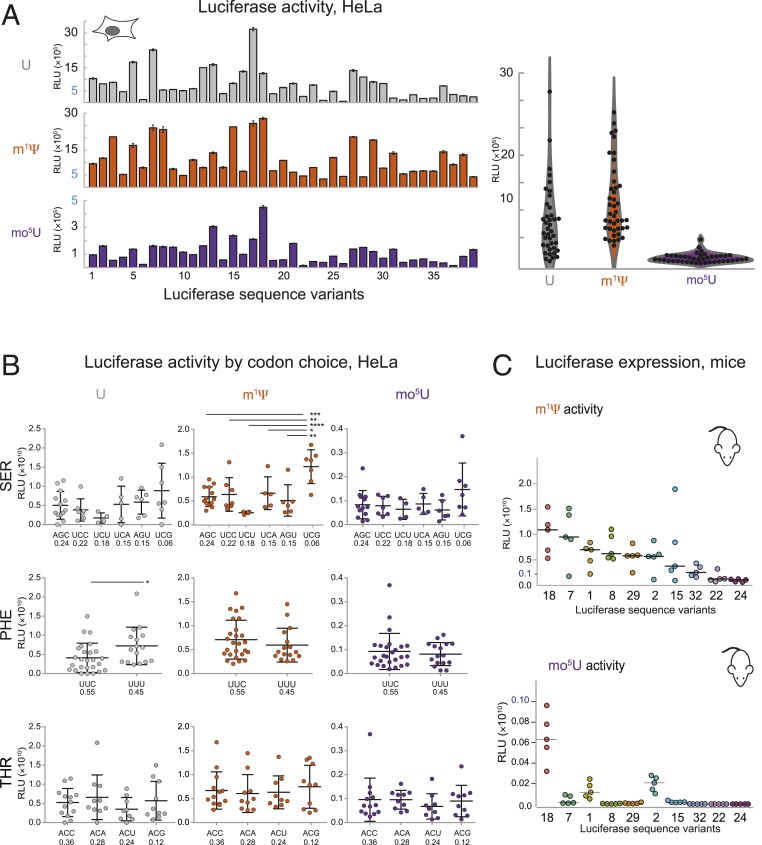
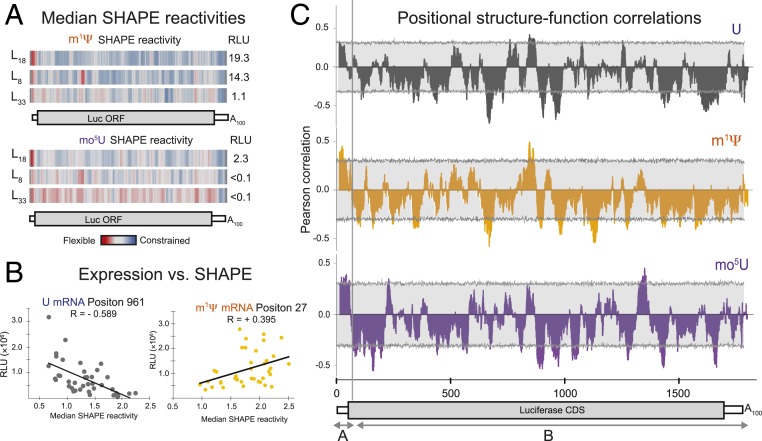
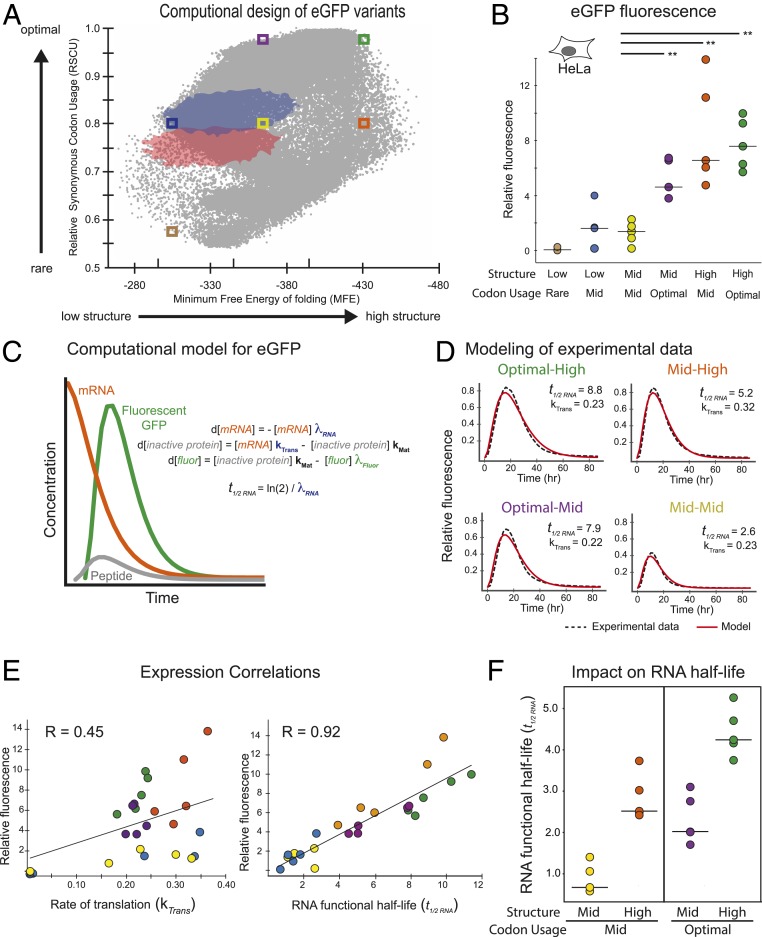
Messenger RNAs (mRNAs) encode information in both their primary sequence and their higher order structure. The independent contributions of factors like codon usage and secondary structure to regulating protein expression are difficult to establish as they are often highly correlated in endogenous sequences. Here, we used 2 approaches, global inclusion of modified nucleotides and rational sequence design of exogenously delivered constructs, to understand the role of mRNA secondary structure independent from codon usage. Unexpectedly, highly expressed mRNAs contained a highly structured coding sequence (CDS). Modified nucleotides that stabilize mRNA secondary structure enabled high expression across a wide variety of primary sequences. Using a set of eGFP mRNAs with independently altered codon usage and CDS structure, we find that the structure of the CDS regulates protein expression through changes in functional mRNA half-life (i.e., mRNA being actively translated). This work highlights an underappreciated role of mRNA secondary structure in the regulation of mRNA stability.
Overview
The claims and statistics of this paper haven’t been checked yet.
Free: it reads the open-access text and checks the first 5 claims that cite a source we can check. Create a free account to check every claim.
Integrity signals
Registry
Cites
Statistics
Figures
Verification
Claims the paper makes
The claims and statistics of this paper haven’t been checked yet.
Free: it reads the open-access text and checks the first 5 claims that cite a source we can check. Create a free account to check every claim.
Claims other papers make about this one
Each is checked against this paper’s own text: does it say what the citing paper says it does?
The source backs part of the claim, not all of it — or backs it for a different population, condition or comparison.
In the citing paper
“Increasing secondary structure lengthens mRNA half-life, which, together with optimal codons, improves protein expression5.”
From Algorithm for optimized mRNA design improves stability and immunogenicity (2023) · cites this paper as [5]
Experimental — accuracy not yet measuredThe source backs part of the claim, not all of it — or backs it for a different population, condition or comparison.
In the citing paper
“Previous work5 established two main objectives for mRNA design, stability and codon optimality, which synergize to increase protein expression.”
From Algorithm for optimized mRNA design improves stability and immunogenicity (2023) · cites this paper as [5]
Experimental — accuracy not yet measuredThe source backs part of the claim, not all of it — or backs it for a different population, condition or comparison.
In the citing paper
“However, mRNA molecules are chemically unstable and prone to degrade, which leads to insufficient protein expression5”
From Algorithm for optimized mRNA design improves stability and immunogenicity (2023) · cites this paper as [5]
Experimental — accuracy not yet measuredThe source backs part of the claim, not all of it — or backs it for a different population, condition or comparison.
In the citing paper
“Increasing secondary structure lengthens mRNA half-life, which, together with optimal codons, improves protein expression5.”
From Algorithm for optimized mRNA design improves stability and immunogenicity (2023) · cites this paper as [5]
Experimental — accuracy not yet measuredThe source backs part of the claim, not all of it — or backs it for a different population, condition or comparison.
In the citing paper
“However, mRNA molecules are chemically unstable and prone to degrade, which leads to insufficient protein expression5”
From Algorithm for optimized mRNA design improves stability and immunogenicity (2023) · cites this paper as [5]
Experimental — accuracy not yet measured
17 more claims about this paper
Create a free account to see every claim other papers make about this one.
Self-check
Percentages, sums and reported differences re-computed from the paper’s own numbers.
The self-check needs the paper’s full text.
Citations
Cites
Karikó, K., Buckstein, M., Ni, H., & Weissman, D. (2005) · Immunity · doi:10.1016/j.immuni.2005.06.008 · Cited by 2,728 · cited 1×
“To assess the degree to which the above conclusions from cell lines translated to animals, we examined protein expression in mice from formulated hEpo and Luc mRNA variants containing two nucleotide modifications shown to have reduced immunogenicity (m(1)Y and mo(5)U) (Kariko et al., 2005).”
A "Silent" Polymorphism in the MDR 1 Gene Changes Substrate Specificity
Kimchi-Sarfaty, C., Oh, J. M., Kim, I.-W., Sauna, Z. E., Calcagno, A. M., Ambudkar, S. V., & Gottesman, M. M. (2007) · Science · doi:10.1126/science.1135308 · Cited by 2,416 · cited 1×
“Another possibility is that structure leads to ribosome pausing at specific locations in the peptide, crucial for proper protein folding, and therefore activity, of certain multidomain proteins (32, 33).”
Karikó, K., Muramatsu, H., Welsh, F. A., Ludwig, J., Kato, H., Akira, S., & Weissman, D. (2008) · Molecular Therapy · doi:10.1038/mt.2008.200 · Cited by 1,930 · cited 2×
“For comparison with a previous study documenting the effects of modified nucleotides on RNA immunogenicity (16), we also made eGFP mRNA wherein both U and C were substituted with Ψ and 5-methyl-cytidine (m(5)C), respectively.”
Synonymous but not the same: the causes and consequences of codon bias
Plotkin, J. B., & Kudla, G. (2011) · Nature Reviews Genetics · doi:10.1038/nrg2899 · Cited by 1,685 · cited 1×
“Highly expressed mRNAs tended to have increased GC content, consistent with previous reports (17), but not all high GC sequences were high expressers (SI Appendix, Figs.”
ResultCodon bias and heterologous protein expression
Gustafsson, C., Govindarajan, S., & Minshull, J. (2004) · Trends in Biotechnology · doi:10.1016/j.tibtech.2004.04.006 · Cited by 1,330 · cited 1×
“Synonymous codon choice directly impacts translation, with highly expressed genes tending to include more "optimal" codons (Gustafsson et al., 2004; Hinnebusch et al., 2016; Horstick et al., 2015; Pop et al., 2014).”
Codon usage tabulated from international DNA sequence databases: status for the year 2000
Nakamura, Y. (2000) · Nucleic Acids Research · doi:10.1093/nar/28.1.292 · Cited by 1,254 · cited 2×
“Using probabilities weighted by frequency in the human transcriptome (Nakamura et al., 2000) generates a similar-shaped distribution, but shifted to both significantly higher RSCU (0.”
MethodInfluentialImproved Green Fluorescent Protein by Molecular Evolution Using DNA Shuffling
Crameri, A., Whitehorn, E. A., Tate, E., & Stemmer, W. P. C. (1996) · Nature Biotechnology · doi:10.1038/nbt0396-315 · Cited by 1,187 · cited 1×
“Realtime, continuous expression data were fit by a model including rate constants for mRNA translation, mRNA functional half-life, maturation of eGFP protein into its fluorescent form (28), and eGFP protein degradation (Fig.”
Xia, T., SantaLucia, J., Burkard, M. E., Kierzek, R., Schroeder, S. J., Jiao, X., Cox, C., & Turner, D. H. (1998) · Biochemistry · doi:10.1021/bi9809425 · Cited by 1,140 · cited 8×
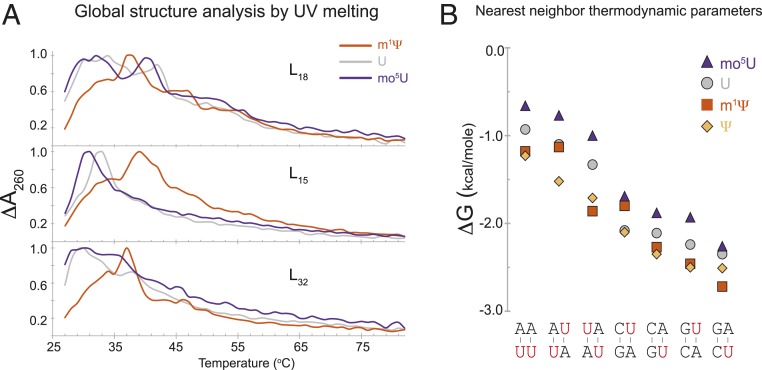
“Nearest-neighbor thermodynamic parameters along with the experimentally determined error for Watson-crick base pairs containing unmodified uridine (values from (Xia et al., 1998)), Y, m(1)Y, or mo(5)U.”
InfluentialTranslational control by 5′-untranslated regions of eukaryotic mRNAs
Hinnebusch, A. G., Ivanov, I. P., & Sonenberg, N. (2016) · Science · doi:10.1126/science.aad9868 · Cited by 1,079 · cited 1×
“Synonymous codon choice directly impacts translation, with highly expressed genes tending to include more "optimal" codons (Gustafsson et al., 2004; Hinnebusch et al., 2016; Horstick et al., 2015; Pop et al., 2014).”
Codon Optimality Is a Major Determinant of mRNA Stability
Presnyak, V., Alhusaini, N., Chen, Y.-H., Martin, S., Morris, N., Kline, N., Olson, S., Weinberg, D., Baker, K. E., Graveley, B. R., et al. (2015) · Cell · doi:10.1016/j.cell.2015.02.029 · Cited by 1,078 · cited 5×
“Regions of increased rare codon frequency have been shown to decrease protein expression and mRNA stability (Presnyak et al., 2015; Weinberg et al., 2016).”
InfluentialSelf-citation
Cited by
Items 401–500 of 571
Han, J. K., Stratman, S., Young, J. N., Poplausky, D., Owji, S., Luu, Y. T., Estrada, Y. D., da Rosa, J. C., Krueger, J. G., & Gulati, N. (2022) · The Journal of Dermatology · doi:10.1111/1346-8138.16688 · Cited by 2
RNA therapeutics for neurological disease
Nguyen, L. (2024) · Progress in molecular biology and translational science · doi:10.1016/bs.pmbts.2024.01.005 · Cited by 2
Stabilized 5′ Cap Analogue for Optochemical Activation of mRNA Translation
Weissenboeck, F. P., Klöcker, N., Špaček, P., Hüwel, S., & Rentmeister, A. (2024) · ACS Omega · doi:10.1021/acsomega.3c08505 · Cited by 6
Xiao, H., Zhang, Y., Yang, X., Yu, S., Chen, Z., Lü, A., Zhang, Z., Zhang, G., & Zhang, B. (2024) · Molecular Therapy — Nucleic Acids · doi:10.1016/j.omtn.2024.102303 · Cited by 2
Boon, W. X., Sia, B. Z., & Ng, C. H. (2024) · F1000Research · doi:10.12688/f1000research.72896.4 · Cited by 3
Mercier, B. C., Labaronne, E., Cluet, D., Bicknell, A. A., Corbin, A., Guiguettaz, L., Aubé, F., Modolo, L., Auboeuf, D., Moore, M. J., et al. (2020) · bioRxiv (Cold Spring Harbor Laboratory) · doi:10.1101/2020.10.16.341222 · Cited by 3
Self-citationDowaidar, M. (2021) · OSF Preprints (OSF Preprints) · doi:10.31219/osf.io/9vxrb · Cited by 2
Qiu, X. (2022) · bioRxiv (Cold Spring Harbor Laboratory) · doi:10.1101/2022.06.29.498185 · Cited by 2
“In order to compare with other DL models such as MXfold2 and Ufold, we next follow the same dataset setup of using the Stral-ND dataset as the TR and VL sets and the ArchiveII-ND-L600 (Archi-ND in short) as the TS set.”
BackgroundMethodInfluentialIsoform-specific translational control is evolutionarily conserved in primatesPreprint
Draper, J. M., Philipp, J., Neeb, Z., Thomas, R. C., Katzman, S. J., Salama, S. R., Haussler, D. H., & Sanford, J. R. (2023) · bioRxiv (Cold Spring Harbor Laboratory) · doi:10.1101/2023.04.21.537863 · Cited by 3
“Changes in mRNA sequence could contribute to isoform-specific differences in RNA secondary structure, which has previously been shown to regulate mRNA translation (Mao et al. 2014; Chemla et al. 2020; Mauger et al. 2019).”
BackgroundA spectrum of nonsense-mediated mRNA decay efficiency along the degree of mutational constraintPreprint
Kim, J., Kim, Y., Kang, H., Lee, B., Jang, H.-J., Park, J., Ha, C., & Park, H. (2023) · Research Square · doi:10.21203/rs.3.rs-3057064/v1 · Cited by 2
Preferential formation of Z-RNA over intercalated motifs in long noncoding RNA
Bhatt, U., Cucchiarini, A., Luo, Y., Evans, C. W., Mergny, J., Iyer, K. S., & Smith, N. M. (2024) · Genome Research · doi:10.1101/gr.278236.123 · Cited by 2
“Secondary structures in mRNA often tend to hinder translation, whereas in lncRNA, they act as topological marks recruiting proteins and other binding partners (Gaspar et al. 2013; Zampetaki et al. 2018; Mauger et al. 2019; Chillón and Marcia 2020; Graf and Kretz 2020; Varshney et al. 2021).”
BackgroundA Unified Framework for Model-Informed and Agentic RNA DesignPreprint
Riley, A. T., Vlasity, M., Becicka, W. M., Huang, J., Pang, S., Wong, W. W., Grinstaff, M. W., & Green, A. A. (2025) · bioRxiv (Cold Spring Harbor Laboratory) · doi:10.1101/2025.06.17.659751 · Cited by 4
“Previous studies have highlighted improved RL by reducing the structural interactions of the 5’ UTR and 5’ portion of the CDS 37 ; in attempt to leverage this during DIGs design we conducted a new training routine to predict the MFE between a specific CDS and library of synthetic UTR elements.”
InfluentialWedekind, J. E. (2023) · Journal of Molecular Biology · doi:10.1016/j.jmb.2023.168087 · Cited by 1
Ha, C., Jang, J., Kim, Y., & Kim, J. (2023) · Frontiers in Genetics · doi:10.3389/fgene.2023.1283611 · Cited by 1
“Goldilocks Modifications” for mRNA Therapeutics Won the Nobel Prize
Li, L. (2024) · Nucleic Acid Therapeutics · doi:10.1089/nat.2023.0062 · Cited by 1
“A more recent article also showed that c /m 1 c enhances the thermal stability of mRNA secondary structures, which can increase mRNA functional half-life by enforcing spacing between translating ribosomes, thus reducing ribosomal collisions that can lead to the No-go decay of the mRNA [23].”
Shin, J. H., Cuevas, L. M., Roy, R., Bonilla, S. L., Al-Hashimi, H., Greenleaf, W. J., & Herschlag, D. (2024) · RNA · doi:10.1261/rna.080039.124 · Cited by 1
“…for ribonuclear protein complexes (Zhang and Doudna 2002; Zappulla and Cech 2004; Vicens and Cech 2006; Strobel and Cochrane 2007; Ponting et al. 2009; Chadee et al. 2010; Halvorsen et al. 2010; Mustoe et al. 2014; Roth et al. 2014; Ganser et al. 2019; Mauger et al. 2019; Phan et al. 2021).”
Influence of 5′-UTR nucleotide composition on translation efficiency in Escherichia coli
Li, J., Li, J., Li, P., Zhang, J., Liu, Q., & Qi, H. (2024) · Research in Microbiology · doi:10.1016/j.resmic.2024.104260 · Cited by 2
Multiepitope mRNA Vaccine mRNA-mEp21-FL-IDT Provides Efficient Protection against M. tuberculosis
Kazakova, A. A., Сергеевна, Ш. Г., Kukushkin, I. S., Yeremeev, V., Ivanov, R. A., & Reshetnikov, V. V. (2025) · Biochemistry (Moscow) · doi:10.1134/s0006297925600073 · Cited by 4
“…the coding sequence of antigens, molecular adjuvants, and signal peptides [21, 22], the secondary structure of the RNA molecule itself plays an important role in the effectiveness of mRNA therapeutics, as it determines the translational efficiency of mRNA and its stability in the cells [23, 24].”
Ju, Y.-R., Cho, L.-S., & Lu, C. L. (2025) · IEEE Transactions on Computational Biology and Bioinformatics · doi:10.1109/tcbbio.2025.3596771 · Cited by 4
Gaonac’h-Lovejoy, V., Mattick, J. S., Sauvageau, M., & Smith, M. A. (2025) · Nucleic Acids Research · doi:10.1093/nar/gkaf780 · Cited by 2
“Although predictions within mitochondrial mRNAs and other noncoding regions might reflect genuinely conserved structures [ 78–81 ], these were conservatively classified as false positives.”
Pandey, A., Agrawal, A., Das, P. K., Dixit, R., Ranjan, P., & Sonu, S. K. (2025) · Journal of Oral Biology and Craniofacial Research · doi:10.1016/j.jobcr.2025.10.009 · Cited by 1
“…could be reduced half life of mRNA which could have encoded less cDNA and thus reduced expression of OPG,as also concluded by Mauger et al. 31 who emphasized that RNA quality plays a pivotal role in downstream gene expression studies, ensuring reliable results in qRT-PCR analysis. qRT-PCR…”
Comparative proteomic analysis of Porphyromonas gingivalis challenged human dental pulp stem cells
Liu, S. W., Ang, C., Paolini, R. A., Moses, R. L., & Sloan, A. J. (2025) · Scientific Reports · doi:10.1038/s41598-025-29191-z · Cited by 2
Transcriptome-wide prediction of heat-sensitive RNA structures in Zea mays
Eisenhauer, M. W., Dapour, A. O., Rouse, W. B., & Moss, W. N. (2025) · Frontiers in Plant Science · doi:10.3389/fpls.2025.1688991 · Cited by 2
“The untranslated regions (UTRs), especially 3 ′ UTRs, contain the most evidence of functional RNA secondary structures in mRNAs and have been noted as hubs of post-transcriptional regulation (Mauger et al., 2019; Mayr, 2019; Shi et al., 2020).”
Wang, W., Li, H., Gao, L., Liu, B., Chen, S., Ji, H., Liu, X., Jin, W., Xin, J., & Du, M. (2025) · Archives of Toxicology · doi:10.1007/s00204-025-04256-0 · Cited by 1
“Additionally, mutations in this variant could alter the minimum free energy (MFE) value, destabilizing the GSTP1 RNA secondary structure and disrupting post-transcriptional regulation and protein translation (Mauger et al. 2019).”
Yoon, S., Cho, H.-G., Lee, J., Ha, S., Lee, S., Lee, Y., Cho, Y., Ha, D., Oh, A., Lee, S., et al. (2026) · Molecular Therapy · doi:10.1016/j.ymthe.2025.12.060 · Cited by 6
“2,6,7,26,52 Each single-nucleotide decision may impact the RNA structure and the interaction with RNA-binding proteins, thereby determining the protein production of synthetic mRNAs.”
Zhao, P., Jiang, Z., He, X., Tian, T., He, F., & Ma, X. (2026) · Biology · doi:10.3390/biology15020158 · Cited by 2
“In muscle development and metabolic regulation, messenger RNA (mRNA), as the direct template for protein synthesis, has changes in its expression level that directly reflect the functional state of the cell [20,21].”
Sun, S., Deng, Y., Ren, J., Xiaotian, H., Bing, J., Wang, T., Hao, Z., Tian, H., Zhang, L., & Tan, W. (2026) · Molecular Biomedicine · doi:10.1186/s43556-026-00412-9 · Cited by 1
“E7E6 was optimised for structural stability and codon optimality [11, 14].”
InfluentialDeep learning model for predicting mRNA half-life based on 3′UTR sequences
Jin, X., Wang, W., Wang, A., Zhang, Y., Mao, Y. C., & Zhang, D. (2026) · Biochemical and Biophysical Research Communications · doi:10.1016/j.bbrc.2026.153691 · Cited by 2
VaxLab: integrated platform for rapid multistrategy mRNA vaccine design
Kim, J., Han, Y., Kwon, C. Y., & Chang, H. (2026) · Experimental & Molecular Medicine · doi:10.1038/s12276-026-01637-y · Cited by 2
McCormick, C. A., Meseonznik, M., Qiu, Y., Fanari, O., Goyal, P., Thomas, M., Shokoufandeh, M., Liu, Y., Bloch, D., Greenfield, C., et al. (2026) · Nucleic Acids Research · doi:10.1093/nar/gkag353 · Cited by 12
“[ 39 ], who showed that psi can modulate translation through structural and kinetic effects.”
Takano, T., Matsumura, T., & Takahashi, Y. (2026) · International Immunology · doi:10.1093/intimm/dxag040 · Cited by 1
Maintaining transcriptome solubility constrains mRNA sequence composition
Todisco, M., Ausler, C., & Jain, A. (2026) · Proceedings of the National Academy of Sciences · doi:10.1073/pnas.2622980123 · Cited by 2
Machine learning method for optimizing coding sequences in mammalian cells
Theodorou, E., Stadler, M. R., Gustafsson, C., & Welch, M. (2026) · Biology Methods and Protocols · doi:10.1093/biomethods/bpag057 · Cited by 1
“The correlation between steady-state mRNA levels and protein expression that we observe in this study is consistent with these earlier findings; however, it is not clear by what mechanism mRNA stability is influenced, and it may be that both mRNA structure and codon usage contribute [23].”
IL12RB1 allele bias in human TH cells is regulated by functional SNPs in its 3′UTR
Mejia, O. R., Claeys, T. A., Williams, A., Zafar, A., & Robinson, R. (2022) · Cytokine · doi:10.1016/j.cyto.2022.155993 · Cited by 1
Genome-Wide RNA Secondary Structure Prediction
Kawaguchi, R. K., & Kiryu, H. (2023) · Methods in molecular biology · doi:10.1007/978-1-0716-2768-6_3 · Cited by 1
Korenskaia, A. E., Matushkin, Y. G., Мустафин, З. С., Lashin, S. A., & Klimenko, A. I. (2023) · Biology · doi:10.3390/biology12101338 · Cited by 1
“…abundance and energy of mRNA secondary structures tend to be higher over coding regions compared to untranslated regions [28] due to performing various functions [29], including positive regulation of mRNA half-life, which means that mRNA abundance is correlated with mRNA folding energy [30–33].”
BackgroundRole of exosomal RNA in wound healing and tissue repair
Chakraborty, A., Badhe, R. V., Abbas, M., Chauhan, A., Jaiswal, A., Fareed, R., Kumar, V., Duan, Y., & Dutta, N. (2024) · Elsevier eBooks · doi:10.1016/b978-0-443-14008-2.00001-2 · Cited by 1
Metabolism-dependent secondary effect of anti-MAPK cancer therapy on DNA repair
Aubé, F., Fontrodona, N., Guiguettaz, L., Vallin, E., Fabbri, L., Lapendry, A., Vagner, S., Ricci, E. P., & Auboeuf, D. (2024) · NAR Cancer · doi:10.1093/narcan/zcae019 · Cited by 2
Afsar, M., Shukla, A., Ali, F., Maurya, R. K., Bharti, S., Kumar, N., Sadik, M., Chandra, S., Rahil, H., Kumar, S., et al. (2024) · Nucleic Acids Research · doi:10.1093/nar/gkae1130 · Cited by 1
Codon Optimality Modulates Cellular Stress and Innate Immune Responses Triggered by Exogenous RNAs
Seephetdee, C., Bejar, N., Castillo, K., Chau, E. P., Nguyen, T. Y., Godin, B., & Kiss, D. (2026) · Journal of Molecular Biology · doi:10.1016/j.jmb.2026.169995 · Cited by 1
Investigating the Immunogenic Properties of a Mutagenized NS3/4A-Based HCV Genotype 3a DNA Vaccine
Chutoam, P., Srisucharitpanit, K., & Intamaso, U. (2025) · Viral Immunology · doi:10.1089/vim.2024.0063 · Cited by 3
“Other elements, such as mRNA secondary structure (Mauger et al., 2019), GC content, and regulatory elements, also play signi fi cant roles in the overall expression of the gene.”
Esprit, A., Autaers, D., Thielemans, K., Pepermans, E., Boonen, K., Baggerman, G., Franceschini, L., & Breckpot, K. (2025) · Frontiers in Immunology · doi:10.3389/fimmu.2025.1566461 · Cited by 1
Jeong, H. B., & Kim, H. K. (2021) · Journal of Microbiology and Biotechnology · doi:10.4014/jmb.2103.03011 · Cited by 1
“In this case, it is possible to increase the stability of the mRNA by changing the mRNA gene sequence, without changing the amino acid sequence of the protein [26].”
BackgroundDesai, A., & Grover, N. (2022) · Learning materials in biosciences · doi:10.1007/978-3-030-90214-8_6 · Cited by 1
Jallet, A., Demange, A., Leblay, F., Decourcelle, M., Koulali, K. E., Picard, M., & Bravo, I. G. (2021) · bioRxiv (Cold Spring Harbor Laboratory) · doi:10.1101/2021.12.09.471957 · Cited by 1
“…unicellular eukaryotic organisms (Shah et al, 2013; Weinberg et al, 2016; Wang SE et al, 2020) and mammals including humans (Gandin et al, 2008; Mauger et al, 2019 but see De Sousa Abreu et al, 2009 who described no effect of the initiation rate on translation efficiency in human transcripts).”
BackgroundStrategic Deactivation of mRNA COVID-19 Vaccines: New Applications for RIBOTACs and siRNA TherapyPreprint
Hulscher, N., McCullough, P. A., & Marotta, D. E. (2024) · doi:10.31219/osf.io/qxbgu · Cited by 1
Ascanelli, C., Lawrence, E., Batho, C. A. P., & Wilson, C. H. (2024) · bioRxiv (Cold Spring Harbor Laboratory) · doi:10.1101/2024.06.27.600987 · Cited by 1
“Maintaining a low overall minimum free energy (MFE) of the transcript with a highly structured coding sequence can stabilise mRNA and prevent premature degradation(41), though this may be at the expense of in-cell protein output(42).”
BackgroundIntegration of protein and coding sequences enables mutual augmentation of the language modelPreprint
Zhao, H.-R., Cheng, M., Jinhua, Z., Wang, H., Yang, X.-R., Wang, B., Sun, Y., Fang, M.-H., Chen, E., Li, H., et al. (2024) · bioRxiv (Cold Spring Harbor Laboratory) · doi:10.1101/2024.10.24.620004 · Cited by 1
“We pretrained the foundation model, using the randomly chimeric protein (in amino acid residues) and coding (in nucleotides) sequence pairs from the RefSeq database 16 .”
MethodZUGC-RNA degradation generates immunosuppressor to evade immune responses in eukaryotesPreprint
Gao, S., Chen, M., Wich, D., Bloomer, H., Qu, Z., Guan, H., & Xu, Q. (2025) · bioRxiv (Cold Spring Harbor Laboratory) · doi:10.1101/2025.01.27.633273 · Cited by 1
Ward, M., Richardson, M. O. G., Lin, H., Stamm, M., Wright, K., Kim, A., Bicknell, A. A., Ahmed, N., Jones, A. K., Davis, J. W., et al. (2026) · bioRxiv (Cold Spring Harbor Laboratory) · doi:10.64898/2026.01.23.701221 · Cited by 1
“…Luciferase-encoding CDS variants showed a negative correlation between strength of base-pairing in the 5’ region of the RNA (5’UTR plus first 30 nucleotides of the CDS) and protein production, suggesting that low structure in that region can improve initiation rate and thus protein expression [22].”
InfluentialImproving recombinant protein production using TISIGNER.comPreprint
Bhandari, B. K., Lim, C. S., & Gardner, P. P. (2020) · bioRxiv (Cold Spring Harbor Laboratory) · doi:10.1101/2020.07.09.196469
“Many of these features are not independent, making it hard to distinguish the impacts of individual features (21) .”
BackgroundPost-transcriptionally regulated genes are essential for pluripotent stem cell survivalPreprint
Iwasaki, M., Kawahara, Y., Tabata, T., Nishi, Y., Narita, M., Ohta, A., Saito, H., Yamamoto, T., Nakagawa, M., Yamanaka, S., et al. (2021) · bioRxiv (Cold Spring Harbor Laboratory) · doi:10.1101/2021.10.18.462967
“Recent studies have shown that the secondary structure of mRNA is important for regulating protein expression by changing the interaction with the expansion segment of ribosomal RNA (Leppek et al., 2020) and changing the mRNA half-life (Mauger et al., 2019).”
BackgroundImproving the fidelity of uridine analog incorporation during in vitro transcriptionPreprint
Chen, T.-H., Potapov, V., Dai, N., Ong, J. L., & Roy, B. (2022) · bioRxiv (Cold Spring Harbor Laboratory) · doi:10.1101/2022.04.12.488100
Novel Methods for Inducing Cardiac Tissue Regeneration Following Ischemic Injury
Chu, N., Jeyakumar, S., Koo, B. H., Grandhi, U., & Nguyen, V. (2022) · Berkeley Pharma Tech Journal of Medicine · doi:10.52243/bptjm.v1i2.24
Han, J. K., da Rosa, J. C., Owji, S., Yassky, D., Luu, Y. T., Estrada, Y. D., Ungar, J. P., Ji, A. L., Krueger, J. G., & Gulati, N. (2022) · JAAD International · doi:10.1016/j.jdin.2022.08.006
“Another explanation for the discrepancy observed between mRNA and protein expression includes the shorter half-life of mRNA molecules compared to proteins.(5) Despite our limited sample size, we were able to observe statistically significant protein expression changes, and this study is, to our knowledge, the first to…”
ResultObermann, W., Azri, M. F. D., Konopka, L., Schmidt, N., Magari, F., Sherman, J., Silva, L. M. R., Hermosilla, C. R., Ludewig, A. H., Houhou, H., et al. (2022) · bioRxiv (Cold Spring Harbor Laboratory) · doi:10.1101/2022.09.09.507249
“mRNAs with complex secondary structures are often associated with proliferating cells, play a central role in translational regulation of many organisms, including pathogens, and are preferentially processed by eIF4A [24-26].”
BackgroundKairuz, D., Singh, P., Smith, T. S., Arbuthnot, P. B., Ely, A., & Bloom, K. M. (2022) · RNA technologies · doi:10.1007/978-3-031-08415-7_8
Jackson, N. A. C. (2022) · RNA technologies · doi:10.1007/978-3-031-08415-7_2
Genetic evaluation of HAND2 gene and its effects on thalidomide embryopathy
Rengel, B. D., Kowalski, T. W., Bremm, J. M., Gomes, J. D. A., Schüler‐Faccini, L., Vianna, F. S. L., & Fraga, L. R. (2022) · Birth Defects Research · doi:10.1002/bdr2.2092
“Modifications in the structure of mRNAs can also affect the protein through disruption of protein expression and protein folding (Faure et al., 2017; Mauger et al., 2019).”
Background5‐Ethynyluridine: A Bio‐orthogonal Uridine Variant for mRNA‐Based Therapies and Vaccines
Maassen, S., Coenen, B. A., Dülk, S.-L., van der Werff, M., Warner, H. M., Spada, F., Frischmuth, T., Incarnato, D., & van den Bogaart, G. (2023) · ChemBioChem · doi:10.1002/cbic.202200658
DNA/RNA structure and processing in vitro and in cells: from probing to prediction
Korsakova, A. (2022) · DR-NTU (Nanyang Technological University) · doi:10.32657/10356/164272
Identifying the structures of individual RNA isoforms inside cells
Kenyon, J. C., & Mak, J. (2023) · Nature Methods · doi:10.1038/s41592-023-01904-0
Influence of 5’-UTR base types on translation efficiency in Escherichia coliPreprint
Li, J., Li, J., Li, P., Zhang, J., Liu, Q., & Qi, H. (2023) · Research Square · doi:10.21203/rs.3.rs-3063204/v1
Plasmids for Efficient Production of Recombinant Proteins in E. coli
Arrolla, L., Kanigiri, D. S., Mohammed, A., & Kona, V. S. K. (2023) · International Journal of Indigenous Herbs and Drugs · doi:10.46956/ijihd.v8i4.469
Role of the Sirt6/Hmgb1 pathway in neuroinflammation of Sleep deprivation-induced depressed micePreprint
Cao, D., Wei, D., Wang, Y., Yan, M., Su, S., Pan, H., & Wang, Q. (2023) · Research Square · doi:10.21203/rs.3.rs-3687315/v1
Self-citationPrediction of the effects of the top 10 synonymous mutations from 26645 SARS-CoV-2 genomes
Boon, W. X., Sia, B. Z., & Ng, C. H. (2024) · F1000Research · doi:10.12688/f1000research.72896.3
Additional file 4 of Factors affecting the rapid changes of protein under short-term heat stress
Wu, B., Qiao, J., Wang, X., Liu, M., Xu, S., & Sun, D. (2021) · Figshare · doi:10.6084/m9.figshare.14411593
Additional file 6 of Factors affecting the rapid changes of protein under short-term heat stress
Wu, B., Qiao, J., Wang, X., Liu, M., Xu, S., & Sun, D. (2021) · Figshare · doi:10.6084/m9.figshare.14411599
Additional file 3 of Factors affecting the rapid changes of protein under short-term heat stress
Wu, B., Qiao, J., Wang, X., Liu, M., Xu, S., & Sun, D. (2021) · Figshare · doi:10.6084/m9.figshare.14411590
Additional file 5 of Factors affecting the rapid changes of protein under short-term heat stress
Wu, B., Qiao, J., Wang, X., Liu, M., Xu, S., & Sun, D. (2021) · Figshare · doi:10.6084/m9.figshare.14411596
McCormick, C. A. (2024) · Digital Repository Service (Northeastern University) · doi:10.17760/d20659808
Wilkinson, P., Jackson, B. R., Fermor, H. L., & Davies, R. P. (2024) · BMC Biotechnology · doi:10.1186/s12896-024-00858-1
“Outside the translational start site mRNAs with a higher global stability appear to show improved translation, thought to be due to a combination of improved half-life and the generally higher stability of sequences containing many codons with abundant tRNAs [36, 37].”
BackgroundMajeed, A., Zinan, S., & Faryal, R. (2024) · Pakistan Journal of Medical Sciences · doi:10.12669/pjms.40.6.8761
“19 The predicted mRNA stability of variant Chr17:43092507G>A and Chr17: 43094127G>A was increased while for variants Chr17:43092418A>G and Chr17:43093220T>C stability of BRCA1 mRNA was reduced as their Gibbs free energy changed.”
BackgroundUsing yeasts for the studies of nonfunctional factors in protein evolution
Potera, K., & Tomala, K. (2024) · Yeast · doi:10.1002/yea.3970
“On the other hand, higher mRNA stability is related to longer mRNA half ‐ life (Mauger et al., 2019; Park et al., 2013; Verma et al., 2019).”
Eggert, T. W., & Kleiner, R. E. (2024) · Methods and principles in medicinal chemistry · doi:10.1002/9783527840458.ch12 · Cited by 1
Gaonac’h-Lovejoy, V., Mattick, J. S., Sauvageau, M., & Smith, M. A. (2024) · bioRxiv (Cold Spring Harbor Laboratory) · doi:10.1101/2024.09.14.612549
Mechanism of modified mRNA structure in COVID-19 vaccines for inducing neutralizing antibodies
Zanjabila, S., & Dewi, B. E. (2024) · Acta Biochimica Indonesiana · doi:10.32889/actabioina.121
Osteoconductive Properties of Silicon Nitride
Pezzotti, G. (2024) · Springer eBooks · doi:10.1007/978-3-031-67047-3_5
Unveiling Fundamentals and Research Opportunities of mRNA Technology
Kumar, D., Singh, A., Kaviraj, S., & Singh, S. (2024) · Springer eBooks · doi:10.1007/978-981-97-0896-3_5
Ghoshal, B., Chakraborty, D., Nag, M., Varadarajan, R., & Jhunjhunwala, S. (2024) · bioRxiv (Cold Spring Harbor Laboratory) · doi:10.1101/2024.10.31.621287
Bello, A. J., Omotuyi, A. O., Oladapo, O. B., Adekunle, A. A., Udechime, K. U., Olugbenga, O. T., Akinwande, A. B., Odewale, A. F., Davis, E., Adamson, O., et al. (2024) · bioRxiv (Cold Spring Harbor Laboratory) · doi:10.1101/2024.11.06.622014 · Cited by 1
“Reports have shown that higher GC content can increase mRNA levels [38] and influence protein expression [39], [40].”
Immune Responses to mRNA Vaccine
Exposito, J., Monge, C., Arruda, D. C., & Verrier, B. (2024) · Wiley eBooks · doi:10.1002/9783527838394.ch2
Cancer Vaccines Based on mRNA: Hype or Hope?
de Mey, W., Autaers, D., Bertazzon, G., Esprit, A., Aragon, M. M., Franceschini, L., & Breckpot, K. (2024) · Wiley eBooks · doi:10.1002/9783527838394.ch13
Wang, T., Han, R., Hao, Z., Cheng, X., Li, J., Zhai, C., Wang, D., Deng, Y. L., Zhang, L., & Tan, W. (2025) · SSRN Electronic Journal · doi:10.2139/ssrn.5083848
Li, P., Li, J.-Y., Ma, Y., Wang, X., Chen, J., & Li, Y. (2025) · Plants · doi:10.3390/plants14050780
“A recent study indicates that MMS induces the expression of RBOHD , RBOHF , GSH1 , and GSH2 and promotes the accumulation of ROS [30].”
Current status of developments in the field of respiratory syncytial virus vaccines
Kotomina, T. S. (2025) · Journal of microbiology epidemiology immunobiology · doi:10.36233/0372-9311-675
Characterizing Nucleic Acid‐, Gene‐, and Cell‐Based Therapeutics with Sequencing Technologies
Bennett, H. M., Byrne, A., Stephenson, W., & Modrusan, Z. D. (2025) · Wiley eBooks · doi:10.1002/9781394236145.ch15
Farenhem, K. L., Whitfield, T. W., Chouloute, A., & Jain, A. (2025) · bioRxiv (Cold Spring Harbor Laboratory) · doi:10.1101/2025.06.05.658101 · Cited by 2
A Sparse Dynamic Programming Algorithm for Solving the Coding Sequence Design Problem
Cho, L.-S., Chang, K.-W., & Lu, C. L. (2025) · Theoretical Computer Science · doi:10.1007/978-981-95-0218-9_24 · Cited by 1
Effects of Nucleoside Modifications on mRNA Translation: Choosing the Right Modifications
Sioud, M. (2025) · Methods in molecular biology · doi:10.1007/978-1-0716-4742-4_4
RNAJog: Fast Multi-objective RNA Optimization with Autoregressive Reinforcement LearningPreprint
Huang, J., Feng, N., Bai, H., Fang, Y. Q., Liu, X., Wang, S., Yan, J., Shen, H.-B., Qiu, Z., Yuan, Y., et al. (2025) · bioRxiv (Cold Spring Harbor Laboratory) · doi:10.1101/2025.08.26.672486
Mohapatra, B., Mukhopadhyay, A., Giri, P., Jain, D., & Kumar, A. (2025) · bioRxiv (Cold Spring Harbor Laboratory) · doi:10.1101/2025.10.21.683814
RNA secondary structure prediction: a practical guide
Mao, L., & Mathews, D. H. (2025) · Elsevier eBooks · doi:10.1016/b978-0-323-99507-8.00005-6
Application of synthetic biology in vaccine development
Dutta, A., Ash, D., Basu, B., & Prajapati, B. G. (2025) · Elsevier eBooks · doi:10.1016/b978-0-443-33649-2.00014-9
Engineering bone tissue with mRNA: from molecular design and delivery to clinical applications
Runzer, C. D. T., van Griensven, M., & Balmayor, E. R. (2025) · Materials Today · doi:10.1016/j.mattod.2025.11.002 · Cited by 1
Fine-tuning thermogenesis from the post-transcriptional level
Wan, M., Gu, H., Chen, S., Guo, Z., Xiagedeer, B., Guan, Y., & Liang, X. (2025) · iScience · doi:10.1016/j.isci.2025.114239
“Notably, the half-life of an mRNA is not associated with its length but is determined by the process of mRNA degradation. mRNA decay, a key factor affecting its half-life and stability, 75 refers to the gradual degradation of mRNA molecules into individual nucleotides in the cytoplasm.”
Co-Optimization of Codon Usage and mRNA Secondary Structure Using Quantum Computing
Alevras, D., Metkar, M., Friedhoff, T., Park, J.-E., LaDue, M., Kumar, V., Davis, W., & Galda, A. (2025) · IEEE International Conference on Quantum Computing and Engineering (QCE) · doi:10.1109/qce65121.2025.00255 · Cited by 1
“Co-optimizing codon usage and secondary structure is an established strategy for improving mRNA performance, directly enhancing translational efficiency and thereby increasing protein expression [1], [3].”
The research progress on the design and application of mRNA antibody technology
Du, F., Xiong, X. Z., Chi, H., Deng, Y., & Han, X. (2025) · Chinese Science Bulletin (Chinese Version) · doi:10.1360/csb-2025-5361
Mechanism of Lutein to meso -Zeaxanthin Isomerization by RPE65 CatalysisPreprint
Ballinger, A., Arunkumar, R., Bailey, M., Ramos, D., Lee, A. J., Li, B., Bernstein, P. S., & Horvath, M. P. (2025) · bioRxiv (Cold Spring Harbor Laboratory) · doi:10.64898/2025.12.10.693550
“…genes is a single nucleotide polymorphism (SNP) at the first position of the (C/A)TG codon that encodes L450/M450, low expression of the RPE65 M450 enzyme may derive from differences in protein stability or differences in mRNA structure or stability consequent to the C/A SNP at codon 450 [28] .”
Metadata
- Authors
- Mauger, D. M., Cabral, B. J., Presnyak, V., Su, S. V., Reid, D. W., Goodman, B., Link, K., Khatwani, N., Reynders, J., Moore, M. J., & McFadyen, I. J.
- Affiliations
- Platform Research, Moderna, Inc., Cambridge, MA 02139
- Corresponding author
- Moore, Melissa J.
- Venue
- Proceedings of the National Academy of Sciences
- Publisher
- National Academy of Sciences
- Published
- 2019-11-11
- Volume
- 116
- Issue
- 48
- Pages
- 24075-24083
- ISSN
- 0027-8424 (ISSN-L)
- 1091-6490
- PMC
- PMC6883848
- OpenAlex
- W2983889514
- Semantic Scholar
- 5893e4255a022371c1bbef16899698c3e704ff58
- Cited by
- 555
- References
- 56
- Citations by year
- 2026: 76 · 2025: 105 · 2024: 104 · 2023: 73 · 2022: 98 · 2021: 71 · 2020: 26 · 2019: 2
- FWCI
- 16.54
- Type
- journal article
- Language
- en
- Open access
- hybrid
- doi.org
- Licence
- Locations
- Proceedings of the National Academy of Sciences (publishedVersion, cc-by)
- bioRxiv (Cold Spring Harbor Laboratory) (acceptedVersion)
- PubMed Central (publishedVersion, cc-by)
- PubMed (publishedVersion)
- Funders
- Moderna
- Topics
- Life Sciences › Biochemistry, Genetics and Molecular Biology › Molecular Biology › RNA and protein synthesis mechanisms
- Life Sciences › Biochemistry, Genetics and Molecular Biology › Molecular Biology › RNA Research and Splicing
- Life Sciences › Biochemistry, Genetics and Molecular Biology › Molecular Biology › RNA Interference and Gene Delivery
- Keywords
- mRNA secondary structure, mRNA stability, mRNA half-life, codon usage, protein expression regulation, modified nucleotides, mRNA translation
- MeSH terms
- Half-Life, HeLa Cells, Humans, Nucleic Acid Conformation, Proteins, RNA, Messenger, Protein Biosynthesis, RNA Stability
About these checks
Registry, retraction, Cites and statistics results are computed, not judged, with one exception: a printed reference that no index lists is read once by a model before it counts as a citation error. Claims are extracted by a model and kept only when their quote appears verbatim in the text; each cited source is then checked, with a model’s help, for whether it says what the claim relies on. Those verdicts can be wrong — read the claim’s quote and the cited source before relying on one.
Statistics and arithmetic are recomputed, not judged.
Confidence bands are shown only for fields calibrated on our annotated test set. None is calibrated yet, so no band is shown.
What counts as a claim ›How we measure confidence ›How we check this ›
Are you an author, or do you see a problem with this page? Request a review
Data sources
Bibliographic data: Semantic Scholar, OpenAlex, Crossref.
Contains information from the Semantic Scholar Academic Graph Datasets, made available under the ODC Attribution License (ODC-BY 1.0).
Semantic Scholar’s data is described in: Kinney, R., et al. (2023). The Semantic Scholar Open Data Platform. arXiv:2301.10140.
