

mRNA structure regulates protein expression through changes in functional half-life
Open accessPublished version of a preprint
The DOI matches its Crossref record; 57 of the 57 references it cites were found in a registry or an index.
Abstract
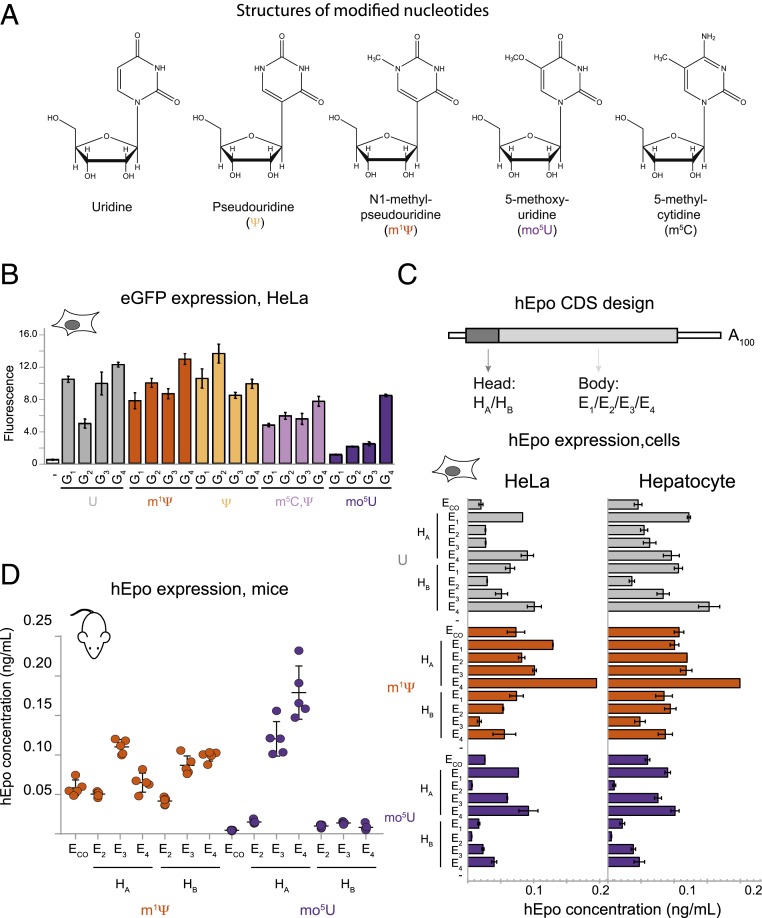
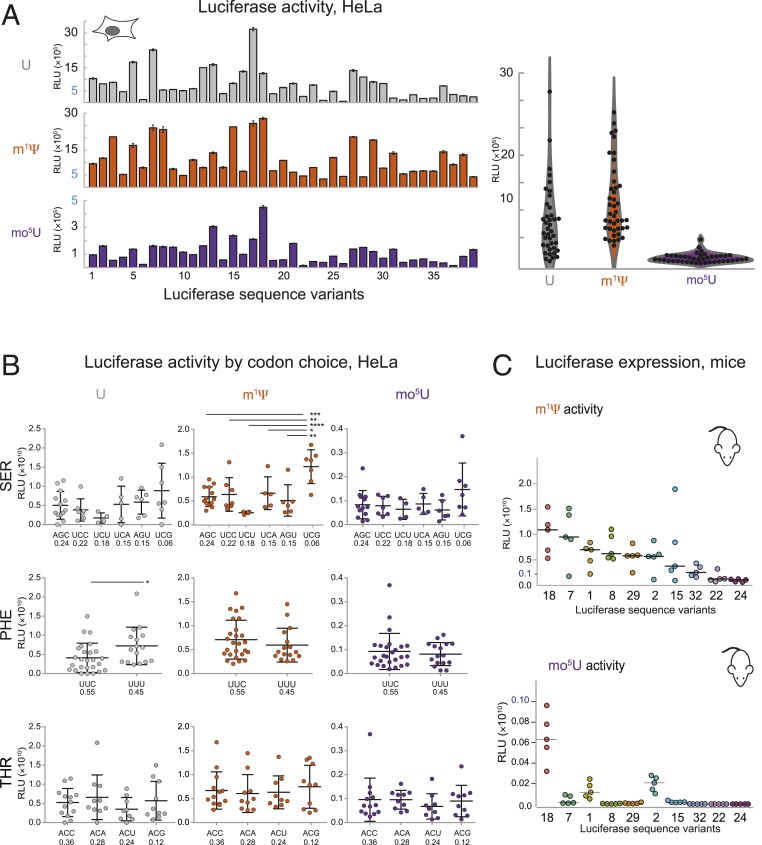
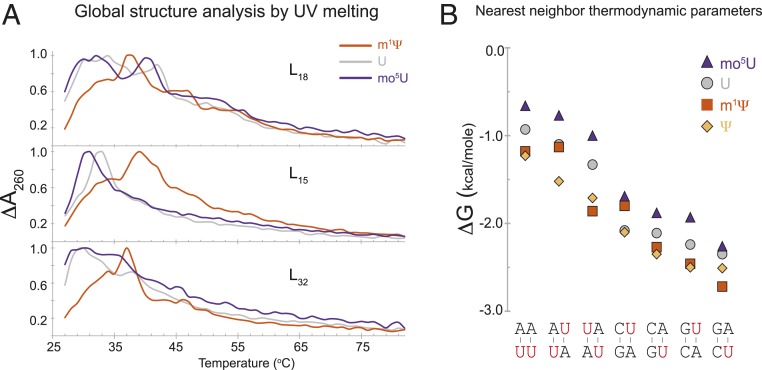
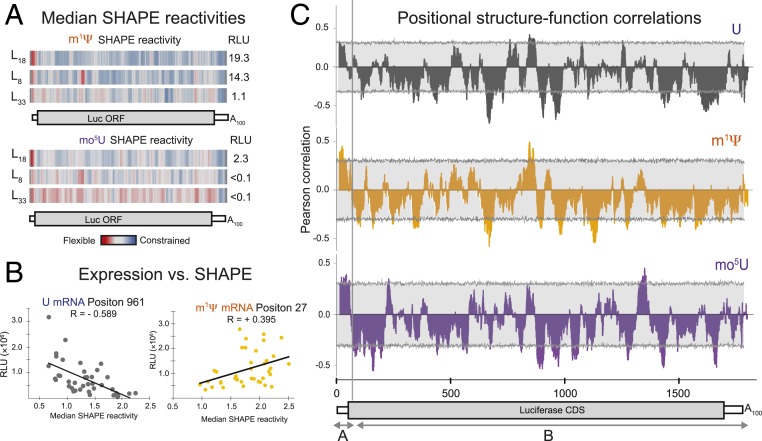
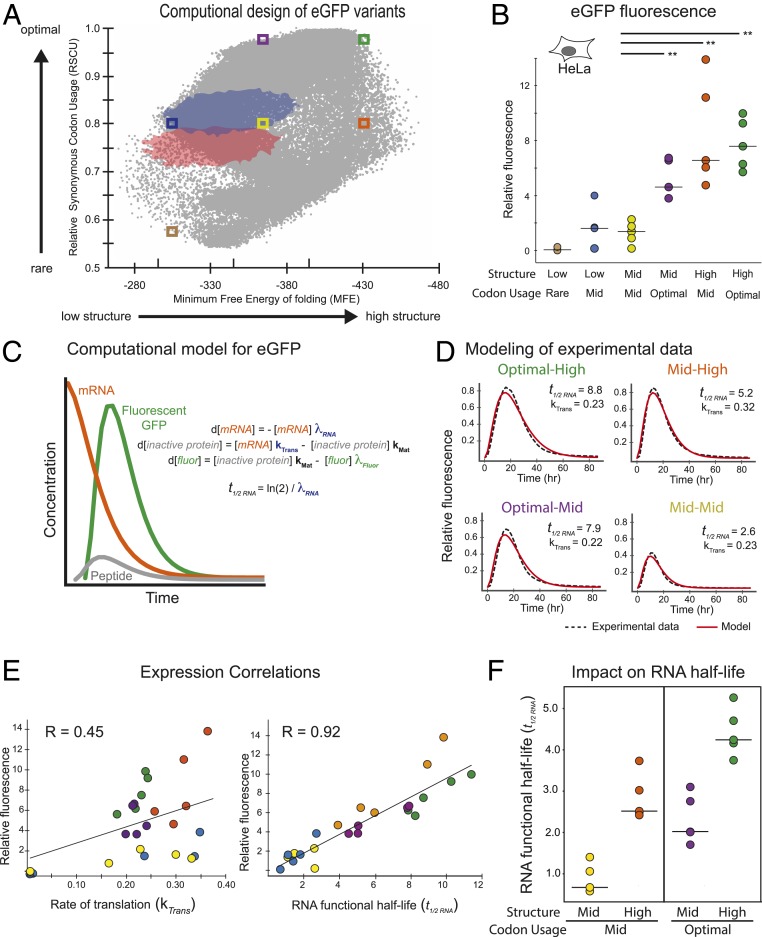
Messenger RNAs (mRNAs) encode information in both their primary sequence and their higher order structure. The independent contributions of factors like codon usage and secondary structure to regulating protein expression are difficult to establish as they are often highly correlated in endogenous sequences. Here, we used 2 approaches, global inclusion of modified nucleotides and rational sequence design of exogenously delivered constructs, to understand the role of mRNA secondary structure independent from codon usage. Unexpectedly, highly expressed mRNAs contained a highly structured coding sequence (CDS). Modified nucleotides that stabilize mRNA secondary structure enabled high expression across a wide variety of primary sequences. Using a set of eGFP mRNAs with independently altered codon usage and CDS structure, we find that the structure of the CDS regulates protein expression through changes in functional mRNA half-life (i.e., mRNA being actively translated). This work highlights an underappreciated role of mRNA secondary structure in the regulation of mRNA stability.
Overview
The claims and statistics of this paper haven’t been checked yet.
Free: it reads the open-access text and checks the first 5 claims that cite a source we can check. Create a free account to check every claim.
Integrity signals
Registry
Cites
Statistics
Figures
Verification
Claims the paper makes
The claims and statistics of this paper haven’t been checked yet.
Free: it reads the open-access text and checks the first 5 claims that cite a source we can check. Create a free account to check every claim.
Claims other papers make about this one
Each is checked against this paper’s own text: does it say what the citing paper says it does?
The source backs part of the claim, not all of it — or backs it for a different population, condition or comparison.
In the citing paper
“Increasing secondary structure lengthens mRNA half-life, which, together with optimal codons, improves protein expression5.”
From Algorithm for optimized mRNA design improves stability and immunogenicity (2023) · cites this paper as [5]
Experimental — accuracy not yet measuredThe source backs part of the claim, not all of it — or backs it for a different population, condition or comparison.
In the citing paper
“Previous work5 established two main objectives for mRNA design, stability and codon optimality, which synergize to increase protein expression.”
From Algorithm for optimized mRNA design improves stability and immunogenicity (2023) · cites this paper as [5]
Experimental — accuracy not yet measuredThe source backs part of the claim, not all of it — or backs it for a different population, condition or comparison.
In the citing paper
“However, mRNA molecules are chemically unstable and prone to degrade, which leads to insufficient protein expression5”
From Algorithm for optimized mRNA design improves stability and immunogenicity (2023) · cites this paper as [5]
Experimental — accuracy not yet measuredThe source backs part of the claim, not all of it — or backs it for a different population, condition or comparison.
In the citing paper
“Increasing secondary structure lengthens mRNA half-life, which, together with optimal codons, improves protein expression5.”
From Algorithm for optimized mRNA design improves stability and immunogenicity (2023) · cites this paper as [5]
Experimental — accuracy not yet measuredThe source backs part of the claim, not all of it — or backs it for a different population, condition or comparison.
In the citing paper
“However, mRNA molecules are chemically unstable and prone to degrade, which leads to insufficient protein expression5”
From Algorithm for optimized mRNA design improves stability and immunogenicity (2023) · cites this paper as [5]
Experimental — accuracy not yet measured
17 more claims about this paper
Create a free account to see every claim other papers make about this one.
Self-check
Percentages, sums and reported differences re-computed from the paper’s own numbers.
The self-check needs the paper’s full text.
Citations
Cites
Karikó, K., Buckstein, M., Ni, H., & Weissman, D. (2005) · Immunity · doi:10.1016/j.immuni.2005.06.008 · Cited by 2,728 · cited 1×
“To assess the degree to which the above conclusions from cell lines translated to animals, we examined protein expression in mice from formulated hEpo and Luc mRNA variants containing two nucleotide modifications shown to have reduced immunogenicity (m(1)Y and mo(5)U) (Kariko et al., 2005).”
A "Silent" Polymorphism in the MDR 1 Gene Changes Substrate Specificity
Kimchi-Sarfaty, C., Oh, J. M., Kim, I.-W., Sauna, Z. E., Calcagno, A. M., Ambudkar, S. V., & Gottesman, M. M. (2007) · Science · doi:10.1126/science.1135308 · Cited by 2,416 · cited 1×
“Another possibility is that structure leads to ribosome pausing at specific locations in the peptide, crucial for proper protein folding, and therefore activity, of certain multidomain proteins (32, 33).”
Karikó, K., Muramatsu, H., Welsh, F. A., Ludwig, J., Kato, H., Akira, S., & Weissman, D. (2008) · Molecular Therapy · doi:10.1038/mt.2008.200 · Cited by 1,930 · cited 2×
“For comparison with a previous study documenting the effects of modified nucleotides on RNA immunogenicity (16), we also made eGFP mRNA wherein both U and C were substituted with Ψ and 5-methyl-cytidine (m(5)C), respectively.”
Synonymous but not the same: the causes and consequences of codon bias
Plotkin, J. B., & Kudla, G. (2011) · Nature Reviews Genetics · doi:10.1038/nrg2899 · Cited by 1,685 · cited 1×
“Highly expressed mRNAs tended to have increased GC content, consistent with previous reports (17), but not all high GC sequences were high expressers (SI Appendix, Figs.”
ResultCodon bias and heterologous protein expression
Gustafsson, C., Govindarajan, S., & Minshull, J. (2004) · Trends in Biotechnology · doi:10.1016/j.tibtech.2004.04.006 · Cited by 1,330 · cited 1×
“Synonymous codon choice directly impacts translation, with highly expressed genes tending to include more "optimal" codons (Gustafsson et al., 2004; Hinnebusch et al., 2016; Horstick et al., 2015; Pop et al., 2014).”
Codon usage tabulated from international DNA sequence databases: status for the year 2000
Nakamura, Y. (2000) · Nucleic Acids Research · doi:10.1093/nar/28.1.292 · Cited by 1,254 · cited 2×
“Using probabilities weighted by frequency in the human transcriptome (Nakamura et al., 2000) generates a similar-shaped distribution, but shifted to both significantly higher RSCU (0.”
MethodInfluentialImproved Green Fluorescent Protein by Molecular Evolution Using DNA Shuffling
Crameri, A., Whitehorn, E. A., Tate, E., & Stemmer, W. P. C. (1996) · Nature Biotechnology · doi:10.1038/nbt0396-315 · Cited by 1,187 · cited 1×
“Realtime, continuous expression data were fit by a model including rate constants for mRNA translation, mRNA functional half-life, maturation of eGFP protein into its fluorescent form (28), and eGFP protein degradation (Fig.”
Xia, T., SantaLucia, J., Burkard, M. E., Kierzek, R., Schroeder, S. J., Jiao, X., Cox, C., & Turner, D. H. (1998) · Biochemistry · doi:10.1021/bi9809425 · Cited by 1,140 · cited 8×
“Nearest-neighbor thermodynamic parameters along with the experimentally determined error for Watson-crick base pairs containing unmodified uridine (values from (Xia et al., 1998)), Y, m(1)Y, or mo(5)U.”
InfluentialTranslational control by 5′-untranslated regions of eukaryotic mRNAs
Hinnebusch, A. G., Ivanov, I. P., & Sonenberg, N. (2016) · Science · doi:10.1126/science.aad9868 · Cited by 1,079 · cited 1×
“Synonymous codon choice directly impacts translation, with highly expressed genes tending to include more "optimal" codons (Gustafsson et al., 2004; Hinnebusch et al., 2016; Horstick et al., 2015; Pop et al., 2014).”
Codon Optimality Is a Major Determinant of mRNA Stability
Presnyak, V., Alhusaini, N., Chen, Y.-H., Martin, S., Morris, N., Kline, N., Olson, S., Weinberg, D., Baker, K. E., Graveley, B. R., et al. (2015) · Cell · doi:10.1016/j.cell.2015.02.029 · Cited by 1,078 · cited 5×
“Regions of increased rare codon frequency have been shown to decrease protein expression and mRNA stability (Presnyak et al., 2015; Weinberg et al., 2016).”
InfluentialSelf-citation
Cited by
Items 101–200 of 571
Shin, H., Kang, S., Won, C., & Min, D. (2023) · ACS Nano · doi:10.1021/acsnano.3c06733 · Cited by 51
The Dual Role of the Innate Immune System in the Effectiveness of mRNA Therapeutics
Muslimov, A. R., Tereshchenko, V., Shevyrev, D., Rogova, A. S., Lepik, K. V., Reshetnikov, V. V., & Ivanov, R. A. (2023) · International Journal of Molecular Sciences · doi:10.3390/ijms241914820 · Cited by 59
“Alternatively, a reduction of immunogenicity can be attained by using modified bases such as pseudouridine or m1 Ψ , which change mRNA secondary structures (hairpins) and thus prevent receptor TLR3 or RIG-I from recognizing mRNA [119].”
BackgroundGleason, A. C., Ghadge, G. D., Chen, J., Sonobe, Y., & Roos, R. P. (2022) · PLoS ONE · doi:10.1371/journal.pone.0256411 · Cited by 54
mRNA delivery in cancer immunotherapy
Zhong, Y., Du, S., & Dong, Y. (2023) · Acta Pharmaceutica Sinica B · doi:10.1016/j.apsb.2023.03.001 · Cited by 55
Computational design of mRNA vaccines
Kim, Y.-A., Mousavi, K., Yazdi, A. K., Zwierzyna, M., Cardinali, M., Fox, D. M., Peel, T., Coller, J., Aggarwal, K., & Maruggi, G. (2023) · Vaccine · doi:10.1016/j.vaccine.2023.07.024 · Cited by 51
Exogenous RNA surveillance by proton-sensing TRIM25
Kim, M., Pyo, Y., Hyun, S., Jeong, M., Choi, Y., & Kim, V. N. (2025) · Science · doi:10.1126/science.ads4539 · Cited by 55
Schneider-Lunitz, V., Ruiz‐Orera, J., Hübner, N., & van Heesch, S. (2021) · PLoS Computational Biology · doi:10.1371/journal.pcbi.1009658 · Cited by 50
Polyplex designs for improving the stability and safety of RNA therapeutics
Uchida, S., Lau, C. Y. J., Oba, M., & Miyata, K. (2023) · Advanced Drug Delivery Reviews · doi:10.1016/j.addr.2023.114972 · Cited by 53
Self-amplifying mRNA-Based Vaccine Technology and Its Mode of Action
Maruggi, G., Ulmer, J. B., Rappuoli, R., & Yu, D. L. (2021) · Current topics in microbiology and immunology · doi:10.1007/82_2021_233 · Cited by 57
“Codon optimization of the antigen and RNA secondary structure prediction tools, for example, can be used to engage ribosomes with high af fi nity and improve translation (Bell 2016; Zuber 2018; Latanova 2018; Mauger 2019).”
mRNA Vaccines: Why Is the Biology of Retroposition Ignored?
Domazet‐Lošo, T. (2022) · Genes · doi:10.3390/genes13050719 · Cited by 51
RNAdegformer: accurate prediction of mRNA degradation at nucleotide resolution with deep learning
He, S., Gao, B., Sabnis, R., & Sun, Q. (2023) · Briefings in Bioinformatics · doi:10.1093/bib/bbac581 · Cited by 51
“It has even been shown that it is possible to design more thermostable mRNA sequences that code for the same protein with equal amounts of translation via stochastic optimization [6].”
BackgroundEffects of sleep deprivation on anxiety-depressive-like behavior and neuroinflammation
Cao, D., Zhao, Y., Wang, Y., Wei, D., Yan, M., Su, S., Pan, H., & Wang, Q. (2024) · Brain Research · doi:10.1016/j.brainres.2024.148916 · Cited by 49
Self-citationChemical modifications to mRNA nucleobases impact translation elongation and termination
Franco, M. K., & Koutmou, K. S. (2022) · Biophysical Chemistry · doi:10.1016/j.bpc.2022.106780 · Cited by 47
Rahimnejad, M., Rabiee, N., Ahmadi, S., Jahangiri, S., Sajadi, S. M., Akhavan, O., Saeb, M. R., Kwon, W., Kim, M., & Hahn, S. K. (2021) · ACS Applied Bio Materials · doi:10.1021/acsabm.1c00932 · Cited by 45
Stronger together for in-cell translation: natural and unnatural base modified mRNA
Bornewasser, L., Domnick, C., & Kath‐Schorr, S. (2022) · Chemical Science · doi:10.1039/d2sc00670g · Cited by 44
N1-methyl-pseudouridine is incorporated with higher fidelity than pseudouridine in synthetic RNAs
Chen, T.-H., Potapov, V., Dai, N., Ong, J. L., & Roy, B. (2022) · Scientific Reports · doi:10.1038/s41598-022-17249-1 · Cited by 49
Current Analytical Strategies for mRNA-Based Therapeutics
Camperi, J., Chatla, K., Freund, E. C., Galan, C., Lippold, S., & Guilbaud, A. (2025) · Molecules · doi:10.3390/molecules30071629 · Cited by 51
“Additionally, certain structures might protect the mRNA from degradation, prolonging its presence in the cell and enhancing protein production [117,118].”
Pseudouridines in RNAs: switching atoms means shifting paradigms
Lin, T., Mehta, R., & Glatt, S. (2021) · FEBS Letters · doi:10.1002/1873-3468.14188 · Cited by 46
Lesbon, J. C. C., Poleti, M., Mattos, E. C., Patané, J. S. L., Clemente, L. G., Viala, V. L., Ribeiro, G. D. C., Giovanetti, M., de Alcantara, L., Teixeira, O., et al. (2021) · Viruses · doi:10.3390/v13122474 · Cited by 43
“In addition, at RNA level, the 203–208 deletion can also directly impact the mRNA structure by changing its functional half-life and affecting the regulation of protein expression [19].”
BackgroundHedaya, O. M., Subbaiah, K. C. V., Jiang, F., Xie, L. H., Wu, J., Khor, E.-S., Zhu, M., Mathews, D. H., Pröschel, C., & Yao, P. (2023) · Nature Communications · doi:10.1038/s41467-023-41799-1 · Cited by 43
Advances in nucleic acid-based cancer vaccines
Liao, H., & Liu, S. (2025) · Journal of Biomedical Science · doi:10.1186/s12929-024-01102-w · Cited by 53
“This modification aims to regulate the rate of translation elongation, as a balanced GC content can enhance mRNA structural stability and protect against endoribonuclease degradation [161].”
In silico methods for predicting functional synonymous variants
Lin, B. C., Katneni, U., Jankowska, K. I., Meyer, D., & Kimchi‐Sarfaty, C. (2023) · Genome biology · doi:10.1186/s13059-023-02966-1 · Cited by 46
“…including increased half-life, fine-tuning of translational speed, and establishing favorable binding sites for RNA-binding proteins and miRNAs [62, 63]. mRNA conforms to structures that more easily maintain its structural integrity, which in most cases, the realized structure is one that…”
BackgroundFormulation screening of lyophilized mRNA-lipid nanoparticles
Ruppl, A., Kiesewetter, D. C., Köll-Weber, M., Lemazurier, T., Süss, R., & Allmendinger, A. (2025) · International Journal of Pharmaceutics · doi:10.1016/j.ijpharm.2025.125272 · Cited by 46
Wu, X., Shan, K.-J., Zan, F., Tang, X., Qian, Z., & Lü, J. (2023) · Advanced Science · doi:10.1002/advs.202205445 · Cited by 44
Ramadan, E., Ismeal, A. A. A., & Naguib, Y. W. (2024) · Journal of Personalized Medicine · doi:10.3390/jpm14111092 · Cited by 50
Re-adenylation by TENT5A enhances efficacy of SARS-CoV-2 mRNA vaccines
Krawczyk, P. S., Mazur, M., Orzeł, W., Gewartowska, O., Jeleń, S., Antczak, W., Kasztelan, K., Brouze, A., Matylla-Kulińska, K., Gumińska, N., et al. (2025) · Nature · doi:10.1038/s41586-025-08842-1 · Cited by 42
Zhao, Y., & Wang, H. (2025) · Briefings in Bioinformatics · doi:10.1093/bib/bbaf263 · Cited by 41
“) and other nucleoside modifications, significantly increasing RNA half-life [22].”
Li, Y., Wang, F., Yang, J., Han, Z., Chen, L., Jiang, W., Zhou, H., Li, T., Tang, Z., Deng, J., et al. (2025) · Nature Communications · doi:10.1038/s41467-025-64894-x · Cited by 37
“Previous studies have demonstrated that mRNA structure critically in fl uences its stability in vivo 9 , in solution 10 , and translation 11 .”
IL-6/IFN-γ double knockdown CAR-T cells reduce the release of multiple cytokines from PBMCs in vitro
Zhang, H., Lv, X., Kong, Q., & Tan, Y. (2022) · Human Vaccines & Immunotherapeutics · doi:10.1080/21645515.2021.2016005 · Cited by 38
“Detection at mRNA level of the expression of factors causing cytokine storms, including IL-6, IFN-γ, IL-17, IL-2, TNF-α, IL10, and GM-CSF, is important for evaluating the occurrence of CRS.18,20,39 The RT-PCR results of the killing test of CAR-T cells revealed that compared with the T cells, the anti-CD19 CAR-T cells…”
BackgroundInfluentialGuo, X., Guo, M., Cai, R., Hu, M., Rao, L., Su, W., Liu, H., Gao, F., Zhang, X., Liu, J., et al. (2024) · Science Advances · doi:10.1126/sciadv.adp3680 · Cited by 39
Generative and predictive neural networks for the design of functional RNA molecules
Riley, A. T., Robson, J. M., Ulanova, A., & Green, A. A. (2025) · Nature Communications · doi:10.1038/s41467-025-59389-8 · Cited by 51
“One such element that can have a profound effect on protein production is the 5 ′ UTR; however, a detailed prediction of the regulatory effect cannot be captured by fi rst-order sequence or structural relationships 42,43 .”
TISIGNER.com: web services for improving recombinant protein production
Bhandari, B. K., Lim, C. S., & Gardner, P. P. (2021) · Nucleic Acids Research · doi:10.1093/nar/gkab175 · Cited by 42
“Recent systematic studies suggest that MFE is the most important feature in protein expression (24,25).”
BackgroundSvitkin, Y. V., Gingras, A., & Sonenberg, N. (2021) · Nucleic Acids Research · doi:10.1093/nar/gkab1241 · Cited by 43
“In addition, the sub-stitution of N1m (cid:2) s or 5-methoxy-uridines for Us induces global changes in mRNA secondary structure and engen-ders high protein expression in cells by increasing mRNA half-life (13).”
Predictions and analyses of RNA nearest neighbor parameters for modified nucleotides
Hopfinger, M. C., Kirkpatrick, C. C., & Znosko, B. M. (2020) · Nucleic Acids Research · doi:10.1093/nar/gkaa654 · Cited by 37
“While these modifications maintained WC basepairing potential, the thermodynamic impacts of these modifications led to significant changes in mRNA structure, half-life, and protein expression (12), directly representing how small base modifications can have subtle thermodynamic impacts with profound effects on seconda…”
BackgroundNeelagandan, N., Lamberti, I., Carvalho, H. J. F., Gobet, C., & Naef, F. (2020) · Open Biology · doi:10.1098/rsob.200292 · Cited by 48
“It was observed that the inclusion of modified nucleotides caused mRNA structural changes which in turn lead to changes in protein expression [16].”
BackgroundDemystifying mRNA vaccines: an emerging platform at the forefront of cryptic diseases
Rouf, N. Z., Biswas, S., Tarannum, N., Oishee, L. M., & Muna, M. M. (2022) · RNA Biology · doi:10.1080/15476286.2022.2055923 · Cited by 42
“m(1)ψ has been also reported to increase base pair stability resulting in complex secondary structures which enhance translation efficiency [45].”
BackgroundInfluentialGaither, J., Lammi, G., Li, J., Gordon, D. M., Kuck, H. C., Kelly, B., Fitch, J., & White, P. (2021) · GigaScience · doi:10.1093/gigascience/giab023 · Cited by 45
“Stronger structures may snap quickly back together after translation, reducing the possible time window for ribosomal collisions [27], while weaker secondary structures may disappear between ribosomes operating close to one another [92], demonstrating how precisely ribosomal positioning can be…”
Effects of mRNA Modifications on Translation: An Overview
Roy, B. (2021) · Methods in molecular biology · doi:10.1007/978-1-0716-1374-0_20 · Cited by 38
Cytidine Acetylation Yields a Noninflammatory Synthetic Messenger RNA
Nance, K. D., Gamage, S. T., Alam, M. M., Yang, A., Levy, M. J., Link, C. N., Florens, L. A., Washburn, M. P., Gu, S., Oppenheim, J. J., et al. (2021) · Cell chemical biology · doi:10.1016/j.chembiol.2021.07.003 · Cited by 37
Mo, O., Zhang, Z., Cheng, X., Zhu, L., Zhang, K., Zhang, N., Li, J., Li, H., Fan, S., Li, X., et al. (2025) · Nucleic Acids Research · doi:10.1093/nar/gkaf410 · Cited by 41
“Previous studies have indicated that increased secondary structure in the CDS and the entire 3 (cid:2) UTR correlated with improved protein expression [ 18 ].”
Regulators of Viral Frameshifting: More Than RNA Influences Translation Events
Penn, W. D., Harrington, H. R., Schlebach, J. P., & Mukhopadhyay, S. (2020) · Annual Review of Virology · doi:10.1146/annurev-virology-012120-101548 · Cited by 36
CodonBERT: Large Language Models for mRNA design and optimizationPreprint
Li, S., Moayedpour, S., Li, R., Bailey, M., Riahi, S., Kogler-Anele, L., Miladi, M., Miner, J. C., Zheng, D., Wang, J., et al. (2023) · bioRxiv (Cold Spring Harbor Laboratory) · doi:10.1101/2023.09.09.556981 · Cited by 65
“While mRNA sequence heavily influences cellular RNA stability [21, 22], secondary structure can also impact mRNA stability in solution and modulate protein expression [13, 23, 24, 25].”
BackgroundAdjuvants for COVID-19 Vaccines
Castrodeza-Sanz, J., Sanz-Muñoz, I., & Bouza, J. M. E. (2023) · Vaccines · doi:10.3390/vaccines11050902 · Cited by 45
“In fact, the mRNA for this vaccine is modified in different ways, not only including synthetic nucleotides but also making secondary structures in the 5′ and 3′ untranslated regions for better ribosome accessibility, which has a direct impact on the mRNA lifetime in the cytosol of the cell, and also avoids destruction…”
BackgroundCurrent state of, prospects for, and obstacles to mRNA vaccine development
Aljabali, A. A. A., Bashatwah, R. M., Obeid, M. A., Mishra, V., Mishra, Y., Serrano‐Aroca, Á., Lundstrom, K. H., & Tambuwala, M. M. (2022) · Drug Discovery Today · doi:10.1016/j.drudis.2022.103458 · Cited by 39
Makhamreh, A. K., Tavakoli, S., Fallahi, A., Kang, X., Gamper, H., Nabizadehmashhadtoroghi, M., Jain, M., Hou, Y., Rouhanifard, S. H., & Wanunu, M. (2024) · Scientific Reports · doi:10.1038/s41598-024-72994-9 · Cited by 32
Laila, U. E., An, W., & Xu, Z.-X. (2024) · Frontiers in Immunology · doi:10.3389/fimmu.2024.1448489 · Cited by 40
Spatiotemporal and genetic regulation of A-to-I editing throughout human brain development
Dredge, W. H., Fan, X., Sloofman, L. G., Liang, L., Mossotto, E., Moore, K., Zipkowitz, S., Wang, M., Zhang, B., Wang, J., et al. (2022) · Cell Reports · doi:10.1016/j.celrep.2022.111585 · Cited by 35
“66 Notably, RNA transcripts that accumulate postnatal hyper-editing events are implicated in synaptic signaling, a process that initiates and unfolds throughout postnatal development.”
Accelerating drug discovery, development, and clinical trials by artificial intelligence
Zhang, Y., Mastouri, M., & Zhang, Y. (2024) · Med · doi:10.1016/j.medj.2024.07.026 · Cited by 39
Short-term cold stress and heat shock proteins in the crustacean Artemia franciscana
Gbotsyo, Y. A., Rowarth, N. M., Weir, L. K., & MacRae, T. H. (2020) · Cell Stress and Chaperones · doi:10.1007/s12192-020-01147-4 · Cited by 35
mRNA-Based Vaccines and Mode of Action
Gergen, J., & Petsch, B. (2020) · Current topics in microbiology and immunology · doi:10.1007/82_2020_230 · Cited by 45
Deciphering the Rules of Ribosome Binding Site Differentiation in Context Dependence
Duan, Y., Zhang, X., Zhai, W., Zhang, J., Zhang, X., Xu, G., Li, H., Deng, Z., Shi, J., & Xu, Z. (2022) · ACS Synthetic Biology · doi:10.1021/acssynbio.2c00139 · Cited by 33
Targeted degradation of PCNA outperforms stoichiometric inhibition to result in programed cell death
Chang, S. C., Gopal, P., Lim, S., Wei, X., Chandramohan, A., Mangadu, R., Smith, J., Ng, S., Gindy, M., Phan, U., et al. (2022) · Cell Chemical Biology · doi:10.1016/j.chembiol.2022.10.005 · Cited by 31
Path towards mRNA delivery for cancer immunotherapy from bench to bedside
Chen, W., Zhu, Y., He, J., & Sun, X. (2023) · Theranostics · doi:10.7150/thno.89247 · Cited by 35
“Non-replicating IVT mRNA typically consists of an open reading frame (ORF) region that encodes the target antigen sequences [35], flanked by five-prime (5′) and three - prime (3′) untranslated region (UTR) [36], and further stabilized by 7-methylgaunosine (m7G) 5′ cap and 3′ poly (A) tails…”
BackgroundGhosh, S., Takahashi, S., Banerjee, D., Ohyama, T., Endoh, T., Tateishi‐Karimata, H., & Sugimoto, N. (2023) · Nucleic Acids Research · doi:10.1093/nar/gkad020 · Cited by 31
Genomic alterations involved in fluoroquinolone resistance development in Staphylococcus aureus
Huynh, T. Q., Tran, V. N., Thai, V. C., Nguyen, H. A., Nguyen, N. T. G., Tran, M. K., Nguyen, T. P. T., Le, C. A., Ho, L. T. N., Surian, N. U., et al. (2023) · PLoS ONE · doi:10.1371/journal.pone.0287973 · Cited by 41
RNA therapeutics for cardiovascular disease
Boada, C., Sukhovershin, R. A., Pettigrew, R. I., & Cooke, J. P. (2021) · Current Opinion in Cardiology · doi:10.1097/hco.0000000000000850 · Cited by 33
MoiRNAiFold: a novel tool for complex in silico RNA design
Minuesa, G., Alsina, C., García-Martín, J. A., Oliveros, J. C., & Dotú, I. (2021) · Nucleic Acids Research · doi:10.1093/nar/gkab331 · Cited by 31
“Also, mRNA secondary structure has an impact on translation rates (9).”
BackgroundControl of Multigene Expression Stoichiometry in Mammalian Cells Using Synthetic Promoters
Patel, Y. D., Brown, A. J., Zhu, J., Rosignoli, G., Gibson, S. J., Hatton, D., & James, D. C. (2021) · ACS Synthetic Biology · doi:10.1021/acssynbio.0c00643 · Cited by 32
A (dis)integrated stress response: Genetic diseases of eIF2α regulators
English, A. M., Green, K. M., & Moon, S. L. (2021) · Wiley Interdisciplinary Reviews - RNA · doi:10.1002/wrna.1689 · Cited by 36
Chen, B., Chen, Y., Li, J., Wang, C., Song, W., Wen, Y., Lin, J., Wu, Y., & Ying, T. (2022) · mBio · doi:10.1128/mbio.01612-22 · Cited by 38
Wang, T., Zhu, H.-L., Ouyang, K.-W., Wang, H., Luo, Y., Zheng, X., Ling, Q., Wang, K.-W., Zhang, J., Chang, W., et al. (2024) · Journal of Hazardous Materials · doi:10.1016/j.jhazmat.2024.134142 · Cited by 29
Gillen, S. L., Waldron, J. A., & Bushell, M. (2021) · Oncogene · doi:10.1038/s41388-021-02022-x · Cited by 33
Epitranscriptomics of SARS-CoV-2 Infection
Izadpanah, A., Rappaport, J., & Datta, P. K. (2022) · Frontiers in Cell and Developmental Biology · doi:10.3389/fcell.2022.849298 · Cited by 28
mRNAid, an open-source platform for therapeutic mRNA design and optimization strategies
Vostrosablin, N., Lim, S., Gopal, P., Brazdilova, K., Parajuli, S., Wei, X., Gromek, A., Příhoda, D., Spale, M., Muždalo, A., et al. (2024) · NAR Genomics and Bioinformatics · doi:10.1093/nargab/lqae028 · Cited by 33
“Multiple studies re-ported correlation between highly structured features in the CDS and functional mRNA half-life ( 27 ,28 ).”
BackgroundResultInfluentialIge, M. A., Ren, X., Yang, Y., Zhang, H., Shen, C., Jiang, Y., Li, J., & Wan, X. (2025) · Molecular Therapy — Nucleic Acids · doi:10.1016/j.omtn.2025.102721 · Cited by 37
“112,113 The observed high protein expression associated with m1 Ψ -modified mRNA is closely linked to its enhanced secondary structure 114 and reduced phosphorylation of eIF2 α , accompanied by lower PKR activation.”
Wang, Q., Bu, C., Dai, Q., Chen, J., Zhang, R., Zheng, X., Ren, H., Xin, X., & Li, X. (2024) · Advanced Science · doi:10.1002/advs.202309748 · Cited by 40
The molecular basis of tRNA selectivity by human pseudouridine synthase 3
Lin, T.-Y., Kleemann, L., Jeżowski, J., Dobosz, D., Rawski, M., Indyka, P., Ważny, G., Mehta, R., Chramiec‐Głąbik, A., Koziej, L., et al. (2024) · Molecular Cell · doi:10.1016/j.molcel.2024.06.013 · Cited by 26
Functions and therapeutic applications of pseudouridylation
Luo, N., Huang, Q., Zhang, M., & Yi, C. (2025) · Nature Reviews Molecular Cell Biology · doi:10.1038/s41580-025-00852-1 · Cited by 28
“For example, research has suggested that a Ψ derivative increased mRNA half-life by stabilizing a highly structured coding sequence 89 .”
Global and gene-specific translational regulation in Escherichia coli across different conditions
Zhang, D., Li, H., King, C. G., Wingreen, N. S., Gitai, Z., & Li, Z. (2022) · PLoS Computational Biology · doi:10.1371/journal.pcbi.1010641 · Cited by 28
Advancing mRNA technologies for therapies and vaccines: An African context
Kairuz, D., Samudh, N., Ely, A., Arbuthnot, P., & Bloom, K. (2022) · Frontiers in Immunology · doi:10.3389/fimmu.2022.1018961 · Cited by 25
“Stabilizing modifications have also been shown to produce secondary structures that are quite different from unmodified transcripts (54).”
BackgroundEndogenous p53 expression in human and mouse is not regulated by its 3′UTR
Mitschka, S., & Mayr, C. (2021) · eLife · doi:10.7554/elife.65700 · Cited by 27
Zhao, J., Kennedy, S. D., & Turner, D. H. (2022) · Journal of Chemical Theory and Computation · doi:10.1021/acs.jctc.1c00643 · Cited by 28
LncPep: A Resource of Translational Evidences for lncRNAs
Liu, T., Wu, J., Wu, Y., Hu, W., Fang, Z., Wang, Z., Jiang, C., & Li, S. (2022) · Frontiers in Cell and Developmental Biology · doi:10.3389/fcell.2022.795084 · Cited by 30
“RNA structure (Mao et al., 2014; Mauger et al., 2019) also affects its translation; thus, lncRNA structure needs to be taken into account.”
BackgroundMachine learning modeling of RNA structures: methods, challenges and future perspectives
Wu, K., Zou, J., & Chang, H. Y. (2023) · Briefings in Bioinformatics · doi:10.1093/bib/bbad210 · Cited by 28
Castellanos, M. M., Gressard, H., Li, X., Magagnoli, C., Moriconi, A., Stranges, D., Strodiot, L., Soto, M., Zwierzyna, M., & Campa, C. (2023) · Vaccines · doi:10.3390/vaccines11071153 · Cited by 32
“In particular, these key vaccine properties are largely affected by the RNA sequence and structure, both of which can be manipulated and optimized [2,32,51,52].”
BackgroundGrowth, immunity and transcriptome response to different stocking densities in Litopenaeus vannamei
Yuan, H., Xie, M., Hu, N., Zheng, Y., Hou, C., Tan, B., Shi, L., & Zhang, S. (2023) · Fish & Shellfish Immunology · doi:10.1016/j.fsi.2023.108924 · Cited by 24
Zhang, K., Xue, M., Qin, F., He, Y., & Zhou, Y. (2023) · Plant Biotechnology Journal · doi:10.1111/pbi.14153 · Cited by 26
Lu, Y., Qian, C., Huang, Y., Ren, T., Xie, W., Xia, N., & Li, S. (2025) · International Journal of Biological Macromolecules · doi:10.1016/j.ijbiomac.2025.145501 · Cited by 31
Bhandari, B. K., Lim, C. S., Remus, D. M., Chen, A., van Dolleweerd, C. J., & Gardner, P. P. (2021) · PLoS Computational Biology · doi:10.1371/journal.pcbi.1009461 · Cited by 28
“coli and HeLa cells, respectively [16, 54].”
Thirteen dubious ways to detect conserved structural RNAs
Gao, W., Yang, A., & Rivas, E. (2022) · IUBMB Life · doi:10.1002/iub.2694 · Cited by 21
“For instance, mRNA global structuredness seems to increase RNA stability, which has implications for translation efficiency.(27) However, when RNA is involved in some specific function, often it relies on conserved RNA structures involved in processes conserved across species.”
BackgroundA spectrum of nonsense-mediated mRNA decay efficiency along the degree of mutational constraint
Kim, Y.-G., Kang, H., Lee, B., Jang, H.-J., Park, J.-H., Ha, C., Park, H., & Kim, J.-W. (2024) · Communications Biology · doi:10.1038/s42003-024-07136-y · Cited by 24
Toki, N., Takahashi, H., Zucchelli, S., Gustincich, S., & Carninci, P. (2020) · FEBS Letters · doi:10.1002/1873-3468.13928 · Cited by 25
Akita, H. (2020) · Biological and Pharmaceutical Bulletin · doi:10.1248/bpb.b20-00534 · Cited by 28
Artificial Intelligence for Vaccine Design
McCaffrey, P. (2021) · Methods in molecular biology · doi:10.1007/978-1-0716-1892-9_1 · Cited by 24
Andrews, R. J., Rouse, W. B., O’Leary, C. A., Booher, N. J., & Moss, W. N. (2022) · PeerJ · doi:10.7717/peerj.14361 · Cited by 27
“, 2015) and in the coding regions of mRNAs, where there is increasing awareness of their roles in modulating translation and protein folding (Andrzejewska, Zawadzka & Pachulska-Wieczorek, 2020; Faure et al., 2016; Faure et al., 2017; Mauger et al., 2019; Mustoe et al., 2018).”
BackgroundSilicon nitride as a biomaterial
Pezzotti, G. (2023) · Journal of the Ceramic Society of Japan · doi:10.2109/jcersj2.23057 · Cited by 24
Factors affecting the rapid changes of protein under short-term heat stress
Wu, B., Qiao, J., Wang, X., Liu, M., Xu, S., & Sun, D. (2021) · BMC Genomics · doi:10.1186/s12864-021-07560-y · Cited by 25
“The effects of amino acid [4], untranslated regions [18–21], length [21, 22], GC content [23–25], and mRNA secondary structure [26] have been confirmed in previous studies.”
ResultmRNA medicine: Recent progresses in chemical modification, design, and engineering
Hou, X., Shi, J., & Xiao, Y. (2024) · Nano Research · doi:10.1007/s12274-024-6978-6 · Cited by 28
Implications of RNA pseudouridylation for cancer biology and therapeutics: a narrative review
Ding, H., Liu, N., Wang, Y., Adam, S. A., Jin, J., Feng, W., & Sun, J. (2024) · Journal of Translational Medicine · doi:10.1186/s12967-024-05687-6 · Cited by 27
“The influence of Ψ on the fidelity of protein translation primarily relies on the specific codons involved [31, 33].”
BackgroundHuang, J., Bai, X., Stewart, W., Xu, X., & Zhang, X. (2025) · Nature Communications · doi:10.1038/s41467-025-61114-4 · Cited by 30
“This reduction of in vitro transfection ef fi ciency might be correlated with mRNA degradation under prolonged suboptimal storage 27 .”
Interplays of different types of epitranscriptomic mRNA modifications
Rengaraj, P., Obrdlík, A., Vukić, D., Varadarajan, N. M., Keegan, L. P., Vaňáčová, Š., & O’Connell, M. A. (2021) · RNA Biology · doi:10.1080/15476286.2021.1969113 · Cited by 26
“Expression of proteins from synthetic mRNAs is helped by even surprisingly high levels of GC-richness and predicted dsRNA structure in UTRs and even in open reading frames which increase mRNA stability [24].”
BackgroundNiazi, S. K., Magoola, M., & Mariam, Z. (2024) · Pharmaceuticals · doi:10.3390/ph17060741 · Cited by 36
“While effective, these methods often face challenges such as linker-associated issues and limited biopharmaceutical profiles.”
BackgroundDecoding Codon Bias: The Role of tRNA Modifications in Tissue-Specific Translation
Ando, D., Rashad, S., Begley, T. J., Endo, H., Aoki, M., Dedon, P. C., & Niizuma, K. (2025) · International Journal of Molecular Sciences · doi:10.3390/ijms26020706 · Cited by 26
Structural stability and RNase resistance of mRNA Polyplex micelles for systemic delivery
Dirisala, A., Uchida, S., Toh, K., Li, J., Liu, X., Wen, P., Fukushima, S., & Kataoka, K. (2025) · Journal of Controlled Release · doi:10.1016/j.jconrel.2025.113935 · Cited by 23
The Potential of Nanomedicine to Unlock the Limitless Applications of mRNA
Taina-González, L., & de la Fuente, M. (2022) · Pharmaceutics · doi:10.3390/pharmaceutics14020460 · Cited by 28
“Other modifications to enhance stability are related to the incorporation of longer PolyA tails, which would lead to a change in the secondary structure of mRNA [16,17]; substitutions using synthetic nucleotides such as N1-methyladenosine or N6-methyladenosine instead of natural adenosine, cytidine with 5-methylcytidi…”
BackgroundYou, J., Du, Y., Pan, X., Zhang, X., Yang, T., & Rao, Z. (2022) · ACS Synthetic Biology · doi:10.1021/acssynbio.1c00640 · Cited by 22
Messenger RNA-encoded antibody approach for targeting extracellular and intracellular tau
Wongsodirdjo, P., Caruso, A. C., Yong, A., Lester, M. A., Vella, L. J., Hung, Y. H., & Nisbet, R. M. (2024) · Brain Communications · doi:10.1093/braincomms/fcae100 · Cited by 23
“30-33 Furthermore, a high GC content has been demonstrated to be more optimally translated compared with AU-rich transcripts.”
Lipid nanoparticle technology-mediated therapeutic gene manipulation in the eyes
Wang, T., Yu, T., Liu, Q., Sung, T., & Higuchi, A. (2024) · Molecular Therapy — Nucleic Acids · doi:10.1016/j.omtn.2024.102236 · Cited by 22
“125 This progress in mRNA technology is paving the way for therapeutic protein production at levels that are increasingly considered for gene editing using endo/exonucleases or activating transcription factors for regenerative applications.”
BackgroundGenetic adjuvants: A paradigm shift in vaccine development and immune modulation
Spunde, K., Korotkaja, K., Sominskaya, I., & Zajakina, A. (2025) · Molecular Therapy — Nucleic Acids · doi:10.1016/j.omtn.2025.102536 · Cited by 23
“204 The use of modified mRNAs leads to high antigen expression and a more robust immune response.”
Qiu, X. (2023) · PLoS Computational Biology · doi:10.1371/journal.pcbi.1011047 · Cited by 23
Metadata
- Authors
- Mauger, D. M., Cabral, B. J., Presnyak, V., Su, S. V., Reid, D. W., Goodman, B., Link, K., Khatwani, N., Reynders, J., Moore, M. J., & McFadyen, I. J.
- Affiliations
- Platform Research, Moderna, Inc., Cambridge, MA 02139
- Corresponding author
- Moore, Melissa J.
- Venue
- Proceedings of the National Academy of Sciences
- Publisher
- National Academy of Sciences
- Published
- 2019-11-11
- Volume
- 116
- Issue
- 48
- Pages
- 24075-24083
- ISSN
- 0027-8424 (ISSN-L)
- 1091-6490
- PMC
- PMC6883848
- OpenAlex
- W2983889514
- Semantic Scholar
- 5893e4255a022371c1bbef16899698c3e704ff58
- Cited by
- 555
- References
- 56
- Citations by year
- 2026: 76 · 2025: 105 · 2024: 104 · 2023: 73 · 2022: 98 · 2021: 71 · 2020: 26 · 2019: 2
- FWCI
- 16.54
- Type
- journal article
- Language
- en
- Open access
- hybrid
- doi.org
- Licence
- Locations
- Proceedings of the National Academy of Sciences (publishedVersion, cc-by)
- bioRxiv (Cold Spring Harbor Laboratory) (acceptedVersion)
- PubMed Central (publishedVersion, cc-by)
- PubMed (publishedVersion)
- Funders
- Moderna
- Topics
- Life Sciences › Biochemistry, Genetics and Molecular Biology › Molecular Biology › RNA and protein synthesis mechanisms
- Life Sciences › Biochemistry, Genetics and Molecular Biology › Molecular Biology › RNA Research and Splicing
- Life Sciences › Biochemistry, Genetics and Molecular Biology › Molecular Biology › RNA Interference and Gene Delivery
- Keywords
- mRNA secondary structure, mRNA stability, mRNA half-life, codon usage, protein expression regulation, modified nucleotides, mRNA translation
- MeSH terms
- Half-Life, HeLa Cells, Humans, Nucleic Acid Conformation, Proteins, RNA, Messenger, Protein Biosynthesis, RNA Stability
About these checks
Registry, retraction, Cites and statistics results are computed, not judged, with one exception: a printed reference that no index lists is read once by a model before it counts as a citation error. Claims are extracted by a model and kept only when their quote appears verbatim in the text; each cited source is then checked, with a model’s help, for whether it says what the claim relies on. Those verdicts can be wrong — read the claim’s quote and the cited source before relying on one.
Statistics and arithmetic are recomputed, not judged.
Confidence bands are shown only for fields calibrated on our annotated test set. None is calibrated yet, so no band is shown.
What counts as a claim ›How we measure confidence ›How we check this ›
Are you an author, or do you see a problem with this page? Request a review
Data sources
Bibliographic data: Semantic Scholar, OpenAlex, Crossref.
Contains information from the Semantic Scholar Academic Graph Datasets, made available under the ODC Attribution License (ODC-BY 1.0).
Semantic Scholar’s data is described in: Kinney, R., et al. (2023). The Semantic Scholar Open Data Platform. arXiv:2301.10140.
