

mRNA structure regulates protein expression through changes in functional half-life
Open accessPublished version of a preprint
The DOI matches its Crossref record; 57 of the 57 references it cites were found in a registry or an index.
Abstract
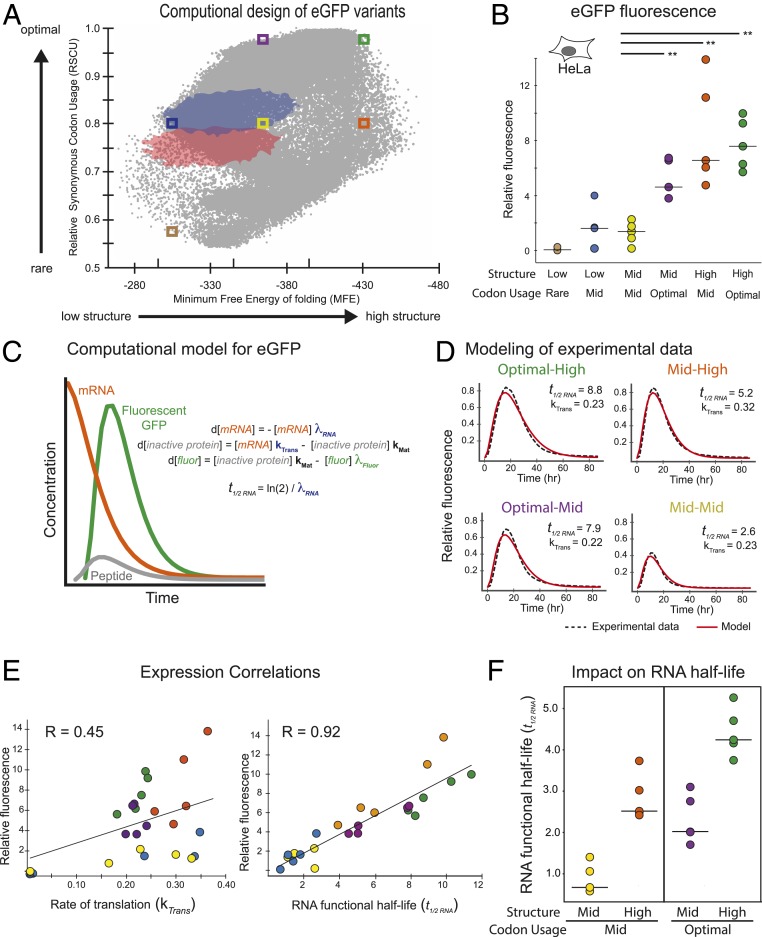
Messenger RNAs (mRNAs) encode information in both their primary sequence and their higher order structure. The independent contributions of factors like codon usage and secondary structure to regulating protein expression are difficult to establish as they are often highly correlated in endogenous sequences. Here, we used 2 approaches, global inclusion of modified nucleotides and rational sequence design of exogenously delivered constructs, to understand the role of mRNA secondary structure independent from codon usage. Unexpectedly, highly expressed mRNAs contained a highly structured coding sequence (CDS). Modified nucleotides that stabilize mRNA secondary structure enabled high expression across a wide variety of primary sequences. Using a set of eGFP mRNAs with independently altered codon usage and CDS structure, we find that the structure of the CDS regulates protein expression through changes in functional mRNA half-life (i.e., mRNA being actively translated). This work highlights an underappreciated role of mRNA secondary structure in the regulation of mRNA stability.
Overview
The claims and statistics of this paper haven’t been checked yet.
Free: it reads the open-access text and checks the first 5 claims that cite a source we can check. Create a free account to check every claim.
Integrity signals
Registry
Cites
Statistics
Figures
Verification
Claims the paper makes
The claims and statistics of this paper haven’t been checked yet.
Free: it reads the open-access text and checks the first 5 claims that cite a source we can check. Create a free account to check every claim.
Claims other papers make about this one
Each is checked against this paper’s own text: does it say what the citing paper says it does?
The source backs part of the claim, not all of it — or backs it for a different population, condition or comparison.
In the citing paper
“Increasing secondary structure lengthens mRNA half-life, which, together with optimal codons, improves protein expression5.”
From Algorithm for optimized mRNA design improves stability and immunogenicity (2023) · cites this paper as [5]
Experimental — accuracy not yet measuredThe source backs part of the claim, not all of it — or backs it for a different population, condition or comparison.
In the citing paper
“Previous work5 established two main objectives for mRNA design, stability and codon optimality, which synergize to increase protein expression.”
From Algorithm for optimized mRNA design improves stability and immunogenicity (2023) · cites this paper as [5]
Experimental — accuracy not yet measuredThe source backs part of the claim, not all of it — or backs it for a different population, condition or comparison.
In the citing paper
“However, mRNA molecules are chemically unstable and prone to degrade, which leads to insufficient protein expression5”
From Algorithm for optimized mRNA design improves stability and immunogenicity (2023) · cites this paper as [5]
Experimental — accuracy not yet measuredThe source backs part of the claim, not all of it — or backs it for a different population, condition or comparison.
In the citing paper
“Increasing secondary structure lengthens mRNA half-life, which, together with optimal codons, improves protein expression5.”
From Algorithm for optimized mRNA design improves stability and immunogenicity (2023) · cites this paper as [5]
Experimental — accuracy not yet measuredThe source backs part of the claim, not all of it — or backs it for a different population, condition or comparison.
In the citing paper
“However, mRNA molecules are chemically unstable and prone to degrade, which leads to insufficient protein expression5”
From Algorithm for optimized mRNA design improves stability and immunogenicity (2023) · cites this paper as [5]
Experimental — accuracy not yet measured
17 more claims about this paper
Create a free account to see every claim other papers make about this one.
Self-check
Percentages, sums and reported differences re-computed from the paper’s own numbers.
The self-check needs the paper’s full text.
Citations
Cites
Karikó, K., Buckstein, M., Ni, H., & Weissman, D. (2005) · Immunity · doi:10.1016/j.immuni.2005.06.008 · Cited by 2,728 · cited 1×
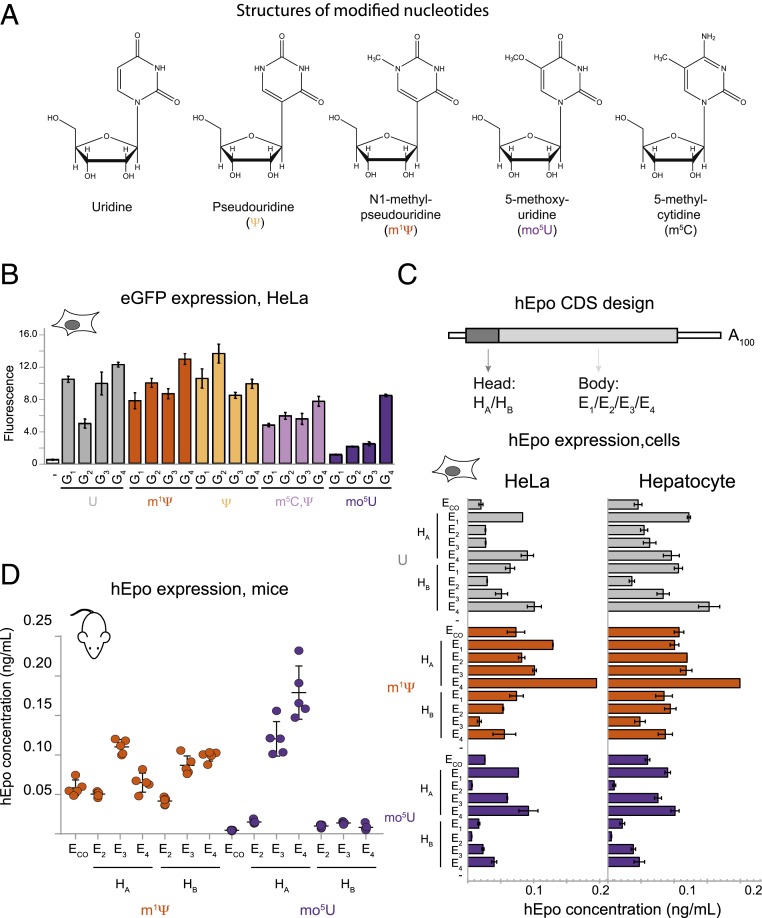
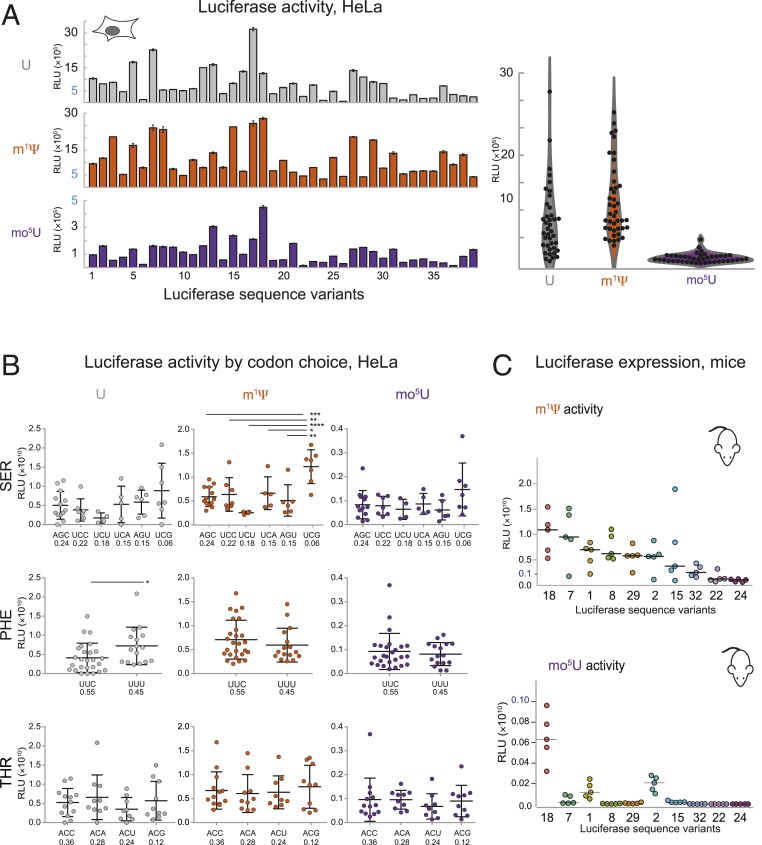
“To assess the degree to which the above conclusions from cell lines translated to animals, we examined protein expression in mice from formulated hEpo and Luc mRNA variants containing two nucleotide modifications shown to have reduced immunogenicity (m(1)Y and mo(5)U) (Kariko et al., 2005).”
A "Silent" Polymorphism in the MDR 1 Gene Changes Substrate Specificity
Kimchi-Sarfaty, C., Oh, J. M., Kim, I.-W., Sauna, Z. E., Calcagno, A. M., Ambudkar, S. V., & Gottesman, M. M. (2007) · Science · doi:10.1126/science.1135308 · Cited by 2,416 · cited 1×
“Another possibility is that structure leads to ribosome pausing at specific locations in the peptide, crucial for proper protein folding, and therefore activity, of certain multidomain proteins (32, 33).”
Karikó, K., Muramatsu, H., Welsh, F. A., Ludwig, J., Kato, H., Akira, S., & Weissman, D. (2008) · Molecular Therapy · doi:10.1038/mt.2008.200 · Cited by 1,930 · cited 2×
“For comparison with a previous study documenting the effects of modified nucleotides on RNA immunogenicity (16), we also made eGFP mRNA wherein both U and C were substituted with Ψ and 5-methyl-cytidine (m(5)C), respectively.”
Synonymous but not the same: the causes and consequences of codon bias
Plotkin, J. B., & Kudla, G. (2011) · Nature Reviews Genetics · doi:10.1038/nrg2899 · Cited by 1,685 · cited 1×
“Highly expressed mRNAs tended to have increased GC content, consistent with previous reports (17), but not all high GC sequences were high expressers (SI Appendix, Figs.”
ResultCodon bias and heterologous protein expression
Gustafsson, C., Govindarajan, S., & Minshull, J. (2004) · Trends in Biotechnology · doi:10.1016/j.tibtech.2004.04.006 · Cited by 1,330 · cited 1×
“Synonymous codon choice directly impacts translation, with highly expressed genes tending to include more "optimal" codons (Gustafsson et al., 2004; Hinnebusch et al., 2016; Horstick et al., 2015; Pop et al., 2014).”
Codon usage tabulated from international DNA sequence databases: status for the year 2000
Nakamura, Y. (2000) · Nucleic Acids Research · doi:10.1093/nar/28.1.292 · Cited by 1,254 · cited 2×
“Using probabilities weighted by frequency in the human transcriptome (Nakamura et al., 2000) generates a similar-shaped distribution, but shifted to both significantly higher RSCU (0.”
MethodInfluentialImproved Green Fluorescent Protein by Molecular Evolution Using DNA Shuffling
Crameri, A., Whitehorn, E. A., Tate, E., & Stemmer, W. P. C. (1996) · Nature Biotechnology · doi:10.1038/nbt0396-315 · Cited by 1,187 · cited 1×
“Realtime, continuous expression data were fit by a model including rate constants for mRNA translation, mRNA functional half-life, maturation of eGFP protein into its fluorescent form (28), and eGFP protein degradation (Fig.”
Xia, T., SantaLucia, J., Burkard, M. E., Kierzek, R., Schroeder, S. J., Jiao, X., Cox, C., & Turner, D. H. (1998) · Biochemistry · doi:10.1021/bi9809425 · Cited by 1,140 · cited 8×
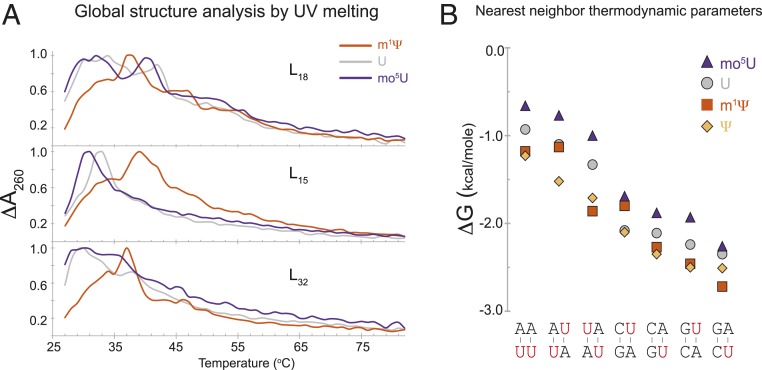
“Nearest-neighbor thermodynamic parameters along with the experimentally determined error for Watson-crick base pairs containing unmodified uridine (values from (Xia et al., 1998)), Y, m(1)Y, or mo(5)U.”
InfluentialTranslational control by 5′-untranslated regions of eukaryotic mRNAs
Hinnebusch, A. G., Ivanov, I. P., & Sonenberg, N. (2016) · Science · doi:10.1126/science.aad9868 · Cited by 1,079 · cited 1×
“Synonymous codon choice directly impacts translation, with highly expressed genes tending to include more "optimal" codons (Gustafsson et al., 2004; Hinnebusch et al., 2016; Horstick et al., 2015; Pop et al., 2014).”
Codon Optimality Is a Major Determinant of mRNA Stability
Presnyak, V., Alhusaini, N., Chen, Y.-H., Martin, S., Morris, N., Kline, N., Olson, S., Weinberg, D., Baker, K. E., Graveley, B. R., et al. (2015) · Cell · doi:10.1016/j.cell.2015.02.029 · Cited by 1,078 · cited 5×
“Regions of increased rare codon frequency have been shown to decrease protein expression and mRNA stability (Presnyak et al., 2015; Weinberg et al., 2016).”
InfluentialSelf-citation
Cited by
Items 501–571 of 571
Additional file 1 of Factors affecting the rapid changes of protein under short-term heat stress
Wu, B., Qiao, J., Wang, X., Liu, M., Xu, S., & Sun, D. (2021) · Figshare · doi:10.6084/m9.figshare.14411584
Additional file 3 of Tissue-specific temperature dependence of RNA editing levels in zebrafish
Li, W., Bu, M., Hu, R., Jiang, S., Chen, L., & Somero, G. N. (2024) · Figshare · doi:10.6084/m9.figshare.26642425
Additional file 2 of Tissue-specific temperature dependence of RNA editing levels in zebrafish
Li, W., Bu, M., Hu, R., Jiang, S., Chen, L., & Somero, G. N. (2024) · Figshare · doi:10.6084/m9.figshare.24590415
Zeng, J., Song, K., Wang, J., Wen, H., Zhou, J., Ni, T., Lü, H., & Yu, Y. (2024) · Figshare · doi:10.6084/m9.figshare.26659888
Zeng, J., Song, K., Wang, J., Wen, H., Zhou, J., Ni, T., Lü, H., & Yu, Y. (2024) · Figshare · doi:10.6084/m9.figshare.26659894
Additional file 4 of Tissue-specific temperature dependence of RNA editing levels in zebrafish
Li, W., Bu, M., Hu, R., Jiang, S., Chen, L., & Somero, G. N. (2024) · Figshare · doi:10.6084/m9.figshare.26642428
Zeng, J., Song, K., Wang, J., Wen, H., Zhou, J., Ni, T., Lu, H., & Yu, Y. (2024) · Figshare · doi:10.6084/m9.figshare.26659879
Zeng, J., Song, K., Wang, J., Wen, H., Zhou, J., Ni, T., Lu, H., & Yu, Y. (2024) · Figshare · doi:10.6084/m9.figshare.26659885
Zeng, J., Song, K., Wang, J., Wen, H., Zhou, J., Ni, T., Lü, H., & Yu, Y. (2024) · Figshare · doi:10.6084/m9.figshare.26659897
Kumari, M., Lu, R.-M., Li, M.-C., Huang, J., Hsu, F.-F., Ko, S.-H., Ke, F.-Y., Su, S.-C., Liang, K.-H., Yuan, J. P., et al. (2022) · Figshare · doi:10.6084/m9.figshare.21085242
Self-citationZeng, J., Song, K., Wang, J., Wen, H., Zhou, J., Ni, T., Lü, H., & Yu, Y. (2024) · Figshare · doi:10.6084/m9.figshare.26659891
Additional file 1 of Tissue-specific temperature dependence of RNA editing levels in zebrafish
Li, W., Bu, M., Hu, R., Jiang, S., Chen, L., & Somero, G. N. (2023) · Figshare · doi:10.6084/m9.figshare.24590330
Additional file 2 of Factors affecting the rapid changes of protein under short-term heat stress
Wu, B., Qiao, J., Wang, X., Liu, M., Xu, S., & Sun, D. (2021) · Figshare · doi:10.6084/m9.figshare.14411587
Duan, Y., Zhang, X.-J., Zhang, X., Xu, G., Shi, J., & Xu, Z. (2025) · SSRN Electronic Journal · doi:10.2139/ssrn.5960779
Application of Synchrotron Radiation Circular Dichroism for mRNA Structural Analysis
Medjmedj, A., Hamáček, J., Wien, F., & Perche, F. (2026) · Methods in molecular biology · doi:10.1007/978-1-0716-5084-4_10
Kharsyiemiong, E. T., Raghunandan, B. H., & Mishra, S. (2026) · Computational Biology and Chemistry · doi:10.1016/j.compbiolchem.2026.108878
Structural analysis of uridine modifications in solved RNA structures
Arteaga, S. J., & Znosko, B. M. (2025) · NAR Genomics and Bioinformatics · doi:10.1093/nargab/lqaf197
“When used as a therapeutic, RNA molecules containing PSU residues have been observed to evade immune response, enhance stability, and regulate protein expression [ 29 , 30 ].”
Duan, Y., Zhang, X.-J., Zhang, X., Xu, G., Shi, J., & Xu, Z. (2026) · SSRN Electronic Journal · doi:10.2139/ssrn.6105801
An overview of the mRNA applications and their therapeutic functions in clinical development
Ramakrishnaiah, T. N., Srikar, K. S., Deb, A., Ahmed, K. S., Chandraghatgi, R. R., Sarin, Y., Roopini, K., & Rajashekara, S. (2026) · Next research. · doi:10.1016/j.nexres.2026.101413
Che, S., Li, Z., Su, Z., Yu, A., Liu, M., & Zhang, S. (2026) · ACS Sustainable Chemistry & Engineering · doi:10.1021/acssuschemeng.5c12019
Liu, R., Patterson, L. D., Yeasmin, M., Kim, K., Park, B. R., Bhatnagar, N., Raha, J. R., Grovenstein, P. B., Pal, S. S., Le, C. T. T., et al. (2026) · Virology · doi:10.1016/j.virol.2026.110884 · Cited by 1
Yan, X., Xia, W., Zhao, L., & Pei, J. (2026) · Molecular Catalysis · doi:10.1016/j.mcat.2026.115906
Dissecting host stress responses for predictable heterologous gene expression in E. coli
Rode, C. K., Beulig, F., Jönsson, M., Nørholm, M. H. H., Jahn, L. J., Zielinski, D. C., Palsson, B. Ø., Özdemir, E., & Yang, L. (2026) · Nucleic Acids Research · doi:10.1093/nar/gkag256 · Cited by 1
“Additionally, messenger RNA (mRNA)-related factors also impact expression outcomes, such as codon usage [ 13 ], mRNA secondary structures [ 14 ], and ribosome binding efficiency [ 15 ].”
Regulation of mRNA translation during the inflammatory response in murine macrophages
Blin, J. (2020) · theses.fr (ABES) · doi:10.70675/9eed69d2z2c72z4b4dz8603zdc632396f487
Bases moléculaires et cellulaires de la variabilité des lissencéphalies liées aux mutations LIS1
Maillard, C. (2021) · theses.fr (ABES) · doi:10.70675/20514491ze40cz4257zb7d1zcfae6d10591f
Pareek, A., Wardhan, V., Mishra, D., Rathi, D., Khan, I. N., Subba, P., Saxena, H., Jeevaraj, T., Chakraborty, S., & Chakraborty, N. (2026) · Plant Physiology and Biochemistry · doi:10.1016/j.plaphy.2026.111307
Reveal Principles of Codon Optimization via Machine LearningPreprint
Deng, F., Li, H., Sun, D., Duan, G., Sun, Z., & Xue, G. (2026) · bioRxiv (Cold Spring Harbor Laboratory) · doi:10.64898/2026.04.16.718958
Kumari, G., Kumari, H., Nigam, V. K., & Pandey, D. M. (2026) · Biotechnology Letters · doi:10.1007/s10529-026-03727-3
“…pinnata FLS shows a low minimum free energy and stable stem-loop features, implying enhanced transcript stability and potential effects on translational efficiency, consistent with evidence that mRNA folding influences stability and expression levels (Wu & Bazzini 2023; Mauger et al. 2019).”
Platform-dependent performance of P2A and IRES linkers in multicistronic gene expression
Ju, M., & Han, J. (2026) · Genes & Genomics · doi:10.1007/s13258-026-01771-x · Cited by 2
“The presence of a methyl group at the N1 position may influ - ence local base interactions and RNA folding (Mauger et al. 2019; Dutta et al. 2025).”
Optimizing Lentiviral Vector-Based Delivery of SCN1A Transgenes to Mammalian CellsPreprint
Schindewolf, C., Wei, A. D., Kalume, F. K., & Torbett, B. E. (2026) · bioRxiv (Cold Spring Harbor Laboratory) · doi:10.64898/2026.05.01.722074
“…treatment may imply a sequence-dependent effect on transcription, it is also possible that features of the mRNA itself, including codon optimization 33 , length 34 , secondary structure 35 , location of a synthetic intron 36 , other cryptic regulatory elements, etc. could impact translation.”
Dobutr, T., Stylianou, E., McShane, H., & Pinpathomrat, N. (2026) · Scientific Reports · doi:10.1038/s41598-026-47531-5
“Subsequent secondary structure prediction of the mRNA revealed a branched configuration with multiple stable stem-loop regions, characterized by high base-pairing probabilities and low Shannon entropy, features associated with enhanced mRNA stability and translational efficiency 64 .”
Fine-scale structural information substantially improves mRNA therapeutic stability prediction
Yi, S., Ali, S. E., Jadeja, Y., Davis, J. W., & Metkar, M. (2026) · Molecular Therapy — Nucleic Acids · doi:10.1016/j.omtn.2026.102960 · Cited by 2
“8,9 Traditional metrics such as free energy (FE), average unpaired probability (AUP), and guanine and cytosine (GC) content have been widely used to guide mRNA optimization.”
Enhancement of Therapeutic mRNA Translation in Cellular Stress Conditions
Trepkowska-Mejer, E. (2026) · International Journal of Molecular Sciences · doi:10.3390/ijms27114663
“Furthermore, mRNA is degraded by physiological cellular processes; its half-life can be regulated by the structure of the coding sequence of the mRNA itself, as well as by delivery methods [4].”
Belhaouari, D. B., Pant, A., Navarro-Forero, S., Cantu, F., & Yang, Z. (2026) · Proceedings of the National Academy of Sciences · doi:10.1073/pnas.2605194123
Modeling the Language of Codons with Artificial Intelligence
Lemay-St-Denis, C., & Kolodny, R. (2026) · Annual Review of Biomedical Data Science · doi:10.1146/annurev-biodatasci-092624-105741
A protocol for computational design of mRNA vaccines with high functionality and specificity
Ramadan, M. A., ElGohary, H. M., Faraag, A. H., & Mysara, M. (2026) · Biology Direct · doi:10.1186/s13062-026-00846-9
“This aligns with previous findings that a balance between structural stability and accessibility (e.g., moderate entropy) enhances ribosome binding and sustained expression [30, 91, 111].”
Reinforcement learning-driven unified generative framework for multi-objective RNA codon designPreprint
Lin, S., Tan, H., Wang, K., Wang, R., Wang, H., Zhu, T., & Xiong, Y. (2026) · bioRxiv (Cold Spring Harbor Laboratory) · doi:10.64898/2026.06.12.732012
Programming the translational landscape for predictable gene expression
Yan, W., Hu, G., Liu, K., Liang, G., Gao, C., Li, X., & Wu, J. (2026) · Biotechnology Advances · doi:10.1016/j.biotechadv.2026.108950
The impact of psuedouridine modification on human tRNA
Stone, Y., Morgan, E., Su, Y.-H., Kuo, C., & Lin, T. (2026) · Biochemical Society Transactions · doi:10.1042/bst20250258
“The strategic incorporation of ψ and its derivative N1-methylpseudouridine into synthetic RNAs, including mRNA [102] and tRNA [103], has transformed RNA biotechnology and therapeutic development [104,105].”
Akwelle, R. N., Shey, R. A., Efeti, M. T., Lekeayi, N., Nchanji, G. T., Tangan, Y. A. S., Chick, J. A., Yaah, N. E., Shinyuy, L. M., Shintouo, C. M., et al. (2026) · Health Science Reports · doi:10.1002/hsr2.72702
“RNA secondary and tertiary structures are known to influence stability, function, protein expression, and protein– RNA interactions [81, 87, 88].”
D’Amico, C., Miska, M., Saarinen, S., Säkkinen, V., & Kostiainen, M. A. (2026) · bioRxiv (Cold Spring Harbor Laboratory) · doi:10.64898/2026.06.25.734245 · Cited by 1
“(11) Computational tools such as LinearDesign exploit this by jointly optimising secondary structure and codon usage to improve half-life and expression by orders of magnitude over codon optimisation alone.”
dos Santos, V. K., & Costa, A. D. O. (2026) · Revista Sociedade Científica · doi:10.61411/rsc2026136519
Bian, H., Tse, W. W., Huang, G., & Liu, S. (2026) · Precision Clinical Medicine · doi:10.1093/pcmedi/pbag019
“While maximizing “optimal” codons increases translation rates, overly aggressive codon optimization alters ribosome transit speed and disrupts the kinetics of co-translational folding [ 132 ].”
Liu, M., Wu, X., Yang, Y., Zhu, Z., Sun, M., Yang, Y., Liu, B., Li, R., Zhao, Q., & Yang, T. (2026) · Annals of Botany · doi:10.1093/aob/mcag202 · Cited by 1
In silico design and evaluation of scFv-LukS-PV as a novel immunotoxin for AML therapy
Farabi, S., & Eimani, B. G. (2026) · Journal of Immunoassay and Immunochemistry · doi:10.1080/15321819.2026.2696418
Applications and future perspectives of mathematical biology
Bozkurt, F. (2026) · Elsevier eBooks · doi:10.1016/b978-0-443-45296-3.00005-0
Global translational reprogramming in Trichophyton mentagrophytes -infected keratinocytes
Wan, J., Zhang, Y., Deng, Y., Zhang, R., Yang, K., Zhu, X., Zheng, J., Li, B., You, J., Fu, L., et al. (2026) · Virulence · doi:10.1080/21505594.2026.2710548
“Such structural stability is known to influence mRNA metabolism by enhancing transcript stability [70,71] and/or modulating translation efficiency [72].”
An ER stress-responsive RNA rheostat for programmable gene and mRNA therapies
Ogurlu, R., Sanchez, E. B., Hull, J. A., Fergione, S., Yudistyra, V., Webb, G. M., Wu, H. L., Pessoa, C. T., Humkey, M. C., Potter, S. K., et al. (2026) · Cell chemical biology · doi:10.1016/j.chembiol.2026.07.006
Ali, H., Farooq, M., Shah, U., Khan, B., & Malik, S. (2026) · Pharmacophore · doi:10.51847/4ylxcn8kfc
Malik, S. N., Chandler, J. C., Maeshima, R., Kolatsi‐Joannou, M., Mason, W. J., Russell, L. G., Han, S., Harfouche, Y., Jafree, D. J., Moore, E. A. E., et al. (2026) · Science Translational Medicine · doi:10.1126/scitranslmed.adv1289
“…longevity analyses, mCherry protein expression dropped at 3 days post injection and despite modifications to the Angpt1 mRNA such as codon optimisation (60) and uridine substitution (61), we still reasoned that three therapeutic doses over a 4-week period were required for our preclinical trial.”
Xu, C., Jiang, F., Jiang, Y., Wang, W., Pu, C., Chen, R., Deng, C., Zhai, D., Chen, Y., Hu, W., et al. (2026) · Angewandte Chemie International Edition · doi:10.1002/anie.4782087
Sajjanar, B., Gopinath, S., Nadarajan, P., Marreddy, V. K., Krishnaswamy, N., Nagaleekar, V. K., Hosamani, M., Sreenivasa, B. P., Chaudhuri, P., & Basagoudanavar, S. H. (2026) · Biotechnology Letters · doi:10.1007/s10529-026-03778-6
“Specifically, 5’UTR binds to various transcription factors and recruits’ ribosomes, thereby regulating the scanning and initiation in mRNA translation (Mauger et al. 2019).”
Next-generation CAR therapies enabled by mRNA engineering and delivery
Zhao, Q., Wen, Q., Pu, P., Xu, C., Hu, Q., Zhou, Z., Hua, X., & Zhang, X. (2026) · Acta Pharmaceutica Sinica B · doi:10.1016/j.apsb.2026.09.001
Nair, A., & Kis, Z. (2026) · Biotechnology Advances · doi:10.1016/j.biotechadv.2026.109034
Sequence optimization targeting mRNA stability enhances monoclonal antibody titers in CHO cells
Schneckener, S., Haag, K., Leweke, S., Wolf, T., & Mayer‐Bartschmid, A. (2026) · New Biotechnology · doi:10.1016/j.nbt.2026.09.004
Programmable mRNA Nanotherapeutics through Logic Switch Design
Chen, P., Alhussan, A., Cullis, P. R., & Cabral, H. (2026) · ACS Nano Medicine · doi:10.1021/acsnanomed.6c00159
Immune memory engineering in mRNA therapeutics
Wen, J., Tao, W., & Zhou, X. (2026) · Journal of Controlled Release · doi:10.1016/j.jconrel.2026.115370
Enkmann, V., & Rajicic, N. (2026) · AI Chemistry · doi:10.3390/aichem1030015 · Cited by 1
“Codon identity and optimality affect both translation and transcript decay [36,37], while excessive structural stabilization can impede ribosome loading or initiation [38].”
Yang, S., Cai, X., Wang, J., & Liang, M. (2026) · Fishes · doi:10.3390/fishes11090553
From DNA origami to nanostructured mRNA-based delivery platforms
Enlund, E., D’Amico, C., Saarinen, S., & Kostiainen, M. A. (2026) · Current Opinion in Chemical Biology · doi:10.1016/j.cbpa.2026.102768
RNA therapeutics: current status and future directions
Yang, B., Sedano, M. J., Perez, K. L., Vijayaraghavan, M., Reid, V. A., Yallapu, M. M., Chauhan, S. C., Dhandayuthapani, S., Ramos, E., & Gadad, S. S. (2026) · Signal Transduction and Targeted Therapy · doi:10.1038/s41392-026-03032-5 · Cited by 1
mRNA lipid nanoparticle vaccines: current status, challenges and future prospects
吴志能, Lou, J., Cheng, Y., Li, M., Wang, Z., Liu, N., Gao, X., Zheng, A., & Zhang, H. (2026) · Molecular Biomedicine · doi:10.1186/s43556-026-00600-7
“Further studies demonstrated that optimizing mRNA structural features can regulate functional half-life and protein expression, providing additional principles for the rational engineering of next-generation mRNA vaccines [240].”
mRNA Structure Regulates Translation at Every Step
Khitun, A., & Weeks, K. M. (2026) · Biochemistry · doi:10.1021/acs.biochem.6c00561 · Cited by 1
Lu, R., Gong, X., Xing, L., Zhou, H., Deng, L., Lin, R., Periyalagan, A., Wu, W., Zhan, X., Fan, S., et al. (2026) · Cell Reports Physical Science · doi:10.1016/j.xcrp.2026.103589
Wang, Y., & Wu, J. (2026) · British Journal of Pharmacology · doi:10.1111/bph.70712
Retrotransposons: A New Frontier in In Vivo Genome Engineering
Kieffer-Kwon, P., Harris, M. T., Getts, D. R., & Hofmeister, R. (2026) · Pharmaceutics · doi:10.3390/pharmaceutics18101316
“Enhanced RNA stability, translation, or temporal overlap between editor protein production and donor availability may also contribute to the benefit of Ψ and m1 Ψ in trans-configured retrotransposon systems [65–67].”
Adaptation of a Fluorogenic RNA to N1‐Methylpseudouridine Nucleoside Chemistry
Bertrand, P. P. A., Cubi, R., Husser, C., Frugier, M., & Ryckelynck, M. (2026) · Angewandte Chemie · doi:10.1002/ange.8507021
Adaptation of a Fluorogenic RNA to N1‐Methylpseudouridine Nucleoside Chemistry
Bertrand, P. P. A., Cubi, R., Husser, C., Frugier, M., & Ryckelynck, M. (2026) · Angewandte Chemie International Edition · doi:10.1002/anie.8507021
Mathematical modeling in mRNA therapeutics: toward a pathway to individualized treatment protocols
Campanile, E., Pettinà, E., & Marchetti, L. (2026) · Expert Review of Clinical Pharmacology · doi:10.1080/17512433.2026.2744578
Metadata
- Authors
- Mauger, D. M., Cabral, B. J., Presnyak, V., Su, S. V., Reid, D. W., Goodman, B., Link, K., Khatwani, N., Reynders, J., Moore, M. J., & McFadyen, I. J.
- Affiliations
- Platform Research, Moderna, Inc., Cambridge, MA 02139
- Corresponding author
- Moore, Melissa J.
- Venue
- Proceedings of the National Academy of Sciences
- Publisher
- National Academy of Sciences
- Published
- 2019-11-11
- Volume
- 116
- Issue
- 48
- Pages
- 24075-24083
- ISSN
- 0027-8424 (ISSN-L)
- 1091-6490
- PMC
- PMC6883848
- OpenAlex
- W2983889514
- Semantic Scholar
- 5893e4255a022371c1bbef16899698c3e704ff58
- Cited by
- 555
- References
- 56
- Citations by year
- 2026: 76 · 2025: 105 · 2024: 104 · 2023: 73 · 2022: 98 · 2021: 71 · 2020: 26 · 2019: 2
- FWCI
- 16.54
- Type
- journal article
- Language
- en
- Open access
- hybrid
- doi.org
- Licence
- Locations
- Proceedings of the National Academy of Sciences (publishedVersion, cc-by)
- bioRxiv (Cold Spring Harbor Laboratory) (acceptedVersion)
- PubMed Central (publishedVersion, cc-by)
- PubMed (publishedVersion)
- Funders
- Moderna
- Topics
- Life Sciences › Biochemistry, Genetics and Molecular Biology › Molecular Biology › RNA and protein synthesis mechanisms
- Life Sciences › Biochemistry, Genetics and Molecular Biology › Molecular Biology › RNA Research and Splicing
- Life Sciences › Biochemistry, Genetics and Molecular Biology › Molecular Biology › RNA Interference and Gene Delivery
- Keywords
- mRNA secondary structure, mRNA stability, mRNA half-life, codon usage, protein expression regulation, modified nucleotides, mRNA translation
- MeSH terms
- Half-Life, HeLa Cells, Humans, Nucleic Acid Conformation, Proteins, RNA, Messenger, Protein Biosynthesis, RNA Stability
About these checks
Registry, retraction, Cites and statistics results are computed, not judged, with one exception: a printed reference that no index lists is read once by a model before it counts as a citation error. Claims are extracted by a model and kept only when their quote appears verbatim in the text; each cited source is then checked, with a model’s help, for whether it says what the claim relies on. Those verdicts can be wrong — read the claim’s quote and the cited source before relying on one.
Statistics and arithmetic are recomputed, not judged.
Confidence bands are shown only for fields calibrated on our annotated test set. None is calibrated yet, so no band is shown.
What counts as a claim ›How we measure confidence ›How we check this ›
Are you an author, or do you see a problem with this page? Request a review
Data sources
Bibliographic data: Semantic Scholar, OpenAlex, Crossref.
Contains information from the Semantic Scholar Academic Graph Datasets, made available under the ODC Attribution License (ODC-BY 1.0).
Semantic Scholar’s data is described in: Kinney, R., et al. (2023). The Semantic Scholar Open Data Platform. arXiv:2301.10140.
