

mRNA structure regulates protein expression through changes in functional half-life
Open accessPublished version of a preprint
The DOI matches its Crossref record; 57 of the 57 references it cites were found in a registry or an index.
Abstract
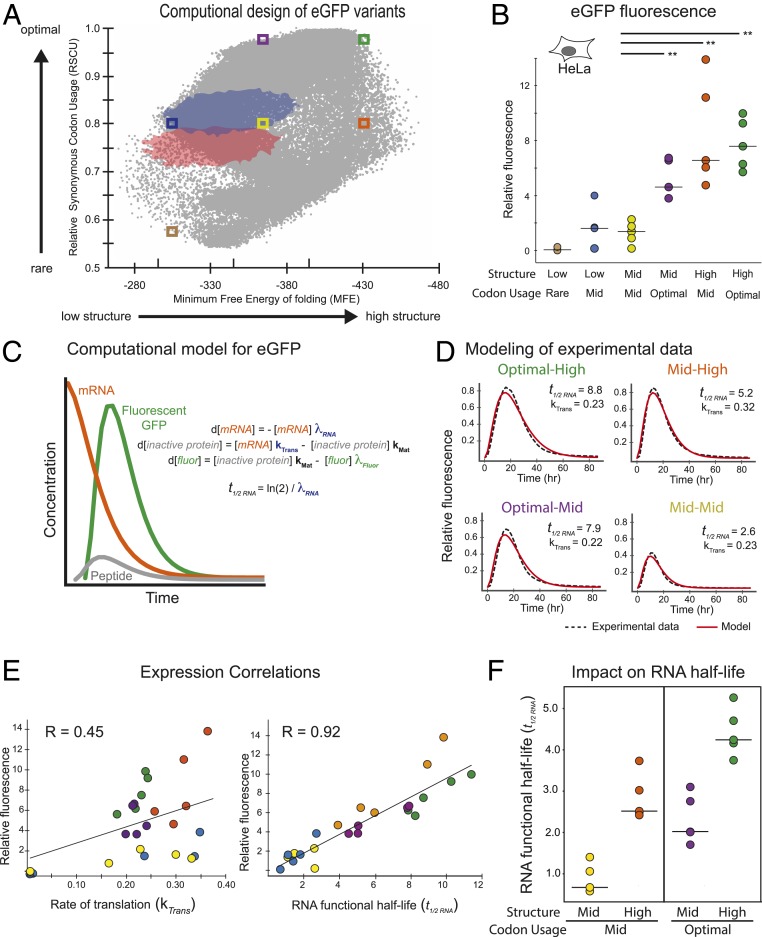
Messenger RNAs (mRNAs) encode information in both their primary sequence and their higher order structure. The independent contributions of factors like codon usage and secondary structure to regulating protein expression are difficult to establish as they are often highly correlated in endogenous sequences. Here, we used 2 approaches, global inclusion of modified nucleotides and rational sequence design of exogenously delivered constructs, to understand the role of mRNA secondary structure independent from codon usage. Unexpectedly, highly expressed mRNAs contained a highly structured coding sequence (CDS). Modified nucleotides that stabilize mRNA secondary structure enabled high expression across a wide variety of primary sequences. Using a set of eGFP mRNAs with independently altered codon usage and CDS structure, we find that the structure of the CDS regulates protein expression through changes in functional mRNA half-life (i.e., mRNA being actively translated). This work highlights an underappreciated role of mRNA secondary structure in the regulation of mRNA stability.
Overview
The claims and statistics of this paper haven’t been checked yet.
Free: it reads the open-access text and checks the first 5 claims that cite a source we can check. Create a free account to check every claim.
Integrity signals
Registry
Cites
Statistics
Figures
Verification
Claims the paper makes
The claims and statistics of this paper haven’t been checked yet.
Free: it reads the open-access text and checks the first 5 claims that cite a source we can check. Create a free account to check every claim.
Claims other papers make about this one
Each is checked against this paper’s own text: does it say what the citing paper says it does?
The source backs part of the claim, not all of it — or backs it for a different population, condition or comparison.
In the citing paper
“Increasing secondary structure lengthens mRNA half-life, which, together with optimal codons, improves protein expression5.”
From Algorithm for optimized mRNA design improves stability and immunogenicity (2023) · cites this paper as [5]
Experimental — accuracy not yet measuredThe source backs part of the claim, not all of it — or backs it for a different population, condition or comparison.
In the citing paper
“Previous work5 established two main objectives for mRNA design, stability and codon optimality, which synergize to increase protein expression.”
From Algorithm for optimized mRNA design improves stability and immunogenicity (2023) · cites this paper as [5]
Experimental — accuracy not yet measuredThe source backs part of the claim, not all of it — or backs it for a different population, condition or comparison.
In the citing paper
“However, mRNA molecules are chemically unstable and prone to degrade, which leads to insufficient protein expression5”
From Algorithm for optimized mRNA design improves stability and immunogenicity (2023) · cites this paper as [5]
Experimental — accuracy not yet measuredThe source backs part of the claim, not all of it — or backs it for a different population, condition or comparison.
In the citing paper
“Increasing secondary structure lengthens mRNA half-life, which, together with optimal codons, improves protein expression5.”
From Algorithm for optimized mRNA design improves stability and immunogenicity (2023) · cites this paper as [5]
Experimental — accuracy not yet measuredThe source backs part of the claim, not all of it — or backs it for a different population, condition or comparison.
In the citing paper
“However, mRNA molecules are chemically unstable and prone to degrade, which leads to insufficient protein expression5”
From Algorithm for optimized mRNA design improves stability and immunogenicity (2023) · cites this paper as [5]
Experimental — accuracy not yet measured
17 more claims about this paper
Create a free account to see every claim other papers make about this one.
Self-check
Percentages, sums and reported differences re-computed from the paper’s own numbers.
The self-check needs the paper’s full text.
Citations
Cites
Karikó, K., Buckstein, M., Ni, H., & Weissman, D. (2005) · Immunity · doi:10.1016/j.immuni.2005.06.008 · Cited by 2,728 · cited 1×
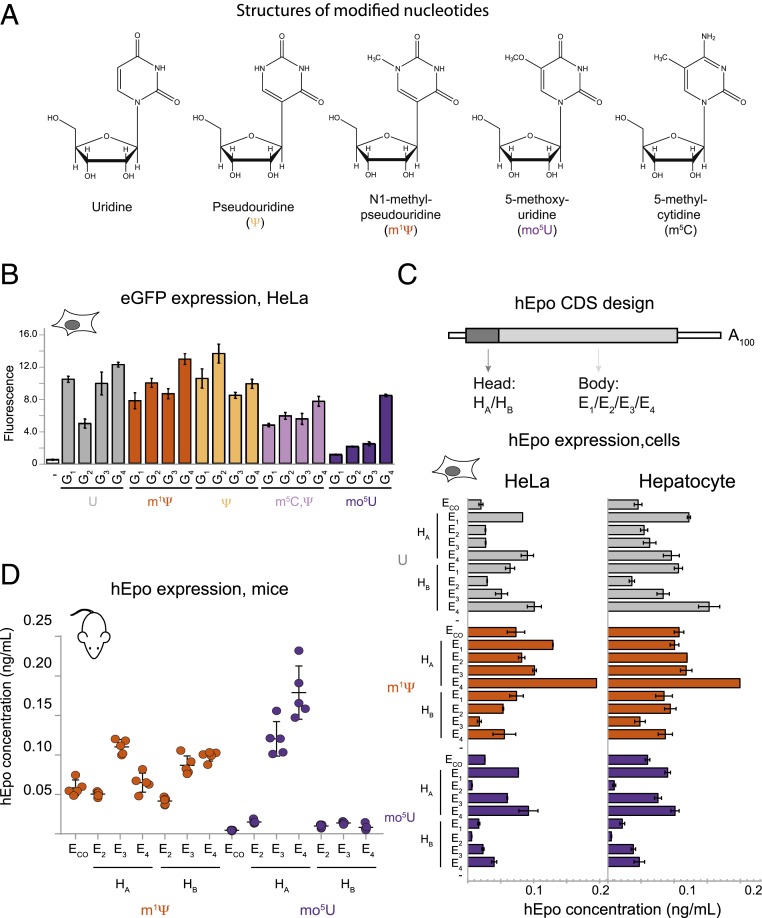
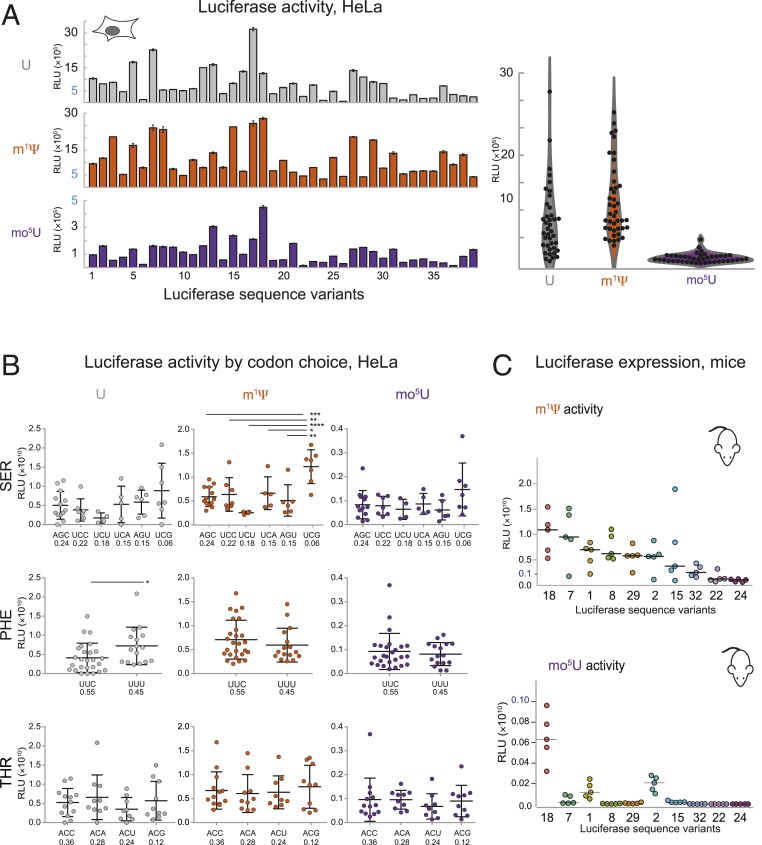
“To assess the degree to which the above conclusions from cell lines translated to animals, we examined protein expression in mice from formulated hEpo and Luc mRNA variants containing two nucleotide modifications shown to have reduced immunogenicity (m(1)Y and mo(5)U) (Kariko et al., 2005).”
A "Silent" Polymorphism in the MDR 1 Gene Changes Substrate Specificity
Kimchi-Sarfaty, C., Oh, J. M., Kim, I.-W., Sauna, Z. E., Calcagno, A. M., Ambudkar, S. V., & Gottesman, M. M. (2007) · Science · doi:10.1126/science.1135308 · Cited by 2,416 · cited 1×
“Another possibility is that structure leads to ribosome pausing at specific locations in the peptide, crucial for proper protein folding, and therefore activity, of certain multidomain proteins (32, 33).”
Karikó, K., Muramatsu, H., Welsh, F. A., Ludwig, J., Kato, H., Akira, S., & Weissman, D. (2008) · Molecular Therapy · doi:10.1038/mt.2008.200 · Cited by 1,930 · cited 2×
“For comparison with a previous study documenting the effects of modified nucleotides on RNA immunogenicity (16), we also made eGFP mRNA wherein both U and C were substituted with Ψ and 5-methyl-cytidine (m(5)C), respectively.”
Synonymous but not the same: the causes and consequences of codon bias
Plotkin, J. B., & Kudla, G. (2011) · Nature Reviews Genetics · doi:10.1038/nrg2899 · Cited by 1,685 · cited 1×
“Highly expressed mRNAs tended to have increased GC content, consistent with previous reports (17), but not all high GC sequences were high expressers (SI Appendix, Figs.”
ResultCodon bias and heterologous protein expression
Gustafsson, C., Govindarajan, S., & Minshull, J. (2004) · Trends in Biotechnology · doi:10.1016/j.tibtech.2004.04.006 · Cited by 1,330 · cited 1×
“Synonymous codon choice directly impacts translation, with highly expressed genes tending to include more "optimal" codons (Gustafsson et al., 2004; Hinnebusch et al., 2016; Horstick et al., 2015; Pop et al., 2014).”
Codon usage tabulated from international DNA sequence databases: status for the year 2000
Nakamura, Y. (2000) · Nucleic Acids Research · doi:10.1093/nar/28.1.292 · Cited by 1,254 · cited 2×
“Using probabilities weighted by frequency in the human transcriptome (Nakamura et al., 2000) generates a similar-shaped distribution, but shifted to both significantly higher RSCU (0.”
MethodInfluentialImproved Green Fluorescent Protein by Molecular Evolution Using DNA Shuffling
Crameri, A., Whitehorn, E. A., Tate, E., & Stemmer, W. P. C. (1996) · Nature Biotechnology · doi:10.1038/nbt0396-315 · Cited by 1,187 · cited 1×
“Realtime, continuous expression data were fit by a model including rate constants for mRNA translation, mRNA functional half-life, maturation of eGFP protein into its fluorescent form (28), and eGFP protein degradation (Fig.”
Xia, T., SantaLucia, J., Burkard, M. E., Kierzek, R., Schroeder, S. J., Jiao, X., Cox, C., & Turner, D. H. (1998) · Biochemistry · doi:10.1021/bi9809425 · Cited by 1,140 · cited 8×
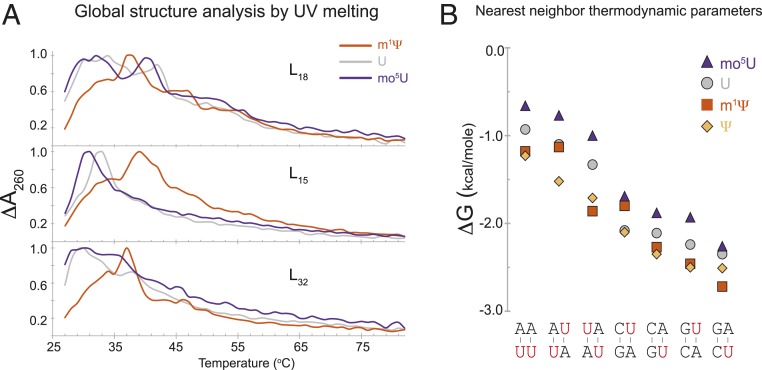
“Nearest-neighbor thermodynamic parameters along with the experimentally determined error for Watson-crick base pairs containing unmodified uridine (values from (Xia et al., 1998)), Y, m(1)Y, or mo(5)U.”
InfluentialTranslational control by 5′-untranslated regions of eukaryotic mRNAs
Hinnebusch, A. G., Ivanov, I. P., & Sonenberg, N. (2016) · Science · doi:10.1126/science.aad9868 · Cited by 1,079 · cited 1×
“Synonymous codon choice directly impacts translation, with highly expressed genes tending to include more "optimal" codons (Gustafsson et al., 2004; Hinnebusch et al., 2016; Horstick et al., 2015; Pop et al., 2014).”
Codon Optimality Is a Major Determinant of mRNA Stability
Presnyak, V., Alhusaini, N., Chen, Y.-H., Martin, S., Morris, N., Kline, N., Olson, S., Weinberg, D., Baker, K. E., Graveley, B. R., et al. (2015) · Cell · doi:10.1016/j.cell.2015.02.029 · Cited by 1,078 · cited 5×
“Regions of increased rare codon frequency have been shown to decrease protein expression and mRNA stability (Presnyak et al., 2015; Weinberg et al., 2016).”
InfluentialSelf-citation
Cited by
Items 301–400 of 571
Recent advances in freeze-drying technologies for mRNA vaccines against infectious diseases
Lou, J., Wu, Z., Cheng, Y., Li, M., Liu, N., Wang, Z., Gao, X., Zheng, A., & Zhang, H. (2025) · International Journal of Pharmaceutics · doi:10.1016/j.ijpharm.2025.126426 · Cited by 12
Li, H., Chen, T., Zhang, Z., Jiang, Q., Yuwen, W., Qu, L., Fu, R., Zhu, C., Lei, H., & Fan, D. (2025) · Chemical Engineering Journal · doi:10.1016/j.cej.2025.171510 · Cited by 8
Design considerations for analyzing protein translation regulation by condensates
Roden, C., & Gladfelter, A. S. (2021) · RNA · doi:10.1261/rna.079002.121 · Cited by 8
Strategic deactivation of mRNA COVID‐19 vaccines: New applications for siRNA therapy and RIBOTACs
Hulscher, N., McCullough, P. A., & Marotta, D. E. (2024) · The Journal of Gene Medicine · doi:10.1002/jgm.3733 · Cited by 10
“20,21 Furthermore, the introduction of N1-methyl-pseudouridine ( ψ ) ostensibly increases the melting point of mRNA and, therefore, could enhance mRNA stability of the mRNA-1273 and BNT162b2 vaccines before administration.. 21,22 The 5 0 cap, 5 0 untranslated region (UTR), open reading frame (ORF),…”
Unlock the sustained therapeutic efficacy of mRNA
Cao, D., Tian, M., Liu, Z., Guo, K., Peng, J., Ravichandra, A., Ferrell, C., & Dong, Y. (2025) · Journal of Controlled Release · doi:10.1016/j.jconrel.2025.113837 · Cited by 10
Huang, S., Han, Y., Liu, Y., Bu, L., Wu, C., Rao, Z., Ye, C., Cheng, H., Liao, Y., Sun, Y., et al. (2025) · Nucleic Acids Research · doi:10.1093/nar/gkaf505 · Cited by 9
“Given that mRNA with a stable secondary structure contributes to a long half-life [ 86 ], we considered stability to be a potential factor in affecting circRNA splicing circular-ization diversity.”
mRNA—From COVID-19 Treatment to Cancer Immunotherapy
Kŕause, W. (2023) · Biomedicines · doi:10.3390/biomedicines11020308 · Cited by 8
Xu, Y., Qi, S., Zhang, G., Liu, D., Xu, D., Qin, T., Cheng, Q., Kang, H. C., Hu, B., & Huang, Z. (2025) · Nucleic Acids Research · doi:10.1093/nar/gkae1280 · Cited by 7
“The effects of modifications on mRNA translation are multifaceted, influencing the translation yield ( 42 ), rate ( 15 ,41 ), turnover ( 21 ), accuracy ( 15 ), mRNA immunogenicity ( 40 ,41 ) and mRNA secondary structure stability ( 42 ).”
Harnessing Computational Strategies to Overcome Challenges in mRNA Vaccines
Zhao, S., Chen, J., Dai, T., Li, G., Huang, L., Xin, J., Zhang, Y., Chen, Y., He, X., Huang, H., et al. (2025) · Physiology · doi:10.1152/physiol.00047.2024 · Cited by 8
Multi-objective computational optimization of human 5′ UTR sequences
Yamada, K., Suga, K., Abe, N., Hashimoto, K., Tsutsumi, S., Inagaki, M., Hashiya, F., Abe, H., & Hamada, M. (2025) · Briefings in Bioinformatics · doi:10.1093/bib/bbaf225 · Cited by 10
Establishing correlation between in vitro potency and in vivo immunogenicity for mRNA vaccines
Sanyal, G. (2025) · npj Vaccines · doi:10.1038/s41541-025-01181-2 · Cited by 9
Identification and in silico characterization of CSRP3 synonymous variants in dilated cardiomyopathy
Giri, P., Jain, D., Kumar, A., & Mohapatra, B. (2023) · Molecular Biology Reports · doi:10.1007/s11033-023-08314-7 · Cited by 6
Characterization of a novel ABCC2 mutation in infantile Dubin Johnson syndrome
Khabou, B., Hsairi, M., Gargouri, L., Miled, N., Barbu, V., & Fakhfakh, F. (2021) · Clinica Chimica Acta · doi:10.1016/j.cca.2021.03.006 · Cited by 7
Integrative pan-cancer analysis of MEK1 aberrations and the potential clinical implications
Zhou, Z., Peng, B., Li, J., Gao, K., Cai, Y., Xu, Z., & Yan, Y. (2021) · Scientific Reports · doi:10.1038/s41598-021-97840-0 · Cited by 6
Nanomaterials to combat SARS-CoV-2: Strategies to prevent, diagnose and treat COVID-19
Valenzuela-Fernández, A., Cabrera-Rodríguez, R., Ciuffreda, L., Pérez-Yanes, S., Estévez‐Herrera, J., González‐Montelongo, R., Alcoba-Flórez, J., Trujillo‐González, R., de Artola, D. G.-M., Gil-Campesino, H., et al. (2022) · Frontiers in Bioengineering and Biotechnology · doi:10.3389/fbioe.2022.1052436 · Cited by 10
Atkins, J. F., O’Connor, K. M., Bhatt, P. R., & Loughran, G. (2021) · Viruses · doi:10.3390/v13071251 · Cited by 8
Deubiquitinase OTUD1 Resolves Stalled Translation on polyA and Rare Codon Rich mRNAs
Šnaurová, R., Vdovin, A., Ďurech, M., Nezval, J., Žihala, D., Jelínek, T., Hájek, R., & Šimíček, M. (2022) · Molecular and Cellular Biology · doi:10.1128/mcb.00265-22 · Cited by 8
“At these sites, ribosomes tend to stop either due to a limited amount of cognate tRNA or due to complex secondary mRNA structures (49).”
BackgroundMoradian, H., Dunne, C. M., Gossen, M., & Hartlieb, M. (2025) · Advanced Science · doi:10.1002/advs.202512653 · Cited by 8
Huang, Y., Pang, S., Li, L., Do, C. W., Luo, Q., 郑宗立, & Xiong, W. (2025) · Journal of Controlled Release · doi:10.1016/j.jconrel.2025.114499 · Cited by 13
Beyond the Sequence: Chemical and Topological Design and Innovations in mRNA Therapeutics
Liu, D., Chen, H., Pan, A., & Wang, X. (2026) · Chemical Reviews · doi:10.1021/acs.chemrev.5c00347 · Cited by 11
Immunological mechanisms of mRNA vaccines for infectious diseases
Locci, M., & Pardi, N. (2026) · Nature · doi:10.1038/s41586-026-10599-0 · Cited by 13
“Besides nucleoside modification, the codon-optimization strategy 40,41 , addition of a cap to the 5′ end of the mRNA 42 and stringency of mRNA purification 39 all impact innate immune sensing of the mRNA.”
Du, Y., Wang, M., Sun, C. C., & Yu, H. (2022) · Biotechnology Notes · doi:10.1016/j.biotno.2022.11.001 · Cited by 6
Chen, S., Liu, Z., Cai, J., Li, H., & Qiu, M. (2024) · MedComm · doi:10.1002/mco2.691 · Cited by 7
Sari, A. I. P., Copeland, K. K., Nuwongsri, P., Pipatsakulroj, W., Jinawath, A., Israsena, N., Lertsithichai, P., Chirappapha, P., Shiao, M., & Jinawath, N. (2025) · Journal of Histochemistry & Cytochemistry · doi:10.1369/00221554241311971 · Cited by 6
“52,53 Our findings suggested that the R 2 values representing the correlation between higher HKG gene expression levels and shorter archival duration calculated using H-score were slightly different from those using adjusted total transcripts, although they were generally consistent.”
Norimatsu, J., Hashim, R., Tockary, T. A., Nazir, M. S., Mochida, Y., & Uchida, S. (2025) · ACS Applied Nano Materials · doi:10.1021/acsanm.5c00633 · Cited by 6
Weir, A. L., Kang, E.-Y., Meagher, N. S., Nelson, G. S., Ghatage, P., Lee, C., Riggan, M. J., Gentry‐Maharaj, A., Ryan, A., Singh, N., et al. (2022) · British Journal of Cancer · doi:10.1038/s41416-022-02014-y · Cited by 6
Zeng, J., Song, K., Wang, J., Wen, H., Zhou, J., Ni, T., Lü, H., & Yu, Y. (2024) · Microbial Cell Factories · doi:10.1186/s12934-023-02271-3 · Cited by 7
Liver fibrosis pathologies and potentials of RNA based therapeutics modalities
Diwan, R., Gaytan, S. L., Bhatt, H. N., Pena‐Zacarias, J., & Nurunnabi, M. (2024) · Drug Delivery and Translational Research · doi:10.1007/s13346-024-01551-8 · Cited by 8
“It contains sequences and structural elements that guide the ribosome to the proper location on the mRNA strand for protein synthesis [188].”
Using Lipid Nanoparticles for the Delivery of Chemically Modified mRNA into Mammalian Cells
Mahalingam, G., Mohan, A., Arjunan, P., Dhyani, A. K., Subramaniyam, K., Periyasami, Y., & Marepally, S. K. (2022) · Journal of Visualized Experiments · doi:10.3791/62407 · Cited by 6
Huynh, T. Q., Tran, V. N., Thai, V. C., Nguyen, H. A., Nguyen, N. T. G., Surian, N. U., Chen, S. L., & Nguyen, T. T. H. (2023) · bioRxiv (Cold Spring Harbor Laboratory) · doi:10.1101/2023.02.26.530158 · Cited by 6
(2023) · doi:10.1002/pro.4576 · Cited by 5
“The impact of the secondary structures along the transcript has rarely been adressed, but recent studies highlighted its role in the functional half life of mRNA (Mauger et al., 2019).”
Chemically modified tRNA enhances the translation capacity of mRNA rich in cognate codons
Dong, L., Wang, J., & Xia, Q. (2025) · Nature Communications · doi:10.1038/s41467-025-62981-7 · Cited by 8
Wang, T., Han, R., Hao, Z., Cheng, X., Li, J., Zhai, C., Guo, J., Wang, D., Deng, Y., Zhang, L., et al. (2025) · Molecular Therapy — Nucleic Acids · doi:10.1016/j.omtn.2025.102787 · Cited by 5
“In 23–25 However, limited research has been conducted on the use of LPP delivery systems and the impact of sequence optimization of mRNA vaccines against influenza viruses.”
Szikszai, M., Wang, T.-Y., Krueger, R., Mathews, D. H., Ward, M., & Aviran, S. (2026) · RNA · doi:10.1261/rna.080846.125 · Cited by 5
The stability landscape of mRNA vaccines: challenges and mitigation strategies
Zhong, L., Tao, L., Zhai, Z., Liao, L., Shi, C., Yao, S., & Liu, X. (2026) · Vaccine · doi:10.1016/j.vaccine.2026.128515 · Cited by 11
Therapeutic Prospects of Artificially Synthesized Circular RNA
Chen, H., Du, Y., Wang, Y., Zhang, X., Zhang, M., Liang, X., Zhao, Q., & Liu, M. (2026) · Wiley Interdisciplinary Reviews - RNA · doi:10.1002/wrna.70039 · Cited by 6
“…protein expression (Kudla et al. 2009), while a greater degree of secondary structure in the “remaining CDS region + 3′-end UTR” enhances expression (Mauger et al. 2019), and it is advisable to minimize secondary structures like stem loops at the 5′ end of the coding region (Mauger et al. 2019).”
Conformational Dynamics of Influenza A Virus Ribonucleoprotein Complexes during RNA Synthesis
Carlero, D., Fukuda, S., Bocanegra, R., Ando, T., Martín‐Benito, J., & Ibarra, B. (2024) · ACS Nano · doi:10.1021/acsnano.4c01362 · Cited by 5
Influence of N1-Methylpseudouridine in Guide RNAs on CRISPR/Cas9 Activity
Prokhorova, D. V., Matveeva, A. M., Zakabunin, A., Ryabchenko, A., & Stepanov, G. A. (2023) · International Journal of Molecular Sciences · doi:10.3390/ijms242317116 · Cited by 6
Engineering an Escherichia coli based in vivo mRNA manufacturing platform
Curry, E., Muir, G., Qu, J., Kis, Z., Hulley, M. E., & Brown, A. J. (2024) · Biotechnology and Bioengineering · doi:10.1002/bit.28684 · Cited by 5
“3.1 | mRNA engineering to increase product stability in E. coli The specific activity of RNAse E on a discrete mRNA species directly determines the half ‐ life of that molecule in an E. coli cell chassis (Mauger et al., 2019; Mohanty & Kushner, 2022; Viegas et al., 2018).”
BackgroundInfluentialComputational tools for synthetic gene optimization
Cheema, N., Papamichail, G. P., & Papamichail, D. (2022) · Elsevier eBooks · doi:10.1016/b978-0-12-824469-2.00018-x · Cited by 9
The transcript interactome of skeletal muscle RNA binding protein motif 3 ( RBM3 )
Hettinger, Z. R., Confides, A. L., Vanderklish, P. W., & Dupont‐Versteegden, E. E. (2023) · Physiological Reports · doi:10.14814/phy2.15596 · Cited by 6
“Second, mRNA does not exist in a linear conformation, but rather secondary and sometimes tertiary structures (Mauger et al., 2019).”
BackgroundSchneider-Lunitz, V., Ruiz‐Orera, J., Hübner, N., & van Heesch, S. (2021) · bioRxiv (Cold Spring Harbor Laboratory) · doi:10.1101/2021.04.13.439465 · Cited by 5
Comprehensive Analysis of CRISPR Base Editing Outcomes for Multimeric ProteinPreprint
Kabra, M., Moosajee, M., Newby, G. A., Molugu, K., Saha, K., Liu, D. R., & Pattnaik, B. R. (2022) · bioRxiv (Cold Spring Harbor Laboratory) · doi:10.1101/2022.06.20.496792 · Cited by 3
“Protein expression is regulated by a highly structured coding sequence of mRNA through changes in its 371 half-life(43).”
BackgroundtRNA modifications inform tissue specific mRNA translation and codon optimizationPreprint
Ando, D., Rashad, S., Begley, T. J., Endo, H., Aoki, M., Dedon, P. C., & Niizuma, K. (2023) · bioRxiv (Cold Spring Harbor Laboratory) · doi:10.1101/2023.10.24.563884 · Cited by 5
Trends and Commonalities of Approved and Late Clinical-Phase RNA Therapeutics
Tufeu, M., Herkenne, C., & Kalia, Y. N. (2025) · Pharmaceutics · doi:10.3390/pharmaceutics17070903 · Cited by 4
“They appear to be mostly linear but do present some domains with secondary structures due to base pairing, which can have important effects for translation [18].”
mRNA therapy: A new frontier in regenerative medicine
Xue, D., Zhang, Y., Shen, A., Tang, T., Liu, B., & Lv, L. (2025) · Interdisciplinary medicine · doi:10.1002/inmd.20240054 · Cited by 6
German longevity study reveals novel rare pro-longevity alleles clustering in mTOR signaling pathway
Kolbe, D., Dose, J., Putter, P. C., Ziemann, M., Laudes, M., Slagboom, P. E., Franke, A., Deelen, J., & Nebel, A. (2025) · GeroScience · doi:10.1007/s11357-025-01640-7 · Cited by 7
“Synony-mous variants may affect protein expression through different mechanisms such as codon usage bias [53] or an altered mRNA structure [54].”
Korenskaia, A. E., Matushkin, Y. G., Lashin, S. A., & Klimenko, A. I. (2022) · International Journal of Molecular Sciences · doi:10.3390/ijms231911996 · Cited by 5
“As our analysis indicates, the mean correlation coefficient between protein abundance and base elongation efficiency index (EEI) calculated for the whole sample is not high, which was expected, since we are trying to predict the protein abundance based on the elongation efficiency, while the protein yield is also infl…”
Kim, H., Chung, S. H., Kim, H. S., Kim, H.-S., Song, W., Hong, K. H., & Kim, J. (2022) · Osong Public Health and Research Perspectives · doi:10.24171/j.phrp.2022.0183 · Cited by 4
Hospital-Based RNA Therapeutics
Damase, T. R., Sukhovershin, R. A., Zhang, M., Kiss, D., & Cooke, J. P. (2022) · RNA technologies · doi:10.1007/978-3-031-08415-7_4 · Cited by 5
Khandia, R., Pandey, M. K., Khan, A. A., Baklanov, I. S., Alanazi, A. M., Nepali, P., Gurjar, P., & Choudhary, O. P. (2024) · Annals of Medicine and Surgery · doi:10.1097/ms9.0000000000001465 · Cited by 4
“The translation ef fi cacy also determined the overall protein production because protein expression is altered according to the functional mRNA half-life [39] .”
BackgroundZhang, Y. J., & Bebők, Z. (2022) · Springer eBooks · doi:10.1007/978-3-031-05616-1_6 · Cited by 5
FMRP Links Optimal Codons to mRNA stability in NeuronsPreprint
Shu, H., Donnard, E. R., Liu, B., Wang, R., & Richter, J. D. (2019) · bioRxiv (Cold Spring Harbor Laboratory) · doi:10.1101/801449 · Cited by 8
Deep learning models for predicting RNA degradation via dual crowdsourcingPreprint
Wayment-Steele, H. K., Kladwang, W., Watkins, A. M., Kim, D. S., Tunguz, B., Reade, W., Demkin, M., Romano, J., Wellington-Oguri, R., Nicol, J. J., et al. (2021) · arXiv (Cornell University) · doi:10.48550/arxiv.2110.07531 · Cited by 6
A Historical Overview on mRNA Vaccine Development
Verbeke, R., Cheng, M. H. Y., & Cullis, P. R. (2024) · Wiley eBooks · doi:10.1002/9783527838394.ch1 · Cited by 9
Dai, N., Zhou, T., Tang, W. Y., Mathews, D. H., & Huang, L. (2025) · Bioinformatics · doi:10.1093/bioinformatics/btaf245 · Cited by 11
“One such metric that has gained popularity is thermodynamic stability , which has been shown to correlate with half-life, protein expression, and immunogenicity (Mauger et al. 2019, Wayment-Steele et al. 2021, Leppek et al. 2022, Zhang et al. 2023).”
Duran, T., Çine, N., Karaselek, M. A., Gül, N., Küççüktürk, S., Hatipoğlu, D., Ateş, M. B., Çalışkan, Ü., & Koçak, N. (2025) · Scientific Reports · doi:10.1038/s41598-025-08142-8 · Cited by 3
“The secondary structure of mRNA has been reported to play an important role in the regulation of gene expression, stability, functionality, and degradation in various organisms 56,57 .”
Poly(A) tail regulation in stem cells and early development
Miao, X., & Hu, G. (2025) · Cell Regeneration · doi:10.1186/s13619-025-00250-0 · Cited by 6
“While mRNA secondary structure is one determinant of this variability (Stowell et al. 2016; Mauger et al. 2019), the leading model suggests that cis-regulatory sequences in mRNAs, often located in the 3’-UTRs, are responsible for transcript-specific deadenylation.”
Development of mRNA Cancer Vaccines: Delivery Strategies and Immunogenicity Optimization
Ali, A. (2025) · Current Medical Science · doi:10.1007/s11596-025-00127-y · Cited by 5
“Non-amplifying IVT mRNA typically consists of an open reading frame (ORF) that encodes the target antigen sequence [53], flanked by 5 ′ and 3 ′ UTRs [54], and is stabilized with a 5 ′ 7-methylguanosine cap and a 3 ′ poly(A) tail [55, 56].”
Dahm, G. C., Pieper, M., Schepers, H., & Rentmeister, A. (2026) · ChemMedChem · doi:10.1002/cmdc.202500826 · Cited by 7
Dutta, N., Sarzyńska, J., Deb, I., & Lahiri, A. (2023) · Physical Chemistry Chemical Physics · doi:10.1039/d3cp02442c · Cited by 4
Nievergelt, P. P., Berliat, F., McAuley, K. E., Dorgan, C. R., van Well, R. M., Thorn, A., & Spingler, B. (2024) · ChemMedChem · doi:10.1002/cmdc.202300600 · Cited by 4
Hoskins, I., Rao, S. J., Tante, C., & Cenik, C. (2024) · Molecular Systems Biology · doi:10.1038/s44320-024-00018-9 · Cited by 5
“Thus, perturbed RNA folding may alter translation initiation or elongation rates with consequent impacts on protein abundance (Mauger et al, 2019).”
BackgroundInfluentialRouse, W. B., Tompkins, V. S., O’Leary, C. A., & Moss, W. N. (2024) · Nucleic Acids Research · doi:10.1093/nar/gkae220 · Cited by 5
“These roles include regulating translation initiation, stabilizing the transcript, acting as recognition sites for RNA binding proteins (RBPs), binding of microRNAs, and allowing or preventing access to single stranded RNA ( 24 ,25 ).”
BackgroundGhoshal, B., Chakraborty, D., Nag, M., Varadarajan, R., & Jhunjhunwala, S. (2024) · ACS Bio & Med Chem Au · doi:10.1021/acsbiomedchemau.4c00057 · Cited by 5
“First, previous work demonstrating that specific RNA modifications that promote structural stability result in superior translation efficiency 27 , may have promoted stability of the mRNA in the formulation and might not be necessary if direct cytoplasmic delivery is performed.”
Nakanishi, H., & Itaka, K. (2025) · NPG Asia Materials · doi:10.1038/s41427-025-00607-6 · Cited by 3
“Stable secondary structures, such as those found in MS2-binding motifs, can extend the functional half-life of mRNAs 39 , potentially leading to sustained protein expression from target mRNAs compared to translational regulator-encoding mRNAs.”
Chen, J., Wang, H., Yuan, H., Hu, N., Zheng, Y., Hu, Y., & Zhang, S. (2025) · Animal nutrition · doi:10.1016/j.aninu.2025.04.010 · Cited by 4
“Transcriptome analysis has proven to be a powerful method for exploring growth, metabolism, and immune-related mechanisms (Mauger et al., 2019).”
Datta, S. (2021) · Frontiers in Bioengineering and Biotechnology · doi:10.3389/fbioe.2021.630367 · Cited by 3
Rapid structure-function insights via hairpin-centric analysis of big RNA structure probing datasets
Radecki, P. E., Uppuluri, R., & Aviran, S. (2021) · NAR Genomics and Bioinformatics · doi:10.1093/nargab/lqab073 · Cited by 2
“Notably, the specific relevance of structure around this region of mRNA transcripts has been observed and recognized as important in several other studies on organisms of varying genetic complexity (45,46,50,86).”
BackgroundResultKauffmann, A. D., Kennedy, S. D., Moss, W. N., Kierzek, E., Kierzek, R., & Turner, D. H. (2022) · RNA · doi:10.1261/rna.078951.121 · Cited by 3
“Moreover, N1-methylpseudoU can increase cellular lifetime of RNA (Mauger et al. 2019).”
Wang, X., Sun, J., Zheng, Y., & Xie, F. (2022) · Journal of Basic Microbiology · doi:10.1002/jobm.202200072 · Cited by 3
“In the natural selection model, the effects of synonymous codon usage patterns on translation accuracy/efficiency, messenger RNA half‐life and secondary structure formation of protein have been intensively studied [25, 26].”
BackgroundRouse, W. B., O’Leary, C. A., Booher, N. J., & Moss, W. N. (2022) · Scientific Reports · doi:10.1038/s41598-022-18699-3 · Cited by 4
“Transcripts with the most restricted tissue expression may have a need for more regulation of expression that coincides with more signi�cantly stable secondary structure (lower z-scores) that can stabilize transcripts, leading to longer half-lives, and increased levels of mRNA 4,5,52 .”
BackgroundMethodDumetz, F., Enright, A. J., Zhao, J., Kwok, C. K., & Merrick, C. J. (2022) · PLoS ONE · doi:10.1371/journal.pone.0270863 · Cited by 4
“Similar effects were previously demonstrated in human cell lines, and furthermore RNA base modifications were also found to be important, impacting protein expression by changing the functional half-life of transcripts [66].”
BackgroundDeconvolution of synthetic mRNA expression: Nucleoside chemistry alters translatability
Moradian, H., Schwestka, M., Roch, T., & Gossen, M. (2023) · Bioengineering & Translational Medicine · doi:10.1002/btm2.10622 · Cited by 3
Chia, J. Y., Khoo, K. S., Ling, T. C., Croft, L., Manickam, S., Yap, Y. J., & Show, P. L. (2021) · Biocatalysis and Agricultural Biotechnology · doi:10.1016/j.bcab.2021.101933 · Cited by 6
TLR-2 Germ Line Variants as a Risk for Obesity in Local Pakistani Population
Shoukat, M., Ullah, R., Javaid, M., Anas, M., Tariq, M., & Faryal, R. (2022) · Archives of Medical Research · doi:10.1016/j.arcmed.2022.04.006 · Cited by 4
Rouskin, S., de Lajart, A., Taillades, Y. J. M. D., Kalicki, C. H., Wightman, F. F., Aruda, J., Salazar, D., Allan, M. F., L’Esperance-Kerckhoff, C., Kashi, A., et al. (2024) · Research Square · doi:10.21203/rs.3.rs-4159627/v1 · Cited by 3
RNA secondary structures are conserved but randomPreprint
von der Dunk, S. H. A., Martin, N. S., Dingle, K., & Louis, A. A. (2025) · bioRxiv (Cold Spring Harbor Laboratory) · doi:10.1101/2025.08.18.670923 · Cited by 6
“Coding RNA is used in translation, and while secondary structure could still be relevant, e.g. to enhance stability (Mauger et al., 2019), it is likely not as critical as for noncoding RNA.”
A comprehensive analysis of the use of nucleoside analogues in RNA therapeutics
Kukushkina-Zvezdova, A. A., Zherebtsova, A. A., Telegina, D. V., Skvortsov, I. A., Ivanov, R. A., & Reshetnikov, V. V. (2026) · Journal of Translational Medicine · doi:10.1186/s12967-026-08083-4 · Cited by 3
“Increased structural stability generally extends mRNA half-life, and stabilizing ORFs can significantly enhance protein expression [111, 116].”
InfluentialLiao, M., 中国海洋大学水产学院海水养殖教育部重点实验室, 山. 青. 2., Ya-Jie, Z., Xiao-Lu, Z., Somero, G. N., Yun-Wei, D., 266003,中国, 山. 青., 中国海洋大学未来海洋学院, 山. 青., & 斯坦福大学生物系Hopkins海洋站, P. G. (2025) · 动物学研究 · doi:10.24272/j.issn.2095-8137.2024.383 · Cited by 2
Opportunities in Therapeutic mRNA Stabilization: Sequence, Structure, Adjuvants and Vectors
Choe, J. A., Burger, J. C., Jones, J. M., Panjla, A., & Murphy, W. L. (2025) · Advanced Therapeutics · doi:10.1002/adtp.202400537 · Cited by 4
Chen, Y., Luo, C., Huang, K., Pan, X., Ao, Y., Tian, S., He, M., Li, A., Chen, Y., Tian, M. L., et al. (2025) · Inflammation · doi:10.1007/s10753-025-02342-0 · Cited by 3
Luo, D., Zhang, Z., Guo, J., Zhang, J., Huang, A. C. C., Cao, Q., Zheng, J., Yuan, Y., Wang, D., & Cao, Y. (2025) · Advanced Science · doi:10.1002/advs.202502387 · Cited by 2
Batho, C. A. P., Hudson, J. E., & Wilson, C. H. (2025) · Biochemical Society Transactions · doi:10.1042/bst20243001 · Cited by 3
“Conversely, secondary structures in the 3 ′ UTR correlate with elevated protein expression [64].”
Pioneering next-generation mRNA therapeutics through molecular engineering and delivery optimization
Qi, L., Li, Z., Feng, Z., Liu, J., & Chen, X. S. (2025) · Materials Today · doi:10.1016/j.mattod.2025.08.023 · Cited by 3
Wang, X., Xu, Y., Lin, B., Yang, L., Wang, J., & Ma, Y. (2025) · International Journal of Biological Macromolecules · doi:10.1016/j.ijbiomac.2025.148066 · Cited by 3
Cai, J., Jin, F., Cheng, N., Xia, J., & Ye, C.-L. (2025) · ACS Omega · doi:10.1021/acsomega.5c05407 · Cited by 2
Abdelmegeed, H., Abo‐Salem, H. M., Salam, H. A. A. E., & El-Sawy, E. R. (2025) · European Journal of Medicinal Chemistry · doi:10.1016/j.ejmech.2025.118279 · Cited by 3
Liu, H., Mehdi, M. M., Jiang, L., Liu, Y., Ma, Y., Teng, Z., Bing, L., Guo, H., & Sun, S. (2026) · Virology Journal · doi:10.1186/s12985-025-03059-0 · Cited by 3
“Conventional mRNA therapeutics and vaccines often employ UTR sequences from naturally highly expressed genes like human α-globin (hHBA), which boost expression but may not be optimal for all target proteins or cell types [19].”
InfluentialDu, C., Gao, H., Jia, F., Zhao-lin, D., & Fang, W. (2026) · Molecular Pharmaceutics · doi:10.1021/acs.molpharmaceut.5c01407 · Cited by 3
Kim, J., Kim, J., Lee, J., Qi, Q., Danehy, C., Kang, H. Y., Cheng, Y., & Song, G. (2026) · Molecular Therapy — Nucleic Acids · doi:10.1016/j.omtn.2026.102991 · Cited by 5
“56 59 Figure 4B shows sliding-window GC content by codon position (GC1, GC2, and GC3).”
Tsybulskyi, V., Semenchenko, E., & Meyer, I. M. (2023) · Nucleic Acids Research · doi:10.1093/nar/gkad296 · Cited by 2
Beyond the injection site: identifying the cellular targets of mRNA vaccines
Fertig, T. E., Peteu, V. E., Marta, D. S., & Gherghiceanu, M. (2024) · Journal of Cell Identity · doi:10.47570/joci.2024.004 · Cited by 2
Variations of VEGFR2 Chemical Space: Stimulator and Inhibitory Peptides
Lungu, C. N., Mangalagiu, I. I., Gurau, G., & MEHEDINTI, M. C. (2024) · International Journal of Molecular Sciences · doi:10.3390/ijms25147787 · Cited by 2
“Examples include structural components of the cytoskeleton, enzymes involved in primary metabolic processes, and histones [87,88].”
BackgroundThe rational design of mRNA vaccine: From empirical method to artificial intelligence-based design
Hu, Y., Pu, C., Liu, B., & Zhang, L. (2024) · Chinese Science Bulletin (Chinese Version) · doi:10.1360/tb-2024-0478 · Cited by 2
mRNA Fragmentation Pattern Detected by SHAPE
Feng, S., Chen, T., Zhang, Y., & Lu, C. (2024) · Current Issues in Molecular Biology · doi:10.3390/cimb46090610 · Cited by 2
“Therefore, the process requires flexibility in the RNA backbone, where highly structured mRNA can enhance the mRNA functional half-life [16].”
BackgroundA comparative exploration of mRNA capping enzymes
Wang, Y., Wang, X., Li, W., Chen, X., & Lu, Y. (2024) · Biotechnology Notes · doi:10.1016/j.biotno.2024.11.005 · Cited by 3
Bellchambers, H. M., Padua, M. B., & Ware, S. M. (2025) · Biology Open · doi:10.1242/bio.061677 · Cited by 2
“In contrast, stem-loop hairpins in the coding sequence and/or 3 ’ UTR can increase the stability of mRNA transcripts therefore increasing the amount of protein produced (Mauger et al., 2019).”
Preparation of Synthetic mRNAs—Overview and Considerations
Chan, S., & Roy, B. (2022) · RNA technologies · doi:10.1007/978-3-031-08415-7_9 · Cited by 2
Chupradit, K., Sornsuwan, K., Saiprayong, K., Wattanapanitch, M., & Tayapiwatana, C. (2022) · International Journal of Molecular Sciences · doi:10.3390/ijms232315049 · Cited by 3
“Apart from the promoter, the secondary structure of the transcribed RNA influences individual protein expression levels [39].”
Background
Metadata
- Authors
- Mauger, D. M., Cabral, B. J., Presnyak, V., Su, S. V., Reid, D. W., Goodman, B., Link, K., Khatwani, N., Reynders, J., Moore, M. J., & McFadyen, I. J.
- Affiliations
- Platform Research, Moderna, Inc., Cambridge, MA 02139
- Corresponding author
- Moore, Melissa J.
- Venue
- Proceedings of the National Academy of Sciences
- Publisher
- National Academy of Sciences
- Published
- 2019-11-11
- Volume
- 116
- Issue
- 48
- Pages
- 24075-24083
- ISSN
- 0027-8424 (ISSN-L)
- 1091-6490
- PMC
- PMC6883848
- OpenAlex
- W2983889514
- Semantic Scholar
- 5893e4255a022371c1bbef16899698c3e704ff58
- Cited by
- 555
- References
- 56
- Citations by year
- 2026: 76 · 2025: 105 · 2024: 104 · 2023: 73 · 2022: 98 · 2021: 71 · 2020: 26 · 2019: 2
- FWCI
- 16.54
- Type
- journal article
- Language
- en
- Open access
- hybrid
- doi.org
- Licence
- Locations
- Proceedings of the National Academy of Sciences (publishedVersion, cc-by)
- bioRxiv (Cold Spring Harbor Laboratory) (acceptedVersion)
- PubMed Central (publishedVersion, cc-by)
- PubMed (publishedVersion)
- Funders
- Moderna
- Topics
- Life Sciences › Biochemistry, Genetics and Molecular Biology › Molecular Biology › RNA and protein synthesis mechanisms
- Life Sciences › Biochemistry, Genetics and Molecular Biology › Molecular Biology › RNA Research and Splicing
- Life Sciences › Biochemistry, Genetics and Molecular Biology › Molecular Biology › RNA Interference and Gene Delivery
- Keywords
- mRNA secondary structure, mRNA stability, mRNA half-life, codon usage, protein expression regulation, modified nucleotides, mRNA translation
- MeSH terms
- Half-Life, HeLa Cells, Humans, Nucleic Acid Conformation, Proteins, RNA, Messenger, Protein Biosynthesis, RNA Stability
About these checks
Registry, retraction, Cites and statistics results are computed, not judged, with one exception: a printed reference that no index lists is read once by a model before it counts as a citation error. Claims are extracted by a model and kept only when their quote appears verbatim in the text; each cited source is then checked, with a model’s help, for whether it says what the claim relies on. Those verdicts can be wrong — read the claim’s quote and the cited source before relying on one.
Statistics and arithmetic are recomputed, not judged.
Confidence bands are shown only for fields calibrated on our annotated test set. None is calibrated yet, so no band is shown.
What counts as a claim ›How we measure confidence ›How we check this ›
Are you an author, or do you see a problem with this page? Request a review
Data sources
Bibliographic data: Semantic Scholar, OpenAlex, Crossref.
Contains information from the Semantic Scholar Academic Graph Datasets, made available under the ODC Attribution License (ODC-BY 1.0).
Semantic Scholar’s data is described in: Kinney, R., et al. (2023). The Semantic Scholar Open Data Platform. arXiv:2301.10140.
