

mRNA structure regulates protein expression through changes in functional half-life
Open accessPublished version of a preprint
The DOI matches its Crossref record; 57 of the 57 references it cites were found in a registry or an index.
Abstract
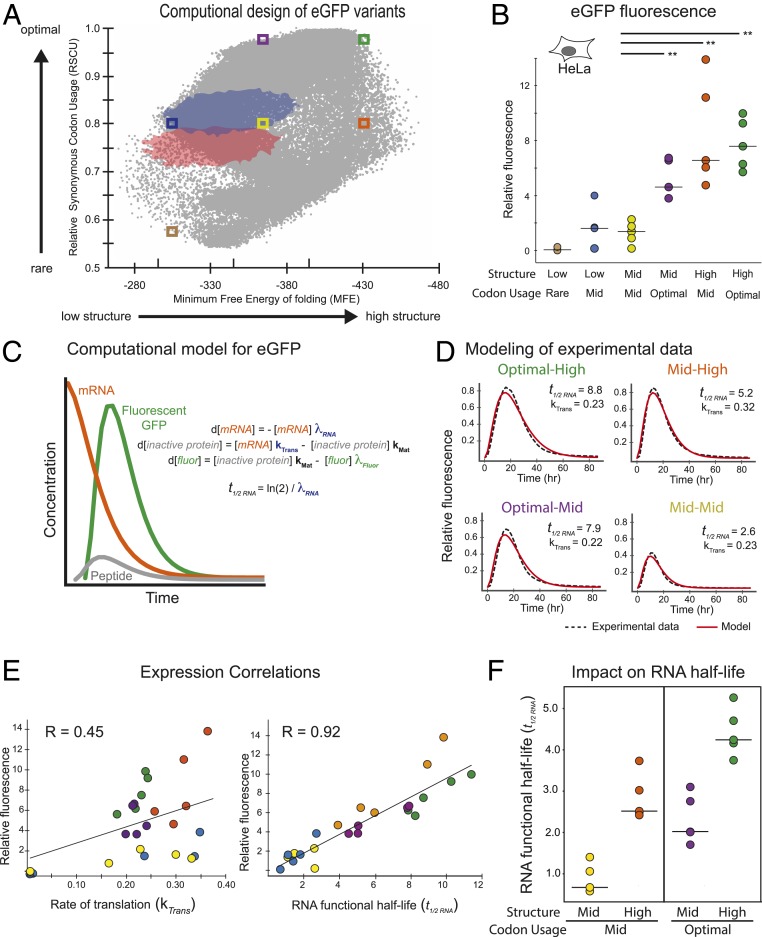
Messenger RNAs (mRNAs) encode information in both their primary sequence and their higher order structure. The independent contributions of factors like codon usage and secondary structure to regulating protein expression are difficult to establish as they are often highly correlated in endogenous sequences. Here, we used 2 approaches, global inclusion of modified nucleotides and rational sequence design of exogenously delivered constructs, to understand the role of mRNA secondary structure independent from codon usage. Unexpectedly, highly expressed mRNAs contained a highly structured coding sequence (CDS). Modified nucleotides that stabilize mRNA secondary structure enabled high expression across a wide variety of primary sequences. Using a set of eGFP mRNAs with independently altered codon usage and CDS structure, we find that the structure of the CDS regulates protein expression through changes in functional mRNA half-life (i.e., mRNA being actively translated). This work highlights an underappreciated role of mRNA secondary structure in the regulation of mRNA stability.
Overview
The claims and statistics of this paper haven’t been checked yet.
Free: it reads the open-access text and checks the first 5 claims that cite a source we can check. Create a free account to check every claim.
Integrity signals
Registry
Cites
Statistics
Figures
Verification
Claims the paper makes
The claims and statistics of this paper haven’t been checked yet.
Free: it reads the open-access text and checks the first 5 claims that cite a source we can check. Create a free account to check every claim.
Claims other papers make about this one
Each is checked against this paper’s own text: does it say what the citing paper says it does?
The source backs part of the claim, not all of it — or backs it for a different population, condition or comparison.
In the citing paper
“Increasing secondary structure lengthens mRNA half-life, which, together with optimal codons, improves protein expression5.”
From Algorithm for optimized mRNA design improves stability and immunogenicity (2023) · cites this paper as [5]
Experimental — accuracy not yet measuredThe source backs part of the claim, not all of it — or backs it for a different population, condition or comparison.
In the citing paper
“Previous work5 established two main objectives for mRNA design, stability and codon optimality, which synergize to increase protein expression.”
From Algorithm for optimized mRNA design improves stability and immunogenicity (2023) · cites this paper as [5]
Experimental — accuracy not yet measuredThe source backs part of the claim, not all of it — or backs it for a different population, condition or comparison.
In the citing paper
“However, mRNA molecules are chemically unstable and prone to degrade, which leads to insufficient protein expression5”
From Algorithm for optimized mRNA design improves stability and immunogenicity (2023) · cites this paper as [5]
Experimental — accuracy not yet measuredThe source backs part of the claim, not all of it — or backs it for a different population, condition or comparison.
In the citing paper
“Increasing secondary structure lengthens mRNA half-life, which, together with optimal codons, improves protein expression5.”
From Algorithm for optimized mRNA design improves stability and immunogenicity (2023) · cites this paper as [5]
Experimental — accuracy not yet measuredThe source backs part of the claim, not all of it — or backs it for a different population, condition or comparison.
In the citing paper
“However, mRNA molecules are chemically unstable and prone to degrade, which leads to insufficient protein expression5”
From Algorithm for optimized mRNA design improves stability and immunogenicity (2023) · cites this paper as [5]
Experimental — accuracy not yet measured
17 more claims about this paper
Create a free account to see every claim other papers make about this one.
Self-check
Percentages, sums and reported differences re-computed from the paper’s own numbers.
The self-check needs the paper’s full text.
Citations
Cites
Karikó, K., Buckstein, M., Ni, H., & Weissman, D. (2005) · Immunity · doi:10.1016/j.immuni.2005.06.008 · Cited by 2,728 · cited 1×
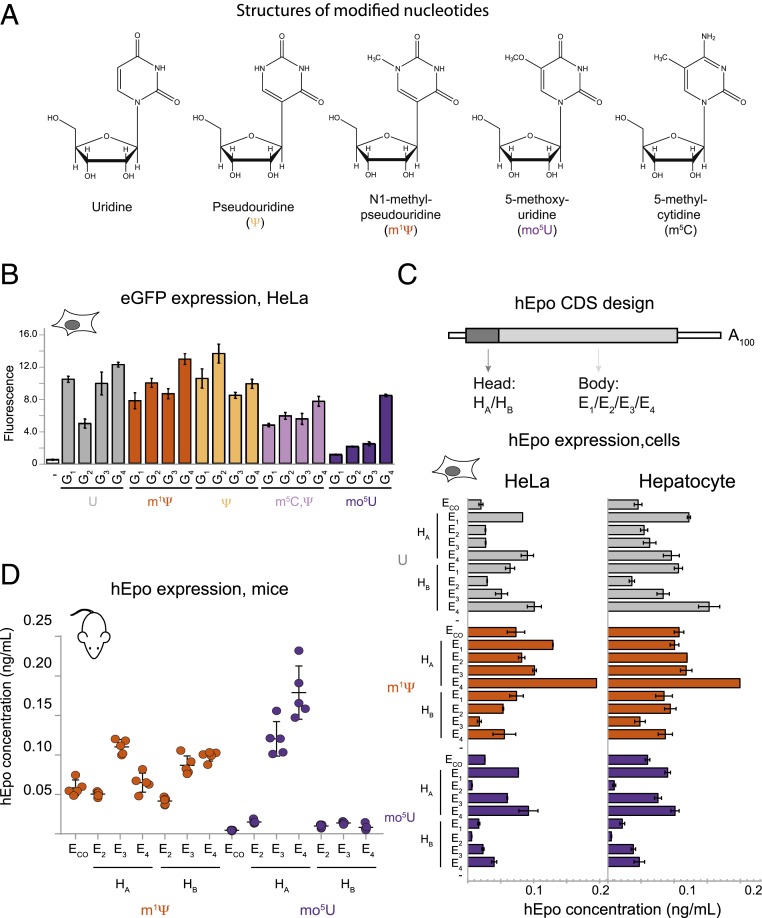
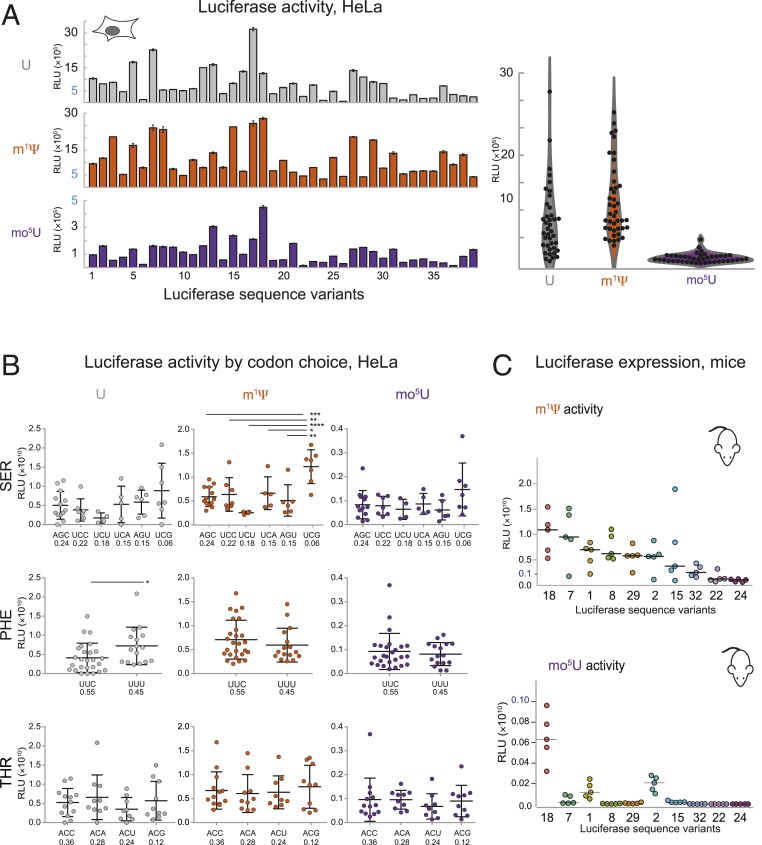
“To assess the degree to which the above conclusions from cell lines translated to animals, we examined protein expression in mice from formulated hEpo and Luc mRNA variants containing two nucleotide modifications shown to have reduced immunogenicity (m(1)Y and mo(5)U) (Kariko et al., 2005).”
A "Silent" Polymorphism in the MDR 1 Gene Changes Substrate Specificity
Kimchi-Sarfaty, C., Oh, J. M., Kim, I.-W., Sauna, Z. E., Calcagno, A. M., Ambudkar, S. V., & Gottesman, M. M. (2007) · Science · doi:10.1126/science.1135308 · Cited by 2,416 · cited 1×
“Another possibility is that structure leads to ribosome pausing at specific locations in the peptide, crucial for proper protein folding, and therefore activity, of certain multidomain proteins (32, 33).”
Karikó, K., Muramatsu, H., Welsh, F. A., Ludwig, J., Kato, H., Akira, S., & Weissman, D. (2008) · Molecular Therapy · doi:10.1038/mt.2008.200 · Cited by 1,930 · cited 2×
“For comparison with a previous study documenting the effects of modified nucleotides on RNA immunogenicity (16), we also made eGFP mRNA wherein both U and C were substituted with Ψ and 5-methyl-cytidine (m(5)C), respectively.”
Synonymous but not the same: the causes and consequences of codon bias
Plotkin, J. B., & Kudla, G. (2011) · Nature Reviews Genetics · doi:10.1038/nrg2899 · Cited by 1,685 · cited 1×
“Highly expressed mRNAs tended to have increased GC content, consistent with previous reports (17), but not all high GC sequences were high expressers (SI Appendix, Figs.”
ResultCodon bias and heterologous protein expression
Gustafsson, C., Govindarajan, S., & Minshull, J. (2004) · Trends in Biotechnology · doi:10.1016/j.tibtech.2004.04.006 · Cited by 1,330 · cited 1×
“Synonymous codon choice directly impacts translation, with highly expressed genes tending to include more "optimal" codons (Gustafsson et al., 2004; Hinnebusch et al., 2016; Horstick et al., 2015; Pop et al., 2014).”
Codon usage tabulated from international DNA sequence databases: status for the year 2000
Nakamura, Y. (2000) · Nucleic Acids Research · doi:10.1093/nar/28.1.292 · Cited by 1,254 · cited 2×
“Using probabilities weighted by frequency in the human transcriptome (Nakamura et al., 2000) generates a similar-shaped distribution, but shifted to both significantly higher RSCU (0.”
MethodInfluentialImproved Green Fluorescent Protein by Molecular Evolution Using DNA Shuffling
Crameri, A., Whitehorn, E. A., Tate, E., & Stemmer, W. P. C. (1996) · Nature Biotechnology · doi:10.1038/nbt0396-315 · Cited by 1,187 · cited 1×
“Realtime, continuous expression data were fit by a model including rate constants for mRNA translation, mRNA functional half-life, maturation of eGFP protein into its fluorescent form (28), and eGFP protein degradation (Fig.”
Xia, T., SantaLucia, J., Burkard, M. E., Kierzek, R., Schroeder, S. J., Jiao, X., Cox, C., & Turner, D. H. (1998) · Biochemistry · doi:10.1021/bi9809425 · Cited by 1,140 · cited 8×
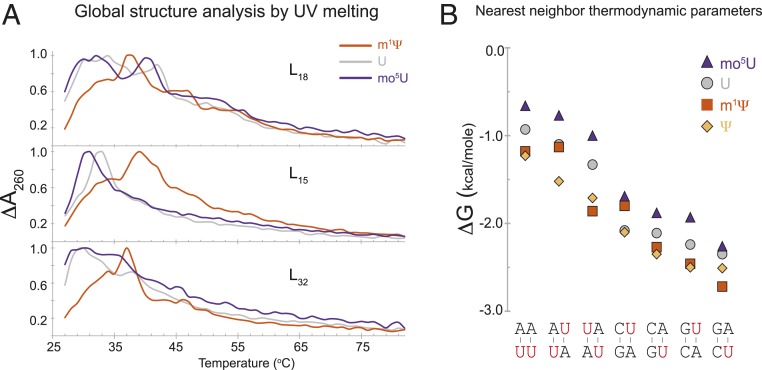
“Nearest-neighbor thermodynamic parameters along with the experimentally determined error for Watson-crick base pairs containing unmodified uridine (values from (Xia et al., 1998)), Y, m(1)Y, or mo(5)U.”
InfluentialTranslational control by 5′-untranslated regions of eukaryotic mRNAs
Hinnebusch, A. G., Ivanov, I. P., & Sonenberg, N. (2016) · Science · doi:10.1126/science.aad9868 · Cited by 1,079 · cited 1×
“Synonymous codon choice directly impacts translation, with highly expressed genes tending to include more "optimal" codons (Gustafsson et al., 2004; Hinnebusch et al., 2016; Horstick et al., 2015; Pop et al., 2014).”
Codon Optimality Is a Major Determinant of mRNA Stability
Presnyak, V., Alhusaini, N., Chen, Y.-H., Martin, S., Morris, N., Kline, N., Olson, S., Weinberg, D., Baker, K. E., Graveley, B. R., et al. (2015) · Cell · doi:10.1016/j.cell.2015.02.029 · Cited by 1,078 · cited 5×
“Regions of increased rare codon frequency have been shown to decrease protein expression and mRNA stability (Presnyak et al., 2015; Weinberg et al., 2016).”
InfluentialSelf-citation
Cited by
SARS-CoV-2 mRNA Vaccine Design Enabled by Prototype Pathogen Preparedness
Corbett, K. S., Edwards, D. K., Leist, S. R., Abiona, O. M., Boyoglu-Barnum, S., Gillespie, R. A., Himansu, S., Schäfer, A., Ziwawo, C. T., DiPiazza, A. T., et al. (2020) · Nature · doi:10.1038/s41586-020-2622-0 · Cited by 1,615
Self-citationmRNA-lipid nanoparticle COVID-19 vaccines: structure and stability
Schoenmaker, L., Witzigmann, D., Kulkarni, J. A., Verbeke, R., Kersten, G., Jiskoot, W., & Crommelin, D. J. A. (2021) · International Journal of Pharmaceutics · doi:10.1016/j.ijpharm.2021.120586 · Cited by 1,566
“Moreover, there are also indications that m1 Ψ increases base stacking and the melting point of mRNA, thereby making mRNA more stable (Mauger et al., 2019; Zhao and He, 2015).”
mRNA-based therapeutics: powerful and versatile tools to combat diseases
Qin, S., Tang, X., Chen, Y., Chen, K., Fan, N., Xiao, W., Zheng, Q., Li, G., Teng, Y., Wu, M., et al. (2022) · Signal Transduction and Targeted Therapy · doi:10.1038/s41392-022-01007-w · Cited by 771
“Increasing the GC content by replacing rare codons in ORFs protects mRNA from endoribonuclease degradation and enhances mRNA protein expression in vivo.(71,72) In addition, functional peptides are crucial for mRNA Fig.”
BackgroundAdvances in COVID-19 mRNA vaccine development
Fang, E., Liu, X., Li, M., Zhang, Z., Song, L., Zhu, B., Wu, X., Liu, J., Zhao, D., & Li, Y. (2022) · Signal Transduction and Targeted Therapy · doi:10.1038/s41392-022-00950-y · Cited by 601
“Currently, nucleoside-modified mRNA vaccines employ 100% chemically modified nucleosides replacing natural nucleosides, and m(1)ψ is often used to replace uridine during IVT to improve the safety and stability of mRNA vaccines.(52,134,172) At present, mRNA vaccines that have entered clinical trials or been approved fo…”
MethodRoles of mRNA poly(A) tails in regulation of eukaryotic gene expression
Passmore, L. A., & Coller, J. (2022) · Nature Reviews Molecular Cell Biology · doi:10.1038/s41580-021-00417-y · Cited by 569
Parvathy, S. T., Udayasuriyan, V., & Bhadana, V. (2022) · Molecular Biology Reports · doi:10.1007/s11033-021-06749-4 · Cited by 556
“Higher mRNA structure improves interaction with RNA binding proteins (RBPs) that positively impacts translation or reduces accessibility to single strand-specific endonucleases improving functional mRNA half-life [85].”
BackgroundKim, J., Eygeris, Y., Gupta, M., & Sahay, G. (2021) · Advanced Drug Delivery Reviews · doi:10.1016/j.addr.2020.12.014 · Cited by 514
Algorithm for Optimized mRNA Design Improves Stability and Immunogenicity
Zhang, H., Zhang, L., Lin, A., Xu, C., Li, Z., Liu, K., Liu, B., Ma, X., Zhao, F., Yao, W., et al. (2020) · arXiv · doi:10.48550/arxiv.2004.10177 · Cited by 511
The dawn of mRNA vaccines: the COVID-19 case
Verbeke, R., Lentacker, I., De Smedt, S. C., & Dewitte, H. (2021) · Journal of Controlled Release · doi:10.1016/j.jconrel.2021.03.043 · Cited by 504
Algorithm for optimized mRNA design improves stability and immunogenicity
Zhang, H., Zhang, L., Lin, A., Xu, C., Li, Z., Liu, K., Liu, B., Ma, X., Zhao, F., Jiang, H., et al. (2023) · Nature · doi:10.1038/s41586-023-06127-z · Cited by 531
Modifications in an Emergency: The Role of N1-Methylpseudouridine in COVID-19 Vaccines
Nance, K. D., & Meier, J. L. (2021) · ACS Central Science · doi:10.1021/acscentsci.1c00197 · Cited by 466
The challenge and prospect of mRNA therapeutics landscape
Weng, Y., Li, C., Yang, T., Hu, B., Zhang, M., Guo, S., Xiao, H., Liang, X.-J., & Huang, Y. (2020) · Biotechnology Advances · doi:10.1016/j.biotechadv.2020.107534 · Cited by 417
Combinatorial optimization of mRNA structure, stability, and translation for RNA-based therapeutics
Leppek, K., Byeon, G. W., Kladwang, W., Wayment-Steele, H. K., Kerr, C. H., Xu, A. F., Kim, D. S., Topkar, V. V., Choe, C., Rothschild, D., et al. (2022) · Nature Communications · doi:10.1038/s41467-022-28776-w · Cited by 399
Combinatorial optimization of mRNA structure, stability, and translation for RNA-based therapeutics
Leppek, K., Byeon, G. W., Kladwang, W., Wayment-Steele, H. K., Kerr, C. H., Xu, A. F., Kim, D. S., Topkar, V. V., Choe, C., Rothschild, D., et al. (2021) · doi:10.1101/2021.03.29.437587 · Cited by 399
Novel approaches for vaccine development
Gebre, M. S., Brito, L. A., Tostanoski, L. H., Edwards, D. K., Carfi, A., & Barouch, D. H. (2021) · Cell · doi:10.1016/j.cell.2021.02.030 · Cited by 347
“Codon optimization of the ORF results in changes of secondary structure content and translation elongation rate both of which impact protein expression levels and potentially protein folding (Mauger et al., 2019).”
mRNA-based therapeutics: looking beyond COVID-19 vaccines
Parhiz, H., Atochina-Vasserman, E. N., & Weissman, D. (2024) · The Lancet · doi:10.1016/s0140-6736(23)02444-3 · Cited by 279
Kim, S. C., Sekhon, S. S., Shin, W.-R., Ahn, G., Cho, B.-K., Ahn, J.-Y., & Kim, Y.-H. (2022) · Molecular & Cellular Toxicology · doi:10.1007/s13273-021-00171-4 · Cited by 255
Effect of mRNA-LNP components of two globally-marketed COVID-19 vaccines on efficacy and stability
Zhang, L., More, K. R., Ojha, A., Jackson, C. B., Quinlan, B. D., Li, H., He, W., Farzan, M., Pardi, N., & Choe, H. (2023) · npj Vaccines · doi:10.1038/s41541-023-00751-6 · Cited by 244
“Moderna ’ s 5 ’ UTR contains a GC-rich tract just upstream of the Kozak sequence 66 , and this GC-rich tract and its secondary structure may reduce translation initiation ef fi ciency and overall protein output 67,68 .”
BackgroundRegulation and Function of RNA Pseudouridylation in Human Cells
Borchardt, E. K., Martinez, N. M., & Gilbert, W. V. (2020) · Annual Review of Genetics · doi:10.1146/annurev-genet-112618-043830 · Cited by 241
mRNA vaccines for infectious diseases — advances, challenges and opportunities
Pardi, N., & Krammer, F. (2024) · Nature Reviews Drug Discovery · doi:10.1038/s41573-024-01042-y · Cited by 229
Pseudouridinylation of mRNA coding sequences alters translation
Eyler, D. E., Franco, M. K., Batool, Z., Wu, M. Z., Dubuke, M. L., Dobosz-Bartoszek, M., Jones, J. D., Polikanov, Y. S., Roy, B., & Koutmou, K. S. (2019) · Proceedings of the National Academy of Sciences · doi:10.1073/pnas.1821754116 · Cited by 226
Thoughts on how to think (and talk) about RNA structure
Vicens, Q., & Kieft, J. S. (2022) · Proceedings of the National Academy of Sciences · doi:10.1073/pnas.2112677119 · Cited by 204
“Doing so has practical benefits: For example, Moderna scientists showed the importance of mRNA structure for stability and thus efficacy of the RNA at the heart of their vaccine (1).”
BackgroundThe Storage and In-Use Stability of mRNA Vaccines and Therapeutics: Not A Cold Case
Oude Blenke, E., Örnskov, E., Schöneich, C., Nilsson, G. A., Volkin, D. B., Mastrobattista, E., Almarsson, Ö., & Crommelin, D. J. A. (2023) · Journal of Pharmaceutical Sciences · doi:10.1016/j.xphs.2022.11.001 · Cited by 206
Theoretical basis for stabilizing messenger RNA through secondary structure design
Wayment-Steele, H. K., Kim, D. S., Choe, C. A., Nicol, J. J., Wellington-Oguri, R., Watkins, A. M., Sperberg, R. A. P., Huang, P.-S., Participants, E., & Das, R. (2020) · doi:10.1101/2020.08.22.262931 · Cited by 199
Theoretical basis for stabilizing messenger RNA through secondary structure design
Wayment-Steele, H. K., Kim, D. S., Choe, C. A., Nicol, J. J., Wellington-Oguri, R., Watkins, A. M., Parra Sperberg, R. A., Huang, P.-S., Participants, E., & Das, R. (2021) · Nucleic Acids Research · doi:10.1093/nar/gkab764 · Cited by 197
Platforms for Production of Protein-Based Vaccines: From Classical to Next-Generation Strategies
Cid, R., & Bolívar, J. (2021) · Biomolecules · doi:10.3390/biom11081072 · Cited by 176
“Alternatively, it has been reported that the incorporation of naturally occurring modified uridines, such as the use of 1-methyl-pseudouridine (m1Ψ) instead of uridine, induces global changes in the secondary structure of mRNA which correlates with high protein expression [82].”
BackgroundRecent Advances in Lipid Nanoparticles for Delivery of mRNA
Yang, L., Gong, L., Wang, P., Zhao, X., Zhao, F., Zhang, Z., Li, Y., & Huang, W. (2022) · Pharmaceutics · doi:10.3390/pharmaceutics14122682 · Cited by 173
“Moderna and BioNTech have also used m1Ψ-modified mRNA to enhance the stability and antigen expression of the new crown vaccine while reducing the inflammatory response to the vaccine [76].”
MethodWang, Y.-S., Kumari, M., Chen, G.-H., Hong, M.-H., Yuan, J. P.-Y., Tsai, J.-L., & Wu, H.-C. (2023) · Journal of Biomedical Science · doi:10.1186/s12929-023-00977-5 · Cited by 173
“They also found codon optimality and greater CDS secondary structure synergistically increased mRNA functional half-life [143].”
BackgroundResearch Advances on the Stability of mRNA Vaccines
Cheng, F., Wang, Y., Bai, Y., Liang, Z., Mao, Q., Liu, D., Wu, X., & Xu, M. (2023) · Viruses · doi:10.3390/v15030668 · Cited by 162
Minnaert, A.-K., Vanluchene, H., Verbeke, R., Lentacker, I., De Smedt, S. C., Raemdonck, K., Sanders, N. N., & Remaut, K. (2021) · Advanced Drug Delivery Reviews · doi:10.1016/j.addr.2021.113900 · Cited by 157
“They demonstrated that introducing modified uridines, such as the use of m1Ψ, stabilizes mRNA secondary structures, by forming more stable base pairs than uridine [119].”
RNA secondary structure packages evaluated and improved by high-throughput experiments
Wayment-Steele, H. K., Kladwang, W., Strom, A. I., Lee, J., Treuille, A., Becka, A., Participants, E., & Das, R. (2022) · Nature Methods · doi:10.1038/s41592-022-01605-0 · Cited by 151
“…mapping data collected with methods different from those used in the Eterna Cloud Labs (SHAPE-CE, SHAPE-MaP, DMS-MaP-seq vs. MAP-seq) and for distinct molecules, including viral genomes 21, 35-40 ribosomal RNAs 40, 41 , and mRNAs designed to improve protein expression 19 (Table 2, Figure 4B).”
BackgroundMethodThe genetic and biochemical determinants of mRNA degradation rates in mammals
Agarwal, V., & Kelley, D. R. (2022) · Genome Biology · doi:10.1186/s13059-022-02811-x · Cited by 155
“, the number of exon junctions per kilobase of ORF sequence) [6, 7]; (ii) the presence of microRNA (miRNA) binding sites [23–25]; (iii) codon frequencies and interactions with the translation machinery [8, 26–30]; (iv) mRNA structure [31, 32]; (v) Pumilio binding elements [33]; (vi) AU-rich elements (AREs) [16, 34]; a…”
BackgroundKumari, M., Lu, R., Li, M., Huang, J., Hsu, F., Ko, S.-H., Ke, F.-Y., Su, S.-C., Liang, K.-H., Yuan, J. P., et al. (2022) · Journal of Biomedical Science · doi:10.1186/s12929-022-00852-9 · Cited by 179
“1mΨ also decreases the immunogenicity of mRNA and increases its thermostability and biological stability [73].”
BackgroundSelf-citationTailor made: the art of therapeutic mRNA design
Metkar, M., Pepin, C. S., & Moore, M. J. (2023) · Nature Reviews Drug Discovery · doi:10.1038/s41573-023-00827-x · Cited by 180
Self-citationmRNA in the Context of Protein Replacement Therapy
Vavilis, T., Stamoula, Ε., Ainatzoglou, A., Sachinidis, A., Lamprinou, M., Dardalas, I., & Vizirianakis, I. S. (2023) · Pharmaceutics · doi:10.3390/pharmaceutics15010166 · Cited by 155
“It also appears prudent to minimize the incorporation of sequences that display increased propensity of regional secondary structure formation on the resulting mRNA, as this can in some cases hinder mRNA–ribosome interactions and diminish protein yields [56].”
BackgroundInfluentialChang, K. S., Kim, J., Park, H., Hong, S.-J., Lee, C.-G., & Jin, E. (2020) · Bioresource Technology · doi:10.1016/j.biortech.2020.122932 · Cited by 134
Synthetic biology in the clinic: engineering vaccines, diagnostics, and therapeutics
Tan, X., Letendre, J. H., Collins, J. J., & Wong, W. W. (2021) · Cell · doi:10.1016/j.cell.2021.01.017 · Cited by 131
“Engineering low secondary structure in the 50 UTR and first 30 nt of a coding region, but adding a high secondary structure region after these regions also improves mRNA translation (Mauger et al., 2019).”
BackgroundAntigen Presentation of mRNA-Based and Virus-Vectored SARS-CoV-2 Vaccines
Rijkers, G. T., Weterings, N., Obregón‐Henao, A., Dutt, T., Dutt, T. S., van Overveld, F. J., & Henao-Tamayo, M. I. (2021) · Vaccines · doi:10.3390/vaccines9080848 · Cited by 156
“Indeed, significant reduction in dendritic cell activation was observed when transfected with RNA transcribed in vitro in the presence of Ψ or N1-methyl-Ψ instead of uridine [30,31].”
BackgroundInfluentialLipid carriers for mRNA delivery
Zhang, W., Jiang, Y., He, Y., Boucetta, H., Wu, J., Chen, Z., & He, W. (2022) · Acta Pharmaceutica Sinica B · doi:10.1016/j.apsb.2022.11.026 · Cited by 143
“A report indicated that the introduction of modified uridines inside the mRNA could minimize the recognition of mRNA by cells and thus reduce the natural immune response induced by foreign mRNA 193 .”
Bu, T., Li, Z., Hou, Y., Sun, W., Zhang, R., Zhao, L., Wei, M., Yang, G., & Yuan, L. (2021) · Theranostics · doi:10.7150/thno.64229 · Cited by 126
“Future refinement of the mRNA, including modification of 5’ -cap, 3’-poly (A) tail, 5’- and 3’-UTRs, codon optimization [22, 39-43], to further improve the specificity and function remain needed.”
MethodMulti ‘omic data integration: A review of concepts, considerations, and approaches
Santiago-Rodríguez, T. M., & Hollister, E. B. (2021) · Seminars in Perinatology · doi:10.1016/j.semperi.2021.151456 · Cited by 155
Identification of RNA structures and their roles in RNA functions
Cao, X., Zhang, Y., Ding, Y., & Wan, Y. (2024) · Nature Reviews Molecular Cell Biology · doi:10.1038/s41580-024-00748-6 · Cited by 151
“…to RNA structures in the 3′ UTR, increased double-strandedness in the coding sequence (CDS) has also been associated with longer mRNA functional half-life (that is, mRNA being actively translated) 189 , although whether this effect is contributed by an extended physical half-life remains elusive.”
Engineering of the current nucleoside-modified mRNA-LNP vaccines against SARS-CoV-2
Granados-Riveron, J. T., & Aquino-Jarquin, G. (2021) · Biomedicine & Pharmacotherapy · doi:10.1016/j.biopha.2021.111953 · Cited by 111
mRNA delivery systems for cancer immunotherapy: Lipid nanoparticles and beyond
Sentí, M. E., del Valle, L. G., & Schiffelers, R. M. (2024) · Advanced Drug Delivery Reviews · doi:10.1016/j.addr.2024.115190 · Cited by 137
Current landscape of mRNA technologies and delivery systems for new modality therapeutics
Lu, R., Hsu, H.-E., Perez, S. J. L. P., Kumari, M., Chen, G., Hong, M.-H., Lin, Y.-S., Liu, C.-H., Ko, S.-H., Concio, C. A. P., et al. (2024) · Journal of Biomedical Science · doi:10.1186/s12929-024-01080-z · Cited by 129
“In addition to the effects of the 5’ UTR and 3’ UTR, higher order secondary structures in the coding sequence region may also positively modulate mRNA functional half-life [53].”
BackgroundKamiya, M., Matsumoto, M., Yamashita, K., Izumi, T., Kawaguchi, M., Mizukami, S., Tsurumaru, M., Mukai, H., & Kawakami, S. (2022) · Pharmaceutics · doi:10.3390/pharmaceutics14112357 · Cited by 123
“It has been reported that mRNA activity is significantly decreased by mRNA oxidation and hydrolysis due to alterations in mRNA structure [33,34].”
BackgroundSung, J. J., Alghoul, Z., Long, D., Yang, C., & Merlin, D. (2022) · Biomaterials · doi:10.1016/j.biomaterials.2022.121707 · Cited by 113
Advancements of in vitro transcribed mRNA (IVT mRNA) to enable translation into the clinics
Kang, D. D., Li, H., & Dong, Y. (2023) · Advanced Drug Delivery Reviews · doi:10.1016/j.addr.2023.114961 · Cited by 100
“gated the role of secondary structures in protein translation through computational sequence design [13,25].”
Photocaged 5′ cap analogues for optical control of mRNA translation in cells
Klöcker, N., Weissenboeck, F. P., van Dülmen, M., Špaček, P., Hüwel, S., & Rentmeister, A. (2022) · Nature Chemistry · doi:10.1038/s41557-022-00972-7 · Cited by 100
“Remaining chemical modifications in the mRNA might affect the properties of the mRNA as shown for natural modifications 33,34 .”
Frameworks for transformational breakthroughs in RNA-based medicines
Androsavich, J. R. (2024) · Nature Reviews Drug Discovery · doi:10.1038/s41573-024-00943-2 · Cited by 108
Synthetic modified messenger RNA for therapeutic applications
Gao, M., Zhang, Q., Feng, X.-H., & Liu, J. (2021) · Acta Biomaterialia · doi:10.1016/j.actbio.2021.06.020 · Cited by 89
Advancements in mRNA Encoded Antibodies for Passive Immunotherapy
Deal, C. E., Carfí, A., & Plante, O. J. (2021) · Vaccines · doi:10.3390/vaccines9020108 · Cited by 93
“Other factors that can affect mRNA translation or half-life include UTRs [57–59] and codon optimization [60]; the work of understanding and balancing these mRNA elements is an area of intense research.”
BackgroundA Biopharmaceutical Perspective on Higher-Order Structure and Thermal Stability of mRNA Vaccines
Kloczewiak, M. A., Banks, J. M., Jin, L., & Brader, M. L. (2022) · Molecular Pharmaceutics · doi:10.1021/acs.molpharmaceut.2c00092 · Cited by 94
Recent progress in mRNA cancer vaccines
Yao, R., Xie, C., & Xia, X. (2024) · Human Vaccines & Immunotherapeutics · doi:10.1080/21645515.2024.2307187 · Cited by 104
“45,46 However, these optimization strategies, while effective, have limitations in fully harnessing the potential of mRNA sequences for optimal performance.”
BackgroundRice, A. M., Castillo-Morales, A., Ho, A. T., Mordstein, C., Mühlhausen, S., Watson, S., Cano, L., Young, B., Kudla, G., & Hurst, L. D. (2020) · Molecular Biology and Evolution · doi:10.1093/molbev/msaa188 · Cited by 94
“Alternatively, effects may be mediated by changes in mRNA secondary structure (Mauger et al. 2019).”
BackgroundInfluentialEngineering Gene Therapy: Advances and Barriers
Shahryari, A., Burtscher, I., Nazari, Z., & Lickert, H. (2021) · Advanced Therapeutics · doi:10.1002/adtp.202100040 · Cited by 81
A comprehensive comparison of DNA and RNA vaccines
Wang, C., & Yuan, F. (2024) · Advanced Drug Delivery Reviews · doi:10.1016/j.addr.2024.115340 · Cited by 105
Secondary structure prediction for RNA sequences including N6-methyladenosine
Kierzek, E., Zhang, X., Watson, R. M., Kennedy, S. D., Szabat, M., Kierzek, R., & Mathews, D. H. (2022) · Nature Communications · doi:10.1038/s41467-022-28817-4 · Cited by 91
Lim, S., Khoo, R., Juang, Y.-C., Gopal, P., Zhang, H., Yeo, C., Peh, K. M., Teo, J., Ng, S., Henry, B., et al. (2021) · ACS Central Science · doi:10.1021/acscentsci.0c01337 · Cited by 80
mRNA in cancer immunotherapy: beyond a source of antigen
Hoecke, L. V., Verbeke, R., Dewitte, H., Lentacker, I., Vermaelen, K. Y., Breckpot, K., & Lint, S. V. (2021) · Molecular Cancer · doi:10.1186/s12943-021-01329-3 · Cited by 89
“[26, 27] evidenced that the replacement of uridine with 1mΨ stabilizes secondary structures in mRNA molecules, where they identified that a flexible leader region and a high degree of secondary structure throughout the remainder of the molecule correlated with a prolonged functional half-life of mRNA and higher protei…”
BackgroundmRNA vaccine sequence and structure design and optimization: Advances and challenges
Jin, L., Zhou, Y., Zhang, S., & Chen, S. (2024) · Journal of Biological Chemistry · doi:10.1016/j.jbc.2024.108015 · Cited by 111
“For instance, a chemical probing study suggested that RNAs containing m1 J and uridine may adopt distinct secondary structures (128).”
InfluentialCui, L., Hunter, M. R., Sonzini, S., Pereira, S. G. T., Romanelli, S. M., Liu, K., Li, W., Liang, L., Yang, B., Mahmoudi, N., et al. (2021) · Small · doi:10.1002/smll.202105832 · Cited by 85
Deep generative models design mRNA sequences with enhanced translational capacity and stability
Zhang, H., Liu, H., Xu, Y., Huang, H., Liu, Y., Wang, J., Qin, Y., Wang, H., Ma, L., Xun, Z., et al. (2025) · Science · doi:10.1126/science.adr8470 · Cited by 119
Ribosome dynamics and mRNA turnover, a complex relationship under constant cellular scrutiny
Morris, C., Cluet, D., & Ricci, E. P. (2021) · WIREs RNA · doi:10.1002/wrna.1658 · Cited by 79
“In an attempt to disentangle the two factors, a study reported that both secondary structure and codon usage appear to modulate translation efficiency and the functional half-life of transfected synthetic transcripts in a coherent but independent manner (Mauger et al., 2019).”
BackgroundPotentialities and Challenges of mRNA Vaccine in Cancer Immunotherapy
Duan, L.-J., Wang, Q., Zhang, C., Yang, D.-X., & Zhang, X. (2022) · Frontiers in Immunology · doi:10.3389/fimmu.2022.923647 · Cited by 92
“Methods to increase GC content including codon optimization of ORF and depletion of uridine (28).”
BackgroundTranslational gene regulation in plants: A green new deal
Camacho, R. A. U., Lokdarshi, A., & von Arnim, A. G. (2020) · Wiley Interdisciplinary Reviews - RNA · doi:10.1002/wrna.1597 · Cited by 77
“These intriguing questions have biotechnological implications, given the current trend in devising precise ways for regulating gene expression directly at the level of mRNA translation (W. Li et al., 2019; Mauger et al., 2019; Si et al., 2020; G. Xu, Yuan, et al., 2017).”
BackgroundSecondary structures in RNA synthesis, splicing and translation
Georgakopoulos‐Soares, I., Parada, G. E., & Hemberg, M. (2022) · Computational and Structural Biotechnology Journal · doi:10.1016/j.csbj.2022.05.041 · Cited by 94
“Structural features of mRNAs dictate to a large extent mRNA half-life with transcripts that have a structured coding sequence showing higher expression levels [159].”
BackgroundThe mRNA Vaccine Revolution: COVID-19 Has Launched the Future of Vaccinology
Ye, Z., Harmon, J., Ni, W., Li, Y., Wich, D., & Xu, Q. (2023) · ACS Nano · doi:10.1021/acsnano.2c12584 · Cited by 75
Kramer, M. C., Janssen, K. A., Palos, K. R., Nelson, A. D. L., Vandivier, L. E., Garcia, B. A., Lyons, E. H., Beilstein, M. A., & Gregory, B. D. (2020) · Plant Direct · doi:10.1002/pld3.239 · Cited by 78
“…efficiency and mRNA stability, as higher intramolecular base pairing can slow down ribosome progress along the transcript (Kozak, 1988; Svitkin et al., 2001) or increase transcript stability (Beaudoin et al., 2018; Mauger et al., 2019; Suay, Salvador, Abesha, & Klein, 2005), respectively.”
Jones, J. D., Monroe, J. G., & Koutmou, K. S. (2020) · Wiley Interdisciplinary Reviews - RNA · doi:10.1002/wrna.1586 · Cited by 73
“Additionally, lower resolution RNA-secondary structure mapping studies (e.g. using DMS or SHAPE reagents) comparing modified and unmodified mRNAs can provide additional insights information about how the shape of mRNAs is influenced by modifications (Mauger et al., 2019).”
BackgroundNanotechnology‐Assisted RNA Delivery: From Nucleic Acid Therapeutics to COVID‐19 Vaccines
Rinoldi, C., Zargarian, S. S., Nakielski, P., Li, X., Liguori, A., Petronella, F., Presutti, D., Wang, Q., Costantini, M., Sio, L. D., et al. (2021) · Small Methods · doi:10.1002/smtd.202100402 · Cited by 86
Loomis, R. J., DiPiazza, A. T., Falcone, S., Ruckwardt, T. J., Morabito, K. M., Abiona, O. M., Chang, L. A., Caringal, R. T., Presnyak, V., Narayanan, E., et al. (2021) · Frontiers in Immunology · doi:10.3389/fimmu.2021.772864 · Cited by 79
Self-citationmRNA Therapeutic Modalities Design, Formulation and Manufacturing under Pharma 4.0 Principles
Ouranidis, A., Vavilis, T., Mandala, E., Davidopoulou, C., Stamoula, Ε., Markopoulou, C. K., Karagianni, A., & Kachrimanis, K. (2021) · Biomedicines · doi:10.3390/biomedicines10010050 · Cited by 83
Recent Advances: Molecular Mechanism of RNA Oxidation and Its Role in Various Diseases
Li, Z., Chen, X., Liu, Z., Ye, W., Li, L., Qian, L., Ding, H., Li, P., & Aung, L. H. H. (2020) · Frontiers in Molecular Biosciences · doi:10.3389/fmolb.2020.00184 · Cited by 74
Bicknell, A. A., Reid, D. W., Licata, M. C., Jones, A. K., Cheng, Y. M., Li, M., Hsiao, C. J., Pepin, C. S., Metkar, M., Levdansky, Y., et al. (2024) · Cell Reports · doi:10.1016/j.celrep.2024.114098 · Cited by 68
Self-citationNeurosymbolic AI for Reasoning Over Knowledge Graphs: A Survey
DeLong, L. N., Mir, R. F., & Fleuriot, J. (2024) · IEEE Transactions on Neural Networks and Learning Systems · doi:10.1109/tnnls.2024.3420218 · Cited by 135
“…such as messenger ribonucleic acid (mRNA), not only act as a time limit on potential interactions but also determine the levels to which various functional proteins are expressed, and therefore, the extent to which those proteins can have effects on other players in the network [17], [96].”
N1-methylpseudouridine found within COVID-19 mRNA vaccines produces faithful protein products
Kim, K. Q., Burgute, B. D., Tzeng, S., Jing, C., Jungers, C. F., Zhang, J., Yan, L. L., Vierstra, R. D., Djuranović, S., Evans, B. S., et al. (2022) · Cell Reports · doi:10.1016/j.celrep.2022.111300 · Cited by 73
“Interestingly,J was reported to stabilize mRNA structure regardless of the sequence context, while the impact of m1J on mRNA stability was dependent on the identity of its neighbors (Mauger et al., 2019), in agreement with the idea that the modifications differently alter RNA-duplex formation.”
mRNA-Based Therapeutics in Cancer Treatment
Sun, H., Zhang, Y., Wang, G., Yang, W., & Xu, Y. (2023) · Pharmaceutics · doi:10.3390/pharmaceutics15020622 · Cited by 69
“Appropriate chemical modifications can reduce the degradation of mRNA and maintain the stability of its secondary structure [78].”
BackgroundAdvances and prospects of RNA delivery nanoplatforms for cancer therapy
Attia, M. S., Kijanka, G. S., Nguyen, N., Zhang, J., & An, H. (2024) · Acta Pharmaceutica Sinica B · doi:10.1016/j.apsb.2024.09.009 · Cited by 67
“Also, altering the structure and stability of mRNA can be achieved by substituting nucleosides or adding chemical groups, such as N 1-methyl-pseudouridine or pseudouridine 42 e 44 .”
CodonBERT large language model for mRNA vaccines
Li, S., Moayedpour, S., Li, R., Bailey, M., Riahi, S., Kogler-Anele, L., Miladi, M., Miner, J., Pertuy, F., Zheng, D., et al. (2024) · Genome Research · doi:10.1101/gr.278870.123 · Cited by 60
Enabling mRNA Therapeutics: Current Landscape and Challenges in Manufacturing
Youssef, M., Hitti, C., Fulber, J. P. C., & Kamen, A. (2023) · Biomolecules · doi:10.3390/biom13101497 · Cited by 72
“Optimization of the GC content in the GOI, with concurrent uridine depletion in therapeutic mRNA design, not only improves the elongation rate and translation efficiency, but can also alter RNA secondary structures that can interfere with gene expression [78].”
BackgroundDerbis, M., Kul, E., Niewiadomska, D., Sekrecki, M., Piasecka, A., Taylor, K., Hukema, R. K., Stork, O., & Sobczak, K. (2021) · Nature Communications · doi:10.1038/s41467-021-21021-w · Cited by 66
FMRP links optimal codons to mRNA stability in neurons
Shu, H., Donnard, E. R., Liu, B., Jung, S., Wang, R., & Richter, J. D. (2020) · Proceedings of the National Academy of Sciences · doi:10.1073/pnas.2009161117 · Cited by 63
“In mammalian cells, strong secondary structure in the CDS stabilizes mRNA, possibly by preventing strand-specific endonucleolytic cleavage or ribosome collisions (43).”
BackgroundInfluentialSynonymous codon usage regulates translation initiation
Barrington, C. L., Galindo, G., Koch, A. L., Horton, E. R., Morrison, E. J., Tisa, S., Stasevich, T. J., & Rissland, O. S. (2023) · Cell Reports · doi:10.1016/j.celrep.2023.113413 · Cited by 71
Bérouti, M., Wagner, M., Greulich, W., Piseddu, I., Gärtig, J., Hansbauer, L., Müller-Hermes, C., Heiß, M., Pichler, A., Tölke, A. J., et al. (2025) · Cell · doi:10.1016/j.cell.2025.05.032 · Cited by 76
The paradigm shift in treatment from Covid-19 to oncology with mRNA vaccines
Wei, J., & Hui, A.-M. (2022) · Cancer Treatment Reviews · doi:10.1016/j.ctrv.2022.102405 · Cited by 57
Nebulised delivery of RNA formulations to the lungs: From aerosol to cytosol
Neary, M. T., Mulder, L. M., Kowalski, P. S., MacLoughlin, R. J., Crean, A. M., & Ryan, K. B. (2024) · Journal of Controlled Release · doi:10.1016/j.jconrel.2023.12.012 · Cited by 70
Deep learning models for predicting RNA degradation via dual crowdsourcing
Wayment-Steele, H. K., Kladwang, W., Watkins, A. M., Kim, D. S., Tunguz, B., Reade, W., Demkin, M., Romano, J., Wellington-Oguri, R., Nicol, J. J., et al. (2022) · Nature Machine Intelligence · doi:10.1038/s42256-022-00571-8 · Cited by 76
Polymeric nanoparticle gel for intracellular mRNA delivery and immunological reprogramming of tumors
Neshat, S. Y., Chan, C. H. R., Harris, J. J., Zmily, O. M., Est-Witte, S. E., Karlsson, J. E., Shannon, S. R., Jain, M., Doloff, J. C., Green, J. J., et al. (2023) · Biomaterials · doi:10.1016/j.biomaterials.2023.122185 · Cited by 56
A Review on the Stability Challenges of Advanced Biologic Therapeutics
Sarvepalli, S., Pasika, S. R., Verma, V., Thumma, A., Bolla, S., Nukala, P. K., Butreddy, A., & Bolla, P. K. (2025) · Pharmaceutics · doi:10.3390/pharmaceutics17050550 · Cited by 71
“This modification process helps in improving the half-life of mRNA for use in a variety of therapeutic modalities [134–136].”
Zhang, M., Li, K., Bai, J., Velema, W. A., Yu, C., Damme, R. V., Lee, W. H., Corpuz, M. L., Chen, J., & Lu, Z. (2021) · Nature Communications · doi:10.1038/s41467-021-22552-y · Cited by 62
Exosomes as Natural Nanocarriers for RNA-Based Therapy and Prophylaxis
Gorshkov, A., Purvinsh, L., Brodskaia, A., & Vasin, A. (2022) · Nanomaterials · doi:10.3390/nano12030524 · Cited by 52
“Values can differ to some extent depending on RNA secondary structure [16], the presence of 5’ capping, or the length of the 3’ poly-A tail [17].”
BackgroundNearest neighbor rules for RNA helix folding thermodynamics: improved end effects
Zuber, J., Schroeder, S. J., Sun, H., Turner, D. H., & Mathews, D. H. (2022) · Nucleic Acids Research · doi:10.1093/nar/gkac261 · Cited by 58
“These RNA structure prediction programs enable design of mRNA vaccine sequences (13,99,100), analysis of metaproperties of transcriptomic changes in response to stress (101–103), determination of effects of nucleotide modifications on folding stability (104–106), discovery of accessible regions to target with antisens…”
Human RNase 4 improves mRNA sequence characterization by LC–MS/MS
Wolf, E. J., Grünberg, S., Dai, N., Chen, T.-H., Roy, B., Yigit, E., & Junior, I. R. C. (2022) · Nucleic Acids Research · doi:10.1093/nar/gkac632 · Cited by 58
“stabilization of mRNA secondary structures (35) and/or a slight reduction of hRNase 4 activity at m1 sites.”
BackgroundSHAPE Directed Discovery of New Functions in Large RNAs
Weeks, K. M. (2021) · Accounts of Chemical Research · doi:10.1021/acs.accounts.1c00118 · Cited by 57
Predicting the translation efficiency of messenger RNA in mammalian cells
Zheng, D., Persyn, L., Wang, J., Liu, Y., Ulloa-Montoya, F., Cenik, C., & Agarwal, V. (2026) · Nature Biotechnology · doi:10.1038/s41587-025-02712-x · Cited by 52
“2a), including secondary structure features, in contrast to prior findings 45 .”
InfluentialThe Importance of RNA-Based Vaccines in the Fight against COVID-19: An Overview
Machado, B. A. S., Hodel, K. V. S., Fonseca, L. M. D. S., Mascarenhas, L. A. B., Andrade, L. P. C. D. S., Rocha, V. P. C., Soares, M. B. P., Berglund, P., Duthie, M. S., Reed, S. G., et al. (2021) · Vaccines · doi:10.3390/vaccines9111345 · Cited by 60
Therapeutic mRNA Engineering from Head to Tail
Jia, L., & Qian, S. (2021) · Accounts of Chemical Research · doi:10.1021/acs.accounts.1c00541 · Cited by 63
An Update on mRNA-Based Viral Vaccines
Jeeva, S., Kim, K., Shin, C. H., Wang, B., & Kang, S. (2021) · Vaccines · doi:10.3390/vaccines9090965 · Cited by 55
“Further studies suggested that mRNA secondary structures that can be stabilized further by m1Ψ may increase the functional half-life of mRNA independent of codon optimality [56,58].”
BackgroundInfluentialMirtaleb, M. S., Falak, R., Heshmatnia, J., Bakhshandeh, B., Taheri, R. A., Soleimanjahi, H., & Emameh, R. Z. (2023) · International Immunopharmacology · doi:10.1016/j.intimp.2023.109934 · Cited by 65
Metadata
- Authors
- Mauger, D. M., Cabral, B. J., Presnyak, V., Su, S. V., Reid, D. W., Goodman, B., Link, K., Khatwani, N., Reynders, J., Moore, M. J., & McFadyen, I. J.
- Affiliations
- Platform Research, Moderna, Inc., Cambridge, MA 02139
- Corresponding author
- Moore, Melissa J.
- Venue
- Proceedings of the National Academy of Sciences
- Publisher
- National Academy of Sciences
- Published
- 2019-11-11
- Volume
- 116
- Issue
- 48
- Pages
- 24075-24083
- ISSN
- 0027-8424 (ISSN-L)
- 1091-6490
- PMC
- PMC6883848
- OpenAlex
- W2983889514
- Semantic Scholar
- 5893e4255a022371c1bbef16899698c3e704ff58
- Cited by
- 555
- References
- 56
- Citations by year
- 2026: 76 · 2025: 105 · 2024: 104 · 2023: 73 · 2022: 98 · 2021: 71 · 2020: 26 · 2019: 2
- FWCI
- 16.54
- Type
- journal article
- Language
- en
- Open access
- hybrid
- doi.org
- Licence
- Locations
- Proceedings of the National Academy of Sciences (publishedVersion, cc-by)
- bioRxiv (Cold Spring Harbor Laboratory) (acceptedVersion)
- PubMed Central (publishedVersion, cc-by)
- PubMed (publishedVersion)
- Funders
- Moderna
- Topics
- Life Sciences › Biochemistry, Genetics and Molecular Biology › Molecular Biology › RNA and protein synthesis mechanisms
- Life Sciences › Biochemistry, Genetics and Molecular Biology › Molecular Biology › RNA Research and Splicing
- Life Sciences › Biochemistry, Genetics and Molecular Biology › Molecular Biology › RNA Interference and Gene Delivery
- Keywords
- mRNA secondary structure, mRNA stability, mRNA half-life, codon usage, protein expression regulation, modified nucleotides, mRNA translation
- MeSH terms
- Half-Life, HeLa Cells, Humans, Nucleic Acid Conformation, Proteins, RNA, Messenger, Protein Biosynthesis, RNA Stability
About these checks
Registry, retraction, Cites and statistics results are computed, not judged, with one exception: a printed reference that no index lists is read once by a model before it counts as a citation error. Claims are extracted by a model and kept only when their quote appears verbatim in the text; each cited source is then checked, with a model’s help, for whether it says what the claim relies on. Those verdicts can be wrong — read the claim’s quote and the cited source before relying on one.
Statistics and arithmetic are recomputed, not judged.
Confidence bands are shown only for fields calibrated on our annotated test set. None is calibrated yet, so no band is shown.
What counts as a claim ›How we measure confidence ›How we check this ›
Are you an author, or do you see a problem with this page? Request a review
Data sources
Bibliographic data: Semantic Scholar, OpenAlex, Crossref.
Contains information from the Semantic Scholar Academic Graph Datasets, made available under the ODC Attribution License (ODC-BY 1.0).
Semantic Scholar’s data is described in: Kinney, R., et al. (2023). The Semantic Scholar Open Data Platform. arXiv:2301.10140.
