

Identifying airborne transmission as the dominant route for the spread of COVID-19
Open accessThe DOI matches its Crossref record; 31 of the 31 references it cites were found in a registry or an index.
Abstract
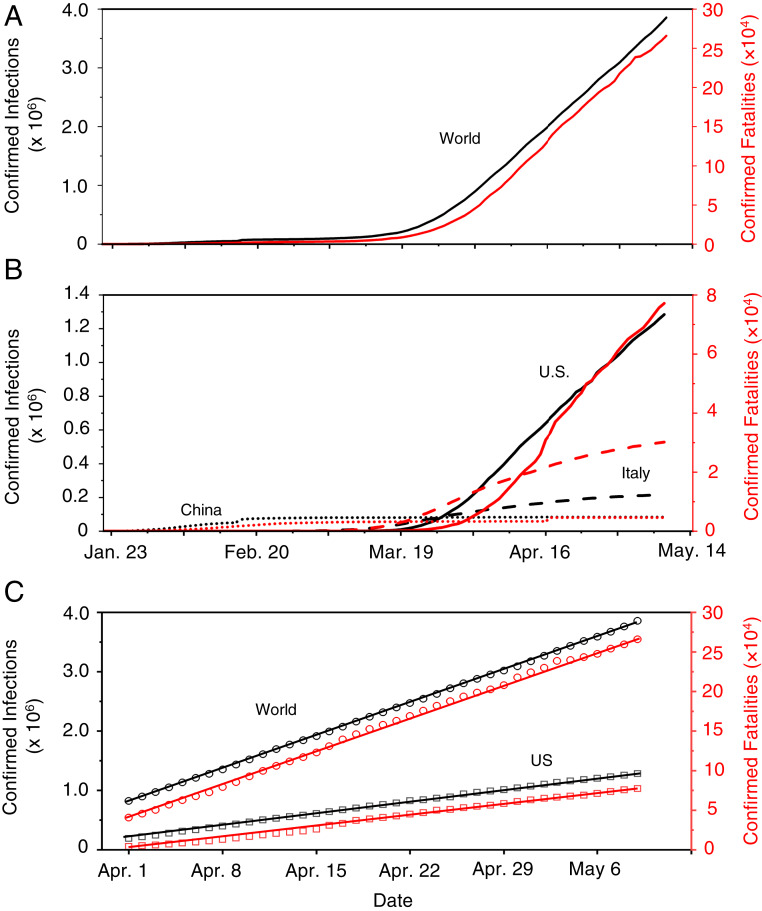
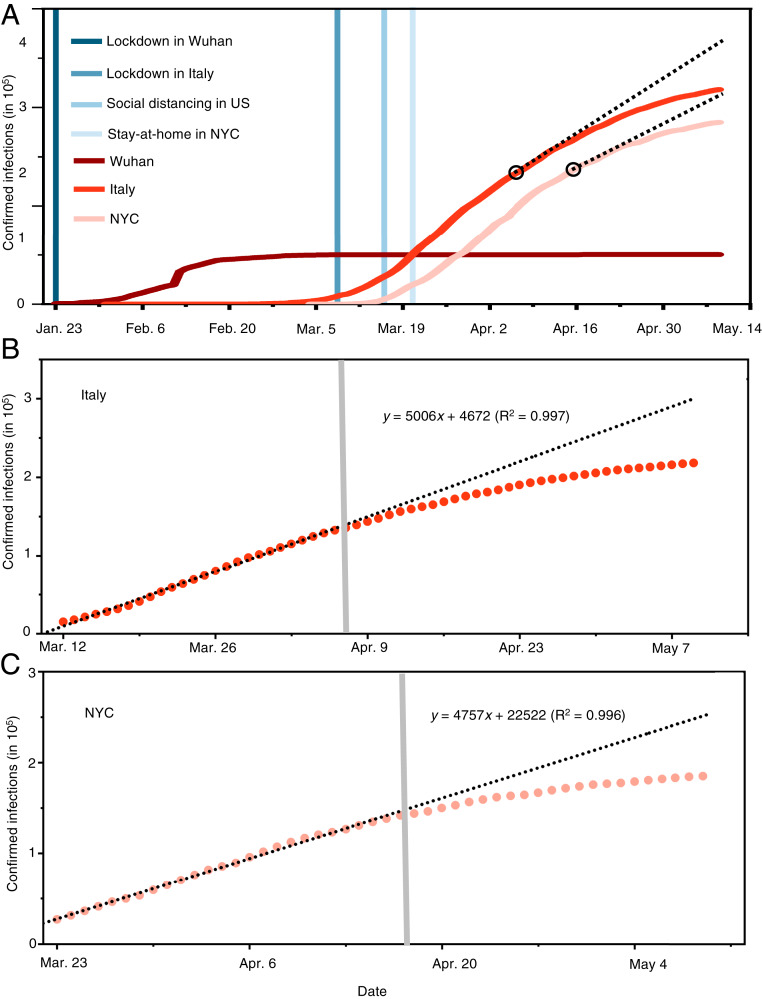
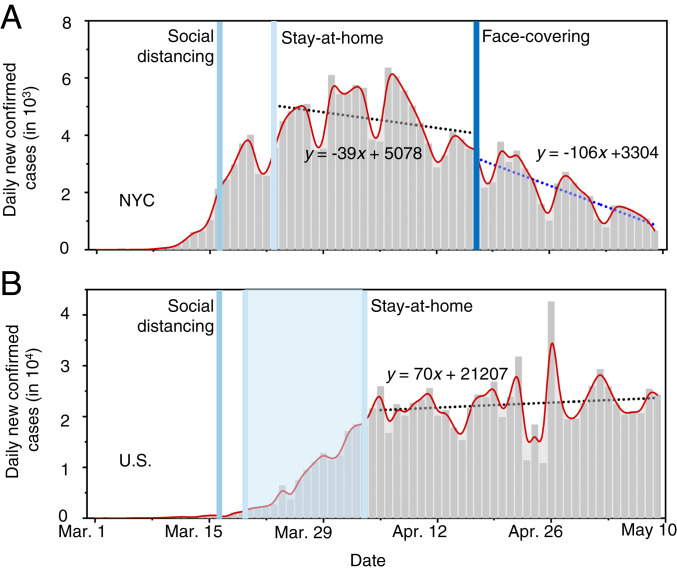
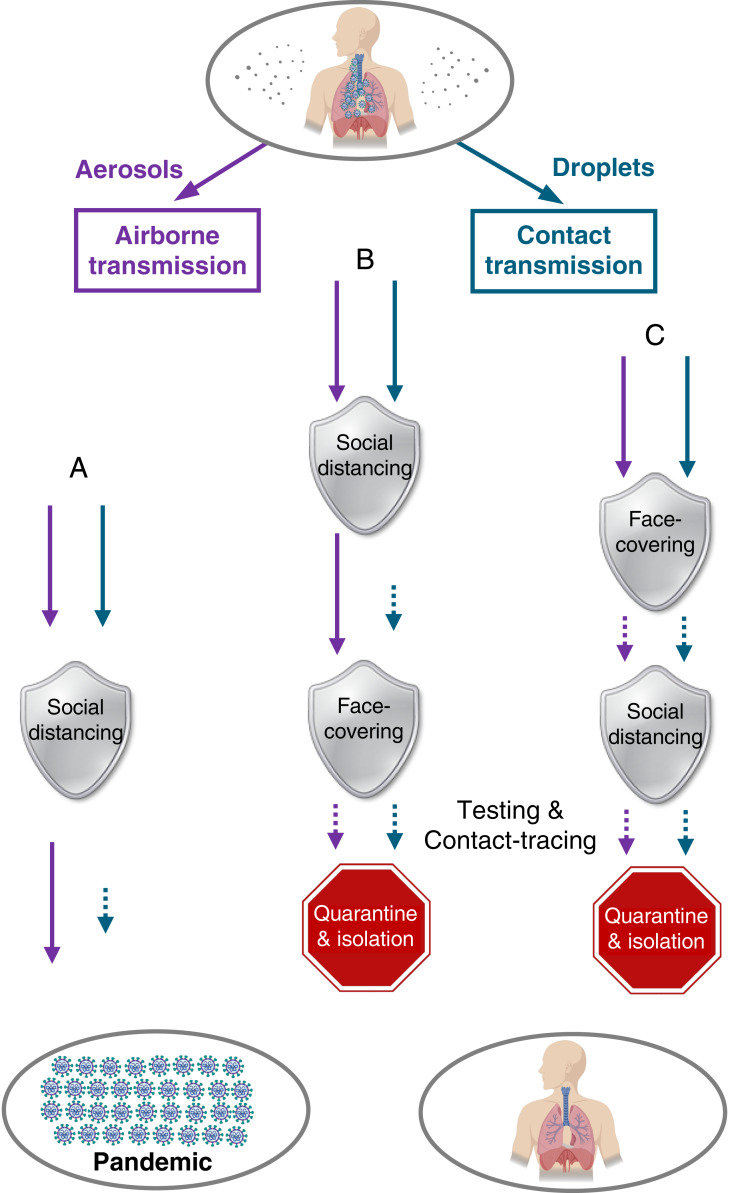
Various mitigation measures have been implemented to fight the coronavirus disease 2019 (COVID-19) pandemic, including widely adopted social distancing and mandated face covering. However, assessing the effectiveness of those intervention practices hinges on the understanding of virus transmission, which remains uncertain. Here we show that airborne transmission is highly virulent and represents the dominant route to spread the disease. By analyzing the trend and mitigation measures in Wuhan, China, Italy, and New York City, from January 23 to May 9, 2020, we illustrate that the impacts of mitigation measures are discernable from the trends of the pandemic. Our analysis reveals that the difference with and without mandated face covering represents the determinant in shaping the pandemic trends in the three epicenters. This protective measure alone significantly reduced the number of infections, that is, by over 78,000 in Italy from April 6 to May 9 and over 66,000 in New York City from April 17 to May 9. Other mitigation measures, such as social distancing implemented in the United States, are insufficient by themselves in protecting the public. We conclude that wearing of face masks in public corresponds to the most effective means to prevent interhuman transmission, and this inexpensive practice, in conjunction with simultaneous social distancing, quarantine, and contact tracing, represents the most likely fighting opportunity to stop the COVID-19 pandemic. Our work also highlights the fact that sound science is essential in decision-making for the current and future public health pandemics.
Overview
The claims and statistics of this paper haven’t been checked yet.
Free: it reads the open-access text and checks the first 5 claims that cite a source we can check. Create a free account to check every claim.
Integrity signals
Registry
Cites
Statistics
Figures
Verification
Claims the paper makes
The claims and statistics of this paper haven’t been checked yet.
Free: it reads the open-access text and checks the first 5 claims that cite a source we can check. Create a free account to check every claim.
Claims other papers make about this one
Each is checked against this paper’s own text: does it say what the citing paper says it does?
The cited source says what the claim attributes to it.
In the citing paper
“With the progression of the pandemic there is a growing body of literature that supports airborne transmission of SARS-CoV-2 playing an increasingly important role in the spread of the disease [29, 39–44].”
From The protective performance of reusable cloth face masks, disposable procedure masks, KN95 masks and N95 respirators: Filtration and total inward leakage (2021) · cites this paper as [39]
Self-check
Percentages, sums and reported differences re-computed from the paper’s own numbers.
The self-check needs the paper’s full text.
Citations
Cites
Aerosol and surface stability of SARS-CoV-2 as compared with SARS-CoV-1
van Doremalen, N., Bushmaker, T., Morris, D. H., Holbrook, M. G., Gamble, A., Williamson, B. N., Tamin, A., Harcourt, J. L., Thornburg, N. J., Gerber, S. I., et al. (2020) · New England Journal of Medicine · doi:10.1056/nejmc2004973 · Cited by 9,951 · cited 4×
“Recent experimental studies have examined the stability of SARS-CoV-2, showing that the virus remains infectious in aerosols for hours (12) and on surfaces up to days (12, 13).”
InfluentialTemporal dynamics in viral shedding and transmissibility of COVID-19
He, X., Lau, E. H. Y., Wu, P., Deng, X., Wang, J., Hao, X., Lau, Y. C., Wong, J. Y., Guan, Y., Tan, X., et al. (2020) · Nature Medicine · doi:10.1038/s41591-020-0869-5 · Cited by 4,247 · cited 2×
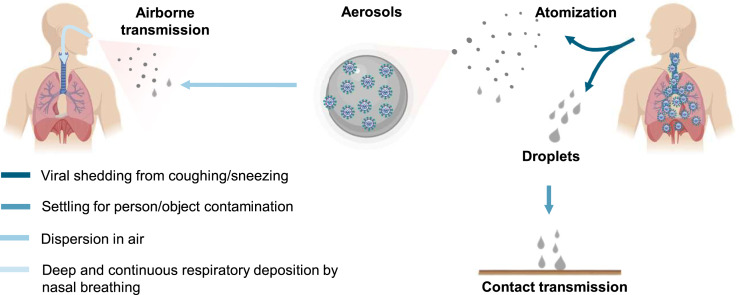
“In addition, nascent micrometer-size aerosols produced from coughing/sneezing of infected people have the potential of containing many viruses, particularly for asymptomatic carriers (16).”
Coronaviruses: An Overview of Their Replication and Pathogenesis
Fehr, A. R., & Perlman, S. (2015) · Methods in Molecular Biology · doi:10.1007/978-1-4939-2438-7_1 · Cited by 3,787
Quantifying SARS-CoV-2 transmission suggests epidemic control with digital contact tracing
Ferretti, L., Wymant, C., Kendall, M., Zhao, L., Nurtay, A., Abeler-Dörner, L., Parker, M., Bonsall, D., & Fraser, C. (2020) · Science · doi:10.1126/science.abb6936 · Cited by 2,512 · cited 1×
“Differentiation of the effects of those mitigation measures in China is challenging (19), since the implementation occurred almost simultaneously in January 2020.”
Respiratory virus shedding in exhaled breath and efficacy of face masks
Leung, N. H. L., Chu, D. K. W., Shiu, E. Y. C., Chan, K.-H., McDevitt, J. J., Hau, B. J. P., Yen, H.-L., Li, Y., Ip, D. K. M., Peiris, J. S. M., et al. (2020) · Nature Medicine · doi:10.1038/s41591-020-0843-2 · Cited by 2,270
Self-citationWu, X., Nethery, R. C., Sabath, M. B., Braun, D., & Dominici, F. (2020) · Science Advances · doi:10.1126/sciadv.abd4049 · Cited by 1,974
Stability of SARS-CoV-2 in different environmental conditions
Chin, A. W. H., Chu, J. T. S., Perera, M. R. A., Hui, K. P. Y., Yen, H.-L., Chan, M. C. W., Peiris, M., & Poon, L. L. M. (2020) · doi:10.1101/2020.03.15.20036673 · Cited by 1,948
Stability of SARS-CoV-2 in different environmental conditions
Chin, A. W. H., Chu, J. T. S., Perera, M. R. A., Hui, K. P. Y., Yen, H.-L., Chan, M. C. W., Peiris, M., & Poon, L. L. M. (2020) · The Lancet Microbe · doi:10.1016/s2666-5247(20)30003-3 · Cited by 1,946
Aerodynamic Analysis of SARS-CoV-2 in Two Wuhan Hospitals
Liu, Y., Ning, Z., Chen, Y., Guo, M., Liu, Y., Gali, N. K., Sun, L., Duan, Y., Cai, J., Westerdahl, D., et al. (2020) · Nature · doi:10.1038/s41586-020-2271-3 · Cited by 1,872 · cited 2×
“Available epidemiological (1) and experimental (12, 18) evidence, however, implicates airborne transmission of SARS-CoV-2 via aerosols as a potential route for the spreading of the disease.”
Elucidating severe urban haze formation in China
Guo, S., Hu, M., Zamora, M. L., Peng, J., Shang, D., Zheng, J., Du, Z., Wu, Z., Shao, M., Zeng, L., et al. (2014) · Proceedings of the National Academy of Sciences · doi:10.1073/pnas.1419604111 · Cited by 1,711 · cited 1×
“In addition, nascent virus-bearing aerosols produced from human atomization likely undergo transformation in air, including coagulation with ambient preexisting PM and/or growth on a time scale of a few hours in typical urban air (27 – 29).”
Self-citation
Cited by
Items 901–1,000 of 1,001
Empirical Analysis of the Dynamics of the COVID-19 Epidemic in Urban Embedded Social Networks
Wang, Z., Zhuang, Y., & Fan, C. (2022) · Frontiers in Public Health · doi:10.3389/fpubh.2022.879340 · Cited by 3
“In the case of such infectious diseases, the virus is transmitted among people through their social contacts (2).”
BackgroundAdherence of SARS-CoV-2 Delta Variant to a Surgical Mask and N95 Respirators
Lorenzo‐Leal, A. C., Vimalanathan, S., & Bach, H. (2022) · Future Science OA · doi:10.2144/fsoa-2022-0025 · Cited by 3
“This occurs mainly when breathing, speaking, sneezing, coughing or talking [2].”
BackgroundSantos, F. E. S., Villela, A. D. C., Pedrosa, V. M. S., Lacerda, A. S., Dantas, L. D., Medeiros, E. L. A., & Marcial, T. M. (2023) · Brazilian Journal of Health Review · doi:10.34119/bjhrv6n1-255 · Cited by 3
Effect of wearing a face mask on microclimate around the eyes and the tear film
Ito, K., & Takada, S. (2023) · Indoor and Built Environment · doi:10.1177/1420326x231174140 · Cited by 3
“23 30 Boccardo ’ s survey 27 showed that 27% of 2,447 patients with dry eyes re-ported worsening dry eye symptoms when wearing face masks.”
BackgroundMousa, M., Marchena, L. D. Á., & Abdelgaffar, H. (2023) · European journal of training and development · doi:10.1108/ejtd-02-2023-0018 · Cited by 3
A COVID-19 epidemic model with periodicity in transmission and environmental dynamics
Assan, B., & Nyabadza, F. (2023) · Frontiers in Applied Mathematics and Statistics · doi:10.3389/fams.2023.1142625 · Cited by 3
Impact of anabolic androgenic steroids on COVID-19
Shaik, K. M., Patibandla, V., & Nandi, S. (2024) · Steroids · doi:10.1016/j.steroids.2023.109361 · Cited by 3
New Methodology to Evaluate and Optimize Indoor Ventilation Based on Rapid Response Sensors
del Amor, M. D. M. D., Caracena, A. B., Esquembre, F., & del Riquelme, M. L. P. (2024) · Sensors · doi:10.3390/s24051657 · Cited by 3
“A great deal of respiratory diseases are transmitted mainly by air, through aerosols [20–22].”
BackgroundEffect of Face Masking on Transmission of SARS-CoV-2
Kampf, G. (2024) · Advances in experimental medicine and biology · doi:10.1007/978-3-031-61943-4_12 · Cited by 3
Analysis of coughed droplets using stereoscopic high-speed imaging
Roth, A., Stiti, M., Matamis, A., Frantz, D., Richter, M., Aldén, M., & Berrocal, E. (2021) · International Conference on Liquid Atomization and Spray Systems (ICLASS) · doi:10.2218/iclass.2021.6022 · Cited by 3
Zhang, Z., Zhang, L., Zhu, A., Wang, Y., Guan, W., Zeng, Z., Sun, J., Li, F., Zhao, J., Yang, Z., et al. (2020) · Journal of Thoracic Disease · doi:10.21037/jtd-20-2084 · Cited by 3
“In addition, SARS-CoV-2 is stable for several hours to days in aerosols and on surfaces of different kind of materials, suggesting that people may acquire the virus through the air and after touching contaminated objects (44-47).”
BackgroundSelf-citationNanotechnology Enabled Solutions to Combat Covid-19: Prevention, Treatment, and Diagnosis
Musyuni, P., Nagpal, M., Singh, M., Goyal, R. K., & Aggarwal, G. (2021) · Current Pharmaceutical Biotechnology · doi:10.2174/1389201022666210122124311 · Cited by 3
Bravo, J. A. (2020) · Revista Boliviana de Química · Cited by 3
Effect of temperature and humidity on coronavirus infection in Pakistan
Akbar, F., Suleman, M., Israr, M., Ali, S. S., Zaman, N., Khan, O., Ali, J., Ahmad, W., Rahat, M. A., Rasool, A., et al. (2021) · Gene Reports · doi:10.1016/j.genrep.2021.101441 · Cited by 3
Cavaiola, M., Olivieri, S., Guerrero, J. E., Mazzino, A., & Rosti, M. E. (2022) · Physics of Fluids · doi:10.1063/5.0072840 · Cited by 3
de Lima, L. N., Reis, D. C., Sakano, V. K., Franco, M. A., Morais, F. G., & John, V. M. (2022) · Public Health · doi:10.1016/j.puhe.2022.01.009 · Cited by 3
Ribeiro, S. P., Barh, D., Andrade, B. S., Silva, R. J. S., Costa‐Rezende, D. H., Fonseca, P. L. C., Tiwari, S., Giovanetti, M., Alcantara, L. C. J., Azevedo, V., et al. (2022) · Environmental Microbiology · doi:10.1111/1462-2920.16121 · Cited by 3
COVID-19: in the uncertainty, do not try this at home
Lupia, T., Corcione, S., & Rosa, F. G. D. (2020) · Internal and Emergency Medicine · doi:10.1007/s11739-020-02471-4 · Cited by 3
Hejazi, B., Schlenczek, O., Thiede, B., Bagheri, G., & Bodenschatz, E. (2021) · medRxiv · doi:10.1101/2021.05.21.21257577 · Cited by 3
“Airborne infectious diseases such as Severe Acute Respiratory Syndrome (SARS), avian flu and swine flu (H1N1), and more recently COVID-19 are transmitted through direct and indirect contact with an infectious person [1, 2, 3]; with the predominant route of transmission for SARS-CoV-2 being via airborne transport of re…”
BackgroundLange, P., Westhoff, A., Kohl, A., & Müller, A. (2022) · SSRN Electronic Journal · doi:10.2139/ssrn.4028479 · Cited by 3
“Hence, indoor aerosol-dynamics play a dominant role in the spread of the corona virus disease (COVID-19) (Morawska & Milton, 2020; Jayaweera et al., 2020; Buo-nanno et al., 2020; Zhang et al., 2020; Hwang et al., 2021; de Man et al., 2021; Furuse et al., 2020).”
BackgroundChow, W. K. (2022) · medRxiv · doi:10.1101/2022.06.15.22276447 · Cited by 3
“Air transmission of COVID-19 is generally believed to be caused by virus on droplets from coughing and other expiratory activities [8-10].”
BackgroundUse of data mining and artificial intelligence to derive public health evidence from large datasets
Fitipaldi, H. (2023) · Lund University Publications (Lund University) · Cited by 3
Cerón, J. F., & Martínez, M. (2025) · European Journal of Mechanics - B/Fluids · doi:10.1016/j.euromechflu.2025.02.004 · Cited by 2
Social Context and Public Health Compliance: Mask wearing during the COVID-19 pandemic
Shockey, J. W. (2025) · SSM - Qualitative Research in Health · doi:10.1016/j.ssmqr.2025.100564 · Cited by 2
Fluid dynamical pathways of airborne transmission while waiting in a line
Lou, R., van Mooy, M., Tarditti, G. A., Ostilla–Mónico, R., & Mathai, V. (2025) · Science Advances · doi:10.1126/sciadv.adw0985 · Cited by 2
Balkan, B. A., Sparnaaij, M., Duives, D. C., Huang, Y., & ten Bosch, Q. A. (2025) · Journal of Simulation · doi:10.1080/17477778.2025.2546481 · Cited by 2
Li, K., Li, R., Xiao, L., & Gao, N. (2025) · Building and Environment · doi:10.1016/j.buildenv.2025.113929 · Cited by 2
Mohajer-Bastami, A., Moin, S., Ahmad, S., Ahmed, A., Agarwal, A., Pouwels, S., Hammoda, M., Yang, W., & Exadaktylos, A. K. (2025) · Cureus · doi:10.7759/cureus.97402 · Cited by 2
“However, the predominant method of spreading the disease has been respiratory droplets from person to person [5].”
Almeida, P. H., & Moreira, R. B. (2025) · Journal of Medical Sciences and Interdisciplinary Research · doi:10.51847/rgzmfj0ozl · Cited by 2
Schöppenthau, D., Weiß, K. J., Estepa, M., Hommel, M., Miera, O., Schoenrath, F., Huebler, S., Obermeier, M., Pieske, B. M., & Stawowy, P. (2021) · Frontiers in Medicine · doi:10.3389/fmed.2020.616648 · Cited by 2
“COVID-19 is a highly contagious lower respiratory tract infection mostly transmitted via droplets, but airborne transmission was also reported (2, 3).”
BackgroundOberst, M., Klar, T., & Heinrich, A. (2021) · Zentralblatt für Arbeitsmedizin Arbeitsschutz und Ergonomie · doi:10.1007/s40664-021-00435-9 · Cited by 2
“Bei der Übertragung von SARS-CoV-2 von Mensch zu Mensch scheinen Viruskontaminierte Luftschwebeteilchen (Aerosole) eine entscheidende Rolle bei der Infektion zu spielen [9, 11, 28, 31, 37].”
BackgroundPesquisas e abordagens educativas em ciências da saúde
Andrade, J. V., de Souza, J. C. M., & Prates, J. G. (2022) · Amplla Editora eBooks · doi:10.51859/amplla.pae1986-0 · Cited by 2
COVID-19 and Tuberculosis: A perspective of Bangladesh
Rahman, M. A., Ahmed, S., Paul, S. C., & Ferdousi, K. R. (2022) · Bangabandhu Sheikh Mujib Medical University Journal · doi:10.3329/bsmmuj.v15i1.58429 · Cited by 2
Low Transmission of Coronavirus via Aerosols during Outdoor Running Races and Athletic Events
Riediker, M. (2022) · Aerosol and Air Quality Research · doi:10.4209/aaqr.220069 · Cited by 2
“Today, transmission by respiratory microdroplets is recognized as the predominant route of infection (Greenhalgh et al. , 2021; Morawska and Cao, 2020; Randall et al. , 2021; Zhang et al. , 2020).”
Ultrafast inactivation of SARS-CoV-2 with 266 nm lasers
Sun, K., Niu, G., Zhang, Y., Yang, J., Zhang, D., Wu, H., Shao, X., & Ma, X. (2022) · Scientific Reports · doi:10.1038/s41598-022-23423-2 · Cited by 2
“Irradiance with respect to propagation distance for (1) lasers at a power of 2 W with beam waist r = 1 mm and 5 mm, (2) LEDs at a power of 200 W with apex angle θhalf = 45° and 60°, and (3) lamps at a power of 200 W with length L = 40 cm and 80 cm.”
BackgroundAikebaier, S., Song, Y., Li, M., & Liu, J. (2022) · International Journal of Environmental Research and Public Health · doi:10.3390/ijerph192416884 · Cited by 2
“Coronavirus is transmitted mainly through droplets or aerosols in close contact with an infected person [14,15].”
BackgroundA Systematic Analysis on Airborne Infectious Virus Diseases: A Review
Kumari, S., & Bhatia, M. (2023) · Advances in intelligent systems and computing · doi:10.1007/978-981-99-0550-8_38 · Cited by 2
Investigating toothbrushing behavior and its aerosol emissions from using electric toothbrushes
Tang, W., Li, Y., Du, B., & Ye, W. (2023) · Building and Environment · doi:10.1016/j.buildenv.2023.110594 · Cited by 2
Self-citationSung, J. C.-C., Wu, P.-L., So, E. Y.-M., Wu, K.-C., Chan, S. M.-N., Kwong, K. W.-Y., & Sze, E. T.-P. (2023) · Scientific Reports · doi:10.1038/s41598-023-41245-8 · Cited by 2
Bow Tie Analysis (BTA) in a Public Transport Sector During the Covid-19 Pandemic: A Case Study
da Silva, D. J. O., & Alencar, M. H. (2023) · European Safety and Reliability Conference (ESREL) · doi:10.3850/978-981-18-8071-1_p321-cd · Cited by 2
Bactericidal Hollow S-NiCo2O4 Nanoneedles for Air Purification
Liu, J., Wang, J., Sun, X. N., Dong, L., & Chen, S. (2023) · ACS Applied Nano Materials · doi:10.1021/acsanm.3c03365 · Cited by 2
Impact of Secondary Organic Aerosol on the Respiratory Viral Infection in Vitro
Wang, S., Zhang, X., Lin, K., Huang, G., Zhao, Y., Chu, H., & Chan, A. W. H. (2024) · Environmental Science & Technology Letters · doi:10.1021/acs.estlett.4c00217 · Cited by 2
Influence of internal heating and natural convection on airborne transmission of viral diseases
Patel, R., Krishnaprasad, K. A., Zgheib, N., Salinas, J. S., & Balachandar, S. (2024) · Fluid Dynamics Research · doi:10.1088/1873-7005/ad8376 · Cited by 2
“Airborne diseases within enclosed environments and overall indoor air quality have garnered substantial focus, particularly in the recent years following the COVID-19 pandemic (Liu et al 2020, Zhang et al 2020, Foster and Kinzel 2021, Schimmoller 2022).”
InfluentialSharma, D., Shah, U. M., & Bhanderi, D. J. (2020) · International Journal of Medical Science and Public Health · doi:10.5455/ijmsph.2020.06102202004072020 · Cited by 2
“[35] Medicines for corona have started coming, [36] but again it is suitable for mild or moderate cases.”
Masarone, M., Vaccaro, E., Sciorio, R., Torre, P., Vecchia, A. D., Aglitti, A., Caliulo, R., Borrelli, A., & Persico, M. (2021) · BMJ Open · doi:10.1136/bmjopen-2020-043112 · Cited by 2
Aerosol i tannhelseklinikken. Del 2: Tiltak for å begrense smitte
Gussgard, A. M., Valen, H. R., Olsvik, Ø., & Jokstad, A. (2020) · Den norske tannlegeforenings Tidende · doi:10.56373/2020-9-4 · Cited by 2
Pediatric Multisystem Inflammatory Syndrome Temporally Associated with SARS-CoV-2 Symptoms in Iran
Akbari, M., Didehdar, M., Nazari, M., & Azadi, D. (2021) · Future Virology · doi:10.2217/fvl-2021-0156 · Cited by 2
“The emerging coronavirus is highly contagious and infection is transmitted through droplets generated while sneezing and coughing by symptomatic and asymptomatic patients [3].”
Backgroundde Matos, P. J. D. S., de Lima, L. B. A., Rossi, R. C., & Amor, A. L. M. (2022) · Amplla Editora eBooks · doi:10.51859/amplla.pae1986-14 · Cited by 2
Keep that mask on: will Germans become more like East Asians?
Matschke, X., & Rieger, M. O. (2022) · Humanities and Social Sciences Communications · doi:10.1057/s41599-022-01057-z · Cited by 2
Naja, A. P., Andika, A., & Mi’rajunnisa (2022) · Medical Sains Jurnal Ilmiah Kefarmasian · doi:10.37874/ms.v7i2.337 · Cited by 2
Chan, M., Rogak, S., & Rysanek, A. (2023) · E3S Web of Conferences · doi:10.1051/e3sconf/202339602029 · Cited by 2
Azis, F. A., Suhaimi, H., & Abas, P. E. (2023) · International Journal of Computing · doi:10.47839/ijc.22.2.3087 · Cited by 2
Weru, J. K., Nafula, E. W., Kinyanjui, A., & Yennurajalingam, S. (2023) · Palliative Medicine and Hospice Care - Open Journal · doi:10.17140/pmhcoj-9-151 · Cited by 2
Suteja, R. C., Purnamasidhi, . A. W., Cokorde Istri Yuliandari Krisnawardani, K., & Suastika, L. O. S. (2023) · E-Jurnal Medika Udayana · doi:10.24843/mu.2023.v12.i10.p08 · Cited by 2
Gbagbo, F. Y., Opoku, R., & Quarcoo, R. (2024) · BMC Infectious Diseases · doi:10.1186/s12879-024-09110-9 · Cited by 2
Evaluation of Surrogate Aerosol Experiments to Predict Spreading and Removal of Virus-Laden Aerosols
Beimdiek, J., & Schmid, H. (2024) · Atmosphere · doi:10.3390/atmos15030305 · Cited by 2
Mahato, D. K., & Ambade, B. (2024) · Springer eBooks · doi:10.1007/978-3-031-55836-8_4 · Cited by 2
Berland, J., Njifon, H. L. M., Westeel, E., Moumbeket-Yifomnjou, M. H., Komurian-Pradel, F., Ilouga, P.-V., Njouom, R., & Perraut, R. (2024) · Journal of Public Health · doi:10.1093/pubmed/fdae072 · Cited by 2
SARS-CoV-2 Delta variant remains viable in environmental biofilms found in meat packaging plants
Featherstone, A. B., Mathijssen, A. J. T. M., Brown, A. C., & Dass, S. C. (2024) · PLoS ONE · doi:10.1371/journal.pone.0304504 · Cited by 2
2-Deoxy-D-Glucose as a Potential Antiviral and Anti-COVID-19 Drug
Santhoshkumar, P., Poorani, A. S. A., Ismail, M. I. M., & Suresh, P. (2024) · BENTHAM SCIENCE PUBLISHERS eBooks · doi:10.2174/9789815305159124010010 · Cited by 2
Griffith, H., Ruiz-Martín, C., & Wainer, G. (2024) · Computers & Industrial Engineering · doi:10.1016/j.cie.2024.110732 · Cited by 2
Effect of Different Mechanical Fans on Virus Particle Transport: A Review
Han, X., Mahyuddin, N., Qin, M., Wang, P., Zhang, C., Wei, Y., & Pan, S. (2025) · Buildings · doi:10.3390/buildings15030303 · Cited by 2
COVID-19 Related Mortality During Management of a Hepatic Abscess
Elliott, R., Baah, N. O., Grossman, V. A., & Sharma, A. K. (2020) · Journal of Radiology Nursing · doi:10.1016/j.jradnu.2020.09.001 · Cited by 2
“We wonder if our experience navigating the Covid-19 pandemic might be translatable to other respiratory infections, such as seasonal influenza.”
InfluentialOn a model of COVID-19 dynamics
Rebaza, J. (2020) · Electronic Research Archive · doi:10.3934/era.2020108 · Cited by 2
“As noted in [4, 10, 27], both asymptomatic and symptomatic carriers are able to spread the disease, although at different rates and probably at different timings of pathogen shedding.”
BackgroundPetford, N., & Campbell, J. A. (2021) · The Open Public Health Journal · doi:10.2174/1874944502114010218 · Cited by 2
The Aerosolization of Severe Acute Respiratory Syndrome Coronavirus 2 (SARS-CoV-2): Phase I
Ayuso, S. A., Soriano, I. S., Augenstein, V. A., & Shao, J. M. (2022) · Journal of Surgical Research · doi:10.1016/j.jss.2022.01.003 · Cited by 2
“For instance, it is now known that masking and social distancing are both required to in order to reduce the exponential spread of COVID-19 within a population.(7) Airborne transmission of SARS-CoV-2 has been identified as the predominant route of viral transmission, which consists of aerosols and droplets.”
The ISAQ Score Does Not Predict Adrenal Crisis in Patients with Primary Adrenal Insufficiency
Quinkler, M. O., & Kienitz, T. (2022) · Experimental and Clinical Endocrinology & Diabetes · doi:10.1055/a-1734-2466 · Cited by 2
In-person school reopening and the spread of SARS-CoV-2 during the second wave in Spain
Tormos, R., Casas, P. F. I., & Garcia-Alamino, J. M. (2022) · Frontiers in Public Health · doi:10.3389/fpubh.2022.990277 · Cited by 2
Hayashi, T., Hase, D., Suenaga, H., & Ohsawa, Y. (2022) · Scientific Reports · doi:10.1038/s41598-022-22733-9 · Cited by 2
Impact of restrictions on the COVID-19 pandemic situation in Poland
Herman, S. (2022) · Statistics in Transition New Series · doi:10.2478/stattrans-2022-0034 · Cited by 2
Filter Masks during the Second Phase of SARS-CoV-2: Study on Population
Cumbo, E. M. G., Gallina, G., Messina, P., & Scardina, G. A. (2023) · International Journal of Environmental Research and Public Health · doi:10.3390/ijerph20032360 · Cited by 2
A Comparative Analysis on SARS, MERS and COVID-19
Chandra, A., & Chandra, S. (2020) · Journal of Contemporary Medicine · doi:10.16899/jcm.769787 · Cited by 2
“[64] Moreover, airborne transmission of SARSCoV-2 has proven to be highly virulent and dominant in the spread of the virus.[65] Nevertheless, the Achilles’ heel of viral prevention comes from the asymptomatic transmission of COVID-19.”
BackgroundActivating Volunteers for Statewide COVID-19 Pandemic Response
Washburn, L. T., Martin, A., & Barnes, S. (2020) · Journal of Extension · doi:10.34068/joe.58.04.25 · Cited by 2
Asadi, S., Hnia, N. G. B., Barre, R. S., Wexler, A. S., Ristenpart, W. D., & Bouvier, N. M. (2023) · Physical Review Fluids · doi:10.1103/physrevfluids.8.040502 · Cited by 2
COVID-19 transmission and dental treatment: A narrative review
Maulani, C., Masulili, S. L. C., & Auerkari, E. I. (2021) · AIP conference proceedings · doi:10.1063/5.0047270 · Cited by 2
Could the COVID-19 Positive Asymptomatic Tobacco Smoker be a Silent Superspeader?
Baron, Y. M. (2021) · Acta bio-medica dell'Ateneo parmense/Acta biomedica · doi:10.23750/abm.v92i2.11147 · Cited by 2
“Face protection has been shown to significantly reduce COVID-19 spread (5).”
BackgroundGarg, H., Kumar, S., Singh, Y., Khanna, P., Trikha, A., & Subramaniam, R. (2021) · Saudi Critical Care Journal · doi:10.4103/sccj.sccj_23_21 · Cited by 2
Oluwafemi, O., & Oladepo, O. (2021) · Proceedings of the ICA · doi:10.5194/ica-proc-4-79-2021 · Cited by 2
Loyal, J., Masub, N., Glick, S. A., & Siegel, D. M. (2021) · Cutis · doi:10.12788/cutis.0412 · Cited by 2
Sadaf, S., Hassan, K., Saeed, A., Ahmad, Z., & Samad, H. U. A. (2022) · International Journal of Clothing Science and Technology · doi:10.1108/ijcst-05-2021-0075 · Cited by 2
Singh, H., Sachdeva, S., Srivastava, D., Kapoor, P., Sharma, P., Maurya, R. K., & Roy, P. (2022) · Frontiers in Dentistry · doi:10.18502/fid.v19i14.9217 · Cited by 2
“Evidence related to cross-infection control (transmission pathways): Recent emerging evidence [20,21] acknowledges the potential for airborne transmission, particularly in enclosed and poorly ventilated spaces with re-circulating air conditioning systems [22].”
Windah, A., Putra, P., Oktaria, R., & Prabowo, R. (2022) · Jurnal Pengabdian Dharma Wacana · doi:10.37295/jpdw.v2i4.242 · Cited by 2
Chaos: International Sourcing of PPE and the Covid-19 Pandemic
Soelberg, F. (2022) · Springer eBooks · doi:10.1007/978-3-030-94814-6_8 · Cited by 2
Infection Prevention Strategies Concordance in Canadian Dental Schools During the COVID-19 Pandemic
Steinberg, N., Allison, P. J., & Levin, L. (2022) · International Dental Journal · doi:10.1016/j.identj.2022.07.005 · Cited by 2
Radulović, A., Miocinovic, J. B., Radulović, Z., & Rajković, M. (2022) · Journal of Food Safety · doi:10.1111/jfs.13016 · Cited by 2
Gelgelu, T. B., Nuriye, S., Chichiabellu, T. Y., & Kerbo, A. A. (2022) · PLoS ONE · doi:10.1371/journal.pone.0276553 · Cited by 2
Nursing Faculty Members’ Perception Regarding Wearing Mask and Accepting Coronavirus Vaccines
Saeed, S. M., & Al‐Jubouri, M. B. (2023) · Mağallaẗ al-Mawṣil li-l-tamrīḍ/Mosul journal of nursing · doi:10.33899/mjn.2023.176932 · Cited by 2
Actual Facial Mask Recognition Utilizing YOLOv3 and Regions with Convolutional Neural Networks
Thilagavathy, A., Raju, D. N., Priyanka, S. A., RamBalaji, G., Gopirajan, P. V., & Kumar, K. S. (2023) · Lecture notes in networks and systems · doi:10.1007/978-981-99-1909-3_8 · Cited by 2
Okoro, S. N., Clement, E. E., David, J., Abolurin, B. S., Owhonda, G. C., & Ordinioha, B. (2023) · Journal of Advances in Medicine and Medical Research · doi:10.9734/jammr/2023/v35i175114 · Cited by 2
“COVID-19 mostly spreads via the person-to-person route, which is also known as direct person-to-person transmission [2].”
BackgroundNussli, E., Hediger, S., Spohn, M.-L., & Maathuis, M. H. (2024) · Zeitschrift für schweizerische Statistik und Volkswirtschaft/Schweizerische Zeitschrift für Volkswirtschaft und Statistik/Swiss journal of economics and statistics · doi:10.1186/s41937-024-00119-0 · Cited by 2
“Zhang et al. (2020) find that mandatory facial masks considerably slow down infection growth for the analysed entities of New York, Wuhan and Italy.”
BackgroundAn Individual Barrier Enclosure Actively Removing Aerosols for Airborne Isolation: A Vacuum Tent
Vieira, F. N., Masy, V., LaRue, R. J., Laengert, S. E., Lannoy, C. F. D., Rodrigues, A., Sklar, M. C., Lo, N., Petrosoniak, A., Rezende-Neto, J., et al. (2024) · Respiratory Care · doi:10.4187/respcare.11094 · Cited by 2
Sasaki, H., Seoka, R., Yagi, M., & Komano, J. A. (2024) · Biological and Pharmaceutical Bulletin · doi:10.1248/bpb.b23-00767 · Cited by 2
Mancusi, A., Proroga, Y. T. R., Maiolino, P., Marrone, R., D’Emilio, C., Girardi, S., Egidio, M., Boni, A., Vicenza, T., Suffredini, E., et al. (2024) · Viruses · doi:10.3390/v16050729 · Cited by 2
Islam, M. S., Rabin, N. N., Begum, M. M., Goto, N., Tagawa, R., Nagashima, M., Sadamasu, K., Yoshimura, K., Matsuda, J., Sekine, Y., et al. (2024) · RSC Applied Interfaces · doi:10.1039/d3lf00250k · Cited by 2
Discrete-Event Modeling of Human Behavior for Spread of Diseases on University Campuses
Griffith, H., Ruiz-Martín, C., & Wainer, G. (2024) · Communications in computer and information science · doi:10.1007/978-3-031-68435-7_8 · Cited by 2
Causal Investigation of Public Opinion during the COVID-19 Pandemic via Social Media Text
Jantscher, M., & Kern, R. (2022) · Language Resources and Evaluation Conference (LREC) · doi:10.63317/2iqcwmger74t · Cited by 2
Modeling the Covid-19 Pandemic Response of the US StatesPreprint
Neofotistos, G., & Kaxiras, E. (2020) · medRxiv · doi:10.1101/2020.06.24.20138982 · Cited by 2
“8 50 days, estimated by ordinary least squares regression (see also [27] for contrasting trends of daily new confirmed infections); the trend can be”
BackgroundImpacts of people’s learning behavior in fighting the COVID-19 epidemicPreprint
Cheng, B., & Wang, Y. (2020) · medRxiv · doi:10.1101/2020.08.02.20166967 · Cited by 2
Self-citationCOVID-19 Pandemic and the South African PodiatristPreprint
Zipfel, B., & Dembskey, N. (2020) · Preprints.org · doi:10.20944/preprints202009.0425.v1 · Cited by 2
Drops in the wind: their dispersion and COVID-19 implicationsPreprint
Sandoval, M., & Vergara, O. (2021) · arXiv (Cornell University) · doi:10.48550/arxiv.2102.08277 · Cited by 2
Metadata
- Authors
- Zhang, R., Li, Y., Zhang, A. L., Wang, Y., & Molina, M. J.
- Affiliations
- Texas A&M University (US)
- The University of Texas at Austin (US)
- California Institute of Technology (US)
- University of California San Diego (US)
- Corresponding author
- Zhang, Renyi
- Molina, Mario J.
- Venue
- Proceedings of the National Academy of Sciences
- Publisher
- National Academy of Sciences
- Published
- 2020-06-11
- Volume
- 117
- Issue
- 26
- Pages
- 14857-14863
- ISSN
- 0027-8424 (ISSN-L)
- 1091-6490
- PMC
- PMC7334447
- OpenAlex
- W3034825141
- Cited by
- 1,236
- References
- 28
- Citations by year
- 2026: 33 · 2025: 51 · 2024: 115 · 2023: 162 · 2022: 248 · 2021: 406 · 2020: 219
- FWCI
- 41.11
- Type
- journal article
- Language
- en
- Update notices
- correction (2020-10-05)
- Open access
- hybrid
- doi.org
- Licence
- Locations
- Proceedings of the National Academy of Sciences (publishedVersion, cc-by)
- PubMed Central (publishedVersion, cc-by)
- PubMed (publishedVersion)
- CaltechAUTHORS (California Institute of Technology) (submittedVersion, cc-by)
- eScholarship (California Digital Library) (submittedVersion)
- eScholarship (California Digital Library) (submittedVersion, cc-by)
- Funders
- Welch Foundation (A-1417)
- Topics
- Physical Sciences › Mathematics › Modeling and Simulation › COVID-19 epidemiological studies
- Health Sciences › Medicine › Pulmonary and Respiratory Medicine › Infection Control and Ventilation
- Social Sciences › Sociology and Political Science › COVID-19 Prevention and Impact
- Keywords
- COVID-19 pandemic, airborne transmission, face masks, social distancing, mitigation measures, epidemiological trends, Wuhan, Italy, New York City, quarantine, contact tracing, public health policy, infection control
- MeSH terms
- COVID-19, Humans, Masks, Pneumonia, Viral, Primary Prevention, Quarantine, Respiratory Protective Devices, United States, Coronavirus Infections, Disease Transmission, Infectious, Inhalation Exposure, Pandemics
About these checks
Registry, retraction, Cites and statistics results are computed, not judged, with one exception: a printed reference that no index lists is read once by a model before it counts as a citation error. Claims are extracted by a model and kept only when their quote appears verbatim in the text; each cited source is then checked, with a model’s help, for whether it says what the claim relies on. Those verdicts can be wrong — read the claim’s quote and the cited source before relying on one.
Statistics and arithmetic are recomputed, not judged.
Confidence bands are shown only for fields calibrated on our annotated test set. None is calibrated yet, so no band is shown.
What counts as a claim ›How we measure confidence ›How we check this ›
Are you an author, or do you see a problem with this page? Request a review
Data sources
Bibliographic data: Semantic Scholar, OpenAlex, Crossref.
Contains information from the Semantic Scholar Academic Graph Datasets, made available under the ODC Attribution License (ODC-BY 1.0).
Semantic Scholar’s data is described in: Kinney, R., et al. (2023). The Semantic Scholar Open Data Platform. arXiv:2301.10140.
