

Identifying airborne transmission as the dominant route for the spread of COVID-19
Open accessThe DOI matches its Crossref record; 31 of the 31 references it cites were found in a registry or an index.
Abstract
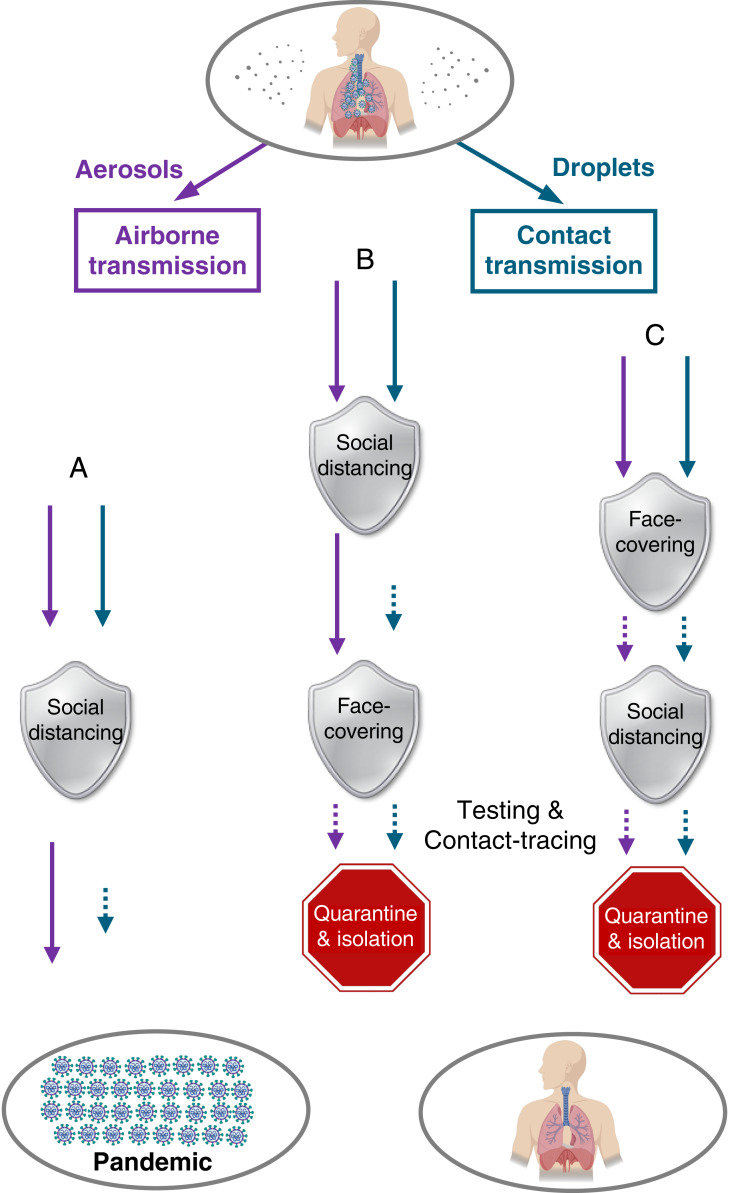
Various mitigation measures have been implemented to fight the coronavirus disease 2019 (COVID-19) pandemic, including widely adopted social distancing and mandated face covering. However, assessing the effectiveness of those intervention practices hinges on the understanding of virus transmission, which remains uncertain. Here we show that airborne transmission is highly virulent and represents the dominant route to spread the disease. By analyzing the trend and mitigation measures in Wuhan, China, Italy, and New York City, from January 23 to May 9, 2020, we illustrate that the impacts of mitigation measures are discernable from the trends of the pandemic. Our analysis reveals that the difference with and without mandated face covering represents the determinant in shaping the pandemic trends in the three epicenters. This protective measure alone significantly reduced the number of infections, that is, by over 78,000 in Italy from April 6 to May 9 and over 66,000 in New York City from April 17 to May 9. Other mitigation measures, such as social distancing implemented in the United States, are insufficient by themselves in protecting the public. We conclude that wearing of face masks in public corresponds to the most effective means to prevent interhuman transmission, and this inexpensive practice, in conjunction with simultaneous social distancing, quarantine, and contact tracing, represents the most likely fighting opportunity to stop the COVID-19 pandemic. Our work also highlights the fact that sound science is essential in decision-making for the current and future public health pandemics.
Overview
The claims and statistics of this paper haven’t been checked yet.
Free: it reads the open-access text and checks the first 5 claims that cite a source we can check. Create a free account to check every claim.
Integrity signals
Registry
Cites
Statistics
Figures
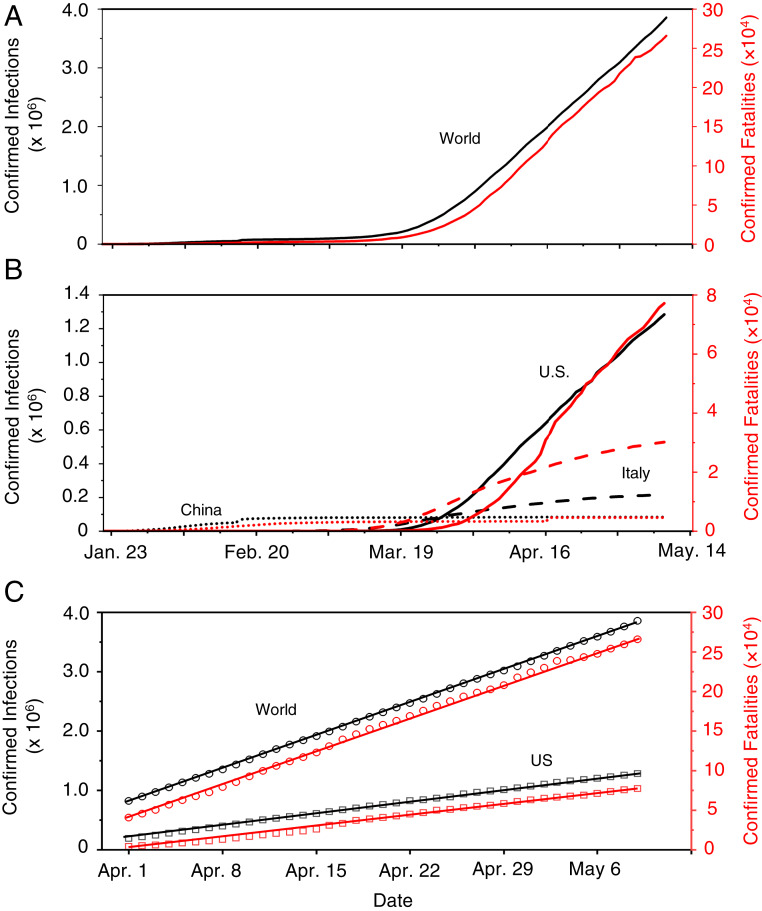
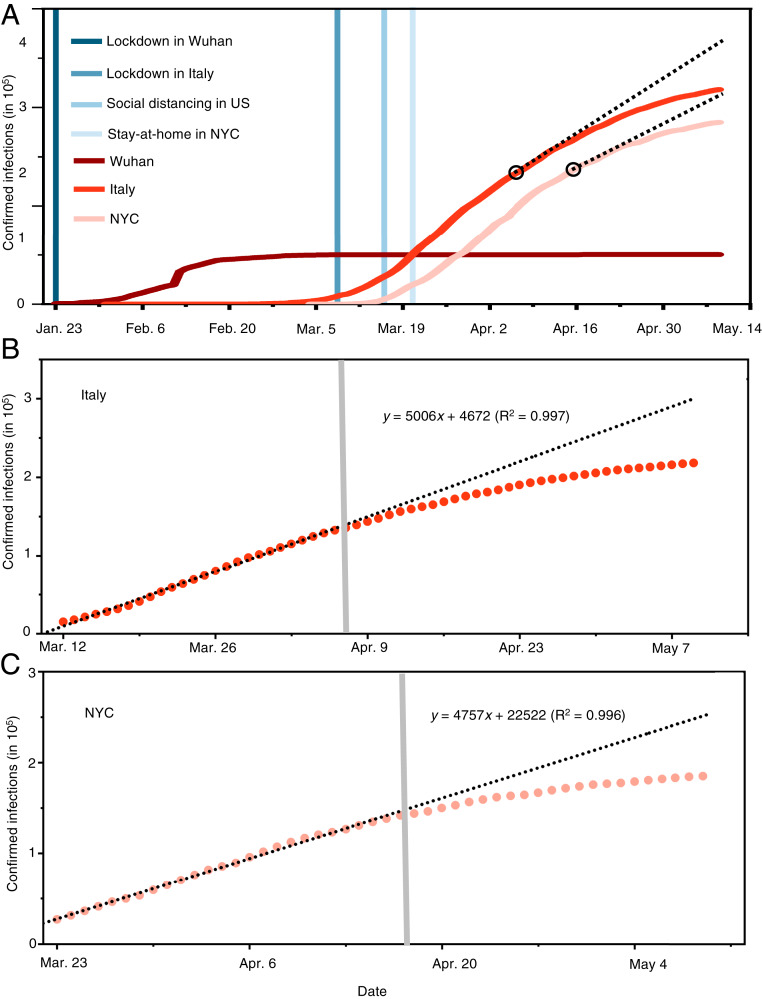
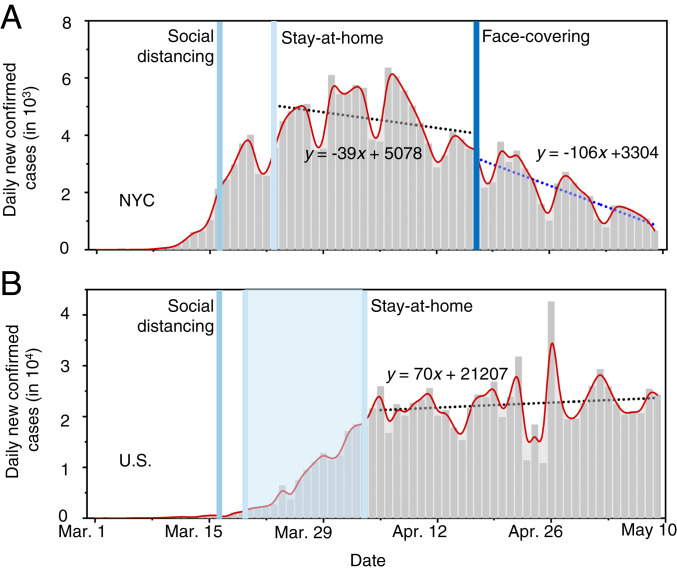
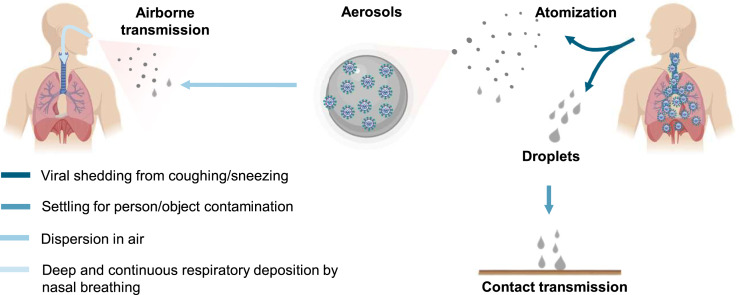
Verification
Claims the paper makes
The claims and statistics of this paper haven’t been checked yet.
Free: it reads the open-access text and checks the first 5 claims that cite a source we can check. Create a free account to check every claim.
Claims other papers make about this one
Each is checked against this paper’s own text: does it say what the citing paper says it does?
The cited source says what the claim attributes to it.
In the citing paper
“With the progression of the pandemic there is a growing body of literature that supports airborne transmission of SARS-CoV-2 playing an increasingly important role in the spread of the disease [29, 39–44].”
From The protective performance of reusable cloth face masks, disposable procedure masks, KN95 masks and N95 respirators: Filtration and total inward leakage (2021) · cites this paper as [39]
Self-check
Percentages, sums and reported differences re-computed from the paper’s own numbers.
The self-check needs the paper’s full text.
Citations
Cites
Aerosol and surface stability of SARS-CoV-2 as compared with SARS-CoV-1
van Doremalen, N., Bushmaker, T., Morris, D. H., Holbrook, M. G., Gamble, A., Williamson, B. N., Tamin, A., Harcourt, J. L., Thornburg, N. J., Gerber, S. I., et al. (2020) · New England Journal of Medicine · doi:10.1056/nejmc2004973 · Cited by 9,951 · cited 4×
“Recent experimental studies have examined the stability of SARS-CoV-2, showing that the virus remains infectious in aerosols for hours (12) and on surfaces up to days (12, 13).”
InfluentialTemporal dynamics in viral shedding and transmissibility of COVID-19
He, X., Lau, E. H. Y., Wu, P., Deng, X., Wang, J., Hao, X., Lau, Y. C., Wong, J. Y., Guan, Y., Tan, X., et al. (2020) · Nature Medicine · doi:10.1038/s41591-020-0869-5 · Cited by 4,247 · cited 2×
“In addition, nascent micrometer-size aerosols produced from coughing/sneezing of infected people have the potential of containing many viruses, particularly for asymptomatic carriers (16).”
Coronaviruses: An Overview of Their Replication and Pathogenesis
Fehr, A. R., & Perlman, S. (2015) · Methods in Molecular Biology · doi:10.1007/978-1-4939-2438-7_1 · Cited by 3,787
Quantifying SARS-CoV-2 transmission suggests epidemic control with digital contact tracing
Ferretti, L., Wymant, C., Kendall, M., Zhao, L., Nurtay, A., Abeler-Dörner, L., Parker, M., Bonsall, D., & Fraser, C. (2020) · Science · doi:10.1126/science.abb6936 · Cited by 2,512 · cited 1×
“Differentiation of the effects of those mitigation measures in China is challenging (19), since the implementation occurred almost simultaneously in January 2020.”
Respiratory virus shedding in exhaled breath and efficacy of face masks
Leung, N. H. L., Chu, D. K. W., Shiu, E. Y. C., Chan, K.-H., McDevitt, J. J., Hau, B. J. P., Yen, H.-L., Li, Y., Ip, D. K. M., Peiris, J. S. M., et al. (2020) · Nature Medicine · doi:10.1038/s41591-020-0843-2 · Cited by 2,270
Self-citationWu, X., Nethery, R. C., Sabath, M. B., Braun, D., & Dominici, F. (2020) · Science Advances · doi:10.1126/sciadv.abd4049 · Cited by 1,974
Stability of SARS-CoV-2 in different environmental conditions
Chin, A. W. H., Chu, J. T. S., Perera, M. R. A., Hui, K. P. Y., Yen, H.-L., Chan, M. C. W., Peiris, M., & Poon, L. L. M. (2020) · doi:10.1101/2020.03.15.20036673 · Cited by 1,948
Stability of SARS-CoV-2 in different environmental conditions
Chin, A. W. H., Chu, J. T. S., Perera, M. R. A., Hui, K. P. Y., Yen, H.-L., Chan, M. C. W., Peiris, M., & Poon, L. L. M. (2020) · The Lancet Microbe · doi:10.1016/s2666-5247(20)30003-3 · Cited by 1,946
Aerodynamic Analysis of SARS-CoV-2 in Two Wuhan Hospitals
Liu, Y., Ning, Z., Chen, Y., Guo, M., Liu, Y., Gali, N. K., Sun, L., Duan, Y., Cai, J., Westerdahl, D., et al. (2020) · Nature · doi:10.1038/s41586-020-2271-3 · Cited by 1,872 · cited 2×
“Available epidemiological (1) and experimental (12, 18) evidence, however, implicates airborne transmission of SARS-CoV-2 via aerosols as a potential route for the spreading of the disease.”
Elucidating severe urban haze formation in China
Guo, S., Hu, M., Zamora, M. L., Peng, J., Shang, D., Zheng, J., Du, Z., Wu, Z., Shao, M., Zeng, L., et al. (2014) · Proceedings of the National Academy of Sciences · doi:10.1073/pnas.1419604111 · Cited by 1,711 · cited 1×
“In addition, nascent virus-bearing aerosols produced from human atomization likely undergo transformation in air, including coagulation with ambient preexisting PM and/or growth on a time scale of a few hours in typical urban air (27 – 29).”
Self-citation
Cited by
Items 201–300 of 1,001
Wendling, J.-M., Fabacher, T., Pébaÿ, P., Cosperec, I., & Rochoy, M. (2021) · International Journal of Environmental Research and Public Health · doi:10.3390/ijerph18041942 · Cited by 48
“The airborne transmission route for SARS-CoV-2 is virulent for the spread of COVID-19 [3–5], as for SARS-CoV-1 [6].”
BackgroundUnderstanding how Victoria, Australia gained control of its second COVID-19 wave
Trauer, J. M., Lydeamore, M., Dalton, G. W., Pilcher, D. V., Meehan, M. T., McBryde, E. S., Cheng, A. C., Sutton, B. A., & Ragonnet, R. R. (2021) · Nature Communications · doi:10.1038/s41467-021-26558-4 · Cited by 49
Face coverings and respiratory tract droplet dispersion
Bandiera, L., Pavar, G. S., Pisetta, G., Ōtomo, S., Mangano, E., Seckl, J. R., Digard, P., Molinari, E., Menolascina, F., & Viola, I. M. (2020) · Royal Society Open Science · doi:10.1098/rsos.201663 · Cited by 47
“Evidence indicates that transmission occurs both through the smallest droplets [5,6], known as an aerosol, as well as the direct deposition on the recipient’s mouth, nose or conjunctiva of the largest droplets [7,8].”
BackgroundRisk assessment for long- and short-range airborne transmission of SARS-CoV-2, indoors and outdoors
Poydenot, F., Abdourahamane, I., Caplain, E., Der, S., Haiech, J., Jallon, A., Khoutami, I., Loucif, A., Marinov, E., & Andreotti, B. (2022) · PNAS Nexus · doi:10.1093/pnasnexus/pgac223 · Cited by 48
Merhi, T., Atasi, O., Coetsier, C., Lalanne, B., & Roger, K. (2022) · Proceedings of the National Academy of Sciences · doi:10.1073/pnas.2204593119 · Cited by 46
Ho, T. T., Park, J., Kim, T., Park, B., Lee, J., Kim, J. Y., Kim, K. B., Choi, S., Kim, Y. H., Lim, J., et al. (2021) · JMIR Medical Informatics · doi:10.2196/24973 · Cited by 46
“Since then, the COVID-19 pandemic has rapidly propagated across the world via airborne person-to-person transmission [2,3].”
BackgroundRatnesar-Shumate, S. A., Bohannon, K., Williams, G., Holland, B., Krause, M. L., Green, B., Freeburger, D., & Dabisch, P. A. (2021) · Aerosol Science and Technology · doi:10.1080/02786826.2021.1910137 · Cited by 47
Ventilation Assessment by Carbon Dioxide Levels in Dental Treatment Rooms
Huang, Q., Marzouk, T., Cirligeanu, R., Malmström, H., Eliav, E., & Ren, Y. (2021) · Journal of Dental Research · doi:10.1177/00220345211014441 · Cited by 46
Mask use in community settings in the context of COVID-19: A systematic review of ecological data
Ford, N. P., Holmer, H. K., Chou, R., Villeneuve, P. J., Baller, A., Kerkhove, M. D. V., & Allegranzi, B. (2021) · EClinicalMedicine · doi:10.1016/j.eclinm.2021.101024 · Cited by 46
“Five studies compared different countries [21,23,25,28,36], six compared different regions within a single country [20,22,26,30 (cid:1) 32], eight undertook a before-after comparison [17,24,25,27,30,34 (cid:1) 37], and one compared health workers and the general population [19].”
Development of wearable air-conditioned mask for personal thermal management
Suen, W. S., Huang, G., Kang, Z., Gu, Y., Fan, J., & Shou, D. (2021) · Building and Environment · doi:10.1016/j.buildenv.2021.108236 · Cited by 47
“Development of wearable air-conditioned mask for personal thermal management Wing Sze Suen, Guanghan Huang, Zhanxiao Kang, Yuheng Gu, Jintu Fan, Dahua Shou * Institute of Textiles and Clothing, The Hong Kong Polytechnic University, Kowloon, Hong Kong, China A R T I C L E I N F O Keywords: Thermal management Wearable t…”
InfluentialEngebretsen, E., & Baker, M. (2022) · Cambridge University Press eBooks · doi:10.1017/9781009030687 · Cited by 46
Understanding transmission and intervention for the COVID-19 pandemic in the United States
Li, Y., Zhang, R., Zhao, J., & Molina, M. J. (2020) · The Science of The Total Environment · doi:10.1016/j.scitotenv.2020.141560 · Cited by 45
“While transmission via direct or indirect contact occurs in a short distance, airborne transmission via aerosols takes place over an extended distance and time (Zhang et al., 2020).”
InfluentialSelf-citationDelaugerre, C., Foissac, F., Abdoul, H., Masson, G., Choupeaux, L., Dufour, E., Gourmelon, F., Gastli, N., Mercier‐Delarue, S., Néré, M.-L., et al. (2021) · The Lancet Infectious Diseases · doi:10.1016/s1473-3099(21)00673-3 · Cited by 45
Jiang, B., Yang, Y., Chen, L., Liu, X., Wu, X., Chen, B., Webster, C. J., Sullivan, W. C., Larsen, L., Wang, J., et al. (2022) · Landscape and Urban Planning · doi:10.1016/j.landurbplan.2022.104583 · Cited by 45
Alam, S. S., & Khan, A. H. (2023) · International Journal of Environmental Science and Technology · doi:10.1007/s13762-023-05352-3 · Cited by 44
“…Centers of Disease Control (CDC) mandated the use of personal protective equipment (PPE) by front-line workers in hospitals to protect them from infection via aerosols, large droplets (e.g., cough and sneeze) and direct contact with secretions and fomites (Wong et al. 2020b; Zhang et al. 2020a).”
A novel reusable anti-COVID-19 transparent face respirator with optimized airflow
Alenezi, H., Çam, M. E., & Edirisinghe, M. J. (2020) · Bio-Design and Manufacturing · doi:10.1007/s42242-020-00097-1 · Cited by 44
Can shellfish be used to monitor SARS-CoV-2 in the coastal environment?
Desdouits, M., Piquet, J.-C., Wacrenier, C., Mennec, C. L., Parnaudeau, S., Jousse, S., Rocq, S., Bigault, L., Contrant, M., Garry, P., et al. (2021) · The Science of The Total Environment · doi:10.1016/j.scitotenv.2021.146270 · Cited by 44
Kittel, B., Kalleitner, F., & Schiestl, D. W. (2021) · PLoS ONE · doi:10.1371/journal.pone.0260171 · Cited by 44
A comparison of respiratory particle emission rates at rest and while speaking or exercising
Orton, C. M., Symons, H. E., Moseley, B., Archer, J., Watson, N. A., Philip, K. E. J., Sheikh, S., Saccente‐Kennedy, B., Costello, D. A. E., Browne, W. J., et al. (2022) · Communications Medicine · doi:10.1038/s43856-022-00103-w · Cited by 44
SARS‐CoV‐2, other respiratory viruses and bacteria in aerosols: Report from Kuwait's hospitals
Habibi, N., Uddin, S., Al‐Salameen, F., Al-Amad, S., Kumar, V., Alotaibi, M. A., Razzack, N. A., Shajan, A. B., & Shirshikar, F. (2021) · Indoor Air · doi:10.1111/ina.12871 · Cited by 43
Direct capture and smartphone quantification of airborne SARS-CoV-2 on a paper microfluidic chip
Kim, S., Akarapipad, P., Nguyen, B. T., Breshears, L. E., Sosnowski, K., Baker, J. C., Uhrlaub, J. L., Nikolich‐Žugich, J., & Yoon, J. (2021) · Biosensors and Bioelectronics · doi:10.1016/j.bios.2021.113912 · Cited by 43
“While the best practice to prevent SARS-CoV-2 infection is a face mask (Zhang et al., 2020), it is not perfect in capturing all bioaerosols, especially when SARS-CoV-2 spreads through smaller droplets and aerosols.”
BackgroundParhizkar, H., Dietz, L. G., Olsen-Martinez, A., Horve, P. F., Barnatan, L., Northcutt, D., & Wymelenberg, K. G. V. D. (2022) · Clinical Infectious Diseases · doi:10.1093/cid/ciac006 · Cited by 43
Insight into COVID-19's epidemiology, pathology, and treatment
Aimrane, A., Laaradia, M. A., Séréno, D., Perrin, P., Draoui, A., Bougadir, B., Hadach, M., Zahir, M., Fdil, N., Hiba, O. E., et al. (2022) · Heliyon · doi:10.1016/j.heliyon.2022.e08799 · Cited by 44
“Despite being con fl icted, previous studies showed the presence of SARS-CoV-2 particles in air sampling from closed environments, sustaining the airborne SARS-CoV-2 transmission (Zhang et al., 2020d).”
Schofield, J., Praet, E., Townsend, K. A., & Vince, J. (2021) · Antiquity · doi:10.15184/aqy.2021.18 · Cited by 42
“Starting around March 2020 in the UK, Australia and Europe, facemasks quickly became both the symbol of coronavirus and a highly coveted commodity (Subramanian 2020), due, in part, to their scientifically evidenced efficacy in curbing the spread of infection (e.g. Liang et al. 2020; Zhang et al. 2020).”
BackgroundMongin, D., Bürgisser, N., Laurie, G., Schimmel, G., Vu, D., Cullati, S., Covid-SMC Study Group, Mora, L. D. S., Després, L., Dudouit, R., et al. (2023) · Nature Communications · doi:10.1038/s41467-023-41109-9 · Cited by 42
“…an increasing part of the population 69 , public health policies should intend reducing the number of infections for all persons, vaccinated or not, with effective and socially acceptable nonpharmaceutical interventions such as air puri fi cation 70,71 , ventilation 72,73 , or mask wearing 74 .”
Calderón‐Garcidueñas, L., Torres‐Jardón, R., Franco-Lira, M., Kulesza, R. J., González-Maciel, A., Reynoso-Robles, R., Brito-Aguilar, R., García-Arreola, B., Revueltas-Ficachi, P., Barrera-Velázquez, J. A., et al. (2020) · Journal of Alzheimer s Disease · doi:10.3233/jad-200891 · Cited by 42
“[43] discussed airborne transmission of SARS-Cov-2 representing the dominant route to spread the disease.”
BackgroundMáscaras de tecido em locais públicos: intervenção essencial na prevenção da COVID-19 no Brasil
Ortelan, N., Ferreira, A. J. F., Leite, L., Pescarini, J. M., Souto, A. C., Barreto, M. L., & Aquino, E. M. L. (2021) · Ciência & Saúde Coletiva · doi:10.1590/1413-81232021262.36702020 · Cited by 43
“Based on data from the spread of the pandemic in Italy and New York, both severely affected by COVID-19, Zhang et al.(93) showed that being obliged to cover the nose and mouth avoided more than 76,000 new cases of novel coronavirus infection in Italy and more than 66,000 in New York(93).”
BackgroundInfluentialBioremediation of industrial effluents: A synergistic approach
Nagda, A., Meena, M., & Shah, M. P. (2021) · Journal of Basic Microbiology · doi:10.1002/jobm.202100225 · Cited by 43
“The pollutants high in nitrogen and phosphorus content are the main target as the microalgae require phosphorus, nitrogen for the cultivation process to occur [153,154].”
BackgroundKang, K., Doroudi, S., Delasay, M., & Wickeham, A. (2023) · Production and Operations Management · doi:10.1111/poms.13675 · Cited by 42
Face mask detection in COVID-19: a strategic review
Vibhuti, Jindal, N., Singh, H., & Rana, P. S. (2022) · Multimedia Tools and Applications · doi:10.1007/s11042-022-12999-6 · Cited by 41
“The health specialists suggest that the virus might transmit by direct or indirect contact with the infected person [119], hence measures like compulsory wearing of face masks [40], as illustrated in Fig.”
BackgroundFan, Z., Zhan, Q., Yang, C., Liu, H., & Zhan, M. (2020) · International Journal of Environmental Research and Public Health · doi:10.3390/ijerph17176274 · Cited by 41
“This new virus is highly contagious and can even spread through aerosol [15].”
BackgroundSuperhydrophobicity preventing surface contamination as a novel strategy against COVID-19
Zhu, P., Wang, Y., Chu, H., & Wang, L. (2021) · Journal of Colloid and Interface Science · doi:10.1016/j.jcis.2021.05.031 · Cited by 41
“Respiratory diseases (such as COVID-19) can be transmitted through either airborne or contact routes [6,7].”
BackgroundSelf-citationCOVID-19 and the travel behavior of xenophobic tourists
Abadi, R. S. S., Ghaderi, Z., Hall, C. M., Soltaninasab, M., & Qezelbash, A. H. (2021) · Journal of Policy Research in Tourism Leisure and Events · doi:10.1080/19407963.2021.1943415 · Cited by 43
“caused illness and death in all parts of the world since the first cases were detected in Wuhan in late 2019 (Zhang et al., 2020).”
BackgroundSpace-time cluster detection techniques for infectious diseases: A systematic review
Lan, Y., & Delmelle, E. M. (2022) · Spatial and Spatio-temporal Epidemiology · doi:10.1016/j.sste.2022.100563 · Cited by 40
Lack of evidence for infectious SARS-CoV-2 in feces and sewage
Albert, S., Gaitán, A. C. R., Pemán, J., Salavert, M., & Domingo‐Calap, P. (2021) · European Journal of Clinical Microbiology & Infectious Diseases · doi:10.1007/s10096-021-04304-4 · Cited by 41
“Although the main transmission route is via droplets or aerosols [1], it has been shown that the virus can replicate in intestinal mucosa [2, 3], suggesting that viral excretion via feces could result in fecal–oral transmission of SARSCoV-2 [4–6].”
BackgroundThe effect of diabetes on neuropeptide content in the rat cornea and iris.
Marfurt, C. F., & Echtenkamp, S. F. (1995) · PubMed · Cited by 40
Mass masking as a way to contain COVID-19 and exit lockdown in low- and middle-income countries
Fodjo, J. N. S., Pengpid, S., Villela, E. F. D. M., Vo, T. V., Ahmed, M. A. M., Ditekemena, J., Vega, B., Wanyenze, R. K., Dulá, J., Watanabe, T., et al. (2020) · Journal of Infection · doi:10.1016/j.jinf.2020.07.015 · Cited by 40
SARS‐CoV ‐2 biology and variants: anticipation of viral evolution and what needs to be done
Luo, R., Delaunay, A., Timmis, K. N., & Danchin, A. (2021) · Environmental Microbiology · doi:10.1111/1462-2920.15487 · Cited by 40
“long time, even outdoors (Zhang et al., 2020) – are likely to be a major transmission route in the case of SARS-”
BackgroundRodríguez, N. B., Formentini, G., Favi, C., & Marconi, M. (2021) · Procedia CIRP · doi:10.1016/j.procir.2021.01.108 · Cited by 41
“A recent study discovered that the correct use of face masks is the determining factor that positively contribute in shaping the trend of COVID-19 infection worldwide [6].”
BackgroundChien, L.-C., Chen, L. ‐. A., & Lin, R. (2021) · Journal of Exposure Science & Environmental Epidemiology · doi:10.1038/s41370-021-00356-y · Cited by 39
Giampieri, A., Ma, Z., Ling‐Chin, J., Roskilly, A. P., & Smallbone, A. J. (2021) · Energy · doi:10.1016/j.energy.2021.122709 · Cited by 39
“The presence of particulate matter (PM) in the air has also been suggested as a potential factor [32] as PM may increase the suspension and accumulation of virus-laden aerosol in the air [19].”
Guidelines on newly identified limitations of diagnostic tools for COVID‐19 and consequences
Syal, K. (2020) · Journal of Medical Virology · doi:10.1002/jmv.26673 · Cited by 39
“determinant factor capable of inhibiting the interhuman transmission and preventing spread in primary contacts.(15) Surely, in the absence of treatment or vaccine, understanding of the mode of spread and the availability of accurate diagnostic tools can”
BackgroundOptimization of energy efficiency and COVID-19 pandemic control in different indoor environments
Guo, Y., Zhang, N., Hu, T., Wang, Z., & Zhang, Y. (2022) · Energy and Buildings · doi:10.1016/j.enbuild.2022.111954 · Cited by 39
Face Mask: As a Source or Protector of Human Exposure to Microplastics and Phthalate Plasticizers?
Cao, J., Shi, Y., Yan, M., Zhu, H., Chen, S., Xu, K., Wang, L., & Sun, H. (2023) · Toxics · doi:10.3390/toxics11020087 · Cited by 40
“Since the outbreak of Coronavirus disease (COVID-19), more than 500 million people have been infected, mainly by droplets and aerosol transmission [1,2].”
BackgroundSuperspreading events suggest aerosol transmission of SARS-CoV-2 by accumulation in enclosed spaces
Kolinski, J. M., & Schneider, T. M. (2021) · Physical review. E · doi:10.1103/physreve.103.033109 · Cited by 38
“of the guidance regarding possible aerosol transmission reflect uncertainty about the role of aerosols in viral transmission; indeed, mask-wearing is marginally effective in reducing viral transmission (4), but not all infectious particles are captured by typical surgical masks (5), complicating a direct assessment of…”
BackgroundWang, J., Yang, Y., Peng, J., Yang, L., Gou, Z., & Lü, Y. (2021) · Sustainable Cities and Society · doi:10.1016/j.scs.2021.103058 · Cited by 38
Park, J., Lee, K. S., & Park, H. (2022) · Journal of Hazardous Materials · doi:10.1016/j.jhazmat.2022.128978 · Cited by 38
Viral infection transmission and indoor air quality: A systematic review
Alqarni, Z., Rezgui, Y., Petri, I., & Ghoroghi, A. (2024) · The Science of The Total Environment · doi:10.1016/j.scitotenv.2024.171308 · Cited by 38
Hopfer, S., Fields, E. J., Yuwen, L., Ramakrishnan, G., Grover, T., Bai, Q., Huang, Y., Li, C., & Mark, G. J. (2021) · PLoS ONE · doi:10.1371/journal.pone.0257428 · Cited by 38
“Furthermore, public health messaging initially focused on surface rather than droplet and airborne transmission, contributing to the absence of a rationale for mask wearing as a protective behavior [8].”
BackgroundSARS-CoV-2 Transmission Channels: A Review of the Literature
Abd, E. W., Eassa, S. M., Metwally, M., Al-hraishawi, H., & Omar, S. R. (2020) · MEDICC Review · doi:10.37757/mr2020.v22.n4.3 · Cited by 37
“Based on available knowledge and epidemiological observations, it is plausible that small particles containing the virus may diffuse in indoor environments covering distances up to 10 meters from emission sources.[55,56] This explains the anomalous COVID-19 outbreaks in northern Italy, ranked as one of the most pollut…”
BackgroundRecent Insights into Emerging Coronavirus: SARS-CoV-2
Shang, Z., Chan, S. Y., Liu, W. J., Li, P., & Huang, W. (2020) · ACS Infectious Diseases · doi:10.1021/acsinfecdis.0c00646 · Cited by 38
Mileto, D., Mancon, A., Staurenghi, F., Rizzo, A., Econdi, S., Gismondo, M. R., & Guidotti, M. (2021) · ACS Chemical Health & Safety · doi:10.1021/acs.chas.0c00095 · Cited by 37
Lam, J. H., Khan, A. K., Cornell, T., Chia, T. W., Dress, R. J., Yeow, W. W. W., Mohd-Ismail, N. K., Venkataraman, S., Ng, K. T., Tan, Y., et al. (2021) · ACS Nano · doi:10.1021/acsnano.1c01243 · Cited by 37
In Silico Analysis of Bacteriocins from Lactic Acid Bacteria Against SARS-CoV-2
Erol, İ., Kotil, S., Fidan, Ö., Yetiman, A. E., Durdağı, S., & Ortakcı, F. (2021) · Probiotics and Antimicrobial Proteins · doi:10.1007/s12602-021-09879-0 · Cited by 37
“ACE2 is a regulator of gut inflammation which is more expressed in the ileum and colon than in lung [6, 7].”
BackgroundSong, Y., Shu, C., Song, Z., Zeng, X., Yuan, X., Wang, Y., Xu, J., Feng, Q., Song, T., Shao, B., et al. (2023) · Chemical Engineering Journal · doi:10.1016/j.cej.2023.143797 · Cited by 38
Self-citationWastewater Surveillance for SARS-CoV-2 RNA in Canada
Hrudey, S. E., Bischel, H. N., Charrois, J., Chik, A. H. S., Conant, B., Delatolla, R., Dorner, S. M., Graber, T. E., Hubert, C. R. J., Isaac-Renton, J., et al. (2022) · FACETS · doi:10.1139/facets-2022-0148 · Cited by 38
Haber, N. A., Clarke-Deelder, E., Feller, A., Smith, E. R., Salomon, J. A., MacCormack-Gelles, B., Stone, E. M., Bolster-Foucault, C., Daw, J. R., Hatfield, L. A., et al. (2022) · BMJ Open · doi:10.1136/bmjopen-2021-053820 · Cited by 36
COVID-19 Crisis Creates Opportunity towards Global Monitoring & Surveillance
Donia, A., Hassan, S.-U., Zhang, X., Al-Madboly, L. A., & Bokhari, H. (2021) · Pathogens · doi:10.3390/pathogens10030256 · Cited by 36
“The current detection limit for colourimetric RT-LAMP ranges up to approximately 120 copies and requires improvement [102,223].”
BackgroundAltitude as a Protective Factor from COVID-19
Thomson, T. M., Casas, F., Guerrero, H. A., Figueroa‐Mujíca, R., Villafuerte, F. C., & Machicado, C. (2020) · High Altitude Medicine & Biology · doi:10.1089/ham.2020.0202 · Cited by 38
Biodiagnostics in an era of global pandemics—From biosensing materials to data management
Broza, Y. Y., & Haick, H. (2021) · View · doi:10.1002/viw.20200164 · Cited by 36
Faktor Risiko Terjadinya Coronavirus Disease 2019 (Covid-19) pada Penyandang Diabetes Melitus Tipe 2
Roeroe, P. A. L., Sedli, B. P., & Umboh, O. R. H. (2021) · e-CliniC · doi:10.35790/ecl.v9i1.32301 · Cited by 36
“Pada tanggal 30 Januari 2020 WHO menyatakan wabah COVID-19 sebagai Public Health Emergency of International Concern (PHEIC), dan pada 11 Maret 2020 WHO dinyatakan sebagai pandemi.(2) Puncak wabah transmisi virus menjadi lebih parah di seluruh dunia yang menunjukkan karakteristik pandemi.”
BackgroundHidden hazards of SARS‐CoV‐2 transmission in hospitals: A systematic review
Ribaric, N. L., Vincent, C. A., Jonitz, G., Hellinger, A., & Ribaric, G. (2021) · Indoor Air · doi:10.1111/ina.12968 · Cited by 36
Yuan, W., Dong, Z., Fan, W., Xu, K., Tang, S., Wang, Y., & Wu, F. (2022) · Eco-Environment & Health · doi:10.1016/j.eehl.2022.04.006 · Cited by 38
“Temperature and humidity influence the SARS-CoV-2 trajectory in aerosols: Extensive evidence has suggested that one of the main pathways for COVID-19 spread appears to be airborne spread, including droplets (>5 μm) and droplet nuclei ( 5 μm) [25,26].”
BackgroundSelf-citationPost-pandemic micro/nanoplastic pollution: Toward a sustainable management
Dey, T. K., Rasel, M., Roy, T., Uddin, M. E., Pramanik, B. K., & Jamal, M. (2023) · The Science of The Total Environment · doi:10.1016/j.scitotenv.2023.161390 · Cited by 37
Spatial and spatiotemporal clustering of the COVID-19 pandemic in Ecuador
Ballesteros, P. M., Salazar, E., MORETTA, D. E. S., & Bolaños‐Carriel, C. (2020) · Revista de la Facultad de Medicina · doi:10.15446/revfacmed.v69n1.86476 · Cited by 35
Faculdade de Americana (FAM), A., Pfaffenbach, G. M. D. A., Zanatta, A. B., Faculdade de Americana (FAM), A., Tenani, C. F., Checchi, M. H. R. D., & Santana, A. B. C. (2020) · doi:10.22239/2317-269x.01715 · Cited by 35
Management of environmental health to prevent an outbreak of COVID-19
Mousazadeh, M., Naghdali, Z., Rahimian, N., Hashemi, M., Paital, B., Al‐Qodah, Z., Mukhtar, A., Karri, R. R., Mahmoud, A. E. D., Sillanpää, M. E. T., et al. (2021) · Elsevier eBooks · doi:10.1016/b978-0-323-85780-2.00007-x · Cited by 35
“Furthermore, another study by Zhang et al.19 reported SARS-CoV-2 in the aerosols of a hospital environment.”
BackgroundResultInfluentialTweets by People With Arthritis During the COVID-19 Pandemic: Content and Sentiment Analysis
Berkovic, D. E., Ackerman, I. N., Briggs, A. M., & Ayton, D. (2020) · Journal of Medical Internet Research · doi:10.2196/24550 · Cited by 36
“The search timeframe was chosen to align with the early phase of the COVID-19 pandemic and the period when many developed countries (eg, the United States, the United Kingdom, Italy, Australia) announced enforceable physical distancing or isolation measures [20-23].”
COVID-19 and Dentistry in 72 Questions: An Overview of the Literature
Derruau, S., Bouchet, J., Nassif, A., Baudet, A., Yasukawa, K., Lorimier, S., Prêcheur, I., Bloch‐Zupan, A., Pellat, B., Chardin, H., et al. (2021) · Journal of Clinical Medicine · doi:10.3390/jcm10040779 · Cited by 38
“Finally, airborne transmission appears to be highly virulent and represents an important transmission route of the disease [241].”
BackgroundAntunes, D. M., Lami, M., Chukwudi, A., Dey, A., Patel, M., Shabana, A., Shams, M., Slack, Z., Bond‐Smith, G., & Tebala, G. D. (2021) · The Surgeon · doi:10.1016/j.surge.2021.02.003 · Cited by 35
“The primary route of transmission of COVID-19 is via respiratory droplets.(29,30) In keeping with this knowledge, recent studies have established that viral particles can be detected in”
BackgroundLau, B. T., Pavlichin, D. S., Hooker, A. C., Almeda, A. F., Shin, G. W., Chen, J., Sahoo, M. K., Huang, C., Pinsky, B. A., Lee, H., et al. (2021) · Genome Medicine · doi:10.1186/s13073-021-00882-2 · Cited by 35
“Given its airborne transmission and adaptation for highly efficient human-to-human transmission, this virus has rapidly spread across disparate geographic regions and infected diverse populations [2].”
BackgroundImplications of the Coffee-Ring Effect on Virus Infectivity
Huang, Q., Wang, W., & Vikesland, P. J. (2021) · Langmuir · doi:10.1021/acs.langmuir.1c01610 · Cited by 35
Ishmatov, A. N. (2021) · Environmental Research · doi:10.1016/j.envres.2021.112116 · Cited by 35
Ibarra-Espinosa, S. A., de Freitas, E. D., Ropkins, K., Dominici, F., & Rehbein, A. (2021) · Environmental Research · doi:10.1016/j.envres.2021.112369 · Cited by 35
“RMI is an indicator that represent exposure in two ways, first, staying out of home increases the chances of getting infections with SARS-CoV-2 present in aerosols (Morawska and Milton, 2020) and second, increases the exposure to air pollution with deleterious effect on human health which could pose a synergetic effec…”
InfluentialBentley, K., & Stanton, R. J. (2021) · Viruses · doi:10.3390/v13122345 · Cited by 35
Zhu, R., Anselin, L., Batty, M., Kwan, M., Chen, M., Luo, W. P., Cheng, T., Lim, C. K., Santi, P., Cheng, C., et al. (2021) · Science Bulletin · doi:10.1016/j.scib.2021.11.023 · Cited by 35
“It is because airborne transmission is the dominant transmission method for COVID-19 that people can be infected with a much higher probability [10].”
BackgroundMethodChung, J., Kim, B.-J., & Kim, E. S. (2022) · International Journal of Disaster Risk Reduction · doi:10.1016/j.ijdrr.2022.103355 · Cited by 35
Evolution of Antiviral Drug Resistance in SARS-CoV-2
Dinata, R., Baindara, P., & Mandal, S. M. (2025) · Viruses · doi:10.3390/v17050722 · Cited by 34
“In the case of coronaviruses, bats, rats, camels, and pangolins are known natural virus hosts, and the transmission of drug-resistant viruses to humans can be blocked by avoiding direct contact with them [91].”
Human Coronaviruses SARS-CoV, MERS-CoV, and SARS-CoV-2 in Children
Aleebrahim‐Dehkordi, E., Soveyzi, F., Deravi, N., Rabbani, Z. H., Saghazadeh, A., & Rezaei, N. (2020) · Journal of Pediatric Nursing · doi:10.1016/j.pedn.2020.10.020 · Cited by 34
Developing levels of pedestrian physical distancing during a pandemic
Mohammadi, A. R., Chowdhury, T. U., Yang, S., & Park, P. Y. (2020) · Safety Science · doi:10.1016/j.ssci.2020.105066 · Cited by 34
Driessche, K. V., Mahlobo, P. Z., Venter, R., Caldwell, J., Jennings, K., Diacon, A. H., Cotton, M. F., de Groot, R., Hens, N., Marx, F. M., et al. (2021) · The Lancet Respiratory Medicine · doi:10.1016/s2213-2600(21)00020-5 · Cited by 34
Computational fluid dynamics simulation of SARS-CoV-2 aerosol dispersion inside a grocery store
Zhang, M., Shrestha, P. M., Liu, X., Turnaoglu, T., DeGraw, J. W., Schafer, D., & Love, N. (2021) · Building and Environment · doi:10.1016/j.buildenv.2021.108652 · Cited by 34
“Airborne transmission of the SARS-CoV-2 virus has been confirmed as the dominant route to spread the virus compared with contact transmission [4], and increasing outdoor air ventilation of enclosed spaces has been recommended to reduce the airborne transmission of SARS-CoV-2 [5].”
Precipitous Fall in Common Respiratory Viral Infections During COVID-19
Parry, M. F., Shah, A. K., Sestovic, M., & Salter, S. (2020) · Open Forum Infectious Diseases · doi:10.1093/ofid/ofaa511 · Cited by 33
“Nevertheless, based on data published by others [12, 16] we suspect that wearing face masks in the community and hospital is the most important public health intervention to control the spread of any respiratory viral illnesses, including COVID-19.”
BackgroundMukherjee, S., Boral, S., Siddiqi, H., Mishra, A., & Meikap, B. C. (2021) · Journal of environmental chemical engineering · doi:10.1016/j.jece.2020.104973 · Cited by 33
Walters, S. T., Businelle, M. S., Suchting, R., Li, X., Hébert, E. T., & Mun, E. (2021) · Journal of Substance Abuse Treatment · doi:10.1016/j.jsat.2021.108417 · Cited by 33
Possible effects of air temperature on COVID‐19 disease severity and transmission rates
Kang, D., Ellgen, C., & Kulstad, E. (2021) · Journal of Medical Virology · doi:10.1002/jmv.27042 · Cited by 33
Grudlewska‐Buda, K., Wiktorczyk-Kapischke, N., Wałecka-Zacharska, E., Kwiecińska-Piróg, J., Buszko, K., Leis, K., Juszczuk, K., Gospodarek-Komkowska, E., & Skowron, K. (2021) · Journal of Clinical Medicine · doi:10.3390/jcm10091962 · Cited by 34
“[121] indicated the possibility of both indoor and outdoor air transmission of the virus.”
BackgroundGoyal, A., Reeves, D. B., Thakkar, N., Famulare, M., Ojeda, E. F. C., Mayer, B. T., & Schiffer, J. T. (2021) · Scientific Reports · doi:10.1038/s41598-021-91338-5 · Cited by 33
Mobashir, M., Helmi, N. M., & Alammari, D. M. (2021) · Combinatorial Chemistry & High Throughput Screening · doi:10.2174/1386207324666210804124416 · Cited by 33
Martínez, I., Bruse, J. L., Florez-Tapia, A. M., Viles, E., & Olaizola, I. G. (2021) · Building and Environment · doi:10.1016/j.buildenv.2021.108495 · Cited by 33
“Motivation Evidence is growing that the virus SARS-CoV-2 that caused a global pandemic in 2020 can be transmitted via inhalation of virus-containing aerosols [1, 2, 3] and recent studies point towards increased infection risk indoors [4, 5, 6, 7].”
BackgroundLiu, E., & Arledge, S. (2022) · Asian Journal of Social Health and Behavior · doi:10.4103/shb.shb_148_21 · Cited by 33
Csomós, G., Borza, E. M., & Farkas, J. Z. (2023) · Scientific Reports · doi:10.1038/s41598-023-38287-3 · Cited by 33
“Therefore, in the Materials and methods section, we will discuss the research’s three main dimensions: (1) the Covid-19 pandemic in Hungary, (2) the classification of urban parks, and 3) the mobile device GNSS-location database.”
BackgroundMethodAoyagi, Y., Inamoto, Y., Shibata, S., Kagaya, H., Otaka, Y., & Saitoh, E. (2021) · American Journal of Physical Medicine & Rehabilitation · doi:10.1097/phm.0000000000001735 · Cited by 32
“In recent reports, the surgical mask does not have sufficient filtering ability, but the mandated face covering in the community prevented airborne transmission from asymptomatic patients by blocking atomization and preventing contact infections via viral droplet release from infected person.(41) The simultaneous impl…”
BackgroundYudistira, N., Sumitro, S. B., Nahas, A. C., & Riama, N. F. (2021) · Applied Soft Computing · doi:10.1016/j.asoc.2021.107469 · Cited by 32
Application of bow tie analysis and inherently safer design to the novel coronavirus hazard
Brown, K. R., Vanberkel, P. T., Khan, F. I., & Amyotte, P. R. (2021) · Process Safety and Environmental Protection · doi:10.1016/j.psep.2021.06.046 · Cited by 32
Guo, L., Yang, Z., Zhang, L., Wang, S., Bai, T., Xiang, Y., & Long, E. (2021) · International Journal of Environmental Science and Technology · doi:10.1007/s13762-021-03495-9 · Cited by 32
“In fact, a number of studies have proved that temperature and relative humidity (RH) can affect virus survival and infectivity (Chan et al. 2020; Morawska and Cao 2020; Zhang et al. 2020; Guo et al. 2021; Kwon et al. 2021).”
BackgroundRisks of Infection with SARS-CoV-2 Due to Contaminated Surfaces: A Scoping Review
Mohamadi, M., Babington‐Ashaye, A., Lefort, A., & Flahault, A. (2021) · International Journal of Environmental Research and Public Health · doi:10.3390/ijerph182111019 · Cited by 32
“Based on the evidence to date, the transmission of SARS-CoV-2 is stated to be mostly airborne via droplets or aerosols through close contact with infected individuals [9,10].”
Ren, Q., Yu, N., Zou, P., He, Q., Macharia, D. K., Sheng, Y., Zhu, B., Lin, Y., Wu, G., & Chen, Z. (2022) · Chemical Engineering Journal · doi:10.1016/j.cej.2022.136043 · Cited by 32
Zhong, R., Chen, L., Zhang, Q., Li, B., Qiu, Y., Wang, W., Tan, D., & Zou, Y. (2021) · Frontiers in Physiology · doi:10.3389/fphys.2020.623498 · Cited by 31
COVID-19: a new emerging respiratory disease from the neurological perspective
El-Sayed, A., Aleya, L., & Kamel, M. S. (2021) · Environmental Science and Pollution Research · doi:10.1007/s11356-021-12969-9 · Cited by 31
Metadata
- Authors
- Zhang, R., Li, Y., Zhang, A. L., Wang, Y., & Molina, M. J.
- Affiliations
- Texas A&M University (US)
- The University of Texas at Austin (US)
- California Institute of Technology (US)
- University of California San Diego (US)
- Corresponding author
- Zhang, Renyi
- Molina, Mario J.
- Venue
- Proceedings of the National Academy of Sciences
- Publisher
- National Academy of Sciences
- Published
- 2020-06-11
- Volume
- 117
- Issue
- 26
- Pages
- 14857-14863
- ISSN
- 0027-8424 (ISSN-L)
- 1091-6490
- PMC
- PMC7334447
- OpenAlex
- W3034825141
- Cited by
- 1,236
- References
- 28
- Citations by year
- 2026: 33 · 2025: 51 · 2024: 115 · 2023: 162 · 2022: 248 · 2021: 406 · 2020: 219
- FWCI
- 41.11
- Type
- journal article
- Language
- en
- Update notices
- correction (2020-10-05)
- Open access
- hybrid
- doi.org
- Licence
- Locations
- Proceedings of the National Academy of Sciences (publishedVersion, cc-by)
- PubMed Central (publishedVersion, cc-by)
- PubMed (publishedVersion)
- CaltechAUTHORS (California Institute of Technology) (submittedVersion, cc-by)
- eScholarship (California Digital Library) (submittedVersion)
- eScholarship (California Digital Library) (submittedVersion, cc-by)
- Funders
- Welch Foundation (A-1417)
- Topics
- Physical Sciences › Mathematics › Modeling and Simulation › COVID-19 epidemiological studies
- Health Sciences › Medicine › Pulmonary and Respiratory Medicine › Infection Control and Ventilation
- Social Sciences › Sociology and Political Science › COVID-19 Prevention and Impact
- Keywords
- COVID-19 pandemic, airborne transmission, face masks, social distancing, mitigation measures, epidemiological trends, Wuhan, Italy, New York City, quarantine, contact tracing, public health policy, infection control
- MeSH terms
- COVID-19, Humans, Masks, Pneumonia, Viral, Primary Prevention, Quarantine, Respiratory Protective Devices, United States, Coronavirus Infections, Disease Transmission, Infectious, Inhalation Exposure, Pandemics
About these checks
Registry, retraction, Cites and statistics results are computed, not judged, with one exception: a printed reference that no index lists is read once by a model before it counts as a citation error. Claims are extracted by a model and kept only when their quote appears verbatim in the text; each cited source is then checked, with a model’s help, for whether it says what the claim relies on. Those verdicts can be wrong — read the claim’s quote and the cited source before relying on one.
Statistics and arithmetic are recomputed, not judged.
Confidence bands are shown only for fields calibrated on our annotated test set. None is calibrated yet, so no band is shown.
What counts as a claim ›How we measure confidence ›How we check this ›
Are you an author, or do you see a problem with this page? Request a review
Data sources
Bibliographic data: Semantic Scholar, OpenAlex, Crossref.
Contains information from the Semantic Scholar Academic Graph Datasets, made available under the ODC Attribution License (ODC-BY 1.0).
Semantic Scholar’s data is described in: Kinney, R., et al. (2023). The Semantic Scholar Open Data Platform. arXiv:2301.10140.
