

Identifying airborne transmission as the dominant route for the spread of COVID-19
Open accessThe DOI matches its Crossref record; 31 of the 31 references it cites were found in a registry or an index.
Abstract
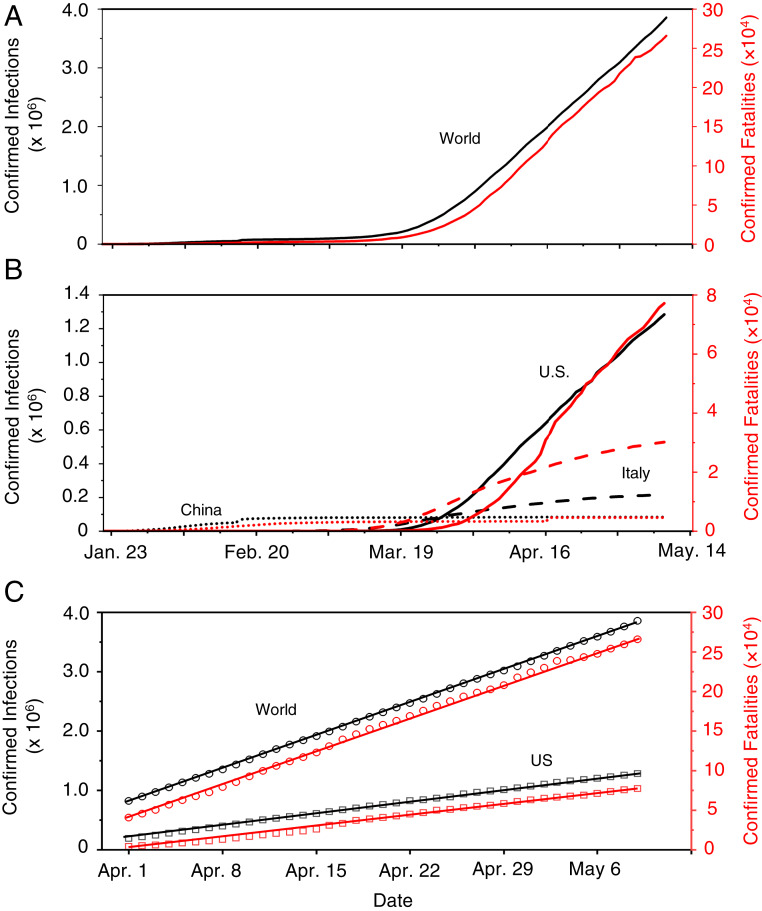
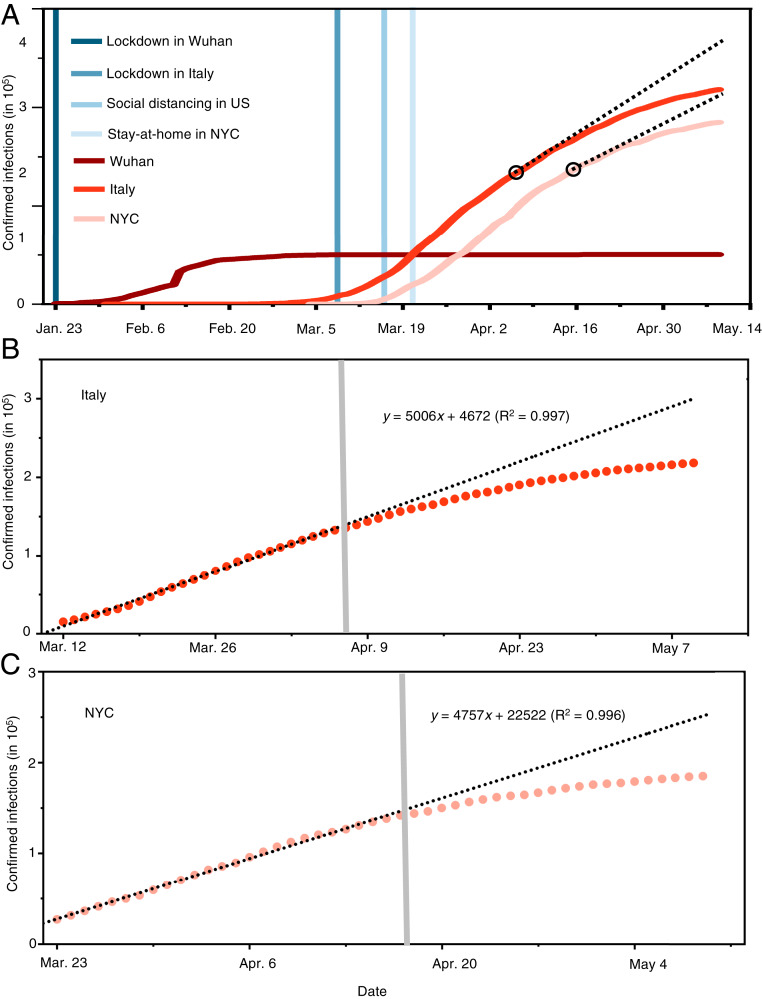
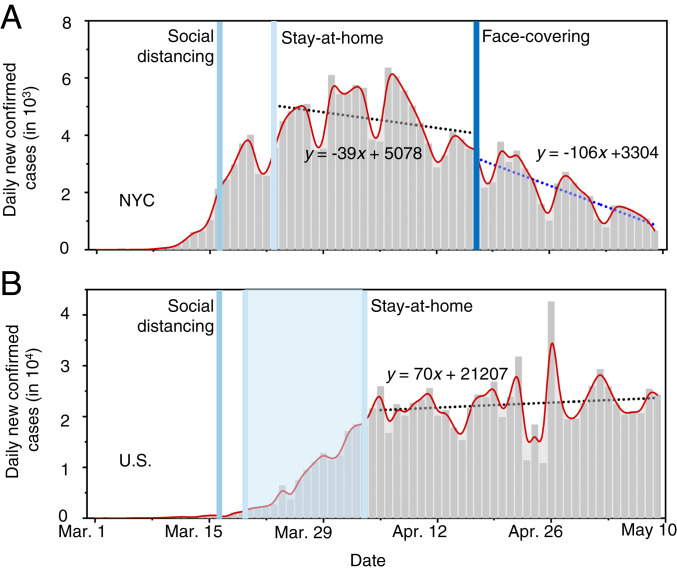
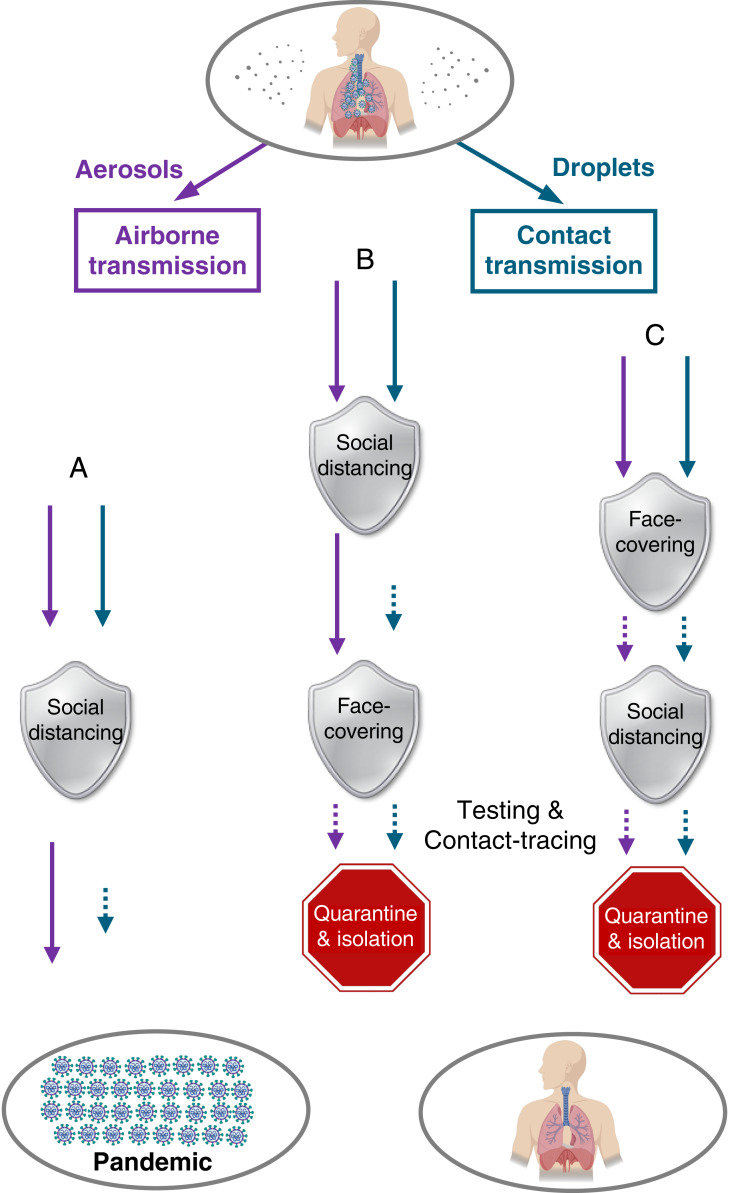
Various mitigation measures have been implemented to fight the coronavirus disease 2019 (COVID-19) pandemic, including widely adopted social distancing and mandated face covering. However, assessing the effectiveness of those intervention practices hinges on the understanding of virus transmission, which remains uncertain. Here we show that airborne transmission is highly virulent and represents the dominant route to spread the disease. By analyzing the trend and mitigation measures in Wuhan, China, Italy, and New York City, from January 23 to May 9, 2020, we illustrate that the impacts of mitigation measures are discernable from the trends of the pandemic. Our analysis reveals that the difference with and without mandated face covering represents the determinant in shaping the pandemic trends in the three epicenters. This protective measure alone significantly reduced the number of infections, that is, by over 78,000 in Italy from April 6 to May 9 and over 66,000 in New York City from April 17 to May 9. Other mitigation measures, such as social distancing implemented in the United States, are insufficient by themselves in protecting the public. We conclude that wearing of face masks in public corresponds to the most effective means to prevent interhuman transmission, and this inexpensive practice, in conjunction with simultaneous social distancing, quarantine, and contact tracing, represents the most likely fighting opportunity to stop the COVID-19 pandemic. Our work also highlights the fact that sound science is essential in decision-making for the current and future public health pandemics.
Overview
The claims and statistics of this paper haven’t been checked yet.
Free: it reads the open-access text and checks the first 5 claims that cite a source we can check. Create a free account to check every claim.
Integrity signals
Registry
Cites
Statistics
Figures
Verification
Claims the paper makes
The claims and statistics of this paper haven’t been checked yet.
Free: it reads the open-access text and checks the first 5 claims that cite a source we can check. Create a free account to check every claim.
Claims other papers make about this one
Each is checked against this paper’s own text: does it say what the citing paper says it does?
The cited source says what the claim attributes to it.
In the citing paper
“With the progression of the pandemic there is a growing body of literature that supports airborne transmission of SARS-CoV-2 playing an increasingly important role in the spread of the disease [29, 39–44].”
From The protective performance of reusable cloth face masks, disposable procedure masks, KN95 masks and N95 respirators: Filtration and total inward leakage (2021) · cites this paper as [39]
Self-check
Percentages, sums and reported differences re-computed from the paper’s own numbers.
The self-check needs the paper’s full text.
Citations
Cites
Aerosol and surface stability of SARS-CoV-2 as compared with SARS-CoV-1
van Doremalen, N., Bushmaker, T., Morris, D. H., Holbrook, M. G., Gamble, A., Williamson, B. N., Tamin, A., Harcourt, J. L., Thornburg, N. J., Gerber, S. I., et al. (2020) · New England Journal of Medicine · doi:10.1056/nejmc2004973 · Cited by 9,951 · cited 4×
“Recent experimental studies have examined the stability of SARS-CoV-2, showing that the virus remains infectious in aerosols for hours (12) and on surfaces up to days (12, 13).”
InfluentialTemporal dynamics in viral shedding and transmissibility of COVID-19
He, X., Lau, E. H. Y., Wu, P., Deng, X., Wang, J., Hao, X., Lau, Y. C., Wong, J. Y., Guan, Y., Tan, X., et al. (2020) · Nature Medicine · doi:10.1038/s41591-020-0869-5 · Cited by 4,247 · cited 2×
“In addition, nascent micrometer-size aerosols produced from coughing/sneezing of infected people have the potential of containing many viruses, particularly for asymptomatic carriers (16).”
Coronaviruses: An Overview of Their Replication and Pathogenesis
Fehr, A. R., & Perlman, S. (2015) · Methods in Molecular Biology · doi:10.1007/978-1-4939-2438-7_1 · Cited by 3,787
Quantifying SARS-CoV-2 transmission suggests epidemic control with digital contact tracing
Ferretti, L., Wymant, C., Kendall, M., Zhao, L., Nurtay, A., Abeler-Dörner, L., Parker, M., Bonsall, D., & Fraser, C. (2020) · Science · doi:10.1126/science.abb6936 · Cited by 2,512 · cited 1×
“Differentiation of the effects of those mitigation measures in China is challenging (19), since the implementation occurred almost simultaneously in January 2020.”
Respiratory virus shedding in exhaled breath and efficacy of face masks
Leung, N. H. L., Chu, D. K. W., Shiu, E. Y. C., Chan, K.-H., McDevitt, J. J., Hau, B. J. P., Yen, H.-L., Li, Y., Ip, D. K. M., Peiris, J. S. M., et al. (2020) · Nature Medicine · doi:10.1038/s41591-020-0843-2 · Cited by 2,270
Self-citationWu, X., Nethery, R. C., Sabath, M. B., Braun, D., & Dominici, F. (2020) · Science Advances · doi:10.1126/sciadv.abd4049 · Cited by 1,974
Stability of SARS-CoV-2 in different environmental conditions
Chin, A. W. H., Chu, J. T. S., Perera, M. R. A., Hui, K. P. Y., Yen, H.-L., Chan, M. C. W., Peiris, M., & Poon, L. L. M. (2020) · doi:10.1101/2020.03.15.20036673 · Cited by 1,948
Stability of SARS-CoV-2 in different environmental conditions
Chin, A. W. H., Chu, J. T. S., Perera, M. R. A., Hui, K. P. Y., Yen, H.-L., Chan, M. C. W., Peiris, M., & Poon, L. L. M. (2020) · The Lancet Microbe · doi:10.1016/s2666-5247(20)30003-3 · Cited by 1,946
Aerodynamic Analysis of SARS-CoV-2 in Two Wuhan Hospitals
Liu, Y., Ning, Z., Chen, Y., Guo, M., Liu, Y., Gali, N. K., Sun, L., Duan, Y., Cai, J., Westerdahl, D., et al. (2020) · Nature · doi:10.1038/s41586-020-2271-3 · Cited by 1,872 · cited 2×
“Available epidemiological (1) and experimental (12, 18) evidence, however, implicates airborne transmission of SARS-CoV-2 via aerosols as a potential route for the spreading of the disease.”
Elucidating severe urban haze formation in China
Guo, S., Hu, M., Zamora, M. L., Peng, J., Shang, D., Zheng, J., Du, Z., Wu, Z., Shao, M., Zeng, L., et al. (2014) · Proceedings of the National Academy of Sciences · doi:10.1073/pnas.1419604111 · Cited by 1,711 · cited 1×
“In addition, nascent virus-bearing aerosols produced from human atomization likely undergo transformation in air, including coagulation with ambient preexisting PM and/or growth on a time scale of a few hours in typical urban air (27 – 29).”
Self-citation
Cited by
Inferring the effectiveness of government interventions against COVID-19
Brauner, J. M., Mindermann, S., Sharma, M., Johnston, D., Salvatier, J., Gavenčiak, T., Stephenson, A. B., Leech, G., Altman, G., Mikulik, V., et al. (2021) · Science · doi:10.1126/science.abd9338 · Cited by 1,065
Unexpected air pollution with marked emission reductions during the COVID-19 outbreak in China
Le, T., Wang, Y., Liu, L., Yang, J., Yung, Y. L., Li, G., & Seinfeld, J. H. (2020) · Science · doi:10.1126/science.abb7431 · Cited by 931
“Meanwhile, an exposure to high levels of PM can cause adverse effects on the respiratory and cardiovascular systems and possibly increase the fatality rate of COVID-19 ( 22 ).”
Self-citationSARS-CoV-2: Structure, Biology, and Structure-Based Therapeutics Development
Wang, M.-Y., Zhao, R., Gao, L.-J., Gao, X.-F., Wang, D.-P., & Cao, J.-M. (2020) · Frontiers in Cellular and Infection Microbiology · doi:10.3389/fcimb.2020.587269 · Cited by 874
Gender differences in COVID-19 attitudes and behavior: Panel evidence from eight countries
Galasso, V., Pons, V., Profeta, P., Becher, M., Brouard, S., & Foucault, M. (2020) · Proceedings of the National Academy of Sciences · doi:10.1073/pnas.2012520117 · Cited by 867
“In particular, the main route for the spread of COVID-19—airborne transmission—is largely reduced by wearing face masks: 78,000 fewer infections in Italy in a month and 66,000 fewer in New York City over a 3-wk period (4).”
BackgroundSARS-CoV-2 infection of the oral cavity and saliva
Huang, N., Pérez, P., Kato, T., Mikami, Y., Okuda, K., Gilmore, R. C., Conde, C. D., Gasmi, B., Stein, S., Beach, M., et al. (2021) · Nature Medicine · doi:10.1038/s41591-021-01296-8 · Cited by 763
Zhu, Z., Lian, X., Su, X., Wu, W., Marraro, G. A., & Zeng, Y. (2020) · Respiratory Research · doi:10.1186/s12931-020-01479-w · Cited by 614
The effect of temperature on persistence of SARS-CoV-2 on common surfaces
Riddell, S., Goldie, S., Hill, A., Eagles, D., & Drew, T. W. (2020) · Virology Journal · doi:10.1186/s12985-020-01418-7 · Cited by 596
Aerosol transmission of SARS-CoV-2? Evidence, prevention and control
Tang, S., Mao, Y., Jones, R. M., Tan, Q., Ji, J. S., Li, N., Shen, J., Lv, Y., Pan, L., Ding, P., et al. (2020) · Environment International · doi:10.1016/j.envint.2020.106039 · Cited by 553
Self-citationA guideline to limit indoor airborne transmission of COVID-19
Bazant, M. Z., & Bush, J. W. M. (2021) · Proceedings of the National Academy of Sciences · doi:10.1073/pnas.2018995118 · Cited by 477
Effects of ventilation on the indoor spread of COVID-19
Bhagat, R. K., Davies Wykes, M. S., Dalziel, S. B., & Linden, P. F. (2020) · Journal of Fluid Mechanics · doi:10.1017/jfm.2020.720 · Cited by 414
“…that SARS-CoV-2, the virus causing COVID-19, can be spread by airborne transmission (Fennelly 2020; Lewis 2020; Morawska & Milton 2020; Zhang et al. 2020), poorly ventilated places are considered to be high risk and, on a precautionary principle, current advice is for buildings to be…”
BackgroundFace masks considerably reduce COVID-19 cases in Germany
Mitze, T., Kosfeld, R., Rode, J., & Wälde, K. (2020) · Proceedings of the National Academy of Sciences · doi:10.1073/pnas.2015954117 · Cited by 411
“The work that is most closely related to our approach is (47), who esti‐ mate the effects of public health measures on the spread of Covid‐19 in the three pandemic epicenters Wuhan, Italy, and New York City over the period January 23 to May 9, 2020.”
Causal impact of masks, policies, behavior on early COVID-19 pandemic in the U.S
Chernozhukov, V., Kasahara, H., & Schrimpf, P. (2021) · Journal of Econometrics · doi:10.1016/j.jeconom.2020.09.003 · Cited by 403
Testing at scale during the COVID-19 pandemic
Mercer, T. R., & Salit, M. (2021) · Nature Reviews Genetics · doi:10.1038/s41576-021-00360-w · Cited by 387
Political polarization on COVID-19 pandemic response in the United States
Kerr, J., Panagopoulos, C., & van der Linden, S. (2021) · Personality and Individual Differences · doi:10.1016/j.paid.2021.110892 · Cited by 370
Face masks effectively limit the probability of SARS-CoV-2 transmission
Cheng, Y., Ma, N., Witt, C., Rapp, S., Wild, P. S., Andreae, M. O., Pöschl, U., & Su, H. (2021) · Science · doi:10.1126/science.abg6296 · Cited by 338
Rahman, S., Montero, M. T. V., Rowe, K., Kirton, R., & Kunik, F. (2021) · Expert Review of Clinical Pharmacology · doi:10.1080/17512433.2021.1902303 · Cited by 289
Balasubramaniam, B., Prateek, Ranjan, S., Saraf, M., Kar, P., Singh, S. P., Thakur, V. K., Singh, A., & Gupta, R. K. (2021) · ACS Pharmacology & Translational Science · doi:10.1021/acsptsci.0c00174 · Cited by 285
The role of seasonality in the spread of COVID-19 pandemic
Liu, X., Huang, J., Li, C., Zhao, Y., Wang, D., Huang, Z., & Yang, K. (2021) · Environmental Research · doi:10.1016/j.envres.2021.110874 · Cited by 271
SARS-CoV-2 in river water: Implications in low sanitation countries
Guerrero‐Latorre, L., Ballesteros, I., Villacrés‐Granda, I., Granda, M. G., Freire‐Paspuel, B., & Ríos‐Touma, B. (2020) · The Science of The Total Environment · doi:10.1016/j.scitotenv.2020.140832 · Cited by 269
“SARS-CoV-2 transmission in humans is mainly airborne (Zhang et al., 2020) but recent studies suggest that extended shedding of SARS-CoV-2 in feces is a potential health risk (Lodder and de Roda Husman, 2020).”
Li, S., Zhang, Y., Liang, X., Wang, H., Lu, H., Zhu, M., Wang, H., Zhang, M., Qiu, X., Song, Y., et al. (2022) · Nature Communications · doi:10.1038/s41467-022-33133-y · Cited by 254
Explosive Secondary Aerosol Formation during Severe Haze in the North China Plain
Peng, J., Hu, M., Shang, D., Wu, Z., Du, Z., Tan, T., Wang, Y., Zhang, F., & Zhang, R. (2021) · Environmental Science & Technology · doi:10.1021/acs.est.0c07204 · Cited by 238
Self-citationCOVID-19 and air pollution and meteorology-an intricate relationship: A review
Srivastava, A. (2021) · Chemosphere · doi:10.1016/j.chemosphere.2020.128297 · Cited by 229
Natural history of COVID-19 and current knowledge on treatment therapeutic options
dos Santos, W. G. (2020) · Biomedicine & Pharmacotherapy · doi:10.1016/j.biopha.2020.110493 · Cited by 219
“It was recently shown that airborne transmission is highly virulent and represents the dominant route to spread the disease [27].”
Asamoah, J. K. K., Owusu, M. A., Jin, Z., Oduro, F. T., Abidemi, A., & Gyasi, E. O. (2020) · Chaos, Solitons & Fractals · doi:10.1016/j.chaos.2020.110103 · Cited by 219
Model Calculations of Aerosol Transmission and Infection Risk of COVID-19 in Indoor Environments
Lelieveld, J., Helleis, F., Borrmann, S., Cheng, Y., Drewnick, F., Haug, G., Klimach, T., Sciare, J., Su, H., & Pöschl, U. (2020) · International Journal of Environmental Research and Public Health · doi:10.3390/ijerph17218114 · Cited by 212
“Zhang and colleagues pose that airborne transmission is highly virulent and represents the dominant route in the spreading of COVID-19 [8].”
BackgroundChallenges of COVID-19 in children in low- and middle-income countries
Zar, H. J., Dawa, J., Fischer, G. B., & Castro-Rodriguez, J. A. (2020) · Paediatric Respiratory Reviews · doi:10.1016/j.prrv.2020.06.016 · Cited by 210
“Increasing evidence shows that SARS-CoV-2 is predominately spread via aerosols, and that nasal oxygen systems, coughing or even speaking may generate aerosols [40,41]; therefore protection of HCWs with N-95 or respirator masks is a key, effective form of protection for which there are inadequate supplies in LMICs [19,…”
Rizan, C., Reed, M., & Bhutta, M. F. (2021) · Journal of the Royal Society of Medicine · doi:10.1177/01410768211001583 · Cited by 210
“In healthcare settings in England the policy at the time of the study period mandated use of gloves for close patient contact,(4) although transmission of coronavirus is thought to occur mostly via airborne spread rather than direct transfer.(23) Hand washing can destroy the SARS-CoV2 virus,(15) so may negate the need…”
BackgroundNews media coverage of COVID-19 public health and policy information
Mach, K. J., Reyes, R. S., Pentz, B., Taylor, J., Costa, C. A., Cruz, S. G., Thomas, K. E., Arnott, J. C., Donald, R., Jagannathan, K., et al. (2021) · Humanities and Social Sciences Communications · doi:10.1057/s41599-021-00900-z · Cited by 209
“For example, the mechanisms of disease transmission, especially airborne transmission, were slow to be recognized, leading to dynamic adjustments of public-health guidance (e.g., for mask usage by the general public) (Zhang et al., 2020).”
BackgroundDrewnick, F., Pikmann, J., Fachinger, F., Moormann, L., Sprang, F., & Borrmann, S. (2021) · Aerosol Science and Technology · doi:10.1080/02786826.2020.1817846 · Cited by 199
Mbunge, E. (2020) · Diabetes & Metabolic Syndrome: Clinical Research & Reviews · doi:10.1016/j.dsx.2020.08.029 · Cited by 198
The size and culturability of patient-generated SARS-CoV-2 aerosol
Santarpia, J. L., Herrera, V. L., Rivera, D. N., Ratnesar-Shumate, S., Reid, S. P., Ackerman, D. N., Denton, P. W., Martens, J. W. S., Fang, Y., Conoan, N., et al. (2022) · Journal of Exposure Science & Environmental Epidemiology · doi:10.1038/s41370-021-00376-8 · Cited by 196
“METHODS: Size-fractionated aerosol samples and aerosol size distributions were collected from COVID-19 positive patients.”
BackgroundInfluentialA quantitative evaluation of aerosol generation during tracheal intubation and extubation
Brown, J., Gregson, F. K. A., Shrimpton, A., Cook, T. M., Bzdek, B. R., Reid, J. P., & Pickering, A. E. (2021) · Anaesthesia · doi:10.1111/anae.15292 · Cited by 194
Fundamental protective mechanisms of face masks against droplet infections
Kähler, C. J., & Hain, R. (2020) · Journal of Aerosol Science · doi:10.1016/j.jaerosci.2020.105617 · Cited by 191
Stigmatization and prejudice during the COVID-19 pandemic
Roberto, K. J., Johnson, A. F., & Rauhaus, B. M. (2020) · Administrative Theory & Praxis · doi:10.1080/10841806.2020.1782128 · Cited by 190
Face Masks and the Cardiorespiratory Response to Physical Activity in Health and Disease
Hopkins, S. R., Dominelli, P. B., Davis, C. K., Guenette, J. A., Luks, A. M., Molgat-Seon, Y., Sá, R. C., Sheel, A. W., Swenson, E. R., & Stickland, M. K. (2021) · Annals of the American Thoracic Society · doi:10.1513/annalsats.202008-990cme · Cited by 190
Chong, K. L., Ng, C. S., Hori, N., Yang, R., Verzicco, R., & Lohse, D. (2021) · Physical Review Letters · doi:10.1103/physrevlett.126.034502 · Cited by 190
Escandón, K., Rasmussen, A. L., Bogoch, I. I., Murray, E. J., Escandón, K., Popescu, S. V., & Kindrachuk, J. (2021) · BMC Infectious Diseases · doi:10.1186/s12879-021-06357-4 · Cited by 187
Causal impact of masks, policies, behavior on early COVID-19 pandemic in the U.S.
Schrimpf, P., Kasahara, H., & Chernozhukov, V. (2020) · doi:10.1920/wp.cem.2020.2420 · Cited by 187
Rapid and complete inactivation of SARS-CoV-2 by ultraviolet-C irradiation
Storm, N., McKay, L. G. A., Downs, S. N., Johnson, R. I., Birru, D., de Samber, M., Willaert, W., Cennini, G., & Griffiths, A. (2020) · Scientific Reports · doi:10.1038/s41598-020-79600-8 · Cited by 182
The europe second wave of COVID-19 infection and the Italy “strange” situation
Bontempi, E. (2020) · Environmental Research · doi:10.1016/j.envres.2020.110476 · Cited by 179
Triggle, C. R., Bansal, D., Ding, H., Islam, M. M., Farag, E. A. B. A., Hadi, H. A., & Sultan, A. A. (2021) · Frontiers in Immunology · doi:10.3389/fimmu.2021.631139 · Cited by 177
Disease transmission through expiratory aerosols on an urban bus
Zhang, Z., Han, T., Yoo, K. H., Capecelatro, J., Boehman, A. L., & Maki, K. J. (2021) · Physics of Fluids · doi:10.1063/5.0037452 · Cited by 178
Review of indoor aerosol generation, transport, and control in the context of COVID‐19
Kohanski, M. A., Lo, L. J., & Waring, M. S. (2020) · International Forum of Allergy & Rhinology · doi:10.1002/alr.22661 · Cited by 176
Modes of transmission of SARS-CoV-2 and evidence for preventive behavioral interventions
Zhou, L., Ayeh, S. K., Chidambaram, V., & Karakousis, P. C. (2021) · BMC Infectious Diseases · doi:10.1186/s12879-021-06222-4 · Cited by 174
“transmission was the dominant route for the spread of COVID-19 [51].”
BackgroundTwo Years into the COVID-19 Pandemic: Lessons Learned
da Silva, S. J. R., do Nascimento, J. C. F., Mendes, R. P. G., Guarines, K. M., da Silva, C. T. A., da Silva, P. G., de Magalhães, J. J. F., Vigar, J. R. J., Silva‐Júnior, A., Kohl, A., et al. (2022) · ACS Infectious Diseases · doi:10.1021/acsinfecdis.2c00204 · Cited by 172
Microbial ecology of the atmosphere
Šantl-Temkiv, T., Amato, P., Casamayor, E. O., Lee, P. K. H., & Pointing, S. B. (2022) · FEMS Microbiology Reviews · doi:10.1093/femsre/fuac009 · Cited by 171
Abbasi, S. A., Khalil, A. B., & Arslan, M. (2020) · Saudi Journal of Biological Sciences · doi:10.1016/j.sjbs.2020.09.054 · Cited by 168
Meat plants—a new front line in the covid-19 pandemic
Middleton, J., Reintjes, R., & Lopes, H. (2020) · BMJ · doi:10.1136/bmj.m2716 · Cited by 163
Air quality changes in cities during the COVID-19 lockdown: A critical review
Adam, M. G., Tran, P. T. M., & Balasubramanian, R. (2021) · Atmospheric Research · doi:10.1016/j.atmosres.2021.105823 · Cited by 164
“11 prevent inter-human transmission, and this inexpensive practice, in conjunction with simultaneous active ventilation in indoor environments, contact tracing, quarantine and social distancing, represents the most likely fighting opportunity to stop the COVID-19 pandemic (Lelieveld et al., 2020; Zhang et al., 2020).”
InfluentialSocial stigma in the time of coronavirus disease 2019
Sotgiu, G., & Dobler, C. C. (2020) · European Respiratory Journal · doi:10.1183/13993003.02461-2020 · Cited by 161
Deng, W., Sun, Y., Yao, X., Subramanian, K., Ling, C., Wang, H., Chopra, S. S., Xu, B. B., Wang, J., Chen, J., et al. (2022) · Advanced Science · doi:10.1002/advs.202102189 · Cited by 160
Arslan, M., Xu, B., & El‐Din, M. G. (2020) · The Science of The Total Environment · doi:10.1016/j.scitotenv.2020.140709 · Cited by 160
SARS-CoV-2 (COVID-19) superspreader events
Majra, D., Benson, J., Pitts, J., & Stebbing, J. (2021) · Journal of Infection · doi:10.1016/j.jinf.2020.11.021 · Cited by 159
Brainard, J. S., Jones, N. R., LAKE, I. R., Hooper, L., & Hunter, P. R. (2020) · Eurosurveillance · doi:10.2807/1560-7917.es.2020.25.49.2000725 · Cited by 161
“combinations of other control measures) were introduced in various localities [61-65] have more”
Potential sources, modes of transmission and effectiveness of prevention measures against SARS-CoV-2
Kampf, G., Brüggemann, Y., Kaba, H. E. J., Steinmann, J., Pfaender, S., Scheithauer, S., & Steinmann, E. (2020) · Journal of Hospital Infection · doi:10.1016/j.jhin.2020.09.022 · Cited by 139
“Some recent studies suggest that general face mask usage by the healthy population in the community reduces the risk of transmission [180,181].”
Hou, X. H., Gao, S., Li, Q., Kang, Y., Chen, N., Chen, K., Rao, J., Ellenberg, J. S., & Patz, J. A. (2021) · Proceedings of the National Academy of Sciences · doi:10.1073/pnas.2020524118 · Cited by 153
Peeples, L. (2020) · Nature · doi:10.1038/d41586-020-02801-8 · Cited by 153
Face masks against COVID-19: Standards, efficacy, testing and decontamination methods
Ju, J. T. J., Boisvert, L. N., & Zuo, Y. (2021) · Advances in Colloid and Interface Science · doi:10.1016/j.cis.2021.102435 · Cited by 150
Weather impact on airborne coronavirus survival
Dbouk, T., & Drikakis, D. (2020) · Physics of Fluids · doi:10.1063/5.0024272 · Cited by 149
Kumar, P., Roy, S., Sarkar, A., & Jaiswal, A. K. (2021) · ACS Applied Materials & Interfaces · doi:10.1021/acsami.1c00083 · Cited by 143
An upper bound on one-to-one exposure to infectious human respiratory particles
Bagheri, G., Thiede, B., Hejazi, B., Schlenczek, O., & Bodenschatz, E. (2021) · Proceedings of the National Academy of Sciences · doi:10.1073/pnas.2110117118 · Cited by 143
“Infectious airborne diseases such as the Severe Acute Respiratory Syndrome (SARS) 2002, the Avian Influenza and Swine Influenza (H1N1), and more recently, the Coronavirus disease (COVID-19) are transmitted via direct and indirect exposure from an infectious to a susceptible [1, 2, 3, 4].”
BackgroundKahane, L. H. (2021) · Eastern Economic Journal · doi:10.1057/s41302-020-00186-0 · Cited by 139
Quantifying human mobility behaviour changes during the COVID-19 outbreak in the United States
Pan, Y., Darzi, A., Kabiri, A., Zhao, G., Luo, W., Xiong, C., & Zhang, L. (2020) · Scientific Reports · doi:10.1038/s41598-020-77751-2 · Cited by 135
Detecting COVID-19 from Breath: A Game Changer for a Big Challenge
Giovannini, G., Haick, H., & Garoli, D. (2021) · ACS Sensors · doi:10.1021/acssensors.1c00312 · Cited by 131
Airflows inside passenger cars and implications for airborne disease transmission
Mathai, V., Das, A., Bailey, J. A., & Breuer, K. (2020) · Science Advances · doi:10.1126/sciadv.abe0166 · Cited by 130
COVID19 Disease Map, a computational knowledge repository of virus–host interaction mechanisms
Ostaszewski, M., Niarakis, A., Mazein, A., Kuperstein, I., Phair, R. D., Resendiz, A. O., Singh, V., Aghamiri, S. S., Acencio, M. L., Glaab, E., et al. (2021) · Molecular Systems Biology · doi:10.15252/msb.202110387 · Cited by 123
The lockdown effect: A counterfactual for Sweden
Born, B., Dietrich, A. M., & Müller, G. J. (2021) · PLoS ONE · doi:10.1371/journal.pone.0249732 · Cited by 121
“NPI are thus found to be very effective in reducing infection growth [4] and to reduce the number of deaths by about 95% according to an influential study [5].”
BackgroundThe Global Impact of COVID-19 on Solid Organ Transplantation: Two Years Into a Pandemic
Nimmo, A., Gardiner, D. D., Ushiro‐Lumb, I., Ravanan, R., & Forsythe, J. L. R. (2022) · Transplantation · doi:10.1097/tp.0000000000004151 · Cited by 120
“SARS-CoV-2 is predominantly transmitted by airborne and droplet routes.(55) However, viral RNA has been found in hepatocytes, renal tubular cells, and the myocardium of critically ill patients and on postmortem, leading to concerns that donor-derived infection could occur.”
BackgroundIs risk compensation threatening public health in the covid-19 pandemic?
Mantzari, E., Rubin, G. J., & Marteau, T. M. (2020) · BMJ · doi:10.1136/bmj.m2913 · Cited by 119
Immune Therapy, or Antiviral Therapy, or Both for COVID-19: A Systematic Review
Cantini, F., Goletti, D., Petrone, L., Fard, S. N., Niccoli, L., & Foti, R. (2020) · Drugs · doi:10.1007/s40265-020-01421-w · Cited by 118
“SARS-CoV-2 is transmitted human to human by respiratory droplets [5], aerosols [6], and possibly by faecal-oral contact [7].”
BackgroundNovel impacts of saliva with regard to oral health
Uchida, H., & Ovitt, C. E. (2021) · Journal of Prosthetic Dentistry · doi:10.1016/j.prosdent.2021.05.009 · Cited by 118
Introductory lecture: air quality in megacities
Molina, L. T. (2021) · Faraday Discussions · doi:10.1039/d0fd00123f · Cited by 114
Global face mask pollution: threats to the environment and wildlife, and potential solutions
Wang, L., Li, S., Ahmad, I. M., Zhang, G., Sun, Y., Wang, Y., Sun, C., Jiang, C., Cui, P., & Li, D. (2023) · The Science of The Total Environment · doi:10.1016/j.scitotenv.2023.164055 · Cited by 113
“This can lead to the circulation of plastic waste derived from used masks in terrestrial, aquatic, and atmospheric environments (Rillig and Lehmann, 2020; Zhang et al., 2020; Huang et al., 2021).”
BackgroundSelf-citationInfection probability under different air distribution patterns
Su, W., Yang, B., Melikov, A. K., Liang, C., Lu, Y., Wang, F., Li, A., Lin, Z., Li, X., Cao, G., et al. (2021) · Building and Environment · doi:10.1016/j.buildenv.2021.108555 · Cited by 110
Comparison of Face-Touching Behaviors Before and During the Coronavirus Disease 2019 Pandemic
Chen, Y., Qin, G., Chen, J., Xu, J., Feng, D.-Y., Wu, X., & Li, X. (2020) · JAMA Network Open · doi:10.1001/jamanetworkopen.2020.16924 · Cited by 109
Mechanisms of Airborne Infection via Evaporating and Sedimenting Droplets Produced by Speaking
Netz, R. R. (2020) · The Journal of Physical Chemistry B · doi:10.1021/acs.jpcb.0c05229 · Cited by 108
Immunological imprint of COVID‐19 on human peripheral blood leukocyte populations
Kratzer, B., Trapin, D., Ettel, P., Körmöczi, U., Rottal, A., Tuppy, F., Feichter, M., Gattinger, P., Borochova, K., Dorofeeva, Y., et al. (2020) · Allergy · doi:10.1111/all.14647 · Cited by 106
Vermund, S. H., & Pitzer, V. E. (2020) · Clinical Infectious Diseases · doi:10.1093/cid/ciaa855 · Cited by 105
“To minimize transmission from asymptomatic individuals depends upon wearing masks, practicing physical distancing (2 meters or more), safe handand face-hygiene, cleansing surfaces, avoiding crowds and crowding, and aggressive viral testing and quarantine.(18-24)”
BackgroundFace mask—A potential source of phthalate exposure for human
Xie, H., Han, W., Xie, Q. L., Xu, T., Zhu, M., & Chen, J. (2021) · Journal of Hazardous Materials · doi:10.1016/j.jhazmat.2021.126848 · Cited by 105
Global expansion of COVID-19 pandemic is driven by population size and airport connections
Coelho, M. T. P., Rodrigues, J. F. M., Medina, A. M., Scalco, P. R., Terribile, L. C., Vilela, B., Diniz‐Filho, J. A. F., & Dobrovolski, R. (2020) · PeerJ · doi:10.7717/peerj.9708 · Cited by 105
“This procedure is also important to guarantee that only the early phase of the disease is analysed given that stabilization and decreasing in growth rates are caused both by natural population dynamics (following a logistic model) and by the interplay of different interventions made by each country, such as political…”
BackgroundACE2 Receptor-Modified Algae-Based Microrobot for Removal of SARS-CoV-2 in Wastewater
Zhang, F., Li, Z., Yin, L., Zhang, Q., Askarinam, N., Mundaca‐Uribe, R., Tehrani, F., Karshalev, E., Gao, W., Zhang, L., et al. (2021) · Journal of the American Chemical Society · doi:10.1021/jacs.1c04933 · Cited by 104
Anand, U., Cabreros, C., Mal, J., Ballesteros, F., Sillanpää, M. E. T., Tripathi, V. S., & Bontempi, E. (2021) · Environmental Research · doi:10.1016/j.envres.2021.111126 · Cited by 103
“On February 05, 2020, the cruise ship, which hosted 3711 passengers and crew members, underwent a 2-week quarantine after a former passenger tested positive for COVID-19 after disembarking in Hong Kong (Zhang et al., 2020).”
BackgroundLü, Y., Chen, L., Liu, X., Yang, Y., SULLIVAN, W. C., Xu, W., Webster, C. J., & Jiang, B. (2021) · Environment International · doi:10.1016/j.envint.2021.106465 · Cited by 102
Khan, P., Aufdembrink, L. M., & Engelhart, A. E. (2020) · ACS Synthetic Biology · doi:10.1021/acssynbio.0c00359 · Cited by 100
Fast inactivation of SARS-CoV-2 by UV-C and ozone exposure on different materials
Criscuolo, E., Diotti, R. A., Ferrarese, R., Alippi, C., Viscardi, G., Signorelli, C., Mancini, N., Clementi, M., & Clementi, N. (2021) · Emerging Microbes & Infections · doi:10.1080/22221751.2021.1872354 · Cited by 100
“The main transmission route of this virus appears to be via aerosols [2], and another suggested mode involves fomites”
BackgroundFerrari, S., Blázquez, T., Cardelli, R., Puglisi, G., Suárez, R., & Mazzarella, L. (2022) · Building and Environment · doi:10.1016/j.buildenv.2022.109366 · Cited by 100
A systematic review of human coronaviruses survival on environmental surfaces
Marzoli, F., Bortolami, A., Pezzuto, A., Mazzetto, E., Piro, R., Terregino, C., Bonfante, F., & Belluco, S. (2021) · The Science of The Total Environment · doi:10.1016/j.scitotenv.2021.146191 · Cited by 99
Impact of the COVID-19 lockdown on roadside traffic-related air pollution in Shanghai, China
Wu, C.-L., Wang, H., Cai, W., He, H.-D., Ni, A.-N., & Peng, Z. (2021) · Building and Environment · doi:10.1016/j.buildenv.2021.107718 · Cited by 98
“According to previous experimental and observational studies, the lockdown measures were highly successful in breaking the chain of COVID-19 transmission and preventing the infection of vulnerable populations [4], and the strict measures also caused significant and rapid environmental improvement [5–13].”
BackgroundResultBiological fluid dynamics of airborne COVID-19 infection
Seminara, G., Carli, B., Forni, G., Fuzzi, S., Mazzino, A., & Rinaldo, A. (2020) · RENDICONTI LINCEI · doi:10.1007/s12210-020-00938-2 · Cited by 96
Stability and transmissibility of SARS‐CoV‐2 in the environment
Geng, Y., & Wang, Y. (2022) · Journal of Medical Virology · doi:10.1002/jmv.28103 · Cited by 97
“efficiency, residence time in the air, and deposition patterns along the human respiratory tract.(5) Direct contact transmission refers to direct virus transfer from an infected to a susceptible individual”
BackgroundSelf-citationBelosi, F., Conte, M., Gianelle, V. L., Santachiara, G., & Contini, D. (2020) · Environmental Research · doi:10.1016/j.envres.2020.110603 · Cited by 96
Charlotte, N. (2023) · Journal of Voice · doi:10.1016/j.jvoice.2020.11.029 · Cited by 82
Making the green recovery work for jobs, income and growth
OECD (2020) · OECD policy responses to coronavirus (Covid-19) · doi:10.1787/a505f3e7-en · Cited by 95
Baldovin, T., Amoruso, I., Fonzo, M., Buja, A., Baldo, V., Cocchio, S., & Bertoncello, C. (2020) · The Science of The Total Environment · doi:10.1016/j.scitotenv.2020.143329 · Cited by 93
Flood-Garibay, J. A., Ángulo-Molina, A., & Mendéz-Rojas, M. A. (2023) · Environmental Science Processes & Impacts · doi:10.1039/d2em00276k · Cited by 94
A review on the transmission of COVID-19 based on cough/sneeze/breath flows
Hassan, M. E., Assoum, H., Bukharin, N., Otaibi, H. A., Mofijur, M., & Sakout, A. (2021) · The European Physical Journal Plus · doi:10.1140/epjp/s13360-021-02162-9 · Cited by 92
“Thus, the spread of respiratory droplets is a serious concern because of the fast transmission and spread of COVID-19 in people [108].”
BackgroundZhong, M., Lin, B., Pathak, J. L., Gao, H., Young, A. J., Wang, X., Liu, C., Wu, K., Liu, M., Chen, J.-M., et al. (2020) · Frontiers in Medicine · doi:10.3389/fmed.2020.580796 · Cited by 90
“Studies had reported both the respiratory and gastrointestinal tract manifestations of COVID-19 (4, 32).”
BackgroundSARS-CoV-2 in Environmental Samples of Quarantined Households
Döhla, M., Schulte, B., Wilbring, G., Kümmerer, B. M., Döhla, C., Sib, E., Richter, E., Ottensmeyer, P. F., Haag, A., Engelhart, S., et al. (2022) · Viruses · doi:10.3390/v14051075 · Cited by 89
Hill, W. C., Hull, M. S., & MacCuspie, R. I. (2020) · Nano Letters · doi:10.1021/acs.nanolett.0c03182 · Cited by 88
Aganović, A., Bi, Y., Cao, G., Drangsholt, F., Kurnitski, J., & Wargocki, P. L. (2021) · Building and Environment · doi:10.1016/j.buildenv.2021.108278 · Cited by 88
Metadata
- Authors
- Zhang, R., Li, Y., Zhang, A. L., Wang, Y., & Molina, M. J.
- Affiliations
- Texas A&M University (US)
- The University of Texas at Austin (US)
- California Institute of Technology (US)
- University of California San Diego (US)
- Corresponding author
- Zhang, Renyi
- Molina, Mario J.
- Venue
- Proceedings of the National Academy of Sciences
- Publisher
- National Academy of Sciences
- Published
- 2020-06-11
- Volume
- 117
- Issue
- 26
- Pages
- 14857-14863
- ISSN
- 0027-8424 (ISSN-L)
- 1091-6490
- PMC
- PMC7334447
- OpenAlex
- W3034825141
- Cited by
- 1,236
- References
- 28
- Citations by year
- 2026: 33 · 2025: 51 · 2024: 115 · 2023: 162 · 2022: 248 · 2021: 406 · 2020: 219
- FWCI
- 41.11
- Type
- journal article
- Language
- en
- Update notices
- correction (2020-10-05)
- Open access
- hybrid
- doi.org
- Licence
- Locations
- Proceedings of the National Academy of Sciences (publishedVersion, cc-by)
- PubMed Central (publishedVersion, cc-by)
- PubMed (publishedVersion)
- CaltechAUTHORS (California Institute of Technology) (submittedVersion, cc-by)
- eScholarship (California Digital Library) (submittedVersion)
- eScholarship (California Digital Library) (submittedVersion, cc-by)
- Funders
- Welch Foundation (A-1417)
- Topics
- Physical Sciences › Mathematics › Modeling and Simulation › COVID-19 epidemiological studies
- Health Sciences › Medicine › Pulmonary and Respiratory Medicine › Infection Control and Ventilation
- Social Sciences › Sociology and Political Science › COVID-19 Prevention and Impact
- Keywords
- COVID-19 pandemic, airborne transmission, face masks, social distancing, mitigation measures, epidemiological trends, Wuhan, Italy, New York City, quarantine, contact tracing, public health policy, infection control
- MeSH terms
- COVID-19, Humans, Masks, Pneumonia, Viral, Primary Prevention, Quarantine, Respiratory Protective Devices, United States, Coronavirus Infections, Disease Transmission, Infectious, Inhalation Exposure, Pandemics
About these checks
Registry, retraction, Cites and statistics results are computed, not judged, with one exception: a printed reference that no index lists is read once by a model before it counts as a citation error. Claims are extracted by a model and kept only when their quote appears verbatim in the text; each cited source is then checked, with a model’s help, for whether it says what the claim relies on. Those verdicts can be wrong — read the claim’s quote and the cited source before relying on one.
Statistics and arithmetic are recomputed, not judged.
Confidence bands are shown only for fields calibrated on our annotated test set. None is calibrated yet, so no band is shown.
What counts as a claim ›How we measure confidence ›How we check this ›
Are you an author, or do you see a problem with this page? Request a review
Data sources
Bibliographic data: Semantic Scholar, OpenAlex, Crossref.
Contains information from the Semantic Scholar Academic Graph Datasets, made available under the ODC Attribution License (ODC-BY 1.0).
Semantic Scholar’s data is described in: Kinney, R., et al. (2023). The Semantic Scholar Open Data Platform. arXiv:2301.10140.
