

Identifying airborne transmission as the dominant route for the spread of COVID-19
Open accessThe DOI matches its Crossref record; 31 of the 31 references it cites were found in a registry or an index.
Abstract
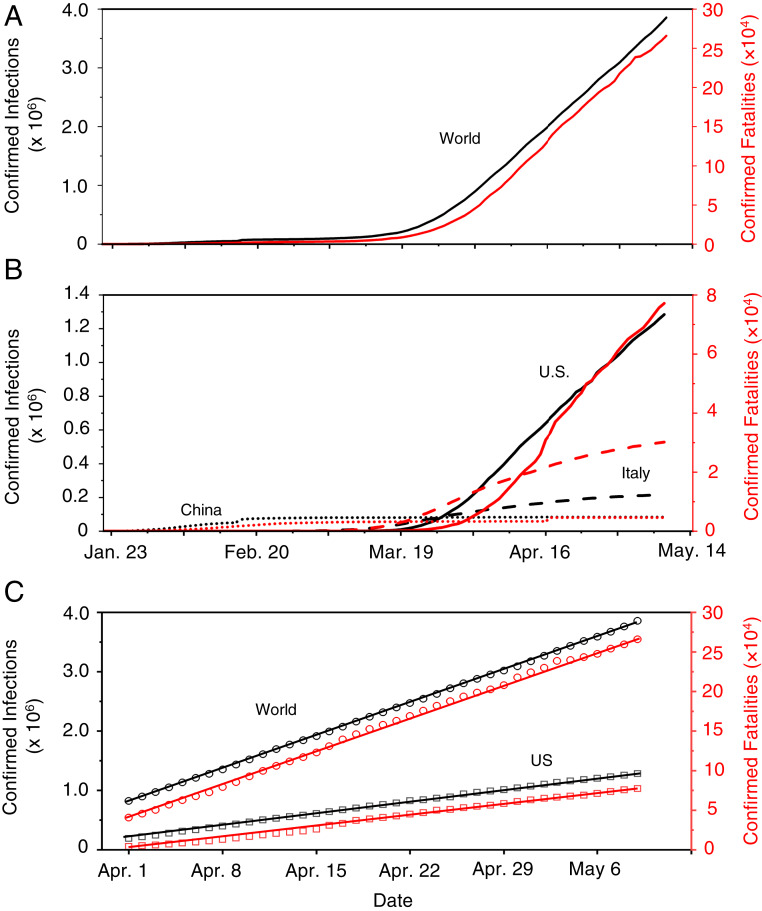
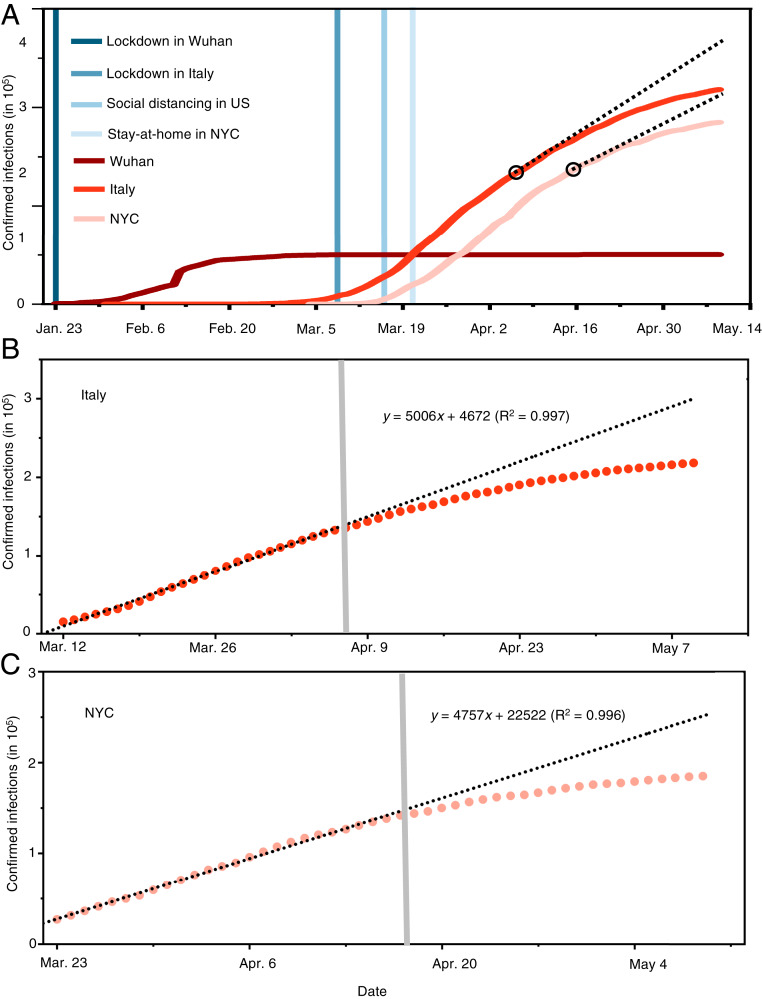
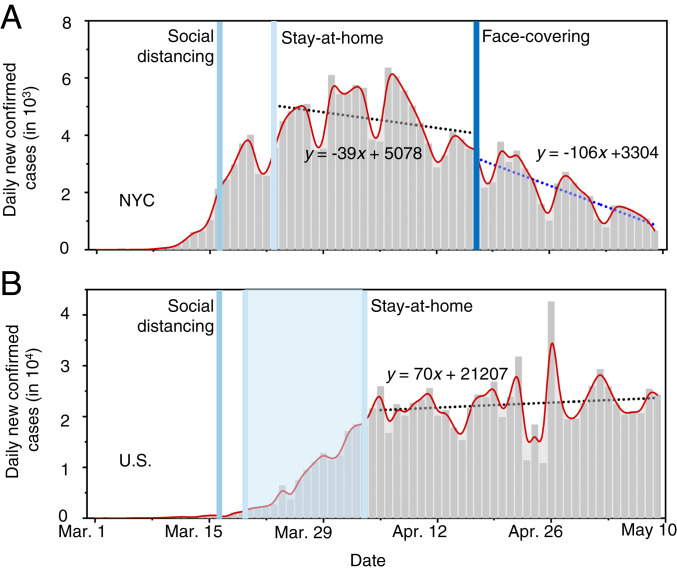
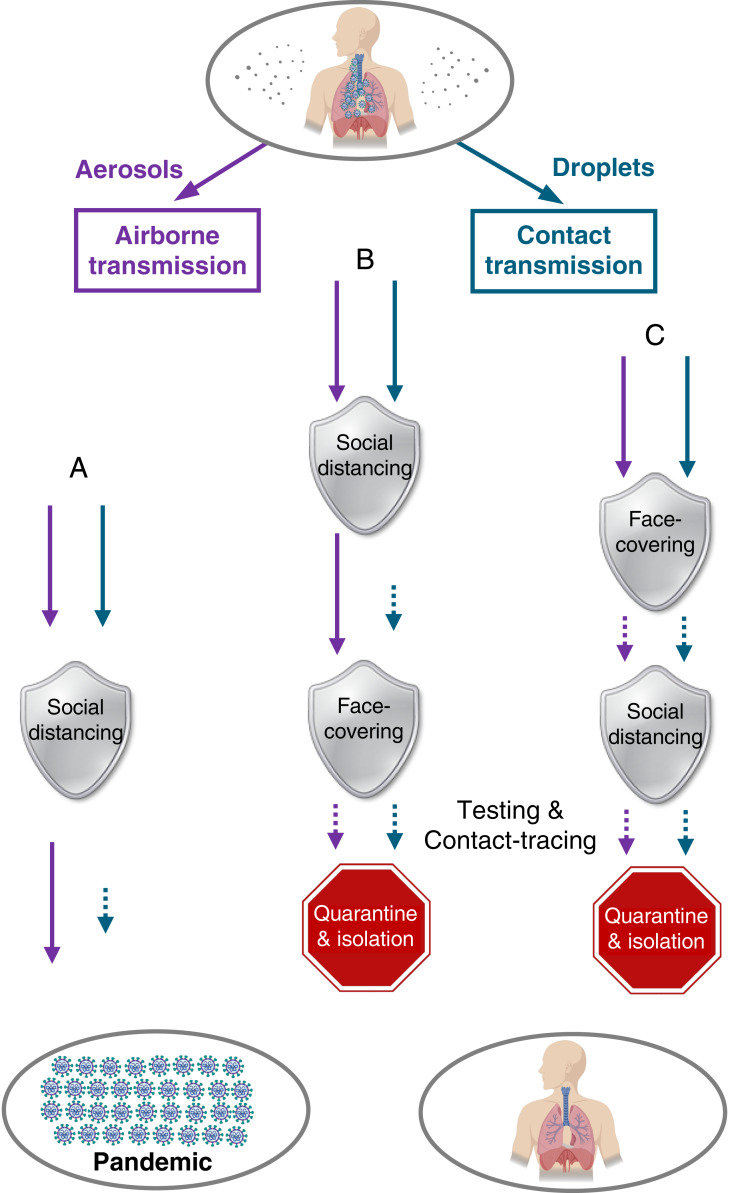
Various mitigation measures have been implemented to fight the coronavirus disease 2019 (COVID-19) pandemic, including widely adopted social distancing and mandated face covering. However, assessing the effectiveness of those intervention practices hinges on the understanding of virus transmission, which remains uncertain. Here we show that airborne transmission is highly virulent and represents the dominant route to spread the disease. By analyzing the trend and mitigation measures in Wuhan, China, Italy, and New York City, from January 23 to May 9, 2020, we illustrate that the impacts of mitigation measures are discernable from the trends of the pandemic. Our analysis reveals that the difference with and without mandated face covering represents the determinant in shaping the pandemic trends in the three epicenters. This protective measure alone significantly reduced the number of infections, that is, by over 78,000 in Italy from April 6 to May 9 and over 66,000 in New York City from April 17 to May 9. Other mitigation measures, such as social distancing implemented in the United States, are insufficient by themselves in protecting the public. We conclude that wearing of face masks in public corresponds to the most effective means to prevent interhuman transmission, and this inexpensive practice, in conjunction with simultaneous social distancing, quarantine, and contact tracing, represents the most likely fighting opportunity to stop the COVID-19 pandemic. Our work also highlights the fact that sound science is essential in decision-making for the current and future public health pandemics.
Overview
The claims and statistics of this paper haven’t been checked yet.
Free: it reads the open-access text and checks the first 5 claims that cite a source we can check. Create a free account to check every claim.
Integrity signals
Registry
Cites
Statistics
Figures
Verification
Claims the paper makes
The claims and statistics of this paper haven’t been checked yet.
Free: it reads the open-access text and checks the first 5 claims that cite a source we can check. Create a free account to check every claim.
Claims other papers make about this one
Each is checked against this paper’s own text: does it say what the citing paper says it does?
The cited source says what the claim attributes to it.
In the citing paper
“With the progression of the pandemic there is a growing body of literature that supports airborne transmission of SARS-CoV-2 playing an increasingly important role in the spread of the disease [29, 39–44].”
From The protective performance of reusable cloth face masks, disposable procedure masks, KN95 masks and N95 respirators: Filtration and total inward leakage (2021) · cites this paper as [39]
Self-check
Percentages, sums and reported differences re-computed from the paper’s own numbers.
The self-check needs the paper’s full text.
Citations
Cites
Aerosol and surface stability of SARS-CoV-2 as compared with SARS-CoV-1
van Doremalen, N., Bushmaker, T., Morris, D. H., Holbrook, M. G., Gamble, A., Williamson, B. N., Tamin, A., Harcourt, J. L., Thornburg, N. J., Gerber, S. I., et al. (2020) · New England Journal of Medicine · doi:10.1056/nejmc2004973 · Cited by 9,951 · cited 4×
“Recent experimental studies have examined the stability of SARS-CoV-2, showing that the virus remains infectious in aerosols for hours (12) and on surfaces up to days (12, 13).”
InfluentialTemporal dynamics in viral shedding and transmissibility of COVID-19
He, X., Lau, E. H. Y., Wu, P., Deng, X., Wang, J., Hao, X., Lau, Y. C., Wong, J. Y., Guan, Y., Tan, X., et al. (2020) · Nature Medicine · doi:10.1038/s41591-020-0869-5 · Cited by 4,247 · cited 2×
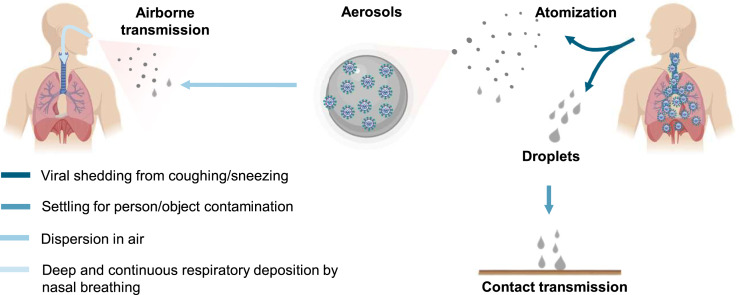
“In addition, nascent micrometer-size aerosols produced from coughing/sneezing of infected people have the potential of containing many viruses, particularly for asymptomatic carriers (16).”
Coronaviruses: An Overview of Their Replication and Pathogenesis
Fehr, A. R., & Perlman, S. (2015) · Methods in Molecular Biology · doi:10.1007/978-1-4939-2438-7_1 · Cited by 3,787
Quantifying SARS-CoV-2 transmission suggests epidemic control with digital contact tracing
Ferretti, L., Wymant, C., Kendall, M., Zhao, L., Nurtay, A., Abeler-Dörner, L., Parker, M., Bonsall, D., & Fraser, C. (2020) · Science · doi:10.1126/science.abb6936 · Cited by 2,512 · cited 1×
“Differentiation of the effects of those mitigation measures in China is challenging (19), since the implementation occurred almost simultaneously in January 2020.”
Respiratory virus shedding in exhaled breath and efficacy of face masks
Leung, N. H. L., Chu, D. K. W., Shiu, E. Y. C., Chan, K.-H., McDevitt, J. J., Hau, B. J. P., Yen, H.-L., Li, Y., Ip, D. K. M., Peiris, J. S. M., et al. (2020) · Nature Medicine · doi:10.1038/s41591-020-0843-2 · Cited by 2,270
Self-citationWu, X., Nethery, R. C., Sabath, M. B., Braun, D., & Dominici, F. (2020) · Science Advances · doi:10.1126/sciadv.abd4049 · Cited by 1,974
Stability of SARS-CoV-2 in different environmental conditions
Chin, A. W. H., Chu, J. T. S., Perera, M. R. A., Hui, K. P. Y., Yen, H.-L., Chan, M. C. W., Peiris, M., & Poon, L. L. M. (2020) · doi:10.1101/2020.03.15.20036673 · Cited by 1,948
Stability of SARS-CoV-2 in different environmental conditions
Chin, A. W. H., Chu, J. T. S., Perera, M. R. A., Hui, K. P. Y., Yen, H.-L., Chan, M. C. W., Peiris, M., & Poon, L. L. M. (2020) · The Lancet Microbe · doi:10.1016/s2666-5247(20)30003-3 · Cited by 1,946
Aerodynamic Analysis of SARS-CoV-2 in Two Wuhan Hospitals
Liu, Y., Ning, Z., Chen, Y., Guo, M., Liu, Y., Gali, N. K., Sun, L., Duan, Y., Cai, J., Westerdahl, D., et al. (2020) · Nature · doi:10.1038/s41586-020-2271-3 · Cited by 1,872 · cited 2×
“Available epidemiological (1) and experimental (12, 18) evidence, however, implicates airborne transmission of SARS-CoV-2 via aerosols as a potential route for the spreading of the disease.”
Elucidating severe urban haze formation in China
Guo, S., Hu, M., Zamora, M. L., Peng, J., Shang, D., Zheng, J., Du, Z., Wu, Z., Shao, M., Zeng, L., et al. (2014) · Proceedings of the National Academy of Sciences · doi:10.1073/pnas.1419604111 · Cited by 1,711 · cited 1×
“In addition, nascent virus-bearing aerosols produced from human atomization likely undergo transformation in air, including coagulation with ambient preexisting PM and/or growth on a time scale of a few hours in typical urban air (27 – 29).”
Self-citation
Cited by
Items 501–600 of 1,001
Comparison of adaptive thermal comfort with face masks in library building in Guangzhou, China
Tang, T., Zhou, X., Dai, K., Fang, Z., & Zheng, Z. (2022) · Thermal Science and Engineering Progress · doi:10.1016/j.tsep.2022.101597 · Cited by 15
“The most efficient and affordable way to stop human-to-human virus transmission and control the COVID-19 outbreak is to wear masks in public [14].”
BackgroundA bioinformatics approach to characterize a hypothetical protein Q6S8D9_SARS of SARS-CoV
Rahman, M. F., Hasan, R., Biswas, M. S., Shathi, J. H., Hossain, M. F., Yeasmin, A., Abedin, M. Z., & Hossain, M. T. (2023) · Genomics & Informatics · doi:10.5808/gi.22021 · Cited by 15
“Alongside, it can also be transmitted person-to-person directly by touching each other or indirectly through infected surfaces [21,22].”
BackgroundEffectiveness of behavioural interventions to influence COVID-19 outcomes: A scoping review
Silubonde, T. M., Draper, C. E., & Norris, S. A. (2023) · Preventive Medicine · doi:10.1016/j.ypmed.2023.107499 · Cited by 16
“…Delen et al., 2020; DePhillipo et al., 2021; Durmuş et al., 2020; Fazio et al., 2021; Qureshi et al., 2021; Reis et al., 2020; Ryu et al., 2021; Zhang et al., 2020; Siedner et al., 2020; Bo et al., 2021; Ghanbari et al., 2020), while some studies considered social distancing as the…”
InfluentialLuo, X., Yin, C., Ji, L., Feng, J., Zhang, P., Wang, X., Ma, Y., & Liu, X. (2023) · Chemistry of Materials · doi:10.1021/acs.chemmater.3c02023 · Cited by 15
Heikkilä, P., Rostedt, A., Toivonen, J., & Keskinen, J. (2024) · Aerosol Science and Technology · doi:10.1080/02786826.2024.2350022 · Cited by 15
“Aerosols have multiple significant impacts on society: they affect the climate (Ramanathan et al. 2001), cause health issues and premature mortality (Lelieveld et al. 2015), act as disease transmitters (Zhang et al. 2020) and impair visibility (Singh and Dey 2012).”
Methods to mitigate infection spread from aerosol‐generating dental procedures
Kumar, P., Geisinger, M. L., & Ávila‐Ortiz, G. (2021) · Journal of Periodontology · doi:10.1002/jper.20-0567 · Cited by 15
Natural Ventilation Characterization in a Classroom under Different Scenarios
Chillón, S. A., Millan, M., Aramendía, Í., Fernández‐Gámiz, U., Zulueta, E., & Mendaza-Sagastizabal, X. (2021) · International Journal of Environmental Research and Public Health · doi:10.3390/ijerph18105425 · Cited by 15
“[9] demonstrated that transmission through aerosols or airborne transmission is the main source.”
BackgroundAerosol Particulates, SARS-CoV-2, and the Broader Potential for Global Devastation
Herndon, J. M., & Whiteside, M. (2020) · Open Access Journal of Internal Medicine · doi:10.22259/2638-5279.0301004 · Cited by 15
Guidelines: Discharge Instructions for Covid-19 Patients
Baker, T. L., & Greiner, J. V. (2021) · Journal of Primary Care & Community Health · doi:10.1177/21501327211024400 · Cited by 16
Drouillard, K. G., Tomkins, A. A., Lackie, S., Laengert, S. E., Baker, A., Clase, C. M., Lannoy, C. F. D., Cavallo‐Medved, D., Porter, L. A., & Rudman, R. S. (2022) · PLoS ONE · doi:10.1371/journal.pone.0264090 · Cited by 15
Styczynski, A., Hemlock, C., Hoque, K. I., Verma, R., LeBoa, C., Bhuiyan, O. F., Nag, A., Harun, M. G. D., Amin, M. B., & Andrews, J. R. (2022) · BMJ Open · doi:10.1136/bmjopen-2021-055206 · Cited by 15
Research progress on environmental stability of SARS-CoV-2 and influenza viruses
Zhang, L., Fang, Z., Li, J., Huang, Z., Tie, X., Li, H., Li, J., Zhang, Y., Zhang, Y., & Chen, K. (2024) · Frontiers in Microbiology · doi:10.3389/fmicb.2024.1463056 · Cited by 14
Priyamvada, H., Kumaragama, K., Chrzan, A. J., Athukorala, C., Sur, S., & Dhaniyala, S. (2020) · Aerosol Science and Technology · doi:10.1080/02786826.2020.1812503 · Cited by 14
Weng, C.-L., & Kau, L. (2021) · Journal of Healthcare Engineering · doi:10.1155/2021/8872167 · Cited by 14
“,e coronavirus (COVID-19) pandemic spread globally, causing panic to the lives of people across the world.”
BackgroundInfluentialMavuru, L., Pila, O. K., & Kuhudzai, A. G. (2021) · International Journal of Higher Education · doi:10.5430/ijhe.v11n1p12 · Cited by 14
“An example is of China which coined the transition „Suspending Classes without Suspending Learning‟ initiative to escape compromising learning throughout the pandemic (Zhang et al., 2020).”
BackgroundPandemic impact on air pollution and mobility in a Latin American medium-size city
Grassi, Y. S., Brignole, N. B., & Díaz, M. F. (2021) · International Journal of Environmental Studies · doi:10.1080/00207233.2021.1941662 · Cited by 14
“Because aerosols can transmit the virus [21], measures such as the use of masks, hand disinfection, environmental ventilation and maintaining a two-metre distance between people are essential [22–25].”
BackgroundTalavera-García, R., & Pérez-Campaña, R. (2021) · International Journal of Environmental Research and Public Health · doi:10.3390/ijerph182111037 · Cited by 15
“Regarding the spread of the virus, this depends on different variables, including droplet size [11], air temperature, air humidity, breathing strength, and the use of a face mask.”
BackgroundSpike protein multiorgan tropism suppressed by antibodies targeting SARS-CoV-2
Brady, M., McQuaid, C., Solorzano, A. G., Johnson, A., Combs, A. L., Venkatraman, C., Rahman, A., Leyva, H., Kwok, W. E., Wood, R. W., et al. (2021) · Communications Biology · doi:10.1038/s42003-021-02856-x · Cited by 14
Anti-Chinese Sentiment, the BRI, and COVID-19: Kazakhstani Perceptions of China in Central Asia
Neafie, J. (2022) · The Steppe and beyond · doi:10.1007/978-981-16-7586-7_5 · Cited by 14
Liu, X., Wu, M., An, Z., & Chen, T. (2022) · Sustainable Cities and Society · doi:10.1016/j.scs.2022.103860 · Cited by 15
Mendez, S., Garcia, W., & Nicolas, A. (2023) · Advanced Science · doi:10.1002/advs.202205255 · Cited by 14
Linkages between COVID-19, solar UV radiation, and the Montreal Protocol
Bernhard, G. H., Madronich, S., Lucas, R. M., Byrne, S. N., Schikowski, T., & Neale, R. E. (2023) · Photochemical & Photobiological Sciences · doi:10.1007/s43630-023-00373-w · Cited by 12
Chen, A. X., Lau, H. Y., Teo, J. Y., Wang, Y., Choong, D. Z. Y., Wang, Y., Luo, H., Yang, Y. Y., & Li, N. (2023) · ACS Applied Nano Materials · doi:10.1021/acsanm.3c01961 · Cited by 14
Self-citationThe Potential for Airborne Transmission of SARS-CoV-2 in Sport: A Cricket Case Study
England, R., Peirce, N. S., Wedatilake, T., Torresi, J., Kemp, S. P. T., Cook, M., Mitchell, S., & Harland, A. R. (2021) · International Journal of Sports Medicine · doi:10.1055/a-1342-8071 · Cited by 14
“Review Thieme Two generalised virus transmission pathways have been reported for SARS-CoV-2 [2].”
BackgroundInfluentialImpact of biomass induced black carbon particles in cascading COVID-19
Rathod, A., & Beig, G. (2021) · Urban Climate · doi:10.1016/j.uclim.2021.100913 · Cited by 14
“Although WHO (World Health Organization) acknowledged these findings but have largely ignored the airborne transmission route (Zhang et al., 2020) mainly due to conflicting views (Beig et al.”
COVID-19 lockdown and particle exposure of road users
Połednik, B. (2021) · Journal of Transport & Health · doi:10.1016/j.jth.2021.101233 · Cited by 14
A missing layer in COVID-19 studies: Transmission of enveloped viruses in mucus-rich droplets
Pease, L. F., Wang, N., Kulkarni, G., Flaherty, J. E., & Burns, C. A. (2021) · International Communications in Heat and Mass Transfer · doi:10.1016/j.icheatmasstransfer.2021.105746 · Cited by 14
“Mucus shells increase the drying time by orders of magnitude so that enveloped virions may remain well hydrated and, thus, fully infective at substantial distances, consistent with realworld observations [2,3,8,18].”
BackgroundWhen and why direct transmission models can be used for environmentally persistent pathogens
Benson, L., Davidson, R. S., Green, D. M., Hoyle, A. S., Hutchings, M. R., & Marion, G. (2021) · PLoS Computational Biology · doi:10.1371/journal.pcbi.1009652 · Cited by 14
“There are, indeed, a few studies in which the rate of pathogen shedding has been measured in the same host at multiple time points, and these suggest that rates of pathogen emission do indeed vary over time (e.g., the investigation by Wargo, et al., of infectious hematopoietic necrosis virus shedding in juvenile rainb…”
InfluentialSELECTION OF FLOOR MATERIALS IN HOSPITALS TO RESIST COVID-19
Ali, A., El-Sherbiny, Y. M., Ali, W. Y., & Ibrahem, R. A. (2021) · Journal of the Egyptian Society of Tribology /Journal of the Egyptian Society of Tribology · doi:10.21608/jest.2021.141327 · Cited by 14
Modeling the potential impact of indirect transmission on COVID-19 epidemicPreprint
David, J., Iyaniwura, S. A., Yuan, P., Tan, Y., Kong, J. D., & Zhu, H. (2021) · medRxiv · doi:10.1101/2021.01.28.20181040 · Cited by 14
“In addition, there have been reports that the airborne transmission of 12 the virus via aerosols could also be a significant transmission pathway when in an 13 enclosed system [9].”
BackgroundCOVID-19 Policy Impact Evaluation: A guide to common design issuesPreprint
Haber, N., Clarke‐Deelder, E., Salomon, J. A., Feller, A., & Stuart, E. A. (2020) · PubMed Central · doi:10.48550/arxiv.2009.01940 · Cited by 14
“Apparent linearity may also be temporary and an artifact of testing, which may give a misleading impression that linear models for infectious disease trends are appropriate indefinitely, as is the case for Zhang et al., 2020 (29).”
BackgroundWebner, F., Shishkin, A., Schmeling, D., & Wagner, C. D. (2024) · Indoor Air · doi:10.1155/2024/9927275 · Cited by 13
Jeon, D., Kim, S., Kim, J., Jeong, H., Uhm, C., Oh, H., Cho, K., Cho, Y., Park, I. H., Oh, J., et al. (2024) · Biochimica et Biophysica Acta (BBA) - Molecular Basis of Disease · doi:10.1016/j.bbadis.2024.167347 · Cited by 13
Balancing Scientific Rigor With Urgency in the Coronavirus Disease 2019 Pandemic
Spec, A., & Schwartz, I. S. (2020) · Open Forum Infectious Diseases · doi:10.1093/ofid/ofaa304 · Cited by 13
“major flaws in articles on SARS-CoV-2 phylogenomics [23] and transmission [24].”
BackgroundLeddin, D. J., Armstrong, D., Ali, R. A. R., Barkun, A. N., Butt, A. S., Chen, Y., Khara, H. S., Lee, Y. Y., Leung, W. K., Macrae, F., et al. (2020) · Journal of Clinical Gastroenterology · doi:10.1097/mcg.0000000000001411 · Cited by 13
Kahn, K., & Mariita, R. M. (2021) · Frontiers in Built Environment · doi:10.3389/fbuil.2021.725624 · Cited by 13
McAndrew, T., Cambeiro, J., & Besiroglu, T. (2022) · Vaccine · doi:10.1016/j.vaccine.2022.02.054 · Cited by 13
Effects on Health of Passive Smoking and Vape on Terraces in the COVID-19 Pandemic: A Review
de Granda‐Orive, J. I., Jimenez-Ruiz, C. A., Gorordo-Unzueta, I., de Higes-Martínez, E., Cabrera-César, E., Sandoval-Contreras, R., & Rábade, C. (2022) · Open Respiratory Archives · doi:10.1016/j.opresp.2022.100204 · Cited by 13
“) Avoiding the transmission of SARS-CoV-2 virus particles through tobacco smoke in both smokers and non-smokers, preventing contagion. c) Protecting hospitality employees from the consequences of exposure to tobacco smoke and the toxins released by electronic devices.”
InfluentialEvaluating the transmission risk of SARS-CoV-2 from sewage pollution
Ransome, E. J., Hobbs, F., Jones, S., Coleman, C. M., Harris, N. D., Woodward, G., Bell, T., Trew, J., Kolarević, S., Kračun‐Kolarević, M., et al. (2022) · The Science of The Total Environment · doi:10.1016/j.scitotenv.2022.159161 · Cited by 13
“While the primary route of viral transmission between humans is via exposure to respiratory fluids carrying infectious SARS-CoV-2 (Zhang et al., 2020; Zhou et al., 2021), evidence of faecal-oral transmission has raised concerns regarding possible environmental transmission to humans and wildlife through spillover from…”
Zhang, K., Zeng, N., & Zhang, K. (2022) · Frontiers in Psychology · doi:10.3389/fpsyg.2022.1067184 · Cited by 13
Berger, S., Mattern, M., & Niessner, J. (2022) · International Journal of Hygiene and Environmental Health · doi:10.1016/j.ijheh.2022.114103 · Cited by 13
“Pathogen dissemination through aerosol particles emitted by the respiratory system best explains several super-spreading events during the COVID-19 pandemic (Katelaris et al., 2021; Kutter et al., 2021; Lu et al., 2020; Zhang et al., 2020) and is therefore in the focus of SARS-CoV-2 transmission.”
Yang, S., Wang, L. L., Raftery, P., Ivanovich, M., Taber, C., Bahnfleth, W. P., Wargocki, P. L., Pantelic, J., Zou, J., Mortezazadeh, M., et al. (2023) · Building and Environment · doi:10.1016/j.buildenv.2023.110022 · Cited by 13
Deri, M. N., Ragavan, N. A., Niber, A., Zaazie, P., Anandene, D., Anaba, M., & Andaara, D. (2023) · African Journal of Economic and Management Studies · doi:10.1108/ajems-07-2022-0264 · Cited by 13
Submandibular Gland Pathogenesis Following SARS-CoV-2 Infection and Implications for Xerostomia
Sasso‐Cerri, E., Martinelli, V. D., de Oliveira, S. A., da Silva, A. A. S., de Moraes, J. C. G., & Cerri, P. S. (2024) · International Journal of Molecular Sciences · doi:10.3390/ijms25136820 · Cited by 13
Malabadi, R. B., Kolkar, K. P., Meti, N. T., & CHALANNAVAR, R. K. (2021) · International journal of research and scientific innovation · doi:10.51244/ijrsi.2021.8310 · Cited by 13
“Viruses induce an explosion of inflammatory cytokines and reactive oxygen species, and melatonin is the best natural antioxidant (Shneider et al., 2020; Vlachou et al., 2021; Juybaria et al., 2020; Zhang et al., 2020; Cardinali et al., 2020).”
BackgroundInfluentialComparison of the Filtration Efficiency of Different Face Masks Against Aerosols
Stahl, C., Frederick, K. M., Chaudhary, S., Morton, C. J., Loy, D. A., Muralidharan, K., Sorooshian, A., & Parthasarathy, S. (2021) · Frontiers in Medicine · doi:10.3389/fmed.2021.654317 · Cited by 13
“Considering that there are various mask types, inter-disciplinary research comparing mask filtration efficacy are needed (2).”
BackgroundHayat, W., Malik, L. M., Mukhtar, R., Mukhtar, R., Khan, M., Saeed, A., Saeed, A., & Rashid, T. (2020) · Pakistan Postgraduate Medical Journal · doi:10.51642/ppmj.v31i02.324 · Cited by 13
Oksanen, L., Sanmark, E., Sofieva, S., Rantanen, N., Lahelma, M., Anttila, V., Lehtonen, L., Atanasova, N. S., Pesonen, E., Geneid, A., et al. (2022) · Acta Anaesthesiologica Scandinavica · doi:10.1111/aas.14022 · Cited by 13
“14– 16 Thus, it is important to (1) use exhale valve filters to protect HCWs from airborne infections and (2) ensure as a tight fit as possible in the face- mask interface.”
BackgroundTRIBOELECTRIFIED MATERIALS OF FACEMASK TO RESIST COVID-19
Ali, A. S., Al-Kabbany, A. M., Ali, W. Y., & Badran, A. H. (2021) · Journal of the Egyptian Society of Tribology /Journal of the Egyptian Society of Tribology · doi:10.21608/jest.2021.141328 · Cited by 13
Ayodeji, O. J., Hilliard, T., & Ramkumar, S. (2022) · International Journal of Environmental Research · doi:10.1007/s41742-021-00390-6 · Cited by 13
“2020), travel restrictions (Beck and Hensher 2020), and wearing of face coverings (Ayodeji and Ramkumar 2021; Zhang et al. 2020) were the major mitigation measures to protect public health.”
BackgroundRichter, W. R., Sunderman, M. M., Mera, T. O., O'Brien, K. A., Morgan, K., & Streams, S. (2022) · Journal of Applied Microbiology · doi:10.1111/jam.15468 · Cited by 13
“Since then, studies of similar types of pathogens and SARS- CoV2 have shown the primary route of disease transmission is via aerosol or direct droplet contact (Chia et al., 2020; Greenhalgh et al., 2021; Guo et al., 2020; Zhang et al., 2020); in some cases, however, SARS- CoV2 has also been shown to remain infectious…”
BackgroundHuman Close Contact Behavior-Based Interventions for COVID-19 Transmission
Miao, D., & Zhang, N. (2022) · Buildings · doi:10.3390/buildings12030365 · Cited by 13
PROPER MATERIAL SELECTION OF MEDICAL SAFETY GOGGLES
Ali, A. S., Al-Kabbany, A. M., Ali, W. Y., & Ibrahem, R. A. (2021) · Journal of the Egyptian Society of Tribology /Journal of the Egyptian Society of Tribology · doi:10.21608/jest.2021.169053 · Cited by 13
How Did the COVID-19 Pandemic Affect Population Mobility in Taiwan?
Liu, S., Chang, H.-C., Liu, J.-F., & Kuo, H. (2022) · International Journal of Environmental Research and Public Health · doi:10.3390/ijerph191710559 · Cited by 13
“SARS-CoV-2 is dominantly airborne [5].”
Melton, R. J., & Sinclair, R. C. (2021) · SSRN Electronic Journal · doi:10.2139/ssrn.3954093 · Cited by 13
Shashina, E., Isiutina-Fedotkova, T. S., Makarova, V. V., Gruzdeva, O. A., & Mitrokhin, O. V. (2021) · Health Risk Analysis · doi:10.21668/health.risk/2021.1.16.eng · Cited by 12
Yoo, S., Yoon, S., Jung, W.-N., Chung, M. H., Kim, H., Jeong, H., & Yoo, K.-H. (2022) · Scientific Reports · doi:10.1038/s41598-022-05738-2 · Cited by 12
Kapse, S., Rahman, D., Avital, E. J., Venkatesan, N., Smith, T., Cantero-Garcia, L., Motallebi, F., Samad, A., & Beggs, C. B. (2023) · Fluids · doi:10.3390/fluids8040111 · Cited by 12
Pandemic experiences and the post-lockdown economic recovery: Evidence from China
Liu, Y., Ma, S., & Mu, R. (2024) · China Economic Review · doi:10.1016/j.chieco.2024.102125 · Cited by 12
Coronavirus (SARS-CoV-2) and Mortality Rate in India: The Winning Edge
Chaubey, G. (2020) · Frontiers in Public Health · doi:10.3389/fpubh.2020.00397 · Cited by 12
“It is therefore in India’s best interest to continue the use of standard protective measures (48, 49), to conduct systematic epidemiological studies in different real time situations, to test various ethnic groups for ACE2 variations, to perform mass antigen/antibody testing in containment zones, to identify those who…”
BackgroundPredicting COVID-19 Transmission to Inform the Management of Mass Events: Model-Based Approach
Donnat, C., Bunbury, F., Kreindler, J., Liu, D., Filippidis, F. T., Esko, T., El-Osta, A. A. R., & Harris, M. J. (2021) · JMIR Public Health and Surveillance · doi:10.2196/30648 · Cited by 12
“In the context of large public events, this transmission route thus has more diffusive power and hence could explain several super-spreader events (SSEs) [6], making it a major cause for concern [2,63,66-72].”
BackgroundMorajkar, R. V., Kumar, A. S., Kunkalekar, R. K., & Vernekar, A. A. (2022) · Biosafety and Health · doi:10.1016/j.bsheal.2022.06.001 · Cited by 12
“Studies have revealed that the primary mode of SARS‐CoV‐2 viral transmission is through viral aerosols and droplets that are released into the air and enter the respiratory tract through viral aerosol inhalation [17].”
Numerical model for cough‐generated droplet dispersion on moving escalator with multiple passengers
Takii, A., Yamakawa, M., Kitagawa, A., Watamura, T., Chung, Y. M., & Kim, M. (2022) · Indoor Air · doi:10.1111/ina.13131 · Cited by 12
Quantifying optimal resource allocation strategies for controlling epidemics
Maity, B., Banerjee, S., Senapati, A., & Chattopadhyay, J. (2023) · Journal of The Royal Society Interface · doi:10.1098/rsif.2023.0036 · Cited by 13
“Also, face covering appears to be a more effective way to prevent COVID-19 than quarantine and social distancing measures [26].”
BackgroundLiu, W., Wang, R., Li, Y., Zhao, S., Chen, Y., & Zhao, Y. (2023) · BMC Public Health · doi:10.1186/s12889-023-15878-3 · Cited by 12
“During the COVID-19 pandemic, several respiratory infectious diseases were significantly reduced, and they were mostly transmitted through interpersonal or airborne contact, which is consistent with the transmission route of COVID-19 [35].”
ResultSelf-citationLiu, M., Wu, H., Lin, B., & Zhang, J. (2023) · Humanities and Social Sciences Communications · doi:10.1057/s41599-023-02289-3 · Cited by 12
Quantifying airborne transmission in ventilated settings: A review
Giri, A., García‐Sánchez, C., & Bluyssen, P. M. (2024) · Building and Environment · doi:10.1016/j.buildenv.2024.112049 · Cited by 12
Hikal, M. M., El-Sheikh, M. M. A., & Zahra, W. K. (2021) · Journal of Applied Mathematics and Computing · doi:10.1007/s12190-021-01515-y · Cited by 12
Andrews, T. M., Delton, A. W., & Kline, R. (2021) · Political Behavior · doi:10.1007/s11109-021-09700-2 · Cited by 12
Association, Correlation, and Causation Among Transport Variables of PM2.5
Zhao, Z.-D., Zhao, N., & Ying, N. (2021) · Frontiers in Physics · doi:10.3389/fphy.2021.684104 · Cited by 12
COVID-19 in Workplaces: Secondary Transmission
Sarti, D., Campanelli, T., Rondina, T., & Gasperini, B. (2021) · Annals of Work Exposures and Health · doi:10.1093/annweh/wxab023 · Cited by 12
The Longevity-Frailty Hypothesis: Evidence from COVID-19 Death Rates in Europe
Zahran, S., Altringer, L., & Prasad, A. (2022) · International Journal of Environmental Research and Public Health · doi:10.3390/ijerph19042434 · Cited by 12
“Secondly, while we now know that airborne transmission is the main mode of the spread of this virus [24, 25], this was not appreciated in the early months of the pandemic and public health advice on airborne transmission was inadequate, if not misleading [26, 27].”
BackgroundYıldız-Peköz, A., Dağıstan, Ö. A., Fael, H., Culha, M., Erturk, A., Basarir, N. S., Sahin, G., Serhatlı, M., Çakırca, G., Tekin, Ş., et al. (2022) · Drug Delivery · doi:10.1080/10717544.2022.2118398 · Cited by 12
“Studies have shown that airborne transmission is the dominant route for the spread of SARS-CoV-2, the causative virus of COVID-19 (Zhang et al., 2020), and most infections cause mild to moderate illness with respiratory symptoms (Elezkurtaj et al., 2021).”
BackgroundGomez, O. M., McCabe, K. M., Biesiada, E., Volbers, B., Kraus, E., Nieto‐Caballero, M., & Hernandez, M. (2022) · Aerosol Science and Technology · doi:10.1080/02786826.2022.2120794 · Cited by 12
“During the latter half of 2020, a significant airborne infectious disease transmission route for coronavirus was recognized by academic consortia and the World Health Organization (WHO) (Morawska and Cao 2020; Zhang et al. 2020; World Health Organization (WHO) 2022).”
BackgroundYao, Y., Cui, Y., Gao, X., Qian, Y., & Hu, B. (2022) · American Journal of Infection Control · doi:10.1016/j.ajic.2022.11.016 · Cited by 12
Active Crowd Analysis for Pandemic Risk Mitigation for Blind or Visually Impaired Persons
Shrestha, S., Lu, D., Tian, H., Cao, Q., Liu, J., Rizzo, J., Seiple, W., Porfiri, M., & Fang, Y. (2020) · Lecture notes in computer science · doi:10.1007/978-3-030-66823-5_25 · Cited by 12
Modelling personal cautiousness during the COVID-19 pandemic: a case study for Turkey and Italy
Bulut, H., Gölgeli, M., & Atay, F. M. (2021) · Nonlinear Dynamics · doi:10.1007/s11071-021-06320-7 · Cited by 12
“The studies point out that, despite main differences in their structure and epidemiology, both SARS-CoV and MERSCoV are airborne viruses, and there is also strong evidence of possible airborne transmission of SARS-CoV2 [25,39,40].”
BackgroundKähler, C. J., Fuchs, T., Mutsch, B., & Hain, R. (2020) · medRxiv · doi:10.1101/2020.10.12.20211219 · Cited by 12
“[9] Zhang R, Lib Y, Zhang AL, Wang Y, Molina MY (2020) Identifying airborne transmission as the dominant route for the spread of COVID-19.”
BackgroundSARS-CoV-2 and the nose: Risks and implications for primary care
Campbell, R. G. (2020) · Australian Journal of General Practice · doi:10.31128/ajgp-05-20-5452 · Cited by 11
Healthcare workers and protection against inhalable SARS-CoV-2 aerosols
Nicholson, P. J., & Sen, D. (2021) · Occupational Medicine · doi:10.1093/occmed/kqab033 · Cited by 11
“This should not have been a surprise because previous experimental and observational studies have demonstrated aerosol transmission of respiratory viruses, including other coronaviruses and influenza virus [15].”
BackgroundResultPurswani, M. U., Bucciarelli, J., Tiburcio, J., Yagudayev, S., Connell, G. H., Omidiran, A. A., Hannaway, L., Zeana, C. B., Healy, M., Yu, G., et al. (2021) · Journal of Hospital Medicine · doi:10.12788/jhm.3627 · Cited by 12
Mun, S., Yang, B. R., & Chang, M. Y. (2021) · BMJ Global Health · doi:10.1136/bmjgh-2021-006912 · Cited by 11
Faude, O., Müller, S. J., Schreiber, S., Müller, J., Nebiker, L., Beaudouin, F., Meyer, T., & Egger, F. (2022) · Scientific Reports · doi:10.1038/s41598-022-07121-7 · Cited by 11
Gianmoena, L., & Ríos, V. O. (2023) · Regional Studies · doi:10.1080/00343404.2023.2171000 · Cited by 11
“…2009), (2) increase the effectiveness of the SARS-CoV-2 replications and provided that aerosol transmission is the dominant route of disease spread (Zhang et al., 2020), and (3) it can increase the frequency of social interactions that take place in indoor environments with poorer ventilation,…”
BackgroundReissner, J., Siller, P., Bartel, A., Roesler, U. H., & Friese, A. (2023) · Scientific Reports · doi:10.1038/s41598-023-49361-1 · Cited by 11
Airborne Transmission of SARS-CoV-2: The Contrast between Indoors and Outdoors
Beggs, C. B., Abid, R., Motallebi, F., Samad, A., Venkatesan, N., & Avital, E. J. (2024) · Fluids · doi:10.3390/fluids9030054 · Cited by 11
Francis, M. R., Gidado, S., & Nuorti, J. P. (2024) · The Journal of Infectious Diseases · doi:10.1093/infdis/jiae261 · Cited by 11
Factors Affecting Reduction of Infectious Aerosols by Far-UVC and Portable HEPA Air Cleaners
Ratliff, K., Oudejans, L., Calfee, M. W., Archer, J., Gilberry, J., Hook, D. A., Schoppman, W. E., & Yaga, R. (2025) · ACS ES&T Air · doi:10.1021/acsestair.4c00247 · Cited by 11
Influence of state reopening policies in COVID-19 mortality
Tam, K.-M., Walker, N., & Moreno, J. (2022) · Scientific Reports · doi:10.1038/s41598-022-05286-9 · Cited by 11
Sparks, R. S. J., Aspinall, W. P., Brooks‐Pollock, E., Cooke, R. M., Danon, L., Barclay, J., Scarrow, J. H., & Cox, J. (2021) · Royal Society Open Science · doi:10.1098/rsos.201566 · Cited by 11
War der Coronavirus-Lockdown notwendig? Versuch einer wissenschaftlichen Antwort
Richter, D. (2021) · transcript Verlag eBooks · doi:10.14361/9783839455456 · Cited by 11
Dental Restrictions to Clinical Practice during the COVID-19 Pandemic: An Australian Perspective
Nguyen, T. M., Tonmukayakul, U., & Calache, H. (2021) · JDR Clinical & Translational Research · doi:10.1177/23800844211000341 · Cited by 11
“COVID-19 infections can be transmittable via the airborne route (Chaudhuri et al. 2020; Zhang et al. 2020); but its role in human-to-human transmission remains unclear (Klompas et al. 2020; Noorimotlagh et al. 2020; DOI: 10.1177/23800844211000341.”
BackgroundInfluentialCOVID‐19 into Chemical Science Perspective: Chemical Preventive Measures and Drug Development
Adhikari, B., & Sahu, N. (2021) · ChemistrySelect · doi:10.1002/slct.202100127 · Cited by 11
Donohoe, E., Courtney, R., McManus, E. J., Cheng, J., & Barry, T. (2021) · Advances in Oral and Maxillofacial Surgery · doi:10.1016/j.adoms.2021.100061 · Cited by 11
“COVID-19 is a positive sense, single-stranded, RNA virus responsible for the on-going global pandemic declared by the World Health Organisation on the 11th of March 2020 [1].”
BackgroundA Novel Immunofluorescence Assay for the Rapid Serological Detection of SARS-CoV-2 Infection
Nguyen, D. V., Skelly, D., & Goonawardane, N. (2021) · Viruses · doi:10.3390/v13050747 · Cited by 11
“In the absence of effective anti-viral therapies for COVID-19, the prevention of humanto-human transmission requires extensive testing, quarantine and contact tracing [3,19].”
BackgroundOn the use of aggregated human mobility data to estimate the reproduction number
Vanni, F., Lambert, D., Palatella, L., & Grigolini, P. (2021) · Scientific Reports · doi:10.1038/s41598-021-02760-8 · Cited by 12
Passively sensing SARS-CoV-2 RNA in public transit buses
Hoffman, J. S., Hirano, M., Panpradist, N., Breda, J., Ruth, P. S., Xu, Y., Lester, J., Nguyen, B. H., Ceze, L., & Patel, S. N. (2022) · The Science of The Total Environment · doi:10.1016/j.scitotenv.2021.152790 · Cited by 11
“The virus causing COVID-19, SARS-CoV-2, is primarily transmitted through airborne respiratory droplets via face-to-face contact (Buonanno et al., 2020; Zhang et al., 2020; Wiersinga et al., 2020) with asymptomatic or pre-symptomatic infected individuals.”
ELECTROSTATIC CHARGES GENERATED ON THE MEDICAL CLOTHES
Badran, A. H., Fouly, A., Ali, W. Y., & Ameer, A. K. (2021) · Journal of the Egyptian Society of Tribology /Journal of the Egyptian Society of Tribology · doi:10.21608/jest.2021.169062 · Cited by 11
Preparation of surface-functionalized electrospun PVA nanowebs for potential remedy for SARS-CoV-2
Ayodeji, O. J., Khyum, M. M. O., Afolabi, R. T., Smith, E., Kendall, R., & Ramkumar, S. (2022) · Journal of Hazardous Materials Advances · doi:10.1016/j.hazadv.2022.100128 · Cited by 11
Intervention strategies with 2D cellular automata for testing SARS-CoV-2 and reopening the economy
Lugo, I., & Alatriste-Contreras, M. G. (2022) · Scientific Reports · doi:10.1038/s41598-022-17665-3 · Cited by 11
“These characteristics are closely related to the current knowledge of the SARS-CoV-2 behavior 24 .”
Background
Metadata
- Authors
- Zhang, R., Li, Y., Zhang, A. L., Wang, Y., & Molina, M. J.
- Affiliations
- Texas A&M University (US)
- The University of Texas at Austin (US)
- California Institute of Technology (US)
- University of California San Diego (US)
- Corresponding author
- Zhang, Renyi
- Molina, Mario J.
- Venue
- Proceedings of the National Academy of Sciences
- Publisher
- National Academy of Sciences
- Published
- 2020-06-11
- Volume
- 117
- Issue
- 26
- Pages
- 14857-14863
- ISSN
- 0027-8424 (ISSN-L)
- 1091-6490
- PMC
- PMC7334447
- OpenAlex
- W3034825141
- Cited by
- 1,236
- References
- 28
- Citations by year
- 2026: 33 · 2025: 51 · 2024: 115 · 2023: 162 · 2022: 248 · 2021: 406 · 2020: 219
- FWCI
- 41.11
- Type
- journal article
- Language
- en
- Update notices
- correction (2020-10-05)
- Open access
- hybrid
- doi.org
- Licence
- Locations
- Proceedings of the National Academy of Sciences (publishedVersion, cc-by)
- PubMed Central (publishedVersion, cc-by)
- PubMed (publishedVersion)
- CaltechAUTHORS (California Institute of Technology) (submittedVersion, cc-by)
- eScholarship (California Digital Library) (submittedVersion)
- eScholarship (California Digital Library) (submittedVersion, cc-by)
- Funders
- Welch Foundation (A-1417)
- Topics
- Physical Sciences › Mathematics › Modeling and Simulation › COVID-19 epidemiological studies
- Health Sciences › Medicine › Pulmonary and Respiratory Medicine › Infection Control and Ventilation
- Social Sciences › Sociology and Political Science › COVID-19 Prevention and Impact
- Keywords
- COVID-19 pandemic, airborne transmission, face masks, social distancing, mitigation measures, epidemiological trends, Wuhan, Italy, New York City, quarantine, contact tracing, public health policy, infection control
- MeSH terms
- COVID-19, Humans, Masks, Pneumonia, Viral, Primary Prevention, Quarantine, Respiratory Protective Devices, United States, Coronavirus Infections, Disease Transmission, Infectious, Inhalation Exposure, Pandemics
About these checks
Registry, retraction, Cites and statistics results are computed, not judged, with one exception: a printed reference that no index lists is read once by a model before it counts as a citation error. Claims are extracted by a model and kept only when their quote appears verbatim in the text; each cited source is then checked, with a model’s help, for whether it says what the claim relies on. Those verdicts can be wrong — read the claim’s quote and the cited source before relying on one.
Statistics and arithmetic are recomputed, not judged.
Confidence bands are shown only for fields calibrated on our annotated test set. None is calibrated yet, so no band is shown.
What counts as a claim ›How we measure confidence ›How we check this ›
Are you an author, or do you see a problem with this page? Request a review
Data sources
Bibliographic data: Semantic Scholar, OpenAlex, Crossref.
Contains information from the Semantic Scholar Academic Graph Datasets, made available under the ODC Attribution License (ODC-BY 1.0).
Semantic Scholar’s data is described in: Kinney, R., et al. (2023). The Semantic Scholar Open Data Platform. arXiv:2301.10140.
