

Identifying airborne transmission as the dominant route for the spread of COVID-19
Open accessThe DOI matches its Crossref record; 31 of the 31 references it cites were found in a registry or an index.
Abstract
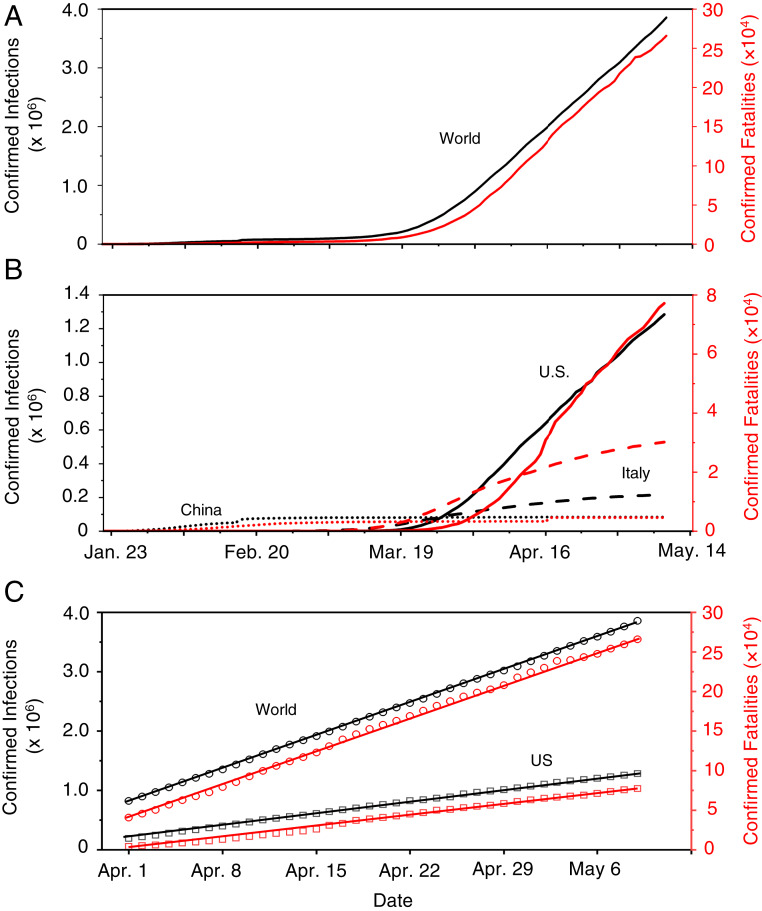
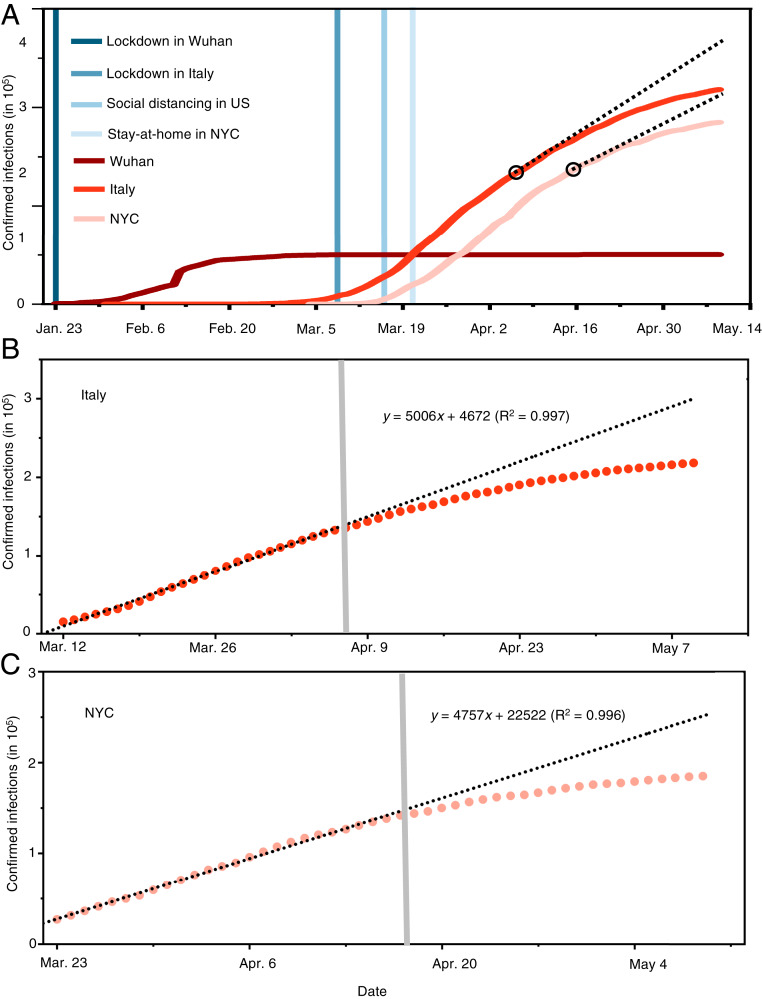
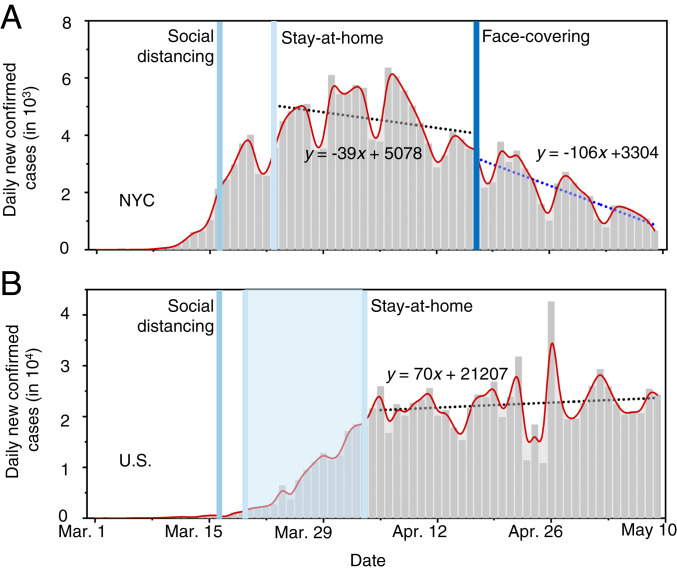
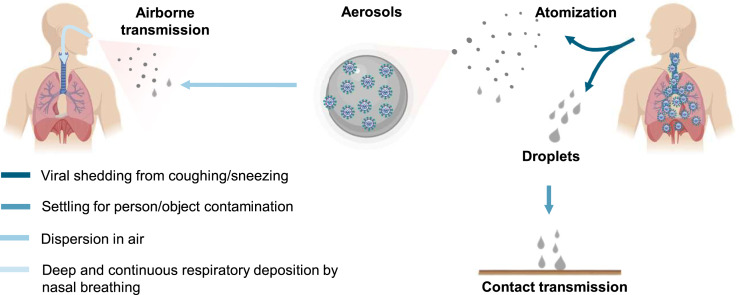
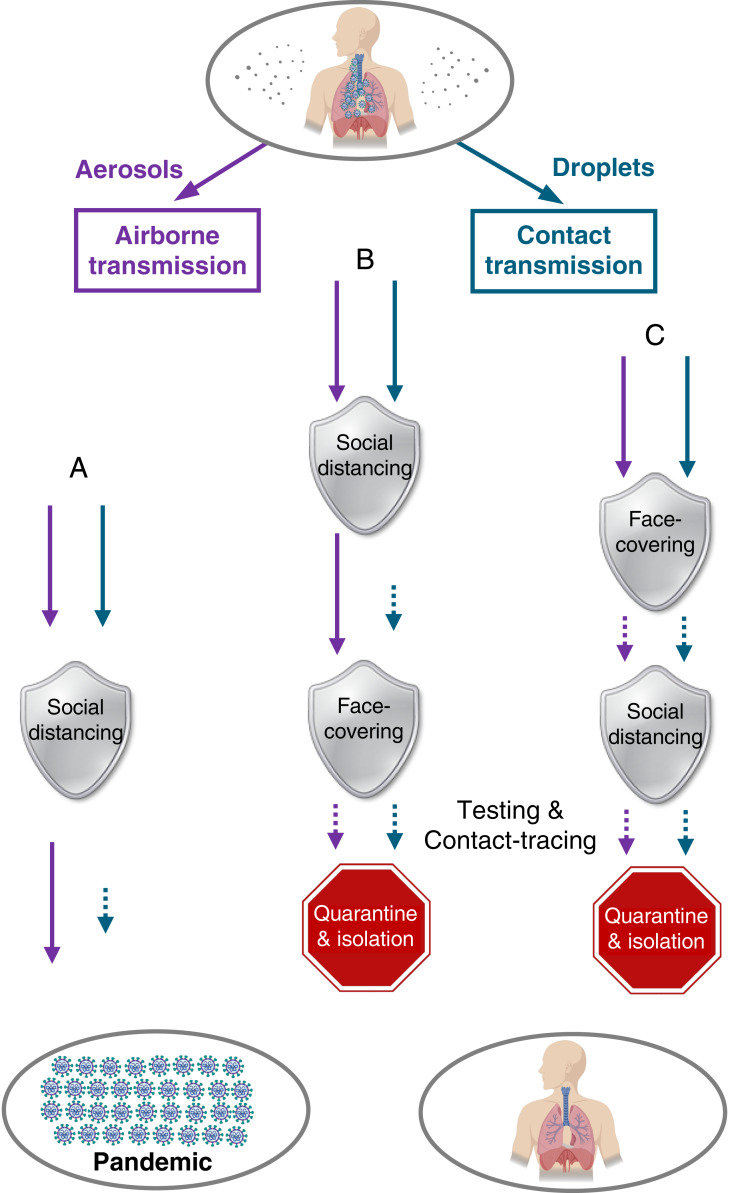
Various mitigation measures have been implemented to fight the coronavirus disease 2019 (COVID-19) pandemic, including widely adopted social distancing and mandated face covering. However, assessing the effectiveness of those intervention practices hinges on the understanding of virus transmission, which remains uncertain. Here we show that airborne transmission is highly virulent and represents the dominant route to spread the disease. By analyzing the trend and mitigation measures in Wuhan, China, Italy, and New York City, from January 23 to May 9, 2020, we illustrate that the impacts of mitigation measures are discernable from the trends of the pandemic. Our analysis reveals that the difference with and without mandated face covering represents the determinant in shaping the pandemic trends in the three epicenters. This protective measure alone significantly reduced the number of infections, that is, by over 78,000 in Italy from April 6 to May 9 and over 66,000 in New York City from April 17 to May 9. Other mitigation measures, such as social distancing implemented in the United States, are insufficient by themselves in protecting the public. We conclude that wearing of face masks in public corresponds to the most effective means to prevent interhuman transmission, and this inexpensive practice, in conjunction with simultaneous social distancing, quarantine, and contact tracing, represents the most likely fighting opportunity to stop the COVID-19 pandemic. Our work also highlights the fact that sound science is essential in decision-making for the current and future public health pandemics.
Overview
The claims and statistics of this paper haven’t been checked yet.
Free: it reads the open-access text and checks the first 5 claims that cite a source we can check. Create a free account to check every claim.
Integrity signals
Registry
Cites
Statistics
Figures
Verification
Claims the paper makes
The claims and statistics of this paper haven’t been checked yet.
Free: it reads the open-access text and checks the first 5 claims that cite a source we can check. Create a free account to check every claim.
Claims other papers make about this one
Each is checked against this paper’s own text: does it say what the citing paper says it does?
The cited source says what the claim attributes to it.
In the citing paper
“With the progression of the pandemic there is a growing body of literature that supports airborne transmission of SARS-CoV-2 playing an increasingly important role in the spread of the disease [29, 39–44].”
From The protective performance of reusable cloth face masks, disposable procedure masks, KN95 masks and N95 respirators: Filtration and total inward leakage (2021) · cites this paper as [39]
Self-check
Percentages, sums and reported differences re-computed from the paper’s own numbers.
The self-check needs the paper’s full text.
Citations
Cites
Aerosol and surface stability of SARS-CoV-2 as compared with SARS-CoV-1
van Doremalen, N., Bushmaker, T., Morris, D. H., Holbrook, M. G., Gamble, A., Williamson, B. N., Tamin, A., Harcourt, J. L., Thornburg, N. J., Gerber, S. I., et al. (2020) · New England Journal of Medicine · doi:10.1056/nejmc2004973 · Cited by 9,951 · cited 4×
“Recent experimental studies have examined the stability of SARS-CoV-2, showing that the virus remains infectious in aerosols for hours (12) and on surfaces up to days (12, 13).”
InfluentialTemporal dynamics in viral shedding and transmissibility of COVID-19
He, X., Lau, E. H. Y., Wu, P., Deng, X., Wang, J., Hao, X., Lau, Y. C., Wong, J. Y., Guan, Y., Tan, X., et al. (2020) · Nature Medicine · doi:10.1038/s41591-020-0869-5 · Cited by 4,247 · cited 2×
“In addition, nascent micrometer-size aerosols produced from coughing/sneezing of infected people have the potential of containing many viruses, particularly for asymptomatic carriers (16).”
Coronaviruses: An Overview of Their Replication and Pathogenesis
Fehr, A. R., & Perlman, S. (2015) · Methods in Molecular Biology · doi:10.1007/978-1-4939-2438-7_1 · Cited by 3,787
Quantifying SARS-CoV-2 transmission suggests epidemic control with digital contact tracing
Ferretti, L., Wymant, C., Kendall, M., Zhao, L., Nurtay, A., Abeler-Dörner, L., Parker, M., Bonsall, D., & Fraser, C. (2020) · Science · doi:10.1126/science.abb6936 · Cited by 2,512 · cited 1×
“Differentiation of the effects of those mitigation measures in China is challenging (19), since the implementation occurred almost simultaneously in January 2020.”
Respiratory virus shedding in exhaled breath and efficacy of face masks
Leung, N. H. L., Chu, D. K. W., Shiu, E. Y. C., Chan, K.-H., McDevitt, J. J., Hau, B. J. P., Yen, H.-L., Li, Y., Ip, D. K. M., Peiris, J. S. M., et al. (2020) · Nature Medicine · doi:10.1038/s41591-020-0843-2 · Cited by 2,270
Self-citationWu, X., Nethery, R. C., Sabath, M. B., Braun, D., & Dominici, F. (2020) · Science Advances · doi:10.1126/sciadv.abd4049 · Cited by 1,974
Stability of SARS-CoV-2 in different environmental conditions
Chin, A. W. H., Chu, J. T. S., Perera, M. R. A., Hui, K. P. Y., Yen, H.-L., Chan, M. C. W., Peiris, M., & Poon, L. L. M. (2020) · doi:10.1101/2020.03.15.20036673 · Cited by 1,948
Stability of SARS-CoV-2 in different environmental conditions
Chin, A. W. H., Chu, J. T. S., Perera, M. R. A., Hui, K. P. Y., Yen, H.-L., Chan, M. C. W., Peiris, M., & Poon, L. L. M. (2020) · The Lancet Microbe · doi:10.1016/s2666-5247(20)30003-3 · Cited by 1,946
Aerodynamic Analysis of SARS-CoV-2 in Two Wuhan Hospitals
Liu, Y., Ning, Z., Chen, Y., Guo, M., Liu, Y., Gali, N. K., Sun, L., Duan, Y., Cai, J., Westerdahl, D., et al. (2020) · Nature · doi:10.1038/s41586-020-2271-3 · Cited by 1,872 · cited 2×
“Available epidemiological (1) and experimental (12, 18) evidence, however, implicates airborne transmission of SARS-CoV-2 via aerosols as a potential route for the spreading of the disease.”
Elucidating severe urban haze formation in China
Guo, S., Hu, M., Zamora, M. L., Peng, J., Shang, D., Zheng, J., Du, Z., Wu, Z., Shao, M., Zeng, L., et al. (2014) · Proceedings of the National Academy of Sciences · doi:10.1073/pnas.1419604111 · Cited by 1,711 · cited 1×
“In addition, nascent virus-bearing aerosols produced from human atomization likely undergo transformation in air, including coagulation with ambient preexisting PM and/or growth on a time scale of a few hours in typical urban air (27 – 29).”
Self-citation
Cited by
Items 101–200 of 1,001
Particulate–Droplet Coalescence and Self-Transport on Superhydrophobic Surfaces
Yan, X., Ji, B., Feng, L., Wang, X., Yang, D., Rabbi, K. F., Qi, P., Hoque, M. J., Jin, P.-H., Bello, E., et al. (2022) · ACS Nano · doi:10.1021/acsnano.2c05267 · Cited by 88
Universal trends in human cough airflows at large distances
Simha, P. P., & Rao, P. S. M. (2020) · Physics of Fluids · doi:10.1063/5.0021666 · Cited by 87
Li, X., Lester, D. R., Rosengarten, G., Aboltins, C. A., Patel, M. J., & Cole, I. S. (2021) · The Science of The Total Environment · doi:10.1016/j.scitotenv.2021.152592 · Cited by 87
“…of SARS-CoV-2 can occur via multiple routes, airborne transmission has been identified as the dominant route (Chirico et al., 2020; Greenhalgh et al., 2021; Zhang et al., 2020), hence quantification of airborne transmission risk is vital for risk management and mitigation in indoor environments.”
Airborne transmission of SARS‐CoV‐2 via aerosols
Comber, L., Murchú, É. Ó., Drummond, L., Carty, P. G., Walsh, K. A., Gascun, C. F. D., Connolly, M. A., Smith, S. M., O’Neill, M., Ryan, M., et al. (2020) · Reviews in Medical Virology · doi:10.1002/rmv.2184 · Cited by 86
“The use of linear regression in the study by Zhang et al.(21) was deemed inappropriate in the context of their analyses, with additional critique in terms of the lack of a control population”
BackgroundMethodInfluentialShah, Y. H., Kurelek, J. W., Peterson, S. D., & Yarusevych, S. V. (2021) · Physics of Fluids · doi:10.1063/5.0057100 · Cited by 90
Climatic signatures in the different COVID-19 pandemic waves across both hemispheres
Fontal, A., Bouma, M. J., San-José, A., López, L., Pascual, M., & Rodó, X. (2021) · Nature Computational Science · doi:10.1038/s43588-021-00136-6 · Cited by 85
Campos, R. K., Jin, J., Rafael, G. H., Zhao, M., Liao, L., Simmons, G., Chu, S., Weaver, S. C., Chiu, W., & Cui, Y. (2020) · ACS Nano · doi:10.1021/acsnano.0c06565 · Cited by 84
García-Ávila, F., GONZALES, L. G. V., Cadme-Galabay, M., Ortega, F. H. G., Cárdenas, L. F. A., Zhindón-Arévalo, C., & del Pino, L. V. F. (2020) · Case Studies in Chemical and Environmental Engineering · doi:10.1016/j.cscee.2020.100049 · Cited by 84
“The number of deaths from (2019-nCoV) is higher than the SARS-CoV outbreak that occurred in China during the 2002–2003 [1-3].”
The ventilation of buildings and other mitigating measures for COVID-19: a focus on wintertime
Burridge, H. C., Bhagat, R. K., Stettler, M. E. J., Kumar, P., Mel, I. D., Demis, P., Hart, A., Johnson-Llambias, Y., King, M., Victorovich, K. O., et al. (2021) · Proceedings of the Royal Society A Mathematical Physical and Engineering Sciences · doi:10.1098/rspa.2020.0855 · Cited by 84
“South Korea" (Prather et al., 2020). \Our analysis reveals that the dierence with and without mandated face covering represents the determinant in shaping the trends of the pandemic worldwide. Zhang et al. (2020) conclude that wearing of face masks (or coverings) in public corresponds to the most eective means to…”
Polymer Materials for Respiratory Protection: Processing, End Use, and Testing Methods
Armentano, I., Barbanera, M., Carota, E., Crognale, S., Marconi, M., Rossi, S., Rubino, G., Scungio, M., Taborri, J., & Calabrò, G. (2021) · ACS Applied Polymer Materials · doi:10.1021/acsapm.0c01151 · Cited by 84
Airborne aerosols particles and COVID-19 transition
Ehsanifar, M. (2021) · Environmental Research · doi:10.1016/j.envres.2021.111752 · Cited by 84
Monitoring carbon dioxide to quantify the risk of indoor airborne transmission of COVID-19
Bazant, M. Z., Kodio, O., Cohen, A. E., Khan, K., Gu, Z., & Bush, J. W. M. (2021) · Flow · doi:10.1017/flo.2021.10 · Cited by 84
“…COVID-19, severe-acute-respiratory-syndrome coronavirus 2 (SARS-CoV-2), is transmitted primarily through exhaled aerosol droplets suspended in indoor air (Prather et al., 2020; Morawska and Milton, 2020; Morawska and Cao, 2020; Jayaweera et al., 2020; Zhang et al., 2020b; Bazant and Bush, 2021).”
BackgroundInfluentialUrban environments and COVID-19 in three Eastern states of the United States
Lee, W., Kim, H., Choi, H. M., Heo, S., Fong, K. C., Yang, J., Park, C., Kim, H., & Bell, M. L. (2021) · The Science of The Total Environment · doi:10.1016/j.scitotenv.2021.146334 · Cited by 82
“These findings were consistent with previous studies, and more active social activities and lower severity awareness of the pandemic compared to older people were suggested as an important factor (Boehmer et al., 2020; Lee et al., 2020; Zhang et al., 2020a).”
InfluentialIncreased small particle aerosol transmission of B.1.1.7 compared with SARS-CoV-2 lineage A in vivo
Port, J. R., Yinda, C. K., Avanzato, V. A., Schulz, J. E., Holbrook, M. G., van Doremalen, N., Shaia, C., Fischer, R. J., & Munster, V. J. (2022) · Nature Microbiology · doi:10.1038/s41564-021-01047-y · Cited by 82
Experimental visualization of sneezing and efficacy of face masks and shields
Arumuru, V., Pasa, J., & Samantaray, S. S. (2020) · Physics of Fluids · doi:10.1063/5.0030101 · Cited by 80
“With recent acknowledgment from the World Health Organization (WHO) regarding the possibility of airborne COVID19 virus transmission, it is even more crucial to study the behavior of smaller size droplets (∼5 μm–10 μm) in the turbulent cloud generated during coughing and sneezing (Mittal et al., 2020; World Health Org…”
BackgroundSARS-CoV-2 Infection of Airway Epithelial Cells
Ryu, G., & Shin, H. (2021) · Immune Network · doi:10.4110/in.2021.21.e3 · Cited by 81
“SARS-CoV-2 is highly contagious and transmitted through direct contact, respiratory droplets, or possibly aerosols (7,8).”
BackgroundDevelopment of a coronavirus disease 2019 nonhuman primate model using airborne exposure
Johnston, S. C., Ricks, K. M., Jay, A. N., Raymond, J. L., Rossi, F., Zeng, X., Scruggs, J. L., Dyer, D. N., Frick, O. M., Koehler, J. W., et al. (2021) · PLoS ONE · doi:10.1371/journal.pone.0246366 · Cited by 78
“However, recent evidence indicates that airborne transmission may actually represent the most prevalent human infection route [13].”
Paton, S., Spencer, A., Garratt, I., Thompson, K., Dinesh, I., Aranega-Bou, P., Stevenson, D., Clark, S. O., Dunning, J. W., Bennett, A., et al. (2021) · Applied and Environmental Microbiology · doi:10.1128/aem.00526-21 · Cited by 78
Resilience and recovery of public transport use during COVID-19
Wang, J., Huang, J., Yang, H., & Levinson, D. M. (2022) · npj Urban Sustainability · doi:10.1038/s42949-022-00061-1 · Cited by 78
The Effects of SARS-CoV-2 Infection on Female Fertility: A Review of the Literature
Carp-Velişcu, A., Mehedințu, C., Frîncu, F., Brătilă, E., Rasu, S., Iordache, I., Bordea, A. E., & BRAGA, M. (2022) · International Journal of Environmental Research and Public Health · doi:10.3390/ijerph19020984 · Cited by 77
“Coronavirus disease (COVID-19) is thought to be transmitted via direct (deposited on persons) or indirect (deposited on objects) contact [2].”
BackgroundFiltration efficiency of a large set of COVID-19 face masks commonly used in Brazil
Morais, F. G., Sakano, V. K., de Lima, L. N., Franco, M. A., Reis, D. C., Zanchetta, L. M., Jorge, F., Landulfo, E., Catalani, L. H., Barbosa, H. M. J., et al. (2021) · Aerosol Science and Technology · doi:10.1080/02786826.2021.1915466 · Cited by 77
“Airborne transmission is considered one of the routes to the person-to-person (Zhang et al. 2020; Pozzer et al. 2020) spread of virus-related diseases such as COVID19.”
BackgroundCotton and Surgical Face Masks in Community Settings: Bacterial Contamination and Face Mask Hygiene
Delanghe, L., Cauwenberghs, E., Spacova, I., Boeck, I. D., Beeck, W. V., Pepermans, K., Claes, I. J. J., Vandenheuvel, D., Verhoeven, V., & Lebeer, S. (2021) · Frontiers in Medicine · doi:10.3389/fmed.2021.732047 · Cited by 76
The COVID-19 pandemic and unemployment: Evidence from mobile phone data from China
Li, T., Jia, P., Deng, Y., Huang, X., & Li, S. (2023) · Journal of Urban Economics · doi:10.1016/j.jue.2023.103543 · Cited by 76
The Effects of Increased Pollution on COVID-19 Cases and Deaths
Persico, C. L., & Johnson, K. R. (2020) · Journal of Environmental Economics and Management · doi:10.1016/j.jeem.2021.102431 · Cited by 76
Duncan, S., Bodurtha, P., & Naqvi, S. (2021) · PLOS ONE · doi:10.1371/journal.pone.0258191 · Cited by 75
COVID‐19 environmental transmission and preventive public health measures
Vardoulakis, S., Sheel, M., Lal, A., & Gray, D. J. (2020) · Australian and New Zealand Journal of Public Health · doi:10.1111/1753-6405.13033 · Cited by 73
Duill, F. F., Schulz, F., Jain, A., Krieger, L., Wachem, B. G. M. V., & Beyrau, F. (2021) · International Journal of Environmental Research and Public Health · doi:10.3390/ijerph182111523 · Cited by 73
Khosronejad, A., Santoni, C., Flora, K., Zhang, Z., Kang, S., Payabvash, S., & Sotiropoulos, F. (2020) · AIP Advances · doi:10.1063/5.0035414 · Cited by 72
Airborne transmission of SARS-CoV-2 in indoor environments: A comprehensive review
Shen, J., Kong, M., Dong, B., Birnkrant, M. J., & Zhang, J. “. (2021) · Science and Technology for the Built Environment · doi:10.1080/23744731.2021.1977693 · Cited by 73
“R. Zhang et al. (2020) analyzed some outbreak events in China, Italy, and New York City, and suggested that airborne transmission was highly virulent and represented the dominant route to spread the disease.”
BackgroundInfluentialLi, G., Shivam, S., Hochberg, M., Wardi, Y., & Weitz, J. S. (2020) · iScience · doi:10.1016/j.isci.2021.102710 · Cited by 71
Buchan, A. G., Yang, L., & Atkinson, K. D. (2020) · Scientific Reports · doi:10.1038/s41598-020-76597-y · Cited by 71
“(2) was obtained via a model using discontinuous finite elements and discrete ordinates for resolving the spatial and angular dimensions respectively.”
MethodSun, K. S., Lau, T. S. M., Yeoh, E., Chung, V. C., Leung, Y. S., Yam, C. H. K., & Hung, C. T. (2022) · BMJ Open · doi:10.1136/bmjopen-2021-053938 · Cited by 71
Can a combination of vaccination and face mask wearing contain the COVID‐19 pandemic?
Brüssow, H., & Zuber, S. (2021) · Microbial Biotechnology · doi:10.1111/1751-7915.13997 · Cited by 74
“In New York, wearing face masks in public became mandatory in early April 2020 with the result that infection rate decreased in New York by 3% per day, while in those parts of the US without mask mandates infections continued to rise by 0.3% per day (Zhang et al., 2020b).”
BackgroundMethodInfluentialReal-time environmental surveillance of SARS-CoV-2 aerosols
Puthussery, J. V., Ghumra, D. P., McBrearty, K. R., Doherty, B. M., Sumlin, B. J., Sarabandi, A., Mandal, A. G., Shetty, N., Gardiner, W. D., Magrecki, J. P., et al. (2023) · Nature Communications · doi:10.1038/s41467-023-39419-z · Cited by 71
Ram, K., Thakur, R. C., Singh, D. K., Kawamura, K., Shimouchi, A., Sekine, Y., Nishimura, H., Singh, S. K., Pavuluri, C. M., Singh, R. S., et al. (2021) · The Science of The Total Environment · doi:10.1016/j.scitotenv.2021.145525 · Cited by 71
Growth of respiratory droplets in cold and humid air
Ng, C. S., Chong, K. L., Yang, R., Li, M., Verzicco, R., & Lohse, D. (2021) · Physical Review Fluids · doi:10.1103/physrevfluids.6.054303 · Cited by 69
Development and validation of the pandemic fatigue scale
Lilleholt, L., Zettler, I., Betsch, C., & BOHM, R. M. (2023) · Nature Communications · doi:10.1038/s41467-023-42063-2 · Cited by 67
“Overall, these results corroborate the idea that pandemic fatigue is linked to the observed decline in publicadherenceto various health-protectivebehaviors (see SupplementaryNote 1 and Fig.”
MethodInfluentialCOVID-19 transmission, vulnerability, persistence and nanotherapy: a review
Khan, A. H., Tirth, V., Fawzy, M., Mahmoud, A. E. D., Khan, N. A., Ahmed, S., Ali, S. S., Akram, M., Hameed, L., Islam, S., et al. (2021) · Environmental Chemistry Letters · doi:10.1007/s10311-021-01229-4 · Cited by 66
Scott, N., Saul, A. J., Spelman, T. D., Stoove, M. A., Pedrana, A. E., Saeri, A. K., Grundy, E. A. C., Smith, L. D. G., TOOLE, M. J., MacIntyre, C. R., et al. (2021) · PLoS ONE · doi:10.1371/journal.pone.0253510 · Cited by 66
Argyropoulos, C. D., Skoulou, V. K., Efthimiou, G., & Michopoulos, A. K. (2022) · Air Quality Atmosphere & Health · doi:10.1007/s11869-022-01286-w · Cited by 66
Hao, F., Shao, W., & Huang, W. (2021) · Health & Place · doi:10.1016/j.healthplace.2021.102537 · Cited by 65
Strickland, J. C., Reed, D. D., Hursh, S. R., Schwartz, L. P., Foster, R. N. S., Gelino, B. W., LeComte, R. S., Oda, F. S., Salzer, A. R., Schneider, T. D., et al. (2022) · PLoS ONE · doi:10.1371/journal.pone.0258828 · Cited by 67
“Robust evidence documents how human behavior is central to disease spread in so far as reduced travel and physical distancing (also known as social distancing) are predictive of lower infection incidence [4, 5] and facemask use effectively mitigates airborne transmission [6, 7].”
BackgroundCharting the landscape of the environmental exposome
Wei, X. L., Huang, Z., Jiang, L., Li, Y., Zhang, X., Leng, Y., & Jiang, C. (2022) · iMeta · doi:10.1002/imt2.50 · Cited by 66
“Still, later research [165 – 168] revealed that the airborne route is as critical if not more important than contact ‐ based transmissions, consistent with the highly efficient global spread of the virus.”
ResultSelf-citationRodríguez-Villamizar, L. A., Belalcázar, L. C., Fernández-Niño, J. A., Marín, D., Rojas-Sánchez, O. A., Acuña-Merchán, L. A., Ramírez-García, N., Mangones, S. C., González, J. M. V., Herrera-Torres, J., et al. (2020) · The Science of The Total Environment · doi:10.1016/j.scitotenv.2020.144020 · Cited by 65
Soft matter science and the COVID-19 pandemic
Poon, W. C. K., Brown, A. T., Direito, S. O. L., Hodgson, D. J. M., Nagard, L. L., Lips, A., MacPhee, C. E., Marenduzzo, D., Royer, J., Silva, A. F., et al. (2020) · Soft Matter · doi:10.1039/d0sm01223h · Cited by 67
Pathogenesis‐directed therapy of 2019 novel coronavirus disease
Stratton, C. W., Tang, Y., & Lu, H. (2020) · Journal of Medical Virology · doi:10.1002/jmv.26610 · Cited by 64
Multifunctional Nanofibrous Membranes for Integrated Air Purification
Kang, Y., Low, Z.-X. N., Zou, D., Zhong, Z., & Xing, W. (2024) · Advanced Fiber Materials · doi:10.1007/s42765-024-00427-3 · Cited by 65
“Aerosol particles containing the virus (particle size 5 μm) can remain in the air for a long time and spread over long distances [224].”
UltraBot: Autonomous Mobile Robot for Indoor UV-C Disinfection
Perminov, S., Mikhailovskiy, N., Sedunin, A., Okunevich, I., Kalinov, I., Kurenkov, M., & Tsetserukou, D. (2021) · IEEE International Conference on Automation Science and Engineering (CASE) · doi:10.1109/case49439.2021.9551413 · Cited by 64
Cimini, A., Imperi, E., Picano, A., & Rossi, M. (2023) · Applied Materials Today · doi:10.1016/j.apmt.2023.101833 · Cited by 63
“solution to prevent the transmission of this disease [13].”
Li, X., Sun, R., Pan, J., Shi, Z., An, Z., Dai, C., Lv, J., Liu, G., Liang, H., Liu, J., et al. (2024) · Nature Communications · doi:10.1038/s41467-024-48294-1 · Cited by 64
Bak, A., Mugglestone, M. A., Ratnaraja, N., Wilson, J. A., Rivett, L., Stoneham, S. M., Bostock, J., Moses, S. E., Price, J. R., Weinbren, M. J., et al. (2021) · Journal of Hospital Infection · doi:10.1016/j.jhin.2021.04.027 · Cited by 63
Bellocchio, L., Bordea, I. R., Ballini, A., Lorusso, F., Hazballa, D., Isacco, C. G., Malcangi, G., Inchingolo, A. D., Dipalma, G., Inchingolo, F., et al. (2020) · International Journal of Environmental Research and Public Health · doi:10.3390/ijerph17218049 · Cited by 64
“seems to confirm an association between increases in particulate matter concentration and mortality rates due to COVID-19 [22].”
BackgroundCrespo, C., Ibarz, G., Sáenz, C., González, P. G., & Roche, S. (2021) · Waste and Biomass Valorization · doi:10.1007/s12649-021-01476-0 · Cited by 62
Wang, Y., Liu, Z., Liu, H., Wu, M., He, J., & Cao, G. (2022) · Building and Environment · doi:10.1016/j.buildenv.2022.109247 · Cited by 62
“In addition, the deposition of the droplet aerosols on surface causes a significantly risk on the fomite transmission [19,20].”
BackgroundSelf-citationHirotsu, Y., Maejima, M., Shibusawa, M., Amemiya, K., Nagakubo, Y., Hosaka, K., Sueki, H., Mochizuki, H., Tsutsui, T., Kakizaki, Y., et al. (2020) · Journal of Clinical Virology · doi:10.1016/j.jcv.2020.104543 · Cited by 61
Recent insights into SARS‐CoV‐2 omicron variant
da Silva, S. J. R., Kohl, A., Pena, L., & Pardee, K. (2022) · Reviews in Medical Virology · doi:10.1002/rmv.2373 · Cited by 61
Heat warning and public and workers' health at the time of COVID-19 pandemic
Morabito, M., Messeri, A., Crisci, A., Pratali, L., Bonafede, M., & Marinaccio, A. (2020) · The Science of The Total Environment · doi:10.1016/j.scitotenv.2020.140347 · Cited by 60
Plog, J., Wu, J., Dias, Y. J., Mashayek, F., Cooper, L. F., & Yarin, A. L. (2020) · Physics of Fluids · doi:10.1063/5.0021476 · Cited by 59
Transmission routes for SARS-CoV-2 infection: review of evidence
Falahi, S., & Kenarkoohi, A. (2020) · New Microbes and New Infections · doi:10.1016/j.nmni.2020.100778 · Cited by 59
“A number of studies have reported positive air sampling in closed environments and emphasize the airborne transmission of SARS-CoV-2 [3,4].”
Zhang, X. S., & Duchaine, C. (2020) · Clinical Microbiology Reviews · doi:10.1128/cmr.00184-20 · Cited by 59
Precision therapeutic targets for COVID-19
Krumm, Z. A., Lloyd, G. M., Francis, C. P., Nasif, L. H., Mitchell, D. A., Golde, T. E., Giasson, B. I., & Xia, Y. (2021) · Virology Journal · doi:10.1186/s12985-021-01526-y · Cited by 60
“Routine testing protocols followed by aggressive tracing of recent contacts have demonstrated to be effective methods that control viral spread, notably in South Korea and New Zealand [24, 28].”
BackgroundFluid dynamics and epidemiology: Seasonality and transmission dynamics
Dbouk, T., & Drikakis, D. (2021) · Physics of Fluids · doi:10.1063/5.0037640 · Cited by 58
Air filtration as a tool for the reduction of viral aerosols
Zacharias, N., Haag, A., Brang-Lamprecht, R., Gebel, J., Essert, S. M., Kistemann, T., Exner, M., Mutters, N. T., & Engelhart, S. (2021) · The Science of The Total Environment · doi:10.1016/j.scitotenv.2021.144956 · Cited by 58
Impact Evaluation of Coronavirus Disease 2019 Policy: A Guide to Common Design Issues
Haber, N., Clarke‐Deelder, E., Salomon, J. A., Feller, A., & Stuart, E. A. (2021) · American Journal of Epidemiology · doi:10.1093/aje/kwab185 · Cited by 58
“…of testing, which may give a misleading impression that linear models for infectious disease trends are appropriate indefinitely, as is the case for Zhang et al., 2020.36 While some use linear progression in order to avoid more complex infectious disease models, in fact, linear projections impose…”
BackgroundInfluentialTetteh, E. K., Amankwa, M. O., Armah, E. K., & Rathilal, S. (2020) · Water · doi:10.3390/w12102680 · Cited by 57
“Advantages and disadvantages of MBR over CAS; adapted from [27,48].”
BackgroundResultExploring the Use of Virtual Funerals during the COVID-19 Pandemic: A Scoping Review
MacNeil, A., Findlay, B., Bimman, R., Hocking, T., Barclay, T., & Ho, J. (2021) · OMEGA - Journal of Death and Dying · doi:10.1177/00302228211045288 · Cited by 57
“…is a highly contagious respiratory illness that can be spread through both direct contact (i.e., respiratory droplets, close physical contact) and indirect contact (i.e., contaminated objects, airborne contagion) (Guo et al., 2020; World Health Organization (WHO), 2020a; Zhang et al., 2020).”
BackgroundInvestigation of the effects of face masks on thermal comfort in Guangzhou, China
Tang, T., Zhu, Y., Zhou, X., Guo, Z., Mao, Y., Jiang, H., Fang, Z., Zheng, Z., & Chen, X. (2022) · Building and Environment · doi:10.1016/j.buildenv.2022.108932 · Cited by 58
“2 human-to-human transmission of the virus and regulate the COVID-19 outbreak [11].”
Ozone potential to fight against SAR-COV-2 pandemic: facts and research needs
Blanco, Á., Ojembarrena, F. D. B., Clavo, B., & Negro, C. (2021) · Environmental Science and Pollution Research · doi:10.1007/s11356-020-12036-9 · Cited by 56
“Existing evidence suggests that airborne transmission, particularly via nascent aerosols from human atomization, is very rapid and is a dominant route for the transmission of this disease, as was also the case in SARS-CoV-1 (Zhang et al. 2020).”
ResultTalukdar, R., Padhi, S., Rai, A. K., Masi, M., Evidente, A., Jha, D. K., Cimmino, A., & Tayung, K. (2021) · Frontiers in Bioengineering and Biotechnology · doi:10.3389/fbioe.2021.650247 · Cited by 56
Guo, Y., Liu, Y., Xiang, T., Li, J., Lv, M., Yan, Y., Zhao, J., Sun, J., Yang, X., Liao, C., et al. (2023) · Environmental Science & Technology · doi:10.1021/acs.est.2c06802 · Cited by 57
Neurological Symptoms of COVID-19: The Zonulin Hypothesis
Llorens, S., Nava, E., Muñoz, M., Sánchez‐Larsen, Á., & Segura, T. (2021) · Frontiers in Immunology · doi:10.3389/fimmu.2021.665300 · Cited by 56
“Transmission of SARS-CoV-2 is mainly caused by human respiratory droplets or aerosol carrying the virus, which enters the airways of the host and infects epithelial cells (3).”
BackgroundCrawford, C., Vanoli, E., Decorde, B., Lancelot, M., Duprat, C., Josserand, C., Jilesen, J., Bouadma, L., & Timsit, J. (2021) · Scientific Reports · doi:10.1038/s41598-021-91265-5 · Cited by 56
An, B., Porcher, S., Tang, S., & Kim, E. E. (2021) · Public Administration Review · doi:10.1111/puar.13426 · Cited by 58
Cummins, C., Ajayi, O., Mehendale, F. V., Gabl, R., & Viola, I. M. (2020) · Physics of Fluids · doi:10.1063/5.0021427 · Cited by 56
Multiple relationships between aerosol and COVID-19: A framework for global studies
Cao, Y., Shao, L., Jones, T. P., Oliveira, M. L. S., Ge, S., Feng, X., Silva, L. F. O., & BéruBé, K. (2021) · Gondwana Research · doi:10.1016/j.gr.2021.02.002 · Cited by 55
“…droplets can’t explain all infections (Tabatabaeizadeh, 2021), and the environmental transmissions have become an important mechanism of COVID-19 spread, such as water (Sunkari et al., 2021), aerosol (Santarpia et al., 2020), and low-temperature enhanced spread ‘cold chain’ (Zhang, 2020b).”
Adherence to food hygiene and personal protection recommendations for prevention of COVID-19
Finger, J. D. A. F. F., Lima, E. M. F., Coelho, K. S., Behrens, J. H., Landgraf, M., Franco, B. D. G. D. M., & Pinto, U. M. (2021) · Trends in Food Science & Technology · doi:10.1016/j.tifs.2021.03.016 · Cited by 55
Auvinen, M., Kuula, J., Grönholm, T., Sühring, M., & Hellsten, A. (2022) · Physics of Fluids · doi:10.1063/5.0076495 · Cited by 56
Verma, S., Rani, P., Gupta, S. R., Sharma, R., Yadav, K., Aledaily, A. N., & Alharbi, M. (2023) · Expert Systems · doi:10.1111/exsy.13507 · Cited by 55
“As illustrated in Figure 1, the virus is transmitted through direct or indirect contact with the infected person (Zhang et al., 2020).”
BackgroundSleep medicine and COVID-19. Has a new era begun?
Voulgaris, A., Ferini-Strambi, L., & Steiropoulos, P. (2020) · Sleep Medicine · doi:10.1016/j.sleep.2020.07.010 · Cited by 54
“Aerosols ( 5 mm) which are dispersed in air, can additionally account for extended time airborne transmission, contributing also to a non-neglectable way of SARS-CoV-2 spread in the environment, as recently shown [29].”
Roxburgh, A., JAUNCEY, M. E., Day, C., Bartlett, M., Cogger, S., Dietze, P., Nielsen, S., Latimer, J., & Clark, N. C. (2021) · Harm Reduction Journal · doi:10.1186/s12954-021-00471-x · Cited by 54
“The fluid nature of information about COVID-19, and the often highly contested views in relation to transmission risks that have emerged throughout the pandemic [24], has also presented challenges in implementing procedural change.”
BackgroundIdentification of SARS‐CoV‐2 RNA in healthcare heating, ventilation, and air conditioning units
Horve, P. F., Dietz, L. G., Fretz, M., Constant, D. A., Wilkes, A., Townes, J. M., Martindale, R. G., Messer, W. B., & Wymelenberg, K. G. V. D. (2021) · Indoor Air · doi:10.1111/ina.12898 · Cited by 54
Parikhani, A. B., Bazaz, M., Bamehr, H., Fereshteh, S., Amiri, S., Salehi-Vaziri, ., Arashkia, A., & Azadmanesh, K. (2021) · Current Microbiology · doi:10.1007/s00284-021-02396-x · Cited by 53
Aganović, A., Cao, G., Kurnitski, J., & Wargocki, P. L. (2022) · Building and Environment · doi:10.1016/j.buildenv.2022.109924 · Cited by 53
“[4] Zhang R, Li Y, Zhang AL, Wang Y, Molina MJ.”
El‐Latif, A. A. A., Tawfeek, H. M., Abdelfattah, A. M., Batiha, G. E., & Hetta, H. F. (2021) · Journal of Drug Delivery Science and Technology · doi:10.1016/j.jddst.2021.102435 · Cited by 52
Zisook, R. E., Monnot, A. D., Parker, J., Gaffney, S. H., Dotson, G. S., & Unice, K. M. (2020) · Toxicology and Industrial Health · doi:10.1177/0748233720967522 · Cited by 51
“This mode of transmission refers to droplets less than 5 mm in diameter, commonly referred to as “droplet nuclei,” “aerosols,” or “microdroplets,” that may remain suspended in air for extended periods and pose a risk of exposure beyond the immediate vicinity of an infected individual (Bourouiba, 2020; Howard et al., 2…”
BackgroundNg, R. (2021) · Journal of Medical Internet Research · doi:10.2196/28305 · Cited by 52
Methotrexate inhibits SARS‐CoV‐2 virus replication “in vitro”
Caruso, A., Caccuri, F., Bugatti, A., Zani, A., Vanoni, M., Bonfanti, P., Cazzaniga, M. E., Perno, C. F., Messa, C., & Alberghina, L. (2020) · Journal of Medical Virology · doi:10.1002/jmv.26512 · Cited by 51
“Inhalation of virus‐containing respiratory droplets and airborne transmission represents the most relevant infective routes.(2) The vast majority of infected people are asymptomatic or present mild health problems.”
BackgroundPeering inside a cough or sneeze to explain enhanced airborne transmission under dry weather
Liu, K., Allahyari, M., Salinas, J. S., Zgheib, N., & Balachandar, S. (2021) · Scientific Reports · doi:10.1038/s41598-021-89078-7 · Cited by 51
Not far enough: Public health policies to combat COVID-19 in Mexico’s states
Knaul, F. M., Arreola‐Ornelas, H., Porteny, T., Touchton, M. M., Sánchez-Talanquer, M., Méndez, Ó., Chertorivski, S., Ortega, S., Chudnovsky, M., Kuri, P. A., et al. (2021) · PLoS ONE · doi:10.1371/journal.pone.0251722 · Cited by 51
Wu, C.-L., He, H.-D., Song, R.-F., & Peng, Z. (2021) · Building and Environment · doi:10.1016/j.buildenv.2021.108436 · Cited by 51
Risk assessment at work and prevention strategies on COVID-19 in Italy
Iavicoli, S., Boccuni, F., Buresti, G., Gagliardi, D., Persechino, B., Valenti, A., & Rondinone, B. M. (2021) · PLoS ONE · doi:10.1371/journal.pone.0248874 · Cited by 51
“000 new cases in Italy between April 6 and May 9 [27].”
BackgroundRodríguez, N. B., Formentini, G., Favi, C., & Marconi, M. (2021) · Sustainability · doi:10.3390/su13094948 · Cited by 50
Microplastics release from face masks: Characteristics, influential factors, and potential risks
Zhao, X., Gao, P., Zhao, Z., Wu, Y., Sun, H., & Liu, C. (2024) · The Science of The Total Environment · doi:10.1016/j.scitotenv.2024.171090 · Cited by 51
Munusamy, T., Karuppiah, R., Bahuri, N. F. A., Sockalingam, S., Cham, C. Y., & Waran, V. (2020) · World Neurosurgery · doi:10.1016/j.wneu.2020.09.076 · Cited by 49
“Its primary mode of transmission is airborne via droplets, and the rate of transmission is alarmingly high.(2) Health care workers are at high risk of contracting the infection, particularly when they are exposed to COVID-19 positive patients during aerosol-generating procedures and interventions as warned by the Cent…”
BackgroundAirborne Microplastics from Waste as a Transmission Vector for COVID-19
Liu, Q., & Schauer, J. J. (2021) · Aerosol and Air Quality Research · doi:10.4209/aaqr.2020.07.0439 · Cited by 49
“Though most plastic waste is unable to decompose in a short period, fragments of medical waste plastics (i.e., microplastics) and larger medical plastic debris is produced due to weathering and degradation (e.g., aging and abrasion) (Zhang et al., 2020a) and even general use (Sobhani et al., 2020).”
BackgroundMethodInfluentialA Multiscale Model of COVID-19 Dynamics
Wang, X., Wang, S., Wang, J., & Rong, L. (2022) · Bulletin of Mathematical Biology · doi:10.1007/s11538-022-01058-8 · Cited by 50
“Additionally, the novel coronavirus has been found in the stool of some infected individuals (Zhang et al. 2020), which may contaminate the aquatic environment through the sewage water and add another possible route of environmental transmission for COVID-19 (Yeo et al. 2020).”
BackgroundCOVID-19 signalome: Pathways for SARS-CoV-2 infection and impact on COVID-19 associated comorbidity
Lundstrom, K. H., Hromić‐Jahjefendić, A., Bilajac, E., Aljabali, A. A. A., Baralić, K., Sabri, N. A., Shehata, E. M., Raslan, M., Ferreira, A. C. B. H., Orlandi, L., et al. (2022) · Cellular Signalling · doi:10.1016/j.cellsig.2022.110495 · Cited by 49
“viral infection have indicated a significant role of aerosols in the infection of many respiratory viruses, including influenza virus, SARS-CoV, SARS-CoV-2, and Middle East respiratory syndrome coronavirus (MERS-CoV) [47].”
COVID-19 Mortality and Contemporaneous Air Pollution
Austin, W., Carattini, S., Gomez-Mahecha, J., & Pesko, M. F. (2020) · Journal of Environmental Economics and Management · doi:10.1016/j.jeem.2023.102815 · Cited by 49
Black Carbon Emission Reduction Due to COVID‐19 Lockdown in China
Jia, M., Evangeliou, N., Eckhardt, S., Huang, X., Gao, J. G., Ding, A., & Stohl, A. (2021) · Geophysical Research Letters · doi:10.1029/2021gl093243 · Cited by 48
“It is also thought that air pollution, and especially particulate matter, can aid the transmission of SARS-CoV-2 and increase the severity of illness in COVID-19 patients (Domingo & Rovira, 2020; Yao et al., 2020; Zhang et al., 2020; Zhu et al., 2020).”
BackgroundIncreased airborne transmission of COVID-19 with new variants, Implications for health policies
Rowe, B. R., Canosa, A., Meslem, A., & Rowe, F. (2022) · Building and Environment · doi:10.1016/j.buildenv.2022.109132 · Cited by 49
“However, inhomogeneous infection patterns are reported for a number of well-documented transmission events in closed spaces, especially in restaurants [14-16] but also in other places such as aircrafts [17].”
Metadata
- Authors
- Zhang, R., Li, Y., Zhang, A. L., Wang, Y., & Molina, M. J.
- Affiliations
- Texas A&M University (US)
- The University of Texas at Austin (US)
- California Institute of Technology (US)
- University of California San Diego (US)
- Corresponding author
- Zhang, Renyi
- Molina, Mario J.
- Venue
- Proceedings of the National Academy of Sciences
- Publisher
- National Academy of Sciences
- Published
- 2020-06-11
- Volume
- 117
- Issue
- 26
- Pages
- 14857-14863
- ISSN
- 0027-8424 (ISSN-L)
- 1091-6490
- PMC
- PMC7334447
- OpenAlex
- W3034825141
- Cited by
- 1,236
- References
- 28
- Citations by year
- 2026: 33 · 2025: 51 · 2024: 115 · 2023: 162 · 2022: 248 · 2021: 406 · 2020: 219
- FWCI
- 41.11
- Type
- journal article
- Language
- en
- Update notices
- correction (2020-10-05)
- Open access
- hybrid
- doi.org
- Licence
- Locations
- Proceedings of the National Academy of Sciences (publishedVersion, cc-by)
- PubMed Central (publishedVersion, cc-by)
- PubMed (publishedVersion)
- CaltechAUTHORS (California Institute of Technology) (submittedVersion, cc-by)
- eScholarship (California Digital Library) (submittedVersion)
- eScholarship (California Digital Library) (submittedVersion, cc-by)
- Funders
- Welch Foundation (A-1417)
- Topics
- Physical Sciences › Mathematics › Modeling and Simulation › COVID-19 epidemiological studies
- Health Sciences › Medicine › Pulmonary and Respiratory Medicine › Infection Control and Ventilation
- Social Sciences › Sociology and Political Science › COVID-19 Prevention and Impact
- Keywords
- COVID-19 pandemic, airborne transmission, face masks, social distancing, mitigation measures, epidemiological trends, Wuhan, Italy, New York City, quarantine, contact tracing, public health policy, infection control
- MeSH terms
- COVID-19, Humans, Masks, Pneumonia, Viral, Primary Prevention, Quarantine, Respiratory Protective Devices, United States, Coronavirus Infections, Disease Transmission, Infectious, Inhalation Exposure, Pandemics
About these checks
Registry, retraction, Cites and statistics results are computed, not judged, with one exception: a printed reference that no index lists is read once by a model before it counts as a citation error. Claims are extracted by a model and kept only when their quote appears verbatim in the text; each cited source is then checked, with a model’s help, for whether it says what the claim relies on. Those verdicts can be wrong — read the claim’s quote and the cited source before relying on one.
Statistics and arithmetic are recomputed, not judged.
Confidence bands are shown only for fields calibrated on our annotated test set. None is calibrated yet, so no band is shown.
What counts as a claim ›How we measure confidence ›How we check this ›
Are you an author, or do you see a problem with this page? Request a review
Data sources
Bibliographic data: Semantic Scholar, OpenAlex, Crossref.
Contains information from the Semantic Scholar Academic Graph Datasets, made available under the ODC Attribution License (ODC-BY 1.0).
Semantic Scholar’s data is described in: Kinney, R., et al. (2023). The Semantic Scholar Open Data Platform. arXiv:2301.10140.
