

Identifying airborne transmission as the dominant route for the spread of COVID-19
Open accessThe DOI matches its Crossref record; 31 of the 31 references it cites were found in a registry or an index.
Abstract
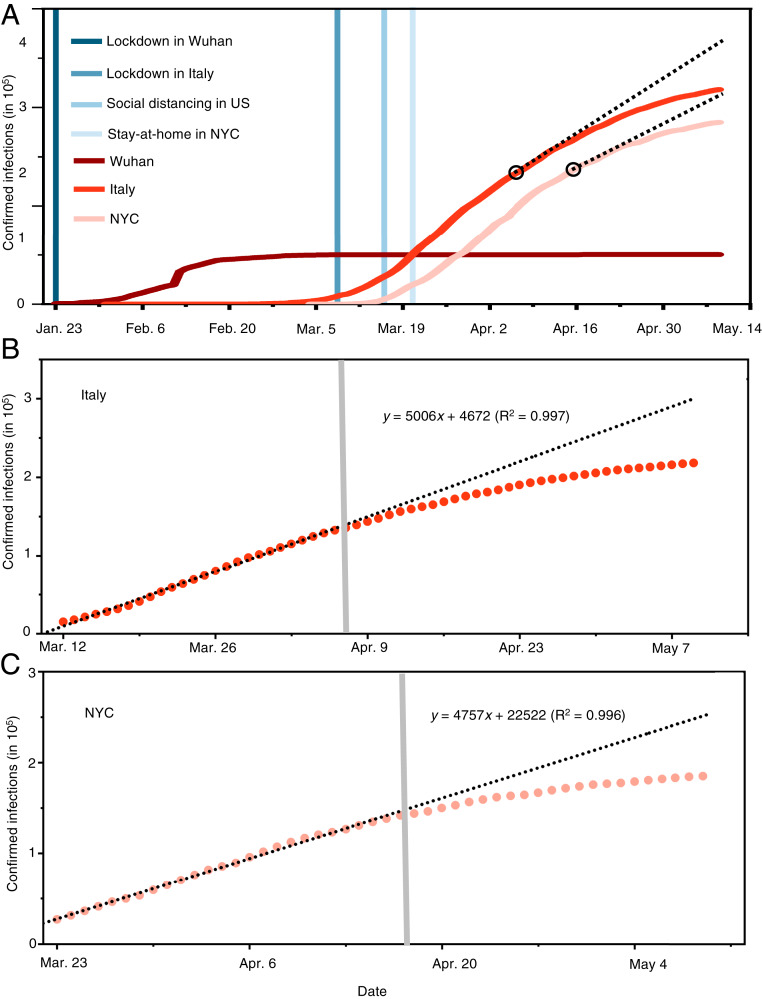
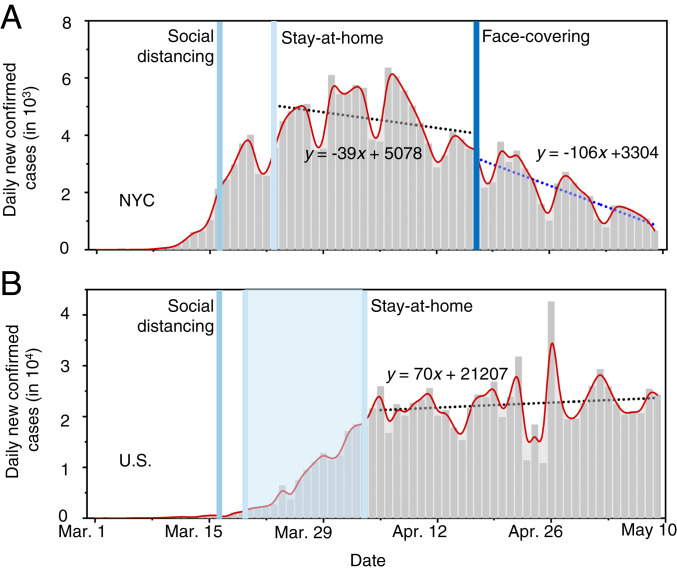
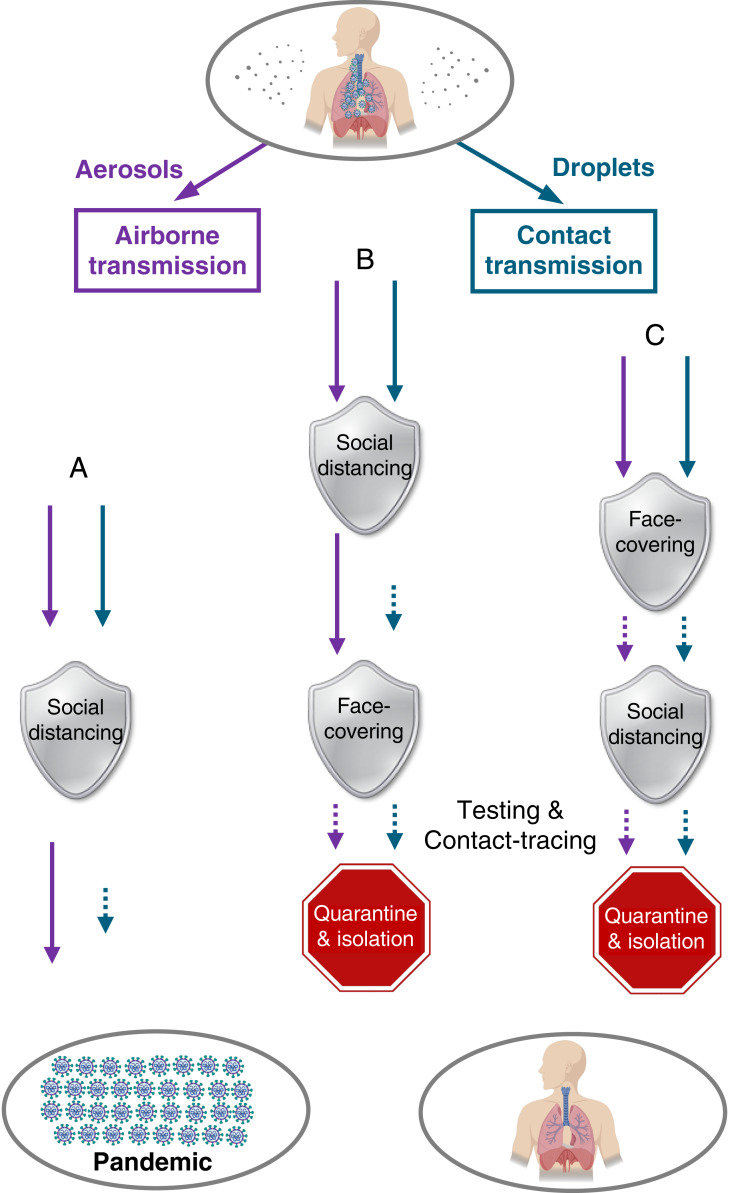
Various mitigation measures have been implemented to fight the coronavirus disease 2019 (COVID-19) pandemic, including widely adopted social distancing and mandated face covering. However, assessing the effectiveness of those intervention practices hinges on the understanding of virus transmission, which remains uncertain. Here we show that airborne transmission is highly virulent and represents the dominant route to spread the disease. By analyzing the trend and mitigation measures in Wuhan, China, Italy, and New York City, from January 23 to May 9, 2020, we illustrate that the impacts of mitigation measures are discernable from the trends of the pandemic. Our analysis reveals that the difference with and without mandated face covering represents the determinant in shaping the pandemic trends in the three epicenters. This protective measure alone significantly reduced the number of infections, that is, by over 78,000 in Italy from April 6 to May 9 and over 66,000 in New York City from April 17 to May 9. Other mitigation measures, such as social distancing implemented in the United States, are insufficient by themselves in protecting the public. We conclude that wearing of face masks in public corresponds to the most effective means to prevent interhuman transmission, and this inexpensive practice, in conjunction with simultaneous social distancing, quarantine, and contact tracing, represents the most likely fighting opportunity to stop the COVID-19 pandemic. Our work also highlights the fact that sound science is essential in decision-making for the current and future public health pandemics.
Overview
The claims and statistics of this paper haven’t been checked yet.
Free: it reads the open-access text and checks the first 5 claims that cite a source we can check. Create a free account to check every claim.
Integrity signals
Registry
Cites
Statistics
Figures
Verification
Claims the paper makes
The claims and statistics of this paper haven’t been checked yet.
Free: it reads the open-access text and checks the first 5 claims that cite a source we can check. Create a free account to check every claim.
Claims other papers make about this one
Each is checked against this paper’s own text: does it say what the citing paper says it does?
The cited source says what the claim attributes to it.
In the citing paper
“With the progression of the pandemic there is a growing body of literature that supports airborne transmission of SARS-CoV-2 playing an increasingly important role in the spread of the disease [29, 39–44].”
From The protective performance of reusable cloth face masks, disposable procedure masks, KN95 masks and N95 respirators: Filtration and total inward leakage (2021) · cites this paper as [39]
Self-check
Percentages, sums and reported differences re-computed from the paper’s own numbers.
The self-check needs the paper’s full text.
Citations
Cites
Aerosol and surface stability of SARS-CoV-2 as compared with SARS-CoV-1
van Doremalen, N., Bushmaker, T., Morris, D. H., Holbrook, M. G., Gamble, A., Williamson, B. N., Tamin, A., Harcourt, J. L., Thornburg, N. J., Gerber, S. I., et al. (2020) · New England Journal of Medicine · doi:10.1056/nejmc2004973 · Cited by 9,951 · cited 4×
“Recent experimental studies have examined the stability of SARS-CoV-2, showing that the virus remains infectious in aerosols for hours (12) and on surfaces up to days (12, 13).”
InfluentialTemporal dynamics in viral shedding and transmissibility of COVID-19
He, X., Lau, E. H. Y., Wu, P., Deng, X., Wang, J., Hao, X., Lau, Y. C., Wong, J. Y., Guan, Y., Tan, X., et al. (2020) · Nature Medicine · doi:10.1038/s41591-020-0869-5 · Cited by 4,247 · cited 2×
“In addition, nascent micrometer-size aerosols produced from coughing/sneezing of infected people have the potential of containing many viruses, particularly for asymptomatic carriers (16).”
Coronaviruses: An Overview of Their Replication and Pathogenesis
Fehr, A. R., & Perlman, S. (2015) · Methods in Molecular Biology · doi:10.1007/978-1-4939-2438-7_1 · Cited by 3,787
Quantifying SARS-CoV-2 transmission suggests epidemic control with digital contact tracing
Ferretti, L., Wymant, C., Kendall, M., Zhao, L., Nurtay, A., Abeler-Dörner, L., Parker, M., Bonsall, D., & Fraser, C. (2020) · Science · doi:10.1126/science.abb6936 · Cited by 2,512 · cited 1×
“Differentiation of the effects of those mitigation measures in China is challenging (19), since the implementation occurred almost simultaneously in January 2020.”
Respiratory virus shedding in exhaled breath and efficacy of face masks
Leung, N. H. L., Chu, D. K. W., Shiu, E. Y. C., Chan, K.-H., McDevitt, J. J., Hau, B. J. P., Yen, H.-L., Li, Y., Ip, D. K. M., Peiris, J. S. M., et al. (2020) · Nature Medicine · doi:10.1038/s41591-020-0843-2 · Cited by 2,270
Self-citationWu, X., Nethery, R. C., Sabath, M. B., Braun, D., & Dominici, F. (2020) · Science Advances · doi:10.1126/sciadv.abd4049 · Cited by 1,974
Stability of SARS-CoV-2 in different environmental conditions
Chin, A. W. H., Chu, J. T. S., Perera, M. R. A., Hui, K. P. Y., Yen, H.-L., Chan, M. C. W., Peiris, M., & Poon, L. L. M. (2020) · doi:10.1101/2020.03.15.20036673 · Cited by 1,948
Stability of SARS-CoV-2 in different environmental conditions
Chin, A. W. H., Chu, J. T. S., Perera, M. R. A., Hui, K. P. Y., Yen, H.-L., Chan, M. C. W., Peiris, M., & Poon, L. L. M. (2020) · The Lancet Microbe · doi:10.1016/s2666-5247(20)30003-3 · Cited by 1,946
Aerodynamic Analysis of SARS-CoV-2 in Two Wuhan Hospitals
Liu, Y., Ning, Z., Chen, Y., Guo, M., Liu, Y., Gali, N. K., Sun, L., Duan, Y., Cai, J., Westerdahl, D., et al. (2020) · Nature · doi:10.1038/s41586-020-2271-3 · Cited by 1,872 · cited 2×
“Available epidemiological (1) and experimental (12, 18) evidence, however, implicates airborne transmission of SARS-CoV-2 via aerosols as a potential route for the spreading of the disease.”
Elucidating severe urban haze formation in China
Guo, S., Hu, M., Zamora, M. L., Peng, J., Shang, D., Zheng, J., Du, Z., Wu, Z., Shao, M., Zeng, L., et al. (2014) · Proceedings of the National Academy of Sciences · doi:10.1073/pnas.1419604111 · Cited by 1,711 · cited 1×
“In addition, nascent virus-bearing aerosols produced from human atomization likely undergo transformation in air, including coagulation with ambient preexisting PM and/or growth on a time scale of a few hours in typical urban air (27 – 29).”
Self-citation
Cited by
Items 801–900 of 1,001
Fujihara, S., Kobara, H., Nishiyama, N., Naoya, T. A. D. A., Kozuka, K., Matsui, T., Chiyo, T., Kobayashi, N., Shi, T., Yachida, T., et al. (2021) · Diagnostics · doi:10.3390/diagnostics11091679 · Cited by 5
“Recent studies even suggest the potential for airborne spread in some circumstances [8,9].”
BackgroundRecent progress of filtration mechanism to fabricate the effective COVID-masks: A review
Singh, R., Dolatabadi, Z. R., Tripathi, N., Mukhtar, S., Sheriff, D. S., Morais, F. G., & Shafiee, P. (2021) · Journal of Composites and Compounds · doi:10.52547/jcc.3.4.3 · Cited by 5
Yamamura, O., Onishi, H., Sakamaki, I., Fujita, R., Miyashita, H., & Iwasaki, H. (2023) · Asian Biomedicine · doi:10.2478/abm-2023-0051 · Cited by 5
“Wearing a face mask lowers infection risk, even in situations with poor social distancing, and social distancing alone is insufficient to prevent the spread of COVID-19 [23, 24].”
Existence of a Nonzero Worst‐Case ACH for Short‐Term Exposure in Ventilated Indoor Spaces
Krishnaprasad, K. A., Zgheib, N., Choudhary, K., Ha, M. Y., Choi, C., Bang, K. S., Jang, S., & Balachandar, S. (2024) · Indoor Air · doi:10.1155/2024/6642205 · Cited by 5
Preventing influenza and influenza like illness during Covid-19 pandemic: A call for action
d’Ettorre, G., Ceccarelli, G., Pinacchio, C., Ciccozzi, M., & d’Ettorre, G. (2020) · Early Human Development · doi:10.1016/j.earlhumdev.2020.105156 · Cited by 5
“Hygiene measures (i.e. face masks and hand hygiene) should be adopted and strengthened, since they have been already proved effective to prevent influenza and ILIs; in particular: avoiding close contact with sick people, limiting contact with others while sick (by staying home for at least 24 h after flu-like symptoms…”
BackgroundInfluentialTransmisión aérea en espacios cerrados del SARS-Cov-2
Huayanay, L. (2020) · Anales de la Facultad de Medicina · doi:10.15381/anales.v81i3.18742 · Cited by 5
“2020;81(3):342-7 INTRODUCCIÓN La pandemia de Covid-19, producida por el SRAS-Cov-2, un coronavirus que causa una enfermedad altamente contagiosa, tiene en vilo a la humanidad por los millones de afectados y miles de muertos.”
BackgroundInfluentialWhen do we fly again? Managing Airlines in a Pandemic: Challenges and Recommendations
al., M. L. E. (2021) · Türk bilgisayar ve matematik eğitimi dergisi · doi:10.17762/turcomat.v12i3.2009 · Cited by 5
Modeling the viral load expelled in saliva droplets carrying SARS-CoV-2
Calles, A., & Morán-López, J. L. (2021) · Journal of Physics Communications · doi:10.1088/2399-6528/ac21a4 · Cited by 5
Renault, V., Fontaine, S., Mpouam, S. E., & Saegerman, C. (2021) · Transboundary and Emerging Diseases · doi:10.1111/tbed.14410 · Cited by 5
How surface and fomite infection affect contagion dynamics: a study with self-propelled particles
Ghosh, S., Chakraborty, A., & Bhattacharya, S. (2022) · The European Physical Journal Special Topics · doi:10.1140/epjs/s11734-022-00431-x · Cited by 5
http://www.bolivianchemistryjournal.org/QUIMICA%202020B%20PDF/3_Dextrine_pectine-Moreno2020.pdf
Bravo, J. A. (2020) · Revista Boliviana de Química · doi:10.34098/2078-3949.37.2.4 · Cited by 5
Advances on virucidal textile coatings
Calais, G. B., Bataglioli, R. A., de Freitas, E. D., Mondal, M. I. H., & Beppu, M. M. (2022) · Elsevier eBooks · doi:10.1016/b978-0-323-90477-3.00002-x · Cited by 5
Rojo, J. M. C., Ventura, P. S., Santos, J. M. A., de Latierro, A. O., Arévalo‐Lorido, J. C., Mauri, M., Rubio‐Rivas, M., González-Vega, R., Galvañ, V. G., Perpiñá, B. O., et al. (2023) · Internal and Emergency Medicine · doi:10.1007/s11739-023-03338-0 · Cited by 5
“Coronavirus disease 2019 (COVID-19) is predominantly a respiratory disease, circulating globally since 2020, and it was defined as a pandemic on 11 March 2020 [1].”
BackgroundMasking the general population might attenuate COVID-19 outbreaksPreprint
Johansson, B. (2020) · arXiv (Cornell University) · doi:10.48550/arxiv.2006.15626 · Cited by 5
Kampf, G. (2020) · Proceedings of the National Academy of Sciences · doi:10.1073/pnas.2012415117 · Cited by 5
Maloney, M. J., Rhodes, N. J., & Yarnold, P. R. (2020) · medRxiv · doi:10.1101/2020.10.06.20208033 · Cited by 5
“The significance of respiratory droplets and airborne viral particles in the spread of SARS-CoV-2 and 47 propagation of the COVID-19 pandemic gained early attention.(1) Asymptomatic carriage of SARS-CoV-2 48 is important to community spread because these individuals can transmit the virus in exhaled breath.”
BackgroundMitigating the environmental impact of plastic PPE: more than just disposal
Li, F., Pinder, A., Cooper, G., McGrath, B. A., & Shelton, C. (2021) · BMJ · doi:10.1136/bmj.n752 · Cited by 5
Fan, Z., Yin, X., Du, B., Liu, Z., Xu, J., Mu, X., Liu, B., Xu, J., & Tong, Z. (2026) · Sensors and Actuators B Chemical · doi:10.1016/j.snb.2026.139607 · Cited by 4
Fukushima, A., Manabe, Y., Kosaka, Y., & Akagi, S. (2023) · International Journal of Biometeorology · doi:10.1007/s00484-023-02501-8 · Cited by 4
Cell line-specific features of 3D chromatin organization in hepatocellular carcinoma
Kim, Y., Yang, H.-J., & Lee, D. (2023) · Genomics & Informatics · doi:10.5808/gi.23015 · Cited by 4
Haut, B., Atasi, O., & Sobac, B. (2025) · Journal of Colloid and Interface Science · doi:10.1016/j.jcis.2025.137715 · Cited by 4
Hyssop-infused Electrospun Nanofiber Mask for Antiviral Protection
Khalili, E., Mehrabi, F., Korrani, Z. S., & Kamyab, H. (2025) · BioNanoScience · doi:10.1007/s12668-025-02186-w · Cited by 4
“For this reason, face masks remain the most effective measure against short-range air-borne transmission [13, 14, 56, 57].”
Pan, Y., Liu, H., Deng, C., Zhu, L., & Chen, C. (2025) · Building and Environment · doi:10.1016/j.buildenv.2025.113813 · Cited by 4
Coronaviruses are stable on glass, but are eliminated by manual dishwashing procedures
Schilling‐Loeffler, K., Falkenhagen, A., & Johne, R. (2022) · Food Microbiology · doi:10.1016/j.fm.2022.104036 · Cited by 4
“The predominant transmission route of SARS-CoV-2 is from human to human through respiratory droplets and aerosols and the virus remains infectious in aerosols for hours (van Doremalen et al., 2020; Zhang et al., 2020).”
Sorokina, M., Belapure, J., Tüting, C., Paschke, R., Papasotiriou, I., Rodrigues, J., & Kastritis, P. L. (2022) · Journal of Molecular Biology · doi:10.1016/j.jmb.2022.167637 · Cited by 4
“This is an op virus, only the achievement of herd immunity through vaccination can put an end to the pandemic in a timely way.(1,2) Development of COVID-19 vaccines started as early as January 2020, enabled by rapid breakthroughs in genome sequencing and structural biology, leading to the first mass vaccination progra…”
Quintero, F., Nagarajan, V., Schumacher, S., Todea, A. M., Lindermann, J., Asbach, C., Luzzato, C. M., & Jilesen, J. (2022) · Atmosphere · doi:10.3390/atmos13122032 · Cited by 4
Bansal, A., Kumar, S., Rai, N., Kumari, S., Kumar, V., Kumar, A., & Chandra, N. C. (2023) · Indian Journal of Clinical Biochemistry · doi:10.1007/s12291-023-01121-8 · Cited by 4
Richter, W. R., Sunderman, M. M., Schaeufele, D., Willenberg, Z. J., Ratliff, K., Calfee, M. W., & Oudejans, L. (2023) · Journal of Applied Microbiology · doi:10.1093/jambio/lxad053 · Cited by 4
Seresirikachorn, K., Ruamviboonsuk, P., Soonthornworasiri, N., Singhanetr, P., Prakayaphun, T., Kaothanthong, N., Somwangthanaroj, S., & Theeramunkong, T. (2023) · PLoS ONE · doi:10.1371/journal.pone.0281841 · Cited by 4
Karami, S., Lakzian, E., & Ahmadi, G. (2024) · The European Physical Journal Plus · doi:10.1140/epjp/s13360-024-04899-5 · Cited by 4
“The inhalation of SARS-CoV-2-virus aerosols is the main pathway for spreading this virus compared to contact transmission [2, 3].”
Yin, C., Luo, X., Ao, F., Chen, L., Liu, Y., Wang, J., Ji, L., Feng, J., Zhang, P., Wang, X., et al. (2024) · Chemical Engineering Journal · doi:10.1016/j.cej.2024.156607 · Cited by 4
Time Course of COVID-19 Pandemic in Algeria: Retrospective Estimate of the Actual Burden
Hamidouche, M., & Belmessabih, N. (2020) · Journal of Contemporary Studies in Epidemiology and Public Health · doi:10.30935/jconseph/8440 · Cited by 4
Coronavirus Disease 2019 Related Clinical Studies: A Cross-Sectional Analysis
Ma, L.-L., Yin, X., Li, B.-H., Yang, J.-Y., Jin, Y.-H., Huang, D., Deng, T., Wang, Y.-Y., Ren, X.-Q., Ji, J., et al. (2020) · Frontiers in Pharmacology · doi:10.3389/fphar.2020.540187 · Cited by 4
Self-citationThermophoretic collection of virus-laden (SARS-CoV-2) aerosols
Zhang, X., Wang, J., Wang, C., Zheng, L., Shi, Y., Ren, Y., & Yan, Y. (2021) · Biomicrofluidics · doi:10.1063/5.0039247 · Cited by 4
Игоревна, З. А., Baryakh, E. A., Желнова, Е. И., Потешкина, Н. Г., Beloglazova, I. Р., Mutovina, Z. Y., Samsonova, I. V., Анатольевна, К. Е., Parshin, V. V., Pshenichnikova, V. V., et al. (2021) · Antibiot Khimioter = Antibiotics and Chemotherapy · doi:10.37489/0235-2990-2021-66-1-2-47-56 · Cited by 4
Design and development of multilayer cotton masks via machine learning
Leow, Y. P., Shi, J., Liu, W., Ni, X., Yew, P. Y. M., Liu, S., Li, Z., Xue, Y., Kai, D., & Loh, X. J. (2021) · Materials Today Advances · doi:10.1016/j.mtadv.2021.100178 · Cited by 4
“To curb the spread of the SARS-CoV-2 virus, many countries have imposed widespread lockdowns and travel restrictions, in addition to social distancing and contract tracing measures [4,9].”
SARS-CoV-2: low virus load on surfaces in public areas
Zedtwitz‐Liebenstein, K. (2022) · Environmental Science and Pollution Research · doi:10.1007/s11356-022-18514-6 · Cited by 4
Goto, T., Yamada, Y. M. A., Ueda, T., Shiota, S., Sohma, M., & Akedo, J. (2022) · Journal of Asian Ceramic Societies · doi:10.1080/21870764.2022.2072081 · Cited by 4
Network polymers incorporating lipid-bilayer disrupting polymers: towards antiviral functionality
Burridge, K. M., Rahman, M. S., Watuthanthrige, N. D. A., Gordon, E. A., Shah, M. Z., Chandrarathne, B. M., Lorigan, G. A., Page, R. C., & Konkolewicz, D. (2022) · Polymer Chemistry · doi:10.1039/d2py00602b · Cited by 4
The use of protective masks and the level of arterial oxygen saturation at rest and after exercise
Majek, P., Kaleta-Pilarska, A. P., & Barański, K. (2022) · Medycyna Pracy · doi:10.13075/mp.5893.01246 · Cited by 4
Xenakis, M. N. (2023) · Entropy · doi:10.3390/e25060896 · Cited by 4
Zhang, Y., Zhao, Y., Li, J. H., & Huang, Y. L. (2024) · Geomatics Natural Hazards and Risk · doi:10.1080/19475705.2024.2322482 · Cited by 4
“Activities such as breathing, speaking, and coughing by infected individuals generate droplets, forming virus-laden aerosols that significantly increase infection risks (Morawska 2006; Stadnytskyi et al. 2020; Zhang R et al. 2020).”
Risk assessment of infection of COVID‐19 contacts based on scenario simulation
Zhang, W., Huang, Y., Wang, Y., Lu, Z.-X., Sun, J., & Jing, M. (2024) · Risk Analysis · doi:10.1111/risa.15103 · Cited by 4
“…diseases from spreading through air, masks are widely used in COVID-19 and other respiratory infectious diseases; it has been proven to be a simple and effective personal protective measure in research studies and practical applications (Li et al., 2020; Stutt et al., 2020; Zhang et al., 2020).”
Self-citationCOVID-19: What we talk about when we talk about masks
Fortaleza, C. R., de Souza, L. D. R., Rúgolo, J. R. M., & Fortaleza, C. M. C. B. (2020) · Revista da Sociedade Brasileira de Medicina Tropical · doi:10.1590/0037-8682-0527-2020 · Cited by 4
Challenges of Managing Cybersecurity at COVID-19
Okereafor, K. (2021) · CRC Press eBooks · doi:10.1201/9781003104124-5 · Cited by 4
Miles, L. F., Makar, T., Oughton, C., & Peyton, P. J. (2021) · Anaesthesia and Intensive Care · doi:10.1177/0310057x20978982 · Cited by 4
“Emerging evidence regarding the novel betacoronavirus, SARS-CoV-2, and the disease it causes, coronavirus disease 2019, suggests that infection may be transmitted via an airborne route.(1,2) This in turn has highlighted requirements for an appropriate level of personal protective equipment (PPE) for the healthcare wor…”
BackgroundLopez, A., Lakbar, I., Delamarre, L., Culver, A., Arbelot, C., Duclos, G., Hammad, E., Pastène, B., Antonini, F., Zieleskiewicz, L., et al. (2021) · Journal of Critical Care · doi:10.1016/j.jcrc.2021.06.014 · Cited by 4
“During the first wave, physicians were reluctant to use non-invasive oxygenation support for fear of spreading an airborne virus [18], whereas in the second wave non-invasive support use was encouraged [19] [20].”
BackgroundRationale for Mass Masking in Controlling the COVID-19 Pandemic
Tam, S. Y., Tam, V. C. W., Law, H., Khaw, M. L., & Lee, S. W. Y. (2021) · Frontiers in Public Health · doi:10.3389/fpubh.2021.665708 · Cited by 4
“(33) reported a higher rate of respiratory illness among hospital staff wearing a cloth mask compared to not wearing a mask for protection at work.”
BackgroundApplication of Internet of Things for Early Detection of COVID-19 using Wearables
Uddin, T., Uddin, M. B., Islam, A. K. M. M., Islam, S., & Shatabda, S. (2021) · International Conference on Software Engineering and Computer Systems · doi:10.1109/icsecs52883.2021.00080 · Cited by 5
A simplified model to estimate COVID19 transport in enclosed spaces
Mirzaei, P. A., Moshfeghi, M., Motamedi, H., Sheikhnejad, Y., & Bordbar, H. (2021) · Journal of Physics Conference Series · doi:10.1088/1742-6596/2069/1/012191 · Cited by 4
“More recently, the lingering of small-size airborne droplets (< 5 μm) is suggested to be another plausible root in airborne disease transmission [4].”
BackgroundInfluentialSELECTION OF THE PROPER MATERIALS FOR MEDICAL FACEMASK
Ali, A. S., Youssef, M. M., Ali, W. Y., & Badran, A. H. (2021) · Journal of the Egyptian Society of Tribology /Journal of the Egyptian Society of Tribology · doi:10.21608/jest.2021.206994 · Cited by 4
On the Risk of Infection by Infectious Aerosols in Large Indoor Spaces
Hejazi, B., Schlenczek, O., Thiede, B., Bagheri, G., & Bodenschatz, E. (2022) · Aerosol and Air Quality Research · doi:10.4209/aaqr.220117 · Cited by 4
“…(COVID-19) are transmitted through near-field and far-field airborne contact with an infectious individual (Pöhlker et al. , 2021; WHO, 2020; Zhang et al. , 2020); with the predominant route of transmission for SARS-CoV-2 being via airborne transport of respiratory aerosols released from…”
A Multi-Scale Approach for Modelling Airborne Transport of Mucosalivary Fluid
D’Alessandro, V., Falone, M., Giammichele, L., & Ricci, R. A. (2022) · Applied Sciences · doi:10.3390/app122312381 · Cited by 4
“SARS-CoV-2 virus airborne transmission was confirmed as the dominant route to spread the virus itself [2].”
BackgroundAnalysis of the effect of wind speed in increasing the COVID-19 cases in Jakarta
Susanna, D., Saputra, Y. A., & Poddar, S. (2023) · F1000Research · doi:10.12688/f1000research.128908.2 · Cited by 4
Moore, S. M., España, G., Perkins, T. A., Guido, R. M., Jucaban, J. B., Hall, T., Huhtanen, M. E., Peel, S. A., Modjarrad, K., Hakre, S., et al. (2023) · Epidemics · doi:10.1016/j.epidem.2023.100691 · Cited by 4
Hits and Misses: Digital Contact Tracing in a Pandemic
Garry, M., Zajac, R., Hope, L., Salathé, M., Levine, L. J., & Merritt, T. A. (2023) · Perspectives on Psychological Science · doi:10.1177/17456916231179365 · Cited by 4
Sankaran, G., Tan, S. T., Yap, R., Chua, M. L., Ng, L. C., & George, S. (2023) · Chemosphere · doi:10.1016/j.chemosphere.2023.139670 · Cited by 4
COVID-19 Transmission During a Tsunami Evacuation in a Lockdown City
Callejas, E., Inostrosa‐Psijas, A., Moreno, F. G., Oyarzún, M., & Carvajal-Schiaffino, R. (2020) · International Conference of the Chilean Computer Science Society (SCCC) · doi:10.1109/sccc51225.2020.9281149 · Cited by 4
(2021) · doi:10.31038/idt.2021212 · Cited by 4
The Causal Effect of Air Pollution on COVID-19 Transmission: Evidence from ChinaPreprint
He, G., Pan, Y., & Tanaka, T. (2020) · medRxiv · doi:10.1101/2020.10.19.20215236 · Cited by 4
The Gompertz Growth of COVID-19 Outbreaks is Caused by Super-SpreadersPreprint
Zonta, F., Scaiewicz, A., & Levitt, M. (2021) · PubMed · doi:10.48550/arxiv.2111.02962 · Cited by 4
“This also gives an indirect proof that the virus is airborne (14), since no other transmission routes can explain why some individuals could infect hundreds or thousands people in a short amount of time (15).”
Kähler, C. J., Fuchs, T., & Hain, R. (2020) · medRxiv · doi:10.1101/2020.10.23.20218099 · Cited by 4
“According to the current state of research, SARS-CoV-2 is mainly transmitted via droplets and aerosol particles that are produced when breathing, speaking, singing, coughing, or sneezing and are inhaled and exhaled through the air we breathe [1, 2, 3, 4].”
BackgroundWasheem, M., Vass, W. B., Becker, D. W., Shirkhani, A., Shankar, S. N., Zhang, Y., Alipanah, M., Fan, Z. H., Lednicky, J. A., & Wu, C.-Y. (2024) · Aerosol and Air Quality Research · doi:10.4209/aaqr.240182 · Cited by 3
“When MCE fibers absorb water, they swell, thus restricting airflow (Kim et al. , 2019; Yeganeh et al. , 2023).”
Indoor Transmission of Respiratory Diseases and Influencing Factors—A Critical Review
Arumuru, V., & Yadav, H. (2025) · Transactions of Indian National Academy of Engineering · doi:10.1007/s41403-025-00530-w · Cited by 3
“…et al. 2009; Vuorinen et al. 2020 ; Velraj and Haghighat 2020 ; Gormley et al. 2020 ; Morawska and Cao 2020 ; Lednicky et al. 2020, 2021; Cowling et al. 2013 ; Jin et al. 2021; Yao et al. 2020; Zhang and Chen 2007 ; Zhang et al. 2020, 2021 ; Hadei et al. 2020; Buonanno et al. 2020a, 2020b ).”
Microwave irradiation for airborne virus inactivation: Evidence and future perspectives
Brusaferro, S., Brunelli, L., Arnoldo, L., Arzilli, G., Sangiovanni-Vincentelli, A. L., & Privitera, G. P. (2025) · Journal of Infection · doi:10.1016/j.jinf.2025.106537 · Cited by 3
A nano perspective behind the COVID-19 pandemic
Silveira, C. P., Schneid, A. D. C., Ribeiro, I. R. S., Galdino, F. E., & Cardoso, M. B. (2021) · Nanoscale Horizons · doi:10.1039/d1nh00135c · Cited by 3
Poydenot, F., Lebreton, A., Haiech, J., & Andreotti, B. (2023) · Biochimie · doi:10.1016/j.biochi.2023.03.006 · Cited by 3
Modelling influenza and SARS-CoV-2 interaction: Analysis for Catalonia region
Casas, P. F. I., Carrasco, V. G. I., & Subirana, J. G. I. (2023) · Journal of Algorithms & Computational Technology · doi:10.1177/17483026231186012 · Cited by 3
“15 The approach we follow is to use a modi fi ed SEIRD model that allows computing the interaction between the two spreads.”
MethodAbdellatif, Z., Abdel-Haleem, H., Abdalaziz, R. A., Ramadan, A., Al-sharif, A. M., Elkorashy, R. I., Soliman, Y. M. A., Ahmed, S., Kamal, M. M., Abdullatif, M., et al. (2024) · Arab Journal of Gastroenterology · doi:10.1016/j.ajg.2024.01.008 · Cited by 3
Pamplona, R. S., & Ancho, I. (2023) · International Journal on Open and Distance e-Learning · doi:10.58887/ijodel.v9i1.106 · Cited by 3
Outbreak of SARS-CoV-2 Cases during Omicron Variant Infections
Muhsin, M., Fadhil, A., Hwaid, A. H., Fadhil, H. Y., Aufi, I. M., & Hamid, N. M. (2024) · Iraqi Journal of Science · doi:10.24996/ijs.2024.65.8.7 · Cited by 3
“It has been anticipated that cold, dry conditions were favourable for virus transmission in aerosols during the winter months [23, 24, 25].”
BackgroundWang, H., Zhang, L., Chen, Y., Shi, G., Huang, C., Yang, F., & Li, W. (2024) · Environmental Monitoring and Assessment · doi:10.1007/s10661-024-13213-w · Cited by 3
“During the COVID-19 pandemic from 2020 to 2022 (Zhang et al., 2020), the Chinese government implemented stringent measures to combat COVID-19, including travel restrictions, production limitations in factories, and social quarantine measures (Chen et al., 2020; Zhang et al., 2021).”
Thirugnanasampanthar, M., Tian, L., Rhem, R. G., Libera, D. D., Gomez, M., Jackson, K. J., Fox‐Robichaud, A., DOLOVICH, M. B., & Hosseinidoust, Z. (2024) · PNAS Nexus · doi:10.1093/pnasnexus/pgae473 · Cited by 3
Ideological Consistency and News Sharing as Predictors of Masking Among College Students
Holz, A. (2024) · International Journal of Environmental Research and Public Health · doi:10.3390/ijerph21121652 · Cited by 3
Cockerham, W. C. (2025) · Routledge eBooks · doi:10.4324/9781003569824 · Cited by 4
Liu, H., Chen, M., Zhang, Q., Jiang, X. G., & Liu, X. (2025) · Aerosol Science and Engineering · doi:10.1007/s41810-025-00309-0 · Cited by 3
“…speaking in hospitals were mainly deposited on beds and floors, leading to higher exposure risk for healthcare workers during direct contact with beds (Liu et al. 2024). the deposition of droplet aerosols on the surface had a significant risk to the spread of pollutants (Zhang et al. 2020).”
COVID-19 patient variables associated with the detection of airborne SARS-CoV-2
Truyols-Vives, J., Escarrer-Garau, G., Arbona-González, L., Toledo-Pons, N., Sauleda, J., Ferrer, M. D., Fraile-Ribot, P. A., Doménech‐Sánchez, A., Baldoví, H. G., Sala, E., et al. (2025) · Journal of Infection and Public Health · doi:10.1016/j.jiph.2025.102785 · Cited by 3
Reissner, J., Reichelt, B., Siller, P., Brockmann, G., Kriegel, M., Roesler, U. H., & Friese, A. (2025) · GMS. Hygiene and infection control · doi:10.3205/dgkh000573 · Cited by 3
“Corona-and influenza virus have been among the most critical and widespread respiratory pathogens that could spread over aerosols [10], [43], [44].”
Patel, R. K., Shackelford, I. A., Priddy, M. C., & Kopechek, J. A. (2020) · The Journal of the Acoustical Society of America · doi:10.1121/10.0002278 · Cited by 3
Inference under superspreading: Determinants of SARS‐CoV‐2 transmission in Germany
Schmidt, P. (2024) · Statistics in Medicine · doi:10.1002/sim.10046 · Cited by 3
Impact of nonpharmaceutical strategies on trends of COVID-19 in São Paulo State
Fortaleza, C. R., VILCHES, T. N., de Almeida, G. B., Ferreira, C. P., Grotto, R. M. T., Guimarães, R. B., de Souza, L. D. R., & Fortaleza, C. M. C. B. (2021) · Revista de Saúde Pública · doi:10.11606/s1518-8787.2021055003599 · Cited by 3
A importância da comunicação qualificada de ideias no ensino de ciências
Dall’Alba, G., & Guzzo, G. B. (2022) · Revista Interdisciplinar de Ciência Aplicada · doi:10.18226/25253824.v6.n10.01 · Cited by 3
Influence of meteorological patterns on the 2020 COVID-19 pandemic in the Mexico City region
Salcido, A., & Castro, T. G. (2021) · Environmental Advances · doi:10.1016/j.envadv.2021.100157 · Cited by 3
“…exposure to viruses in microscopic respiratory droplets (microdroplets) at short to medium distances (up to several meters, or room-scale), which indicates a route of airborne transmission (Bhaganagar and Bhimireddy, 2020; Mor-awska and Cao, 2020; Morawska and Milton, 2020; Zhang et al., 2020).”
The COVID-19 Pandemic: A Comprehensive Review of Global Impacts and Mitigation Strategies
Coen, B. (2023) · ENDLESS International Journal of Future Studies · doi:10.54783/endlessjournal.v6i2.184 · Cited by 3
Mongin, D., Bürgisser, N., the Covid-SMC Study Group, & Courvoisier, D. S. (2024) · Eurosurveillance · doi:10.2807/1560-7917.es.2024.29.3.2300228 · Cited by 3
“Indeed, airborne transmission is the main contamination route of SARS-CoV-2 [15,16], and multiple examples of contamination across enclosed spaces without direct encounters between index and contact cases have been reported, such as contamination in corridors [17], shared spaces [18], via room…”
BackgroundAbnormal condensation of water vapour at ambient temperature
Guo, C., Yang, K., Qin, H., Zhu, Y., Chen, M., & Lü, Y. (2024) · Physical Chemistry Chemical Physics · doi:10.1039/d3cp05628g · Cited by 3
No evidence for enhanced disease with human polyclonal SARS-CoV-2 antibody in the ferret model
Reed, D. S., McElroy, A. K., Barbeau, D. J., McMillen, C. M., Tilston‐Lunel, N. L., Nambulli, S., Cottle, E. L., Gilliland, T. C., Rannulu, H., Lundy, J. D., et al. (2024) · PLoS ONE · doi:10.1371/journal.pone.0290909 · Cited by 3
Burmeister, L. (2024) · Pediatric Annals · doi:10.3928/19382359-20240502-02 · Cited by 3
Zhang, H., Pan, Y., Deng, C., Niu, Z., You, R., & Chen, C. (2024) · The Science of The Total Environment · doi:10.1016/j.scitotenv.2024.176059 · Cited by 3
Khanal, N., Brazell, L. R., Juel, M. A. I., Gibas, C., Schlueter, J. A., & Munir, M. (2024) · Applied Microbiology · doi:10.3390/applmicrobiol4030095 · Cited by 3
Joy, G. V., Alomari, A. M. A., Singh, K., Mannethodi, K., Hassan, N. P., Kunjavara, J., Martinez, E., & Lenjawi, B. A. (2024) · Journal of Nursing Science and Professional Practice · doi:10.4103/jnspp.jnspp_14_24 · Cited by 3
Chapter 8: Conclusion and Recommendations
Okereafor, K. (2021) · Figshare · doi:10.6084/m9.figshare.14558493 · Cited by 3
The role of airflow in airborne transmission of COVID 19
Guzzi, R. (2020) · Organisms. Journal of Biological Sciences · doi:10.13133/2532-5876/17224 · Cited by 3
Transmission Routes of COVID-19 Through Air, Water and Wastewater: A Systematic Review
Jaafarzadeh, N., Jorfi, S., Ghaedrahmat, Z., Almasi, H., & Zahedi, A. (2020) · Avicenna Journal of Environmental Health Engineering · doi:10.34172/ajehe.2020.16 · Cited by 3
“Avicenna J Environ Health Eng, Volume 7, Issue 2, 2020 112 and his immune system (19,20).”
BackgroundMedidas de mitigación que la población debe empoderarse para combatir el COVID-19
Papaqui-Alba, S., Papaqui-Hernández, J., & Alba‐Leonel, A. (2021) · Revista CONAMED · doi:10.35366/101679 · Cited by 3
Zhang, W., Wu, Y. Y., & Walkover, M. (2021) · Europe PMC (PubMed Central) · Cited by 3
ENHANCING THE PERFORMANCE OF THE MEDICAL FACEMASK
Ali, A. S., Youssef, M. M., Ali, W. Y., & Badran, A. H. (2021) · Journal of the Egyptian Society of Tribology /Journal of the Egyptian Society of Tribology · doi:10.21608/jest.2021.206996 · Cited by 3
Prompt Inactivation of Coronavirus Using a 280 nm Light-Emitting Diode Cluster Device
Mancini, M. W., Lopes, L. A., Jacinto, G. S., Tsukamoto, J., & Arns, C. W. (2022) · Photobiomodulation Photomedicine and Laser Surgery · doi:10.1089/photob.2021.0128 · Cited by 3
Ayed, I. I., Khalil, R., Adam, I., & Al‐Wutayd, O. (2022) · Patient Preference and Adherence · doi:10.2147/ppa.s366099 · Cited by 3
Upadhyay, K., Goel, S., & Kathirvel, S. (2022) · Frontiers in Public Health · doi:10.3389/fpubh.2022.835330 · Cited by 3
Metadata
- Authors
- Zhang, R., Li, Y., Zhang, A. L., Wang, Y., & Molina, M. J.
- Affiliations
- Texas A&M University (US)
- The University of Texas at Austin (US)
- California Institute of Technology (US)
- University of California San Diego (US)
- Corresponding author
- Zhang, Renyi
- Molina, Mario J.
- Venue
- Proceedings of the National Academy of Sciences
- Publisher
- National Academy of Sciences
- Published
- 2020-06-11
- Volume
- 117
- Issue
- 26
- Pages
- 14857-14863
- ISSN
- 0027-8424 (ISSN-L)
- 1091-6490
- PMC
- PMC7334447
- OpenAlex
- W3034825141
- Cited by
- 1,236
- References
- 28
- Citations by year
- 2026: 33 · 2025: 51 · 2024: 115 · 2023: 162 · 2022: 248 · 2021: 406 · 2020: 219
- FWCI
- 41.11
- Type
- journal article
- Language
- en
- Update notices
- correction (2020-10-05)
- Open access
- hybrid
- doi.org
- Licence
- Locations
- Proceedings of the National Academy of Sciences (publishedVersion, cc-by)
- PubMed Central (publishedVersion, cc-by)
- PubMed (publishedVersion)
- CaltechAUTHORS (California Institute of Technology) (submittedVersion, cc-by)
- eScholarship (California Digital Library) (submittedVersion)
- eScholarship (California Digital Library) (submittedVersion, cc-by)
- Funders
- Welch Foundation (A-1417)
- Topics
- Physical Sciences › Mathematics › Modeling and Simulation › COVID-19 epidemiological studies
- Health Sciences › Medicine › Pulmonary and Respiratory Medicine › Infection Control and Ventilation
- Social Sciences › Sociology and Political Science › COVID-19 Prevention and Impact
- Keywords
- COVID-19 pandemic, airborne transmission, face masks, social distancing, mitigation measures, epidemiological trends, Wuhan, Italy, New York City, quarantine, contact tracing, public health policy, infection control
- MeSH terms
- COVID-19, Humans, Masks, Pneumonia, Viral, Primary Prevention, Quarantine, Respiratory Protective Devices, United States, Coronavirus Infections, Disease Transmission, Infectious, Inhalation Exposure, Pandemics
About these checks
Registry, retraction, Cites and statistics results are computed, not judged, with one exception: a printed reference that no index lists is read once by a model before it counts as a citation error. Claims are extracted by a model and kept only when their quote appears verbatim in the text; each cited source is then checked, with a model’s help, for whether it says what the claim relies on. Those verdicts can be wrong — read the claim’s quote and the cited source before relying on one.
Statistics and arithmetic are recomputed, not judged.
Confidence bands are shown only for fields calibrated on our annotated test set. None is calibrated yet, so no band is shown.
What counts as a claim ›How we measure confidence ›How we check this ›
Are you an author, or do you see a problem with this page? Request a review
Data sources
Bibliographic data: Semantic Scholar, OpenAlex, Crossref.
Contains information from the Semantic Scholar Academic Graph Datasets, made available under the ODC Attribution License (ODC-BY 1.0).
Semantic Scholar’s data is described in: Kinney, R., et al. (2023). The Semantic Scholar Open Data Platform. arXiv:2301.10140.
