

Identifying airborne transmission as the dominant route for the spread of COVID-19
Open accessThe DOI matches its Crossref record; 31 of the 31 references it cites were found in a registry or an index.
Abstract
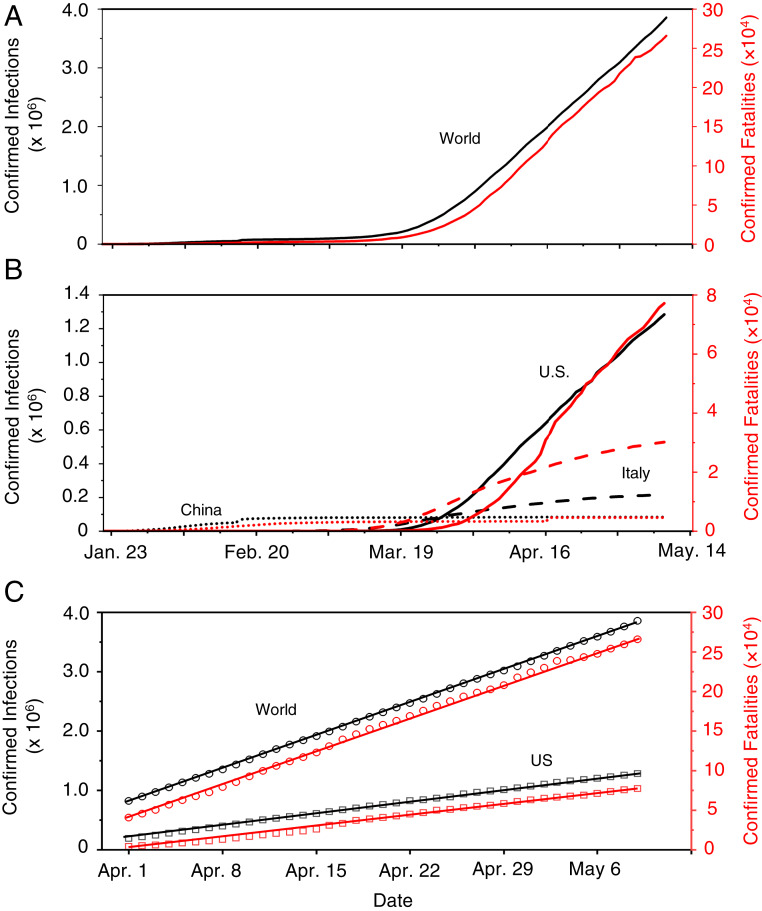
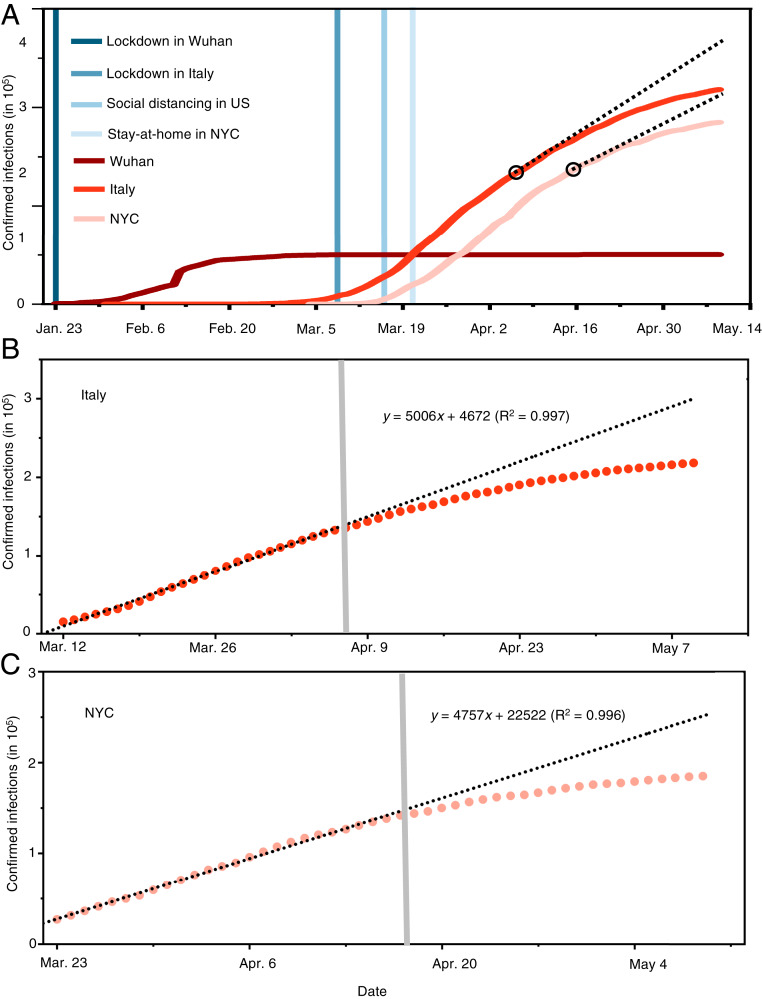
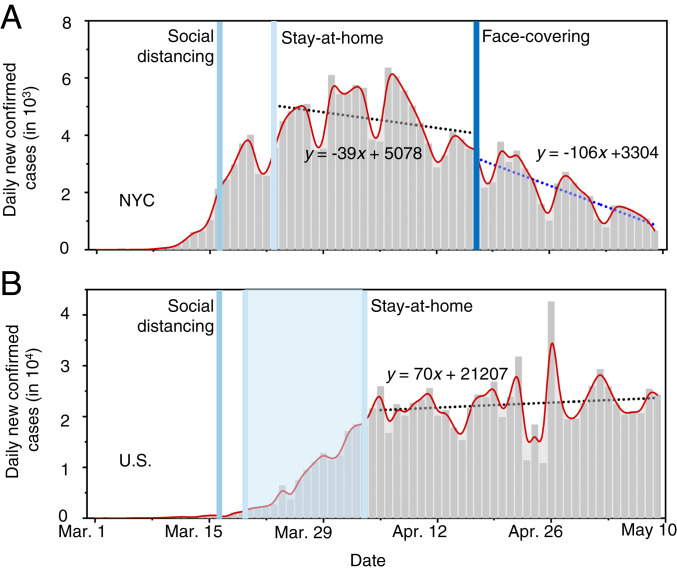
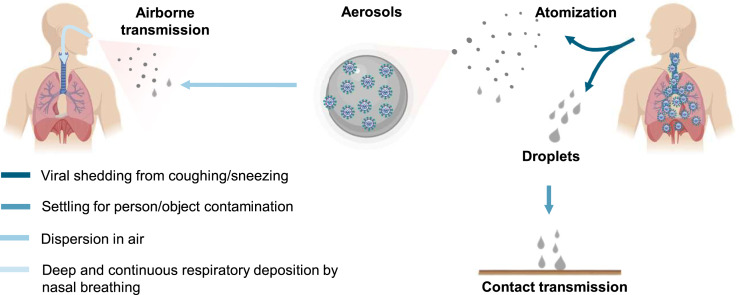
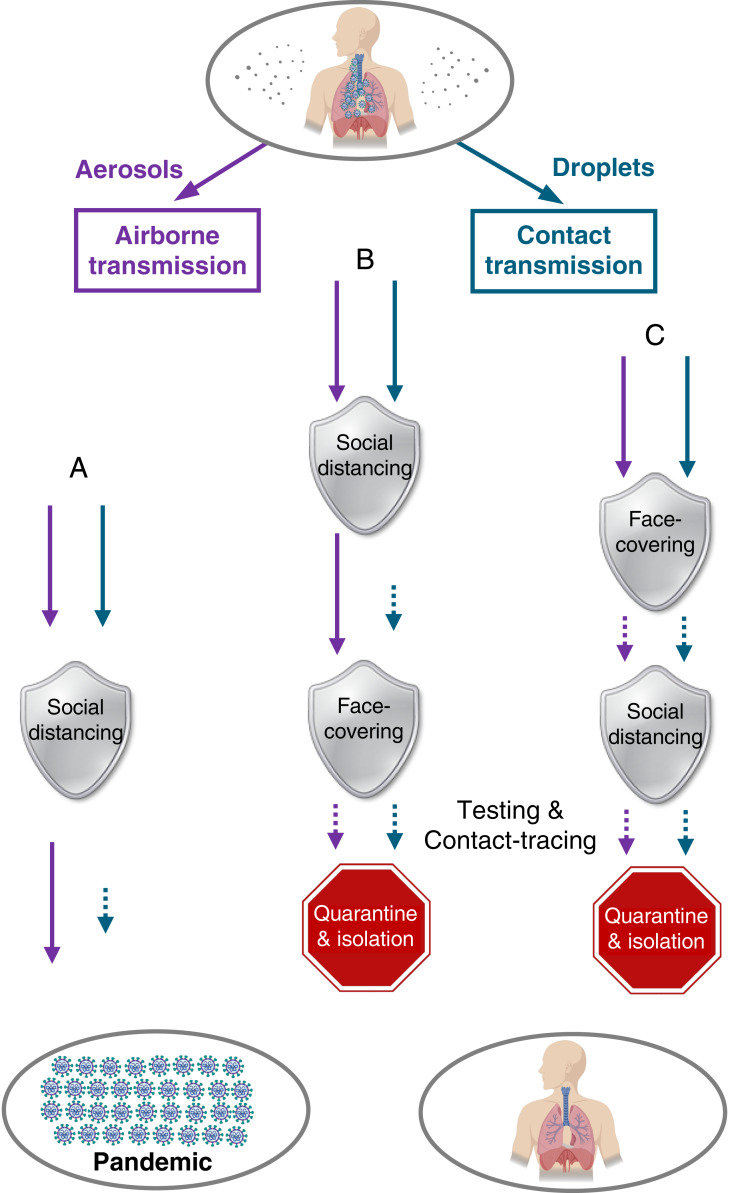
Various mitigation measures have been implemented to fight the coronavirus disease 2019 (COVID-19) pandemic, including widely adopted social distancing and mandated face covering. However, assessing the effectiveness of those intervention practices hinges on the understanding of virus transmission, which remains uncertain. Here we show that airborne transmission is highly virulent and represents the dominant route to spread the disease. By analyzing the trend and mitigation measures in Wuhan, China, Italy, and New York City, from January 23 to May 9, 2020, we illustrate that the impacts of mitigation measures are discernable from the trends of the pandemic. Our analysis reveals that the difference with and without mandated face covering represents the determinant in shaping the pandemic trends in the three epicenters. This protective measure alone significantly reduced the number of infections, that is, by over 78,000 in Italy from April 6 to May 9 and over 66,000 in New York City from April 17 to May 9. Other mitigation measures, such as social distancing implemented in the United States, are insufficient by themselves in protecting the public. We conclude that wearing of face masks in public corresponds to the most effective means to prevent interhuman transmission, and this inexpensive practice, in conjunction with simultaneous social distancing, quarantine, and contact tracing, represents the most likely fighting opportunity to stop the COVID-19 pandemic. Our work also highlights the fact that sound science is essential in decision-making for the current and future public health pandemics.
Overview
The claims and statistics of this paper haven’t been checked yet.
Free: it reads the open-access text and checks the first 5 claims that cite a source we can check. Create a free account to check every claim.
Integrity signals
Registry
Cites
Statistics
Figures
Verification
Claims the paper makes
The claims and statistics of this paper haven’t been checked yet.
Free: it reads the open-access text and checks the first 5 claims that cite a source we can check. Create a free account to check every claim.
Claims other papers make about this one
Each is checked against this paper’s own text: does it say what the citing paper says it does?
The cited source says what the claim attributes to it.
In the citing paper
“With the progression of the pandemic there is a growing body of literature that supports airborne transmission of SARS-CoV-2 playing an increasingly important role in the spread of the disease [29, 39–44].”
From The protective performance of reusable cloth face masks, disposable procedure masks, KN95 masks and N95 respirators: Filtration and total inward leakage (2021) · cites this paper as [39]
Self-check
Percentages, sums and reported differences re-computed from the paper’s own numbers.
The self-check needs the paper’s full text.
Citations
Cites
Aerosol and surface stability of SARS-CoV-2 as compared with SARS-CoV-1
van Doremalen, N., Bushmaker, T., Morris, D. H., Holbrook, M. G., Gamble, A., Williamson, B. N., Tamin, A., Harcourt, J. L., Thornburg, N. J., Gerber, S. I., et al. (2020) · New England Journal of Medicine · doi:10.1056/nejmc2004973 · Cited by 9,951 · cited 4×
“Recent experimental studies have examined the stability of SARS-CoV-2, showing that the virus remains infectious in aerosols for hours (12) and on surfaces up to days (12, 13).”
InfluentialTemporal dynamics in viral shedding and transmissibility of COVID-19
He, X., Lau, E. H. Y., Wu, P., Deng, X., Wang, J., Hao, X., Lau, Y. C., Wong, J. Y., Guan, Y., Tan, X., et al. (2020) · Nature Medicine · doi:10.1038/s41591-020-0869-5 · Cited by 4,247 · cited 2×
“In addition, nascent micrometer-size aerosols produced from coughing/sneezing of infected people have the potential of containing many viruses, particularly for asymptomatic carriers (16).”
Coronaviruses: An Overview of Their Replication and Pathogenesis
Fehr, A. R., & Perlman, S. (2015) · Methods in Molecular Biology · doi:10.1007/978-1-4939-2438-7_1 · Cited by 3,787
Quantifying SARS-CoV-2 transmission suggests epidemic control with digital contact tracing
Ferretti, L., Wymant, C., Kendall, M., Zhao, L., Nurtay, A., Abeler-Dörner, L., Parker, M., Bonsall, D., & Fraser, C. (2020) · Science · doi:10.1126/science.abb6936 · Cited by 2,512 · cited 1×
“Differentiation of the effects of those mitigation measures in China is challenging (19), since the implementation occurred almost simultaneously in January 2020.”
Respiratory virus shedding in exhaled breath and efficacy of face masks
Leung, N. H. L., Chu, D. K. W., Shiu, E. Y. C., Chan, K.-H., McDevitt, J. J., Hau, B. J. P., Yen, H.-L., Li, Y., Ip, D. K. M., Peiris, J. S. M., et al. (2020) · Nature Medicine · doi:10.1038/s41591-020-0843-2 · Cited by 2,270
Self-citationWu, X., Nethery, R. C., Sabath, M. B., Braun, D., & Dominici, F. (2020) · Science Advances · doi:10.1126/sciadv.abd4049 · Cited by 1,974
Stability of SARS-CoV-2 in different environmental conditions
Chin, A. W. H., Chu, J. T. S., Perera, M. R. A., Hui, K. P. Y., Yen, H.-L., Chan, M. C. W., Peiris, M., & Poon, L. L. M. (2020) · doi:10.1101/2020.03.15.20036673 · Cited by 1,948
Stability of SARS-CoV-2 in different environmental conditions
Chin, A. W. H., Chu, J. T. S., Perera, M. R. A., Hui, K. P. Y., Yen, H.-L., Chan, M. C. W., Peiris, M., & Poon, L. L. M. (2020) · The Lancet Microbe · doi:10.1016/s2666-5247(20)30003-3 · Cited by 1,946
Aerodynamic Analysis of SARS-CoV-2 in Two Wuhan Hospitals
Liu, Y., Ning, Z., Chen, Y., Guo, M., Liu, Y., Gali, N. K., Sun, L., Duan, Y., Cai, J., Westerdahl, D., et al. (2020) · Nature · doi:10.1038/s41586-020-2271-3 · Cited by 1,872 · cited 2×
“Available epidemiological (1) and experimental (12, 18) evidence, however, implicates airborne transmission of SARS-CoV-2 via aerosols as a potential route for the spreading of the disease.”
Elucidating severe urban haze formation in China
Guo, S., Hu, M., Zamora, M. L., Peng, J., Shang, D., Zheng, J., Du, Z., Wu, Z., Shao, M., Zeng, L., et al. (2014) · Proceedings of the National Academy of Sciences · doi:10.1073/pnas.1419604111 · Cited by 1,711 · cited 1×
“In addition, nascent virus-bearing aerosols produced from human atomization likely undergo transformation in air, including coagulation with ambient preexisting PM and/or growth on a time scale of a few hours in typical urban air (27 – 29).”
Self-citation
Cited by
Items 401–500 of 1,001
Yang, G., Wang, Y., Chan, K. C., Mui, K. W., Flemmig, T. F., Ng, S. T., Chao, C. Y. H., & Fu, S. C. (2024) · Building Simulation · doi:10.1007/s12273-024-1159-9 · Cited by 21
“In 2020, Zhang et al. (2020) confirmed that the primary transmission route of COVID-19 is through airborne route.”
Self-citationHuang, H., Liang, X., Huang, J., Yuan, Z., Ouyang, H., Wei, Y., & Bai, X. (2020) · Journal of Environmental Health Science and Engineering · doi:10.1007/s40201-020-00564-y · Cited by 21
Moreno, T., & Gibbons, W. (2021) · Geoscience Frontiers · doi:10.1016/j.gsf.2021.101282 · Cited by 21
Generalized self-efficacy and compliance with health behaviours related to COVID-19 in the US
Hamerman, E. J., Aggarwal, A., & Poupis, L. M. (2021) · Psychology and Health · doi:10.1080/08870446.2021.1994969 · Cited by 21
“…in place during the spring of 2020 were associated with significant reductions in the transmission of COVID-19 (Pei et al., 2020), while wearing masks was estimated to have reduced the number of COVID-19 infections in New York by 66,000 during a 3-week period in April 2020 (Zhang et al., 2020).”
BackgroundLiebert, A. D., Bicknell, B. T., Markman, W., & Kiat, H. (2020) · Aging and Disease · doi:10.14336/ad.2020.0901 · Cited by 21
“The aerosol or droplet transmission of the virus to humans gains entry through mucosal surfaces of the mouth, nose and eyes [1].”
BackgroundDempsey, S. E., Zoller, H. M., & Hunt, K. P. (2023) · Food, Culture & Society · doi:10.1080/15528014.2021.2022916 · Cited by 20
“airborne and could not survive on surfaces (Zhang et al. 2020).”
BackgroundA New Natural Defense Against Airborne Pathogens
Edwards, D. A., Hickey, A. J., Batycky, R., Griel, L. C., Lipp, M. M., Dehaan, W., Clarke, R. W., Hava, D. L., Perry, J. K., Laurenzi, B., et al. (2020) · QRB Discovery · doi:10.1017/qrd.2020.9 · Cited by 20
“Recent observations (Zhang et al., 2020) place the novel coronavirus SARS-CoV-2—carried by the small airborne droplets exhaled by COVID-19 infected individuals (Liu et al.”
BackgroundA SARS-CoV-2 variant with the 12-bp deletion at E gene
Sun, Y., Xu, F., An, Q., Chen, C., Yang, Z.-N., Lu, H.-J., Chen, J.-C., Yao, P.-P., Jiang, J.-M., & Zhu, H.-P. (2020) · Emerging Microbes & Infections · doi:10.1080/22221751.2020.1837017 · Cited by 20
“(B) Vero cells were infected with the F8 or 8X virus for 48 h and an indirect immunofluorescence assay using the positive serum from a COVID-19 recovered patient was performed.”
BackgroundInfluentialMethodology for risk assessment of COVID-19 pandemic propagation
Portarapillo, M., & Benedetto, A. D. (2021) · Journal of Loss Prevention in the Process Industries · doi:10.1016/j.jlp.2021.104584 · Cited by 20
“(2020) concluded that the airborne transmission is dominant for the spread of COVID-19 and that the simultaneous wearing of face masks, social distancing, quarantine and contact tracing is the most effective prevention against interhuman transmission (Zhang et al., 2020).”
InfluentialTransmission in home environment associated with the second wave of COVID-19 pandemic in India
Tang, L., Liu, M., Ren, B., Chen, J., Liu, X., Wu, X., Huang, W., & Tian, J. (2021) · Environmental Research · doi:10.1016/j.envres.2021.111910 · Cited by 20
Facial mask personalization encourages facial mask wearing in times of COVID-19
Palcu, J., Schreier, M., & Janiszewski, C. A. (2022) · Scientific Reports · doi:10.1038/s41598-021-04681-y · Cited by 20
Global Gene Expression and Docking Profiling of COVID-19 Infection
Jabeen, A., Ahmad, N., & Raza, K. (2022) · Frontiers in Genetics · doi:10.3389/fgene.2022.870836 · Cited by 20
Filtration efficiency of medical and community face masks using viral and bacterial bioaerosols
Djeghdir, S., Peyron, A., Sarry, G., Leclerc, L., Kaouane, G., Verhoeven, P. O., & Pourchez, J. (2023) · Scientific Reports · doi:10.1038/s41598-023-34283-9 · Cited by 20
Salivary miRNA Profiles in COVID-19 Patients with Different Disease Severities
Saulle, I., Garziano, M., Cappelletti, G., Limanaqi, F., Strizzi, S., Vanetti, C., Caputo, S. L., Poliseno, M., Santantonio, T. A., Clerici, M., et al. (2023) · International Journal of Molecular Sciences · doi:10.3390/ijms241310992 · Cited by 20
“SARS-CoV-2 is an airborne pathogen transmitted by asymptomatic, pre-symptomatic, and symptomatic individuals through close contact via exposure to infected droplets and aerosols [1,2].”
BackgroundZhang, N., Yang, X., Su, B., & Dou, Z. (2024) · The Science of The Total Environment · doi:10.1016/j.scitotenv.2024.170346 · Cited by 20
Cruz-Correa, M. R., Díaz‐Toro, E. C., Falcon‐Chevere, J. L., García-Rivera, E. J., Guiot, H. M., Maldonado-Dávila, W. T., Martínez, K., Mendez-Latalladi, W., Pérez, C. M., Quiñones-Feliciano, M. L., et al. (2020) · International Journal of Environmental Research and Public Health · doi:10.3390/ijerph17134839 · Cited by 20
“Mandated face covering reduces the number of infections [20] and we believe this protective measure has contributed to keep the pandemic under control in Puerto Rico.”
BackgroundIdentification and computational analysis of mutations in SARS-CoV-2
Dey, T., Chatterjee, S., Manna, S., Nandy, A., & Basak, S. C. (2020) · Computers in Biology and Medicine · doi:10.1016/j.compbiomed.2020.104166 · Cited by 20
“More recent studies show airborne transmission of COVID-19 too [6] increasing its capability to spread in communities.”
BackgroundReview of component designs for post-COVID-19 HVAC systems: possibilities and challenges
Shamim, J. A., Hsu, W., & Daiguji, H. (2022) · Heliyon · doi:10.1016/j.heliyon.2022.e09001 · Cited by 21
“Although the relative contributions of different transmission routes for spreading COVID-19 remain controversial, current evidence is sufficiently strong to consider indoor airborne transmission as the dominant route [2, 3, 4].”
Katal, A., Wang, L. L., & Albettar, M. (2022) · Sustainable Cities and Society · doi:10.1016/j.scs.2022.103810 · Cited by 20
Mohite, V. S., Darade, M. M., Sharma, R. K., & Pawar, S. H. (2022) · Catalysts · doi:10.3390/catal12030326 · Cited by 20
Simulating COVID-19 classroom transmission on a university campus
Hekmati, A., Luhar, M., Krishnamachari, B., & Matarić, M. J. (2022) · Proceedings of the National Academy of Sciences · doi:10.1073/pnas.2116165119 · Cited by 20
Using Google Health Trends to investigate COVID-19 incidence in Africa
Fulk, A., Romero-Álvarez, D., Abu-Saymeh, Q., Onge, J. M. S., Peterson, A. T., & Agusto, F. B. (2022) · PLoS ONE · doi:10.1371/journal.pone.0269573 · Cited by 20
“Asymptomatic carriers account for a significant amount 54 of secondary transmissions, with some reports showing that ~80% of infections may occur 55 without symptoms, constituting the source of most secondary COVID-19 cases [1, 6, 7].”
BackgroundTracking SARS-CoV-2 in rivers as a tool for epidemiological surveillance
Maidana-Kulesza, M. N., Poma, H. R., Sanguino-Jorquera, D. G., Reyes, S. I., Said-Adamo, M. D. M., Mainardi-Remis, J. M., Gutiérrez-Cacciabue, D., Cristóbal, H. A., Cruz, M. C., González, M. A., et al. (2022) · The Science of The Total Environment · doi:10.1016/j.scitotenv.2022.157707 · Cited by 20
“Although the 2019-nCoV infection (COVID-19) is mainly a respiratory disease, SARS-CoV-2 also replicates in the enterocytes from ileum and colon (Zhang et al., 2020b).”
Zonal modeling of air distribution impact on the long-range airborne transmission risk of SARS-CoV-2
Aganović, A., Cao, G., Kurnitski, J., Melikov, A. K., & Wargocki, P. L. (2022) · Applied Mathematical Modelling · doi:10.1016/j.apm.2022.08.027 · Cited by 20
“(6) is strongly dependent on the dose-response relationship c i .”
Germann, T. C., Smith, M. Z., Dauelsberg, L. R., Fairchild, G. C., Turton, T. L., Gorris, M. E., Ross, C. W., Ahrens, J. P., Hemphill, D. D., Manore, C. A., et al. (2022) · Epidemics · doi:10.1016/j.epidem.2022.100632 · Cited by 20
“3 The SARS-CoV-2 virus spreads primarily through small droplets and aerosols of saliva or discharge from the nose of an infected person.(4) Jo ur l P r -p r of”
Lee, L. D., Delclos, G. L., Berkheiser, M. L., Barakat, M. T., & Jensen, P. A. (2021) · Journal of Occupational and Environmental Hygiene · doi:10.1080/15459624.2021.1991581 · Cited by 20
“Increasing evidence of airborne spread of the COVID19 coronavirus has accumulated (Zhang et al. 2020).”
BackgroundIdentification of potential biomarkers and inhibitors in SARS-CoV-2 infected macaquesPreprint
Gu, H., Wang, W., & Yuan, G. (2020) · Research Square · doi:10.21203/rs.3.rs-95211/v1 · Cited by 20
How adherence to public health measures shapes epidemic spreading: A temporal network model
Behring, B. M., Rizzo, A., & Porfiri, M. (2021) · Chaos An Interdisciplinary Journal of Nonlinear Science · doi:10.1063/5.0041993 · Cited by 19
Understanding lifetime and dispersion of cough-emitted droplets in air
Lordly, K., Kober, L., Jadidi, M., Antoun, S., Dworkin, S. B., & Karataş, A. E. (2022) · Indoor and Built Environment · doi:10.1177/1420326x221098753 · Cited by 20
Wang, T., Shi, F., Shi, F., Li, C., Zhang, L., Wang, J., Jiang, C. W., Qian, B., Dai, L., & Ji, P. (2023) · Building and Environment · doi:10.1016/j.buildenv.2023.110117 · Cited by 19
Building Ventilation: The Consequences for Personal Exposure
Bhagat, R. K., Dalziel, S. B., Wykes, M. S. D., & Linden, P. F. (2023) · Annual Review of Fluid Mechanics · doi:10.1146/annurev-fluid-120720-015857 · Cited by 19
RoboCoV Cleaner: An Indoor Autonomous UV-C Disinfection Robot with Advanced Dual-Safety Systems
Bratu, D.-V., Zolya, M.-A., & Moraru, S.-A. (2024) · Sensors · doi:10.3390/s24030974 · Cited by 20
Indoor Air Quality Control for Airborne Diseases: A Review on Portable UV Air Purifiers
Sankurantripati, S., & Duchaine, F. (2024) · Fluids · doi:10.3390/fluids9120281 · Cited by 19
“Early research suggested airborne transmission as a possibility [24–26], and geographical analyses of infection spread, in conjunction with mitigation measures, support this as the dominant route [27,28].”
Field, R. D., Moelis, N., Salzman, J., Bax, A., Ausiello, D. A., Woodward, S. M., Wu, X., Dominici, F., & Edwards, D. A. (2021) · Molecular Frontiers Journal · doi:10.1142/s2529732521400058 · Cited by 19
Identifying Predictors of COVID-19 Mortality Using Machine Learning
Wan, T. K., Huang, R., Tulu, T. W., Liu, J., Vodenčarević, A., Wong, C. W., & Chan, K. H. K. (2022) · Life · doi:10.3390/life12040547 · Cited by 19
“Introduction Coronavirus disease 2019 (COVID-19) is a dominant respiratory disease [1] that has circulated globally from 2020 and was characterized as a pandemic on 11 March 2020 [2].”
BackgroundSantaniello, A., Perruolo, G., Cristiano, S., Agognon, A. L., Cabaro, S., Amato, A., Dipineto, L., Borrelli, L., Formisano, P., Fioretti, A., et al. (2023) · Microorganisms · doi:10.3390/microorganisms11020514 · Cited by 19
“The COVID-19 incubation period is about 5–6 days and, in some cases, is more than 14 days; during this time, virus transmission can occur via direct (deposited on persons) or indirect (deposited on objects) contact and airborne (droplets and aerosols) routes [23,24].”
BackgroundWang, Y., Xu, C., Yao, S., Wang, L., Zhao, Y., Ren, J., & Li, Y. (2021) · Scientific Reports · doi:10.1038/s41598-021-00948-6 · Cited by 19
Self-citationExposure risk analysis of COVID-19 for a ride-sharing motorbike taxi
Hetherington, R., Hasan, A. B. M. T., Khan, A., Roy, D., Salehin, M., & Wadud, Z. (2021) · Physics of Fluids · doi:10.1063/5.0069454 · Cited by 18
Elemental analysis of single ambient aerosol particles using laser-induced breakdown spectroscopy
Heikkilä, P., Rostedt, A., Toivonen, J., & Keskinen, J. (2022) · Scientific Reports · doi:10.1038/s41598-022-18349-8 · Cited by 18
Artificial intelligence-based masked face detection: A survey
Hosny, K. M., Ibrahim, N. A., Mohamed, E. R., & Hamza, H. M. (2024) · Intelligent Systems with Applications · doi:10.1016/j.iswa.2024.200391 · Cited by 17
Bian, Y., Fu, X., Gupta, R. K., & Shi, Y. (2024) · Applied Energy · doi:10.1016/j.apenergy.2024.123477 · Cited by 18
Impact of COVID-19: nursing perspective and concern
Sharma, R., Vishwas, A. S., & Jelly, P. (2020) · International Journal of Community Medicine and Public Health · doi:10.18203/2394-6040.ijcmph20204769 · Cited by 18
“Patient with Covid-19 infection shows various symptoms, including body pain, fever, cough, sore throat, fatigue, dyspnoea, Gastrointestinal (GI) disturbance initially.(13,14)”
BackgroundMahmood, M., Ilyas, N.-U.-A., Khan, M. F., Hasrat, M. N., & Richwagen, N. (2021) · Virology Journal · doi:10.1186/s12985-021-01609-w · Cited by 18
Umutlu, G., Acar, N. E., Ulutaş, D. S. S., Taşman, G. A., Güven, E., & Yıldırım, İ. (2022) · The Journal of Sports Medicine and Physical Fitness · doi:10.23736/s0022-4707.21.12313-8 · Cited by 18
Vaccine Development for Coronavirus (SARS-CoV2) Disease (Covid-19); Lipid Nanoparticles
Malabadi, R. B., Kolkar, K. P., Meti, N. T., & CHALANNAVAR, R. K. (2021) · International journal of research and scientific innovation · doi:10.51244/ijrsi.2021.8312 · Cited by 18
“The S protein is an attractive target for vaccine design because it facilitates viral entry into the host cell during the infection process (Shin et al., 2020; Zhou et al., 2020a, 2020b; Zhang et al., 2020).”
BackgroundInfluentialEvolution of PM2.5 bacterial community structure in Beijing's suburban atmosphere
Chen, H., Du, R., Zhang, Y., Du, P., Zhang, S., Ren, W., & Yang, M. (2021) · The Science of The Total Environment · doi:10.1016/j.scitotenv.2021.149387 · Cited by 18
Corona and polio viruses are sensitive to short pulses of W-band gyrotron radiation
Kaczmarczyk, L. S., Marsay, K. S., Shevchenko, S., Pilossof, M., Levi, N., Einat, M., Oren, M., & Gerlitz, G. (2021) · Environmental Chemistry Letters · doi:10.1007/s10311-021-01300-0 · Cited by 18
On the utility of a well-mixed model for predicting disease transmission on an urban bus
Zhang, Z., Capecelatro, J., & Maki, K. J. (2021) · AIP Advances · doi:10.1063/5.0061219 · Cited by 18
“For example, it is now recognized that airborne transmission is the dominant transmission mode of SARS-CoV-2 (Zhang et al., 2020), which is responsible for the COVID-19 pandemic.”
BackgroundMethodInfluentialConsiderations for the Safe Operation of Schools During the Coronavirus Pandemic
Lordan, R., Prior, S., Hennessy, E. J., Naik, A. S., Ghosh, S., Paschos, G. K., Skarke, C., Barekat, K., Hollingsworth, T., Juska, S. A., et al. (2021) · Frontiers in Public Health · doi:10.3389/fpubh.2021.751451 · Cited by 18
“Schools SARS-CoV-2 is spread through liquid particles that are generated by expiratory activities such as breathing, speaking, coughing, and sneezing (172).”
BackgroundPatial, S., Nazim, M., Khan, A. A. P., Raizada, P., Singh, P., Hussain, C. M., & Asiri, A. M. (2022) · Journal of Hazardous Materials Advances · doi:10.1016/j.hazadv.2022.100097 · Cited by 18
Butler, M., Sloof, D., Peters, C., Morris, A. C., Gouliouris, T., Thaxter, R., Keevil, V. L., & Beggs, C. B. (2023) · Journal of Hospital Infection · doi:10.1016/j.jhin.2023.02.006 · Cited by 18
“As such, transmission of SARS-CoV-2 is thought to primarily occur when infectious aerosol particles of this size come into contact with angiotensinconverting enzyme 2 (ACE2) receptors in the nasopharynx [13].”
BackgroundInfluentialPropagation in outdoor environments of aerosol droplets produced by breath and light cough
Maggiore, E., Tommasini, M., & Ossi, P. M. (2020) · Aerosol Science and Technology · doi:10.1080/02786826.2020.1847247 · Cited by 18
“2008) since airborne transmission is one of the relevant paths of virus spread (Zhang et al. 2020).”
BackgroundMultiscale landscaping of droplet wettability on fibrous layers of facial masks
Park, S. J., Lee, C. H., Kim, Y., Ko, J. H., Kim, T., Kim, S. J., Nahm, S., Cho, H., & Moon, M. (2022) · Proceedings of the National Academy of Sciences · doi:10.1073/pnas.2209586119 · Cited by 17
“, speaking and coughing) (28, 29), have been overlooked, the sizes of which are at the microscale (30, 31) (e.”
BackgroundData-Driven Control of COVID-19 in Buildings: A Reinforcement-Learning Approach
Hosseinloo, A. H., Nabi, S., Hosoi, A. E., & Dahleh, M. A. (2023) · IEEE Transactions on Automation Science and Engineering · doi:10.1109/tase.2023.3315549 · Cited by 17
“…CDC ignored, in the beginning, the importance of airborne transmission for the disease, observational studies and computational models [1], [2], [3], [4], [5] show that COVID-19 can remain aloft in air for a few hours and pose a risk of exposure at distances beyond the commonly adopted 6-feet…”
BackgroundOccupational COVID‐19 risk to dental staff working in a public dental unit in the outbreak epicenter
Nardone, M., Cordone, A., & Petti, S. (2020) · Oral Diseases · doi:10.1111/odi.13632 · Cited by 17
Viroinformatics-Based Analysis of SARS-CoV-2 Core Proteins for Potential Therapeutic Targets
Agrawal, L., Poullikkas, T., Eisenhower, S., Monsanto, C., Bakku, R. K., Chen, M., & Kalra, R. S. (2021) · Antibodies · doi:10.3390/antib10010003 · Cited by 17
Trancossi, M., Carli, C., Cannistraro, G., Pascoa, J. C., & Sharma, S. (2021) · International Journal of Heat and Mass Transfer · doi:10.1016/j.ijheatmasstransfer.2021.120983 · Cited by 17
“The studes carried out in the Wuhan area (China), Northern Italy, and New ork City, experimentally demonstrate that airborne transmission s the dominant route for the spread of the disease and the cause f highest virulence cases [56] .”
Impact of Personal Protection Habits on the Spread of Pandemics: Insights from an Agent-Based Model
Pomar, L. Á., & Rojas–Galeano, S. (2021) · The Scientific World JOURNAL · doi:10.1155/2021/6616654 · Cited by 17
“Similar studies on the combination of measures involving physical contact distancing, a mask, and eye protection point to its effectiveness in preventing person-to-person transmission of SARS-CoV-2 [26].”
BackgroundInfluentialZhao, X., Tatapudi, H., Corey, G. A., & Gopalappa, C. (2021) · PLoS ONE · doi:10.1371/journal.pone.0255864 · Cited by 18
Liao, Y., Li, D., Guo, Q., Liu, Y., Wang, H., Hu, W., & Wang, Z. L. (2021) · AIP Advances · doi:10.1063/5.0059256 · Cited by 17
Exhaled Jet and Viral-Laden Aerosol Transport from Nasal Sneezing
Salati, H., Fletcher, D. F., Khamooshi, M., Dong, J., Ito, K., Vahaji, S., & Inthavong, K. (2022) · Aerosol and Air Quality Research · doi:10.4209/aaqr.210338 · Cited by 17
“Due to the rapid transmission of the COVID-19 worldwide, the spread of the injected aerosol from sneezing or coughing is a critical concern (Zhang et al. , 2020).”
Zafarí, Z., de Oliveira, P. M., Gkantonas, S., Ezeh, C., & Muennig, P. A. (2022) · Cost Effectiveness and Resource Allocation · doi:10.1186/s12962-022-00356-1 · Cited by 17
The effect of trust in government on elections during the COVID‐19 pandemic in South Korea
Yu, S., Yoo, E. J., & Kim, S. (2022) · Asian Politics & Policy · doi:10.1111/aspp.12631 · Cited by 17
“Zhang et al. (2020) found that government anti‐contagion policies significantly and substantially slowed transmission of the COVID‐19 infection.”
BackgroundInfluentialDesjardins, C. M., Muehlhausen, B. L., Galchutt, P. K., Tata, B., & Fitchett, G. A. (2022) · Journal of Health Care Chaplaincy · doi:10.1080/08854726.2022.2087964 · Cited by 17
Guyot, G., Sayah, S., Guernouti, S., & Mélois, A. (2022) · Indoor Air · doi:10.1111/ina.13097 · Cited by 17
A decoy microrobot that removes SARS-CoV-2 and its variants in wastewater
Lai, J., Meng, Q.-F., Tian, M., Zhuang, X., Pan, P., Du, L., Deng, L., Tang, J.-Y., Jin, N., & Rao, L. (2022) · Cell Reports Physical Science · doi:10.1016/j.xcrp.2022.101061 · Cited by 14
“Severe acute respiratory syndrome coronavirus 2 (SARS-CoV-2) is an emerging coronavirus with high infectiousness and fatality(1,2) and can spread in a variety of ways, including direct airborne transmission and indirect fomite transmission.(3,4) SARSCoV-2 has been linked to the respiratory system, but it also has the…”
Rogak, S. N., Rysanek, A., Lee, J. M., Dhulipala, S. V., Zimmerman, N., Wright, M., & Weimer, M. (2022) · Indoor Air · doi:10.1111/ina.13110 · Cited by 17
“COVID-19 has spread globally mainly via inhalation of virus-containing particles produced via coughing, sneezing, vocalizations and even normal breathing (Jayaweera et al., 2020; Zhang et al., 2020; Morawska and Cao, 2020; Bazant and Bush, 2021).”
BackgroundFluid mechanics of air recycling and filtration for indoor airborne transmission
Krishnaprasad, K. A., Salinas, J. S., Zgheib, N., & Balachandar, S. (2023) · Physics of Fluids · doi:10.1063/5.0135718 · Cited by 17
Zhao, Y., Xu, S., Zhang, X., Wang, L., Huang, Y., Wu, S., & Wu, Q. (2023) · JMIR Formative Research · doi:10.2196/46841 · Cited by 17
“through aerosols as a potential route for the spread of the disease [32].”
BackgroundSafety and Reverence: How Roman Catholic Liturgy Can Respond to the COVID-19 Pandemic
Budaev, S. V. (2020) · Journal of Religion and Health · doi:10.1007/s10943-021-01282-x · Cited by 17
“Very small aerosol particles could remain in the air very long and potentially spread to larger distances: such airborne transmission can provide a major risk factor for COVID-19 transmission (Chen et al., 2020; Scheuch, 2020; Seminara et al., 2020; Zhang et al., 2020).”
BackgroundInactivation of airborne SARS-CoV-2 by thyme volatile oil vapor phase
Şakalar, Ç., & Ertürk, M. (2022) · Journal of Virological Methods · doi:10.1016/j.jviromet.2022.114660 · Cited by 17
“Airborne transmission is the dominant route for SARS-CoV-2 infection (Zhang et al., 2020).”
BackgroundThe SARS-COV-2 outbreak around the Amazon rainforest: The relevance of the airborne transmission.
Crema, E. (2020) · The Science of The Total Environment · doi:10.1016/j.scitotenv.2020.144312 · Cited by 16
“Therefore, air humidity seems to be the major climatic factor in the development of the COVID-19 epidemic.”
InfluentialUrban Green Space Usage and Life Satisfaction During the Covid-19 Pandemic
Refisch, M., Kurz, K., & Hartmann, J. (2024) · Applied Research in Quality of Life · doi:10.1007/s11482-024-10279-z · Cited by 16
“This is especially true for indoor meetings, because transmission occurs primarily via aerosols that accumulate during prolonged stays indoors, especially while people are speaking (Zhang et al., 2020).”
Edwards, D. A., Salzman, J., Devlin, T., & Langer, R. (2020) · Molecular Frontiers Journal · doi:10.1142/s2529732520400040 · Cited by 16
Baron, Y. M. (2020) · Medical Hypotheses · doi:10.1016/j.mehy.2020.110401 · Cited by 16
“Moreover the necessary removal of face protection during smoking obviously encourages further transmission [34].”
COVID-19: The Level of Knowledge, Anxiety and Symptom Presentation
Kef, K. (2021) · Psychology Research and Behavior Management · doi:10.2147/prbm.s307050 · Cited by 16
“Airborne (droplets and aerosols) transmission was found to be the most virulent route for spreading interhuman transmission.(1,7) As a result of hand contact with the viruses spread by the patients, the virus can enter the body from the mucosae due to excessive touching to the eyes, noses, and mouths with unsanitized…”
Immunopathogenesis of Different Emerging Viral Infections: Evasion, Fatal Mechanism, and Prevention
Yang, B., & Yang, K. D. (2021) · Frontiers in Immunology · doi:10.3389/fimmu.2021.690976 · Cited by 16
Müller, W. E. G., Schröder, H. C., Neufurth, M., & Wang, X. (2021) · Materials Today · doi:10.1016/j.mattod.2021.07.029 · Cited by 16
Wang, J., Hou, L., Yao, Z., Dou, W., Li, G., & Zhang, L. (2021) · Environmental Science Nano · doi:10.1039/d1en00532d · Cited by 16
Nejati-Zarnaqi, B., Sahebi, A., & Jahangiri, K. (2021) · Journal of Forensic and Legal Medicine · doi:10.1016/j.jflm.2021.102273 · Cited by 16
Bhowmik, P., Padhi, M., & Pattnaik, S. (2022) · Benchmarking An International Journal · doi:10.1108/bij-03-2021-0134 · Cited by 16
Usmani, M., Jamal, Y., Gangwar, M., Magers, B. M., Chaves-Gonzalez, J., Wu, C., Colwell, R. R., & Jutla, A. S. (2022) · American Journal of Tropical Medicine and Hygiene · doi:10.4269/ajtmh.21-0328 · Cited by 16
Li, X., Bei, N., Wu, J., Liu, S., Wang, Q., Tian, J., Liu, L., Wang, R., & Li, G. (2022) · Journal of Geophysical Research Atmospheres · doi:10.1029/2021jd036191 · Cited by 16
Mullin, S., Wyk, B. V., Asher, J. L., Compton, S. R., Allore, H. G., & Zeiss, C. J. (2022) · PNAS Nexus · doi:10.1093/pnasnexus/pgac096 · Cited by 16
“In the high-risk (H) group, cohabiting animals experienced short-range viral exposure through direct physical contact, aerosol, or droplet routes (34, 78, 79).”
BackgroundIslam, M. A., Kibria, M. K., Hossen, M. B., Reza, M. S., Tasmia, S. A., Tuly, K. F., Mosharof, M. P., Kabir, S. R., Kabir, M. H., & Mollah, M. N. H. (2023) · Scientific Reports · doi:10.1038/s41598-023-31276-6 · Cited by 16
Lee, C., Wang, M., Nanjappa, D., Lu, Y.-T., Meliker, J. R., Clouston, S., Gobler, C. J., & Venkatesan, A. K. (2023) · Journal of Exposure Science & Environmental Epidemiology · doi:10.1038/s41370-023-00613-2 · Cited by 16
Risk assessment of SARS‐CoV‐2 infection in free‐ranging wild animals in Belgium
Logeot, M., Mauroy, A., Thiry, É., Regge, N. D., Vervaeke, M., Beck, O., Waele, V. D., & van den Berg, T. (2021) · Transboundary and Emerging Diseases · doi:10.1111/tbed.14131 · Cited by 16
“Transmission of this respiratory virus mainly occurs through respiratory droplets or airborne aerosols (R. Zhang et al., 2020).”
BackgroundStudy of the trend pattern of COVID-19 using spline-based time series model: a Bayesian paradigm
Kumar, J., Agiwal, V., & Yau, C. Y. (2021) · Japanese Journal of Statistics and Data Science · doi:10.1007/s42081-021-00127-x · Cited by 16
Ertel, H. M., Wilder, D. A., & Hodges, A. C. (2021) · Behavior Modification · doi:10.1177/01454455211049546 · Cited by 16
Setoh, K., & Matsuda, F. (2021) · Economics, law, and institutions in Asia Pacific · doi:10.1007/978-981-16-5727-6_7 · Cited by 16
Anastassopoulou, C. G., Spanakis, N., & Tsakris, A. (2020) · Future Microbiology · doi:10.2217/fmb-2020-0195 · Cited by 17
“Airborne transmission of aerolized virus particles, which has just been identified as an additional, if not the dominant, spreading route of COVID-19, appears to have contributed to the successful propagation of the novel coronavirus [21].”
BackgroundRealtime Face Mask Detection Using TINY-YOLO V4
Sathyamurthy, K. V., Rajmohan, A. R. S., Tejaswar, A. R., Kavitha, V., & Manimala, G. (2021) · International Conference on Computing and Communications Technologies (ICCCT) · doi:10.1109/iccct53315.2021.9711838 · Cited by 15
Air change rate and SARS-CoV-2 exposure in hospitals and residences: A meta-analysis
Zhang, Y., Shankar, S. N., Vass, W. B., Lednicky, J. A., Fan, Z. H., Agdas, D., Makuch, R., & Wu, C. (2024) · Aerosol Science and Technology · doi:10.1080/02786826.2024.2312178 · Cited by 15
“Inhalation of airborne particles containing infectious virus has been recognized as the most prevalent SARS-CoV-2 transmission route (CDC 2023a; Greenhalgh et al. 2021; McNeill 2022; Tellier 2022; Zhang et al. 2020).”
BackgroundReszke, R., Matusiak, Ł., Krajewski, P. K., Szepietowska, M., Białynicki‐Birula, R., & Szepietowski, J. C. (2021) · International Journal of Environmental Research and Public Health · doi:10.3390/ijerph18020841 · Cited by 15
“According to WHO, face masks constitute an important component of the protective armamentarium against SARS-CoV-2 both in the general public and in HCW [5].”
BackgroundInfluentialUse of Respiratory Protection Devices by Medical Students during the COVID-19 Pandemic
Shashina, E., Makarova, V. V., Shcherbakov, D. V., Isiutina-Fedotkova, T. S., Zabroda, N. N., Ermakova, N. A., Skopin, A. Y., & Mitrokhin, O. V. (2021) · International Journal of Environmental Research and Public Health · doi:10.3390/ijerph18115834 · Cited by 15
“Transmission of the pathogen from the source occurs mainly through airborne droplets [1,6].”
BackgroundBinsaleh, N. K., Bazaid, A. S., Aldarhami, A., Sherwani, S., & Althomali, O. W. (2021) · Journal of Multidisciplinary Healthcare · doi:10.2147/jmdh.s317908 · Cited by 15
Tarei, P. K., & Kumar, S. (2021) · Benchmarking An International Journal · doi:10.1108/bij-04-2021-0215 · Cited by 15
Targeting the Fusion Process of SARS-CoV-2 Infection by Small Molecule Inhibitors
Park, S. B., Irvin, P., Hu, Z., Khan, M., Hu, X., Zeng, Q., Chen, C., Xu, M., Leek, M., Zang, R., et al. (2022) · mBio · doi:10.1128/mbio.03238-21 · Cited by 15
Ecological studies of COVID-19 and air pollution: How useful are they?
Villeneuve, P. J., & Goldberg, M. S. (2022) · Environmental Epidemiology · doi:10.1097/ee9.0000000000000195 · Cited by 15
Beyond well‐mixed: A simple probabilistic model of airborne disease transmission in indoor spaces
Tan, S., Zhang, Z., Maki, K. J., Fidkowski, K. J., & Capecelatro, J. (2022) · Indoor Air · doi:10.1111/ina.13015 · Cited by 16
Metadata
- Authors
- Zhang, R., Li, Y., Zhang, A. L., Wang, Y., & Molina, M. J.
- Affiliations
- Texas A&M University (US)
- The University of Texas at Austin (US)
- California Institute of Technology (US)
- University of California San Diego (US)
- Corresponding author
- Zhang, Renyi
- Molina, Mario J.
- Venue
- Proceedings of the National Academy of Sciences
- Publisher
- National Academy of Sciences
- Published
- 2020-06-11
- Volume
- 117
- Issue
- 26
- Pages
- 14857-14863
- ISSN
- 0027-8424 (ISSN-L)
- 1091-6490
- PMC
- PMC7334447
- OpenAlex
- W3034825141
- Cited by
- 1,236
- References
- 28
- Citations by year
- 2026: 33 · 2025: 51 · 2024: 115 · 2023: 162 · 2022: 248 · 2021: 406 · 2020: 219
- FWCI
- 41.11
- Type
- journal article
- Language
- en
- Update notices
- correction (2020-10-05)
- Open access
- hybrid
- doi.org
- Licence
- Locations
- Proceedings of the National Academy of Sciences (publishedVersion, cc-by)
- PubMed Central (publishedVersion, cc-by)
- PubMed (publishedVersion)
- CaltechAUTHORS (California Institute of Technology) (submittedVersion, cc-by)
- eScholarship (California Digital Library) (submittedVersion)
- eScholarship (California Digital Library) (submittedVersion, cc-by)
- Funders
- Welch Foundation (A-1417)
- Topics
- Physical Sciences › Mathematics › Modeling and Simulation › COVID-19 epidemiological studies
- Health Sciences › Medicine › Pulmonary and Respiratory Medicine › Infection Control and Ventilation
- Social Sciences › Sociology and Political Science › COVID-19 Prevention and Impact
- Keywords
- COVID-19 pandemic, airborne transmission, face masks, social distancing, mitigation measures, epidemiological trends, Wuhan, Italy, New York City, quarantine, contact tracing, public health policy, infection control
- MeSH terms
- COVID-19, Humans, Masks, Pneumonia, Viral, Primary Prevention, Quarantine, Respiratory Protective Devices, United States, Coronavirus Infections, Disease Transmission, Infectious, Inhalation Exposure, Pandemics
About these checks
Registry, retraction, Cites and statistics results are computed, not judged, with one exception: a printed reference that no index lists is read once by a model before it counts as a citation error. Claims are extracted by a model and kept only when their quote appears verbatim in the text; each cited source is then checked, with a model’s help, for whether it says what the claim relies on. Those verdicts can be wrong — read the claim’s quote and the cited source before relying on one.
Statistics and arithmetic are recomputed, not judged.
Confidence bands are shown only for fields calibrated on our annotated test set. None is calibrated yet, so no band is shown.
What counts as a claim ›How we measure confidence ›How we check this ›
Are you an author, or do you see a problem with this page? Request a review
Data sources
Bibliographic data: Semantic Scholar, OpenAlex, Crossref.
Contains information from the Semantic Scholar Academic Graph Datasets, made available under the ODC Attribution License (ODC-BY 1.0).
Semantic Scholar’s data is described in: Kinney, R., et al. (2023). The Semantic Scholar Open Data Platform. arXiv:2301.10140.
