

Pericentromeric noncoding RNA changes DNA binding of CTCF and inflammatory gene expression in senescence and cancer
Open accessThe DOI matches its Crossref record; 53 of the 53 references it cites were found in a registry or an index.
Abstract
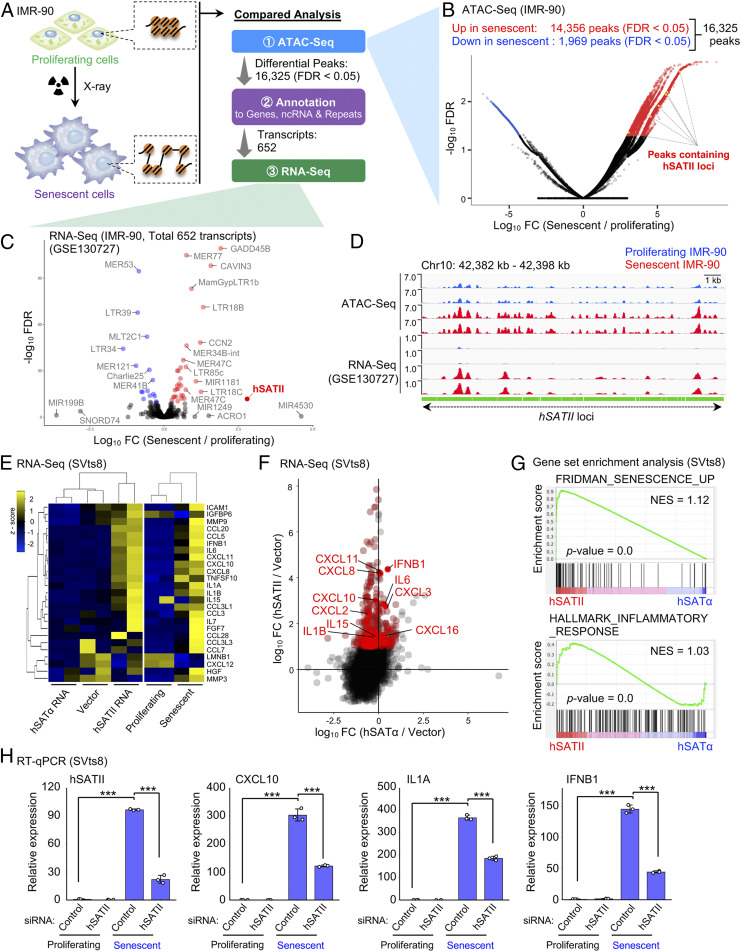
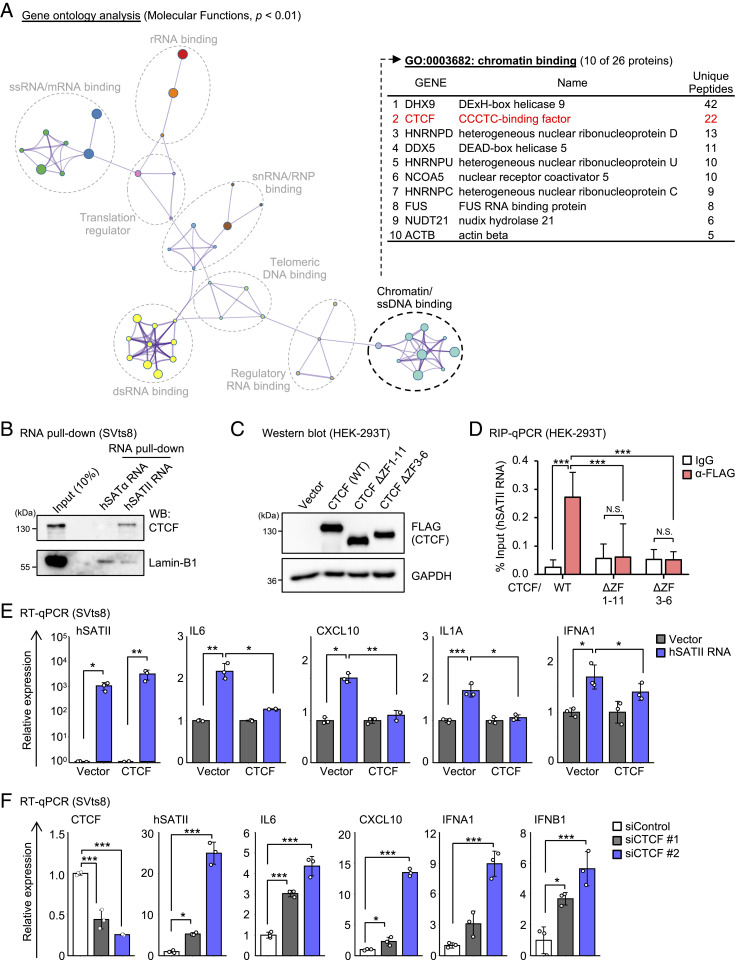
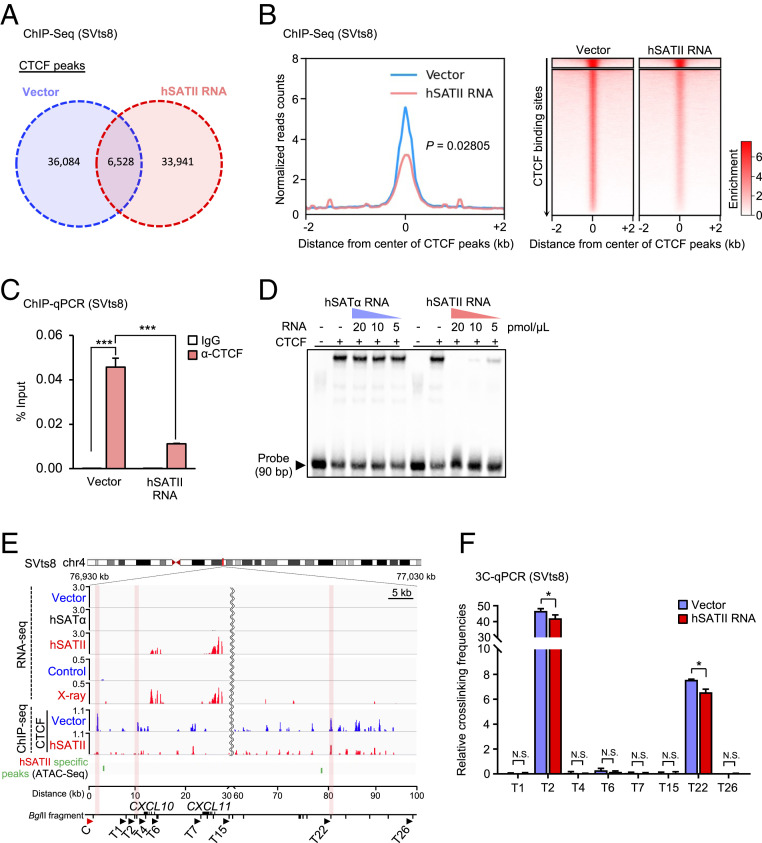
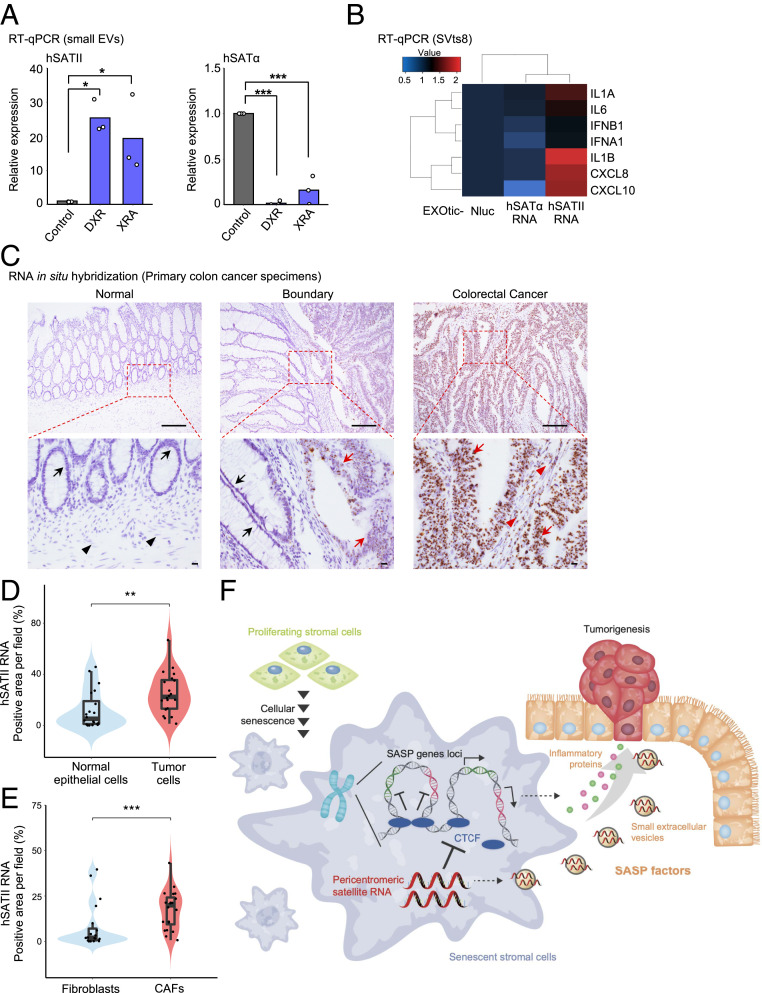
Significance: During the aging process, senescent cells secrete inflammatory factors, causing various age-related pathologies. Thus, controlling the senescence-associated secretory phenotype (SASP) can tremendously benefit human health. Although SASP seems to be induced by the alteration of chromosomal organization, its underlying mechanism remains unclear. Here, it has been revealed that noncoding RNA (ncRNA) transcribed from pericentromeric repetitive elements impairs the DNA binding of CCCTC-binding factor, resulting in the alteration of chromosomal accessibility and the activation of SASP-like inflammatory genes. Notably, the ncRNA was transferred into surrounding cells via small extracellular vesicles, acting as a tumorigenic SASP factor. Our study highlights a novel mechanism regulating chromatin interaction and inflammatory gene expression in senescence and cancer.
Overview
The claims and statistics of this paper haven’t been checked yet.
Free: it reads the open-access text and checks the first 5 claims that cite a source we can check. Create a free account to check every claim.
Integrity signals
Registry
Cites
Statistics
Figures
Verification
Claims the paper makes
The claims and statistics of this paper haven’t been checked yet.
Free: it reads the open-access text and checks the first 5 claims that cite a source we can check. Create a free account to check every claim.
Claims other papers make about this one
Each is checked against this paper’s own text: does it say what the citing paper says it does?
The source backs part of the claim, not all of it — or backs it for a different population, condition or comparison.
In the citing paper
“Since previous studies have shown that elevated SASP in CAFs contributes to the development of cancers (11, 21, 41, 42), chromatin conformational changes at hSATII might promote the malignant transformation or cancer progression (Fig. 4E).”
From Chromatin conformational changes at human satellite II contribute to the senescence phenotype in the tumor microenvironment (2023) · cites this paper as [11]
Experimental — accuracy not yet measuredThe source backs part of the claim, not all of it — or backs it for a different population, condition or comparison.
In the citing paper
“We previously showed that the hSATII RNA transcribed from the pericentromeric region itself promotes the development of the cellular senescence phenotype (11).”
From Chromatin conformational changes at human satellite II contribute to the senescence phenotype in the tumor microenvironment (2023) · cites this paper as [11]
Experimental — accuracy not yet measuredThe cited source says what the claim attributes to it.
In the citing paper
“Recent studies revealed that besides cancer cells (7), other cells in the tumor microenvironment (TME), such as fibroblasts (8–11) and endothelial cells (12–14), undergo cellular senescence or display senescence-like phenotypic alterations that promote cancer progression.”
From Chromatin conformational changes at human satellite II contribute to the senescence phenotype in the tumor microenvironment (2023) · cites this paper as [11]
The cited source says what the claim attributes to it.
In the citing paper
“which can result in tumorigenic SASP-like inflammatory gene expression by altering chromosome interactions through the direct disruption of the binding of CCCTC-binding factor (CTCF) to DNA (11, 21).”
From Chromatin conformational changes at human satellite II contribute to the senescence phenotype in the tumor microenvironment (2023) · cites this paper as [11]
The cited source says what the claim attributes to it.
In the citing paper
“Increased chromatin accessibility of the pericentromeric hSATII loci in senescent fibroblasts as determined by formaldehyde-assisted isolation of regulatory element sequencing (23) and assay for transposase-accessible chromatin with sequencing (ATAC-seq) validated this distention (11, 21).”
From Chromatin conformational changes at human satellite II contribute to the senescence phenotype in the tumor microenvironment (2023) · cites this paper as [11]
5 more claims about this paper
Create a free account to see every claim other papers make about this one.
Self-check
Percentages, sums and reported differences re-computed from the paper’s own numbers.
The self-check needs the paper’s full text.
Citations
Cites
The biology , function , and biomedical applications of exosomes
Kalluri, R., & LeBleu, V. S. (2020) · Science · doi:10.1126/science.aau6977 · Cited by 10,770 · cited 1×
“We and others recently reported that small EVs secreted from cancer cells and/or senescent stromal cells dynamically contribute to tumor incidence and progression in a non – cell-autonomous manner in the tumor microenvironment (38 – 41).”
A 3D Map of the Human Genome at Kilobase Resolution Reveals Principles of Chromatin Looping
Rao, S. S. P., Huntley, M. H., Durand, N. C., Stamenova, E. K., Bochkov, I. D., Robinson, J. T., Sanborn, A. L., Machol, I., Omer, A. D., Lander, E. S., et al. (2014) · Cell · doi:10.1016/j.cell.2014.11.021 · Cited by 9,212 · cited 1×
“F ) (34).”
Reassessment of exosome composition
Jeppesen, D. K., Fenix, A. M., Franklin, J. L., Higginbotham, J. N., Zhang, Q., Zimmerman, L. J., Liebler, D. C., Ping, J., Liu, Q., Evans, R., et al. (2019) · Cell · doi:10.1016/j.cell.2019.02.029 · Cited by 2,975 · cited 1×
“From an analysis of recently published RNA-seq data (42), we discovered that hSATII RNA could be detected in exosomes, a type of EV, secreted from cells of different human colon cancer cell lines (SI Appendix, Fig.”
Cellular senescence: from physiology to pathology
Muñoz-Espín, D., & Serrano, M. (2014) · Nature Reviews Molecular Cell Biology · doi:10.1038/nrm3823 · Cited by 2,818
Cohesin Loss Eliminates All Loop Domains
Rao, S. S. P., Huang, S.-C., Glenn St Hilaire, B., Engreitz, J. M., Perez, E. M., Kieffer-Kwon, K.-R., Sanborn, A. L., Johnstone, S. E., Bascom, G. D., Bochkov, I. D., et al. (2017) · Cell · doi:10.1016/j.cell.2017.09.026 · Cited by 1,883 · cited 14×
“We conclude that pericentromeric satellite RNA plays a prominent role in tumorigenesis by cell-autonomous and non – cell-autonomous pathways in vivo: 1) DNA damage caused by various oncogenic stresses induces cellular senescence of normal epithelial cells, thereby acting as a tumor-suppressor mechanism.”
InfluentialSenescence in Health and Disease
He, S., & Sharpless, N. E. (2017) · Cell · doi:10.1016/j.cell.2017.05.015 · Cited by 1,766
Chromosomal instability drives metastasis through a cytosolic DNA response
Bakhoum, S. F., Ngo, B., Laughney, A. M., Cavallo, J.-A., Murphy, C. J., Ly, P., Shah, P., Sriram, R. K., Watkins, T. B. K., Taunk, N. K., et al. (2018) · Nature · doi:10.1038/nature25432 · Cited by 1,593 · cited 13×
“Together, these findings show that pericentromeric hSATII RNA in small EVs secreted from senescent cells promote SASP-like inflammatory gene expression and CIN in neighboring cells in the tumor microenvironment.”
InfluentialCytoplasmic chromatin triggers inflammation in senescence and cancer
Dou, Z., Ghosh, K., Vizioli, M. G., Zhu, J., Sen, P., Wangensteen, K. J., Simithy, J., Lan, Y., Lin, Y., Zhou, Z., et al. (2017) · Nature · doi:10.1038/nature24050 · Cited by 1,335
L1 drives IFN in senescent cells and promotes age-associated inflammation
De Cecco, M., Ito, T., Petrashen, A. P., Elias, A. E., Skvir, N. J., Criscione, S. W., Caligiana, A., Brocculi, G., Adney, E. M., Boeke, J. D., et al. (2019) · Nature · doi:10.1038/s41586-018-0784-9 · Cited by 1,255 · cited 1×
“Recent studies have reported that abnormal nuclear morphologies, observed as micronuclei or nuclear buds, induce SASP gene expression via the activation of the DNA-sensing pathway during cellular senescence (8 – 12).”
Innate immune sensing of cytosolic chromatin fragments through cGAS promotes senescence
Glück, S., Guey, B., Gulen, M. F., Wolter, K., Kang, T.-W., Schmacke, N. A., Bridgeman, A., Rehwinkel, J., Zender, L., & Ablasser, A. (2017) · Nature Cell Biology · doi:10.1038/ncb3586 · Cited by 1,196
Cited by
Cai, Y., Song, W., Li, J., Jing, Y., Liang, C., Zhang, L., Zhang, X., Zhang, W., Liu, B., An, Y., et al. (2022) · Science China Life Sciences · doi:10.1007/s11427-022-2161-3 · Cited by 408
Cellular rejuvenation: molecular mechanisms and potential therapeutic interventions for diseases
Ji, S., Xiong, M., Chen, H., Liu, Y., Zhou, L., Hong, Y., Wang, M., Wang, C., Fu, X., & Sun, X. (2023) · Signal Transduction and Targeted Therapy · doi:10.1038/s41392-023-01343-5 · Cited by 159
“The pericentromeric ncRNAs can be transported into neighboring cells via extracellular vesicles (EVs), and impaired the DNA binding of the CCCTC-binding factor to modify chromosomal accessibility and trigger an SASP-like inflammatory response.(38)”
BackgroundStress, epigenetics, and aging: Unraveling the intricate crosstalk
Wu, Z., Qu, J., Zhang, W., & Liu, G.-H. (2024) · Molecular Cell · doi:10.1016/j.molcel.2023.10.006 · Cited by 134
CTCF shapes chromatin structure and gene expression in health and disease
Dehingia, B., Milewska, M., Janowski, M., & Pękowska, A. (2022) · EMBO Reports · doi:10.15252/embr.202255146 · Cited by 149
“Global transcriptional inhibition blocks CTCF binding primarily at promoters, which suggests a positive role of RNA in CTCF binding at these locations (Hansen et al , 2019; Salda ~ na-Meyer et al , 2019; Miyata et al , 2021).”
Epigenetic Regulation of Inflammatory Signaling and Inflammation-Induced Cancer
Tan, S. Y. X., Zhang, J., & Tee, W. (2022) · Frontiers in Cell and Developmental Biology · doi:10.3389/fcell.2022.931493 · Cited by 91
“In a similar vein, human lung fibroblasts exposed to X-rayinduced senescence elicited a dramatic increase in ncRNA expression from pericentromeric repetitive loci known as human satellite II (hSATII), which are usually repressed in healthy cells (Miyata et al., 2021).”
BackgroundInfluentialEmerging epigenetic insights into aging mechanisms and interventions
Wu, Z., Zhang, W., Qu, J. T., & Liu, G. (2024) · Trends in Pharmacological Sciences · doi:10.1016/j.tips.2023.12.002 · Cited by 81
3D chromatin architecture and transcription regulation in cancer
Deng, S., Feng, Y., & Pauklin, S. (2022) · Journal of Hematology & Oncology · doi:10.1186/s13045-022-01271-x · Cited by 82
“[151] found that the pericentromeric ncRNA modulates CTCF binding and inflammatory gene expression in senescence.”
BackgroundCellular senescence: mechanisms and relevance to cancer and aging
Yamauchi, S., & Takahashi, A. (2024) · The Journal of Biochemistry · doi:10.1093/jb/mvae079 · Cited by 69
Self-citationIgarashi, N., Miyata, K., Loo, T. M., Chiba, M., Hanyu, A., Nishio, M., Kawasaki, H., Zheng, H., Toyokuni, S., Kon, S., et al. (2022) · Nature Communications · doi:10.1038/s41467-022-31642-4 · Cited by 38
Self-citationSatellite DNAs in Health and Disease
Ugarković, Đ., Sermek, A., Ljubić, S., & Feliciello, I. (2022) · Genes · doi:10.3390/genes13071154 · Cited by 40
“This represents a novel mechanism of CTCF regulation by satellite II RNA during cellular senescence, which may contribute to the risk of tumorigenesis [111].”
BackgroundSatellite RNAs: emerging players in subnuclear architecture and gene regulation
Ninomiya, K., Yamazaki, T., & Hirose, T. (2023) · The EMBO Journal · doi:10.15252/embj.2023114331 · Cited by 37
“Through the HSat2 – CTCF interaction, the CAST body sequesters CTCF and regulates chromatin (Miyata et al , 2021).”
InfluentialTranscriptional changes of the aging lung
Jia, M., Garcia, P. A. A., Ovando-Ricárdez, J. A., Tabib, T., Bittar, H. E. T., Lafyatis, R., Mora, A. L., Benos, P. V., & Rojas, M. M. (2023) · Aging Cell · doi:10.1111/acel.13969 · Cited by 38
“CTCF has been associated with mediating replicative senescence through its interactions with DNA polymerase (Hou et al., 2021) and the induction of an inflammatory signature in senescence and cancer (Miyata et al., 2021).”
BackgroundCTCF and Its Partners: Shaper of 3D Genome during Development
Sun, X., Zhang, J., & Cao, C. (2022) · Genes · doi:10.3390/genes13081383 · Cited by 39
“reported that ncRNAs can change the genomic distribution of CTCF, interfering with the expression of inflammatory genes in aging and cancer [96].”
BackgroundLimouse, C., Smith, O. K., Jukam, D., Fryer, K. A., Greenleaf, W. J., & Straight, A. F. (2023) · Nature Communications · doi:10.1038/s41467-023-41848-9 · Cited by 32
Gu, J., Chen, J., Yin, Q., Dong, M., Zhang, Y., Chen, M., Chen, X., Min, J., He, X., Tan, Y., et al. (2023) · Arteriosclerosis Thrombosis and Vascular Biology · doi:10.1161/atvbaha.122.319250 · Cited by 29
“17,18 As facilitators of functional genomic interactions, carRNAs exert multiple gene regulation mechanisms, such as epigenetic regulation, transcriptional regulation, and posttranscriptional regulation.”
Qian, J., Zhou, X., Tanaka, K., & Takahashi, A. (2023) · DNA repair · doi:10.1016/j.dnarep.2023.103572 · Cited by 27
Self-citationTelomere Maintenance and the cGAS-STING Pathway in Cancer
Ebata, H., Loo, T. M., & Takahashi, A. (2022) · Cells · doi:10.3390/cells11121958 · Cited by 29
Self-citationSenescent AECⅡ and the implication for idiopathic pulmonary fibrosis treatment
Zhang, T., Zhang, J., Lv, C., Li, H., & Song, X. (2022) · Frontiers in Pharmacology · doi:10.3389/fphar.2022.1059434 · Cited by 29
“Pericentromeric hSATII RNA can promote SASP-Like inflammatory gene expression in senescent cells, thereby up-regulating the expression of SASPlike inflammatory genes (Miyata et al., 2021).”
BackgroundSugawara, S., Okada, R., Loo, T. M., Tanaka, H., Miyata, K., Chiba, M., Kawasaki, H., Katoh, K., Kaji, S., Maezawa, Y., et al. (2022) · Communications Biology · doi:10.1038/s42003-022-04369-7 · Cited by 23
Self-citationIdentification of Novel Senescent Markers in Small Extracellular Vesicles
Misawa, T., Hitomi, K., Miyata, K., Tanaka, Y., Fujii, R., Chiba, M., Loo, T. M., Hanyu, A., Kawasaki, H., Kato, H., et al. (2023) · International Journal of Molecular Sciences · doi:10.3390/ijms24032421 · Cited by 23
“sEVs released from senescent cells also participate in various biological functions, such as cancer cell proliferation [6] and malignant transformation [35], the induction of chromosome instability [9], and the propagation of cellular senescence [7,14].”
BackgroundSelf-citationChiba, M., Miyata, K., Okawa, H., Tanaka, Y., Ueda, K., Seimiya, H., & Takahashi, A. (2023) · International Journal of Molecular Sciences · doi:10.3390/ijms242216399 · Cited by 17
Self-citationMiyata, K., Zhou, X., Nishio, M., Hanyu, A., Chiba, M., Kawasaki, H., Osako, T., Takeuchi, K., Ohno, S., Ueno, T., et al. (2023) · Proceedings of the National Academy of Sciences · doi:10.1073/pnas.2305046120 · Cited by 14
“…for transposase-accessible chromatin with sequencing (ATAC-seq) validated this distention (11, 21). hSATII transcription is elevated in senescent (11, 23, 25, 26) and tumor cells (27–32), which can result in tumorigenic SASP-like inflammatory gene expression by altering chromosome interactions…”
InfluentialSelf-citationRNA-binding proteins mediate the maturation of chromatin topology during differentiation
Dehingia, B., Milewska, M., Janowski, M., Rafiee, M., Abbas, M., Piotrowska, A., Senge, J. F., Blaut, P., Walsh, D., Severino, J., et al. (2025) · Nature Cell Biology · doi:10.1038/s41556-025-01735-5 · Cited by 20
Iwata, T., Kishikawa, T., Seimiya, T., Notoya, G., Suzuki, T., Shibata, C., Miyakawa, Y., Odawara, N., Funato, K., Tanaka, E., et al. (2024) · Journal of Biological Chemistry · doi:10.1016/j.jbc.2024.105742 · Cited by 11
Increased chromatin accessibility underpins senescence
Lopes‐Paciencia, S., & Ferbeyre, G. (2025) · FEBS Journal · doi:10.1111/febs.70136 · Cited by 18
Breaking the aging epigenetic barrier
Sikder, S., Arunkumar, G., Melters, D. P., & Dalal, Y. (2022) · Frontiers in Cell and Developmental Biology · doi:10.3389/fcell.2022.943519 · Cited by 12
“Furthermore, in aged cells CTCF DNA binding capacity is impaired upon aberrant transcription of pericentromeric DNA resulting in the expression of senescence associated inflammatory genes examples (Miyata et al., 2021).”
BackgroundTumor exosomes impact functional hallmarks of cancer
Laein, M. H., Thinakaran, Y., Katoueezadeh, M., Iyappan, R., Baker, J., Kalailingam, P., Ngan, S. C., McCarthy, N. E., Klentrou, P., Tsiani, E., et al. (2026) · Cancer and Metastasis Reviews · doi:10.1007/s10555-026-10333-2 · Cited by 13
A senescence restriction point acting on chromatin integrates oncogenic signals
Lopes‐Paciencia, S., Bourdeau, V., Rowell, M., Amirimehr, D., Guillon, J., Kalegari, P., Barua, A., Trinh, V. Q., Azzi, F., Turcotte, S., et al. (2024) · Cell Reports · doi:10.1016/j.celrep.2024.114044 · Cited by 13
3D genome alterations and editing in pathology
Tiukacheva, E. A., Ulianov, S. V., Karpukhina, A. A., Razin, S. V., & Vassetzky, Y. S. (2023) · Molecular Therapy · doi:10.1016/j.ymthe.2023.02.005 · Cited by 14
Sen, D., Maniyadath, B., Chowdhury, S., Kaur, A., Khatri, S., Chakraborty, A., Mehendale, N., Nadagouda, S., Sandra, U. S., Kamat, S. S., et al. (2023) · iScience · doi:10.1016/j.isci.2023.107128 · Cited by 10
Recent advances in extracellular vesicles in gastrointestinal cancer and lymphoma
Otsuka, M., & Kotani, A. (2023) · Cancer Science · doi:10.1111/cas.15771 · Cited by 9
Ramirez, P., Sun, W., Dehkordi, S. K., Zare, H., Pascarella, G., Carninci, P., Fongang, B., Bieniek, K. F., & Frost, B. E. (2025) · Alzheimer s & Dementia · doi:10.1002/alz.70852 · Cited by 10
Wang, X., Guo, S., Zhou, H., Sun, Y., Gan, J., Zhang, Y., Zheng, W., Zhang, C., Wang, P., Zhi, H., et al. (2023) · Genes and Immunity · doi:10.1038/s41435-023-00197-9 · Cited by 10
“GLRX was found to play important roles in redox and oxidative stress, which might contribute to senescence [39], whereas CTCF has been widely proved to be related with the aging process and inflammation [40, 41].”
BackgroundGonzález‐Moro, I., García‐Etxebarria, K., Mendoza, L. M., Fernández‐Jiménez, N., Mentxaka, J., Olazagoitia‐Garmendia, A., Arroyo, M. N., Sawatani, T., Moreno‐Castro, C., Vinci, C., et al. (2023) · Advanced Science · doi:10.1002/advs.202300063 · Cited by 10
Network of extracellular vesicles surrounding senescent cells
Okawa, H., Tanaka, Y., & Takahashi, A. (2024) · Archives of Biochemistry and Biophysics · doi:10.1016/j.abb.2024.109953 · Cited by 8
Self-citationInsights into the therapeutic strategies for aging and aging-associated diseases
Dong, R., Wu, Q., Kan, J., Fu, C., Sorrentino, V., Chow, A., Lei, Y., Wu, D., Xu, Z., Du, J., et al. (2026) · Signal Transduction and Targeted Therapy · doi:10.1038/s41392-026-02662-z · Cited by 17
Huber, J., Tanasie, N.-L., Zernia, S., & Stigler, J. (2024) · Nucleic Acids Research · doi:10.1093/nar/gkae391 · Cited by 8
“However, a more recent study shows a ncRNA to interact with ZF3–6 and impede CTCF binding to its genomic locus ( 78 ).”
Kang, L., Wang, X., Wang, J., Guo, J., Zhang, W., & Lei, R. (2023) · Biochimica et Biophysica Acta (BBA) - General Subjects · doi:10.1016/j.bbagen.2023.130500 · Cited by 7
3C methods in cancer research: recent advances and future prospects
Yoon, I., Kim, U., Jung, K. O., Song, Y., Park, T., & Lee, D.-S. (2024) · Experimental & Molecular Medicine · doi:10.1038/s12276-024-01236-9 · Cited by 7
“Furthermore, the involvement of CTCF in cell aging and senescence has been highlighted, suggesting its potential role in restoring the function of senescent cells and its relevance to tumorigenesis 86,87 .”
BackgroundUnoki, M. (2024) · Frontiers in Immunology · doi:10.3389/fimmu.2024.1405022 · Cited by 10
Smurova, K., Damizia, M., Irene, C., Stancari, S., Berto, G., Perticari, G., Iacovella, M. G., D’Ambrosio, I., Giubettini, M., Philippe, R., et al. (2023) · Nature Communications · doi:10.1038/s41467-023-38920-9 · Cited by 8
LncRNA MEG3/CTCF-CXCR4 axis functions in the regulation of breast cancer cell migration
Elhassan, G., Bu, X., Liu, J., Hou, S., Yan, J., & Lei, H. (2025) · Non-coding RNA Research · doi:10.1016/j.ncrna.2025.05.014 · Cited by 8
Tong, X., Gao, Y., & Su, Z. (2024) · PeerJ · doi:10.7717/peerj.18240 · Cited by 7
“It also influences cell senescence by blocking the expression of pericentromeric non-coding (ncRNA) transcribed from pericentromeric repetitive elements in young cells ( Miyata et al., 2021 ).”
BackgroundPericentromeric repetitive ncRNA regulates chromatin interaction and inflammatory gene expression
Miyata, K., & Takahashi, A. (2022) · Nucleus · doi:10.1080/19491034.2022.2034269 · Cited by 5
“Here, it was disclosed that the functional impairment of CTCF by pericentromeric repetitive ncRNA results in an alteration of chromatin interaction, followed by the upregulation of SASP-like inflammatory genes accelerating malignant transformation [14].”
BackgroundSelf-citationEn, A., Takemoto, K., Yamakami, Y., Nakabayashi, K., & Fujii, M. (2024) · FEBS Journal · doi:10.1111/febs.17113 · Cited by 5
“…erosion in cells from the patients of progeria syndromes [43]; increased expression of Alu regulates senescence phenotypes through DNA damage response in senescent stem cells [44]; and increased expression of satellite II repeats regulates SASP through interaction with CTCF in senescent cells [45].”
BackgroundMechanisms and interventions of epigenetic aging
Chu, Q., Li, Y., Wu, Z., Qu, J. T., & Liu, G. (2026) · Cell chemical biology · doi:10.1016/j.chembiol.2026.05.007 · Cited by 6
ERG phase separation attenuates cellular senescence
Pu, L., Zuo, Z., Zheng, H., Ou, R., Gao, R., Deng, Z., Wu, X., Xiao, C. L., Ge, M., Zhou, L., et al. (2026) · iScience · doi:10.1016/j.isci.2026.114678 · Cited by 3
“CTCF, a zinc finger TF critical for genome organization and transcriptional insulation, is known to decline during replicative senescence and inflammation 47–49 ; thus, its enrichment in centenarians suggests a role in maintaining chromatin stability during healthy aging.”
Self-citationPredicting the prognosis of hepatic arterial infusion chemotherapy in hepatocellular carcinoma
Wang, Q., Li, Z.-W., Zhou, H.-F., Zhu, K.-Z., Wang, Y., Wang, Y., & Zhang, Y. (2024) · World Journal of Gastrointestinal Oncology · doi:10.4251/wjgo.v16.i6.2380 · Cited by 3
“Inflammatory factors, such as inflammatory cell levels, active oncogenes, reactive oxygen species, and necrotic substances present in cancerous tissues can promote cancer initiation and progression and affect patient survival[23-25].”
Characteristics of circulating small noncoding RNAs in plasma and serum during human aging
Xiao, P., Shi, Z., Liu, C., & Hagen, D. E. (2023) · Aging Medicine · doi:10.1002/agm2.12241 · Cited by 4
Zhu, B., Yang, J., Fan, R., Song, H., Zhong, L., Zeng, T., Long, R., Wan, X., Li, Q., Liu, L., et al. (2025) · Cell Reports · doi:10.1016/j.celrep.2025.115857 · Cited by 5
CTCF maintains centromere function and mitotic fidelity
Walsh, E., Laskarzewski, T., Maresca, T. J., & Stephens, A. D. (2026) · Journal of Cell Science · doi:10.1242/jcs.264181 · Cited by 3
“CTCF is known to be enriched in the centromere (Rubio et al., 2008; Xiao et al., 2015; Del Rosario et al., 2019; Miyata et al., 2021).”
Gynostemma pentaphyllum-derived extracellular vesicles alleviate skin aging by destabilizing STING
Wang, D., Duan, S., Fan, Y., Chen, T., Hao, Y., Liang, Y., Ni, J., Wang, X., Shen, X., Cao, G., et al. (2026) · Bioactive Materials · doi:10.1016/j.bioactmat.2026.03.010 · Cited by 3
“Research indicates that non-coding RNAs (ncRNAs), particularly those transcribed from pericentromeric repetitive sequences, can modulate the DNA-binding capacity of CTCF, thereby triggering inflammatory gene transcription and facilitating the transition to a senescent phenotype [35].”
Pericentromeric satellite RNAs as flexible protein partners in the regulation of nuclear structure
Lopes, M., Louzada, S., Gama‐Carvalho, M., & Chaves, R. (2024) · Wiley Interdisciplinary Reviews - RNA · doi:10.1002/wrna.1868 · Cited by 3
“Additionally, pericentromeric satellite transcription can occur in very distinct biological conditions — some disease-related (Miyata et al., 2021; Ting et al., 2011), others essential for species' development (Dobrynin et al., 2020).”
Small RNAs and their protein partners in animal meiosis
Carro, M. D. L. M., Grimson, A., & Cohen, P. E. (2022) · Current topics in developmental biology/Current Topics in Developmental Biology · doi:10.1016/bs.ctdb.2022.06.001 · Cited by 2
“Intriguingly, many reports suggest that small RNA pathways could contribute to the accumulation of proteins associated with hetero-chromatin formation at the PCH (Kanellopoulou et al., 2005; Miyata et al., 2021; Pal-Bhadra et al., 2004; Park et al., 2018; Chapman, van Nues, Theron, & Bayne, 2020).”
BackgroundThe rise of RAS: how gradual oncogene activation shapes the OIS spectrum
Zhu, H., Chan, A. S. L., & Narita, M. (2025) · Genes & Development · doi:10.1101/gad.352761.125 · Cited by 4
“…to soluble factors, as extracellular vesicles from senescent cells can also contribute to the spatial spreading of the signals with the cargos, including proteins (e.g., IFITM3) and noncoding RNAs (ncRNAs; e.g., pericentromeric ncRNA) (Borghesan et al. 2019; Miyata et al. 2021; Oh et al. 2022).”
The function of brother of the regulator of imprinted sites in cancer development
Zhou, S., Li, L., Zhang, M., Qin, Y., & Li, B. (2022) · Cancer Gene Therapy · doi:10.1038/s41417-022-00556-0 · Cited by 1
“Moreover, loss of CTCF increases the risk of carcinogenesis during aging [13] and contributes to immune invasion [12, 14].”
BackgroundSuppressing the Aging Phenotype of Mesenchymal Stromal Cells: Are We Ready for Clinical Translation?
Roato, I., Visca, M., & Mussano, F. D. (2024) · Biomedicines · doi:10.3390/biomedicines12122811 · Cited by 1
Circ_0007534 as new emerging target in cancer: Biological functions and molecular interactions
Liu, B., Dong, C., Chen, Q., Fan, Z., Zhang, Y., Wu, Y., Cui, T., & Liu, F. (2022) · Frontiers in Oncology · doi:10.3389/fonc.2022.1031802 · Cited by 1
Y chromosome-coded HSATII repeats may contribute to higher incidence of cancer in menPreprint
Hegyi, H., & Lexa, M. (2024) · bioRxiv (Cold Spring Harbor Laboratory) · doi:10.1101/2024.08.16.608341 · Cited by 1
“HSATII repeats are not transcribed in normal human cells and their expression is associated with pathological phenomena, namely senescence and cancer (Miyata et al., 2021).”
BackgroundMethodInfluentialCTCF maintains pericentromere function and mitotic fidelityPreprint
Walsh, E., & Stephens, A. D. (2025) · bioRxiv (Cold Spring Harbor Laboratory) · doi:10.1101/2025.05.30.657091 · Cited by 1
The 6th international cell senescence association conference
Kawamoto, S., Matsumoto, T., Takasugi, M., & Hara, E. (2022) · Genes to Cells · doi:10.1111/gtc.12970
“Akiko Takahashi (Japanese Foundation for Cancer Research, Japan) showed the detrimental effects of aberrant centromeric regulation in senescent cells (Miyata et al., 2021).”
BackgroundSelf-citationlncRNA H19/Let7b/EZH2 axis regulates somatic cell senescence
Potnis, M., Do, J., Naggar, O. E., Noguchi, E., & Sell, C. (2022) · iDEA - Drexel University Institutional Repository · doi:10.17918/00001359
Alpha Satellite DNA in Targeted Drug Therapy for Prostate Cancer
Feliciello, I., & Ugarković, Đ. (2023) · International Journal of Molecular Sciences · doi:10.3390/ijms242115585
“…generally promote oncogenic processes using diverse mechanisms, which include cancer therapy resistance [31], the provocation of inflammation [32,33] and tumour cell proliferation [34] and the induction of mutations [35] as well as affecting epigenetic regulators [36] and replication fork…”
BackgroundEmerging Functions of the Repeat Genome in Nuclear Structure: A View from the Human Karyotype
Hall, L. L., Smith, K. P., & Lawrence, J. B. (2025) · Annual Review of Genomics and Human Genetics · doi:10.1146/annurev-genom-111522-014017 · Cited by 2
“…contexts, where we call them satellite transcript (SATT) bodies, and sequester different regulatory factors, including CTCF (CCCTC-binding factor) (122), EIF4A3 (eukaryotic translation initiation factor 4A3), and ADAR1 (adenosine deaminase RNA 1) (141), leading to further dysregulation of cell…”
Temitayo, I. A., Iyiola, E. B., Ali, A. S., Charles-Ukeagu, L., Amodu, T. O., Abdullahi, N. U., Okoye, U. L., Aworeni, E. O., & Emmanuel, E. B. (2026) · Research Square · doi:10.21203/rs.3.rs-9258998/v1
Triglia, E. T., Miller, T. E., Durand, N. C., Kim, K. L., Casaní-Galdón, S., D’Antonio, J., Javed, N., Hernandez, A. P., Raman, A., Cruz, A. J., et al. (2026) · Cell Genomics · doi:10.1016/j.xgen.2026.101304
Wei, Q., & Dong, Z. (2026) · Elsevier eBooks · doi:10.1016/b978-0-443-34069-7.00008-2
Pallatt, S., Nambidi, S., Banerjee, A., & Pathak, S. (2026) · Cancer Reports · doi:10.1002/cnr2.70682
“Three-dimensional chromatin architecture is also broadly altered during senescence to promote SASP diversity [74].”
Zhang, C., Xu, F., Wu, J., Zhu, L., Ning, J., & Wu, Q. (2026) · Life Sciences · doi:10.1016/j.lfs.2026.124689
Miyata, K., Yang, L., Yang, Y., Kumegawa, K., & Maruyama, R. (2026) · Science Advances · doi:10.1126/sciadv.aed7880 · Cited by 1
Self-citationDynamic Changes of Histone H1 Variants in Drug-Induced Senescence
Mittag, N., Birbio, A., Delipetridou, O., Homs-Aguadé, P., Bonet-Costa, C., & Jordan, A. (2026) · Genes · doi:10.3390/genes17101274
“…the deregulation of various genomic elements and reported an upregulation of transposable element (TE) expression (e.g., ERV1, L1 or satellites) [11,13–15] and an immune response by the expression of interferon-stimulated genes (ISG) like IFITM1 , ISG15 , IFIT , IFI27 , IFIT2 and more [13,14].”
Heat-Induced HSAT3 Transcription and Nuclear Stress Body Assembly in Human Myeloid Cells
Ponomartsev, N. V., & Enukashvily, N. I. (2026) · International Journal of Molecular Sciences · doi:10.3390/ijms27209146
“Elevated expression of HSAT2/HSAT3 transcripts has been associated with a pro-inflammatory phenotype and the upregulation of cytokine and chemokine genes [16,17].”
Epigenetics in development, disease, and therapy: from mechanisms to clinical interventions
Ren, Y., Yang, L., Fei, B., Guo, R., Huang, J., Xu, Z., Wang, R., Zhang, P., Cao, D., Chen, P., et al. (2026) · Science China Life Sciences · doi:10.1007/s11427-025-3356-1
Self-citation
Metadata
- Authors
- Miyata, K., Imai, Y., Hori, S., Nishio, M., Loo, T. M., Okada, R., Yang, L., Nakadai, T., Maruyama, R., Fujii, R., Ueda, K., Jiang, L., Zheng, H., Toyokuni, S., Sakata, T., Shirahige, K., Kojima, R., Nakayama, M., Oshima, M., Nagayama, S., Seimiya, H., Hirota, T., Saya, H., Hara, E., & Takahashi, A.
- Affiliations
- Japanese Foundation For Cancer Research (JP)
- Nagoya University (JP)
- Institute for Quantitative Biosciences, The University of Tokyo (JP)
- Japan Science and Technology Agency (JP)
- Kanazawa University (JP)
- The Cancer Institute Hospital (JP)
- Keio University (JP)
- Research Institute for Microbial Diseases, The University of Osaka (JP)
- Japan Agency for Medical Research and Development (JP)
- Corresponding author
- Takahashi, Akiko
- ORCID
- Venue
- Proceedings of the National Academy of Sciences
- Publisher
- National Academy of Sciences
- Published
- 2021-08-23
- Volume
- 118
- Issue
- 35
- ISSN
- 0027-8424 (ISSN-L)
- 1091-6490
- PMC
- PMC8536346
- OpenAlex
- W3195865705
- Cited by
- 74
- References
- 53
- Citations by year
- 2026: 15 · 2025: 8 · 2024: 15 · 2023: 19 · 2022: 17
- FWCI
- 8.00
- Type
- journal article
- Language
- en
- Open access
- hybrid
- doi.org
- Licence
- Locations
- Proceedings of the National Academy of Sciences (publishedVersion, cc-by-nc-nd)
- Europe PMC (PubMed Central) (publishedVersion, other-oa)
- PubMed Central (publishedVersion, cc-by-nc-nd)
- PubMed (publishedVersion)
- Funders
- PRESTO, Japan Science and Technology Agency (JPMJPR17H7)
- PRIME, Japan Agency of Medical Research and Development (19gm6110023h0001)
- Japan Society for the Promotion of Science (19H03507, 18K15254, 19J00796, 20K16344)
- Princess Takamatsu Cancer Research Fund (12-24412)
- Mitsubishi Foundation (201910023)
- Takeda Science Foundation (1967333-1)
- Moonshot R&D, Japan Science and Technology Agency (JPMJPS2022)
- Topics
- Life Sciences › Biochemistry, Genetics and Molecular Biology › Cell Biology › Telomeres, Telomerase, and Senescence
- Life Sciences › Biochemistry, Genetics and Molecular Biology › Molecular Biology › Genomics and Chromatin Dynamics
- Life Sciences › Biochemistry, Genetics and Molecular Biology › Aging › Genetics, Aging, and Longevity in Model Organisms
- Keywords
- CTCF, cellular senescence, senescence-associated secretory phenotype, inflammatory gene expression, chromatin accessibility, small extracellular vesicles, carcinogenesis, aging, chromosomal instability
- MeSH terms
- Senescence-Associated Secretory Phenotype, Aging, Animals, Centromere, DNA, DNA-Binding Proteins, DNA, Neoplasm, Female, Gene Expression Regulation, Humans, Inflammation, Mice, Inbred BALB C, Neoplasms, Protein Binding, Cellular Senescence, RNA, Untranslated, Mice, HEK293 Cells
About these checks
Registry, retraction, Cites and statistics results are computed, not judged, with one exception: a printed reference that no index lists is read once by a model before it counts as a citation error. Claims are extracted by a model and kept only when their quote appears verbatim in the text; each cited source is then checked, with a model’s help, for whether it says what the claim relies on. Those verdicts can be wrong — read the claim’s quote and the cited source before relying on one.
Statistics and arithmetic are recomputed, not judged.
Confidence bands are shown only for fields calibrated on our annotated test set. None is calibrated yet, so no band is shown.
What counts as a claim ›How we measure confidence ›How we check this ›
Are you an author, or do you see a problem with this page? Request a review
Data sources
Bibliographic data: Semantic Scholar, OpenAlex, Crossref.
Contains information from the Semantic Scholar Academic Graph Datasets, made available under the ODC Attribution License (ODC-BY 1.0).
Semantic Scholar’s data is described in: Kinney, R., et al. (2023). The Semantic Scholar Open Data Platform. arXiv:2301.10140.
