

Pericentromeric noncoding RNA changes DNA binding of CTCF and inflammatory gene expression in senescence and cancer
Open accessThe DOI matches its Crossref record; 53 of the 53 references it cites were found in a registry or an index.
Abstract
Significance: During the aging process, senescent cells secrete inflammatory factors, causing various age-related pathologies. Thus, controlling the senescence-associated secretory phenotype (SASP) can tremendously benefit human health. Although SASP seems to be induced by the alteration of chromosomal organization, its underlying mechanism remains unclear. Here, it has been revealed that noncoding RNA (ncRNA) transcribed from pericentromeric repetitive elements impairs the DNA binding of CCCTC-binding factor, resulting in the alteration of chromosomal accessibility and the activation of SASP-like inflammatory genes. Notably, the ncRNA was transferred into surrounding cells via small extracellular vesicles, acting as a tumorigenic SASP factor. Our study highlights a novel mechanism regulating chromatin interaction and inflammatory gene expression in senescence and cancer.
Overview
The claims and statistics of this paper haven’t been checked yet.
Free: it reads the open-access text and checks the first 5 claims that cite a source we can check. Create a free account to check every claim.
Integrity signals
Registry
Cites
Statistics
Figures
Verification
Claims the paper makes
The claims and statistics of this paper haven’t been checked yet.
Free: it reads the open-access text and checks the first 5 claims that cite a source we can check. Create a free account to check every claim.
Claims other papers make about this one
Each is checked against this paper’s own text: does it say what the citing paper says it does?
The source backs part of the claim, not all of it — or backs it for a different population, condition or comparison.
In the citing paper
“Since previous studies have shown that elevated SASP in CAFs contributes to the development of cancers (11, 21, 41, 42), chromatin conformational changes at hSATII might promote the malignant transformation or cancer progression (Fig. 4E).”
From Chromatin conformational changes at human satellite II contribute to the senescence phenotype in the tumor microenvironment (2023) · cites this paper as [11]
Experimental — accuracy not yet measuredThe source backs part of the claim, not all of it — or backs it for a different population, condition or comparison.
In the citing paper
“We previously showed that the hSATII RNA transcribed from the pericentromeric region itself promotes the development of the cellular senescence phenotype (11).”
From Chromatin conformational changes at human satellite II contribute to the senescence phenotype in the tumor microenvironment (2023) · cites this paper as [11]
Experimental — accuracy not yet measuredThe cited source says what the claim attributes to it.
In the citing paper
“Recent studies revealed that besides cancer cells (7), other cells in the tumor microenvironment (TME), such as fibroblasts (8–11) and endothelial cells (12–14), undergo cellular senescence or display senescence-like phenotypic alterations that promote cancer progression.”
From Chromatin conformational changes at human satellite II contribute to the senescence phenotype in the tumor microenvironment (2023) · cites this paper as [11]
The cited source says what the claim attributes to it.
In the citing paper
“which can result in tumorigenic SASP-like inflammatory gene expression by altering chromosome interactions through the direct disruption of the binding of CCCTC-binding factor (CTCF) to DNA (11, 21).”
From Chromatin conformational changes at human satellite II contribute to the senescence phenotype in the tumor microenvironment (2023) · cites this paper as [11]
The cited source says what the claim attributes to it.
In the citing paper
“Increased chromatin accessibility of the pericentromeric hSATII loci in senescent fibroblasts as determined by formaldehyde-assisted isolation of regulatory element sequencing (23) and assay for transposase-accessible chromatin with sequencing (ATAC-seq) validated this distention (11, 21).”
From Chromatin conformational changes at human satellite II contribute to the senescence phenotype in the tumor microenvironment (2023) · cites this paper as [11]
5 more claims about this paper
Create a free account to see every claim other papers make about this one.
Self-check
Percentages, sums and reported differences re-computed from the paper’s own numbers.
The self-check needs the paper’s full text.
Citations
Cites
The biology , function , and biomedical applications of exosomes
Kalluri, R., & LeBleu, V. S. (2020) · Science · doi:10.1126/science.aau6977 · Cited by 10,770 · cited 1×
“We and others recently reported that small EVs secreted from cancer cells and/or senescent stromal cells dynamically contribute to tumor incidence and progression in a non – cell-autonomous manner in the tumor microenvironment (38 – 41).”
A 3D Map of the Human Genome at Kilobase Resolution Reveals Principles of Chromatin Looping
Rao, S. S. P., Huntley, M. H., Durand, N. C., Stamenova, E. K., Bochkov, I. D., Robinson, J. T., Sanborn, A. L., Machol, I., Omer, A. D., Lander, E. S., et al. (2014) · Cell · doi:10.1016/j.cell.2014.11.021 · Cited by 9,212 · cited 1×
“F ) (34).”
Reassessment of exosome composition
Jeppesen, D. K., Fenix, A. M., Franklin, J. L., Higginbotham, J. N., Zhang, Q., Zimmerman, L. J., Liebler, D. C., Ping, J., Liu, Q., Evans, R., et al. (2019) · Cell · doi:10.1016/j.cell.2019.02.029 · Cited by 2,975 · cited 1×
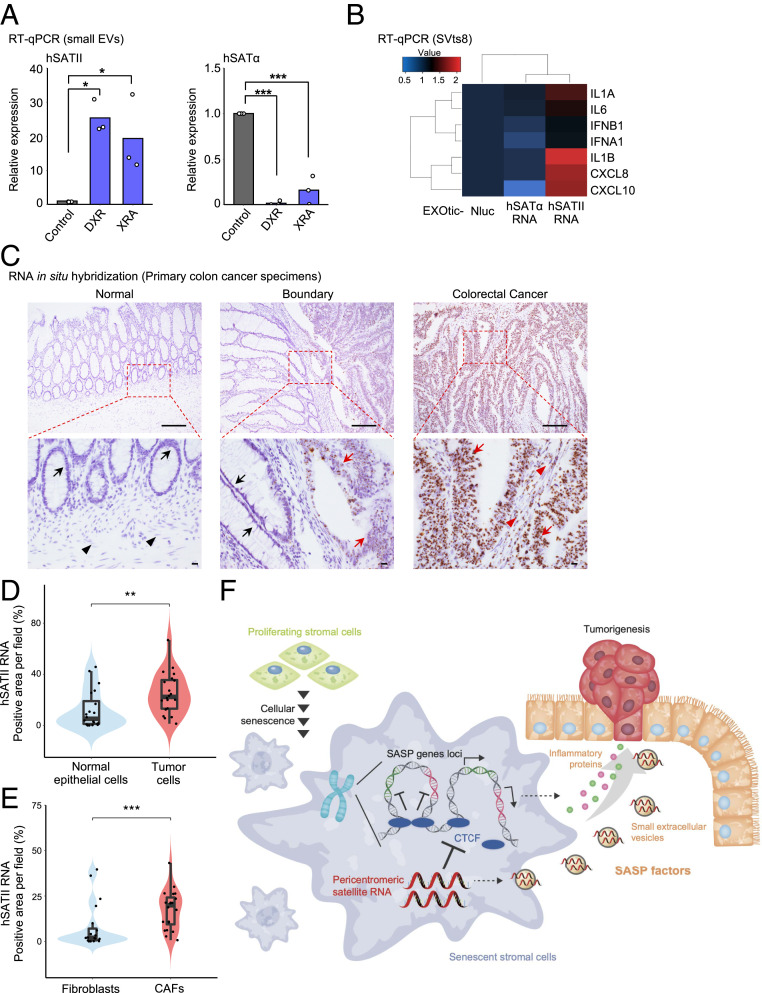
“From an analysis of recently published RNA-seq data (42), we discovered that hSATII RNA could be detected in exosomes, a type of EV, secreted from cells of different human colon cancer cell lines (SI Appendix, Fig.”
Cellular senescence: from physiology to pathology
Muñoz-Espín, D., & Serrano, M. (2014) · Nature Reviews Molecular Cell Biology · doi:10.1038/nrm3823 · Cited by 2,818
Cohesin Loss Eliminates All Loop Domains
Rao, S. S. P., Huang, S.-C., Glenn St Hilaire, B., Engreitz, J. M., Perez, E. M., Kieffer-Kwon, K.-R., Sanborn, A. L., Johnstone, S. E., Bascom, G. D., Bochkov, I. D., et al. (2017) · Cell · doi:10.1016/j.cell.2017.09.026 · Cited by 1,883 · cited 14×
“We conclude that pericentromeric satellite RNA plays a prominent role in tumorigenesis by cell-autonomous and non – cell-autonomous pathways in vivo: 1) DNA damage caused by various oncogenic stresses induces cellular senescence of normal epithelial cells, thereby acting as a tumor-suppressor mechanism.”
InfluentialSenescence in Health and Disease
He, S., & Sharpless, N. E. (2017) · Cell · doi:10.1016/j.cell.2017.05.015 · Cited by 1,766
Chromosomal instability drives metastasis through a cytosolic DNA response
Bakhoum, S. F., Ngo, B., Laughney, A. M., Cavallo, J.-A., Murphy, C. J., Ly, P., Shah, P., Sriram, R. K., Watkins, T. B. K., Taunk, N. K., et al. (2018) · Nature · doi:10.1038/nature25432 · Cited by 1,593 · cited 13×
“Together, these findings show that pericentromeric hSATII RNA in small EVs secreted from senescent cells promote SASP-like inflammatory gene expression and CIN in neighboring cells in the tumor microenvironment.”
InfluentialCytoplasmic chromatin triggers inflammation in senescence and cancer
Dou, Z., Ghosh, K., Vizioli, M. G., Zhu, J., Sen, P., Wangensteen, K. J., Simithy, J., Lan, Y., Lin, Y., Zhou, Z., et al. (2017) · Nature · doi:10.1038/nature24050 · Cited by 1,335
L1 drives IFN in senescent cells and promotes age-associated inflammation
De Cecco, M., Ito, T., Petrashen, A. P., Elias, A. E., Skvir, N. J., Criscione, S. W., Caligiana, A., Brocculi, G., Adney, E. M., Boeke, J. D., et al. (2019) · Nature · doi:10.1038/s41586-018-0784-9 · Cited by 1,255 · cited 1×
“Recent studies have reported that abnormal nuclear morphologies, observed as micronuclei or nuclear buds, induce SASP gene expression via the activation of the DNA-sensing pathway during cellular senescence (8 – 12).”
Innate immune sensing of cytosolic chromatin fragments through cGAS promotes senescence
Glück, S., Guey, B., Gulen, M. F., Wolter, K., Kang, T.-W., Schmacke, N. A., Bridgeman, A., Rehwinkel, J., Zender, L., & Ablasser, A. (2017) · Nature Cell Biology · doi:10.1038/ncb3586 · Cited by 1,196
Cohesin mediates transcriptional insulation by CCCTC-binding factor
Wendt, K. S., Yoshida, K., Itoh, T., Bando, M., Koch, B., Schirghuber, E., Tsutsumi, S., Nagae, G., Ishihara, K., Mishiro, T., et al. (2008) · Nature · doi:10.1038/nature06634 · Cited by 1,193 · cited 1×
“The primers used for qPCR are as follows: human imprinting control region (ICR): 5ʹ-CCCATCTTGC TGACCTCAC-3ʹ (Forward) and 5ʹ-AGACCTGGGA CGTTTCTGTG-3ʹ (Reverse) (13); hSATα: 5ʹ-AAGGTCAATG GCAGAAAAGA A-3ʹ (Forward) and 5ʹ-CAACGAAGGC CACAAGATGT C-3ʹ (Reverse); mouse ICR: 5ʹ-GTCACTCAGG CATAGCATTC-3ʹ (Forward) and 5ʹ-GTCTG…”
Self-citationcGAS is essential for cellular senescence
Yang, H., Wang, H., Ren, J., Chen, Q., & Chen, Z. J. (2017) · Proceedings of the National Academy of Sciences · doi:10.1073/pnas.1705499114 · Cited by 1,009
Cohesins Functionally Associate with CTCF on Mammalian Chromosome Arms
Parelho, V., Hadjur, S., Spivakov, M., Leleu, M., Sauer, S., Gregson, H. C., Jarmuz, A., Canzonetta, C., Webster, Z., Nesterova, T., et al. (2008) · Cell · doi:10.1016/j.cell.2008.01.011 · Cited by 900 · cited 1×
“…are coordinately maintained by the CCCTC-binding factor (CTCF), a zinc-finger (ZF) nucleic acid – binding protein, and the cohesin complex; together, these factors orchestrate higher-order chromatin conformation through the formation of intrachromosomal and interchromosomal loops (14 – 16).”
Wutz, G., Várnai, C., Nagasaka, K., Cisneros, D. A., Stocsits, R. R., Tang, W., Schoenfelder, S., Jessberger, G., Muhar, M., Hossain, M. J., et al. (2017) · The EMBO Journal · doi:10.15252/embj.201798004 · Cited by 864 · cited 3×
“…are coordinately maintained by the CCCTC-binding factor (CTCF), a zinc-finger (ZF) nucleic acid – binding protein, and the cohesin complex; together, these factors orchestrate higher-order chromatin conformation through the formation of intrachromosomal and interchromosomal loops (14 – 16).”
Unmasking senescence: context-dependent effects of SASP in cancer
Faget, D. V., Ren, Q., & Stewart, S. A. (2019) · Nature Reviews Cancer · doi:10.1038/s41568-019-0156-2 · Cited by 863
How the ageing microenvironment influences tumour progression
Fane, M., & Weeraratna, A. T. (2020) · Nature Reviews Cancer · doi:10.1038/s41568-019-0222-9 · Cited by 849
Exosomes maintain cellular homeostasis by excreting harmful DNA from cells
Takahashi, A., Okada, R., Nagao, K., Kawamata, Y., Hanyu, A., Yoshimoto, S., Takasugi, M., Watanabe, S., Kanemaki, M. T., Obuse, C., et al. (2017) · Nature Communications · doi:10.1038/ncomms15287 · Cited by 761 · cited 1×
“TIG-3 cells (11, 38, 52) and IMR-90 cells were obtained from the Japanese Cancer Research Resources Bank and American Type Culture Collection, respectively.”
Self-citationKojima, R., Bojar, D., Rizzi, G., Hamri, G. C.-E., El-Baba, M. D., Saxena, P., Ausländer, S., Tan, K. R., & Fussenegger, M. (2018) · Nature Communications · doi:10.1038/s41467-018-03733-8 · Cited by 748 · cited 1×
“To assess the involvement of hSATII RNA in these phenotypes, we used EXOsomal transfer into cells (EXOtic) synthetic biology (43) to establish a designer exosome that contains hSATII RNA and found that these designer exosomes have tumorigenic activity similar to those of small EVs derived from senescent cells (SI Appe…”
Self-citationStructural variation in the 3D genome
Spielmann, M., Lupiáñez, D. G., & Mundlos, S. (2018) · Nature Reviews Genetics · doi:10.1038/s41576-018-0007-0 · Cited by 726 · cited 3×
“Chromatin organization and global gene expression are coordinately regulated by CTCF during a variety of physiological and pathological events, such as embryonic development and carcinogenesis (27).”
Shah, P. P., Donahue, G., Otte, G. L., Capell, B. C., Nelson, D. M., Cao, K., Aggarwala, V., Cruickshanks, H. A., Rai, T. S., McBryan, T., et al. (2013) · Genes & Development · doi:10.1101/gad.223834.113 · Cited by 550
Aberrant Overexpression of Satellite Repeats in Pancreatic and Other Epithelial Cancers
Ting, D. T., Lipson, D., Paul, S., Brannigan, B. W., Akhavanfard, S., Coffman, E. J., Contino, G., Deshpande, V., Iafrate, A. J., Letovsky, S., et al. (2011) · Science · doi:10.1126/science.1200801 · Cited by 540 · cited 1×
“S1 B–F) (20), we considered that it is insufficient for the RNA to disturb CTCF function in physiological conditions but not in senescent and tumor cells that aberrantly express pericentromeric satellite RNA.”
Takahashi, A., Ohtani, N., Yamakoshi, K., Iida, S.-I., Tahara, H., Nakayama, K., Nakayama, K. I., Ide, T., Saya, H., & Hara, E. (2006) · Nature Cell Biology · doi:10.1038/ncb1491 · Cited by 528 · cited 2×
“To interpret the biological effects of hSATII RNA expression, we overexpressed hSATII RNA in SVts8 cells, a conditionally immortalized human fibroblast cell line suitable for transfection analysis (24).”
Self-citationCTCF physically links cohesin to chromatin
Rubio, E. D., Reiss, D. J., Welcsh, P. L., Disteche, C. M., Filippova, G. N., Baliga, N. S., Aebersold, R., Ranish, J. A., & Krumm, A. (2008) · Proceedings of the National Academy of Sciences · doi:10.1073/pnas.0801273105 · Cited by 511 · cited 1×
“Previous studies have revealed that CTCF binds to pericentromeric/ centromeric regions and recruits the centromeric protein CENP-E to these regions in mitotic chromosomes (46, 47).”
De Cecco, M., Criscione, S. W., Peckham, E. J., Hillenmeyer, S., Hamm, E. A., Manivannan, J., Peterson, A. L., Kreiling, J. A., Neretti, N., & Sedivy, J. M. (2013) · Aging Cell · doi:10.1111/acel.12047 · Cited by 459
From Ancient Pathways to Aging Cells—Connecting Metabolism and Cellular Senescence
Wiley, C. D., & Campisi, J. (2016) · Cell Metabolism · doi:10.1016/j.cmet.2016.05.010 · Cited by 440 · cited 1×
“In these senescent cells in benign tumors, pericentromeric satellite RNA is up-regulated and leads to SASP-like inflammatory induction (1, 2, 4, 50).”
Takasugi, M., Okada, R., Takahashi, A., Virya Chen, D., Watanabe, S., & Hara, E. (2017) · Nature Communications · doi:10.1038/ncomms15728 · Cited by 410 · cited 1×
“RPE-1/hTERT cells (39) and HEK-293T cells (52) were cultured in DME medium (Nacalai Tesque) supplemented with 10% FBS and penicillin/streptomycin (Sigma-Aldrich) in a 5% CO2 incubator at 37 °C.”
Self-citationTranscriptome signature of cellular senescence
Casella, G., Munk, R., Kim, K. M., Piao, Y., De, S., Abdelmohsen, K., & Gorospe, M. (2019) · Nucleic Acids Research · doi:10.1093/nar/gkz555 · Cited by 359 · cited 3×
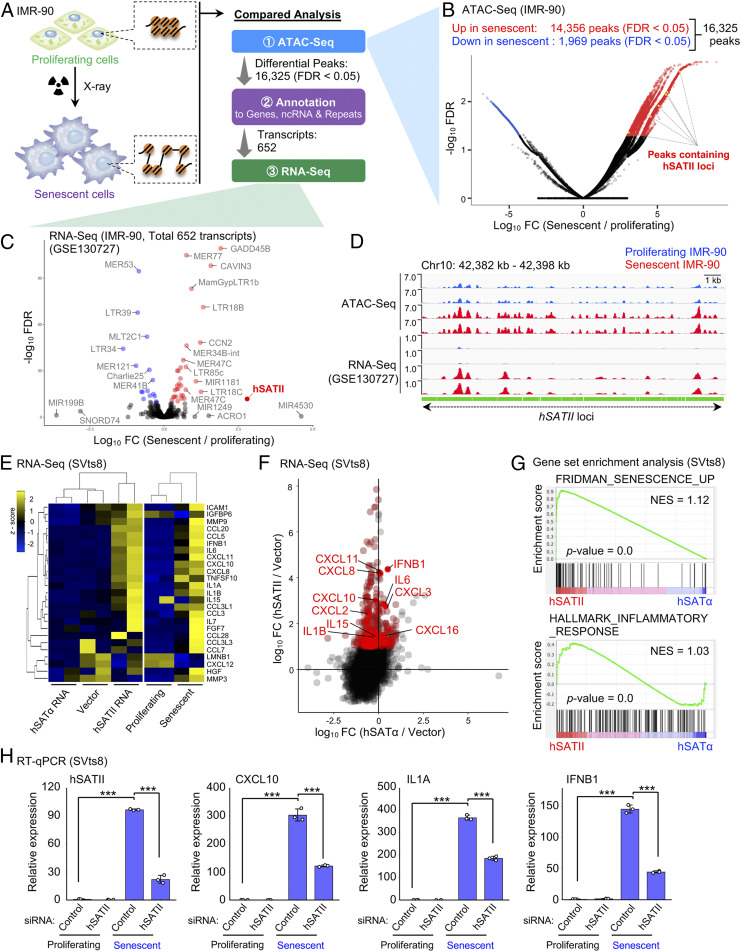
“When we integrated our ATAC-seq data with published RNA-seq data of proliferating and X-ray–induced senescent IMR-90 cells (GSE130727) (19), a comparative analysis of senescent and proliferating cells represented both higher chromatin accessibility and increased transcription at hSATII loci in senescent cells versus p…”
InfluentialSenescent cells harbour features of the cancer epigenome
Cruickshanks, H. A., McBryan, T., Nelson, D. M., VanderKraats, N. D., Shah, P. P., van Tuyn, J., Singh Rai, T., Brock, C., Donahue, G., Dunican, D. S., et al. (2013) · Nature Cell Biology · doi:10.1038/ncb2879 · Cited by 358
Takahashi, A., Loo, T. M., Okada, R., Kamachi, F., Watanabe, Y., Wakita, M., Watanabe, S., Kawamoto, S., Miyata, K., Barber, G. N., et al. (2018) · Nature Communications · doi:10.1038/s41467-018-03555-8 · Cited by 350 · cited 1×
“TIG-3 cells (11, 38, 52) and IMR-90 cells were obtained from the Japanese Cancer Research Resources Bank and American Type Culture Collection, respectively.”
Self-citationCoppé, J.-P., Patil, C. K., Rodier, F., Sun, Y., Muñoz, D. P., Goldstein, J., Nelson, P. S., Desprez, P.-Y., & Campisi, J. (2008) · PLoS Biology · doi:10.1371/journal.pbio.0060301 · Cited by 302 · cited 1×
“D ) (25).”
Injury-Induced Senescence Enables In Vivo Reprogramming in Skeletal Muscle
Chiche, A., Le Roux, I., von Joest, M., Sakai, H., Aguín, S. B., Cazin, C., Salam, R., Fiette, L., Alegria, O., Flamant, P., et al. (2017) · Cell Stem Cell · doi:10.1016/j.stem.2016.11.020 · Cited by 295
Distinct Classes of Chromatin Loops Revealed by Deletion of an RNA-Binding Region in CTCF
Hansen, A. S., Hsieh, T.-H. S., Cattoglio, C., Pustova, I., Saldaña-Meyer, R., Reinberg, D., Darzacq, X., & Tjian, R. (2019) · Molecular Cell · doi:10.1016/j.molcel.2019.07.039 · Cited by 279
RNA Interactions Are Essential for CTCF-Mediated Genome Organization
Saldaña-Meyer, R., Rodriguez-Hernaez, J., Escobar, T., Nishana, M., Jácome-López, K., Nora, E. P., Bruneau, B. G., Tsirigos, A., Furlan-Magaril, M., Skok, J., et al. (2019) · Molecular Cell · doi:10.1016/j.molcel.2019.08.015 · Cited by 278 · cited 2×
“Recently, some groups have reported that CTCF shows a high affinity for specific RNA and depends on binding with RNA to form chromatin loops and genome organization in mouse embryonic stem cells (30, 31).”
Structural Basis for the Versatile and Methylation-Dependent Binding of CTCF to DNA
Hashimoto, H., Wang, D., Horton, J. R., Zhang, X., Corces, V. G., & Cheng, X. (2017) · Molecular Cell · doi:10.1016/j.molcel.2017.05.004 · Cited by 268 · cited 1×
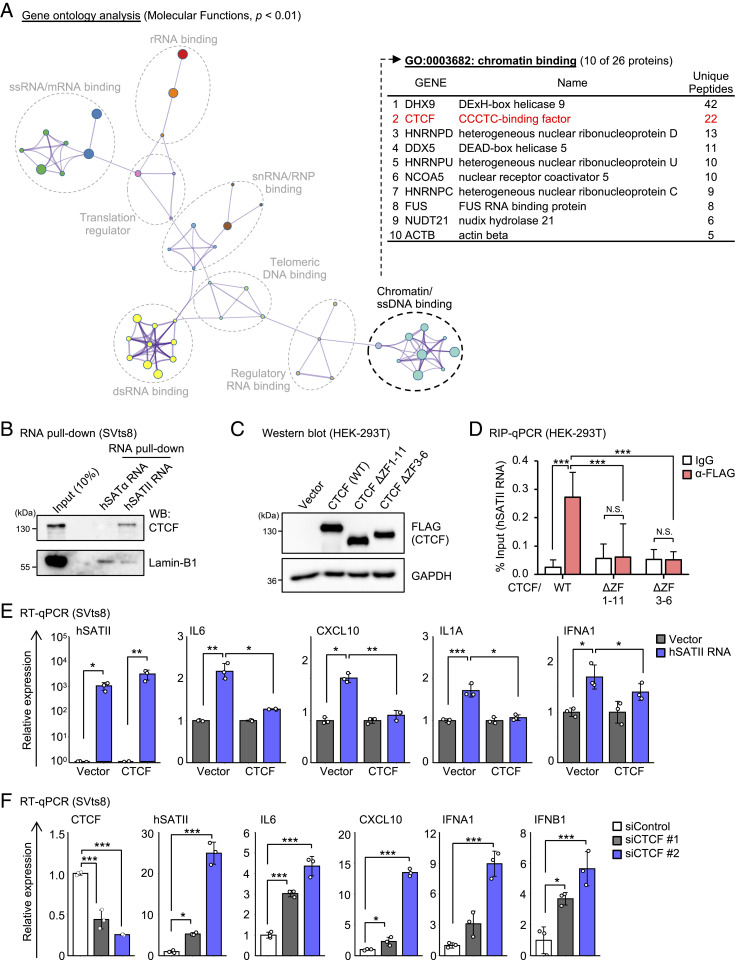
“Further analysis revealed that ZF3-ZF6 of CTCF-, known as DNA-binding domain (32), deficient mutant (CTCF Δ ZF3-6) could not bind to hSATII RNA (Fig.”
Abrogation of BRAFV600E-induced senescence by PI3K pathway activation contributes to melanomagenesis
Vredeveld, L. C. W., Possik, P. A., Smit, M. A., Meissl, K., Michaloglou, C., Horlings, H. M., Ajouaou, A., Kortman, P. C., Dankort, D., McMahon, M., et al. (2012) · Genes & Development · doi:10.1101/gad.187252.112 · Cited by 262 · cited 13×
“Together, these findings show that pericentromeric hSATII RNA in small EVs secreted from senescent cells promote SASP-like inflammatory gene expression and CIN in neighboring cells in the tumor microenvironment.”
InfluentialSenescent tumor cells lead the collective invasion in thyroid cancer
Kim, Y. H., Choi, Y. W., Lee, J., Soh, E. Y., Kim, J.-H., & Park, T. J. (2017) · Nature Communications · doi:10.1038/ncomms15208 · Cited by 253 · cited 1×
“In these senescent cells in benign tumors, pericentromeric satellite RNA is up-regulated and leads to SASP-like inflammatory induction (1, 2, 4, 50).”
Loo, T. M., Miyata, K., Tanaka, Y., & Takahashi, A. (2020) · Cancer Science · doi:10.1111/cas.14266 · Cited by 232
Self-citationClassical and Nonclassical Intercellular Communication in Senescence and Ageing
Fafián-Labora, J. A., & O’Loghlen, A. (2020) · Trends in Cell Biology · doi:10.1016/j.tcb.2020.05.003 · Cited by 228
Zirkel, A., Nikolic, M., Sofiadis, K., Mallm, J.-P., Brackley, C. A., Gothe, H., Drechsel, O., Becker, C., Altmüller, J., Josipovic, N., et al. (2018) · Molecular Cell · doi:10.1016/j.molcel.2018.03.030 · Cited by 226 · cited 3×
“Discussion Cellular senescence causes a dramatic alteration of chromatin organization (13, 18); however, its effect on gene expression and implication for senescent cells are not fully understood.”
Saldaña-Meyer, R., González-Buendía, E., Guerrero, G., Narendra, V., Bonasio, R., Recillas-Targa, F., & Reinberg, D. (2014) · Genes & Development · doi:10.1101/gad.236869.113 · Cited by 217 · cited 1×
“Because CTCF binding to genomic DNA is important for the maintenance of genomic integrity and CTCF is an RNA-binding protein (28 – 31), we performed RNA immunoprecipitation (RIP) analysis, demonstrating that the ZF DNA-and RNA-binding domains of CTCF are important for their binding to not only an…”
Takahashi, A., Imai, Y., Yamakoshi, K., Kuninaka, S., Ohtani, N., Yoshimoto, S., Hori, S., Tachibana, M., Anderton, E., Takeuchi, T., et al. (2012) · Molecular Cell · doi:10.1016/j.molcel.2011.10.018 · Cited by 205 · cited 4×
“RPE-1/hTERT cells (4) and HEK-293T cells (1) were cultured in DME medium (Nacalai Tesque) supplemented with 10% FBS and penicillin/streptomycin (Sigma-Aldrich) in a 5% CO2 incubator at 37°C.”
MethodInfluentialSelf-citationCTCF Haploinsufficiency Destabilizes DNA Methylation and Predisposes to Cancer
Kemp, C. J., Moore, J. M., Moser, R., Bernard, B., Teater, M., Smith, L. E., Rabaia, N. A., Gurley, K. E., Guinney, J., Busch, S. E., et al. (2014) · Cell Reports · doi:10.1016/j.celrep.2014.04.004 · Cited by 182 · cited 6×
“Similarly, the ectopic expression of MajSAT RNA in MEFs also provoked multipolarity and chromosomal bridge formation in mitosis ( SI Appendix , Fig.”
InfluentialPericentromeric satellite repeat expansions through RNA-derived DNA intermediates in cancer
Bersani, F., Lee, E., Kharchenko, P. V., Xu, A. W., Liu, M., Xega, K., MacKenzie, O. C., Brannigan, B. W., Wittner, B. S., Jung, H., et al. (2015) · Proceedings of the National Academy of Sciences · doi:10.1073/pnas.1518008112 · Cited by 181 · cited 1×
“In accordance with previous studies of senescent cells and many types of cancer (20 – 23), we detected hSATII RNA expression by RT-qPCR and Northern blot analysis in H-Ras V12 – and serial passage – induced senescent cells ( SI Appendix , Fig.”
Locus-Specific Targeting to the X Chromosome Revealed by the RNA Interactome of CTCF
Kung, J. T., Kesner, B., An, J. Y., Ahn, J. Y., Cifuentes-Rojas, C., Colognori, D., Jeon, Y., Szanto, A., del Rosario, B. C., Pinter, S. F., et al. (2015) · Molecular Cell · doi:10.1016/j.molcel.2014.12.006 · Cited by 167 · cited 1×
“Another group also has shown that the interaction of CTCF with long ncRNA, such as Tsix and Xite, mediates long-range chromosomal interactions, inducing homologous X chromosome pairing in mouse embryonic stem cells (29).”
Reorganization of chromosome architecture in replicative cellular senescence
Criscione, S. W., De Cecco, M., Siranosian, B., Zhang, Y., Kreiling, J. A., Sedivy, J. M., & Neretti, N. (2016) · Science Advances · doi:10.1126/sciadv.1500882 · Cited by 164 · cited 3×
“Discussion Cellular senescence causes a dramatic alteration of chromatin organization (13, 18); however, its effect on gene expression and implication for senescent cells are not fully understood.”
Guo, Y. A., Chang, M. M., Huang, W., Ooi, W. F., Xing, M., Tan, P., & Skanderup, A. J. (2018) · Nature Communications · doi:10.1038/s41467-018-03828-2 · Cited by 148 · cited 1×
“In patients with gastrointestinal cancer, driver mutations were detected in the ZF domains of CTCF that provoke CIN and aberrant gene expression (48).”
Loss of Maternal CTCF Is Associated with Peri-Implantation Lethality of Ctcf Null Embryos
Moore, J. M., Rabaia, N. A., Smith, L. E., Fagerlie, S., Gurley, K., Loukinov, D., Disteche, C. M., Collins, S. J., Kemp, C. J., Lobanenkov, V. V., et al. (2012) · PLoS ONE · doi:10.1371/journal.pone.0034915 · Cited by 138 · cited 1×
“Although CTCF-knockout mouse embryos die at early implantation stages (49), CTCF hap-loinsufficient ( Ctcf +/ − ) mice are markedly susceptible to cancer, and transformed foci are observed in Ctcf +/ − mouse – derived MEFs (35).”
Takeuchi, S., Takahashi, A., Motoi, N., Yoshimoto, S., Tajima, T., Yamakoshi, K., Hirao, A., Yanagi, S., Fukami, K., Ishikawa, Y., et al. (2010) · Cancer Research · doi:10.1158/0008-5472.can-10-0801 · Cited by 136 · cited 2×
“S6) was conducted by transient transfection of LinXE ecotropic packaging cells with a MaRX-puro vector and the vector containing MajSAT DNA, as previously described (6, 7).”
MethodSelf-citationHeterochromatin-Encoded Satellite RNAs Induce Breast Cancer
Zhu, Q., Hoong, N., Aslanian, A., Hara, T., Benner, C., Heinz, S., Miga, K. H., Ke, E., Verma, S., Soroczynski, J., et al. (2018) · Molecular Cell · doi:10.1016/j.molcel.2018.04.023 · Cited by 121 · cited 3×
“instability (CIN), leading to tumorigenesis (26, 35, 36).”
Lang, F., Li, X., Zheng, W., Li, Z., Lu, D., Chen, G., Gong, D., Yang, L., Fu, J., Shi, P., et al. (2017) · Proceedings of the National Academy of Sciences · doi:10.1073/pnas.1704076114 · Cited by 83 · cited 1×
“instability (CIN), leading to tumorigenesis (26, 35, 36).”
Self-citationNakayama, M., Sakai, E., Echizen, K., Yamada, Y., Oshima, H., Han, T.-S., Ohki, R., Fujii, S., Ochiai, A., Robine, S., et al. (2017) · Oncogene · doi:10.1038/onc.2017.194 · Cited by 72 · cited 1×
“Because the expression of murine satellite RNA is higher in malignant organoids derived from colon cancer (Apc Trp53) than in nonmalignant organoids (Apc) and accompanied by the reduction of CTCF and the up-regulation of SASP-like inflammatory genes (44) (SI Appendix, Fig.”
Self-citationDynamic regulation of CTCF stability and sub-nuclear localization in response to stress
Lehman, B. J., López-Díaz, F. J., Santisakultarm, T. P., Fang, L., Shokhirev, M. N., Diffenderfer, K. E., Manor, U., & Emerson, B. M. (2021) · PLoS Genetics · doi:10.1371/journal.pgen.1009277 · Cited by 33 · cited 2×
“showed that stressors, such as acute oxidative stress, cause CTCF reduction from nuclear speckles and changes in CTCF RNA interaction (17).”
Xiao, T., Wongtrakoongate, P., Trainor, C. D., & Felsenfeld, G. (2015) · Cell Reports · doi:10.1016/j.celrep.2015.08.005 · Cited by 32 · cited 2×
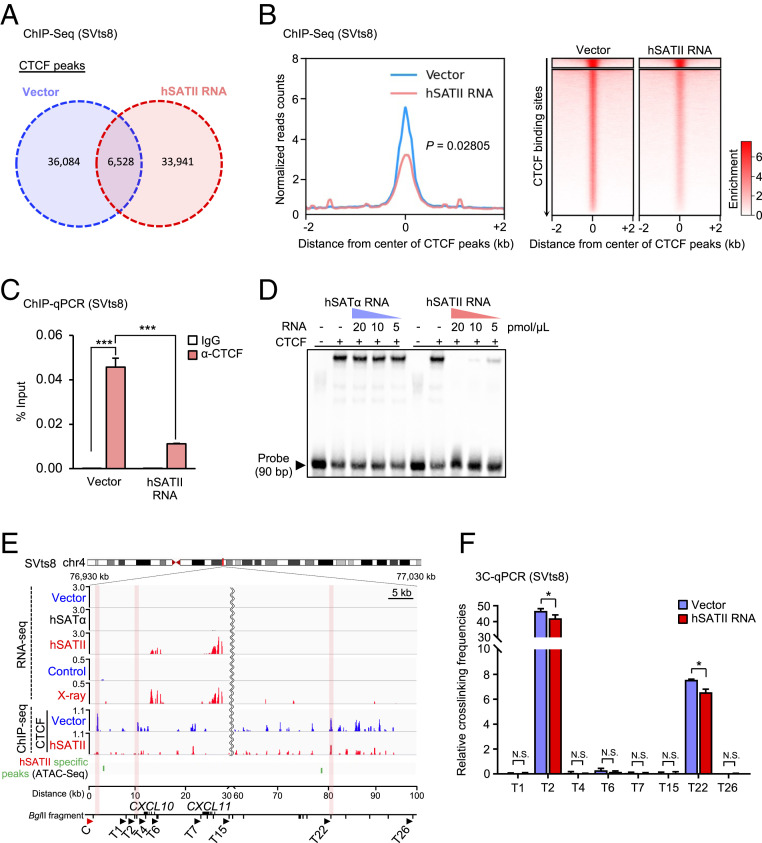
“Furthermore, our observations also showed that CTCF maintains pericentromeric satellite RNA expression at extremely low levels in normal cells by directly binding the pericentromeric hSATII locus (46); however, CTCF expression significantly decreased during cellular senescence (SI Appendix, Fig.”
Cited by
Cai, Y., Song, W., Li, J., Jing, Y., Liang, C., Zhang, L., Zhang, X., Zhang, W., Liu, B., An, Y., et al. (2022) · Science China Life Sciences · doi:10.1007/s11427-022-2161-3 · Cited by 408
Cellular rejuvenation: molecular mechanisms and potential therapeutic interventions for diseases
Ji, S., Xiong, M., Chen, H., Liu, Y., Zhou, L., Hong, Y., Wang, M., Wang, C., Fu, X., & Sun, X. (2023) · Signal Transduction and Targeted Therapy · doi:10.1038/s41392-023-01343-5 · Cited by 159
“The pericentromeric ncRNAs can be transported into neighboring cells via extracellular vesicles (EVs), and impaired the DNA binding of the CCCTC-binding factor to modify chromosomal accessibility and trigger an SASP-like inflammatory response.(38)”
BackgroundStress, epigenetics, and aging: Unraveling the intricate crosstalk
Wu, Z., Qu, J., Zhang, W., & Liu, G.-H. (2024) · Molecular Cell · doi:10.1016/j.molcel.2023.10.006 · Cited by 134
CTCF shapes chromatin structure and gene expression in health and disease
Dehingia, B., Milewska, M., Janowski, M., & Pękowska, A. (2022) · EMBO Reports · doi:10.15252/embr.202255146 · Cited by 149
“Global transcriptional inhibition blocks CTCF binding primarily at promoters, which suggests a positive role of RNA in CTCF binding at these locations (Hansen et al , 2019; Salda ~ na-Meyer et al , 2019; Miyata et al , 2021).”
Epigenetic Regulation of Inflammatory Signaling and Inflammation-Induced Cancer
Tan, S. Y. X., Zhang, J., & Tee, W. (2022) · Frontiers in Cell and Developmental Biology · doi:10.3389/fcell.2022.931493 · Cited by 91
“In a similar vein, human lung fibroblasts exposed to X-rayinduced senescence elicited a dramatic increase in ncRNA expression from pericentromeric repetitive loci known as human satellite II (hSATII), which are usually repressed in healthy cells (Miyata et al., 2021).”
BackgroundInfluential
Metadata
- Authors
- Miyata, K., Imai, Y., Hori, S., Nishio, M., Loo, T. M., Okada, R., Yang, L., Nakadai, T., Maruyama, R., Fujii, R., Ueda, K., Jiang, L., Zheng, H., Toyokuni, S., Sakata, T., Shirahige, K., Kojima, R., Nakayama, M., Oshima, M., Nagayama, S., Seimiya, H., Hirota, T., Saya, H., Hara, E., & Takahashi, A.
- Affiliations
- Japanese Foundation For Cancer Research (JP)
- Nagoya University (JP)
- Institute for Quantitative Biosciences, The University of Tokyo (JP)
- Japan Science and Technology Agency (JP)
- Kanazawa University (JP)
- The Cancer Institute Hospital (JP)
- Keio University (JP)
- Research Institute for Microbial Diseases, The University of Osaka (JP)
- Japan Agency for Medical Research and Development (JP)
- Corresponding author
- Takahashi, Akiko
- ORCID
- Venue
- Proceedings of the National Academy of Sciences
- Publisher
- National Academy of Sciences
- Published
- 2021-08-23
- Volume
- 118
- Issue
- 35
- ISSN
- 0027-8424 (ISSN-L)
- 1091-6490
- PMC
- PMC8536346
- OpenAlex
- W3195865705
- Cited by
- 74
- References
- 53
- Citations by year
- 2026: 15 · 2025: 8 · 2024: 15 · 2023: 19 · 2022: 17
- FWCI
- 8.00
- Type
- journal article
- Language
- en
- Open access
- hybrid
- doi.org
- Licence
- Locations
- Proceedings of the National Academy of Sciences (publishedVersion, cc-by-nc-nd)
- Europe PMC (PubMed Central) (publishedVersion, other-oa)
- PubMed Central (publishedVersion, cc-by-nc-nd)
- PubMed (publishedVersion)
- Funders
- PRESTO, Japan Science and Technology Agency (JPMJPR17H7)
- PRIME, Japan Agency of Medical Research and Development (19gm6110023h0001)
- Japan Society for the Promotion of Science (19H03507, 18K15254, 19J00796, 20K16344)
- Princess Takamatsu Cancer Research Fund (12-24412)
- Mitsubishi Foundation (201910023)
- Takeda Science Foundation (1967333-1)
- Moonshot R&D, Japan Science and Technology Agency (JPMJPS2022)
- Topics
- Life Sciences › Biochemistry, Genetics and Molecular Biology › Cell Biology › Telomeres, Telomerase, and Senescence
- Life Sciences › Biochemistry, Genetics and Molecular Biology › Molecular Biology › Genomics and Chromatin Dynamics
- Life Sciences › Biochemistry, Genetics and Molecular Biology › Aging › Genetics, Aging, and Longevity in Model Organisms
- Keywords
- CTCF, cellular senescence, senescence-associated secretory phenotype, inflammatory gene expression, chromatin accessibility, small extracellular vesicles, carcinogenesis, aging, chromosomal instability
- MeSH terms
- Senescence-Associated Secretory Phenotype, Aging, Animals, Centromere, DNA, DNA-Binding Proteins, DNA, Neoplasm, Female, Gene Expression Regulation, Humans, Inflammation, Mice, Inbred BALB C, Neoplasms, Protein Binding, Cellular Senescence, RNA, Untranslated, Mice, HEK293 Cells
About these checks
Registry, retraction, Cites and statistics results are computed, not judged, with one exception: a printed reference that no index lists is read once by a model before it counts as a citation error. Claims are extracted by a model and kept only when their quote appears verbatim in the text; each cited source is then checked, with a model’s help, for whether it says what the claim relies on. Those verdicts can be wrong — read the claim’s quote and the cited source before relying on one.
Statistics and arithmetic are recomputed, not judged.
Confidence bands are shown only for fields calibrated on our annotated test set. None is calibrated yet, so no band is shown.
What counts as a claim ›How we measure confidence ›How we check this ›
Are you an author, or do you see a problem with this page? Request a review
Data sources
Bibliographic data: Semantic Scholar, OpenAlex, Crossref.
Contains information from the Semantic Scholar Academic Graph Datasets, made available under the ODC Attribution License (ODC-BY 1.0).
Semantic Scholar’s data is described in: Kinney, R., et al. (2023). The Semantic Scholar Open Data Platform. arXiv:2301.10140.
