

The DOI matches its Crossref record; 77 of the 77 references it cites were found in a registry or an index.
The Fidelity of Human DNA Polymerase γ with and without Exonucleolytic Proofreading and the p55 Accessory Subunit
Open accessAbstract
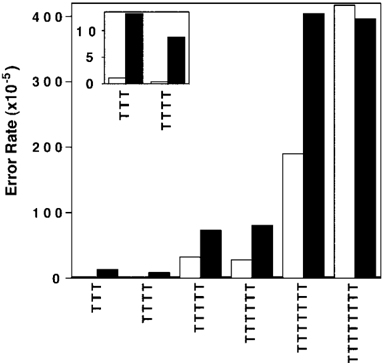
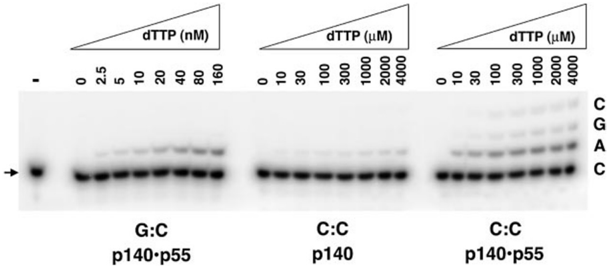
Mutations in human mitochondrial DNA influence aging, induce severe neuromuscular pathologies, cause maternally inherited metabolic diseases, and suppress apoptosis. Since the genetic stability of mitochondrial DNA depends on the accuracy of DNA polymerase gamma (pol gamma), we investigated the fidelity of DNA synthesis by human pol gamma. Comparison of the wild-type 140-kDa catalytic subunit to its exonuclease-deficient derivative indicates pol gamma has high base substitution fidelity that results from high nucleotide selectivity and exonucleolytic proofreading. pol gamma is also relatively accurate for single-base additions and deletions in non-iterated and short repetitive sequences. However, when copying homopolymeric sequences longer than four nucleotides, pol gamma has low frameshift fidelity and also generates base substitutions inferred to result from a primer dislocation mechanism. The ability of pol gamma both to make and to proofread dislocation intermediates is the first such evidence for a family A polymerase. Including the p55 accessory subunit, which confers processivity to the pol gamma catalytic subunit, decreases frameshift and base substitution fidelity. Kinetic analyses indicate that p55 promotes extension of mismatched termini to lower the fidelity. These data suggest that homopolymeric runs in mitochondrial DNA may be particularly prone to frameshift mutation in vivo due to replication errors by pol gamma.
Overview
The claims and statistics of this paper haven’t been checked yet.
Run the check — free, no account needed. It reads the open-access text and checks the sources it cites.
Integrity signals
Registry
Cites
Statistics
Figures
Verification
Claims the paper makes
The claims and statistics of this paper haven’t been checked yet.
Run the check — free, no account needed. It reads the open-access text and checks the sources it cites.
Claims other papers make about this one
Each is checked against this paper’s own text: does it say what the citing paper says it does?
The source backs part of the claim, not all of it — or backs it for a different population, condition or comparison.
In the citing paper
“This explains why the insertion/ deletion error rates of most polymerases increase with increasing repeat sequence length and why even proofreading-proficient replicative DNA polymerases with very high base substitution fidelity have low single base deletion fidelity (e.g.Fig. 1, bottom) when copying long homopolymeric sequences (e.g.Refs.55 and 60 and references therein).”
From DNA Replication Fidelity (2004) · cites this paper as [60]
Experimental — accuracy not yet measuredIn the citing paper
“The intrinsic 3′ → 5′ exonuclease activity of Pol γ improves replication fidelity at least 20-fold (Longley et al., 2001).”
From Role of the mitochondrial DNA replication machinery in mitochondrial DNA mutagenesis, aging and age-related diseases (2017) · cites this paper as Longley et al., 2001
In the citing paper
“High fidelity is due to high nucleotide selectivity and exonucleolytic proofreading.”
From Role of the mitochondrial DNA replication machinery in mitochondrial DNA mutagenesis, aging and age-related diseases (2017) · cites this paper as Longley et al., 2001
In the citing paper
“The human catalytic subunit of Pol γ has high base substitution fidelity over short repeat sequences (< 3 nucleotides), as a misinsertion event only occurs approximately once in every 500,000 base pairs synthesized (Longley et al., 2001).”
From Role of the mitochondrial DNA replication machinery in mitochondrial DNA mutagenesis, aging and age-related diseases (2017) · cites this paper as Longley et al., 2001
Self-check
Percentages, sums and reported differences re-computed from the paper’s own numbers.
The self-check needs the paper’s full text.
Citations
Cites
Sequence and organization of the human mitochondrial genome
Anderson, S., Bankier, A. T., Barrell, B. G., de Bruijn, M. H. L., Coulson, A. R., Drouin, J., Eperon, I. C., Nierlich, D. P., Roe, B. A., Sanger, F., et al. (1981) · Nature · doi:10.1038/290457a0 · Cited by 9,740
Rapid evolution of animal mitochondrial DNA
Brown, W. M., George, M., & Wilson, A. C. (1979) · Proceedings of the National Academy of Sciences · doi:10.1073/pnas.76.4.1967 · Cited by 3,439
Mitochondrial diseases in man and mouse
Wallace, D. C. (1999) · Science · doi:10.1126/science.283.5407.1482 · Cited by 3,060
Mitochondrial DNA sequences of primates: tempo and mode of evolution
Brown, W. M., Prager, E. M., Wang, A., & Wilson, A. C. (1982) · Journal of Molecular Evolution · doi:10.1007/bf01734101 · Cited by 1,554
Frameshift Mutations and the Genetic Code
Streisinger, G., Okada, Y., Emrich, J., Newton, J., Tsugita, A., Terzaghi, E., & Inouye, M. (1966) · Cold Spring Harbor Symposia on Quantitative Biology · doi:10.1101/sqb.1966.031.01.014 · Cited by 1,400
Diseases of the mitochondrial DNA
Wallace, D. C. (1992) · Annual Review of Biochemistry · doi:10.1146/annurev.bi.61.070192.005523 · Cited by 1,319
Crystal structure of a bacteriophage T7 DNA replication complex at 2.2 Å resolution
Doublié, S., Tabor, S., Long, A. M., Richardson, C. C., & Ellenberger, T. (1998) · Nature · doi:10.1038/34593 · Cited by 1,184
Kunkel, T. A., & Bebenek, K. (2000) · Annual Review of Biochemistry · doi:10.1146/annurev.biochem.69.1.497 · Cited by 1,003
Self-citationFacile Detection of Mitochondrial DNA Mutations in Tumors and Bodily Fluids
Fliss, M., Usadel, H., Caballero, O. L., Wu, L. J., Buta, M. R., Eleff, S. M., Jen, J., & Sidransky, D. (2000) · Science · doi:10.1126/science.287.5460.2017 · Cited by 821
Michikawa, Y., Mazzucchelli, F., Bresolin, N., Scarlato, G., & Attardi, G. M. (1999) · Science · doi:10.1126/science.286.5440.774 · Cited by 724
Cited by
Sorted by citations
Kunkel, T. A. (2004) · Journal of Biological Chemistry · doi:10.1074/jbc.r400006200 · Cited by 754
Self-citationMaintenance and Expression of Mammalian Mitochondrial DNA
Gustafsson, C. M., Falkenberg, M., & Larsson, N. (2016) · Annual Review of Biochemistry · doi:10.1146/annurev-biochem-060815-014402 · Cited by 688
The fidelity of DNA synthesis by eukaryotic replicative and translesion synthesis polymerases
McCulloch, S. D., & Kunkel, T. A. (2008) · Cell Research · doi:10.1038/cr.2008.4 · Cited by 569
Self-citationMitochondrial toxicity of nrti antiviral drugs: an integrated cellular perspective
Lewis, W., Day, B. J., & Copeland, W. C. (2003) · Nature Reviews Drug Discovery · doi:10.1038/nrd1201 · Cited by 496
Self-citationPOLG-related disorders and their neurological manifestations
Rahman, S., & Copeland, W. C. (2018) · Nature Reviews Neurology · doi:10.1038/s41582-018-0101-0 · Cited by 437
Self-citationDNA Polymerase γ, The Mitochondrial Replicase
Kaguni, L. S. (2004) · Annual Review of Biochemistry · doi:10.1146/annurev.biochem.72.121801.161455 · Cited by 414
Kennedy, S. R., Salk, J. J., Schmitt, M. W., & Loeb, L. A. (2013) · PLoS Genetics · doi:10.1371/journal.pgen.1003794 · Cited by 363
“While we cannot conclusively rule out a role for ROS in inducing transition mutations, the excess of transitions could additionally be explained by spontaneous deamination of either cytidine or adenosine, especially in single-stranded replication intermediates, or base misincorporation events by DNA polymerase c durin…”
BackgroundFunctional Mitochondria in Health and Disease
Herst, P. M., Rowe, M. R., Carson, G. M., & Berridge, M. V. (2017) · Frontiers in Endocrinology · doi:10.3389/fendo.2017.00296 · Cited by 332
“Pol-γ replicates mtDNA with high fidelity due to nucleotide selectivity and proofreading ability with one mis-insertion in every 500,000 new base pairs (69).”
BackgroundDNA Polymerase γ in Mitochondrial DNA Replication and Repair
Graziewicz, M. A., Longley, M. J., & Copeland, W. C. (2006) · Chemical Reviews · doi:10.1021/cr040463d · Cited by 301
“The human catalytic subunit of pol γ has high base substitution fidelity that results from high nucleotide selectivity and exonucleolytic proofreading[59].”
BackgroundSelf-citationMolecular and clinical genetics of mitochondrial diseases due to POLG mutations
Wong, L.-J. C., Naviaux, R. K., Brunetti‐Pierri, N., Zhang, Q. H., Schmitt, E. S., Truong, C. K., Milone, M., Cohen, B. H., Wical, B. S., Ganesh, J., et al. (2008) · Human Mutation · doi:10.1002/humu.20824 · Cited by 297
Self-citationInherited Mitochondrial Diseases of DNA Replication
Copeland, W. C. (2007) · Annual Review of Medicine · doi:10.1146/annurev.med.59.053006.104646 · Cited by 281
“This signature mutation suggests a “nextnucleotide effect” caused by the more common misinsertion T:dGMP (deoxyguanosine monophosphate) (56), which is quickly extended by the elevated dTTP concentration resulting from TP deficiency in the mitochondria of MNGIE cells (55).”
BackgroundSelf-citationLamantea, E., Tiranti, V., Bordoni, A., Toscano, A., Bono, F., Servidei, S., Papadimitriou, A., Spelbrink, H., Silvestri, L., Casari, G., et al. (2002) · Annals of Neurology · doi:10.1002/ana.10278 · Cited by 270
“It is believed to increase the processivity of the polymerase by strengthening the binding between enzyme and DNA template.(19,20) The human gene, POLG2,(21) is located on chromosome 17q21.”
BackgroundMitochondrial Homeostasis and Cellular Senescence
Vasileiou, P. V. S., Evangelou, K., Vlasis, K. G., Fildisis, G., Panayiotidis, M. I., Chronopoulos, E., Passias, P.-G., Kouloukoussa, M., Gorgoulis, V. G., & Havaki, S. (2019) · Cells · doi:10.3390/cells8070686 · Cited by 255
Facucho-Oliveira, J., & John, J. C. S. (2009) · Stem Cell Reviews and Reports · doi:10.1007/s12015-009-9058-0 · Cited by 240
“The exonuclease domain of POLGA is required for exonucleolytic proofreading which, when associated with high nucleotide selectivity, confers high fidelity DNA synthesis [61].”
BackgroundMitochondrial DNA Alterations in Cancer
Copeland, W. C., Wachsman, J. T., Johnson, F. M., & Penta, J. S. (2002) · Cancer Investigation · doi:10.1081/cnv-120002155 · Cited by 230
“Despite the high fidelity of DNA synthesis, DNA polymerase gamma has been shown to cause frame-shift errors in homopolymeric runs suggesting that these regions are potential hot spots in mtDNA (67).”
BackgroundSelf-citationEvolving Views of DNA Replication (In)FidelityPreprint
Kunkel, T. A. (2009) · Cold Spring Harbor Symposia on Quantitative Biology · doi:10.1101/sqb.2009.74.027 · Cited by 206
Self-citationNishigaki, Y., Martí, R., Copeland, W. C., & Hirano, M. (2003) · Journal of Clinical Investigation · doi:10.1172/jci17828 · Cited by 191
“It has been shown that direct misincorporation of a deoxyguanosine monophosphate (dGMP) opposite a template thymine residue (T·dGMP) is a common event (30, 31).”
BackgroundSelf-citationThe Role of Mitochondrial DNA Mutations in Mammalian Aging
Kujoth, G. C., Bradshaw, P. C., Haroon, S., & Prolla, T. A. (2007) · PLoS Genetics · doi:10.1371/journal.pgen.0030024 · Cited by 193
“It has conserved polymerase and exonuclease domains, the combined action of which results in high-fidelity mtDNA replication with human POLG displaying an average error frequency of ;1 error/500,000 bp in vitro [22,23].”
BackgroundDeBalsi, K. L., Hoff, K. E., & Copeland, W. C. (2017) · Ageing Research Reviews · doi:10.1016/j.arr.2016.04.006 · Cited by 180
Self-citationMitochondrial DNA damage and its consequences for mitochondrial gene expression
Cline, S. D. (2012) · Biochimica et Biophysica Acta (BBA) - Gene Regulatory Mechanisms · doi:10.1016/j.bbagrm.2012.06.002 · Cited by 203
Functional Human Mitochondrial DNA Polymerase γ Forms a Heterotrimer
Yakubovskaya, E., Chen, Z., Carrodeguas, J. A., Kisker, C., & Bogenhagen, D. F. (2005) · Journal of Biological Chemistry · doi:10.1074/jbc.m509730200 · Cited by 179
Song, S., Pursell, Z. F., Copeland, W. C., Longley, M. J., Kunkel, T. A., & Mathews, C. K. (2005) · Proceedings of the National Academy of Sciences · doi:10.1073/pnas.0500253102 · Cited by 180
Self-citationMitochondrial DNA replication in mammalian cells: overview of the pathway
Falkenberg, M. (2018) · Essays in Biochemistry · doi:10.1042/ebc20170100 · Cited by 186
Defects in mitochondrial DNA replication and human disease
Copeland, W. C. (2011) · Critical Reviews in Biochemistry and Molecular Biology · doi:10.3109/10409238.2011.632763 · Cited by 176
“This signature mutation suggests a “next-nucleotide effect” caused by the more common T:dGMP misinsertion (Longley et al., 2001) which is quickly extended by the elevated dTTP concentration resulting from TP deficiency in the mitochondria of MNGIE cells (Nishigaki et al., 2003).”
BackgroundSelf-citationPonamarev, M. V., Longley, M. J., Nguyen, D., Kunkel, T. A., & Copeland, W. C. (2002) · Journal of Biological Chemistry · doi:10.1074/jbc.c200100200 · Cited by 156
Self-citationLow-fidelity DNA synthesis by human DNA polymerase theta
Arana, M. E., Seki, M., Wood, R. D., Rogozin, I. B., & Kunkel, T. A. (2008) · Nucleic Acids Research · doi:10.1093/nar/gkn310 · Cited by 160
“62% for exonuclease-deficient pol g (22).”
Self-citationMechanism of a genetic glissando*: structural biology of indel mutations
García–Díaz, M., & Kunkel, T. A. (2006) · Trends in Biochemical Sciences · doi:10.1016/j.tibs.2006.02.004 · Cited by 149
Self-citationOrigins of human mitochondrial point mutations as DNA polymerase γ-mediated errors
Zheng, W., Khrapko, K., Coller, H. A., Thilly, W. G., & Copeland, W. C. (2006) · Mutation research. Fundamental and molecular mechanisms of mutagenesis · doi:10.1016/j.mrfmmm.2005.12.012 · Cited by 141
Self-citationConsequences of mutations in human DNA polymerase γ
Longley, M. J., Graziewicz, M. A., Bienstock, R. J., & Copeland, W. C. (2005) · Gene · doi:10.1016/j.gene.2005.03.029 · Cited by 141
Self-citationMitochondrial genome maintenance in health and disease
Copeland, W. C., & Longley, M. J. (2014) · DNA repair · doi:10.1016/j.dnarep.2014.03.010 · Cited by 147
Self-citationGraziewicz, M. A., Longley, M. J., Bienstock, R. J., Zeviani, M., & Copeland, W. C. (2004) · Nature Structural & Molecular Biology · doi:10.1038/nsmb805 · Cited by 131
“We have also produced a 3′→5′ exonuclease-deficient derivative of pol γ and studied the fidelity of DNA replication by pol &gamma”
MethodSelf-citationUnique Error Signature of the Four-subunit Yeast DNA Polymerase ϵ
Shcherbakova, P. V., Pavlov, Y. I., Chilkova, O., Rogozin, I. B., Johansson, E., & Kunkel, T. A. (2003) · Journal of Biological Chemistry · doi:10.1074/jbc.m306893200 · Cited by 129
Self-citationRoles of DNA Polymerases in Replication, Repair, and Recombination in Eukaryotes
Pavlov, Y. I., Shcherbakova, P. V., & Rogozin, I. B. (2006) · International Review of Cytology · doi:10.1016/s0074-7696(06)55002-8 · Cited by 123
Accumulation of point mutations in mitochondrial DNA of aging mice
Khaidakov, M., Heflich, R. H., Manjanatha, M. G., Myers, M. B., & Aidoo, A. (2003) · Mutation research. Fundamental and molecular mechanisms of mutagenesis · doi:10.1016/s0027-5107(03)00010-1 · Cited by 123
Lewis, W., Day, B. J., Kohler, J. J., Hosseini, S. H., Chan, S. S. L., Green, E. C., Haase, C. P., Keebaugh, E. S., Long, R., Ludaway, T., et al. (2007) · Laboratory Investigation · doi:10.1038/labinvest.3700523 · Cited by 121
“Exonuclease activity allows for proofreading of the growing DNA strand and increases faithful copying of mtDNA.(4) Other investigators employed transgenic mouse (TG) models of defective mtDNA replication that expressed exonucleolytic proofreading-deficient Pol g and that yielded increased mtDNA mutations(5) and cardio…”
BackgroundSelf-citationLimits and patterns of cytomegalovirus genomic diversity in humans
Renzette, N., Pokalyuk, C., Gibson, L. L., Bhattacharjee, B., Schleiss, M. R., Hamprecht, K., Yamamoto, A. Y., Mussi‐Pinhata, M. M., Britt, W. J., Jensen, J. D., et al. (2015) · Proceedings of the National Academy of Sciences · doi:10.1073/pnas.1501880112 · Cited by 120
“Furthermore, extrinsic or accessory factors can alter polymerase fidelity (74, 75), and the interaction of HSV and HCMV polymerases with their cognate accessory proteins, UL42 and UL44, respectively, has been shown to differ at the molecular level (76) as have the quaternary structures of the accessory proteins (77).”
BackgroundReplication and Transcription of Human Mitochondrial DNA
Falkenberg, M., Larsson, N., & Gustafsson, C. M. (2024) · Annual Review of Biochemistry · doi:10.1146/annurev-biochem-052621-092014 · Cited by 129
Multiple Functions of DNA Polymerases
García–Díaz, M., & Bębenek, K. (2007) · Critical Reviews in Plant Sciences · doi:10.1080/07352680701252817 · Cited by 129
“As expected of a replicative polymerase, Pol γ has high fidelity and high processivity (Longley et al., 2001).”
BackgroundMitochondrial DNA replication and disease: insights from DNA polymerase γ mutations
Stumpf, J. D., & Copeland, W. C. (2010) · Cellular and Molecular Life Sciences · doi:10.1007/s00018-010-0530-4 · Cited by 125
“Mutations in the catalytic aspartates disrupt exonuclease activity increasing base substitutions 20-fold in vitro [95] and 500-fold in S.”
BackgroundSelf-citationPre-Steady-State Kinetic Studies of the Fidelity of Sulfolobus solfataricus P2 DNA Polymerase IV
Fiala, K. A., & Suo, Z. (2004) · Biochemistry · doi:10.1021/bi0357457 · Cited by 115
Wu, E. Y., & Beese, L. S. (2011) · Journal of Biological Chemistry · doi:10.1074/jbc.m110.191130 · Cited by 113
Wu, Z., Waneka, G., Broz, A. K., King, C. R., & Sloan, D. B. (2020) · Proceedings of the National Academy of Sciences · doi:10.1073/pnas.2001998117 · Cited by 111
Chen, J. Z., Gökden, N., Greene, G. F., Mukunyadzi, P., & Kadlubar, F. F. (2002) · PubMed · Cited by 112
The clinical diagnosis of POLG disease and other mitochondrial DNA depletion disorders
Cohen, B. H., & Naviaux, R. K. (2010) · Methods · doi:10.1016/j.ymeth.2010.05.008 · Cited by 107
Low Fidelity DNA Synthesis by a Y Family DNA Polymerase Due to Misalignment in the Active Site
Kokoska, R. J., Bębenek, K., Boudsocq, F., Woodgate, R., & Kunkel, T. A. (2002) · Journal of Biological Chemistry · doi:10.1074/jbc.m202021200 · Cited by 107
Self-citationRole of Mitochondria in Cancer Stem Cell Resistance
García-Heredia, J. M., & Carnero, A. (2020) · Cells · doi:10.3390/cells9071693 · Cited by 109
The Frameshift Infidelity of Human DNA Polymerase λ
Bebenek, K., Garcia-Diaz, M., Blanco, L., & Kunkel, T. A. (2003) · Journal of Biological Chemistry · doi:10.1074/jbc.m305705200 · Cited by 104
Self-citationFidelity of the Human Mitochondrial DNA Polymerase
Lee, H. R., & Johnson, K. A. (2006) · Journal of Biological Chemistry · doi:10.1074/jbc.m607964200 · Cited by 101
Oxidative damage diminishes mitochondrial DNA polymerase replication fidelity
Anderson, A. P., Luo, X., Russell, W. K., & Yin, Y. W. (2019) · Nucleic Acids Research · doi:10.1093/nar/gkz1018 · Cited by 106
“Pol replication error frequency is 2 × 10⁻⁶ where the exo proofreading contributes 101–102-fold towards error reduction (28,30,41), similar to other high fidelity polymerases (29,42).”
BackgroundPOLG mutations in sporadic mitochondrial disorders with multiple mtDNA deletions
Fonzo, A. D., Bordoni, A., Crimi, M., Galbiati, S., Bo, R. D., Bresolin, N., & Comi, G. P. (2003) · Human Mutation · doi:10.1002/humu.9203 · Cited by 97
“The b subunit is believed to increase the polymerase processivity (Longley et al., 2001).”
BackgroundChan, S. S. L., Longley, M. J., & Copeland, W. C. (2006) · Human Molecular Genetics · doi:10.1093/hmg/ddl424 · Cited by 98
Self-citationDuan, K., Gu, Q., Petralia, R. S., Wang, Y., Panja, D., Liu, X., Lehmann, M. L., Zhu, H., Zhu, J., & Li, Z. (2021) · Neuron · doi:10.1016/j.neuron.2021.09.008 · Cited by 93
Mutations in the mitochondrial DNA D-loop region are frequent in cervical cancer.
Sharma, H., Singh, A., Sharma, C., Jain, S., & Singh, N. (2005) · Cancer Cell International · doi:10.1186/1475-2867-5-34 · Cited by 95
“In addition, a study [26] suggests that homopolymorphic nucleotide tracts in mtDNA are error prone because of the low frameshift fidelity of the DNA polymerase gamma that carries out the mtDNA replication.”
BackgroundDNA Polymerase Gamma in Mitochondrial DNA Replication and Repair
Copeland, W. C., & Longley, M. J. (2003) · The Scientific World JOURNAL · doi:10.1100/tsw.2003.09 · Cited by 91
“Kinetic analyses indicate that p55 lowers fidelity of replication by promoting extension of mismatched termini[59].”
BackgroundSelf-citationGraziewicz, M. A., Bienstock, R. J., & Copeland, W. C. (2007) · Human Molecular Genetics · doi:10.1093/hmg/ddm227 · Cited by 95
“The observed hydrogenbonding interactions between these residues help to explain the high fidelity of nucleotide incorporation by pol g (29).”
BackgroundSelf-citationKushnir, V. A., & Lewis, W. (2011) · Fertility and Sterility · doi:10.1016/j.fertnstert.2011.05.094 · Cited by 96
Decreased Mitochondrial DNA Mutagenesis in Human Colorectal Cancer
Ericson, N. G., Kulawiec, M., Vermulst, M., Sheahan, K. D., O'Sullivan, J. N., Salk, J. J., & Bielas, J. H. (2012) · PLoS Genetics · doi:10.1371/journal.pgen.1002689 · Cited by 87
“Interestingly, the majority of the clonally expanded mutations observed in carcinomas are C:G to T:A transitions (Table 1), which is similar to that previously reported in human colorectal tumors [16] and to the spectrum of random mutations in normal and adenoma tissue (Figure 3A), but is markedly different from the s…”
ResultTrace amounts of 8-oxo-dGTP in mitochondrial dNTP pools reduce DNA polymerase replication fidelity
Pursell, Z. F., McDonald, J., Mathews, C. K., & Kunkel, T. A. (2008) · Nucleic Acids Research · doi:10.1093/nar/gkn062 · Cited by 88
“DNA polymerase g fidelity was measured as described ( 7 ).”
InfluentialSelf-citationUltrasensitive deletion detection links mitochondrial DNA replication, disease, and aging
Lujan, S. A., Longley, M. J., Humble, M. H., Lavender, C. A., Burkholder, A., Blakely, E. L., Alston, C. L., Gorman, G. S., Turnbull, D. M., McFarland, R., et al. (2020) · Genome biology · doi:10.1186/s13059-020-02138-5 · Cited by 84
Self-citationLim, S. E., Ponamarev, M. V., Longley, M. J., & Copeland, W. C. (2003) · Journal of Molecular Biology · doi:10.1016/s0022-2836(03)00405-4 · Cited by 85
Self-citationThe Mitochondrial DNA Polymerase in Health and Disease
Copeland, W. C. (2009) · Sub-cellular biochemistry/Subcellular biochemistry · doi:10.1007/978-90-481-3471-7_11 · Cited by 85
“Comparing the in vitro rates of base substitution errors for the exonuclease deficient and proficient forms of human pol γ indicated that the proofreading function contributes at least 20-fold to the fidelity of base selection (Longley et al., 2001).”
BackgroundInfluentialSelf-citationMitochondrial DNA maintenance: an appraisal
Akhmedov, A. T., & Marín-García, J. (2015) · Molecular and Cellular Biochemistry · doi:10.1007/s11010-015-2532-x · Cited by 88
Polg2 is essential for mammalian embryogenesis and is required for mtDNA maintenance
Humble, M. M., Young, M. J., Foley, J. F., Pandiri, A. R., Travlos, G. S., & Copeland, W. C. (2013) · Human Molecular Genetics · doi:10.1093/hmg/dds506 · Cited by 78
Updating the Free Radical Theory of Aging
Ziada, A. S., Smith, M.-S. R., & Côté, H. C. F. (2020) · Frontiers in Cell and Developmental Biology · doi:10.3389/fcell.2020.575645 · Cited by 87
“, 2013), believed to be the hallmark of mitochondrial polymerase γ errors rather than oxidative damage (Spelbrink et al., 2000; Longley et al., 2001; Kauppila et al., 2017).”
BackgroundHow DNA polymerases catalyse replication and repair with contrasting fidelity
Wu, W.-J., Yang, W., & Tsai, M.-D. (2017) · Nature Reviews Chemistry · doi:10.1038/s41570-017-0068 · Cited by 76
RPA and PCNA suppress formation of large deletion errors by yeast DNA polymerase δ
Fortune, J. M., Stith, C. M. W., Kissling, G. E., Burgers, P., & Kunkel, T. A. (2006) · Nucleic Acids Research · doi:10.1093/nar/gkl403 · Cited by 71
“This is interesting in light of studies indicating that proteins that increase processivity promote extension of base–base mismatches by T7 DNA polymerase (18), T4 DNA polymerase (19) and human DNA polymerase g (20).”
BackgroundSelf-citationAlternative solutions and new scenarios for translesion DNA synthesis by human PrimPol
Martínez-Jiménez, M. I., García-Gómez, S., Bębenek, K., Sastre-Moreno, G., Calvo, P. A., Díaz‐Talavera, A., Kunkel, T. A., & Blanco, L. (2015) · DNA repair · doi:10.1016/j.dnarep.2015.02.013 · Cited by 70
Self-citationOrigins of mtDNA mutations in ageing
Szczepanowska, K., & Trifunović, A. (2017) · Essays in Biochemistry · doi:10.1042/ebc20160090 · Cited by 69
Structural basis for processivity and antiviral drug toxicity in human mitochondrial DNA replicase
Szymański, M. R., Kuznetsov, V. B., Shumate, C. K., Meng, Q., Lee, Y., Patel, G., Patel, S. S., & Yin, Y. W. (2015) · The EMBO Journal · doi:10.15252/embj.201591520 · Cited by 69
“The error frequency of Pol c is 10 (cid:2) 5 during DNA replication, comparable to other high-fidelity DNA polymerases (Longley et al , 2001; Lee & Johnson, 2006).”
Malyarchuk, B. А., Rogozin, I. B., Berikov, V., & Derenko, M. V. (2002) · Human Genetics · doi:10.1007/s00439-002-0740-4 · Cited by 68
“The dislocation mutagenesis was also revealed for errors produced by DNA polymerase γ in vitro ( Longley et al. 2001 ).”
BackgroundMethodInfluentialFunctions of Eukaryotic DNA Polymerases
Shcherbakova, P. V., Bębenek, K., & Kunkel, T. A. (2003) · Science of Aging Knowledge Environment · doi:10.1126/sageke.2003.8.re3 · Cited by 69
Self-citationChromosome organization and chromatin modification: influence on genome function and evolution
Holmquist, G. P., & Ashley, T. (2006) · Cytogenetic and Genome Research · doi:10.1159/000093326 · Cited by 70
“Different DNA polymerases do make different sets of base substitution errors when reading undamaged DNA (Osheroff et al., 1999; Kunkel and Bebenek, 2000; Ohashi et al., 2000; Longley et al., 2001; Kunkel et al., 2003).”
BackgroundMammalian mitochondrial DNA replication and mechanisms of deletion formation
Falkenberg, M., & Gustafsson, C. M. (2020) · Critical Reviews in Biochemistry and Molecular Biology · doi:10.1080/10409238.2020.1818684 · Cited by 65
Separating and Segregating the Human Mitochondrial Genome
Nicholls, T. J. J., & Gustafsson, C. M. (2018) · Trends in Biochemical Sciences · doi:10.1016/j.tibs.2018.08.007 · Cited by 65
High frequency of mitochondrial genome instability in human endometrial carcinomas
Liu, V. W. S., Yang, H., Wang, Y., Tsang, P. C. K., Cheung, A., Chiu, P. M., Ng, T. Y., Wong, L. C., NAGLEY, P., & Ngan, H. (2003) · British Journal of Cancer · doi:10.1038/sj.bjc.6601110 · Cited by 61
“In addition, a recent study (Longley et al, 2001) suggests that the homopolymorphic nucleotide tracts in mtDNA are error-prone because of the low frameshift fidelity of the DNA polymerase gamma that carries out the mtDNA replication.”
BackgroundThe complicated nature of somatic mtDNA mutations in aging
Sanchez-Contreras, M., & Kennedy, S. R. (2022) · Frontiers in Aging · doi:10.3389/fragi.2021.805126 · Cited by 60
“In vitro assays involving the copying of DNA by Pol-γ show predominantly G → A/C → T mutations, even when controlling for potential confounders such as heat-induced template deamination (Longley et al., 2001; Zheng et al., 2006).”
BackgroundDepletion of the other genome-mitochondrial DNA depletion syndromes in humans
Elpeleg, O. N., Mandel, H., & Saada, A. (2002) · Journal of Molecular Medicine · doi:10.1007/s00109-002-0343-5 · Cited by 59
“However, low frameshift fidelity is evident when homopolymeric sequences longer than four nucleotides are copied [ 21 ].”
BackgroundDefects of Mitochondrial DNA Replication
Copeland, W. C. (2014) · Journal of Child Neurology · doi:10.1177/0883073814537380 · Cited by 54
“Comparing the in vitro error rates for the exonuclease proficient and deficient forms of pol g indicates that exonucleolytic proofreading contributes at least 20-fold to the fidelity of mitochondrial DNA synthesis.(50) The exonuclease function is also necessary to suppress mitochondrial DNA deletions between direct re…”
BackgroundSelf-citationMitochondrial DNA repair: a novel therapeutic target for heart failure
Marín-García, J. (2016) · Heart Failure Reviews · doi:10.1007/s10741-016-9543-x · Cited by 55
“, cleaving nucleic acid by removal of single nucleotides from the end of the chain) proofreading activity and high nucleotide selectivity of POLc are responsible for the high fidelity of mtDNA replication (by proofreading and errorchecking DNA) [17].”
BackgroundNuclear Transfer: Preservation of a Nuclear Genome at the Expense of Its Associated mtDNA Genome(s)
Bowles, E. J., Campbell, K., & John, J. C. S. (2007) · Current topics in developmental biology/Current Topics in Developmental Biology · doi:10.1016/s0070-2153(06)77010-7 · Cited by 54
Davidson, J. F. (2003) · Nucleic Acids Research · doi:10.1093/nar/gkg667 · Cited by 54
“This ®nding is contrary to what was observed for both T7 DNA polymerase and Pol g in the absence of their respective processivity cofactors (17,18).”
ResultGraziewicz, M. A. (2004) · Nucleic Acids Research · doi:10.1093/nar/gkh213 · Cited by 52
“With all four nucleotides present, pol g with the accessory subunit inserted one or more nucleotides past the end of the template, most likely through a template dislocation intermediate or strand slippage mechanism that we previously documented for pol g (37).”
BackgroundSánchez-Contreras, M., Sweetwyne, M. T., Kohrn, B. F., Tsantilas, K. A., Hipp, M. J., Schmidt, E. K., Fredrickson, J., Whitson, J. A., Campbell, M. D., Rabinovitch, P. S., et al. (2021) · Nucleic Acids Research · doi:10.1093/nar/gkab901 · Cited by 54
Kasiviswanathan, R., Longley, M. J., Chan, S. S. L., & Copeland, W. C. (2009) · Journal of Biological Chemistry · doi:10.1074/jbc.m109.011940 · Cited by 55
Self-citationDecoding Warburg's hypothesis: tumor-related mutations in the mitochondrial respiratory chain
García-Heredia, J. M., & Carnero, A. (2015) · Oncotarget · doi:10.18632/oncotarget.6057 · Cited by 53
“In addition, mtDNA replication by DNA polymerase γ occurs with lower fidelity than with nuclear DNA, due to mtDNA’s inferior proof-reading function [35].”
BackgroundMutations in DNA polymerase gamma cause error prone DNA synthesis in human mitochondrial disorders.
Copeland, W. C., Ponamarev, M. V., Nguyen, D., Kunkel, T. A., & Longley, M. J. (2003) · Acta Biochimica Polonica · doi:10.18388/abp.2003_3723 · Cited by 51
“The human catalytic subunit of pol has high base substitution fidelity that results from high nucleotide selectivity and exonucleolytic proofreading (Johnson & Johnson, 2001; Longley et al., 2001).”
BackgroundSelf-citationThymidine phosphorylase mutations cause instability of mitochondrial DNA
Hirano, M., Lagier‐Tourenne, C., Valentino, M. L., Martí, R., & Nishigaki, Y. (2005) · Gene · doi:10.1016/j.gene.2005.04.041 · Cited by 51
Stumpf, J. D., Bailey, C. M., Spell, D., Stillwagon, M., Anderson, K. S., & Copeland, W. C. (2010) · Human Molecular Genetics · doi:10.1093/hmg/ddq089 · Cited by 47
Self-citationPlant organellar DNA polymerases are replicative and translesion DNA synthesis polymerases
Baruch‐Torres, N., & Brieba, L. G. (2017) · Nucleic Acids Research · doi:10.1093/nar/gkx744 · Cited by 48
Linking DNA polymerase theta structure and function in health and disease
Beagan, K., & McVey, M. (2015) · Cellular and Molecular Life Sciences · doi:10.1007/s00018-015-2078-9 · Cited by 47
“This is reflected in its fairly low misincorporation rate of 2 9 10 for single base pair substitutions [13].”
The interface of transcription and DNA replication in the mitochondria
Kasiviswanathan, R., Collins, T., & Copeland, W. C. (2011) · Biochimica et Biophysica Acta (BBA) - Gene Regulatory Mechanisms · doi:10.1016/j.bbagrm.2011.12.005 · Cited by 45
“Use of the human exonuclease-proficient pol γ [37] demonstrated that pol γ has high DNA synthesis fidelity due to high nucleotide selectivity and efficient proofreading [45].”
BackgroundSelf-citationA unique error signature for human DNA polymerase ν
Arana, M. E., Takata, K., García–Díaz, M., Wood, R. D., & Kunkel, T. A. (2006) · DNA repair · doi:10.1016/j.dnarep.2006.09.012 · Cited by 46
“3′ exonuclease that can proofread mistakes [5].”
Self-citationMitochondrial DNA sequence variants in epithelial ovarian tumor subtypes and stages.
Aikhionbare, F. O., Mehrabi, S., Kumaresan, K., Zavareh, M., Olatinwo, M. O., Odunsi, K. O., & Partridge, E. E. (2007) · Journal of Carcinogenesis · doi:10.1186/1477-3163-6-1 · Cited by 46
“Different mechanisms have been put forward to explain the genomic instability of this stretch of cytosine residues [34-37].”
BackgroundChen, J. Z. (2003) · Carcinogenesis · doi:10.1093/carcin/bgg102 · Cited by 46
“It is less probable that a by-pass polymerase plays a role in mitochondrial mutagenesis in human tumors because the human mtDNA polymerase g (pol g) is so far the only polymerase identified in mitochondria and is involved in both mtDNA replication and repair ( 28 ).”
BackgroundMitochondrial DNA mosaicism in normal human somatic cells
An, J., Nam, C. H., Kim, R., Lee, Y., Won, H., Park, S., Lee, W. H., Park, H., Yoon, S.-S., An, Y., et al. (2024) · Nature Genetics · doi:10.1038/s41588-024-01838-z · Cited by 50
“Interestingly, our estimate was within the range of error rates of polymerase γ ( POLG ), the mitochondrial genome’s DNA polymerase 56,57 .”
Kong, Y. X. G., Bergen, N. V., Trounce, I. A., Bui, B. V., Chrysostomou, V., Waugh, H. S., Vingrys, A. J., & Crowston, J. G. (2011) · Aging Cell · doi:10.1111/j.1474-9726.2011.00690.x · Cited by 43
“The exonuclease activity proofreads nascent mtDNA and ensures faithful replication of the mitochondrial genome (Longley et al., 2001).”
BackgroundThe role of DNA exonucleases in protecting genome stability and their impact on ageing
Mason, P. A., & Cox, L. S. (2011) · AGE · doi:10.1007/s11357-011-9306-5 · Cited by 46
“Table 1 Exonucleases discussed in this article Exonuclease Polarity Metabolic pathway References Polymerase δ, ε, γ 3′-5′ Replication (proofreading) Hubscher et al. 2002; Tran et al. 1999; Longley et al. 2001 ExoN 3′-5′ Unknown—proofreading?”
BackgroundPathogenicity in POLG syndromes: DNA polymerase gamma pathogenicity prediction server and database
Nurminen, A., Farnum, G. A., & Kaguni, L. S. (2017) · BBA Clinical · doi:10.1016/j.bbacli.2017.04.001 · Cited by 45
Unexpected Role for Helicobacter pylori DNA Polymerase I As a Source of Genetic Variability
García‐Ortiz, M. V., Marsin, S., Arana, M. E., Gasparutto, D., Guérois, R., Kunkel, T. A., & Radicella, J. P. (2011) · PLoS Genetics · doi:10.1371/journal.pgen.1002152 · Cited by 43
“62% for exonuclease-deficient pol c [25].”
Self-citationZiada, A. S., Lu, M. Y., Ignas‐Menzies, J., Paintsil, E., Li, M., Ogbuagu, O. E., Saberi, S., Hsieh, A. Y. Y., Sattha, B., Harrigan, P. R., et al. (2019) · Aging Cell · doi:10.1111/acel.13018 · Cited by 40
Metadata
- Authors
- Longley, M. J., Nguyen, D., Kunkel, T. A., & Copeland, W. C.
- Affiliations
- National Institutes of Health (US)
- Corresponding author
- Copeland, William C.
- Venue
- Journal of Biological Chemistry
- Publisher
- Elsevier BV
- Published
- 2001-10
- Volume
- 276
- Issue
- 42
- Pages
- 38555-38562
- ISSN
- 0021-9258 (ISSN-L)
- OpenAlex
- W1998344938
- Cited by
- 270
- References
- 77
- Citations by year
- 2026: 16 · 2025: 10 · 2024: 6 · 2023: 4 · 2022: 6 · 2021: 14 · 2020: 21 · 2019: 4 · 2018: 5 · 2017: 9 · 2016: 8 · 2015: 13 · 2014: 4 · 2013: 7 · 2012: 10
- FWCI
- 5.32
- Type
- journal article
- Language
- en
- Open access
- hybrid
- doi.org
- Licence
- Locations
- Journal of Biological Chemistry (publishedVersion, cc-by)
- PubMed (publishedVersion)
- Topics
- Life Sciences › Biochemistry, Genetics and Molecular Biology › Molecular Biology › DNA Repair Mechanisms
- Life Sciences › Biochemistry, Genetics and Molecular Biology › Molecular Biology › Mitochondrial Function and Pathology
- Life Sciences › Biochemistry, Genetics and Molecular Biology › Molecular Biology › DNA and Nucleic Acid Chemistry
- Keywords
- DNA polymerase gamma, mitochondrial DNA, replication fidelity, exonuclease proofreading, frameshift mutation, mismatch extension, nucleotide selectivity, mitochondrial DNA mutations
- MeSH terms
- DNA Polymerase gamma, Catalysis, DNA-Directed DNA Polymerase, DNA Repair, DNA, Mitochondrial, Humans, Kinetics, Mutation, Phenotype, Recombinant Proteins, Repetitive Sequences, Nucleic Acid, Mutagenesis, Frameshift Mutation, Gene Deletion, Base Pair Mismatch
About these checks
Registry, retraction, Cites and statistics results are computed, not judged, with one exception: a printed reference that no index lists is read once by a model before it counts as a citation error. Claims are extracted by a model and kept only when their quote appears verbatim in the text; each cited source is then checked, with a model’s help, for whether it says what the claim relies on. Those verdicts can be wrong — read the claim’s quote and the cited source before relying on one.
Statistics and arithmetic are recomputed, not judged.
Confidence bands are shown only for fields calibrated on our annotated test set. None is calibrated yet, so no band is shown.
What counts as a claim ›How we measure confidence ›How we check this ›
Are you an author, or do you see a problem with this page? Request a review
