

Testing the Effects of GraphoGame Against a Computer-Assisted Math Intervention in Primary School
Open accessThe DOI matches its Crossref record; 52 of the 53 references it cites were found in a registry or an index, and 1 are not checked yet; 8 of the 31 sources its claims cite were checked for support.
Abstract
Intervention study in grade 1 children comparing GraphoGame and a computer-assisted math intervention over about four months.
Verified 2026-11-22 · 1 reference not checked yet
Overview
CoChat Summary
TL;DR
In a quasi-experimental study of 921 French grade-1 children from socioeconomically disadvantaged neighborhoods, a French GraphoGame intervention improved phoneme awareness, orthographic choice, and word reading fluency relative to an active math control, while the math intervention improved math achievement. Effects were largely domain-specific, with no significant GraphoGame effect on pseudoword reading fluency and no math effect on number comparison.
Key findings
- GraphoGame produced positive intervention effects on phoneme awareness (ES = 0.23), orthographic choice (ES = 0.27), and word reading fluency (ES = 0.18); pseudoword reading fluency did not reach significance (p = .081, ES = 0.11).
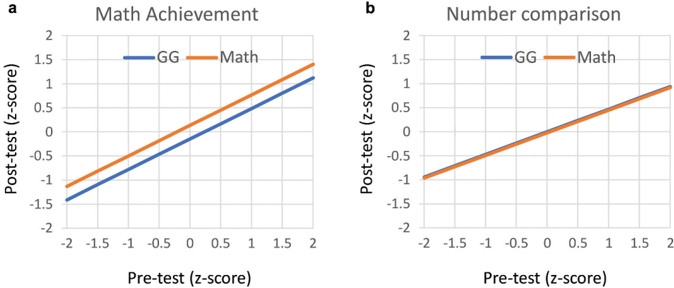
- Fiete Math had a significant effect on math achievement (ES = 0.28) but not on symbolic number comparison.
- For phoneme awareness, children with initially lower scores benefited more from GraphoGame; for pseudoword reading fluency, GraphoGame was more beneficial for children with initially better decoding skills.
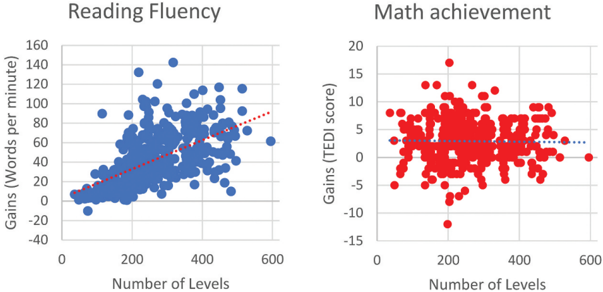
- Correlations between GraphoGame game variables and reading gains were positive for pseudoword reading fluency, orthographic choice, and word reading fluency (.41 < r < .59), while none of the GraphoGame game variables correlated with math achievement gains.
Methods
- Quasi-experimental design with two successive cohorts: 451 children received GraphoGame in year 1 and 470 received Fiete Math in year 2, from the same 9 schools and mostly the same teachers; total N = 921 grade-1 children in priority education areas in Marseille.
- Interventions lasted about four months, approximately 20 minutes per day, 4 times per week for 16 weeks; mean GraphoGame duration was 14.73 h (± 3.51 h).
- Hierarchical linear mixed models predicted posttest scores from pretest scores with intervention as a fixed effect and individuals and classes as random effects; outcome measures included phoneme awareness, pseudoword reading fluency, orthographic choice, word reading fluency, math achievement, and symbolic number comparison.
Limitations
- The paper states that the study was not a randomized controlled trial but a quasi-experimental design in which the same teachers administered both interventions successively; the math group started significantly higher at pretest on all reading measures.
- The paper states that long-term follow-up was not available for the math group because of the COVID-19 lockdown, so durable effects could not be fully tested across both groups.
- The paper states that GraphoGame does not train reading aloud or allow lip reading, which may partially explain weaker effects on reading fluency measures.
Model-written summary. Check it against the paper before relying on it.
Integrity signals
Registry
Cites
Statistics
Figures


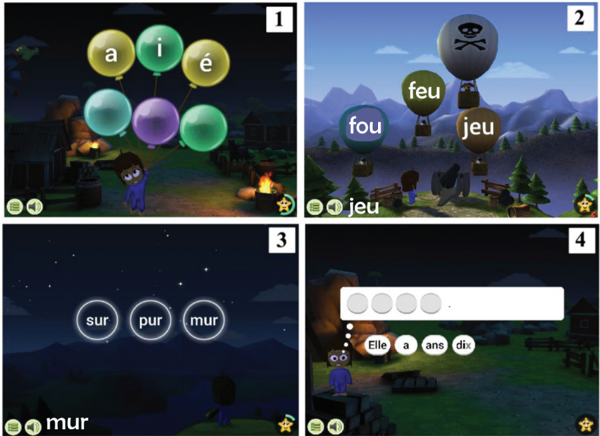
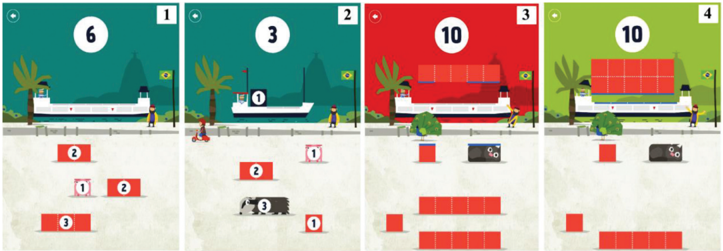
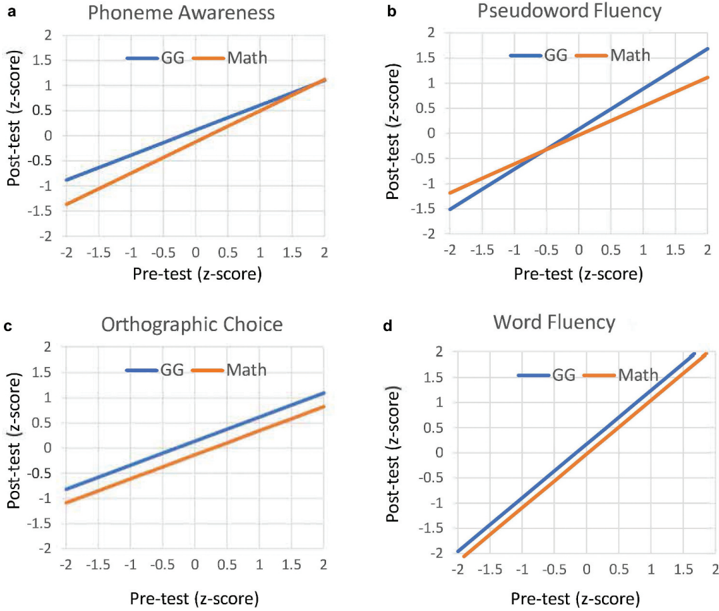
Verification
Claims the paper makes
8 Valid · 0 Not valid · 13 Not checked · 61 Own results and interpretations
The cited sources support only part of this claim — read each source’s verdict below.
In the paper
“it is necessary for the acquisition of less transparent writing systems (such as English and to a lesser extent French) to introduce and train these mappings at various grain sizes including graphemes, syllables, rimes, whole words and even sentences”
§ Testing the Effects of GraphoGame Against a Computer-Assisted Math Intervention in Primary School > GraphoGame intervention
What the sources say
- Not checked — no full text of the sourcecites Kyle et al., 2013 matched to “Assessing the Effectiveness of Two Theoretically Motivated Computer‐Assisted Reading Interventions in the United Kingdom: GG Rime and GG Phoneme” (2013) source
- Partly supportedcites Lassault & Ziegler, 2018 matched to “Les outils numériques d’aide à l’apprentissage de la lecture” (2018) sourceExperimental — accuracy not yet measured
Sections 3 and 4 describe training grapheme–phoneme correspondences in GraphoLearn and adding word- and sentence-construction exercises in its French version; the figure in Section 5 also shows a syllable exercise. The copy does not establish that all the listed grain sizes, particularly rimes, must be trained to acquire English or French reading. Its mention of a rhyme task in Section 2.2 does not make that broader necessity claim. (LLM, conf=0.85)
plainstates a cause- Asserted: passes — The authors put it forward as true.
- Checkable: passes — It can be checked against evidence.
- Load-bearing: passes — The paper’s conclusions depend on it.
- Based: passes — The paper gives a reason why it holds.
The cited sources support only part of this claim — read each source’s verdict below.
In the paper
“Yet, some children struggle to enter this unsupervised self-teaching loop because they might lack sufficient basic decoding skills, vocabulary or reading opportunities (Perry et al., 2019).”
§ Testing the Effects of GraphoGame Against a Computer-Assisted Math Intervention in Primary School > GraphoGame intervention
What the sources say
- Partly supportedcites Perry et al., 2019 matched to “Understanding Dyslexia Through Personalized Large-Scale Computational Models” (2019) sourceExperimental — accuracy not yet measured
The Model Description and Method section (page unavailable) describes self-teaching as requiring successful decoding and a matching word in the phonological lexicon, supporting the decoding-skills and vocabulary parts of the claim. The Results (page unavailable) report that simulated poor readers learned fewer words through decoding. Our copy does not identify insufficient reading opportunities as a reason children struggle to enter the loop. (LLM, conf=0.86)
hedgedstates a possible cause- Asserted: passes — The authors put it forward as true.
- Checkable: passes — It can be checked against evidence.
- Load-bearing: passes — The paper’s conclusions depend on it.
- Based: passes — The paper gives a reason why it holds.
- Partly supported
Every source the paper cites for this claim was checked and supports it.
In the paper
“Also, recent data suggest that children with poor phonemic discrimination skills need to use lip reading more than their peers without such difficulties (Piquard-Kipffer et al., 2021).”
§ Testing the Effects of GraphoGame Against a Computer-Assisted Math Intervention in Primary School > Discussion
What the sources say
- Supportedcites Piquard-Kipffer et al., 2021 matched to “Impact of lip-reading on speech perception in French-speaking children at risk for reading failure assessed from age 5 to 7” (2021) source
The Discussion reports that access to lip reading improved syllabic-counting performance only in the at-risk group, whose members had poor phonemic discrimination skills. It suggests that these children may use visual speech information to compensate for that difficulty, supporting the citing sentence’s comparison with their peers. (LLM, conf=0.91)
hedgedstates an association- Asserted: passes — The authors put it forward as true.
- Checkable: passes — It can be checked against evidence.
- Load-bearing: passes — The paper’s conclusions depend on it.
- Based: passes — The paper gives a reason why it holds.
- Supported
A result the paper reports from its own data — it cites no other source for it, so there is none to check. The quote shows it is in the paper.
In the paper
“The analysis showed no effect of intervention and no interaction between the initial level of number comparison ability and the effects of intervention.”
§ Testing the Effects of GraphoGame Against a Computer-Assisted Math Intervention in Primary School > Number comparison
plain- Asserted: passes — The authors put it forward as true.
- Checkable: passes — It can be checked against evidence.
- Load-bearing: unclear — It is unclear whether the paper’s conclusions depend on it.
- Based: passes — The paper gives a reason why it holds.
A result the paper reports from its own data — it cites no other source for it, so there is none to check. The quote shows it is in the paper.
In the paper
“The analysis showed no effect of intervention and no interaction between the initial level of number comparison ability and the effects of intervention.”
- Also stated in: § Abstract · plain
“FM had a significant effect on math achievement (ES = 0.28) but not number comparison.”
§ Testing the Effects of GraphoGame Against a Computer-Assisted Math Intervention in Primary School > Number comparison
plain- Asserted: passes — The authors put it forward as true.
- Checkable: passes — It can be checked against evidence.
- Load-bearing: passes — The paper’s conclusions depend on it.
- Based: passes — The paper gives a reason why it holds.
- Also stated in: § Abstract · plain
44 more claims
Create a free account to see all 82 claims and to verify the 2 references still open.
- Probably not a substantial claim. 19
- It may state two separate claims as one. 18
Self-check
Percentages, sums and reported differences re-computed from the paper’s own numbers.
Each contradiction between two passages listed here was confirmed by an independent check.
Rated major: it would touch a result — a value a result rests on, reported and recomputed p-values on opposite sides of the significance level, two passages that conflict with no sign which is right, or a cited work retracted before this paper was published.
In the paper
§ Testing the Effects of GraphoGame Against a Computer-Assisted Math Intervention in Primary School > Pseudoword reading fluency
“Pseudoword reading fluency was assessed with a 1-minute reading test, in which children had to read a list of pseudowords (max 30) in one minute”
§ Testing the Effects of GraphoGame Against a Computer-Assisted Math Intervention in Primary School > Discussion
“| Pseudoword Fluency (Pre) | 9.2 | 6.1 | 0-38 | 1.16 | 1.97 | | Pseudoword Fluency (Post) | 28.1 | 16.0 | 1-104 | 0.79 | 0.75 |”
Rated minor: it would not touch a result — a value no result rests on, a p-value that stays on the same side of the significance level, or a conflict that is clerical, resolved elsewhere in the paper, or outside its own findings.
In the paper
§ Testing the Effects of GraphoGame Against a Computer-Assisted Math Intervention in Primary School > Abstract
“used GG or FM for about four months four times a week for 30 minutes.”
§ Testing the Effects of GraphoGame Against a Computer-Assisted Math Intervention in Primary School > Procedure
“Teachers signed an agreement to implement the GG and math application approximately 20 minutes per day, 4 times per week, for a total of 16 weeks.”
Rated minor: it would not touch a result — a value no result rests on, a p-value that stays on the same side of the significance level, or a conflict that is clerical, resolved elsewhere in the paper, or outside its own findings.
In the paper
§ Testing the Effects of GraphoGame Against a Computer-Assisted Math Intervention in Primary School > Discussion
“| Orthographic Choice (Pre) | 6.5 | 3.4 | 0-24 | 1.08 | 1.78 |”
§ Testing the Effects of GraphoGame Against a Computer-Assisted Math Intervention in Primary School > Discussion
“| Orthographic Choice (Pre) | 13.0 | 4.4 | 0-24 | -0.27 | -0.27 |”
Rated minor: it would not touch a result — a value no result rests on, a p-value that stays on the same side of the significance level, or a conflict that is clerical, resolved elsewhere in the paper, or outside its own findings.
In the paper
§ Testing the Effects of GraphoGame Against a Computer-Assisted Math Intervention in Primary School > Discussion
“| Phoneme Awareness (Post) | 15.5 | 6.4 | 0-25 | -0.65 | -0.50 |”
§ Testing the Effects of GraphoGame Against a Computer-Assisted Math Intervention in Primary School > Outcome measures
“In the first task, the examiner pronounced a consonant-vowel-consonant pseudoword and the students had to mentally delete the first phoneme and sound out the pseudoword without the first phoneme (12 items).In the second task, the examiner pronounced a consonant- consonant-vowel pseudoword and students had to delete the first phoneme (12 items).The final score was the total of correct responses.”
Citations
Cites
Ziegler, J. C., & Goswami, U. (2005) · Psychological Bulletin · doi:10.1037/0033-2909.131.1.3 · Cited by 2,871 · cited 1×
“…of reading acquisition are all about learning the mapping between visual symbols (e.g., letters, graphemes) and their equivalent units in spoken language (Castles et al., 2018; Ehri, 1992; Goswami, 2002; Share, 1995; Sprenger-Charolles et al., 2003; Ziegler & Goswami, 2005; Ziegler et al., 2014).”
BackgroundSelf-citationPhonological recoding and self-teaching: sine qua non of reading acquisition
Share, D. L. (1995) · Cognition · doi:10.1016/0010-0277(94)00645-2 · Cited by 2,352 · cited 3×
“In a natural reading situation, this happens in a non-supervised way through “self-teaching” (Share, 1995; Ziegler et al., 2020).”
BackgroundMethodPISA 2018 Results (Volume I): What Students Know and Can Do
OECD (2019) · PISA · doi:10.1787/5f07c754-en · Cited by 2,350
A meta-analysis of the cognitive and motivational effects of serious games.
Wouters, P., van Nimwegen, C., van Oostendorp, H., & van der Spek, E. D. (2013) · Journal of Educational Psychology · doi:10.1037/a0031311 · Cited by 1,864 · cited 1×
“Indeed, in a meta-analysis of 31 studies, Wouters et al. (2013) found that, contrary to common beliefs, serious games were not more motivating than conventional instruction methods.”
BackgroundEnding the reading wars: Reading acquisition from novice to expert
Castles, A., Rastle, K., & Nation, K. (2018) · Psychological Science in the Public Interest · doi:10.1177/1529100618772271 · Cited by 1,297 · cited 3×
“…day of school (Loeb & Bassok, 2007) and that early and focused interventions for at-risk children within the school setting is the way to go about reducing them (Castles et al., 2018; Foorman et al., 2003; Foorman & Torgesen, 2001; Hulme et al., 2020; Rayner et al., 2001; Ziegler et al., 2020).”
BackgroundTeacher and Classroom Context Effects on Student Achievement: Implications for Teacher Evaluation
Sanders, W. L., Wright, S. P., & Horn, S. P. (1997) · Journal of Personnel Evaluation in Education · doi:10.1023/a:1007999204543 · Cited by 1,044 · cited 1×
“It is well known that teacher effects are the dominant factor affecting student academic gain (Sanders et al., 1997).”
BackgroundHow Psychological Science Informs the Teaching of Reading
Rayner, K., Foorman, B. R., Perfetti, C. A., Pesetsky, D., & Seidenberg, M. S. (2001) · Psychological Science in the Public Interest · doi:10.1111/1529-1006.00004 · Cited by 928
Psychological Science: The Consequences of Choosing Soft
Locurto, C. (2024) · SpringerBriefs in Psychology · doi:10.1007/978-3-031-69402-8 · Cited by 927
Orthographic Depth and Its Impact on Universal Predictors of Reading: A Cross-Language Investigation
Ziegler, J. C., Bertrand, D., Tóth, D., Csépe, V., Reis, A., Faísca, L., Saine, N., Lyytinen, H., Vaessen, A., & Blomert, L. (2010) · Psychological Science · doi:10.1177/0956797610363406 · Cited by 803 · cited 1×
“…writing system where literally all words can be correctly decoded on the basis of 20 letter-sound correspondences (see Landerl et al., 2013; Ziegler et al., 2010), it is necessary for the acquisition of less transparent writing systems (such as English and to a lesser extent French) to…”
BackgroundSelf-citationCheung, A. C. K., & Slavin, R. E. (2013) · Educational Research Review · doi:10.1016/j.edurev.2013.01.001 · Cited by 792 · cited 2×
“…intervention for reading within the school context, educational technology, and in particular computer-assisted instruction (CAI), held the promise to support the learning process in unpreceded ways because of its potential to provide individualized and adaptive support (Cheung & Slavin, 2013).”
BackgroundInfluentialEffect size measures for multilevel models: definition, interpretation, and TIMSS example
Lorah, J. (2018) · Large-scale Assessments in Education · doi:10.1186/s40536-018-0061-2 · Cited by 650 · cited 1×
“This also has the advantage that it standardizes all slope coefficients, which makes them appropriate effect size measures in mixed effect models (see Lorah, 2018).”
BackgroundLoeb, S., Bridges, M., Bassok, D., Fuller, B., & Rumberger, R. W. (2007) · Economics of Education Review · doi:10.1016/j.econedurev.2005.11.005 · Cited by 599 · cited 1×
“There is an increasing consensus that many children are at risk for reading difficulties from their first day of school (Loeb & Bassok, 2007) and that early and focused interventions for at-risk children within the school setting is the way to go about reducing them (Castles et al., 2018; Foorman…”
BackgroundReconceptualizing the Development of Sight Word Reading and Its Relationship to Recoding
Ehri, L. C. (2017) · Reading Acquisition · doi:10.4324/9781351236904-5 · Cited by 566
MANULEX: A grade-level lexical database from French elementary school readers
Lété, B., Sprenger-Charolles, L., & Colé, P. (2004) · Behavior Research Methods, Instruments, & Computers · doi:10.3758/bf03195560 · Cited by 527 · cited 2×
“…account the frequency and consistency of grapheme-phoneme correspondences (Peereman & Sprenger-Charolles, 2018) as they occurred in a grade-level lexical database of 54 elementary school French textbooks (MANULEX; Lété et al., 2004), which contained approximately 2,000,000 non-lemmatized forms.”
BackgroundMethodSelf-citationBrain sensitivity to print emerges when children learn letter-speech sound correspondences
Brem, S., Bach, S., Kucian, K., Kujala, J. V., Guttorm, T. K., Martin, E., Lyytinen, H., Brandeis, D., & Richardson, U. (2010) · Proceedings of the National Academy of Sciences · doi:10.1073/pnas.0904402107 · Cited by 456 · cited 3×
“Over the past years, GG has been implemented and tested in many languages, such as German (Brem et al., 2010; Huemer et al., 2008), English (Kyle et al., 2013), Portuguese (Carvalhais et al., 2018) or Spanish (Rosas et al., 2017).”
BackgroundSelf-citationPredictors of developmental dyslexia in European orthographies with varying complexity
Landerl, K., Ramus, F., Moll, K., Lyytinen, H., Leppänen, P. H. T., Lohvansuu, K., O’Donovan, M., Williams, J., Bartling, J., Bruder, J., et al. (2013) · Journal of Child Psychology and Psychiatry · doi:10.1111/jcpp.12029 · Cited by 449 · cited 1×
“…in a highly transparent writing system where literally all words can be correctly decoded on the basis of 20 letter-sound correspondences (see Landerl et al., 2013; Ziegler et al., 2010), it is necessary for the acquisition of less transparent writing systems (such as English and to a lesser…”
BackgroundSelf-citationCritical Elements of Classroom and Small‐Group Instruction Promote Reading Success in All Children
Foorman, B. R., & Torgesen, J. (2001) · Learning Disabilities Research & Practice · doi:10.1111/0938-8982.00020 · Cited by 444 · cited 1×
“…day of school (Loeb & Bassok, 2007) and that early and focused interventions for at-risk children within the school setting is the way to go about reducing them (Castles et al., 2018; Foorman et al., 2003; Foorman & Torgesen, 2001; Hulme et al., 2020; Rayner et al., 2001; Ziegler et al., 2020).”
BackgroundEffective programs for struggling readers: A best-evidence synthesis
Slavin, R. E., Lake, C., Davis, S., & Madden, N. A. (2011) · Educational Research Review · doi:10.1016/j.edurev.2010.07.002 · Cited by 353 · cited 1×
“In their review of 14 studies, Slavin et al. (2011) found only very small effects (Effect Size, ES = 0.09) of educational technology programs for struggling elementary readers.”
BackgroundInfluential(2007) · RePEc: Research Papers in Economics · Cited by 334
Hulme, C., Bowyer-Crane, C., Carroll, J. M., Duff, F. J., & Snowling, M. J. (2012) · Psychological Science · doi:10.1177/0956797611435921 · Cited by 306 · cited 1×
“First, we found strong and robust effects on phoneme awareness (ES = 0.23), which was expected because the systematic teaching of grapheme-phoneme correspondences boosts phoneme awareness in a reciprocal way (Hulme et al., 2012; Perfetti et al., 1987).”
BackgroundInfluentialPhonology, reading development, and dyslexia: A cross-linguistic perspective
Goswami, U. (2002) · Annals of Dyslexia · doi:10.1007/s11881-002-0010-0 · Cited by 298 · cited 1×
“…of reading acquisition are all about learning the mapping between visual symbols (e.g., letters, graphemes) and their equivalent units in spoken language (Castles et al., 2018; Ehri, 1992; Goswami, 2002; Share, 1995; Sprenger-Charolles et al., 2003; Ziegler & Goswami, 2005; Ziegler et al., 2014).”
BackgroundSasanguie, D., Göbel, S. M., Moll, K., Smets, K., & Reynvoet, B. (2013) · Journal of Experimental Child Psychology · doi:10.1016/j.jecp.2012.10.012 · Cited by 286 · cited 1×
“We also included a symbolic number comparison tasks as a second outcome measure because previous studies showed that performance on this task was related to math achievement (Holloway & Ansari, 2008; Sasanguie et al., 2013).”
ResultSprenger-Charolles, L., Siegel, L. S., Béchennec, D., & Serniclaes, W. (2003) · Journal of Experimental Child Psychology · doi:10.1016/s0022-0965(03)00024-9 · Cited by 277 · cited 1×
“…of reading acquisition are all about learning the mapping between visual symbols (e.g., letters, graphemes) and their equivalent units in spoken language (Castles et al., 2018; Ehri, 1992; Goswami, 2002; Share, 1995; Sprenger-Charolles et al., 2003; Ziegler & Goswami, 2005; Ziegler et al., 2014).”
BackgroundSelf-citationWilson, A. J., Dehaene, S., Pinel, P., Revkin, S. K., Cohen, L., & Cohen, D. (2006) · Behavioral and Brain Functions · doi:10.1186/1744-9081-2-19 · Cited by 246
Computer-Assisted Remedial Reading Intervention for School Beginners at Risk for Reading Disability
Saine, N. L., Lerkkanen, M.-K., Ahonen, T., Tolvanen, A., & Lyytinen, H. (2011) · Child Development · doi:10.1111/j.1467-8624.2011.01580.x · Cited by 230 · cited 2×
“In contrast to the impressive results of Saine et al. (2010, 2011), a recent meta-analysis by McTigue et al. (2020), which included 15 studies that used the GG intervention in 7 different languages (English, Polish, Spanish, German, Finnish, Portuguese, Kiswahili), came to a somewhat less…”
BackgroundResultSelf-citationZiegler, J. C., Perry, C., & Zorzi, M. (2014) · Philosophical Transactions of the Royal Society B: Biological Sciences · doi:10.1098/rstb.2012.0397 · Cited by 204 · cited 2×
“This finding is in line with the phonological decoding self-teaching theory according to which a minimal number of grapheme-phoneme mappings must be mastered to get the decoding network of the ground (Ziegler et al., 2014).”
BackgroundResultSelf-citationRonimus, M., Kujala, J., Tolvanen, A., & Lyytinen, H. (2014) · Computers & Education · doi:10.1016/j.compedu.2013.10.008 · Cited by 203 · cited 1×
“…positive correlations are encouraging and seem to suggest that one needs to consider game performance (dosage, overall success rate and progress) but also motivation and engagement as critical moderator variables for the success of an intervention (Ronimus et al., 2014; Ronimus & Lyytinen, 2015).”
BackgroundSelf-citationSprenger-Charolles, L., Colé, P., Béchennec, D., & Piquard-Kipffer, A. (2005) · European Review of Applied Psychology · doi:10.1016/j.erap.2004.11.002 · Cited by 183 · cited 1×
“Two tasks from the EVALEC battery (Sprenger-Charolles et al., 2005) were used to assess phoneme awareness at T1 and T2.”
MethodSelf-citationIn search of a science‐based application: A learning tool for reading acquisition
LYYTINEN, H., ERSKINE, J., KUJALA, J., OJANEN, E., & RICHARDSON, U. (2009) · Scandinavian Journal of Psychology · doi:10.1111/j.1467-9450.2009.00791.x · Cited by 179 · cited 1×
“GG was initially developed in Finland in the context of dyslexia prevention (Lyytinen et al., 2015), but its use was rapidly extended to promoting reading acquisition in normally-developing readers and assessing children’s response to intervention for diagnostic purposes (Lyytinen et al., 2009).”
BackgroundSelf-citationKyle, F., Kujala, J., Richardson, U., Lyytinen, H., & Goswami, U. (2013) · Reading Research Quarterly · doi:10.1002/rrq.038 · Cited by 168 · cited 4×
“Over the past years, GG has been implemented and tested in many languages, such as German (Brem et al., 2010; Huemer et al., 2008), English (Kyle et al., 2013), Portuguese (Carvalhais et al., 2018) or Spanish (Rosas et al., 2017).”
BackgroundInfluentialSelf-citationInterventions Aimed at Improving Reading Success: An Evidence-Based Approach
Foorman, B. R., Breier, J. I., & Fletcher, J. M. (2003) · Developmental Neuropsychology · doi:10.1080/87565641.2003.9651913 · Cited by 155 · cited 1×
“…day of school (Loeb & Bassok, 2007) and that early and focused interventions for at-risk children within the school setting is the way to go about reducing them (Castles et al., 2018; Foorman et al., 2003; Foorman & Torgesen, 2001; Hulme et al., 2020; Rayner et al., 2001; Ziegler et al., 2020).”
BackgroundDomain‐specific and domain‐general changes in children's development of number comparison
Holloway, I. D., & Ansari, D. (2008) · Developmental Science · doi:10.1111/j.1467-7687.2008.00712.x · Cited by 153 · cited 1×
“We also included a symbolic number comparison tasks as a second outcome measure because previous studies showed that performance on this task was related to math achievement (Holloway & Ansari, 2008; Sasanguie et al., 2013).”
ResultRichardson, U., & Lyytinen, H. (2014) · Human Technology: An Interdisciplinary Journal on Humans in ICT Environments · doi:10.17011/ht/urn.201405281859 · Cited by 152 · cited 2×
“One of the reading intervention games, which had not been tested in any of the above-mentioned meta-analyses, is GraphoGame (GG, Richardson & Lyytinen, 2014).”
BackgroundSelf-citationLyytinen, H., Erskine, J., Hämäläinen, J., Torppa, M., & Ronimus, M. (2015) · Current Developmental Disorders Reports · doi:10.1007/s40474-015-0067-1 · Cited by 120
Self-citationHulme, C., Snowling, M. J., West, G., Lervåg, A., & Melby‐Lervåg, M. (2020) · Current Directions in Psychological Science · doi:10.1177/0963721420923684 · Cited by 118 · cited 2×
“…day of school (Loeb & Bassok, 2007) and that early and focused interventions for at-risk children within the school setting is the way to go about reducing them (Castles et al., 2018; Foorman et al., 2003; Foorman & Torgesen, 2001; Hulme et al., 2020; Rayner et al., 2001; Ziegler et al., 2020).”
BackgroundMcTigue, E. M., Solheim, O. J., Zimmer, W. K., & Uppstad, P. H. (2020) · Reading Research Quarterly · doi:10.1002/rrq.256 · Cited by 113 · cited 4×
“In contrast to the impressive results of Saine et al. (2010, 2011), a recent meta-analysis by McTigue et al. (2020), which included 15 studies that used the GG intervention in 7 different languages (English, Polish, Spanish, German, Finnish, Portuguese, Kiswahili), came to a somewhat less…”
BackgroundResultInfluentialUnderstanding Dyslexia Through Personalized Large-Scale Computational Models
Perry, C., Zorzi, M., & Ziegler, J. C. (2019) · Psychological Science · doi:10.1177/0956797618823540 · Cited by 109 · cited 1×
“Yet, some children struggle to enter this unsupervised self-teaching loop because they might lack sufficient basic decoding skills, vocabulary or reading opportunities (Perry et al., 2019).”
BackgroundSelf-citationFluss, J., Ziegler, J. C., Warszawski, J., Ducot, B., Richard, G., & Billard, C. (2009) · Journal of Developmental & Behavioral Pediatrics · doi:10.1097/dbp.0b013e3181a7ed6c · Cited by 100 · cited 11×
“The French version of GG is freely available in France and French-speaking territories on google play and apple store.”
BackgroundResultInfluentialSelf-citationSaine, N. L., Lerkkanen, M.-K., Ahonen, T., Tolvanen, A., & Lyytinen, H. (2010) · Learning and Individual Differences · doi:10.1016/j.lindif.2010.06.004 · Cited by 99 · cited 2×
“In contrast to the impressive results of Saine et al. (2010, 2011), a recent meta-analysis by McTigue et al. (2020), which included 15 studies that used the GG intervention in 7 different languages (English, Polish, Spanish, German, Finnish, Portuguese, Kiswahili), came to a somewhat less…”
BackgroundResultSelf-citationTraining reading fluency among poor readers of German: many ways to the goal
Huemer, S., Landerl, K., Aro, M. T., & Lyytinen, H. (2008) · Annals of Dyslexia · doi:10.1007/s11881-008-0017-2 · Cited by 94
Self-citationIs School a Better Environment Than Home for Digital Game-Based Learning? The Case of GraphoGame
Ronimus, M., & Lyytinen, H. (2015) · Human Technology: An Interdisciplinary Journal on Humans in ICT Environments · doi:10.17011/ht/urn.201511113637 · Cited by 68 · cited 1×
“…positive correlations are encouraging and seem to suggest that one needs to consider game performance (dosage, overall success rate and progress) but also motivation and engagement as critical moderator variables for the success of an intervention (Ronimus et al., 2014; Ronimus & Lyytinen, 2015).”
Self-citationLearning to Read and Dyslexia: From Theory to Intervention Through Personalized Computational Models
Ziegler, J. C., Perry, C., & Zorzi, M. (2020) · Current Directions in Psychological Science · doi:10.1177/0963721420915873 · Cited by 68 · cited 3×
“…day of school (Loeb & Bassok, 2007) and that early and focused interventions for at-risk children within the school setting is the way to go about reducing them (Castles et al., 2018; Foorman et al., 2003; Foorman & Torgesen, 2001; Hulme et al., 2020; Rayner et al., 2001; Ziegler et al., 2020).”
BackgroundSelf-citationJavourey‐Drevet, L., Dufau, S., François, T., Gala, N., Ginestié, J., & Ziegler, J. C. (2022) · Applied Psycholinguistics · doi:10.1017/s014271642100062x · Cited by 64 · cited 1×
“Other perspectives include the development of games that train reading comprehension (e.g., Javourey-Drevet et al., 2022) and the use of automatic speech recognition software to train reading aloud (O -> P mappings), which are two dimensions that are currently not being trained.”
BackgroundSelf-citationFluss, J., Ziegler, J., Ecalle, J., Magnan, A., Warszawski, J., Ducot, B., Richard, G., & Billard, C. (2008) · Archives de Pédiatrie · doi:10.1016/j.arcped.2008.02.012 · Cited by 45 · cited 10×
“The French version of GG is freely available in France and French-speaking territories on google play and apple store.”
BackgroundInfluentialSelf-citationGentaz, E., Sprenger-Charolles, L., Theurel, A., & Colé, P. (2013) · PLoS ONE · doi:10.1371/journal.pone.0078608 · Cited by 45 · cited 2×
“Pseudoword reading fluency was assessed with a 1-minute reading test, in which children had to read a list of pseudowords (max 30) in one minute (Gentaz et al., 2013).”
MethodSelf-citationRosas, R., Escobar, J.-P., Ramírez, M.-P., Meneses, A., & Guajardo, A. (2017) · Infancia y Aprendizaje · doi:10.1080/02103702.2016.1263451 · Cited by 38 · cited 2×
“Over the past years, GG has been implemented and tested in many languages, such as German (Brem et al., 2010; Huemer et al., 2008), English (Kyle et al., 2013), Portuguese (Carvalhais et al., 2018) or Spanish (Rosas et al., 2017).”
BackgroundWatkins, C. P., Caporal, J., Merville, C., Kouider, S., & Dehaene, S. (2020) · Journal of Computers in Education · doi:10.1007/s40692-019-00152-6 · Cited by 35 · cited 2×
“In line with these theories, the key idea behind GG was to systematically introduce all grapheme-phoneme correspondences (starting with a small and consistent set) and, most importantly, find a way to intensively train and automatize these correspondences (see also, Potier Watkins et al., 2020).”
BackgroundLes outils numériques d’aide à l’apprentissage de la lecture
Lassault, J., & Ziegler, J. C. (2018) · Langue française · doi:10.3917/lf.199.0111 · Cited by 26 · cited 5×
“That is, it was structured in a way that the most consistent and frequent grapheme-phoneme correspondences were introduced progressively and they were then trained in the context of syllables, words and sentences that were made up of previously trained GPCs (Lassault & Ziegler, 2018).”
BackgroundMethodInfluentialSelf-citationCan children's instructional gameplay activity be used as a predictive indicator of reading skills?
Thomson, J. M., Foldnes, N., Uppstad, P. H., Njå, M., Solheim, O. J., & Lundetræ, K. (2020) · Learning and Instruction · doi:10.1016/j.learninstruc.2020.101348 · Cited by 17 · cited 2×
“A previous study showed that within-game variables are useful to predict intervention outcomes (Thomson et al., 2020).”
BackgroundManulex-MorphO, une base de données sur l’orthographe du français intégrant les morpho-phonogrammes
Peereman, R., & Sprenger-Charolles, L. (2018) · Langue française · doi:10.3917/lf.199.0099 · Cited by 14 · cited 2×
“…to cover the entire 1 st grade reading program based on a theoretically optimal progression (Dehaene, 2011; Sprenger-Charolles, 2017), which took into account the frequency and consistency of grapheme-phoneme correspondences (GPCs) and the frequency of words (Peereman & Sprenger-Charolles, 2018).”
BackgroundSelf-citationComputer-Assisted Reading and Spelling Intervention with Graphogame Fluent Portuguese
Carvalhais, L. S. D. A., Richardson, U., & Castro, S. L. (2018) · Advances in intelligent systems and computing · doi:10.1007/978-3-319-77712-2_140 · Cited by 6 · cited 3×
“Over the past years, GG has been implemented and tested in many languages, such as German (Brem et al., 2010; Huemer et al., 2008), English (Kyle et al., 2013), Portuguese (Carvalhais et al., 2018) or Spanish (Rosas et al., 2017).”
BackgroundSelf-citationPiquard-Kipffer, A., Cavadini, T., Sprenger-Charolles, L., & Gentaz, É. (2021) · L’Année psychologique · doi:10.3917/anpsy1.212.0003 · Cited by 6 · cited 1×
“Also, recent data suggest that children with poor phonemic discrimination skills need to use lip reading more than their peers without such difficulties (Piquard-Kipffer et al., 2021).”
BackgroundSelf-citationLassault, J. (2026) · doi:10.70675/6940985fzc5d2z420ezb201z6e256fa75819
Self-citation
Research works printed but not linked: 8
- Campuzano, L., Dynarski, M., Agodini, R., & Rall, K. (2009). Effectiveness of Reading and Mathematics Software Products: Findings From Two Student Cohorts. NCEE 2009-4041. National Center for Education Evaluation and Regional Assistance.
- Dehaene, S. (2011). Apprendre à lire: Des sciences cognitives à la salle de classe. Odile Jacob.
- Ecalle, J. (2003). Timé-2: Test d'identification de mots écrits pour enfants de 6 à 8 ans. Edition du Centre de Psychologie Appliquée.
- Heck, R., Thomas, S., & Tabata, L. (2009). An introduction to multilevel modeling techniques (Quantitative methodol- ogy series). New York: Routledge.
- Lefavrais, J. (2005). Test de l'Alouette (revised version). ECPA.
- Perfetti, C. A., Beck, I., Bell, L. C., & Hughes, C. (1987). Phonemic knowledge and learning to read are reciprocal -a longitudinal-study of 1st-grade children. Merrill-Palmer Quarterly-Journal of Developmental Psychology, 33(3), 283-319.
- Sprenger-Charolles, L. (2017). Une progression pédagogique construite à partir de statistiques sur l'orthographe du français (d'après Manulex-Morpho): Pour les lecteurs débutants et atypiques. Approche Neuropsychologique des Apprentissages chez l'Enfant (ANAE), 148(5), 247-256.
- Van Nieuwenhoven, C., Noël, M.-P., & Grégoire, J. (2001). Tedi-math: Test diagnostique des compétences de base en mathématiques. ECPA.
Cited by
Valdois, S., Zaher, A., Meyer, S., Diard, J., Mandin, S., & Bosse, M. (2024) · Reading Research Quarterly · doi:10.1002/rrq.576 · Cited by 21
“However, positive effects of a French version of GraphoGame on phoneme awareness and word reading fluency have been recently reported (Lassault et al., 2022).”
InfluentialOmer, S. M. S., Evers, K., Wang, C.-Y., & Chen, S. (2025) · Humanities and Social Sciences Communications · doi:10.1057/s41599-025-05475-7 · Cited by 48
“In contrast, Application Software such as Fiete Math (Lassault et al. 2022), designed for early learners, features a simple interface and limited interactivity, offering drag-and-drop tasks to introduce basic arithmetic concepts in gami fi ed, tablet-based environments.”
Richter, C. G., Siegelman, N., Mahaffy, K. E., van den Bunt, M. R., Kearns, D. M., Landi, N., Sabatini, J., Pugh, K. R., & Hoeft, F. (2022) · Frontiers in Psychology · doi:10.3389/fpsyg.2022.1001555 · Cited by 17
“Despite this, there is some evidence for the efficacy of the program and studies show that GraphoLearn is superior to various control conditions when the intervention group receives sufficient exposure to the game (Bhide et al., 2013; Kyle et al., 2013; Patel et al., 2018; Lassault et al., 2022).”
ResultHarrar-Eskinazi, K. L., Cara, B. D., Leloup, G., Nothelier, J., Caci, H. M., Ziegler, J. C., & Faure, S. (2022) · BMC Pediatrics · doi:10.1186/s12887-022-03701-8 · Cited by 15
“28 for independent practice with the program [82].”
BackgroundSelf-citationCasalini, C., & Pecini, C. (2024) · Brain Sciences · doi:10.3390/brainsci14080793 · Cited by 9
Metadata
- Authors
- Lassault, J., Sprenger-Charolles, L., Albrand, J.-P., Alavoine, E., Richardson, U., Lyytinen, H., & Ziegler, J. C.
- Affiliations
- Centre National de la Recherche Scientifique (FR)
- University of Jyväskylä (FI)
- UNESCO (FR)
- Corresponding author
- Ziegler, Johannes C.
- Venue
- Scientific Studies of Reading
- Publisher
- Informa UK Limited
- Published
- 2022-03-16
- Volume
- 26
- Issue
- 6
- Pages
- 449-468
- ISSN
- 1088-8438 (ISSN-L)
- 1532-799X
- OpenAlex
- W4220939164
- Cited by
- 20
- References
- 51
- Citations by year
- 2026: 4 · 2025: 5 · 2024: 4 · 2023: 4 · 2022: 3
- FWCI
- 6.09
- Type
- journal article
- Language
- en
- Open access
- hybrid
- doi.org
- Licence
- Locations
- Scientific Studies of Reading (publishedVersion, cc-by-nc-nd)
- Jyväskylä University Digital Archive (University of Jyväskylä) (submittedVersion, cc-by-nc-nd)
- HAL (submittedVersion, cc-by-nc-nd)
- Funders
- French National Agency for Research (ANR-13-APPR-0003)
- Institute of Convergence ILCB (ANR-16-CONV-0002)
- Excellence Initiative of Aix-Marseille University A*MIDEX (ANR-11-IDEX-0001-02)
- Topics
- Social Sciences › Psychology › Developmental and Educational Psychology › Reading and Literacy Development
- Social Sciences › Psychology › Developmental and Educational Psychology › Cognitive and developmental aspects of mathematical skills
- Social Sciences › Psychology › Developmental and Educational Psychology › Educational Games and Gamification
- Keywords
- GraphoGame, game-based learning, phoneme awareness, orthographic choice, word reading fluency, mathematics achievement, numerical comparison, early grade reading, elementary school students, socioeconomic deprivation, digital literacy
About these checks
Registry, retraction, Cites and statistics results are computed, not judged, with one exception: a printed reference that no index lists is read once by a model before it counts as a citation error. Claims are extracted by a model and kept only when their quote appears verbatim in the text; each cited source is then checked, with a model’s help, for whether it says what the claim relies on. Those verdicts can be wrong — read the claim’s quote and the cited source before relying on one.
The claim verdicts this report counts are experimental: their accuracy is not yet measured.
A language model drew the claims from the paper on 2026-10-12, under version 3 of the claim definition (model deepseek-v4.1-flash, prompt extract-v3).
A second model labelled each claim on 2026-10-12 (model jev-1.13-20260917, definition revision gold-guideline-v0.2).
Cited sources are checked with a language model’s help (gpt-6-sol).
Statistics and arithmetic are recomputed, not judged.
Confidence bands are shown only for fields calibrated on our annotated test set. None is calibrated yet, so no band is shown.
What counts as a claim ›How we measure confidence ›How we check this ›
Are you an author, or do you see a problem with this page? Request a review
Data sources
Bibliographic data: Semantic Scholar, OpenAlex, Crossref.
Contains information from the Semantic Scholar Academic Graph Datasets, made available under the ODC Attribution License (ODC-BY 1.0).
Semantic Scholar’s data is described in: Kinney, R., et al. (2023). The Semantic Scholar Open Data Platform. arXiv:2301.10140.
