

The role of short-chain fatty acids in the interplay between gut microbiota and diet in cardio-metabolic health
Open accessThe DOI matches its Crossref record; 196 of the 196 references it cites were found in a registry or an index.
Abstract
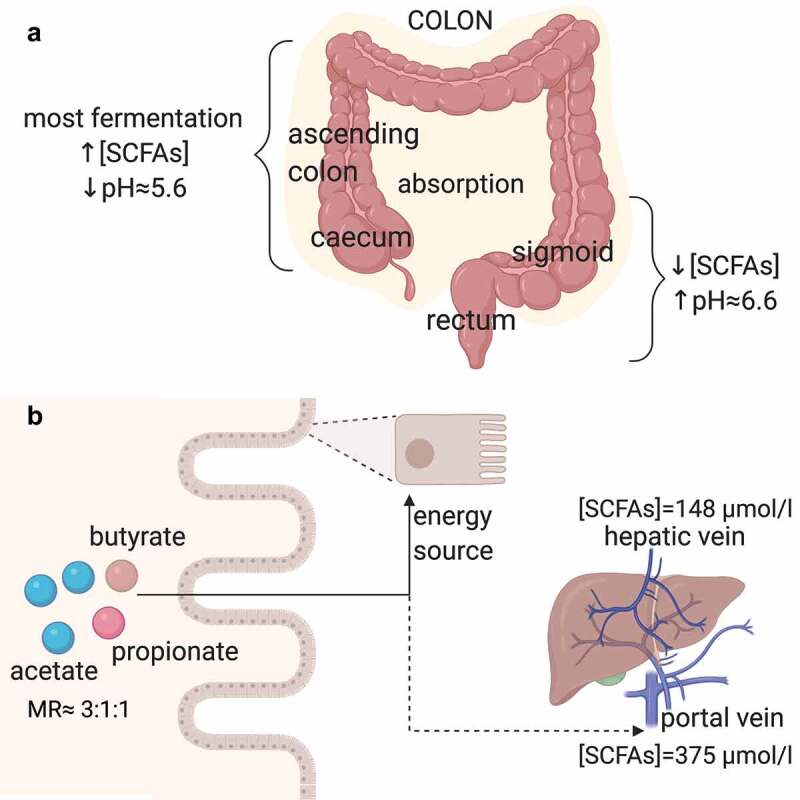
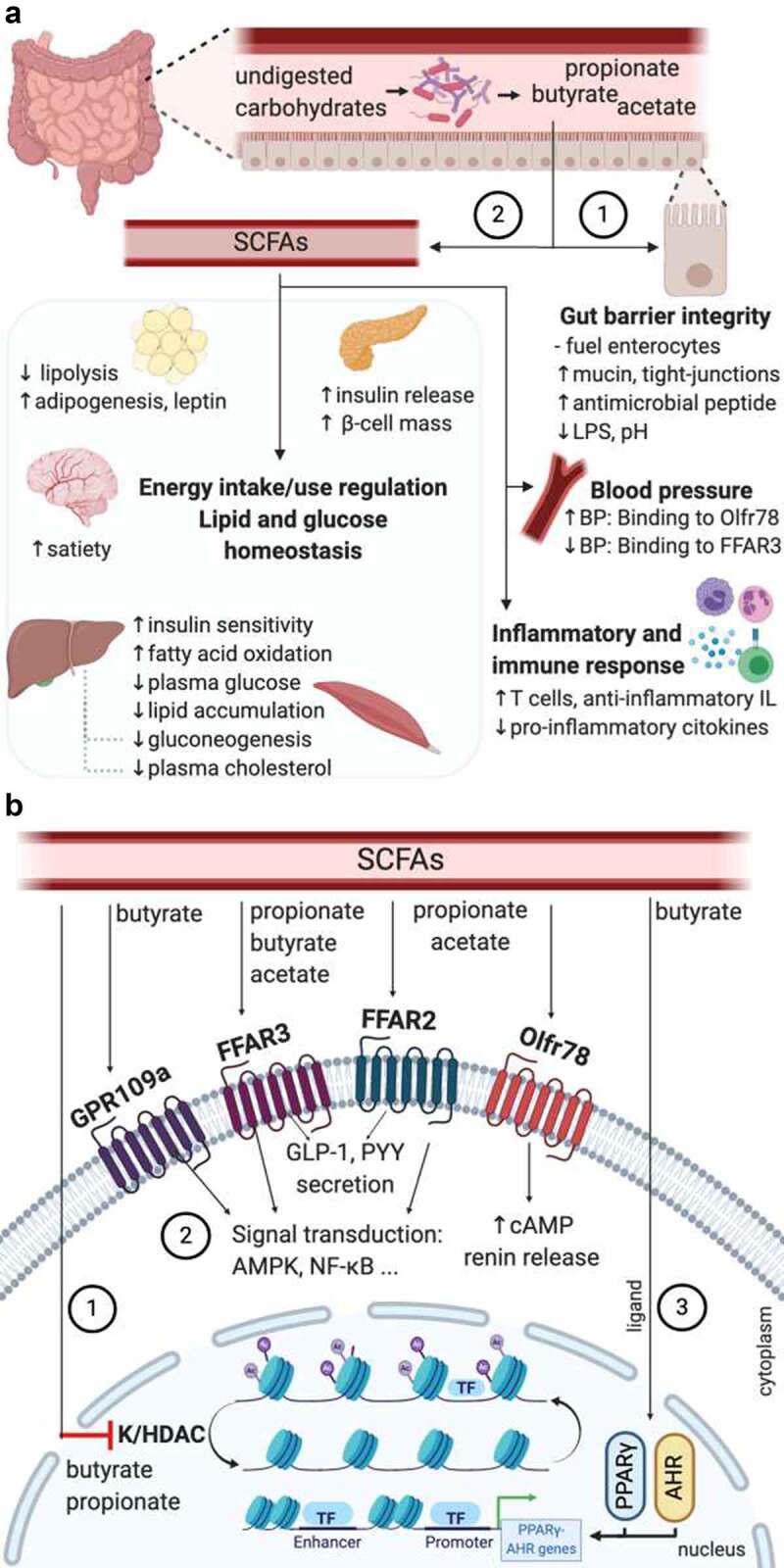
The gut microbiota plays an important role in cardio-metabolic diseases with diet being among the strongest modulators of gut microbiota composition and function. Resistant dietary carbohydrates are fermented to short-chain fatty acids (SCFAs) by the gut bacteria. Fiber and omega-3 rich diets increase SCFAs production and abundance of SCFA-producing bacteria. Likewise, SCFAs can improve gut barrier integrity, glucose, and lipid metabolism, regulate the immune system, the inflammatory response, and blood pressure. Therefore, targeting the gut microbiota with dietary strategies leading to increased SCFA production may benefit cardio-metabolic health. In this review, we provide an overview of the association between diet, SCFAs produced by the gut microbiota and cardio-metabolic diseases. We first discuss the association between the human gut microbiota and cardio-metabolic diseases, then investigate the role of SCFAs and finally explore the beneficial effects of specific dietary interventions that can improve cardio-metabolic outcomes through boosting the SCFA production.
Overview
The claims and statistics of this paper haven’t been checked yet.
Free: it reads the open-access text and checks the first 5 claims that cite a source we can check. Create a free account to check every claim.
Integrity signals
Registry
Cites
Statistics
Figures
Verification
Claims the paper makes
The claims and statistics of this paper haven’t been checked yet.
Free: it reads the open-access text and checks the first 5 claims that cite a source we can check. Create a free account to check every claim.
Self-check
Percentages, sums and reported differences re-computed from the paper’s own numbers.
The self-check needs the paper’s full text.
Citations
Cites
1 retracted
RETRACTED: Primary Prevention of Cardiovascular Disease with a Mediterranean Diet
Estruch, R., Ros, E., Salas-Salvadó, J., Covas, M.-I., Corella, D., Arós, F., Gómez-Gracia, E., Ruiz-Gutiérrez, V., Fiol, M., Lapetra, J., et al. (2013) · New England Journal of Medicine · doi:10.1056/nejmoa1200303 · Cited by 4,257 · cited 1×
“Diets rich in fiber and omega-3 exert beneficial effects in CMD(167,168) lowering the risk of CVD by about 30%, for example, in the Mediterranean diet.(168) The risk decrease is due to the capability of these diets to reduce risk factors associated with CMH, such as blood pressure, cholesterol, body weight, and system…”
BackgroundRetractedZhang, Q., Wang, C., Zheng, M., Li, Y., Li, J., Zhang, L., Shang, X., & Yan, C. (2015) · Cerebrovascular Diseases · doi:10.1159/000369778 · Cited by 11,533
Projections of Global Mortality and Burden of Disease from 2002 to 2030
Mathers, C. D., & Loncar, D. (2006) · PLoS Medicine · doi:10.1371/journal.pmed.0030442 · Cited by 11,386
Diet rapidly and reproducibly alters the human gut microbiome
David, L. A., Maurice, C. F., Carmody, R. N., Gootenberg, D. B., Button, J. E., Wolfe, B. E., Ling, A. V., Devlin, A. S., Varma, Y., Fischbach, M. A., et al. (2014) · Nature · doi:10.1038/nature12820 · Cited by 10,100
Human gut microbes associated with obesity
Ley, R. E., Turnbaugh, P. J., Klein, S., & Gordon, J. I. (2006) · Nature · doi:10.1038/4441022a · Cited by 8,785
Rudd, K. E., Johnson, S. C., Agesa, K. M., Shackelford, K. A., Tsoi, D., Kievlan, D. R., Colombara, D. V., Ikuta, K. S., Kissoon, N., Finfer, S., et al. (2020) · The Lancet · doi:10.1016/s0140-6736(19)32989-7 · Cited by 7,971
Diversity of the Human Intestinal Microbial Flora
Eckburg, P. B., Bik, E. M., Bernstein, C. N., Purdom, E., Dethlefsen, L., Sargent, M., Gill, S. R., Nelson, K. E., & Relman, D. A. (2005) · Science · doi:10.1126/science.1110591 · Cited by 7,913
Changes of Intestinal Functions in Liver Cirrhosis
Fukui, H., & Wiest, R. (2016) · Inflammatory Intestinal Diseases · doi:10.1159/000444436 · Cited by 6,808
Linking long-term dietary patterns with gut microbial enterotypes
Wu, G. D., Chen, J., Hoffmann, C., Bittinger, K., Chen, Y.-Y., Keilbaugh, S. A., Bewtra, M., Knights, D., Walters, W. A., Knight, R., et al. (2011) · Science · doi:10.1126/science.1208344 · Cited by 6,513
De Filippo, C., Cavalieri, D., Di Paola, M., Ramazzotti, M., Poullet, J. B., Massart, S., Collini, S., Pieraccini, G., & Lionetti, P. (2010) · Proceedings of the National Academy of Sciences · doi:10.1073/pnas.1005963107 · Cited by 5,579 · cited 1×
“Another study comparing the fecal microbiota between children from a rural African village with European children observed that African children, who have fiber-rich diets, presented significantly more SCFAs and bacteria belonging to the Bacteroidetes phylum.(178) More studies in which fiber-rich diets positively infl…”
Background
Research works printed but not linked: 1
- Macfarlane J. 1995. Proteolysis and amino acid fermentation. Human colonic bacteria. 75– 100.
Cited by
Items 901–1,000 of 1,000
Fasehun, O. I., Ademosun, A. O., & Oboh, G. (2026) · The Journal of Nutritional Physiology · doi:10.1016/j.jnphys.2026.100029
An Emerging Approach to IBD Treatment: Personalized Nutrition Through Gut Microbiome Optimization
Yusuf, K., Attard, T. M., Al-Kasspooles, M., & Umar, S. (2026) · Frontiers in Bioscience-Landmark · doi:10.31083/fbl47779
Wang, X., Liu, R., Lin, Y., & Zhou, M. (2026) · Psychoneuroendocrinology · doi:10.1016/j.psyneuen.2026.107869
Bioproduction of short- and medium-chain fatty acids
Grigore‐Gurgu, L., Horincar, G., Oprișanu, M., Cotârleț, M., & Bahrim, G. E. (2026) · Elsevier eBooks · doi:10.1016/b978-0-12-819533-8.00001-4
Ramoso, G. M., Hebron, I. U., Taylaran, R. D., Alcantara, C. G., Gonzaga, N. R., Politud, E. R. R., & Camay, R. M. (2026) · World s Veterinary Journal · doi:10.54203/scil.2026.wvj8
Dysbiosis Malaria and Hypertension: The Mechanistic Links
Jidda, M. L., Muhammad, B. J., Imam, U. A., Dallatu, M. K., Ogunwale, K. A., Demilola, Y. H., Ikeoluwa, G. J., Oladele, B. S., & Umar, A. M. (2026) · International journal of research and scientific innovation · doi:10.51244/ijrsi.2026.1304000084
The Gut Microbiome in Obesity and Diabetes: Emerging Links and Modulation Strategies
David, B. P. (2026) · Research Output Journal of Biological and Applied Science · doi:10.59298/rojbas/2026/612735
Hota, T., Verma, S., Javalage, S., & Singh, D. (2026) · Biomedical and Therapeutics Letters · doi:10.62110/sciencein.btl.2026.v13.1862
Microbiome influence on cancer
Khan, F., Ahmed, S., & Tayyaba, U. (2026) · Elsevier eBooks · doi:10.1016/b978-0-443-40551-8.00005-6
Zhu, Y., Bai, L., Li, R., Li, Y., Hou, H., & Zhang, J. (2026) · Iranian journal of pharmaceutical research · doi:10.5812/ijpr-168612
“Collectively, a growing body of evidence has established gut microbiota-derived SCFAs as critical functional mediators that translate dietary modulation of microbial ecology into systemic cardiometabolic benefits, positioning them at the nexus of the gut-heart axis (21).”
Feng, Z., Lv, H., Chen, B., Lin, Q.-H., & Jiang, G. (2026) · Hepatobiliary & pancreatic diseases international · doi:10.1016/j.hbpd.2026.05.005
The Role of Diet and Gut Microbiome in CKD Progression and Therapy
Lau, W. L., Li, W., Sumida, K., & Kalantar‐Zadeh, K. (2026) · Journal of Clinical Medicine · doi:10.3390/jcm15103934
“…phyla) to produce SCFAs which, as noted above, are energy sources for colonic epithelial cells and have receptor-mediated signaling on tight junction proteins, which regulate the integrity of the gut epithelial barrier and limit the systemic translocation of gut-derived uremic toxins [4,82].”
APOE and Gut-Atherosclerosis Crosstalk
Brinati, L. L., Santos, E. A., & ALVAREZ-LEITE, J. I. (2026) · Springer eBooks · doi:10.1007/978-3-031-96089-5_77
Qian, Y. (2024) · Carolina Digital Repository (University of North Carolina at Chapel Hill) · doi:10.17615/09qr-gq50
Hong, Y., Qiu, Y., Yang, Q., Sun, B., Zhang, Y., Zhu, Z., Li, Z., & Shen, T. (2026) · Environment & Health · doi:10.1021/envhealth.6c00171
Schiele, J., Tsai, P.-L., Schimmele, T., Beck, S., Meyer, M., Mannes, M., Desmond, L. W., Noschka, R., Huber-Lang, M. S., Haffner‐Luntzer, M., et al. (2026) · Molecular Psychiatry · doi:10.1038/s41380-026-03638-9
“After CSC, male offspring of M. vaccae ATCC 15483 T vs. BBS dams further showed an increased relative abundance of Ruminococca-ceae [60, 64, 65] (Fig.”
Spices for Targeting the Gut Microbiome to Improve Cardiometabolic Health
Crowe-White, K. M., Senkus, K. E., & DiNatale, J. C. (2026) · Nutrition Reviews · doi:10.1093/nutrit/nuag028
Ćićarić, N., & Đukić, V. (2026) · Turkish Journal of Nephrology · doi:10.5152/turkjnephrol.2026.251200
Lv, J., Wang, J.-H., Wang, Y., Huang, J., Chen, F.-R., Fang, S., Wang, X.-J., Li, Z.-T., Shi, Y.-P., & Guo, L. (2026) · International Microbiology · doi:10.1007/s10123-026-00845-w
“…fatty acids [SCFAs], secondary bile acids [BAs], and trimethylamine-N-oxide), epigenetic modulation of host metabolic pathways, and direct interactions with intestinal lipid absorption and transport systems (Bäckhed et al., 2007; Huang et al., 2025; Nogal et al., 2021 ; Vítek and Haluzík, 2016).”
Plant-Based Diet and Risk of Sepsis: A 16-Year Follow-Up Study
Xu, S., Fang, Z., Kong, X., Shi, J., Tang, Y., Zhao, B., Fang, F., Huang, J., & Lü, B. (2026) · Critical Care Medicine · doi:10.1097/ccm.0000000000007165
Pieszka, M., Szczepanik, K., Lepczyński, A., Marynowska, M., Oczkowicz, M., Ozgo, M., Łoniewski, I., Orczewska‐Dudek, S., Adaszyńska-Skwirzyńska, M., Śliwiński, B., et al. (2026) · Nutrients · doi:10.3390/nu18111784
“These SCFAs are the main end products of microbial fermentation in the colon and serve as the major anions in the mammalian large intestine [70].”
Bieglecka, K., Kęszycka, P. K., Czerwińśka, J., Pastuszak, K., Lange, E., Owczarczyk-Saczonek, A. B., & Krupa‐Kozak, U. (2026) · Nutrients · doi:10.3390/nu18121843
“For instance, an increased or uneven intake of dietary fiber, omega-3 fatty acids, or polyphenols could have independently modulated host metabolism and gut microbiota activity, thereby confounding the observed outcomes and masking the true effects of the intervention [54,55].”
Sifoglu, D., Pereira, B., DeGregory, C., Shah, R., Maier, W., Guan, J., Clark, I., Patel, D. S., Ch'ng, Q.-L., & Alcedo, J. (2026) · PLoS Genetics · doi:10.1371/journal.pgen.1012190
The microbiome and the exposome: Implications for cancer risk
Mbodi, L., Mabonga, L., Novikov, M., Junior, A. D. D. C., Chico, I. M., Ko, H., Saini, K. S., & Dlamini, Z. (2026) · Elsevier eBooks · doi:10.1016/b978-0-443-44322-0.00008-2
From gut to heart: Probiotics-driven cholesterol metabolism, mechanisms and health benefits
Umapathi, P., Siva, N., Balakrishnan, S., Vincent, S., Govindarajan, R. K., Nagdalian, A. A., Evdokimov, I., Kurchenko, V., Lodygin, A., & Duraisamy, S. (2026) · PharmaNutrition · doi:10.1016/j.phanu.2026.100518 · Cited by 1
Ma, X., Zhang, J., Huang, J., Liu, T., Fang, J., & Zhang, X. (2026) · Endocrine Metabolic & Immune Disorders - Drug Targets · doi:10.2174/0118715303459900260505102519
Kong, F., Xu, J., Liu, Z., Ju, N., & Guo, S. (2026) · Food Research International · doi:10.1016/j.foodres.2026.119779
Yan, D., Wan, Z., Wu, P., Wang, N., & Chen, X. D. (2026) · Food Bioscience · doi:10.1016/j.fbio.2026.109316
Gut Microbiome-Centered Approaches in Modern Diagnostics and Clinical Impact
Kumarachari, R. K., Kasi, S., Veluru, H., Chandramouli, A., Krishnamoorthy, S., & Jayaseelan, M. (2026) · Advances in computational intelligence and robotics book series · doi:10.4018/979-8-3373-8172-5.ch001
Tang, Y., Zhu, Z., She, L., & Zhu, P. (2026) · Journal of Nutrition · doi:10.1016/j.tjnut.2026.101683
Cancer and the gut microbiome: the oncogenic impact of dysbiosis
Aden, D., Darji, K., & Zaheer, S. (2026) · Surgical and Experimental Pathology · doi:10.1186/s42047-026-00244-5 · Cited by 1
Sehrawat, R., Gahlot, V., Preeti, Kajal, A., Bhatia, S., Al‐Harrasi, A., & Malik, R. (2026) · Elsevier eBooks · doi:10.1016/b978-0-12-817534-7.00005-7
Misha, M. S. (2024) · theses.fr (ABES) · doi:10.70675/7a024061z9752z4705za544zb782b2cc4f60
Park, M., Yoon, W., Kim, H., Lee, Y. H., Hur, J., Jeong, D., & Park, H. (2026) · Food Science and Biotechnology · doi:10.1007/s10068-026-02228-3
“Through selective utilization by commensal bacteria, polysaccharides can reshape microbial communities and alter microbial metabolic outputs, contributing to host physiological regulation (Nogal et al., 2021).”
Cao, F., Zhang, G., Liu, J., Tian, Y., Zhang, W., Zhang, S., Hou, F., Bao, Z., Liu, Z. H., Xiao, P., et al. (2026) · Medicine · doi:10.1097/md.0000000000049532
“[31] Moreover, SCFAs activate peroxisome proliferator-activated receptors, key lipid metabolism and vascular inflammation regulators.”
Cao, X., Zhao, Y., Liu, J., Ma, Y., Zhang, S., Chen, L., & Zhao, Y. (2026) · Journal of Agricultural and Food Chemistry · doi:10.1021/acs.jafc.6c00184
Khan, M. S. (2026) · International Journal of Food Science & Technology · doi:10.1093/ijfood/vvag151
Petelina, T. I., Gorbachevskii, A. V., Avdeeva, K. S., Valeeva, L. L., & Kapustina, A. A. (2026) · Obesity and metabolism · doi:10.14341/omet13257
Nie, Y., Xia, T., Fu, Y., Chen, Y., Wang, J., Zhang, N., Huang, S., Yu, J., & Wang, M. Y. (2026) · Food Research International · doi:10.1016/j.foodres.2026.120090
Lee, Y.-H., Siewers, V., & Larsbrink, J. (2026) · Applied and Environmental Microbiology · doi:10.1128/aem.00542-26
“Produced metabolites may also be consumed or converted by other species in the gut, e.g., conversion of lactate to butyrate (52), and such microbial interactions may be further affected by different species occupying different layers of the gut, from the lumen to the mucus layer (53).”
Alzubi, A., Glowacki, H. X., Van, K., Cho, C. E., & Monk, J. M. (2026) · International Journal of Molecular Sciences · doi:10.3390/ijms27156583
Modified homogalacturonan-rich citrus pectin as potential next-generation prebiotics
Poppe, J., Humerez-Flores, J. N., Vieira‐Silva, S., Raes, J., Hendrickx, M., Falony, G., & Verbeke, K. (2026) · International Journal of Food Sciences and Nutrition · doi:10.1080/09637486.2026.2704773
“In particular, reduced butyrate production or a decline in butyrate-producing bacteria has been associated with various conditions, including inflammatory bowel diseases (Vieira-Silva et al. 2019; Poppe et al. 2024), obesity, and cardio-vascular disease (Vieira-Silva et al. 2020; Nogal et al. 2021).”
Wei, J., Xu, C., Yun, Q., Guan, M., Xie, J., Tian, Y., & Fan, G. (2026) · Pediatric Research · doi:10.1038/s41390-026-05327-3
Okonta, E. O., Nnadi, C. O., & Paul-Chima, U. O. (2026) · Frontiers in Nutrition · doi:10.3389/fnut.2026.1874182
Luo, N., Hu, H., Zeng, X., Zhang, Y., Deng, Q., Tang, E., & Yu, H. (2026) · Molecular Medicine Reports · doi:10.3892/mmr.2026.13979
“…0), FFar1 (GPr40), Th17/Treg cells, 1) during pregnancy, the gut fatty acids Propionic acid FFar3 (GPr41), il6, il1 β and TnF‑ α , microbiota undergoes profound (48,67) (c3: 0), butyric FFar2 (GPr43), cd4+ effector T changes in both quantity and acid (C4: 0), GPR84, FFAR4 cells, CD8+ composition.”
The impact of climatic extreme temperatures on gut microbiome-mediated cardio-metabolic health
Shukla, A., Rughwani, D., Aditya, A. K., & Ray, A. K. (2026) · Environmental Pollution · doi:10.1016/j.envpol.2026.128877
Unnathi, G. S., Navya, H. M., Kumara, B. P., & Prabhurajeshwar, C. (2026) · Research Journal of Biotechnology · doi:10.25303/219rjbt3880398
Diet and Atherosclerosis Prevention: Rethinking the Significance of “The Japan Diet”
Maruyama, C. (2026) · Journal of Atherosclerosis and Thrombosis · doi:10.5551/jat.rv22057
Sumi, M. S. A., Rahat, M. T. I., Resma, M. N. J., Ahmed, M. F., Mollah, M. N. H., & Kibria, M. K. (2026) · International Microbiology · doi:10.1007/s10123-026-00879-0
Sun, J., Chen, Z., Wu, X., He, Z., Bao, T., 赵林华, & Tong, X. (2026) · Scientific Reports · doi:10.1038/s41598-026-79131-8
Wang, D., Luo, F., Zhou, M., Shang, H., & Xizhu, W. (2026) · Frontiers in Microbiology · doi:10.3389/fmicb.2026.1886708
Lidoo, K., Kaur, R., Singh, R., Jangra, S., Singh, T. G., & Kumari, P. (2026) · International Immunopharmacology · doi:10.1016/j.intimp.2026.117238
Yang, J., Zhang, Y., Wang, K., & Wang, Y. (2026) · Food Reviews International · doi:10.1080/87559129.2026.2711911
D’Urso, F., & Broccolo, F. (2026) · Applied Sciences · doi:10.3390/app16168007
Briceno, A., Palacios, C. S., Narayanan, V. S., George, F., & Martínez, S. S. (2026) · Microorganisms · doi:10.3390/microorganisms14081775
“For example, Bacteroides species contribute to the breakdown of complex carbohydrates through polysaccharide utilization systems [55], while Butyricimonas and Anaerotruncus have been reported in association with SCFA-producing bacterial groups [56].”
Zhu, C., Wang, Y., Luo, Y., Gao, B., Hou, Q., Zhang, Y., & Huang, X. (2026) · BMC Microbiology · doi:10.21203/rs.3.rs-10563179/v1
Rodríguez-Purata, V. H., González, S. S., Valdez-Palomares, F., Lares-Villaseñor, E., Zarazúa, S., la Cruz-Mosso, U. D., Velazquez-Arjona, W., Leyva‐Ramos, R., Palacios‐González, B., & Morales, J. M. V. (2026) · SSRN Electronic Journal · doi:10.2139/ssrn.7310604
Wang, Q., Wang, Y., Wang, G., Fang, X., Fu, Y., Li, Z., Guo, Y., Ma, J., Hu, L., Zeng, X., et al. (2026) · npj Biofilms and Microbiomes · doi:10.1038/s41522-026-01133-1
Microbiota and nutrigenomics: beneficial allies or hidden threats
Hazaimeh, R. A., Ogunkunle, N. F., Yakubu, M., & Boateng, J. (2026) · Food & Function · doi:10.1039/d5fo04705f
Nutribióticos y farmabióticos: efectos asociados a la modulación de la composición corporal
Salas-Ramírez, C. A., Moreno‐Jiménez, M. R., Rocha‐Guzmán, N. E., Gallegos‐Infante, J. A., González-Mercado, M. E., González‐Laredo, R. F., & Herrera-Rocha, K. M. (2026) · TIP Revista Especializada en Ciencias Químico-Biológicas · doi:10.22201/fesz.23958723e.2026.828
Impacts of marine metabolites on gut health
Kumarasinghe, H. S., Perera, T., Samarakoon, K. W., & Gunathilaka, T. L. (2026) · Elsevier eBooks · doi:10.1016/b978-0-443-29190-6.00020-9
What happens to your body when you eat more pulses? Five effects you need to know
Mason, L. (2026) · The Conversation · doi:10.64628/ab.3afq9kgnc
Gut microbiota-regulated cell death: a review on pyroptosis, ferroptosis, and related mechanisms
Shen, Y., Zhou, Y., Yuan, Y., Chen, W., Liang, M., Liu, X., Lu, Y., & ZHENG, Q. (2026) · Frontiers in Microbiology · doi:10.3389/fmicb.2026.1853772
“…beneficial effects including improving gut barrier integrity, modulating glucose and lipid metabolism, and regulating immune responses and inflammation, which collectively contribute to the amelioration of cardio-metabolic disorders and inflammatory diseases (Nie et al., 2025; Nogal et al., 2021).”
Li, X., Li, N., Zou, Y., Zheng, P., Guan, L., Kuang, M., Wan, J., Gao, J., Wei, G., Yang, J., et al. (2026) · Journal of Advanced Research · doi:10.1016/j.jare.2026.08.056
Barakat, H., Bahloul, A. H., & Abdellatif, A. A. H. (2026) · Antioxidants · doi:10.3390/antiox15091097
“In contrast, low-fiber diets are associated with decreased microbial diversity and reduced synthesis of SCFAs, while fiber-rich diets promote a more robust intestinal environment [90].”
Zhaxi, D., Yu, C., Wang, J., Yang, D., Wang, Z., Yang, W., Zhang, Y., Yang, C., & Li, Z. (2026) · Frontiers in Microbiology · doi:10.3389/fmicb.2026.1907226
“…of the gut microbiota-derived metabolites have been identified to regulate lipid metabolism and fat deposition, including short-chain fatty acids (Nogal et al., 2021), trimethylamine-N-oxide (Yoo et al., 2021), secondary bile acids (Zha et al., 2024), and branched-chain amino acids (Yang et al.,…”
Gut dysbiosis and complement-mediated neuroinflammation in vascular dementia
Ünal, S. (2026) · Academia Neuroscience and Brain Research · doi:10.20935/acadneurosci8477
Gut microbiota-derived short-chain fatty acids in gallstones: mechanisms and intervention strategies
Xue, L., Yu, T., & Jiang, M. (2026) · Frontiers in Microbiology · doi:10.3389/fmicb.2026.1897348
Metabolic shifts driven by host‐microbial interactions
Nair, T., Stuhr, N. L., Weathers, B. A., & Curran, S. P. (2026) · FEBS Journal · doi:10.1111/febs.70704
Pan, Y., Shu, C., Mei, Y., Hu, Y., Qiu, Y., & Fang, L. (2026) · Frontiers in Microbiology · doi:10.3389/fmicb.2026.1893651 · Cited by 1
The Bile Acid–Diet–Microbiome Axis in Clostridioides difficile Infection
Trofin, F., Buzilă, E. R., Iancu, I. R., Tuchiluş, C., Temneanu, O. R., Iancu, L. S., Vlad, M. A., Anton-Păduraru, D.-T., Armașu, I., Bădescu, A. C., et al. (2026) · Nutrients · doi:10.3390/nu18172872
“…low fiber availability, impaired SCFA production, altered bile acid metabolism, and a pro-inflammatory intestinal milieu, although their effects depend on macronutrient composition, baseline microbiota, antibiotic exposure, host factors, and the C. difficile strain involved (Figure 1) [13,69,71].”
Erukainure, O. L., & Chukwuma, C. I. (2026) · Antioxidants · doi:10.3390/antiox15091106
“Fermentation-derived metabolites such as SCFAs, sterol derivatives and bioactive lipids are reported mediators of the gut–adipose axis, acting as signaling molecules that regulate adipocyte metabolism through insulin-dependent and insulin-independent mechanisms [66].”
Gut Microbiota and Brain Aging: Identifying Keystone Biomarkers for Cognitive Health
Bhatia, M., Mishra, S. P., Mishra, R. K., Jain, S., Yadav, H., & Tomar, R. S. (2026) · Biomedicines · doi:10.3390/biomedicines14091975
“Specifically, acetate and butyrate inhibit lipolysis of fat deposits in the body, while propionate stimulates extracellular lipolysis via induction of lipoprotein lipase expression and lowers blood lipid concentrations, body weight, hypertension, and the development of atherosclerosis [91].”
Gut Microbiome Diversity, Functional Potential, and Ecological Relevance of Hottentotta tamulus
Khan, K. U., Zahid, M. T., Mustafa, G., Tanpure, R. S., Tahir, H. M., Kumar, R., Kim, D.-W., Park, H.-K., & Jeon, B. (2026) · MicrobiologyOpen · doi:10.1002/mbo3.70373
“These bioactive molecules influence the level of inflammation and host metabolism through the regulation of short‐chain fatty acid production, thus relating the activity of gut microbes to whole‐body physiological systems (Nogal et al. 2021).”
Saxena, S., Ahmed, I., Jha, R. K., Kumar, N., Saxena, M., Chakrabarty, S., Choudhary, R. K., Ahuja, D., Kumar, M. V., & Bhattacharjee, A. (2026) · Obesity Medicine · doi:10.1016/j.obmed.2026.100745
The Adolescent Microbiome–Gut–Brain Axis: Development, Mechanisms, and Translational Perspectives
Vazquez-Sanroman, D. B., Longaberger, L., Chance, A., Anderson, M. C., Wilson, N. F., & Koehler, G. (2026) · Nutrients · doi:10.3390/nu18172891
“Conversely, exercise regimens in rodents increase short-chain fatty acid (SCFA)-producing taxa (e.g., Lactobacillus , Bifidobacterium , and Firmicutes ) [90], strengthen the gut barrier, and activate neurotrophic pathways that rescue hippocampal plasticity [41,91].”
Yin, Q., Cui, K., Lu, T., Zheng, D., Gu, H., Yang, X., Mayo, K. H., Cheng, H., Zhou, Y., & Cui, S. (2026) · Carbohydrate Polymers · doi:10.1016/j.carbpol.2026.125835
Biotics in Menopausal Health: A Two-Decade Bibliometric Analysis and Narrative Review
Olawale, F., Alake, S. E., Chandrashekar, R., Kim, Y., Chowanadisai, W., (6622952), E. A. M., Smith, B. J., & Lucas, E. A. (2026) · Current Nutrition Reports · doi:10.1007/s13668-026-00798-6
Ncir, W. B., Frikha, H., Derbel, R., Belgith, I., Ammous-Boukhris, N., Mokdad‐Gargouri, R., Abdellhedi, F., Feki, M. M., & Keskes, L. (2026) · World Journal of Microbiology and Biotechnology · doi:10.1007/s11274-026-05228-x
“In parallel, the fermentation of dietary fiber by gut microbes generates SCFAs that can influence host lipid metabolism and systemic met - abolic homeostasis (Deng et al. 2023; Nogal et al. 2021).”
Muñoz-López, M., Quesada-Fernández, G., Sancho-Haro, E. S., López‐Gil, J. F., López‐Moreno, M., & Tornero-Aguilera, J. F. (2026) · Cells · doi:10.3390/cells15181629
Chen, H., You, S., Zhang, L., Bu, X., Zhu, S., Xu, T., Cao, Y., Zhang, Y., & Zhong, C. (2026) · Nutrition Metabolism and Cardiovascular Diseases · doi:10.1016/j.numecd.2026.104999
Hein Joshna, S., Kavitha, M., Auxcilia, J., Chandrakumar, K., & G, K. S. G. (2026) · Genetics and Molecular Research · doi:10.4238/0ktasq78
Gut microbial allies and adversaries in SARS-CoV-2 infection
Tolosa-Enguís, V., Fernández-Murga, M. L., Benítez‐Páez, A., Francés‐Cuesta, C., Garde, J., Llombart-Cusscac, A., Molina-Mendoza, G. V., Avilés‐Alía, A. I., Geller, R., Mendoza‐García, L., et al. (2026) · Current Research in Microbial Sciences · doi:10.1016/j.crmicr.2026.100661
“In particular, butyrate-producing commensal species from the Ruminococcaceae and Lachnospiraceae families are less abundant in infected individuals (Ng et al., 2023, Gu et al., 2020, Nogal et al., 2021).”
Wu, J., Ziyi, Z., Sun, Z., Yuan, S., & Qiu, L. (2026) · Ageing Research Reviews · doi:10.1016/j.arr.2026.103347
Foods as Modulators of GLP-1 Secretion
Ткаченко, Г. М., Kołodziejska, R., Rymuszka, A., Kamiński, P., & Kurhaluk, N. (2026) · Nutrients · doi:10.3390/nu18182995
The Impact of Ultra-Processed Foods on Chronic Kidney Disease Progression
Młynarska, E., Hossa, K., Kłosowicz, A., Krupińska, N., Kuzar, P., Majtas, A., Możdżan, Z., Prusak, A., Szymańska, P., Wieczorek, A., et al. (2026) · Nutrients · doi:10.3390/nu18183055
“Specifically, fiber-rich dietary patterns stimulate the growth of beneficial bacteria, including Bifidobacterium and Lactobacillus, which drive saccharolytic fermentation and the subsequent production of protective short-chain fatty acids (SCFAs) [63].”
Refeeding the Gut in Anorexia Nervosa: Microbiome, Nutritional Rehabilitation and Dietetic Care
Margioula, P., Nakas, A., Adamidou, L., Simou, E., Rafailidis, P. I., Konstantinidis, T. G., Tsakri, D., Nikolaidis, C. G., Gyriki, D., Tsigalou, C., et al. (2026) · Nutrients · doi:10.3390/nu18183054
“Microbial metabolites, especially SCFAs, may influence intestinal barrier integrity, immune signaling and energy metabolism [31,32].”
Zhang, C., Shi, Q., Wang, J., Yang, M., Shi, X., Ao, Z., Sun, G., Li, Z., Gong, T., Zhang, Y., et al. (2026) · Tropical Animal Health and Production · doi:10.1007/s11250-026-05354-6
“…produced by gut microbial fermentation of dietary fiber and tan - nins, such as short-chain fatty acids (SCFAs), not only serve as energy sources but also influence systemic metabolic processes by activating signaling molecules like G protein-coupled receptors (GPCRs) (Nogal et al. 2021).”
Mafe, A. N., & Büsselberg, D. (2026) · International Journal of Molecular Sciences · doi:10.3390/ijms27198503
“Microbial fermentation of dietary fibres and resistant starches produces metabolites such as short-chain fatty acids (SCFAs), which contribute to epithelial barrier integrity, immune regulation, and metabolic homeostasis [12,13].”
Kamalakar, K., Akerele, C. A., Lafont, E., Koralnik, L. R., Gilman, C., Litran, J. C., Lee, J., Robinson‐Papp, J., & Malaspina, D. (2026) · Nutrients · doi:10.3390/nu18193146
“A key outcome is increased microbial fermentation of dietary fiber, generating SCFAs, particularly acetate, propionate, and butyrate [25,26].”
Liao, L.-N., Huang, Y.-C., Lin, T.-Y., Su, Y., & Pan, W. (2026) · Nutrition Bulletin · doi:10.1111/nbu.70071
Fusco, V., Montemurro, M., Chieffi, D., Verni, M., Albuquerque, T., Lima, M., Rizzello, C. G., & de Souza, E. (2026) · Elsevier eBooks · doi:10.1016/b978-0-443-29835-6.00015-0
Mattanovich, M., Hodek, O., Barsch, A., Kessler, N., Weinkouff, S., Furre, S., Hjerresen, J. P., Gobba, C. D., Jørgensen, M. E., Lewis, M. R., et al. (2026) · ChemRxiv · doi:10.26434/chemrxiv.15005335/v2
Liu, F., Lv, Y., Wang, T., Li, C., Zhang, Y., Liu, L., Hu, X., Liang, Y., Zhu, F., & Wang, J. (2026) · Frontiers in Nutrition · doi:10.3389/fnut.2026.1827773
Khan, I., Xie, X., & Li, Z. (2026) · Probiotics and Antimicrobial Proteins · doi:10.1007/s12602-026-11219-z
Song, G., Feng, J., Yuan, H., Jia, H., Zhang, W., Zhao, S., & Zhu, J. (2026) · Frontiers in Veterinary Science · doi:10.3389/fvets.2026.1967552
“Indigestible carbohydrates can be fermented by bacteria in the distal gut, including the cecum and colon, into short-chain fatty acids (SCFAs) (111), which are essential for preserving intestinal health and alleviating inflammation (112).”
Feng, Y., Suo, K., Yang, Z., Wen, C., & Zhang, J. (2026) · International Journal of Biological Macromolecules · doi:10.1016/j.ijbiomac.2026.154713
Li, J., & Ji, F. (2026) · Supportive Care in Cancer · doi:10.1007/s00520-026-11290-w
“SCFAs are primarily produced through the fermentation of dietary fibers by anaerobic gut bacteria, with acetate, propionate, and butyrate accounting for approximately 85% of total SCFA [77].”
Qiang, X., Gao, M., Li, Z., & Li, W. (2026) · Food Bioscience · doi:10.1016/j.fbio.2026.110120
Metadata
- Authors
- Nogal, A., Valdes, A. M., & Menni, C.
- Affiliations
- St Thomas' Hospital (GB)
- Corresponding author
- Menni, Cristina
- Venue
- Gut Microbes
- Publisher
- Informa UK Limited
- Published
- 2021-01-01
- Volume
- 13
- Issue
- 1
- Pages
- 1-24
- ISSN
- 1949-0976 (ISSN-L)
- 1949-0984
- PMC
- PMC8007165
- OpenAlex
- W3137495763
- Semantic Scholar
- a27da66278fee146f5d8feac192a2118138fd791
- Cited by
- 917
- References
- 196
- Citations by year
- 2026: 221 · 2025: 257 · 2024: 221 · 2023: 142 · 2022: 63 · 2021: 13
- FWCI
- 11.52
- Type
- journal article
- Language
- en
- Open access
- gold
- doi.org
- Licence
- cc-by
- creativecommons.org/licenses/by/4.0/ (unspecified)
- doi.org/10.1080/policies-text-data-mining (tdm)
- Locations
- Gut Microbes (publishedVersion, cc-by)
- PubMed Central (publishedVersion, cc-by)
- PubMed (publishedVersion)
- Archivio Istituzionale della Ricerca (Universita Degli Studi Di Milano) (submittedVersion, other-oa)
- DOAJ (DOAJ: Directory of Open Access Journals) (submittedVersion, cc-by-sa)
- Research Portal (King's College London) (submittedVersion, other-oa)
- Funders
- Department of Twin Research is funded by the Wellcome Trust, Medical Research Council
- Chronic Disease Research Foundation (CDRF-18/2019, CDRF-19/2019, CDRF-2017)
- Medical Research Council (AIMHY; MR/M016560/1)
- National Institute for Health Research Nottingham Biomedical Research Centre (NA)
- Topics
- Life Sciences › Biochemistry, Genetics and Molecular Biology › Molecular Biology › Gut microbiota and health
- Health Sciences › Nursing › Nutrition and Dietetics › Microbial Metabolites in Food Biotechnology
- Health Sciences › Medicine › Public Health, Environmental and Occupational Health › Nutritional Studies and Diet
- Keywords
- short-chain fatty acids, gut microbiota, diet, cardiometabolic disease, dietary fiber, omega-3 fatty acids, intestinal barrier integrity, glucose metabolism, lipid metabolism, immune regulation, inflammation, blood pressure, dietary intervention
- MeSH terms
- Gastrointestinal Microbiome, Cardiometabolic Risk Factors, Bacteria, Cardiovascular Diseases, Diet, Energy Metabolism, Fatty Acids, Volatile, Humans, Metabolic Syndrome, Gastrointestinal Tract
About these checks
Registry, retraction, Cites and statistics results are computed, not judged, with one exception: a printed reference that no index lists is read once by a model before it counts as a citation error. Claims are extracted by a model and kept only when their quote appears verbatim in the text; each cited source is then checked, with a model’s help, for whether it says what the claim relies on. Those verdicts can be wrong — read the claim’s quote and the cited source before relying on one.
Statistics and arithmetic are recomputed, not judged.
Confidence bands are shown only for fields calibrated on our annotated test set. None is calibrated yet, so no band is shown.
What counts as a claim ›How we measure confidence ›How we check this ›
Are you an author, or do you see a problem with this page? Request a review
Data sources
Bibliographic data: Semantic Scholar, OpenAlex, Crossref.
Contains information from the Semantic Scholar Academic Graph Datasets, made available under the ODC Attribution License (ODC-BY 1.0).
Semantic Scholar’s data is described in: Kinney, R., et al. (2023). The Semantic Scholar Open Data Platform. arXiv:2301.10140.
