

The role of short-chain fatty acids in the interplay between gut microbiota and diet in cardio-metabolic health
Open accessThe DOI matches its Crossref record; 196 of the 196 references it cites were found in a registry or an index.
Abstract
The gut microbiota plays an important role in cardio-metabolic diseases with diet being among the strongest modulators of gut microbiota composition and function. Resistant dietary carbohydrates are fermented to short-chain fatty acids (SCFAs) by the gut bacteria. Fiber and omega-3 rich diets increase SCFAs production and abundance of SCFA-producing bacteria. Likewise, SCFAs can improve gut barrier integrity, glucose, and lipid metabolism, regulate the immune system, the inflammatory response, and blood pressure. Therefore, targeting the gut microbiota with dietary strategies leading to increased SCFA production may benefit cardio-metabolic health. In this review, we provide an overview of the association between diet, SCFAs produced by the gut microbiota and cardio-metabolic diseases. We first discuss the association between the human gut microbiota and cardio-metabolic diseases, then investigate the role of SCFAs and finally explore the beneficial effects of specific dietary interventions that can improve cardio-metabolic outcomes through boosting the SCFA production.
Overview
The claims and statistics of this paper haven’t been checked yet.
Free: it reads the open-access text and checks the first 5 claims that cite a source we can check. Create a free account to check every claim.
Integrity signals
Registry
Cites
Statistics
Figures
Verification
Claims the paper makes
The claims and statistics of this paper haven’t been checked yet.
Free: it reads the open-access text and checks the first 5 claims that cite a source we can check. Create a free account to check every claim.
Self-check
Percentages, sums and reported differences re-computed from the paper’s own numbers.
The self-check needs the paper’s full text.
Citations
Cites
1 retracted
RETRACTED: Primary Prevention of Cardiovascular Disease with a Mediterranean Diet
Estruch, R., Ros, E., Salas-Salvadó, J., Covas, M.-I., Corella, D., Arós, F., Gómez-Gracia, E., Ruiz-Gutiérrez, V., Fiol, M., Lapetra, J., et al. (2013) · New England Journal of Medicine · doi:10.1056/nejmoa1200303 · Cited by 4,257 · cited 1×
“Diets rich in fiber and omega-3 exert beneficial effects in CMD(167,168) lowering the risk of CVD by about 30%, for example, in the Mediterranean diet.(168) The risk decrease is due to the capability of these diets to reduce risk factors associated with CMH, such as blood pressure, cholesterol, body weight, and system…”
BackgroundRetractedZhang, Q., Wang, C., Zheng, M., Li, Y., Li, J., Zhang, L., Shang, X., & Yan, C. (2015) · Cerebrovascular Diseases · doi:10.1159/000369778 · Cited by 11,533
Projections of Global Mortality and Burden of Disease from 2002 to 2030
Mathers, C. D., & Loncar, D. (2006) · PLoS Medicine · doi:10.1371/journal.pmed.0030442 · Cited by 11,386
Diet rapidly and reproducibly alters the human gut microbiome
David, L. A., Maurice, C. F., Carmody, R. N., Gootenberg, D. B., Button, J. E., Wolfe, B. E., Ling, A. V., Devlin, A. S., Varma, Y., Fischbach, M. A., et al. (2014) · Nature · doi:10.1038/nature12820 · Cited by 10,100
Human gut microbes associated with obesity
Ley, R. E., Turnbaugh, P. J., Klein, S., & Gordon, J. I. (2006) · Nature · doi:10.1038/4441022a · Cited by 8,785
Rudd, K. E., Johnson, S. C., Agesa, K. M., Shackelford, K. A., Tsoi, D., Kievlan, D. R., Colombara, D. V., Ikuta, K. S., Kissoon, N., Finfer, S., et al. (2020) · The Lancet · doi:10.1016/s0140-6736(19)32989-7 · Cited by 7,971
Diversity of the Human Intestinal Microbial Flora
Eckburg, P. B., Bik, E. M., Bernstein, C. N., Purdom, E., Dethlefsen, L., Sargent, M., Gill, S. R., Nelson, K. E., & Relman, D. A. (2005) · Science · doi:10.1126/science.1110591 · Cited by 7,913
Changes of Intestinal Functions in Liver Cirrhosis
Fukui, H., & Wiest, R. (2016) · Inflammatory Intestinal Diseases · doi:10.1159/000444436 · Cited by 6,808
Linking long-term dietary patterns with gut microbial enterotypes
Wu, G. D., Chen, J., Hoffmann, C., Bittinger, K., Chen, Y.-Y., Keilbaugh, S. A., Bewtra, M., Knights, D., Walters, W. A., Knight, R., et al. (2011) · Science · doi:10.1126/science.1208344 · Cited by 6,513
De Filippo, C., Cavalieri, D., Di Paola, M., Ramazzotti, M., Poullet, J. B., Massart, S., Collini, S., Pieraccini, G., & Lionetti, P. (2010) · Proceedings of the National Academy of Sciences · doi:10.1073/pnas.1005963107 · Cited by 5,579 · cited 1×
“Another study comparing the fecal microbiota between children from a rural African village with European children observed that African children, who have fiber-rich diets, presented significantly more SCFAs and bacteria belonging to the Bacteroidetes phylum.(178) More studies in which fiber-rich diets positively infl…”
Background
Research works printed but not linked: 1
- Macfarlane J. 1995. Proteolysis and amino acid fermentation. Human colonic bacteria. 75– 100.
Cited by
Items 501–600 of 1,000
Zhang, H., Lin, Z., Chen, J., Gan, D., Zhou, H., Ma, Z., Zeng, X., Xue, Y., Wang, X., Zhan, Q., et al. (2022) · Frontiers in Cardiovascular Medicine · doi:10.3389/fcvm.2022.893436 · Cited by 7
“Second, dietary fiber has been shown to improve intestinal flora and increase colonic fermentation (production of SCFA) in the large bowel (25, 26).”
BackgroundNissen, L., Prete, R., Casciano, F., Corsetti, A., Battista, N., Veneziani, G., & Gianotti, A. (2024) · LWT · doi:10.1016/j.lwt.2024.116014 · Cited by 7
Experimental and Emerging Free Fatty Acid Receptor Agonists for the Treatment of Type 2 Diabetes
Patti, A. M., Giglio, R. V., Παπάνας, Ν., Şerban, D., Stoian, A. P., Pafili, K., Al‐Rasadi, K., Rajagopalan, K., Rizvi, A. A., Ciaccio, M., et al. (2022) · Medicina · doi:10.3390/medicina58010109 · Cited by 7
“The omega-3 fatty acids obtained from fish oils and the SCFAs derived from the fermentation of dietary fiber have effects on the metabolic and inflammatory processes associated with obesity and T2DM, which are attributable to the activation of FFA1-4 receptors [10].”
BackgroundMicrobiome analyses of poultry feeds: Part II. Comparison of different poultry feeds
Olson, E. G., Dittoe, D. K., Micciche, A. C., Stock, D. A., Rubinelli, P. M., Rothrock, M. J., & Ricke, S. C. (2024) · Journal of Environmental Science and Health Part B · doi:10.1080/03601234.2024.2361596 · Cited by 6
Quifer‐Rada, P., Aguilar‐Camprubí, L., Samino, S., Amigó, N., Soler, O., & Padró‐Arocas, A. (2024) · Metabolites · doi:10.3390/metabo14100566 · Cited by 6
“Acetate and lactate are end products of the catabolism of glucose by bacteria [36–39] such as S. aureus and S. epidermidis , the main bacterial species that cause AM and SAM, respectively.”
BackgroundMacCann, R., Li, J., Leon, A. A. G., Negi, R., Alalwan, D., Tinago, W., McGettrick, P., Cotter, A. G., LANDAY, A. L., Sabin, C. A., et al. (2025) · The Journal of Infectious Diseases · doi:10.1093/infdis/jiaf043 · Cited by 6
“Several studies have shown that a high-fat diet has a negative impact on gut microbiota, with a reduction in SCFA-producing bacteria affecting host metabolism and linked with obesity, insulin sensitivity, and lipid metabolism in the general population [9].”
InfluentialRole of Microbiota‐Derived Metabolites in Prostate Cancer Inflammation and Progression
Rathinavelu, P. K., Kumar, A., & Kumar, V. (2025) · Cell Biochemistry and Function · doi:10.1002/cbf.70050 · Cited by 6
Kalaga, P., & Ray, S. K. (2025) · Brain Sciences · doi:10.3390/brainsci15020197 · Cited by 6
“These SCFAs are crucial to multiple functions, such These sympathetic nerve fibers often travel alongside arteries to enter the mucosa of the gastrointestinal (GI) tract [26]. as protecting the gut membrane and serving as an energy source [29].”
Functional Aspects of Dietary Fibers in Nutraceuticals
Haque, A., Khan, T., Khan, I., Ahmad, M. F., & Ashraf, S. A. (2025) · Springer eBooks · doi:10.1007/978-981-97-9723-3_7 · Cited by 6
Mallardi, D., Maqoud, F., Guido, D., Aloisio, M., Linsalata, M., & Russo, F. (2025) · Nutrients · doi:10.3390/nu17061064 · Cited by 6
“The Lactulose/Mannitol (La/Ma) ratio is commonly used to assess small intestinal permeability, while urinary sucrose (Su) levels reflect gastroduodenal permeability [17–19].”
Cheng, B., Feng, H., Chen, T., Jia, F., Li, C., & Zhang, X. (2025) · Food Bioscience · doi:10.1016/j.fbio.2025.106436 · Cited by 6
Vari, F., Serra, I., Friuli, M., Cavallo, V., Gammaldi, N., Vergara, D., Salzet, M., & Giudetti, A. M. (2025) · Frontiers in Pharmacology · doi:10.3389/fphar.2025.1567543 · Cited by 6
Shen, H., Zhao, Y., Zhang, S., Xu, J. M., Tong, J., Yao, H., & Zhang, H. (2025) · Probiotics and Antimicrobial Proteins · doi:10.1007/s12602-025-10584-5 · Cited by 6
“While antibiotics disrupt the production of short-chain fatty acids (SCFAs) in the gut [16, 17], prebiotics can help restore the production of these molecules, which are closely associated with colonization resistance against pathogens [18, 19], including bifidobacteria [20], Clostridium butyricum…”
Chi, Z., Ye, F., Wang, J., Lv, G., Fang, X., Teng, T., & Shi, B. (2025) · International Journal of Food Microbiology · doi:10.1016/j.ijfoodmicro.2025.111320 · Cited by 6
Hsu, C., Lin, Y.-J., Hou, C., Chen, Y., & Tain, Y. (2025) · Antioxidants · doi:10.3390/antiox14070851 · Cited by 6
“First, reduced production of microbial-derived SCFAs compromises gut barrier integrity, insulin sensitivity, and anti-inflammatory responses, all of which are associated with CKM syndrome [54].”
Cillis, F. D., Petrillo, G., D’Aprile, I., Marizzoni, M., Saleri, S., Mazzelli, M., Zonca, V., Benedetto, M. G. D., Riva, M. A., & Cattaneo, A. (2025) · Nutrients · doi:10.3390/nu17172812 · Cited by 6
“…which are essential metabolites for maintaining host health [67] and play a crucial role in preserving intestinal barrier integrity, supporting mucin production, modulating local immune responses, including regulatory T cell differentiation and suppression of pro-inflammatory cytokines [68,69].”
Enwere, M., Irobi, E., Onu, A., Davies, E., Ogungbade, G. O., Omoniwa, O., Omale, C., Neufeld, M., Chime, V., Ezeogu, A., et al. (2025) · Gastrointestinal Disorders · doi:10.3390/gidisord7040062 · Cited by 6
“Recent studies further demonstrate that the gut microbiome and its SCFA metabolites play a central role in maintaining metabolic health [71].”
Swine-Derived Probiotics and Their Metabolites as an Alternative to Veterinary Antibiotics
Zhao, M., Chen, B., Peng, S., Mei, G. D., Li, M., Lin, F., Sun, T., & Li, Z. (2025) · Veterinary Sciences · doi:10.3390/vetsci12111100 · Cited by 6
“Propionate alleviates palmitic acid-induced endoplasmic reticulum stress by enhancing autophagy in calf hepatic cells [51] Butyric acid Butyrate acts as the main energy substrate for the colon and cecum.”
Zimbru, E.-L., Zimbru, R.-I., Bojin, F. M., Chiriac, S. D., Haidar, L., Andor, M., Tănasie, G., Tatu, C. S., Georgescu, M., Uța, C., et al. (2025) · Biomedicines · doi:10.3390/biomedicines14010073 · Cited by 6
“Such disruptions in microbial diversity and metabolite production (e.g., SCFAs, secondary bile acids, TMAO, LPS) have been linked to impaired gut-barrier integrity, immune dysregulation and altered drug metabolism, ultimately influencing both disease progression and therapeutic efficacy [25,31,74].”
Interactions Between Plant Proteins and Gut Microbiota as Determinants of Intestinal Health
Szydłowska, A., Sionek, B., & Kołożyn‐Krajewska, D. (2026) · Microorganisms · doi:10.3390/microorganisms14030540 · Cited by 6
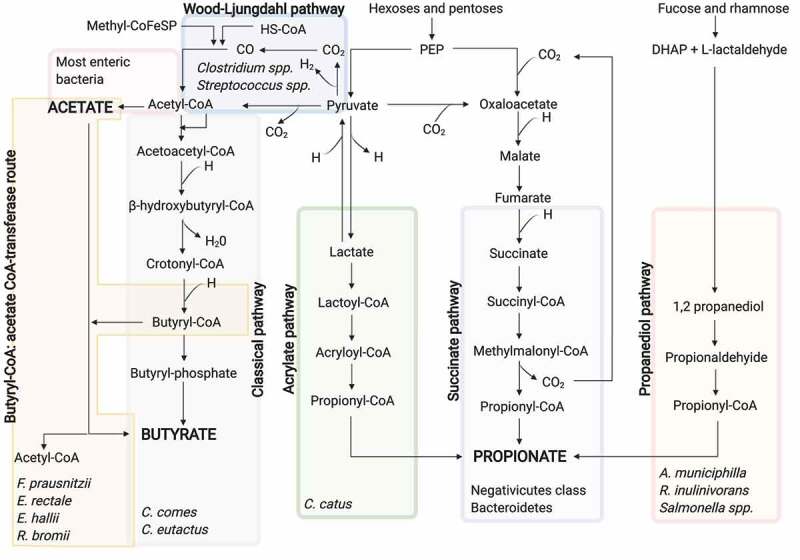
“The second one is via the Wood–Ljungdahl pathway, where approximately one-third of acetate originates from acetic acid bacteria, which are capable of synthesizing it from hydrogen and carbon dioxide, or from formic acid [81–84].”
Khumalo, S., Duma, Z., Bekker, L., Nkoana, K., & Pheeha, S. M. (2024) · Diagnostics · doi:10.3390/diagnostics14151636 · Cited by 6
“…step in the synthesis of butyrate from butyryl-CoA, involving two distinct methods: either the phospho-butyr-ate and butyrate kinase pathways or the butyryl-CoA: the acetate CoA–transferase route [13,16]. formed by reducing lactate to propionate, a process known as the acrylate pathway [15– 17].”
MethodGuo, M., Sun, Y., Wang, X., Wang, Z., Yuan, X., Chen, X., Yuan, X., & Wang, L. (2024) · International Journal of Molecular Sciences · doi:10.3390/ijms251910486 · Cited by 6
“The composition of intestinal bacteria in the gastrointestinal tract can be altered by the influence of food, and the virulence factors produced by lipopolysaccharide (LPS) can induce inflammation, which plays an important role in the occurrence and progression of gastrointestinal tumors [106,107].”
BackgroundVorobiova, N. V., Усачова, О. В., & Каплаушенко, А. Г. (2021) · Zaporozhye Medical Journal · doi:10.14739/2310-1210.2021.5.231265 · Cited by 6
Negative Lifestyle Factors Specific to Aging Persons Living with HIV and Multimorbidity
Smith, W. P. (2024) · Journal of the International Association of Providers of AIDS Care (JIAPAC) · doi:10.1177/23259582241245228 · Cited by 7
“78 Studies conducted in the general population show that a diet rich in re fi ned grains and sugars is negatively correlated with fecal concentrations and SCFAs, while consumption of large amounts of fruit and vegetables has a positive correlation with fecal concentrations and SCFAs.”
BackgroundAminian-Dehkordi, J., Valiei, A., & Mofrad, M. R. K. (2022) · Frontiers in Cardiovascular Medicine · doi:10.3389/fcvm.2022.987104 · Cited by 6
“Notably, the molecular mechanisms of microbe-microbe and microbe-host interactions must be elucidated to reveal dysregulation mechanisms mediated by the microbiome and discover new therapeutics (29).”
BackgroundMagnesium and LongevityPreprint
Chambers, P. W. (2024) · Qeios · doi:10.32388/n1scbr.2 · Cited by 6
Sliti, A., Kim, R.-H., Lee, D., & Shin, J.-H. (2025) · Microbial Pathogenesis · doi:10.1016/j.micpath.2025.107405 · Cited by 5
Guraka, A., Sreedharan, S., Arasaradnam, R. P., Tripathi, G., & Kermanizadeh, A. (2024) · Nutrition Reviews · doi:10.1093/nutrit/nuae172 · Cited by 5
Tian, X., Gao, Z., Xie, Y., Lu, X., Zhao, Y., Yao, P., Dong, M., Yu, L., & Wu, N. (2025) · Current Research in Microbial Sciences · doi:10.1016/j.crmicr.2025.100340 · Cited by 5
Linh, N. V., Khang, L. T. P., Dinh‐Hung, N., Wisetkaeo, S., Therdtatha, P., Sangsawad, P., Wannavijit, S., Jitjumnong, ๋., Permpoonpattana, P., & Doan, H. V. (2025) · Comparative Biochemistry and Physiology Part B Biochemistry and Molecular Biology · doi:10.1016/j.cbpb.2025.111127 · Cited by 5
Cares, K., Oliveira, M. L., Bryner, A., Man, B., Chen, Z., Bernabé, B. P., Schmidt, M. L., Fitzgibbon, M., & Gabel, K. (2025) · Nutrients · doi:10.3390/nu17203306 · Cited by 5
“Short-chain fatty acids (SCFAs) are metabolites produced by microbial fermentation of complex carbohydrates, including dietary fibers [28].”
Liang, M., Li, L., & Fan, J. (2025) · Clinical Reviews in Allergy & Immunology · doi:10.1007/s12016-025-09100-y · Cited by 5
“Beyond high-fiber diets, omega-3-rich patterns also increase SCFA-producing microbiota abundance [306].”
Lamba, J. K., Tandon, C., & Tandon, S. (2025) · Probiotics and Antimicrobial Proteins · doi:10.1007/s12602-025-10804-y · Cited by 5
“Reports suggest that a Mediterranean diet, which is rich in fibers and omega fatty acids is associated with higher levels of SCFA-producing organisms, which is crucial for human well-being [131].”
Metabolic signature of EAT-Lancet diet in relation to risk of frailty: a prospective cohort study
Guo, J., Kou, G., Zhu, Y., Liang, R., Ye, H., Suo, X., & Bo, Y. (2025) · npj Science of Food · doi:10.1038/s41538-025-00619-0 · Cited by 5
Vaz, A. A., Odriozola‐Serrano, I., Oms‐Oliu, G., Martín‐Belloso, O., & Bellí, G. (2025) · Food Hydrocolloids for Health · doi:10.1016/j.fhfh.2025.100257 · Cited by 5
Ren, J., Jiang, X., Yu, G., Wu, W., Chen, M., Zhao, Y., Yang, M., Zou, Z., & He, C. (2025) · The Journal of Nutritional Biochemistry · doi:10.1016/j.jnutbio.2025.110239 · Cited by 5
Capasso, L., Mele, D., Casalino, R., Favale, G., Rollo, G., Verrilli, G., Conte, M., Bontempo, P., Carafa, V., Altucci, L., et al. (2025) · Nutrients · doi:10.3390/nu18010093 · Cited by 5
“It improves mitochondrial efficiency, endothelial function, and myocardial resistance to oxidative stress by supporting AMPK-SIRT1-dependent pathways through the microbial conversion of nutrients into SCFAs such as acetate, propionate, and butyrate [102,103].”
Gasbarrini, A., Galli, F. S., Ianiro, G., Ponziani, F. R., & Rinninella, E. (2026) · The American Journal of Gastroenterology · doi:10.14309/ajg.0000000000003907 · Cited by 5
Testa, R., Vitale, M., Giosuè, A., Salamone, D., Quaglia, C., Rivellese, A. A., Bozzetto, L., & Costabile, G. (2026) · Clinical Nutrition · doi:10.1016/j.clnu.2026.106624 · Cited by 5
Nutraceutical Potential of Fermented Foods: A Perspective on Health and Wellness
Shahni, K., Haobam, B., Singh, O. I., Devi, K. S., Devi, S. T., Sharma, N., & Singh, K. B. (2026) · Fermentation · doi:10.3390/fermentation12050211 · Cited by 5
Strauss‐Kruger, M., Pieters, M., van Zyl, T., Gafane-Matemane, L. F., Mokwatsi, G. G., Jacobs, A., Schutte, A. E., Louw, R., & Mels, C. M. C. (2023) · Journal of Nutrition · doi:10.1016/j.tjnut.2023.12.025 · Cited by 6
Zhang, Z., Zhao, H. Y., Chen, X., Tian, G., Liu, G., Cai, J., & Jia, G. (2024) · Journal of Animal Physiology and Animal Nutrition · doi:10.1111/jpn.13960 · Cited by 5
A Narrative Review of the Significance of Popular Diets in Diabetes Mellitus Management
Bayram, S. Ş. (2024) · Cureus · doi:10.7759/cureus.61045 · Cited by 5
“These SCFAs have a crucial role in regulating lipid metabolism, controlling cholesterol and glucose levels, promoting anti-inflammatory responses, supporting immunological activities, and maintaining the integrity of the intestinal barrier [63,64].”
BackgroundZhang, W., Tekreeti, T. A., Leung, P. S. C., Tsuneyama, K., Dhillon, H., Rojas, M., Heuer, L. S., Ridgway, W. M., Ansari, A. A., Young, H. A., et al. (2024) · Liver International · doi:10.1111/liv.16060 · Cited by 5
Ghany, K. A. E., Mallasiy, L. O., Haredy, S. A., Ahmed-Farid, O. A.-H., Aboukhezam, B., & Elshafey, N. (2025) · Food Bioscience · doi:10.1016/j.fbio.2025.106466 · Cited by 5
Wikandari, P. R., Herdyastuti, N., Tukiran, T., Wati, F. A., & Dzulkarnain, S. A. (2025) · Tropical Journal of Natural Product Research · doi:10.26538/tjnpr/v9i5.18 · Cited by 5
Grond, K., Buck, C. L., & Duddleston, K. N. (2023) · Frontiers in Genetics · doi:10.3389/fgene.2023.1210143 · Cited by 5
“Microbe-facilitated gut processes can affect host energy and nutrient metabolism by providing the host with essential nutrients such as vitamins and short chain fatty acids (SCFA), and contributing to nutrient homeostasis (Nogal et al., 2021).”
BackgroundHerbal Medicines for the Management of Irritable Bowel Syndrome and Constipation Problem
Puppala, E. R., Prasad, N., Singh, M., Prakash, A. N., Abubakar, M., Adhikari, P., & Naidu, V. G. M. (2023) · Springer eBooks · doi:10.1007/978-981-99-7703-1_16 · Cited by 5
Microbiota and Cardiovascular Diseases: Mechanisms of Influence and Correction Possibilities
Горбенко, А. В., Skirdenko, Y. P., Andreev, K. A., Fedorin, M. M., Николаев, Н. А., & Livzan, M. A. (2023) · Rational Pharmacotherapy in Cardiology · doi:10.20996/1819-6446-2023-01-03 · Cited by 6
Mir, S. S. (2025) · Egyptian Academic Journal of Biological Sciences. C, Physiology and Molecular Biology/Egyptian Academic Journal of Biological Sciences. C, Physiology and Molecular Biology · doi:10.21608/eajbsc.2025.411912 · Cited by 4
Whole Food and Ketogenic-Informed Dietary Interventions for OCD: A Metabolic Perspective
Dawson, S., Rucklidge, J. J., & Schofield, G. (2025) · Current Treatment Options in Psychiatry · doi:10.1007/s40501-025-00361-0 · Cited by 4
“SCFA are able to modulate the composition and diversity of the gut microbiome [78], and are integral in maintaining the IEB and the integrity of tight junctions, glycaemic control, and in the regulation of brain-induced intestinal gluconeogenesis and human metabolism and appetite [79 – 81].”
Chang, M., Xia, T., Zhang, N., Zhao, Q., Shen, P., Wang, N., Huangfu, C., Bai, Z., Sun, D., Hu, Y., et al. (2025) · Journal of Extracellular Biology · doi:10.1002/jex2.70079 · Cited by 4
From bench to bed: deep insights the tacrolimus-induced diabetes and gut microbiota dysbiosis
Han, Y., Bian, Z., Zhao, J., Xiao, H., Wang, H., Gao, F., Shi, W., Liu, J., Xu, J., & Xu, C. D. (2025) · European journal of medical research · doi:10.1186/s40001-025-03000-9 · Cited by 4
“Dietary interventions promoting a healthy gut microbiota, such as increased fiber intake and probiotics, show potential in preventing and managing metabolic diseases [102].”
Blecksmith, S. E., Kalanetra, K. M., Weng, C.-Y., Suarez, C., Sitepu, I. R., Tang, Y., Cheang, S. E., Jiang, S., Cernioglo, K., Damian-Medina, K., et al. (2025) · Food & Function · doi:10.1039/d5fo00947b · Cited by 4
Parity influences on the infant gut microbiome development: a longitudinal cohort study
Prasad, R., Angelova, A., Subramanian, P., Namasivayam, S., Chen, Q., Banks, K., Levy, S., Maxwell, G. L., & Hourigan, S. K. (2025) · Gut Microbes · doi:10.1080/19490976.2025.2557980 · Cited by 4
Ahmed, L. A., & Al‐Massri, K. F. (2025) · European Journal of Pharmacology · doi:10.1016/j.ejphar.2025.178210 · Cited by 4
Network-Based Multiomic Nutrient-Associated Predictive Models for Inflammatory Bowel Disease
Saint-Cyr, M., Shakya, E., Siebert, J., Hill, E. B., Krebs, N. F., de Zoeten, E. F., & Borengasser, S. J. (2025) · Current Developments in Nutrition · doi:10.1016/j.cdnut.2025.107567 · Cited by 4
“Increased levels of SCFAs are associated with improved gut and cardiometabolic health [10,11].”
Tao, J., Tian, L., Yang, Q., Jiang, Y., Liu, Y., Wang, J., Chen, X., & Gao, H. (2025) · Frontiers in Microbiology · doi:10.3389/fmicb.2025.1694753 · Cited by 4
“On the other hand, the rise in Gammaproteobacteria , commonly linked to intestinal inflammation and endotoxin release, may exacerbate NAFLD through the LPS-myd88/nfkb pathway (Di Vincenzo et al., 2024; Nogal et al., 2021), in line with the results presented above.”
Ren, W., Yao, Z., Ding, X., Jia, H., Pan, L., Chu, M., & Zhu, H. (2026) · Comprehensive physiology · doi:10.1002/cph4.70093 · Cited by 4
“…and Śliżewska 2020; Bedu-Ferrari et al. 2022) as well as Clostridium symbiosum , Roseburia , and Fusobacterium rectum, which are the main producers of butyrate (Holtug et al. 1992; Walker et al. 2005; Markowiak-Kopeć and Śliżewska 2020; Nogal et al. 2021; Park et al. 2024) (Table 1).”
Zhang, X., Lin, X., Zhang, W., Tan, T., Han, X., Ni, Y., & Qin, H. (2026) · Journal of Parenteral and Enteral Nutrition · doi:10.1002/jpen.70056 · Cited by 4
The mechanism of short-chain fatty acid in hypertriglyceridemic pancreatitis
Li, T., Deng, F., Xiong, J., Wu, F., Tang, S., Zhang, Y., Zhang, Q., Song, J., Li, Y., Liu, X., et al. (2026) · Frontiers in Microbiology · doi:10.3389/fmicb.2025.1714013 · Cited by 4
Omar, S. F. N. S., Ngui, R., Jinam, T. A., Jiee, S. F., Lim, H. S., Divis, P. C. S., Bilung, L. M., & Lim, Y. A. L. (2026) · Gut Pathogens · doi:10.1186/s13099-026-00815-7 · Cited by 5
“Dietary substrates influence both parasite survival and microbial production of short-chain fatty acids (SCFAs), which play key roles in gut barrier integrity and immune regulation [50].”
An overview of the role of the gut microbiota in rheumatoid arthritis
Poznyak, A. V., Vatlin, A. A., Pavshintsev, V. V., Mitkin, N. A., Maltseva, O. N., Utkina, A. S., & Orekhov, A. N. (2026) · Microbiome Research Reports · doi:10.20517/mrr.2025.69 · Cited by 4
Perinatal ampicillin exposure alters murine maternal fecal bile acid and acylcarnitine profiles
Zuffa, S., Thomas, S. P., Patan, A., Mohanty, I., Abiead, Y. E., Deleray, V., Kvitne, K. E., Kousha, A., Suzuki, E., Tsai, C. M., et al. (2026) · Gut Microbes · doi:10.1080/19490976.2026.2690698 · Cited by 4
Profir, M., Roşu, O. A., Gașpar, B. S., & Creţoiu, S. M. (2024) · Interdisciplinary cancer research · doi:10.1007/16833_2024_305 · Cited by 4
Preservation of Microorganisms
Agrawal, R. (2024) · Springer eBooks · doi:10.1007/978-981-97-9582-6_4 · Cited by 4
Zhang, C., Liu, B., Cui, Z., Wu, K., Huang, H., Wang, Y., Ma, X., & Tan, B. (2025) · Porcine Health Management · doi:10.1186/s40813-025-00430-z · Cited by 4
“…crucially maintain intestinal homeostasis [52], they serve as an essential energy source for IECs and strengthen the gut barrier functions [53], and SCFAs exert anti-inflammatory effects in the intestinal mucosa by inhibiting histone deacetylases and activating the G-protein-coupled…”
Hua, Z., Lv, Y., Zhang, H., Mao, T., Xv, R., Pan, M., Hu, Y., Liu, S., & Fang, Y. (2025) · Foods · doi:10.3390/foods14101796 · Cited by 4
Mejía-León, M. E., Argüelles-Lopez, A., Briseño-Sahagun, P. G., Aguayo-Patrón, S., & de la Barca, A. M. C. (2022) · IntechOpen eBooks · doi:10.5772/intechopen.105168 · Cited by 4
Sui, K., Yasrebi, A., Malonza, N., Jaffri, Z. H., Fisher, S. E., Seelenfreund, I., McGuire, B. D., Martinez, S. A., MacDonell, A. T., Tveter, K. M., et al. (2023) · Endocrinology · doi:10.1210/endocr/bqad059 · Cited by 4
dos Santos, L. A. C., Carvalho, R. D. D. O., Neto, J. P. R. C., Lemos, D. E. D. A., de Oliveira, K. Á. R., Sampaio, K. B., Freire, M. O. D. L., Aburjaile, F. F., Azevedo, V., de Souza, E. L., et al. (2024) · Microorganisms · doi:10.3390/microorganisms12040659 · Cited by 4
“An increased abundance in short-chain fatty acid (SCFA)-producing bacteria belonging to the Lachnospiraceae family has been reported in subjects fed a high-fiber diet or treated with omega-3 polyunsaturated fatty acids (PUFA), and has been associated with host health benefits [41].”
BackgroundAge and sex-related variations in murine laryngeal microbiota
An, R., Venkatraman, A., Binns, J., Saric, C., Rey, F. E., & Thibeault, S. L. (2024) · PLoS ONE · doi:10.1371/journal.pone.0300672 · Cited by 4
WASKITA, Y., Pangastuti, A., Listyawati, S., & Sari, S. L. A. (2024) · Biodiversitas Journal of Biological Diversity · doi:10.13057/biodiv/d250423 · Cited by 4
“Propionic acid production was through a different pathway from acetic and butyric acid, i.e., succinate pathway by Bacteroidota, acrylate pathway by Firmicutes, and propanediol by Enterobacteria and Firmicutes (Nogal et al. 2021).”
BackgroundWang, Y., Zhang, Q., Shen, C., Wang, H., Li, Y., Wu, H., Sun, X., & Shi, L. (2025) · Journal of Hypertension · doi:10.1097/hjh.0000000000003981 · Cited by 4
Lv, Y., Wu, M., Liu, W., Liu, K., Wang, Y., Cui, Z., Ma, Q., & Meng, H. (2025) · Nutrients · doi:10.3390/nu17071152 · Cited by 4
“These nutrients and bioactive compounds play an important role in anti-inflammation [67–69], maintaining gut microbiota homeostasis [10,70,71] and producing gut-derived bioactive metabolites [71,72], such as short-chain fatty acids, which may also contribute to the beneficial effects of dietary…”
Yang, J., Wei, L., Xia, Y., Wang, J., Bai, Y., & Xia, Y. (2025) · Metabolites · doi:10.3390/metabo15040251 · Cited by 4
“Several studies have demonstrated that lower carboxylic acids can alleviate inflammation [50–55].”
Gu, F. T., Zhao, Z. C., Zhu, Y. Y., Huang, L. X., Li, J. H., Liu, X., & Wu, J. (2025) · International Journal of Biological Macromolecules · doi:10.1016/j.ijbiomac.2025.145481 · Cited by 4
Yin, X., Shi, Y., Sheng, T., & Ji, C. (2024) · Nutrition Reviews · doi:10.1093/nutrit/nuae140 · Cited by 4
Research Progress of Physiological Function of Short-Chain Fatty Acids in the Intestine
殷, 桐. (2022) · Advances in Clinical Medicine · doi:10.12677/acm.2022.122137 · Cited by 4
Exploration of Digestive Diseases
(2022) · Exploration of Digestive Diseases · doi:10.37349/edd · Cited by 4
Singh, H., Wiscovitch-Russo, R. A., Kuelbs, C., Espinoza, J. L., Appel, A. E., Lyons, R. J., Vashee, S., Förtsch, H. E. A., Foster, J. E., Ramdath, D. D., et al. (2024) · bioRxiv (Cold Spring Harbor Laboratory) · doi:10.1101/2024.09.03.611095 · Cited by 4
Magnesium and LongevityPreprint
Chambers, P. W. (2024) · Qeios · doi:10.32388/n1scbr · Cited by 4
Zhang, Q., Liang, D., Zhang, C., Ye, L., Sun, P., Zhu, H., Zhao, Y., Li, Y., Guan, Y., & Zhang, H. (2025) · Drug Design Development and Therapy · doi:10.2147/dddt.s479682 · Cited by 3
Zhang, W., Ji, M., Wang, B., Xie, J., Wang, G., Gong, W., Li, H., Xia, Y. L., Zhang, K., Li, Z., et al. (2025) · Aquaculture Reports · doi:10.1016/j.aqrep.2025.102864 · Cited by 3
Bagaev, A., Sur, D., Agranyoni, O., Pe'er, N., Savita, B. K., Rocha, B. G. S., Thanos, P. K., Navon‐Venezia, S., & Pinhasov, A. (2025) · Translational Psychiatry · doi:10.1038/s41398-025-03436-x · Cited by 3
Yuan, H., Xiao, Y., Huang, Y., & Huang, L. (2025) · Food and Agricultural Immunology · doi:10.1080/09540105.2025.2533244 · Cited by 3
“Thus, SCFAs show potential in preventing and treating inflammatory diseases caused by immune dysregulation (Nogal et al., 2021).”
Similarities and differences in the intestinal actions of metformin and imeglimin
Sugawara, K., Hozumi, K., Mizuma, H., Sasaki, D., Shinohara, M., Kondo, A., Watanabe, Y., & Ogawa, W. (2025) · Diabetes Obesity and Metabolism · doi:10.1111/dom.70075 · Cited by 3
“45,46 In our analysis, metformin treatment significantly increased the abundance of the genus Lactobacillus , whereas imegli-min did not induce significant changes but showed an increase in some individuals.”
Sepehrinezhad, A., & Shahbazi, A. (2025) · Hepatic Medicine Evidence and Research · doi:10.2147/hmer.s546200 · Cited by 3
Pharmacokinetic Implications of Pathophysiological Changes in Cachexia Syndrome: A Scoping Review
Khan, S., Kalam, M. N., Khalid, M., Mehmood, M. H., Malik, U. R., & Ali, S. M. (2025) · European Journal of Drug Metabolism and Pharmacokinetics · doi:10.1007/s13318-025-00967-y · Cited by 3
“Furthermore, SCFAs contribute to gut barrier integrity [64].”
Liu, W., Lin, Q., Zhong, H., Liang, J., Liu, B., & Hu, Y. (2025) · Frontiers in Cellular and Infection Microbiology · doi:10.3389/fcimb.2025.1677726 · Cited by 3
Growing Tibetan Pigs Adapt to High-Fiber Diets by Enhancing Fiber Degradation Capacity
Lamu, Z., Hao, S., Li, B., Yang, S., Shang, Z., Shang, P., Liu, S., Lin, Y., & Tan, Z. (2025) · Veterinary Sciences · doi:10.3390/vetsci12101010 · Cited by 3
“Its content in both feed and fecal samples was determined with reference to AOAC Official Method 942.05 [33].”
InfluentialPham, T. T., Dao, T. K., Nguyen, T. V. H., Phung, T. B. T., Nguyen, H. D., Nguyen, T. Q., Le, T. T. H., & Huyen, T. (2025) · Pathogens · doi:10.3390/pathogens14111136 · Cited by 3
“SCFAs play vital roles in nourishing intestinal epithelial cells, maintaining mucosal barrier integrity, suppressing inflammation, and regulating local immune homeostasis [40–42].”
Zhao, X., Song, Y., Zhao, W., Shang, L., Fan, C., & Xie, J.-F. (2025) · Frontiers in Immunology · doi:10.3389/fimmu.2025.1702792 · Cited by 3
“However, the levels of SCFAs in feces do not directly re fl ect the local SCFAs concentration in the spleen (29, 30).”
Calabrese, F., Pasta, A., Formisano, E., Marabotto, E., Furnari, M., Pisciotta, L., Zentilin, P., Giannini, E. G., & Bodini, G. (2025) · Digestive Diseases and Sciences · doi:10.1007/s10620-025-09590-y · Cited by 3
“Many patients find a vegetarian or semi-vegetarian diet acceptable, especially if they are not required to be 100% vegan [156].”
Sukul, T., Acharya, D., & Ghosh, K. (2025) · The Microbe · doi:10.1016/j.microb.2025.100634 · Cited by 3
Tao, J., Ai, S., Wang, Y., Liu, Y., Zhou, J., Liu, Q., Wang, X., Li, D., Li, X., Wang, L., et al. (2025) · British Journal of Pharmacology · doi:10.1111/bph.70261 · Cited by 3
“…may be a potential therapeutic approach for the treatment of DN. SCFAs, the primary metabolites generated by bacterial fermentation of nondigestible carbohydrates in the colon, have been suggested as potential disease-mitigating factors in T2DM, obesity and metabolic syndrome (Nogal et al., 2021).”
Ren, L., Wang, H., Luo, S., Liu, C., & Hu, X. (2026) · Frontiers in Microbiology · doi:10.3389/fmicb.2025.1751028 · Cited by 3
“These metabolites supply energy to colonic epithelial cells and exhibit the anti-inflammatory activity, thereby preventing the above diseases (Goushki et al., 2025; Nogal et al., 2021).”
The Role and Mechanism of Gut Microbiota and Metabolites in Vascular Calcification
Cao, X., Zhang, A.-Y., Li, K.-F., Bie, Y.-W., Xu, G.-W., Zhou, C.-Y., Ma, X., Zhuang, Y., Sun, H.-J., & Zhu, X.-X. (2026) · International Journal of Molecular Sciences · doi:10.3390/ijms27031364 · Cited by 3
“Increased SCFA availability is therefore considered beneficial for cardiovascular and metabolic health [76].”
Abenavoli, L., YOSYPENKO, K., YURCHYSHENA, Y., Savytska, M., Lazarieva, O., Shvets, Y. V., Scarlata, G. G. M., Lynchak, O. V., & Falalyeyeva, T. M. (2026) · Minerva Gastroenterology · doi:10.23736/s2724-5985.25.04054-9 · Cited by 3
Zhong, Y., Yang, X., Kong, W., Shi, Y., & JIAN, W. (2026) · Frontiers in Cardiovascular Medicine · doi:10.3389/fcvm.2026.1707408 · Cited by 3
Metadata
- Authors
- Nogal, A., Valdes, A. M., & Menni, C.
- Affiliations
- St Thomas' Hospital (GB)
- Corresponding author
- Menni, Cristina
- Venue
- Gut Microbes
- Publisher
- Informa UK Limited
- Published
- 2021-01-01
- Volume
- 13
- Issue
- 1
- Pages
- 1-24
- ISSN
- 1949-0976 (ISSN-L)
- 1949-0984
- PMC
- PMC8007165
- OpenAlex
- W3137495763
- Semantic Scholar
- a27da66278fee146f5d8feac192a2118138fd791
- Cited by
- 917
- References
- 196
- Citations by year
- 2026: 221 · 2025: 257 · 2024: 221 · 2023: 142 · 2022: 63 · 2021: 13
- FWCI
- 11.52
- Type
- journal article
- Language
- en
- Open access
- gold
- doi.org
- Licence
- cc-by
- creativecommons.org/licenses/by/4.0/ (unspecified)
- doi.org/10.1080/policies-text-data-mining (tdm)
- Locations
- Gut Microbes (publishedVersion, cc-by)
- PubMed Central (publishedVersion, cc-by)
- PubMed (publishedVersion)
- Archivio Istituzionale della Ricerca (Universita Degli Studi Di Milano) (submittedVersion, other-oa)
- DOAJ (DOAJ: Directory of Open Access Journals) (submittedVersion, cc-by-sa)
- Research Portal (King's College London) (submittedVersion, other-oa)
- Funders
- Department of Twin Research is funded by the Wellcome Trust, Medical Research Council
- Chronic Disease Research Foundation (CDRF-18/2019, CDRF-19/2019, CDRF-2017)
- Medical Research Council (AIMHY; MR/M016560/1)
- National Institute for Health Research Nottingham Biomedical Research Centre (NA)
- Topics
- Life Sciences › Biochemistry, Genetics and Molecular Biology › Molecular Biology › Gut microbiota and health
- Health Sciences › Nursing › Nutrition and Dietetics › Microbial Metabolites in Food Biotechnology
- Health Sciences › Medicine › Public Health, Environmental and Occupational Health › Nutritional Studies and Diet
- Keywords
- short-chain fatty acids, gut microbiota, diet, cardiometabolic disease, dietary fiber, omega-3 fatty acids, intestinal barrier integrity, glucose metabolism, lipid metabolism, immune regulation, inflammation, blood pressure, dietary intervention
- MeSH terms
- Gastrointestinal Microbiome, Cardiometabolic Risk Factors, Bacteria, Cardiovascular Diseases, Diet, Energy Metabolism, Fatty Acids, Volatile, Humans, Metabolic Syndrome, Gastrointestinal Tract
About these checks
Registry, retraction, Cites and statistics results are computed, not judged, with one exception: a printed reference that no index lists is read once by a model before it counts as a citation error. Claims are extracted by a model and kept only when their quote appears verbatim in the text; each cited source is then checked, with a model’s help, for whether it says what the claim relies on. Those verdicts can be wrong — read the claim’s quote and the cited source before relying on one.
Statistics and arithmetic are recomputed, not judged.
Confidence bands are shown only for fields calibrated on our annotated test set. None is calibrated yet, so no band is shown.
What counts as a claim ›How we measure confidence ›How we check this ›
Are you an author, or do you see a problem with this page? Request a review
Data sources
Bibliographic data: Semantic Scholar, OpenAlex, Crossref.
Contains information from the Semantic Scholar Academic Graph Datasets, made available under the ODC Attribution License (ODC-BY 1.0).
Semantic Scholar’s data is described in: Kinney, R., et al. (2023). The Semantic Scholar Open Data Platform. arXiv:2301.10140.
