

The F 1 F o -ATP synthase α subunit of Candida albicans induces inflammatory responses by controlling amino acid catabolism
Open accessThe DOI matches its Crossref record; 60 of the 61 references it cites were found in a registry or an index; 67 of the 85 sources its claims cite were checked for support.
Abstract
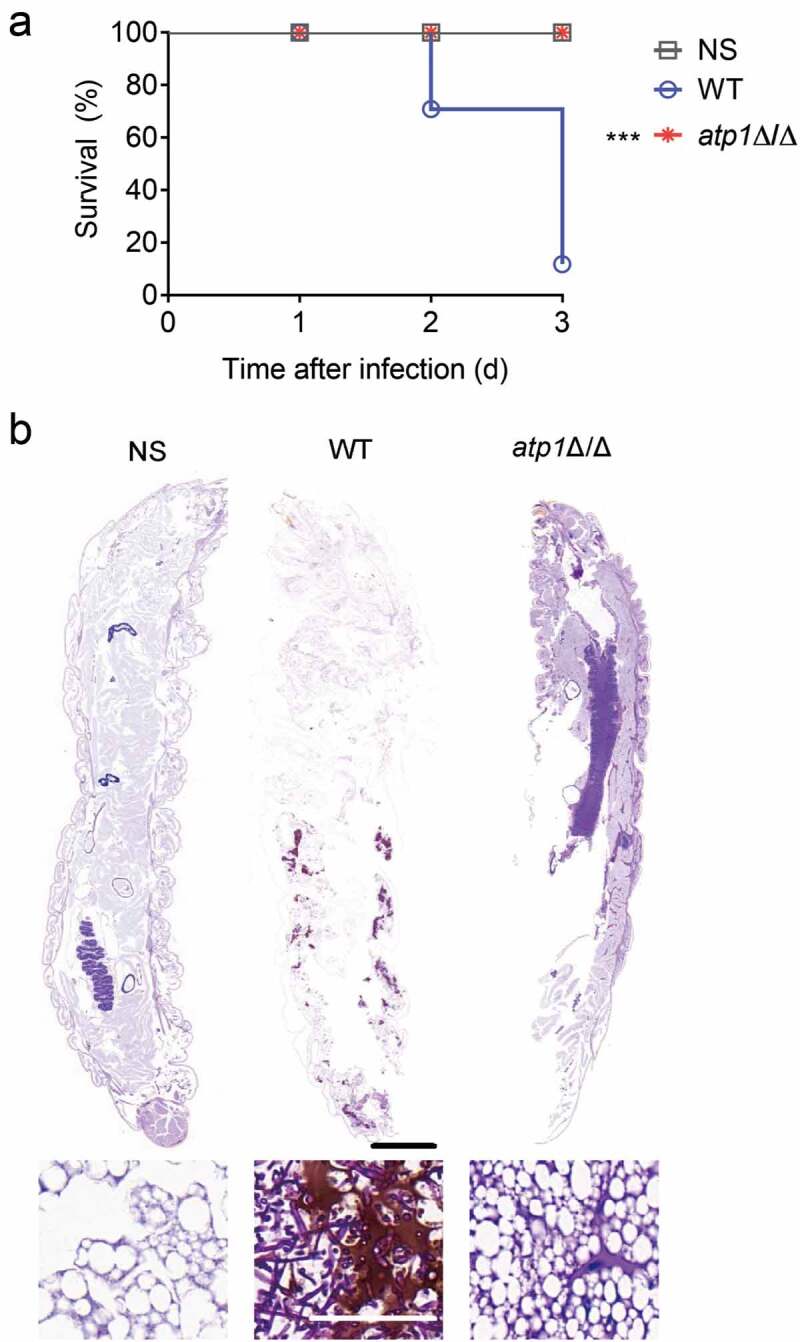
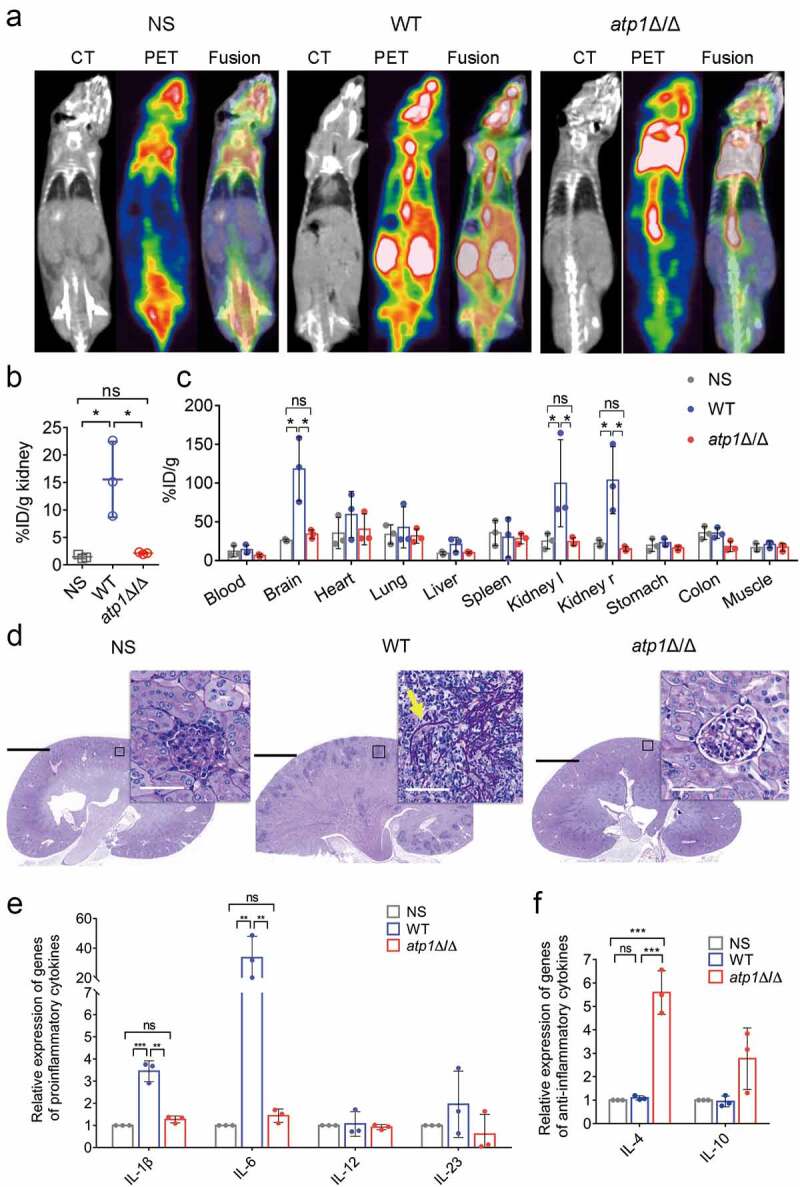
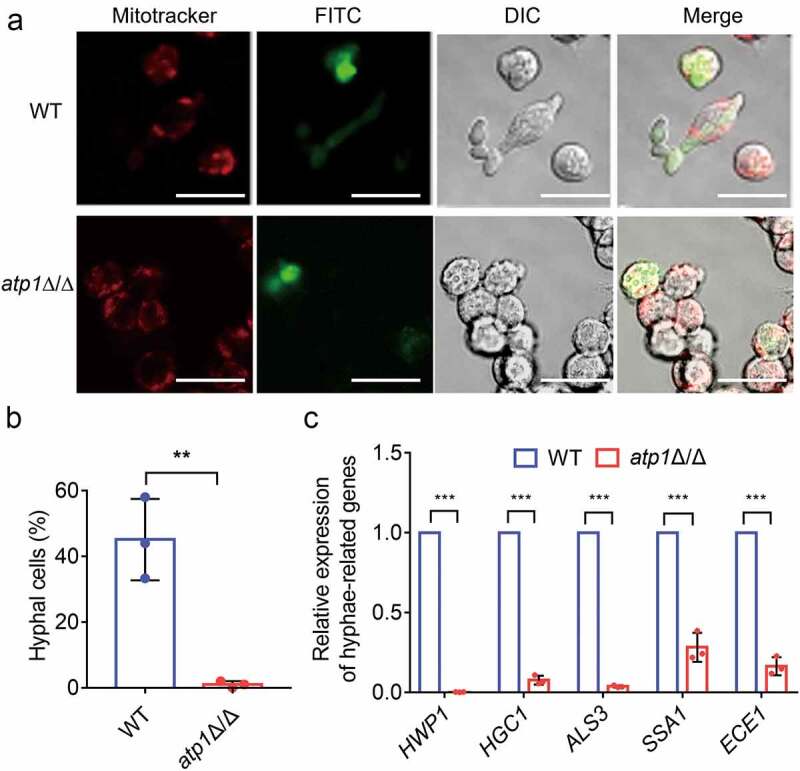
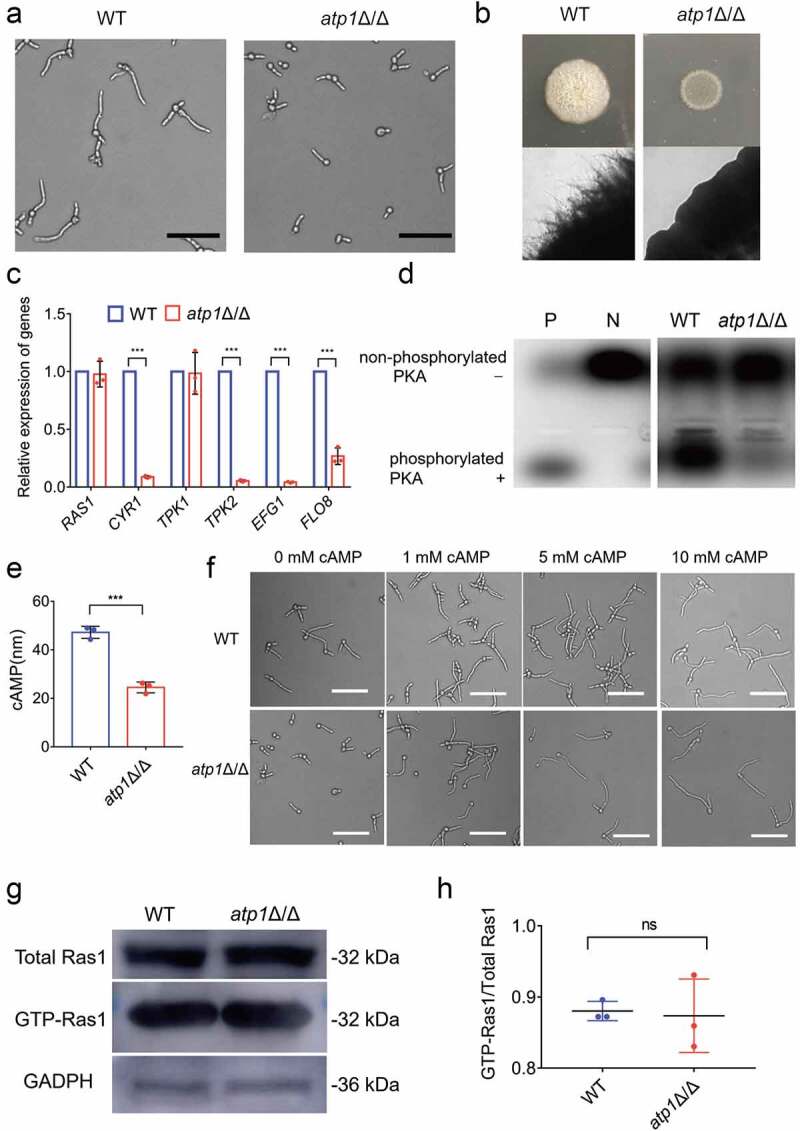
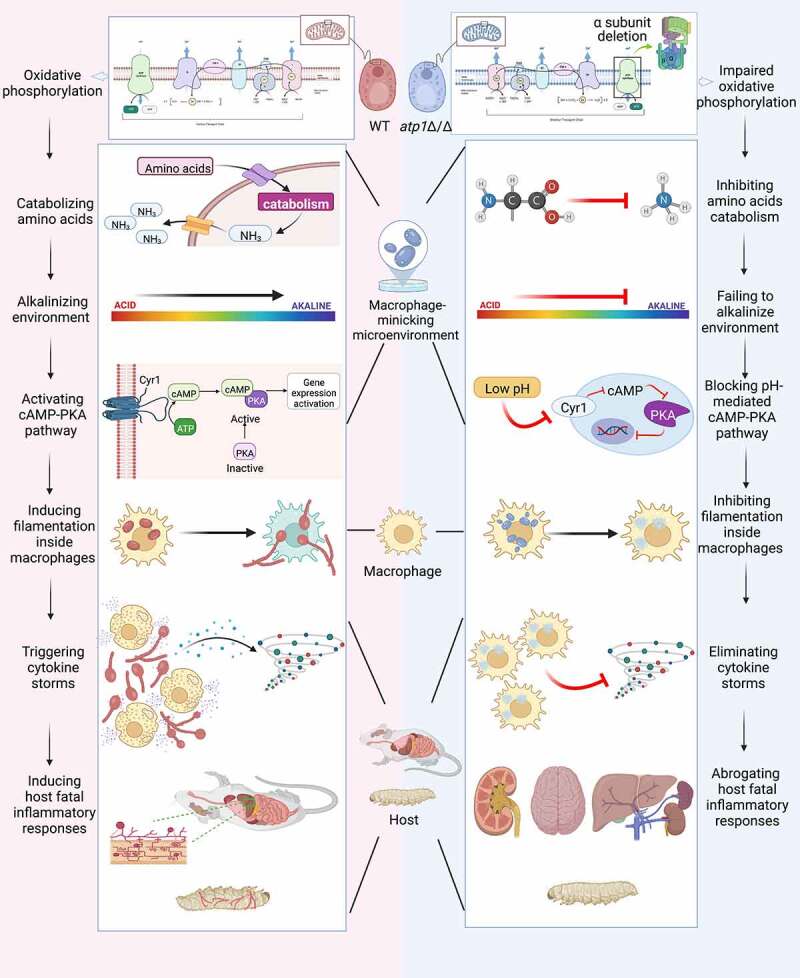
Sepsis is a leading cause of fatality in invasive candidiasis. The magnitude of the inflammatory response is a determinant of sepsis outcomes, and inflammatory cytokine imbalances are central to the pathophysiological processes. We previously demonstrated that a Candida albicans F1Fo-ATP synthase α subunit deletion mutant was nonlethal to mice. Here, the potential effects of the F1Fo-ATP synthase α subunit on host inflammatory responses and the mechanism were studied. Compared with wild-type strain, the F1Fo-ATP synthase α subunit deletion mutant failed to induce inflammatory responses in Galleria mellonella and murine systemic candidiasis models and significantly decreased the mRNA levels of the proinflammatory cytokines IL-1β, IL-6 and increased those of the anti-inflammatory cytokine IL-4 in the kidney. During C. albicans-macrophage co-culture, the F1Fo-ATP synthase α subunit deletion mutant was trapped inside macrophages in yeast form, and its filamentation, a key factor in inducing inflammatory responses, was inhibited. In the macrophage-mimicking microenvironment, the F1Fo-ATP synthase α subunit deletion mutant blocked the cAMP/PKA pathway, the core filamentation-regulating pathway, because it failed to alkalinize environment by catabolizing amino acids, an important alternative carbon source inside macrophages. The mutant downregulated Put1 and Put2, two essential amino acid catabolic enzymes, possibly due to severely impaired oxidative phosphorylation. Our findings reveal that the C. albicans F1Fo-ATP synthase α subunit induces host inflammatory responses by controlling its own amino acid catabolism and it is significant to find drugs that inhibit F1Fo-ATP synthase α subunit activity to control the induction of host inflammatory responses.
Overview
CoChat Summary
TL;DR
Deletion of the *Candida albicans* F1Fo-ATP synthase α subunit (atp1Δ/Δ) abrogated host inflammatory responses in *Galleria mellonella* and murine systemic candidiasis. The proposed mechanism is that the mutant fails to alkalinize its environment via amino acid catabolism, blocking cAMP/PKA-induced filamentation and macrophage escape.
Key findings
- atp1Δ/Δ was nonlethal in *G. mellonella*: survival was 100% versus 16.6% for WT; histopathology showed no tissue injury, hyphae, pseudohyphae, yeasts, or inflammatory cell aggregation in mutant-infected larvae.
- In mice, atp1Δ/Δ showed [18F]FDG uptake similar to NS controls and lower than WT, especially in kidneys and brains (P < 0.05). Kidney mRNA levels of IL-1β and IL-6 were significantly lower than WT (P < 0.01), while anti-inflammatory IL-4 was significantly higher than WT and NS controls (P < 0.001).
- In macrophage co-culture, atp1Δ/Δ was trapped inside macrophages in yeast form; the proportion of hyphal cells inside macrophages was lower than WT (P < 0.01), and virulence-related genes HWP1, HGC1, ALS3, SSA1, and ECE1 were downregulated (P < 0.001).
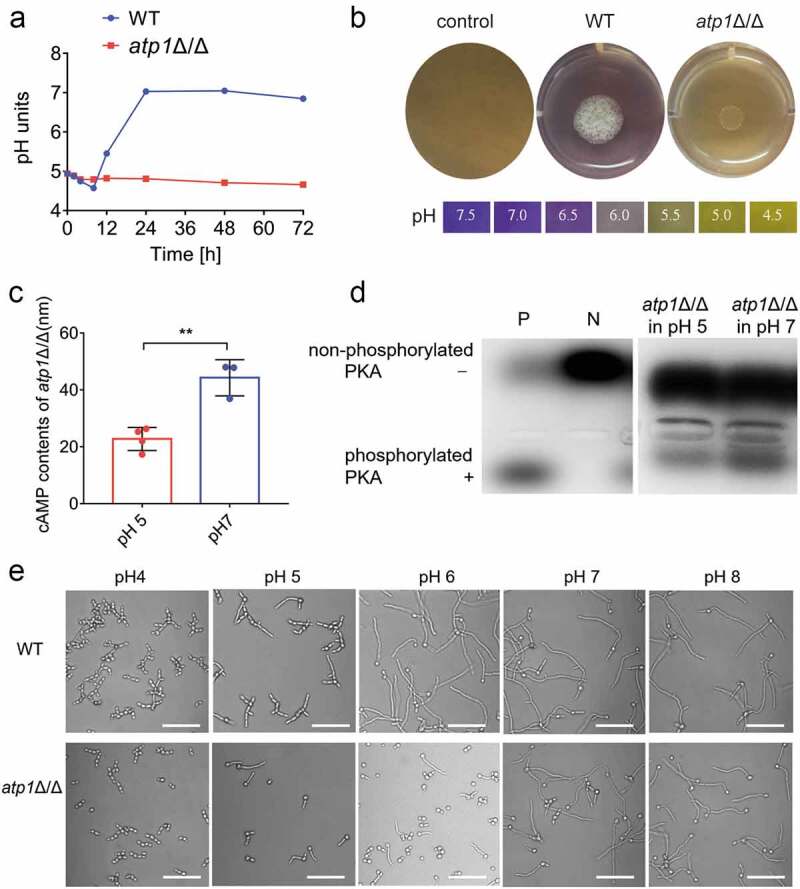
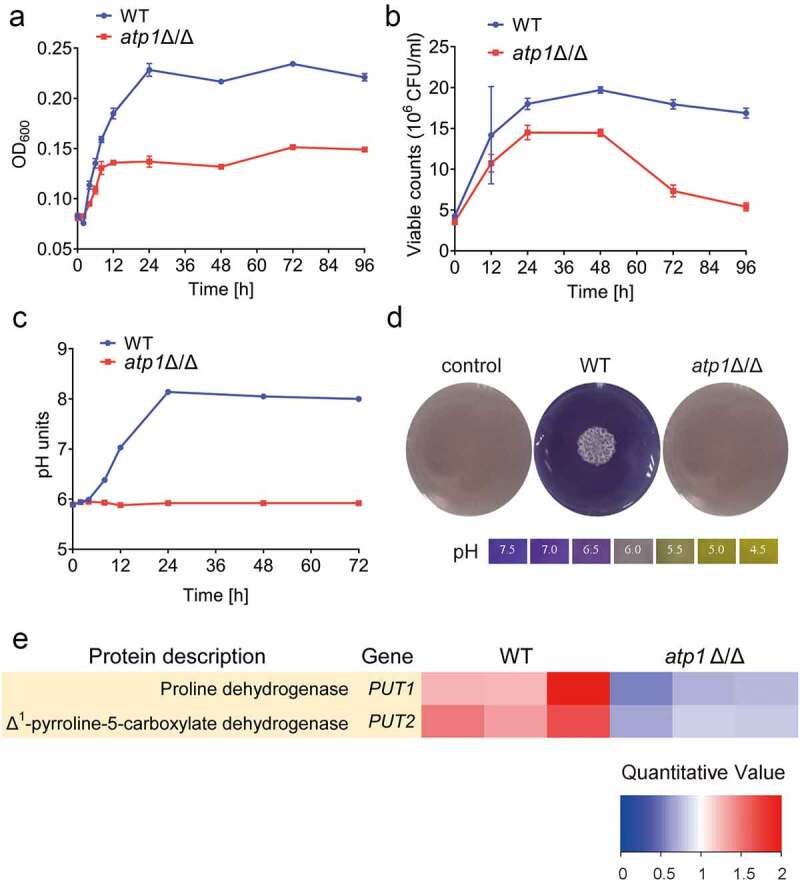
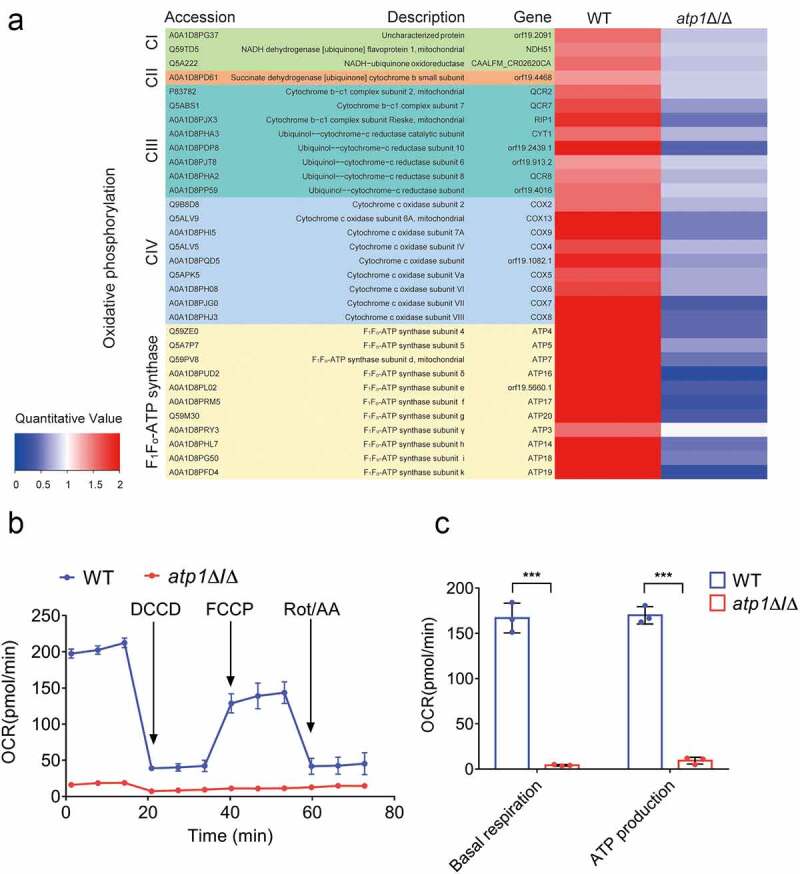
- Mechanistically, WT raised medium pH from 4.94 to 7.03 within 24 h, whereas atp1Δ/Δ failed to alkalinize; the mutant had lower cAMP and PKA phosphorylation, and exogenous cAMP or neutral pH restored filamentation. Proteomics showed decreased Put1 and Put2 (P < 0.05), and OXPHOS-produced ATP was approximately 5% of WT.
Methods
- Compared *C. albicans* atp1Δ/Δ with parent strain SC5314 (WT) using *G. mellonella* infection, BALB/c mouse systemic infection, RAW264.7 macrophage co-culture, macrophage-mimicking medium (pH 5; 0.17% YNB + 2% CAA + 0.2% glucose), and CAA medium.
- Assays included survival curves and PAS histopathology, microPET/CT and γ-counter biodistribution, RT-qPCR, CLSM, PKA/cAMP/Ras1 activity assays, pH and BCP colorimetric assays, filamentation, growth/viability, proteomics, and Seahorse XFe96 OCR.
- Data were from three or more independent trials, presented as means ± SD, and analyzed by log-rank tests, two-tailed unpaired Student’s t test, or one-way ANOVA.
Limitations
- The paper does not state a limitations section.
- Evident from the text: no complemented or rescue strain is described, so mutant-specific effects cannot be fully separated from secondary adaptation; the link from impaired OXPHOS to Put1/Put2 downregulation is explicitly speculative (“it is speculated”).
- Evident from the text: mouse experiments used n = 3 per group, and much of the mechanism relies on in vitro macrophage-mimicking media rather than direct human or primary macrophage data.
Model-written summary. Check it against the paper before relying on it.
Integrity signals
Registry
Cites
Statistics
Figures
Verification
Claims the paper makes
36 Valid · 0 Not valid · 8 Not checked · 68 Own results and interpretations
The cited sources support only part of this claim — read each source’s verdict below.
In the paper
“the functional electron transport chain (ETC) involved in oxidative phosphorylation (OXPHOS) [34] is required for Put1 activity [35,36].”
§ The F1Fo-ATP synthase α subunit of Candida albicans induces inflammatory responses by controlling amino acid catabolism > Introduction
What the sources say
- Supportedcites [34] Nolfi-Donegan D, Braganza A, Shiva S. Mitochondrial electron transport chain: oxidative phosphorylation, oxidant production, and methods of measurement. Redox Biol. 2020; 37: 101674. 32811789 PMC7767752 source
The Overview of oxidative phosphorylation describes how electron transport through the ETC generates the proton gradient used for ATP synthesis during OXPHOS. Citation [34] supports that ETC–OXPHOS relationship; the separate claim that ETC function is required for Put1 activity is assigned to [35,36], not to this source. (LLM, conf=0.93)
- Not checked — no full text of the sourcecites [35] Wang SS, Brandriss MC. Proline utilization in Saccharomyces cerevisiae: sequence, regulation, and mitochondrial localization of the PUT1 gene product. Mol Cell Biol. 1987; 7(12): 4431– 4440. 3125423 PMC368127 source
- Partly supportedcites [36] Wang SS, Brandriss MC. Proline utilization in Saccharomyces cerevisiae: analysis of the cloned PUT1 gene. Mol Cell Biol. 1986; 6(7): 2638– 2645. 3537723 PMC367820 sourceExperimental — accuracy not yet measured
The Results report that respiratory-deficient rho− strains lacked detectable proline oxidase activity, which supports an association between electron transport and measured Put1 activity. But the Results also say the absence of detectable activity could reflect an assay limitation, and the Discussion says whether the enzyme is made but inactive remains undetermined. The paper therefore does not establish that a functional ETC is required for Put1 activity. (LLM, conf=0.86)
plainstates a cause- Asserted: passes — The authors put it forward as true.
- Checkable: passes — It can be checked against evidence.
- Load-bearing: passes — The paper’s conclusions depend on it.
- Based: passes — The paper gives a reason why it holds.
- Supported
The cited sources support only part of this claim — read each source’s verdict below.
In the paper
“Macrophages are critical for controlling host inflammatory responses by phagocytizing and killing C. albicans [14,22].”
§ The F1Fo-ATP synthase α subunit of Candida albicans induces inflammatory responses by controlling amino acid catabolism > Introduction
What the sources say
- Partly supportedcites [14] Ding X, Kambara H, Guo R, et al. Inflammasome-mediated GSDMD activation facilitates escape of Candida albicans from macrophages. Nat Commun. 2021; 12(1): 6699. DOI: 10.1038/s41467-021-27034-9 34795266 PMC8602704 sourceExperimental — accuracy not yet measured
The Results section (“GSDMD facilitates C. albicans escape from macrophages”; page unavailable) reports that macrophages efficiently engulf C. albicans and reduce its growth and survival. It also says macrophages release IL-1β to mount antifungal immune responses, but does not establish that phagocytizing and killing the fungus is how they control host inflammatory responses. (LLM, conf=0.82)
- Partly supportedcites [22] Lionakis MS, Swamydas M, Fischer BG, et al. CX3CR1-dependent renal macrophage survival promotes Candida control and host survival. J Clin Invest. 2013; 123(12): 5035– 5051. DOI: 10.1172/JCI71307 24177428 PMC3859390 sourceExperimental — accuracy not yet measured
The Introduction and “Kidney-resident macrophages inactivate Candida” section report that resident macrophages are important for controlling fungal proliferation and can directly inactivate Candida. The paper also describes Candida being internalized by kidney phagocytes. It does not establish that macrophages control the host inflammatory response through those actions; its demonstrated outcome is fungal control. Page numbers are not supplied in our copy. (LLM, conf=0.86)
plainstates a cause- Asserted: passes — The authors put it forward as true.
- Checkable: passes — It can be checked against evidence.
- Load-bearing: passes — The paper’s conclusions depend on it.
- Based: passes — The paper gives a reason why it holds.
- Partly supported
The cited sources support only part of this claim — read each source’s verdict below.
In the paper
“amino acids, which are abundant inside macrophages are an important alternative carbon source for the immune evasion of C. albicans [24–28].”
§ The F1Fo-ATP synthase α subunit of Candida albicans induces inflammatory responses by controlling amino acid catabolism > Introduction
What the sources say
- Not checked yetcites [24] Lorenz MC, Bender JA, Fink GR. Transcriptional response of Candida albicans upon internalization by macrophages. Eukaryot Cell. 2004; 3(5): 1076– 1087. 15470236 PMC522606 source
Checked before — its earlier verdict is held back until a new check runs.
- Partly supportedcites [25] Williams RB, Lorenz MC, Andrew Alspaugh J. Multiple alternative carbon pathways combine to promote Candida albicans stress resistance, immune interactions, and virulence. MBio. 2020; 11(1): e03070– 19. 31937647 PMC6960290 sourceExperimental — accuracy not yet measured
The Introduction (page unavailable) identifies amino acids as alternative carbon sources used by C. albicans in macrophage phagosomes and links them to fungal survival. The Results (page unavailable) show that amino-acid exposure alters macrophage interactions, but the paper does not establish that amino acids are abundant inside macrophages. Survival after amino-acid exposure was not significantly better than after glucose exposure. (LLM, conf=0.85)
- Partly supportedcites [26] Vylkova S, Lorenz MC, Krysan DJ. Modulation of phagosomal pH by Candida albicans promotes hyphal morphogenesis and requires Stp2p, a regulator of amino acid transport. PLOS Pathog. 2014; 10(3): e1003995. 24626429 PMC3953444 sourceExperimental — accuracy not yet measured
The Discussion proposes that C. albicans uses amino acids as a carbon source and reports that impaired amino acid utilization reduces survival during phagocytosis. It does not establish that amino acids are abundant inside macrophages: it says their source there is unclear and that they are potentially plentiful in the host. (LLM, conf=0.88)
- Partly supportedcites [27] Vylkova S, Carman AJ, Danhof HA, et al. The fungal pathogen Candida albicans autoinduces hyphal morphogenesis by raising extracellular pH. MBio. 2011; 2(3): e00055– 11. 21586647 PMC3101780 sourceExperimental — accuracy not yet measured
The Results (‘Amino acids promote alkalinization’; page not provided) show that C. albicans can use certain amino acids as carbon sources, and the Discussion links this metabolism to a virulence-associated change in morphology. But the Discussion describes macrophage-like conditions as only ‘superficially similar’ and explicitly calls a role in phagocyte escape speculative. It does not establish that amino acids are abundant inside macrophages or that their use enables immune evasion. (LLM, conf=0.87)
- Partly supportedcites [28] Garbe E, Vylkova S. Role of amino acid metabolism in the virulence of human pathogenic fungi. Curr Clin Microbiol Rep. 2019; 6(3): 108– 119. sourceExperimental — accuracy not yet measured
The ‘Amino Acid-Driven Alkalinization of the Environmental pH’ section (page unavailable) describes the macrophage phagosome as a hypothesized amino acid-enriched, glucose-poor environment and links amino acid sensing to C. albicans phagosomal escape. The ‘Utilization and Uptake’ section (page unavailable) discusses amino acids as a possible carbon source in glucose-limited environments, but presents that connection as speculation rather than establishing that they are an important alternative carbon source for immune evasion inside macrophages. (LLM, conf=0.86)
plainstates a cause- Asserted: passes — The authors put it forward as true.
- Checkable: passes — It can be checked against evidence.
- Load-bearing: passes — The paper’s conclusions depend on it.
- Based: passes — The paper gives a reason why it holds.
- Not checked yet
Every source the paper cites for this claim was checked and supports it.
In the paper
“pH is one of the upstream signalling molecules of this pathway [31].”
§ The F1Fo-ATP synthase α subunit of Candida albicans induces inflammatory responses by controlling amino acid catabolism > Introduction
What the sources say
- Supportedcites [31] Hollomon JM, Grahl N, Willger SD, et al. Global role of cyclic AMP signaling in pH-dependent responses in Candida albicans. mSphere. 2016; 1(6): e00283– 16. 27921082 PMC5137381 source
The Discussion states that the findings support a model in which low pH acts at least partially upstream of Cyr1 in C. albicans. The Introduction identifies Cyr1 as a central component of the cAMP pathway that leads to PKA activation. Together, these passages support the citing sentence's characterization of pH as an upstream signal, though the paper describes the relationship as partial. (LLM, conf=0.90)
plainstates a cause- Asserted: passes — The authors put it forward as true.
- Checkable: passes — It can be checked against evidence.
- Load-bearing: passes — The paper’s conclusions depend on it.
- Based: passes — The paper gives a reason why it holds.
- Supported
The cited sources support only part of this claim — read each source’s verdict below.
In the paper
“Preventing C. albicans from escaping macrophages effectively alleviates host inflammatory responses by reducing the excessive release of IL-1β [14].”
§ The F1Fo-ATP synthase α subunit of Candida albicans induces inflammatory responses by controlling amino acid catabolism > Introduction
What the sources say
- Partly supportedcites [14] Ding X, Kambara H, Guo R, et al. Inflammasome-mediated GSDMD activation facilitates escape of Candida albicans from macrophages. Nat Commun. 2021; 12(1): 6699. DOI: 10.1038/s41467-021-27034-9 34795266 PMC8602704 sourceExperimental — accuracy not yet measured
The Results sections on GSDMD disruption report reduced C. albicans escape from macrophages and reduced, but not abolished, IL-1β production. The Discussion says GSDMD exacerbates inflammatory responses during Candida sepsis. The paper does not establish that preventing escape itself alleviates inflammation by reducing IL-1β release; it presents reduced escape and IL-1β release as effects of GSDMD disruption. Page numbers were not available in our copy. (LLM, conf=0.84)
plainstates a cause- Asserted: passes — The authors put it forward as true.
- Checkable: passes — It can be checked against evidence.
- Load-bearing: passes — The paper’s conclusions depend on it.
- Based: passes — The paper gives a reason why it holds.
- Partly supported
64 more claims · 12 with their cited sources checked
Create a free account to see all 112 claims and to verify the 3 references still open.
- Probably not a substantial claim. 16
- It may state two separate claims as one. 32
Self-check
Percentages, sums and reported differences re-computed from the paper’s own numbers.
Each contradiction between two passages listed here was confirmed by an independent check.
Rated minor: it would not touch a result — a value no result rests on, a p-value that stays on the same side of the significance level, or a conflict that is clerical, resolved elsewhere in the paper, or outside its own findings.
In the paper
§ The F1Fo-ATP synthase α subunit of Candida albicans induces inflammatory responses by controlling amino acid catabolism > Methods > Statistical analysis
“a fold change >1.5 means statistically significant (P > 0.05)”
§ The F1Fo-ATP synthase α subunit of Candida albicans induces inflammatory responses by controlling amino acid catabolism > Results > Deletion of the F1Fo-ATP synthase α subunit inhibits amino acid catabolism
“A fold change>1.5 means statistically significant (P < 0.05).”
Citations
Cites
Nonfilamentous C. albicans Mutants Are Avirulent
Lo, H.-J., Köhler, J. R., DiDomenico, B., Loebenberg, D., Cacciapuoti, A., & Fink, G. R. (1997) · Cell · doi:10.1016/s0092-8674(00)80358-x · Cited by 1,809 · cited 1×
“albicans mutant [57] locked in the yeast phase fail to elicit host inflammatory responses as the same as hyphal cells [8,10].”
BackgroundNolfi-Donegan, D., Braganza, A., & Shiva, S. (2020) · Redox Biology · doi:10.1016/j.redox.2020.101674 · Cited by 1,488 · cited 1×
“chain (ETC) involved in oxidative phosphorylation (OXPHOS) [34] is required for Put1 activity [35,36].”
BackgroundCytokine storm and sepsis disease pathogenesis
Chousterman, B. G., Swirski, F. K., & Weber, G. F. (2017) · Seminars in Immunopathology · doi:10.1007/s00281-017-0639-8 · Cited by 1,330 · cited 7×
“[15–17], and eventually promote the progression of sepsis to irreversible septic shock [6,13,18].”
BackgroundInfluentialGillum, A. M., Tsay, E. Y. H., & Kirsch, D. R. (1984) · Molecular and General Genetics MGG · doi:10.1007/bf00328721 · Cited by 1,251 · cited 1×
“albicans SC5314 (WT) [39] were used in this”
MethodCandida albicans—The Virulence Factors and Clinical Manifestations of Infection
Talapko, J., Juzbašić, M., Matijević, T., Pustijanac, E., Bekić, S., Kotris, I., & Škrlec, I. (2021) · Journal of Fungi · doi:10.3390/jof7020079 · Cited by 794 · cited 1×
“albicans to the host is determined by the joint action of growth ability and virulence factors [56], but not all factors play an equally important role in the pathogenic process.”
BackgroundTranscriptional Response of Candida albicans upon Internalization by Macrophages
Lorenz, M. C., Bender, J. A., & Fink, G. R. (2004) · Eukaryotic Cell · doi:10.1128/ec.3.5.1076-1087.2004 · Cited by 712 · cited 3×
“of the acidic [23] and amino acid-rich [24,25] microenvironment inside macrophages, we established a macrophagemimicking microenvironment model and designed experiments for investigation at different levels.”
BackgroundMethodZhuang, H., & Alavi, A. (2002) · Seminars in Nuclear Medicine · doi:10.1053/snuc.2002.29278 · Cited by 524 · cited 1×
“[47], microPET/CT combined with radioactivity measurement by γ-counting [48] was used to monitor the inflammatory response in tissues and organs – especially the kidney, the target organ of IC [17]—in infected mice.”
MethodThe Fungal Pathogen Candida albicans Autoinduces Hyphal Morphogenesis by Raising Extracellular pH
Vylkova, S., Carman, A. J., Danhof, H. A., Collette, J. R., Zhou, H., & Lorenz, M. C. (2011) · mBio · doi:10.1128/mbio.00055-11 · Cited by 365
Organ-Specific Innate Immune Responses in a Mouse Model of Invasive Candidiasis
Lionakis, M. S., Lim, J. K., Lee, C.-C. R., & Murphy, P. M. (2011) · Journal of Innate Immunity · doi:10.1159/000321157 · Cited by 302 · cited 12×
“(b) the cell viability of WT and atp1δ/Δ incubated in CAA liquid medium over times was determined by the viable cell count (106 CFU/ml).”
MethodInfluentialKasper, L., König, A., Koenig, P.-A., Gresnigt, M. S., Westman, J., Drummond, R. A., Lionakis, M. S., Groß, O., Ruland, J., Naglik, J. R., et al. (2018) · Nature Communications · doi:10.1038/s41467-018-06607-1 · Cited by 297 · cited 1×
“escape from macrophages through mechanical penetration of cell membranes [29], NLRP3/caspase-1 inflammasomedependent pyroptosis [51], cytolysis [52] and glucose competition [53].”
BackgroundCutting Edge: Candida albicans Hyphae Formation Triggers Activation of the Nlrp3 Inflammasome
Joly, S., Ma, N., Sadler, J. J., Soll, D. R., Cassel, S. L., & Sutterwala, F. S. (2009) · The Journal of Immunology · doi:10.4049/jimmunol.0901323 · Cited by 296 · cited 1×
“albicans mutant [57] locked in the yeast phase fail to elicit host inflammatory responses as the same as hyphal cells [8,10].”
BackgroundBassetti, M., Giacobbe, D. R., Vena, A., Trucchi, C., Ansaldi, F., Antonelli, M., Adamkova, V., Alicino, C., Almyroudi, M.-P., Atchade, E., et al. (2019) · Critical Care · doi:10.1186/s13054-019-2497-3 · Cited by 270
The Pathogen Candida albicans Hijacks Pyroptosis for Escape from Macrophages
Uwamahoro, N., Verma-Gaur, J., Shen, H.-H., Qu, Y., Lewis, R., Lu, J., Bambery, K., Masters, S. L., Vince, J. E., Naderer, T., et al. (2014) · mBio · doi:10.1128/mbio.00003-14 · Cited by 264 · cited 1×
“escape from macrophages through mechanical penetration of cell membranes [29], NLRP3/caspase-1 inflammasomedependent pyroptosis [51], cytolysis [52] and glucose competition [53].”
BackgroundCX3CR1-dependent renal macrophage survival promotes Candida control and host survival
Lionakis, M. S., Swamydas, M., Fischer, B. G., Plantinga, T. S., Johnson, M. D., Jaeger, M., Green, N. M., Masedunskas, A., Weigert, R., Mikelis, C., et al. (2013) · Journal of Clinical Investigation · doi:10.1172/jci71307 · Cited by 230
Mice with Disseminated Candidiasis Die of Progressive Sepsis
Spellberg, B., Ibrahim, A. S., Edwards Jr., J. E., & Filler, S. G. (2005) · The Journal of Infectious Diseases · doi:10.1086/430952 · Cited by 230 · cited 1×
“[15–17], and eventually promote the progression of sepsis to irreversible septic shock [6,13,18].”
BackgroundTucey, T. M., Verma, J., Harrison, P. F., Snelgrove, S. L., Lo, T. L., Scherer, A. K., Barugahare, A. A., Powell, D. R., Wheeler, R. T., Hickey, M. J., et al. (2018) · Cell Metabolism · doi:10.1016/j.cmet.2018.03.019 · Cited by 226 · cited 1×
“escape from macrophages through mechanical penetration of cell membranes [29], NLRP3/caspase-1 inflammasomedependent pyroptosis [51], cytolysis [52] and glucose competition [53].”
BackgroundMeasurement of mitochondrial respiration in adherent cells by Seahorse XF96 Cell Mito Stress Test
Gu, X., Ma, Y., Liu, Y., & Wan, Q. (2021) · STAR Protocols · doi:10.1016/j.xpro.2020.100245 · Cited by 224 · cited 1×
“chondrial basal oxygen consumption rate (OCR) was detected with a kit for seahorse XFe96 assay (Agilent) [45].”
MethodSelf-citationCheng, S.-C., van de Veerdonk, F. L., Lenardon, M., Stoffels, M., Plantinga, T., Smeekens, S., Rizzetto, L., Mukaremera, L., Preechasuth, K., Cavalieri, D., et al. (2011) · Journal of Leukocyte Biology · doi:10.1189/jlb.1210702 · Cited by 191 · cited 1×
“[11] through recognition of hyphal pathogen-associated molecular patterns [9], secretion of hyphae-specific aspartyl proteinases (SAP4–6) [49,50] or hyphae-specific toxin candidalysin [7], thus inducing host inflammatory responses.”
BackgroundRisk factors for candidemia: a prospective matched case-control study
FUNGINOS, T., Poissy, J., Groups, A. F. S., Damonti, L., Bignon, A., Khanna, N., Von Kietzell, M., Boggian, K., Neofytos, D., Vuotto, F., et al. (2020) · Critical Care · doi:10.1186/s13054-020-2766-1 · Cited by 188
Vylkova, S., & Lorenz, M. C. (2014) · PLoS Pathogens · doi:10.1371/journal.ppat.1003995 · Cited by 174 · cited 7×
“01% vol/vol) [26,27] was added and pipetted into a 12-well plate.”
BackgroundMethodInfluentialGhosh, S., Navarathna, D. H. M. L. P., Roberts, D. D., Cooper, J. T., Atkin, A. L., Petro, T. M., & Nickerson, K. W. (2009) · Infection and Immunity · doi:10.1128/iai.01452-08 · Cited by 165 · cited 2×
“escape [26,29], thus leading to host inflammatory responses”
BackgroundHoriguchi, H., Loftus, T. J., Hawkins, R. B., Raymond, S. L., Stortz, J. A., Hollen, M. K., Weiss, B. P., Miller, E. S., Bihorac, A., Larson, S. D., et al. (2018) · Frontiers in Immunology · doi:10.3389/fimmu.2018.00595 · Cited by 164 · cited 1×
“Sepsis is characterized by dysregulation and overactivation of host-protective innate immunity [46], with early manifestations dominated by hyperinflammatory response [12].”
BackgroundMajer, O., Bourgeois, C., Zwolanek, F., Lassnig, C., Kerjaschki, D., Mack, M., Müller, M., & Kuchler, K. (2012) · PLoS Pathogens · doi:10.1371/journal.ppat.1002811 · Cited by 156 · cited 3×
“induction of systemic inflammatory responses [15,16].”
BackgroundTranscriptomic Analysis of Vulvovaginal Candidiasis Identifies a Role for the NLRP3 Inflammasome
Bruno, V. M., Shetty, A. C., Yano, J., Fidel, P. L., Noverr, M. C., & Peters, B. M. (2015) · mBio · doi:10.1128/mbio.00182-15 · Cited by 155 · cited 1×
“[11] through recognition of hyphal pathogen-associated molecular patterns [9], secretion of hyphae-specific aspartyl proteinases (SAP4–6) [49,50] or hyphae-specific toxin candidalysin [7], thus inducing host inflammatory responses.”
BackgroundImmune Response of Galleria mellonella against Human Fungal Pathogens
Trevijano-Contador, N., & Zaragoza, O. (2018) · Journal of Fungi · doi:10.3390/jof5010003 · Cited by 134 · cited 1×
“mellonella has a single innate immune system that is highly similar to the mammalian innate immune system [40,41] and could provide a specifical”
BackgroundMechanisms of fungal dissemination
Strickland, A. B., & Shi, M. (2021) · Cellular and Molecular Life Sciences · doi:10.1007/s00018-020-03736-z · Cited by 127 · cited 1×
“killing and elimination by macrophages invade organs and tissues throughout the body through hyphal infiltration into vascular endothelial cells [16,54,55], leading to the”
BackgroundBi, L., Gojestani, S., Wu, W., Hsu, Y.-M. S., Zhu, J., Ariizumi, K., & Lin, X. (2010) · Journal of Biological Chemistry · doi:10.1074/jbc.m110.131300 · Cited by 126 · cited 1×
“albicans mutant [57] locked in the yeast phase fail to elicit host inflammatory responses as the same as hyphal cells [8,10].”
BackgroundInflammasome-mediated GSDMD activation facilitates escape of Candida albicans from macrophages
Ding, X., Kambara, H., Guo, R., Kanneganti, A., Acosta-Zaldívar, M., Li, J., Liu, F., Bei, T., Qi, W., Xie, X., et al. (2021) · Nature Communications · doi:10.1038/s41467-021-27034-9 · Cited by 115
Candidalysin Crucially Contributes to Nlrp3 Inflammasome Activation by Candida albicans Hyphae
Rogiers, O., Frising, U. C., Kucharíková, S., Jabra-Rizk, M. A., van Loo, G., Van Dijck, P., & Wullaert, A. (2019) · mBio · doi:10.1128/mbio.02221-18 · Cited by 113 · cited 16×
“Moreover, in the kidneys of infected mice, atp1Δ/Δ failed to cause an excessive transcription of the hyphae-specific proinflammatory cytokines IL-1β and IL-6 [7,11] as the same as WT, and significantly upregulated the transcription of the anti-inflammatory cytokine IL-4 that can control the progression of sepsis [19]…”
BackgroundResultInfluentialMitochondrial proline catabolism activates Ras1/cAMP/PKA-induced filamentation in Candida albicans
Silao, F. G. S., Ward, M., Ryman, K., Wallström, A., Brindefalk, B., Udekwu, K., & Ljungdahl, P. O. (2019) · PLOS Genetics · doi:10.1371/journal.pgen.1007976 · Cited by 93 · cited 8×
“RT-qPCR indicated that the mRNA expressions of encoding-genes of important proteins Cyr1 [30,33] and Tpk2 [30] in the cAMP/PKA pathway, the core signalling pathway regulating filamentation in C. albicans [30], and the transcription factors Efg1 and Flo8 [30,33], located in the downstream of this pathway, were all nota…”
BackgroundResultInfluentialWilliams, R. B., & Lorenz, M. C. (2020) · mBio · doi:10.1128/mbio.03070-19 · Cited by 87 · cited 3×
“of the acidic [23] and amino acid-rich [24,25] microenvironment inside macrophages, we established a macrophagemimicking microenvironment model and designed experiments for investigation at different levels.”
BackgroundMethodWang, W., Deng, Z., Wu, H., Zhao, Q., Li, T., Zhu, W., Wang, X., Tang, L., Wang, C., Cui, S.-Z., et al. (2019) · Nature Communications · doi:10.1038/s41467-019-08950-3 · Cited by 71
Proline: an essential intermediate in arginine degradation in Saccharomyces cerevisiae
Brandriss, M. C., & Magasanik, B. (1980) · Journal of Bacteriology · doi:10.1128/jb.143.3.1403-1410.1980 · Cited by 66 · cited 1×
“required for Put1 activity [35,36], and respiratory deficient inhibits Put2 function [58].”
BackgroundGabrielli, E., Pericolini, E., Luciano, E., Sabbatini, S., Roselletti, E., Perito, S., Kasper, L., Hube, B., & Vecchiarelli, A. (2015) · Infection and Immunity · doi:10.1128/iai.02895-14 · Cited by 65 · cited 1×
“[11] through recognition of hyphal pathogen-associated molecular patterns [9], secretion of hyphae-specific aspartyl proteinases (SAP4–6) [49,50] or hyphae-specific toxin candidalysin [7], thus inducing host inflammatory responses.”
BackgroundIL-17C is required for lethal inflammation during systemic fungal infection
Huang, J., Meng, S., Hong, S., Lin, X., Jin, W., & Dong, C. (2016) · Cellular & Molecular Immunology · doi:10.1038/cmi.2015.56 · Cited by 61 · cited 2×
“induction of systemic inflammatory responses [15,16].”
BackgroundRole of Amino Acid Metabolism in the Virulence of Human Pathogenic Fungi
Garbe, E., & Vylkova, S. (2019) · Current Clinical Microbiology Reports · doi:10.1007/s40588-019-00124-5 · Cited by 59
Lin, C.-J., & Chen, Y.-L. (2018) · Journal of Fungi · doi:10.3390/jof4020068 · Cited by 55
Austermeier, S., Kasper, L., Westman, J., & Gresnigt, M. S. (2020) · Current Opinion in Microbiology · doi:10.1016/j.mib.2020.05.007 · Cited by 55 · cited 7×
“2% glucose [32] (low concentration of glucose is present in early phagosomes of macrophages [23]), supplemented with (solid medium) or without (liquid medium) 2% agar, and the pH of the medium was adjusted to acidic pH 5.”
BackgroundMethodInfluentialBassetti, M., Vena, A., Meroi, M., Cardozo, C., Cuervo, G., Giacobbe, D. R., Salavert, M., Merino, P., Gioia, F., Fernández‐Ruiz, M., et al. (2020) · Critical Care · doi:10.1186/s13054-020-2793-y · Cited by 49
Immune response in bacterial and Candida sepsis
Patricio, P., Paiva, J. A., & Borrego, L. M. (2019) · European Journal of Microbiology and Immunology · doi:10.1556/1886.2019.00011 · Cited by 42 · cited 9×
“[15–17], and eventually promote the progression of sepsis to irreversible septic shock [6,13,18].”
BackgroundInfluentialMRI confirms loss of blood–brain barrier integrity in a mouse model of disseminated candidiasis
Navarathna, D. H. M. L. P., Munasinghe, J., Lizak, M. J., Nayak, D., McGavern, D. B., & Roberts, D. D. (2013) · NMR in Biomedicine · doi:10.1002/nbm.2926 · Cited by 34 · cited 1×
“killing and elimination by macrophages invade organs and tissues throughout the body through hyphal infiltration into vascular endothelial cells [16,54,55], leading to the”
BackgroundSilao, F. G. S., Ryman, K., Jiang, T., Ward, M., Hansmann, N., Molenaar, C., Liu, N.-N., Chen, C., & Ljungdahl, P. O. (2020) · PLOS Pathogens · doi:10.1371/journal.ppat.1008328 · Cited by 32 · cited 15×
“2% glucose [32] (low concentration of glucose is present in early phagosomes of macrophages [23]), supplemented with (solid medium) or without (liquid medium) 2% agar, and the pH of the medium was adjusted to acidic pH 5.”
BackgroundMethodInfluentialWang, S.-S., & Brandriss, M. C. (1987) · Molecular and Cellular Biology · doi:10.1128/mcb.7.12.4431-4440.1987 · Cited by 32 · cited 3×
“required for Put1 activity [35,36], and respiratory deficient inhibits Put2 function [58].”
BackgroundFerreira-Gomes, M., Wich, M., Böde, S., Hube, B., Jacobsen, I. D., & Jungnickel, B. (2021) · Frontiers in Immunology · doi:10.3389/fimmu.2021.698849 · Cited by 29
Wang, X., Zhang, H., Guo, R., Li, X., Liu, H., Wang, Z., Du, Q., Tong, D., & Huang, Y. (2021) · International Immunopharmacology · doi:10.1016/j.intimp.2021.107783 · Cited by 28 · cited 11×
“Moreover, in the kidneys of infected mice, atp1Δ/Δ failed to cause an excessive transcription of the hyphae-specific proinflammatory cytokines IL-1β and IL-6 [7,11] as the same as WT, and significantly upregulated the transcription of the anti-inflammatory cytokine IL-4 that can control the progression of sepsis [19]…”
BackgroundResultInfluentialSelf-citationLi, S.-X., Song, Y.-J., Zhang, Y.-S., Wu, H.-T., Guo, H., Zhu, K.-J., Li, D.-M., & Zhang, H. (2017) · Frontiers in Microbiology · doi:10.3389/fmicb.2017.00285 · Cited by 25 · cited 4×
“albicans strain with deficiency of the α subunit, an important subunit of F1Fo-ATP synthase, was nonlethal to mice [38], the role of this subunit in the host septic hyperinflammatory response and its underlying molecular mechanism remains unknown.”
BackgroundMethodInfluentialSelf-citationKilliny, N. (2018) · Virulence · doi:10.1080/21505594.2018.1454172 · Cited by 25
Candida isolates causing candidemia show different degrees of virulence in Galleria mellonella
Marcos-Zambrano, L. J., Bordallo-Cardona, M. Á., Borghi, E., Falleni, M., Tosi, D., Muñoz, P., Escribano, P., & Guinea, J. (2020) · Medical Mycology · doi:10.1093/mmy/myz027 · Cited by 25 · cited 3×
“A lethal dose of WT (5 × 10(5) colony-forming units (CFU)) [42] or atp1∆/∆ (5 × 10(5) CFU) or 100 μl NS was injected into the haemocoel of larvae through the last proleg.”
BackgroundMethodLocal antifungal immunity in the kidney in disseminated candidiasis
Jawale, C. V., & Biswas, P. S. (2021) · Current Opinion in Microbiology · doi:10.1016/j.mib.2021.04.005 · Cited by 25 · cited 1×
“[47], microPET/CT combined with radioactivity measurement by γ-counting [48] was used to monitor the inflammatory response in tissues and organs – especially the kidney, the target organ of IC [17]—in infected mice.”
MethodFalcone, M., Tiseo, G., Gutiérrez‐Gutiérrez, B., Raponi, G., Carfagna, P., Rosin, C., Luzzati, R., Rose, D. D., Andreoni, M., Farcomeni, A., et al. (2019) · Open Forum Infectious Diseases · doi:10.1093/ofid/ofz251 · Cited by 24 · cited 2×
“Sepsis, characterized by an early hyperinflammatory response [6,12], is an important ultimate cause of fatality in individuals with invasive candidiasis [2,4,5].”
BackgroundCurrent understanding of structure, function and biogenesis of yeast mitochondrial ATP synthase
Artika, I. M. (2019) · Journal of Bioenergetics and Biomembranes · doi:10.1007/s10863-019-09809-4 · Cited by 24 · cited 2×
“The functional ETC, whose terminal and key enzyme is F1 Fo-ATP synthase [37], is required for Put1 activity [35,36].”
BackgroundGlobal Role of Cyclic AMP Signaling in pH-Dependent Responses in Candida albicans
Hollomon, J. M., Grahl, N., Willger, S. D., Koeppen, K., & Hogan, D. A. (2016) · mSphere · doi:10.1128/msphere.00283-16 · Cited by 22 · cited 4×
“Acidic pH downregulates Cyr1 activity by decreasing the intracellular bicarbonate pool, which in turn decreases cAMP production to inhibit filamentation [31].”
BackgroundInfluentialProline Utilization in Saccharomyces Cerevisiae: Analysis of the Cloned PUT1 Gene
Wang, S.-S., & Brandriss, M. C. (1986) · Molecular and Cellular Biology · doi:10.1128/mcb.6.7.2638-2645.1986 · Cited by 22 · cited 3×
“required for Put1 activity [35,36], and respiratory deficient inhibits Put2 function [58].”
BackgroundVerma, N., Roy, A., Singh, S., Pradhan, P., Garg, P., & Singh, M. (2021) · Medical Mycology · doi:10.1093/mmy/myab069 · Cited by 21
Li, T., Wu, Q., Wang, Y., John, A., Qu, H., Gong, L., Duan, X., Zhu, H., Yun, Z., & Jiang, Y. (2017) · Frontiers in Microbiology · doi:10.3389/fmicb.2017.02327 · Cited by 16
Kawakita, M., Oyama, T., Shirai, I., Tanaka, S., Akaki, K., Abe, S., Asahi, T., Cui, G., Itoh, F., Sasaki, M., et al. (2021) · Communications Biology · doi:10.1038/s42003-021-01870-3 · Cited by 14
Radionuclide Imaging of Invasive Fungal Disease in Immunocompromised Hosts
Lawal, I. O., Mokoala, K. M. G., Kgatle, M., Dierckx, R., Glaudemans, A. W. J. M., Sathekge, M. M., & Ankrah, A. O. (2021) · Diagnostics · doi:10.3390/diagnostics11112057 · Cited by 12
Zhao, W., Wang, X., Zhao, C., & Yan, Z. (2021) · Microbial Pathogenesis · doi:10.1016/j.micpath.2021.104988 · Cited by 9
Tocilizumab Induces IL-10-Mediated Immune Tolerance in Invasive Candidiasis
Tan, Z., Mok, M. M. H., Mar Soe, W., Thamboo, T. P., Goh, J. G., Sam, Q. H., Osato, M., Ravikumar, S., & Chai, L. Y. A. (2021) · Journal of Fungi · doi:10.3390/jof7080656 · Cited by 6 · cited 3×
“To investigate the influence of the F1Fo-ATP synthase α subunit on inflammatory cytokine production, the mRNA expression levels of the proinflammatory cytokines IL-1β, IL-6, IL-12 and IL-23 and the anti-inflammatory cytokines IL-4 and IL-10 in the kidneys of infected mice was measured by RT-qPCR.”
BackgroundCorrection to: Role of Amino Acid Metabolism in the Virulence of Human Pathogenic Fungi
Garbe, E., & Vylkova, S. (2019) · Current Clinical Microbiology Reports · doi:10.1007/s40588-019-00129-0
Cited by
Galleria mellonella as a Model for the Study of Fungal Pathogens: Advantages and Disadvantages
Giammarino, A., Bellucci, N., & Angiolella, L. (2024) · Pathogens · doi:10.3390/pathogens13030233 · Cited by 51
“Some authors have highlighted the induction of the inflammatory response in G. mel-lonella in C. albicans strains with deletion of the α -subunit of F1Fo-ATP synthase compared to the wild-type strain [73].”
BackgroundLiu, H., Li, F., Zhang, J., Li, M., Zhu, W., Lin, Y., Hong, G., & Liu, Z. (2025) · BMC Pulmonary Medicine · doi:10.1186/s12890-025-03795-7 · Cited by 5
Progress of F1Fo ATP Synthase as an Antifungal Drug Target
陈, 余. (2024) · Advances in Microbiology · doi:10.12677/amb.2024.131003
Metadata
- Authors
- Li, S., Liu, Y., Weng, L., Zhao, Y., Zhang, Y., Zhang, Z., Yang, Y., Chen, Q., Liu, X., & Zhang, H.
- Affiliations
- Jinan University (CN)
- Corresponding author
- Zhang, Hong
- Venue
- Virulence
- Publisher
- Informa UK Limited
- Published
- 2023-03-29
- Volume
- 14
- Issue
- 1
- Pages
- 2190645-2190645
- ISSN
- 2150-5594 (ISSN-L)
- 2150-5608
- PMC
- PMC10072111
- OpenAlex
- W4324129165
- Cited by
- 3
- References
- 61
- Citations by year
- 2025: 1 · 2024: 2
- FWCI
- 0.62
- Type
- journal article
- Language
- en
- Open access
- gold
- doi.org
- Licence
- Locations
- Virulence (publishedVersion, cc-by)
- PubMed Central (publishedVersion, cc-by)
- PubMed (publishedVersion)
- DOAJ (DOAJ: Directory of Open Access Journals) (submittedVersion, cc-by-sa)
- Funders
- National Natural Science Foundation of China (82272357)
- Natural Science Foundation of Guangdong Province (2018A030313595)
- National Key R&D Program of China (2021YFC2300400)
- Topics
- Health Sciences › Medicine › Infectious Diseases › Antifungal resistance and susceptibility
- Life Sciences › Biochemistry, Genetics and Molecular Biology › Molecular Biology › Fungal and yeast genetics research
- Health Sciences › Medicine › Infectious Diseases › Fungal Infections and Studies
- Keywords
- Candida albicans, invasive candidiasis, sepsis, host inflammatory response, amino acid catabolism, cAMP/PKA signaling, filamentation, macrophage co-culture, inflammatory cytokines, oxidative phosphorylation, Galleria mellonella, systemic candidiasis
- MeSH terms
- Adenosine Triphosphate, Amino Acids, Animals, Candida albicans, Candidiasis, Cytokines, Mice
About these checks
Registry, retraction, Cites and statistics results are computed, not judged, with one exception: a printed reference that no index lists is read once by a model before it counts as a citation error. Claims are extracted by a model and kept only when their quote appears verbatim in the text; each cited source is then checked, with a model’s help, for whether it says what the claim relies on. Those verdicts can be wrong — read the claim’s quote and the cited source before relying on one.
The claim verdicts this report counts are experimental: their accuracy is not yet measured.
A language model drew the claims from the paper on 2026-10-10, under version 3 of the claim definition (model deepseek-v4.1-flash, prompt extract-v3).
A second model labelled each claim on 2026-10-10 (model jev-1.13-20260917, definition revision gold-guideline-v0.2).
Cited sources are checked with a language model’s help (gpt-6-sol).
Statistics and arithmetic are recomputed, not judged.
Confidence bands are shown only for fields calibrated on our annotated test set. None is calibrated yet, so no band is shown.
What counts as a claim ›How we measure confidence ›How we check this ›
Are you an author, or do you see a problem with this page? Request a review
Data sources
Bibliographic data: Semantic Scholar, OpenAlex, Crossref.
Contains information from the Semantic Scholar Academic Graph Datasets, made available under the ODC Attribution License (ODC-BY 1.0).
Semantic Scholar’s data is described in: Kinney, R., et al. (2023). The Semantic Scholar Open Data Platform. arXiv:2301.10140.
