

Recent advances in synthetic biology of cyanobacteria for improved chemicals production
Open accessThe DOI matches its Crossref record; 125 of the 125 references it cites were found in a registry or an index.
Abstract
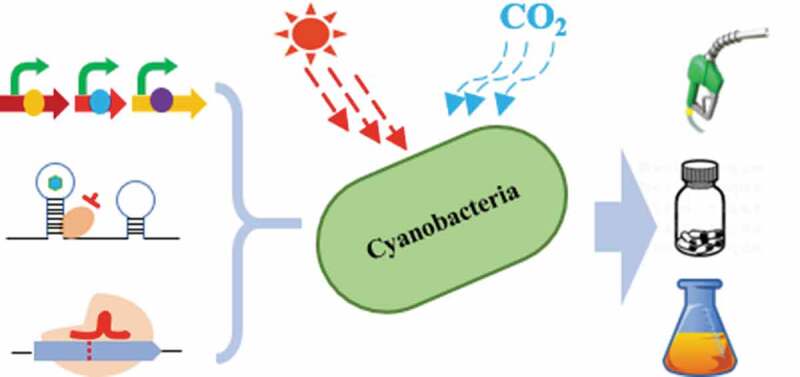
Cyanobacteria are Gram-negative photoautotrophic prokaryotes and have shown great importance to the Earth's ecology. Based on their capability in oxygenic photosynthesis and genetic merits, they can be engineered as microbial chassis for direct conversion of carbon dioxide to value-added biofuels and chemicals. In the last decades, attempts have given to the application of synthetic biology tools and approaches in the development of cyanobacterial cell factories. Despite the successful proof-of-principle studies, large-scale application is still a technical challenge due to low yields of bioproducts. Therefore, recent efforts are underway to characterize and develop genetic regulatory parts and strategies for the synthetic biology applications in cyanobacteria. In this review, we present the recent advancements and application in cyanobacterial synthetic biology toolboxes. We also discuss the limitations and future perspectives for using such novel tools in cyanobacterial biotechnology.
Overview
The claims and statistics of this paper haven’t been checked yet.
Free: it reads the open-access text and checks the first 5 claims that cite a source we can check. Create a free account to check every claim.
Integrity signals
Registry
Cites
Statistics
Figures
Verification
Claims the paper makes
The claims and statistics of this paper haven’t been checked yet.
Free: it reads the open-access text and checks the first 5 claims that cite a source we can check. Create a free account to check every claim.
Claims other papers make about this one
Each is checked against this paper’s own text: does it say what the citing paper says it does?
The cited source says what the claim attributes to it.
In the citing paper
“This is an active area of study for cyanobacterial platforms where inducible promoters, riboswitches and CRISPR-cas based regulation systems are all being developed for controlled synthesis of bio-products (Wang et al., 2020).”
From Cyanobacteria and microalgae in supporting human habitation on Mars (2022) · cites this paper as Wang et al., 2020
Self-check
Percentages, sums and reported differences re-computed from the paper’s own numbers.
The self-check needs the paper’s full text.
Citations
Cites
Ror2 signaling regulates Golgi structure and transport through IFT20 for tumor invasiveness
Nishita, M., Park, S.-Y., Nishio, T., Kamizaki, K., Wang, Z., Tamada, K., Takumi, T., Hashimoto, R., Otani, H., Pazour, G. J., et al. (2017) · Scientific Reports · doi:10.1038/s41598-016-0028-x · Cited by 15,947
Powering the planet: Chemical challenges in solar energy utilization
Lewis, N. S., & Nocera, D. G. (2006) · Proceedings of the National Academy of Sciences · doi:10.1073/pnas.0603395103 · Cited by 8,310 · cited 1×
“, plants and algae), cyanobacteria are often fast-growing with higher production rates [3,4].”
BackgroundRe-epithelialization and immune cell behaviour in an ex vivo human skin model
Rakita, A., Nikolić, N., Mildner, M., Matiasek, J., & Elbe-Bürger, A. (2020) · Scientific Reports · doi:10.1038/s41598-019-56847-4 · Cited by 8,228
Serganov, A., & Nudler, E. (2013) · Cell · doi:10.1016/j.cell.2012.12.024 · Cited by 1,013
Topological-insulator-based terahertz modulator
Wang, X. B., Cheng, L., Wu, Y., Zhu, D. P., Wang, L., Zhu, J.-X., Yang, H., & Chia, E. E. M. (2017) · Scientific Reports · doi:10.1038/s41598-017-13701-9 · Cited by 978
Direct photosynthetic recycling of carbon dioxide to isobutyraldehyde
Atsumi, S., Higashide, W., & Liao, J. C. (2009) · Nature Biotechnology · doi:10.1038/nbt.1586 · Cited by 870
Melis, A. (2009) · Plant Science · doi:10.1016/j.plantsci.2009.06.005 · Cited by 796 · cited 1×
“, plants and algae), cyanobacteria are often fast-growing with higher production rates [3,4].”
BackgroundThe Structural and Functional Diversity of Metabolite-Binding Riboswitches
Roth, A., & Breaker, R. R. (2009) · Annual Review of Biochemistry · doi:10.1146/annurev.biochem.78.070507.135656 · Cited by 553 · cited 1×
“Riboswitches are cis-activating or cis-repressing regulatory elements most likely present in the 5 untranslated regions of mRNAs [71,72].”
BackgroundFatty acid production in genetically modified cyanobacteria
Liu, X., Sheng, J., & Curtiss III, R. (2011) · Proceedings of the National Academy of Sciences · doi:10.1073/pnas.1103014108 · Cited by 532 · cited 1×
“Over the last decades, cyanobacteria have been successfully engineered as chassis for the production of a variety of valuable chemicals, such as fatty acids [5], ethylene [6], ethanol [7], 1-butanol [8], sucrose [9], shinorine [10], terpenoids [11], etc.”
BackgroundEngineering microbial biofuel tolerance and export using efflux pumps
Dunlop, M. J., Dossani, Z. Y., Szmidt, H. L., Chu, H. C., Lee, T. S., Keasling, J. D., Hadi, M. Z., & Mukhopadhyay, A. (2011) · Molecular Systems Biology · doi:10.1038/msb.2011.21 · Cited by 512 · cited 1×
“In the past, antibiotics have been the most commonly used selectable markers in cyanobacteria, including chloramphenicol [94], erythromycin [95], kanamycin [94], spectinomycin [96], neomycin [97], streptomycin [98], spectinomycin [99], zeocin [100] and gentamicin [99].”
Background
Cited by
Cyanobacteria and microalgae in supporting human habitation on Mars
Mapstone, L. J., Leite, M. N., Purton, S., Crawford, I. A., & Dartnell, L. (2022) · Biotechnology Advances · doi:10.1016/j.biotechadv.2022.107946 · Cited by 92
“This is an active area of study for cyanobacterial platforms where inducible promoters, riboswitches and CRISPR-cas based regulation systems are all being developed for controlled synthesis of bio-products (Wang et al., 2020).”
Li, L., Yang, C., Ma, B., Lu, S., Liu, J., Pan, Y., Wang, X., Zhang, Y., Wang, H., Sun, T., et al. (2023) · ACS Applied Materials & Interfaces · doi:10.1021/acsami.2c20399 · Cited by 78
Danchin, A. (2021) · Microbial Biotechnology · doi:10.1111/1751-7915.13937 · Cited by 57
“The species of this phylum are likely to become a preferred chassis for biotechnological developments in the near future (Wang et al., 2020).”
BackgroundNawaz, T., Joshi, N., Nelson, D., Saud, S., Abdelsalam, N. R., Abdelhamid, M. M. A., Jaremko, M., Rahman, T. U., & Fahad, S. (2024) · Environmental Technology & Innovation · doi:10.1016/j.eti.2024.103886 · Cited by 55
Microbial autotrophic biorefineries: Perspectives for biopolymer production
Srisawat, P., Higuchi‐Takeuchi, M., & Numata, K. (2022) · Polymer Journal · doi:10.1038/s41428-022-00675-3 · Cited by 49
“sidered model strains due to their extensive study and the availability of genetic toolkits [8, 9].”
BackgroundVeerabadhran, M., Sivakumar, N., MubarakAli, D., Xu, S., & Yang, F. (2021) · Chemosphere · doi:10.1016/j.chemosphere.2021.131436 · Cited by 51
Nawaz, T., Gu, L., Fahad, S., Saud, S., Harrison, M. T., & Zhou, R. (2024) · Food and Energy Security · doi:10.1002/fes3.536 · Cited by 47
SEVA-Cpf1, a CRISPR-Cas12a vector for genome editing in cyanobacteria
Baldanta, S., Guevara, G., & Navarro-Llorens, J. M. (2022) · Microbial Cell Factories · doi:10.1186/s12934-022-01830-4 · Cited by 42
“Whereas most of the genetic tools for cyanobacteria reported are frequently focused on Synechococcus or Synechocystis [18], the SEVA vectors described in this work may broaden the potential applications for other strains, such as Anabaena and Chroococcidiopsis tested here and, by extension, to other cyanobacteria.”
BackgroundNagy, C., Thiel, K., Mulaku, E., Mustila, H., Tamagnini, P., Aro, E.-M., Pacheco, C. C., & Kallio, P. (2021) · Microbial Cell Factories · doi:10.1186/s12934-021-01622-2 · Cited by 33
Perspectives of cyanobacterial cell factories
Melis, A., Hidalgo Martinez, D. A., & Betterle, N. (2024) · Photosynthesis Research · doi:10.1007/s11120-023-01056-4 · Cited by 31
Generation of Synthetic Shuttle Vectors Enabling Modular Genetic Engineering of Cyanobacteria
Opel, F., Siebert, N. A., Klatt, S., Tüllinghoff, A., Hantke, J. G., Toepel, J., Bühler, B., Nürnberg, D. J., & Klähn, S. (2022) · ACS Synthetic Biology · doi:10.1021/acssynbio.1c00605 · Cited by 30
Biosensors in microalgae: A roadmap for new opportunities in synthetic biology and biotechnology
Patwari, P., Pruckner, F., & Fabris, M. (2023) · Biotechnology Advances · doi:10.1016/j.biotechadv.2023.108221 · Cited by 30
Customized molecular tools to strengthen metabolic engineering of cyanobacteria
Klähn, S., Opel, F., & Hess, W. R. (2024) · Green Carbon · doi:10.1016/j.greenca.2024.05.002 · Cited by 27
Application of Cyanobacteria as Chassis Cells in Synthetic Biology
Liu, X., Tang, K., & Hu, J. (2024) · Microorganisms · doi:10.3390/microorganisms12071375 · Cited by 20
“Cyanobacterial biosensors are a type of genetically encoded sensors that use the luminescence [137], fluorescence [138], or pigment [139] characteristics of cyanobacteria to produce signals, which can detect different environmental factors within cells [140].”
BackgroundSchubert, M. G., Tang, T., Goodchild-Michelman, I. M., Ryon, K. A., Henriksen, J. R., Chavkin, T. A., Wu, Y., Miettinen, T. P., Wychen, S. V., Dahlin, L. R., et al. (2024) · Applied and Environmental Microbiology · doi:10.1128/aem.00841-24 · Cited by 21
Insights into cyanobacterial alkane biosynthesis
Parveen, H., & Yazdani, S. S. (2021) · Journal of Industrial Microbiology & Biotechnology · doi:10.1093/jimb/kuab075 · Cited by 21
“Alkane synthesis occurs primarily in the thylakoid membrane (Wang et al., 2020).”
Usai, G., Cordara, A., Re, A., Polli, M. F., Mannino, G., Bertea, C. M., Fino, D., Pirri, C. F., & Menin, B. (2022) · Frontiers in Bioengineering and Biotechnology · doi:10.3389/fbioe.2022.1005960 · Cited by 17
Li, C., Zheng, J., Wu, Y., Wang, X., Shao, H., & Dong, Y. (2022) · Life · doi:10.3390/life12101537 · Cited by 13
Husain, A., Khanam, A., Alouffi, S., Shahab, U., Alharazi, T. H., Maarfi, F., Khan, S. A., Hasan, Z., Akasha, R., Farooqui, A., et al. (2024) · Phytochemistry Reviews · doi:10.1007/s11101-024-10045-x · Cited by 16
“…of key genes in the phycocyanobilin synthesis pathway, or the deletion of regulatory genes that repress C-PC production under stress conditions, can lead to cyanobacteria strains that produce greater amounts of C-PC even in suboptimal conditions (Wang et al. 2020; Lee and Kim 2024) (Fig.”
Cyanobacterial Biofuel: A Platform for Green Energy
Mishra, S., Kumari, N., Singh, V. K., & Sinha, R. P. (2023) · Advances in Environmental and Engineering Research · doi:10.21926/aeer.2303041 · Cited by 11
Engineering cyanobacteria for the production of aromatic natural products
Gu, F., Li, C., Zheng, H., & Ni, J. (2024) · Blue Biotechnology · doi:10.1186/s44315-024-00002-w · Cited by 9
“Precise regulation of the expression intensity of pathway enzymes by regulatory elements such as promoters, RBS and ribose switches can improve the production of compounds [91].”
BackgroundZhu, Y., & Woo, Y.-P. J. (2021) · Journal of Molecular and Cellular Cardiology · doi:10.1016/j.yjmcc.2021.11.007 · Cited by 9
The Molecular Toolset and Techniques Required to Build Cyanobacterial Cell Factories
Opel, F., Axmann, I. M., & Klähn, S. (2022) · Advances in Biochemical Engineering/Biotechnology · doi:10.1007/10_2022_210 · Cited by 7
Biology and composition of microalgae and cyanobacteria
Rodríguez-Zúñiga, D., Méndez‐Zavala, A., Solís-Quiroz, O., Morales‐Oyervides, L., Montañez, J., & Benavente‐Valdés, J. R. (2024) · Elsevier eBooks · doi:10.1016/b978-0-443-19213-5.00001-7 · Cited by 6
Cyanobacteria fouling in photobioreactors: current status and future perspectives for prevention
Talluri, S. N. L., Rittschof, D., Winter, R. M., & Salem, D. R. (2025) · Biofouling · doi:10.1080/08927014.2025.2499107 · Cited by 5
“For an in-depth understanding of the gen-etic and metabolic engineering tools applied to cyanobacteria, readers are advised to review the articles by Ruffing (2011), Khan et al. (2019), Wang et al. (2020), Sun et al. (2023), Pooja et al. (2023), and Singh et al. (2024).”
Interfacing solar energy with bacterial metabolism for sustainable chemical synthesis
Trotter, C. L., Clouston, K., Steele, J. F. C., Marlow, L., & Wallace, S. C. (2026) · Nature Reviews Clean Technology · doi:10.1038/s44359-025-00141-2 · Cited by 6
Advances in organic acid production using cyanobacteria: Strategies and applications
Pathania, R., & Srivastava, A. (2025) · Blue Biotechnology · doi:10.1186/s44315-025-00045-7 · Cited by 4
“This is often achieved by overexpressing bottleneck enzymes, deleting genes encoding for competing pathways, and fine-tuning the expression of global regulatory elements, including sigma factors and transcriptional regulators [96, 97].”
Photonic-chemostat engineering for efficient continuous cultivation of cyanobacteria
Rahman, M. R., Noori, M. T., & Hellgardt, K. (2026) · RSC Advances · doi:10.1039/d5ra09945e · Cited by 4
Farooq, M. S., Javed, F., Uzair, M., EL-BELTAGI, H. S., Zulfiqar, U., Khan, M. R., Yousuf, M., Tuckner, M., Rebouh, N. Y., & Shah, M. A. (2026) · Agrosystems Geosciences & Environment · doi:10.1002/agg2.70321 · Cited by 5
Biofuels from cyanobacteria -a metabolic engineering approach
Pushkaran, P., Edison, L. K., & Pradeep, N. S. (2023) · Plant Science Today · doi:10.14719/pst.2505 · Cited by 4
“…CRISPRi was successfully employed for the dynamic up/down - regulation of the target genes in various synthetic pathways for improved productivity of biofuels (e.g., fatty acids and fatty alcohols) and other important metabolites (e.g., amino acids, succinate, lactate, and pyruvate) (79).”
MethodUnlocking the potential of unique genes in cyanobacterial alkane synthesis
Parveen, H., Garg, V., Pachauri, P., Khan, M. A., & Yazdani, S. S. (2025) · Metabolic Engineering · doi:10.1016/j.ymben.2025.11.016 · Cited by 2
Cyanobacteria: A Biological Chassis for Industrial Applications
Majhi, B. K. (2025) · IntechOpen eBooks · doi:10.5772/intechopen.1012978 · Cited by 2
Genetic Modifications in Cyanobacteria: Current Status and Future Prospects
Tripathi, K., & Mishra, Y. (2026) · IntechOpen eBooks · doi:10.5772/intechopen.1014041 · Cited by 2
Comprehensive plasmid toolkit for multipart assembly in the Dunaliella salina nuclear system
Chen, H., Xie, Y.-C., Xie, S., & Jiang, J. (2024) · Algal Research · doi:10.1016/j.algal.2024.103413 · Cited by 2
The Implication and Advancement of CRISPR Genome Editing in Microalgae and Cyanobacteria
Kushwaha, A. L., Sharma, H. K., & Dasgupta, C. N. (2024) · International Journal on Algae · doi:10.1615/interjalgae.v27.i1.30 · Cited by 2
Juteršek, M., & Dolinar, M. (2021) · PeerJ · doi:10.7717/peerj.12199 · Cited by 1
“…and review articles (Khan et al., 2019; Lindblad et al., 2019; Santos-Merino, Singh & Ducat, 2019; Vavitsas et al., 2019; Ng, Keskin & Tan, 2020; Wang, Gao & Yang, 2020; Liu et al., 2021; Sproles et al., 2021) published in recent years emphasize the potential of cyanobacteria and present…”
Development of genetic tools for the symbiosis Azolla
Rico, D. (2021) · Cited by 1
Cyanobacteria Biotechnology: Challenges and Prospects
Khan, A. Z., Zhao, X., Bai, F., Mustafa, H. H., & Liu, C. (2024) · Springer eBooks · doi:10.1007/978-3-031-45523-0_13 · Cited by 1
Chen, X., Yu, D.-J., & Jia, R. (2024) · Fish & Shellfish Immunology · doi:10.1016/j.fsi.2024.109912 · Cited by 1
Additional file 3 of SEVA-Cpf1, a CRISPR-Cas12a vector for genome editing in cyanobacteria
Baldanta, S., Guevara, G., & Navarro-Llorens, J. M. (2022) · Figshare · doi:10.6084/m9.figshare.19921035
Nagy, C. I., Thiel, K., Mulaku, E., Mustila, H., Tamagnini, P., Aro, E.-M., Pacheco, C. C., & Kallio, P. T. (2021) · Figshare · doi:10.6084/m9.figshare.14954556
Sousa Sánchez, P. (2023) · Deposito de Investigacion Universidad de Sevilla (University of Seville)
Biología sintética en cianobacterias
Barrau Párraga, M. J. (2022) · Deposito de Investigacion Universidad de Sevilla (University of Seville)
Employing Solid-State Platforms for Photosynthetic Chemical Production
Tóth, G. S. (2024) · UTUPub (University of Turku)
Cyanobacteria: Promising Candidates for Soil and Water Bioremediation in Sustainable Agriculture
Montiel‐Arzate, A., & Ponce‐Rivas, E. (2026) · Springer eBooks · doi:10.1007/978-3-032-10614-8_13 · Cited by 1
Seiilbek, S. N., Mirza, S. S., Torekhanova, M. M., Altybaeva, N. A., Sydykbekova, R. K., Akmukhanova, N. R., & Bruce, B. D. (2026) · Frontiers in Plant Science · doi:10.3389/fpls.2026.1899035
“These photoautotrophic microorganisms are ideal chassis for the direct conversion of CO 2 and solar energy into valuable products due to their photosynthetic capabilities (Xia et al., 2019; Wang et al., 2020).”
Cyanobacteria: A sustainable platform for high-value biopharmaceutical protein production
Majhi, B. K. (2026) · Journal of Pharmaceutical Analysis · doi:10.1016/j.jpha.2026.101807
Metadata
- Authors
- Wang, F., Gao, Y., & Yang, G.
- Affiliations
- University of Florida (US)
- Jining Academy of Agricultural Science
- Corresponding author
- Yang, Guang
- ORCID
- Wang, Fen
- Venue
- Bioengineered
- Publisher
- Informa UK Limited
- Published
- 2020-01
- Volume
- 11
- Issue
- 1
- Pages
- 1208-1220
- ISSN
- 2165-5979 (ISSN-L)
- 2165-5987
- PMC
- PMC8291842
- OpenAlex
- W3095351324
- Cited by
- 49
- References
- 125
- Citations by year
- 2026: 7 · 2025: 4 · 2024: 13 · 2023: 5 · 2022: 9 · 2021: 11
- FWCI
- 0.60
- Type
- journal article
- Language
- en
- Open access
- gold
- doi.org
- Locations
- Bioengineered (publishedVersion, cc-by)
- PubMed Central (publishedVersion, cc-by)
- PubMed (publishedVersion)
- DOAJ (DOAJ: Directory of Open Access Journals) (submittedVersion, cc-by-sa)
- Topics
- Life Sciences › Biochemistry, Genetics and Molecular Biology › Molecular Biology › Microbial Metabolic Engineering and Bioproduction
- Physical Sciences › Energy › Renewable Energy, Sustainability and the Environment › Algal biology and biofuel production
- Life Sciences › Biochemistry, Genetics and Molecular Biology › Molecular Biology › Gene Regulatory Network Analysis
- Keywords
- cyanobacteria, synthetic biology, microbial chassis, cell factories, biofuels, CO2 conversion, genetic engineering tools, bio-based chemicals, oxygenic photosynthesis
- MeSH terms
- Cyanobacteria, Biotechnology, Photosynthesis, Synthetic Biology
About these checks
Registry, retraction, Cites and statistics results are computed, not judged, with one exception: a printed reference that no index lists is read once by a model before it counts as a citation error. Claims are extracted by a model and kept only when their quote appears verbatim in the text; each cited source is then checked, with a model’s help, for whether it says what the claim relies on. Those verdicts can be wrong — read the claim’s quote and the cited source before relying on one.
Statistics and arithmetic are recomputed, not judged.
Confidence bands are shown only for fields calibrated on our annotated test set. None is calibrated yet, so no band is shown.
What counts as a claim ›How we measure confidence ›How we check this ›
Are you an author, or do you see a problem with this page? Request a review
Data sources
Bibliographic data: Semantic Scholar, OpenAlex, Crossref.
Contains information from the Semantic Scholar Academic Graph Datasets, made available under the ODC Attribution License (ODC-BY 1.0).
Semantic Scholar’s data is described in: Kinney, R., et al. (2023). The Semantic Scholar Open Data Platform. arXiv:2301.10140.
