

Well-to-wheels energy use and greenhouse gas emissions of ethanol from corn, sugarcane and cellulosic biomass for US use
Open accessThe DOI matches its Crossref record; 52 of the 52 references it cites were found in a registry or an index; 6 of the 48 sources its claims cite were checked for support.
Abstract
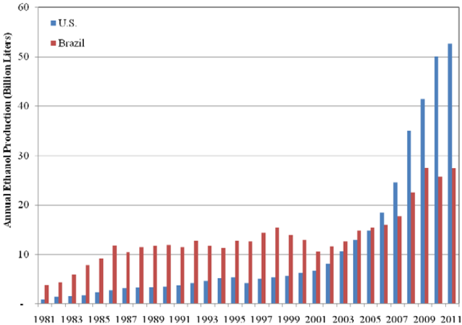
Globally, bioethanol is the largest volume biofuel used in the transportation sector, with corn-based ethanol production occurring mostly in the US and sugarcane-based ethanol production occurring mostly in Brazil. Advances in technology and the resulting improved productivity in corn and sugarcane farming and ethanol conversion, together with biofuel policies, have contributed to the significant expansion of ethanol production in the past 20 years. These improvements have increased the energy and greenhouse gas (GHG) benefits of using bioethanol as opposed to using petroleum gasoline. This article presents results from our most recently updated simulations of energy use and GHG emissions that result from using bioethanol made from several feedstocks. The results were generated with the GREET (Greenhouse gases, Regulated Emissions, and Energy use in Transportation) model. In particular, based on a consistent and systematic model platform, we estimate life-cycle energy consumption and GHG emissions from using ethanol produced from five feedstocks: corn, sugarcane, corn stover, switchgrass and miscanthus. We quantitatively address the impacts of a few critical factors that affect life-cycle GHG emissions from bioethanol. Even when the highly debated land use change GHG emissions are included, changing from corn to sugarcane and then to cellulosic biomass helps to significantly increase the reductions in energy use and GHG emissions from using bioethanol. Relative to petroleum gasoline, ethanol from corn, sugarcane, corn stover, switchgrass and miscanthus can reduce life-cycle GHG emissions by 19–48%, 40–62%, 90–103%, 77–97% and 101–115%, respectively. Similar trends have been found with regard to fossil energy benefits for the five bioethanol pathways.
Overview
CoChat Summary
TL;DR
This paper uses the GREET model to estimate well-to-wheels energy use and greenhouse gas emissions for US-relevant ethanol pathways from corn, sugarcane, corn stover, switchgrass, and miscanthus, compared with petroleum gasoline. It finds that moving from corn to sugarcane to cellulosic feedstocks generally increases life-cycle energy and GHG benefits, even when land use change emissions are included.
Key findings
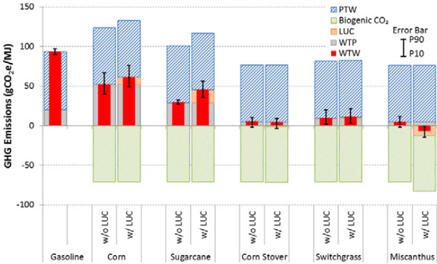
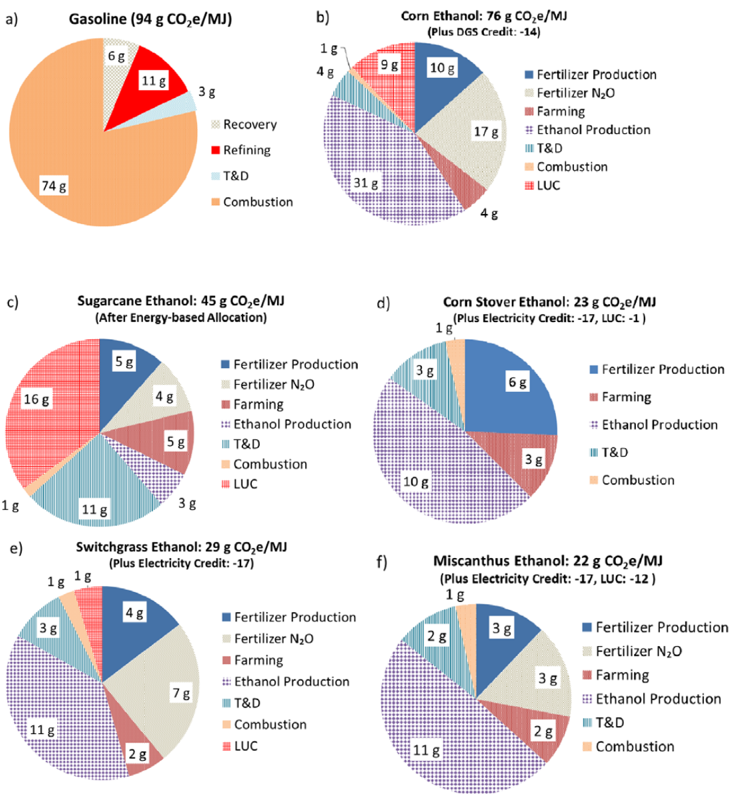
- Relative to petroleum gasoline, life-cycle GHG reductions including LUC are 19–48% for corn ethanol, 40–62% for sugarcane ethanol, 90–103% for corn stover ethanol, 77–97% for switchgrass ethanol, and 101–115% for miscanthus ethanol; excluding LUC, reductions are 29–57%, 66–71%, 89–102%, 79–98%, and 88–102%, respectively.
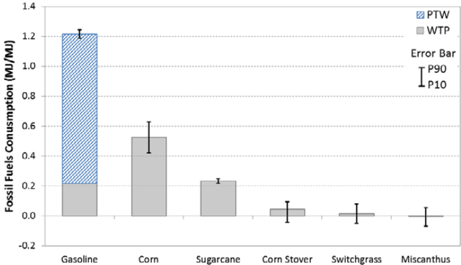
- Average WTW fossil energy use reductions relative to gasoline are 57% for corn ethanol, 81% for sugarcane ethanol, 96% for corn stover ethanol, 99% for switchgrass ethanol, and 100% for miscanthus ethanol.
- Energy balances and ratios are positive for all five ethanol types: corn 10.1 MJ l⁻¹ and 1.61; sugarcane 16.4 and 4.32; corn stover 20.4 and 4.77; switchgrass 21.0 and 5.44; miscanthus 21.4 and 6.01.
- LUC GHG emissions are largest for corn ethanol at 9.1 g CO₂e MJ⁻¹, while miscanthus ethanol shows sequestration of −12 g CO₂e MJ⁻¹, switchgrass ethanol 1.3 g CO₂e MJ⁻¹, and corn stover ethanol sequestration of 1.2 g CO₂e MJ⁻¹; sugarcane ethanol uses a literature-based value of 16 g CO₂e MJ⁻¹.
Methods
- The study uses GREET1 2012 to conduct well-to-wheels, or field-to-wheels, simulations for the year 2015 for five bioethanol pathways: US corn, Brazilian sugarcane, US corn stover, switchgrass, and miscanthus, with petroleum gasoline as the baseline.
- The analysis includes well-to-pump and pump-to-wheels stages, biogenic CO₂, and LUC emissions via CCLUB for corn, corn stover, switchgrass, and miscanthus; sugarcane LUC emissions are based on a literature review. Co-products are treated with displacement or energy allocation methods.
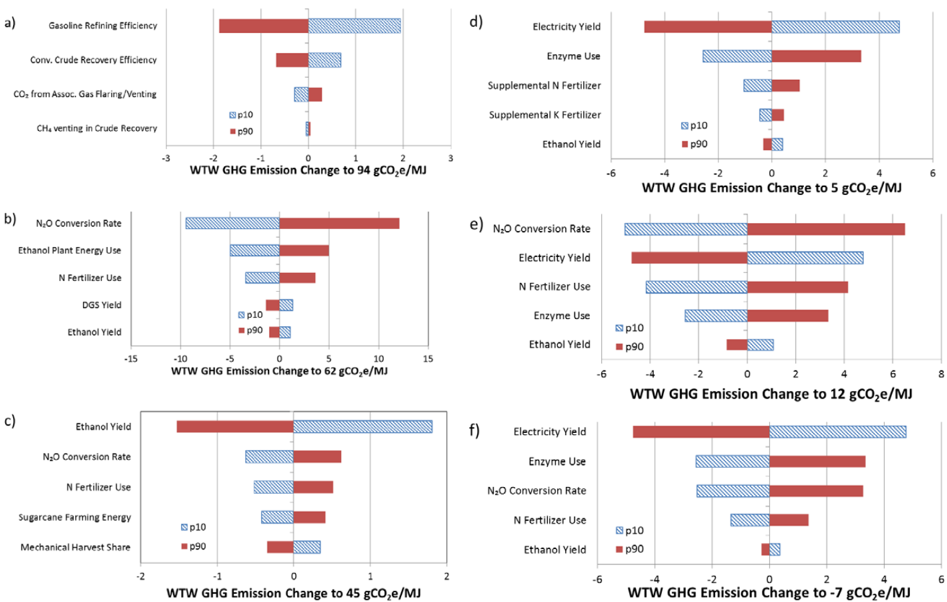
- GREET’s stochastic modeling tool is used with probability distribution functions for key parameters, and parametric sensitivity analyses are conducted using P10 and P90 values.
Limitations
- The paper states that no LUC GHG modeling was conducted for sugarcane ethanol; instead, a literature-based value of 16 g CO₂e MJ⁻¹ was used, and the authors note it was not possible to maintain a consistent analytical approach among unharmonized sugarcane LUC studies or between them and CCLUB results.
- The paper states that cellulosic conversion energy intensity data came from corn stover processing, with no separate conversion data for other cellulosic feedstocks; electricity yields from cellulosic plants are highly uncertain, and it is not certain that plants will install CHP equipment for electricity export; feedstock loss during storage, harvest, and transportation is not included.
- Evident from the text: using MJ as the functional unit means vehicle efficiency differences between gasoline and ethanol are not taken into account; co-product allocation methodology choices can affect results; and LUC results were generated using one configuration of CCLUB modeling assumptions.
Model-written summary. Check it against the paper before relying on it.
Integrity signals
Registry
Cites
Statistics
Figures
Verification
Claims the paper makes
3 Valid · 0 Not valid · 31 Not checked · 51 Own results and interpretations
Every source the paper cites for this claim was checked and supports it.
In the paper
“Our results for cellulosic ethanol are in line with two recent studies that reported life-cycle GHG emissions of switchgrass and miscanthus ethanol.”
What the sources say
- Supportedcites Monti et al (2012) matched to “The contribution of switchgrass in reducing GHG emissions” (2012) source
The paper’s ‘Life cycle carbon emissions by switchgrass’ section reports life-cycle emissions findings for switchgrass ethanol, including estimates from fuel life-cycle assessments. This supports citing it as the switchgrass study among the two studies mentioned; the sentence does not require this source to cover miscanthus. (LLM, conf=0.87)
- Supportedcites Scown et al (2012) matched to “Lifecycle greenhouse gas implications of US national scenarios for cellulosic ethanol production” (2012) source
The citation identifies Scown et al. (2012) as one of the recent life-cycle studies reporting GHG emissions of cellulosic (Miscanthus) ethanol, and our copy plainly is that: the Abstract states the lifecycle GHG intensity of bioethanol from Miscanthus as 11-13 g CO2-equivalent per MJ of fuel (80-90% lower than gasoline), and Section 3 (Results and discussion) reports scenario-level lifecycle GHG results for six Miscanthus-to-ethanol production scenarios. The 'switchgrass' member of the pair is not this paper's subject — Scown et al. only compares its own numbers to earlier switchgrass-to-ethanol work (Bai et al 2010, Spatari et al 2005) — and the concordance judgement ('are in line with') is the citing authors' own conclusion, not content attributed to this source. (LLM, conf=0.82)
plain- Asserted: passes — The authors put it forward as true.
- Checkable: passes — It can be checked against evidence.
- Load-bearing: unclear — It is unclear whether the paper’s conclusions depend on it.
- Based: passes — The paper gives a reason why it holds.
- Supported
The cited sources support only part of this claim — read each source’s verdict below.
In the paper
“Our results for corn ethanol, however, contrast with those of Searchinger et al (2008) and Hill et al (2009), who predicted that corn ethanol would have a greater life-cycle GHG impact than gasoline, mainly due to LUC GHG emissions among those studies and ours.”
What the sources say
- Not checked — no full text of the sourcecites Searchinger et al (2008) matched to “Use of U.S. Croplands for Biofuels Increases Greenhouse Gases Through Emissions from Land-Use Change” (2008) source
- Partly supportedcites Hill et al (2009) matched to “Climate change and health costs of air emissions from biofuels and gasoline” (2009) sourceExperimental — accuracy not yet measured
The Results (page unavailable) say that land-use-change emissions eliminate the GHG advantage of corn ethanol made with natural-gas process heat, and that coal-powered production has higher GHG emissions than gasoline. But the paper does not predict higher emissions for corn ethanol generally: it reports lower emissions for the stover-powered and advanced-technology scenarios, even with land-use change included in the latter. (LLM, conf=0.88)
plainstates a cause- Asserted: passes — The authors put it forward as true.
- Checkable: passes — It can be checked against evidence.
- Load-bearing: passes — The paper’s conclusions depend on it.
- Based: passes — The paper gives a reason why it holds.
A result the paper states — it cites no source for it, so there is none to check. The quote shows it is in the paper.
In the paper
“Miscanthus ethanol has significant negative LUC GHG emissions due to the increased SOC content from miscanthus growth.”
plainstates a cause- Asserted: passes — The authors put it forward as true.
- Checkable: passes — It can be checked against evidence.
- Load-bearing: passes — The paper’s conclusions depend on it.
- Based: passes — The paper gives a reason why it holds.
A result the paper reports from its own data — it cites no other source for it, so there is none to check. The quote shows it is in the paper.
In the paper
“Relative to petroleum gasoline, ethanol from corn, sugarcane, corn stover, switchgrass and miscanthus can reduce life-cycle GHG emissions by 19-48%, 40-62%, 90-103%, 77-97% and 101-115%, respectively.”
plainstates a cause- Asserted: passes — The authors put it forward as true.
- Checkable: passes — It can be checked against evidence.
- Load-bearing: passes — The paper’s conclusions depend on it.
- Based: passes — The paper gives a reason why it holds.
- Rests on an assumption not shown here.
A result the paper reports from its own data — it cites no other source for it, so there is none to check. The quote shows it is in the paper.
In the paper
“Relative to petroleum gasoline, ethanol from corn, sugarcane, corn stover, switchgrass and miscanthus can reduce life-cycle GHG emissions by 19-48%, 40-62%, 90-103%, 77-97% and 101-115%, respectively.”
plainstates a cause- Asserted: passes — The authors put it forward as true.
- Checkable: passes — It can be checked against evidence.
- Load-bearing: passes — The paper’s conclusions depend on it.
- Based: passes — The paper gives a reason why it holds.
- Rests on 2 assumptions not shown here.
33 more claims
Create a free account to see all 85 claims and to verify the 8 references still open.
- Probably not a substantial claim. 29
- It may state two separate claims as one. 25
Claims other papers make about this one
Each is checked against this paper’s own text: does it say what the citing paper says it does?
The source backs part of the claim, not all of it — or backs it for a different population, condition or comparison.
In the citing paper
“GHG emissions, as well as using N-fertilizers, coal, and energy, increased the value of GWP (Nguyen and Gheewala 2008, Pryor et al. 2017, Wang et al. 2012).”
From Environmental and economic analysis of bioethanol production from sugarcane molasses and agave juice (2021) · cites this paper as Wang et al. 2012
Experimental — accuracy not yet measuredThe source backs part of the claim, not all of it — or backs it for a different population, condition or comparison.
In the citing paper
“Overall, biofuels from cellulosic feedstocks (e.g., corn residues, switchgrass) and certain non-grain conventional crops (e.g., cassava, Jatropha) have much less greenhouse gas (GHG) emissions and air pollutants than fossil fuels (e.g., gasoline, diesel) on an energy basis [6][7][8].”
From Biomass and biofuels in China: Toward bioenergy resource potentials and their impacts on the environment (2018) · cites this paper as [7]
Experimental — accuracy not yet measuredThe source backs part of the claim, not all of it — or backs it for a different population, condition or comparison.
In the citing paper
“Most studies agreed that, without land use change impacts, biofuels release much less GHG emissions than their fossil fuel counterparts on a per unit energy basis [6,7,44].”
From Biomass and biofuels in China: Toward bioenergy resource potentials and their impacts on the environment (2018) · cites this paper as [7]
Experimental — accuracy not yet measuredThe cited source says what the claim attributes to it.
In the citing paper
“Uncertainties associated with GHG emissions from other steps in the life cycle of ethanol besides LUC (e.g., fertilizer consumption) have been identified and quantified in an earlier study (Wang et al. , 2012).”
From Influence of spatially dependent, modeled soil carbon emission factors on life‐cycle greenhouse gas emissions of corn and cellulosic ethanol (2016) · cites this paper as Wang et al., 2012
The cited source says what the claim attributes to it.
In the citing paper
“Although bioenergy produced from plant biomass can reduce CO2 emissions compared to traditional fossil fuels (e.g., Clifton- Brown & Lewandowski,2000; Wang et al., 2012)”
From Decadal change in soil carbon and nitrogen with a Miscanthus × giganteus crop on abandoned agricultural land in southeast Ohio (2024) · cites this paper as Wang et al., 2012
2 more claims about this paper
Create a free account to see every claim other papers make about this one.
Self-check
Percentages, sums and reported differences re-computed from the paper’s own numbers.
Each contradiction between two passages listed here was confirmed by an independent check.
Rated minor: it would not touch a result — a value no result rests on, a p-value that stays on the same side of the significance level, or a conflict that is clerical, resolved elsewhere in the paper, or outside its own findings.
In the paper
§ 3. Results · p. 10
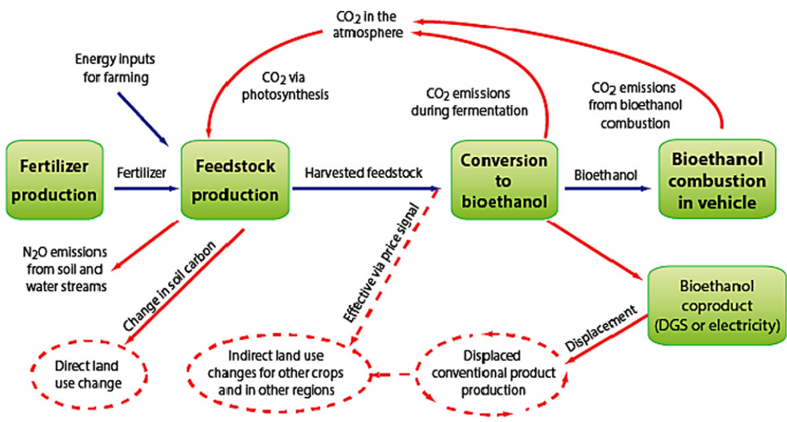
“Figure 5. Shares of GHG emissions by activities for (a) gasoline, (b) corn ethanol, (c) sugarcane ethanol, (d) corn stover ethanol, (e) switchgrass ethanol and (f) miscanthus ethanol (results were generated by using the co-product allocation methodologies listed in table 6).”
§ 2.6. Treatment of co-products in bioethanol and gasoline LCA · p. 9
“Table 6. Energy balance and energy ratio of bioethanol.”
Rated minor: it would not touch a result — a value no result rests on, a p-value that stays on the same side of the significance level, or a conflict that is clerical, resolved elsewhere in the paper, or outside its own findings.
In the paper
“| Yeast use: grams = kg of substrate (dry matter basis) | 2.49 | 2.24 | 27.4 | Normal g |”
Reported 2.49 · recomputed 14.82
Rated minor: it would not touch a result — a value no result rests on, a p-value that stays on the same side of the significance level, or a conflict that is clerical, resolved elsewhere in the paper, or outside its own findings.
In the paper
“| CH 4 venting: g | 12.8 | 7.42 | 198 | Normal e |”
Reported 12.8 · recomputed 102.71
Citations
Cites
2006 IPCC Guidelines for National Greenhouse Gas Inventories
Paustian, K. H., Ravindranath, N. H., & van Amstel, A. R. (2006) · Socio-Environmental Systems Modeling · Cited by 6,706
Use of U.S. Croplands for Biofuels Increases Greenhouse Gases Through Emissions from Land-Use Change
Searchinger, T., Heimlich, R., Houghton, R. A., Dong, F., Elobeid, A., Fabiosa, J., Tokgoz, S., Hayes, D., & Yu, T.-H. (2008) · Science · doi:10.1126/science.1151861 · Cited by 4,888 · cited 3×
“Nonetheless, the life-cycle GHG emissions of bioethanol, especially those of corn-based ethanol, have been subject to debate (Farrell et al 2006, Fargione et al 2008, Searchinger et al 2008, Liska et al 2009, Wang et al 2011a, Khatiwada et al 2012).”
Land Clearing and the Biofuel Carbon Debt
Fargione, J., Hill, J., Tilman, D., Polasky, S., & Hawthorne, P. (2008) · Science · doi:10.1126/science.1152747 · Cited by 3,902
Ethanol Can Contribute to Energy and Environmental Goals
Farrell, A. E., Plevin, R. J., Turner, B. T., Jones, A. D., O'Hare, M., & Kammen, D. M. (2006) · Science · doi:10.1126/science.1121416 · Cited by 2,823
IPCC Special Report on Renewable Energy Sources and Climate Change Mitigation
Revel, D. (2011) · OpenEdition (OpenEdition) · doi:10.58079/o8wx · Cited by 2,175
(2006) · OSTI OAI (U.S. Department of Energy Office of Scientific and Technical Information) · Cited by 1,982
Feedstocks for Lignocellulosic Biofuels
Somerville, C., Youngs, H., Taylor, C., Davis, S. C., & Long, S. P. (2010) · Science · doi:10.1126/science.1189268 · Cited by 1,307 · cited 2×
“In the past several years, significant efforts have been made in the US to develop better varieties of miscanthus with higher yields (Somerville et al 2010).”
BackgroundU.S. Billion-Ton Update: Biomass Supply for a Bioenergy and Bioproducts Industry
Downing, M., Eaton, L. M., Graham, R. L., Langholtz, M. H., Perlack, R. D., Turhollow Jr, A. F., Stokes, B., & Brandt, C. C. (2011) · doi:10.2172/1023318 · Cited by 1,004
Macedo, I. C., Seabra, J. E. A., & Silva, J. E. A. R. (2008) · Biomass and Bioenergy · doi:10.1016/j.biombioe.2007.12.006 · Cited by 943
Life-Cycle Greenhouse Gas Emissions of Shale Gas, Natural Gas, Coal, and Petroleum
Burnham, A., Han, J., Clark, C. E., Wang, M., Dunn, J. B., & Palou-Rivera, I. (2012) · Environmental Science & Technology · doi:10.1021/es201942m · Cited by 600
Self-citation
Research works printed but not linked: 12
- 2011, PAS 2050: 2011 Specification for the Assessment of the Life Cycle Greenhouse Gas Emissions of Goods and Services
- E4Tech 2010 A Causal Descriptive Approach to Modeling the GHG Emissions Associated with the Indirect Land Use Impacts of Biofuels (provided to the UK Department of Transport) (www. e4tech.com/en/overview-publications.cfm, accessed 8 August 2012)
- 2012, Proposal for a Directive of the European Parliament and of the Council of Biofuel Land Use Change Emissions
- Edgerton M D et al 2010 Commercial scale corn stover harvests using field-specific erosion and soil organic matter targets Sustainable Alternative Fuel Feedstock Opportunities, Challenges, and Roadmaps for Six US Regions (Proc. Sustainable Feedstocks for Advanced Biofuels Workshop) ed R Braun, D Karlen and D Johnson (Ankeny, IA: Soil and Water Conservation Society) pp 247-56
- EPA (US Environmental Protection Agency) 2010 Renewable Fuel Standard Program (RFS2) Regulatory Impact Analysis (Washington, DC: US Environmental Protection Agency)
- 2012, Energy Technology Perspective 2012: Pathways to a Clean Energy System
- Larsen R, Wang M, Wu Y, Vyas A, Santini D and Mintz M 2005 Might Canadian oil sands promote hydrogen production for transportation? Greenhouse gas emission implications of oil sands recovery and upgrading World Resour. Rev. 17 220-42
- Macedo I D C, Leal M R L V and Seabra J E A R 2004 Assessment of Greenhouse Gas Emissions in the Production and Use of Fuel Ethanol in Brazil (prepared for the state of Sao Paulo, Brazil) (www.wilsoncenter.org/sites/default/files/brazil. unicamp.macedo.greenhousegas.pdf)
- Neeft J et al 2012 BioGrace-Harmonized Calculations of Biofuel Greenhouse Gas Emissions in Europe (www.biograce.net)
- RFA (Renewable Fuels Association) 2012 2012 Ethanol Industry Outlook: Accelerating Industry Innovation (Washington, DC: Renewable Fuels Association)
- Rosenfeld J, Pont J, Law L, Hirshfeld D and Kolb J 2009 Comparison of North American and Imported Crude Oil Life Cycle GHG Emissions (Calgary, AB: TIAX LLC and MathPro Inc. for Alberta Energy Research Institute) TIAX: Case No. D5595
- UNICA (Brazilian Sugarcane Association) 2012 UNICA Data Center (www.unicadata.com.br/index.php?idioma=2, accessed 16 July 2012)
Cited by
General Techno-Economic Analysis of CO 2 Electrolysis Systems
Jouny, M., Luc, W., & Jiao, F. (2018) · Industrial & Engineering Chemistry Research · doi:10.1021/acs.iecr.7b03514 · Cited by 1,628
“89 This shows that CO 2 -derived chemicals and fuels can indirectly lead to a reduction of CO 2 emissions.”
Environmental sustainability of biofuels: a review
Jeswani, H. K., Chilvers, A., & Azapagic, A. (2020) · Proceedings of the Royal Society A: Mathematical, Physical and Engineering Sciences · doi:10.1098/rspa.2020.0351 · Cited by 673
“Some studies on energy crops also considered the increase in the carbon stock on the land that was converted to produce these crops, which led to the total net-negative GHG emissions [68,119].”
BackgroundSustainability of the four generations of biofuels – A review
Mat Aron, N. S., Khoo, K. S., Chew, K. W., Show, P. L., Chen, W., & Nguyen, T. H. P. (2020) · International Journal of Energy Research · doi:10.1002/er.5557 · Cited by 479
Cellulosic biofuel contributions to a sustainable energy future: Choices and outcomes
Robertson, G. P., Hamilton, S. K., Barham, B. L., Dale, B. E., Izaurralde, R. C., Jackson, R. D., Landis, D. A., Swinton, S. M., Thelen, K. D., & Tiedje, J. M. (2017) · Science · doi:10.1126/science.aal2324 · Cited by 440
Plevin, R. J., Delucchi, M. A., & Creutzig, F. (2014) · Journal of Industrial Ecology · doi:10.1111/jiec.12074 · Cited by 425
“…managing review: Robert Anex © 2013 by Yale University DOI: 10.1111/jiec.12074 Volume 18, Number 1 et al. 2006; Lipman and Delucchi 2010; Wang et al. 2012) and, importantly, in reports targeting policy makers (Chum et al. 2011; Fulton et al. 2009; Berndes et al. 2010; Bird et al.…”
BackgroundInfluentialEthanol production in Brazil: a bridge between science and industry
Lopes, M. L., Paulillo, S. C. D. L., Godoy, A., Cherubin, R. A., Lorenzi, M. S., Giometti, F. H. C., Bernardino, C. D., Amorim Neto, H. B. D., & Amorim, H. V. D. (2016) · Brazilian Journal of Microbiology · doi:10.1016/j.bjm.2016.10.003 · Cited by 399
Life-cycle analysis of greenhouse gas emissions from renewable jet fuel production
de Jong, S., Antonissen, K., Hoefnagels, R., Lonza, L., Wang, M., Faaij, A., & Junginger, M. (2017) · Biotechnology for Biofuels · doi:10.1186/s13068-017-0739-7 · Cited by 358
Self-citationHunter, C. A., Penev, M. M., Reznicek, E. P., Eichman, J., Rustagi, N., & Baldwin, S. F. (2021) · Joule · doi:10.1016/j.joule.2021.06.018 · Cited by 357
Economic growth, energy consumption and CO2 emissions in Gulf Cooperation Council countries
Salahuddin, M., & Gow, J. (2014) · Energy · doi:10.1016/j.energy.2014.05.054 · Cited by 324
Bio-aviation Fuel: A Comprehensive Review and Analysis of the Supply Chain Components
Doliente, S. S., Narayan, A., Tapia, J. F. D., Samsatli, N. J., Zhao, Y., & Samsatli, S. (2020) · Frontiers in Energy Research · doi:10.3389/fenrg.2020.00110 · Cited by 295
Khalili, S., Rantanen, E., Bogdanov, D., & Breyer, C. (2019) · Energies · doi:10.3390/en12203870 · Cited by 290
Prussi, M., Lee, U., Wang, M., Malina, R., Valin, H., Taheripour, F., Velarde, C., Staples, M. D., Lonza, L., & Hileman, J. I. (2021) · Renewable and Sustainable Energy Reviews · doi:10.1016/j.rser.2021.111398 · Cited by 288
“In the CORSIA methodology, process emissions are allocated across the co-products based on their energy content [34].”
MethodSelf-citationLifecycle assessment of microalgae to biofuel: Comparison of thermochemical processing pathways
Bennion, E. P., Ginosar, D. M., Moses, J., Agblevor, F., & Quinn, J. C. (2015) · Applied Energy · doi:10.1016/j.apenergy.2014.12.009 · Cited by 286
“sis pathways compared to other traditional fuel pathways [30,76].”
BackgroundZymomonas mobilis as a model system for production of biofuels and biochemicals
Yang, S., Fei, Q., Zhang, Y., Contreras, L. M., Utturkar, S. M., Brown, S. D., Himmel, M. E., & Zhang, M. (2016) · Microbial Biotechnology · doi:10.1111/1751-7915.12408 · Cited by 207
“Besides fulfilling energy security and helping economic recovery as an energy form and fuel additive of oxygenate, cellulosic bioethanol is cleaner than the alternative, with 90% fewer greenhouse gas emissions than gasoline (Wang et al., 2012).”
BackgroundElectron‐Deficient Cu Sites on Cu3Ag1 Catalyst Promoting CO2 Electroreduction to Alcohols
Lv, X., Shang, L., Zhou, S., Li, S., Wang, Y., Wang, Z., Sham, T., Peng, C., & Zheng, G. (2020) · Advanced Energy Materials · doi:10.1002/aenm.202001987 · Cited by 220
The limits of bioenergy for mitigating global life-cycle greenhouse gas emissions from fossil fuels
Staples, M. D., Malina, R., & Barrett, S. R. H. (2017) · Nature Energy · doi:10.1038/nenergy.2016.202 · Cited by 211
Biofuels: An alternative to conventional fuel and energy source
Priya, Deora, P. S., Verma, Y., Muhal, R. A., Goswami, C., & Singh, T. (2022) · Materials Today: Proceedings · doi:10.1016/j.matpr.2021.08.227 · Cited by 195
Pereira, L. G., Cavalett, O., Bonomi, A., Zhang, Y., Warner, E., & Chum, H. L. (2019) · Renewable and Sustainable Energy Reviews · doi:10.1016/j.rser.2019.04.043 · Cited by 181
Araújo, K., Mahajan, D., Kerr, R., & Silva, M. D. (2017) · Agriculture · doi:10.3390/agriculture7040032 · Cited by 180
Transition of Future Energy System Infrastructure; through Power-to-Gas Pathways
Maroufmashat, A., & Fowler, M. (2017) · Energies · doi:10.3390/en10081089 · Cited by 174
Biotechnological production of ethanol: Biochemistry, processes and technologies
Sarris, D., & Papanikolaou, S. (2016) · Engineering in Life Sciences · doi:10.1002/elsc.201400199 · Cited by 175
“The vast majority of US ethanol is produced from hydrolyzed starch deriving from corn, while bioethanol in Brazil primarily derives from sugar originated from sugarcane.”
BackgroundInfluentialQin, Z., Zhuang, Q., Cai, X., He, Y., Huang, Y., Jiang, D., Lin, E., Liu, Y., Tang, Y., & Wang, M. Q. (2018) · Renewable and Sustainable Energy Reviews · doi:10.1016/j.rser.2017.08.073 · Cited by 174
“Most studies agreed that, without land use change impacts, biofuels release much less GHG emissions than their fossil fuel counterparts on a per unit energy basis [6,7,44].”
BackgroundSelf-citationChen, R., Qin, Z., Han, J., Wang, M., Taheripour, F., Tyner, W., O'Connor, D., & Duffield, J. (2018) · Bioresource Technology · doi:10.1016/j.biortech.2017.12.031 · Cited by 168
“The N fertilizer usually has significant impact on the GHG emissions from the farming stage for crops such as corn, sugarcane, switchgrass, and Miscanthus (Wang et al., 2012).”
BackgroundMethodSelf-citationA well to pump life cycle environmental impact assessment of some hydrogen production routes
Siddiqui, O., & Dincer, I. (2019) · International Journal of Hydrogen Energy · doi:10.1016/j.ijhydene.2019.01.118 · Cited by 167
Land-use change and greenhouse gas emissions from corn and cellulosic ethanol
Dunn, J. B., Mueller, S., Kwon, H.-Y., & Wang, M. Q. (2013) · Biotechnology for Biofuels · doi:10.1186/1754-6834-6-51 · Cited by 167
Self-citationShifting from fossil-based economy to bio-based economy: Status quo, challenges, and prospects
Yang, L., Wang, X.-C., Dai, M., Chen, B., Qiao, Y., Deng, H., Zhang, D., Zhang, Y., Villas Bôas de Almeida, C. M., Chiu, A. S. F., et al. (2021) · Energy · doi:10.1016/j.energy.2021.120533 · Cited by 164
Cherubini, F., Bright, R. M., & Strømman, A. H. (2012) · Environmental Research Letters · doi:10.1088/1748-9326/7/4/045902 · Cited by 140
Environmental sustainability of bioethanol production from wheat straw in the UK
Wang, L., Littlewood, J., & Murphy, R. J. (2013) · Renewable and Sustainable Energy Reviews · doi:10.1016/j.rser.2013.08.031 · Cited by 144
Moreira, J. R., Romeiro, V., Fuss, S., Kraxner, F., & Pacca, S. A. (2016) · Applied Energy · doi:10.1016/j.apenergy.2016.06.044 · Cited by 142
Understanding the Global Energy Crisis
Eugene Coyle, D., & Richard Simmons, A. (2014) · Purdue University Press eBooks · doi:10.26530/oapen_469619 · Cited by 275
Bioenergy production and environmental impacts
Wu, Y., Zhao, F., Liu, S., Wang, L., Qiu, L., Alexandrov, G., & Jothiprakash, V. (2018) · Geoscience Letters · doi:10.1186/s40562-018-0114-y · Cited by 138
Bioeconomy and biofuels: the case of sugarcane ethanol in Brazil
Karp, S. G., Medina, J. D. C., Letti, L. A. J., Woiciechowski, A. L., de Carvalho, J. C., Schmitt, C. C., Penha, R. D. O., Kumlehn, G. S., & Soccol, C. R. (2021) · Biofuels Bioproducts and Biorefining · doi:10.1002/bbb.2195 · Cited by 154
Cheng, F., Porter, M. D., & Colosi, L. M. (2020) · Energy Conversion and Management · doi:10.1016/j.enconman.2019.112252 · Cited by 131
Consensus, uncertainties and challenges for perennial bioenergy crops and land use
Whitaker, J., Field, J. L., Bernacchi, C. J., Cerri, C. E. P., Ceulemans, R., Davies, C. A., DeLucia, E. H., Donnison, I. S., McCalmont, J. P., Paustian, K., et al. (2018) · GCB Bioenergy · doi:10.1111/gcbb.12488 · Cited by 131
Life cycle assessment of butanol production in sugarcane biorefineries in Brazil
Pereira, L. G., Chagas, M. F., Dias, M. O. S., Cavalett, O., & Bonomi, A. (2014) · Journal of Cleaner Production · doi:10.1016/j.jclepro.2014.01.059 · Cited by 148
Pedrozo, V. B., May, I., Guan, W., et al. (2018) · Fuel · doi:10.1016/j.fuel.2018.05.034 · Cited by 120
Techno‐economic analysis of biodiesel and ethanol co‐production from lipid‐producing sugarcane
Huang, H., Long, S. P., & Singh, V. (2016) · Biofuels Bioproducts and Biorefining · doi:10.1002/bbb.1640 · Cited by 136
Aui, A., Wang, Y., & Wright, M. M. (2021) · Renewable and Sustainable Energy Reviews · doi:10.1016/j.rser.2021.111098 · Cited by 121
Soam, S., Kapoor, M., Kumar, R., Börjesson, P., Gupta, R. P., & Tuli, D. K. (2016) · Applied Energy · doi:10.1016/j.apenergy.2016.10.034 · Cited by 118
Deep carbon reductions in California require electrification and integration across economic sectors
Wei, M., Nelson, J. H., Greenblatt, J. B., Mileva, A., Johnston, J., Ting, M., Yang, C., Jones, C., McMahon, J. E., & Kammen, D. M. (2013) · Environmental Research Letters · doi:10.1088/1748-9326/8/1/014038 · Cited by 114
Water, Energy, and Carbon Footprints of Bioethanol from the U.S. and Brazil
Mekonnen, M. M., Romanelli, T. L., Ray, C., Hoekstra, A. Y., Liska, A. J., & Neale, C. M. U. (2018) · Environmental Science & Technology · doi:10.1021/acs.est.8b03359 · Cited by 104
Development of biofuels in South Africa: Challenges and opportunities
Pradhan, A., & Mbohwa, C. (2014) · Renewable and Sustainable Energy Reviews · doi:10.1016/j.rser.2014.07.131 · Cited by 111
Carbon balance effects of U.S. biofuel production and use
DeCicco, J. M., Liu, D. Y., Heo, J., Krishnan, R., Kurthen, A., & Wang, L. (2016) · Climatic Change · doi:10.1007/s10584-016-1764-4 · Cited by 95
Lee, U., Kwon, H., Wu, M. M., & Wang, M. (2021) · Biofuels Bioproducts and Biorefining · doi:10.1002/bbb.2225 · Cited by 99
Self-citationCai, H., Han, J., Wang, M., Davis, R., Biddy, M., & Tan, E. (2018) · Biofuels, Bioproducts and Biorefining · doi:10.1002/bbb.1893 · Cited by 94
Self-citationEffects of energy consumption and economic growth on environmental quality: evidence from Qatar
Salahuddin, M., & Gow, J. (2019) · Environmental Science and Pollution Research · doi:10.1007/s11356-019-05188-w · Cited by 94
Sustainability of biofuels and renewable chemicals production from biomass
Kircher, M. (2015) · Current Opinion in Chemical Biology · doi:10.1016/j.cbpa.2015.07.010 · Cited by 105
Gonela, V., Zhang, J., & Osmani, A. (2015) · Computers & Industrial Engineering · doi:10.1016/j.cie.2015.04.025 · Cited by 106
Oxygenic photosynthesis: history, status and perspective
Junge, W. (2019) · Quarterly Reviews of Biophysics · doi:10.1017/s0033583518000112 · Cited by 94
Opportunities of CO2-based biorefineries for production of fuels and chemicals
Liu, Z., Shi, S., Ji, Y., Wang, K., Tan, T., & Nielsen, J. (2023) · Green Carbon · doi:10.1016/j.greenca.2023.09.002 · Cited by 90
Nitrogen fertilization challenges the climate benefit of cellulosic biofuels
Ruan, L., Bhardwaj, A. K., Hamilton, S. K., & Robertson, G. P. (2016) · Environmental Research Letters · doi:10.1088/1748-9326/11/6/064007 · Cited by 85
“Gasoline releases 94 g CO2e per MJ petroleum gasoline produced, distributed, and combusted (Farrell et al 2006, Wang et al 2012).”
BackgroundLask, J., Wagner, M., Trindade, L. M., & Lewandowski, I. (2019) · GCB Bioenergy · doi:10.1111/gcbb.12551 · Cited by 86
Taheripour, F., Zhao, X., & Tyner, W. E. (2017) · Biotechnology for Biofuels · doi:10.1186/s13068-017-0877-y · Cited by 82
“This figure is in line with the results reported by Wang et al. [50].”
Carbon intensity of corn ethanol in the United States: state of the science
Scully, M. J., Norris, G. A., Falconi, T. M. A., & MacIntosh, D. L. (2021) · Environmental Research Letters · doi:10.1088/1748-9326/abde08 · Cited by 82
Gerbrandt, K., Chu, P. L., Simmonds, A., Mullins, K. A., MacLean, H. L., Griffin, W. M., & Saville, B. A. (2016) · Current Opinion in Biotechnology · doi:10.1016/j.copbio.2015.12.021 · Cited by 97
Bello, S., Galán‐Martín, Á., Feijóo, G., Moreira, M. T., & Guillén‐Gosálbez, G. (2020) · Applied Energy · doi:10.1016/j.apenergy.2020.115884 · Cited by 87
Parajuli, R., Knudsen, M. T., Birkved, M., Djomo, S. N., Corona, A., & Dalgaard, T. (2017) · The Science of The Total Environment · doi:10.1016/j.scitotenv.2017.04.087 · Cited by 95
Cox, K., Renouf, M. A., Dargan, A., Turner, C., & Klein‐Marcuschamer, D. (2014) · Biofuels Bioproducts and Biorefining · doi:10.1002/bbb.1488 · Cited by 91
Gelfand, I., Hamilton, S. K., Kravchenko, A. N., Jackson, R. D., Thelen, K. D., & Robertson, G. P. (2020) · Environmental Science & Technology · doi:10.1021/acs.est.9b07019 · Cited by 79
Cost of Abating Greenhouse Gas Emissions with Cellulosic Ethanol
Dwivedi, P., Wang, W., Hudiburg, T., Jaiswal, D., Parton, W., Long, S., DeLucia, E., & Khanna, M. (2015) · Environmental Science & Technology · doi:10.1021/es5052588 · Cited by 79
A comparison of commercial ethanol production systems from Brazilian sugarcane and US corn
Chum, H. L., Warner, E., Seabra, J. E. A., & Macedo, I. C. (2013) · Biofuels Bioproducts and Biorefining · doi:10.1002/bbb.1448 · Cited by 117
Sydney, E. B., Letti, L. A. J., Karp, S. G., Sydney, A. C. N., Vandenberghe, L. P. D. S., de Carvalho, J. C., Woiciechowski, A. L., Medeiros, A. B. P., Thomaz‐Soccol, V., & Soccol, C. R. (2019) · Bioresource Technology Reports · doi:10.1016/j.biteb.2019.100234 · Cited by 77
Wei, K., Lin, H., Zhao, X., Zhao, Z., Marinković, N., Morales, M., Huang, Z., Perlmutter, L., Guan, H., Harris, C., et al. (2023) · Journal of the American Chemical Society · doi:10.1021/jacs.3c07027 · Cited by 79
Prospects and technological advancement of cellulosic bioethanol ecofuel production
Halder, P. K., Azad, K., Shah, S. S., & Sarker, E. (2019) · Elsevier eBooks · doi:10.1016/b978-0-08-102728-8.00008-5 · Cited by 116
Collotta, M., Champagne, P., Tomasoni, G., Alberti, M., Busi, L., & Mabee, W. (2019) · Renewable and Sustainable Energy Reviews · doi:10.1016/j.rser.2019.109358 · Cited by 76
Chagas, M. F., Bordonal, R. D. O., Cavalett, O., Carvalho, J. L. N., Bonomi, A., & Scala, N. L. (2015) · Biofuels Bioproducts and Biorefining · doi:10.1002/bbb.1623 · Cited by 87
Larnaudie, V., Ferrari, M. D., & Lareo, C. (2022) · Renewable and Sustainable Energy Reviews · doi:10.1016/j.rser.2022.112115 · Cited by 86
Alternative Fuels for Agriculture Sustainability: Carbon Footprint and Economic Feasibility
Mathur, S., Waswani, H., Singh, D. A., & Ranjan, R. (2022) · AgriEngineering · doi:10.3390/agriengineering4040063 · Cited by 102
Valli, L., Rossi, L., Fabbri, C., Sibilla, F., Gattoni, P., Dale, B. E., Kim, S., Ong, R. G., & Bozzetto, S. (2017) · Biofuels Bioproducts and Biorefining · doi:10.1002/bbb.1789 · Cited by 81
Elgowainy, A., Han, J., Ward, J. W., Joseck, F., Gohlke, D., Lindauer, A., Ramsden, T., Biddy, M. J., Alexander, M., Barnhart, S., et al. (2016) · OSTI OAI (U.S. Department of Energy Office of Scientific and Technical Information) · doi:10.2172/1254857 · Cited by 124
Self-citationSchmer, M. R., Vogel, K. P., Varvel, G. E., Follett, R. F., Mitchell, R. B., & Jin, V. L. (2014) · PLoS ONE · doi:10.1371/journal.pone.0089501 · Cited by 74
Emissions reduction from passenger cars with RCCI plug-in hybrid electric vehicle technology
Benajes, J., García, A., Serrano, J. M., & Martínez-Boggio, S. (2019) · Applied Thermal Engineering · doi:10.1016/j.applthermaleng.2019.114430 · Cited by 80
Cai, H., Brandt, A. R., Yeh, S., Englander, J., Han, J., Elgowainy, A., & Wang, M. (2015) · Environmental Science & Technology · doi:10.1021/acs.est.5b01255 · Cited by 78
Self-citationSocio-environmental and land-use impacts of double-cropped maize ethanol in Brazil
Moreira, M. M. R., Seabra, J. E. A., Lynd, L. R., Arantes, S. M., da Cunha, M. P., & Guilhoto, J. J. M. (2020) · Nature Sustainability · doi:10.1038/s41893-019-0456-2 · Cited by 85
Choi, J., Bakshi, B. R., Hubacek, K., & Nader, J. (2016) · Applied Energy · doi:10.1016/j.apenergy.2016.05.033 · Cited by 76
Qin, Z., Dunn, J. B., Kwon, H., Mueller, S., & Wander, M. M. (2016) · GCB Bioenergy · doi:10.1111/gcbb.12333 · Cited by 72
“Detailed information regarding CCLUB and GREET modeling can also be found at Dunn et al. (2014) and Wang et al. (2012), respectively.”
BackgroundInfluentialSelf-citationShonnard, D. R., Klemetsrud, B., Sacramento‐Rivero, J. C., Navarro-Pineda, F. S., Hilbert, J. A., Handler, R. M., Suppen, N., & Donovan, R. P. (2015) · Environmental Management · doi:10.1007/s00267-015-0543-8 · Cited by 85
Smullen, E., Finnan, J., Dowling, D. N., & Mulcahy, P. (2019) · Renewable Energy · doi:10.1016/j.renene.2019.04.082 · Cited by 68
Model collaboration for the improved assessment of biomass supply, demand, and impacts
Wicke, B., van der Hilst, F., Daioglou, V., Banse, M., Beringer, T., Gerssen-Gondelach, S. J., Heijnen, S., Karssenberg, D., Laborde, D., Lippe, M., et al. (2014) · GCB Bioenergy · doi:10.1111/gcbb.12176 · Cited by 83
“…biomass supply potentials and impacts, for example: ● Process-based technical models (including life-cycle analysis), such as the GREET model (Wang et al., 2012) or the BioGrace model (BioGrace, 2011); ● Process-based biophysical models to assess crop suitability and growth (Fischer et…”
MethodOu, L., Dou, C., Yu, J., Kim, H., Park, Y., Park, S., Kelley, S. S., & Lee, E. Y. (2020) · Biofuels Bioproducts and Biorefining · doi:10.1002/bbb.2170 · Cited by 77
Jhang, S.-R., Lin, Y., Chen, K.-S., Lin, S., & Batterman, S. (2020) · Energy · doi:10.1016/j.energy.2020.118436 · Cited by 67
High-Efficiency Conversion of Ionic Liquid-Pretreated Woody Biomass to Ethanol at the Pilot Scale
Barcelos, C. A., Oka, A. M., Yan, J., Das, L., Achinivu, E. C., Magurudeniya, H. D., Dong, J. N., Akdemir, S., Baral, N. R., Yan, C., et al. (2021) · ACS Sustainable Chemistry & Engineering · doi:10.1021/acssuschemeng.0c07920 · Cited by 69
Neupane, B., Konda, N. V. S. N. M., Singh, S., Simmons, B. A., & Scown, C. D. (2017) · ACS Sustainable Chemistry & Engineering · doi:10.1021/acssuschemeng.7b02116 · Cited by 67
Sugarcane biorefineries: potential opportunities towards shifting from wastes to products
de Freitas, J. V., Bilatto, S., Squinca, P., Pinto, A. S. S., Brondi, M. G., Bondancia, T. J., Batista, G., Klaic, R., & Farinas, C. S. (2021) · Industrial Crops and Products · doi:10.1016/j.indcrop.2021.114057 · Cited by 79
Stochastic optimization of sustainable hybrid generation bioethanol supply chains
Gonela, V., Zhang, J., Osmani, A., & Onyeaghala, R. (2015) · Transportation Research Part E Logistics and Transportation Review · doi:10.1016/j.tre.2015.02.008 · Cited by 68
Cai, H., Dunn, J. B., Wang, Z., Han, J., & Wang, M. (2013) · Biotechnology for Biofuels · doi:10.1186/1754-6834-6-141 · Cited by 89
Self-citationEnvironmental and economic analysis of bioethanol production from sugarcane molasses and agave juice
Parascanu, M. M., Sanchez, N., Sandoval-Salas, F., Carreto, C. M., Soreanu, G., & Sanchez-Silva, L. (2021) · Environmental Science and Pollution Research · doi:10.1007/s11356-021-15471-4 · Cited by 66
Field, J. L., Evans, S. G., Marx, E., Easter, M., Adler, P. R., Dinh, T., Willson, B., & Paustian, K. H. (2018) · Nature Energy · doi:10.1038/s41560-018-0088-1 · Cited by 69
Sustainability assessment of electricity cogeneration from sugarcane bagasse in Jamaica
Lisperguer, R. C., Batuecas, E., Mayo, C., Díaz, R., Pérez, F. J., & Springer, C. (2018) · Journal of Cleaner Production · doi:10.1016/j.jclepro.2018.07.322 · Cited by 74
Well-to-wake analysis of ethanol-to-jet and sugar-to-jet pathways
Han, J., Tao, L., & Wang, M. (2017) · Biotechnology for Biofuels · doi:10.1186/s13068-017-0698-z · Cited by 65
“[37] and subsequent updates on fertilizer applications from the latest survey of corn farming by the US Department of Agriculture (USDA) [38], corn ethanol production process updates by Mueller and Kwik [39], and the implementation of CO extraction in dry milling corn ethanol plants examined by Wang et al.”
BackgroundSelf-citationLife cycle assessment of advanced bioethanol production from pulp and paper sludge
Sebastião, D., Gonçalves, M., Marques, S., Fonseca, C., Gírio, F. M., Oliveira, A. C., & Matos, C. T. D. (2016) · Bioresource Technology · doi:10.1016/j.biortech.2016.02.049 · Cited by 69
Shi, R., & Guest, J. S. (2020) · ACS Sustainable Chemistry & Engineering · doi:10.1021/acssuschemeng.0c05998 · Cited by 78
Recent Advancements in Biological Conversion of Industrial Hemp for Biofuel and Value-Added Products
Ji, A., Jia, L., Kumar, D., & Yoo, C. G. (2021) · Fermentation · doi:10.3390/fermentation7010006 · Cited by 61
Ganguly, I., Pierobon, F., Bowers, T., Huisenga, M., Johnston, G., & Eastin, I. (2017) · Biomass and Bioenergy · doi:10.1016/j.biombioe.2017.10.041 · Cited by 63
Wu, Y., Liu, S., Sohl, T. L., & Young, C. J. (2013) · Environmental Research Letters · doi:10.1088/1748-9326/8/2/024025 · Cited by 59
Mazzoli, R., & Olson, D. G. (2020) · Advances in applied microbiology · doi:10.1016/bs.aambs.2020.07.004 · Cited by 66
Greenhouse gas emission reduction potential and cost of bioenergy in British Columbia, Canada
Wang, H., Zhang, S., Bi, X. T., & Clift, R. (2020) · Energy Policy · doi:10.1016/j.enpol.2020.111285 · Cited by 66
Ethanol Production from Waste of Cassava Processing
Martinez, D. G., Feiden, A., Bariccatti, R. A., et al. (2018) · Applied Sciences · doi:10.3390/app8112158 · Cited by 58
Review of Soil Organic Carbon Measurement Protocols: A US and Brazil Comparison and Recommendation
Davis, M. R., Alves, B. J. R., Karlen, D. L., Kline, K. L., Galdos, M. V., & Abulebdeh, D. (2017) · Sustainability · doi:10.3390/su10010053 · Cited by 68
Schmidt, T., Fernando, A. L., Monti, A., & Rettenmaier, N. (2015) · BioEnergy Research · doi:10.1007/s12155-015-9691-1 · Cited by 58
Metadata
- Authors
- Wang, M., Han, J., Dunn, J. B., Cai, H., & Elgowainy, A.
- Affiliations
- Argonne National Laboratory (US)
- Venue
- Environmental Research Letters
- Publisher
- IOP Publishing
- Published
- 2012-12-01
- Volume
- 7
- Issue
- 4
- Pages
- 045905
- ISSN
- 1748-9326 (ISSN-L)
- OpenAlex
- W2129928487
- Semantic Scholar
- 8f6be563cc69d93451c5ffbd8eb16fc60054c8af
- Cited by
- 536
- References
- 51
- Citations by year
- 2026: 28 · 2025: 20 · 2024: 29 · 2023: 32 · 2022: 48 · 2021: 58 · 2020: 45 · 2019: 45 · 2018: 49 · 2017: 45 · 2016: 40 · 2015: 44 · 2014: 35 · 2013: 16 · 2012: 2
- FWCI
- 17.69
- Type
- journal article
- Language
- en
- Open access
- gold
- doi.org
- Licence
- cc-by
- Locations
- Environmental Research Letters (publishedVersion, cc-by)
- DOAJ (DOAJ: Directory of Open Access Journals) (submittedVersion)
- Funders
- U.S. Department of Energy (AC02‐06CH11357, 06CH11357, DE-AC02-)
- Office of Energy Efficiency and Renewable Energy (AC02-06CH11357, DE‐AC02‐06CH11357)
- Biomass Program (DE-AC02-06CH11357)
- Office of Energy Efficiency
- Topics
- Physical Sciences › Engineering › Biomedical Engineering › Biofuel production and bioconversion
- Physical Sciences › Environmental Science › Environmental Engineering › Environmental Impact and Sustainability
- Life Sciences › Agricultural and Biological Sciences › Agronomy and Crop Science › Bioenergy crop production and management
- Keywords
- bioethanol, well-to-wheel analysis, greenhouse gas emissions, life cycle energy use, corn ethanol, sugarcane ethanol, cellulosic biomass, corn stover, switchgrass, Miscanthus, land use change emissions, biofuel feedstock
About these checks
Registry, retraction, Cites and statistics results are computed, not judged, with one exception: a printed reference that no index lists is read once by a model before it counts as a citation error. Claims are extracted by a model and kept only when their quote appears verbatim in the text; each cited source is then checked, with a model’s help, for whether it says what the claim relies on. Those verdicts can be wrong — read the claim’s quote and the cited source before relying on one.
The claim verdicts this report counts are experimental: their accuracy is not yet measured.
A language model drew the claims from the paper on 2026-10-10, under version 3 of the claim definition (model deepseek-v4.1-flash, prompt extract-v3).
A second model labelled each claim on 2026-10-10 (model jev-1.13-20260917, definition revision gold-guideline-v0.2).
Cited sources are checked with a language model’s help (gpt-6-sol and qwen3.8-omni-flash).
Statistics and arithmetic are recomputed, not judged.
Confidence bands are shown only for fields calibrated on our annotated test set. None is calibrated yet, so no band is shown.
What counts as a claim ›How we measure confidence ›How we check this ›
Are you an author, or do you see a problem with this page? Request a review
Data sources
Bibliographic data: Semantic Scholar, OpenAlex, Crossref.
Contains information from the Semantic Scholar Academic Graph Datasets, made available under the ODC Attribution License (ODC-BY 1.0).
Semantic Scholar’s data is described in: Kinney, R., et al. (2023). The Semantic Scholar Open Data Platform. arXiv:2301.10140.
