

Heart failure outcomes with empagliflozin in patients with type 2 diabetes at high cardiovascular risk: results of the EMPA-REG OUTCOME ® trial
Open accessThe DOI matches its Crossref record; 29 of the 29 references it cites were found in a registry or an index.
Abstract
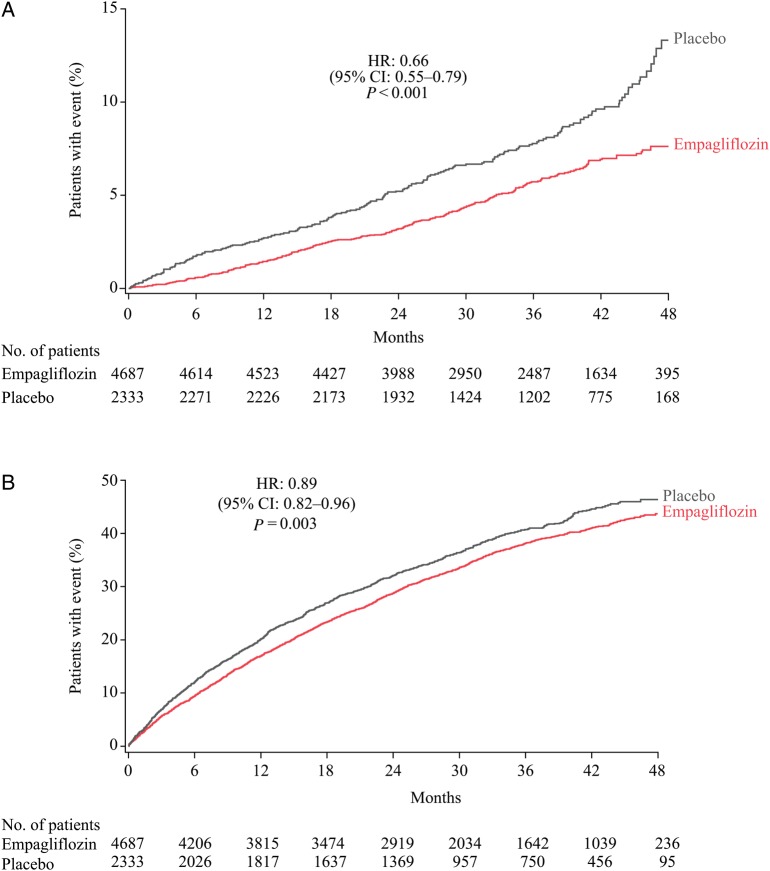
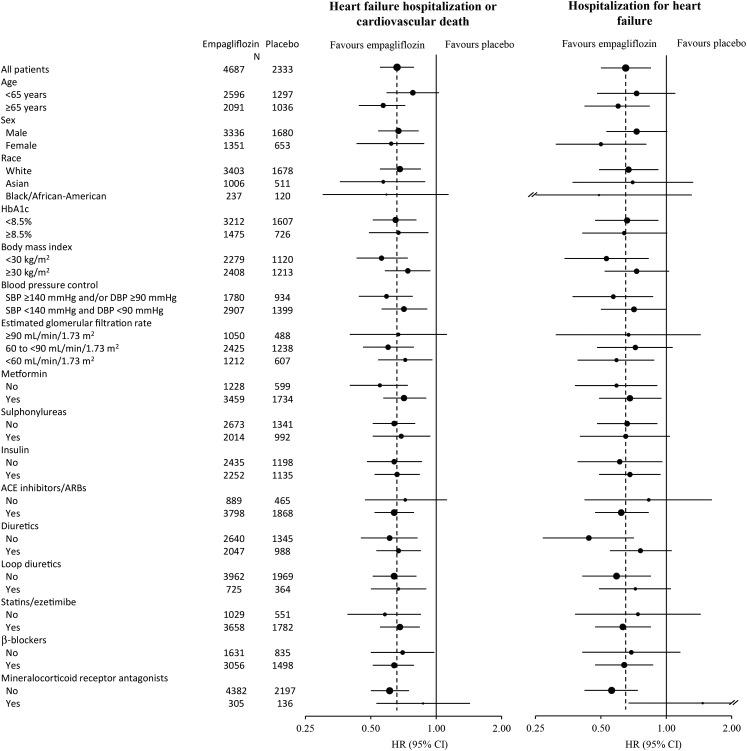
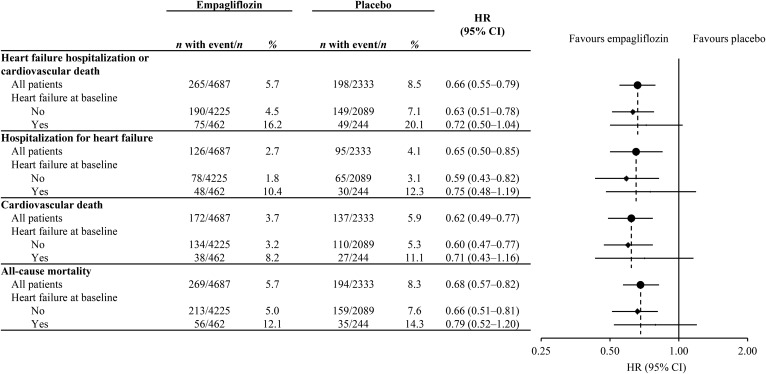
AIMS: We previously reported that in the EMPA-REG OUTCOME(®) trial, empagliflozin added to standard of care reduced the risk of 3-point major adverse cardiovascular events, cardiovascular and all-cause death, and hospitalization for heart failure in patients with type 2 diabetes and high cardiovascular risk. We have now further investigated heart failure outcomes in all patients and in subgroups, including patients with or without baseline heart failure. METHODS AND RESULTS: Patients were randomized to receive empagliflozin 10 mg, empagliflozin 25 mg, or placebo. Seven thousand and twenty patients were treated; 706 (10.1%) had heart failure at baseline. Heart failure hospitalization or cardiovascular death occurred in a significantly lower percentage of patients treated with empagliflozin [265/4687 patients (5.7%)] than with placebo [198/2333 patients (8.5%)] [hazard ratio, HR: 0.66 (95% confidence interval: 0.55-0.79); P < 0.001], corresponding to a number needed to treat to prevent one heart failure hospitalization or cardiovascular death of 35 over 3 years. Consistent effects of empagliflozin were observed across subgroups defined by baseline characteristics, including patients with vs. without heart failure, and across categories of medications to treat diabetes and/or heart failure. Empagliflozin improved other heart failure outcomes, including hospitalization for or death from heart failure [2.8 vs. 4.5%; HR: 0.61 (0.47-0.79); P < 0.001] and was associated with a reduction in all-cause hospitalization [36.8 vs. 39.6%; HR: 0.89 (0.82-0.96); P = 0.003]. Serious adverse events and adverse events leading to discontinuation were reported by a higher proportion of patients with vs. without heart failure at baseline in both treatment groups, but were no more common with empagliflozin than with placebo. CONCLUSION: In patients with type 2 diabetes and high cardiovascular risk, empagliflozin reduced heart failure hospitalization and cardiovascular death, with a consistent benefit in patients with and without baseline heart failure.
Overview
The claims and statistics of this paper haven’t been checked yet.
Free: it reads the open-access text and checks the first 5 claims that cite a source we can check. Create a free account to check every claim.
Integrity signals
Registry
Cites
Statistics
Figures
Verification
Claims the paper makes
The claims and statistics of this paper haven’t been checked yet.
Free: it reads the open-access text and checks the first 5 claims that cite a source we can check. Create a free account to check every claim.
Claims other papers make about this one
Each is checked against this paper’s own text: does it say what the citing paper says it does?
The source backs part of the claim, not all of it — or backs it for a different population, condition or comparison.
In the citing paper
“Little is known about the effect of SGLT2 inhibitors on the broad spectrum of both inpatient and outpatient worsening heart failure events, because these were not documented in trials with these drugs in type 2 diabetes.1–5”
From Effect of Empagliflozin on the Clinical Stability of Patients With Heart Failure and a Reduced Ejection Fraction: The EMPEROR-Reduced Trial (2021) · cites this paper as [1]
Experimental — accuracy not yet measuredThe source backs part of the claim, not all of it — or backs it for a different population, condition or comparison.
In the citing paper
“Recent cardiovascular outcomes trials demonstrate that therapies that inhibit sodium glucose cotransporter (SGLT)2 may reduce heart failure morbidity and mortality and slow decline in renal function (7,8,23,42,43).”
From Evaluation of renal and cardiovascular protection mechanisms of SGLT2 inhibitors: model-based analysis of clinical data (2018) · cites this paper as [8]
Experimental — accuracy not yet measuredThe cited source says what the claim attributes to it.
In the citing paper
“Sodium-glucose cotransporter 2 (SGLT2) inhibitors have been shown to reduce the risk of hospitalizations for heart failure in 8 large-scale trials, including those that focused on type 2 diabetes, heart failure with a reduced ejection fraction, and chronic kidney disease.1–8”
From Effect of Empagliflozin on the Clinical Stability of Patients With Heart Failure and a Reduced Ejection Fraction: The EMPEROR-Reduced Trial (2021) · cites this paper as [1]
The cited source says what the claim attributes to it.
In the citing paper
“hospitalizations for heart failure (2.7% versus 4.1%; 35% RRR)”
From Clinical management of stable coronary artery disease in patients with type 2 diabetes mellitus: a scientific statement from the American Heart Association (2020) · cites this paper as [219]
Self-check
Percentages, sums and reported differences re-computed from the paper’s own numbers.
The self-check needs the paper’s full text.
Citations
Cites
Empagliflozin, Cardiovascular Outcomes, and Mortality in Type 2 Diabetes
Zinman, B., Wanner, C., Lachin, J. M., Fitchett, D., Bluhmki, E., Hantel, S., Mattheus, M., Devins, T., Johansen, O. E., Woerle, H. J., et al. (2015) · New England Journal of Medicine · doi:10.1056/nejmoa1504720 · Cited by 12,315
Self-citationESC Guidelines for the diagnosis and treatment of acute and chronic heart failure 2012
Authors/Task Force Members, McMurray, J. J. V., Adamopoulos, S., Anker, S. D., Auricchio, A., Böhm, M., Dickstein, K., Falk, V., Filippatos, G., Fonseca, C., et al. (2012) · European Heart Journal · doi:10.1093/eurheartj/ehs104 · Cited by 6,879
Saxagliptin and cardiovascular outcomes in patients with type 2 diabetes mellitus
Scirica, B. M., Bhatt, D. L., Braunwald, E., Steg, P. G., Davidson, J., Hirshberg, B., Ohman, P., Frederich, R., Wiviott, S. D., Hoffman, E. B., et al. (2013) · New England Journal of Medicine · doi:10.1056/nejmoa1307684 · Cited by 3,470
ESC Guidelines for the Diagnosis and Treatment of Acute and Chronic Heart Failure 2012
Authors/Task Force Members, McMurray, J. J. V., Adamopoulos, S., Anker, S. D., Auricchio, A., Böhm, M., Dickstein, K., Falk, V., Filippatos, G., Fonseca, C., et al. (2012) · European Journal of Heart Failure · doi:10.1093/eurjhf/hfs105 · Cited by 2,644
(2013) · European Heart Journal · doi:10.1093/eurheartj/eht108 · Cited by 1,955
Cherney, D. Z. I., Perkins, B. A., Soleymanlou, N., Maione, M., Lai, V., Lee, A., Fagan, N. M., Woerle, H. J., Johansen, O. E., Broedl, U. C., et al. (2014) · Circulation · doi:10.1161/circulationaha.113.005081 · Cited by 1,329
Self-citationType 2 diabetes and incidence of cardiovascular diseases: a cohort study in 1.9 million people
Shah, A. D., Langenberg, C., Rapsomaniki, E., Denaxas, S., Pujades-Rodriguez, M., Gale, C. P., Deanfield, J., Smeeth, L., Timmis, A., & Hemingway, H. (2015) · The Lancet Diabetes & Endocrinology · doi:10.1016/s2213-8587(14)70219-0 · Cited by 1,225
Intensive glucose control and macrovascular outcomes in type 2 diabetes
Turnbull, F. M., Abraira, C., Anderson, R. J., Byington, R. P., Chalmers, J. P., Duckworth, W. C., Evans, G. W., Gerstein, H. C., Holman, R. R., Moritz, T. E., et al. (2009) · Diabetologia · doi:10.1007/s00125-009-1470-0 · Cited by 1,189 · cited 1×
“less intensive glucose control.(4) Furthermore, specific glucose-lowering medications have not been shown to improve heart failure outcomes and some may actually have deleterious effects.”
BackgroundMetabolic response to sodium-glucose cotransporter 2 inhibition in type 2 diabetic patients
Ferrannini, E., Muscelli, E., Frascerra, S., Baldi, S., Mari, A., Heise, T., Broedl, U. C., & Woerle, H.-J. (2014) · Journal of Clinical Investigation · doi:10.1172/jci72227 · Cited by 1,134
Self-citationRonco, C., McCullough, P., Anker, S. D., Anand, I., Aspromonte, N., Bagshaw, S. M., Bellomo, R., Berl, T., Bobek, I., Cruz, D. N., et al. (2010) · European Heart Journal · doi:10.1093/eurheartj/ehp507 · Cited by 1,104
Research works printed but not linked: 1
- Jordan J, Tank J, Heusser K, Heise T, Wanner C, Heer M, Macha S, Mattheus M, Lund SS, Woerle HJ, Broedl UC Empagliflozin has no discernible effect on muscle sympathetic nerve activity in patients with type 2 diabetes despite reductions in blood pressure and weight. Diabetes 2014; 63: A265 [1030-P].
Cited by
Items 301–400 of 947
Shah, N. Z., Abdalla, M. A., Deshmukh, H., & Sathyapalan, T. (2021) · Therapeutic Advances in Endocrinology and Metabolism · doi:10.1177/20420188211042145 · Cited by 44
Rao, S. D. (2021) · Advances in Therapy · doi:10.1007/s12325-021-01989-z · Cited by 46
Scheen, A. J. (2016) · Clinical Pharmacokinetics · doi:10.1007/s40262-016-0498-9 · Cited by 43
“In the EMPA-REG OUTCOME trial, empagliflozin was associated not only with a remarkable reduction in cardiovascular and all-cause mortality in T2D patients with antecedents of cardiovascular disease [6, 9] but also with a marked reduction in the incidence rate of hospitalization for heart failure [16].”
InfluentialGranéli, C., Hicks, R., Brolén, G., Synnergren, J., & Sartipy, P. (2018) · Stem Cell Reviews and Reports · doi:10.1007/s12015-018-9858-1 · Cited by 42
“glucose co-transporter 2 (SGLT2) inhibitors developed for the treatment of T2DM [11, 12].”
BackgroundSaffo, S., Kaplan, D. E., Mahmud, N., Serper, M., John, B. V., Ross, J. S., & Taddei, T. H. (2021) · Diabetes Obesity and Metabolism · doi:10.1111/dom.14488 · Cited by 40
Täger, T., Frankenstein, L., Atar, D., Agewall, S., Frey, N., Grundtvig, M., Clark, A. L., Cleland, J. G. F., & Fröhlich, H. (2021) · Clinical Research in Cardiology · doi:10.1007/s00392-021-01913-z · Cited by 39
Fisiopatología y alteraciones clínicas de la diabetes mellitus tipo 2: revisión de literatura
Fernández, C. I. J., Pereira, Y. A. M., Chang, A. S. O., Olmedo, S. I. G., & Gaete, M. C. A. (2022) · Nova · doi:10.22490/24629448.6184 · Cited by 69
Kunutsor, S. K., Khunti, K., & Seidu, S. (2023) · Journal of the Royal Society of Medicine · doi:10.1177/01410768231198442 · Cited by 39
Semo, D., Obergassel, J., Dorenkamp, M., Hemling, P., Strutz, J., Hiden, U., Muller, N., Müller, U. A., Zulfikar, S. A., Godfrey, R., et al. (2023) · Journal of Clinical Medicine · doi:10.3390/jcm12041356 · Cited by 37
“The EMPA-REG OUTCOME trial demonstrated the ability of empagliflozin to reduce cardiovascular events and overall mortality in T2DM patients with higher cardiovascular risk [1,12,15], and this by far outweighs the benefits of other glucose-lowering T2DM medications such as dipeptidyl peptidase 4 inhibitors or glucagon-…”
BackgroundCardiovascular disease in diabetes type 2: current concepts
Rosengren, A. (2018) · Journal of Internal Medicine · doi:10.1111/joim.12804 · Cited by 42
Tanaka, A., Shimabukuro, M., Teragawa, H., Okada, Y., Takamura, T., Taguchi, I., Toyoda, S., Tomiyama, H., Ueda, S., Higashi, Y., et al. (2021) · Cardiovascular Diabetology · doi:10.1186/s12933-021-01295-6 · Cited by 37
“Notably, in the EMPA-REG OUTCOME trial, the risk reduction in HHF was apparent immediately after initiation of empagliflozin, and was also consistent across subgroups stratified by a variety of clinical backgrounds [25].”
BackgroundArnold, S. V., Echouffo-Tcheugui, J. B., Lam, C. S. P., Inzucchi, S. E., Tang, F., McGuire, D. K., Goyal, A., Maddox, T. M., Sperling, L. S., Fonarow, G. C., et al. (2018) · American Heart Journal · doi:10.1016/j.ahj.2018.05.016 · Cited by 39
Self-citationSGLT2 inhibitors, an Accomplished Development in Field of Medicinal Chemistry: an Extensive Review
Manoj, A., Das, S., Ramachandran, A. K., Alex, A. T., & Joseph, A. (2020) · Future Medicinal Chemistry · doi:10.4155/fmc-2020-0154 · Cited by 39
Reassessing the Role of Surrogate End Points in Drug Development for Heart Failure
Greene, S. J., Mentz, R. J., Fiuzat, M., Butler, J., Solomon, S. D., Ambrosy, A. P., Mehta, C. R., Teerlink, J. R., Zannad, F. M., & O’Connor, C. M. (2018) · Circulation · doi:10.1161/circulationaha.118.034668 · Cited by 36
Wanner, C., Inzucchi, S. E., Zinman, B., Koitka‐Weber, A., Mattheus, M., George, J. T., von Eynatten, M., Hauske, S. J., & EMPA‐REG OUTCOME Investigators (2020) · Diabetes Obesity and Metabolism · doi:10.1111/dom.14158 · Cited by 37
“96).(12,14) These effects were consistent across the three subgroups (all P-values for interaction >.”
BackgroundSelf-citationAdel, S. M. H., Jorfi, F., Mombeini, H., Rashidi, H., & Fazeli, S. (2022) · Saudi Medical Journal · doi:10.15537/smj.2022.43.5.20220018 · Cited by 37
Empagliflozin: A Review in Symptomatic Chronic Heart Failure
Frampton, J. E. (2022) · Drugs · doi:10.1007/s40265-022-01778-0 · Cited by 38
Cardiovascular Diseases: Therapeutic Potential of SGLT-2 Inhibitors
Frąk, W., Hajdys, J., Radzioch, E., Szlagor, M., Młynarska, E., Rysz, J., & Franczyk, B. (2023) · Biomedicines · doi:10.3390/biomedicines11072085 · Cited by 39
“The protection provided may be a result of natriuresis-induced decreases in preload and afterload [72], systemic blood pressure lowering [73,74], modification of the intrarenal renin–angiotensin axis [75], and reduction in arterial stiffness [76].”
BackgroundThe Role of Sodium-Glucose Co-Transporter-2 Inhibitors on Diuretic Resistance in Heart Failure
Stachteas, P., Nasoufidou, A., Patoulias, D., Karakasis, P., Karagiannidis, E., Mourtzos, M.-A., Samaras, A., Apostolidou, X., & Fragakis, N. (2024) · International Journal of Molecular Sciences · doi:10.3390/ijms25063122 · Cited by 35
Cardiovascular, kidney, and metabolic health: an actionable vision for heart failure prevention
Ostrominski, J. W., CHENG, A. Y. Y., Nelson, A. J., Neuen, B. L., Sattar, N. A., Tuttle, K. R., & Vaduganathan, M. (2025) · The Lancet · doi:10.1016/s0140-6736(25)01384-4 · Cited by 35
Dandona, P., & Chaudhuri, A. (2017) · International Journal of Clinical Practice · doi:10.1111/ijcp.12937 · Cited by 35
Saxagliptin/Dapagliflozin: A Review in Type 2 Diabetes Mellitus
Garnock-Jones, K. P. (2017) · Drugs · doi:10.1007/s40265-017-0697-1 · Cited by 34
Histones and heart failure in diabetes
Yerra, V. G., & Advani, A. (2018) · Cellular and Molecular Life Sciences · doi:10.1007/s00018-018-2857-1 · Cited by 34
Giugliano, D., Maiorino, M. I., Longo, M., Bellastella, G., Chiodini, P., & Esposito, K. (2019) · Endocrine · doi:10.1007/s12020-019-01931-y · Cited by 35
Preventing and Treating Heart Failure with Sodium-Glucose Co-Transporter 2 Inhibitors
Vaduganathan, M., & Januzzi, J. L. (2019) · The American Journal of Cardiology · doi:10.1016/j.amjcard.2019.10.026 · Cited by 34
Blood pressure in heart failure management and prevention
Maeda, D., Dotare, T., Matsue, Y., TERAMOTO, K., Sunayama, T., Tromp, J., & Minamino, T. (2023) · Hypertension Research · doi:10.1038/s41440-022-01158-x · Cited by 34
Impact of empagliflozin in patients with diabetes and heart failure
Pham, D. D., Rocha, N. D. A., McGuire, D. K., & Neeland, I. J. (2016) · Trends in Cardiovascular Medicine · doi:10.1016/j.tcm.2016.07.008 · Cited by 35
Crispino, S. P., Segreti, A., Nafisio, V., Valente, D., Crisci, F., Ferro, A., Cavallari, I., Nusca, A., Ussia, G. P., & Grigioni, F. (2025) · Biomedicines · doi:10.3390/biomedicines13030608 · Cited by 40
“The link between the clinical effects of SGLT2i and their decongestive properties first emerged in studies of cardiovascular outcomes in people with T2D [44,80].”
Clegg, L. E., Heerspink, H. J. L., Penland, R. C., Tang, W., Boulton, D. W., Bachina, S., Fox, R. D., Fenici, P., Thuresson, M., Mentz, R. J., et al. (2018) · Diabetes Care · doi:10.2337/dc18-1871 · Cited by 33
Cardiovascular Protection with Anti-hyperglycemic Agents
DEEDWANIA, P. C., & Acharya, T. (2019) · American Journal of Cardiovascular Drugs · doi:10.1007/s40256-019-00325-9 · Cited by 33
“Additionally, in subgroup analysis, heart failure hospitalizations were statistically significantly reduced in patients without heart failure at baseline, but not in those with heart failure [44].”
BackgroundBonaventura, A., Carbone, S., Dixon, D. L., Abbate, A., & Montecucco, F. (2019) · Journal of Internal Medicine · doi:10.1111/joim.12890 · Cited by 37
Vijayakumar, S., Vaduganathan, M., & Butler, J. (2018) · Circulation · doi:10.1161/circulationaha.117.032099 · Cited by 33
Reifsnider, O. S., Kansal, A. R., Franke, J., Lee, J. H., George, J. T., Brueckmann, M., Kaspers, S., Brand, S. B., Ustyugova, A., Linden, S., et al. (2020) · ESC Heart Failure · doi:10.1002/ehf2.12985 · Cited by 32
Butler, J., Zannad, F. M., Filippatos, G. S., Anker, S. D., & Packer, M. (2020) · European Heart Journal · doi:10.1093/eurheartj/ehaa731 · Cited by 36
Sodium-Glucose Cotransporter-2 Inhibitors and Arrhythmias
Jaiswal, V., Ang, S. P., Kumar, D., Deb, N., Jaiswal, A., Joshi, A., NASIR, Y. M., Bandyopadhyay, D., Michos, E. D., Benjamin, E. J., et al. (2025) · JACC Advances · doi:10.1016/j.jacadv.2025.101615 · Cited by 33
Ramos, M., FOOS, V., Ustyugova, A., Hau, N., Gandhi, P., & Lamotte, M. (2019) · Diabetes Therapy · doi:10.1007/s13300-019-00701-3 · Cited by 32
Kalogeropoulos, A. P., Thankachen, J., Butler, J., & Fang, J. C.-T. (2020) · European Journal of Heart Failure · doi:10.1002/ejhf.1917 · Cited by 32
Chiang, C., Ueng, K.-C., Chao, T., Lin, T., Wu, Y.-J., Wang, K.-L., Sung, S., Yeh, H., Li, Y., Liu, P., et al. (2020) · Journal of the Chinese Medical Association · doi:10.1097/jcma.0000000000000359 · Cited by 31
Targeting Features of the Metabolic Syndrome Through Sympatholytic Effects of SGLT2 Inhibition
Herat, L. Y., Matthews, J. R., Azzam, O., Schlaich, M. P., & Matthews, V. B. (2022) · Current Hypertension Reports · doi:10.1007/s11906-022-01170-z · Cited by 34
Ketone body metabolism and cardiometabolic implications for cognitive health
Fulghum, K., Salathe, S. F., Davis, X. C., Thyfault, J. P., Puchalska, P., & Crawford, P. A. (2024) · npj Metabolic Health and Disease · doi:10.1038/s44324-024-00029-y · Cited by 32
Cardiovascular outcome trials of the newer anti-diabetic medications
Acharya, T., & DEEDWANIA, P. C. (2019) · Progress in Cardiovascular Diseases · doi:10.1016/j.pcad.2019.08.003 · Cited by 32
Chambergo‐Michilot, D., Tauma‐Arrué, A., & Loli-Guevara, S. (2020) · IJC Heart & Vasculature · doi:10.1016/j.ijcha.2020.100690 · Cited by 33
Thomsen, R. W., Knudsen, J. S., Kahlert, J. A., Baggesen, L. M., Lajer, M., Holmgaard, P., Vedin, O., Ustyugova, A., & Sørensen, H. T. (2021) · Journal of the American Heart Association · doi:10.1161/jaha.120.019356 · Cited by 31
Sodium-glucose cotransporter 2 inhibitors and heart failure: the best timing for the right patient
Severino, P., D’Amato, A., Prosperi, S., Costi, B., Angotti, D., Birtolo, L. I., Chimenti, C., Lavalle, C., Maestrini, V., Mancone, M., et al. (2021) · Heart Failure Reviews · doi:10.1007/s10741-021-10170-1 · Cited by 32
SGLT2 Inhibitors and Heart Failure with Preserved Ejection Fraction
Jhund, P. S. (2022) · Heart Failure Clinics · doi:10.1016/j.hfc.2022.03.010 · Cited by 33
Akiyama, H., Nishimura, A., Morita, N., & Yajima, T. (2023) · Frontiers in Endocrinology · doi:10.3389/fendo.2023.1111984 · Cited by 32
New drugs in preclinical and early stage clinical development in the treatment of heart failure
Tamargo, J. L., Caballero, R., & Delpón, E. (2018) · Expert Opinion on Investigational Drugs · doi:10.1080/13543784.2019.1551357 · Cited by 32
“In patients with T2DM and high cardiovascular risk, empagliflozine reduces HFH and cardiovascular death (34%), improves hospitalization for or death from HF (39%), and reduces the introduction of loop diuretics, with a consistent benefit in all predefined groups [166,167].”
BackgroundButler, J., Packer, M., Greene, S. J., Fiuzat, M., Anker, S. D., Anstrom, K. J., Carson, P. E., Cooper, L. B., Fonarow, G. C., Hernandez, A. F., et al. (2019) · Circulation · doi:10.1161/circulationaha.119.042155 · Cited by 30
Precision Cardiology: Phenotype-targeted Therapies for HFmrEF and HFpEF
Rosano, G. M. C., Vitale, C., & Spoletini, I. (2024) · International Journal of Heart Failure · doi:10.36628/ijhf.2023.0058 · Cited by 31
Peacock, S. C., Lovshin, J. A., & Cherney, D. Z. I. (2017) · Anesthesia & Analgesia · doi:10.1213/ane.0000000000002377 · Cited by 30
Atrial fibrillation in the cardiometabolic patient
Sensi, F. D., Costantino, S., Limbruno, U., & Paneni, F. (2019) · Minerva Medica · doi:10.23736/s0026-4806.18.05882-2 · Cited by 30
Kataoka, H., & Yoshida, Y. (2020) · Diabetology & Metabolic Syndrome · doi:10.1186/s13098-020-0515-x · Cited by 34
Abdelhamid, M., Rosano, G. M. C., Metra, M., Adamopoulos, S. N., Böhm, M., Chioncel, O. D., Filippatos, G. S., Jankowska, E. A., Lopatin, Y. M., Lund, L. H., et al. (2022) · European Journal of Heart Failure · doi:10.1002/ejhf.2594 · Cited by 32
A risk prediction model for heart failure hospitalization in type 2 diabetes mellitus
Williams, B. A., Geba, D., Cordova, J. M., & Shetty, S. S. (2019) · Clinical Cardiology · doi:10.1002/clc.23298 · Cited by 29
“The median (IQR) risk score for the final model was 9 (6, 12), and the maximum observed score was 29 (out of a possible maximum of 32) (Table 2).”
BackgroundNovel Cardiometabolic Medications in the Cardiovascular-Kidney-Metabolic Syndrome Era
Pohlman, N., Patel, P. N., Essien, U. R., Tang, J., & Joseph, J. J. (2025) · The Journal of Clinical Endocrinology & Metabolism · doi:10.1210/clinem/dgaf295 · Cited by 28
Ismail‐Beigi, F., Moghissi, E. S., Kosiborod, M., & Inzucchi, S. E. (2017) · Journal of General Internal Medicine · doi:10.1007/s11606-017-4061-7 · Cited by 30
Self-citationKyriakos, G., Quiles-Sánchez, L. V., Garmpi, A., Farmaki, P., Kyre, K., Savvanis, S., Antoniou, V., & Memi, E. (2019) · Current Cardiology Reviews · doi:10.2174/1573403x15666190730094215 · Cited by 28
“Patients with and without baseline heart failure had more benefits through this treatment [20].”
BackgroundRosano, G. M. C., Quek, D. K., & Martínez, F. A. (2020) · Cardiac failure review · doi:10.15420/cfr.2020.23 · Cited by 31
“CARDIAC FAILURE REVIEW Subgroup analyses of EMPA‐REG OUTCOME and DECLARE‐TIMI 58 demonstrated consistent benefit on the composite of hospitalisation for HF or CV death, irrespective of baseline HF status.(15,18) Results from”
MethodTan, Y., Yu, K., Liang, L., Liu, Y., Song, F., Ge, Q., Fang, X., Yu, T., Huang, Z., Jiang, L., et al. (2021) · Frontiers in Pharmacology · doi:10.3389/fphar.2021.758080 · Cited by 30
“Empagliflozin has demonstrated to reduce cardiovascular mortality by 38% and heart failure hospitalizations by 35% in patients with type 2 diabetes mellitus in the EMPA-REG OUTCOMES trial (Fitchett et al., 2016).”
BackgroundProchaska, J. H., Jünger, C., Schulz, A., Arnold, N., Müller, F., Heidorn, M. W., Baumkötter, R., Zahn, D., Koeck, T., Tröbs, S., et al. (2023) · Clinical Research in Cardiology · doi:10.1007/s00392-023-02164-w · Cited by 29
Zhao, D., Liu, H., & Dong, P. (2018) · Journal of Human Hypertension · doi:10.1038/s41371-018-0134-2 · Cited by 31
Effects of sodium glucose cotransporter type 2 inhibitors on heart failure
Nassif, M. E., & Kosiborod, M. (2019) · Diabetes Obesity and Metabolism · doi:10.1111/dom.13678 · Cited by 29
Andersson, C., Lin, H., Liu, C., Levy, D. A., Mitchell, G. F., Larson, M. G., & Vasan, R. S. (2019) · Circulation Genomic and Precision Medicine · doi:10.1161/circgen.118.002489 · Cited by 29
Effects of canagliflozin on cardiovascular risk factors in patients with type 2 diabetes mellitus
Budoff, M. J., & Wilding, J. P. H. (2017) · International Journal of Clinical Practice · doi:10.1111/ijcp.12948 · Cited by 31
Treating Disease Mechanisms in Patients With Heart Failure and Diabetes Mellitus
Trang, A., & Aguilar, D. A. (2017) · Current Heart Failure Reports · doi:10.1007/s11897-017-0371-7 · Cited by 28
Cardiovascular effects of sodium glucose cotransporter 2 inhibitors
Cavaiola, T. S., & Pettus, J. (2018) · Diabetes Metabolic Syndrome and Obesity · doi:10.2147/dmso.s154602 · Cited by 27
Januzzi, J. L., Ferreira, J. P., Böhm, M., Kaul, S., Wanner, C., Brueckmann, M., Petrie, M. C., Ofstad, A. P., Zeller, C., George, J. T., et al. (2019) · European Journal of Heart Failure · doi:10.1002/ejhf.1419 · Cited by 28
Self-citationLu, J., Fu, L., Li, Y., Geng, J., Qin, L., Li, P., Zheng, H., Sun, Z., Li, Y., Zhang, L., et al. (2021) · Diabetes Obesity and Metabolism · doi:10.1111/dom.14314 · Cited by 28
Tomlinson, B., Hu, M., Zhang, Y., Chan, P., & Liu, Z.-M. (2016) · Expert Opinion on Drug Metabolism & Toxicology · doi:10.1080/17425255.2017.1258401 · Cited by 27
“002) and there were similar benefits in patients with and without baseline heart failure [66].”
BackgroundCurrent Pharmacological Therapies in Heart Failure Patients
Muiesan, M. L., Paini, A., Rosei, C. A., Bertacchini, F., Stassaldi, D., & Salvetti, M. (2017) · High Blood Pressure & Cardiovascular Prevention · doi:10.1007/s40292-017-0194-3 · Cited by 29
Verma, S., Sharma, A., Zinman, B., Ofstad, A. P., FITCHETT, D. H., Brueckmann, M., Wanner, C., Zwiener, I., George, J. T., Inzucchi, S. E., et al. (2020) · Diabetes Obesity and Metabolism · doi:10.1111/dom.14015 · Cited by 31
Self-citationPacker, M. (2020) · European Heart Journal · doi:10.1093/eurheartj/ehaa344 · Cited by 27
Antihyperglycemic agents as novel natriuretic therapies in diabetic kidney disease
Jiménez, D. L., Cherney, D. Z. I., Bjornstad, P., Castilla‐Guerra, L., & Miramontes‐González, J. P. (2018) · American Journal of Physiology-Renal Physiology · doi:10.1152/ajprenal.00384.2017 · Cited by 27
Giorgino, F., Caruso, I., Moellmann, J., & Lehrke, M. (2020) · Metabolism · doi:10.1016/j.metabol.2019.154045 · Cited by 26
Cardio-renal protection with empagliflozin
MacIsaac, R. J., Jerums, G., & Ekinci, E. I. (2016) · Annals of Translational Medicine · doi:10.21037/atm.2016.10.36 · Cited by 27
“Although empagliflozin modestly improved HbA1c levels, systolic blood pressure, weight, waist circumference and uric acid levels during the trial, other mechanisms are most likely responsible for the early appearance of the impressive cardio-renal protective effects of empagliflozin (7,12,13).”
BackgroundNeuen, B. L., Jardine, M., & Perkovic, V. (2020) · Nephrology Dialysis Transplantation · doi:10.1093/ndt/gfz252 · Cited by 28
“In the EMPAREG OUTCOME trial, compared with participants receiving metformin, the effects on cardiovascular death and on hospitalization for HF were at least as large in participants not on metformin [36, 40], but otherwise there are currently scant data on the effects of SGLT2 inhibitors with and without metformin.”
MethodSarafidis, P. A., Ferro, C. J., Morales, E., Ortíz, A., Małyszko, J., Hojs, R., Khazim, K., Ekart, R., Valdivielso, J. M., Fouque, D. P., et al. (2019) · Nephrology Dialysis Transplantation · doi:10.1093/ndt/gfz137 · Cited by 27
AHA/ACC/ESC/WHF Expert Consensus Document: Second Universal Definition of Heart Failure (2026)
Walsh, M. N., Køber, L., Sliwa, K. S., Adamo, M., Agarwal, A., Banerjee, A., Bozkurt, B., Čikeš, M., Damasceno, A., Desai, A. S., et al. (2026) · Circulation · doi:10.1161/cir.0000000000001455 · Cited by 29
Lipid effects of sodium-glucose cotransporter 2 inhibitors
Lazarte, J., Kanagalingam, T., & Hegele, R. A. (2021) · Current Opinion in Lipidology · doi:10.1097/mol.0000000000000751 · Cited by 25
“Importantly, it reduced hospitalizations for heart failure [4,11].”
BackgroundYeong, T. J. J., Mai, A. S., Lim, O. Z.-H., Ng, C. H., Chin, Y. H., Tay, P. W. L., Lin, C., Muthiah, M. D., Khoo, C. M., Dalakoti, M., et al. (2022) · ESC Heart Failure · doi:10.1002/ehf2.13822 · Cited by 26
SGLT2-I in the Hospital Setting: Diabetic Ketoacidosis and Other Benefits and Concerns
Levine, J. A., Karam, S., & Aleppo, G. (2017) · Current Diabetes Reports · doi:10.1007/s11892-017-0874-3 · Cited by 25
Metabolic Syndrome in Heart Failure
Arcopinto, M., Schiavo, A., Salzano, A., Bossone, E., D’Assante, R., Marsico, F., Rodríguez, P. D., Baliga, R. R., Cittadini, A., & Marra, A. M. (2019) · Heart Failure Clinics · doi:10.1016/j.hfc.2019.02.004 · Cited by 25
The Beneficial Hemodynamic Actions of SGLT-2 Inhibitors beyond the Management of Hyperglycemia
Loutradis, C., Papadopoulou, E., Angeloudi, E., Karagiannis, A. I., & Sarafidis, P. A. (2019) · Current Medicinal Chemistry · doi:10.2174/0929867326666191029111713 · Cited by 25
Javed, Z., Papageorgiou, M., Madden, L. A., Rigby, A. S., Kilpatrick, E. S., Atkin, S. L., & Sathyapalan, T. (2020) · Endocrine Connections · doi:10.1530/ec-20-0173 · Cited by 24
Potential Mechanisms of Sodium-Glucose Co-Transporter 2 Inhibitor-Related Cardiovascular Benefits
Verma, S. (2019) · The American Journal of Medicine · doi:10.1016/j.amjmed.2019.08.007 · Cited by 25
“6,10,11,16 The absolute risk reduction, however, was greater in patients with a history of heart failure.”
Giorgino, F., Vora, J. P., Fenici, P., & Solini, A. (2020) · Diabetes Obesity and Metabolism · doi:10.1111/dom.14055 · Cited by 25
Böhm, M., Fitchett, D., Ofstad, A. P., Brueckmann, M., Kaspers, S., George, J. T., Zwiener, I., Zinman, B., Wanner, C., Marx, N., et al. (2020) · Journal of Hypertension · doi:10.1097/hjh.0000000000002492 · Cited by 25
“Interestingly, heart failure hospitalizations were reduced in patients with and without a history of heart failure [10].”
BackgroundSelf-citationPellicori, P., Ofstad, A. P., FITCHETT, D. H., Zeller, C., Wanner, C., George, J. T., Zinman, B., Brueckmann, M., & Lindenfeld, J. M. (2020) · ESC Heart Failure · doi:10.1002/ehf2.12891 · Cited by 25
Self-citationShirabe, S., Yamazaki, K., Oishi, M., Arai, K., Yagi, N., Sato, M., Takeuchi, M., Kai, T., & Maegawa, H. (2022) · Journal of Diabetes Investigation · doi:10.1111/jdi.13922 · Cited by 25
Sodium-Glucose Co-transporter 2 Inhibitors in the Failing Heart: a Growing Potential
Brito, D. A., Bettencourt, P., Carvalho, D. M., Ferreira, J., Fontes‐Carvalho, R., Franco, F., Moura, B., Silva‐Cardoso, J., de Melo, R. T., & Fonseca, C. (2020) · Cardiovascular Drugs and Therapy · doi:10.1007/s10557-020-06973-3 · Cited by 30
“Two meta-analyses on SGLT2i CVOTs have been recently published, aiming to better estimate the class effect of these drugs on CV outcomes [27, 28].”
BackgroundHashikata, T., Ikutomi, M., Jimba, T., Shindo, A., Kakuda, N., Katsushika, S., Yokoyama, M., Kishi, M., Sato, T., Matsushita, M., et al. (2020) · Heart and Vessels · doi:10.1007/s00380-020-01621-0 · Cited by 26
Clinical Phenogroups in Heart Failure with Preserved Ejection Fraction
Sorimachi, H., Omote, K., & Borlaug, B. A. (2021) · Heart Failure Clinics · doi:10.1016/j.hfc.2021.02.009 · Cited by 24
Tracy, B. M., Wilson, J. M., Staley, C. A., Frias, B., Schenker, M. L., & Gelbard, R. B. (2019) · Journal of the American College of Surgeons · doi:10.1016/j.jamcollsurg.2019.09.009 · Cited by 24
Tailakh, M. A., Friger, M. D., Zahger, D., Sidi, A., Mazor-Dray, E., & Novack, V. (2016) · European Journal of Internal Medicine · doi:10.1016/j.ejim.2016.09.007 · Cited by 25
Pharmacological management of type 2 diabetes: what’s new in 2017?
Scheen, A. J. (2017) · Expert Review of Clinical Pharmacology · doi:10.1080/17512433.2017.1376652 · Cited by 28
“Furthermore, a significant reduction in hospitalization for HF [67] and in a composite renal outcome [65] was noticed in patients treated with empagliflozin compared with those receiving placebo (Table 3).”
ResultTeo, Y. H., Yoong, C. S. Y., Syn, N. L. X., Teo, Y. N., Cheong, J. Y. A., Lim, Y. C., Lee, C., Yeo, T., Chai, P., Wong, R. C.-C., et al. (2021) · European Journal of Clinical Pharmacology · doi:10.1007/s00228-021-03147-4 · Cited by 25
Sabaner, M. C., Duman, R., Doğan, M., Akdoğan, M., Vurmaz, A., Bozkurt, E., & Beysel, S. (2021) · Journal Français d Ophtalmologie · doi:10.1016/j.jfo.2021.01.005 · Cited by 24
Hameed, I., Hayat, J., Marsia, S., Samad, S. A., Khan, R., Siddiqui, O. M., Khan, M. O., Malik, S., Fatima, K., Fudim, M., et al. (2023) · Clinics and Research in Hepatology and Gastroenterology · doi:10.1016/j.clinre.2023.102111 · Cited by 23
Cardiovascular effects of anti-diabetes drugs
Younk, L. M., Lamos, E. M., & Davis, S. N. (2016) · Expert Opinion on Drug Safety · doi:10.1080/14740338.2016.1195368 · Cited by 24
Cardiovascular Effects of Glucose-lowering Therapies for Type 2 Diabetes: New Drugs in Perspective
Thompson, P. L., & Davis, T. M. E. (2016) · Clinical Therapeutics · doi:10.1016/j.clinthera.2016.10.008 · Cited by 26
Metadata
- Authors
- Fitchett, D., Zinman, B., Wanner, C., Lachin, J. M., Hantel, S., Salsali, A., Johansen, O. E., Woerle, H. J., Broedl, U. C., & Inzucchi, S. E.
- Affiliations
- St. Michael's Hospital (CA)
- Mount Sinai Hospital (CA)
- University of Würzburg (DE)
- George Washington University (US)
- Boehringer Ingelheim (Germany) (DE)
- Boehringer Ingelheim (United States) (US)
- Boehringer Ingelheim (Norway) (NO)
- Yale University (US)
- Corresponding author
- Fitchett, David
- ORCID
- Venue
- European Heart Journal
- Publisher
- Oxford University Press (OUP)
- Published
- 2016-01-26
- Volume
- 37
- Issue
- 19
- Pages
- 1526-1534
- ISSN
- 0195-668X (ISSN-L)
- 1522-9645
- PMC
- PMC4872285
- OpenAlex
- W2273304042
- Cited by
- 907
- References
- 29
- Citations by year
- 2026: 18 · 2025: 30 · 2024: 32 · 2023: 55 · 2022: 75 · 2021: 115 · 2020: 102 · 2019: 142 · 2018: 124 · 2017: 131 · 2016: 81
- FWCI
- 160.00
- Type
- journal article
- Language
- en
- Open access
- hybrid
- doi.org
- Licence
- cc-by-nc
- Locations
- European Heart Journal (publishedVersion, cc-by-nc)
- Europe PMC (PubMed Central) (publishedVersion, cc-by-nc)
- PubMed Central (publishedVersion, cc-by-nc)
- PubMed (publishedVersion)
- Lirias (KU Leuven) (submittedVersion, other-oa)
- Docusalut (Conselleria de Salut i Consum del Govern de les Illes Balears) (submittedVersion, cc-by-nc)
- Hispana (submittedVersion, cc-by-nc)
- HighWire Press Open Archive (submittedVersion)
- Online Publication Service of Würzburg University (Würzburg University) (submittedVersion, cc-by-nc)
- Funders
- Boehringer Ingelheim and Eli Lilly and Company
- Topics
- Health Sciences › Medicine › Endocrinology, Diabetes and Metabolism › Diabetes Treatment and Management
- Health Sciences › Medicine › Cardiology and Cardiovascular Medicine › Heart Failure Treatment and Management
- Health Sciences › Medicine › Cardiology and Cardiovascular Medicine › Cardiovascular Function and Risk Factors
- Keywords
- empagliflozin, type 2 diabetes, heart failure hospitalization, cardiovascular mortality, SGLT2 inhibitors, EMPA-REG OUTCOME trial, high cardiovascular risk, all-cause hospitalization, serious adverse events, subgroup analysis, number needed to treat, cardiovascular risk reduction, heart failure treatment, drug discontinuation
About these checks
Registry, retraction, Cites and statistics results are computed, not judged, with one exception: a printed reference that no index lists is read once by a model before it counts as a citation error. Claims are extracted by a model and kept only when their quote appears verbatim in the text; each cited source is then checked, with a model’s help, for whether it says what the claim relies on. Those verdicts can be wrong — read the claim’s quote and the cited source before relying on one.
Statistics and arithmetic are recomputed, not judged.
Confidence bands are shown only for fields calibrated on our annotated test set. None is calibrated yet, so no band is shown.
What counts as a claim ›How we measure confidence ›How we check this ›
Are you an author, or do you see a problem with this page? Request a review
Data sources
Bibliographic data: Semantic Scholar, OpenAlex, Crossref.
Contains information from the Semantic Scholar Academic Graph Datasets, made available under the ODC Attribution License (ODC-BY 1.0).
Semantic Scholar’s data is described in: Kinney, R., et al. (2023). The Semantic Scholar Open Data Platform. arXiv:2301.10140.
