

Heart failure outcomes with empagliflozin in patients with type 2 diabetes at high cardiovascular risk: results of the EMPA-REG OUTCOME ® trial
Open accessThe DOI matches its Crossref record; 29 of the 29 references it cites were found in a registry or an index.
Abstract
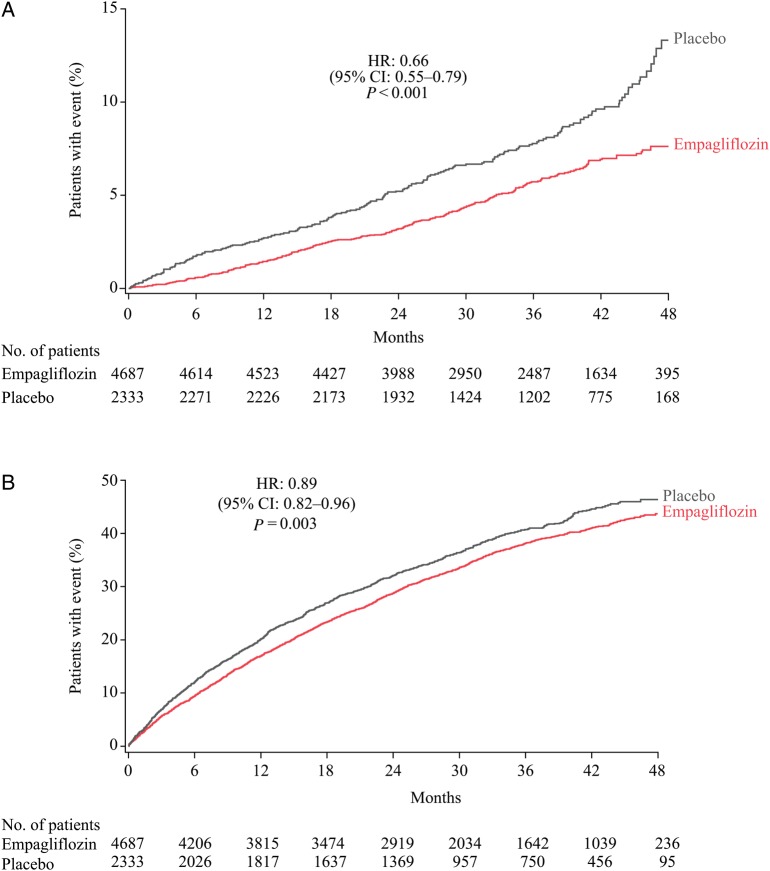
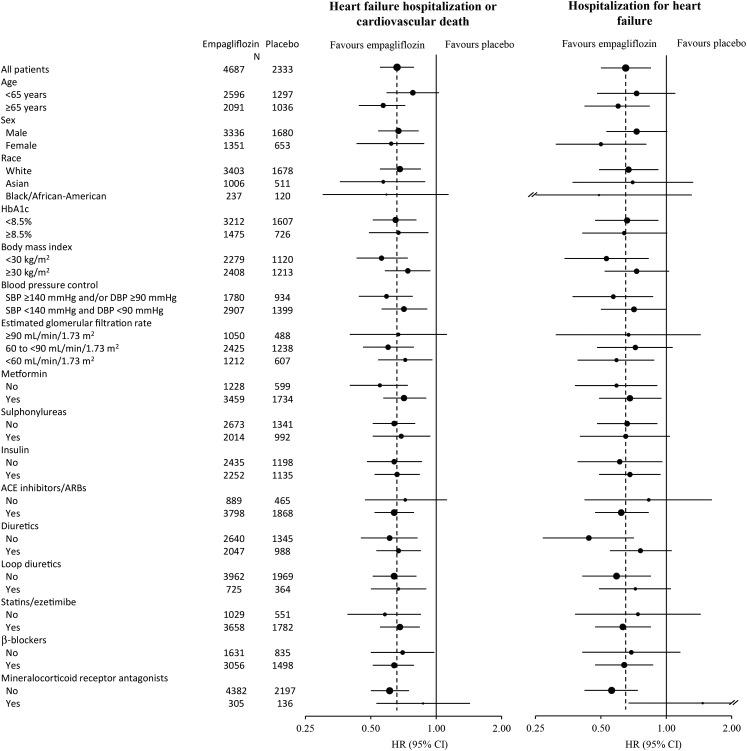
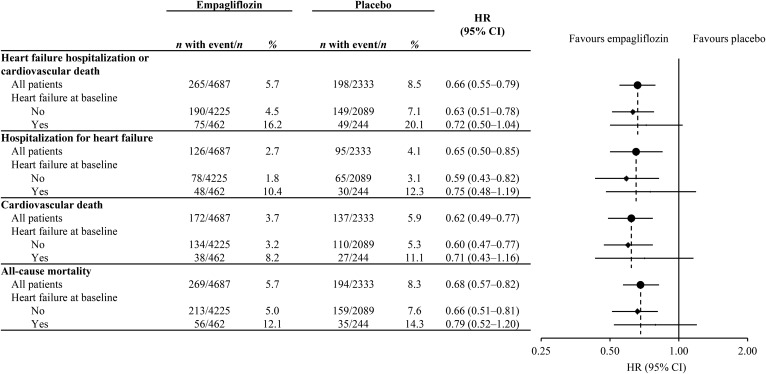
AIMS: We previously reported that in the EMPA-REG OUTCOME(®) trial, empagliflozin added to standard of care reduced the risk of 3-point major adverse cardiovascular events, cardiovascular and all-cause death, and hospitalization for heart failure in patients with type 2 diabetes and high cardiovascular risk. We have now further investigated heart failure outcomes in all patients and in subgroups, including patients with or without baseline heart failure. METHODS AND RESULTS: Patients were randomized to receive empagliflozin 10 mg, empagliflozin 25 mg, or placebo. Seven thousand and twenty patients were treated; 706 (10.1%) had heart failure at baseline. Heart failure hospitalization or cardiovascular death occurred in a significantly lower percentage of patients treated with empagliflozin [265/4687 patients (5.7%)] than with placebo [198/2333 patients (8.5%)] [hazard ratio, HR: 0.66 (95% confidence interval: 0.55-0.79); P < 0.001], corresponding to a number needed to treat to prevent one heart failure hospitalization or cardiovascular death of 35 over 3 years. Consistent effects of empagliflozin were observed across subgroups defined by baseline characteristics, including patients with vs. without heart failure, and across categories of medications to treat diabetes and/or heart failure. Empagliflozin improved other heart failure outcomes, including hospitalization for or death from heart failure [2.8 vs. 4.5%; HR: 0.61 (0.47-0.79); P < 0.001] and was associated with a reduction in all-cause hospitalization [36.8 vs. 39.6%; HR: 0.89 (0.82-0.96); P = 0.003]. Serious adverse events and adverse events leading to discontinuation were reported by a higher proportion of patients with vs. without heart failure at baseline in both treatment groups, but were no more common with empagliflozin than with placebo. CONCLUSION: In patients with type 2 diabetes and high cardiovascular risk, empagliflozin reduced heart failure hospitalization and cardiovascular death, with a consistent benefit in patients with and without baseline heart failure.
Overview
The claims and statistics of this paper haven’t been checked yet.
Free: it reads the open-access text and checks the first 5 claims that cite a source we can check. Create a free account to check every claim.
Integrity signals
Registry
Cites
Statistics
Figures
Verification
Claims the paper makes
The claims and statistics of this paper haven’t been checked yet.
Free: it reads the open-access text and checks the first 5 claims that cite a source we can check. Create a free account to check every claim.
Claims other papers make about this one
Each is checked against this paper’s own text: does it say what the citing paper says it does?
The source backs part of the claim, not all of it — or backs it for a different population, condition or comparison.
In the citing paper
“Little is known about the effect of SGLT2 inhibitors on the broad spectrum of both inpatient and outpatient worsening heart failure events, because these were not documented in trials with these drugs in type 2 diabetes.1–5”
From Effect of Empagliflozin on the Clinical Stability of Patients With Heart Failure and a Reduced Ejection Fraction: The EMPEROR-Reduced Trial (2021) · cites this paper as [1]
Experimental — accuracy not yet measuredThe source backs part of the claim, not all of it — or backs it for a different population, condition or comparison.
In the citing paper
“Recent cardiovascular outcomes trials demonstrate that therapies that inhibit sodium glucose cotransporter (SGLT)2 may reduce heart failure morbidity and mortality and slow decline in renal function (7,8,23,42,43).”
From Evaluation of renal and cardiovascular protection mechanisms of SGLT2 inhibitors: model-based analysis of clinical data (2018) · cites this paper as [8]
Experimental — accuracy not yet measuredThe cited source says what the claim attributes to it.
In the citing paper
“Sodium-glucose cotransporter 2 (SGLT2) inhibitors have been shown to reduce the risk of hospitalizations for heart failure in 8 large-scale trials, including those that focused on type 2 diabetes, heart failure with a reduced ejection fraction, and chronic kidney disease.1–8”
From Effect of Empagliflozin on the Clinical Stability of Patients With Heart Failure and a Reduced Ejection Fraction: The EMPEROR-Reduced Trial (2021) · cites this paper as [1]
The cited source says what the claim attributes to it.
In the citing paper
“hospitalizations for heart failure (2.7% versus 4.1%; 35% RRR)”
From Clinical management of stable coronary artery disease in patients with type 2 diabetes mellitus: a scientific statement from the American Heart Association (2020) · cites this paper as [219]
Self-check
Percentages, sums and reported differences re-computed from the paper’s own numbers.
The self-check needs the paper’s full text.
Citations
Cites
Empagliflozin, Cardiovascular Outcomes, and Mortality in Type 2 Diabetes
Zinman, B., Wanner, C., Lachin, J. M., Fitchett, D., Bluhmki, E., Hantel, S., Mattheus, M., Devins, T., Johansen, O. E., Woerle, H. J., et al. (2015) · New England Journal of Medicine · doi:10.1056/nejmoa1504720 · Cited by 12,315
Self-citationESC Guidelines for the diagnosis and treatment of acute and chronic heart failure 2012
Authors/Task Force Members, McMurray, J. J. V., Adamopoulos, S., Anker, S. D., Auricchio, A., Böhm, M., Dickstein, K., Falk, V., Filippatos, G., Fonseca, C., et al. (2012) · European Heart Journal · doi:10.1093/eurheartj/ehs104 · Cited by 6,879
Saxagliptin and cardiovascular outcomes in patients with type 2 diabetes mellitus
Scirica, B. M., Bhatt, D. L., Braunwald, E., Steg, P. G., Davidson, J., Hirshberg, B., Ohman, P., Frederich, R., Wiviott, S. D., Hoffman, E. B., et al. (2013) · New England Journal of Medicine · doi:10.1056/nejmoa1307684 · Cited by 3,470
ESC Guidelines for the Diagnosis and Treatment of Acute and Chronic Heart Failure 2012
Authors/Task Force Members, McMurray, J. J. V., Adamopoulos, S., Anker, S. D., Auricchio, A., Böhm, M., Dickstein, K., Falk, V., Filippatos, G., Fonseca, C., et al. (2012) · European Journal of Heart Failure · doi:10.1093/eurjhf/hfs105 · Cited by 2,644
(2013) · European Heart Journal · doi:10.1093/eurheartj/eht108 · Cited by 1,955
Cherney, D. Z. I., Perkins, B. A., Soleymanlou, N., Maione, M., Lai, V., Lee, A., Fagan, N. M., Woerle, H. J., Johansen, O. E., Broedl, U. C., et al. (2014) · Circulation · doi:10.1161/circulationaha.113.005081 · Cited by 1,329
Self-citationType 2 diabetes and incidence of cardiovascular diseases: a cohort study in 1.9 million people
Shah, A. D., Langenberg, C., Rapsomaniki, E., Denaxas, S., Pujades-Rodriguez, M., Gale, C. P., Deanfield, J., Smeeth, L., Timmis, A., & Hemingway, H. (2015) · The Lancet Diabetes & Endocrinology · doi:10.1016/s2213-8587(14)70219-0 · Cited by 1,225
Intensive glucose control and macrovascular outcomes in type 2 diabetes
Turnbull, F. M., Abraira, C., Anderson, R. J., Byington, R. P., Chalmers, J. P., Duckworth, W. C., Evans, G. W., Gerstein, H. C., Holman, R. R., Moritz, T. E., et al. (2009) · Diabetologia · doi:10.1007/s00125-009-1470-0 · Cited by 1,189 · cited 1×
“less intensive glucose control.(4) Furthermore, specific glucose-lowering medications have not been shown to improve heart failure outcomes and some may actually have deleterious effects.”
BackgroundMetabolic response to sodium-glucose cotransporter 2 inhibition in type 2 diabetic patients
Ferrannini, E., Muscelli, E., Frascerra, S., Baldi, S., Mari, A., Heise, T., Broedl, U. C., & Woerle, H.-J. (2014) · Journal of Clinical Investigation · doi:10.1172/jci72227 · Cited by 1,134
Self-citationRonco, C., McCullough, P., Anker, S. D., Anand, I., Aspromonte, N., Bagshaw, S. M., Bellomo, R., Berl, T., Bobek, I., Cruz, D. N., et al. (2010) · European Heart Journal · doi:10.1093/eurheartj/ehp507 · Cited by 1,104
Research works printed but not linked: 1
- Jordan J, Tank J, Heusser K, Heise T, Wanner C, Heer M, Macha S, Mattheus M, Lund SS, Woerle HJ, Broedl UC Empagliflozin has no discernible effect on muscle sympathetic nerve activity in patients with type 2 diabetes despite reductions in blood pressure and weight. Diabetes 2014; 63: A265 [1030-P].
Cited by
Dapagliflozin and Cardiovascular Outcomes in Type 2 Diabetes
Wiviott, S. D., Raz, I., Bonaca, M. P., Mosenzon, O., Kato, E. T., Cahn, A., Silverman, M. G., Zelniker, T. A., Kuder, J. F., Murphy, S. A., et al. (2019) · New England Journal of Medicine · doi:10.1056/nejmoa1812389 · Cited by 6,382
Canagliflozin and Renal Outcomes in Type 2 Diabetes and Nephropathy
Perkovic, V., Jardine, M. J., Neal, B., Bompoint, S., Heerspink, H. J. L., Charytan, D. M., Edwards, R., Agarwal, R., Bakris, G., Bull, S., et al. (2019) · New England Journal of Medicine · doi:10.1056/nejmoa1811744 · Cited by 6,189
Self-citationCosentino, F., Grant, P. J., Aboyans, V., Bailey, C. J., Ceriello, A., Delgado, V., Federici, M., Filippatos, G., Grobbee, D. E., Hansen, T. B., et al. (2020) · European Heart Journal · doi:10.1093/eurheartj/ehz486 · Cited by 4,763
Davies, M. J., D’Alessio, D. A., Fradkin, J., Kernan, W. N., Mathieu, C., Mingrone, G., Rossing, P., Tsapas, A., Wexler, D. J., & Buse, J. B. (2018) · Diabetes Care · doi:10.2337/dci18-0033 · Cited by 3,518
Zelniker, T. A., Wiviott, S. D., Raz, I., Im, K., Goodrich, E. L., Bonaca, M. P., Mosenzon, O., Kato, E. T., Cahn, A., Furtado, R. H. M., et al. (2019) · The Lancet · doi:10.1016/s0140-6736(18)32590-x · Cited by 2,845
Multi-dimensional Roles of Ketone Bodies in Fuel Metabolism, Signaling, and Therapeutics
Puchalska, P., & Crawford, P. A. (2017) · Cell Metabolism · doi:10.1016/j.cmet.2016.12.022 · Cited by 1,610
“Strikingly, at least one of these agents decreased HF hospitalization (e.g., as revealed by the EMPA-REG OUTCOME trial), and improved cardiovascular mortality (Fitchett et al., 2016; Sonesson et al., 2016; Wu et al., 2016a; Zinman et al., 2015).”
BackgroundVirani, S. S., Newby, L. K., Arnold, S. V., Bittner, V., Brewer, L. C., Demeter, S. H., Dixon, D. L., Fearon, W. F., Hess, B., Johnson, H. M., et al. (2023) · Circulation · doi:10.1161/cir.0000000000001168 · Cited by 1,598
Davies, M. J., D’Alessio, D. A., Fradkin, J., Kernan, W. N., Mathieu, C., Mingrone, G., Rossing, P., Tsapas, A., Wexler, D. J., & Buse, J. B. (2018) · Diabetologia · doi:10.1007/s00125-018-4729-5 · Cited by 1,455
“In the EMPAREG OUTCOME study with empagliflozin [54], the ARR was 1.”
MethodHeerspink, H. J. L., Perkins, B. A., Fitchett, D. H., Husain, M., & Cherney, D. Z. I. (2016) · Circulation · doi:10.1161/circulationaha.116.021887 · Cited by 1,376
Self-citationHeart Failure With Preserved, Borderline, and Reduced Ejection Fraction
Shah, K. S., Xu, H., Matsouaka, R. A., Bhatt, D. L., Heidenreich, P. A., Hernandez, A. F., Devore, A. D., Yancy, C. W., & Fonarow, G. C. (2017) · Journal of the American College of Cardiology · doi:10.1016/j.jacc.2017.08.074 · Cited by 1,110
SGLT2 inhibitors and mechanisms of cardiovascular benefit: a state-of-the-art review
Verma, S., & McMurray, J. J. V. (2018) · Diabetologia · doi:10.1007/s00125-018-4670-7 · Cited by 999
CV Protection in the EMPA-REG OUTCOME Trial: A “Thrifty Substrate” Hypothesis
Ferrannini, E., Mark, M., & Mayoux, E. (2016) · Diabetes Care · doi:10.2337/dc16-0330 · Cited by 975
Tan, Y., Zhang, Z., Zheng, C., Wintergerst, K. A., Keller, B. B., & Cai, L. (2020) · Nature Reviews Cardiology · doi:10.1038/s41569-020-0339-2 · Cited by 835
Kosiborod, M., Cavender, M. A., Fu, A. Z., Wilding, J. P., Khunti, K., Holl, R. W., Norhammar, A., Birkeland, K. I., Jørgensen, M. E., Thuresson, M., et al. (2017) · Circulation · doi:10.1161/circulationaha.117.029190 · Cited by 813
Inzucchi, S. E., Zinman, B., Fitchett, D., Wanner, C., Ferrannini, E., Schumacher, M., Schmoor, C., Ohneberg, K., Johansen, O. E., George, J. T., et al. (2018) · Diabetes Care · doi:10.2337/dc17-1096 · Cited by 740
Self-citationVascular Inflammation and Oxidative Stress: Major Triggers for Cardiovascular Disease
Steven, S., Frenis, K., Oelze, M., Kalinovic, S., Kuntic, M., Bayo Jimenez, M. T., Vujacic-Mirski, K., Helmstädter, J., Kröller-Schön, S., Münzel, T., et al. (2019) · Oxidative Medicine and Cellular Longevity · doi:10.1155/2019/7092151 · Cited by 708
“In recent large-scale clinical trials (EMPA-REG), empagliflozin was the only modern antidiabetic drug that was able to reduce overall cardiovascular mortality in diabetic patients at high cardiovascular risk [270, 271].”
BackgroundDiabetic vascular diseases: molecular mechanisms and therapeutic strategies
Li, Y., Liu, Y., Liu, S., Gao, M., Wang, W., Chen, K., Huang, L., & Liu, Y. (2023) · Signal Transduction and Targeted Therapy · doi:10.1038/s41392-023-01400-z · Cited by 704
Tsutsui, H., Isobe, M., Ito, H., Ito, H., Okumura, K., Ono, M., Kitakaze, M., Kinugawa, K., Kihara, Y., Goto, Y., et al. (2019) · Circulation Journal · doi:10.1253/circj.cj-19-0342 · Cited by 704
Ezekowitz, J. A., O'Meara, E., McDonald, M. A., Abrams, H., Chan, M., Ducharme, A., Giannetti, N., Grzeslo, A., Hamilton, P. G., Heckman, G. A., et al. (2017) · Canadian Journal of Cardiology · doi:10.1016/j.cjca.2017.08.022 · Cited by 676
Metra, M., & Teerlink, J. R. (2017) · The Lancet · doi:10.1016/s0140-6736(17)31071-1 · Cited by 673
Dunlay, S. M., Givertz, M. M., Aguilar, D., Allen, L. A., Chan, M., Desai, A. S., Deswal, A., Dickson, V. V., Kosiborod, M. N., Lekavich, C. L., et al. (2019) · Circulation · doi:10.1161/cir.0000000000000691 · Cited by 639
Seferovic, P. M., Ponikowski, P., Anker, S. D., Bauersachs, J., Chioncel, O., Cleland, J. G. F., de Boer, R. A., Drexel, H., Ben Gal, T., Hill, L., et al. (2019) · European Journal of Heart Failure · doi:10.1002/ejhf.1531 · Cited by 611
Virani, S. S., Newby, L. K., Arnold, S. V., Bittner, V., Brewer, L. C., Demeter, S. H., Dixon, D. L., Fearon, W. F., Hess, B., Johnson, H. M., et al. (2023) · Journal of the American College of Cardiology · doi:10.1016/j.jacc.2023.04.003 · Cited by 596
JCS 2018 Guideline on Diagnosis and Treatment of Acute Coronary Syndrome
Kimura, K., Kimura, T., Ishihara, M., Nakagawa, Y., Nakao, K., Miyauchi, K., Sakamoto, T., Tsujita, K., Hagiwara, N., Miyazaki, S., et al. (2019) · Circulation Journal · doi:10.1253/circj.cj-19-0133 · Cited by 565
Effect of dapagliflozin on heart failure and mortality in type 2 diabetes mellitus
Kato, E. T., Silverman, M. G., Mosenzon, O., Zelniker, T. A., Cahn, A., Furtado, R. H. M., Kuder, J., Murphy, S. A., Bhatt, D. L., Leiter, L. A., et al. (2019) · Circulation · doi:10.1161/circulationaha.119.040130 · Cited by 557
Petrie, M. C., Verma, S., Docherty, K. F., Inzucchi, S. E., Anand, I., Belohlávek, J., Böhm, M., Chiang, C.-E., Chopra, V. K., de Boer, R. A., et al. (2020) · JAMA · doi:10.1001/jama.2020.1906 · Cited by 531
Self-citationBozkurt, B., Aguilar, D., Deswal, A., Dunbar, S. B., Francis, G. S., Horwich, T., Jessup, M., Kosiborod, M., Pritchett, A. M., Ramasubbu, K., et al. (2016) · Circulation · doi:10.1161/cir.0000000000000450 · Cited by 522
Hallow, K. M., Helmlinger, G., Greasley, P. J., McMurray, J. J. V., & Boulton, D. W. (2018) · Diabetes, Obesity and Metabolism · doi:10.1111/dom.13126 · Cited by 499
“risk, demonstrated a large and unexpected reduction in cardiovascular mortality, heart failure hospitalization and all-cause mortality.(1,2) More”
BackgroundCanagliflozin and Heart Failure in Type 2 Diabetes Mellitus: Results From the CANVAS Program
Rådholm, K., Figtree, G., Perkovic, V., Solomon, S. D., Mahaffey, K. W., de Zeeuw, D., Fulcher, G., Barrett, T. D., Shaw, W., Desai, M., et al. (2018) · Circulation · doi:10.1161/circulationaha.118.034222 · Cited by 488
Exercise Intolerance in Patients With Heart Failure
Del Buono, M. G., Arena, R., Borlaug, B. A., Carbone, S., Canada, J. M., Kirkman, D. L., Garten, R., Rodriguez-Miguelez, P., Guazzi, M., Lavie, C. J., et al. (2019) · Journal of the American College of Cardiology · doi:10.1016/j.jacc.2019.01.072 · Cited by 477
Wanner, C., Lachin, J. M., Inzucchi, S. E., Fitchett, D., Mattheus, M., George, J., Woerle, H. J., Broedl, U. C., von Eynatten, M., & Zinman, B. (2018) · Circulation · doi:10.1161/circulationaha.117.028268 · Cited by 469
Self-citationDas, S. R., Everett, B. M., Birtcher, K. K., Brown, J. M., Januzzi, J. L., Kalyani, R. R., Kosiborod, M., Magwire, M., Morris, P. B., Neumiller, J. J., et al. (2020) · Journal of the American College of Cardiology · doi:10.1016/j.jacc.2020.05.037 · Cited by 466
“Separation in the cumulative event curves suggested an early benefit of the compound (55) and was consistent across patient subgroups with or without prevalent HF at study entry (56).”
BackgroundLytvyn, Y., Bjornstad, P., Udell, J. A., Lovshin, J. A., & Cherney, D. Z. I. (2017) · Circulation · doi:10.1161/circulationaha.117.030012 · Cited by 459
Damman, K., Beusekamp, J. C., Boorsma, E. M., Swart, H. P., Smilde, T. D. J., Elvan, A., van Eck, J. W. M., Heerspink, H. J. L., & Voors, A. A. (2020) · European Journal of Heart Failure · doi:10.1002/ejhf.1713 · Cited by 458
Packer, M., Anker, S. D., Butler, J., Filippatos, G., Ferreira, J. P., Pocock, S. J., Carson, P., Anand, I., Doehner, W., Haass, M., et al. (2021) · Circulation · doi:10.1161/circulationaha.120.051783 · Cited by 435
McMurray, J. J. V., DeMets, D. L., Inzucchi, S. E., Køber, L., Kosiborod, M. N., Langkilde, A. M., Martinez, F. A., Bengtsson, O., Ponikowski, P., Sabatine, M. S., et al. (2019) · European Journal of Heart Failure · doi:10.1002/ejhf.1432 · Cited by 433
Self-citationAtherton, J. J., Sindone, A., De Pasquale, C. G., Driscoll, A., MacDonald, P. S., Hopper, I., Kistler, P. M., Briffa, T., Wong, J., Abhayaratna, W., et al. (2018) · Heart, Lung and Circulation · doi:10.1016/j.hlc.2018.06.1042 · Cited by 431
Nassif, M. E., Windsor, S. L., Tang, F., Khariton, Y., Husain, M., Inzucchi, S. E., McGuire, D. K., Pitt, B., Scirica, B. M., Austin, B., et al. (2019) · Circulation · doi:10.1161/circulationaha.119.042929 · Cited by 424
Self-citationPop-Busui, R., Januzzi, J. L., Bruemmer, D., Butalia, S., Green, J. B., Horton, W. B., Knight, C., Levi, M., Rasouli, N., & Richardson, C. R. (2022) · Diabetes Care · doi:10.2337/dci22-0014 · Cited by 399
“1 years of follow-up there was a significant reduction in the risk of major adverse cardiovascular events (MACE) with empagliflozin (that included 48% risk reduction in cardiovascular death) and with canagliflozin (130,131,134,135) and significant reduction in the risk of HF hospitalization with all (130–132,134–136).”
BackgroundRenoprotective effects of sodium-glucose cotransporter-2 inhibitors
Heerspink, H. J. L., Kosiborod, M., Inzucchi, S. E., & Cherney, D. Z. I. (2018) · Kidney International · doi:10.1016/j.kint.2017.12.027 · Cited by 393
Self-citationCherney, D. Z. I., Zinman, B., Inzucchi, S. E., Koitka-Weber, A., Mattheus, M., von Eynatten, M., & Wanner, C. (2017) · The Lancet Diabetes & Endocrinology · doi:10.1016/s2213-8587(17)30182-1 · Cited by 383
Self-citationCefalu, W. T., Kaul, S., Gerstein, H. C., Holman, R. R., Zinman, B., Skyler, J. S., Green, J. B., Buse, J. B., Inzucchi, S. E., Leiter, L. A., et al. (2018) · Diabetes Care · doi:10.2337/dci17-0057 · Cited by 363
Self-citationBirkeland, K. I., Jørgensen, M. E., Carstensen, B., Persson, F., Gulseth, H. L., Thuresson, M., Fenici, P., Nathanson, D., Nyström, T., Eriksson, J. W., et al. (2017) · The Lancet Diabetes & Endocrinology · doi:10.1016/s2213-8587(17)30258-9 · Cited by 362
Packer, M., Butler, J., Zannad, F., Filippatos, G., Ferreira, J. P., Pocock, S. J., Carson, P., Anand, I., Doehner, W., Haass, M., et al. (2021) · Circulation · doi:10.1161/circulationaha.121.056824 · Cited by 354
Fitchett, D., Inzucchi, S. E., Cannon, C. P., McGuire, D. K., Scirica, B. M., Johansen, O. E., Sambevski, S., Kaspers, S., Pfarr, E., George, J. T., et al. (2019) · Circulation · doi:10.1161/circulationaha.118.037778 · Cited by 351
Self-citationPacker, M., Anker, S. D., Butler, J., Filippatos, G., & Zannad, F. (2017) · JAMA Cardiology · doi:10.1001/jamacardio.2017.2275 · Cited by 336
Arnold, S. V., Bhatt, D. L., Barsness, G. W., Beatty, A. L., Deedwania, P. C., Inzucchi, S. E., Kosiborod, M., Leiter, L. A., Lipska, K. J., Newman, J. D., et al. (2020) · Circulation · doi:10.1161/cir.0000000000000766 · Cited by 304
Self-citationDas, S. R., Everett, B. M., Birtcher, K. K., Brown, J. M., Cefalu, W. T., Januzzi, J. L., Kalyani, R. R., Kosiborod, M., Magwire, M. L., Morris, P. B., et al. (2018) · Journal of the American College of Cardiology · doi:10.1016/j.jacc.2018.09.020 · Cited by 300
The SGLT2 inhibitor empagliflozin improves the primary diabetic complications in ZDF rats
Steven, S., Oelze, M., Hanf, A., Kröller-Schön, S., Kashani, F., Roohani, S., Welschof, P., Kopp, M., Gödtel-Armbrust, U., Xia, N., et al. (2017) · Redox Biology · doi:10.1016/j.redox.2017.06.009 · Cited by 298
Cardiovascular Effects of New Oral Glucose-Lowering Agents: DPP-4 and SGLT-2 Inhibitors
Scheen, A. J. (2018) · Circulation Research · doi:10.1161/circresaha.117.311588 · Cited by 286
Erectile dysfunction and diabetes: A melting pot of circumstances and treatments
Defeudis, G., Mazzilli, R., Tenuta, M., Rossini, G., Zamponi, V., Olana, S., Faggiano, A., Pozzilli, P., Isidori, A. M., & Gianfrilli, D. (2022) · Diabetes/Metabolism Research and Reviews · doi:10.1002/dmrr.3494 · Cited by 285
Yancy, C. W., Januzzi, J. L., Allen, L. A., Butler, J., Davis, L. L., Fonarow, G. C., Ibrahim, N. E., Jessup, M., Lindenfeld, J., Maddox, T. M., et al. (2018) · Journal of the American College of Cardiology · doi:10.1016/j.jacc.2017.11.025 · Cited by 275
Sodium–glucose cotransporter type 2 inhibitors for the treatment of type 2 diabetes mellitus
Scheen, A. J. (2020) · Nature Reviews Endocrinology · doi:10.1038/s41574-020-0392-2 · Cited by 267
Paolillo, S., Marsico, F., Prastaro, M., Renga, F., Esposito, L., De Martino, F., Di Napoli, P., Esposito, I., Ambrosio, A., Ianniruberto, M., et al. (2019) · Heart Failure Clinics · doi:10.1016/j.hfc.2019.02.003 · Cited by 257
Byrne, N. J., Matsumura, N., Maayah, Z. H., Ferdaoussi, M., Takahara, S., Darwesh, A. M., Levasseur, J. L., Jahng, J. W. S., Vos, D., Parajuli, N., et al. (2020) · Circulation: Heart Failure · doi:10.1161/circheartfailure.119.006277 · Cited by 257
Kario, K., Okada, K., Kato, M., Nishizawa, M., Yoshida, T., Asano, T., Uchiyama, K., Niijima, Y., Katsuya, T., Urata, H., et al. (2019) · Circulation · doi:10.1161/circulationaha.118.037076 · Cited by 251
Anker, S. D., Butler, J., Filippatos, G. S., Jamal, W., Salsali, A., Schnee, J., Kimura, K., Zeller, C., George, J., Brueckmann, M., et al. (2019) · European Journal of Heart Failure · doi:10.1002/ejhf.1596 · Cited by 250
Self-citationArnott, C., Li, Q., Kang, A., Neuen, B. L., Bompoint, S., Lam, C. S. P., Rodgers, A., Mahaffey, K. W., Cannon, C. P., Perkovic, V., et al. (2020) · Journal of the American Heart Association · doi:10.1161/jaha.119.014908 · Cited by 247
Pharmacologic Glycemic Management of Type 2 Diabetes in Adults
Lipscombe, L., Booth, G., Butalia, S., Dasgupta, K., Eurich, D. T., Goldenberg, R., Khan, N., MacCallum, L., Shah, B. R., & Simpson, S. (2018) · Canadian Journal of Diabetes · doi:10.1016/j.jcjd.2017.10.034 · Cited by 246
“(53,57) NCT01131676 Empagliflozin 10 mg (n=2,345) 63.”
Maack, C., Lehrke, M., Backs, J., Heinzel, F. R., Hulot, J.-S., Marx, N., Paulus, W. J., Rossignol, P., Taegtmeyer, H., Bauersachs, J., et al. (2018) · European Heart Journal · doi:10.1093/eurheartj/ehy596 · Cited by 246
Self-citationCosentino, F., Cannon, C. P., Cherney, D. Z. I., Masiukiewicz, U., Pratley, R., Dagogo-Jack, S., Frederich, R., Charbonnel, B., Mancuso, J., Shih, W. J., et al. (2020) · Circulation · doi:10.1161/circulationaha.120.050255 · Cited by 242
Fitchett, D., Butler, J., van de Borne, P., Zinman, B., Lachin, J. M., Wanner, C., Woerle, H. J., Hantel, S., George, J. T., Johansen, O. E., et al. (2018) · European Heart Journal · doi:10.1093/eurheartj/ehx511 · Cited by 242
Self-citationDiabetes Mellitus and Heart Failure
Lehrke, M., & Marx, N. (2017) · The American Journal of Cardiology · doi:10.1016/j.amjcard.2017.05.014 · Cited by 236
“002), with separation of the curves evident almost immediately during trial observation, suggesting a very early effect of the SGLT2 inhibitor on heart failure risk.(89,90) The early effects of empagliflozin on cardiovascular mortality and hospitalization for heart failure suggest early hemodynamic effects of the drug.”
BackgroundEmpagliflozin for Type 2 Diabetes Mellitus: An Overview of Phase 3 Clinical Trials
Levine, M. J. (2017) · Current Diabetes Reviews · doi:10.2174/1573399812666160613113556 · Cited by 230
“001), with the risk reduction consistent in patients with versus without heart failure at baseline [45].”
BackgroundSchork, A., Saynisch, J., Vosseler, A., Jaghutriz, B. A., Heyne, N., Peter, A., Häring, H.-U., Stefan, N., Fritsche, A., & Artunc, F. (2019) · Cardiovascular Diabetology · doi:10.1186/s12933-019-0852-y · Cited by 227
Mustroph, J., Wagemann, O., Lücht, C. M., Trum, M., Hammer, K. P., Sag, C. M., Lebek, S., Tarnowski, D., Reinders, J., Perbellini, F., et al. (2018) · ESC Heart Failure · doi:10.1002/ehf2.12336 · Cited by 225
Udell, J. A., Yuan, Z., Rush, T., Sicignano, N. M., Galitz, M., & Rosenthal, N. (2018) · Circulation · doi:10.1161/circulationaha.117.031227 · Cited by 225
Abraham, W. T., Lindenfeld, J., Ponikowski, P., Agostoni, P., Butler, J., Desai, A. S., Filippatos, G., Gniot, J., Fu, M., Gullestad, L., et al. (2021) · European Heart Journal · doi:10.1093/eurheartj/ehaa943 · Cited by 217
Self-citationBiological Phenotypes of Heart Failure With Preserved Ejection Fraction
Lewis, G. A., Schelbert, E. B., Williams, S. G., Cunnington, C., Ahmed, F., McDonagh, T. A., & Miller, C. A. (2017) · Journal of the American College of Cardiology · doi:10.1016/j.jacc.2017.09.006 · Cited by 214
Sundström, J., Bruze, G., Ottosson, J., Marcus, C., Näslund, I., & Neovius, M. (2017) · Circulation · doi:10.1161/circulationaha.116.025629 · Cited by 214
Lu, Q., Yang, L., Xiao, J.-J., Liu, Q., Ni, L., Hu, J.-W., Yu, H., Wu, X., & Zhang, B.-F. (2023) · Free Radical Biology and Medicine · doi:10.1016/j.freeradbiomed.2022.12.088 · Cited by 212
Sarafidis, P., Ferro, C. J., Morales, E., Ortiz, A., Malyszko, J., Hojs, R., Khazim, K., Ekart, R., Valdivielso, J., Fouque, D., et al. (2019) · Nephrology Dialysis Transplantation · doi:10.1093/ndt/gfy407 · Cited by 204
Lee, H.-C., Shiou, Y.-L., Jhuo, S.-J., Chang, C.-Y., Liu, P.-L., Jhuang, W.-J., Dai, Z.-K., Chen, W.-Y., Chen, Y.-F., & Lee, A.-S. (2019) · Cardiovascular Diabetology · doi:10.1186/s12933-019-0849-6 · Cited by 204
“Not only for diabetes patients with systolic heart failure, ongoing clinical trials are performed to evaluate the cardiovascular effects of SGLT2i in pre-diabetes [5, 6].”
BackgroundCannon, C. P., McGuire, D. K., Pratley, R., Dagogo-Jack, S., Mancuso, J., Huyck, S., Charbonnel, B., Shih, W. J., Gallo, S., Masiukiewicz, U., et al. (2018) · American Heart Journal · doi:10.1016/j.ahj.2018.08.016 · Cited by 203
“The key exclusion criteria were type 1 diabetes mellitus or history of ketoacidosis; patients experiencing a CV event or undergoing percutaneous coronary or peripheral artery intervention between the time of screening and randomization; patients undergoing any CV surgery within 3 months of screening; eGFR b30 mL/min p…”
MethodInfluentialKristensen, S. L., Mogensen, U. M., Jhund, P. S., Petrie, M. C., Preiss, D., Win, S., Køber, L., McKelvie, R. S., Zile, M. R., Anand, I. S., et al. (2017) · Circulation · doi:10.1161/circulationaha.116.024593 · Cited by 202
Juni, R. P., Kuster, D. W. D., Goebel, M., Helmes, M., Musters, R. J. P., van der Velden, J., Koolwijk, P., Paulus, W. J., & van Hinsbergh, V. W. M. (2019) · JACC: Basic to Translational Science · doi:10.1016/j.jacbts.2019.04.003 · Cited by 202
Diabetes Mellitus and Heart Failure
Lehrke, M., & Marx, N. (2017) · The American Journal of Medicine · doi:10.1016/j.amjmed.2017.04.010 · Cited by 188
“002), with separation of the curves evident almost immediately during trial observation, suggesting a very early effect of the SGLT2 inhibitor on heart failure risk.(89,90) The early effects of empagliflozin on cardiovascular mortality and hospitalization for heart failure suggest early hemodynamic effects of the drug.”
BackgroundSGLT‐2 Inhibitors in Heart Failure: Current Management, Unmet Needs, and Therapeutic Prospects
Lam, C. S. P., Chandramouli, C., Ahooja, V., & Verma, S. (2019) · Journal of the American Heart Association · doi:10.1161/jaha.119.013389 · Cited by 183
JCS/JHFS 2021 Guideline Focused Update on Diagnosis and Treatment of Acute and Chronic Heart Failure
Tsutsui, H., Ide, T., Ito, H., Kihara, Y., Kinugawa, K., Kinugawa, S., Makaya, M., Murohara, T., Node, K., Saito, Y., et al. (2021) · Circulation Journal · doi:10.1253/circj.cj-21-0431 · Cited by 183
The Role of AMPK Activation for Cardioprotection in Doxorubicin-Induced Cardiotoxicity
Timm, K. N., & Tyler, D. J. (2020) · Cardiovascular Drugs and Therapy · doi:10.1007/s10557-020-06941-x · Cited by 183
Wiviott, S. D., Raz, I., Bonaca, M. P., Mosenzon, O., Kato, E. T., Cahn, A., Silverman, M. G., Bansilal, S., Bhatt, D. L., Leiter, L. A., et al. (2018) · American Heart Journal · doi:10.1016/j.ahj.2018.01.012 · Cited by 181
Seferović, P. M., Coats, A. J. S., Ponikowski, P., Filippatos, G., Huelsmann, M., Jhund, P. S., Polovina, M. M., Komajda, M., Seferović, J., Sari, I., et al. (2020) · European Journal of Heart Failure · doi:10.1002/ejhf.1673 · Cited by 178
“79) [59] and reduced the need for introduction of loop diuretics, which is in”
BackgroundInfluentialEffect of SGLT2 Inhibitors on Cardiovascular Outcomes Across Various Patient Populations
Usman, M., Siddiqi, T. J., Anker, S. D., Bakris, G. L., Bhatt, D. L., Filippatos, G. S., Fonarow, G. C., Greene, S. J., Januzzi, J. L., Khan, M. S., et al. (2023) · Journal of the American College of Cardiology · doi:10.1016/j.jacc.2023.04.034 · Cited by 187
Cardoso, R., Graffunder, F. P., Ternes, C. M. P., Fernandes, A., Rocha, A. V., Fernandes, G., & Bhatt, D. L. (2021) · EClinicalMedicine · doi:10.1016/j.eclinm.2021.100933 · Cited by 157
Obesity-Related Heart Failure With a Preserved Ejection Fraction
Packer, M., & Kitzman, D. W. (2018) · JACC: Heart Failure · doi:10.1016/j.jchf.2018.01.009 · Cited by 172
Interplay of Mineralocorticoid Receptor Antagonists and Empagliflozin in Heart Failure
Ferreira, J. P., Zannad, F., Pocock, S. J., Anker, S. D., Butler, J., Filippatos, G., Brueckmann, M., Jamal, W., Steubl, D., Schueler, E., et al. (2021) · Journal of the American College of Cardiology · doi:10.1016/j.jacc.2021.01.044 · Cited by 165
Marx, N., & McGuire, D. K. (2016) · European Heart Journal · doi:10.1093/eurheartj/ehw110 · Cited by 165
“analyses stratified by presence or absence of HF at baseline suggest a consistent benefit observed in patients with and without baseline HF with no evident heterogeneity of efficacy by HF status.(54) It is im-”
Butler, J., Hamo, C. E., Filippatos, G., Pocock, S. J., Bernstein, R. A., Brueckmann, M., Cheung, A. K., George, J. T., Green, J. B., Januzzi, J. L., et al. (2017) · European Journal of Heart Failure · doi:10.1002/ejhf.933 · Cited by 164
Self-citationSchernthaner, G., Shehadeh, N., Ametov, A. S., Bazarova, A. V., Ebrahimi, F., Fasching, P., Janež, A., Kempler, P., Konrāde, I., Lalić, N. M., et al. (2020) · Cardiovascular Diabetology · doi:10.1186/s12933-020-01154-w · Cited by 164
Improvement in cardiovascular outcomes with empagliflozin is independent of glycemic control
Inzucchi, S. E., Kosiborod, M., Fitchett, D., Wanner, C., Hehnke, U., Kaspers, S., George, J. T., & Zinman, B. (2018) · Circulation · doi:10.1161/circulationaha.118.035759 · Cited by 162
Self-citationKusaka, H., Koibuchi, N., Hasegawa, Y., Ogawa, H., & Kim-Mitsuyama, S. (2016) · Cardiovascular Diabetology · doi:10.1186/s12933-016-0473-7 · Cited by 155
Usman, M. S., Siddiqi, T. J., Memon, M. M., Khan, M. S., Rawasia, W. F., Talha Ayub, M., Sreenivasan, J., & Golzar, Y. (2018) · European Journal of Preventive Cardiology · doi:10.1177/2047487318755531 · Cited by 160
“The underlying mechanism through which SGLT2 inhibitors provide cardiovascular protection is not well understood, but is most likely to involve a combination of several non-atherosclerotic mechanisms.(14,15) These include decreasing biomarkers for atrial stiffness and significantly reducing systolic blood pressure,(16…”
BackgroundPacker, M., & McMurray, J. J. V. (2021) · European Journal of Heart Failure · doi:10.1002/ejhf.2149 · Cited by 160
“11 ,25,26 27–29 Finally, in the two trials of SGLT2 inhibitors in heart failure with a reduced ejection fraction, background therapy with a neprilysin inhibitor did not minimize the benefits of treatment with dapagliflozin and empagliflozin.”
BackgroundCardiac effects of SGLT2 inhibitors: the sodium hypothesis
Bertero, E., Prates Roma, L., Ameri, P., & Maack, C. (2018) · Cardiovascular Research · doi:10.1093/cvr/cvx149 · Cited by 160
Andreadou, I., Efentakis, P., Balafas, E., Togliatto, G., Davos, C. H., Varela, A., Dimitriou, C. A., Nikolaou, P.-E., Maratou, E., Lambadiari, V., et al. (2017) · Frontiers in Physiology · doi:10.3389/fphys.2017.01077 · Cited by 159
“In the EMPA-REG OUTCOME trial, empagliflozin (EMPA), a selective inhibitor of the sodium glucose co-transporter 2 (SGLT2), reduced the risk of the combined endpoint of hospitalization for heart failure or cardiovascular death, in type 2 diabetic patients (T2D) (Fitchett et al., 2016).”
BackgroundInfluentialEmpagliflozin: A Review in Type 2 Diabetes
Frampton, J. E. (2018) · Drugs · doi:10.1007/s40265-018-0937-z · Cited by 171
“There was also a significant 11% relative risk reduction in all-cause hospitalization favouring empagliflozin over placebo [32] (Table 5).”
BackgroundMethodResultInfluentialJCS/JHFS 2021 Guideline Focused Update on Diagnosis and Treatment of Acute and Chronic Heart Failure
Tsutsui, H., Ide, T., Ito, H., Kihara, Y., Kinugawa, K., Kinugawa, S., Makaya, M., Murohara, T., Node, K., Saito, Y., et al. (2021) · Journal of Cardiac Failure · doi:10.1016/j.cardfail.2021.04.023 · Cited by 158
Management of hypoglycemia in older adults with type 2 diabetes
Freeman, J. (2019) · Postgraduate Medicine · doi:10.1080/00325481.2019.1578590 · Cited by 144
Usman, M., Bhatt, D. L., Hameed, I., Anker, S. D., CHENG, A. Y. Y., Hernandez, A. F., Jones, W. S., Khan, M. S., Petrie, M. C., Udell, J. A., et al. (2024) · The Lancet Diabetes & Endocrinology · doi:10.1016/s2213-8587(24)00102-5 · Cited by 166
Metadata
- Authors
- Fitchett, D., Zinman, B., Wanner, C., Lachin, J. M., Hantel, S., Salsali, A., Johansen, O. E., Woerle, H. J., Broedl, U. C., & Inzucchi, S. E.
- Affiliations
- St. Michael's Hospital (CA)
- Mount Sinai Hospital (CA)
- University of Würzburg (DE)
- George Washington University (US)
- Boehringer Ingelheim (Germany) (DE)
- Boehringer Ingelheim (United States) (US)
- Boehringer Ingelheim (Norway) (NO)
- Yale University (US)
- Corresponding author
- Fitchett, David
- ORCID
- Venue
- European Heart Journal
- Publisher
- Oxford University Press (OUP)
- Published
- 2016-01-26
- Volume
- 37
- Issue
- 19
- Pages
- 1526-1534
- ISSN
- 0195-668X (ISSN-L)
- 1522-9645
- PMC
- PMC4872285
- OpenAlex
- W2273304042
- Cited by
- 907
- References
- 29
- Citations by year
- 2026: 18 · 2025: 30 · 2024: 32 · 2023: 55 · 2022: 75 · 2021: 115 · 2020: 102 · 2019: 142 · 2018: 124 · 2017: 131 · 2016: 81
- FWCI
- 160.00
- Type
- journal article
- Language
- en
- Open access
- hybrid
- doi.org
- Licence
- cc-by-nc
- Locations
- European Heart Journal (publishedVersion, cc-by-nc)
- Europe PMC (PubMed Central) (publishedVersion, cc-by-nc)
- PubMed Central (publishedVersion, cc-by-nc)
- PubMed (publishedVersion)
- Lirias (KU Leuven) (submittedVersion, other-oa)
- Docusalut (Conselleria de Salut i Consum del Govern de les Illes Balears) (submittedVersion, cc-by-nc)
- Hispana (submittedVersion, cc-by-nc)
- HighWire Press Open Archive (submittedVersion)
- Online Publication Service of Würzburg University (Würzburg University) (submittedVersion, cc-by-nc)
- Funders
- Boehringer Ingelheim and Eli Lilly and Company
- Topics
- Health Sciences › Medicine › Endocrinology, Diabetes and Metabolism › Diabetes Treatment and Management
- Health Sciences › Medicine › Cardiology and Cardiovascular Medicine › Heart Failure Treatment and Management
- Health Sciences › Medicine › Cardiology and Cardiovascular Medicine › Cardiovascular Function and Risk Factors
- Keywords
- empagliflozin, type 2 diabetes, heart failure hospitalization, cardiovascular mortality, SGLT2 inhibitors, EMPA-REG OUTCOME trial, high cardiovascular risk, all-cause hospitalization, serious adverse events, subgroup analysis, number needed to treat, cardiovascular risk reduction, heart failure treatment, drug discontinuation
About these checks
Registry, retraction, Cites and statistics results are computed, not judged, with one exception: a printed reference that no index lists is read once by a model before it counts as a citation error. Claims are extracted by a model and kept only when their quote appears verbatim in the text; each cited source is then checked, with a model’s help, for whether it says what the claim relies on. Those verdicts can be wrong — read the claim’s quote and the cited source before relying on one.
Statistics and arithmetic are recomputed, not judged.
Confidence bands are shown only for fields calibrated on our annotated test set. None is calibrated yet, so no band is shown.
What counts as a claim ›How we measure confidence ›How we check this ›
Are you an author, or do you see a problem with this page? Request a review
Data sources
Bibliographic data: Semantic Scholar, OpenAlex, Crossref.
Contains information from the Semantic Scholar Academic Graph Datasets, made available under the ODC Attribution License (ODC-BY 1.0).
Semantic Scholar’s data is described in: Kinney, R., et al. (2023). The Semantic Scholar Open Data Platform. arXiv:2301.10140.
