

Heart failure outcomes with empagliflozin in patients with type 2 diabetes at high cardiovascular risk: results of the EMPA-REG OUTCOME ® trial
Open accessThe DOI matches its Crossref record; 29 of the 29 references it cites were found in a registry or an index.
Abstract
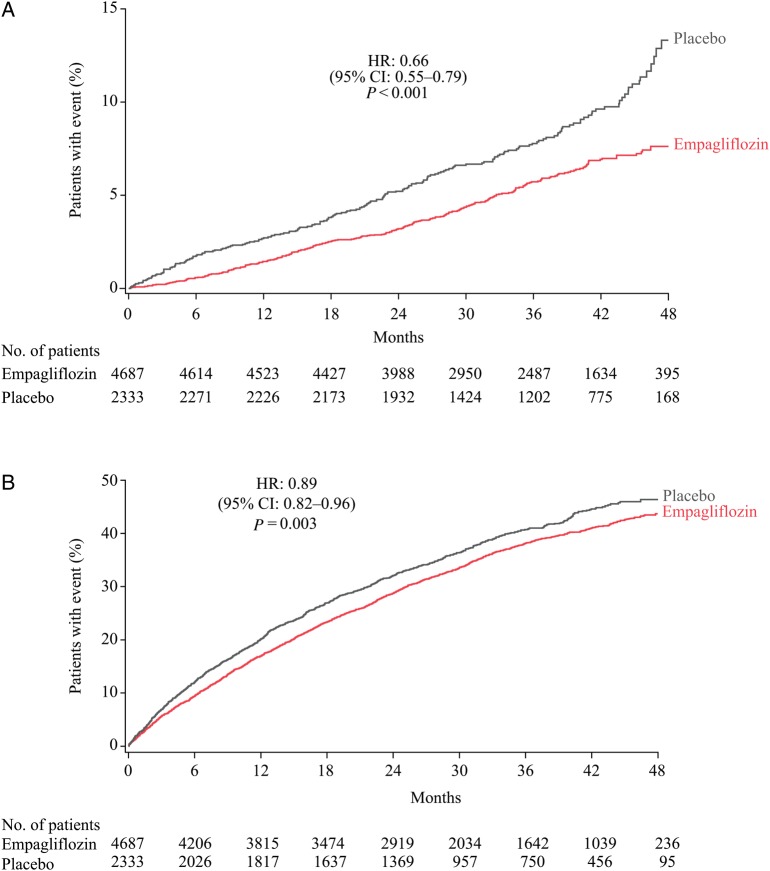
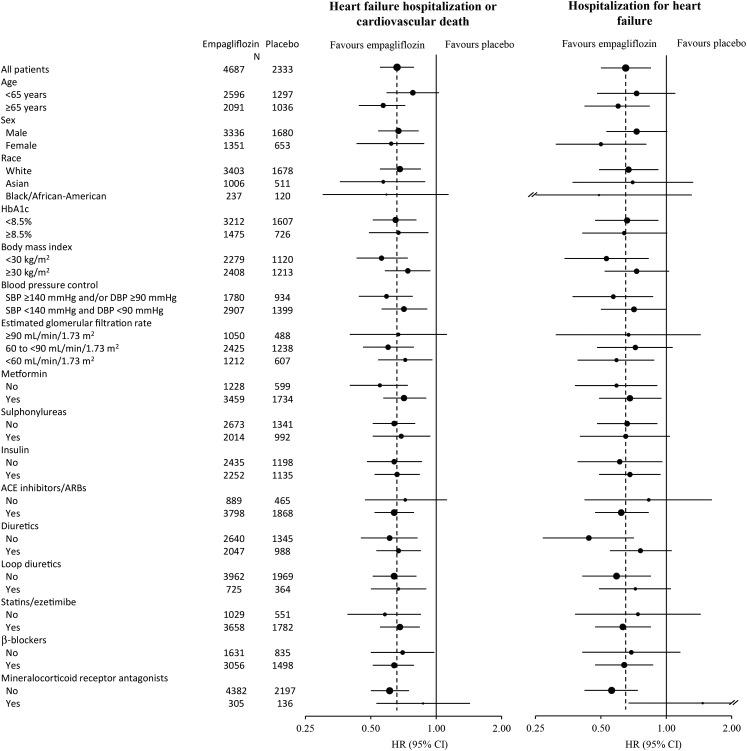
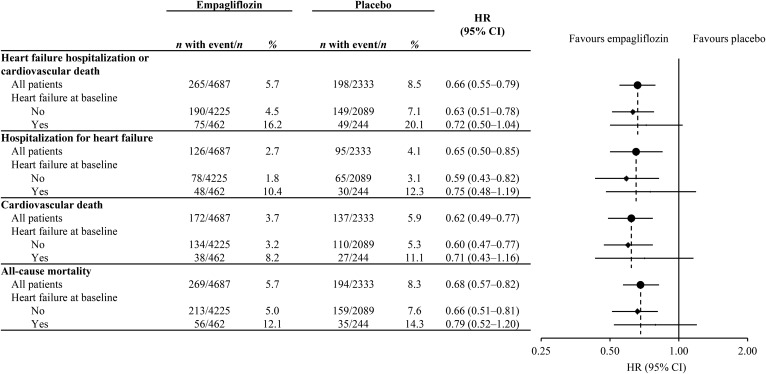
AIMS: We previously reported that in the EMPA-REG OUTCOME(®) trial, empagliflozin added to standard of care reduced the risk of 3-point major adverse cardiovascular events, cardiovascular and all-cause death, and hospitalization for heart failure in patients with type 2 diabetes and high cardiovascular risk. We have now further investigated heart failure outcomes in all patients and in subgroups, including patients with or without baseline heart failure. METHODS AND RESULTS: Patients were randomized to receive empagliflozin 10 mg, empagliflozin 25 mg, or placebo. Seven thousand and twenty patients were treated; 706 (10.1%) had heart failure at baseline. Heart failure hospitalization or cardiovascular death occurred in a significantly lower percentage of patients treated with empagliflozin [265/4687 patients (5.7%)] than with placebo [198/2333 patients (8.5%)] [hazard ratio, HR: 0.66 (95% confidence interval: 0.55-0.79); P < 0.001], corresponding to a number needed to treat to prevent one heart failure hospitalization or cardiovascular death of 35 over 3 years. Consistent effects of empagliflozin were observed across subgroups defined by baseline characteristics, including patients with vs. without heart failure, and across categories of medications to treat diabetes and/or heart failure. Empagliflozin improved other heart failure outcomes, including hospitalization for or death from heart failure [2.8 vs. 4.5%; HR: 0.61 (0.47-0.79); P < 0.001] and was associated with a reduction in all-cause hospitalization [36.8 vs. 39.6%; HR: 0.89 (0.82-0.96); P = 0.003]. Serious adverse events and adverse events leading to discontinuation were reported by a higher proportion of patients with vs. without heart failure at baseline in both treatment groups, but were no more common with empagliflozin than with placebo. CONCLUSION: In patients with type 2 diabetes and high cardiovascular risk, empagliflozin reduced heart failure hospitalization and cardiovascular death, with a consistent benefit in patients with and without baseline heart failure.
Overview
The claims and statistics of this paper haven’t been checked yet.
Free: it reads the open-access text and checks the first 5 claims that cite a source we can check. Create a free account to check every claim.
Integrity signals
Registry
Cites
Statistics
Figures
Verification
Claims the paper makes
The claims and statistics of this paper haven’t been checked yet.
Free: it reads the open-access text and checks the first 5 claims that cite a source we can check. Create a free account to check every claim.
Claims other papers make about this one
Each is checked against this paper’s own text: does it say what the citing paper says it does?
The source backs part of the claim, not all of it — or backs it for a different population, condition or comparison.
In the citing paper
“Little is known about the effect of SGLT2 inhibitors on the broad spectrum of both inpatient and outpatient worsening heart failure events, because these were not documented in trials with these drugs in type 2 diabetes.1–5”
From Effect of Empagliflozin on the Clinical Stability of Patients With Heart Failure and a Reduced Ejection Fraction: The EMPEROR-Reduced Trial (2021) · cites this paper as [1]
Experimental — accuracy not yet measuredThe source backs part of the claim, not all of it — or backs it for a different population, condition or comparison.
In the citing paper
“Recent cardiovascular outcomes trials demonstrate that therapies that inhibit sodium glucose cotransporter (SGLT)2 may reduce heart failure morbidity and mortality and slow decline in renal function (7,8,23,42,43).”
From Evaluation of renal and cardiovascular protection mechanisms of SGLT2 inhibitors: model-based analysis of clinical data (2018) · cites this paper as [8]
Experimental — accuracy not yet measuredThe cited source says what the claim attributes to it.
In the citing paper
“Sodium-glucose cotransporter 2 (SGLT2) inhibitors have been shown to reduce the risk of hospitalizations for heart failure in 8 large-scale trials, including those that focused on type 2 diabetes, heart failure with a reduced ejection fraction, and chronic kidney disease.1–8”
From Effect of Empagliflozin on the Clinical Stability of Patients With Heart Failure and a Reduced Ejection Fraction: The EMPEROR-Reduced Trial (2021) · cites this paper as [1]
The cited source says what the claim attributes to it.
In the citing paper
“hospitalizations for heart failure (2.7% versus 4.1%; 35% RRR)”
From Clinical management of stable coronary artery disease in patients with type 2 diabetes mellitus: a scientific statement from the American Heart Association (2020) · cites this paper as [219]
Self-check
Percentages, sums and reported differences re-computed from the paper’s own numbers.
The self-check needs the paper’s full text.
Citations
Cites
Empagliflozin, Cardiovascular Outcomes, and Mortality in Type 2 Diabetes
Zinman, B., Wanner, C., Lachin, J. M., Fitchett, D., Bluhmki, E., Hantel, S., Mattheus, M., Devins, T., Johansen, O. E., Woerle, H. J., et al. (2015) · New England Journal of Medicine · doi:10.1056/nejmoa1504720 · Cited by 12,315
Self-citationESC Guidelines for the diagnosis and treatment of acute and chronic heart failure 2012
Authors/Task Force Members, McMurray, J. J. V., Adamopoulos, S., Anker, S. D., Auricchio, A., Böhm, M., Dickstein, K., Falk, V., Filippatos, G., Fonseca, C., et al. (2012) · European Heart Journal · doi:10.1093/eurheartj/ehs104 · Cited by 6,879
Saxagliptin and cardiovascular outcomes in patients with type 2 diabetes mellitus
Scirica, B. M., Bhatt, D. L., Braunwald, E., Steg, P. G., Davidson, J., Hirshberg, B., Ohman, P., Frederich, R., Wiviott, S. D., Hoffman, E. B., et al. (2013) · New England Journal of Medicine · doi:10.1056/nejmoa1307684 · Cited by 3,470
ESC Guidelines for the Diagnosis and Treatment of Acute and Chronic Heart Failure 2012
Authors/Task Force Members, McMurray, J. J. V., Adamopoulos, S., Anker, S. D., Auricchio, A., Böhm, M., Dickstein, K., Falk, V., Filippatos, G., Fonseca, C., et al. (2012) · European Journal of Heart Failure · doi:10.1093/eurjhf/hfs105 · Cited by 2,644
(2013) · European Heart Journal · doi:10.1093/eurheartj/eht108 · Cited by 1,955
Cherney, D. Z. I., Perkins, B. A., Soleymanlou, N., Maione, M., Lai, V., Lee, A., Fagan, N. M., Woerle, H. J., Johansen, O. E., Broedl, U. C., et al. (2014) · Circulation · doi:10.1161/circulationaha.113.005081 · Cited by 1,329
Self-citationType 2 diabetes and incidence of cardiovascular diseases: a cohort study in 1.9 million people
Shah, A. D., Langenberg, C., Rapsomaniki, E., Denaxas, S., Pujades-Rodriguez, M., Gale, C. P., Deanfield, J., Smeeth, L., Timmis, A., & Hemingway, H. (2015) · The Lancet Diabetes & Endocrinology · doi:10.1016/s2213-8587(14)70219-0 · Cited by 1,225
Intensive glucose control and macrovascular outcomes in type 2 diabetes
Turnbull, F. M., Abraira, C., Anderson, R. J., Byington, R. P., Chalmers, J. P., Duckworth, W. C., Evans, G. W., Gerstein, H. C., Holman, R. R., Moritz, T. E., et al. (2009) · Diabetologia · doi:10.1007/s00125-009-1470-0 · Cited by 1,189 · cited 1×
“less intensive glucose control.(4) Furthermore, specific glucose-lowering medications have not been shown to improve heart failure outcomes and some may actually have deleterious effects.”
BackgroundMetabolic response to sodium-glucose cotransporter 2 inhibition in type 2 diabetic patients
Ferrannini, E., Muscelli, E., Frascerra, S., Baldi, S., Mari, A., Heise, T., Broedl, U. C., & Woerle, H.-J. (2014) · Journal of Clinical Investigation · doi:10.1172/jci72227 · Cited by 1,134
Self-citationRonco, C., McCullough, P., Anker, S. D., Anand, I., Aspromonte, N., Bagshaw, S. M., Bellomo, R., Berl, T., Bobek, I., Cruz, D. N., et al. (2010) · European Heart Journal · doi:10.1093/eurheartj/ehp507 · Cited by 1,104
Research works printed but not linked: 1
- Jordan J, Tank J, Heusser K, Heise T, Wanner C, Heer M, Macha S, Mattheus M, Lund SS, Woerle HJ, Broedl UC Empagliflozin has no discernible effect on muscle sympathetic nerve activity in patients with type 2 diabetes despite reductions in blood pressure and weight. Diabetes 2014; 63: A265 [1030-P].
Cited by
Items 101–200 of 947
Empagliflozin prevents doxorubicin-induced myocardial dysfunction
Sabatino, J., Rosa, S. D., Tammè, L., Iaconetti, C., Sorrentino, S., Polimeni, A., Mignogna, C., Amorosi, A., Spaccarotella, C., Yasuda, M., et al. (2020) · Cardiovascular Diabetology · doi:10.1186/s12933-020-01040-5 · Cited by 158
“Effects of empagliflozin on LV function The improvement in LV systolic function recorded in our study, not only by 2-D high resolution echocardiography but also by STE, provides a potential explanation for the unexpected favorable cardiovascular outcomes of SGLT2 inhibitors both in T2DM and in non-diabetics in recent…”
ResultPharmacologic Glycemic Management of Type 2 Diabetes in Adults: 2020 Update
Lipscombe, L., Butalia, S., Dasgupta, K., Eurich, D. T., MacCallum, L., Shah, B. R., Simpson, S., & Senior, P. A. (2020) · Canadian Journal of Diabetes · doi:10.1016/j.jcjd.2020.08.001 · Cited by 153
Efficacy and Safety of SGLT2 Inhibitors in Heart Failure: Systematic Review and Meta-Analysis
Butler, J., Usman, M. S., Khan, M. S., Greene, S. J., Friede, T., Vaduganathan, M., Filippatos, G., Stewart Coats, A. J., & Anker, S. D. (2020) · ESC Heart Failure · doi:10.1002/ehf2.13169 · Cited by 138
Tuleta, I., & Frangogiannis, N. G. (2021) · Advanced Drug Delivery Reviews · doi:10.1016/j.addr.2021.113904 · Cited by 151
Dunlay, S. M., Givertz, M. M., Aguilar, D., Allen, L. A., Chan, M., Desai, A. S., Deswal, A., Dickson, V. V., Kosiborod, M. N., Lekavich, C. L., et al. (2019) · Journal of Cardiac Failure · doi:10.1016/j.cardfail.2019.05.007 · Cited by 145
Perkovic, V., Agarwal, R., Fioretto, P., Hemmelgarn, B. R., Levin, A., Thomas, M. C., Wanner, C., Kasiske, B. L., Wheeler, D. C., Groop, P.-H., et al. (2016) · Kidney International · doi:10.1016/j.kint.2016.09.010 · Cited by 136
“The reductions in CV mortality and heart failure reported with SGLT2 inhibitors support the importance of volume control.(46,70) Further trials of targeted interventions would be of value.”
BackgroundSelf-citationTeo, Y. H., Teo, Y. N., Syn, N. L., Kow, C. S., Yoong, C. S. Y., Tan, B. Y. Q., Yeo, T., Lee, C., Lin, W., & Sia, C. (2021) · Journal of the American Heart Association · doi:10.1161/jaha.120.019463 · Cited by 140
Efficacy and safety of empagliflozin in older patients in the EMPA-REG OUTCOME® trial
Monteiro, P., Bergenstal, R. M., Toural, E., Inzucchi, S. E., Zinman, B., Hantel, S., Kiš, S. G., Kaspers, S., George, J. T., & Fitchett, D. (2019) · Age and Ageing · doi:10.1093/ageing/afz096 · Cited by 133
Self-citationTanaka, H., Takano, K., Iijima, H., Kubo, H., Maruyama, N., Hashimoto, T., Arakawa, K., Togo, M., Inagaki, N., & Kaku, K. (2017) · Advances in Therapy · doi:10.1007/s12325-016-0457-8 · Cited by 140
Zinman, B., Inzucchi, S. E., Lachin, J. M., Wanner, C., Fitchett, D., Kohler, S., Mattheus, M., Woerle, H. J., Broedl, U. C., Johansen, O. E., et al. (2017) · Stroke · doi:10.1161/strokeaha.116.015756 · Cited by 136
“7% were taking acetylsalicylic acid.(10,13) In total, 97% of patients completed the study, and 25% prematurely discontinued study drug.”
BackgroundSelf-citationSGLT2 Inhibitors Play a Salutary Role in Heart Failure via Modulation of the Mitochondrial Function
Maejima, Y. (2020) · Frontiers in Cardiovascular Medicine · doi:10.3389/fcvm.2019.00186 · Cited by 142
Hundertmark, M., Adler, A., Antoniades, C. A., Coleman, R. L., Griffin, J. L., Holman, R. R., Lamlum, H., Lee, J., Massey, D., Miller, J. J. J. J., et al. (2023) · Circulation · doi:10.1161/circulationaha.122.062021 · Cited by 133
Bosch, A., Ott, C., Jung, S., Striepe, K., Karg, M. V., Kannenkeril, D., Dienemann, T., & Schmieder, R. E. (2019) · Cardiovascular Diabetology · doi:10.1186/s12933-019-0839-8 · Cited by 125
Kaku, K., Lee, J., Mattheus, M., Kaspers, S., George, J., Woerle, H.-J., & on behalf of the EMPA-REG OUTCOME® Investigators (2017) · Circulation Journal · doi:10.1253/circj.cj-16-1148 · Cited by 128
Self-citationPaulus, W. J., & Canto, E. D. (2017) · JACC Heart Failure · doi:10.1016/j.jchf.2017.07.012 · Cited by 140
Verma, S., Mazer, C. D., Fitchett, D., Inzucchi, S. E., Pfarr, E., George, J. T., & Zinman, B. (2018) · Diabetologia · doi:10.1007/s00125-018-4644-9 · Cited by 124
“type 2 diabetes and a history of CABG that are consistent with those in the overall trial population [8, 14].”
ResultSelf-citationPharmacologic Management of Type 2 Diabetes Mellitus: Available Therapies
Thrasher, J. (2017) · The American Journal of Medicine · doi:10.1016/j.amjmed.2017.04.004 · Cited by 112
“The effect of SGLT2 inhibitors on cardiovascular outcomes was largely unknown until data from the Empagliflozin Cardiovascular Outcome Event Trial in Type 2 Diabetes Mellitus PatientseRemoving Excess Glucose (EMPA-REG OUTCOME) trial were reported in 2015.(11,48) Briefly, significant reductions in the risks of MACE, ca…”
BackgroundPharmacologic Management of Type 2 Diabetes Mellitus: Available Therapies
Thrasher, J. (2017) · The American Journal of Cardiology · doi:10.1016/j.amjcard.2017.05.009 · Cited by 112
“The effect of SGLT2 inhibitors on cardiovascular outcomes was largely unknown until data from the Empagliflozin Cardiovascular Outcome Event Trial in Type 2 Diabetes Mellitus PatientseRemoving Excess Glucose (EMPA-REG OUTCOME) trial were reported in 2015.(11,48) Briefly, significant reductions in the risks of MACE, ca…”
BackgroundCosmi, F., Shen, L., Magnoli, M., Abraham, W. T., Anand, I. S., Cleland, J. G., Cohn, J. N., Cosmi, D., De Berardis, G., Dickstein, K., et al. (2018) · European Journal of Heart Failure · doi:10.1002/ejhf.1146 · Cited by 119
Paneni, F., & Lüscher, T. F. (2017) · The American Journal of Medicine · doi:10.1016/j.amjmed.2017.04.008 · Cited by 130
“However, utilization of b-hydroxybutyrate instead of fatty acids might also contribute to improve myocardial efficiency thus preventing HF.”
ResultInfluentialMeng, Z., Liu, X., Li, T., Fang, T., Cheng, Y., Han, L., Sun, B., & Chen, L. (2021) · International Immunopharmacology · doi:10.1016/j.intimp.2021.107492 · Cited by 128
Lee, M. M. Y., McMurray, J. J. V., Lorenzo-Almorós, A., Kristensen, S. L., Sattar, N. A., Jhund, P. S., & Petrie, M. C. (2018) · Heart · doi:10.1136/heartjnl-2016-310342 · Cited by 133
O’Meara, E., McDonald, M., Chan, M., Ducharme, A., Ezekowitz, J. A., Giannetti, N., Grzeslo, A., Heckman, G. A., Howlett, J. G., Koshman, S. L., et al. (2020) · Canadian Journal of Cardiology · doi:10.1016/j.cjca.2019.11.036 · Cited by 122
Javed, Z., Papageorgiou, M., Deshmukh, H., Rigby, A. S., Qamar, U., Abbas, J., Khan, A. Y., Kilpatrick, E. S., Atkin, S. L., & Sathyapalan, T. (2019) · Clinical Endocrinology · doi:10.1111/cen.13968 · Cited by 121
Type 2 Diabetes and Myocardial Infarction: Recent Clinical Evidence and Perspective
Cui, J., Liu, Y., Li, Y. H., Xu, F., & Liu, Y. (2021) · Frontiers in Cardiovascular Medicine · doi:10.3389/fcvm.2021.644189 · Cited by 127
Li, X., Lü, Q., Qiu, Y., do Carmo, J. M., Wang, Z., da Silva, A. A., Mouton, A. J., Omoto, A. C. M., Hall, M. E., Li, J., et al. (2021) · Journal of the American Heart Association · doi:10.1161/jaha.120.018298 · Cited by 127
“It can be activated as a cellular adaptive response to induce cardiac hypertrophy during pressure overload, but persistent activation of mTORC1 can cause excessive cardiac hypertrophy and HF. 46 AMPK can downregulate mTORC1 by phosphorylating Raptor and tuberous sclerosis complex 2.”
Amin, E. F., Rifaai, R. A., & Abdellatif, R. (2020) · Fundamental and Clinical Pharmacology · doi:10.1111/fcp.12548 · Cited by 119
Cardiac ketone body metabolism
Kadir, A. A., Clarke, K., & Evans, R. D. (2020) · Biochimica et Biophysica Acta (BBA) - Molecular Basis of Disease · doi:10.1016/j.bbadis.2020.165739 · Cited by 121
Metabolic Support for the Heart: Complementary Therapy for Heart Failure?
Heggermont, W., Papageorgiou, A., Heymans, S. R. B., & van Bilsen, M. (2016) · European Journal of Heart Failure · doi:10.1002/ejhf.678 · Cited by 118
The Effects of Sodium-Glucose Cotransporter 2 Inhibitors on Sympathetic Nervous Activity
Wan, N., Rahman, A., Hitomi, H., & Nishiyama, A. (2018) · Frontiers in Endocrinology · doi:10.3389/fendo.2018.00421 · Cited by 115
Clinical Benefit of Cardiorenal Effects of Sodium-Glucose Cotransporter 2 Inhibitors
Zelniker, T. A., & Braunwald, E. (2020) · Journal of the American College of Cardiology · doi:10.1016/j.jacc.2019.11.036 · Cited by 121
Management of post‐transplant diabetes: immunosuppression, early prevention, and novel antidiabetics
Hecking, M., Sharif, A., Eller, K., & Jenssen, T. G. (2020) · Transplant International · doi:10.1111/tri.13783 · Cited by 128
Packer, M. (2020) · Cardiovascular Diabetology · doi:10.1186/s12933-020-01041-4 · Cited by 118
Jensen, J., Omar, M., Kistorp, C., Poulsen, M. K., Tuxen, C., Gustafsson, I., Køber, L., Gustafsson, F., Faber, J. O., Fosbøl, E. L., et al. (2020) · American Heart Journal · doi:10.1016/j.ahj.2020.07.011 · Cited by 116
Salah, H. M., Al'Aref, S. J., Khan, M. S., Al-Hawwas, M., Vallurupalli, S., Mehta, J. L., Mounsey, J. P., Greene, S. J., McGuire, D. K., Lopes, R. D., et al. (2021) · American Heart Journal · doi:10.1016/j.ahj.2020.10.064 · Cited by 110
SGLT2 Inhibitors: Benefit/Risk Balance
Scheen, A. J. (2016) · Current Diabetes Reports · doi:10.1007/s11892-016-0789-4 · Cited by 119
Böhm, M., Slawik, J., Brueckmann, M., Mattheus, M., George, J. T., Ofstad, A. P., Inzucchi, S. E., FITCHETT, D. H., Anker, S. D., Marx, N., et al. (2019) · European Journal of Heart Failure · doi:10.1002/ejhf.1663 · Cited by 114
Self-citationHeart failure with preserved ejection fraction: controversies, challenges and future directions
Zakeri, R., & Cowie, M. R. (2018) · Heart · doi:10.1136/heartjnl-2016-310790 · Cited by 107
Penna, C. R. R., Andreadou, I., Aragno, M., Beauloye, C., Bertrand, L., Lazou, A., Falcão‐Pires, I., Bell, R., Zuurbier, C. J., Pagliaro, P., et al. (2020) · British Journal of Pharmacology · doi:10.1111/bph.14993 · Cited by 114
“Recently published landmark cardiovascular outcome trials (EMPA-REG OUTCOME, Fitchett et al., 2016; CANVAS, Neal et al., 2017; and DECLARETIMI 58 trial, Wiviott et al., 2019) have shown that the sodium– glucose co-transporter 2 (SGLT2) inhibitors ( empagliflozin , canagliflozin and dapagliflozin ) reduced rates of car…”
Scheen, A. J. (2016) · Expert Opinion on Drug Metabolism & Toxicology · doi:10.1080/17425255.2016.1215427 · Cited by 122
“In EMPA-REG OUTCOME trial, empagliflozin, a selective SGLT2i, was associated with a remarkable reduction in cardiovascular and all-cause mortality in T2D patients with antecedents of cardiovascular disease [11,12].”
ResultInfluentialSGLT2 inhibitors and cardioprotection: a matter of debate and multiple hypotheses
Filippatos, T. D., Liontos, A., Papakitsou, I., & Elisaf, M. (2019) · Postgraduate Medicine · doi:10.1080/00325481.2019.1581971 · Cited by 120
“administration was followed by a decrease in hospitalization for heart failure and CV death among patients with or without heart failure at baseline [25].”
BackgroundSGLT inhibitors on weight and body mass: A meta‐analysis of 116 randomized‐controlled trials
Cheong, A. J. Y., Teo, Y. N., Teo, Y. H., Syn, N. L., Ong, H. T., Ting, A. Z. H., Chia, A. Z. Q., Chong, E. Y., Chan, M. Y., Lee, C., et al. (2022) · Obesity · doi:10.1002/oby.23331 · Cited by 99
“They have also been shown to benefit cardiovascular health in patients with diabetes (16,17).”
BackgroundDirect cardiovascular impact of SGLT2 inhibitors: mechanisms and effects
Kaplan, A., Abidi, E., EL‐Yazbi, A. F., Eid, A. H., Booz, G. W., & Zouein, F. A. (2018) · Heart Failure Reviews · doi:10.1007/s10741-017-9665-9 · Cited by 116
Effect of Empagliflozin on Hemodynamics in Patients With Heart Failure and Reduced Ejection Fraction
Omar, M., Jensen, J., Frederiksen, P. H., Kistorp, C., Videbæk, L. M., Poulsen, M. K., Möller, S., Ali, M., Gustafsson, F., Køber, L., et al. (2020) · Journal of the American College of Cardiology · doi:10.1016/j.jacc.2020.10.005 · Cited by 111
Tanaka, A., Hisauchi, I., Taguchi, I., Sezai, A., Toyoda, S., Tomiyama, H., Sata, M., Ueda, S., Oyama, J., Kitakaze, M., et al. (2020) · ESC Heart Failure · doi:10.1002/ehf2.12707 · Cited by 109
“CHF was defined by skilled cardiologists according to the clinical signs or symptoms associated with the Framingham criteria for congestive HF, relevant findings based on physiological and laboratory tests, and a documented history of HF. Participants’ NYHA class and medical treatment for CHF could not change up to 4…”
BackgroundInfluentialHeart Failure Outcomes in Clinical Trials of Glucose-Lowering Agents in Patients with Diabetes
Fitchett, D. H., Udell, J. A., & Inzucchi, S. E. (2017) · European Journal of Heart Failure · doi:10.1002/ejhf.633 · Cited by 102
Self-citationPacker, M. (2020) · European Journal of Heart Failure · doi:10.1002/ejhf.1732 · Cited by 107
Ohya, Y., Arakawa, K., Arata, N., Arima, S., Arima, H., Asayama, K., Dohi, Y., Fukami, A., Furuhashi, M., Goto, K., et al. (2026) · Hypertension Research · doi:10.1038/s41440-025-02462-y · Cited by 110
Metabolic Effects of Metformin in the Failing Heart
Dziubak, A., Wójcicka, G., Wojtak, A., & Bełtowski, J. (2018) · International Journal of Molecular Sciences · doi:10.3390/ijms19102869 · Cited by 105
“These benefits have been proven for empagliflozin, an inhibitor of the sodium-glucose co-transporter 2 (SGLT-2) [8] and metformin, the biguanide derivative.”
BackgroundHeerspink, H. J. L., Cherney, D., Postmus, D., Stefánsson, B. V., Chertow, G. M., Dwyer, J. P., Greene, T., Kosiborod, M., Langkilde, A. M., McMurray, J. J. V., et al. (2022) · Kidney International · doi:10.1016/j.kint.2021.09.005 · Cited by 92
“Third, SGLT2 inhibitor use is associated with a reduction in the use of loop diuretics, thereby avoiding circulating volume contraction and pre-renal ischemia.(26) Finally, SGLT2 inhibition may preserve capillary architecture and parenchymal perfusion, and protect against apoptosis and ischemia-reperfusion, thereby he…”
Prognostic Implications of Type 2 Diabetes Mellitus in Ischemic and Nonischemic Heart Failure
Johansson, I., Dahlström, U., Edner, M., Näsman, P., Rydén, L., & Norhammar, A. (2016) · Journal of the American College of Cardiology · doi:10.1016/j.jacc.2016.06.061 · Cited by 105
Cardiovascular Protection by Sodium Glucose Cotransporter 2 Inhibitors: Potential Mechanisms
Staels, B. (2017) · The American Journal of Medicine · doi:10.1016/j.amjmed.2017.04.009 · Cited by 92
“Contrary to this hypothesis, however, is the observation that the effect of empagliflozin was seen consistently in patients without heart failure at baseline,(2) although as previously mentioned, it is possible that many patients had undiagnosed or asymptomatic left ventricular systolic/diastolic dysfunction.(2,5) It…”
BackgroundResultSGLT2 inhibitors: a novel choice for the combination therapy in diabetic kidney disease
Zou, H., Zhou, B., & Xu, G. (2017) · Cardiovascular Diabetology · doi:10.1186/s12933-017-0547-1 · Cited by 91
Kanie, T., Mizuno, A., Takaoka, Y., Suzuki, T., Yoneoka, D., Nishikawa, Y., Tam, W. W. S., Morze, J., Rynkiewicz, A., Xin, Y., et al. (2021) · Cochrane Database of Systematic Reviews · doi:10.1002/14651858.cd013650.pub2 · Cited by 127
Promise of SGLT2 Inhibitors in Heart Failure: Diabetes and Beyond
Martens, P., Mathieu, C., & Verbrugge, F. H. (2017) · Current Treatment Options in Cardiovascular Medicine · doi:10.1007/s11936-017-0522-x · Cited by 99
Potential Mechanisms of Sodium-Glucose Co-Transporter 2 Inhibitor-Related Cardiovascular Benefits
Verma, S. (2019) · The American Journal of Cardiology · doi:10.1016/j.amjcard.2019.10.028 · Cited by 83
Athyros, V. G., Pοlyzos, S. A., Kountouras, J., Katsiki, N., Anagnostis, P. G., Doumas, M. N., & Mantzoros, C. S. (2019) · Current Vascular Pharmacology · doi:10.2174/1570161117666190405164313 · Cited by 93
The Pleiotropic Effects of Sodium–Glucose Cotransporter-2 Inhibitors: Beyond the Glycemic Benefit
Patel, D. K., & Strong, J. (2019) · Diabetes Therapy · doi:10.1007/s13300-019-00686-z · Cited by 79
Satoh, T., Wang, L., Espinosa‐Díez, C., Wang, B., Hahn, S. A., Noda, K., Rochon, E. R., Dent, M. R., Levine, A. R., Baust, J., et al. (2021) · Circulation · doi:10.1161/circulationaha.121.053889 · Cited by 87
Oellgaard, J., Gæde, P., Rossing, P., Rørth, R., Køber, L., Parving, H.-H., & Pedersen, O. (2018) · Diabetologia · doi:10.1007/s00125-018-4642-y · Cited by 86
Packer, M. (2021) · Cardiovascular Research · doi:10.1093/cvr/cvaa064 · Cited by 86
Fitchett, D., Inzucchi, S. E., Zinman, B., Wanner, C., Schumacher, M., Schmoor, C., Ohneberg, K., Ofstad, A. P., Salsali, A., George, J. T., et al. (2021) · ESC Heart Failure · doi:10.1002/ehf2.13615 · Cited by 85
Self-citationJuni, R. P., Al‐Shama, R., Kuster, D. W. D., van der Velden, J., Hamer, H. M., Vervloet, M. G., Eringa, E. C., Koolwijk, P., & van Hinsbergh, V. W. M. (2020) · Kidney International · doi:10.1016/j.kint.2020.12.013 · Cited by 86
Paneni, F., & Lüscher, T. F. (2017) · The American Journal of Cardiology · doi:10.1016/j.amjcard.2017.05.015 · Cited by 83
Norhammar, A., Bodegård, J., Nyström, T., Thuresson, M., Nathanson, D., & Eriksson, J. W. (2019) · Diabetes Obesity and Metabolism · doi:10.1111/dom.13627 · Cited by 90
Inzucchi, S. E., Fitchett, D., Jurišić‐Eržen, D., Woo, V., Hantel, S., Janista, C., Kaspers, S., George, J. T., Zinman, B., & on behalf of the EMPA‐REG OUTCOME® Investigators (2020) · Diabetes, Obesity and Metabolism · doi:10.1111/dom.13938 · Cited by 82
Self-citationHu, Y., Xu, Q., Li, H., Meng, Z., Hao, M., Ma, X., Lin, W., & Kuang, H. (2022) · Frontiers in Pharmacology · doi:10.3389/fphar.2022.827896 · Cited by 86
Effects of sodium-glucose co-transporter-2 inhibitors in type 2 diabetes in women versus men
Rådholm, K., Zhou, Z., Clemens, K., Neal, B., & Woodward, M. (2020) · Diabetes, Obesity and Metabolism · doi:10.1111/dom.13876 · Cited by 82
Pharmacologic Management of Type 2 Diabetes: 2016 Interim Update
Booth, G. L., Lipscombe, L. L., Butalia, S., Dasgupta, K., Eurich, D. T., Goldenberg, R., Khan, N., MacCallum, L., Shah, B. R., Simpson, S. H., et al. (2016) · Canadian Journal of Diabetes · doi:10.1016/j.jcjd.2016.09.003 · Cited by 90
Therapeutic medications against diabetes: What we have and what we expect
Hu, C., & Jia, W. (2018) · Advanced Drug Delivery Reviews · doi:10.1016/j.addr.2018.11.008 · Cited by 89
Kashiwagi, A., & Maegawa, H. (2017) · Journal of Diabetes Investigation · doi:10.1111/jdi.12644 · Cited by 82
Cardiovascular outcomes trials: a paradigm shift in the current management of type 2 diabetes
Davies, M. J., Drexel, H., Jornayvaz, F. R., Pataky, Z., Seferovic, P. M., & Wanner, C. (2022) · Cardiovascular Diabetology · doi:10.1186/s12933-022-01575-9 · Cited by 83
Self-citationEarly administration of empagliflozin preserved heart function in cardiorenal syndrome in rat
Yang, C., Chen, Y.-T., Wallace, C. G., Chen, K., Cheng, B., Sung, P., Li, Y., Ko, S., Chang, H., & Yip, H. (2018) · Biomedicine & Pharmacotherapy · doi:10.1016/j.biopha.2018.10.095 · Cited by 83
Heart Failure With Preserved Ejection Fraction in Diabetes: Mechanisms and Management
Meagher, P., Adam, M., Civitarese, R., Bugyei‐Twum, A., & Connelly, K. A. (2018) · Canadian Journal of Cardiology · doi:10.1016/j.cjca.2018.02.026 · Cited by 85
Rising incidence of heart failure demands action
Zannad, F. M. (2017) · The Lancet · doi:10.1016/s0140-6736(17)32873-8 · Cited by 82
Dawwas, G. K., Smith, S. M., & Park, H. (2019) · Diabetes, Obesity and Metabolism · doi:10.1111/dom.13477 · Cited by 76
Empagliflozin in patients post myocardial infarction rationale and design of the EMPACT-MI trial
Harrington, J., Udell, J. A., Jones, W. S., Anker, S. D., Bhatt, D. L., Petrie, M. C., Vedin, O., Sumin, M., Zwiener, I., Hernandez, A. F., et al. (2022) · American Heart Journal · doi:10.1016/j.ahj.2022.05.010 · Cited by 81
Glucagon and heart in type 2 diabetes: new perspectives
Ceriello, A., Genovese, S., Mannucci, E., & Gronda, E. (2016) · Cardiovascular Diabetology · doi:10.1186/s12933-016-0440-3 · Cited by 77
McGuire, D. K., Zinman, B., Inzucchi, S. E., Wanner, C., FITCHETT, D. H., Anker, S. D., Pocock, S., Kaspers, S., George, J. T., von Eynatten, M., et al. (2020) · The Lancet Diabetes & Endocrinology · doi:10.1016/s2213-8587(20)30344-2 · Cited by 82
Self-citationKadowaki, T., Nangaku, M., Hantel, S., Okamura, T., von Eynatten, M., Wanner, C., & Koitka‐Weber, A. (2019) · Journal of Diabetes Investigation · doi:10.1111/jdi.12971 · Cited by 77
Self-citationMechanisms and Models in Heart Failure: A Translational Approach
Mann, D. L., & Felker, G. M. (2021) · Circulation Research · doi:10.1161/circresaha.121.318158 · Cited by 84
Sharma, A., & Verma, S. (2020) · Canadian Journal of Diabetes · doi:10.1016/j.jcjd.2019.09.003 · Cited by 65
Current perspectives on cardiovascular outcome trials in diabetes
on behalf of the D&CVD EASD Study Group, Schnell, O., Rydén, L., Standl, E., & Ceriello, A. (2016) · Cardiovascular Diabetology · doi:10.1186/s12933-016-0456-8 · Cited by 74
“These differences should be taken into account when designing and analyzing composite MACE end-points, because a positive/neutral effect in one of the components does not necessarily mean an improvement in the others, especially when considering their particular pathophysiology, as exemplified by the results of the va…”
BackgroundResultInfluentialSaad, M. S., Mahmoud, A. N., Elgendy, I. Y., Abu‐Zaid, A., Barakat, A. F., Elgendy, A. Y., Al‐Ani, M. A., Mentias, A. G., Nairooz, R. S., Bavry, A. A., et al. (2016) · International Journal of Cardiology · doi:10.1016/j.ijcard.2016.11.181 · Cited by 76
SGLT2 Inhibition for Cardiovascular Diseases, Chronic Kidney Disease, and NAFLD
Ala, M. (2021) · Endocrinology · doi:10.1210/endocr/bqab157 · Cited by 75
Natali, A., Nesti, L., Tricò, D., & Ferrannini, E. (2021) · Cardiovascular Diabetology · doi:10.1186/s12933-021-01385-5 · Cited by 76
Heart Failure with Preserved Ejection Fraction in Older Adults
Upadhya, B., & Kitzman, D. W. (2017) · Heart Failure Clinics · doi:10.1016/j.hfc.2017.02.005 · Cited by 81
on behalf of the EMPA-REG OUTCOME® investigators, Zinman, B., Inzucchi, S. E., Wanner, C., Hehnke, U., George, J. T., Johansen, O. E., & FITCHETT, D. H. (2018) · Diabetologia · doi:10.1007/s00125-018-4630-2 · Cited by 71
Self-citationHallow, K. M., Greasley, P. J., Helmlinger, G., Chu, L., Heerspink, H. J., & Boulton, D. W. (2018) · American Journal of Physiology-Renal Physiology · doi:10.1152/ajprenal.00202.2018 · Cited by 68
Review article: new treatments in non‐alcoholic fatty liver disease
Townsend, S. A., & Newsome, P. N. (2017) · Alimentary Pharmacology & Therapeutics · doi:10.1111/apt.14210 · Cited by 66
“for empagliflozin but not all agents, suggesting it may not be a class effect.(40,41) Several SGLT2 inhibitors have shown benefit in murine models of NAFLD, improving steatosis, inflammation, and fibrosis,(42-45) and”
BackgroundWang, C.-C., Li, Y., Qian, X.-Q., Zhao, H., Wang, D., Zuo, G.-X., & Wang, K. (2022) · Journal of drug targeting · doi:10.1080/1061186x.2022.2064479 · Cited by 68
Kimura, G. (2016) · Circulation Journal · doi:10.1253/circj.cj-16-0780 · Cited by 65
Wang, C., Chen, C., Lin, M.-H., Su, H., Ho, M.-Y., Yeh, J., Tsai, M., Hsieh, C., & Wen, M. (2020) · Biology · doi:10.3390/biology9110369 · Cited by 69
Costantino, S., Paneni, F., Mitchell, K. J., Mohammed, S. A., Hussain, S., Gkolfos, C., Berrino, L., Volpe, M., Schwarzwald, C. C., Lüscher, T. F., et al. (2018) · International Journal of Cardiology · doi:10.1016/j.ijcard.2018.04.082 · Cited by 68
Renal physiology of glucose handling and therapeutic implications
Cherney, D. Z. I., Kanbay, M., & Lovshin, J. A. (2020) · Nephrology Dialysis Transplantation · doi:10.1093/ndt/gfz230 · Cited by 73
Scheen, A. J. (2018) · Diabetes Research and Clinical Practice · doi:10.1016/j.diabres.2018.06.008 · Cited by 60
Bahrmann, A., Bahrmann, P., Baumann, J., Bauer, J. M., Brückel, E., Dreyer, M., Freitag, M., Friedl, A., Gölz, S., Grundke, S., et al. (2018) · Diabetologie und Stoffwechsel · doi:10.1055/a-0666-0820 · Cited by 73
Herrington, W. G., Savarese, G., Haynes, R., Marx, N., Mellbin, L., Lund, L. H., Dendale, P., Seferovic, P., Rosano, G., Staplin, N., et al. (2021) · European Journal of Heart Failure · doi:10.1002/ejhf.2286 · Cited by 63
Comorbidities in Heart Failure
van der Wal, H. H., van Deursen, V. M., van der Meer, P., & Voors, A. A. (2017) · Handbook of experimental pharmacology · doi:10.1007/164_2017_27 · Cited by 74
GLP-1 receptor agonists and heart failure in diabetes
Scheen, A. J. (2017) · Diabetes & Metabolism · doi:10.1016/s1262-3636(17)30068-x · Cited by 71
“In contrast, a marked, significant reduction in hospitalizations for HF has been reported with the sodium – glucose cotransporter type 2 (SGLT2) inhibitor empagliflozin in the Empagliflozin Cardiovascular Outcome Event Trial in Type 2 Diabetes Mellitus Patients (EMPA-REG OUTCOME) [11,12].”
Metadata
- Authors
- Fitchett, D., Zinman, B., Wanner, C., Lachin, J. M., Hantel, S., Salsali, A., Johansen, O. E., Woerle, H. J., Broedl, U. C., & Inzucchi, S. E.
- Affiliations
- St. Michael's Hospital (CA)
- Mount Sinai Hospital (CA)
- University of Würzburg (DE)
- George Washington University (US)
- Boehringer Ingelheim (Germany) (DE)
- Boehringer Ingelheim (United States) (US)
- Boehringer Ingelheim (Norway) (NO)
- Yale University (US)
- Corresponding author
- Fitchett, David
- ORCID
- Venue
- European Heart Journal
- Publisher
- Oxford University Press (OUP)
- Published
- 2016-01-26
- Volume
- 37
- Issue
- 19
- Pages
- 1526-1534
- ISSN
- 0195-668X (ISSN-L)
- 1522-9645
- PMC
- PMC4872285
- OpenAlex
- W2273304042
- Semantic Scholar
- d8ad89cb37549e0e15f92b1f3a648975e29e3671
- Cited by
- 907
- References
- 29
- Citations by year
- 2026: 18 · 2025: 30 · 2024: 32 · 2023: 55 · 2022: 75 · 2021: 115 · 2020: 102 · 2019: 142 · 2018: 124 · 2017: 131 · 2016: 81
- FWCI
- 160.00
- Type
- journal article
- Language
- en
- Open access
- hybrid
- doi.org
- Licence
- cc-by-nc
- Locations
- European Heart Journal (publishedVersion, cc-by-nc)
- Europe PMC (PubMed Central) (publishedVersion, cc-by-nc)
- PubMed Central (publishedVersion, cc-by-nc)
- PubMed (publishedVersion)
- Lirias (KU Leuven) (submittedVersion, other-oa)
- Docusalut (Conselleria de Salut i Consum del Govern de les Illes Balears) (submittedVersion, cc-by-nc)
- Hispana (submittedVersion, cc-by-nc)
- HighWire Press Open Archive (submittedVersion)
- Online Publication Service of Würzburg University (Würzburg University) (submittedVersion, cc-by-nc)
- Funders
- Boehringer Ingelheim and Eli Lilly and Company
- Topics
- Health Sciences › Medicine › Endocrinology, Diabetes and Metabolism › Diabetes Treatment and Management
- Health Sciences › Medicine › Cardiology and Cardiovascular Medicine › Heart Failure Treatment and Management
- Health Sciences › Medicine › Cardiology and Cardiovascular Medicine › Cardiovascular Function and Risk Factors
- Keywords
- empagliflozin, type 2 diabetes, heart failure hospitalization, cardiovascular mortality, SGLT2 inhibitors, EMPA-REG OUTCOME trial, high cardiovascular risk, all-cause hospitalization, serious adverse events, subgroup analysis, number needed to treat, cardiovascular risk reduction, heart failure treatment, drug discontinuation
About these checks
Registry, retraction, Cites and statistics results are computed, not judged, with one exception: a printed reference that no index lists is read once by a model before it counts as a citation error. Claims are extracted by a model and kept only when their quote appears verbatim in the text; each cited source is then checked, with a model’s help, for whether it says what the claim relies on. Those verdicts can be wrong — read the claim’s quote and the cited source before relying on one.
Statistics and arithmetic are recomputed, not judged.
Confidence bands are shown only for fields calibrated on our annotated test set. None is calibrated yet, so no band is shown.
What counts as a claim ›How we measure confidence ›How we check this ›
Are you an author, or do you see a problem with this page? Request a review
Data sources
Bibliographic data: Semantic Scholar, OpenAlex, Crossref.
Contains information from the Semantic Scholar Academic Graph Datasets, made available under the ODC Attribution License (ODC-BY 1.0).
Semantic Scholar’s data is described in: Kinney, R., et al. (2023). The Semantic Scholar Open Data Platform. arXiv:2301.10140.
