

Heart failure outcomes with empagliflozin in patients with type 2 diabetes at high cardiovascular risk: results of the EMPA-REG OUTCOME ® trial
Open accessThe DOI matches its Crossref record; 29 of the 29 references it cites were found in a registry or an index.
Abstract
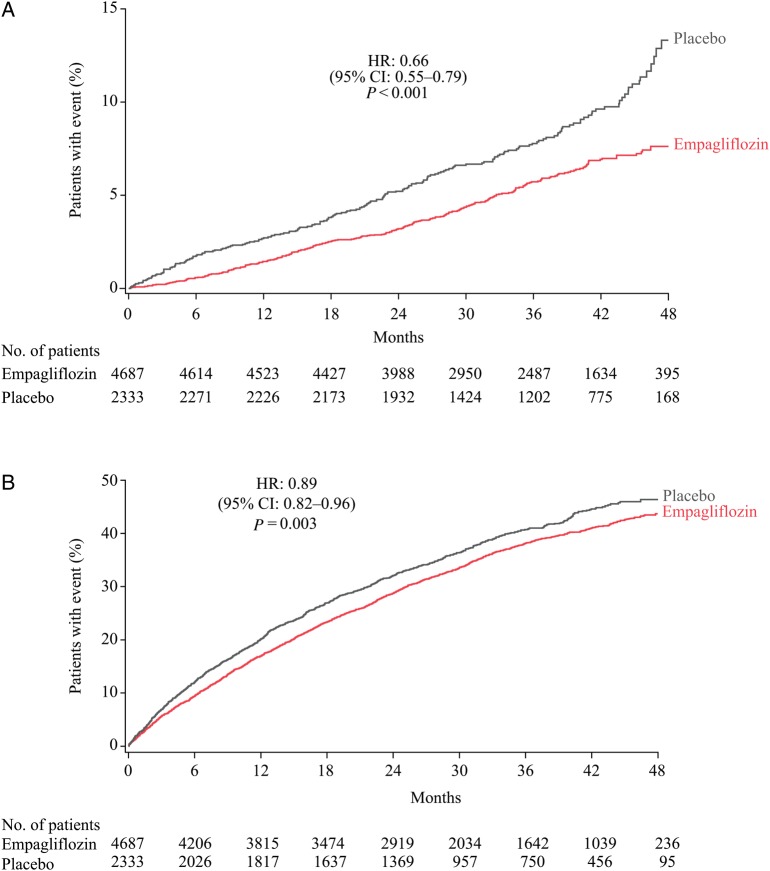
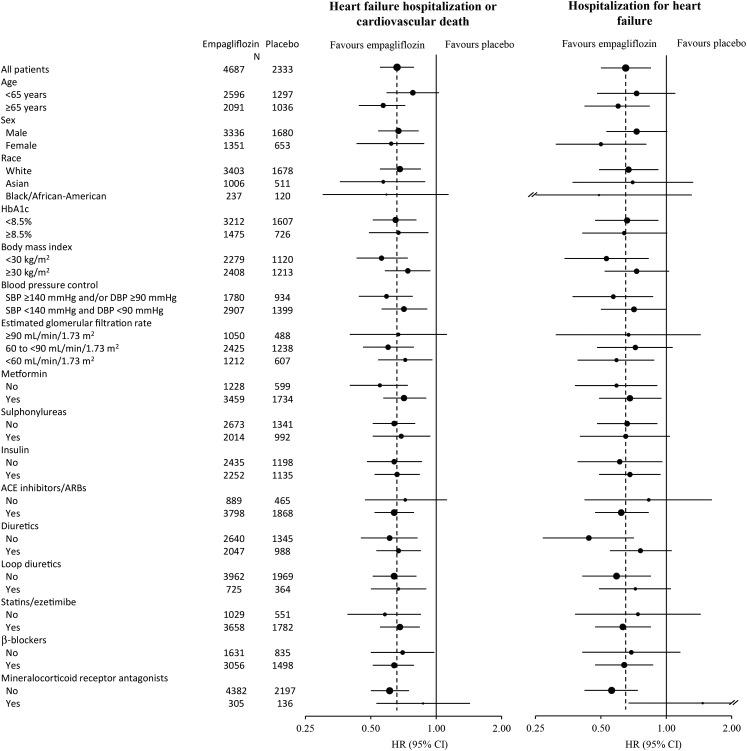
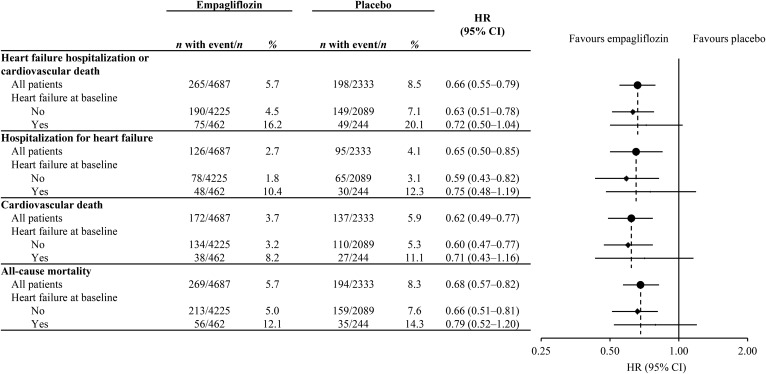
AIMS: We previously reported that in the EMPA-REG OUTCOME(®) trial, empagliflozin added to standard of care reduced the risk of 3-point major adverse cardiovascular events, cardiovascular and all-cause death, and hospitalization for heart failure in patients with type 2 diabetes and high cardiovascular risk. We have now further investigated heart failure outcomes in all patients and in subgroups, including patients with or without baseline heart failure. METHODS AND RESULTS: Patients were randomized to receive empagliflozin 10 mg, empagliflozin 25 mg, or placebo. Seven thousand and twenty patients were treated; 706 (10.1%) had heart failure at baseline. Heart failure hospitalization or cardiovascular death occurred in a significantly lower percentage of patients treated with empagliflozin [265/4687 patients (5.7%)] than with placebo [198/2333 patients (8.5%)] [hazard ratio, HR: 0.66 (95% confidence interval: 0.55-0.79); P < 0.001], corresponding to a number needed to treat to prevent one heart failure hospitalization or cardiovascular death of 35 over 3 years. Consistent effects of empagliflozin were observed across subgroups defined by baseline characteristics, including patients with vs. without heart failure, and across categories of medications to treat diabetes and/or heart failure. Empagliflozin improved other heart failure outcomes, including hospitalization for or death from heart failure [2.8 vs. 4.5%; HR: 0.61 (0.47-0.79); P < 0.001] and was associated with a reduction in all-cause hospitalization [36.8 vs. 39.6%; HR: 0.89 (0.82-0.96); P = 0.003]. Serious adverse events and adverse events leading to discontinuation were reported by a higher proportion of patients with vs. without heart failure at baseline in both treatment groups, but were no more common with empagliflozin than with placebo. CONCLUSION: In patients with type 2 diabetes and high cardiovascular risk, empagliflozin reduced heart failure hospitalization and cardiovascular death, with a consistent benefit in patients with and without baseline heart failure.
Overview
The claims and statistics of this paper haven’t been checked yet.
Free: it reads the open-access text and checks the first 5 claims that cite a source we can check. Create a free account to check every claim.
Integrity signals
Registry
Cites
Statistics
Figures
Verification
Claims the paper makes
The claims and statistics of this paper haven’t been checked yet.
Free: it reads the open-access text and checks the first 5 claims that cite a source we can check. Create a free account to check every claim.
Claims other papers make about this one
Each is checked against this paper’s own text: does it say what the citing paper says it does?
The source backs part of the claim, not all of it — or backs it for a different population, condition or comparison.
In the citing paper
“Little is known about the effect of SGLT2 inhibitors on the broad spectrum of both inpatient and outpatient worsening heart failure events, because these were not documented in trials with these drugs in type 2 diabetes.1–5”
From Effect of Empagliflozin on the Clinical Stability of Patients With Heart Failure and a Reduced Ejection Fraction: The EMPEROR-Reduced Trial (2021) · cites this paper as [1]
Experimental — accuracy not yet measuredThe source backs part of the claim, not all of it — or backs it for a different population, condition or comparison.
In the citing paper
“Recent cardiovascular outcomes trials demonstrate that therapies that inhibit sodium glucose cotransporter (SGLT)2 may reduce heart failure morbidity and mortality and slow decline in renal function (7,8,23,42,43).”
From Evaluation of renal and cardiovascular protection mechanisms of SGLT2 inhibitors: model-based analysis of clinical data (2018) · cites this paper as [8]
Experimental — accuracy not yet measuredThe cited source says what the claim attributes to it.
In the citing paper
“Sodium-glucose cotransporter 2 (SGLT2) inhibitors have been shown to reduce the risk of hospitalizations for heart failure in 8 large-scale trials, including those that focused on type 2 diabetes, heart failure with a reduced ejection fraction, and chronic kidney disease.1–8”
From Effect of Empagliflozin on the Clinical Stability of Patients With Heart Failure and a Reduced Ejection Fraction: The EMPEROR-Reduced Trial (2021) · cites this paper as [1]
The cited source says what the claim attributes to it.
In the citing paper
“hospitalizations for heart failure (2.7% versus 4.1%; 35% RRR)”
From Clinical management of stable coronary artery disease in patients with type 2 diabetes mellitus: a scientific statement from the American Heart Association (2020) · cites this paper as [219]
Self-check
Percentages, sums and reported differences re-computed from the paper’s own numbers.
The self-check needs the paper’s full text.
Citations
Cites
Empagliflozin, Cardiovascular Outcomes, and Mortality in Type 2 Diabetes
Zinman, B., Wanner, C., Lachin, J. M., Fitchett, D., Bluhmki, E., Hantel, S., Mattheus, M., Devins, T., Johansen, O. E., Woerle, H. J., et al. (2015) · New England Journal of Medicine · doi:10.1056/nejmoa1504720 · Cited by 12,315
Self-citationESC Guidelines for the diagnosis and treatment of acute and chronic heart failure 2012
Authors/Task Force Members, McMurray, J. J. V., Adamopoulos, S., Anker, S. D., Auricchio, A., Böhm, M., Dickstein, K., Falk, V., Filippatos, G., Fonseca, C., et al. (2012) · European Heart Journal · doi:10.1093/eurheartj/ehs104 · Cited by 6,879
Saxagliptin and cardiovascular outcomes in patients with type 2 diabetes mellitus
Scirica, B. M., Bhatt, D. L., Braunwald, E., Steg, P. G., Davidson, J., Hirshberg, B., Ohman, P., Frederich, R., Wiviott, S. D., Hoffman, E. B., et al. (2013) · New England Journal of Medicine · doi:10.1056/nejmoa1307684 · Cited by 3,470
ESC Guidelines for the Diagnosis and Treatment of Acute and Chronic Heart Failure 2012
Authors/Task Force Members, McMurray, J. J. V., Adamopoulos, S., Anker, S. D., Auricchio, A., Böhm, M., Dickstein, K., Falk, V., Filippatos, G., Fonseca, C., et al. (2012) · European Journal of Heart Failure · doi:10.1093/eurjhf/hfs105 · Cited by 2,644
(2013) · European Heart Journal · doi:10.1093/eurheartj/eht108 · Cited by 1,955
Cherney, D. Z. I., Perkins, B. A., Soleymanlou, N., Maione, M., Lai, V., Lee, A., Fagan, N. M., Woerle, H. J., Johansen, O. E., Broedl, U. C., et al. (2014) · Circulation · doi:10.1161/circulationaha.113.005081 · Cited by 1,329
Self-citationType 2 diabetes and incidence of cardiovascular diseases: a cohort study in 1.9 million people
Shah, A. D., Langenberg, C., Rapsomaniki, E., Denaxas, S., Pujades-Rodriguez, M., Gale, C. P., Deanfield, J., Smeeth, L., Timmis, A., & Hemingway, H. (2015) · The Lancet Diabetes & Endocrinology · doi:10.1016/s2213-8587(14)70219-0 · Cited by 1,225
Intensive glucose control and macrovascular outcomes in type 2 diabetes
Turnbull, F. M., Abraira, C., Anderson, R. J., Byington, R. P., Chalmers, J. P., Duckworth, W. C., Evans, G. W., Gerstein, H. C., Holman, R. R., Moritz, T. E., et al. (2009) · Diabetologia · doi:10.1007/s00125-009-1470-0 · Cited by 1,189 · cited 1×
“less intensive glucose control.(4) Furthermore, specific glucose-lowering medications have not been shown to improve heart failure outcomes and some may actually have deleterious effects.”
BackgroundMetabolic response to sodium-glucose cotransporter 2 inhibition in type 2 diabetic patients
Ferrannini, E., Muscelli, E., Frascerra, S., Baldi, S., Mari, A., Heise, T., Broedl, U. C., & Woerle, H.-J. (2014) · Journal of Clinical Investigation · doi:10.1172/jci72227 · Cited by 1,134
Self-citationRonco, C., McCullough, P., Anker, S. D., Anand, I., Aspromonte, N., Bagshaw, S. M., Bellomo, R., Berl, T., Bobek, I., Cruz, D. N., et al. (2010) · European Heart Journal · doi:10.1093/eurheartj/ehp507 · Cited by 1,104
Research works printed but not linked: 1
- Jordan J, Tank J, Heusser K, Heise T, Wanner C, Heer M, Macha S, Mattheus M, Lund SS, Woerle HJ, Broedl UC Empagliflozin has no discernible effect on muscle sympathetic nerve activity in patients with type 2 diabetes despite reductions in blood pressure and weight. Diabetes 2014; 63: A265 [1030-P].
Cited by
Items 501–600 of 947
Schernthaner, G., Lehmann, R., Prázný, M., Czupryniak, L., Ducena, K., Fasching, P., Janež, A., Karasik, A., Kempler, P., Martinka, E., et al. (2017) · Cardiovascular Diabetology · doi:10.1186/s12933-017-0622-7 · Cited by 15
New drugs: big changes in conservative heart failure therapy?
Berliner, D., & Bauersachs, J. K. (2018) · European Journal of Cardio-Thoracic Surgery · doi:10.1093/ejcts/ezy421 · Cited by 14
“[55], so empagliflozin is a promising substance for treatment of”
BackgroundThe pleiotropic cardiovascular effects of sodium-glucose cotransporter-2 inhibitors
Tanna, M. S., & Goldberg, L. R. (2021) · Current Opinion in Cardiology · doi:10.1097/hco.0000000000000922 · Cited by 14
“1%) of patients who had heart failure at baseline as well as those without [8].”
BackgroundFaridvand, Y., Nemati, M., Zamani-Gharehchamani, E., Nejabati, H. R., Zamani, A. R. N., Nozari, S., Safaie, N., Nouri, M., & Jodati, A. (2021) · Current Molecular Pharmacology · doi:10.2174/1874467214666211008142347 · Cited by 14
Teo, Y. N., Teo, Y. H., Syn, N. L. X., Yoong, C. S. Y., Cheong, A. J. Y., Wee, C. F., Lim, Y. C., Lee, C., Yeo, T., Chai, P., et al. (2021) · Clinical Drug Investigation · doi:10.1007/s40261-021-01098-3 · Cited by 14
Empagliflozin/metformin fixed-dose combination: a review in patients with type 2 diabetes
Hu, J., Zou, P., Zhang, S., Zhou, M., & Tan, X. (2016) · Expert Opinion on Pharmacotherapy · doi:10.1080/14656566.2016.1258062 · Cited by 14
“[40] demonstrated that the reduced heart failure hospitalization or cardiovascular death was observed in patients receiving empagliflozin (265/4687 patients, 5.”
BackgroundThe pro- or antiarrhythmic actions of polyunsaturated fatty acids and of cholesterol
Coronel, R. (2017) · Pharmacology & Therapeutics · doi:10.1016/j.pharmthera.2017.02.004 · Cited by 16
Diabetes and Mortality in Acute Coronary Syndrome: Findings from the Gulf COAST Registry
Shehab, A., Bhagavathula, A. S., Al‐Rasadi, K., Alshamsi, F. E., Alkaabi, J., Thani, K. B., & Mustafa, R. (2018) · Current Vascular Pharmacology · doi:10.2174/1570161116666181024094337 · Cited by 14
Mechanistic effects of SGLT2 inhibition on blood pressure in diabetes
Yaribeygi, H., Atkin, S. L., & Sahebkar, A. (2019) · Diabetes & Metabolic Syndrome Clinical Research & Reviews · doi:10.1016/j.dsx.2019.03.031 · Cited by 16
AHA/ACC/ESC/WHF Expert Consensus Document: Second Universal Definition of Heart Failure (2026)
Walsh, M. N., Køber, L., Sliwa, K. S., Adamo, M., Agarwal, A., Banerjee, A., Bozkurt, B., Čikeš, M., Damasceno, A., Desai, A. S., et al. (2026) · Journal of the American College of Cardiology · doi:10.1016/j.jacc.2026.05.036 · Cited by 16
The effect of SGLT2 inhibitors on cardiovascular events and renal function
Imprialos, K. P., Stavropoulos, K., Doumas, M. N., Karagiannis, A. I., & Athyros, V. G. (2017) · Expert Review of Clinical Pharmacology · doi:10.1080/17512433.2017.1370371 · Cited by 13
“Remarkably, patients on the active treatment were 39% and 11% less likely to die from HF and be hospitalized for any cause, respectively [118,119].”
BackgroundMcHugh, K. R., DeVore, A. D., Mentz, R. J., Edmonston, D. L., Green, J. B., & Hernandez, A. F. (2018) · Clinical Cardiology · doi:10.1002/clc.23054 · Cited by 13
Insuficiencia cardiaca y diabetes: la confrontación de dos grandes epidemias del siglo xxi
Formiga, F., Camafort, M., & Carrasco-Sánchez, F. J. (2019) · Revista Clínica Española · doi:10.1016/j.rce.2019.01.009 · Cited by 15
Nutrition, obesity, diabetes, and cardiovascular outcomes: a deadly association
Lüscher, T. F. (2020) · European Heart Journal · doi:10.1093/eurheartj/ehaa622 · Cited by 13
Sodium-glucose cotransporter type 2 inhibitors: successful running after two hares
Перепеч, Н. Б., & Mikhailova, I. E. (2021) · Russian Journal of Cardiology · doi:10.15829/1560-4071-2021-4534 · Cited by 14
Passantino, A., Rizzo, C., Scrutinio, D., & Palazzuoli, A. (2021) · Heart Failure Reviews · doi:10.1007/s10741-021-10186-7 · Cited by 13
Novel Treatments from Inhibition of the Intestinal Sodium–Hydrogen Exchanger 3
Kovesdy, C. P., Adebiyi, A., Rosenbaum, D. P., Jacobs, J. W., & Quarles, L. D. (2021) · International Journal of Nephrology and Renovascular Disease · doi:10.2147/ijnrd.s334024 · Cited by 13
“81 Sodium glucose cotransporter 2 may functionally interact with NHE3 in the proximal tubule, suggesting that SGLT2 inhibition could be an effective treatment for blood glucose effect-dependent and independent nephroprotective actions and reduction and cardiovascular mortality.”
Practical aspects of initiation and use of SGLT2 inhibitors: inpatient and outpatient perspectives
Салухов, В. В., Galstyan, G. R., & Ilyinskaya, Т. A. (2022) · Diabetes Mellitus · doi:10.14341/dm12855 · Cited by 15
Modern Approaches for the Treatment of Heart Failure: Recent Advances and Future Perspectives
Popa, I. P., Haba, M. Ș. C., Maranducă, M. A., Tănase, D. M., Șerban, D. N., Șerban, L., Iliescu, R., & Tudorancea, I. (2022) · Pharmaceutics · doi:10.3390/pharmaceutics14091964 · Cited by 19
“The PARADIGM-HF (Prospective Comparison of ARNI With ACEI to Determine Impact on Global Mortality and Morbidity in Heart Failure) trial showed promising results since the combination sacubitril–valsartan was superior to enalapril alone in decreasing the risk of death from cardiovascular causes, all-cause mortality, ho…”
BackgroundMansouri, M. H., Mansouri, P., Sadeghi, M., Hashemi, S. M., Khosravi, A., Behjati, M., Shahabi, J., Mansouri, A., Zavar, R., Amirpour, A., et al. (2023) · Clinical Cardiology · doi:10.1002/clc.24158 · Cited by 13
Sodium-Glucose Cotransporter 2 (SGLT2) Inhibitors and Stroke
Kimura, G. (2017) · Circulation Journal · doi:10.1253/circj.cj-17-0040 · Cited by 13
Stable but Progressive Nature of Heart Failure: Considerations for Primary Care Physicians
Anand, I. S. (2018) · American Journal of Cardiovascular Drugs · doi:10.1007/s40256-018-0277-0 · Cited by 15
Weeda, E. R., Cassarly, C. N., Brinton, D. L., Shirley, D. W., & Simpson, K. N. (2019) · Journal of Diabetes and its Complications · doi:10.1016/j.jdiacomp.2019.05.001 · Cited by 12
Diabetes Mellitus and Long-Term Risk for Heart Failure After Coronary Revascularization
Takeji, Y., Shiomi, H., Morimoto, T., Furukawa, Y., Ehara, N., Nakagawa, Y., Kato, T., Tazaki, J., Kato, E. T., Yaku, H., et al. (2020) · Circulation Journal · doi:10.1253/circj.cj-19-0980 · Cited by 12
Análisis bibliométrico de la producción científica peruana en cardiología y medicina cardiovascular
Vargas‐Fernández, R., Visconti-Lopez, F. J., Barón-Lozada, F. A., & Basualdo-Meléndez, G. W. (2021) · Archivos Peruanos de Cardiología y Cirugía Cardiovascular · doi:10.47487/apcyccv.v2i3.157 · Cited by 18
Die Biomarker BNP und NT‑proBNP
Oremek, G. M., Passek, K., Holzgreve, F., von der Eltz, V., & Dröge, J. (2023) · Zentralblatt für Arbeitsmedizin Arbeitsschutz und Ergonomie · doi:10.1007/s40664-022-00491-9 · Cited by 13
Fioretto, P., & Avogaro, A. (2017) · Expert Opinion on Pharmacotherapy · doi:10.1080/14656566.2017.1300253 · Cited by 13
“evidence on the implications of SGLT2 inhibition for cardiometabolic risk factors and CV disease [108,117].”
BackgroundMeasuring the unmeasurable: assessing the quality of science and scientists
Lüscher, T. F. (2018) · European Heart Journal · doi:10.1093/eurheartj/ehy295 · Cited by 12
Ejiri, K., Miyoshi, T., Nakamura, K., Sakuragi, S., Munemasa, M., Namba, S., Takaishi, A., & Ito, H. (2019) · BMJ Open · doi:10.1136/bmjopen-2018-026590 · Cited by 14
Ito, H., Matsumoto, S., Izutsu, T., Kusano, E., Nishio, S., Antoku, S., Yamasaki, T., Mori, T., Togane, M., Ando, S., et al. (2019) · Diabetes Metabolic Syndrome and Obesity · doi:10.2147/dmso.s221655 · Cited by 12
“the concomitant use of RAS inhibitors may contribute to the prognostic improvement.(37,38) However, the renal prognosis remains unclear in the elderly subjects and non-elderly subjects with a reduced”
BackgroundGlucose-lowering treatment in cardiovascular and peripheral artery disease
Suades, R., Cosentino, F., & Badimón, L. (2018) · Current Opinion in Pharmacology · doi:10.1016/j.coph.2018.03.001 · Cited by 12
Optimizing The Management of Obese HFpEF Phenotype: Can We Mind Both The Heart and The Kidney?
Upadhya, B., Amjad, A., & Stacey, R. B. (2019) · Journal of Cardiac Failure · doi:10.1016/j.cardfail.2019.11.018 · Cited by 12
Recent advances in the treatment of chronic heart failure
Buckley, L. F., & Shah, A. M. (2019) · F1000Research · doi:10.12688/f1000research.20447.1 · Cited by 15
on behalf of the DAPPER investigators and study coordinators, Yoshihara, F., Imazu, M., Hamasaki, T., Anzai, T., Yasuda, S., Ito, S., Yamamoto, H., Hashimura, K., Yasumura, Y., et al. (2018) · Cardiovascular Drugs and Therapy · doi:10.1007/s10557-018-6782-1 · Cited by 12
“1% of CHF cases [24], suggesting that SGLT2 inhibitors are mostly effective for preventing the deterioration of renal dysfunction and onset of cardiac dysfunction in T2D patients without CHF.”
BackgroundThe safety of empagliflozin plus metformin for the treatment of type 2 diabetes
Scheen, A. J. (2018) · Expert Opinion on Drug Safety · doi:10.1080/14740338.2018.1497159 · Cited by 15
Cardiovascular Safety of Antihyperglycemic Agents: “Do Good or Do No Harm”
Manolis, A. S., Manolis, T. A., & Manolis, A. S. (2018) · Drugs · doi:10.1007/s40265-018-0985-4 · Cited by 12
Kunutsor, S. K., Seidu, S., Dey, R. S., Baidoo, I. K., & Oulhaj, A. (2024) · Scandinavian Cardiovascular Journal · doi:10.1080/14017431.2024.2418086 · Cited by 13
Diabetes type 2 diabetes in the elderly – solved and unsolved questions
Саприна, Т. В., & Fajzulina, N. M. (2016) · Diabetes Mellitus · doi:10.14341/dm7884 · Cited by 14
“Эмпаглифлозин показал кардиопротективный эффект в итоговом исследовании EMPA-REG outcomes [54].”
Heart failure and diabetes: The confrontation of two major epidemics of the 21st century
Formiga, F., Camafort, M., & Carrasco-Sánchez, F. J. (2019) · Revista Clínica Española (English Edition) · doi:10.1016/j.rceng.2019.01.014 · Cited by 11
DECLARE-TIMI 58 trial in the context of EMPA-REG OUTCOME and CANVAS
Shestakova, M. V. (2020) · Diabetes Mellitus · doi:10.14341/dm10289 · Cited by 11
Tang, E. H. M., Wong, C. K. H., Lau, K. T. K., Fei, Y., & Cheung, B. M. Y. (2021) · Diabetes Research and Clinical Practice · doi:10.1016/j.diabres.2021.109071 · Cited by 13
Diabetes mellitus and heart failure: an update on pathophysiology and therapy
Potere, N., BUONO, M. G. D., Vecchié, A., Porreca, E., ABBATE, A., DENTALI, F., & Bonaventura, A. (2022) · Minerva Cardiology and Angiology · doi:10.23736/s2724-5683.22.05967-1 · Cited by 11
Novel Approaches to the Management of Diabetes Mellitus in Patients with Coronary Artery Disease
Oikonomou, E. K., Xenou, M., Zakynthinos, G. Ε., Tsaplaris, P., Lampsas, S., Bletsa, E., Gialamas, I., Kalogeras, K. I., Goliopoulou, A., Gounaridi, M. I., et al. (2023) · Current Pharmaceutical Design · doi:10.2174/1381612829666230703161058 · Cited by 12
Yadav, J., Ahsan, F., Panda, P., Mahmood, T., Ansari, V. A., & Shamim, A. (2024) · Current Diabetes Reviews · doi:10.2174/0115733998271026231127051545 · Cited by 13
Arnold, S. V., Yap, J. J. L., Lam, C. S. P., Tang, F., Tay, W. T., Teng, T. K., McGuire, D. K., Januzzi, J. L., Fonarow, G. C., Masoudi, F. A., et al. (2018) · Diabetes Obesity and Metabolism · doi:10.1111/dom.13511 · Cited by 12
Sciatti, E., Dallapellegrina, L., Metra, M., & Lombardi, C. (2019) · Journal of Cardiovascular Medicine · doi:10.2459/jcm.0000000000000850 · Cited by 12
Tamura, H., Kondo, Y., Ito, K., Hasebe, M., Satoh, S., & Terauchi, Y. (2022) · PLoS ONE · doi:10.1371/journal.pone.0262831 · Cited by 12
“However, it has been reported that an initial rapid decline of renal function leads to kidney failure [21].”
BackgroundArrieta, F., Iglesias, P., Pedro‐Botet, J., Becerra, A., Ortega, E., Obaya, J. C., Nubiola, A., Maldonado, G. F., Campos, M. D. M., Petrecca, R., et al. (2018) · Clínica e Investigación en Arteriosclerosis (English Edition) · doi:10.1016/j.artere.2018.05.002 · Cited by 16
Kolovos, S., Bellanca, L., Groyer, H., Rosano, G. M. C., Solé, A., Gaultney, J. G., & Linden, S. (2023) · ESC Heart Failure · doi:10.1002/ehf2.14470 · Cited by 11
“19,20 Considering the advantages in patients with history of HF, empagli fl ozin was investigated for its effect on chronic HF with or without T2DM in the EMPagli fl ozin outcomE tRial in Patients With chrOnic heaRt failure (EMPEROR) trial programme.”
BackgroundClinical impact of oral antidiabetic medications in heart failure patients
Palazzuoli, A., Ceccarelli, E., Ruocco, G. M., & Nuti, R. (2018) · Heart Failure Reviews · doi:10.1007/s10741-018-9669-0 · Cited by 12
Therapy to Obese Type 2 Diabetes Mellitus: How Far Will We Go Down the Wrong Road?
Heng, X.-P., Li, X., Li, L., Yang, L., Wang, Z.-T., & Huang, S.-P. (2018) · Chinese Journal of Integrative Medicine · doi:10.1007/s11655-018-3053-8 · Cited by 11
Cao, H., Liu, Y., Tian, Z., Lian, Y., Jia, J., Liu, M. R., & Dong, L. (2021) · Diabetes Research and Clinical Practice · doi:10.1016/j.diabres.2021.109033 · Cited by 12
Hsu, C., Hsuan, C., Liao, D., Chang, J. K.-J., Chang, A. J.-W., Hee, S., Lee, H.-L., & Teng, S. I. F. (2023) · Life · doi:10.3390/life13041024 · Cited by 15
“The benefit was consistent in patients with and without baseline HF [14].”
BackgroundSatoh, T., Yaoita, N., Nochioka, K., Tatebe, S., Hayashi, H., Yamamoto, S., Sato, H., Takahama, H., Suzuki, H., Terui, Y., et al. (2023) · ESC Heart Failure · doi:10.1002/ehf2.14515 · Cited by 10
Ostrominski, J. W., Lassen, M. C. H., Claggett, B. L., Miao, Z. M., Inzucchi, S. E., Docherty, K. F., Desai, A. S., Jhund, P. S., Køber, L., Ponikowski, P. P., et al. (2024) · European Heart Journal · doi:10.1093/eurheartj/ehae780 · Cited by 13
Self-citationCsatordai, M., Benkő, R., Matúz, M., Bor, A., Lengyel, C., & Doró, P. (2019) · Diabetic Medicine · doi:10.1111/dme.14117 · Cited by 10
Ovchinnikov, A. G., Borisov, A. A., Zherebchikova, K., Рябцева, О. Ю., Gvozdeva, A. D., Masenko, V. P., Ageev, F. T., & Boytsov, S. A. (2021) · Russian Journal of Cardiology · doi:10.15829/1560-4071-2021-4304 · Cited by 11
Benedetti, R., Chianese, U., Papulino, C., Scisciola, L., Cortese, M., Formisano, P., Gaudio, N. D., Cabaro, S., D’Esposito, V., Pesapane, A., et al. (2025) · European Journal of Heart Failure · doi:10.1002/ejhf.3566 · Cited by 11
Scheen, A. J. (2017) · Expert Opinion on Drug Metabolism & Toxicology · doi:10.1080/17425255.2017.1315102 · Cited by 10
“This potential risk of hospitalization for congestive heart failure, if confirmed in real life, could be reduced by the combination with dapagliflozin, because all SGLT2i exert a diuretic/natriuretic effect and a marked reduction of hospitalization for congestive heart failure has been reported with empagliflozin in E…”
BackgroundResultInfluentialRizos, C. V., Filippatos, T. D., & Elisaf, M. (2017) · Expert Opinion on Drug Metabolism & Toxicology · doi:10.1080/17425255.2018.1418325 · Cited by 10
Place des inhibiteurs des SGLT2 dans le traitement du patient diabétique de type 2
Scheen, A. J. (2018) · Médecine des Maladies Métaboliques · doi:10.1016/s1957-2557(18)30005-1 · Cited by 15
SGLT2 inhibitors: a new pillar of the heart failure regimen
DeSa, T. B., & Gong, T. (2021) · Reviews in Cardiovascular Medicine · doi:10.31083/j.rcm2204133 · Cited by 11
Jhalani, N. B. (2022) · Advances in Therapy · doi:10.1007/s12325-022-02169-3 · Cited by 14
Preventing and Treating Heart Failure with Sodium-Glucose Co-Transporter 2 Inhibitors
Vaduganathan, M., & Januzzi, J. L. (2019) · The American Journal of Medicine · doi:10.1016/j.amjmed.2019.08.008 · Cited by 11
Effects of glucose-lowering drugs on cardiovascular outcomes in patients with type 2 diabetes
Tomlinson, B., Hu, M., Zhang, Y., Chan, P., & Liu, Z.-M. (2016) · Expert Opinion on Drug Metabolism & Toxicology · doi:10.1080/17425255.2016.1234608 · Cited by 10
“001) and there was a consistent benefit in patients with and without baseline heart failure [14].”
BackgroundEmpagliflozin across the stages of diabetic heart disease
Paneni, F. (2017) · European Heart Journal · doi:10.1093/eurheartj/ehx519 · Cited by 11
“impact of empagliflozin on HF-related outcomes—showed that empaglifozin reduces the rate of HHF and CV death, with a consistent benefit in patients with and without baseline HF.(7) Whether”
BackgroundInfluentialButler, J., & Anker, S. D. (2017) · Circulation · doi:10.1161/circulationaha.117.029284 · Cited by 10
Lee, S. W., Park, H., Lee, M. Y., Lee, H., & Kang, E. S. (2025) · Endocrinology and Metabolism · doi:10.3803/enm.2024.2223 · Cited by 9
“These cardiovascular benefits have accelerated the clinical adoption of SGLT2 inhibitors [4,9-11].”
Pepin, M. E., Gong, X., Schulze, A., & Backs, J. (2025) · EMBO Molecular Medicine · doi:10.1038/s44321-025-00343-y · Cited by 9
“…(SGLT2i ’ s) were fi rst identi fi ed as cardioprotective agents as a result of FDA-mandated cardiovascular outcomes trials (CVOTs), which found reductions in cardiovascular endpoints independent of their glucose-lowering effects (Anker et al, 2021; Fitchett et al, 2016; Fathi et al, 2021).”
Naegele, M., Flammer, A. J., Enseleit, F., & Ruschitzka, F. T. (2016) · Swiss Medical Weekly · doi:10.4414/smw.2016.14295 · Cited by 9
Schernthaner, G., Jarvis, S., Lotan, C., Prázný, M., Wanner, C., & Wascher, T. C. (2017) · Therapeutics and Clinical Risk Management · doi:10.2147/tcrm.s121804 · Cited by 9
“Empagliflozin and heart failure The reductions in CV death, HHF, and all-cause mortality in the empagliflozin cohort in the EMPA-REG OUTCOME study occurred regardless of the presence or absence of preexisting heart failure at baseline compared to those in the placebo cohort (Table 2).(41) Again, the effect of empaglif…”
InfluentialSelf-citationAdipose tissue–heart crosstalk as a novel target for treatment of cardiometabolic diseases
Smeir, E., Kintscher, U., & Foryst‐Ludwig, A. (2021) · Current Opinion in Pharmacology · doi:10.1016/j.coph.2021.07.017 · Cited by 9
Pharmacological treatment options for heart failure with reduced ejection fraction: A 2022 update
Hellenkamp, K., Nolte, K., & von Haehling, S. (2022) · Expert Opinion on Pharmacotherapy · doi:10.1080/14656566.2022.2047647 · Cited by 9
“the history of HF was based on medical record review rather than on physical, laboratory, or imaging results[25].”
BackgroundExploring Promising Therapies for Non-Alcoholic Fatty Liver Disease: A ClinicalTrials.gov Analysis
Hegazi, O. E., Alalalmeh, S. O., Shahwan, M. J., Jairoun, A. A., Alourfi, M. M., Bokhari, G., Alkhattabi, A., Alsharif, S., Aljehani, M. A., Alsabban, A., et al. (2024) · Diabetes Metabolic Syndrome and Obesity · doi:10.2147/dmso.s448476 · Cited by 9
“21 The intricate relationship between T2DM and NAFLD has been conclusively identified.”
BackgroundWang, T., Pate, V., Wyss, R., Buse, J. B., Kosorok, M. R., & Stürmer, T. (2024) · American Journal of Epidemiology · doi:10.1093/aje/kwae322 · Cited by 10
Fung, E., Hui, E., Yang, X., Lui, L., Cheng, K. F., Li, Q., Fan, Y., Sahota, D. S., Ma, B. H., Lee, J. S. W., et al. (2018) · Frontiers in Physiology · doi:10.3389/fphys.2018.00347 · Cited by 10
“…347 McMurray et al., 2014, ivabradine for tachycardia in HFrEF Fox et al., 2008, empagliflozin for diabetic patients with HF Zinman et al., 2015; Fitchett et al., 2016), improve symptoms and function (e.g., cardiac resynchronization therapy for eligible patients; Madhavan et al., 2017; Mulpuru…”
BackgroundHeart failure and diabetes mellitus: insight into comorbidity
Petunina, N. A., Trukhin, I. V., Trukhina, L. V., Sizova, Z. M., & Zakharova, V. L. (2019) · Diabetes Mellitus · doi:10.14341/dm9784 · Cited by 12
Bazoukis, G., Papadatos, S. S., Thomopoulos, C., Tse, G., Cheilidis, S., Tsioufis, K. P., & Farmakis, D. T. (2021) · PubMed Central · doi:10.11909/j.issn.1671-5411.2021.10.003 · Cited by 19
“The SGLT2i that were used in the analyses included: canagliflozin (two studies),([16,22]) dapagliflozin (two studies),([20,21]) empagliflozin (three studies),([8,11,17]) ertugliflozin (one study),([18]) and sotagliflozin (one study).”
MethodDrug Development Strategy for Type 2 Diabetes: Targeting Positive Energy Balances
Liu, Z., & Yang, B. (2018) · Current Drug Targets · doi:10.2174/1389450120666181217111500 · Cited by 11
von Lueder, T. G., Atar, D., Agewall, S., Jensen, J. K., Hopper, I., Kotecha, D., Mentz, R. J., Kim, M. H., & Serebruany, V. L. (2019) · American Journal of Therapeutics · doi:10.1097/mjt.0000000000000883 · Cited by 9
Jürgens, M., Schou, M., Hasbak, P., Kjær, A., Wolsk, E., Zerahn, B., Wiberg, M., Brandt, N., Gæde, P., Rossing, P. R., et al. (2019) · BMJ Open · doi:10.1136/bmjopen-2019-029098 · Cited by 9
Self-citationMonteiro, P. F., Aguíar, C., Matos, P., Silva‐Nunes, J., Birne, R., Branco, P. Q., Calado, J., Melo, M., & Polónia, J. J. (2019) · Revista Portuguesa de Cardiologia · doi:10.1016/j.repc.2019.02.008 · Cited by 13
Wamil, M., McMurray, J. J. V., Scott, C. A. B., Coleman, R. L., Sun, Y., Standl, E., Rydén, L., & Holman, R. R. (2020) · Diabetes Research and Clinical Practice · doi:10.1016/j.diabres.2020.108488 · Cited by 10
Understanding the cardiovascular risk with non-insulin antidiabetic drugs
Athyros, V. G., Imprialos, K. P., Stavropoulos, K., Sahinidis, A., & Doumas, M. N. (2019) · Expert Opinion on Drug Safety · doi:10.1080/14740338.2019.1586881 · Cited by 10
Dhindsa, D. S., Mehta, A., Sandesara, P. B., Thobani, A., Brandt, S., & Sperling, L. S. (2019) · Current Cardiology Reports · doi:10.1007/s11886-019-1197-6 · Cited by 9
Outcome-Studien zu SGLT-2-Inhibitoren
Seufert, J., & Laubner, K. (2019) · Der Internist · doi:10.1007/s00108-019-0656-x · Cited by 10
Diving into the Unknown: Sodium–Glucose Cotransporter-2 Inhibitors in Heart Failure without Diabetes
Seferovic, P. M., Seferović, J. P., & Polovina, M. M. (2019) · European Journal of Heart Failure · doi:10.1002/ejhf.1500 · Cited by 9
Cosentino, N., Trombara, F., Metrio, M. D., Molinari, C., Genovese, S., Pontone, G., & Marenzi, G. (2025) · Pharmaceuticals · doi:10.3390/ph18081202 · Cited by 8
“SGLT2i demonstrate a faster onset of cardiovascular benefit, with reductions in heart failure hospitalizations and cardiovascular death observed within weeks in trials [23–32].”
VESTIBULAR DYSFUNCTIONS IN CHRONIC BRAIN ISCHEMIA IN THE POST COVID PERIOD
Stoyanov, A. N., Mashchenko, S. S., Kalashnikov, V. I., Vastyanov, R. S., Pulyk, A. R., Andreeva, T. O., & Kolesnik, O. O. (2023) · Wiadomości Lekarskie · doi:10.36740/wlek202303121 · Cited by 13
Herashchenko, A. S., Fedorov, S. V., Bielinskyi, M. V., Seredyuk, N. M., & Henyk, B. L. (2023) · INTERNATIONAL JOURNAL OF ENDOCRINOLOGY (Ukraine) · doi:10.22141/2224-0721.19.5.2023.1300 · Cited by 8
Tsur, A., Leibowitz, G., Cohen, M. J., Cahn, A., & Pollack, R. M. (2025) · Diabetes Obesity and Metabolism · doi:10.1111/dom.16545 · Cited by 9
Bhatt, A. S., Luo, N., Solomon, N. C., Pagidipati, N. J., Ambrosio, G., Green, J. B., McGuire, D. K., Standl, E., Cornel, J. H., Halvorsen, S., et al. (2019) · American Heart Journal · doi:10.1016/j.ahj.2019.08.016 · Cited by 8
Tanaka, A., & Node, K. (2020) · Diabetology International · doi:10.1007/s13340-020-00445-7 · Cited by 9
“Only about 10% of the total patients had a history of HF, but empagliflozin was statistically shown to improve HF-related outcomes independently of history of HF [25].”
BackgroundRavindran, S. G., Kakarla, M., Gambo, M. A., Salama, M. Y., Ismail, N. H., Tavalla, P., Uppal, P., Mohammed, S. A., Rajashekar, S., & Hamid, P. (2022) · Cureus · doi:10.7759/cureus.25476 · Cited by 9
“Besides glucose-lowering actions, recent trials have indicated that SGLT-2i have demonstrated its efficacy in reducing the adverse cardiovascular (CV) and renal outcomes in diabetic patients [8-11].”
BackgroundBecher, P. M., Savarese, G., Benson, L., Dahlström, U., Karlström, P., Mol, P. G. M., Metra, M., Bhatt, D. L., Pitt, B., & Lund, L. H. (2023) · European Heart Journal - Cardiovascular Pharmacotherapy · doi:10.1093/ehjcvp/pvad012 · Cited by 9
Kotit, S. (2023) · Global Cardiology Science and Practice · doi:10.21542/gcsp.2023.14 · Cited by 8
Jhund, P. S. (2023) · Diabetes Obesity and Metabolism · doi:10.1111/dom.15171 · Cited by 8
EMPA-REG OUTCOME: The Endocrinologist's Point of View
Perreault, L. (2017) · The American Journal of Medicine · doi:10.1016/j.amjmed.2017.04.005 · Cited by 10
Effects of glucose-lowering agents on ischemic stroke
Avgerinos, K. I., & Τζιόμαλος, Κ. (2017) · World Journal of Diabetes · doi:10.4239/wjd.v8.i6.270 · Cited by 8
Dahlström, U. (2019) · Cardiovascular medicine · doi:10.1007/978-3-319-98184-0_1 · Cited by 8
Metadata
- Authors
- Fitchett, D., Zinman, B., Wanner, C., Lachin, J. M., Hantel, S., Salsali, A., Johansen, O. E., Woerle, H. J., Broedl, U. C., & Inzucchi, S. E.
- Affiliations
- St. Michael's Hospital (CA)
- Mount Sinai Hospital (CA)
- University of Würzburg (DE)
- George Washington University (US)
- Boehringer Ingelheim (Germany) (DE)
- Boehringer Ingelheim (United States) (US)
- Boehringer Ingelheim (Norway) (NO)
- Yale University (US)
- Corresponding author
- Fitchett, David
- ORCID
- Venue
- European Heart Journal
- Publisher
- Oxford University Press (OUP)
- Published
- 2016-01-26
- Volume
- 37
- Issue
- 19
- Pages
- 1526-1534
- ISSN
- 0195-668X (ISSN-L)
- 1522-9645
- PMC
- PMC4872285
- OpenAlex
- W2273304042
- Cited by
- 907
- References
- 29
- Citations by year
- 2026: 18 · 2025: 30 · 2024: 32 · 2023: 55 · 2022: 75 · 2021: 115 · 2020: 102 · 2019: 142 · 2018: 124 · 2017: 131 · 2016: 81
- FWCI
- 160.00
- Type
- journal article
- Language
- en
- Open access
- hybrid
- doi.org
- Licence
- cc-by-nc
- Locations
- European Heart Journal (publishedVersion, cc-by-nc)
- Europe PMC (PubMed Central) (publishedVersion, cc-by-nc)
- PubMed Central (publishedVersion, cc-by-nc)
- PubMed (publishedVersion)
- Lirias (KU Leuven) (submittedVersion, other-oa)
- Docusalut (Conselleria de Salut i Consum del Govern de les Illes Balears) (submittedVersion, cc-by-nc)
- Hispana (submittedVersion, cc-by-nc)
- HighWire Press Open Archive (submittedVersion)
- Online Publication Service of Würzburg University (Würzburg University) (submittedVersion, cc-by-nc)
- Funders
- Boehringer Ingelheim and Eli Lilly and Company
- Topics
- Health Sciences › Medicine › Endocrinology, Diabetes and Metabolism › Diabetes Treatment and Management
- Health Sciences › Medicine › Cardiology and Cardiovascular Medicine › Heart Failure Treatment and Management
- Health Sciences › Medicine › Cardiology and Cardiovascular Medicine › Cardiovascular Function and Risk Factors
- Keywords
- empagliflozin, type 2 diabetes, heart failure hospitalization, cardiovascular mortality, SGLT2 inhibitors, EMPA-REG OUTCOME trial, high cardiovascular risk, all-cause hospitalization, serious adverse events, subgroup analysis, number needed to treat, cardiovascular risk reduction, heart failure treatment, drug discontinuation
About these checks
Registry, retraction, Cites and statistics results are computed, not judged, with one exception: a printed reference that no index lists is read once by a model before it counts as a citation error. Claims are extracted by a model and kept only when their quote appears verbatim in the text; each cited source is then checked, with a model’s help, for whether it says what the claim relies on. Those verdicts can be wrong — read the claim’s quote and the cited source before relying on one.
Statistics and arithmetic are recomputed, not judged.
Confidence bands are shown only for fields calibrated on our annotated test set. None is calibrated yet, so no band is shown.
What counts as a claim ›How we measure confidence ›How we check this ›
Are you an author, or do you see a problem with this page? Request a review
Data sources
Bibliographic data: Semantic Scholar, OpenAlex, Crossref.
Contains information from the Semantic Scholar Academic Graph Datasets, made available under the ODC Attribution License (ODC-BY 1.0).
Semantic Scholar’s data is described in: Kinney, R., et al. (2023). The Semantic Scholar Open Data Platform. arXiv:2301.10140.
