

Heart failure outcomes with empagliflozin in patients with type 2 diabetes at high cardiovascular risk: results of the EMPA-REG OUTCOME ® trial
Open accessThe DOI matches its Crossref record; 29 of the 29 references it cites were found in a registry or an index.
Abstract
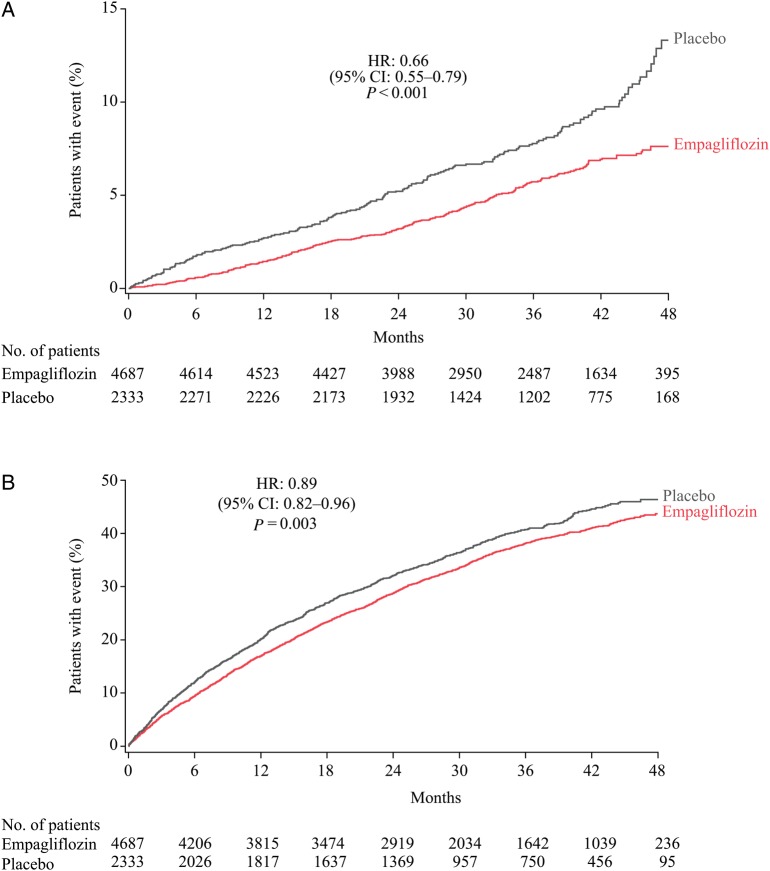
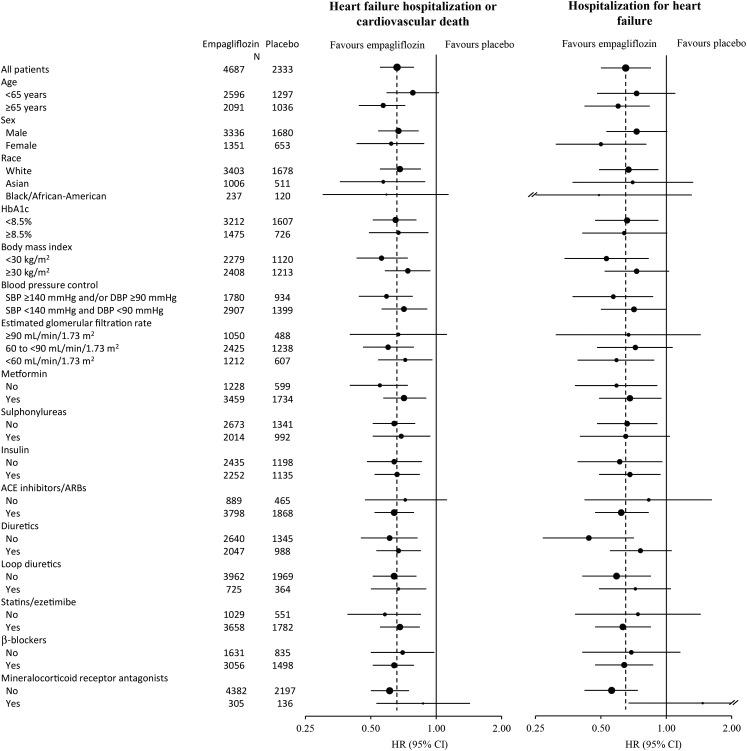
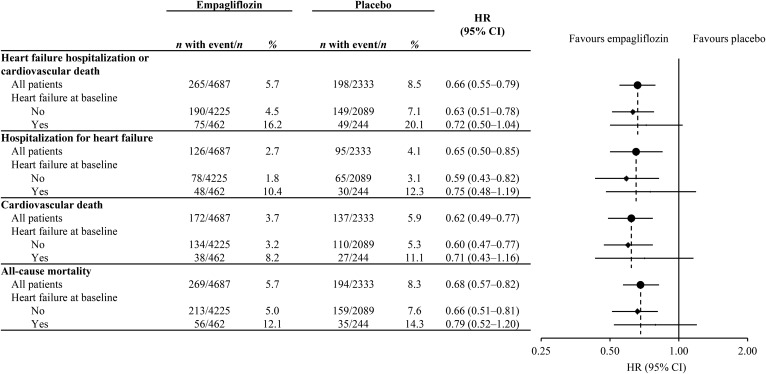
AIMS: We previously reported that in the EMPA-REG OUTCOME(®) trial, empagliflozin added to standard of care reduced the risk of 3-point major adverse cardiovascular events, cardiovascular and all-cause death, and hospitalization for heart failure in patients with type 2 diabetes and high cardiovascular risk. We have now further investigated heart failure outcomes in all patients and in subgroups, including patients with or without baseline heart failure. METHODS AND RESULTS: Patients were randomized to receive empagliflozin 10 mg, empagliflozin 25 mg, or placebo. Seven thousand and twenty patients were treated; 706 (10.1%) had heart failure at baseline. Heart failure hospitalization or cardiovascular death occurred in a significantly lower percentage of patients treated with empagliflozin [265/4687 patients (5.7%)] than with placebo [198/2333 patients (8.5%)] [hazard ratio, HR: 0.66 (95% confidence interval: 0.55-0.79); P < 0.001], corresponding to a number needed to treat to prevent one heart failure hospitalization or cardiovascular death of 35 over 3 years. Consistent effects of empagliflozin were observed across subgroups defined by baseline characteristics, including patients with vs. without heart failure, and across categories of medications to treat diabetes and/or heart failure. Empagliflozin improved other heart failure outcomes, including hospitalization for or death from heart failure [2.8 vs. 4.5%; HR: 0.61 (0.47-0.79); P < 0.001] and was associated with a reduction in all-cause hospitalization [36.8 vs. 39.6%; HR: 0.89 (0.82-0.96); P = 0.003]. Serious adverse events and adverse events leading to discontinuation were reported by a higher proportion of patients with vs. without heart failure at baseline in both treatment groups, but were no more common with empagliflozin than with placebo. CONCLUSION: In patients with type 2 diabetes and high cardiovascular risk, empagliflozin reduced heart failure hospitalization and cardiovascular death, with a consistent benefit in patients with and without baseline heart failure.
Overview
The claims and statistics of this paper haven’t been checked yet.
Free: it reads the open-access text and checks the first 5 claims that cite a source we can check. Create a free account to check every claim.
Integrity signals
Registry
Cites
Statistics
Figures
Verification
Claims the paper makes
The claims and statistics of this paper haven’t been checked yet.
Free: it reads the open-access text and checks the first 5 claims that cite a source we can check. Create a free account to check every claim.
Claims other papers make about this one
Each is checked against this paper’s own text: does it say what the citing paper says it does?
The source backs part of the claim, not all of it — or backs it for a different population, condition or comparison.
In the citing paper
“Little is known about the effect of SGLT2 inhibitors on the broad spectrum of both inpatient and outpatient worsening heart failure events, because these were not documented in trials with these drugs in type 2 diabetes.1–5”
From Effect of Empagliflozin on the Clinical Stability of Patients With Heart Failure and a Reduced Ejection Fraction: The EMPEROR-Reduced Trial (2021) · cites this paper as [1]
Experimental — accuracy not yet measuredThe source backs part of the claim, not all of it — or backs it for a different population, condition or comparison.
In the citing paper
“Recent cardiovascular outcomes trials demonstrate that therapies that inhibit sodium glucose cotransporter (SGLT)2 may reduce heart failure morbidity and mortality and slow decline in renal function (7,8,23,42,43).”
From Evaluation of renal and cardiovascular protection mechanisms of SGLT2 inhibitors: model-based analysis of clinical data (2018) · cites this paper as [8]
Experimental — accuracy not yet measuredThe cited source says what the claim attributes to it.
In the citing paper
“Sodium-glucose cotransporter 2 (SGLT2) inhibitors have been shown to reduce the risk of hospitalizations for heart failure in 8 large-scale trials, including those that focused on type 2 diabetes, heart failure with a reduced ejection fraction, and chronic kidney disease.1–8”
From Effect of Empagliflozin on the Clinical Stability of Patients With Heart Failure and a Reduced Ejection Fraction: The EMPEROR-Reduced Trial (2021) · cites this paper as [1]
The cited source says what the claim attributes to it.
In the citing paper
“hospitalizations for heart failure (2.7% versus 4.1%; 35% RRR)”
From Clinical management of stable coronary artery disease in patients with type 2 diabetes mellitus: a scientific statement from the American Heart Association (2020) · cites this paper as [219]
Self-check
Percentages, sums and reported differences re-computed from the paper’s own numbers.
The self-check needs the paper’s full text.
Citations
Cites
Empagliflozin, Cardiovascular Outcomes, and Mortality in Type 2 Diabetes
Zinman, B., Wanner, C., Lachin, J. M., Fitchett, D., Bluhmki, E., Hantel, S., Mattheus, M., Devins, T., Johansen, O. E., Woerle, H. J., et al. (2015) · New England Journal of Medicine · doi:10.1056/nejmoa1504720 · Cited by 12,315
Self-citationESC Guidelines for the diagnosis and treatment of acute and chronic heart failure 2012
Authors/Task Force Members, McMurray, J. J. V., Adamopoulos, S., Anker, S. D., Auricchio, A., Böhm, M., Dickstein, K., Falk, V., Filippatos, G., Fonseca, C., et al. (2012) · European Heart Journal · doi:10.1093/eurheartj/ehs104 · Cited by 6,879
Saxagliptin and cardiovascular outcomes in patients with type 2 diabetes mellitus
Scirica, B. M., Bhatt, D. L., Braunwald, E., Steg, P. G., Davidson, J., Hirshberg, B., Ohman, P., Frederich, R., Wiviott, S. D., Hoffman, E. B., et al. (2013) · New England Journal of Medicine · doi:10.1056/nejmoa1307684 · Cited by 3,470
ESC Guidelines for the Diagnosis and Treatment of Acute and Chronic Heart Failure 2012
Authors/Task Force Members, McMurray, J. J. V., Adamopoulos, S., Anker, S. D., Auricchio, A., Böhm, M., Dickstein, K., Falk, V., Filippatos, G., Fonseca, C., et al. (2012) · European Journal of Heart Failure · doi:10.1093/eurjhf/hfs105 · Cited by 2,644
(2013) · European Heart Journal · doi:10.1093/eurheartj/eht108 · Cited by 1,955
Cherney, D. Z. I., Perkins, B. A., Soleymanlou, N., Maione, M., Lai, V., Lee, A., Fagan, N. M., Woerle, H. J., Johansen, O. E., Broedl, U. C., et al. (2014) · Circulation · doi:10.1161/circulationaha.113.005081 · Cited by 1,329
Self-citationType 2 diabetes and incidence of cardiovascular diseases: a cohort study in 1.9 million people
Shah, A. D., Langenberg, C., Rapsomaniki, E., Denaxas, S., Pujades-Rodriguez, M., Gale, C. P., Deanfield, J., Smeeth, L., Timmis, A., & Hemingway, H. (2015) · The Lancet Diabetes & Endocrinology · doi:10.1016/s2213-8587(14)70219-0 · Cited by 1,225
Intensive glucose control and macrovascular outcomes in type 2 diabetes
Turnbull, F. M., Abraira, C., Anderson, R. J., Byington, R. P., Chalmers, J. P., Duckworth, W. C., Evans, G. W., Gerstein, H. C., Holman, R. R., Moritz, T. E., et al. (2009) · Diabetologia · doi:10.1007/s00125-009-1470-0 · Cited by 1,189 · cited 1×
“less intensive glucose control.(4) Furthermore, specific glucose-lowering medications have not been shown to improve heart failure outcomes and some may actually have deleterious effects.”
BackgroundMetabolic response to sodium-glucose cotransporter 2 inhibition in type 2 diabetic patients
Ferrannini, E., Muscelli, E., Frascerra, S., Baldi, S., Mari, A., Heise, T., Broedl, U. C., & Woerle, H.-J. (2014) · Journal of Clinical Investigation · doi:10.1172/jci72227 · Cited by 1,134
Self-citationRonco, C., McCullough, P., Anker, S. D., Anand, I., Aspromonte, N., Bagshaw, S. M., Bellomo, R., Berl, T., Bobek, I., Cruz, D. N., et al. (2010) · European Heart Journal · doi:10.1093/eurheartj/ehp507 · Cited by 1,104
Research works printed but not linked: 1
- Jordan J, Tank J, Heusser K, Heise T, Wanner C, Heer M, Macha S, Mattheus M, Lund SS, Woerle HJ, Broedl UC Empagliflozin has no discernible effect on muscle sympathetic nerve activity in patients with type 2 diabetes despite reductions in blood pressure and weight. Diabetes 2014; 63: A265 [1030-P].
Cited by
Items 401–500 of 947
Polsinelli, V. B., & Shah, S. J. (2017) · Expert Opinion on Pharmacotherapy · doi:10.1080/14656566.2017.1288717 · Cited by 25
“hospitalization and progression, suggesting a potential benefit in HFpEF [87].”
BackgroundSGLT2 inhibitors in T2D and associated comorbidities — differentiating within the class
Schernthaner, G., Drexel, H., Moshkovich, E., Žilaitienė, B., Martinka, E., Czupryniak, L., Várkonyi, T. T., Janež, A., Ducena, K., Lalic, K. S., et al. (2019) · BMC Endocrine Disorders · doi:10.1186/s12902-019-0387-y · Cited by 24
Cardioprotective diabetes drugs: what cardiologists need to know
Brown, J. M., & Everett, B. M. (2019) · Cardiovascular Endocrinology & Metabolism · doi:10.1097/xce.0000000000000181 · Cited by 29
Mechanisms and Perspectives of Sodium-Glucose Co-transporter 2 Inhibitors in Heart Failure
Zeng, Q., Zhou, Q., Liu, W., Wang, Y., Xu, X., & Xu, D. (2021) · Frontiers in Cardiovascular Medicine · doi:10.3389/fcvm.2021.636152 · Cited by 26
Li, X., Zhang, Q., Zhu, L., Wang, G., Ge, P., Hu, A., & Sun, X. (2021) · International Journal of Cardiology · doi:10.1016/j.ijcard.2021.03.077 · Cited by 24
Hasan, A., & Hasan, R. (2021) · International Journal of Molecular Sciences · doi:10.3390/ijms221910842 · Cited by 23
Role of SGLT2 Inhibitors in Patients with Diabetes Mellitus and Heart Failure
Verbrugge, F. H. (2017) · Current Heart Failure Reports · doi:10.1007/s11897-017-0340-1 · Cited by 25
AHA/ACC/ESC/WHF Expert Consensus Document: Second Universal Definition of Heart Failure (2026)
Walsh, M. N., Køber, L., Sliwa, K. S., Adamo, M., Agarwal, A., Banerjee, A., Bozkurt, B., Čikeš, M., Damasceno, A., Desai, A. S., et al. (2026) · European Heart Journal · doi:10.1093/eurheartj/ehag500 · Cited by 35
Loutradis, C., Papadopoulou, E., Theodorakopoulou, M. P., Karagiannis, A. I., & Sarafidis, P. A. (2019) · Future Medicinal Chemistry · doi:10.4155/fmc-2018-0514 · Cited by 23
Cardiovascular Effects of Sodium-Glucose Cotransporter-2 Inhibitors in Adults With Type 2 Diabetes
Woo, V. C. (2019) · Canadian Journal of Diabetes · doi:10.1016/j.jcjd.2019.09.004 · Cited by 22
Mitochondrial Quality Control Mechanisms during Diabetic Cardiomyopathy
Ketenci, M., Zablocki, D., & Sadoshima, J. (2022) · JMA Journal · doi:10.31662/jmaj.2022-0155 · Cited by 22
“SGLT-2 inhibitors, highly effective antidiabetic agents, prevent cardiovascular complications of diabetes mellitus type 2 ((64)).”
BackgroundHuang, J., Liu, Y., Shi, M., Zhang, X., Zhong, Y., Guo, S., Ma, Y., Pan, L., Yang, F., & Wang, Y. (2024) · Biomedicine & Pharmacotherapy · doi:10.1016/j.biopha.2024.117589 · Cited by 23
Dapagliflozin: Cardiovascular Safety and Benefits in Type 2 Diabetes Mellitus
Saleem, F. (2017) · Cureus · doi:10.7759/cureus.1751 · Cited by 32
Chiang, C., Lin, S.-Y., Lin, T., Wang, T., Yeh, H., Chen, J., Tsai, C., Hung, Y.-J., Li, Y., Liu, P., et al. (2018) · Journal of the Chinese Medical Association · doi:10.1016/j.jcma.2018.01.001 · Cited by 22
“82).(156) This is the first time that anti-diabetic agent was proven to be effective in patients with HF.”
BackgroundMethodActionable Metabolic Pathways in Heart Failure and Cancer—Lessons From Cancer Cell Metabolism
Karlstaedt, A., Schiffer, W. B., & Taegtmeyer, H. (2018) · Frontiers in Cardiovascular Medicine · doi:10.3389/fcvm.2018.00071 · Cited by 23
Ziaeian, B., Hernandez, A. F., DeVore, A. D., Wu, J., Xu, H., Heidenreich, P. A., Matsouaka, R., Bhatt, D. L., Yancy, C. W., & Fonarow, G. C. (2019) · American Heart Journal · doi:10.1016/j.ahj.2019.01.006 · Cited by 23
Miyoshi, H., Kameda, H., Yamashita, K., Nakamura, A., & Kurihara, Y. (2019) · Journal of Diabetes Investigation · doi:10.1111/jdi.13064 · Cited by 23
Heart failure subtypes: Pathophysiology and definitions
Swedberg, K. B. (2021) · Diabetes Research and Clinical Practice · doi:10.1016/j.diabres.2021.108815 · Cited by 23
Obesity and Heart Failure with Preserved Ejection Fraction
Koutroumpakis, E., Kaur, R., Taegtmeyer, H., & Deswal, A. M. (2021) · Heart Failure Clinics · doi:10.1016/j.hfc.2021.02.003 · Cited by 25
Current Therapeutic Options for Heart Failure in Elderly Patients
Guerra, F., Brambatti, M., Matassini, M. V., & Capucci, A. (2017) · BioMed Research International · doi:10.1155/2017/1483873 · Cited by 23
Shao, H., Yang, S., Stoecker, C., Fonseca, V. A., Hong, D., & Shi, L. (2019) · Value in Health · doi:10.1016/j.jval.2019.08.007 · Cited by 21
Ortega‐Paz, L., Cristóbal, H., Ortiz-Pérez, J. T., de Frutos, P. G., Mendieta, G., Sandoval, E., Rodríguez, J. J., Ortega, E., García‐Álvarez, A., Brugaletta, S., et al. (2022) · ESC Heart Failure · doi:10.1002/ehf2.14186 · Cited by 21
Exploring the Cardiorenal Benefits of SGLT2i: A Comprehensive Review
Cersosimo, A., Drera, A., Adamo, M., Metra, M., & Vizzardi, E. (2024) · Kidney and Dialysis · doi:10.3390/kidneydial4040016 · Cited by 24
“The first substudy [55] analyzed the effects of empagliflozin in patients with HF at baseline ( n = 706, 10.1”
InfluentialClinical Implications of Cardiovascular Outcome Trials in Type 2 Diabetes: From DCCT to EMPA-REG
Rydén, L., Shahim, B., & Mellbin, L. (2016) · Clinical Therapeutics · doi:10.1016/j.clinthera.2016.03.035 · Cited by 21
The EMPA-REG outcome study: critical appraisal and potential clinical implications
Perseghin, G., & Solini, A. (2016) · Cardiovascular Diabetology · doi:10.1186/s12933-016-0403-8 · Cited by 22
Woo, V. C., Berard, L., BAJAJ, H. S., Ékoé, J.-M., & Senior, P. A. (2017) · Canadian Journal of Diabetes · doi:10.1016/j.jcjd.2017.01.009 · Cited by 21
Sato, K., Mano, T., Iwata, A., & Toda, T. (2019) · The Journal of Clinical Pharmacology · doi:10.1002/jcph.1561 · Cited by 21
“The JADER database consists of 4 component data tables22,23: (1) “demo,” which provides each unique case’s sex, age in decades (eg, 40s, 60s), reported year, reporting route (eg, following clinical trial or spontaneous reporting), and reporters’ demographics (eg, medical doctor, pharmacist, lawyer, consumer); (2) “rea…”
MethodZheng, X., Qu, Q., Jiang, X., Wang, Z., Tang, C., & Sun, J. (2020) · American Journal of Cardiovascular Drugs · doi:10.1007/s40256-020-00441-x · Cited by 24
Hasan, A., Menon, S. N., Zerin, F., & Hasan, R. (2021) · Heliyon · doi:10.1016/j.heliyon.2022.e09503 · Cited by 22
“This is an open access a inhibitors such as dapagliflozin, empagliflozin and canagliflozin were found to be promising, as they all lower systemic blood pressure [5, 6, 7, 8, 9, 10, 11, 12], an effect that is believed to be independent of their glucose lowering action.”
BackgroundKo, S., Sung, P., Yang, C. C., Chiang, J. Y., & Yip, H.-K. (2022) · Biomedical Journal · doi:10.1016/j.bj.2022.06.002 · Cited by 21
“Additionally, empagliflozin treatment offered notably lower risk of death from cardiovascular reasons [30,31].”
BackgroundHas the ‘Epidemic’ of Heart Failure been Replaced by a Tsunami of Co-Morbidities?
Jhund, P. S., & Tavazzi, L. (2016) · European Journal of Heart Failure · doi:10.1002/ejhf.529 · Cited by 21
Diabetes und Herzinsuffizienz: Update 2017
Schütt, K. S., & Marx, N. (2017) · Herz · doi:10.1007/s00059-017-4558-1 · Cited by 21
“Im sekundären Endpunkt zeigte sich eine signifikante 35%ige Reduktion der Hospitalisation wegen Herzinsuffizienz (p = 0,002), wobei dieses Ergebnis unabhängig vom Vorliegen einer Anamnese für Herzinsuffizienz war [28].”
Getting ahead of the game: in-hospital initiation of HFrEF therapies
Biegus, J., Moayedi, Y., Saldarriaga, C., & Ponikowski, P. P. (2022) · European Heart Journal Supplements · doi:10.1093/eurheartjsupp/suac120 · Cited by 21
You, Y., Zhao, Y., Chen, M., Pan, Y., & Luo, Z. (2023) · Diabetology & Metabolic Syndrome · doi:10.1186/s13098-023-01182-y · Cited by 22
“The EMPA-REG OUTCOME trial indicated that empagliflozin reduced the risk of death from cardiovascular diseases, hospitalization due to heart failure, and progression of kidney failure to end ‐ stage kidney disease (ESKD) in patients with T2DM with increased cardiovascular disease risk [17, 18].”
BackgroundHuang, Q., Chen, J., Liao, S., Long, J., Fang, R., He, Y., Chen, P., & Liu, D. (2024) · Biogerontology · doi:10.1007/s10522-024-10093-y · Cited by 22
“Extensive cardiovascular outcome trials in individuals with diabetes have indicated that SGLT2 inhibitors can enhance cardiovascular outcomes, leading to a decrease in hospitalizations for heart failure (Fitchett et al. 2016).”
Milligan, S. (2016) · Journal of Diabetes and its Complications · doi:10.1016/j.jdiacomp.2016.03.010 · Cited by 23
“Although not a component of the primary or key secondary endpoints, empagliflozin treatment provided a 35% RR reduction in the rate of hospitalization for HF (HR, 0.65 [95% CI 0.50, 0.85]; P = 0.002) (Fitchett et al., 2016).”
BackgroundInfluentialEmpagliflozin: Role in Treatment Options for Patients with Type 2 Diabetes Mellitus
Anderson, J. E., Wright, E. E., & Shaefer, C. F. (2016) · Diabetes Therapy · doi:10.1007/s13300-016-0211-x · Cited by 22
Arrieta, F., Iglesias, P., Pedro‐Botet, J., Becerra, A., Ortega, E., Obaya, J. C., Nubiola, A., Maldonado, G. F., Campos, M. D. M., Petrecca, R., et al. (2018) · Clínica e Investigación en Arteriosclerosis · doi:10.1016/j.arteri.2018.03.002 · Cited by 28
Glucose-Lowering Drugs and Fracture Risk—a Systematic Review
Al-Mashhadi, Z. K., Viggers, R., Fuglsang-Nielsen, R., de Vries, F., van den Bergh, J. P., Harsløf, T., Langdahl, B. L., Gregersen, S., & Starup‐Linde, J. (2020) · Current Osteoporosis Reports · doi:10.1007/s11914-020-00638-8 · Cited by 22
Pan, X., Xu, S., Li, J., & Tong, N. (2020) · Frontiers in Endocrinology · doi:10.3389/fendo.2020.599355 · Cited by 21
Chazova, I. E., Shestakova, M. V., Zhernakova, Y. V., Blinova, N. V., Маркова, Т. Н., Mazurina, N. V., Владиславович, Е. М., Tereshchenko, S. N., Жиров, И. В., Komarov, A. L., et al. (2021) · Eurasian heart journal · doi:10.38109/2225-1685-2021-2-6-61 · Cited by 27
Cuthbert, J. J., Pellicori, P., Flockton, R., Kallvikbacka‐Bennett, A., Khan, M. J., Rigby, A. S., Girerd, N., Zannad, F. M., Cleland, J. G. F., & Clark, A. L. (2021) · European Journal of Heart Failure · doi:10.1002/ejhf.2353 · Cited by 20
Pistelli, L., Parisi, F., Correale, M., Cocuzza, F., Campanella, F., Ferrari, T. D., Crea, P., Sarro, R. D., Cognata, O. M. L., Ceratti, S., et al. (2023) · Journal of Clinical Medicine · doi:10.3390/jcm12010379 · Cited by 22
Sodium Glucose Cotransporter 2 and Dipeptidyl Peptidase-4 Inhibition: Promise of a Dynamic Duo
Lingvay, I. (2017) · Endocrine Practice · doi:10.4158/ep161725.ra · Cited by 22
von Haehling, S., Hasenfuss, G. P., & Anker, S. D. (2016) · Journal of the American College of Cardiology · doi:10.1016/j.jacc.2016.07.728 · Cited by 21
Self-management on heart failure: A meta-analysis
Meng, X., Wang, Y., Tang, X., Jian-fang, G., & Fu, Y. (2021) · Diabetes & Metabolic Syndrome Clinical Research & Reviews · doi:10.1016/j.dsx.2021.06.013 · Cited by 19
Anker, S. D., Khan, M. S., Shahid, I., Filippatos, G. S., Coats, A. J. S., & Butler, J. (2021) · European Journal of Heart Failure · doi:10.1002/ejhf.2279 · Cited by 22
Kongmalai, T., Hadnorntun, P., Leelahavarong, P., Kongmalai, P., Srinonprasert, V., Chirakarnjanakorn, S., Chaikledkaew, U., McKay, G. J., Attia, J. R., & Thakkinstian, A. (2023) · Frontiers in Endocrinology · doi:10.3389/fendo.2023.1216160 · Cited by 24
Luconi, M., Raimondi, L., Franco, A. D., & Mannucci, E. (2016) · Nutrition Metabolism and Cardiovascular Diseases · doi:10.1016/j.numecd.2016.09.001 · Cited by 20
FITCHETT, D. H. (2018) · touchREVIEWS in Endocrinology · doi:10.17925/ee.2018.14.2.40 · Cited by 19
“Other non-adjudicated measures of HF outcomes, including investigator-reported HF, the introduction of loop diuretics and death from HF were significantly reduced by empagliflozin (Table 2).(34) The rate of HF hospitalisation or CV death was lower for empagliflozin (5.”
BackgroundInfluentialSelf-citationManagement of heart failure and type 2 diabetes mellitus: Maximizing complementary drug therapy
Butler, J., Januzzi, J. L., & Rosenstock, J. (2020) · Diabetes Obesity and Metabolism · doi:10.1111/dom.14042 · Cited by 21
“reduction was seen both in patients with and without HF at baseline; however, neither EF nor baseline HF medication regimens were characterized among those with HF at baseline.(98)”
BackgroundResultScheen, A. J. (2017) · Diabetes Research and Clinical Practice · doi:10.1016/j.diabres.2017.03.009 · Cited by 18
SGLT2 inhibitors and heart failure — clinical implications
Raz, I., & Cahn, A. (2016) · Nature Reviews Cardiology · doi:10.1038/nrcardio.2016.35 · Cited by 19
Monteiro, P. F., Aguíar, C., Matos, P. L. P., Silva‐Nunes, J., Birne, R., Branco, P. Q., Calado, J., Melo, M., & Polónia, J. J. (2019) · Revista Portuguesa de Cardiologia (English Edition) · doi:10.1016/j.repce.2019.02.015 · Cited by 19
SGLT2 Inhibitors and Cardiovascular Outcomes: Current Perspectives and Future Potentials
Jia, X., Mehta, P. B., Ye, Y., Alam, M., Birnbaum, Y., & Bajaj, M. (2018) · Current Diabetes Reports · doi:10.1007/s11892-018-1038-9 · Cited by 20
Qiu, M., Ding, L., Zhang, M., Lin, J.-H., Gu, J., Zhou, X. L., Tang, Y., Xu-bin, W., & Liu, S.-Y. (2020) · Pharmacological Research · doi:10.1016/j.phrs.2020.105175 · Cited by 18
Arnott, C. G., Li, J., Cannon, C. P., de Zeeuw, D., Neuen, B. L., Heerspink, H. J. L., Charytan, D. M., Agarwal, A., Huffman, M. D., Figtree, G. A., et al. (2021) · Diabetes Obesity and Metabolism · doi:10.1111/dom.14386 · Cited by 19
Self-citationHeart Failure in Type 1 Diabetes: A Complication of Concern? A Narrative Review
Gómez‐Pérez, A. M., Damas-Fuentes, M., Cornejo-Pareja, I. M., & Tinahones, F. J. (2021) · Journal of Clinical Medicine · doi:10.3390/jcm10194497 · Cited by 21
Newer Drugs to Reduce High Blood Pressure and Mitigate Hypertensive Target Organ Damage
Upadhya, B., Kozak, P. M., Stacey, R. B., & Vasan, R. S. (2022) · Current Hypertension Reports · doi:10.1007/s11906-022-01166-9 · Cited by 19
Cancers superficiels de l’estomac : épidémiologie, diagnostic et prise en charge
Koessler, T., Roth, A. D., & Cacheux, W. (2014) · JMIG · doi:10.53738/revmed.2014.10.431.1118 · Cited by 18
Prevention of Vascular Complications in Diabetes Mellitus Patients: Focus on the Arterial Wall
Lunder, M., Janić, M., & Šabović, M. (2018) · Current Vascular Pharmacology · doi:10.2174/1570161116666180206113755 · Cited by 21
Treatment of diabetes and heart failure: joint forces
Swedberg, K. B., & Rydén, L. (2016) · European Heart Journal · doi:10.1093/eurheartj/ehw039 · Cited by 20
Balijepalli, C., Shirali, R., Kandaswamy, P., Ustyugova, A., Pfarr, E., Lund, S. S., & Druyts, E. (2018) · Diabetes Therapy · doi:10.1007/s13300-018-0456-7 · Cited by 17
Rasalam, R. R., Atherton, J. J., Deed, G., Molloy‐Bland, M., Cohen, N. D., & Sindone, A. P. (2021) · ESC Heart Failure · doi:10.1002/ehf2.13483 · Cited by 19
“Second, although the HbA1c-reducing effects of SGLT2is decline as renal function declines,(53) reductions in HF events were consistent across different baseline estimated glomerular filtration rates.(30,34,40,53) Sodium–glucose cotransporter 2 inhibitors have also been consistently shown to reduce body weight and bloo…”
BackgroundCardiovascular Effects of Canagliflozin in Relation to Renal Function and Albuminuria
Sarraju, A., Bakris, G. L., Cannon, C. P., Cherney, D. Z. I., Damaraju, C. V., Figtree, G. A., Gogate, J. P., Greene, T., Heerspink, H. J. L., Januzzi, J. L., et al. (2022) · Journal of the American College of Cardiology · doi:10.1016/j.jacc.2022.08.772 · Cited by 20
Cardiorenal interactions in heart failure: insights from recent therapeutic advances
Damman, K., & Testani, J. M. (2023) · Cardiovascular Research · doi:10.1093/cvr/cvad096 · Cited by 17
Possibility of a New Therapeutic Strategy for Left Ventricular Dysfunction in Type 2 Diabetes
Sakamoto, M., Matsutani, D., & Kayama, Y. (2018) · Journal of Clinical Medicine Research · doi:10.14740/jocmr3584w · Cited by 19
“The Empagliflozin Cardiovascular Outcome Event Trial in Type 2 Diabetes Mellitus Patient-Removing Excess Glucose (EMPA-REG OUTCOME) study [11, 12] and the Canagliflozin Cardiovascular Assessment Study (CANVAS) [13] reported that these drugs suppressed the onset of cardiovascular (CV) events (especially hospitalization…”
BackgroundSodium-glucose Co-transporter 2 Inhibitors: a New Path for Heart Failure Treatment
Oh, J., Lee, S., Lee, C. J., & Kang, S. (2021) · Korean Circulation Journal · doi:10.4070/kcj.2021.0070 · Cited by 19
Lorenzi, A. B. D., Kaplinsky, E., Zambrano, M. R., Chaume, L. T., & Rosas, J. M. (2023) · Drugs in Context · doi:10.7573/dic.2022-7-1 · Cited by 19
What the General Practitioner Needs to Know About Their Chronic Heart Failure Patientt
Rutten, F. H., & Gallagher, J. (2016) · Cardiac failure review · doi:10.15420/cfr.2016:18:1 · Cited by 18
Lioudaki, E., Androulakis, E. S., Whyte, M., Stylianou, K., Daphnis, E., & Ganotakis, E. S. (2017) · Cardiovascular Drugs and Therapy · doi:10.1007/s10557-017-6724-3 · Cited by 18
“However, the CV benefit was evident early on during treatment at approximately 12 weeks [80].”
BackgroundWoo, V. C., Connelly, K. A., Lin, P., & McFarlane, P. A. (2019) · Current Medical Research and Opinion · doi:10.1080/03007995.2019.1576479 · Cited by 18
Afshani, M. R., Torfi, E., Akiash, N., Jahanshahi, A., Mohamadi, A., & Sherafat, O. (2024) · Acta cardiologica. Supplementum · doi:10.1080/00015385.2023.2240130 · Cited by 16
“Empagliflozin is a sodium-glucose co-transporter 2 (SGLT2) inhibitor that has recently been applied in clinical settings and shown to improve glycaemic con-trol and cardiac outcomes in patients with diabetes [14,15].”
Clinical aspects of heart failure in individuals with diabetes
Bowes, C. D., Lien, L. F., & Butler, J. (2019) · Diabetologia · doi:10.1007/s00125-019-4958-2 · Cited by 17
Cardiovascular Outcome Trials in Type 2 Diabetes: What Do They Mean for Clinical Practice?
Eckel, R. H., Farooki, A., Henry, R. R., Koch, G. G., & Leiter, L. A. (2019) · Clinical Diabetes · doi:10.2337/cd19-0001 · Cited by 17
Hepatokines, bile acids and ketone bodies are novel Hormones regulating energy homeostasis
Garruti, G., Baj, J., Cignarelli, A., Perrini, S., & Giorgino, F. (2023) · Frontiers in Endocrinology · doi:10.3389/fendo.2023.1154561 · Cited by 16
Packer, M. (2017) · Diabetes Obesity and Metabolism · doi:10.1111/dom.13191 · Cited by 17
Pancholia, A. K. (2018) · Indian Heart Journal · doi:10.1016/j.ihj.2018.08.022 · Cited by 18
Yu, H., Tang, W., Greasley, P. J., Penland, R. C., Boulton, D. W., & Hallow, K. M. (2020) · The Journal of Clinical Pharmacology · doi:10.1002/jcph.1769 · Cited by 16
“often observed in salt-sensitive hypertension28–30; (4) aldosterone concentration and plasma renin concentration, representing a variation in renin-angiotensinaldosterone-system activation; (5) maximumperipheral sodium storage22; (6) blood glucose concentration, representing a range of glucose control, from normal to…”
BackgroundSaffo, S., García–Tsao, G., & Taddei, T. H. (2020) · Journal of Diabetes · doi:10.1111/1753-0407.13136 · Cited by 16
Verma, S., Mazer, C. D., Inzucchi, S. E., Wanner, C., Ofstad, A. P., Johansen, O. E., Zwiener, I., George, J. T., Butler, J., & Zinman, B. (2021) · Diabetes Obesity and Metabolism · doi:10.1111/dom.14326 · Cited by 17
Self-citationLaufs, U., Anker, S. D., Falk, V., Pieske, B. M., Baldus, S. E., Perings, C. A., & Birner, C. M. (2017) · Der Kardiologe · doi:10.1007/s12181-017-0143-3 · Cited by 15
Arbel, R., Aboalhasan, E., Hammerman, A., & Azuri, J. (2021) · The American Journal of Cardiology · doi:10.1016/j.amjcard.2021.03.040 · Cited by 16
The dual role of empagliflozin: Cardio renal protection in T2DM patients
Shafiq, A., Mahboob, E., Samad, M. A., Rehman, M. H. U., & Tharwani, Z. H. (2022) · Annals of Medicine and Surgery · doi:10.1016/j.amsu.2022.104555 · Cited by 16
Cardiovascular disease leads to a new algorithm for diabetes treatment
Rodriguez, V., Weiss, M. C., WEINTRAUB, H. S., Goldberg, I. J., & Schwartzbard, A. Z. (2017) · Journal of clinical lipidology · doi:10.1016/j.jacl.2017.07.004 · Cited by 16
Cavallari, I., & Maddaloni, E. (2019) · Diabetes/Metabolism Research and Reviews · doi:10.1002/dmrr.3124 · Cited by 17
Martínez, J. J. G. (2019) · Hipertensión y Riesgo Vascular · doi:10.1016/j.hipert.2019.03.005 · Cited by 19
Gabler, M., Geier, S., Mayerhoff, L., & Rathmann, W. (2021) · BMC Public Health · doi:10.1186/s12889-021-10381-z · Cited by 15
Arrieta, F., Pedro‐Botet, J., Iglesias, P., Obaya, J. C., Montánez, L., Maldonado, G. F., Becerra, A., Navarro, J., Perez, J. C., Petrecca, R., et al. (2021) · Clínica e Investigación en Arteriosclerosis · doi:10.1016/j.arteri.2021.05.002 · Cited by 22
The SGLT-2 Inhibitors in Personalized Therapy of Diabetes Mellitus Patients
Tilinca, M. C., Tiucă, R. A., Ţilea, I., & Varga, A. (2021) · Journal of Personalized Medicine · doi:10.3390/jpm11121249 · Cited by 15
SGLT2 inhibition reduces myocardial oxygen consumption
Søndergaard, E., Lauritzen, E. S., Lauritsen, K. M., Åkerblom, A., Nuutila, P., Oldgren, J., & Gormsen, L. C. (2022) · Metabolism Open · doi:10.1016/j.metop.2022.100207 · Cited by 15
“However, subgroup analyses of the large clinical trials have shown similar cardioprotective effects of SGLT2i in individuals with and without heart failure [2,14].”
Hasan, A., Zerin, F., Menon, S. N., Alam, M. A., & Hasan, R. (2022) · Journal of Pharmacological Sciences · doi:10.1016/j.jphs.2022.09.004 · Cited by 15
SGLT2 Inhibitors in Type 2 Diabetes Mellitus
Ferrannini, G., Savarese, G., & Cosentino, F. (2022) · Heart Failure Clinics · doi:10.1016/j.hfc.2022.03.009 · Cited by 13
Update on Echocardiographic Assessment in Diabetes Mellitus
Wang, Y., & Marwick, T. H. (2016) · Current Cardiology Reports · doi:10.1007/s11886-016-0759-0 · Cited by 16
Upadhya, B., & Kitzman, D. W. (2017) · American Journal of Cardiovascular Drugs · doi:10.1007/s40256-017-0219-2 · Cited by 17
“In westernized countries, HFpEF patients are older, predominantly female [1], and have a high prevalence of hypertension (HTN), obesity, diabetes, and atrial fibrillation (AF) [1, 6–10] The combined mortality and readmission rates 60–90 days post-discharge are comparable for HFrEF (36.1”
BackgroundInfluentialMoss, A. S., Dimitropoulos, G., Connolly, D. L., & Lip, G. Y. H. (2017) · Expert Opinion on Pharmacotherapy · doi:10.1080/14656566.2017.1350647 · Cited by 15
“003], with the results being consistent across all examined subgroups [132].”
ResultSharma, A., Cannon, C. P., White, W. B., Liu, Y., Bakris, G. L., Cushman, W. C., & Zannad, F. M. (2018) · Journal of the American Heart Association · doi:10.1161/jaha.117.007649 · Cited by 15
The Room Where It Happens: A Skeptic's Analysis of the New Heart Failure Guidelines
Packer, M. (2016) · Journal of Cardiac Failure · doi:10.1016/j.cardfail.2016.07.433 · Cited by 15
Dipeptidyl Peptidase-4 Inhibitors and the Risk of Heart Failure: Regression to the Truth?
Zannad, F. M., & Rossignol, P. (2019) · Circulation · doi:10.1161/circulationaha.118.038399 · Cited by 15
Sourij, H., Aberer, F., Antlanger, M., Brix, J., Cejka, D., Clodi, M., Edlinger, R., Eller, K., Horn, S., Kaser, S., et al. (2016) · Wiener klinische Wochenschrift · doi:10.1007/s00508-016-0992-y · Cited by 14
Metadata
- Authors
- Fitchett, D., Zinman, B., Wanner, C., Lachin, J. M., Hantel, S., Salsali, A., Johansen, O. E., Woerle, H. J., Broedl, U. C., & Inzucchi, S. E.
- Affiliations
- St. Michael's Hospital (CA)
- Mount Sinai Hospital (CA)
- University of Würzburg (DE)
- George Washington University (US)
- Boehringer Ingelheim (Germany) (DE)
- Boehringer Ingelheim (United States) (US)
- Boehringer Ingelheim (Norway) (NO)
- Yale University (US)
- Corresponding author
- Fitchett, David
- ORCID
- Venue
- European Heart Journal
- Publisher
- Oxford University Press (OUP)
- Published
- 2016-01-26
- Volume
- 37
- Issue
- 19
- Pages
- 1526-1534
- ISSN
- 0195-668X (ISSN-L)
- 1522-9645
- PMC
- PMC4872285
- OpenAlex
- W2273304042
- Cited by
- 907
- References
- 29
- Citations by year
- 2026: 18 · 2025: 30 · 2024: 32 · 2023: 55 · 2022: 75 · 2021: 115 · 2020: 102 · 2019: 142 · 2018: 124 · 2017: 131 · 2016: 81
- FWCI
- 160.00
- Type
- journal article
- Language
- en
- Open access
- hybrid
- doi.org
- Licence
- cc-by-nc
- Locations
- European Heart Journal (publishedVersion, cc-by-nc)
- Europe PMC (PubMed Central) (publishedVersion, cc-by-nc)
- PubMed Central (publishedVersion, cc-by-nc)
- PubMed (publishedVersion)
- Lirias (KU Leuven) (submittedVersion, other-oa)
- Docusalut (Conselleria de Salut i Consum del Govern de les Illes Balears) (submittedVersion, cc-by-nc)
- Hispana (submittedVersion, cc-by-nc)
- HighWire Press Open Archive (submittedVersion)
- Online Publication Service of Würzburg University (Würzburg University) (submittedVersion, cc-by-nc)
- Funders
- Boehringer Ingelheim and Eli Lilly and Company
- Topics
- Health Sciences › Medicine › Endocrinology, Diabetes and Metabolism › Diabetes Treatment and Management
- Health Sciences › Medicine › Cardiology and Cardiovascular Medicine › Heart Failure Treatment and Management
- Health Sciences › Medicine › Cardiology and Cardiovascular Medicine › Cardiovascular Function and Risk Factors
- Keywords
- empagliflozin, type 2 diabetes, heart failure hospitalization, cardiovascular mortality, SGLT2 inhibitors, EMPA-REG OUTCOME trial, high cardiovascular risk, all-cause hospitalization, serious adverse events, subgroup analysis, number needed to treat, cardiovascular risk reduction, heart failure treatment, drug discontinuation
About these checks
Registry, retraction, Cites and statistics results are computed, not judged, with one exception: a printed reference that no index lists is read once by a model before it counts as a citation error. Claims are extracted by a model and kept only when their quote appears verbatim in the text; each cited source is then checked, with a model’s help, for whether it says what the claim relies on. Those verdicts can be wrong — read the claim’s quote and the cited source before relying on one.
Statistics and arithmetic are recomputed, not judged.
Confidence bands are shown only for fields calibrated on our annotated test set. None is calibrated yet, so no band is shown.
What counts as a claim ›How we measure confidence ›How we check this ›
Are you an author, or do you see a problem with this page? Request a review
Data sources
Bibliographic data: Semantic Scholar, OpenAlex, Crossref.
Contains information from the Semantic Scholar Academic Graph Datasets, made available under the ODC Attribution License (ODC-BY 1.0).
Semantic Scholar’s data is described in: Kinney, R., et al. (2023). The Semantic Scholar Open Data Platform. arXiv:2301.10140.
