

Heart failure outcomes with empagliflozin in patients with type 2 diabetes at high cardiovascular risk: results of the EMPA-REG OUTCOME ® trial
Open accessThe DOI matches its Crossref record; 29 of the 29 references it cites were found in a registry or an index.
Abstract
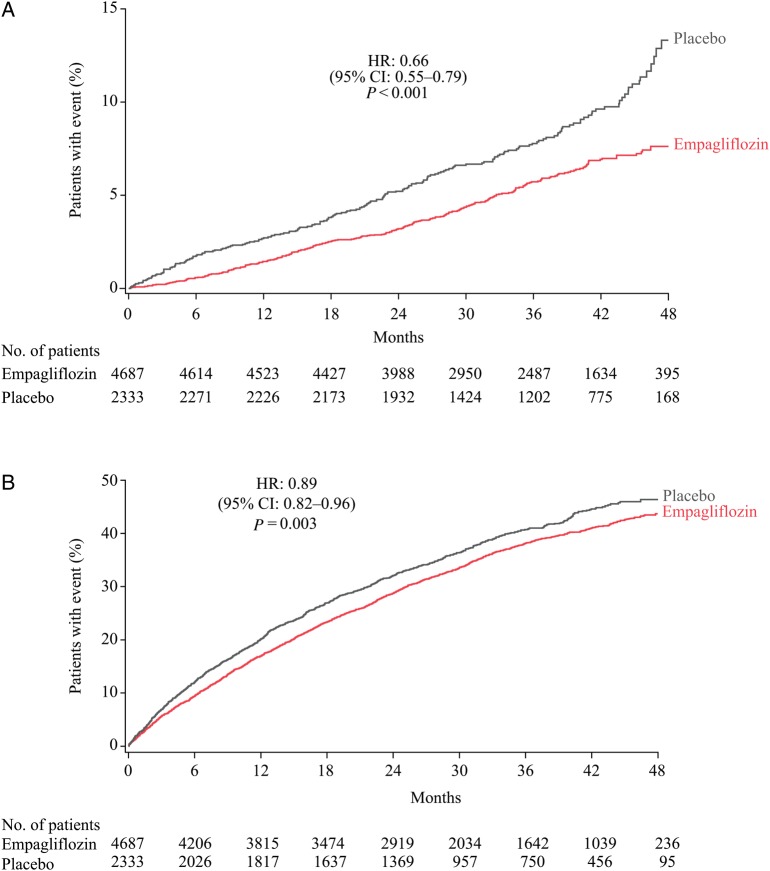
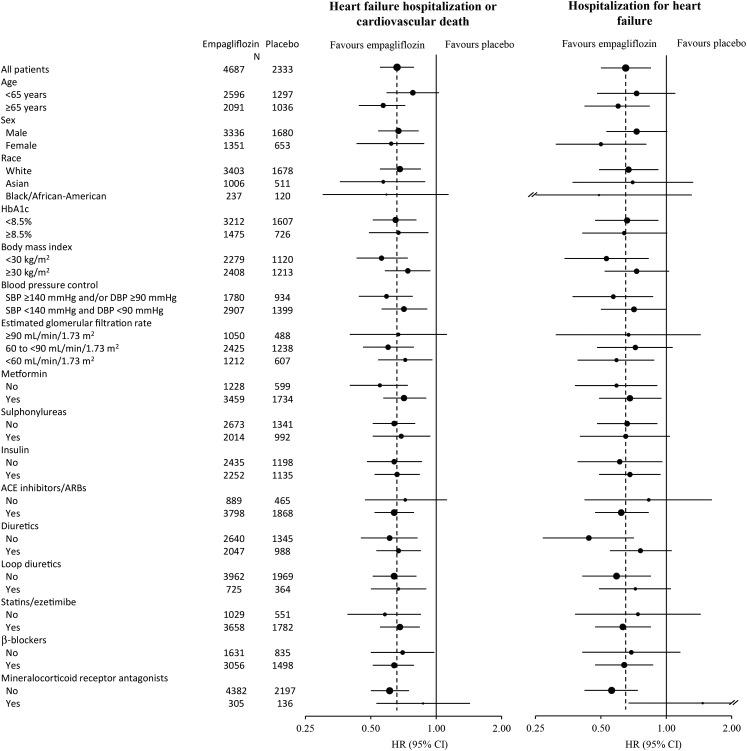
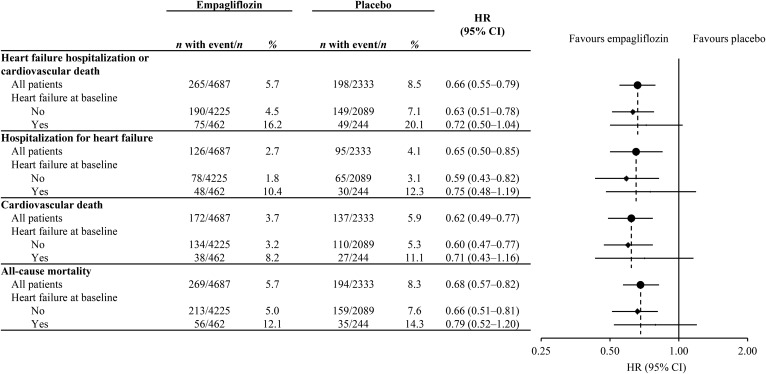
AIMS: We previously reported that in the EMPA-REG OUTCOME(®) trial, empagliflozin added to standard of care reduced the risk of 3-point major adverse cardiovascular events, cardiovascular and all-cause death, and hospitalization for heart failure in patients with type 2 diabetes and high cardiovascular risk. We have now further investigated heart failure outcomes in all patients and in subgroups, including patients with or without baseline heart failure. METHODS AND RESULTS: Patients were randomized to receive empagliflozin 10 mg, empagliflozin 25 mg, or placebo. Seven thousand and twenty patients were treated; 706 (10.1%) had heart failure at baseline. Heart failure hospitalization or cardiovascular death occurred in a significantly lower percentage of patients treated with empagliflozin [265/4687 patients (5.7%)] than with placebo [198/2333 patients (8.5%)] [hazard ratio, HR: 0.66 (95% confidence interval: 0.55-0.79); P < 0.001], corresponding to a number needed to treat to prevent one heart failure hospitalization or cardiovascular death of 35 over 3 years. Consistent effects of empagliflozin were observed across subgroups defined by baseline characteristics, including patients with vs. without heart failure, and across categories of medications to treat diabetes and/or heart failure. Empagliflozin improved other heart failure outcomes, including hospitalization for or death from heart failure [2.8 vs. 4.5%; HR: 0.61 (0.47-0.79); P < 0.001] and was associated with a reduction in all-cause hospitalization [36.8 vs. 39.6%; HR: 0.89 (0.82-0.96); P = 0.003]. Serious adverse events and adverse events leading to discontinuation were reported by a higher proportion of patients with vs. without heart failure at baseline in both treatment groups, but were no more common with empagliflozin than with placebo. CONCLUSION: In patients with type 2 diabetes and high cardiovascular risk, empagliflozin reduced heart failure hospitalization and cardiovascular death, with a consistent benefit in patients with and without baseline heart failure.
Overview
The claims and statistics of this paper haven’t been checked yet.
Free: it reads the open-access text and checks the first 5 claims that cite a source we can check. Create a free account to check every claim.
Integrity signals
Registry
Cites
Statistics
Figures
Verification
Claims the paper makes
The claims and statistics of this paper haven’t been checked yet.
Free: it reads the open-access text and checks the first 5 claims that cite a source we can check. Create a free account to check every claim.
Claims other papers make about this one
Each is checked against this paper’s own text: does it say what the citing paper says it does?
The source backs part of the claim, not all of it — or backs it for a different population, condition or comparison.
In the citing paper
“Little is known about the effect of SGLT2 inhibitors on the broad spectrum of both inpatient and outpatient worsening heart failure events, because these were not documented in trials with these drugs in type 2 diabetes.1–5”
From Effect of Empagliflozin on the Clinical Stability of Patients With Heart Failure and a Reduced Ejection Fraction: The EMPEROR-Reduced Trial (2021) · cites this paper as [1]
Experimental — accuracy not yet measuredThe source backs part of the claim, not all of it — or backs it for a different population, condition or comparison.
In the citing paper
“Recent cardiovascular outcomes trials demonstrate that therapies that inhibit sodium glucose cotransporter (SGLT)2 may reduce heart failure morbidity and mortality and slow decline in renal function (7,8,23,42,43).”
From Evaluation of renal and cardiovascular protection mechanisms of SGLT2 inhibitors: model-based analysis of clinical data (2018) · cites this paper as [8]
Experimental — accuracy not yet measuredThe cited source says what the claim attributes to it.
In the citing paper
“Sodium-glucose cotransporter 2 (SGLT2) inhibitors have been shown to reduce the risk of hospitalizations for heart failure in 8 large-scale trials, including those that focused on type 2 diabetes, heart failure with a reduced ejection fraction, and chronic kidney disease.1–8”
From Effect of Empagliflozin on the Clinical Stability of Patients With Heart Failure and a Reduced Ejection Fraction: The EMPEROR-Reduced Trial (2021) · cites this paper as [1]
The cited source says what the claim attributes to it.
In the citing paper
“hospitalizations for heart failure (2.7% versus 4.1%; 35% RRR)”
From Clinical management of stable coronary artery disease in patients with type 2 diabetes mellitus: a scientific statement from the American Heart Association (2020) · cites this paper as [219]
Self-check
Percentages, sums and reported differences re-computed from the paper’s own numbers.
The self-check needs the paper’s full text.
Citations
Cites
Empagliflozin, Cardiovascular Outcomes, and Mortality in Type 2 Diabetes
Zinman, B., Wanner, C., Lachin, J. M., Fitchett, D., Bluhmki, E., Hantel, S., Mattheus, M., Devins, T., Johansen, O. E., Woerle, H. J., et al. (2015) · New England Journal of Medicine · doi:10.1056/nejmoa1504720 · Cited by 12,315
Self-citationESC Guidelines for the diagnosis and treatment of acute and chronic heart failure 2012
Authors/Task Force Members, McMurray, J. J. V., Adamopoulos, S., Anker, S. D., Auricchio, A., Böhm, M., Dickstein, K., Falk, V., Filippatos, G., Fonseca, C., et al. (2012) · European Heart Journal · doi:10.1093/eurheartj/ehs104 · Cited by 6,879
Saxagliptin and cardiovascular outcomes in patients with type 2 diabetes mellitus
Scirica, B. M., Bhatt, D. L., Braunwald, E., Steg, P. G., Davidson, J., Hirshberg, B., Ohman, P., Frederich, R., Wiviott, S. D., Hoffman, E. B., et al. (2013) · New England Journal of Medicine · doi:10.1056/nejmoa1307684 · Cited by 3,470
ESC Guidelines for the Diagnosis and Treatment of Acute and Chronic Heart Failure 2012
Authors/Task Force Members, McMurray, J. J. V., Adamopoulos, S., Anker, S. D., Auricchio, A., Böhm, M., Dickstein, K., Falk, V., Filippatos, G., Fonseca, C., et al. (2012) · European Journal of Heart Failure · doi:10.1093/eurjhf/hfs105 · Cited by 2,644
(2013) · European Heart Journal · doi:10.1093/eurheartj/eht108 · Cited by 1,955
Cherney, D. Z. I., Perkins, B. A., Soleymanlou, N., Maione, M., Lai, V., Lee, A., Fagan, N. M., Woerle, H. J., Johansen, O. E., Broedl, U. C., et al. (2014) · Circulation · doi:10.1161/circulationaha.113.005081 · Cited by 1,329
Self-citationType 2 diabetes and incidence of cardiovascular diseases: a cohort study in 1.9 million people
Shah, A. D., Langenberg, C., Rapsomaniki, E., Denaxas, S., Pujades-Rodriguez, M., Gale, C. P., Deanfield, J., Smeeth, L., Timmis, A., & Hemingway, H. (2015) · The Lancet Diabetes & Endocrinology · doi:10.1016/s2213-8587(14)70219-0 · Cited by 1,225
Intensive glucose control and macrovascular outcomes in type 2 diabetes
Turnbull, F. M., Abraira, C., Anderson, R. J., Byington, R. P., Chalmers, J. P., Duckworth, W. C., Evans, G. W., Gerstein, H. C., Holman, R. R., Moritz, T. E., et al. (2009) · Diabetologia · doi:10.1007/s00125-009-1470-0 · Cited by 1,189 · cited 1×
“less intensive glucose control.(4) Furthermore, specific glucose-lowering medications have not been shown to improve heart failure outcomes and some may actually have deleterious effects.”
BackgroundMetabolic response to sodium-glucose cotransporter 2 inhibition in type 2 diabetic patients
Ferrannini, E., Muscelli, E., Frascerra, S., Baldi, S., Mari, A., Heise, T., Broedl, U. C., & Woerle, H.-J. (2014) · Journal of Clinical Investigation · doi:10.1172/jci72227 · Cited by 1,134
Self-citationRonco, C., McCullough, P., Anker, S. D., Anand, I., Aspromonte, N., Bagshaw, S. M., Bellomo, R., Berl, T., Bobek, I., Cruz, D. N., et al. (2010) · European Heart Journal · doi:10.1093/eurheartj/ehp507 · Cited by 1,104
Research works printed but not linked: 1
- Jordan J, Tank J, Heusser K, Heise T, Wanner C, Heer M, Macha S, Mattheus M, Lund SS, Woerle HJ, Broedl UC Empagliflozin has no discernible effect on muscle sympathetic nerve activity in patients with type 2 diabetes despite reductions in blood pressure and weight. Diabetes 2014; 63: A265 [1030-P].
Cited by
Items 201–300 of 947
SGLT2 inhibitors: the future for treatment of type 2 diabetes mellitus and other chronic diseases
Wanner, C., & Marx, N. (2018) · Diabetologia · doi:10.1007/s00125-018-4678-z · Cited by 65
“Epidemiological and clinical data from recent years have led to the recognition that, in addition to myocardial infarction and other atherosclerosis-related cardiovascular events, heart failure is a major contributor to cardiovascular morbidity and mortality in individuals with type 2 diabetes (reviewed in [16, 17]).”
BackgroundSelf-citationSingh, J. S., Fathi, A., Vickneson, K., Mordi, I. R., Mohan, M., Houston, J. G., Pearson, E. R., Struthers, A. D., & Lang, C. C. (2016) · Cardiovascular Diabetology · doi:10.1186/s12933-016-0419-0 · Cited by 68
New Pathogenic Concepts and Therapeutic Approaches to Oxidative Stress in Chronic Kidney Disease
Pedraza‐Chaverrí, J., Sánchez‐Lozada, L. G., Osorio‐Alonso, H., Tapia, E., & Scholze, A. (2016) · Oxidative Medicine and Cellular Longevity · doi:10.1155/2016/6043601 · Cited by 65
Scheen, A. J. (2016) · Diabetes & Metabolism · doi:10.1016/j.diabet.2016.05.006 · Cited by 64
Lam, C. S. P., Ferreira, J. P., Pfarr, E., Sim, D., Tsutsui, H., Anker, S. D., Butler, J., Filippatos, G. S., Pocock, S., Sattar, N. A., et al. (2021) · European Heart Journal · doi:10.1093/eurheartj/ehab360 · Cited by 67
Alsereidi, F. R., Khashim, Z., Marzook, H., Al-Rawi, A. M., Salomon, T., Almansoori, M. K., Madkour, M. M., Hamam, A. M., Ramadan, M. M., Peterson, Q. P., et al. (2024) · Cardiovascular Diabetology · doi:10.1186/s12933-024-02481-y · Cited by 70
“While hypertrophy is typically a consequence of underlying cardiovascular diseases, it exacerbates cardiac conditions by impairing cardiac function and heightening the risk of adverse cardiovascular events [4, 5].”
BackgroundSavarese, G., Sattar, N. A., Januzzi, J. L., Verma, S., Lund, L. H., FITCHETT, D. H., Zeller, C., George, J. T., Brueckmann, M., Ofstad, A. P., et al. (2019) · Circulation · doi:10.1161/circulationaha.118.038339 · Cited by 64
Self-citationMentz, R. J., Bethel, M. A., Gustavson, S., Thompson, V. P., Pagidipati, N. J., Buse, J. B., Chan, J. C., Iqbal, N., Maggioni, A. P., Marso, S. P., et al. (2017) · American Heart Journal · doi:10.1016/j.ahj.2017.02.005 · Cited by 64
Self-citationBellis, A., Mauro, C., Barbato, E., Ceriello, A., Cittadini, A., & Morisco, C. (2021) · International Journal of Molecular Sciences · doi:10.3390/ijms22020775 · Cited by 61
Impact of Glucose-Lowering Medications on Cardiovascular and Metabolic Risk in Type 2 Diabetes
Patti, A. M., Rizvi, A. A., Giglio, R. V., Stoian, A. P., Ligi, D., & Mannello, F. (2020) · Journal of Clinical Medicine · doi:10.3390/jcm9040912 · Cited by 59
Biegus, J., Fudim, M., Salah, H. M., Heerspink, H. J. L., Voors, A. A., & Ponikowski, P. P. (2023) · European Journal of Heart Failure · doi:10.1002/ejhf.2967 · Cited by 69
“58,96 Across all these studies with different SGLT-2 inhibitors, the risk of HF hospitalization was substantially reduced; this effect was at least partially linked to potential diuretic effects of SGLT-2 inhibitors, as congestion is a major driver of decompensation of HF. 9,45,97 In recent years,…”
Heart Failure with Preserved Ejection Fraction in Women
Tibrewala, A., & Yancy, C. W. (2018) · Heart Failure Clinics · doi:10.1016/j.hfc.2018.08.002 · Cited by 61
Nusca, A., Tuccinardi, D., Pieralice, S., Giannone, S., Carpenito, M., Monte, L., Watanabe, M., Cavallari, I., Maddaloni, E., Ussia, G. P., et al. (2021) · Frontiers in Pharmacology · doi:10.3389/fphar.2021.670155 · Cited by 65
“Interestingly, even though only 10% of subjects in EMPA-REG trial had a pre-existing HF at baseline, the positive effects on HF hospitalizations and cardiovascular death were consistent in patients with or without previous HF (Fitchett et al., 2016).”
BackgroundSeidu, S., Cos, X., Brunton, S., Harris, S. B., Jansson, S. P. O., Mata-Cases, M., Neijens, A. M. J., Topsever, P., & Khunti, K. (2022) · Primary Care Diabetes · doi:10.1016/j.pcd.2022.02.002 · Cited by 48
Heart Failure Considerations of Antihyperglycemic Medications for Type 2 Diabetes
Standl, E., Schnell, O., & McGuire, D. K. (2016) · Circulation Research · doi:10.1161/circresaha.116.306924 · Cited by 59
Screening for chronic kidney disease in Canadian indigenous peoples is cost-effective
Ferguson, T. W., Tangri, N., Tan, Z., James, M. T., Lavallee, B., Chartrand, C. D., McLeod, L., Dart, A. B., Rigatto, C., & Komenda, P. V. J. (2017) · Kidney International · doi:10.1016/j.kint.2017.02.022 · Cited by 62
“In addition, prescription of new therapies such as sodium-glucose cotransporter 2 inhibitors can provide benefit in patients with type 2 diabetes and high cardiovascular risk.(40) Multiple factors would influence the efficacy of these treatments in a decision analysis model, including prevailing rates of usage of each…”
Saffo, S., & Taddei, T. H. (2018) · Clinical Liver Disease · doi:10.1002/cld.714 · Cited by 60
Täger, T., Atar, D., Agewall, S., Katus, H. A., Grundtvig, M., Cleland, J. G. F., Clark, A. L., Fröhlich, H., & Frankenstein, L. (2020) · Heart Failure Reviews · doi:10.1007/s10741-020-09954-8 · Cited by 63
Glucagon in artificial pancreas systems: Potential benefits and safety profile of future chronic use
Taleb, N., Haidar, A., Messier, V., Gingras, V., Legault, L., & Rabasa‐Lhoret, R. (2017) · Diabetes, Obesity and Metabolism · doi:10.1111/dom.12789 · Cited by 59
“These findings may be indirectly reassuring as a modest but significant (ie, still in the physiological range) increase in plasma glucagon is seen with SGLT2 inhibitor use.(85) Even though the”
BackgroundCardiovascular Protection by Sodium Glucose Cotransporter 2 Inhibitors: Potential Mechanisms
Staels, B. (2017) · The American Journal of Cardiology · doi:10.1016/j.amjcard.2017.05.013 · Cited by 59
The heart failure burden of type 2 diabetes mellitus—a review of pathophysiology and interventions
Ofstad, A. P., Atar, D., Gullestad, L., Langslet, G., & Johansen, O. E. (2018) · Heart Failure Reviews · doi:10.1007/s10741-018-9685-0 · Cited by 59
Self-citationStroke paradox with SGLT-2 inhibitors: a play of chance or a viscosity-mediated reality?
Imprialos, K. P., Boutari, C., Stavropoulos, K., Doumas, M. N., & Karagiannis, A. I. (2016) · Journal of Neurology Neurosurgery & Psychiatry · doi:10.1136/jnnp-2016-314704 · Cited by 60
Cardiovascular safety of non-insulin pharmacotherapy for type 2 diabetes
Xu, J., & Rajaratnam, R. (2017) · Cardiovascular Diabetology · doi:10.1186/s12933-017-0499-5 · Cited by 59
Ohkuma, T., Jun, M., Woodward, M., Zoungas, S., Cooper, M. E., Grobbee, D. E., Hamet, P., Mancia, G., Williams, B., Welsh, P. I., et al. (2017) · Diabetes Care · doi:10.2337/dc17-0509 · Cited by 62
“This association may be partly driven by osmotic diuresis and changes in plasma volume and sodium excretion with modulation of the cardio-renal axis mediated by empagliflozin (25,26).”
Abraham, W. T., Ponikowski, P. P., Brueckmann, M., Zeller, C., Macesic, H., Peil, B., Brun, M., Ustyugova, A., Jamal, W., Salsali, A., et al. (2019) · European Journal of Heart Failure · doi:10.1002/ejhf.1486 · Cited by 61
Self-citationSex differences in metabolic cardiomyopathy
Murphy, E., Amanakis, G., Fillmore, N., Parks, R. J., & Sun, J. (2017) · Cardiovascular Research · doi:10.1093/cvr/cvx008 · Cited by 59
Jacobs, L., Efremov, L., Ferreira, J. P., Thijs, L., Yang, W., Zhang, Z., Latini, R., Masson, S., Agabiti, N., Sever, P., et al. (2017) · Journal of the American Heart Association · doi:10.1161/jaha.116.005231 · Cited by 68
Greene, S. J., Vaduganathan, M., Khan, M. S., Bakris, G. L., Weir, M. R., Seltzer, J. H., Sattar, N., McGuire, D. K., Januzzi, J. L., Stockbridge, N., et al. (2018) · Journal of the American College of Cardiology · doi:10.1016/j.jacc.2018.01.047 · Cited by 56
“(50,51) The EMPA-REG OUTCOME trial found empagliflozin therapy to result in a pronounced and early lowering of risk of MACE, driven by reductions in CV death, along with reductions in HF events in patients with type 2 DM and established CV disease (10% of whom carried a history of HF at enrollment)(17,24).”
BackgroundMethodInfluentialCardiovascular protection in type 2 diabetes: Insights from recent outcome trials
Bailey, C. J., & Marx, N. (2018) · Diabetes Obesity and Metabolism · doi:10.1111/dom.13492 · Cited by 62
The renal effects of SGLT2 inhibitors and a mini-review of the literature
Andrianesis, V., Glykofridi, S., & Doupis, J. (2016) · Therapeutic Advances in Endocrinology and Metabolism · doi:10.1177/2042018816676239 · Cited by 63
Koliaki, C. C., Tentolouris, A., Eleftheriadou, I., Melidonis, A. J., Dimitriadis, G., & Tentolouris, N. (2020) · Journal of Clinical Medicine · doi:10.3390/jcm9072288 · Cited by 62
Böhm, M., Schumacher, H., Teo, K. K., Lonn, E. M., Mahfoud, F., Ukena, C., Mann, J. F. E., Mancia, G., Redon, J., Schmieder, R. E., et al. (2020) · European Heart Journal · doi:10.1093/eurheartj/ehy808 · Cited by 55
The metabolic syndrome in heart failure: insights to specific mechanisms
Gargiulo, P., Marsico, F., Renga, F., Dell’Aversana, S., Esposito, I., Marciano, C., Dellegrottaglie, S., Filardi, P. P., & Paolillo, S. (2019) · Heart Failure Reviews · doi:10.1007/s10741-019-09838-6 · Cited by 62
Butler, J., Handelsman, Y., Bakris, G. L., & Verma, S. (2020) · European Journal of Heart Failure · doi:10.1002/ejhf.1708 · Cited by 57
Diabetes and Progression of Heart Failure
Echouffo-Tcheugui, J. B., Ndumele, C. E., Zhang, S., Florido, R., Matsushita, K., Coresh, J., Skali, H., Shah, A. M., & Selvin, E. (2022) · Journal of the American College of Cardiology · doi:10.1016/j.jacc.2022.03.378 · Cited by 54
Effect of glucose-lowering therapies on heart failure
Nassif, M. E., & Kosiborod, M. (2018) · Nature Reviews Cardiology · doi:10.1038/nrcardio.2017.211 · Cited by 57
Iyngkaran, P., Liew, D., Neil, C., Driscoll, A. L., Marwick, T. H., & Hare, D. L. (2018) · Clinical Medicine Insights Cardiology · doi:10.1177/1179546818809358 · Cited by 59
Avogaro, A., Bonora, E., Consoli, A., Prato, S. D., Genovese, S., & Giorgino, F. (2019) · Diabetes and Vascular Disease Research · doi:10.1177/1479164119845612 · Cited by 63
New perspectives and future directions in the treatment of heart failure
Pellicori, P., Khan, M. J., Graham, F. J., & Cleland, J. G. F. (2019) · Heart Failure Reviews · doi:10.1007/s10741-019-09829-7 · Cited by 56
Correale, M., Paolillo, S., Mercurio, V., Limongelli, G., Barillà, F., Ruocco, G. M., Palazzuoli, A., Scrutinio, D., Lagioia, R., Lombardi, C., et al. (2019) · European Journal of Internal Medicine · doi:10.1016/j.ejim.2019.10.008 · Cited by 59
Cherney, D. Z. I., Udell, J. A., & Drucker, D. J. (2021) · Med · doi:10.1016/j.medj.2021.10.004 · Cited by 50
Continued efforts to translate diabetes cardiovascular outcome trials into clinical practice
Avogaro, A., Fadini, G. P., Sesti, G., Bonora, E., & Prato, S. D. (2016) · Cardiovascular Diabetology · doi:10.1186/s12933-016-0431-4 · Cited by 55
Mirabelli, M., CHIEFARI, E. D., Caroleo, P., Vero, R., Brunetti, F. S., Corigliano, D. M., Arcidiacono, B., FOTI, D. P., Puccio, L., & Brunetti, A. (2019) · Journal of Diabetes Research · doi:10.1155/2019/3971060 · Cited by 55
Jensen, J., Omar, M., Kistorp, C., Poulsen, M. K., Tuxen, C., Gustafsson, I., Køber, L., Gustafsson, F., Fosbøl, E. L., Bruun, N. E., et al. (2019) · Trials · doi:10.1186/s13063-019-3474-5 · Cited by 55
Pooled Safety and Tolerability Analysis of Empagliflozin in Patients with Type 2 Diabetes Mellitus
Kinduryte, O., Clark, D., Zwiener, I., Kaspers, S., Lee, J., & Iliev, H. (2020) · Advances in Therapy · doi:10.1007/s12325-020-01329-7 · Cited by 55
Johansson, I., Dahlström, U., Edner, M., Näsman, P., Rydén, L., & Norhammar, A. (2018) · Diabetes and Vascular Disease Research · doi:10.1177/1479164118794619 · Cited by 51
Natale, P., Tunnicliffe, D. J., Toyama, T., Palmer, S. C., Saglimbene, V. M., Ruospo, M., Gargano, L., Stallone, G., Gesualdo, L., & Strippoli, G. F. (2024) · Cochrane Database of Systematic Reviews · doi:10.1002/14651858.cd015588.pub2 · Cited by 70
Mechanisms linking empagliflozin to cardiovascular and renal protection
Filardi, P. P., Avogaro, A., Bonora, E., Colivicchi, F., Fioretto, P., Maggioni, A. P., Sesti, G., & Ferrannini, E. (2017) · International Journal of Cardiology · doi:10.1016/j.ijcard.2017.03.089 · Cited by 56
Mordi, N., Mordi, I. R., Singh, J. S., Baig, F., Choy, A. M., McCrimmon, R. J., Struthers, A. D., & Lang, C. C. (2017) · BMJ Open · doi:10.1136/bmjopen-2017-018097 · Cited by 52
“However, neither trial specifically looks at T2DM patients with CHF.”
BackgroundMethodInfluentialButler, J., Zannad, F., Fitchett, D., Zinman, B., Koitka-Weber, A., von Eynatten, M., Zwiener, I., George, J., Brueckmann, M., Cheung, A. K., et al. (2019) · Circulation: Heart Failure · doi:10.1161/circheartfailure.118.005875 · Cited by 49
Self-citationWhy the endothelium? The endothelium as a target to reduce diabetes-associated vascular disease
Triggle, C. R., Ding, H., Marei, I., Anderson, T. J., & Hollenberg, M. D. (2020) · Canadian Journal of Physiology and Pharmacology · doi:10.1139/cjpp-2019-0677 · Cited by 49
Young, K., McInnes, E. H., Massey, R. J., Kahkoska, A. R., Pilla, S. J., Raghavan, S., Stanislawski, M. A., Tobias, D. K., McGovern, A. P., Dawed, A. Y., et al. (2023) · Communications Medicine · doi:10.1038/s43856-023-00359-w · Cited by 55
Excess risk of hospitalisation for heart failure among people with type 2 diabetes
Rosengren, A., Edqvist, J., Rawshani, A., Sattar, N., Franzén, S., Adiels, M., Svensson, A.-M., Lind, M., & Gudbjörnsdottir, S. (2018) · Diabetologia · doi:10.1007/s00125-018-4700-5 · Cited by 49
Kim, K.-J., Cho, H., Kim, M., Kang, J., Kim, K., Kim, D., Seo, S. M., Yang, J. H., Cha, M., Choi, J., et al. (2019) · International Journal of Heart Failure · doi:10.36628/ijhf.2019.0002 · Cited by 50
Hypertension in Patients with Insulin Resistance: Etiopathogenesis and Management in Children
Tagi, V. M., Mainieri, F., & Chiarelli, F. (2022) · International Journal of Molecular Sciences · doi:10.3390/ijms23105814 · Cited by 51
Diabetic cardiomyopathy: The role of microRNAs and long non-coding RNAs
Mačvanin, M., Gluvic, Z. M., Radovanović, J., Essack, M., Gao, X., & Isenović, E. R. (2023) · Frontiers in Endocrinology · doi:10.3389/fendo.2023.1124613 · Cited by 48
“, sodium-glucose cotransporter 2 (SGLT2) inhibitors, glucagon-like peptide 1 receptor agonists (GLP1-RAs)) enable a reduction in hospitalization rates for HF in DM patients independently of the presence of HF at baseline (84, 85).”
BackgroundCardiometabolic Syndrome and Increased Risk of Heart Failure
von Bibra, H., Paulus, W., & Sutton, M. S. J. (2016) · Current Heart Failure Reports · doi:10.1007/s11897-016-0298-4 · Cited by 49
Inzucchi, S. E., Khunti, K., FITCHETT, D. H., Wanner, C., Mattheus, M., George, J. T., Ofstad, A. P., & Zinman, B. (2020) · The Journal of Clinical Endocrinology & Metabolism · doi:10.1210/clinem/dgaa321 · Cited by 50
“This is, moreover, consistent with previous subgroup analyses of the EMPA-REG OUTCOME trial, which found CV risk reduction regardless of prior coronary artery bypass graft (47, 48), peripheral artery disease (48, 49), heart failure (48, 50), atrial fibrillation (48), chronic kidney disease (51), microvascular disease…”
ResultSelf-citationGong, Q., Zhang, R., Wei, F., Fang, J., Zhang, J., Sun, J., Sun, Q., & Wang, H. (2022) · Biomedicine & Pharmacotherapy · doi:10.1016/j.biopha.2022.113222 · Cited by 49
Scheen, A. J. (2016) · Diabetes Research and Clinical Practice · doi:10.1016/j.diabres.2016.09.016 · Cited by 55
Anti-inflammatory effects of sodium-glucose co-transporter 2 inhibitors on atherosclerosis
Kang, Y.-X., Zhan, F., He, M., Liu, Z., & Song, X. (2020) · Vascular Pharmacology · doi:10.1016/j.vph.2020.106779 · Cited by 47
Salsali, A., Kim, G.-H., Woerle, H. J., Broedl, U. C., & Hantel, S. (2016) · Diabetes Obesity and Metabolism · doi:10.1111/dom.12734 · Cited by 51
“In the EMPA-REG OUTCOME trial in patients with T2DM and high CV risk, empagliflozin given in addition to standard of care was associated with significant reductions in 3-point major adverse CV events [MACE, a composite of CV death, non-fatal myocardial infarction (MI) and non-fatal stroke], CV death, all-cause mortali…”
BackgroundSelf-citationSeidu, S., Cos, X., Brunton, S., Harris, S. B., Jansson, S. P. O., Mata-Cases, M., Neijens, A. M. J., Topsever, P., & Khunti, K. (2021) · Primary Care Diabetes · doi:10.1016/j.pcd.2020.05.004 · Cited by 45
SGLT2 inhibitors: a focus on cardiac benefits and potential mechanisms
Muric, M. D., Zivkovic, V. I., Joksimović, J., Sretenovic, J. Z., Davidović, G., Simovic, S. M., Djoković, D., Muric, N. N., Bolevich, S., & Jakovljevic, V. L. (2021) · Heart Failure Reviews · doi:10.1007/s10741-021-10079-9 · Cited by 49
Cardiovascular Outcome in Patients Treated With SGLT2 Inhibitors for Heart Failure: A Meta-Analysis
Gager, G. M., Gelbenegger, G., Jilma, B., von Lewinski, D., Sourij, H., Eyileten, C., Filipiak, K. J., Postula, M. A., & Siller-Matula, J. M. (2021) · Frontiers in Cardiovascular Medicine · doi:10.3389/fcvm.2021.691907 · Cited by 50
de Leeuw, A. E., & de Boer, R. A. (2016) · European Heart Journal - Cardiovascular Pharmacotherapy · doi:10.1093/ehjcvp/pvw009 · Cited by 46
Cost-utility of empagliflozin in patients with type 2 diabetes at high cardiovascular risk
Nguyen, E., Coleman, C. I., Nair, S., & Weeda, E. R. (2017) · Journal of Diabetes and its Complications · doi:10.1016/j.jdiacomp.2017.10.006 · Cited by 48
Comparison of New Glucose-Lowering Drugs on Risk of Heart Failure in Type 2 Diabetes
Kramer, C. K., Ye, C., Campbell, S., & Retnakaran, R. R. (2018) · JACC Heart Failure · doi:10.1016/j.jchf.2018.05.021 · Cited by 50
FDA guidance on antihyperglyacemic therapies for type 2 diabetes: One decade later
McGuire, D. K., Marx, N., Johansen, O. E., Inzucchi, S. E., Rosenstock, J., & George, J. T. (2019) · Diabetes, Obesity and Metabolism · doi:10.1111/dom.13645 · Cited by 42
Self-citationWan, N., Fujisawa, Y., Kobara, H., Masaki, T., Nakano, D., Rahman, A., & Nishiyama, A. (2020) · Hypertension Research · doi:10.1038/s41440-020-0410-8 · Cited by 47
“Sodium-glucose cotransporter 2 (SGLT2) inhibitors are antihyperglycemic drugs used for the treatment of diabetes [2] and have been shown to improve diabetic complications in patients with type 2 diabetes [3], including cardiovascular (CV) death [4, 5].”
BackgroundMitochondrial Dysfunction in Atrial Fibrillation—Mechanisms and Pharmacological Interventions
Muszyński, P., & Bonda, T. A. (2021) · Journal of Clinical Medicine · doi:10.3390/jcm10112385 · Cited by 46
“The EMPA-REG OUTCOME trial showed that among patients with DM and HF, SGLT2 inhibitors lead to a significant reduction of hospitalization rate by 35% and cardiovascular deaths by 38% [71].”
MethodSavarese, G., Butler, J., Lund, L. H., Bhatt, D. L., & Anker, S. D. (2021) · Cardiovascular Research · doi:10.1093/cvr/cvab271 · Cited by 48
The Role of SGLT2 Inhibitors in Heart Failure: A Systematic Review and Meta-Analysis
Tsampasian, V., Baral, R., Chattopadhyay, R. K., Dębski, M., Joshi, S. S., Reinhold, J., Dweck, M. R., Garg, P., & Vassiliou, V. S. (2021) · Cardiology Research and Practice · doi:10.1155/2021/9927533 · Cited by 52
2016 ESC and ACC/AHA/HFSA heart failure guideline update — what is new and why is it important?
Jessup, M. L., Marwick, T. H., Ponikowski, P. P., Voors, A. A., & Yancy, C. W. (2016) · Nature Reviews Cardiology · doi:10.1038/nrcardio.2016.134 · Cited by 45
Understanding the impact of hypoglycemia on the cardiovascular system
Davis, I., Ahmadizadeh, I., Randell, J., Younk, L. M., & Davis, S. N. (2017) · Expert Review of Endocrinology & Metabolism · doi:10.1080/17446651.2017.1275960 · Cited by 51
Carbone, S., Dixon, D. L., Buckley, L. F., & Abbate, A. (2018) · Mayo Clinic Proceedings · doi:10.1016/j.mayocp.2018.07.018 · Cited by 46
“All PPAR-g agonists have been associated with an increase in the risk of HF.55 Peroxisome proliferatoreactivated receptor g agonists increase fluid retention by inhibiting sodium reabsorption and enhancing vascular permeability, which can be problematic in patients with HF.3 Consequently, PPAR-g agonists are contraind…”
InfluentialChung, Y.-R., Ha, K. H., Lee, K., & Kim, D. J. (2019) · PLOS ONE · doi:10.1371/journal.pone.0224549 · Cited by 41
Ceriello, A., Ofstad, A. P., Zwiener, I., Kaspers, S., George, J. T., & Nicolucci, A. (2020) · Cardiovascular Diabetology · doi:10.1186/s12933-020-01147-9 · Cited by 45
Spallone, V., & Valensi, P. E. (2021) · Diabetes & Metabolism · doi:10.1016/j.diabet.2021.101224 · Cited by 46
Yuan, L., Li, F., Fan, Y., Yu, Y., Chen, M., & Xi, J. (2021) · European Journal of Internal Medicine · doi:10.1016/j.ejim.2021.03.020 · Cited by 47
Eligibility for Dapagliflozin and Empagliflozin in a Real-world Heart Failure Population
Thorvaldsen, T., Ferrannini, G., Mellbin, L., Benson, L., Cosentino, F., McMurray, J. J. V., Dahlström, U., Lund, L. H., & Savarese, G. (2022) · Journal of Cardiac Failure · doi:10.1016/j.cardfail.2022.04.011 · Cited by 49
Efficacy and safety of dapagliflozin in patients with type 2 diabetes and concomitant heart failure
Kosiborod, M., Gause‐Nilsson, I. A. M., Xu, J. L., Sonesson, C., & JOHNSSON, E. K. (2017) · Journal of Diabetes and its Complications · doi:10.1016/j.jdiacomp.2017.02.001 · Cited by 46
Mechanisms of Protective Effects of SGLT2 Inhibitors in Cardiovascular Disease and Renal Dysfunction
Liu, B., Wang, Y., Zhang, Y., & Yan, B. (2019) · Current Topics in Medicinal Chemistry · doi:10.2174/1568026619666190828161409 · Cited by 45
Costanzo, A. D., Esposito, G., Indolfi, C., & Spaccarotella, C. (2023) · International Journal of Molecular Sciences · doi:10.3390/ijms24108732 · Cited by 44
Berliner, D., & Bauersachs, J. K. (2017) · Korean Circulation Journal · doi:10.4070/kcj.2017.0030 · Cited by 49
Gourzoulidis, G., Tzanetakos, C., Ioannidis, I., Τσάπας, Α., Kourlaba, G., Papageorgiou, G., & Maniadakis, N. (2018) · Clinical Drug Investigation · doi:10.1007/s40261-018-0620-x · Cited by 45
SGLT2 inhibition and heart failure—current concepts
da Silva, J. C., Durães, A. R., Abreu, M., Rocha, N. A., & Roever, L. (2018) · Heart Failure Reviews · doi:10.1007/s10741-018-9703-2 · Cited by 44
Cardioprotective effects of empagliflozin after ischemia and reperfusion in rats
Seefeldt, J. M., Lassen, T. R., Hjortbak, M. V., Jespersen, N. R., Kvist, F., Hansen, J., & Bøtker, H. E. (2021) · Scientific Reports · doi:10.1038/s41598-021-89149-9 · Cited by 43
“Substrates and inhibitors were added in the following order for non-fatty acid linked oxidation: (1) Glutamate (G) (10 mmol L−1) + Malate (M) (2 mmol L−1), (2) ADP (5 mmol L−1), (3) Cytochrome c (10 μmol L−1), (4) Succinate (S) (10 mmol L−1), (5) Oligomycin (complex V inhibitor) (2 μg mL−1), (6) Rotenone (complex I in…”
BackgroundSodium glucose co-transporter 2 inhibitors and heart failure.
Ghosh, R. K., Ghosh, G. C., Gupta, M., Bandyopadhyay, D., Akhtar, T., Deedwania, P., Lavie, C. J., Fonarow, G. C., & Aneja, A. (2019) · The American Journal of Cardiology · doi:10.1016/j.amjcard.2019.08.038 · Cited by 41
Wang, C., Li, Y., Qian, X.-Q., Zhao, H., Wang, D., Zuo, G.-X., & Kuan, W. (2022) · Figshare · doi:10.6084/m9.figshare.20525647 · Cited by 41
The cardiovascular safety trials of DPP-4 inhibitors, GLP-1 agonists, and SGLT2 inhibitors
Secrest, M. H., Udell, J. A., & Filion, K. B. (2017) · Trends in Cardiovascular Medicine · doi:10.1016/j.tcm.2017.01.009 · Cited by 42
“EMPA-REG OUTCOME (Empagliflozin) EMPA-REG OUTCOME was a non-inferiority trial of empagliflozin among patients with T2DM (n=7,028) and established CVD [32-34].”
InfluentialCardioprotective anti-hyperglycaemic medications: a review of clinical trials
Ahmed, H. M., Khraishah, H., & Cho, L. (2017) · European Heart Journal · doi:10.1093/eurheartj/ehx668 · Cited by 45
Ferreira, J. P., Sharma, A., Mehta, C. R., Bakris, G. L., Rossignol, P., White, W. B., & Zannad, F. M. (2020) · Clinical Research in Cardiology · doi:10.1007/s00392-020-01729-3 · Cited by 42
The cardiovascular benefits of empagliflozin: SGLT2-dependent and -independent effects
Vettor, R., Inzucchi, S. E., & Fioretto, P. (2017) · Diabetologia · doi:10.1007/s00125-016-4194-y · Cited by 42
“However, it should be noted that only 10% of trial participants had recognised heart failure at baseline [6].”
Self-citationEmerging roles of sodium–glucose cotransporter 2 inhibitors in cardiology
Tanaka, A., & Node, K. (2016) · Journal of Cardiology · doi:10.1016/j.jjcc.2016.10.019 · Cited by 42
“As a result, consistent beneficial effects on the CV events including hospitalization for HF were documented, especially in patients without HF at baseline [51], suggesting the possible effects of empagliflozin on preventing onset of novel HF and/or worsening of subclinical HF.”
BackgroundRungby, J., Schou, M., Petersen, P. W., Ytte, L., & Andersen, G. S. (2017) · Cardiovascular Endocrinology · doi:10.1097/xce.0000000000000135 · Cited by 42
Upadhya, B., Haykowsky, M. J., & Kitzman, D. W. (2018) · Heart Failure Reviews · doi:10.1007/s10741-018-9714-z · Cited by 42
Heo, C. U., & Choi, C. (2019) · Journal of Clinical Medicine · doi:10.3390/jcm8030393 · Cited by 44
Sharma, A., Vaduganathan, M., Ferreira, J. P., Liu, Y., Bakris, G. L., Cannon, C. P., White, W. B., & Zannad, F. M. (2020) · Journal of the American Heart Association · doi:10.1161/jaha.119.012797 · Cited by 41
Metadata
- Authors
- Fitchett, D., Zinman, B., Wanner, C., Lachin, J. M., Hantel, S., Salsali, A., Johansen, O. E., Woerle, H. J., Broedl, U. C., & Inzucchi, S. E.
- Affiliations
- St. Michael's Hospital (CA)
- Mount Sinai Hospital (CA)
- University of Würzburg (DE)
- George Washington University (US)
- Boehringer Ingelheim (Germany) (DE)
- Boehringer Ingelheim (United States) (US)
- Boehringer Ingelheim (Norway) (NO)
- Yale University (US)
- Corresponding author
- Fitchett, David
- ORCID
- Venue
- European Heart Journal
- Publisher
- Oxford University Press (OUP)
- Published
- 2016-01-26
- Volume
- 37
- Issue
- 19
- Pages
- 1526-1534
- ISSN
- 0195-668X (ISSN-L)
- 1522-9645
- PMC
- PMC4872285
- OpenAlex
- W2273304042
- Semantic Scholar
- d8ad89cb37549e0e15f92b1f3a648975e29e3671
- Cited by
- 907
- References
- 29
- Citations by year
- 2026: 18 · 2025: 30 · 2024: 32 · 2023: 55 · 2022: 75 · 2021: 115 · 2020: 102 · 2019: 142 · 2018: 124 · 2017: 131 · 2016: 81
- FWCI
- 160.00
- Type
- journal article
- Language
- en
- Open access
- hybrid
- doi.org
- Licence
- cc-by-nc
- Locations
- European Heart Journal (publishedVersion, cc-by-nc)
- Europe PMC (PubMed Central) (publishedVersion, cc-by-nc)
- PubMed Central (publishedVersion, cc-by-nc)
- PubMed (publishedVersion)
- Lirias (KU Leuven) (submittedVersion, other-oa)
- Docusalut (Conselleria de Salut i Consum del Govern de les Illes Balears) (submittedVersion, cc-by-nc)
- Hispana (submittedVersion, cc-by-nc)
- HighWire Press Open Archive (submittedVersion)
- Online Publication Service of Würzburg University (Würzburg University) (submittedVersion, cc-by-nc)
- Funders
- Boehringer Ingelheim and Eli Lilly and Company
- Topics
- Health Sciences › Medicine › Endocrinology, Diabetes and Metabolism › Diabetes Treatment and Management
- Health Sciences › Medicine › Cardiology and Cardiovascular Medicine › Heart Failure Treatment and Management
- Health Sciences › Medicine › Cardiology and Cardiovascular Medicine › Cardiovascular Function and Risk Factors
- Keywords
- empagliflozin, type 2 diabetes, heart failure hospitalization, cardiovascular mortality, SGLT2 inhibitors, EMPA-REG OUTCOME trial, high cardiovascular risk, all-cause hospitalization, serious adverse events, subgroup analysis, number needed to treat, cardiovascular risk reduction, heart failure treatment, drug discontinuation
About these checks
Registry, retraction, Cites and statistics results are computed, not judged, with one exception: a printed reference that no index lists is read once by a model before it counts as a citation error. Claims are extracted by a model and kept only when their quote appears verbatim in the text; each cited source is then checked, with a model’s help, for whether it says what the claim relies on. Those verdicts can be wrong — read the claim’s quote and the cited source before relying on one.
Statistics and arithmetic are recomputed, not judged.
Confidence bands are shown only for fields calibrated on our annotated test set. None is calibrated yet, so no band is shown.
What counts as a claim ›How we measure confidence ›How we check this ›
Are you an author, or do you see a problem with this page? Request a review
Data sources
Bibliographic data: Semantic Scholar, OpenAlex, Crossref.
Contains information from the Semantic Scholar Academic Graph Datasets, made available under the ODC Attribution License (ODC-BY 1.0).
Semantic Scholar’s data is described in: Kinney, R., et al. (2023). The Semantic Scholar Open Data Platform. arXiv:2301.10140.
