

Heart failure outcomes with empagliflozin in patients with type 2 diabetes at high cardiovascular risk: results of the EMPA-REG OUTCOME ® trial
Open accessThe DOI matches its Crossref record; 29 of the 29 references it cites were found in a registry or an index.
Abstract
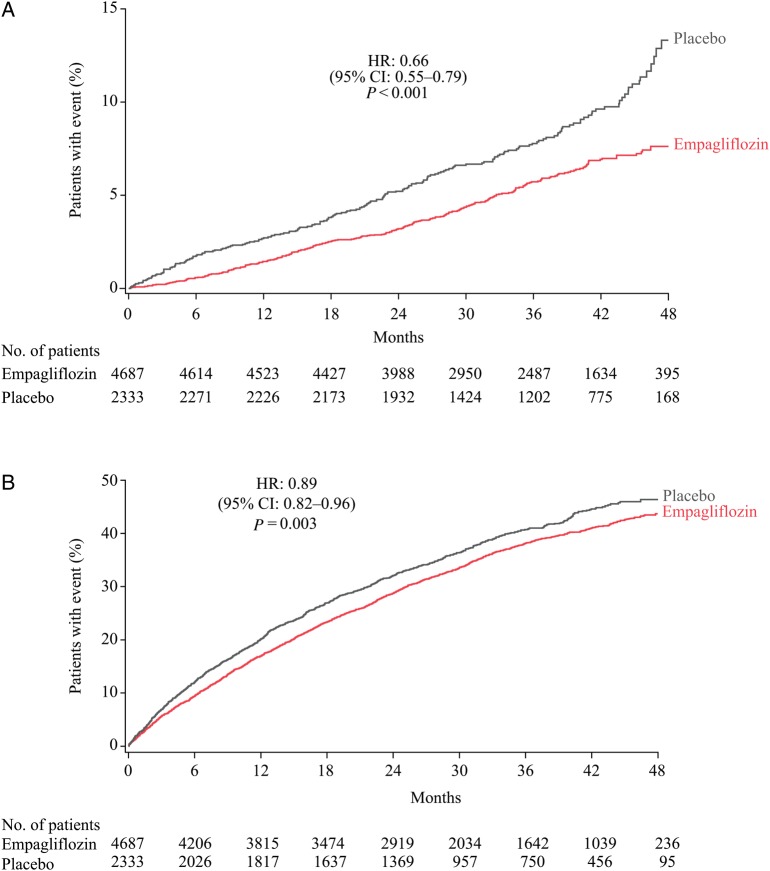
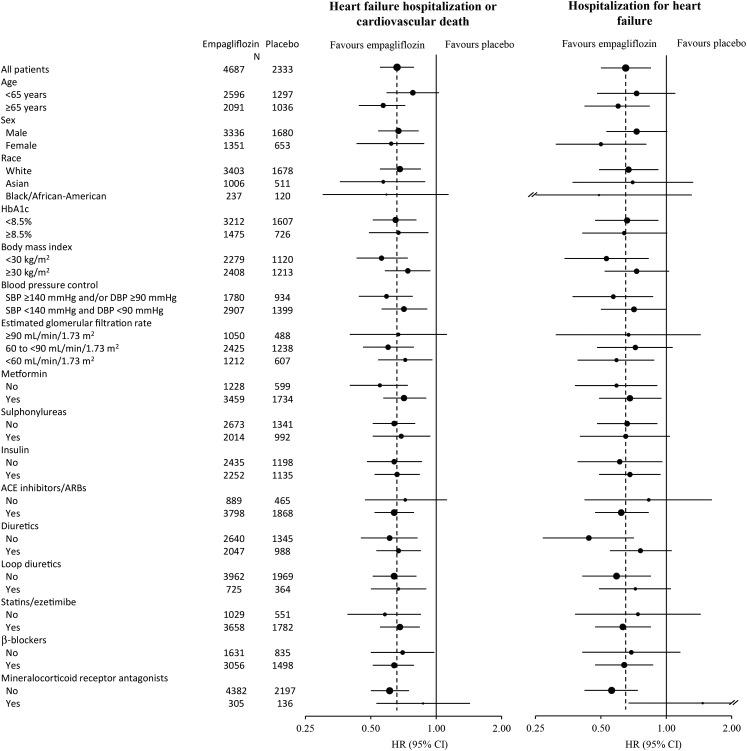
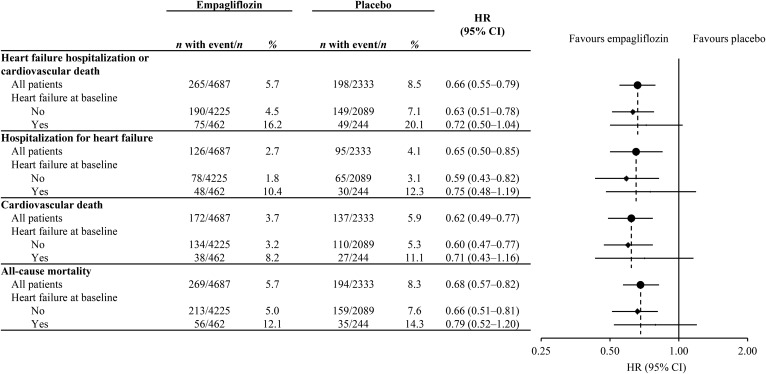
AIMS: We previously reported that in the EMPA-REG OUTCOME(®) trial, empagliflozin added to standard of care reduced the risk of 3-point major adverse cardiovascular events, cardiovascular and all-cause death, and hospitalization for heart failure in patients with type 2 diabetes and high cardiovascular risk. We have now further investigated heart failure outcomes in all patients and in subgroups, including patients with or without baseline heart failure. METHODS AND RESULTS: Patients were randomized to receive empagliflozin 10 mg, empagliflozin 25 mg, or placebo. Seven thousand and twenty patients were treated; 706 (10.1%) had heart failure at baseline. Heart failure hospitalization or cardiovascular death occurred in a significantly lower percentage of patients treated with empagliflozin [265/4687 patients (5.7%)] than with placebo [198/2333 patients (8.5%)] [hazard ratio, HR: 0.66 (95% confidence interval: 0.55-0.79); P < 0.001], corresponding to a number needed to treat to prevent one heart failure hospitalization or cardiovascular death of 35 over 3 years. Consistent effects of empagliflozin were observed across subgroups defined by baseline characteristics, including patients with vs. without heart failure, and across categories of medications to treat diabetes and/or heart failure. Empagliflozin improved other heart failure outcomes, including hospitalization for or death from heart failure [2.8 vs. 4.5%; HR: 0.61 (0.47-0.79); P < 0.001] and was associated with a reduction in all-cause hospitalization [36.8 vs. 39.6%; HR: 0.89 (0.82-0.96); P = 0.003]. Serious adverse events and adverse events leading to discontinuation were reported by a higher proportion of patients with vs. without heart failure at baseline in both treatment groups, but were no more common with empagliflozin than with placebo. CONCLUSION: In patients with type 2 diabetes and high cardiovascular risk, empagliflozin reduced heart failure hospitalization and cardiovascular death, with a consistent benefit in patients with and without baseline heart failure.
Overview
The claims and statistics of this paper haven’t been checked yet.
Free: it reads the open-access text and checks the first 5 claims that cite a source we can check. Create a free account to check every claim.
Integrity signals
Registry
Cites
Statistics
Figures
Verification
Claims the paper makes
The claims and statistics of this paper haven’t been checked yet.
Free: it reads the open-access text and checks the first 5 claims that cite a source we can check. Create a free account to check every claim.
Claims other papers make about this one
Each is checked against this paper’s own text: does it say what the citing paper says it does?
The source backs part of the claim, not all of it — or backs it for a different population, condition or comparison.
In the citing paper
“Little is known about the effect of SGLT2 inhibitors on the broad spectrum of both inpatient and outpatient worsening heart failure events, because these were not documented in trials with these drugs in type 2 diabetes.1–5”
From Effect of Empagliflozin on the Clinical Stability of Patients With Heart Failure and a Reduced Ejection Fraction: The EMPEROR-Reduced Trial (2021) · cites this paper as [1]
Experimental — accuracy not yet measuredThe source backs part of the claim, not all of it — or backs it for a different population, condition or comparison.
In the citing paper
“Recent cardiovascular outcomes trials demonstrate that therapies that inhibit sodium glucose cotransporter (SGLT)2 may reduce heart failure morbidity and mortality and slow decline in renal function (7,8,23,42,43).”
From Evaluation of renal and cardiovascular protection mechanisms of SGLT2 inhibitors: model-based analysis of clinical data (2018) · cites this paper as [8]
Experimental — accuracy not yet measuredThe cited source says what the claim attributes to it.
In the citing paper
“Sodium-glucose cotransporter 2 (SGLT2) inhibitors have been shown to reduce the risk of hospitalizations for heart failure in 8 large-scale trials, including those that focused on type 2 diabetes, heart failure with a reduced ejection fraction, and chronic kidney disease.1–8”
From Effect of Empagliflozin on the Clinical Stability of Patients With Heart Failure and a Reduced Ejection Fraction: The EMPEROR-Reduced Trial (2021) · cites this paper as [1]
The cited source says what the claim attributes to it.
In the citing paper
“hospitalizations for heart failure (2.7% versus 4.1%; 35% RRR)”
From Clinical management of stable coronary artery disease in patients with type 2 diabetes mellitus: a scientific statement from the American Heart Association (2020) · cites this paper as [219]
Self-check
Percentages, sums and reported differences re-computed from the paper’s own numbers.
The self-check needs the paper’s full text.
Citations
Cites
Empagliflozin, Cardiovascular Outcomes, and Mortality in Type 2 Diabetes
Zinman, B., Wanner, C., Lachin, J. M., Fitchett, D., Bluhmki, E., Hantel, S., Mattheus, M., Devins, T., Johansen, O. E., Woerle, H. J., et al. (2015) · New England Journal of Medicine · doi:10.1056/nejmoa1504720 · Cited by 12,315
Self-citationESC Guidelines for the diagnosis and treatment of acute and chronic heart failure 2012
Authors/Task Force Members, McMurray, J. J. V., Adamopoulos, S., Anker, S. D., Auricchio, A., Böhm, M., Dickstein, K., Falk, V., Filippatos, G., Fonseca, C., et al. (2012) · European Heart Journal · doi:10.1093/eurheartj/ehs104 · Cited by 6,879
Saxagliptin and cardiovascular outcomes in patients with type 2 diabetes mellitus
Scirica, B. M., Bhatt, D. L., Braunwald, E., Steg, P. G., Davidson, J., Hirshberg, B., Ohman, P., Frederich, R., Wiviott, S. D., Hoffman, E. B., et al. (2013) · New England Journal of Medicine · doi:10.1056/nejmoa1307684 · Cited by 3,470
ESC Guidelines for the Diagnosis and Treatment of Acute and Chronic Heart Failure 2012
Authors/Task Force Members, McMurray, J. J. V., Adamopoulos, S., Anker, S. D., Auricchio, A., Böhm, M., Dickstein, K., Falk, V., Filippatos, G., Fonseca, C., et al. (2012) · European Journal of Heart Failure · doi:10.1093/eurjhf/hfs105 · Cited by 2,644
(2013) · European Heart Journal · doi:10.1093/eurheartj/eht108 · Cited by 1,955
Cherney, D. Z. I., Perkins, B. A., Soleymanlou, N., Maione, M., Lai, V., Lee, A., Fagan, N. M., Woerle, H. J., Johansen, O. E., Broedl, U. C., et al. (2014) · Circulation · doi:10.1161/circulationaha.113.005081 · Cited by 1,329
Self-citationType 2 diabetes and incidence of cardiovascular diseases: a cohort study in 1.9 million people
Shah, A. D., Langenberg, C., Rapsomaniki, E., Denaxas, S., Pujades-Rodriguez, M., Gale, C. P., Deanfield, J., Smeeth, L., Timmis, A., & Hemingway, H. (2015) · The Lancet Diabetes & Endocrinology · doi:10.1016/s2213-8587(14)70219-0 · Cited by 1,225
Intensive glucose control and macrovascular outcomes in type 2 diabetes
Turnbull, F. M., Abraira, C., Anderson, R. J., Byington, R. P., Chalmers, J. P., Duckworth, W. C., Evans, G. W., Gerstein, H. C., Holman, R. R., Moritz, T. E., et al. (2009) · Diabetologia · doi:10.1007/s00125-009-1470-0 · Cited by 1,189 · cited 1×
“less intensive glucose control.(4) Furthermore, specific glucose-lowering medications have not been shown to improve heart failure outcomes and some may actually have deleterious effects.”
BackgroundMetabolic response to sodium-glucose cotransporter 2 inhibition in type 2 diabetic patients
Ferrannini, E., Muscelli, E., Frascerra, S., Baldi, S., Mari, A., Heise, T., Broedl, U. C., & Woerle, H.-J. (2014) · Journal of Clinical Investigation · doi:10.1172/jci72227 · Cited by 1,134
Self-citationRonco, C., McCullough, P., Anker, S. D., Anand, I., Aspromonte, N., Bagshaw, S. M., Bellomo, R., Berl, T., Bobek, I., Cruz, D. N., et al. (2010) · European Heart Journal · doi:10.1093/eurheartj/ehp507 · Cited by 1,104
Research works printed but not linked: 1
- Jordan J, Tank J, Heusser K, Heise T, Wanner C, Heer M, Macha S, Mattheus M, Lund SS, Woerle HJ, Broedl UC Empagliflozin has no discernible effect on muscle sympathetic nerve activity in patients with type 2 diabetes despite reductions in blood pressure and weight. Diabetes 2014; 63: A265 [1030-P].
Cited by
Items 601–700 of 947
Katsiki, N., & Mikhailidis, D. P. (2019) · Journal of Diabetes and its Complications · doi:10.1016/j.jdiacomp.2019.04.011 · Cited by 8
Yu, H., Basu, S., Tang, W., Penland, R. C., Greasley, P. J., Oscarsson, J., Boulton, D. W., & Hallow, K. M. (2022) · The Journal of Clinical Pharmacology · doi:10.1002/jcph.1987 · Cited by 8
“Twall = Pr 2 i r(2)e − r(2)i (7) where ri and re are the inner radius and outer radius, respectively.”
BackgroundLioudaki, E., Joslin, J. R., Trachanatzi, E., & Androulakis, E. S. (2022) · Reviews in Cardiovascular Medicine · doi:10.31083/j.rcm2303082 · Cited by 11
“It is likely that there are longer-, medium- and shorter-term effects, as a significant change in PADP was noted as early as week 1 [25] of empagliflozin treatment, and improved clinical outcomes are noted within weeks after treatment initiation [22,42].”
BackgroundAronow, W. S., & Shamliyan, T. (2017) · Annals of Translational Medicine · doi:10.21037/atm.2017.08.43 · Cited by 9
Pioli, M. R., Ritter, A. M. V., & Modolo, R. (2017) · American Journal of Hypertension · doi:10.1093/ajh/hpx204 · Cited by 8
Mechanistic Insights of Empagliflozin-Mediated Cardiac Benefits: Nearing the Starting Line
Gupte, M., Umbarkar, P., & Lal, H. (2017) · Cardiovascular Drugs and Therapy · doi:10.1007/s10557-017-6741-2 · Cited by 8
“Subsequently, several other clinical trials confirmed the cardiac benefits of empagliflozin in patients with or without baseline heart failure [4, 5].”
Parsi, S., Shirsat, P. D., Mahali, L. P., Surani, S., & Kashyap, R. (2025) · World Journal of Cardiology · doi:10.4330/wjc.v17.i10.109731 · Cited by 7
Impact on guidelines: The general practitioner point of view
Cos, X., Seidu, S., Brunton, S., Harris, S. B., Jansson, S. P. O., Mata‐Cases, M., Neijens, A. M. J., Topsever, P., & Khunti, K. (2020) · Diabetes Research and Clinical Practice · doi:10.1016/j.diabres.2020.108091 · Cited by 7
Arutyunov, G. P., Lopatin, Y. M., Аметов, А. С., Ageev, F. T., Antsiferov, M. B., Вадимовна, В. С., Георгиевна, В. Н., Galstyan, G. R., Galyavich, A. S., Gilyarevskiy, S. R., et al. (2021) · Terapevticheskii arkhiv · doi:10.26442/00403660.2021.12.201281 · Cited by 7
Implications of the EMPA-REG Trial for Clinical Care and Research
Stamatouli, A. M., & Inzucchi, S. E. (2016) · Current Diabetes Reports · doi:10.1007/s11892-016-0822-7 · Cited by 8
Self-citationCardiovascular safety outcomes of new antidiabetic therapies
LeBras, M. H., Barry, A. R., & Koshman, S. L. (2017) · American Journal of Health-System Pharmacy · doi:10.2146/ajhp160279 · Cited by 7
“19), which constituted 10% of patients (n = 706).(17) Empagliflozin was the first new”
BackgroundDose modification of antidiabetic agents in patients with type 2 diabetes mellitus and heart failure
Sharma, D., Asirvatham, A. J., & Singh, P. (2017) · Indian Journal of Endocrinology and Metabolism · doi:10.4103/ijem.ijem_442_16 · Cited by 8
“[98] Recent reports from the trial show that empagliflozin reduced hHF and CV death in all patients irrespective of history of heart failure.[99] This response could be due to inhibition of renal sodium and glucose reabsorption.”
BackgroundQiu, M., Liu, S.-Y., Gu, J.-S., Li, K.-K., Li, L.-L., & Ding, L. (2020) · Endocrine · doi:10.1007/s12020-020-02359-5 · Cited by 7
Geriatric aspects of diabetes mellitus
Akhundova, K. R., Dudinskaya, Е. N., & Ткачева, О. Н. (2020) · Russian Journal of Geriatric Medicine · doi:10.37586/2686-8636-3-2020-250-259 · Cited by 7
Nanjappan, S. K., Somabattini, R. A., & Ravichandiran, V. (2022) · Journal of Pharmacy and Pharmacology · doi:10.1093/jpp/rgac022 · Cited by 7
Sicras‐Mainar, A., Sicras-Navarro, A., Palacios, B., Mutiozabal, M. S., Blanco, J., Hormigo, A., Manito, N., Arroyo, R. A., & Botana-López, M. A. (2022) · Endocrinología Diabetes y Nutrición (English ed ) · doi:10.1016/j.endien.2022.07.005 · Cited by 8
SGLT2 Inhibition, Blood Lipids, and Cardiovascular Disease: A Mendelian Randomization Study
Li, J., Li, C., Feng, X., & Wei, X. (2024) · ESC Heart Failure · doi:10.1002/ehf2.14987 · Cited by 9
“3,32,33 Zelniker et al. 34 reported that although robust reductions in heart failure hospitalization were seen regardless of baseline atherosclerotic risk category or a history of HF, SGLT2 inhibitors had a moderate bene fi t on atherosclerotic major adverse cardiovascular events that appeared to be…”
Silva‐Cardoso, J., Moreira, E., de Melo, R. T., Sarmento, P., Cardim, N. M., Oliveira, M., Gavina, C., Moura, B., Araújo, I., Santos, P. R., et al. (2025) · Revista Portuguesa de Cardiologia · doi:10.1016/j.repc.2024.11.011 · Cited by 9
A safety evaluation of empagliflozin plus linagliptin for treating type 2 diabetes
Gallwitz, B. (2017) · Expert Opinion on Drug Safety · doi:10.1080/14740338.2017.1382471 · Cited by 7
Kobalava, Z. D., & Kiyakbaev, G. (2018) · Russian Journal of Cardiology · doi:10.15829/1560-4071-2018-8-79-91 · Cited by 8
Galli, M., D’Amario, D., Sofia, C., Vaccarella, M., Crea, F., & Aspromonte, N. (2018) · Expert Opinion on Drug Metabolism & Toxicology · doi:10.1080/17425255.2018.1551360 · Cited by 8
“002) in hospitalization for HF compared with placebo [48].”
BackgroundMak, D., Ryan, K. A., & Han, J. C. (2021) · Frontiers in Pediatrics · doi:10.3389/fped.2021.756593 · Cited by 7
Krämer, B. K., Hauske, S. J., CHILTON, R. J., Mann, J. F. E., Gullestad, L. L., FITCHETT, D. H., Mattheus, M., Steubl, D., & Wanner, C. (2023) · Journal of Diabetes and its Complications · doi:10.1016/j.jdiacomp.2023.108588 · Cited by 7
Self-citationKrzysztofik, J., & Ponikowski, P. P. (2017) · Expert Review of Clinical Pharmacology · doi:10.1080/17512433.2017.1299574 · Cited by 8
“Interestingly, empagliflozin significantly reduced HF hospitalization with consistent benefit in those with/without baseline HF [79,80].”
BackgroundEMPA-REG OUTCOME: The Endocrinologist's Point of View
Perreault, L. (2017) · The American Journal of Cardiology · doi:10.1016/j.amjcard.2017.05.010 · Cited by 8
Koliaki, C. C., & Katsilambros, N. L. (2019) · International Journal of Environmental Research and Public Health · doi:10.3390/ijerph17010155 · Cited by 7
Ikeda, Y., Ishii, S., Maemura, K., Oki, T., Yazaki, M., Fujita, T., Nabeta, T., Maekawa, E., Koitabashi, T., & Ako, J. (2021) · Heart and Vessels · doi:10.1007/s00380-020-01768-w · Cited by 7
Tanaka, A., & Node, K. (2018) · Cardiovascular Diabetology · doi:10.1186/s12933-018-0719-7 · Cited by 7
Tsur, A., Cahn, A., Hanoch, L., & Pollack, R. M. (2025) · Diabetes Obesity and Metabolism · doi:10.1111/dom.16329 · Cited by 6
“2,5,6,16 Data on kidney outcomes in SGLT2i-treated patients in insulin-deficient or type 1 diabetes patients remain limited.”
Time for reconciliation between cardiologists and diabetologists
Scheen, A. J. (2016) · Nature Reviews Cardiology · doi:10.1038/nrcardio.2016.113 · Cited by 6
Nishimura, R., Takeshima, T., Iwasaki, K., & Aoi, S. (2022) · BMJ Open · doi:10.1136/bmjopen-2020-045966 · Cited by 6
Kuß, O., Akbulut, C., Schlesinger, S., Georgiev, A., Kelm, M., Roden, M., & Wolff, G. (2022) · Acta Diabetologica · doi:10.1007/s00592-022-01917-9 · Cited by 6
“Exceptions are found in CREDENCE [27] and DAPA-CKD [28], where NNTs are reported in the main paper, LEADER [29] and EMPA-REG OUTCOME [30] report NNTs in follow-up papers.”
BackgroundAzilsartan causes natriuresis due to its sympatholytic action in kidney disease
Kidoguchi, S., Sugano, N., Takane, K., Takahashi, Y., Morisawa, N., Yarita, M., Hayashi-Ishikawa, N., Tokudome, G., & Yokoo, T. (2019) · Hypertension Research · doi:10.1038/s41440-019-0271-1 · Cited by 6
Avogaro, A., Barillà, F., Cavalot, F. L., Consoli, A., Federici, M., Mancone, M., Paolillo, S., Pedrinelli, R., Perseghin, G., Filardi, P. P., et al. (2021) · Nutrition Metabolism and Cardiovascular Diseases · doi:10.1016/j.numecd.2021.02.029 · Cited by 6
Bhalla, S., AlQabandi, Y., Nandula, S. A., Boddepalli, C. S., Gutlapalli, S. D., Lavu, V. K., Abdelwahab, R. A. M., Huang, R., Potla, S., & Hamid, P. (2022) · Cureus · doi:10.7759/cureus.29579 · Cited by 7
“, 2016, EMPA-REG Outcome [32] Empagliflozin 706 64.”
BackgroundMethodInfluentialOral, E. A. (2016) · Drugs in Context · doi:10.7573/dic.212299 · Cited by 7
“Efficacy outcomes from EMPA-REG OUTCOME [17,18].”
InfluentialLioudaki, E., Whyte, M., Androulakis, E. S., Stylianou, K., Daphnis, E., & Ganotakis, E. S. (2017) · Clinical Pharmacology & Therapeutics · doi:10.1002/cpt.731 · Cited by 6
“outcomes and especially heart failure recorded in the EMPAREG study attracted significant scientific research.(8,9) Given their mechanism of action, the use of these agents is lim-”
BackgroundESC-Leitlinie 2016 – Herzinsuffizienz
Adrian, L., Werner, C. D., & Laufs, U. (2017) · DMW - Deutsche Medizinische Wochenschrift · doi:10.1055/s-0042-117750 · Cited by 6
Schernthaner, G., Khunti, K., Lotan, C., Burnier, M., Drexel, H., & Prázný, M. (2017) · Therapeutics and Clinical Risk Management · doi:10.2147/tcrm.s144362 · Cited by 6
“The safety data in EMPA-REG OUTCOME also demonstrate that, conceptually, it may not be necessary to understand the intricacies of the MoA of empagliflozin – as yet not fully understood – given that there is now reassurance from safety data, combined with proven efficacy.(3,20) After all, metformin was, and is, still p…”
Chia, Y. M. F., Teng, T. K., Chandramouli, C., Yap, J. J. L., MacDonald, M. R., & Lam, C. S. P. (2018) · Heart Failure Reviews · doi:10.1007/s10741-018-9672-5 · Cited by 7
Dapagliflozin for Heart Failure: is It a Class effect?
Raj, G. M., & Wyawahare, M. (2020) · Future Cardiology · doi:10.2217/fca-2020-0087 · Cited by 7
Practical Considerations and Opportunities for SGLT2 Inhibitor Prescription in Heart Failure
Faulkenberg, K. D., Williams, J. B., Isaacs, D. M., & West, L. M. (2020) · Current Treatment Options in Cardiovascular Medicine · doi:10.1007/s11936-020-00825-x · Cited by 6
Zeyfang, A., Zeeh, J., Bahrmann, A., Kugler, J. N., & Heppner, H. J. (2020) · Zeitschrift für Gerontologie und Geriatrie · doi:10.1007/s00391-020-01815-1 · Cited by 6
SGLT2 Inhibitors: The Dawn of a New Era in Cardio-Metabolic Therapeutics
DEEDWANIA, P. C. (2021) · American Journal of Cardiovascular Drugs · doi:10.1007/s40256-021-00495-5 · Cited by 7
Piepoli, M. F., Rosano, G. M. C., Abreu, A., Adamo, M., Attanasio, A., Chioncel, O., Solal, A. C., Filippatos, G., Gerdts, E., Gevaert, A. B., et al. (2023) · European Heart Journal · doi:10.1093/eurheartj/ehag362 · Cited by 7
AHA/ACC/ESC/WHF Expert Consensus Document: Second Universal Definition of Heart Failure (2026)
Walsh, M. N., Køber, L., Sliwa, K. S., Adamo, M., Agarwal, A., Banerjee, A., Bozkurt, B., Čikeš, M., Damasceno, A., Desai, A. S., et al. (2026) · Global Heart · doi:10.5334/gh.1569 · Cited by 7
Diabetologie als fächerübergreifende interdisziplinäre Herausforderung
Müller‐Wieland, D., & Marx, N. (2017) · Der Internist · doi:10.1007/s00108-017-0204-5 · Cited by 5
Chen, M.-B., Wang, H., Zheng, Q.-H., Xu, H.-L., & Cui, W.-Y. (2021) · Medicine · doi:10.1097/md.0000000000024101 · Cited by 24
Araújo, A. S. P. (2017) · Revista Uruguaya de Cardiología · doi:10.29277/ruc/32.3.7 · Cited by 6
Effects of the ketogenic diet in mice with hind limb ischemia
Shalamu, A., Dong, Z., Liu, B., Pan, L., Cai, Y. G., Liu, L., Ma, X., Hu, K., Sun, A., & Ge, J. (2022) · Nutrition & Metabolism · doi:10.1186/s12986-022-00695-z · Cited by 5
Assiri, A. A., Alahmari, K. A., Alqhtani, N., AlShamrani, N. A., Mubarak, A. S., Alshehri, K. M., & Alselmi, A. A. (2022) · Saudi Pharmaceutical Journal · doi:10.1016/j.jsps.2022.10.012 · Cited by 5
Lee, M.-C., Hua, Y., Yang, C., Kuo, F., Chang, W., Tang, H., Toh, H. S., Lin, Y., Chen, S.-Y., Chang, H., et al. (2022) · Medicine · doi:10.1097/md.0000000000032489 · Cited by 5
“[6–8,17,30] Particularly, the regimen poses more clinical benefits in those with higher CV risks.[31,32] Apart from diabetes, there have been 3 large-scale HF-specific trials on SGLT2 inhibitors (DAPA-HF, EMPA-Reduced, and SOLOIST-WHF trials).”
BackgroundOfstad, A. P., Brunborg, C., Johansen, O. E., Mørkedal, B., Fagerland, M. W., Laugsand, L. E., Gullestad, L. L., & Dalen, H. (2023) · ESC Heart Failure · doi:10.1002/ehf2.14390 · Cited by 5
Self-citationDalan, R. (2018) · Cardiology in Review · doi:10.1097/crd.0000000000000201 · Cited by 6
Contemporary choice of glucose lowering agents in heart failure patients with type 2 diabetes
Martens, P., Janssens, J., Ramaekers, J., Dupont, M., & Müllens, W. (2019) · Acta cardiologica. Supplementum · doi:10.1080/00015385.2019.1569313 · Cited by 5
Sicras‐Mainar, A., Sicras-Navarro, A., Palacios, B., Mutiozabal, M. S., Blanco, J., Hormigo, A., Manito, N., Arroyo, R. A., & Botana-López, M. A. (2021) · Endocrinología Diabetes y Nutrición · doi:10.1016/j.endinu.2021.08.002 · Cited by 6
Qiu, M., Ding, L., & Zhou, H. (2021) · Cardiovascular Diagnosis and Therapy · doi:10.21037/cdt-20-984 · Cited by 6
“After that, we included 13 articles (1-10,13-15) reporting a total of 10 CVOTs (1-10) for quantitative synthesis in this meta-analysis.”
MethodNodari, S., Fioretti, F., & Barillà, F. (2022) · Heart Failure Reviews · doi:10.1007/s10741-021-10203-9 · Cited by 7
Empagliflozin in patients hospitalized for acute heart failure
Ponikowski, P. P., & Biegus, J. (2022) · European Heart Journal · doi:10.1093/eurheartj/ehac427 · Cited by 5
Zhou, Z., Zheng, M., Zuo, Z., & Wu, T. (2024) · ESC Heart Failure · doi:10.1002/ehf2.14726 · Cited by 5
Butler, J., Savarese, G., Sattar, N. A., Januzzi, J. L., Verma, S., Lund, L. H., FITCHETT, D. H., Zeller, C., George, J. T., Brueckmann, M., et al. (2019) · Journal of the American College of Cardiology · doi:10.1016/s0735-1097(19)31271-9 · Cited by 5
Self-citationEditorial: Heart Failure in Type 2 Diabetes – The “Forgotten” Complication
Guja, C., & Miulescu, R. D. (2018) · Romanian Journal of Diabetes Nutrition and Metabolic Diseases · doi:10.2478/rjdnmd-2018-0014 · Cited by 6
“The reduction in HF hospitalization was constant in subgroup analyses, both in subjects with or without HF at baseline, regardless of medication at baseline [38].”
BackgroundJünger, C., Prochaska, J. H., Gori, T., Schulz, A., Binder, H., Daiber, A., Koeck, T., Rapp, S., Lackner, K. J., Münzel, T. F., et al. (2021) · Journal of Cardiovascular Medicine · doi:10.2459/jcm.0000000000001267 · Cited by 4
Miller, P. E., Gajjar, P., Mitchell, G. F., Khan, S. S., Vasan, R. S., Larson, M. G., Lewis, G. D., Shah, R. V., & Nayor, M. G. (2024) · ESC Heart Failure · doi:10.1002/ehf2.14797 · Cited by 4
Selim, A. M. A., Zolty, R., & Chatzizisis, Y. S. (2017) · Pharmacology & Therapeutics · doi:10.1016/j.pharmthera.2017.03.011 · Cited by 5
“…of the EMPA-REG OUTCOME trial looked at a subgroup of 706 patients with heart failure at baseline and showed a significantly lower rate of cardiovascular death, HF hospitalization and all cause hospitalization in patients treated with empagliflozin compared to placebo (Fitchett et al., 2016).”
BackgroundRole of Sodium-Glucose Cotransporter-2 Inhibition in the Treatment of Adults With Heart Failure
Sharma, A., & Ezekowitz, J. A. (2019) · Canadian Journal of Diabetes · doi:10.1016/j.jcjd.2019.08.012 · Cited by 4
SGLT2-gátlók – diabetológián túlmutató előnyökkel rendelkező antihyperglykaemiás szerek
Jermendy, G. (2021) · Cardiologia Hungarica · doi:10.26430/chungarica.2021.51.1.39 · Cited by 4
Zhang, X., Zhang, Y., & Hu, Y. (2022) · Frontiers in Cardiovascular Medicine · doi:10.3389/fcvm.2022.1039348 · Cited by 6
Sodium glucose cotransporter 2 inhibitors in the management of heart failure: Veni, Vidi, and Vici
Bhandari, M., Pradhan, A. K., Vishwakarma, P., Singh, A., & Sethi, R. (2024) · World Journal of Cardiology · doi:10.4330/wjc.v16.i10.550 · Cited by 4
Antihyperglycemic agents and cardiovascular outcomes: recent insights
BAJAJ, H. S., Zinman, B., & Verma, S. (2017) · Current Opinion in Cardiology · doi:10.1097/hco.0000000000000435 · Cited by 6
Self-citationOral Antidiabetic Agents and Cardiovascular Outcomes
Pareek, M., & Bhatt, D. L. (2017) · Current Problems in Cardiology · doi:10.1016/j.cpcardiol.2017.07.003 · Cited by 4
Terlizzese, P., Losurdo, F., Iacoviello, M., & Aspromonte, N. (2018) · Heart Failure Reviews · doi:10.1007/s10741-017-9667-7 · Cited by 5
“001), and its beneficial effects persisted even when HF outcomes (including hospitalization for and death from heart failure) were considered as independent from CV mortality [27].”
BackgroundInfluentialKobalava, Z. D., & Kiyakbaev, G. (2018) · Kardiologiia · doi:10.18087/cardio.2018.1.10082 · Cited by 4
Hassani, A., Hussain, S. A., Abdullah, N., Kamaruddin, S., & Rosli, R. (2019) · Chemical Engineering & Technology · doi:10.1002/ceat.201800478 · Cited by 4
Sharma, A., Butler, J., Zieroth, S. R., Giannetti, N., & Verma, S. (2019) · Diabetic Medicine · doi:10.1111/dme.14140 · Cited by 4
New SGLT2 inhibitor ertugliflozin: safe and effective in the management of type 2 diabetes
Салухов, В. В., & Ilyinskaya, Т. A. (2020) · Meditsinskiy sovet = Medical Council · doi:10.21518/2079-701x-2020-7-32-41 · Cited by 4
Вадимовна, В. С., Galyavich, A. S., Георгиевна, В. Н., Volodina, E. N., Равилевич, Г. И., Gilyarevsky, S. R., Grekhova, L. V., Guryanova, Y. A., Guseva, P. S., Duplyakov, D. V., et al. (2021) · Russian Journal of Cardiology · doi:10.15829/1560-4071-2021-4562 · Cited by 4
Sodium glucose cotransporter 2 inhibitors: New horizon of the heart failure pharmacotherapy
Naito, R., & Kasai, T. (2021) · World Journal of Cardiology · doi:10.4330/wjc.v13.i9.464 · Cited by 4
Batyushin, М. М. (2021) · Russian Journal of Cardiology · doi:10.15829/1560-4071-2021-4349 · Cited by 4
Zhang, J., Spall, H. G. C. V., Li, L., Khan, M. S., Pandey, A., Thabane, L., Bai, X., Wang, Y., Lip, G. Y. H., & Li, G. (2023) · Diabetes & Metabolic Syndrome Clinical Research & Reviews · doi:10.1016/j.dsx.2023.102804 · Cited by 5
Odutayo, A., Zinman, B., Wanner, C., Zwiener, I., Lund, S. S., Hantel, S., FITCHETT, D. H., & Udell, J. A. (2024) · CJC Open · doi:10.1016/j.cjco.2024.01.013 · Cited by 4
Self-citationNeue medikamentöse Therapieansätze bei chronischer Herzinsuffizienz
Kempf, T., Bavendiek, U., & Bauersachs, J. K. (2017) · Der Internist · doi:10.1007/s00108-017-0277-1 · Cited by 6
Betreuungsmanagement geriatrischer Patienten mit Diabetes mellitus
Bahrmann, A. (2018) · Der Diabetologe · doi:10.1007/s11428-018-0366-3 · Cited by 4
Resistance to Diuretics in Heart Failure: Any Role for Empagliflozin?
Katsiki, N., & Triposkiadis, F. K. (2018) · Current Vascular Pharmacology · doi:10.2174/1570161116666180831124717 · Cited by 4
Bowes, C. D., Lien, L. F., & Butler, J. (2019) · Current Diabetes Reports · doi:10.1007/s11892-019-1154-1 · Cited by 4
Saad, M. S. (2018) · Annals of Translational Medicine · doi:10.21037/atm.2017.11.08 · Cited by 4
“The most plausible explanation for such benefit is believed to be the reduction in the risk of heart failure hospitalization which was consistent in patients with and without baseline heart failure (11).”
ResultKaul, U., Sudhir, K., & Bangalore, S. (2024) · AsiaIntervention · doi:10.4244/aij-d-24-00016 · Cited by 3
Pintea, A.-M., Minciună, I., & Pop, D. (2026) · International Journal of Molecular Sciences · doi:10.3390/ijms27052462 · Cited by 4
“Given the intertwined pathogenetic mechanisms leading to CVD, as well as advances in therapeutic options with multiple CKM benefits, there is an increased need to establish a consensus for multidisciplinary care of patients across the CKM spectrum [2–7] (Figure 1).”
Гришаев, С. Л., Cherkashin, D. V., Салухов, В. В., & Alanichev, A. E. (2024) · Russian Journal of Cardiology · doi:10.15829/1560-4071-2024-5689 · Cited by 3
Song, S., Guo, Y., Lin, Y., Gao, H., & Ren, H. (2025) · Diabetes Therapy · doi:10.1007/s13300-025-01753-4 · Cited by 4
“T2DM, especially when accompanied by obesity, increases the risk of cardiovascular and kidney complications, leading to significant morbidity and mortality [4].”
A novel high dimensional approach to assess heterogeneous treatment effect in claims data
Wang, T., Pate, V., Wyss, R., Buse, J. B., Kosorok, M. R., & Stürmer, T. (2025) · American Journal of Epidemiology · doi:10.1093/aje/kwaf127 · Cited by 3
Rivera, R. J., Muaref, F., Paika, S., Ruyyashi, A., & Gondi, C. S. (2025) · Frontiers in Cardiovascular Medicine · doi:10.3389/fcvm.2025.1647747 · Cited by 3
Kakorin, S. V., Iskandaryan, R. A., & Mkrtumyan, A. M. (2016) · Diabetes Mellitus · doi:10.14341/dm2003422-27 · Cited by 5
Progress in the Presence of Failure: Updates in Chronic Systolic Heart Failure Management
Murphy, K. M., & Rosenthal, J. (2017) · Current Treatment Options in Cardiovascular Medicine · doi:10.1007/s11936-017-0552-4 · Cited by 5
Treatment of Diabetes in Patients with Heart Failure
Bowes, C. D., Lien, L. F., & Butler, J. (2018) · Current Cardiology Reports · doi:10.1007/s11886-018-1032-5 · Cited by 3
Shahady, E. J., & Leahy, J. L. (2018) · Clinical Diabetes · doi:10.2337/cd18-0064 · Cited by 4
“Compared to placebo, empagliflozin was also associated with a 35% reduction in hospitalization for HF, a 34% reduction in the composite of HF hospitalization or cardiovascular death, and a 39% reduction in the composite of hospitalization for HF or death from HF (48).”
BackgroundСалухов, В. В. (2019) · Meditsinskiy sovet = Medical Council · doi:10.21518/2079-701x-2019-4-44-51 · Cited by 6
“хронической сердечной недостаточности [10].”
Sodium-glucose cotransporter 2 inhibitors as a treatment for heart failure
Docherty, K. F., & Petrie, M. C. (2021) · Heart · doi:10.1136/heartjnl-2020-318658 · Cited by 5
Pathogenesis of diabetic kidney disease
Tang, S. C. W., Chan, A. T. P., Yiu, W. H., & Lai, K. N. (2021) · Diabetic Nephropathy · doi:10.2478/dine-2021-0004 · Cited by 3
“Specific inhibition of the sodium– glucose co-transporter 2 (SGLT2) in proximal tubular cells is associated with reduced progression of diabetic kidney disease, emphasizing the role of tubuloglomerular feedback and glomerular hyperfiltration in DN [7].”
BackgroundKhalimov, Y. S., Rubtsov, Y. E., Салухов, В. В., & Агафонов, П. В. (2021) · Meditsinskiy sovet = Medical Council · doi:10.21518/2079-701x-2021-12-228-236 · Cited by 3
Metadata
- Authors
- Fitchett, D., Zinman, B., Wanner, C., Lachin, J. M., Hantel, S., Salsali, A., Johansen, O. E., Woerle, H. J., Broedl, U. C., & Inzucchi, S. E.
- Affiliations
- St. Michael's Hospital (CA)
- Mount Sinai Hospital (CA)
- University of Würzburg (DE)
- George Washington University (US)
- Boehringer Ingelheim (Germany) (DE)
- Boehringer Ingelheim (United States) (US)
- Boehringer Ingelheim (Norway) (NO)
- Yale University (US)
- Corresponding author
- Fitchett, David
- ORCID
- Venue
- European Heart Journal
- Publisher
- Oxford University Press (OUP)
- Published
- 2016-01-26
- Volume
- 37
- Issue
- 19
- Pages
- 1526-1534
- ISSN
- 0195-668X (ISSN-L)
- 1522-9645
- PMC
- PMC4872285
- OpenAlex
- W2273304042
- Cited by
- 907
- References
- 29
- Citations by year
- 2026: 18 · 2025: 30 · 2024: 32 · 2023: 55 · 2022: 75 · 2021: 115 · 2020: 102 · 2019: 142 · 2018: 124 · 2017: 131 · 2016: 81
- FWCI
- 160.00
- Type
- journal article
- Language
- en
- Open access
- hybrid
- doi.org
- Licence
- cc-by-nc
- Locations
- European Heart Journal (publishedVersion, cc-by-nc)
- Europe PMC (PubMed Central) (publishedVersion, cc-by-nc)
- PubMed Central (publishedVersion, cc-by-nc)
- PubMed (publishedVersion)
- Lirias (KU Leuven) (submittedVersion, other-oa)
- Docusalut (Conselleria de Salut i Consum del Govern de les Illes Balears) (submittedVersion, cc-by-nc)
- Hispana (submittedVersion, cc-by-nc)
- HighWire Press Open Archive (submittedVersion)
- Online Publication Service of Würzburg University (Würzburg University) (submittedVersion, cc-by-nc)
- Funders
- Boehringer Ingelheim and Eli Lilly and Company
- Topics
- Health Sciences › Medicine › Endocrinology, Diabetes and Metabolism › Diabetes Treatment and Management
- Health Sciences › Medicine › Cardiology and Cardiovascular Medicine › Heart Failure Treatment and Management
- Health Sciences › Medicine › Cardiology and Cardiovascular Medicine › Cardiovascular Function and Risk Factors
- Keywords
- empagliflozin, type 2 diabetes, heart failure hospitalization, cardiovascular mortality, SGLT2 inhibitors, EMPA-REG OUTCOME trial, high cardiovascular risk, all-cause hospitalization, serious adverse events, subgroup analysis, number needed to treat, cardiovascular risk reduction, heart failure treatment, drug discontinuation
About these checks
Registry, retraction, Cites and statistics results are computed, not judged, with one exception: a printed reference that no index lists is read once by a model before it counts as a citation error. Claims are extracted by a model and kept only when their quote appears verbatim in the text; each cited source is then checked, with a model’s help, for whether it says what the claim relies on. Those verdicts can be wrong — read the claim’s quote and the cited source before relying on one.
Statistics and arithmetic are recomputed, not judged.
Confidence bands are shown only for fields calibrated on our annotated test set. None is calibrated yet, so no band is shown.
What counts as a claim ›How we measure confidence ›How we check this ›
Are you an author, or do you see a problem with this page? Request a review
Data sources
Bibliographic data: Semantic Scholar, OpenAlex, Crossref.
Contains information from the Semantic Scholar Academic Graph Datasets, made available under the ODC Attribution License (ODC-BY 1.0).
Semantic Scholar’s data is described in: Kinney, R., et al. (2023). The Semantic Scholar Open Data Platform. arXiv:2301.10140.
